

Latest News

McGill, News

Foreign Policy Panel hosted by Max Bell School wraps up elections

The McGill Max Bell School of Public Policy partnered with the Canadian International Council to host a talk titled “Foreign Policy and Foreign Interference: The 2019 Canadian Elections” on Oct. 17.  Jennifer Welsh, Canada 150 Research Chair in Global Governance and Security at McGill, moderated a panel of Canadian policy experts to discuss foreign policy issues and the country’s ability to address them.

Panelists discussed how foreign interference in the Canadian election may not have been as bad as it was in the 2016 United States’ election. Despite the decreased severity, Taylor Owen, Beaverbrook Chair in Media, Ethics and Communications Studies at Max Bell, described how digital infrastructure has shaped the nature of this election’s discourse. 

“I think this might be the first real social media election that [we have seen],” Owen said. “[With] the parties, the media, [and] the public all participating on this plane of relatively superficial interaction. The election was small because our debate was small.”

Rohinton Medhora, President of the Centre for International Governance Innovation, also commented on the spread of misinformation and uninformed voters. 

“If we had a thin, shallow debate on foreign issues is at least as important a fact as if the bad guys are interfering,” Medhora said. “We are woefully uninformed, from a Canadian perspective, on how the rest of the world is doing.” 

Additionally, the panelists discussed the election’s failure to address major foreign policy issues that the next government will have to manage. Medhora acknowledged that there has been plenty of discussion on major policy issues, such as Canada’s relationship with the United States and the incarceration of Canadians in China, but Canada’s foreign policy had so far failed to address allies who do not hold the same liberal values as Canada.

“We haven’t really had a deep discussion on how Canada deals with countries like China [….] who do not share our heritage values,” Medhora said. 

When it comes to the trend of nations slipping towards non-democratic regimes, Marie-Joëlle Zahar Political Science Professor and Director of the Research Network on Peace Operations at the Université de Montréal, argued that Canada needs to reevaluate some of its alliances. 

“We assume that we are operating in a liberal world and that therefore liberal countries are going to stand together on issues and that is not the case,” Zahar said. “It becomes more difficult to have a conversation with other countries with which we [believe] share [our] values, when in fact [we] are drifting apart.”

In response to a question about Canada’s role in protecting democracy, the panel highlighted the importance of matching Canada’s digital infrastructure to the realities of foreign policy.

“There have always been foreign powers in campaigns and in elections,” Owen said. “We need to focus on the [digital] infrastructure itself and how we make it as democratic and transparent as possible. If we do that, [then] we will reveal the actors that are attempting to manipulate us.”

The panelists also admitted that it is unclear why Canada has not seen the same democratic backsliding as is prominent in other Western countries.

“We have a firm sense of ourselves as internationalists,” Zahar said. “We are not a country that goes it alone. Not committing to unilateralism […] is a good check against authoritarianism.”

Regardless, Medhora emphasized the importance of Canada’s foreign policy despite its size on the world stage.

“Canada, even if it might be a small player, should not shy away from doing something,” Medhora said. “We were two per cent of the war effort in World War II, that didn’t stop us from joining the war. [….] Small countries [like Canada] can contribute [to global discourse], and they should.”


 

MLB World Series
Baseball, Sports

2019 World Series Preview

The 2019 World Series begins Oct. 22, when the Houston Astros host the Washington Nationals at Minute Maid Park. The Nationals, who had never won a playoff series before 2019, are undoubtedly the underdog: Their 93–69 regular season record was only second-best in the National League (NL) East and 14 wins worse than the Astros. Nevertheless, the team has captured the hearts of many baseball fans this postseason, from taking down the Los Angeles Dodgers in the NL Division Series (NLDS) to fun antics from 20-year-old Juan Soto, who has to drink grape juice instead of champagne with his teammates to celebrate because he’s still underage. On the other hand, the American League (AL) was always between the Astros and the New York Yankees, so Houston’s spot in the World Series comes as no surprise. 

Fangraphs gave the Nationals a 7.2 per cent chance of winning the World Series at the beginning of the season; by May 24, that number had fallen to just 1.5 per cent. However, the team went 73–38 for the rest of the season to clinch the first NL wild card spot. They defeated the Milwaukee Brewers 4–3 after eighth-inning heroics from Soto to advance to the NLDS against the 106-win Dodgers. It took them all five games, but the Nationals upset Los Angeles with a Howie Kendrick grand slam in the tenth inning of Game 5. Washington then dominated every moment of the NL Championship Series (NLCS) against the St. Louis Cardinals: They allowed just one run and four hits through the first two games in St. Louis before returning home to win 8–1 and 7–4 in Games 3 and 4, respectively. 

The Nationals have relied heavily on starting pitchers Stephen Strasburg, Max Scherzer, Patrick Corbin, and Anibal Sánchez and relievers Daniel Hudson and Sean Doolittle, so their extra four days of rest are a critical factor. Beyond Hudson and Doolittle, however, their bullpen is lacking, so they will need long outings from their starters for a chance at the title. Elsewhere, they have solid players in Soto, Trea Turner, Anthony Rendon, and Victor Robles, but their lineup is otherwise unremarkable. 

If the tale of a team that went from a .392 win percentage to NL champions in five months is not compelling enough for fans wondering who to root for in the 2019 World Series, perhaps their quasi anthem is. Since Gerardo Parra made the Billboard Hot 100 single “Baby Shark” his walkup song in mid-June, Washington has gone all-in. From the little shark keychain hanging in their dugout to adult fans wearing shark costumes to games, “Baby Shark” has an awesome presence at Nationals Park, which has got to be worth something.  

The Astros have a kid-friendly creature of their own: Their mascot Orbit is notorious for playing pranks on opposing teams’ players. However, they also have arguably one of the best teams of all time. Fangraphs gave them a 17.8 per cent chance to win it all before the season even began and a 35.2 per cent chance before the start of the playoffs. 

The Astros have few weaknesses. Starting pitchers Gerrit Cole and Justin Verlander have been lights-out from the mound, and though Zach Greinke has had two bad outings this postseason, he is still a good option to turn to. AL MVP candidate Alex Bregman owns the second-highest Wins Above Replacement by Baseball Reference (bWAR) in the league, and George Springer, Jose Altuve, Michael Brantley, and Yuli Gurriel all put up strong offensive numbers this season. Josh Reddick, Robinson Chirinos, and AL Rookie of the Year candidate Yordan Álvarez have been struggling in the postseason, however. 

According to Fangraphs, the Astros have a 72.1 per cent chance of winning, but Soto and the Nationals will not go down easily. This series will feature outstanding pitching performances, late-inning dramatics, and a lot of emotion. Ultimately, the Astros will claim their second World Series title.  

Emerging Trends, Student Life, The Viewpoint

The problem with true crime

As cooler weather approaches, many McGill students will replace evenings on a terrasse with evenings spent watching Netflix; they will store their bikes and begin spending bus rides listening to podcasts. These shifts raise an important issue: The increasing demand for true crime media, which promotes violence as a source of entertainment, often with little regard for victims. True crime media has become astoundingly popular in the last five years, and this is particularly true for college-age individuals like McGill students. Despite criticism, many people continue to tune into true crime media because of the thrill they provide.

In 2014, the true crime podcast Serial became the podcast to hit five million downloads on iTunes the fastest, a “flagship moment” for a genre that had previously been viewed as sensationalist and not-quite mainstream. In the five years since, true crime media has become incredibly popular, with Spotify listing over 100 different podcasts in its true crime category and Netflix churning out critically acclaimed docuseries and full-length films focusing on real life tragedies. Many of these are characterized as “highbrow” true crime, which satisfies consumers’ desire for drama while taking an investigative journalism approach, portraying true crime not as a guilty pleasure, but as a legitimate and intelligent genre.

Some of these shows are well-executed, exploring larger issues of justice and who is allowed access to it. On the other hand, the very nature of the genre makes it fundamentally flawed. True crime provides consumers with an adrenaline rush and feeling of suspense that keeps them hooked on the genre, and the drive to create addictive content can be directly opposed to the objectivity required for credible journalism. Making a Murderer, a hugely popular Netflix-produced true crime miniseries, has been criticized for its strategic omissions in attempts to prove the accused’s innocence, framing the show as a quest for justice while lacking neutrality. 

Even more worrying are the fans that are eager to try and impose justice themselves and take part in investigating as if it were a game, as is evidenced by multiple Facebook pages for these communities. It’s easy for these shows to compose a certain narrative because they aren’t supposed to be sources of news, but rather sources of entertainment. This gives them a certain license to stretch the truth, but the contortion of someone’s real and painful experiences into a compelling ‘whodunit’ is disrespectful to victims and their families.

Experts have found a variety of reasons for true crime obsessions. Humans have evolved to pay attention to things that can hurt us, and feel a sense of relief when we remain unscathed, even if there is no imminent danger. This makes true crime both compelling and somewhat rewarding. Trying to solve true crime mysteries satisfies our need for solutions, providing us with proxy closure for all the problems in our environment—like mass shootings, terrorism, and a flawed justice systemthat we cannot solve. Additionally, the consumption of true crime can subconsciously act as a preventative measure for people, especially women. Being able to detect traits or patterns of killers seems like a way to avoid them, and avoid being murdered.

Despite the natural reasons for our attraction to true crime, we shouldn’t let psychology excuse a lack of empathy and respect. Highbrow true crime obscures its shock value with intellect, so it is crucial that consumers make a conscious effort to face their attraction to violence and reflect on its dehumanizing effects. Increased exposure to violence can decrease our sensitivity to it, and when stories and images of violence are so proliferous in the news, any immunity to it is an implicit acceptance of its place in society. There is no way to be an informed citizen without being occasionally exposed to images and stories of violence and evil, but they should not be something that’s actively sought out for enjoyment. 

Whether a consumer indulges in true crime to avoid harm, simplify a more complicated world, or just for a thrill, doing so requires a degree of self-awareness. There is no reason to view violence and injustice with anything but an empathetic eye, so make sure that the next time you sit down to unwind from midterms with a true crime show, you see it for what it is: A narrative of real-life suffering for your entertainment.

Out on the Town, Student Life

Exploring Les Quartiers du Canal

Les Quartiers du Canal consists of three neighbourhoods: Griffintown, Little Burgundy, and Saint-Henri. Situated along the popular Lachine Canal in southwest Montreal, the historically industrial area is quickly becoming a collection of trendy neighbourhoods, each with their own unique character. The McGill Tribune compiled some of the exhibits, restaurants, cafés, and shops to explore throughout the neighbourhoods of Les Quartiers du Canal. 

Griffintown

In the heart of the neighbourhood’s evolving landscape of old and new buildings, the Montreal Art Centre showcases work from local artists. The “Emerging Artist Exhibition” is an upcoming show that will run Nov. 16–28, displaying the work of Montreal-based artists who are new to the scene. They also offer a variety of events, from concerts to comedy shows. 

For more contemporary art, head over to Arsenal. Inside a repurposed shipyard, the space houses many exhibitions from both Canadian and international artists. This fall, the “In Conversation” series of events provide an opportunity to learn more about current artists’ collections and creative processes. 

There is no shortage of good places to eat in Griffintown. One of two locations in Montreal, Griffintown’s La Bête à Pain is a large, colourful café. Their open kitchen allows the customers to get a peek into the baking that goes on behind the scenes. La Bête à Pain serves both breakfast and lunch, along with numerous tasty pastries and breads available throughout the day. 

For an evening out, the upscale Bird Bar is best known for its unique combination of fried chicken and champagne. However, its extensive menu includes vegan options, ensuring that there is something for everyone in this restaurant. Bird Bar’s warm atmosphere and live DJ makes it a great spot to celebrate a special occasion.

Little Burgundy

While the Atwater Market and Corona Theatre are popular staples of this neighbourhood, many visitors overlook the many antique shops along rue Notre-Dame. Wander into Milord Antiquites Inc. for a one of a kind collection of furniture spanning three centuries, or try Baronne de l’Insolite to find an eclectic mix of old and modern decor, including vintage items from the 19th century and the Art Deco era.

Central to the neighbourhood, Little Burgundy has a number of unique places to grab a drink or a bite to eat. Drinkerie Ste-Cunégonde, a retro bar, is a popular evening spot for people in this neighbourhood, offering a large assortment of drinks and a terrace in the summer season. Though food options are limited, it is surrounded by restaurants and within walking distance of the canal, making it a great place to relax with a drink after a day out. Just across the street from the neighbourhood’s famed Joe Beef restaurant is Burgundy Lion, an English pub with a Montreal twist. This lively spot hosts a variety of events throughout the week. They often have soccer matches playing on their TV screens, making it a perfect place to enjoy a drink and camaraderie while cheering on your favourite team. Swing by on Monday nights to catch the bar’s weekly trivia night or try their Sunday afternoon high tea service in their year-round solarium. 

Saint-Henri

A little further from downtown, Saint-Henri offers lots of green space to relax in. The Lachine Canal is a well-known spot to enjoy views of the water and city. However, tucked between two metro stops, Parc du Premier-Chemin-de-Fer runs through the neighbourhood parallel to rue Saint-Jacques and provides a nice area for an afternoon stroll or bike ride. On a side street off of rue Notre-Dame, Librairie Saint-Henri Books is an independent bookstore that offers a wide collection of English and French books for all ages. A corner with some armchairs gives the space a homey and welcoming feel. Numerous cafés scatter Saint-Henri, but for those looking for something sweet, check out Rustique. The small café offers a wide selection of delicious cakes, pies, and cookies. Drop in to sit and enjoy a cup of coffee with a sweet treat. Rustique is best known for its excellent selection of pies, including seasonal flavors such as blueberry camerise, pumpkin, or lemon meringue.

McGill, News

Discrimination and harassment complaints double from last academic year

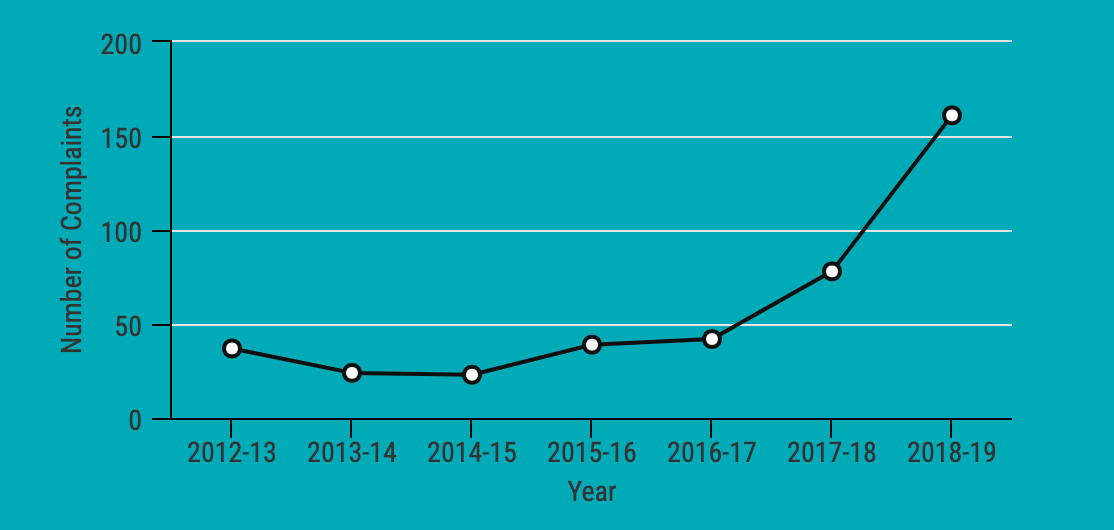
According to the Annual Report on Policy On Harassment and Discrimination Prohibited by Law, the number of inquiries and complaints increased from 78 cases last academic year to 161 in 2018-19. In the preceding five years, there has been an average of 33 inquiries and complaints. 12 per cent of the complaints were filed on the grounds of discrimination, 45 per cent on harassment, 12 per cent on sexual harassment, and the remaining 30 per cent were classified as mixed or other. 

Initially adopted in 2006, the purpose of McGill’s Policy on Harassment and Discrimination Prohibited by Law is to establish an inclusive environment through prevention and response to harassment and discrimination. 

The university has appointed Sinead Hunt, a Senior Equity & Inclusion Advisor (SEIA) to act as the primary contact for initial inquiries and complaints. Following contacting Hunt, the individual decides between attempting an informal or formal resolution through investigation, through Senate-appointed Harassment Assessors. 

Professor Angela Campbell, Associate Provost (Equity and Academic Policies), emphasized the importance of the SEIA.

“The role of the [SEIA] is growing in scope and importance,” Campbell said. “This is a very positive development for the McGill community.”  

Harassment and discrimination reports are investigated by Assesors: However, as of October 2018, reports of sexual violence are investigated by an external Special Investigator instead, in accordance with the Policy against Sexual Violence

Whether the increase in harassment claims is due to an increase in complaints or higher awareness of the report is speculative. 

“I have no evidence that more people are being subject to harassment at McGill, but [I] do see awareness of [the policy] increasing,” Campbell said. 

Chloe Kemeni, Student’s Society of McGill University (SSMU) Anti-Violence Coordinator, tied the increase in complaints, in part, to campus discussions rather than policy awareness. 

“The current dialogue that has arisen from [student-driven policies and groups] has given folks the tools to define their experiences and advocate for themselves,” Kemeni said. “For those doing equity work on campus or in student governance, this is part of [our] daily discussions, but I’m not too sure that McGill has done an adequate enough job in communicating the policy in a way that is accessible to all.” 

The report also proposes a working group to ensure that the policy is implemented in an appropriate way for the university’s needs and goals; however, the group’s members are not specified. The group will undertake policy revision in the present reference year (Sept. 1 2019 – Aug. 31 2020). 

“It would be baseless to have a committee that does not have representation from racialized students who are most impacted by discrimination and harassment,” Kemeni said. “I don’t know if there is a clear cut answer to the question [of what McGill can do to reduce incidents] since at its core is a settler-colonial institution with deep ties to slavery.” 

The report also recognizes the demand to formalize the process for investigating complaints. 

“Questions arise about whether our current model, which entrusts investigations to Assessors who have full-time positions disconnected to the Policy at the University, is sustainable, especially as the number and complexity of cases arising under the Policy grow,” the report reads. 

As a result, a coordinating assessor has been assigned to this role on a full-time basis. 

The report recognizes that measures of isolation cannot transform the culture that surrounds harassment. 

“It would help to create a culture in which students feel comfortable reporting, but which also sends a signal to those enacting harm that their actions have recourse,” Kemeni said. “As of now, we tend to protect those who are most harmful, while isolating and retraumatizing those harmed.” 

McGill, News

Tribune Explains: Academic appointments

The intricacies of professors’ career paths often goes unnoticed by busy students. Yet, students interact with professors daily, and a positive or negative relationship with one may change a student’s life. One of the most substantial milestones a professor can achieve is academic appointment, but the process that guide appointments is complicated. By digging through the Secretariat’s website, any questions about academic appointment are answered.

What does “academic appointment” mean? 

To be academically appointed is to receive tenure as a McGill professor. This is a contract between McGill and its professors that guarantees the tenured professor’s employment. McGill’s guidelines for tenured staff explains that professors can either be “tenure tracked” for a definite term, in which they are then considered for re-appointment, or tenured indefinitely. 

In 2017, there were 1,664 tenure-tracked and tenured professors at McGill according to the McGill University Staffing Report. While almost half of the academic staff employed by McGill are women, they are underrepresented in the university’s tenured population. In the same report, 45 per cent of academic staff reported that they were women; In contrast, women made up 32 per cent of tenure-track and tenured professors.

What are the benefits of tenure?

Achieving tenure allows professors the freedom to explore areas of scholarly interest without the stress of an immediate deadline or fear of exploring controversial research topics. At the same time, the tenured professor cannot be employed by a different university or employer and must maintain the same quality of work as when they were appointed. This allows McGill to attract high-achieving professors that can produce valuable research under the university’s name. 

What are the responsibilities of tenured staff?

Academically appointed professors are responsible for three major tasks at McGill. First, they are required to teach either lectures, seminars, or supervise individual students. Second, they must participate in research. Research can take many forms, but McGill professors are required to produce and publish academic work throughout their appointment at McGill. Third, professors must commit time to other communities at McGill, such as by participating in clubs, speaking at events, or sitting on academic committees. 

How does one become appointed? 

Achieving tenure starts with being nominated by their academic department head. If the nomination is approved by the dean of their faculty, the professor’s name is submitted to the Provost, who decides if the professor should be appointed or not. If they are successfully appointed, the first position that they hold is that of Associate Professor. Associate professors are on tenure-track for between three and four years. The professor is then considered for full tenure by the Departmental Tenure Committee, the University Tenure Committee, and the Principal. The group evaluates the dossier of material compiled by the professor and external evaluators to decide if the professor meets the standards for full tenure or should be given deferred tenure consideration.

McGill, News

Marginalized American Sign Language: Disability and queerness

Mat Kuntz is an American Sign Language (ASL) teacher who works with several organizations including Seeing Voices, which seek to make communities more deaf-aware and deaf-accessible. On Oct. 15, he presented the basics of queer ASL to attendees at Wilson Hall. After a short introduction by Meryem Benslimane, equity education advisor and chair of the planning committee of Queer History Month, Kuntz took the stage. Kuntz, who is queer and hearing-impaired, gave the lecture completely in ASL, with Sandra Saoumaa serving as an interpreter.

Kuntz first emphasized that ASL is only one of many sign languages across the world.

“Canada has two sign languages, ASL and LSQ, which stands for ‘Langue Signe Québécoise’,” Kuntz signed. “These languages were finally recognized under Bill C-81 as a primary languages for deaf people. Now that the government has recognized [sign language ], we can make some changes [in how deaf people are expected to conform to hearing society].”

Kuntz explained some of the difficulties deaf individuals face in everyday life. Since ASL is not widely taught, many spaces remain inaccessible for its users if an interpreter is not present. Even job interviews can be impossible unless someone else is there to translate.

“There is a lot of frustration around the lack of accessibility,” Kuntz signed. “Communication is always an issue and I don’t always have the time [to educate everyone I meet]. So we are working on building awareness for that, and training [people] to make things more deaf-accessible. I want to expose [people] to deaf culture and raise awareness about deaf people’s access and needs.” 

When teaching ASL, Kuntz went over each sign slowly and carefully, demonstrating it several times. He encouraged the audience to practice, giving everyone a chance to repeat the sign until they felt comfortable. Kuntz also provided everyone with a paper handout with pictures of the signs before he proceeded to do demonstrations.

Kuntz introduced signs for a wide range of queer topics, from gender to sexuality. He presented all of the official queer signs, including words for “fluid,” “spectrum,” and  “drag queen/king.” However, Kuntz pointed out that the list was by no means complete, lacking terms like “nonbinary,” for example.

“The deaf community is behind in coming up with signs for everything, so just give us time to catch up with the vocabulary,” Kuntz signed.

At the end, Kuntz thanked everyone for coming, and participants responded by raising their hands and wiggling them, the ASL sign for applause.

While this workshop was only a brief introduction into ASL, there are many opportunities to continue learning sign language. Kuntz teaches sign language courses of different levels at the Canadian Hearing Society, which he recommends for anyone trying to learn more.

Jim Mejino, U4 Arts, and the main coordinator of this event, said that the idea for an an ASL event as part of Queer History Month plays an important role in raising awareness about intersectionality within the queer community. 

“[Queer History Month] works with the Union for Gender Empowerment, and part of our mandate is intersectionality,” Megino said. “We want to celebrate the community and bring more awareness and education about how disability and queerness affects people.” 

Benslimane stressed the importance of including events that address queer individuals with disabilities. 

“Last year was the first edition of Queer History Month,” Benslimane said. “[We] wanted to have an event talking about being queer and folks with disabilities, so to have an event around queer ASL made sense [.…] We wanted to make the calendar as inclusive as possible. That is also why we decided to have it again this year.”

Campus Spotlight, Student Life

Vertical gardens brighten residence cafeterias

As the long Montreal winter approaches, students are dreading the months of monochrome monotony to come, from cement buildings to white walls. The SSMU Environment Committee, in partnership with Montreal-based hydroponics company Nutritower and the Sustainability Projects Fund, hopes to change that by bringing greenery to residence cafeterias. Sustainability Commissioner Dasha Gousseva started the project last year. She explained how the hydroponic system that underpins the towers works.  

“The idea of hydroponic gardening, and these vertical towers specifically, is very low-input local agriculture that maintains itself in a closed system,” Gousseva said. “Plants, instead of needing soil, [get] fertilizer and nutrients from the water itself, [which] is pumped through a system that comes included in the towers [….] LED lights installed in the tower [provide plants with lighting].”

With help from students alongside SSMU Environment Committee members and a representative from Nutritower, the vertical gardens setup event on Saturday revealed the towers for the first time. The team set up towers in three McGill residence cafeterias: Royal Victoria College, New Residence Hall, and Bishop Mountain Hall. Locating the towers in dining halls will allow for the vertical gardens to serve as both an educator about the process of growing food and an actual food source. Given that harvests will be small in comparison to the number of students who frequent these cafeterias, the project plans to incorporate cafeteria-grown produce and herbs into side dishes.

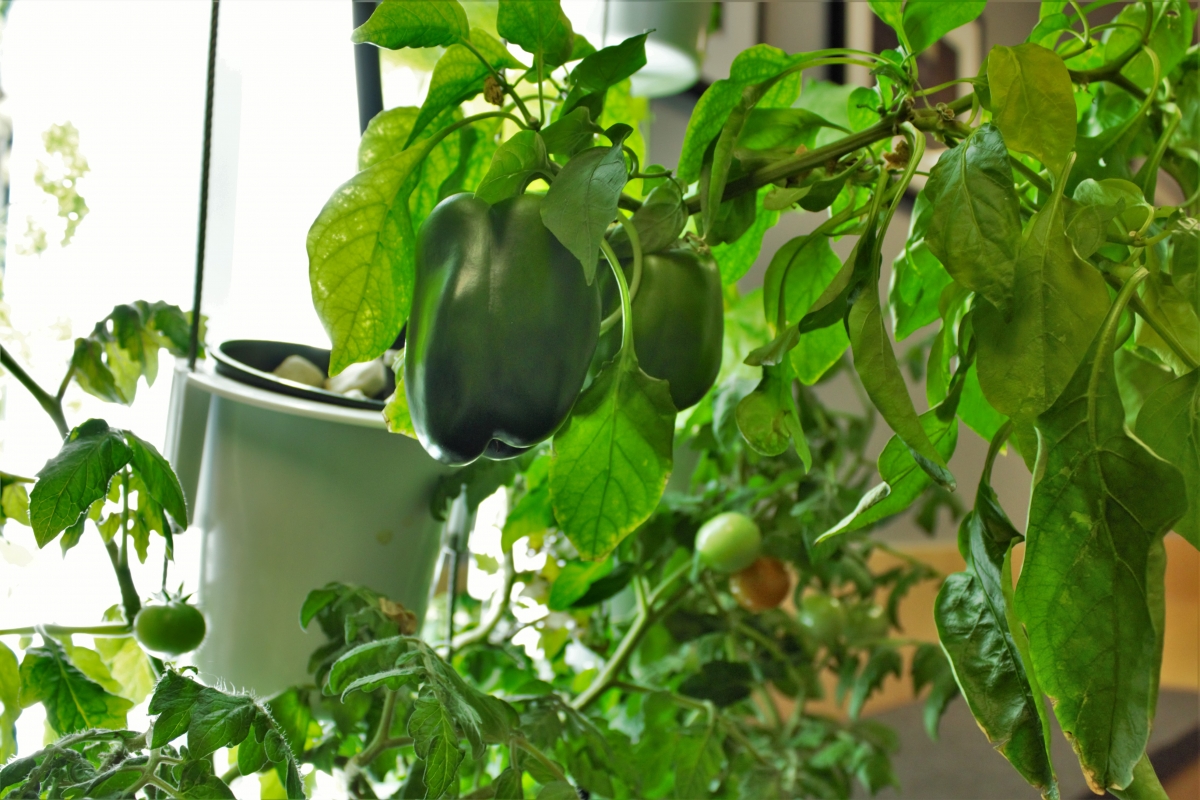
“[We’re currently growing] leafy greens and herbs, which include lettuce, kale, parsley, [and] basil,” Gousseva said. “We’re even trying [to grow] some tomatoes.” 

In the future, the SSMU Environment Committee plans to borrow seeds from the MacDonald Campus seed library to expand the range of produce being grown. The Nutritower system allows for plenty of flexibility for what can be grown, which was one reason the Montreal-based company was chosen for the project. 

Nutritower was founded by Montrealer Bryce Nagels in 2014, who grew up with fresh produce and was inspired to introduce gardening to city-dwellers. Originally launched on Kickstarter, the growing hydroponics company seeks to address climate change and urban population growth issues. In his campaign statement, Nagels expressed that to secure our future, we must embrace creative technological solutions to feed our population, and that his vertical gardens could be a step in the right direction, however small. He contextualizes Nutritower within the global trend toward a greater proportion of the population living in urban areas and hopes that it will help people better adapt to this transition by bringing home food production to people living in cities. 

“[Nutritower’s] goals aligned […] closely with [ours], those goals being to connect people to their food systems and to educate people about how food is grown because [many] don’t realize the steps and all the inputs it takes to get something from [farm to table],” Gousseva said. “They’re also focused on education, primarily [young] students, but they’re also working with universities. [Since they’re also] local, it made working together easy and […] sustainable.”

The vertical gardens will also incorporate much-needed greenery into residence spaces as part of a campus-wide trend toward adding plants to academic spaces. The Sustainability Projects Fund has backed a number of related projects, including the Spin Bike Gardens and Garden Inside, which placed three Nutritowers in the Office for Students with Disabilities (OSD). 

The project will also complement existing sustainability initiatives in McGill residence cafeterias, including Waste Educators and Local Food Days, which incorporates seasonal produce and other ingredients from less than 500 kilometres away. 

Gousseva plans to work with Student Housing and Hospitality Services to create educational opportunities around the towers and hopes that students will continue to follow the vertical gardens’ progress. Future harvesting events will be posted to the SSMU Environment Committee Facebook page.

Private, Recipes, Student Life

Perfect roast chicken

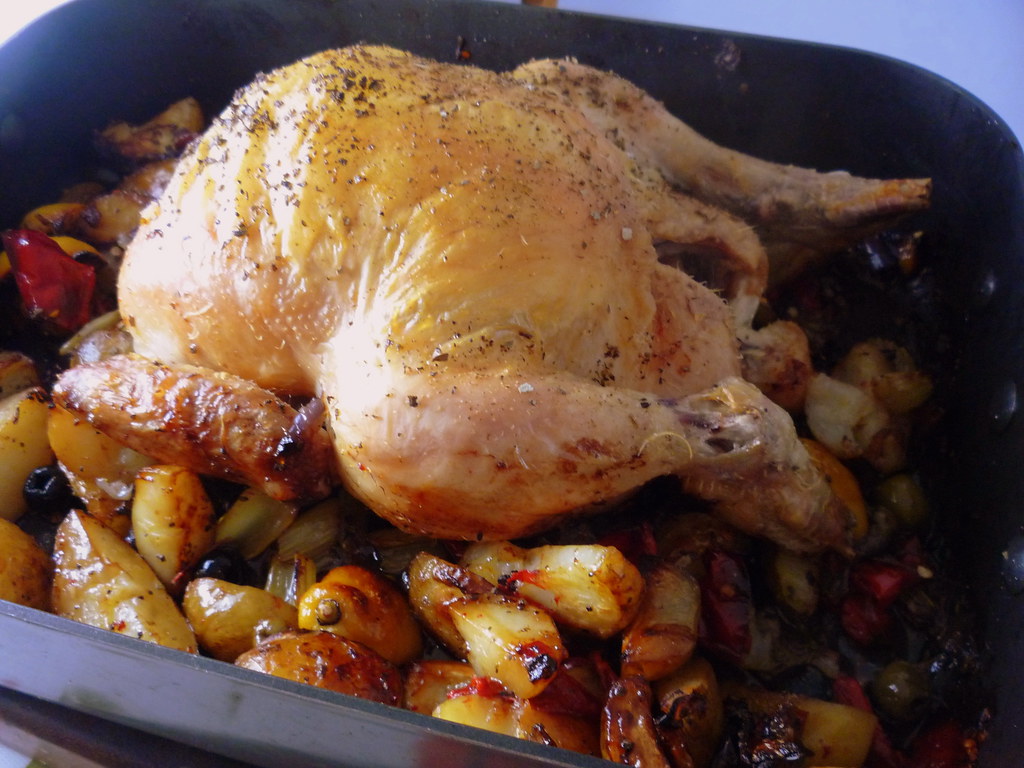
Roast chicken is, in my opinion, the best dinner ever—full stop. Not only does it taste incredible, but it’s versatile: One chicken can become a week’s worth of dinners, a few days of lunches, and, eventually, it can simmer down into stock for soup. It’s the meal prepper’s dream. Below, you’ll find a particularly adaptable roast chicken recipe, a few ways to use it, and a knockout side dish. 

Ingredients:
1 chicken 
1 bunch rosemary 
1 lemon, cut in half
5–6 garlic cloves
2 large onions, chopped into medallions
Oil (preferably olive)
Salt 
Pepper 
Optional spices:
Cayenne
Steak spice
Paprika

  1. Preheat oven to 425°F.
  2. Pat the chicken dry with paper towels. Season with salt and let sit for 30 minutes to allow salt to permeate. 
  3. Give the chicken a coating of oil and rub it to ensure that it’s fully coated. 
  4. Season with other spices and herbs to give an even coating. 
  5. Bruise the rosemary with the blunt side of a knife and place inside the chicken cavity along with two cloves of garlic and a lemon slice. 
  6. Lay onion medallions flat on bottom of skillet or sheet pan. (If using a sheet pan, only cover the area where the chicken will be). 
  7. Put the chicken on top of onions. Place lemon cut-side down on the pan (not on onions) and add two to three cloves of garlic around the outside. 
  8. Roast for 60 minutes. Let sit for 30 minutes before carving. 


Smashed potatoes

Anyone can roast veggies, but if you’re looking to upgrade your basic potatoes as a side for chicken or on its own, smashed potatoes are the way to go. This extra bit of effort yields a dish with all the best qualities of both roasted and mashed potatoes. 

1 lb baby potatoes 
Salt 
Pepper 
Oil 

  1. Preheat oven to 425°F. 
  2. Fill a large pot halfway with water and bring to a boil. 
  3. Wash potatoes and add to pot. Let boil for 30-40 minutes until potatoes are soft, but not entirely mushy. You should be able to flatten a potato without it crumbling. 
  4. Drain water and cover potatoes with oil and season with salt and pepper. The potatoes will be hot so use caution and, if needed, wait for them to cool. 
  5. Once potatoes are cooled and seasoned, place on a baking tray. Using a wooden spoon, press down on each potato to flatten it so that the outside crumbles a little, but the potato remains mostly intact. Alternatively, to smash them all at once, use a second baking tray to push down, flattening them all. 
  6. Roast again for 15-20 minutes until the outsides are crisp and golden. Serve warm alongside roast chicken.


Quick Leftover Fixes

Chicken BLT

1 chicken breast (roasted)
2 slices of bread 
Bacon
Lettuce 
Tomato 

Toast the bread and butter each side. Put the bread butter-side down on a pan on medium heat until it’s golden brown. Assemble the BLT with chicken on top. 


Chicken stock

1 leftover chicken carcass 
2 carrots, sliced into medallions 
2 stalks of celery, sliced, with greens
2 tbsp salt
Pepper 

Place the chicken in a large pot and cover with cold water. Bring to a simmer. Add veggies, salt, and pepper and let simmer for two hours until broth has a pale colour. Use a pair of tongs to remove the larger pieces of vegetables and chicken, then strain to remove everything else. This dish can be stored frozen for months. 

Read the latest issue

Read the latest issue