Latest News

McGill, News

McGill changes controversial varsity team’s name

On Apr. 12, Principal and Vice-Chancellor Suzanne Fortier announced her intention to change the name of the men’s varsity sports teams in an email to the McGill community. The men’s sports teams will be referred to as ‘the McGill teams’ during the 2019-20 season and a committee will choose a new name by Sept. 2020.

“Inclusion and respect are at the core of our University’s principles and values; pejoratives run contrary to who we are as a community,” Fortier wrote. “For these reasons, the Redmen name is not one that our community would choose today, and it is not one that McGill should carry forward into our third century.”

While controversy has surrounded the former name for years, the recent string of efforts demanding a change from McGill’s administration began in 2016, after the Truth and Reconciliation Commission of Canada (TRC) published a report documenting the history of the residential school system in  Canada. The TRC included 94 calls to action in their report, several of which were addressed to universities and included asking schools to develop more Indigenous history and cultural studies courses and programs.

Following the release of the report, McGill launched the Task Force on Indigenous Studies and Education which, in turn, formed the Working Group on Principles of Commemoration and Renaming. In Dec. 2018, the Working Group recommended that “McGill should alter its commemoration or naming practices where the harm outweighs the good.”  

Fortier later announced that she would take the Winter 2019 semester to decide whether or not to pursue the idea. Aneeka Anderson, an Inuk U1 Arts student, was overwhelmed when she learned the outcome of Fortier’s decision.

“Hearing that the Redmen name will be changed was an emotional moment for me, as it was for many,” Anderson said. “I reached out to my best friend instantly, and when I finally saw her that night, we just hugged and cried. I felt safety, relief, and, most importantly, so proud to be Indigenous. This campaign was led with unbelievable strength, grace, and a steadfast belief in justice for Indigenous peoples. Nothing could make me more proud.”

The name change comes after months of protests on campus led by members of the Indigenous community. On Oct. 31, the Student Society of McGill University’s (SSMU) Indigenous Affairs Committee led a rally outside of the James Administration Building to demonstrate against the continued use of the name. The event was followed by a referendum question on the SSMU Fall 2018 Referendum ballot, asking whether McGill students would support a change to the men’s team’s name: With a historic turnout of over 23,000 students, 79 per cent of McGill students voted against the name’s continued use. SSMU responded by releasing an open letter in support of a name change and immediately began lobbying McGill’s administration. Ella Martindale, co-chair of the Indigenous Student Alliance  and a member of the Cowichan First Nation, gave credit to the leadership of Indigenous groups at McGill.

“I’m so grateful for the Indigenous leaders, like […] Jirousek who has worked on this particular campaign, and I’m also grateful for the Indigenous students and leaders who came before who fought for space for us to pursue this issue,” Martindale said. “I’m not particularly grateful toward McGill, because I think this is only a small step, but I am so proud of the students here that have worked to get rid of the name, and some of that work was breaking down walls and making McGill listen to us.”

Next semester, Fabrice Labeau, interim deputy provost student life and learning, will form and lead a committee that will choose a new name. According to Fortier’s letter, the committee will be made up of both administrative staff and McGill athletes. Tomas Jirousek, SSMU’s Indigenous affairs commissioner and a member of the Kainai First Nation, hopes that McGill will continue to fulfill its commitment to truth and reconciliation.

“There [are] a few concrete ways McGill can move towards meeting its commitment to both the Provost’s Task Force on Indigenous Education as well as the TRC,” Jirousek wrote in a message to the Tribune. “I’d like to see the administration commit to hiring Indigenous professors straight into tenure track positions, currently we have one, commit to the expansion of the Indigenous studies major, and work toward establishing an Indigenous presence in central governing bodies such as the Senate and the BoG.”

McGill, News, PGSS

PGSS Executive Reviews

The McGill Tribune Editorial Board reviewed the 2018-2019 Post-Graduate Student Society (PGSS) executives on their performance in their positions. The Editorial Board gave each executive a score from 1-10 based on how we felt the executives performed. The grades were converted from a percentage into a letter grade based on the McGill grading system. Under this grading scale a “C” is a passing grade that meets expectations, a “B” exceeds expectations, and an “A” refers to an outstanding performance.

Commentary, Off the Board, Opinion

Changing the significance of home after the war

The last time I went to Damascus to visit my mother’s family, I was around 12 years old, and although I can’t really remember all the details, there are some memories that have stayed with me. I remember visiting my great aunts at their convent, walking through the old souk, Arabic for marketplace, smelling the narenj trees by my grandparents’ house, and being endlessly captivated by my grandfather’s ever-growing home library—I developed my love for reading in that house. Despite recalling my childhood so fondly, when my mother told me that she booked a flight to visit Damascus for Christmas, I was terrified. I was ready to go home again, but I wasn’t ready to see what home had become—I didn’t want war to tarnish my memories.

(Abeer Almahdi / The McGill Tribune)

After a two-hour drive from Beirut, with a few stops for the bagel-like ka’ak and checkpoints along the way, we finally made it to Damascus. Everything at my grandparents’ house was as I remembered, down to the tree outside their living room window. I even went back to the souk and continued a book I started almost ten years ago.

Things started to change on Christmas day at my mother’s high school reunion. We were all sitting in her friend’s living room, having drinks and laughing, when we heard the sound of fireworks. While fireworks are typical for the holiday season, their frequency was strange: One huge crack every 30 minutes. It wasn’t until I opened Twitter that I realized we were hearing a missile attack. My mother asked me if I was scared, and, though I said no, I was terrified. Even though the missile target was Qatana, around 25 kilometres from the party, I was engulfed in an irrational, growing fear.

When we arrived home, I jokingly told all of my friends of the ordeal. I knew I was safe: The target was nowhere close to me, and my family has been through a lot worse than my brief encounter. But, that’s where the trip’s honeymoon phase ended.

I remember my grandmother asking if I was okay. Though she was used to war by now, she knew that I grew up far removed from it. I was fine, but my memories were shattering around me. All of the images of bitter orange trees, family gatherings eating wara enab, and playing in the park with my cousins replayed in my head for hours on end. I expected that, despite suffering a seven-year-long conflict, Syria was going to be unchanged, just like my childhood. I wasn’t ready to accept the reality of conflict, I kept trying to go back to a time that was over. I realized that I wasn’t ready to let go of my childhood or my memories.

(Abeer Almahdi / The McGill Tribune)

Then I started seeing all of the aspects I had ignored. I started seeing the refugee camps, the long wait times at checkpoints, the closed-down shops, and the rubble. I started seeing the blue signs of the United Nations High Commission for Refugees, the soldiers with assault rifles, and the large stacks of money my mother would use to buy street food because of hyperinflation. Syria had changed, and I wasn’t able to keep up.

I am extremely lucky and grateful to have been sheltered from the realities of the war because I grew up outside of it. Still, my grandparents’ normalization of their situation genuinely shocked me. I have to learn to accept that Syria will never be the same, and going home will not be either. All of my memories will remain fond, but I can’t keep looking to the past, or else I will forget to recognize everything for what it has become. War is out of my control, but enjoying holidays with my grandparents while I still can is not.

As a child of the diaspora, I will always keep a part of Syria with me; I will keep parts in picture frames around my apartment, in conversations with my friends, and in everything that I write. I will never truly leave Syria, even while I am thousands of miles away in Montreal.

(Abeer Almahdi / The McGill Tribune)
Features

The coworking craze

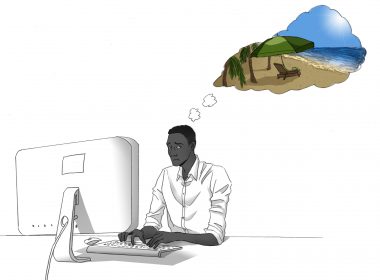
Fingers fly over keyboards while heads hang heavy with concentration and Slack notifications gurgle softly in the background. These sights and sounds conjure the modern work scene, but they may no longer evoke a singular image of a physical backdrop against which this work unfolds. As the typical 9-to-5 recedes, work no longer has to happen at a cubicle desk housed inside of a multistory corporate building.

Commentary, Opinion

Nothing is set in stone: Colonial statues on campus

Content warning: Mentions of graphic colonial violence

On March 23, Brigade de solidarité anticoloniale Delhi-Dublin, an anti-colonial group, vandalized the statue of Queen Victoria that sits in front of the Schulich School of Music. The Brigade de solidarité anticoloniale Delhi-Dublin spray-painted the statue green in the spirit of St. Patrick’s Day, and also vandalized the statue of James McGill, signalling their contempt for figures who represent imperialist and racist histories. While this case of ‘vandalism’ can be seen as a form of activism, it is perhaps not sufficient in rectifying the oppressive actions promoted by either Queen Victoria or James McGill.

The monument of Queen Victoria was first erected in front of Schulich in 1900. Her figure represents tragedy to the communities who were brutalized and oppressed by the actions of colonization she either spearheaded or promoted. Many marginalized students whose ancestors were directly affected by the actions of British colonialism have attended McGill since then, and they have to be constantly reminded of the colonial violence that Queen Victoria symbolizes.

In spray-painting the statue of Queen Victoria, Brigade de solidarité anticoloniale Delhi-Dublin is protesting all that these statues signify: The acceptance and celebration of colonial violence. However, vandalizing these statues has little real-world impact. While the green spray paint has symbolic value, it does not fully address the larger problems inherent to a culture that heralds figures like Queen Victoria. The green paint has been washed off, and the monument remains an imposing reminder of Canada’s colonial nature. The spray paint invites necessary conversation about the permanent removal of these monuments, but the simple erasure of the paint reflects how easily McGill has erased marginalized voices to avoid substantive and fruitful conversations.

Reconsidering which figures should be honoured with monuments is certainly not a new discourse in Canada. On Aug. 11, 2018, a statue of John A. Macdonald, Canada’s first Prime Minister, was taken down in Victoria, B.C., following demands from Indigenous communities. Macdonald played a significant role in encouraging residential schools as a site for aggressively assimilating Indigenous peoples. In Jan. 2018, Halifax’s city council voted to remove a statue of Edward Cornwallis, a former colonial governor of Nova Scotia, after activists spray painted the monument red. While colonizing the province, Cornwallis declared a ‘scalping proclamation,’ which rewarded anyone who killed a Mi’kmaq person and could present their scalps as evidence.

In covering the statue of Queen Victoria with green paint, Brigade de solidarité anticoloniale Delhi-Dublin likely aimed for results similar to those in Victoria and Halifax. However, the monument is still standing. Providing marginalized communities with a platform to uplift their voices is one way of actualizing substantial change. Another way of doing so would be to properly fund Indigenous studies education, and integrate Indigenous systems of knowledge into education. Another is to demand that this statue, if it is to remain, include a plaque detailing the harmful actions promoted by Queen Victoria on the monument.

McGill has an important role in respecting the needs of its marginalized communities. The spray-painting of the Queen Victoria monument should encourage necessary conversations regarding McGill’s racist history, especially as the founding father of the university, James McGill, was a slave owner. To ensure that these conversations produce positive outcomes, measures toward amplifying marginalized voices must be taken seriously.

Science & Technology

The fatal consequences of turning the clocks back

Every spring, millions of sleep-deprived Canadians are prompted to wake up an hour earlier, all the while cursing the person who invented daylight saving time. Few people probably imagine that one man’s love of bugs could have disturbed the life of so many individuals on an annual basis.

In 1895, the New Zealand entomologist George Hudson first proposed the concept of daylight saving time because he wanted more daylight hours to better study his insects. While parliament initially dismissed the idea, the English Parliament later accepted daylight saving time in an attempt to conserve energy: The more in sync time is with daylight, the less necessary electric lights are.

Germany was the first country to adopt daylight saving time in 1916 to conserve electricity during the middle of WWI. The United Kingdom followed suit a few weeks later, with other countries like Canada and the United States in tow. However, most countries stopped the practice when WWI drew to a close. The practice was reinstated during  WWII, but it was not standardized in the U.S. until Congress passed the Uniform Time Act in 1966, which established a system of daylight saving time across the country. Dutifully following its neighbour, Canada subsequently standardized daylight time as well.

In Canada, daylight saving time is a provincial matter. While most jurisdictions have adopted the practice, certain areas, like the majority of Saskatchewan and some towns in Quebec, have not. These exceptions are actually the global norm, as most of the world has not implemented daylight saving time; the practice is not in use in 79 per cent of countries worldwide, and many countries have abandoned it in the last decades.

Despite its long history, daylight saving time has encountered increasing criticism in the last few years. There is a growing movement to end the practice entirely south of the border. A telephone survey in the U.S. from 2013 found that 45 per cent of respondents thought daylight saving time was not useful

The growing criticism is primarily a result of the negative consequences associated with the use of daylight saving time.  For example, a study on hospitals in Michigan found that heart attack rates spike by 25 per cent on the Monday immediately after clocks go forward in the spring. The pushback has also been linked with an increased risk of stroke: Researchers find that the overall rate of artery occlusion-based stroke rises by eight per cent during the first two days after the transition. Also, spring daylight saving time has been associated with an increased number of road accidents. In 2014, there was a 20 per cent increase in car accidents in Manitoba on the Monday following the change.

Perhaps most obviously, daylight saving time disturbs sleeping patterns. Sleeping disturbances can lead to mood disruptions, increased irritability, poorer memory, and lower concentration levels. Individuals who have both a  sleeping disorder and a psychological condition have an especially hard time adjusting to ‘springing’ forward. Research shows that the rate of diagnosed depression, particularly Seasonal Affective Disorder, increases dramatically in the first week following the spring change.

Considering the negative effects associated with daylight saving time, some governments are taking steps across Canada to end the biannual practice. Recently, the Union of British Columbia Municipalities accepted a proposal to disregard daylight saving time completely. In light of the increasing pushback against this practice, disgruntled Canadians can rest easy in the hopes that, in the near future, they won’t be forced to wake up an hour earlier every spring.

Lachine Canal
Out on the Town, Student Life

Greasy diners, antique shops, and Gucci flip flops

In 1962, novelist and filmmaker Hubert Aquin produced September Five at St. Henri, which documented the daily routine of families living in the southwestern, working-class neighbourhood in Montreal.

“St. Henri is not known for fancy restaurants,” Bill Davies, the film’s narrator, comments. “It is really a little island, surrounded by water, railroads, and the industrial wealth of other men.”

Davies’ commentary has hardly aged well. Rue Notre-Dame Ouest, the commercial main street of St. Henri, now boasts a plethora of lavish restaurants with pricey menus. Vintages Frames L’Archive, a sunglasses store on the street, sells designer products for thousands of dollars, and a January Versace ad campaign recently featured 2Chainz sporting a pair of shades that he purchased at the shop. The flamboyance of this new St. Henri is a symptom of a rapid gentrification process: Even though the neighbourhood is home to a distinctly working-class community, rising rent costs coupled with precarious financial circumstances have priced out even long-time residents in favour of more affluent professionals and young students.

While factories hum in the background of Aquin’s film, in the time since, most of St. Henri’s major factories have since closed down and are now abandoned and rusting along the banks of the Lachine Canal. With employment prospects for working-class individuals dwindling away over the decades, the neighbourhood has faced immense economic pressures, and the population has sharply declined. The Arrondissement du Sud-Ouest, of which St. Henri occupies the northwestern quarter, lost 38 per cent of its population between 1966 and 2006, according to Montreal City statistics. That population did not start to grow again until the mid-2000s, as economic redevelopment along the Lachine Canal accelerated.

In the aftermath of deindustrialization, real estate groups renovated abandoned factories into new houses and condominiums. In 1993, developers purchased 4710 rue St-Ambroise, which had been a Simmons Bedding Company factory since 1919, and refurbished it into a luxury loft building. With a Parks Canada investment dedicated to beautifying the areas around the old industrial area, the canal, which once housed the heart of Canada’s manufacturing economy, now features bike lanes, recreational boating opportunities, and music festivals. Private companies have continued to assume old factories and warehouses along the canal, turning them into luxury condos with prices starting at well over $300 thousand for a simple studio. McGill even capitalized on the abandoned factory market in St. Henri—in 1990, the university purchased a former chocolate factory and renovated into what is now Solin Hall, its second-largest student residence that houses upward of 280 students.

These economic and demographic changes have had adverse effects on remaining long-term residents. As factories closed and the population dwindled, entrepreneurs soon bought cheapened property in the area and started new businesses. Howard Zinman, the senior administrative coordinator of Solin Hall, has witnessed St. Henri’s changing landscape since he started working there in the early 2000s.

“When I first got to St. Henri, Notre-Dame [street] was filled with collectible shops. You could have found vintage Barbies, Coca-Cola things,” Zinman said in an interview with The McGill Tribune. “I feel like the Internet and the way it affects commerce really stabbed at the heart of Notre-Dame […] For a while, Notre-Dame was a ghost town. [Because of sites like eBay,] the collectible shops closed, there was really nothing there [aside from staples like New System and Greenspot].”

Zinman noticed many empty commercial properties go up for sale during this time. An eclectic variety of small businesses, ranging from mattress to pet lizard stores, filled in the vacancies, but not all of them stayed open.

“The most random businesses that you could think of would pop up [on Notre-Dame],” Zinman said. “People tried different things […] but, there were so many vacancies. Then, the cafés kind of just started opening [one day].”

New condos and trendy businesses have made the neighbourhood seem increasingly attractive to students and young professionals looking to settle down in an area close to the downtown core. Jérémie Lapikas, U1 Arts, who grew up across the canal from St. Henri in Ville-Émard, recalls seeing new arrivals to St. Henri over the years.

“You really have this up-and-coming street, Notre-Dame, where it’s slowly becoming the place to be,” Lapikas said. “There’s lots of places to just consume, basically.”

With all of the condos, fancy barber shops, brunch restaurants, and cafés, an influx of new money has come to St. Henri.

It’s typically young businesspeople [who frequent these places],” Lapikas said. “I see people wearing brand clothing more and more [even though] it’s still very much a family neighbourhood.”

While high-end condo developers, trendy aesthetics, and the educated mid-twenty-somethings they attract are more responsible for gentrifying St. Henri, university students also play a noticeable role in pushing long-time residents out of their homes.

“Many students who lived here, going back to the first years of Solin, after they leave rez after first year, [they] stay in St. Henri,” said Zinman. “There [are also] a lot of people who, once they’ve lived here and maybe moved to the Ghetto, come back here afterward.”

For students at McGill and other Montreal universities, St. Henri’s appeal extends far beyond its trendy cafés. Compared to the increasingly-pricier Plateau and Milton-Parc neighbourhoods, St. Henri has relatively inexpensive rent for student budgets. Commuting to the Downtown campus only takes 10 to 15 minutes by metro, and cheap grocery stores, like Super C and various local markets, are abundant in the area. While this is an attractive setup, Lapikas stated that students resettling in the area need to remember that their actions have consequences.

You have this wave of students coming in, and it’s hard to blame them because if you can find an apartment which is reasonably priced, and you team up with a bunch of people and split rent it makes sense,” Lapikas said. “But, that’s putting families, especially single-income families, in a very competitive housing environment. As a single parent, it’s much harder to match whatever four students can pool together. But you need that space if you have three kids.”

To combat this problem, community organizations have worked to advocate for awareness of gentrification at City Council. Other more militant activists have smashed in windows of trendy-looking businesses. Lapikas suggested that students could also help by volunteering in the neighbourhood and integrating themselves into St. Henri more.

“I don’t think the solution is to try to reverse the process and make these neighbourhoods ‘working class’ again, but to try to split more evenly the benefits of better stores,” Lapikas said. “It’d be nice to see more interaction with students who just come here for four years and the locals who lived their entire lives here.”

However, not all new stores cater to multimillionaires like Lady Gaga and Nas. Despite Notre-Dame’s many changes, locals have taken a leading role in shaping St. Henri in a less ostentatious fashion. Charity organizations like Les Ami(e)s de Montréal sell inexpensive second-hand furniture, and St. Henri locals own the Singaporean street food restaurant, Satay Brothers. When new residents support long-time residents of the neighbourhood, they can lessen their impact on the gentrified area.

I love those guys because they were born and grew up in St. Henri, and they employ people from the neighbourhood,” Zinman said. “So, even though I find them a little expensive […], to me, [Satay Brothers] is a great St. Henri success story. But, I can see how someone from the outside could look at that and see it as gentrification [in action].”

Basketball, Martlets, Sports

The seven stages of sports injuries

I lost my grade 11 basketball season to injury. Returning from a sprained ankle just in time for the season, all I wanted was to play. I just had to push through and make it happen. But, I was weak; my leg was weak. That’s when I tore my vastus intermedius, the deepest of four muscles in the right quadricep, which ended my season.

Injuries, as devastating as they can be, are widely accepted as an inevitable consequence of playing sports. Athletes know that they take a calculated risk every time they train or compete, yet they play because the joy of sport is unparalleled. Still, with the highs come the lows: For me and countless other athletes, sports can be our undoing.

Gordon Bloom, a professor of Sports Psychology and the Director of the McGill University Sport Psychology Research Laboratory, described the psychological impact that an injury can have on athletes.

“It is a lot more traumatic than I think people realize,”  Bloom said. “If an athlete sustains a really serious injury, they actually, in a lot of cases, go through a similar process as […] someone who is grieving.”

Grief occurs in seven stages, the first of which is denial. Bloom explained that athletes will question whether they are truly hurt and how bad their injury is. Helen Wu, U2 Science, tore her anterior cruciate ligament (ACL) playing basketball and underwent this experience.

“I thought that it was just going to be a quick fix, and then I could get back at it again,” Wu said in a video interview with The McGill Tribune.

Bloom explained that the denial quickly turns to anger, and athletes begin to indignantly question why they were the one to suffer an injury. In many cases, this makes the athlete surly and difficult to be around. Lauren Herweyer, a second-year McGill field hockey player who tore her ACL in high school, acknowledged her own disagreeable temperament after her injury.

“I was so tightly wound just because I was taking the elevator at school and wasn’t allowed to practice,” Herweyer said. “I was so upset by all of it that I started to not handle anything in my life well.”

Bloom also noted athletes’ tendencies to bargain with doctors and coaches, protesting the diagnoses, recovery timetables, and their practicing constraints as they come to grips with the sadness and frustration they experience.

Herweyer demanded that her mother take her to practice three days after sustaining her injury and then played in the provincial championship tournament while injured. As a result, she required extra medical care during games as well as immediate and constant ice afterward to make the pain of her injury manageable.

Athletes also feel an absence in their lives when their injuries prevent them from participating in their sport. For many, sports are not only a constant presence but also serve as an emotional outlet and provide a sense of belonging. Without this stability, the outcome can be disastrous.

“In some cases, it goes to the point of depression,” Bloom said. “They are suffering mentally [… and] are just unable to control their emotions.”

Bilal Virji, U3 Arts and a student filmmaker, conducted interviews with McGill student-athletes for his project “Recovery.” He described how he struggled with his own injury, a repeatedly-torn ACL.

“The most difficult part about [the injury] was not the physical scars but the mental ones,” Virji said. “Sport was my form of meditation [….] It was my coping mechanism for everything that life threw at me, and, in an instant, it was all taken away from me.”

Many athletes recalled suffering from depression, eating disorders, or drug addiction and considered dropping out of school. Dorothea Stefanou, a U2 Arts student and gymnast who dislocated her elbow, recalled her own struggles.

“The injury was kind of the beginning of the end for me,” Stefanou said. “I was fighting for it before that, but, [after the injury], I kind of realized that I couldn’t overcome my mental challenges.”

Friends, family, and even coaches often fail to comprehend the mental trauma and challenges that injured athletes experience. This only further exacerbates the difficulty of their recovery.

“People just ask an athlete, ‘How’s your knee doing? How’s the recovery?’” Bloom said. “It’s all about the physical instead of saying, ‘How are you feeling? How are you doing?’”

Additionally, student-athletes are often constrained by graduation dates. If they do not play now, they will lose out on their final chances to play and even the opportunity to play at a higher level.

Concerned with missing out on a limited number of seasons, athletes face a difficult choice: Return as quickly as possible, or take more time to recover and prevent reinjury. This can become a profound mental handicap because, while the months absent from sport are difficult, returning too soon can be equally daunting, as one’s mind becomes preoccupied with thoughts of reinjury.

“On the floor, where I’d always been confident, I [became] afraid to do any tumbling where I’d land facing backward,” Stefanou, who was injured performing such a maneuver, said.

Despite caution, reinjuries happen frequently. Athletes’ competitive nature can cause them to push their bodies to the point of failure if they are unwilling to take breaks.

“[My ACL] took a long time to heal, and it never healed properly, so I reinjured it four or five more times after that,” Herweyer said.

My own injury came as a result of this same forced error: I pushed my body too hard, failed to receive proper physical and mental help, and was unwilling to rest. Yet, my injury would not prevent me from playing basketball forever, and I wish I had understood that at the time. My quadricep will never work the same again because I foolishly played when I should not have, but I managed to return a season later and help my team win a provincial championship. I may never have that single season back, but my injury was not the end, either.

Wu looks back on her experience with the same insight.

“The struggles you go through now, the struggles you have, they’re going to teach you something,” Wu said. “This didn’t happen for nothing. This happened to make you stronger, to teach you, to build your character. Learn from everything that happens to you, whether good or bad.”


This feature was produced in coordination with The McGill Tribune’s Multimedia section. Find the video accompaniment “Recovery” by Bilal Virji on our website.  

Science & Technology

Cargo ships contribute to spreading alien species

In 1988, the arrival of the zebra mussel irreversibly transformed the ecosystem of the Great Lakes. The introduction of the species was, and continues to be, a disaster for North American waterways. By 2009, the species had spread as far as Manitoba and Texas, driving out local species and costing the U.S. government an estimated $5 billion per year, primarily through the cost of removal from electricity-generating and water-treatment facilities.  

When freighters load up on ballast water, large pressurized containers that keep a ship sufficiently submerged, they risk introducing invasive species to their destination. Scientists believe that these ballast tanks brought the zebra mussels, native to southern Russia and the Ukraine, to the Great Lakes.

The role of shipping in propagating species invasion has since become the subject of extensive study, incorporating the use of statistical models to better predict patterns of invasion. However, when Brian Leung, an associate professor in McGill’s Department of Biology, and Anthony Sardain, a graduate student, were considering the issue, they realized that the existing statistical models didn’t account for a key factor: The variability of shipping activity over time.

“Sardain’s […] father works in shipping,” Leung said. “So, while we were trying to figure out [the] project, he was having conversations with his father, who was talking about the variability of shipping, and how shipping changes over time [….] Most of the models that we have and the forecasts that existed at the time didn’t account for this potentially very large change.”

Leung and Sardain sought to study the relationship between economic growth and invasive species risk, and, to do so, they developed a model to predict shipping activity based on global economic scenarios from the International Panel on Climate Change (IPCC) and the International Institute for Applied Systems Analysis (IIASA). Their shipping model relies on an economic theory known as the gravity model of trade, which states that trade between two countries, like gravitation, is a function of the ‘mass’ of the economies and their geographical and economic proximity.

“We started with this shipping model, realizing that we would have to attach it to measurable elements afterward,” Leung said. “The first part of that was building the shipping model, evaluating and validating it, and seeing whether it was, in fact, possible to forecast the magnitudes of change of shipping, which we were able to do. We also needed to use those elements that we could get worldwide data for and that also had projections for the future, so that’s where the IPCC […and IIASA] came in.”

The results of the study show that, as shipping intensifies, it will magnify the risk of the introduction of invasive species. Based on the six economic development scenarios used in the study, the threat of invasive species could increase three- to 20-fold by 2050. In fact, the study found that increases in shipping are far more likely to lead to threats of species invasion than the isolated effects of climate change, which may actually slightly decrease the risk of invasion due to diverging environmental conditions. As ecosystems transform due to climate change, they are likely to become increasingly dissimilar, making it harder for invasive species to adapt to different environments.

According to Leung, one of the surprising results of the study was that the projected increases in invasion risk were high even for sustainable economic scenarios.

“One of the future scenarios that had the highest invasion potential was the business as usual, fossil-fuel development one […] but, the other one was the sustainability pathway,” Leung said. “The sustainability pathway could also produce, as an unfortunate side-effect, increased invasions, and the reason for that is that everybody is doing better […] which means they are trading more.”

Read the latest issue

Read the latest issue