
Latest News

Behind the Bench, Sports

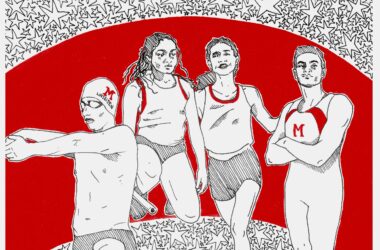
Trailblazers: Four Indigenous athletes everyone should know

Indigenous Peoples across North America have a long history of athletic excellence, with games such as lacrosse, canoeing, and snowshoe racing forming the foundation of many Indigenous cultures and communities. These sports were not only competitions, but also core actions that held spiritual, social, and practical significance for the Indigenous Nations in which they took shape. Today, Indigenous athletes continue to make their mark on the world stage, excelling in a range of sports, from the ring to the arena. 

Figures like Mary Spencer, a three-time world champion boxer, Angela Chalmers, an Olympic medalist in track and field, Reginald Leach, a Stanley Cup champion and legendary hockey goal scorer, and Bryan Trottier, a Hall of Fame hockey player who won multiple championships, embody the strength, perseverance, and skill that are rooted in generations of Indigenous athletic excellence. 

Mary Spencer, a member of the Chippewas of Nawash Unceded First Nation, has become one of Canada’s most accomplished boxers. She began her athletic career playing basketball, but when she stepped into a boxing gym as a teenager, she discovered her true passion. Spencer went on to dominate women’s boxing on the international stage, earning three world titles and competing at the 2012 London Olympics, where women’s boxing made its Olympic debut

Beyond her athletic achievements, Spencer has been a role model and mentor for Indigenous youth, using her platform to promote empowerment, confidence, and the importance of chasing one’s goals. Her success story represents not only her personal dedication, but also the growing representation of Indigenous women in sports.

Angela Chalmers, from the Birdtail Sioux First Nation, is one of Canada’s greatest middle-distance runners. She came into the spotlight in the late 1980s and early 1990s, representing Canada at multiple international competitions; at the 1992 Barcelona Olympics, Chalmers won bronze in the 3,000 metres, becoming the first Indigenous woman to receive a medal in track and field on the Olympic stage. 

Chalmers’ victory was not just personal but historic, as it marked a milestone in visibility for Indigenous athletes. She continued her streak of successes by winning gold at the 1994 Commonwealth Games in Victoria. Chalmers’ career stands as a powerful example of Indigenous athletes breaking barriers and inspiring future generations.

Reginald Leach, a member of the Berens River First Nation, had a legendary career in the National Hockey League (NHL) during the 1970s and 1980s. Nicknamed “The Riverton Rifle” for his powerful shot, Leach became one of the league’s highest goal scorers. His biggest achievement came in 1975, when he helped lead the Philadelphia Flyers to a Stanley Cup championship. 

A year later, Leach made history by winning the Conn Smythe Trophy as the NHL’s playoffs’ most valuable player, becoming one of the few athletes to do so from a losing team. Leach’s success was especially meaningful given the barriers Indigenous players in Canada face in professional hockey. He has since dedicated himself to mentoring youth and promoting hockey in Indigenous communities. 

Bryan Trottier, of Cree and Métis heritage from Saskatchewan, is widely regarded as one of the greatest hockey players in NHL history. Playing primarily for the New York Islanders, Trottier helped the team capture four consecutive Stanley Cup championships from 1980 to 1983. Over his career, Trottier scored more than 1,400 points to earn a spot in the Hockey Hall of Fame. 

In addition to his remarkable hockey career, Trottier has always spoken proudly about his Indigenous roots, emphasizing the importance of representation and identity in his sports journey. After retiring as an NHL player, Trottier has continued to contribute to the game as a coach and mentor, ensuring that his athletic and cultural legacies extend to future generations. 

Together, Mary Spencer, Angela Chalmers, Reginald Leach, and Bryan Trottier exemplify the incredible talent, resilience, and cultural pride of Indigenous athletes, who both further and commemorate a long lineage of Indigenous excellence in sport. 

(Lex Roemer / The Tribune)
Science & Technology

Ships, spills, and genetic shifts: How oil pollution changes Arctic birds’ DNA

The effects of climate change are increasingly visible around the world, but nowhere are these impacts more observable than in the Arctic. The region’s temperature is rising at over two times the global average—a phenomenon that has devastating impacts on natural ecosystems. As the ice melts, it destroys natural habitats, allowing for increased human presence in areas that were previously undisturbed. 

In a recently published paper, McGill Professor Rowan Barrett in the Department of Biology analyzed DNA methylation—a biological process that regulates gene expression—to assess how anthropogenic activity—environmental changes caused by human activity—impacts wild Arctic seabirds.

“We’ve been interested in trying to get additional perspectives on both lethal and sub-lethal effects of these kinds of pollutants, and one way of doing that has been through epigenetic responses,” Barrett explained in an interview with The Tribune. “So these are responses that aren’t changing the genetic code of the organism, but they’re making changes to the genome that we can measure, that we can study.”

The researchers’ study compared the epigenetic responses of Arctic seabirds—black guillemots—from four different sites, each with varying degrees of both pollution and human presence. The first location was in Postville, Nunatsiavut, on the site of a 3000 L crude oil spill; their second site was an area with high levels of shipping traffic, yet no direct contamination. Their third site had minimal human activity, but natural oil was present; and their fourth site was a reference site, selected for its minimal human presence and lack of natural oil seeps.

“So we assayed these epigenetic responses from birds from these four different sites, and we had two broad questions,” Barrett said. “One was whether or not the anthropogenic sources of oil differed in their impacts from the natural sources of oil. And then the next question is more of a timescale question. How do chronic, long term effects of oil, so this would be from the natural seeps and also from the places where there’s increases in shipping traffic, compare with the oil spill?”

The researchers collected liver samples from black guillemots across the four different sites. Their DNA was then extracted, and methylation patterns were analyzed. Results confirmed that there are measurable differences in the genetics of birds that experienced any kind of oil-related stress. 

However, while all birds exposed to oil had common methylation pattern changes, not all changes were common. 

“There’s sort of a consistent response that we see in the genome through these epigenetic tools, but it differs between the natural and the anthropogenic sources of oil. So the particular type of response, that epigenetic response, differs in these two types of sites,” Barrett explained.

This highlights not only the scale of the impact of human activity on natural populations—human presence is literally changing animals’ genetic codes—but also provides further insight into the genome.

“This is very exploratory, this work, but now we can look into precisely what functional or physiological mechanisms are triggered by these epigenetic shifts, what are they leading to in terms of the whole organism response,” Barrett said.

Some of the genetic changes Barrett’s data highlighted had to do with fat storage and circadian rhythm regulation. These small changes can have long-lasting, sub-lethal effects. Birds need certain fat stores in order to migrate, but oil exposure limits birds’ ability to create these fat stores, which ultimately influences their migration patterns. Moreover, even if birds are able to build up the necessary fat storage, changes in their circadian rhythm regulation impact when they are ready to migrate. 

Barrett’s work is fundamental in the field of epigenetics: It provides a critical window into the specific functions of various genes, as well as the ways that these functions are limited and impaired by different types of oil pollution.

“We’re making discoveries that are important for understanding the role of epigenetics in genome evolution and basic ecological and evolutionary questions, while at the same time generating information that’s useful for government partners and communities,” Barrett said.

Arts & Entertainment, Music

A Virgin sacrifice, live in Montreal

On Pure Heroine’s twelve-year anniversary, Lorde was reborn a Virgin at Montreal’s Bell Centre. After a four-year hiatus since Solar Power, she arrived incomplete and half-made, perpetually becoming—an invitation to get ready with her—for one tender night of confessional pop.

Discussing her fourth album, Virgin, Lorde told Apple Music: “Everything was pure possibility. That first sound feels like it’s coming from a very guttural place in my body.” She continued, “My sister said ‘it sounds like it’s coming from your womb,’” hinting at the intimate inspiration behind the Ultrasound Tour‘s title.

Hammer” opened the electric performance under a flickering ray of light that gradually expanded, carving the stage into Lorde’s enveloping spotlight. Drawing from her 2023 experience coming off birth control, the song explores the impossible task of repeatedly discovering beauty in something as mundanely familiar as one’s own body—a process familiar to artists who reinvent themselves each album cycle. 

Since then, she has spoken openly about her struggle with premenstrual dysphoric disorder. Displaying her intrauterine device (IUD) on the x-ray album cover, she described it as “a photo of yourself that you don’t love but captures something true about you.” The concert merchandise reinforces a promise of vulnerability, including stripped-down, clear CDs. While visually striking, some failed on laser-based players, underscoring the tension between euphoric transparency and artistic performance. 

In a Rolling Stone interview, Lorde described ovulating for the first time in a decade as a profound moment of clarity where she recognized a disconnect between herself and conventional “regulated femininity.” It felt like a permission to inhabit her body fully. In “Supercut,” Lorde enacted this revelation, running endlessly on a treadmill, only to struggle and ultimately surrender; concession is a universal language, and her fragility is transformed into power.  

“I felt incredibly alone, always,” Lorde said in concert, “I sang from that place over and over and this year of my life is really making it hit home for me.”

This struggle is reflected through her accompanying performers. “Favourite Daughter” became a seamless pas de deux between Lorde and technology. Close-ups of Lorde interwove with sound booth and backstage footage, breaking the fourth wall to reveal the meta-machinery at the heart of the concert. In “Broken Glass,” two contemporary dancers revisited the eating disorder Lorde confronted during Solar Power—one convulsed on the floor as the other took bites of apples. Years earlier, she had tried to make herself smaller; now she allows herself to take up space, intertwining the physical act of liberation into the expansion of selfhood and gender.

Performed live with her chest bound in duct tape, Lorde’s “Man of the Year” exemplifies Virgin’s thesis of self-discovery and transformation as she questions what it means to be a woman—or not. In an interview with Rolling Stone, she said, “I’m a woman except for the days when I’m a man.” 

Lorde has long toyed with gender fluidity, beginning with her stage name: Chosen at sixteen, ‘Lorde’ feminizes the masculine ‘lord’—a playful commentary on the role of gender in aristocratic power. 

At the emotional precipice, Lorde—visibly moved—addressed the crowd during “Liability”’s musical prelude: “We’re the freaks, you know. It’s always surprising to me that we get the big room on a Saturday night. [….] All these people have something in common, which is so beautiful and increasingly rare. To have an hour and forty-five minutes worth of anything in common with this many people, it’s beautiful.”

In “David,” Virgin’s outro, Lorde wandered through the crowd in a radiant mirrored suit. Echoing, “Am I ever going to love again?” she refracted not just the light but the audience’s emotional gravity. On the stage screen, footage of her past self from the concert’s opening flashes in superimposition, a haunting overlay of the memory of who she was and who she has become.

Dissolving back into the crowd at the end of the night, the Ultrasound Tour makes clear that Virgin isn’t a return to naive innocence—it’s an act of surrender, a willingness to become something unrecognizable. 

There’s a violence to making these big changes sometimes.”

Art, Arts & Entertainment

Kent Monkman’s ‘History is Painted by the Victors’ tackles colonialist mythmaking

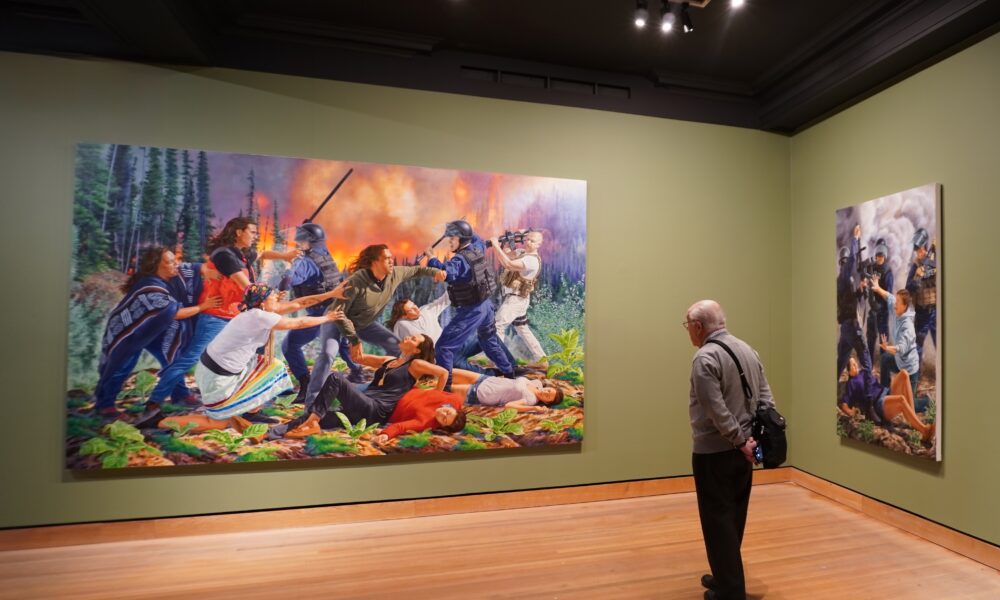
In a world where history is painted by the victor, Kent Monkman takes on a personal challenge to tell an equally biased history, one painted by his subversive, heel-clad, hypersexual alter-ego Miss Chief Eagle Testickle

Monkman, a world-renowned queer and two-spirit artist from the Fisher River Cree Nation in Manitoba, forms his new exhibition, History is Painted by the Victors, around themes of resilience, loss, colonization, and the social ostracization and oppression of sexual and gender diversity. 

Monkman crafts the genderfluid character of Miss Chief to be simultaneously hyperfeminine in expression while possessing a commanding masculine authority. Using Miss Chief to explore themes of the artist’s ego, Monkman aspired to mock the colonial-era practice of artists such as George Catlin, who inserted themselves heroically into the battlefields they painted. Monkman places Miss Chief dramatically at the center of each piece, where she comedically seems to always steal the stage. 

The humour of her placements and renditions of the colonial narrative bring forth questions of the era’s commonly accepted truths. The exhibition plays with the idea that colonial-era painters were heavily twisting their paintings to fit harmful narratives, such as the ‘Pristine Myth,’ which depicted the pre-colonial West as virginal and uninhabited, as well as that of the ‘Noble Savage,’ which portrayed Indigenous people as a stoic, dying race. These myths fall under the harmful ideas of ‘Manifest Destiny,’ by which colonizers perceived themselves as ordained by God to bravely conquer the western lands they saw as ripe for the taking.

Flipping narratives and channelling the idea of power through sex, the exhibition has the recurring visual of Indigenous men sexually dominating white cowboys against contrastingly serene landscapes typical of settler-colonial paintings. As intended, the scene comes off humorously shocking, but raises a very serious point: The frequent characterization of Indigenous people as a dying race submitting to the conquest of the white man is just as outlandish and fabricated as the scenes and narratives in Monkman’s work. 

Thematically, the exhibition presents a whimsical, provocative lens on the key issue of marginalization. Monkman’s work starts with flamboyantly dressed Indigenous Peoples lounging in the serenely depicted Sierra Nevada, poking fun at the myth of empty land prior to European westward expansion; it quickly shifts into the more seriously depicted tragedy of residential schools, police brutality toward Indigenous Peoples, and the violence perpetuated against Indigenous women

Although Monkman’s work is a narrative of past events and a sombre window into how histories are often mediated, many of his paintings come across deeply hopeful. With the ambitious goal to ‘decolonize Canada,’ his work is highly popular among young, 2SLGBTQIA+, and university audiences. Monkman creates the refreshing image of a queer, inclusive, Indigenous future; a radical standpoint, as under the colonial vision, many of the communities he depicts were not intended to survive into the 21st century.  

Despite its dramatic historical reimagining, the exhibition is not a fabrication of equal falsehood to the myths it counteracts. The sexually liberated and loudly queer characters of Monkman’s image show a genuine window of Indigenous two-spirit acceptance that was restricted by colonial society. The Indigenous domination of white settlers demonstrates the historic factuality of hundreds of years of anti-colonial resistance. History is Painted by the Victors is a vibrant, surreally portrayed truth of who and what have always existed in North America. 

History is Painted by the Victors opened on Sept. 27 and runs until March 8, 2026. It is the largest solo exhibition of Monkman’s work, and can be seen at the Montréal Museum of Fine Arts on rue Sherbrooke. 

Fact or Fiction, Science & Technology

Fact or Fiction: Does taking Tylenol while pregnant cause autism?

If you have done any scrolling recently, whether on TikTok or a news feed, then you have likely seen that U.S. President Donald Trump claimed that using Tylenol during pregnancy can be “associated with a very increased risk of autism” in children, and that it is “not good.” His statement shook the medical world, with Health Canada quickly rejecting his assertion due to a lack of conclusive evidence.

To investigate why his claim is misleading, The Tribune spoke with Joe Schwarcz, director of McGill University’s Office for Science and Society and professor in the Department of Chemistry. He explained that while some studies suggest a link between autism and acetaminophen—the primary active ingredient in Tylenol products, as well as many other over-the-counter (OTC) and prescription medications—the evidence remains limited.

“There certainly have been studies that have shown a link,” Schwarcz said. “Now, these are what we call observational studies, which can never prove a cause-and-effect relationship. You just look at a population, you look at some variables, and see what you can […] make of it.”

He pointed to an alternative explanation for this link, highlighting instead the role of genetics. He noted that autism has a strong hereditary component, with inherited genetic variations contributing to its prevalence. 

“The more likely explanation is that people who have a greater risk of giving birth to autistic children are also people who are more likely to take acetaminophen during pregnancy,” Schwarcz said. “People who are somewhere on that spectrum are more sensitive to pain and are more likely to pay attention to it, and therefore are more likely to take a painkiller like acetaminophen during pregnancy. So, it is very possible that if there is a link, as is suggested, it is not because [of] acetaminophen.”

Schwarcz also noted that existing research demonstrating a link between autism and acetaminophen faces many limitations.

“It’s very difficult to get proper statistical information from people about exactly what they have done during pregnancy,” he said.

Additionally, acetaminophen appears in many other medications, making surveys for data collection in research often inaccurate.

“Acetaminophen is the active [ingredient] in Tylenol, but many people may not know that, so that if they are asked, ‘Have you taken Tylenol?’, they’ll say no, but they may have taken one of the 600 other medications with a different name, which also contain acetaminophen,” Schwarcz said. “Or they may have taken a generic version of acetaminophen, or they may have taken some other drug that they think is acetaminophen. So these kinds of surveys are notoriously unreliable.”

Schwarcz further expanded on how Trump’s official announcement urging pregnant people to avoid Tylenol except under drastic conditions is harmful. Referring to Tylenol instead of acetaminophen signals out the brand’s marketing reputation, as other medications contain the same active ingredient. Moreover, acetaminophen is the safest OTC medicine in pregnancy to relieve fever and pain. 

“High fevers and pain during pregnancy can cause a miscarriage. It can also result in kidney problems in the baby, and improper formation of the cerebrospinal fluid [….] Telling someone that they should grin and bear it, you know, when they’re pregnant, is absolutely the wrong advice,” he said. “You cannot, in pregnancy, use non-steroidal anti-inflammatory drugs, you can’t use Advil, you can’t use aspirin. The only one that you can use is acetaminophen, and it is very effective at reducing [elevated fever] temperatures.”

Untreated high fevers and pain during pregnancy pose serious potential risks to the fetus, meaning that better advice would be to use acetaminophen when one feels pain. Additionally, medications administered during pregnancy will include warnings advising pregnant individuals to consult a medical practitioner first. They exist to ensure the safety of both the parent and the developing fetus. 

Therefore, fact or fiction: Does Tylenol consumption cause autism? Science shows it does not. While a small correlation exists, it is minimal and likely linked to other factors, not the active ingredient in Tylenol, acetaminophen. However, framing autism as a “dangerous outcome” to the point where individuals should avoid taking Tylenol places a stigma on people who have autism. President Trump’s claim reinforces harmful stereotypes, devaluing the experiences and identities of people with autism by portraying autism as something inherently negative or undesirable.

McGill, News

Faculty of Education hosts 7th annual Skátne Entewathahíta/We Will Walk Together event

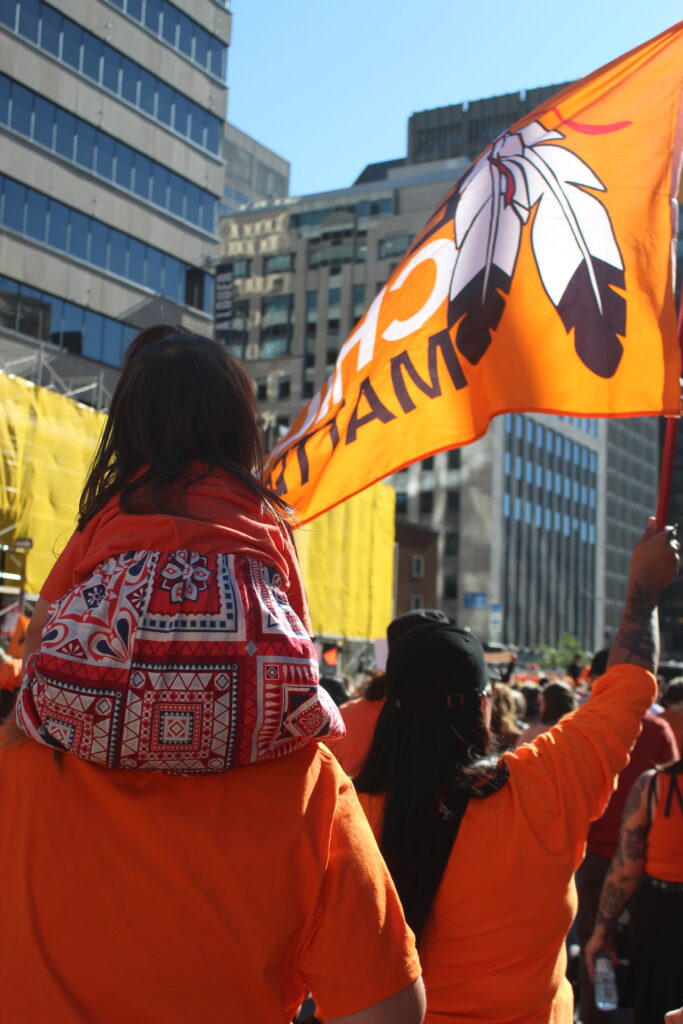
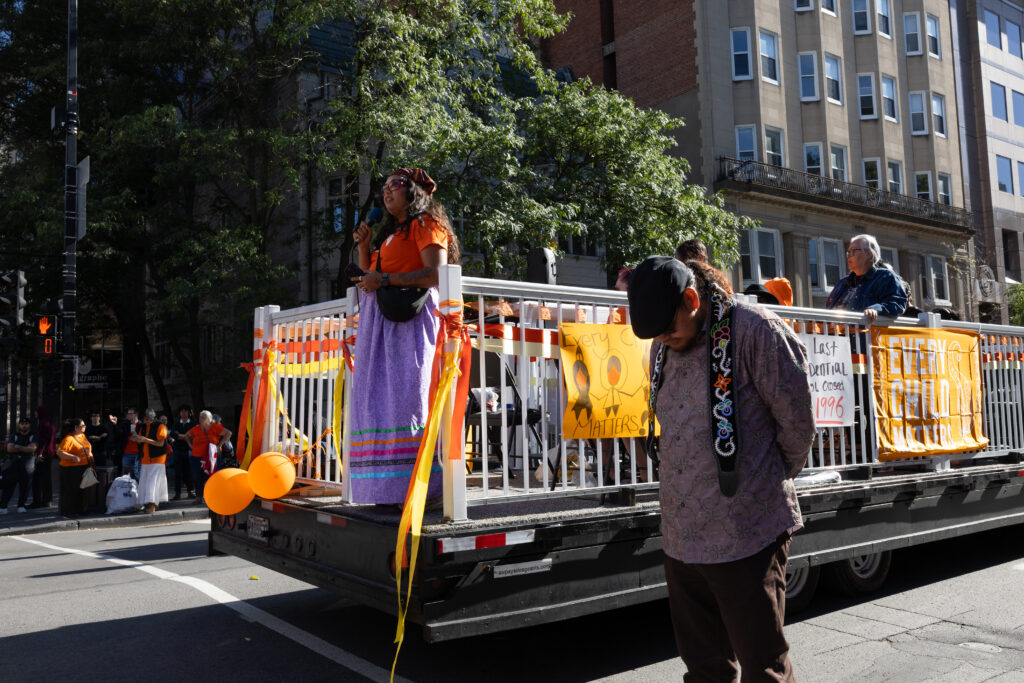
McGill’s Faculty of Education hosted its seventh annual Skátne Entewathahíta/We Will Walk Together event on Sept. 30. The event, held on Canada’s National Day for Truth and Reconciliation, included speeches from various Indigenous leaders, a land-based activity, and a tour of Indigenous art on public display at McGill. 

The event began with opening remarks from Geraldine King, assistant professor in the Department of Integrated Studies in Education (DISE) and co-director of McGill’s Office of First Nations and Inuit Education. King emphasized the relevance of Canada’s residential school system as an ongoing issue, rather than an event of the past. 

“It’s a day of honouring what’s happened […] to not only our ancestors, but folks in my own generation who, in fact, attended residential schools,” she said. “I want everyone to acknowledge that this isn’t a part of history. It’s not an artifact. It’s not archeology, looking into what happened in the deep past. This is, in fact, very present and very real.”

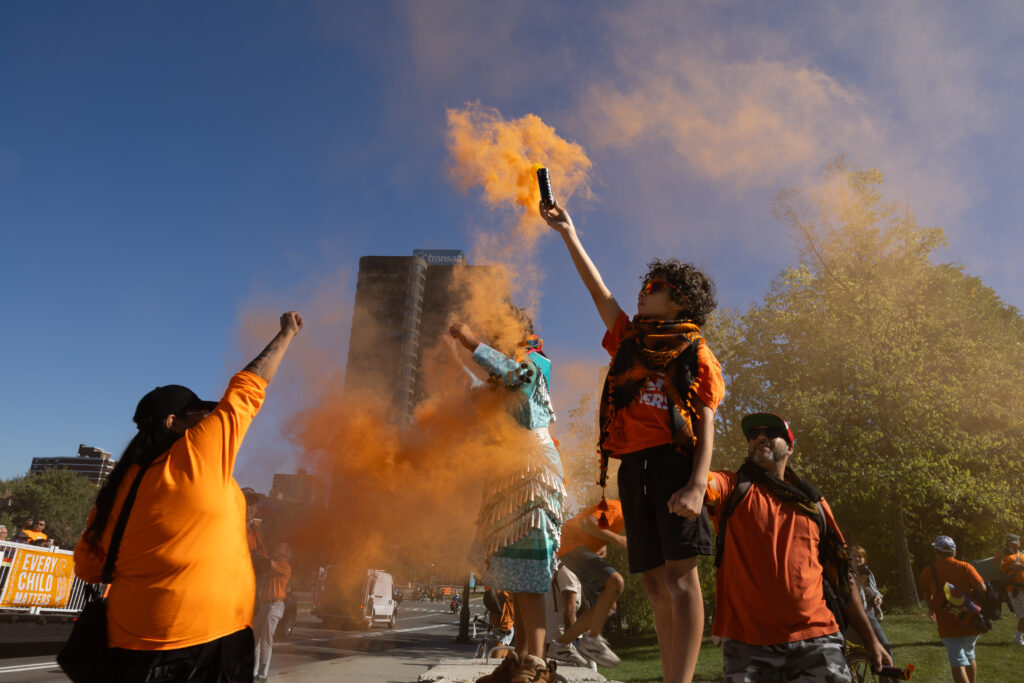
Demonstrators shout “Every child matters!” and honor the thousands of Indigenous children who died in residential schools and whose bodies rarely returned home.

The next speaker was assistant professor Michelle Kennedy, part of DISE’s Contract Academic Staff. She spoke on the importance of supporting Indigenous family and friends, and being educated on their struggles with the residential school system. 

“Often, a lot of people who attend residential schools die fairly young,” Kennedy said. “I didn’t get a chance to really know my grandparents [who attended]. I spend a lot of time asking my relatives what they were like. That’s a really odd question to ask, but you have to do research about your family members, and often I find what comes out are the hardships that they experienced.”

Robert Spade, Anishinabeininii dancer, artist, and professor at McGill’s Schulich School of Music, then took the floor. Spade challenged those in attendance to find their origin stories as a way to connect with their ancestors and the past.

“Find your creation story. Do not be colonized,” Spade stated. “If you today do not have your creation story, where you’re from, [if] you don’t have that connection, you were robbed. Think about that. I have mine. Sure, they beat me in a school. They ridiculed me for speaking my language. But I have my place in the universe. Today, I am grateful for life, because nobody knows where that’s from or how to make it.”

AJ Esquega, Energy Projects Coordinator from the Kiashke Zaaging Anishinaabek (Gull Bay) First Nation, gave further remarks. He highlighted Indigenous food sourcing practices as central not only to Indigenous cultural identity, but also to community well-being, including for later generations.

“[I want] to create a very positive space so that we can all live and grow and take care of each other and the land for future generations,” Esquega said. “I’ve been growing up on the bush, not knowing that’s part of who we are, too, hunting, fishing, trapping, and learning how to field-dress a moose, […] how to cook it, and how to feed our communities and feed our families.”

Following these opening remarks, Esquega hosted a land-based activity which included birch bark etching, crafting decorative wooden canoes, and tasting birch syrup. He continued to emphasize the importance of these exercises as a way to connect with Indigenous culture, recalling how he learned them firsthand with his grandfather. 

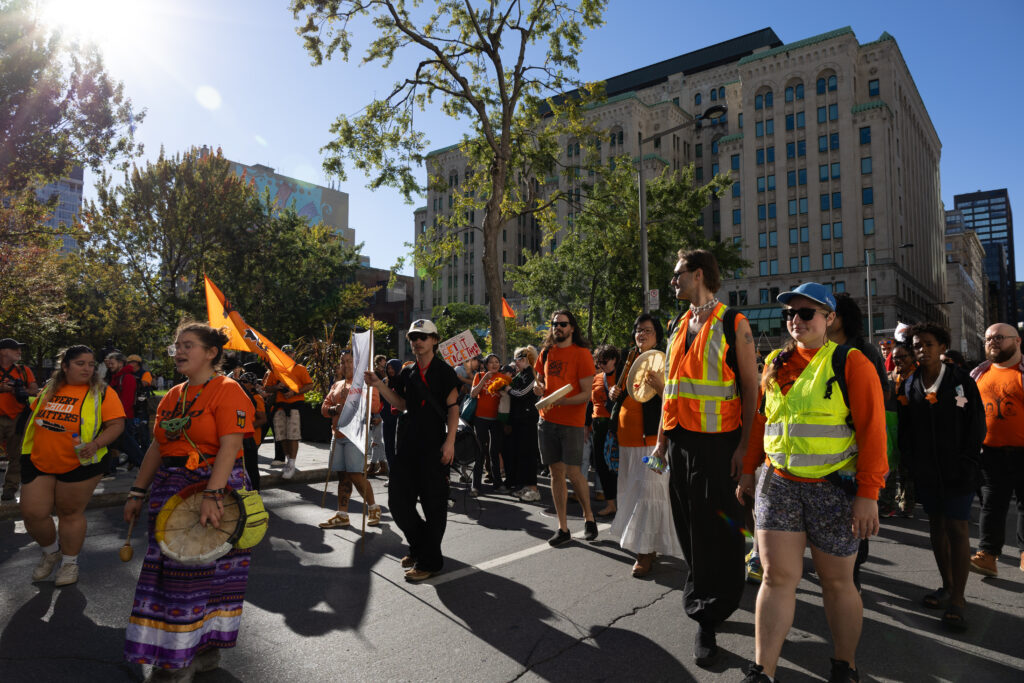
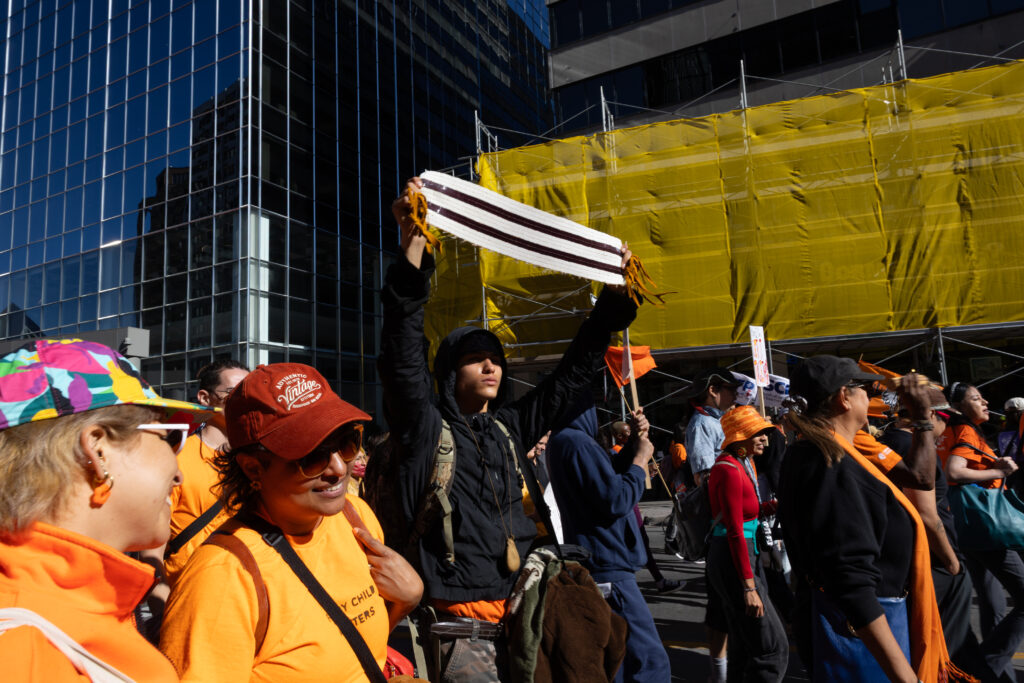
Thousands of Montreal families, and community members march down Parc Avenue to commemorate the National Day for Truth and Reconciliation.

Approximately 30 students attended the land-based activity. One Métis attendee, Franny Hansen, U3 Nursing, explained in an interview with The Tribune that the National Day for Truth and Reconciliation is a time to honour Indigenous ancestors who endured residential schools, and to reclaim the culture they were denied.

“It’s really important for me on Truth and Reconciliation Day to remember [that] I have ancestors, my great grandparents, that went to residential schools,” Hansen said. “So it’s really important to reflect and remember all the children that [had] their culture stripped and taken away, due to colonization, due to residential schools, and to celebrate the culture that they weren’t able to celebrate.”

(Zoe Lee / The Tribune)
Science & Technology

How institutional regulations of multiple relationships gatekeep psychotherapy

Are there risks in enforcing ethical boundaries in the context of psychotherapy? This question arises when considering how and why ethical red tape becomes cemented into clinical practice, especially in regard to the client-psychologist relationship.

Dennis Wendt, associate professor in McGill’s Department of Educational & Counselling Psychology, and director of the Cultural and Indigenous Research in Counselling Psychology (CIRC) lab, tackled this dilemma in a recent study published in American Psychologist. The paper critically examined the traditional ethical stance on ‘multiple relationships’ (MRs) in psychotherapy, arguing that the prevailing, individualistic, risk-averse approach is often unfit for diverse communities. 

In counselling settings, MRs arise when a professional therapeutic relationship coincides with a secondary relationship, such as a friendship, business relationship, or any other personal connection to the client. Such dual relationships raise reasonable concerns around client confidentiality, power imbalances, conflicts of interest, and similar ethical concerns. As a result,  professional ethical codes ban them, and industry norms reinforce this prohibition. However, in an interview with The Tribune, Wendt shared deep-rooted reservations around these ethical frameworks that lack solid scientific backing. 

“The idea that therapeutic relationships are better when they’re distant, I’ve long been suspicious of that,” Wendt noted. 

The paper highlights compelling testimonies from racialized practitioners, exemplifying the real-world dangers of imposing the Western ethical frameworks uniformly. One of these testimonies came from Tanya McDougall, an Indigenous practitioner who was prohibited from assessing a young relative struggling during COVID closures. The paper showcases where ethical ‘protections’ can act as a barrier to accessing important mental health support, especially in remote and underserved areas where access is already limited. 

Mawdah Albatnuni, a Muslim psychotherapist, echoed similar sentiments, explaining why clients benefit from placing their therapist within the social-religious map. Hard partitions feel inauthentic and stigmatizing of spiritual practice. MRs aren’t a slippery slope; rather, they are the on-ramp to care in communities where therapy is stigmatized and credibility is relational, not purely credentialed. 

Lastly, Payton Bernett offered a 2SLGBTQIA+ perspective. As a trans clinician active in Montreal’s tight-knit 2SLGBTQIA+ recovery spaces, Bernett emphasized that visibility within the community is essential for signalling shared vulnerability and protection. With these testimonials, the authors contend that community-centred care and interconnected relationships are important for trust and support, showing how rigid prohibition of MRs may be more harmful than protective in some communities. 

“Rigid rules can actually make us careless about the specific dynamics in front of us,” Wendt said. “It’s just lazy ethics.” 

To begin this process of systematic reform, the paper proposes applying a communal selfhood lens to promote decolonial and liberation psychologies. This includes shifting the ethical frame from an individualistic, risk-averse ideology to one that prioritizes community welfare and aligns MR decisions with antiracist and anticolonial commitments. It also means moving from presumed ‘objectivity’ to critical hermeneutics—accepting that some closeness and community engagement can surface lived contexts of oppression and rebalance power.

“Who decides?” Wendt asked. “Too often, these are top-down rules from regulatory bodies that don’t reflect the communities being served.”  

This question of who actually draws these boundaries remains. Navigating these ethical boundaries is nuanced and complex, and removing the one-size-fits-all approach invites difficult questions. 

Wendt argues, “We need to bring community voices to the table and let them help shape those boundaries and practices.” 

In practice, the paper supports a graded-risk approach: If an overlap is low-risk, non-coercive, and clearly helpful, name it, and document it with the client. Policies would move from blanket bans to a simple context-based checklist, taking into account power dynamics, client preferences, service scarcity, and a transparency plan. 

Ultimately, Wendt and others ask whether the minimization of MRs in clinical contexts can, in and of itself, be ethically questionable. In minority groups, and even in the population at large, understanding the self as embedded in community instead of existing in silo may be the key to improving access, trust, and credibility. By stripping down the dogmatic thinking around client-practitioner relationships, we can take sure steps towards democratizing and destigmatizing care.

Art, Arts & Entertainment

How the censorship of street art highlights political activism

On Sept. 8th, street artist Banksy unveiled a new mural on an outer wall of the Royal Court of Justice in central London. The mural depicted a judge beating a protester lying on the ground with a gavel covered in blood—a haunting image that sharply criticizes the British justice system. Within hours, officials surrounded the mural with metal barriers, and within 48 hours, they had removed it completely, setting off a debate on the political censorship of art. 

In July 2025, the UK government identified Palestine Action, a pro-Palestinian action network founded in 2020, as a terrorist organization. The organization’s ban occurred after activists broke into a Royal Air Force base and impaired two military aircraft. The proscription stated that any individual who was a member of or supporter of the organization would be committing an offence punishable by up to 14 years in prison. In response, the group led a peaceful protest, which resulted in about 900 arrests on Sept. 6th. Banksy’s mural on the Royal Court of Justice did not appear out of nowhere; it surfaced after the waves of arrests that occurred, alluding to the human rights violations and extreme censorship by Britain’s justice system.

The subsequent censorship of Banksy’s mural further illustrates the whole purpose of street art: Its impermanence. Graffiti and street art are forms of civil disobedience and political activism. Artist Jean-Michel Basquiat began his artistic career as a street artist, addressing topics such as racism and social inequity. Similarly, Keith Haring also started out as a street artist, turning public spaces into urgent commentaries on the AIDS crisis and apartheid.

Many in the elite art scene have described graffiti and street art as ‘vandalism,’ thus devaluing its cultural significance. Yet, contemporary art’s inherent inaccessibility to anyone but the wealthy is what makes street art so important. It pushes boundaries and is accessible to everyone. Banksy likely knew that his mural in London would be removed, but he also knew that the impermanence of his work would highlight increased censorship surrounding the genocide of the Palestinian people. This makes the removal of the art just as powerful as his original piece. 

This is not the first time that Banksy has created art about Palestine. In 2005, Banksy and his team of artists painted seven murals on the West Bank Wall, the political border between Palestine and Israel. This wall and other blockades put in place by Israel have led to strict surveillance on the Palestinian people and have also restricted their movement, making Gaza and the West Bank the largest open-air prisons in the world. One of the murals depicts two children creating sandcastles, and above them is an illusion of a broken piece of the West Bank Wall. The broken piece illustrates a beach, creating an idea of a paradise beyond the wall. Banksy faced backlash from the Israeli government for painting these murals, similar to the negative response from the British government.

The censorship of art discussing Israel and Palestine, and the censorship of art in general, limits important discussions which can lead to ignorance on these topics. Freedom of expression is one of the most important features of art, and censorship of public artworks completely disregards the artist’s perspective and intention. Once we are no longer afraid to listen to the opinions of others through creative expression, we can expand our perspectives on crucial political topics. 

Commentary, Opinion

The fatal consequences of racialized 911 calls

On Sept. 21, a police officer shot and killed 15-year-old Nooran Rezayi in a residential neighbourhood in Longueil, a suburb of Montreal. Radio Canada alleges the officer pulled the trigger just 58 seconds after arriving on the scene. 

At 2:48 p.m., an individual called the police to report a group of allegedly armed people dressed in black in a public area. The first patrol car arrived at 2:57 p.m. Bystanders ostensibly claim that Nooran Rezayi reached into his backpack in front of him to show he wasn’t carrying a weapon, but the officer on scene opened fire twice. The officers attempted CPR and rushed him to the hospital, but they couldn’t revive him

This type of incident demonstrates the urgency to deconstruct the systemic racism ingrained within Montreal’s police system. Although one police officer is responsible for pulling the trigger, the murder of Nooran Rezayi exposes a violent and deadly chain of systemic targeting and violence against racialized groups. If 58 seconds was all it took for discriminatory assumptions to become lethal, we must confront this pervasive racism at every level: From the criminalizing calls that report, to the officers who respond, to the institutions that investigate these horrific acts.

This escalation can be traced back to the 911 call, which described Nooran Rezayi and his friends as allegedly armed and dressed in black—language that implicitly signals danger. The dire necessity of this reckoning is evident as even police leadership acknowledges the pattern in how racialized individuals are portrayed in emergency reports. Fady Dagher, the current Service de Police de la Ville de Montréal’s (SPVM) police chief, in a podcast by Sans Filtre Podcast, explained how he recalls receiving calls from individuals saying that there were violent gangs of Black people in an area, and when he would arrive on the spot, he would find youth community members playing games. Examples such as these reinforce how racialized youth are frequently and unfairly perceived as inherently violent and dangerous—judgments that directly shape how officers respond, often with detrimental consequences to the communities they are supposed to protect.

Nooran’s murder exposes two failures: the racialized assumptions that perceive Black and brown youth as threats, and the failure of certain accountability measures. While measures exist and have existed to train officers and promote community engagement, these efforts are undermined when officers seem to face little to no punishment for misconduct. In response to the shooting, the Bureau des enquêtes indépendantes (BEI), an independent unit that investigates cases “where a person other than a police officer on duty dies, is seriously injured, or is injured by a firearm used by a police officer,” opened an inquiry. However, the BEI rapidly received backlash on social media, including in a recent article in Le Devoir, with many doubting the unit’s commitment to holding police officers on duty accountable for their actions. This is because since the BEI’s creation in 2016, 467 investigations have been opened, with 65 of them resulting in an intervention where a civilian has been killed at the hands of a police officer. The BEI has opened only 2 judicial procedures and has failed to enforce a single criminal accusation or condemnation of any officers involved in these palpable acts of violence and abuses of power. As the investigation continues, the message many communities receive is troubling—officers can target and kill without facing real consequences.

Reform conversations when it comes to policing often focus on withdrawing weapons from police officers, requiring body cameras, or reducing the SPVM’s budget. While these matter, they obscure the fundamental issue, which is that systemic racism doesn’t just live within police departments—rather, it permeates every level of society, shaping who gets reported as “dangerous,” how officers perceive “threats” to which lives are devalued

The murder of Nooran Rezayi wasn’t an isolated tragedy or a single officer’s mistake. Real accountability requires more than investigating individual officers—it demands we dismantle the racist assumptions embedded in every stage of this fatal cascade of racism and set the precedent for accountability. Hopefully, this investigation will proceed to its full course, ensuring that accountability is upheld for Nooran—as it should be for everyone. 

Behind the Bench, Golf, Sports

Europe holds off U.S. rally to retain golf’s Ryder Cup amid fan controversy

For the second straight Ryder Cup, Team Europe lifted the trophy, fending off a late Team U.S.A charge to claim a 15-13 victory at Bethpage Black Golf Course in Long Island, New York, on Sept. 28. But as grand as the tournament’s golfing was, it will more likely be remembered for the chaos that ensued outside of its ropes than for the play within. 

Europe entered the Sunday singles with an 11.5–4.5 advantage: The largest ever European lead heading into the final day of the Cup. The margin reflected an underwhelming American start. Several U.S. players looked out of rhythm in Friday’s foursomes, and the pairing strategy from captain Keegan Bradley was widely questioned. By contrast, the Europeans—led by veterans Rory McIlroy of Northern Ireland and Jon Rahm of Spain, and boosted by Ryder Cup rookies Ludvig Åberg of Sweden and Nicolai Højgaard of Denmark—capitalized early to build what proved to be an insurmountable lead.

Still, the Americans mounted a spirited response on Sunday. Wins from Scottie Scheffler, Brooks Koepka, and Xander Schauffele decreased the U.S.’ deficit, briefly stirring hopes of a comeback. But crucial halved matches, most notably Rahm’s clutch birdie on hole 18 to tie Scheffler on Friday and McIlroy’s steady play in singles, ensured Europe would not relinquish its vise on the competition. 

If the golf itself offered high drama, the galleries offered something darker and more sinister. Reports of abusive fan behaviour escalated throughout the weekend. Rory McIlroy, Europe’s golfing heartbeat, was taunted repeatedly and eventually snapped at spectators before a Saturday shot. Hours later, McIlroy’s wife, Erica Stoll, was struck by a drink hurled from the stands. In his post-match comments, McIlroy condemned the atmosphere as “unacceptable,” adding that “golf should be held to a higher standard than what was seen out there this week.”

These Ryder Cup incidents have reignited debates about how fans should toe the line between passion and politeness. Unlike other sports, golf traditionally cultivates an ethos of etiquette. The sport demands silence on swings, applause after shots, and pleasantries all around. The Ryder Cup, however, has long been an outlier with its corresponding orchestra of chants, jeers, and perhaps misdirected patriotism sparking the event with palpable electricity. The 1999 Ryder Cup at Brookline is infamous for the unruly American fans in attendance that day, while European venues have also faced criticism from visiting teams and their players for their disruptive crowds in past years. 

What makes Bethpage’s scenes particularly concerning is their rapid escalation from threats to physical harm. While players have grown accustomed to verbal heckling, the sight of a family member being targeted is a sobering reminder of how quickly things can turn dangerous.

The evidence suggests, however, that this is not a uniquely American issue. European fans have had their own lapses, though the size and fervour of U.S. crowds, particularly in New York, reportedly magnify tensions. Ultimately, the Ryder Cup’s future rests on whether golf’s governing bodies can channel the passion brought to the Cup into pride rather than malice. 

In continuing the development of golfing competitions at this scale, regulators and tournament organizers face the delicate task of preserving the Ryder Cup’s raw intensity without compromising player safety. Options range from stricter alcohol sales policies to heavier policing of crowd conduct. 

For now, though, Europe basks in another triumph. They have won 11 of the last 14 Ryder Cups, reinforcing their dominance in golf’s fiercest rivalry. Yet as much as McIlroy and his teammates celebrated their win, his sharpest words about the tournament were reserved for the galleries. “Sometimes this week we didn’t see [respect],” he said. “So no, this should not be what is acceptable in the Ryder Cup.”

Read the latest issue

Read the latest issue