Latest News

Hockey, Sports

NHL window shopping at the 2018 World Juniors

Every holiday season, many Canadians watch the International Ice Hockey Federation (IIHF) U-20 World Junior Championships, cheering on the nation’s best young players. The tournament is an exciting time for NHL fans. For those supporting teams near the bottom of the standings, the World Juniors provide an opportunity to scout draft-eligible players that—if the draft lottery works out in their favour—may soon bolster their struggling teams’ ranks. While there were no undrafted players on the Canadian roster, other nations displayed their fair share of young talent.

Rasmus Dahlin — Sweden

Without a doubt, Dahlin was the biggest name of the tournament in terms of draft-eligible players. Dahlin played a huge role on a Swedish squad that dominated its opponents at the tournament, falling only to Canada in the final. Individually, Dahlin made the tournament all-star team, and was named  best defenceman of the tournament with a total of six assists. That performance showed that in addition to being a solid defensive player, he also has tremendous offensive capabilities as a puck-moving defenceman. He is pegged by virtually all scouts as the top pick in the 2018 NHL draft, and his performance at the tournament did nothing but reinforce his reputation.

Brady Tkachuk — United States

A skilled and irritating forward, Tkachuk was an integral part of the American attack, scoring three goals and six assists. In addition, he proved to be a versatile player, defensively responsible and a key component of the American penalty kill unit. When the situation demanded it, Tkachuk proved he could come in clutch: He scored the tying goal in the outdoor game against the Canadians, forcing the game into overtime and allowing the Americans to nab the game in an overtime shootout. While the Americans were ultimately defeated 4-2 by the Swedes in the semi-finals, Tkachuk scored the second American goal in a late-game comeback attempt. Tkachuk is a gritty forward that can get in the face of opponents; however, he has the skill to back up his antics, and is projected to be selected in the top five.

Andrei Svechnikov — Russia

Svechnikov, a Russian winger, is another forward projected to be a top pick. Many rankings have him positioned to be drafted second overall. Unfortunately for those who hoped to see Svechnikov at the tournament, his playing time was limited as a 17-year-old on a team of mostly 19 year-olds. Nevertheless, he displayed his offensive prowess in the ice time he was given, adding five assists and tying for second in team scoring. Svechnikov has undeniable speed and skill, and the potential to bring tremendous offensive power to whichever team selects him.

Filip Zadina — Czech Republic

Filip Zadina was a key member of a Czech team that surprised many with a substantial upset win over Finland in the quarterfinals. The speedy forward exhibited his high level of skill throughout the tournament, tallying seven goals to reach second in scoring, and was named to the tournament all-star team. In the semi-final game against Canada, Zadina displayed his offensive mastery on a beautiful shot that beat goalie Connor Hart cleanly to score the first goal of the game. His performance wasn’t enough to carry the Czechs to the finals, but, in Zadina, teams can expect a defensively accountable, highly-skilled forward with a nose for the net.

While Canada walked away with the gold, hockey fans around the globe enjoyed an exciting tournament that showcased the game’s elite up-and-coming players. Canadians who were exuberant about the win but support currently-struggling NHL teams—such as the Oilers, Senators, Canadiens, and Canucks—may see a light at the end of the tunnel in the form of these young stars.

News, PGSS

Lack of French PGSS communications discussed at final Council meeting

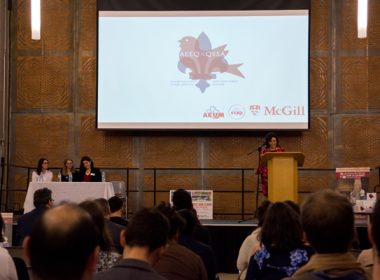
On Dec. 6, the Post-Graduate Students’ Society (PGSS) Council held its last meeting of 2017, beginning with a discussion regarding translating PGSS emails, which are currently only written in English, into French. Councillors next debated a motion to prioritize PGSS engagement with the Quebec Student Union (QSU) over the Association for the Voice of Education in Quebec (AVEQ).

Council also approved applications by the Appointments Board Committee for various positions, including those of Bruno Belzile for the Council of Graduate and Postdoctoral Studies and Stephanie Mok for the Environment Affairs Committee. Member Services Officer Jenny Ann Pura discussed the launch of EmpowerMe, a 24/7 accessible counselling service for PGSS members. Council then ratified the resignation of former equity commissioner Emil Briones, who is stepping down due to health reasons.


Possibility of translating further PGSS communications into French

Magdalena Kogut, a first year Master’s student representing the French Language and Literature Department (DLLF), opened the discussion on the lack of French versions of PGSS communications.

“We realize that our department is tiny in the scheme of McGill departments, but it nonetheless a certain population of McGill students who are being excluded from important PGSS information,” Kogut said.  “And we believe that every student has the right to liberty of information and to be able to judge information for themselves rather than through interpretation.”

PGSS Internal Affairs Officer Mansha Imtiyaz stated that Council was looking into options to resolve the issue, and added that the PGSS executives planned to discuss it at their next meeting. However, Pura noted that standard prices for translation services cost from 15 to 20 cents per word, with a single email estimated to cost up to $94, based on the length of emails the PGSS has sent in the past.

“We understand that it’s really important to invest in this, but we also understand our financial limitations,” Pura said. “So we are trying to negotiate with other translators, trying to see who McGill uses, and trying to see if we can contract that out as well.”

Council voted to table the agenda item.


Discussion concerning the continued prioritization of QSU over AVEQ

After establishing by a raising of hands that the majority of Councillors were aware of the AVEQ provincial student union, External Affairs Officer Hocine Slimani shared his confidence that a Council decision to prioritize the QSU was sufficiently informed. Slimani’s predecessor and former PGSS secretary-general Jacob Lavigne also preferred QSU over AVEQ, after observing both. Chris Erl, a second year Geography PhD student, motioned to table the agenda item.

“This is an incredibly important decision,” Erl said. “They both seem to be organizations that require a little more analysis by this body. Every student association has partisan affiliation. They have their own decisions. They have their own mandates. They have their own directives, and we need to do our research before we can actually make an executive decision.”

The motion to table the discussion passed.


Endorsement of open letter on Bill 151

Council also voted on whether to endorse the Students’ Society of McGill University, Our Turn, and AVEQ’s joint open letter on Bill 151. The letter shares these parties’ concerns that Bill 151 is not well-positioned to protect students or survivors of campus sexual violence.

Slimani introduced the item.

“Although I personally think that the letter is written in a very aggressive manner, I think that the message is good,” Slimani said.

Briones believes the open letter effectively highlights the bill’s inadequacies, and is a powerful advocacy tool.

“We all know that the sexual violence advocacy and support and educational infrastructure at McGill is still very inadequate, so there have been very questionable standards that this bill outlines,” Briones said.

The majority approved signing the letter and voted to adopt the motion. Bill 151 was then adopted by the provincial government on Dec. 8.

Montreal Municipal Court
McGill, Montreal, News

Former McGill student sentenced to 12 months house arrest for 2015 off-campus assault

On Tuesday, Dec. 19, Conrad Gaysford, a former McGill student, was sentenced to 12 months of house arrest for assault causing bodily harm to Kathryn Leci, a current McGill Master of Engineering candidate. The Honourable Judge Louise Baribeau of Montreal Municipal Court presided over the case.

The conditional sentence requires that Gaysford keep the peace, appear before the court when required, and surrender his passport, among other provisions. For the first six months of the sentence he is not permitted to leave his residence in Canada at any time of the day, except for documented employment or study purposes. For the following six months, Gaysford is required to remain at his residence from 10 p.m. to 7 a.m.. Hon. Baribeau also granted Gaysford an exemption to his house arrest for the dates of Dec. 24, 25, and 31, 2017 and Jan. 1, 2018. Gaysford will not serve any prison time for the assault.

The assault occurred outside an off-campus house party in Montreal’s Plateau neighborhood on Sept. 18, 2015, while Gaysford and Leci were both McGill undergraduate students. Following a verbal confrontation, Gaysford punched Leci on her lower left jaw, knocking her unconscious and causing her to fall and strike her head on the pavement. Three days after the incident, Leci was diagnosed with a mild traumatic brain injury by physicians at the Montreal General Hospital. In January 2016, she dropped out of McGill to attend an outpatient rehabilitation centre in London, Ontario, on the recommendation of a doctor who specializes in the treatment of brain injuries.

The Dec. 19 sentencing concludes a legal process that has spanned over two years, with multiple delays. Gaysford was originally arrested by the police in November 2015, and entered an initial plea of not guilty to the same charges in March 2016. Two months later, Gaysford, a British citizen, failed to appear at a scheduled court hearing because he was out of the country, postponing the hearing to September 2016. In November 2016, he admitted guilt and agreed to the facts of the case before a municipal court, after which Hon. Baribeau agreed to postpone the sentencing process until May 2017 to allow Gaysford to graduate with a B.Sc. in Physics. Leci returned to McGill in the Fall 2017 semester to complete her B.Eng. in Chemical Engineering, overlapping with Gaysford for the final year of their degrees.

Sentencing hearings took place over the next eight months until Dec. 19, with members of both parties becoming visibly emotional throughout the hearing process. For the prosecution, Dr. Keith Sequeira, a physical medicine and rehabilitation specialist who has treated Leci since January 2016, spoke to the injuries she sustained as a result of the assault.

“Ms. Leci continues to have refractory symptoms and impairments that relate to this assault and concussion,” a medical report that Sequeira submitted as evidence to the court read. “Her headaches are present constantly. She also struggles with vision and auditory sensitivity, fatigue and sleep dysfunction much of the time.”

Leci also attested to her injuries in court.

“Of course I still struggle with memory issues,” Leci said through tears during a sentencing hearing in October 2017 when she was questioned by Gaysford’s lawyer, Richard Shadley. “With frequent headaches, with tension issues. It's all constant.”

Sequeira also gave his professional opinion that the chances of Leci making a full recovery are slim.

“Her problems have persisted for almost two years and to a meaningful extent, will likely remain,” Sequeira’s medical report read. “I anticipate that Ms. Leci will likely have symptoms, impairments and limitations in the future that are reasonably consistent with her current presentation [….] I do not expect these to substantially improve in the future.”

The defence also brought several witnesses to the stand, including Gaysford’s father, professors, and friends. They each testified to Gaysford’s character, stating that he was studious, involved in several extra-curricular activities, and had never been involved in a violent encounter prior to the assault on Leci. Gaysford himself also spoke to the psychological trauma he experienced after committing the assault, and the rehabilitative steps—such as counselling and anger management therapy—that he has taken since the incident.

In explaining her judgement to the court, Hon. Baribeau explained that she weighed several factors, including the nature of physical and psychological damages done to Leci, the impact on her studies, the societal impetus to condemn violent acts, the repercussions Gaysford has faced since the incident on social media and in the news, his age, and his ability to contribute to society.

The Dec. 19 sentencing concludes the criminal chapter of the case. In May 2017, Leci filed a civil lawsuit against Gaysford, which is currently still in its preliminary stages.

McGill, News

McGill Board of Governors meeting adjourns early following Divest McGill protest

The Dec. 12 McGill Board of Governors (BoG) meeting was forced to adjourn early after members of Divest McGill staged a protest. The group, which lobbies for McGill to divest its endowment funds from fossil fuel companies, demanded that the McGill community be consulted about proposed changes to the Committee to Advise on Social Responsibility (CAMSR) Terms of Reference. Prior to the interruption, the BoG passed the Policy Concerning Smoking at McGill University and received updates on the plan to integrate Royal Victoria Hospital (RVH) into McGill’s downtown campus. The Board of Governors is the highest decision-making body of the University, with final authority over all academic and financial affairs.


CAMSR Terms of Reference

The BoG considered approving a report by the Nominating, Governance, and Ethics Committee recommending appointments to BoG Committees, non-Board bodies, and Health Care bodies. The report also proposed an amendment to CAMSR’s terms of reference to add a clause mandating it to advise the university against using its resources to advance social or political causes.

Darin Barney, Associate Professor of Communication Studies and Representative of the Academic Staff to the BoG, proposed a motion to table the discussion of the report. He expressed concern that the BoG was not properly informed about the amendment prior to the meeting.

“CAMSR Terms of Reference are of interest to many people and several major changes to the mandate of the Committee were not prominently signalled,” Barney said. “The revisions were only received recently by the [BoG].”

Divest McGill members held a banner as they sang and chanted to interrupt the meeting, voicing their opposition to the proposed amendment and the lack of community consultations about it.

“We looked over the report and found the provisions unacceptable, and we believe that they should go through a community consultation first,” Divest McGill organiser James Flanagan, U2 History said.


Policy Concerning Smoking at McGill University

Yves Beauchamp, Vice Principal (Administration and Finance), announced McGill’s new smoking policy at the meeting. With the exception of four proposed smoking zones, the policy will make both of McGill’s campuses smoke-free by May 1, 2018. The planned smoking zones are located by the James Administration building, Schulich Library, Redpath Museum, and McIntyre Medical Building. McGill plans to phase out these zones by 2023, making both campuses entirely smoke-free.

The provincial Tobacco Control Act, passed by the National Assembly of Québec in 2015, requires colleges and universities in the province to adopt tobacco control policies geared towards establishing smoke-free campuses. Under the law, universities must establish smoke-free areas on campuses, discourage smoking, and foster initiatives in student associations to do the same.

“We want to make sure that the public understands that our campus will eventually be smoke-free,” Beauchamp said. “However, the establishment of transitionary smoke-free areas gives us time to evaluate the impact of a smoke-free campus. We want to avoid a rush of people [smoking] on University, Sherbrooke, and McTavish.”

Students’ Society of McGill University (SSMU) President Muna Tojiboeva expressed concern at the meeting that students would not be able to differentiate between the proposed smoking zones and McTavish street, which is public.

“We plan to speak to the City of Montreal, to see if it is possible to make McTavish non-smoking,” Beauchamp said. “There will also be signage indicating where smoking is allowed.”

Additionally, there are no plans to remove the smoking zones at Upper Rez or Solin.

“Upper Rez is isolated,” Beauchamp said. “Forcing students to go down to the street, particularly at night, is a potential safety issue.”


Royal Victoria Hospital Site Update

Peter Coughlin, co-founder of real estate and investment company Redbourne Properties and member-at-large on the BoG, presented an update on plans for the RVH site, which remains vacant. In March 2015, the government of Quebec gave McGill a grant of $4 million to fund research into how the site may be used. McGill’s current proposal to integrate the buildings into the University for much-needed teaching and research space will cost $650 million, of which the government of Quebec will pay $500 million. However, the BoG is still deliberating whether to move forward with the project.

“We are enthusiastic but it would be wrong to say that we don’t have concerns,” Coughlin said. “[We are concerned about] the additional costs associated with the heritage status of the buildings, the environmental impact of the construction, and the incurred costs of taking over other buildings on the site, as well as raising or borrowing $150 million [to cover costs].”

Coughlin wants reassurance that McGill is able to provide the funds before moving forward, and that the provincial government’s support won’t come at cost of other University initiatives.

“We also need an answer to the question, if Quebec funds RVH, will they continue to fund other projects on McGill campus?” Coughlin said. “We would like to go to the next stage, but only with a set of conditions that will minimise the risks for the university.”

Student Life, The Viewpoint

Viewpoint: How I learned the importance of sleep hygiene

Don't let the students posting Snapchat stories of how late they've been cramming at McLennan fool you—there's nothing glamorous about insomnia. The condition, which affects 30 to 50 per cent of the United States population, can be one of detrimental to both academic success and student wellbeing.

I would know: In the winter of 2017–my first year at McGill–I developed chronic insomnia. Previously, while I was never the model sleeper, I at least slept an average of seven hours per night. After coming to university, however, my sleep quality began to drop drastically. By March, I was happy if I got even three hours of sleep at night. Looking back, I can now see clear signs that something was wrong. Insomnia is more than not getting enough sleep; it’s a reduction in quality of life. My days and nights blurred together, my mood became irritable, and I suffered from daily headaches, muscle tension, and overall sluggishness.

But perhaps the worst effect of insomnia—and one that I think often goes unmentioned—is feeling like you’ve lost control of your life. As I slept less and less, I couldn’t tell when I would wake up, and it didn’t help that I had 8:30 a.m. classes everyday. Even when I did manage to wake up and make it to class, I would often crash in the afternoons. I felt out of sync from everyone around me, who seemed perfectly fine navigating night to day.

When I missed a morning midterm because I fell asleep without realizing it, I knew I had to get professional help. In doing so, however, I faced a handful of problems. With my sleep issues, making the 8 a.m. registration at the McGill Health Clinic felt nearly impossible. Even when I managed to drag myself to the clinic, I was turned down twice, and ultimately had to wait three more weeks to see a doctor. Accessing McGill’s resources was stressful, but when I finally got to see a professional at the Clinic, things started to look up.

At the Clinic, I took a complete blood test and discovered I had a severe iron deficiency. I hadn’t anticipated how much my micronutrient intake could affect the quality of my sleep. Taking supplements didn’t solve my problem overnight, but I did begin to feel more energetic after a few weeks. I was also referred to a counsellor, as chronic insomnia is usually a result of stress. Using McGill’s services, I was able to identify some underlying issues that were keeping me awake.

Nevertheless, insomnia took months to improve. While I did everything my doctors told me to, I came up with some invaluable ‘sleep hacks’ of my own. In hindsight, the process helped me understand my own needs more; I came to realize that conventional ‘sleep hygiene’ methods—like avoiding naps, taking baths, and developing sleep rituals—don’t work for everyone. For instance, while exercising is not recommended before bed, I found that I slept better on the days I exercised in the evening and took a warm shower afterward, as I tired my body and cleared my brain before dozing off.

I also realized that I would spend an irrational time keeping myself ‘busy’ well past 2 a.m., even though I knew how much I needed to sleep. I’ve had many negative experiences trying to sleep but not being able to, and at some point, I began to avoid heading off to bed, which didn’t allow my sleep cycle to improve. I worked around my avoidance of sleep by slowly reducing the lighting in my room, tricking me into getting to bed without actually feeling the pressure to sleep.

After a few months of treatment, the number of hours I slept on average trickled upwards, and I now get almost seven hours a night, as I was used to. Whether you’re struggling to meet deadlines, or afraid you’ll crash yet again in the SSMU lounge, know that insomnia is a legitimate disorder. Asking for help and staying patient as you toss and turn are worth the nights of sound, untroubled sleep to come.

Private, Student Life

Last minute holiday gifts: DIY bath bombs

’Tis the season of gift exchanges, twinkly lights, and hot chocolate. As students, though, our all-consuming studies intrude on this joyful season, leaving little time to find the perfect gift amid exams and essays. For those short on time, a quicker alternative to buying the right gift is often making it. Bath bombs are a trendy, enjoyable, and easily homemade gift to win the hearts of everybody on your Christmas list this year.


DIY Detonator

Yields one bath bomb.

Ingredients:

  • ½ cup baking soda

  • ¼ cup corn starch

  • ¼ cup citric acid*

  • ¼ cup Epsom salt

  • 1 to 1 ½ tsp. water

  • 1 tsp. essential oil, any scent

  • 1 ¼ tsp. coconut oil

  • 1-2 drops food colouring (optional)

You will need:

  • Two medium-sized mixing bowls

  • A cupcake tray

*If you cannot find citric acid, then you can use lemon juice, but it will not be as fizzy.

Instructions:

  1. In the first mixing bowl, combine the baking soda, cornstarch, and salt. Mix together thoroughly.

  2. Melt the coconut oil in the microwave or on the stove, in order to combine it more easily with the other wet ingredients.  

  3. Mix the melted coconut oil in with the citric acid, water, essential oil, and food colouring in the other mixing bowl.

  4. Mix the wet and dry ingredients together, but make sure to do so slowly. You do not want to encounter any activation, such as fizzing or bubbling.  

  5. As you are mixing, if the ingredients do not stick together, add in water until they do.  

  6. Fill the cupcake tray with the mixture.  

  7. Let the bath bombs sit overnight in the refrigerator.  

  8. The next morning, using hot water, warm the outside of the cupcake tray to gently remove the bath bombs in one piece.

  9. Once the bath bombs are ready to go, wrap them however you please.

Recipe adapted from A Beautiful Mess.

Ask Ainsley, Student Life

Ask Ainsley: My roommate doesn’t like me bringing people home. What gives?

Dear Ainsley,

I've recently been bringing guys home with me to hook up and my roommate isn't happy about it. But it's not like I'm bringing home strangers. It's getting unbearable, and I'm stressed all the time. What do I do? My roommate just doesn't seem to understand.

Sincerely,

Handling Hookup Hostility (HHH)


Dear HHH,

I am so sorry that you’re going through such a difficult situation. It sounds like you and your roommate definitely need to have an in-depth conversation about what’s making them upset and how this tension is affecting you both. But before going into this conversation, consider what the underlying cause for their moodiness may be. It might not have anything to do with your sex life, or it might have everything to do with it. The thing is, you won’t know until you two talk it out.

First off, try putting yourself in your roommate’s shoes. They could be bothered by feeling like their space and privacy are being violated. Perhaps they’re uncomfortable with having someone they’re unfamiliar with sleep over. Is it possible that they are able to hear you having sex? You having late-night guests could be disturbing their sleep schedule. If this is the case, their grumpiness may be more about their space than your sex.

Even if it is a sex thing, it’s possible that your roommate is just projecting their insecurities onto you. If they are not one who often has hookups, could they be feeling jealous of you in some way? Perhaps they’re going through a tough time romantically, and seeing your prospering sex life is a reminder of where theirs is lacking. Also, try to consider whether you may be casting some of your nervousness about bringing home a hookup onto your roommate. Being with new people can be nerve-wracking, and may lead you to feel unsure about things. If you’re feeling uncertain about a new partner, you are more likely to overthink your roommate’s comments on the matter.

If you feel that your roommate is slut-shaming you—passing judgment, saying blatantly offensive things, or making microaggressive comments about your sex life—you may consider having a conversation with them about that as well. It is completely unacceptable for your roommate to make you feel guilty or ashamed about about your sexual activity. Remember that only you can make choices about your sexuality and how to lead your sex life. Any choice you make in this regard is valid, and having regular sex is a positive thing, given that you and your partners eagerly consent to all interactions.

Regardless of the reasons your roommate is being critical, having a conversation about how you feel and why will be helpful for both of you, as continuous tension will take a toll on your friendship and your living situation. Approaching conversations like this may feel awkward, but think through your word choice ahead of time and start with using “I” statements to express how you’re feeling. Make sure to ask for your roommate’s opinion as much as you share your own, so that you both feel like you’re getting to express how you’re feeling.

This dialogue may also need to include a talk about slut-shaming. Your roommate may not realize they are doing it, or how harmful it can be. Through seeing how their judgement is affecting you, they may be able to understand how slut-shaming also affects society’s view of women’s sexuality in general.

Once you talk to your roommate about what’s causing their frustration, then you can negotiate and find compromises. Your roommate may need to lay off the judgmental comments and side eyes, but likewise, you may need to set some ground rules about how often you bring someone over, or how long they’re allowed to stay. If you’re not bringing strangers home, and your hookup is more of a regular thing, it might even be worth encouraging them to spend time with your roommate beyond those awkward 2 a.m. bathroom run-ins. You could host a movie night, a dinner, or just have them over during the day; let both people know individually that it’s important to you that they get along and make an effort to talk in moments big and small.

However hard it may be, it’s important for you to find healthy and productive solutions to your problems, as living with someone who makes you uncomfortable and unwelcome is very stressful and could negatively affect your mental health. Know that your feelings of frustration are completely valid. I hope that through discussing the roots behind this problem, you will be able to create a more comfortable living situation—and continue hosting your hook ups.

Good luck,

Ainsley

News, SSMU

SSMU Council discusses governance, financing student activities

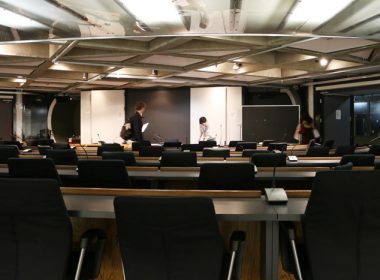
On Nov. 30, the Students’ Society of McGill University (SSMU) held its last Legislative Council session of the Fall semester. At the meeting, SSMU Funding Commissioner Lauréanne Pelletier gave a presentation on financing student activities. Council also passed the Motion Regarding the Provision of Bridge Funding for Savoy Society and discussed the Governance Changes Working Group.


Funding Commissioner Presentation

At the beginning of the meeting, SSMU Funding Commissioner Lauréanne Pelletier provided an overview of the different SSMU funds available to students and clubs. In the past year, the Funding Committee approved financing for a variety of projects, including $6,000 for the McGill Iron Rink, an outdoor ice rink on lower field.

So far, the committee has reviewed 72 funding applications, and approved 55 of them, amounting to $60,000 in funding. Pelletier aims to raise awareness of existing SSMU funds so that more members can take advantage of the resources.

“We are not getting enough applications,” Pelletier said. “There is so much money left. The first thing I am doing is talking to different commissioners to try to partner up with them to promote the funds.”

Next semester, Pelletier will launch social media campaigns in partnership with Campus Life & Engagement (CLE) to inform students of the application procedures for funding.


Motion Regarding the Provision of Bridge Funding for Savoy Society

Council next considered a motion to loan $20,000 to the The McGill Savoy Society, a non-profit student theatre group, to cover costs for its annual production. Previously a SSMU Service, the Savoy Society relied on funds from the SSMU budget. However, in Fall 2016, the Service Review Committee decided that the Society’s activities did not qualify as services and thus it lost its status as well as the funding that SSMU provides to all of its services. Savoy Society President Hannah Moloshok and Treasurer Adrian Nagy attended Council as gallery members.

Given that the Savoy Society ran a deficit last year, Councillors were concerned with its ability to repay the loan. Moloshok claimed that the deficit is overstated because of accounting mistakes made while the Society was transferring money from the Service bank account to its own club bank account.

“Actually, the only loan that we still need to repay is $1,600,” Moloshok said. “Currently, we have already received $6,000 from our solicitations of the alumni association. Along with revenue from bake sales, donations, sponsors, crowd-funding campaigns, and ticket sales, we expect to pay back the debt in no time.”

Nagy seconded Moloshok’s statement, highlighting that, historically, the Savoy Society has exhibited budgetary success.

“In the past 10 school years, we have only had three deficits, and the rest were all surpluses,” Nagy said. “Based on last year’s numbers, we are expecting to make at least $16,000 in ticket sales this year.”

With a majority vote, this motion carried, effectively issuing a $20,000 loan to Savoy Society, with an expected repayment by May 31, 2018.


Governance Changes Working Group

The Governance Changes Working Group, spearheaded by SSMU Vice-President (VP) External Affairs Connor Spencer, aims to provide general education on SSMU governance to bridge the gap between students and their representatives.

“It is really irresponsible of us to start a conversation on governance changes without acknowledging that these procedures are so inaccessible to our membership,” Spencer said.

To address inaccessibility of governance documents, one of the working group’s suggestions is to create a Joint Board of Directors and Legislative Council Committee, which will house two working groups: One to review the legal wording of SSMU documents and another to increase the visibility of governance procedures.

“We also need to consider the things that have alienated our membership,” Spencer said. “Largely, those have been scandals, and the two biggest scandals have been sexual violence and [Boycott, Divestment, Sanctions] BDS. We have accountability to the people who elected us. So let’s stop discussing [these issues] behind closed doors.’’

The working group will send the proposed governance changes before the end of the nomination period on Feb. 22, 2018, to be ratified by SSMU members during the Winter 2018 Referendum.

Commentary, Opinion

Are millennials growing tired of clickbait?

Quality journalism needs financial resources to sustain itself. This simple fact is both inescapable and incredibly important, given the role that journalism plays in keeping governments accountable and civil discourse informed. Publications promote paid subscriptions as a source of funding, but, according to the American Press Institute, only 29 per cent of American adults pay for newspaper, magazine, or news site subscriptions. The 2017 Reuters Institute Digital News Report indicated an increase in paid subscriptions among millennials in the United States from 2016 and 2017, digital subscriptions to online news sources increased 14 per cent among individuals aged 18 to 24, and by 12 per cent among those from 25 to 34. This development seems to indicate a positive realization that if they want to see good journalism survive, young people today must open their wallets for quality-driven news organizations and up-and-coming digital platforms.

When a publication lacks financial resources, it can be forced to downsize or even fold. A 2016 Pew Research Report has indicated the U.S. newsroom workforce has shrunk by almost 40 per cent in the last 20 years. Without a profitable subscription base, it may also be incentivized to produce material that will maximize revenue generated from digital advertising. Since a publication receives a fraction of a cent for every reader that clicks on the ad associated with the article’s content, in order to generate traffic to their website, content producers must focus on what is marketable and viral, often at the expense of what is informative. Examples of this include clickbait, and the rise of “fake news” during the 2016 American presidential election. This is concerning for any citizen who wishes to be informed, not merely entertained, by the news.

Additionally, the online advertising market is extremely competitive with tech companies Facebook and Google dominating the field. Estimates indicate that Facebook and Google accounted for 89 per cent of the growth in the digital advertising market in 2016. In effect, these Silicon Valley giants have a duopoly over online advertising sales, decreasing the slice of the pie left for news outlets. As a result, it is essential that news organizations find ways to increase subscriptions profits, and decrease their reliance on online advertising revenue.

Subscribing to receive a news organization’s content is like entering a contract: The consumer makes a commitment to an organization that they value for its ability to keep them informed through well-written, trustworthy, and thoughtful content.

A 2017 study by the Media Insight Project determined that those who do pay for news value quality over cheapness. As such, a growth in millennial news subscriptions may indicate that young people are increasingly willing to pay for quality journalism, and, correspondingly, that there is greater profit to be found in the future in the form of subscriptions. Subscribing to receive a news organization’s content is like entering a contract: The consumer makes a commitment to an organization that they value for its ability to keep them informed through well-written, trustworthy, and thoughtful content. This is in stark contrast to some of the large digital platforms that have gained popularity, such as VICE, with a business model that has shifted toward fast-produced video content where ad revenue is more profitable, and away from written content that provides deeper analysis on a given issue.

Perhaps this is why young people in the United States are seeing the value in paid news subscriptions. Nic Newman, a contributor to the Reuters report, cites the outcome of the election and the misinformation that accompanied it as an important catalyst for this shift among young people back to traditional media, including the Wall Street Journal, The Atlantic, and the Washington Post. The timing in this upsurge of young paid subscribers indicates that these individuals realize the particular importance of paying for journalism in a time of political turmoil and polarization. Young people are realizing the benefits of consuming content from journalists beholden to a subscriber base that demands the facts, not rhetoric.

Moving forward, it is important to get into the mindset of paying for reliable media sources, new and old, in order to ensure that the quality of journalism remains strong. This in turn will require news publications to continue making efforts to expand their digital subscription base.


Jordan Gowling is a History major from Gatineau, Quebec. She enjoys reading, soccer, and drinking overpriced lattes.


Read the latest issue

Read the latest issue