Latest News

Out on the Town, Student Life

Super Sandwich: The backstory

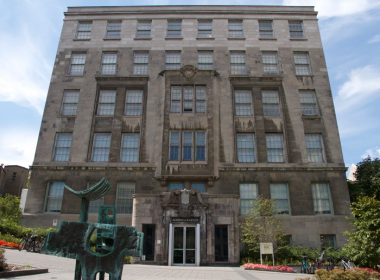
Tucked in the basement of the Le Cartier building, neatly between a Korean restaurant and a men’s hair salon, is a neon sign boasting the nickname of a McGill student favourite: Super Sandwich. From an outsider’s perspective, this hush-hush location might seem incompatible with high traffic and heavy business, but many students find that it adds to the shop’s undeniable charm. This hidden cove has found a home in the hearts of McGill students. Thanks to its setup, as well as its lightning-fast preparation and unbeatable prices, Super Sandwich has become known as one of the McGill bubble’s best-kept secrets.

Founded in 1988 under the name Charcuterie Le Cartier, the shop was originally run by the mother and father of its current owner, Matt Lo. Although its official name remains the same today, the store’s luminous sign—which Lo’s father added some 20 years ago—has given the shop the popular nickname it now holds. While Lo didn’t officially take over his parents’ business until his father fell ill 15 years later, the sandwich shop and depanneur has nonetheless been a big part of his life since childhood.

“[My sister and I] always helped out since the very beginning,” Lo said. “[At first] on weekends, and then when we went to school we helped out during the summer.”

Over the course of his life, Lo has witnessed the evolution of Super Sandwich. What started as a regular depanneur now holds its own, not only as a delicatessen, but as a staple food supplier for McGill students. The famed sandwiches, which were an early addition to the family’s business model, now account for 70 per cent of the store’s sales. Lo attributes the late boom in business to his mother’s decision to start heating the sandwiches before serving them and to an influx of students who started living in the building years ago.

Super Sandwich’s connection to McGill runs deep. According to Lo, the store’s transition into a student hotspot was largely an intentional process. Once the family noticed student interest in their sandwiches, they began to advertise in McGill publications and got involved with events on campus, such as Frosh.

Yet, this kind of advertising isn’t the one Lo attributes to his success. Rather, what has been the most beneficial for his business is word-of-mouth.

“I think, when you have a friend and he knows about a place and he likes it, you’ll probably trust him more than [an advertisement],” Lo said.

After decades of working behind the same basement counter, Lo still speaks fondly of his work and the students who keep his shop afloat.

“I find working with students is the best,” Lo said. “Usually, they’re all very easy-going.”

Perhaps Super Sandwich’s popularity on campus is more personal than that of other traditional food vendors. The shop has garnered a cult following of sorts among the McGill student body—the lesser-known cousin to the samosa craze. The sacred knowledge of its location and delicious deals is a matter of knowing the right people. Because of this, a lunch order at Super Sandwich feels less like a typical lunch stop and more like an experience unique to McGill students.  

When asked about what gives Super Sandwich this magical property, Lo points back to the core of the operation—the sandwiches.

“The speed that we do make the sandwiches, the price, and the quality is a good combination,” Lo said. “I know a lot of students are in a hurry, and they know if they come here they can have a good sandwich in a couple of minutes.”  

Super Sandwich’s proximity to McGill’s downtown campus has given Lo more than just loyal customers. Over a decade ago, a McGill student ordered an egg salad sandwich from Lo. Today, that student is Lo’s wife.  

“One thing led to another,” Lo recounts. “I asked her out and we’ve been together for the past 12 years.”

Ultimately, Lo’s wife was just one of many happy Super Sandwich customers. The store’s low prices, fast preparation time, and signature sandwich style have garnered it a wide following among students, which shows no signs of dying down any time soon.

News, SSMU

SSMU Council creates democratic review committee

At the Nov. 3 meeting, the Students’ Society of McGill University (SSMU) Legislative Council voted in favour of supporting the Quebec Public Research Group (QPIRG) existence referendum, restructuring Senator elections for the Faculty of Engineering, and creating a Democratic Review Committee.

Engineering Senator Elections

Council passed the Motion Regarding Electing Student Senators from the Faculty of Engineering, which proposes that the election period for engineering senator positions be moved. Formerly taking place during the SSMU election period, members of the Engineering Undergraduate Society (EUS) will now vote on their Senate representative during the general EUS election period in Winter 2017. Engineering Senators will now be elected annually alongside EUS executives and representatives to SSMU, instead of alongside SSMU executives. According to Tre Mansdoerfer, SSMU Engineering Representative, the motion is intended to increase participation and competition in the election of Engineering Senators.

“I'm aware that [the Faculty of Management] runs [their] senator elections under their own faculty elections [as well],” Mansdoerfer said. “I think it’s going to help with voter turnout. That’s the purpose of this motion [… and it] is going to help make the engineering senator position more appealing and not have it be uncontested like it usually is.”

Some councillors expressed concern that the by laws for all senator elections should be revisited instead of addressing problems at the faculty level. In response, SSMU Vice-President (VP) University Affairs Erin Sobat stated that this was something that could be looked into, but that he might not be comfortable changing all SSMU election regulations.  

“I think we're happy to look at that if other faculty associations are interested […],” Sobat said. “In terms of the election regulations themselves, we can revisit that, but SSMU is tasked by McGill for filling these seats [for Senate], and we do delegate them, to some extent, to the faculty associations [for] representation. But, [SSMU is] still responsible for putting forward the names, so there should be some sort of central mechanism still from SSMU […] to make sure that those seats are getting filled.”

Creation of an Ad Hoc Democratic Review Committee

Council also voted to create an Ad Hoc Democratic Governance Review Committee to review and produce recommendations for reform to SSMU’s highest governing bodies, including the Board of Directors (BoD) and the General Assembly (GA). According to Arts Representative Igor Sadikov, this motion was presented in response to changes in the role of the BoD last year.

“Basically the main purpose of this committee would be to review some of the procedures and limits on the power of the [BoD],” Sadikov said. “This is mostly just coming out of the changes that were made at the end of last year where the [BoD] got increased responsibilities [….] However, this was done, in my opinion, without the necessary oversight or transparency regulations for the Board [….] It’s expected that big governance changes will be reviewed once they’re implemented, so it’s good to have a committee even if there weren’t major issues [….]”

Sadikov clarified that the committee's purpose was not to eliminate the BoD.

“This motion is far from questioning the existence of the Board, I recognize that it's legally required,” Sadikov said.

According to SSMU President Ben Ger, this committee will help to define what issues the BoD should and should not take responsibility for.

“The division is not properly outlined to some extent. There are times when the Board ends up dealing with something that could be seen as a political matter because it is tangled with something that is legal, so there definitely is room to further define [its role…],” Ger said.

Ger emphasized that this committee will play a different role than the Equitable Governance Committee.

“At least my envisioning of this is that they're very different bodies,” Ger said. “Equitable governance reform is mainly focused on bringing more voices around the table, making sure this is an accessible space to those who maybe are [underrepresented…. The Democratic Review Committee] is more focused on making sure that there is consultative practices, that there is a strict outline for how [these bodies function] democratically.”

Laughing Matters, Opinion

Planet McGill: The McLennan midterm migration

As dawn breaks over McGill campus, still glistening with last night's freezing rain, all seems quiet. The Y-intersection is deserted and most doors won't open for another couple of hours. But, rest assured, there is one building that never sleeps: The McLennan-Redpath Library complex. Majestic, isolated, and open 24 hours seven days a week, it is perhaps the most delicate and dynamic ecosystem of the McGillian wilderness. This extraordinary habitat and its intricate topography house a range of species, and there is no better time to observe them than the midterm migration. This mass movement begins shortly after add/drop season, and will continue until the arrival of finals.

The inhabitants of McLennan at this time of year are as diverse as they are spectacular, and patterns of movement vary among species. None, however, are immune to the existential threat of an upcoming midterm. Research suggests that the words "40 per cent of your grade" actually trigger a survival mechanism in the McGill student, pushing species of all varieties—from suited-up Bronfman dwellers to late-night Burnside outcasts—to the common haven of McLennan.

Among the earliest arrivals are the post morning-lecture migrants—that elite breed that maintains 8:30 a.m. class attendance even after the first week of the semester. They forage for sustenance at Snax or Dispatch, and, as a reward for their early rise and morning trek, get first pick of the highly coveted first floor window perches. Midterms may loom, but this group of regular inhabitants remains calm. McLennan is their home. It will not betray them at this critical moment.

The post-morning-lecture migrants share their habitat with a demographic that is, in many ways, the very opposite—the last-minute-paper-writers and afternoon-midterm-crammers. These academic renegades rely on a diet of pure caffeine and evade extinction on an hour-to-hour basis. Interspecies mingling is rare. With the exception of the occasional printer conflict, the two groups coexist peacefully.

A desolate, silent wasteland of fluorescent lighting and empty coffee cups, the sixth floor is capable of sustaining only the most resilient forms of life

The peak of activity comes at noon, as a combination of motivation and pure panic drives hoards of students to McLennan’s doors. Herds of first-years set up camp on the first and second floors, seeking confidence and security in numbers. The subspecies of this young group can be usefully categorized in terms of emotional stability—one half bears the crippling anxiety of facing midterms for the first time, while the other half still remains blissfully naïve to it. By finals, sadly, the latter group will be an endangered species.

The more hardened fourth-year specimen, meanwhile, is a solitary creature, but claims its territory through intimidation. It has two laptop chargers, an abused course pack, and a granola bar. The first-years accept these displays of superiority and steer clear.

As the day rolls on, the wide variation in the library’s terrain and function is revealed. The Première Moisson watering hole is a hub of interspecies interaction, attracting hungry students with its overpriced nourishment and early 2000s pop and soft rock music. Similarly, the adjoining Redpath Library serves as a noisy meeting place for group projects and review sessions.

As one travels upward, away from the camaraderie of group studying and further into the realm of Darwinian survival of the fittest, the topography becomes harsher. A desolate, silent wasteland of fluorescent lighting and empty coffee cups, the sixth floor is capable of sustaining only the most resilient forms of life: Grad students. Thanks to an adaptive mutation, however, the midterm-laden McGill undergraduate student can suppress all self-preservation instincts in order to venture onto this floor. It no longer actually needs to live. It just needs to pass this semester.

Night falls, bringing with it the exodus of those lucky specimens who make it out alive, and the arrival of those incredibly unlucky ones that have a midterm the next day that they have yet to study for. These nocturnal creatures strip both their coats and their morale to hunker down for the long, lonely night ahead. But, as always, morning will come. And whether it brings victory or defeat or something in between, McLennan will still be there when they return.


Jackie Houston is a U2 Political Science and Psychology student and columnist for The McGill Tribune. She dreams of a world where she can pet any stranger’s dog with no questions asked.


McGill, News

Draft Policy against Sexual Violence discussed at McGill Senate

On Oct. 19, McGill Senate convened to discuss the proposed Draft Policy against Sexual Violence as well as the relocation of the McGill bookstore, Le James. In addition, the Senate Committee on Physical Development offered their Annual Report.

Draft Policy against Sexual Violence

The Draft Policy against Sexual Violence was first released by the university on Sept. 12. Since then, the Office of the Provost and Vice-Principal (Academic), Christopher Manfredi, has been receiving feedback from the McGill community through their online form. To date, there have been 175 responses to the policy draft, according to Manfredi.

Manfredi reaffirmed his commitment to instate the Policy against Sexual Violence by the end of the calendar year. Manfredi stated that additional resources are required for successful implementation of the policy. McGill plans to hire support staff to accompany current Liaison Officer (Harm Reduction) Bianca Tétrault.

“I am pleased that we have […] put in place the process to hire a second person to support our work against sexual violence at the university as well as secure an office space […] that will provide a greater level of accessibility and confidentiality,” Manfredi said. “We hope to have that person in place certainly before the end of the calendar year.”

Manfredi thanked the Sexual Assault Policy Working Group and other student initiatives for providing the foundation on which the Draft Policy was created. After receiving feedback from community members, the Office of the Provost compiled a list of proposed changes to the policy draft. These revisions are an example of how the policy could change before it is voted on at the next Senate meeting on Nov. 23.

Arts Senator John Galaty asked about the choice of terminology in the draft policy and requested clarification on the definition of sexual violence, especially when investigating instances of sexual misconduct. Associate Provost (Policies, Procedures and Equity) Angela Campbell explained that the policy seeks to emphasize an institutional commitment to sexual violence survivors. The policy does not, however, address punitive measures that can be taken against perpetrators.

“This is actually about whether or not someone has lived an experience that they find very difficult, [that has] an impact on their well-being, their academic potential to success, and our commitment to ensuring that they can come forward and secure services in the context of social services and health services,” Campbell said. “This policy is about separating out prevention, education, response, and support. It does not touch on the issue of disciplinary investigation and adjudication.”

Question on relocation of the McGill Bookstore

Students’ Society of McGill (SSMU) Vice-President University Affairs Erin Sobat and Law Senator Shannon Snow asked the Senate about the accessibility of the new location of the bookstore, Le James.

“The question was put forth after I was approached by several law students,” Snow said. “I worry that the accessibility of the layout, the organization, the building itself, is an issue for students.”

With narrow aisles between the bookshelves and the reduced proximity to campus, Snow asked if there would be opportunities to expand on home deliveries for students.  

“The space on Parc Avenue is quite constrained […],” Morty Yalovsky, Interim Vice-Principal (Administration and Finance) said.  “[In] terms of how the space was structured, it was set up that way to optimize the number of books that could be stored there. Though, we’re open to changes.”

The current lease at the Avenue du Parc location will last for two years.

Senate Committee on Physical Development

Associate Vice-Principal (Facilities Management and Ancillary Services) Robert Couvrette presented the annual report from the Senate Committee on Physical Development. With a variety of long-term and short-term goals for building and campus renovations, the committee sought to prioritize academic services

“We receive around $46 million per year for […] renovations and anything like that […],” Couvrette said. “The amount of money is quite fixed for the next five years [….] There is no additional funding from our government.”

As one of the lowest ranked Quebec institutions in terms of infrastructure, McGill will have difficulty improving its buildings without additional funding from the province.

Men's Varsity, Sports

McGill Redmen rugby advance to RSEQ finals in nailbiter

The McGill Redmen (6-1) rugby squad battled through the opposing crowds’ banter, overcame a case of dropped catches, and made a heroic goal line stand to defeat the Bishop’s Gaiters (3-3-1) 27-20 and advance to the RSEQ finals.

Bishop’s scored the first try of the game in the tenth minute on the back of a sloppy McGill play–the Redmen were already dealing with a number of dropped catches that would trouble them throughout the game.

“We definitely did not expect to drop balls like that, we can’t blame the weather because that was great weather for playoff rugby,” centre Sayf Al Omaishi said. “Usually we would see three degrees and rain. So, it was probably more a matter of [lack of] focus and of technical mistakes.”

After an early Bishop’s try, McGill responded in the 16th minute when flanker Kaleb Nimat received a pass from back row Nick Bent to tie the game at 7-7. The Gaiters punched in another try before fly-half Andrew Manson hit a penalty kick to round out the first half at 14-10.

The second half opened with the Gaiters extending their lead to 17-10 after a quick place kick. McGill responded with a try and unconverted place kick—Manson ended up missing two more place kicks. Nonetheless, his kicking in open play was crucial to the Redmen’s second half success. He frequently pinned the Gaiters in their own twenty-two, pressuring their back line. 

This fluctuating game saw one last twist—in the 80th minute, Bishop’s relentlessly attacked the McGill try-line. The final play seemed to go on forever, and the crowd grew animated by the second. Nonetheless, McGill held strong, eventually forcing a penalty that sealed the game for the Redmen.

“I knew they were a strong team and were capable of scoring a try in the last minutes, so I was trying to do everything I [could] to prevent that from happening,” Al Omaishi said. “At the end, our defence proved strong and we were able to avoid an OT, coming out with the win.” 

The Redmen now progress to their tenth consecutive RSEQ finals against Montreal on Nov. 13.

“It is a great accomplishment, all the hard work out on the field and off the field is finally paying off,” said Nimat. “Being the captain is just a title, we have 15 players on the pitch, which all individually contribute as leaders and this is what brings us all together.”


Quotable:  “We have to come out with fire and play the whole 80 minutes like the Redmen rugby can, improve our discipline, and stick to our game plan. If we can do that, I am confident we will bring the banner back for the second year in a row.”—Captain Kaleb Nimat on what the team must do to retain the RSEQ championship.

Play of the game: A total team effort by McGill, pushing back over four waves of attacks in the 80th minute, forcing the key penalty to secure their victory

Stat of the game: Neither team led by more than seven points the entire match.


A previous version of this article stated that Nick Bent plays front row. In fact he plays back row. The Tribune regrets the error.

News, SSMU

Fall 2016 SSMU General Assembly: What are SSMU members voting for?

On Nov. 7, the Students’ Society of McGill University (SSMU) will hold the Fall 2016 General Assembly (GA), where the student body will have the opportunity to vote directly on proposed motions and referenda questions. The three motions presented this Fall must be approved by popular referendum in order to be adopted. 

Motion Regarding the Nomination of the Auditor for the Fiscal Year of 2017

This motion proposes that the firm FL Fuller Landau LLP conducts the 2017 audit of SSMU’s finances. Under section 17.3 of the SSMU Constitution, it is stated that the auditor must be approved by the GA annually. This motion was moved by SSMU General Manager Ryan Hughes. 

An external auditor is hired every year to review SSMU’s financial records to ensure compliance with general accounting guidelines and correct inventory balances. 

FL Fuller Landau LLP was first contracted in the previous fiscal year when it was estimated that this appointment would reduce audit costs by approximately 15 per cent

SSMU executives did not respond to questions as to whether the savings were realized or whether other firms were considered for the job.

Motion Regarding Global Access to Medicines Policy 

The motion calls for SSMU to support access to medicine as a “public good and a human right  by asking McGill to adjust the patents they hold on essential medicines to increase access to medicine in developing nations. The motion was moved by the McGill Students’ Chapter of Universities Allied for Essential Medicines (UAEM). 

The proposal asks SSMU to advocate for McGill to change its patent policy through the University Senate and other appropriate committees. If McGill agreed to adjust its patents on essential medicines, it would allow generic drug manufacturers to produce essential medicines at a cheaper cost and sell them in developing nations. According to the motion, McGill would not be the first university to implement such a policy, joining a group of institutions that includes Yale University, the University of British Columbia (UBC), and Harvard University.

According to the Co-President of the McGill Students’ Chapter of UAME Christine Kim, other universities have not seen a fall in revenue after instituting similar policies. Large pharmaceutical companies don’t make the majority of their profits from drug sales in developing nations, but rather from sales in Canada and other developed economies.

“Seventy-nine research drug companies in Canada submitted reports showing their [research and development] expenditures [are] all paid for by domestic sales at Canadian prices,” Kim said. “[Similarly,] none of the 22 universities in North America, including Harvard, Yale, and even UBC in Canada, have reported loss of revenue from the signing of [a similar proposal].”

According to Kim, McGill could already contribute to the access of essential medicines, but their current policy inhibits them from doing so.

“McGill has already developed an anti-malaria drug, Cystamine, back in 2012,” said Kim. “We asked McGill to adopt [our resolution], because under its current [intellectual property] standards, the drug [is not] available to those in [developing nations], despite malaria having a very high prevalence in [developing nations].”

Motion Regarding SSMU Support for Cost-Free Birth Control Coverage 

The motion calls for SSMU to support cost-free access to birth control for all members of SSMU. If the motion passes, SSMU would negotiate with its health insurance provider, the Desjardins Financial Security Life Assurance Company, to fully cover birth control prescriptions for non-Quebec students through the SSMU supplemental health insurance. The resolution was presented by McGill Students for the New Democratic Party (NDP McGill). 

Under the current SSMU health insurance plan, Quebec residents are entitled to 100 per cent reimbursement for prescription drugs. Out-of-province students are only entitled to 80 per cent reimbursement.

Jacob Schweda, a member of NDP McGill, said the resolution is in support of an NDP motion that will be presented in the House of Commons.

“Women's equality has always been at the core of the NDP's values […,]” said Schweda. “More specifically, [NDP McGill was] inspired by the work of Irene Mathyssen, the NDP Member of Parliament for London-Fanshawe. She is currently working on a motion to be introduced in the House of Commons calling for free prescription birth control for all.”

Baseball, Sports

Twenty years later: The 1996 Yankees and the Rebirth of the Evil Empire

In 1996, the New York Yankees barely resembled the blockbuster, overpowering teams of the half century from 1920 to 1970. The team was a squad of role-players and promising rookies—a puzzling but seminal group of players that brimmed with tenacity and cohesion for a franchise more known for pomp, fame, and cockiness. In an 18-year purgatory since their last World Series, the Yankees consistently disappointed. However, in 1996, something unprecedented emerged—a team without any real flaws. Those strangely underdog Yankees made it to the World Series and defeated the defending Atlanta Braves, who had been to four world series that decade. From humble beginnings, this Yankees’ victory was the beginning of baseball's Galactic Empire.

Burdened by a history of greatness–from Babe Ruth to Mickey Mantle to Thurman Munson–these 1996 Yankees lacked star appeal after face-of-the-franchise first baseman Don Mattingly retired the previous season. Their best players were untested rookies and good-not-great veterans. Journeyman second baseman Mariano Duncan led the team in batting average. Mattingly’s replacement Tino Martinez was tops in RBI. Crucially, young emerging stars, shortstop Derek Jeter and centre fielder Bernie Williams had the most hits and homeruns respectively, while Andy Pettitte had a Cy Young calibre year. These rookies are where the 1996 Yankees’ enduring legacy lies. Along with failed starter-turned-legendary-reliever Mariano Rivera and late-blooming catcher Jorge Posada, this ‘Core Five’ would lead the Yankees to four titles in five years and six world series in seven. Posada, Rivera, Pettitte, and Jeter then won another title as the ‘Core Four’ in 2009. The dream of creating a home-grown core drives every team’s farm system, but for most teams it remains just that—a hope nearly impossible to realize.

Commissioner Fay Vincent’s suspension of the infamously volatile and free-spending Yankees owner George ‘The Boss’ Steinbrenner was a godsend—The Boss served a ban from baseball between 1990-1993 for hiring a gambler to dig up dirt to void the contract of former player Dave Winfield, who Steinbrenner blamed for the team’s dry spell in the 80s. In those Steinbrenner-less years, General Manager Gene Michael conducted the team’s operations with baseball acumen executed to perfection. Without Steinbrenner, the team did not sacrifice the farm for superstars, it did not stupidly hand out albatross contracts, and it did not create a draconian atmosphere with the players as mere cogs in Steinbrenner’s empire. Instead, cult hero outfielder Paul O’Neill was acquired after struggling with the Cincinnati Reds; Bernie Williams was retained; Derek Jeter was drafted in the first round; and late-round gems Pettitte, Rivera, and Posada were properly developed.

In the buildup to 1996, Buck Showalter–who, with a 4-year reign, was the longest-tenured manager during the Steinbrenner era–left the team after a contract dispute with the newly-reinstated Steinbrenner. New Yorker Joe Torre, failing at every step of his prior managerial career, was brought in to start a new era at the surprising behest of Steinbrenner, in a surprisingly good move. As a crucial member of the Core Four dynasty, Torre would go on to win five World Series in his 11-year Yankees tenure before going to the Hall of Fame in 2016. Mid-season pick-ups of an over-the-hill Darryl Strawberry and slugger Cecil Fielder would bolster a team with no weak links.

Perhaps these Yankees’ main attraction, often forgotten, was their humility. Washed-up pitcher Dwight Gooden was back after a suspension because of drug abuse. Strawberry was also recovering from a cocaine problem. These guys were relatable players, not aloof superstars. They weren’t the mythical Yankees or the annoying Yankees—they were the misfit Yankees that ended the fan base’s three decades of suffering. If anything, people sympathized with them. They were lovable. The dissonance of that phrase itself, a lovable Yankees team, should be enough to show how special they were.

Commentary, Opinion

A Canadian’s guide to the American election

Despite having little-to-no vested interest in American domestic policy, Canadians have been fixated by the American election. They wouldn’t be directly affected if Donald Trump repealed and replaced Obamacare, or if Hillary Clinton decided to implement debt-free college for American students. Nonetheless, Canadians are very interested in debating these issues and seem willing to throw their rather fruitless support behind a candidate. However, the debate among Canadians might be centred around the wrong issues. Trump’s border wall won’t directly affect Canada, but less discussed issues like the North American Free Trade Act (NAFTA), diplomatic relations, and U.S. foreign policy should concern Canadians a great deal.

One of Donald Trump’s key policy proposals is to renegotiate or withdraw from NAFTA if he doesn’t get a better deal. Both would prove costly to Canadian industry and consumers. The U.S. is Canada’s largest trading partner. Three quarters of Canadian exports go to the U.S. and one in five jobs in Canada depend on exports, which means that 15 per cent of Canadian jobs depend on the US buying Canadian goods. Many of these facts are due to NAFTA. With the elimination of tariffs between the U.S. and Canada, key Canadian exports, such as lumber, seem cheaper to American consumers, who are therefore more likely to buy them. If Trump erects tariffs on Canadian goods, Canada’s logical recourse would be to do the same with American goods. While most McGill students are probably not going to find a fall in softwood lumber exports terribly exciting, they will definitely feel the pinch of a Trump presidency when American-sourced groceries become more expensive at Provigo.


Trump’s values are too far out of line with those of Prime Minister Trudeau to facilitate common ground and continue the close relationship that the two nations share.

Beyond the souring of trade relations, Trump’s values are too far out of line with those of Prime Minister Trudeau to facilitate common ground and continue the close relationship that the two nations share. Nowhere is this more evident than in immigration policies. Trump is campaigning on barring Muslims from entering the U.S. by implementing a religious tests for immigrants. Conversely, Trudeau proposed during the Canadian election campaign to increase the number of Syrian refugees admitted into Canada and present a message of Canadian diversity (he surpassed his target of 25,000, admitting 56,000 refugees this year). There have already been disputes over the Canada-U.S. border being too porous, and concerns from American politicians and pundits that terrorists may try to enter the U.S. through Canada. A similar concern led the U.S. to begin requiring Canadians to use a passport to enter the country after 9/11. With Trump in the White House, drastically different approaches to immigration and diversity on each side of the border could seriously damage relations between Canada and the U.S.

However, border crossing issues will seem like niggles compared to potentially seeing Vladimir Putin visiting the White House. Trump’s love for Putin is one of his more indefensible policies. While a closer U.S.-Russia relationship may not immediately seem to affect Canada, the implications could be immense. Canadian troops are currently stationed in the Ukraine on a training mission. More troops and ships are in Latvia conducting military exercises to support NATO allies that fear Russian aggression. If the U.S. softens traditionally tough stance on Russia, it would embolden Putin to annex more territory and Canadian troops could find themselves in embroiled in a proxy war with Russian troops. Without US support in deterring Russia, Canadian forces could find themselves defending a NATO ally, like Latvia, without American support.

When debating the U.S. election, Canadians often focus on the wrong issues. The future of NAFTA, diplomatic relations with the U.S., and the safety of Canadian troops in Eastern Europe are more relevant to Canadians than Trump’s tax returns. Trump vastly compromises Canada’s national interests in all three of these key areas. While it’s somewhat pointless for Canadians to back a presidential candidate given that they can’t vote, it should be abundantly clear to them which of the two candidates presents a clear danger to Canadian trade, diplomatic, and security interests.


McGill, News

Edward Snowden speaks on privacy and surveillance at McGill

Lecture delay and AMUSE picket

A line of students stretched around the Leacock Building to the Milton Gates as Edward Snowden, former contractor for the U.S. National Security Agency (NSA), held an exclusive video conference hosted by Media@McGill on the evening of Nov. 3. Snowden was streaming via Google Hangouts from Moscow, his place of residence since he revealed the extent of the NSA’s domestic surveillance operations in 2013. The famous whistleblower shared his thoughts on the importance of privacy as a social issue and how these concerns are still relevant three years after his leak went public.

The video conference was delayed by an hour. Sources vary, with many staff and attendees of the opinion that the delay was caused by several picketers from the Association of McGill University Support Employees (AMUSE)—a claim that AMUSE disputes. AMUSE was on strike from Oct. 29 to Nov. 2 over their collective agreement negotiations with the McGill administration and were picketing the event because AMUSE members would have been working it.

Media@McGill volunteers claimed that AMUSE was blocking the entrance to Leacock 132, the large lecture hall where the conference was held. McGill Security did not comment on the situation, simply asking attendees to remain in an orderly line. One security guard, who spoke to The Tribune on the condition of anonymity, claimed that they hoped to remove everyone who was inside the building and then streamline the entrance process.

“We are trying to make order for the people waiting outside,” the McGill security guard said. “Not everyone can go inside, only 600 people. There are 5,000 outside.”

Most attendees were not informed about the cause of the delay and blamed the picketers. Carlo Mole, U3 Arts, was largely in support of AMUSE’s goals, but grew increasingly frustrated with the crushing crowd and the delay to enter Leacock 132.

“I understand that it’s a massive event and they want to showcase their issues, which is why I agree with what they are doing outside, but by blocking the door they’re probably getting students angry at the movement,” Mole said.

AMUSE members at the Leacock 132 entrance claimed that it was McGill security officers who were preventing people from entering. AMUSE Internal Affairs Officer Bradley Powell, who was picketing the event, explained that they were not trying to do a hard picket and only sought to inform attendees of their situation, but allow students to enter the lecture hall if they still chose to.

“We are not blocking this event,” Powell said. “We are trying to explain that if people cross our picket line they should acknowledge that they are crossing a picket line. The labour that was supposed to run this event was our workers, who were on strike. So they have replaced our labour with scab labour in order to make this event run, as you can see it was very poorly organized.”

Eventually, attendees who had been waiting outside marched into the building chanting, “Let us in!” Although they originally resisted the crowd, security soon started leading attendees into the classroom. AMUSE picketers called out to entering attendees, but did not physically interfere. Gabriella Coleman, McGill professor in the Department of Art History and Communication Studies and an organizer of the event, later claimed that the delay was the result of students skipping the line.

“I’m still not clear as to whether it was legal or illegal for [AMUSE] to picket in Leacock,” Coleman said. “I think [AMUSE was part of the blockage] but the bigger part was actually people who had come out of this classroom in a prior class who didn’t want to go to the back of the line.”

Lecture from Edward Snowden, NSA Whistleblower

By 8 p.m., Leacock 132 had filled quickly and security barred the doors to the classroom, opening Leacock 26 as an overflow room. Video connection was established with Edward Snowden, who began by thanking attendees for their patience. In regards to AMUSE, he commended their spirit and reminded students of the importance of having the right to protest and share ideas.

“This is the kind of thing that happens in a democracy,” Snowden said. “We have uncertainties, we have difficulties, we have inconveniences. But, these are not weaknesses, these things are strengths.”

Snowden then began his lecture on privacy issues and mass governmental surveillance. He expressed worry over the fact that dangerous legislation–such as Canada’s Bill C-51 and the United Kingdom’s Investigatory Powers Bill–continue to pass into law in democracies. He also argued that the failure of courts to provide oversight is a serious concern, as the best safeguard against intelligence agencies are guarantees that prosecutors will conduct case-by-case reviews of their operations.

“Governments have not asked for the permission of the public to engage in these kinds of operations,” Snowden said. “Instead, they deploy these kinds of capabilities in secret, even when they knew these programs were unlawful. Courts were unwilling to permit legal challenges against the activities of these spy agencies because they said there was speculation, because [intelligence agencies] can say, ‘You can’t prove you’re spying because it’s classified.’”

Snowden spoke of how a combination of fear-mongering and technological advances gave intelligence communities the ability to get away with remotely monitoring essentially any individual.

“Traditionally, the works of intelligence services, surveillance agencies, and police investigations, have always been particularly and specifically targeted towards individuals who had probable cause,” Snowden said. “Now, surveillance technologies have outpaced democratic controls [and] for the first time in human history, it is both technologically and financially feasible for governments to track and survey complete records of all of our lives.”

Intelligence is usually split into ‘content,’ which are the actual messages sent, and ‘metadata,’ which are the characteristics of the messages, such as when or where they were sent. While it is feasible for members of the public to encrypt the content of their communications, they do not control the metadata that they produce. Metadata does not belong to an individual and Snowden expressed concern over social media and telecom corporations that control their users’ metadata.

“The government holds that you don’t actually own records of your activities, you only have a private interest in actually what you say,” Snowden said. “When you have enough metadata, you don’t need the content. Metadata is a proxy for content because machines can analyze it in a way content can’t. Metadata creates perfect records of private lives.”

In response to a question about what conditions could justify total surveillance, Snowden replied that invasion of privacy includes moral judgements, not just purely utilitarian considerations. He also reminded the audience that data gathered through mass surveillance has historically never made a concrete difference in investigations.

“This is very similar to arguing, ‘What if torture were effective, what if extra-judicial murder were effective, we’re talking about assassinations here, what if slavery was a wonderful economic program?’” Snowden said. “It wouldn’t make it right. It’s not the question of can this thing be justified in terms of efficacy, it’s, ‘Do we want to live in a world without human rights?’”

Snowden argued that the ability to behave as private individuals is analogous to the ability to own private possessions and that it is the foundation of other rights and freedoms.

“When somebody says, ‘I don’t care about privacy because I’ve got nothing to hide,’ that’s like saying ‘I don’t care about free speech because I have got nothing to say,’” Snowden said. “Privacy is about the ability to have something for yourself, whether it’s a home, whether it’s a car, whether it’s a pencil. Whether it is an idea, whether it is a belief.”

Robert Tibbo, Mr. Snowden’s Lawyer

McGill graduate Robert Tibbo practices law in China and represented Edward Snowden, helping him hide from U.S. law enforcement in Hong Kong in June 2013. He normally assists refugee claimants.

Earlier this year it was revealed that Montreal police had gathered metadata from  La Presse journalist Patrick Lagace’s phone. The legal warrant to do so has since been overruled; Lagace hypothesizes that he was tracked in the hopes that he would lead the police to his confidential source, who was leaking information to the press. During the interview, Snowden commented on the importance of this issue, as he himself had relied on the press to reveal NSA documents. Tibbo commended the public’s response, but worried that future whistleblowers may be discouraged from approaching the media.

“People of Montreal and Quebec were put on notice by Mr. Snowden’s revelations in 2013 and have clearly taken a stance that the Quebec police conduct is outrageous,” Tibbo said. “What the Quebec Magistrate and police did was to strike a devastating impact at the core foundation of journalism, violating the sanctity of trust and confidentiality between journalists and their sources.”

Tibbo currently works to represent and provide for the Hong Kong Four (HK4), the four refugees who helped Tibbo hide Snowden when he was underground in Hong Kong.

“The Hong Kong government has left the HK4 destitute, refusing to provide them with sufficient food, transport money, rent, utilities, food, clothing, etcetera,” said Tibbo. “I hope that people will continue to donate to these extraordinary people who, with so little, selflessly gave so much to protect Mr. Snowden.”

This article was last updated on Nov. 4, 2016. 

Baseball, Men's Varsity, Private, Sports

McGill Redmen walk off to third straight national championship

Redmen Baseball’s season ended with a bang—or, more specifically, the crack of Chris Stanford’s bat as he sent a pitch over the left field fence at Ahuntsic Park to claim McGill’s third straight national championship Sunday evening.

McGill (15–1) opened the day with a semifinal victory against Saint Mary’s University (9–10), in which they showed no mercy. Although the Redmen led 17–0 after five innings, the mercy rule was not taken into effect, and they added four runs in the top of the seventh to win 21–0 and advance to the finals. In a game where eight starting players had hits, leadoff man Sam Groleau and catcher Chris Stanford stood out. Groleau went 5-for-7 at the plate, scoring three runs and driving in four. Stanford went 4-for-5 and drove in five. 

Starting pitcher Rocky Hroch dominated, allowing two hits over four innings, and reliever Benji Kaiserman finished the job with three innings of no-hit ball.

While the semifinal game gave fans and players a chance to relax, the finals did exactly the opposite, remaining in the balance until the very last moment.

The Université de Montréal (5–11) struck early in the first, scoring one and threatening to do more damage. Third baseman Gabe Hamilton turned a spectacular double play, tagging the runner—who had been attempting to steal—and throwing to first in time for the out, ending the inning and limiting the damage.

McGill was scoreless until the fourth, when Montreal’s Simon Brisebois opened the inning by hitting DH Emerson Dohm and walking Hamilton. He then gave up a pair of singles and the lead to first baseman Sebastiano Scalzo and centre fielder Alex Levis, who drove in a run each.

The Carabins gave the Redmen little time to enjoy the lead, tying the game on a two-out single in the fifth.

Hroch came in to pitch two scoreless relief innings, despite a runner reaching a scoring position in each.

With the game tied in the bottom of the seventh, Groleau led off with a double. The crowd was quickly quieted when Groleau was nabbed on a double play.

Stanford reversed the mood one more time with a solo walk-off shot to left field. The Redmen rushed onto the field, celebrating their third straight national championship. 

“After that double play that they turned in the late inning there, that just kind of broke our momentum,” tournament MVP Stanford said. “So I just stayed composed and made it ready to rock and roll, and I just saw that high fastball and I just put the barrel in front of it and crushed it over the fence.”


Quotable: “I can’t put it into words. Honestly. Every [championship is] special. Every one individually is special,” said Head Coach Jason Starr. “But to do this, to do three in a row, to represent McGill is just a great feeling. I feel like the team’s done a great job all year to bring honour to the school and to the program. It’s just a great way to finish it off. A lot of hard work culminates in this and that’s the most impressive part about it.”

Stat of the tournament: Stanford led the tournament in batting average and RBIs, hitting .500 (8-for-16) and driving in ten.

Moment of the Series

With one out and runners on first and second for Montreal in the top of the first, Gabe Hamilton spectacularly fielded Montreal pitcher Simon Brisebois’s hard ground ball, tagging the runner out and throwing to first in time for the double play. Hamilton’s play ended the inning, and limited the damage to one run.

Read the latest issue

Read the latest issue