

Latest News

Science & Technology

Ask a Scientist: What Is “Ask a Scientist”?

Since this is the first instalment of this column, there are not yet questions to answer. But, not to worry! The first question we’ll answer will be: “What is Ask a Scientist about?” In answering it, SciTech hope to drum up enough interest and enthusiasm from you, the readers, to have plenty of questions to answer in future instalments.

Every year The McGill Tribune brings McGill students the best in science and technology journalism in the form of articles, interviews, and podcasts from the heart of the world-class research institution that is McGill University. Each week our intrepid reporters risk their lives and their GPAs to get the scoop on the latest on-campus research, international scientific developments, and all-around neat stuff going on in the worlds of science and technology at McGill and beyond.

In addition to stand-alone articles, we have a number of recurring columns, offering content along a certain theme or from a particular contributor. From the BrainSTEM is our science-flavoured opinion column. Fact or Fiction explores and explodes common myths and misconceptions about science. Research Briefs and Student Research offer insights into the amazing scientific work done right here at McGill by students and faculty alike.

But is it enough? We here at the Tribune think not.

That’s why, this year, we are officially bringing back Ask a Scientist, a recurring column in which you, the reader, submit questions to me, the Scientist. Please ask the Scientist about the mysteries of life, the universe, and everything. The Scientist will search for answers to those scientific mysteries you’ve always pondered and never asked.

There are many—scientists cannot even estimate precisely how many—great questions to Ask a Scientist! We’ll make it easy for you to answer all your burning questions in one reliable place. As you send us your best and worst ideas, here are a small handful of examples to consider, along with brief answers from the Scientist:

Q: Dear Scientist, have you heard about this whole SETI mysterious signal thing? Radio astronomers detecting a powerful radio emission from a suspected-habitable star in the constellation Hercules doesn’t sound like small potatoes. Does this mean aliens are trying to contact us?

A: Absolutely, I’ve heard of SETI, it’s super cool! Unfortunately, the recent energy surge detected is almost certainly not friendly aliens, and is even probably from Earth. Since no one else detected the signal and there was no pattern, only a single pulse, most astronomers credit terrestrial interference—a satellite or other source a bit closer to home. This sort of thing has happened before: The Soviet Union almost cracked the “Aliens!” champagne too, before realizing that a detected signal was actually coming from an unlisted satellite from their own space program. So no confirmation of extraterrestrial intelligence (yet!), and a minor blow to the prospect of terrestrial intelligence, as well.

Q: Dear Scientist, why does toast always fall buttered-side-down?

A: Either due to basic Newtonian mechanics or because your breakfast nook is cursed. Toast actually does fall flat on its butter statistically more than half the time, but it’s not a fundamental property of the toast . . . it’s a property of the table. Tables vary in height, but just about anywhere someone might sit down to eat breakfast affords a drop just high enough for a piece of toast to rotate 180 degrees—that’s one-pi radians, but who has one pie for breakfast?—give or take. Since the butter is generally on top before everything goes crumpet-to-carpet, the slice doesn’t have time to complete a full turn and lands butter-down more often than not. If there are any other queries from the burgeoning field of Breakfast Science, you’re in luck. I just so happen to be the world expert on cheese danishes.

~ If you have any questions for the Scientist, send them to [email protected], with the subject line: Ask a scientist . The Scientist awaits your queries! ~

Student Life

Which elective should I take at McGill?

Over the course of the post-secondary experience, there are countless opportunities to branch out from your field of study. Electives can challenge students to see their degree in a new light, gain a more holistic perspective of what is available for study at McGill, bump up your GPA, and ultimately have a more well-rounded university experience. Whether you’re trying to fine tune your schedule, or have just realized that you need one more elective this coming year, the Tribune has you covered. Ditch the long lines at advising, and turn to the Tribune’s hand-picked suggestions for electives for the 2016-2017 school year before add-drop period ends!

Study the secrets of the galaxy

For those who aren’t quite ready to say goodbye to high school physics and science, either of the following courses will satisfy your curiosity. Neither course is open to students in a physics program, which means that new learners can feel comfortable in the classroom, free of any pressure from physics whizzes. 

Fall 2016: Space, Time, and Matter (PHYS 180)

PHYS 180 takes the math out of physics–to the extent that this is possible–and introduces students to the concepts behind some of the greatest theories in the field, including Newtonian mechanics and Einstein’s theories of relativity

Winter 2017: Milky Way Inside and Out (PHYS 183) 

PHYS 183, an introductory astronomy course, covers everything from black holes to supernovae. A bit of background in the sciences wouldn’t go amiss in this class, but even without, you’ll be stargazing like the pros in no time; however, if you aren’t interested in astronomy, it might be best to look into one of the Tribune’s other suggestions. 

For the foodies who can’t be sated

Winter 2017: World of Chemistry: Food (CHEM 181)

A classic elective at McGill, CHEM 181 is one of the Faculty of Science’s most popular courses. Students will learn about their own diets and nutritional intake, as well as about how food research is portrayed in the media. If you’d rather avoid denser chemistry courses and have a penchant for memorization, this class will be right up your alley. 

For the tech savvy

Fall 2016 & Winter 2017: Foundations of Programming (COMP 202)

If you’ve taken a stab at CodeAcademy–or just finished binge-watching Mr. Robotand want to know more about the logic behind coding, delve into the world of computer programming in COMP 202. This is the go-to computer science course for non-computer science students, as it provides an introduction to Java coding before easing you into some of the more complex concepts. 

Bear in mind that this course is not a walk in the park for those lacking any background in computer programming; however, in this day and age it is never a bad thing to seek a greater understanding of coding. Just be prepared to practice at it most days, as you would when learning any language.

For keen listeners

Fall 2016 & Winter 2017: Popular Music Since 1945 (MUAR 392)

Music lovers, rejoice. Consider this a superior alternative to the Art of Listening (MUAR 211) at a slightly higher level. Not only does MUAR 392 cover everything from jazz to pop, it also goes into the institutions behind the music.

For the discerning viewer

Winter 2017: Media and Feminism Studies (COMS 310)

Although COMS 310 requires either permission from the instructor or completion of prerequisites, you will not regret making the extra effort to take this course. Through this class, students are introduced to feminist and queer theory as it pertains to media studies while encouraged to hold a critical lens to the media. If this course interests you, hop on it quickly or set up a notification for when a seat becomes available—this class is a popular one, and spots fill up quickly. 

Know Your Athlete, Sports

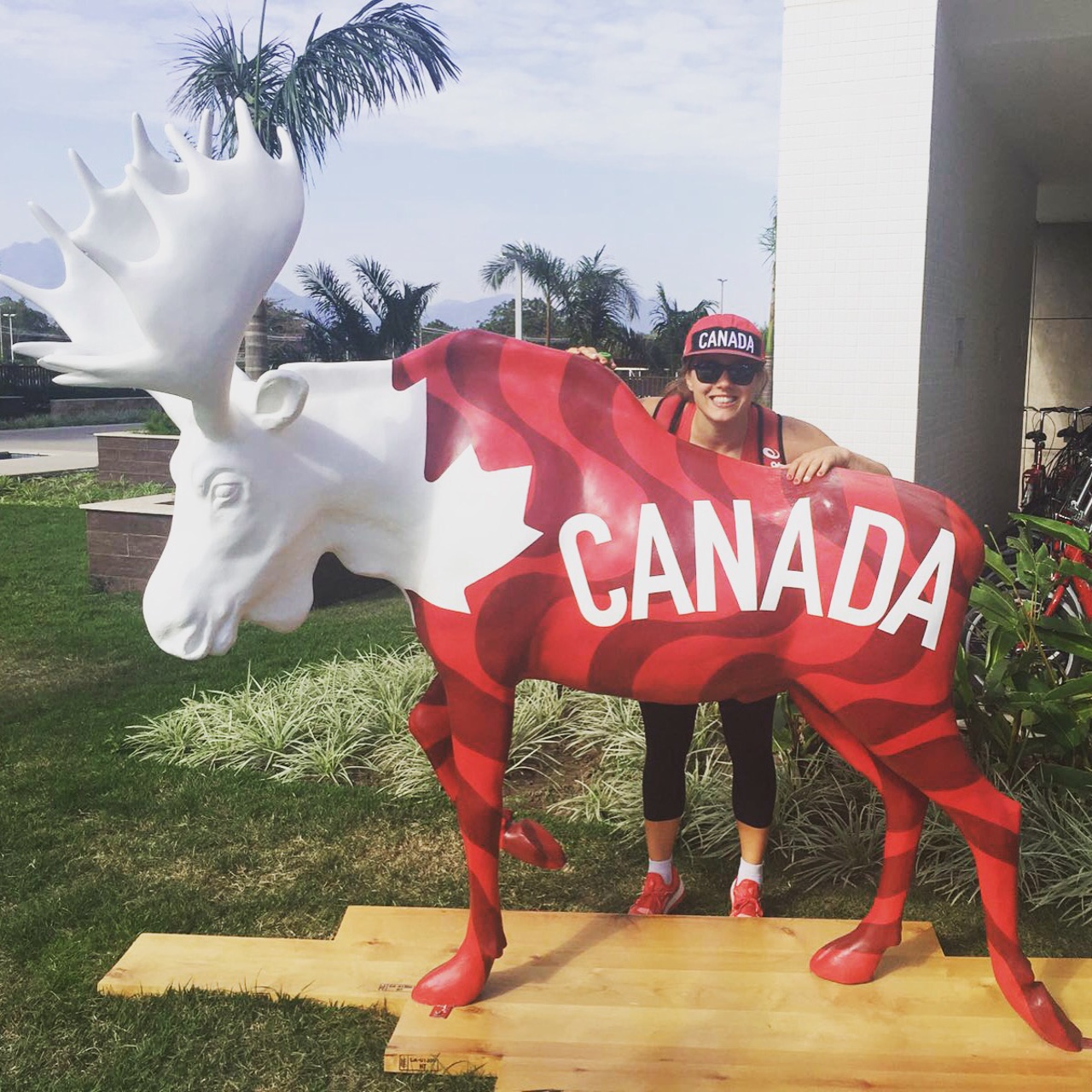
Interview with McGill Olympian Joseph Polossifakis

“I was more of a full-time athlete and did part-time school,” 2014 McGill Management graduate Joseph Polossifakis said, laughing. “[At McGill] my schedule was: Ten to 12 practice, one to four school, five thirty to seven thirty [practice]. After getting home […] that day of work, I just wanted to sleep, but of course I had to then start homework and studying.  It was a tough couple of years.”

The hard work clearly paid off. Last month, Polossifakis found himself in the final round of 32 at the 2016 Rio Olympics fencing competition. Four years earlier, he almost gave up on fencing after missing out on the 2012 London Olympics.

“It was honestly a lot of stubbornness that kept me in the sport,” Polossifakis said. “When I didn’t qualify for London 2012 by a small margin, I almost stopped. I always had a lot of good times, and then some subsequent setbacks which led to me asking myself if I wanted to continue. […] I just didn’t want to quit before I had achieved what I set out to do, I would have felt a lot of regret otherwise.”

Polossifakis graduated from McGill in 2014 with a commerce degree. He has always had to balance life and fencing, something that required an unusual amount of sacrifice and determination. Between 2014 and 2015, he missed a year of competition due to a concussion. Throughout his career, he’s endured numerous back injuries and torn ligaments in both his ankle and his meniscus.

“Perseverance is number one thing for any olympic athlete,” Polossifakis explained. “It’s funny because everyone, any athlete you speak to at the Olympics, has a story that is terrible. Everyone who gets there is very humble and humbled to get there.”

Polossifakis relished the Olympic experience, even though he was knocked out in the round of 32 by Aliaksandr Buikevich of Belarus. He loved the energy of living in the Olympic village, as well as the chance to brush shoulders with the world’s best athletes. Team Canada had a particularly tight knit group throughout the Games.

“I went to see some diving, synchro swimming, went to watch tennis, and saw some wrestling. It was especially fun when you get to watch a fellow Canadian competing and get to cheer them on,” Polossifakis said. “I was able to go to the 100M men’s final for track and field, as well as  the 4x100M relay. It was amazing to able to watch Andre De Grasse and see him do so well.  It was also cool because there was definitely mingling with everyone regardless of popularity, I was able to talk to De Grasse for a bit and get to take a picture.”

Polossifakis explained that athletes were relatively insulated from the controversies surrounding the Rio Games. Most of the participants were cooped up in the Olympic village, away from the fairly damning media coverage at the start of the games.

“Us athletes were practically in a bubble in the Olympic village so we weren’t exposed to a lot of the harsher realities in Brazil,” Polosifakis said. “Zika was a bit overblown–I didn’t hear of anybody getting it. In terms of political crises, there were a couple of rallies at Copacabana. The venues were, for the most part, ready. […] The only issues that really arose were little logistic things [….] Overall, the games from that standpoint ended up being higher than the fairly low expectations.”

Polossifakis’ life-long affair with fencing started in high school in the sabre discipline. He was the only one of his group of 25 co-fencers to advance to the Olympic level. He was very single minded in his pursuit of fencing’s highest honours, and that led to a good–though somewhat truncated–experience at McGill.

“A couple of years after [the London Olympics], I slowed down and did school full-time and got time to complete my Bachelor of Commerce in five years,” Polossifakis said. “I was happy to get to class sometimes, since I’d be gone three weeks at a time, due to competition or training camp.”

This allowed Polossifakis to get fully involved in life in the Desautels Faculty of Management. It also allowed him to make friends within his program.

“When I didn’t qualify for London and chose to do school full-time, I decided to get more involved in things like the JDC case competition through Desautels, and ended up doing case competitions  and a thing called Case League,” Polossifakis explained. “Doing the JDCC allowed me to meet a lot of new people, which was great. It was especially nice for me because I had to make a lot of new friends since a lot of them were graduating and I had to complete my degree in five years, due to the time I missed doing competitions and training.”

Like most Desautels students, Polossifakis had the option of going to Super Sandwich for lunch. Unfortunately, he had to resist the temptation and opt for healthier options.

“It was hard because I was always running in-between places, a lot of my friends would go across to Super Sandwiches for lunch,” Polossifakis explained. “I tried my best to get salads or have sandwiches prepared. Unfortunately, there aren’t many healthy options around campus. I even thought of opening a healthy food store at one point.”

Nonetheless, Polossifakis found a way and often went to Subway to get salad and chicken for lunch. 

He believes in the value of fencing for young people. In his own words, “the sport allows you to learn a lot through tough situations; sabre makes you deal with wins and losses every day.” However, he believes that many other countries have better grassroots fencing programs in place than Canada.

“The sport is very well-funded in a lot of countries: South Korea is very good, Russia has an extremely good system, along with Italy. It’s quite a cut-throat sport, since there are 215 people in a usual competition and only 32 people in [the] olympics,” Polossifakis explained. He believes that Fencing Canada needs to target a younger age group and get them interested in the sport.

“[In Canada] fencing really lacks a lot of presence in elementary and high schools, so kids are not exposed to it young enough,” he explained. “There are not enough programs in place in Canada. Kids get interested when seeing it but don’t know where to go to do it. Some people are starting to do it, but we need more coaches to get trained and do it. We need to maybe introduce it into curriculum and after-school programs, especially in Quebec.”

Polossifakis will continue with the sport, hopefully until the Tokyo Olympics in 2020. He has caught the Olympic buzz and wants to experience it again. 

“I absolutely want to go [to Tokyo],” he explained. “It looked amazing from what they showed us during the closing ceremonies. I plan on continuing fencing, while also starting to work this year to get my back-up plan going since I obviously can’t be a fencer forever. [But] I was so happy to be at the olympics, and I want to try as hard as possible to get that feeling again.”

Science & Technology

McGill labs find new ways to target resistant bacteria

In 1945, Alexander Fleming, made famous for his discovery of penicillin, warned that excessive antibiotic use would likely result in bacteria developing resistance. The term is often in the headlines, but what exactly is antibiotic resistance? It is generally defined as microorganisms developing the ability to somehow prevent the intended effects of the antibiotic. That somehow is a key area of research that spans almost all STEM disciplines.

McGill Biochemistry Professor Albert Berghuis and his lab are working to find interdisciplinary solutions against antibiotic resistance. 

“We are really at the interface of physics and biology, we want to know what is actually happening in a superbug in extreme detail,” Berghuis said.

Indeed, in a recent paper published in Structure, Berghuis’ lab demonstrated their attention to such detail.

The rigorous study proposes the mechanism and shape—or conformation—of a protein which causes resistance. Usually, bacteria respond to an antibiotic threat—that is, the presence of antibiotics in their surroundings—by producing proteins to inactivate the drugs. As those proteins are only needed when the bacteria are under threat, their production depends upon the presence of that threat.

“I grew up in the Cold War, and I remember that the US spent a lot to maintain [….] defence and early warning systems,” Berghuis said. “In the same way, bacteria must expend a lot of energy and resources to maintain defence systems against antibiotics.” 

However, the protein studied by Berghuis’ lab works rather differently: it acts as a sort of ‘molecular mousetrap,’ storing energy for use when it is required.

When present, antibiotics bind to the protein and change its shape causing the mousetrap to ‘spring.’ As a result of the protein’s conformation change, chemical groups are positioned closer to the antibiotic, allowing the protein to deactivate the antibiotic. This mechanism provides newfound insight into how bacteria develop resistance, opening a new pathway for drug development that would muzzle the mechanism’s ability to resist antibiotic treatments.

Despite the recent breakthrough, the overall outlook with regard to antibiotic resistance is bleak. Reports from the World Health Organization (WHO), Centers for Disease Control (CDC), and articles in various media outlets—most recently The Economist—have suggested that we have entered a post-antibiotic era, in which antibiotics have been rendered ineffective.

Nevertheless, Associate Microbiology Professor Samantha Gruenheid noted that these reports could actually be a positive sign. 

“Awareness of antibiotic resistance has increased in the past few years [….] and there are some excellent scientists working on the problem,” Gruenheid said. “Work like that of Professor Berghuis here at McGill opens up new ways to interfere with antibiotic resistance.”

Last year, as Dr. Gruenheid pointed out, an international team conducted experiments on soil microbes that led to the discovery of “a whole new class antibiotic–the first in 30 years.”

The McGill chapter of Small World Initiative provides hands-on antibiotic resistance research for microbiology undergraduates. (Small World Initative)

In addition, Dr. Gruenheid launched a McGill chapter of a program started at Yale University known as the Small World Initiative (SWI). The program seeks to provide students with an opportunity for real, hands-on microbiological research while also working to fight against antimicrobial resistance.

“The SWI is aiming to actually find new candidates to replenish the antibiotic pipeline,” Dr. Gruenheid said. “Over two-thirds of antibiotics originate from soil microbes, and by having all the SWI students searching for novel antibiotic producing microbes within the soil in their own environments, the SWI is combining the power of crowdsourcing with the approach of looking in a wide variety of geographic locations for antibiotic producers.”

 “SWI is currently in United States, Belize, Canada, Iraq, Ireland, Jordan, Malaysia, Nigeria, the Philippines, and the United Kingdom,” Dr. Gruenheid added, “which increases the chances of discovering something novel.” 

Microbiology graduate student Tyler Cannon, now in Dr. Grueinheid’s lab, helped co-ordinate the effort to set up the SWI at McGill as an undergraduate. He was subsequently recognised by the Canadian Society of Microbiologists for his work, and is currently following up on promising strains found by U1 students in the Microbiology and Immunology program at McGill.

“I was really shocked when we started getting positive hits,” Cannon said. “In fact, about 15 per cent of all the isolated [bacterial strains] I tested were positive for antibiotics—a number I couldn’t believe.”

Cannon and Dr. Gruenheid’s lab have since reached out to various academics and professionals to further investigate those promising strains found at McGill.

“This summer [….] we started collaborating with a new [Principal Investigator] in Laval who’s willing to do full genome sequencing for us, but we’re still waiting for results,” Cannon said. “[And] although it’s still preliminary, [.…] there were actually two samples that showed promise for being novel.”

Although the issue of antimicrobial resistance is finally receiving attention and new solutions are being investigated, it may be too little too late. None of the professors interviewed were willing to say that they were optimistic about the future of research in the field.

“I could be both optimistic or pessimistic [….] I don’t know which to start with,” said Professor Berghuis.

Dr. Gruenheid agreed that while advancements have been made, the overall outlook on antibiotic resistance is bleak.

“On a good day, I like to think I am cautiously optimistic,” Dr. Gruenheid said. “On the other hand, bacteria now exist that are resistant to every antibiotic, including the so-called ‘drugs of last resort.’”

This statement rings truer now than ever before: A recently-published paper in the European Respiratory Society details the treatment of a patient with XDR-TB—extensively-drug-resistant tuberculosis—which took 38 months to treat as well as an individualized treatment plan involving more than six antibiotics. The case was notable as two ‘last resort’ antibiotics had to be used in conjunction for the first time ever.

The lack of new antibiotics was a common concern for both professors. 

“The pharmaceutical industry is waiting more and more on academia to do the basic research and then picking it up,” Berghuis said. 

“The current pipeline for antibiotic development is almost dry. Drug development all the way to the clinic is long and very expensive,” said Dr. Gruenheid.

With basic research funding low and little appeal for pharmaceutical companies to develop drugs which are taken in short bursts, as opposed to drugs for chronic diseases, there are few resources left to combat antibiotic resistance. Amid all the reports by public health agencies, physicians, researchers, and politicians, the future of antimicrobial research is still uncertain.

Private

Engineering welcomes new undergraduate program

   The Department of Bioengineering opened its undergraduate program to 30 incoming U0 and U1 students this Fall. According to Antonella Fratino, Administrative Assistant at the Department of Bioengineering, the undergraduate program is the first of its kind in Canada.
    After the graduate program was established at McGill in 2012, the proposed undergraduate program underwent two years of extensive internal review within McGill. Program requirements were finalized and courses were approved over the course of the internal review. An external review by the Government of Quebec began in the Fall 2014 and gained final approval by Mme. Hélène David, Quebec’s Minister of Higher Education, three months ago.
    According to Fratino, students in the undergraduate program will learn a key set of concepts that focuses on the interdisciplinary, biological nature of engineering.
    “We have created a program that puts emphasis on the fundamental principles of engineering and its underlying bases, such as physics, math, and chemistry,” said Professor Georgios Mitsis, Chair of Undergraduate Studies in the Department of Bioengineering. “What makes our department different from other departments is that we wanted to give [our undergraduates] a solid foundation in biology as well.”
    “We want to give our students the background to work in both domains of engineering and biology,” Professor Mitsis added.
    The curriculum is separated into three streams: Biological materials and mechanics, biomolecular and cellular engineering, and biomedical, diagnostic, and high throughput screening mechanics. Students will also be given the opportunity to undertake a research project and will be required to conduct a senior design project during their final year. 
    “The undergraduate bioengineering program will allow students to hone in on what direction they want to go into,” Fratino said.
    Professor Mitsis hopes the program will equip students with the ability to apply biology to engineering and vice versa. 
“Biology is astonishing. It is a great source of inspiration,” he said. “If you study a biological entity and you study how it functions and how it adapts to its environment, then you can study that in a quantitative manner and try to replicate its function in an engineering design. It’s a two-way street: You can try to use engineering to improve human health, like in prosthetics, but you can also use the healthy organism to try to improve engineering design.”
    The program will offer courses in all fields of the sciences and aims to produce well-rounded students. Like other McGill engineering programs, entrance into the bioengineering program is highly competitive, requiring satisfactory academic standing and a high GPA.
    Maya Kenton, a U1 student, entered bioengineering in hopes that the program will allow her to combine pediatric oncology research with engineering design. Other students hope to go into the biotechnology industry or bioengineering research.
     “I don’t know what to expect yet,” Kenton said. “But I’m excited to learn.”
     According to Professor Mitsis, the program hopes to accept 60 undergraduate students each year and centralize all bioengineering professors in the downtown campus in the future. Like any new program, they hope to gain more diverse faculty members and to develop further connections with researchers and companies.
When asked how she felt about the recent launch of the program, Kenton chuckled: “We are the guinea pigs of the department.”
    Even so, Kenton is optimistic about the program. “Bioengineering is a wonderful department. In bioengineering, we can make a big impact,” she added. “I think it’s the future.”

McGill, News

Task Force on Indigenous Studies and Education to launch this fall

This fall, McGill will be launching a Provost Task Force on Indigenous Studies and Indigenous Education. Led by co-chairs Paige Isaac, Coordinator of First Peoples’ House, Hudson Meadwell, Chair of the Department of Political Science, and Angela Campbell, Associate Provost (Policies, Procedures and Equity), the task force will propose initiatives aimed at integrating indigenous perspectives into academic curriculum and research, as well as the retention and recruitment of indigenous students and faculty members.

The task force was first proposed by Christopher Manfredi last Sept., shortly after his appointment as Provost and Vice Principal Academic.

“Last Fall, [during] my first presentation to Senate as provost, I said that I thought McGill had the opportunity to be the leading university east of the Ontario-Manitoba border [to form a provost task force],” Manfredi said.

Three months later, the Truth and Reconciliation Commission of Canada released its final report, concluding a six-year investigation that interviewed more than 6,000 indigenous men and women who survived abuse in residential schools. These schools, which operated for more than 130 years, were sponsored by the Canadian government in an attempt to assimilate indigenous youths into Euro-Canadian culture.

The Commission called for a total of 94 recommendations to be put in place. Pertaining to post-secondary institutions, the commission urged universities and colleges to introduce degrees in indigenous languages, for law schools to require all students to take a course on Aboriginal People and the law, as well as for medical and nursing schools to provide a mandatory course on indigenous health issues.  

“The task force is not just about responding to the Truth and Reconciliation Commission report,” said Manfredi.  “That’s obviously an important part of what the task force will look at, but it’s more broadly to think about what contributions McGill can make towards developing its own indigenous studies work and making a contribution to indigenous education.”

Thirteen members in total will serve on the task force, including two students: Ray Aldred, a PhD candidate in philosophy, and Christian Quequish, the Students’ Society of McGill University (SSMU) Indigenous Affairs Coordinator. According to Manfredi, the task force will last for nine months, with an initial progress report to be completed this coming Jan. and a final report in June 2017.

Allan Vicaire, the Indigenous Education Advisor and a member of the task force, applauded McGill’s effort in raising awareness about indigenous issues over the years.

“Already in the last five years we have built great programming, and now the task force is an addition to it,” said Vicaire. “I think it’s a really collaborative effort for myself, the First People’s house, the Office of the Dean of Students, and now the task force and the indigenous studies program is another mechanism to bring more exposure about indigenous issues”.

Ben Geobe, an indigenous student PhD candidate at the McGill School of Social Work, applied to the task force because he wanted to be a voice of a group that has historically been underrepresented. When asked why the task force was necessary, he replied, “My big concern is that I hear a lot of diverse projects that are focused on enriching or helping our neighbours in the Aboriginal, First Nation, and Inuit native communities, but you don’t always hear about it in a coordinated way.”

The task force will officially launch on Sept. 22, in commemoration of the relocation of the Hochelaga Rock.

Arts & Entertainment, Theatre

Play Review: Never Swim Alone is much more than absurd

Daniel MacIvor’s Never Swim Alone is an ironic parody of gender as well as a mildly unsettling piece of theatre. Directed by Katey Wattam, Never Swim Alone is not the kind of play an outsider would come to expect from McGill’s Player’s Theatre. Everything about it is minimal in terms of set design, costume design, and props, and yet it remains impactful long after the show is over.

The plot appears simple enough: Two men, Frank and Bill, played by Thomas Gould and Guillaume Doussin, enter a room and engage in a battle of one-upmanship  under the watchful gaze of the dainty Referee, portrayed by  Eléonore Von Friken. Through 13 rounds of attempting to outshine one another, the audience catches a glimpse into the tragic lives of the play’s three characters who hide behind their ironic and caricatured façades.

           Wattam took artistic liberties with staging and blocking, which were a welcome departure from conventional arrangements. When interacting, whether in a verbal  or  a physical altercation, Frank and Bill were often positioned in ways that created distance between them. From a conversation held back-to-back to a chokehold where both characters were on opposite ends of the stage, creative uses of space amplified the actors’ actions and commanded the room’s attention.  

The convincing and powerful performances of Gould, Doussin, and Von Friken were made even more impactful when placed against the minimal backdrop of a simple black curtain.  Without the conventional addition of an elaborate set, the characters were really all that one could focus on. The actors’ performances were the greatest strength of the production, while the minimalism of the set and props played to this strength.

           When I spoke to her after the show, Wattam mentioned that she chose  to direct a Daniel MacIvor piece because of the “philosophical meaning he embeds in accessible dialogue, while theatre can be a generally inaccessible medium.” And she has a point—theatre is a transient form of art where one cannot understand it at their own pace, like with a book or film, and many nuances risk being lost to the viewers during the performance. For an outsider who is not especially familiar with theatre, or even the arts in general, it can seem daunting to attend a performance rife with references and inspiration from classic works. Never Swim Alone was something else entirely.  Although MacIvor’s text draws on scholar Judith Butler’s treatise on gender, it is not necessary to be familiar with these allusions to understand the message—that the characters are damaged by the superficial, male-centric world they inhabit.

          Despite its eccentric guise, the play is a tragic one. Frank and Bill’s competitive jests mask repressed dissatisfaction with their mundane, materialistic, and uneventful lives. By judging their competition, the Referee attempts to assert her own agency in the masculine world of the play, yet the men’s focus on outshining one another eventually leaves her by the wayside. It becomes abundantly clear that the gender roles the characters are trying to live up to are damaging their lives in irrevocable ways.

           What was most enjoyable about the production was that it managed to convey significant social commentary in a way that wasn’t lost to the audience.  As an art form that demands undivided attention, theatre can be more of a challenge to dissect right in the moment. While the play’s philosophical inspiration and meaning were extremely palpable, MacIvor doesn’t spell it out for viewers in a way that prevents them from thinking and drawing their own conclusions. In fact, provoking thoughtful reactions is probably what this play does best—as it is entirely possible that others would draw different conclusions than those drawn here. The play achieves something remarkable in being accessible, insightful, and shocking while maintaining charm and endearing absurdity throughout.


Editorial, Opinion

A safe academic setting need not stifle free speech

As the semester began at the University of Chicago, incoming students received a letter from Dean of Students John “Jay” Elison stating the administration’s staunch opposition to safe spaces and trigger warnings. The letter, and its ensuing criticism, is another example of the polarizing debate surrounding these terms. As the new semester commences at McGill, members of the McGill community must revisit the primary motivations behind anti-oppression tenants: Empathy and respect.

Despite the designation of several physical spaces on university campuses, including McGill’s, as safe or safer spaces, these are much more than physical entities. Regardless of whether the terms exist, safe spaces are ultimately a mindset compatible with and crucial to a free, academic institution such as McGill.

In light of the University of Chicago letter, it is important to seek greater clarity with regards to safe spaces and trigger warnings at McGill. When academic institutions recoil from these terms, the concepts’ purposes become removed from the fundamental values that they are supposed to protect. Placing blanket bans on safe spaces and trigger warnings, as the University of Chicago did, demonstrates that critics have failed to engage with these concepts in a productive way.

A paradox behind the debate regarding safe spaces and freedom of expression is that safe spaces were originally introduced to allow people—regardless of genders, sexualities, classes, religions, races, and ethnicities—to express themselves freely. Extending this mindset into a university classroom should not prohibit free, intellectual discussion. Whether new to campus or returning, members of the McGill community must remind themselves that the purpose of safe spaces should not be to censor, but to promote respect and diversity—two values essential to education at a university.

Academic discussion at universities can be uncomfortable; however, too frequently, safety is wrongly equated with comfort. Safer spaces, as they are termed at McGill, are commonly seen as places in which everyone should feel free to be themselves without fear of oppression or discrimination; they do not exist to shield students from uncomfortable ideas or topics.

Because academic discussions often broach difficult topics, content or trigger warnings are understandable. A university cannot force its students to make one choice over the other, nor can it dictate what its members react to emotionally; however, it can help them to engage in difficult conversations by encouraging its faculty and administration conduct these as safely as possible. Ultimately, it is each student’s decision whether or not he or she wants to engage with sensitive material. It is necessary to discuss and analyze indigenous issues, sexual violence, racism, and genocide—to name some examples of potentially disturbing topics—in order to learn about and from society’s mistakes.


Safe spaces are ultimately a mindset compatible with and crucial to a free, academic institution such as McGill.

Those in positions of authority, including professors and student leaders, must be responsible for fostering these conversations in as safe and inclusive a way as possible.

In order to keep the uncomfortable from veering into the unsafe, all members of the McGill community have a responsibility in the balancing act between freedom of expression and the maintenance of safe spaces. The inherent power dynamics between figures of authority and students, particularly those who identify with minority groups, must be taken into account. Discussions must remain a dialogue rather than an attempted imposition of an individual’s political views. It is imperative that these conversations are not limited to specific perspectives, but strive to include a variety of experiences and viewpoints.

Accepting the diversity of people and opinions in an institution such as McGill can only help to further academic discussions about injustices—both past and present. Empathy and respect remain fundamental human values whether or not physical safe spaces exist. Such spaces exist because we need to be reminded of their importance—not only in our individual interactions, but in academia as well. When there is proper regard for what these spaces do or do not stand for, safe spaces and free, intellectual debate are not mutually exclusive.

Arts & Entertainment, Music

South African musician takes centre stage: St. Lucia on fame and the beauty of pop music

If you are drawn to synth-pop beats, reminiscent of 80s music, your ears would have perked up as St. Lucia kicked off their set at Osheaga. In the sweltering afternoon heat, frontman Jean-Phillip Grobler emerged on Osheaga’s Green Stage, situated at the end of a large dusty field overlooking downtown Montreal, wearing a loosely buttoned shirt and bright turquoise slacks. “It’s really hard to be up here in pants,” he quipped to the sweaty audience.

 What followed was an hour-long performance of energetic synth-pop and R&B-inspired music that fans of New Order and The Petshop Boys would enjoy. But these aren’t the only influences that are salient in Grobler’s work. After his performance, he made it clear that his upbringing in South Africa has significantly influenced his music as well.

 “I’ve never had a negative connotation towards pop music, since the apartheid government would ban a lot of subversive music,” he said. “A lot of what we got was the most harmless pop from all over the world. I never grew up with this feeling that pop was a bad thing, or that if you have a pop song you’re selling out. We have a lot of pop songs, and I just think if you have this great pop song that makes you feel something then that’s a beautiful thing.”

Grobler mentioned some of the popular South African bands he grew up with, such as Just Jinger and Springbok Nude Girls. While those artists haven’t emerged into the international mainstream, some recent South African bands have—Die Antwoord, for one—thanks to increasingly globalized platforms. 

“I think that’s the really interesting thing about African music,” Grobler said. “Before the internet, it was such an insular thing. Now, one guy, John Wizards, has been recording  with Mumford & Sons, so I feel like music coming out of South Africa is a lot hipper now.” 

St. Lucia is another prime example of the increasing presence of  South African artists onto the international stage.  Since debuting their act five years ago, Grobler and his band have toured North America and Europe multiple times, appearing in major cities and festivals alongside legendary acts like Radiohead, whom Grobler cites as a major musical influence. Despite these experiences, St. Lucia is still getting used to their newfound success.

“It’s really, really surreal, especially growing up in South Africa and watching the international music scene happen and admiring it and wanting to be a part of it. “It’s really incredible and I have to pinch myself. The fact that I can make music and make a living out of that, it’s incredible. And I’m making music I want to make, I’m not being told to make it—it’s my own thing.”

Grobler has a strong background in music and performance.  Having attended a choir school during childhood, he experienced touring internationally from a very young age. 

“I read these articles from people about how touring takes this huge toll on your life […] I know I’m fortunate that I get to tour with my wife, who plays keyboard in the band, but I can’t identify with that attitude because we really enjoy traveling to places. We make an effort to explore the place and try the food and and go on a hike or find a cool area.”

This dedication to enjoying all sides of touring developed early on during Grobler’s academic career.  “It comes from me being in that choir, from touring when we didn’t have televisions in the bus or wifi or cell phones, and you just have to stare out of the window and create something.”

When asked what advice he would give to music students struggling to find a personal sound in a university context, Grobler emphasized the importance of being happy with your own work  instead of attempting to live up to standards set by others. For students, it can be difficult not to draw comparisons with their peers; however, Grobler argues it is essential to go at your own pace and recognize personal successes.

“It’s easy to be really intimidated by people around you because their work is more popular or easy to stomach. We’re doing really well as a band but we started around the same time as Haim and Chvrches and they’re way bigger than we are now,” said Grobler. “It’s very easy for us to be like ‘oh why are we not as big as Haim? What are we doing wrong?’ but we’re not doing anything wrong—we love what we do.”

While St Lucia’s steady rise to international acclaim is still underway, Grobler made it clear that authenticity and unapologetic creativity are ultimately more important than fame. 

Find out more about St. Lucia on their website.

Football, Sports

NFL 2016 Season Preview

NFC North

  • Green Bay Packers

    The Packers are looking to bounce back after an underwhelming 2015-16 campaign. With receiver Jordy Nelson back from a season-ending ACL surgery and a leaner Eddie Lacy in the backfield, Green Bay’s offence should return to top form. As long as quarterback Aaron Rodgers is at the helm, the Packers should be serious Super Bowl contenders in 2017.

    Minnesota Vikings

    The 2015-16 season looked bright for the Vikings, who surpassed expectations last year. Unfortunately, a gruesome knee injury to their blossoming young quarterback Teddy Bridgewater has all but ended any playoff hopes. Even with the addition of quarterback Sam Bradford, Minnesota will rely heavily on running back Adrian Peterson. Expect their first season in U.S. Bank Stadium to be a disappointment.

    Chicago Bears

    The Bears are hoping to turn it around after undergoing significant changes to their roster in the past few years. Chicago is banking on big seasons from sophomores Kevin White and Jeremy Langford. If their defence can hold, their offence should be able to score points, but expect the Bears to be on the outside looking in come playoff time.

    Detroit Lions

    After an abysmal 1-7 start last season, Detroit bounced back to finish the year 7-9. The Lions will look different in 2016 after the unexpected retirement of star wide receiver Calvin Johnson. Ameer Abdullah looks like a breakout candidate, but expect this team of misfits to once again finish near the bottom of the league.


  • NFC East

    New York Giants

    Rookie Head Coach Ben McAdoo will lead an improved Giants team, with receiver Victor Cruz returning to give quarterback Eli Manning another explosive pass catcher. The defence looks better than last year with the addition of defensive end Olivier Vernon. Look for New York to improve from last season and make it out of a weak division.

    Washington Redskins

    On paper, the Redskins have the best team in this dysfunctional division; nonetheless, they face the ninth hardest schedule in the NFL. Cornerback Josh Norman performed poorly in the pre-season, raising questions about how much he can improve Washington’s defence. With solid receiving options, Kirk Cousins could be an effective quarterback. However, the Redskins should underperform this season, likely relinquishing the top spot in the division to the Giants.

    Philadelphia Eagles

    The Eagles look like a trainwreck this year. With Chip Kelly out, Head Coach Doug Pederson hopes to make something out of Philadelphia’s mess. With essentially nothing to cheer for this year, the always-disgruntled Eagles fans can only hope that second overall pick Carson Wentz shows promise as he begins the year as Philly’s starting quarterback.

    Dallas Cowboys

    With quarterback Tony Romo breaking his back in the preseason, the Cowboys are banking on rookies Ezekiel Elliot and Dak Prescott to lead the offence this year. Although both are exciting prospects, leading ‘America’s Team’ bears a lot of pressure. Luckily, the O-line is still the best in the league and the defence has solid playmakers. However, expect a disappointing season punctuated by some exciting flashes from Dallas’ rookie quarterback-running back tandem.


  • NFC West

    Arizona Cardinals

    Quarterback Carson Palmer is coming off a career year, and with a horde of stud wide receivers, Arizona’s offence should be just as explosive. The team has high expectations for sophomore running back David Johnson, and with one of the league’s deepest defences, the Cardinals are poised to be Super Bowl contenders in 2017.

    Seattle Seahawks

    With quarterback Russell Wilson at the helm, anything is possible for Seattle. The team said goodbye to their beast running back Marshawn Lynch this season, but Thomas Rawls looks poised to take over and produce big numbers in Seahawks colours. They once again boast one of the league’s strongest defences and will be serious Super Bowl contenders, but a weak offensive line will be Seattle’s Achilles heel.

    Los Angeles Rams

    The Rams will be a blast from the past, returning to the City of Angels after a 22 year absence. First overall pick Jared Goff has struggled in the preseason and expects to start the year as the third string quarterback. Even with an outstanding defence and star running back Todd Gurley, a tough division and weak quarterback play should leave the Rams as a playoff outsider.

    San Francisco 49ers

    The 49ers’ offseason has been a public relations nightmare. The team will likely be basement dwellers and backup quarterback Colin Kaepernick ruffled feathers when he refused to stand for the American national anthem. Head Coach Chip Kelly joins the team and hopes to fix this roster of misfits, but expect the 49ers to be in contention for the first overall pick come draft time.


  • NFC South

    Carolina Panthers

    Last season’s NFC champions blew away the division, only losing one game the entire season. Although that season ended in a heartbreaking Super Bowl loss to the Denver Broncos, there’s plenty for Panthers’ fans to be excited about this season. Quarterback Cam Newton will have his top offensive weapon Kelvin Benjamin back, after the wide receiver missed last season due to injuries. The Panthers should easily capture top spot in the division.

    Tampa Bay Buccaneers

    The playoffs might be an unattainable goal for the Buccaneers this season, but at the very least, with former first overall pick Jameis Winston under centre, they should finish with a winning record. The offensive-focused, Head Coach Dirk Koetter was brought in last season as offensive coordinator to help nurture Winston and other young players in his unit, presaging bigger and better things for this team in just a few years time.

    New Orleans Saints

    The Saints spent three of their four draft picks on their defence, trying to bolster a unit that came second-to-last in 2015. Superstar quarterback Drew Brees continues to lead a stellar offence that could not be more opposite compared to the other side of the ball. However, an ageing Brees will have a difficult time carrying his team in this division again, and the Saints are likely to finish towards the bottom this season.

    Atlanta Falcons

    Atlanta has posted a losing record each season since winning the division in 2012. Unfortunately for Falcons fans, this year doesn’t look like it will be much different. Quarterback Matt Ryan is nowhere near as talented as Brees or Newton. Look for Atlanta to depend heavily on running back Devonta Freeman to complement receiver Julio Jones and the Falcons’ aerial assault.


  • AFC North

    Pittsburgh Steelers

    Even without star running back Le’Veon Bell at the start of the season, the Steelers boast one of the league’s most lethal offences. With a young defensive core, the Steelers look fast and furious, and are expected to spend plenty of time in their opponent’s backfield. If quarterback Ben Roethlisberger can stay healthy, look for the Steelers to be in the mix for Super Bowl 51.

    Cincinnati Bengals

    After choking again in last years’ playoffs, the Bengals look to prove that they can make it to the divisional round after four consecutive first round eliminations. Cincinnati has a strong two-man punch at running back, but they lack a number two receiver behind A.J. Green. However, the Bengals strong defence should be good enough to lift Cincinnati to another wildcard spot.

    Baltimore Ravens

    The Ravens will have six starters returning from injury this year after an injury-ridden and disappointing 2015 campaign. With question marks scattered across the field, Baltimore is hoping the return of receiver Steve Smith and improvement from third-year running back Terrance West can help solve their offensive woes. But, still finding themselves in a tough division and with an ageing defence, the Ravens' playoff chances are slim this season.

    Cleveland Browns

    With the addition of quarterback Robert Griffin III, Cleveland is hoping to find stability under centre for the first time in over two decades. With a bevy of new receivers and a young running back tandem, their offensive production should increase. However, with a weak defensive front and a miserable defensive backfield, the Browns should be on the clock at the top of next year’s draft.


  • AFC East

    New England Patriots 

    Even if the season starts flat with second-year quarterback Jimmy Garoppolo under centre, Patriots fans should be pumped for Tom Brady’s week five return from his Deflategate suspension. While New England’s defence is hoping veteran defensive end Chris Long can make up for the loss of Chandler Jones, the offence looks to have a lethal tight-end combo with the addition of Martellus Bennett to flank Rob Gronkowski. It’s safe to say the Patriots are a lock for another division title.

    New York Jets

    The New York Jets had a surprisingly successful 2015-16 season, but choked at the end of the year to miss the playoffs. The addition of veteran running back Matt Forte, coupled with wide receivers Brandon Marshall and Eric Decker, make up a talented offensive core to go alongside quarterback Ryan Fitzpatrick. The defence remains intact and is expected to show improvement, making a wildcard spot very possible.

    Miami Dolphins

    The Dolphins are coming off a rather disappointing year—even after picking up Ndamukong Suh in free agency. Quarterback Ryan Tannehill is still looking for his breakout season, while receiver Jarvis Landry has become a dangerous weapon and veteran running back Arian Foster should have an immediate impact both on and off the field. If new Head Coach Adam Gase can push the right buttons, the Dolphins have slim but plausible playoff hopes.

    Buffalo Bills

    Led by quarterback Tyrod Taylor and top offensive weapons LeSean McCoy and Sammy Watkins, Buffalo has finally put together a stable and respectable offence. The Bills shouldn’t be as reliant on their defence this year after a mediocre 2015 season. Losing defensive tackle Mario Williams hurts, but Head Coach Rex Ryan is more than capable of making readjustments. However, even with the optimism, this team is set for another average season in the NFL basement.


  • AFC West

    Oakland Raiders

    For the first time in 14 years, the Raiders could be playing football in January. Oakland is the only team in the AFC West that should improve on their 2015-16 record. They had a fantastic off-season, making key additions that will certainly augment their young core. Quarterback Derek Carr and receiver Amari Cooper make a dangerous offensive duo, while the additions of cornerback Sean Smith and linebacker Bruce Irvin bolster the defence.

    Kansas City Chiefs

    The Chief’s oft-injured star running back Jamaal Charles will not be ready for week one and the offence will struggle until his return. The defence, though expect to be stolid, will not be as strong as last year. With Marcus Peters taking over the number one cornerback position after the Chiefs lost Sean Smith in a trade and Justin Houston to a knee injury, Kansas City should regress in 2016-17.

    Denver Broncos

    The reigning Super Bowl champions had a pretty underwhelming offseason. Starting quarterback Peyton Manning retired and starters Danny Trevathan, Malik Jackson, and Brock Osweiler departed in free agency. Denver still expects to field one of the best defences in the league and should win at least 9 games. Yes, it’s a far cry from their magical 2015 campaign, but the Broncos are looking to the future with first round pick Paxton Lynch developing.

    San Diego Chargers

    The Chargers will restore their respectability in 2016. The team improved in crucial areas with the addition of youthful players in key positions. Defensive end Joey Bosa looks like the next J.J. Watt, and wideout Travis Benjamin gives the offence versatility and the ability to stretch the field. These additions give the San Diego a nucleus of players that should allow them to eventually return to the playoffs in quarterback Phillip Rivers’ career.


  • AFC South

    Houston Texans

    With J.J. Watt continuing to anchor the defence, the Texans expect to be at the top of a weak division. The quarterback carousel should end this year with Brock Osweiler winning the starting job. However, Houston may struggle, given the major improvements by Jacksonville and Indianapolis. They should compete for a division title, but that doesn’t necessarily mean they have an outstanding squad.

    Jacksonville Jaguars

    Jacksonville has their best team in years with Blake Bortles at quarterback and Allen Robinson catching passes. The defence is solid, marking a significant improvement from last year. Cornerback Prince Amukamara and safety Tashaun Gipson will bring much needed experience to a very strong secondary. The Jaguars could reach their first postseason since 2007, and Head Coach Gus Bradley could finally get just reward for his efforts over the past four years.

    Tennessee Titans

    The Titans expect to have a strong backfield with Demarco Murray and Derrick Henry, winner of the Heisman trophy, rushing behind mobile sophomore quarterback Marcus Mariota. Tennesse are a wild-card; they could easily suffer another losing season. Tennessee’s offensive line needs to protect Mariota better if they want to win the division. However, they should produce a number of exciting performances behind their explosive rushing attack.

    Indianapolis Colts

    Can quarterback Andrew Luck redeem himself following a poor 2015/16 season? Have the Colts improved sufficiently on defence? These questions hang over the 2016/17 season. Indianapolis still has a poor offensive line, a fairly unspectacular receiving corp, and there is little reason to believe they will markedly improve on last year. Expect Andrew Luck to throw a lot of yards inefficiently and with a number of turnovers.


Read the latest issue

Read the latest issue