Latest News

Ask Ainsley, Student Life

Ask Ainsley: “What should I expect coming into first year?”

Dear Ainsley, Dear Ainsley,

I am entering my first year at McGill in the Fall, and I'm not quite sure what to expect academically. I've heard grade deflation at McGill can be severe, and that classes are rigorous. What should I expect?

Sincerely,

Frightened First Year (FFY)


Dear FFY,

To be honest, I didn’t quite know what to expect going into first year either. In one of my first classes, the teaching assistant (TA) told us that we should be proud of getting a B on an essay. The shock in the room was palpable. The majority of students who get into McGill were at the top of their classes in high school or CEGEP, so being pleased with a 70 per cent isn’t something that most students are used to. 

While this may not  happen to you, just know that getting a B isn’t the worst thing that can happen, and that there are plenty of other students in the same position as you. That being said, a lot of this also depends on your faculty. If you’re in science or engineering, you may be taking some required courses in first year that cover a lot of material you’ve already learned in high school. Your grade may also be curved, which, depending on your grade and your teacher, could either benefit you or not. In Arts, however, you are given a bit more flexibility in your first year courses and program requirements later on, and as such, you may end up taking classes with upperclassmen who have more experience writing university-level papers, so your marks may end up being closer to the average than you’re used to.

One good thing about first year is that it’s a great time to dip your toe in the water of many different subjects in order to figure out your interests. It’s not uncommon for students to change their major numerous times before deciding what they want to do with their degree. Use first year to try out different classes that you may consider majoring or minoring in later on at McGill.  

In terms of course registration, you should try to make the most of add-drop period, which occurs during the first two weeks of classes each semester (from Sept. 2 to 20 in Fall 2016; from Jan. 4 to 17 in Winter 2017). Use this time to sit in on classes you are considering taking to get a feel for their subject matter, workload, and rigor. If you don’t think you’ll like a class, drop it and pick up something else. Also, if you want to take a class, but are worried it will be challenging to get a good mark, consider taking it pass/fail. You’re allowed to take one elective a year this way and it won’t affect your GPA. 

Part of the challenge of first year is adjusting to the change in environment and lifestyle, which can impact your academic performance. Especially for those moving into residence, which is a distracting environment at best, it can feel next to impossible to balance your academic and social lives while also potentially working, taking part in extra-curricular activities, and generally adjusting to your new surroundings.

Your first year should be dedicated to figuring things out. It’s exciting, it’s stressful, but ultimately, the experiences you have will shape you as a student and person, and help you discover what you’re interested in, what study patterns work for you, and maybe even give you insight on what you want to do later on in life. The important thing is to try your best, and to stay on top of your schoolwork as much as possible. If the stress is too much for you, don’t be afraid to email your professor or drop into their office hours and explain the situation. Professors want you to do well, and many are very understanding, especially when it comes to mental health. So play hard, study harder, and don’t be scared to ask for help. If there’s one thing I learned in first year, it’s that I’m not the only one who has no idea what they’re doing.

All the best,

Ainsley


Have a question for Ainsley? Ask here.

Arts & Entertainment

Album Review: Blonde – Frank Ocean

Where to listen to Blonde:

(Some suggestions)

1. Walking home alone after leaving a disappointing house party. This music makes you feel good if slightly melancholic, like you’re still cool even though that party was not.

2. With your good friends at a beach, park, or lake. These are ideal tunes to listen to with your friends—you don’t have a lot to say to each other today, but are in a warm summer slump. Maybe you all smoked a joint 30 minutes ago and it’s time for a nap. Frank’s gentle and atmospheric melodies mix well with the nearby murmur of picnics, Frisbee, and slacklining.

3. When you’re driving with your crush and you want to impress them with some chill vibes, but you can still talk (and probably make out later). Sexy and cool breakup albums are ideal for bringing people together.

4. Drinking while cooking dinner. This makes a solitary activity feel more special. It gives it a hint of casual style.  

5.    Biking across town. Each song blends into the next so your cycling flow through traffic won’t be interrupted. Catchy beats mixed throughout will get you pumped and over that hill, though.

6. When you’re sad, happy, lonely, or with loved ones. Blonde is melancholy yet comforting, because it’s about life that keeps moving and people that keep going on with their days. What did you do today? Did you listen to Frank Ocean?


Blonde is wonderfully accessible and deceptively simple. “This is life and mortality,” Frank Ocean sings on “Pink + White,” the album’s third track. There are a lot of truisms hidden in Blonde but those five words cover the essential tone of the album. “Summer’s not as long as it used to be, every day counts like crazy,” Ocean sings on “Skyline To,” an ambling anthem to long days quickly becoming shorter. 

Blonde is long and languid. It doesn’t rush, yet there is emotional urgency in each note. Ocean’s poetic phrases and layered instrumentation offer the listener an ambient reflection on the nature of life, loss, and personal growth. Some of this is hard to hear, yet at the same time, entirely captivating. Yung Lean’s chorus on “Self Control” is a quiet plea to a former lover: “Keep a place for me. I’ll sleep between y’all, it’s nothing.” Then there’s “Be Yourself,” a funny and heartrending voicemail from the mother of a childhood friend of Ocean’s, telling the listener to “stop trying to be somebody else. [….] Be yourself and know that that’s good enough.” Each song is intimate and endearing, simultaneously drawing the listeners into themselves and into Ocean’s world.

Long sections of the album go by without a hint of drums. The gentle rhythms of keyboard, bass, guitar, birds chirping, and the grainy recordings of kids in a skatepark carry the listener seamlessly from one song to the next. It’s easy to lose the distinction between each song as hooks come in and fade, carry over to the next track, and reappear later on the album through some subconscious memory of the same sound.  

Two songs stand out as ‘singles,’ although none were released from the album. “Nights” and “White Ferrari” feel like the Ocean that we know from Channel Orange; the master of deeply cool and catchy tracks. But still, these songs are entirely different from their Channel Orange kin. “Nights” has three distinct overtures strung together in the span of five minutes. “White Ferrari” has a trance-like slow and heavy build, which resolves into Ocean’s singular voice accompanied by acoustic guitar. The sometimes-abrupt transitions demonstrate Ocean’s incredible musicianship, and mirror the transience of his thoughts.

The last song—“Futura Free”—has a distorted structure similar to “Nights.” The song ends with a recording of local street noise and soft voices. “What’s your name?” the interviewer asks his friends. “What do you do? What’s your first memory? What’s the most amazing thing you’ve ever witnessed?” Ocean ends the album with a humble home recording, reiterating that line on “Pink + White:” This is life and mortality. Everyday moments, small victories, and big heartbreaks become a mosaic of life experiences. In its totality, Blonde is a beautiful and unexpected reflection on the peculiar impact of those experiences. 


Student Life

How to make the most of Activities Night

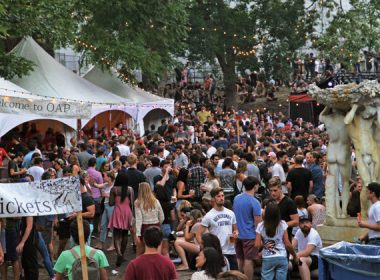
Whether you are a first-year looking to find your place in the McGill community or a fourth-year student hoping to become more involved on campus and pad your resume before graduation, Activities Night is a great place to start your search for the perfect extracurricular. With this year’s Activities Night expanded to three days, students have more opportunities to discover and join campus groups. The following is a run-down of tips from Elaine Patterson, Vice President (VP) Student Life at the Students’ Society of McGill University (SSMU) about how to get the most out of Activities Night.

1. Approach club recruitment tables with a good attitude

Though it can be daunting to approach a club’s table, there’s no better way to make a good first impression than with a positive attitude and a friendly smile. The representatives at the table will appreciate your enthusiasm, which will move your conversation along more smoothly.

“From my own experience, I can say that a lot of the times when I am tabling, I don’t want to feel like I am trying to accost people to bring them to the table,” Patterson said. “I want to let them feel comfortable enough to approach my table by themselves to learn more.”

2. Don’t be afraid to ask “What club is this?

You should never worry about seeming unprepared or naive when going up to a table. You are at Activities Night to learn; there’s no shame in not knowing what a group does before you approach their table, and club representatives are there to help you.

“There are so many groups with different names and acronyms, there is no way that everyone is going to remember all of it,” Patterson said. “I think club executives realize that themselves, so they are always happy to explain what they are and what they do!”

3. Ask representatives about their group’s level(s) of involvement

It is important to be prudent about the number of groups you can get involved with based on your other commitments, academic or otherwise. While it’s important to respect your schedule and limitations, there are ways to get involved in multiple clubs at a level that works for you. You should avoid walking away from an opportunity you are interested in before finding out exactly what the time commitment is like.

“Time commitment is something that prevents a lot of people from joining the groups they want [to],” Patterson explained. “But in reality, there are many groups that hold an event every once a week or once a month [….] So you can figure out how to get involved with only an hour or two of your time every week.”

4. Don’t worry about signing up for too many things

Contrary to popular belief, you are not signing away your soul by writing down your email on a club’s sign-up sheet. The primary way to stay updated about opportunities is to receive club emails, and the representatives will be happy that you showed interest. There will be time after Activities Night to reorganize your commitments and to unsubscribe from mailing lists.

“Speaking from personal experience, I think it is absolutely okay to sign-up for as many groups and listservs as you want,” Patterson said. “And then from there, once you figure out which groups you want to get involved in, you can unsubscribe from the ones you are no longer interested in. That’s how you can organize everything after your initial binge sign-up.”

5. Leave your major/minor at the door

Avoid the misconception that you should only join groups that are related to your field of study. In fact, it’s a good idea to get involved in new clubs to explore hobbies and passions beyond your studies in order to take a break from the mental drain of academic life.

“I think a lot of what getting involved is, especially at McGill, is about finding an outlet from your academics,” Patterson claims. “I know, for example, many of the students in the Symphonic Band Club are science students. I think that’s the best part about SSMU, it offers opportunities to people without being restricted by their majors.”

6. Take a notepad

While taking notes is the last thing any McGill student wants to do after a long day of lectures, Activities Night is worth pulling out your notebook and pen. You will want to keep a record of what you are learning in order to make sure that all the information you hear about each club does not go out the other ear.  It’s also useful to mark down the names of any groups that you were interested in, but didn’t have time to sign-up for. 

 “Write down which listservs you joined, names of different groups that caught your attention, and anything in between,” Patterson said. “It will be easy for you to go back and look at that after Activities Night.” 

Going to Activities Night is an integral part of the McGill experience, so remember to walk into it with an open mind, and you might be surprised by where it will take you.


Arts & Entertainment

Comedian to watch: Aisha Brown

“Let’s hear it for all the black women in tonight’s lineup!” Comedian Aisha Brown opened her set with a sarcastic quip that automatically brought attention to the homogeneity of the lineup at All Access Live with Grace Helbig and Mamrie Hart at the 34th annual Just For Laughs comedy festival.

Based out of Toronto, Brown came to JFL for the first time to perform two taped sets. In addition to her All Access Live set, she also performed in Kevin Hart’s LOL Live show. Brown’s set for All Access Live was refreshing, as she dove into her experiences with racism and mental illness candidly and with good humour. 

“I went to, for a long time, a predominantly white school; I was one of zero other black kids in my grade,” Brown said. “I was also a terrible student, so at one point, I was 100% of the black kids failing middle school. I did have one supportive teacher who was like, ‘Hey, I believe in you. You’re street smart.’”

Taking her experiences with racism onstage allows Brown to be more accessible to other demographics that are often ignored by the comedy community. 

“Even though I don’t necessarily make it my goal to be the black woman on a show, it often is the case,” Brown said in conversation with the McGill Tribune. “Sometimes, I’ll get the feedback of, ‘Oh wow that was really refreshing, I really liked your set,and it’s nice to know I’m speaking to audience members who don’t typically feel spoken to.” 

[soundcloud url=”https://api.soundcloud.com/tracks/278568470″ params=”color=ff5500&auto_play=false&hide_related=false&show_comments=true&show_user=true&show_reposts=false” width=”100%” height=”166″ iframe=”true” /]

In addition to touching upon her experiences with race, Brown also delved into mental illness in her set for All Access Live. In one notable bit about anxiety, Brown recited a sombre satirical poem called Anxiety Hawk, about an an imaginary hawk living on her shoulder. The hawk caws loudly to remind her of irrational fears in daily life, like forgetting to turn off the stove before leaving the house, or being secretly disliked by friends and colleagues. 

Brown’s Anxiety Hawk is not the only time she’s discussed mental illness in her stand-up. In both her stand-up and written work, Brown is very candid about struggling with anxiety, depression, and perfectionism. She attributes her openness on stage to her natural ease in articulating her thoughts and feelings.

“If something’s on my mind, I’ve never been a good person at being coy, or [thinking] ‘Hold it in and work it out internally,’ ” Brown said. “I’ve always been kind of a person who’s like, “I should say exactly what I’m thinking at all points’ […] I think maybe a lot of comedians have that same syndrome where it’s like, ‘What’s bothering me, let’s get it out.’

In fact, it was dealing with depression after the end of a long-term relationship that pushed Brown to take the plunge into the world of stand-up three years ago. Not only did feelings of dissatisfaction with her life motivate her to make a change, Brown also found that the feelings of detachment she experienced during a long period of depression gave her a sense of immunity and fearlessness on stage.

“[After the breakup] I [realized] I don’t like anything about my life, I don’t like my job, where my life is heading, I’ve got nothing to lose, why don’t I just try this thing I’ve always wanted to do?” Brown said. “That stage fright—not that it ever really goes away—but it becomes less important when you feel like nothing makes you happy. It was almost like I was a little bit numb. So, I needed that numbness to be able to try something that I found terrifying.”

Fast forward three years to today, and Brown’s comedy career has taken off. I From signing with Yuk Yuk’s, the largest chain of comedy venues in Canada, to releasing a comedy rap album with her comedy collective Runnin’ at the Mouth, Brown’s appearance at JFL this year capped off a year of achievements. To top this list, in June 2016, Brown began writing freelance satirical articles for CBC’s comedy website

Writing articles online undoubtedly exercises different comedic muscles than writing stand-up material. In her stand-up, Brown strings together short, sharp punchlines; however, writing longer pieces entails developing a story with a cohesive topic and plotline. 

“I think when you’re writing something more long form, you’re not so concerned with laughs per minute,” Brown said. “You’re building something almost like one story, one cohesive story, whereas on stage, most of the jokes I do are pretty short, to the point, and yeah they meld together because I make them meld together, but […] they don’t really have a theme.” 

Beyond recently expanding and diversifying her comedic skill set by writing more long-form pieces, Brown has experienced a natural change in her comedic style over time. As she has grown more comfortable in her own skin as a performer, Brown’s jokes onstage have become more true to who she is offstage. 

“I think now I probably have more of a point [in my jokes], like it’s more real, it’s more about my life,” Brown said. “Whereas before I think I was trying to be more observational than I actually naturally am, and now I’m less afraid to talk about me, talk about my life, and make jokes on that. So, I’d say I’m probably a bit more honest.”

Along with her maturation as a comic, Brown has come closer to self-acceptance. In an industry as competitive as comedy, it’s difficult for artists to avoid comparing themselves to others; however, looking back, Brown has come to accept her own skillset and the niche she creates in the world of comedy. 

“Another thing that got me [as I was coming up] was seeing people who I thought were incredible and thinking ‘I will never be that person,’” Brown said. “And the truth, is I will never be that person. But, I can be something else.” 

~

To find out more about Brown and to read her blog, visit her website here

To hear more of The McGill Tribune’s interview with Aisha, check out our podcast episode here

Off the Board, Opinion

Life in the slow lane: Construction at McGill, again

In Montreal, construction has long since become the rule, rather than the exception. As such, it is fitting that Montreal’s 375th birthday next year is being brought to us by more orange cones, roadblocks, and detours for the construction of the Promenade Urbaine Fleuve-Montagne project. Perhaps it really is time for Montreal to take a recent Montreal Gazette call to rebrand itself as “The City of Cones” seriously. Additionally, given Montreal’s history of behind-schedule construction projects (the Olympic stadium comes to mind), the birthday wish we should all make this year is that the project actually gets completed before the city’s birthday has come and gone. 

By virtue of its location, McGill’s downtown campus is often subject to such construction projects. Which leads one to wonder—has the inevitability of a city under construction simply become a part of the student experience? Indeed, Montreal’s endless construction escapades have become a running joke amongst the McGill community. The email sent to explain that McTavish is once again being dug up, this time for the City’s Fleuve-Montagne birthday project (it has been barely a year since the last time it was torn apart), was met with eye rolls, groans, and pitiful laughter from students. But, surely, nobody would have been surprised. In many ways, the never-ending construction site that is McGill’s downtown campus is the best metaphor for the academic experience.

For one, continual roadblocks and detours ensure that students never set their standards too high—both on the way to and seated in class. Construction work is like an average B to B+ essay: It might not be perfectly polished, but it addresses most of what it needs to and shows some signs of effort and improvement. Sure, you may have missed a few points and made a couple mistakes, but the stone on the Arts Building crumbles from time to time and it’s still standing—it even manages to remain one McGill’s most iconic buildings!

emmaconstruction

During the 2015-2016 year, McTavish was finally clear of construction and freshly paved. It didn’t even flood, and getting to Quesada or Bento was no longer a huge hassle. Even the Arts Building was uncovered last year, and some began to believe that McGill had finally moved beyond the days of decline and disrepair. This was the A essay—the one you get back after working especially hard on and find, to your amazement, that the hard work actually paid off. You build up some confidence—finally, you think to yourself, you have figured out this whole university thing. Maybe you lined up a nice summer job, too, and feel pretty good. Then, just as things seem to be improving, another curveball gets thrown at you. Whether it’s just missing the 24-hour quota to get one of your three successive exams moved, or receiving notice that McTavish is going to be under construction yet again (along with parts of Sherbrooke, University, and Dr. Penfield), McGill and Montreal like to keep you on your toes. 

So begins another school year of navigating papers, midterms, and the trenches of McTavish. Inevitably, the elusive pathways across campus will never be in the same place you swore they were yesterday. This, incidentally, explains why you always seem to be late to class. But no matter how frustrating life at McGill can be, one can only hope that it will build character for when we finally have to enter the ‘real world.’

So thank you, McGill, and thank you, Montreal, for never failing to surprise. If nothing else, these detours and roadblocks ensure that our expectations are kept low, allowing us to truly appreciate the small victories. After all, construction does imply that hard work will (eventually) pay off. 

Arts & Entertainment, Music

Playing it cool: A conversation with Best Coast at Osheaga

Best Coast, a band made up of the striking odd-couple Bobb Bruno and Bethany Cosentino, rose to prominence with their 2010 debut album Crazy For You. Crazy for You is a collection of odes to chilling, smoking, falling in love, and becoming very confused. 

Their third and latest studio album, California Nights, delves deeper into that confusion, moving on from ‘what are we?’ friends-with-benefits laments, to existential contemplations like “Will I ever change?” The title track, for example, experiments with shoegaze, a psychedelic genre that is more reflective and darker than their usual lovestruck, 60s surfer pop. The lyrics sigh: “I take the way I’ve known / but have I really grown?” The thoughtfulness of Best Coast comes through on the album, but never enough to allow for any big revelation—just more questions. Despite this, the duo seems spiritually satisfied with their record. As front woman Cosentino puts it in an interview with Rolling Stone, the making of California Nights felt like, “the universe aligning.” 

Cosentino and Bruno sat down with the McGill Tribune at Osheaga and discussed this alignment. 

“I think we didn’t limit ourselves as far as trying things that in the past we were like, ‘Oh well we can’t do that because we’re supposed to be this specific type of band,” said Cosentino about the album. “I think it boiled down to doing things we wanted to do and not pandering to the expectations of what people wanted us to do.” 

Over the six years that have passed since the release of Crazy For You, critics have repeatedly called Best Coast out for being a very specific type of band. The formulaic nature of their California stoner anthems, the naive questions about love, and the frequent rhyming of “crazy” and “lazy”—infuriating to some—is more than present on California Nights; however, Cosentino is firm in her method. 

“You have to do stuff selfishly, you can write something and have it in the back of your mind, ‘Oh I hope my fans like it,’ but if you sit around writing things because you want a certain person or group to like it, it’s going to be really contrived,” Cosentino said. “Part of what Best Coast does is that we’re really straight to the point and honest. I think that if I tried to write something a certain way you would be able to tell.” 

Cosentino has recently been striving to be direct and honest in her role as a public figure. Cosentino began by voicing her support of Dirty Projectors’ lead singer Amber Coffman in Coffman’s sexual assault allegations against publicist Heathcliff Berru. She has since been very vocal on the topic of sexism in the music industry. Cosentino spoke on the Daily Show with Trevor Noah, as well as penning an essay on Lena Dunham’s blog lennyletter.com, conveying her own exhaustion with the double standards she’s faced for the past seven years. 

“It can be difficult, but I always try to tell women to be vocal, stand up for yourself, and surround yourself with good people. If anybody is creepy or makes you feel uncomfortable, either don’t work with them or say something,” Cosentino said. “Just have each other’s back. If you see someone going through something, be vocal and support them, even if you don’t know them.” 

“Treat everyone with respect. That’s all it boils down to at the end of the day. Have manners,” Bruno added. 

“Don’t afraid to be loud,” Cosentino concluded. 

Cosentino’s voice in her music and as an industry figure appears very self-assured and composed. Best Coast has established their sound, their vibe, and their place, as their frontwoman has become a veteran of indie music. 

“I mean [I] always felt like, ‘What the fuck am I going to do with my life?’ but I didn’t think I’d be able to make music my career,” Cosentino reflected, when asked how she would advise student musicians who look up to her career arc. 

“Don’t listen to people trying to discourage you. Just keep doing what you’re doing,” Bruno added. 

“If you’re a student and you’re focusing on something but you also really enjoy making music, just do it as a hobby, and it will eventually become something,” Cosentino concluded.

After their unexpected float to fame and three studio albums, not much has changed about the duo. Cosentino’s parting wisdom is emblematic of their attitude: Never try too hard. If Best Coast can be described as anything, it’s laid back—now, forever, and always.  

Arts & Entertainment

Comedian to watch: New Face Dino Archie

"This is a safe city. It's a lot of flip flops at night," Vancouver-based comedian Dino Archie joked of Montreal. Archie began an opener set for fellow comedian Jo Koy at the 34th annual Just For Laughs festival with his analysis of the city: "When you leave the house wearing flip flops, you're saying two things: You're not ready to run, and you're not ready to fight." 

After a year of successes—from releasing his first comedy album, Choosy Lover, to appearing on Jimmy Kimmel Live—his year’s JFL was no idle time for Archie; the comedian kept busy with a slew of performances. In addition to opening for Koy, Archie appeared in New Faces of Comedy—along with other fresh comedic talent scouted from across North America—and was also featured on the televised comedy series’ Kevin Hart’s LOL Live and Ari Shaffir’s This is Not Happening.

Archie’s comedic style is akin to a friend telling a story over a few beers. Many of his jokes revolve around coolly-recanted tales from his personal life, made accessible to his audience with his approachable tone and willingness to laugh at himself. 

Though he maintains a calm and comfortable presence on stage, Archie is not shy to approach topics in his comedy that may be uncomfortable to the average audience member. In one memorable bit from his opening set for Koy, for example, Archie touched on the topic of police brutality in the US by comparing it with his own experience being pulled over for texting while driving by an excessively friendly Canadian officer. After apologizing for inconveniencing Archie and making small talk for several minutes, the officer let him go with a warning. 

"He goes, Hey man you're making this really difficult to give you this ticket, you're being too nice,” Archie told the audience. “What a nice guy, he didn't shoot me—what a nice thing to not do. He was so cool. He was like 'Don't worry about it, black lives do matter!'"


[soundcloud url=”https://api.soundcloud.com/tracks/278529254″ params=”color=ff5500&auto_play=false&hide_related=false&show_comments=true&show_user=true&show_reposts=false” width=”100%” height=”166″ iframe=”true” /]


While delving into topics that may make the audience uncomfortable runs the risk of having a joke land poorly, for Archie, taking such chances allows audience members to grow.

“I just like that concept of being ok with things being uncomfortable, being ok with some silence, being ok with some stuff, in an attempt to be original, or take on something that’s more challenging,” Archie said after his show. “This thing makes you feel uncomfortable, but that’s where the growth comes in. I like to play with that element of this might go to a dark place, but I’m not just gonna leave you there. Be uncomfortable. The crowd needs to be uncomfortable sometimes. Push people’s boundaries.” 

While pushing his audience to leave their comfort zones, Archie instigates his own discomfort by toying with the potential for uncertainty in his performance, often adjusting his set immediately before, or even during a performance. 

“I do map [my set] out, but I don’t write it down, and I don’t time it,” Archie explained. “It really depends on if I can get a look at the crowd. Sometimes to the moment of when I’m walking to the mic will change what the first thing that comes out of my mouth is […] The possibility of ‘Oh I don’t know what I’m gonna say next’ […] it makes it more organic.” 

A central part of Archie’s comedic writing process is taking everyday moments, like mushroom trips and forgetting online account passwords, and turning them into relatable bits. The process of creating these anecdotal jokes involves constantly thinking about how to turn an experience into a story and using the feedback of other comedians to perfect his set. 

“My mind is always creating; I’m always at work,” Archie said. “I don’t necessarily sit and write, but I’m always thinking, and I’m always like ‘Man what’s the angle [to take with this joke]’, and then I riff [with others] and we talk, and then something will come out.”

For Archie, being surrounded by other successful comedians at a festival like Just For Laughs is not only beneficial for his joke-writing process, it also inspires him to continue growing in his writing and his stand-up career.

“When I’m around funnier people than me or people that challenge me, then [I’m] going to get better,” Archie said. “It’s all about being open-minded and going ‘There’s another level to get to, so I’m at a certain place now, and I want to keep growing.’”

Looking back on his growth as a comic over time, taking the plunge into starting stand-up nine years ago was just a matter of portraying himself, as he is in everyday conversation, onstage. 

“Even if I wasn’t a comic, [comics were] the people I related to,” Archie said. “Even if I didn’t do stand-up, I would still be talking the way that I talk. When I worked at AT&T, I would talk this way, and I kind of thought this way, but I just sold phones.” 

Since his days selling phones, Archie has learned the power of taking a chance, while acknowledging the reality of how long it may take to find success. 

“Don’t be afraid to bet on yourself, and don’t have kids for a while so you can take 10 years and do something,” Archie said. “Give yourself some time to follow your dream, and if you go that whole route, and it ain't it, then you at least gave it a shot. So, don’t believe in the limitations and keep pushing it. And don’t expect this shit to happen overnight.”

After years of pushing himself in comedy, Archie has perfected the ability to tell a story, and his opening set for Koy was no exception. Archie draws audiences in with the vivid detail of his stories, transforming the mundane into laughter. 

~

To hear more of Dino Archie’s interview with The McGill Tribune, visit our podcast here. To see more of Dino Archie's work, visit his website here.

Private, Student Life

6 ways to transform a patio from boring to beautiful on a budget

Carpe summer! Seize the season. As summer winds down, many students will return to the city with just a few remaining weeks of warm weather. There’s no time in the semester more lovely than early September, and there’s no better place to spend the relaxed days of the Add/Drop period than loafing on your patio. The following is a rundown of student-budget-friendly ways to transform your patio into the late summer paradise of your wildest dreams. 

1) Keep an eye on the streets for cool furniture finds

Moving day

You don’t need to spend big to sit well. Keep an eye out for free furniture and patio accessories on the streets at the end of each month, when leases typically end and people move out. You can also make cute (and très cheap) seating and tables by stacking wooden pallets—peek around parking lots, or behind stores and restaurants, but always ask before taking! There are also Facebook groups like Free & For Sale and Meubles/Furniture Montréal  that are popping with low-budget items. Don’t forget to look around your own home as well. Coolers and sturdy waterproof boxes can double as a side table while storing books, snacks, and odds and ends. 

2) Jazz up your patio atmosphere with lights and music

patio

Nothing says ‘atmosphere’ more than lines of luminous lights on a warm summer evening. String up Christmas or fairy lights, or make miniature paper lanterns by folding paper into tubes and cutting slits to let the light through. For another cool project, try building wind chimes. Anything metal can be strung together to make ethereal music in your outdoor space: Old silverware makes for a quirky alternative to the typical short metal pipes. 

3) Green is the new black 

(diyhomedecorguide.com)

Bringing the great outdoors into your patio has never been more ‘in.’ Transform your patio into an enchanted garden with plants that attract butterflies, or plants that are native to Québec. Find free greenery on plantcatching.com, a website that connects neighbours looking to trade, find, or give away plants. For a whimsical alternative to flower pots, use old mugs, teacups, and mason jars with a hole drilled in the bottom for drainage. Welcome hungry hummingbirds with a DIY feeder made out of recycled materials and filled with sugar water! It can be as simple as an upside-down plastic water bottle. 

If you’ve got a larger patio—and if you’re feeling more ambitious—try building a square foot box garden out of companion plants. These mutualistic plants assist the growth of other local plants by providing shade, physical support, or attracting pest-repellant predators, allowing more plants to grow in less space thanks to natural cooperation. Box gardens allow for flower and vegetable growth in any environment, regardless of the abundance of natural soil. 

4) Chalk it up

(naturemoms.com)
(naturemoms.com)

With a little sidewalk chalk, you can have gorgeous temporary murals that won’t irk your landlord. Draw swirls and spirals—or palm trees, squirrels, or emojis—all over your walls and floors, and it will wash away the next time it rains. You can also make a removable mural out of a long roll of craft paper, commonly found at art and craft supply stores. Decorate the paper with crayons, pencils, and paint, and whenever inspiration strikes, simply unroll more paper to lengthen the canvas. 

5) Throwing shade

(diynetwork.com)
(diynetwork.com)

Everyone loves the sunshine, but sometimes we need shade, too. Suspend a bedsheet over your patio to create a cool awning. Did you ever make chair-and-blanket tents when you were a kid? Upgrade that concept to make a  fabulous, shady, hangout space. Place a few chairs back-to-back a few feet apart, sling a blanket over, and weigh down the edges with piles of books. Foldable paper screens are another way to bring shade, style, and privacy to your outdoor patio: Look around in thrift stores or make them out of wooden rods and rice paper. 

6) Balcony beautiful  

(jonasberg.com)
(jonasberg.com)

Last but not least, if you live on the second floor or higher and have a balcony rather than a patio, tiny can be tall when it comes to style. Create amazing and easy vertical gardens to fit more plants in less space. Transform a drab wall into a beautiful garden by stacking flower pots on an old bookshelf, or building peat moss pouches to hold your blooms.  Grab a couple of outdoor pillows, slide in some chairs, or add small benches for comfortable and compact seating. To complete the ultimate summer lounging experience, sling up a hammock.

Baseball, Sports

Baseball’s last bad boy: Saying goodbye to Alex Rodriguez

This past week—as Alex Rodriguez sat fighting to hold back tears—I couldn’t stop singing “Ding-Dong the Witch is Dead!” In the most unorthodox manner, Rodriguez announced that he will be retiring from baseball. He never actually used the word ‘retirement,’ rather it was more of a press conference to announce the Yankees were releasing him and paying him $21 million dollars not to play next season. While it’s possible for another team to pick up the poisonous veteran, Rodriguez’s playing days seem far behind him. 

For the past 22 years, A-Rod terrorized the league both on and off the field. Statistically, he’s undoubtedly one of the greatest to ever play professional baseball: Over 3,000 career hits, 696 home runs, .295 batting average, 14 all star games, 3 MVPs, and a World Series championship. He revolutionized the shortstop position, paving the way for today’s slugging middle infielders; however, off the field, he became one of the most salient poster boys for the performance-enhancing drug era. Put simply, he was a liar and a cheat, and, for many years, the personification of evil in the eyes of baseball fans.

As Major League Baseball worked to clean up the league and move away from the so-called ‘Steroid Era,’ A-Rod refused to listen. Even after the league implemented widespread drug testing in 2003, Rodriguez continued to solicit and use performance enhancing drugs. Unlike Barry Bonds, Mark McGuire, and Roger Clemens who were doping during the height of the steroid era, A-Rod continued to cheat the system well into the late 2000s. He infamously lied to Katie Couric in a 2007 interview about his steroid use and was ousted again when a 2014 investigation found he had been using human growth hormones as a member of the Yankees.

There have been few athletes as universally vilified as Alex Rodriguez. Regardless of the stadium, he was constantly heckled by opposing fans. He repeatedly stepped up to the plate to a chorus of boos or “A-ROID!” chants. Aside from his steroid controversy, Rodriguez was part of numerous other scandals. According to former Yankees manager Joe Torre, he was referred to as ‘A-Fraud’ by teammates and clubhouse attendants who resented him. He had a well-documented falling out with Yankees legend Derek Jeter—Rodriguez was the Darth Vader to Jeter’s Skywalker. 

However, A-Rod made baseball entertaining. People tuned in to see Rodriguez play. Regardless of what was coursing through his veins, he constantly tormented opposing pitchers and fans alike. While you prayed for him to strike out or take a fastball off the rib cage, you also knew he could send any pitch 450 feet over the outfield fence at any moment. While Vince McMahon and the WWE work tirelessly to create these kinds of characters, MLB Commissioner Bud Selig had his supervillain handed to him. So, as A-Rod steps away from baseball, I picture him getting up from a white-clothed dinner table and yelling to the world in a drunken Cuban accent, “You need people like me. You need people like me so you can point your fingers and say, 'That's the bad guy.' […] So say goodnight to the bad guy! Come on. The last time you gonna see a bad guy like this again.”

Out on the Town, Student Life

The best things in life are free: The 30th annual Montreal Museum Day

As an art museum fanatic, an opportunity to explore the Montreal museum scene without spending a dime is one that I can never pass up. Luckily for me, on Sunday May 29, the city of Montreal hosted its 30th annual Montreal Museum Day, during which up to 36 local museums were open to the public, free of charge. I immediately jumped on this opportunity and visited three local spots: Musée d’Art Contemporain de Montréal (MAC), Musée McCord, and Galerie de l’UQAM

My first stop, MAC, located in Quartier des Spectacles, was established in 1964 with the aim of introducing the public to the realm of contemporary art created by artists within the province and beyond. For Museum Day, art workshops were offered throughout the afternoon for visitors to create their own pieces inspired by the works shown in the Edmund Alleyn exhibit.

The exhibit I visited, Edmund Alleyn’s In my Studio, I am Many is a temporary display open until Sept. 25. The first section of the display showcased Alleyn’s First Nations-inspired works. Alleyn used vibrant blacks, reds, and yellows in an abstract style.

My next stop was Musée McCord. Founded in 1921 by David Ross McCord, this history museum situated right in front of McGill’s downtown campus is dedicated to embracing the past and present culture of Montreal. As a special feature for Museum Day, a latin-themed band, starring Dominique Hudson, put on a show in the Urban Forest throughout the afternoon. The unique latin-inspired francophone music was a nice touch to the day, and seemed to get the audience moving. 

Unfortunately, however, the exhibits at McCord were subject to the swarms of eager and curious visitors. The placement of the pieces made it difficult for numerous viewers to achieve a complete perspective of the art being displayed without feeling pressured to move aside. 

Musée McCord featured two permanent exhibits, allowing intrigued Museum Day attendees to return to the exhibits at any time. The first, Wearing our Identity—The First Peoples Collection, showcased the clothing of the First Peoples of Canada and the ways in which it has defined their culture and identities. In contrast to Alleyn’s First Nations-inspired art, which represented his interpretation of a culture that was not his own, this exhibit featured work created by First Peoples themselves.

The other permanent exhibit at Musée McCord, Montreal—Points of View, explored the historical development of the city throughout time by displaying everyday artifacts, including antique umbrellas and vintage Molson beer bottles. Additionally,  Eleganza, a temporary exhibit that will be up until Sept. 25, showcases the glamorous works of famous Italian designers—primarily from the post-World War II era—including Valentino, Prada, and Dolce and Gabbana.

With limited time, but sufficient motivation, I made my way to Galerie de l’UQAM. Devoted to shedding light on the works of Quebec artists, as well as student artists of UQAM, this gallery houses up to 4,000 diverse pieces ranging from photography to sculptures, and more. In addition to the local collection, the gallery also contains several sets of inherited ancient art. As a special Museum Day exhibit, Galerie de L’UQAM presented the mummy of Hetep-Bastet, a wealthy Egyptian woman who lived around 600 BC. While viewing the mummy, I was spellbound by the history that such a piece represents. This piece gave an interesting additional edge to the gallery, leaving a memorable impression for its first participation in Montreal Museum Day. 

Montreal Museum Day offered a perfect opportunity to become acquainted with local museums without breaking the bank. Though group art-watching can be enriching, the crowds at McCord and Galerie de l’UQAM made it hard to catch more than a glimpse, intensifying my motivation to return in the future for a deeper look at some of the exhibits available until September and beyond. Nevertheless, Museum Day provides opportunity to be introduced to local museums, allowing viewers to decide whether or not to return on a normal day and see more.

Read the latest issue

Read the latest issue