Latest News

a, Science & Technology

Taking the next step in developmental biology: Embryonic editing

In April of 2015, researchers in China from Sun Yat-sen University published the results of the world’s first experiment on human embryo editing. The goal of the experiment was to edit a gene containing mutations for a blood disorder called β-thalassemia. The gene is responsible for coding a subunit of the  hemoglobin molecule, which carries oxygen through the bloodstream.

The announcement resurfaced past questions regarding the ethics of manipulating human reproduction at the embryonic level.

“[That experiment was] the first step in a well mapped-out process leading to GM [Genetically Modified]-babies, and a future of consumer eugenics,” David King, director of Human Genetics Alert, a UK-based NGO and human genetics watchdog group, stated in an interview with the BBC.

In an attempt to pacify the ethical issues surrounding the use of human embryos, the ones used by the Chinese researchers contained three sets of chromosomes, as opposed to the usual two sets. This was the result of induced errors during the in-vitro fertilization (IVF) process. These embryos can divide into a blastula, or a bundle of 200 to 300 cells, but cannot develop fully into a fetus.

Out of the 86 embryos used, only 28 were successfully spliced, or genetically modified. After a closer analysis of the genetic makeup of the spliced embryos, the researchers found an alarming number of side mutations on other unintended targets. This is one of the main ethical concerns associated with genetic editing, since the mutations accrued in an embryo would be present in all the cells of the body as it divides.

“I believe this is the first [experiment] applied to human pre-implantation embryos and as such the study is a landmark, as well as a cautionary tale,” George Daley a stem cell biologist from Harvard Medical School said in an interview with Nature. “Their study should be a stern warning to any practitioner who thinks the technology is ready for testing to eradicate disease genes.”

In September 2015, only months after this first experiment in April, the UK’s governmental authority on human fertilization and embryology received a proposal from the Francis Crick Institute in London for another experiment involving human embryonic gene editing. On Feb. 4, the experiment was approved.

Dr. Kathy Niakan, the stem cell biologist leading the experiment, and her team plan to begin the study as soon as possible. Niakan hopes to determine which genes are involved in cell type and tissue differentiation in the first few days of human development using a gene editing technique called CRISPR/Cas9, the same technique the Chinese researchers used in their experiment.

CRISPR/Cas9 is a genetic editing technique used in molecular biology to study the functions of proteins, as well as how they interact with one another. This can be used for both gene editing, as was the case in the Sun Yat-sen University experiment, as well as gene deletion, known as gene knockdown, which is the technique proposed by Niakan.

The mechanisms of the initial stages of human development are not well understood, and the human embryo is notoriously inefficient, with 31 per cent of all pregnancies ending in miscarriage. Genetic knockdown studies are used to determine the effects of a gene by essentially removing it from the body and then comparing the knock-down to the control, where no genes were removed. Genetic knockdowns are easier to perform than genetic editing because it requires less precision, with the only goal being to ‘break’ the gene in question.

Generally, knockdown screens are used to target a specific problem like what is causing individuals to suffer from β-thalassemia. Genetic editing, however, can be used to evaluate a broad range of situations, such as embryonic development. Niakan and her team aren’t trying to answer a single question, they’re just trying to understand human development by looking at it in a variety of ways using CRISPR/Cas9. 

“The research could lead to improvements in fertility treatment and a better understanding of the first stages of life,” Niakan said at a press briefing in London.

The embryos will come from fertility clinic patients across the UK. Following a course of in-vitro fertilization (IVF) treatment, extra embryos are usually generated. With the informed consent of the patient, Niakan hopes to uses some of these embryos in her research, with the understanding that they will be destroyed after only seven days.

Niakan hopes that her research will pave the way for more successful treatment possibilities for infertility in the future. 

Super Bowl
a, Sports

Point Counterpoint: Super Bowl Edition

Super Bowl 50 will be an intriguing matchup. Will the seemingly unstoppable Carolina Panthers run away with the title or will Peyton Manning lead his Denver Broncos to victory and finish his career with a second ring? Our contributors weigh in.

[audiotrack title=”The Sport Authority Ep. 3: Super Bowl 50 preview” songwriter=”Zikomo Smith and Joe Khammar” date=”January 12, 2015″ width=”700″ height=”200″ src=”https://24f2041bb5b609d25f1a97039f71682cc9154421.googledrive.com/host/0B9rQxTeDv2duM0FmSjBSYkZFS1k/Copy%20of%20Superbowl%2050%20%28final%29.mp3″ autoplay=”on”]

Denver Broncos

The criminally underrated Denver Broncos are a good matchup to beat the Carolina Panthers going into Super Bowl 50. Their defence and discipline are perfect to stop the explosive Panthers.

This year’s Broncos team has managed to change to a defensive-minded identity without losing a step in effectiveness. In just one year, Head Coach Gary Kubiak and Defensive Coordinator Wade Phillips have put together one of the best defences of the decade. The Panthers will face an insurmountable roadblock in the Broncos defence—they will have to contend with conerbacks Chris Harris Jr., Aqib Talib, and Bradley Roby covering their unspectacular receiving corps.  

The Broncos also have the league’s best pass rush, spearheaded by Von Miller and Demarcus Ware. Boasting a league best 199.6 yards per game allowed in passing, the Broncos’ secondary will swallow quarterback Cam Newton and his  group of castoff and bargain bin free agent wide receivers.  The Broncos also have a very underrated run defence—it is third in the league with 83.6 yards per game, and they should have very little issue slowing down the Jonathan Stewart led rushing attack.  

Granted, stats usually mean very little when predicting how Carolina will play, as they dominated the excellent Arizona Cardinals defence in the NFC Conference Championship game, but things will be different at the Super Bowl. Cam will not be able to break the pocket nearly as much as he is used to because of the Broncos’ bountiful talents at the linebacker position—inside linebackers Brandon Marshall and Danny Trevathan complement each other very well. The grossly overlooked and underrated Marshall is possibly the best coverage linebacker in the NFL, with two passes defended so far this postseason, and he has also amassed more than 100 tackles this season. Trevathan, who is one of the best run stuffers in the league, also recorded over 100 tackles on the year. He is most likely going to be tasked with spying Cam Newton all game to prevent him from breaking the pocket and running.  

If the defence is successful, the Denver offence should get a multitude of scoring opportunities.  Led by Peyton Manning, this group has seen better days. Gone are the times when Manning would throw for five touchdowns and 400 yards in high-scoring victories. The offence does not even aim to compete with the explosiveness of its past. Fortunately, Denver only needs to be efficient on offence, and so far in the 2016 post-season that has been the case; Manning has not yet thrown an interception in the post-season and has utilized an effective ground game to dominate the clock, negotiating victories against the Pittsburgh Steelers and New England Patriots. Manning might have become just a game manager, but he is an smart one. His purpose in the twilight of his career is to hand the ball off to running back CJ Anderson, get close enough for Brandon McManus to kick a field goal, and not throw interceptions.  If Manning can accomplish those three things, then the Broncos should stop the upstart Carolina Panthers, and emerge victorious next Sunday.

—Joe Khammar

Carolina Panthers

The 17-1 Carolina Panthers have been closer to perfection than any NFL team this season, and their trajectory points towards a very rare 18-1 season. They are complete—balanced yet explosive on offence, ballhawks on defence, and relentlessly energetic in their overall approach.

The team is led by arguably the most unique coach-quarterback tandem in Ron “Riverboat Ron” Rivera and Cam Newton. The two men made it clear throughout this season that they were going to approach the sport with a commitment to playing and coaching their natural games—it has resulted in a beautifully organic product on and off the field. The media have often perceived Rivera and Newton as abrasive—in reality they are just unapologetically confident in their abilities. Rivera has allowed the team to take on the personality and swagger. At the same time, the drive to succeed that emanates from Newton has spread to all of his teammates. Seeing the team “dabbing” and dancing on and off the field, posing for team photos on the sideline, and always having fun with post-game interviews has shown how relaxed and cohesive the team truly is. 

Newton’s million-dollar smile is a microcosm of the Panthers’ playing style: Enthusiastic, confident, fun-loving, and passionate. No occasion is too big for them. It is evident when watching them how much fun they are having on the field with their teammates. As the saying goes, winning is contagious. What opposing teams end up encountering is a group who know how good they are, talk about how good they are, but also are very determined to prove it every game day. In that sense, they are reminiscent of the 2013-2014 Seahawks, the difference being that for Seattle that persona was largely just on the defence was more dominant than their offence, whereas Carolina has a game changer on both sides of the ball (Newton and Josh Norman). One cannot discount the injury that linebacker Thomas Davis suffered in the NFC Championship game, but the rumours are that there’s a high chance he’ll return to the field come Super Bowl Sunday to reunite the devastating linebacker tandem he has with Luke Kuechly. 

Carolina has averaged 32.2 points so far this season, and, unbelievably, have scored at least 20 points in every game bar their week 15 loss to the Atlanta Falcons. Therefore, as powerful as the Denver Broncos defence has been all year, they will be going up against a team that features an elite dual threat quarterback brimming with confidence, a stable offensive line, and a couple of absolute bruisers in the backfield. 

Furthermore, the Carolina defence has proven time and time again that they can make huge plays, whether it be interceptions, pick 6’s, strip sacks, or fumble recoveries. Carolina had a regular season turnover differential of +20, comfortably the best in the NFL, which resulted in multiple games where the defence put points up on the board.

Their Super Bowl opponents, Denver, will not have enough firepower to overcome Carolina. Manning has shown an ability this year to work through deteriorated arm power and mobility; He  will, however, be facing a defence that capitalizes on almost every mistake made. Broncos pass rushers Miller and Ware will make their presence felt this game, but Cam’s improved composure this year as well as his ever-present elusiveness will give them a strong chance to counter-act the Broncos’ pass rush. 

Expect a changing of the guard at this Super Bowl—the legendary Peyton Manning will pass the mantle onto Cam Newton, who sports the number 1 jersey—it’s a fitting number choice as Newton’s team will finish with just one loss for the entire season, and will also finish number one in the NFL, when they hoist the Vince Lombardi trophy high into the air to conclude Super Bowl 50.

—Arman Bery

Editors' Pick: Carolina Panthers

Carolina’s relentless presence on both sides of the ball will be too much for Denver to handle. All the necessary pieces are in place for Newton to lead his team to victory.​

a, McGill, Montreal, News

Student group tackles misconceptions surrounding marijuana legalization

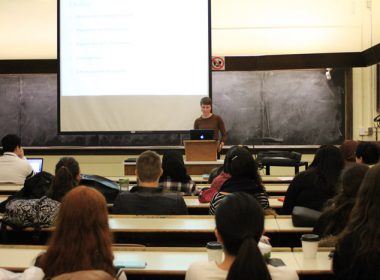
On Jan. 27, students discussed cannabis legalization at an open forum held at the Yellow Door, led by the McGill chapter of the Canadian Students for Sensible Drug Policy (CSSDP). Their goal as an organization, according to their website, is to discuss the negative impacts of drug policies on individuals and communities. 

The forum began with a video showing an interview with two professors from McGill University, Dr. Mark Ware, a director of clinical research at McGill University Health Centre and Dr. Ken Lester, a professor of Finance in the Desautels Faculty of Management. Ware started the video by disproving the widely held assumption that the effects of cannabis are worse than tobacco.

“I don’t think there is a single metric that you can use that can prove that that statement is true,” Ware said. “It’s clearly not infintely worse than tobacco. In fact, in many ways, cannabis is far safer than tobacco.”

Every year, millions of people die from over consumption of tobacco and other drugs, but the statistics for cannabis use are not as high. Ware discussed the the effects of decriminalizing recreational cannabis use evidenced in the states of Washington and Colarado. 

“There doesn’t seem to be a huge spike in traffic accidents, a huge spike in fatalities, [or] a huge spike in school dropouts [in those states,]” Ware explained. 

Lester went on to explore the benefits of legalization for the government. 

“Right now, the market is paying a huge premium because it is illegal,” Lester said. “What would it actually cost [the market] if it was not illegal? Probably 10 per cent of what the market is paying for now. Theoretically, if that market price is doable […] then that 90 per cent could be taxes.”

Despite government laws that restrict or ban certain substances, there is relatively easy access to them through the black market.

“If you want [cannabis], you can find it now—so I don’t think there are people looking for it that that can’t get it,” Lester said.  “I don’t think that legalizing it will all the sudden increase the usage among [teenagers.] ”

The main speaker of the evening, Gonzo Nieto, co-chair of CSSDP, spoke about the potential risks of addiction to cannabis, especially when it comes to teenagers and young adolescents who are the biggest users of the drug.

“We speak about ‘addictive’ as a quality of certain drugs, yet we have people addicted to gambling and no one is arguing that a pack of cards is addictive,” Nieto said. “People are addicted to work, and we don’t debate whether a given workplace is addictive. Sure, there are drugs that people are more likely to [become addicted] to, but what we need to look at is why some people have a greater tendency to become addicted.”

Nieto explained that the drug itself doesn’t cause addictive behaviour. There are many perscription drugs that patients can become dependent on, yet are still legal to perscribe.  

 “There is a lot of over-prescription of antidepressants and anti-anxiety medication which can also become an addiction […] and in many cases, people aren’t aware that what they are under the effect of is a form of substance dependence,” Nieto said.

According to Ware, the decriminalization of cannabis would take the focus away from the legal justice system and instead focus on harm reduction and helping those that are in need of support and aid. 

“Having an approach where you treat people who have substance abuse disorders as a medical problem [and] not as a legal one allows us to help those people [get] treatment, to find access to something that’s clean that allows them to avoid the harm,” Ware said. “The harms often with these drugs are not so much the drug itself, but the illicit nature of the drug that goes with it.”

a, Campus Spotlight, Student Life

Campus Spotlight: SNAX

The high cost of food on campus has traditionally garnered disdain from McGill’s student body. Without the flexibility of a meal plan, many students struggle to find coffee and snacks on campus at a price that won’t break the bank. The Arts Undergraduate Society’s (AUS) SNAX is one of few campus food sources that aims to provide a solution to this. 

“SNAX is a student-run café that operates out of Leacock,” Holly Hilts, U3 Arts and assistant manager of SNAX, explained. “Our mandate is to be a green, not-for-profit opportunity for students to have jobs on campus and to have affordable snacks.” 

In order to uphold the latter part of their mandate, SNAX keeps its prices low by not increasing them to any higher than they need to in order to sustain themselves. 

“The amount that we spend on our products, we don’t try and gain more from that,” Hilts said. “We sell it very close to the price that we receive it at [….] If people are looking for vegan products or anything like that, they’re probably used to higher prices.” 

In addition to operating with the average student’s budget in mind, SNAX provides employment opportunities that give students a source of income and invaluable work experience, something that many students struggle to find on McGill campus. 

“We have a mandate to employ Arts students,” Emma Green, U3 Arts and SNAX manager, explained. “[However,] we can only employ so many students, and I find the frequency with which I receive applications to be troublingly indicative of a lack of student jobs on campus."

Another central tenet of SNAX’s mandate is to limit its own carbon footprint as an organization, and to provide environmentally-conscious students with a source on campus to purchase goods that lower their own carbon footprints. 

“We have a few core environmental initiatives,” Green said. “We’re committed to working towards greater sustainability through the materials we use, the distributors and foods we sell, and the projects we carry out. We only provide compostable disposable cups [….] We try to favour local companies, not just to support Montreal business, but also to limit the amount of travel involved in getting these products from their distributor to SNAX. We also try to seek fair trade, organic, and vegetarian/vegan products.” 

Along these lines, one of SNAX’s biggest attractions is its “Bring Your Own Mug” deal, in which a large coffee from local Cafe Santropol is discounted from $1.75 to $1 if students provide their own reusable mug. To discourage students from using non-reusable products like paper coffee cups, SNAX also sells its own travel mugs and prices its plastic goods strategically. 

“We price water bottles a little bit higher to discourage people from waste,” Hilts said. “We charge for plastic utensils—just little things like that to shove people toward bringing re-usable products.” 

Providing students with a wide selection of vegan food options is another key part of SNAX’s environmental initiative. To do so, it partners with local organizations to provide students with vegan food that has travelled limited distance to reach SNAX shelves. Last semester, SNAX began selling locally-produced vegan baked goods from Organic Campus, and at the start of this semester, they began selling brownies and cookies from Sophie Sucrée, a local vegan bakery located in the Plateau. So far, SNAX has received nothing but positive response from their recent partnership with Sophie Sucrée. 

“[Sophie Sucrée baked goods] have been selling so much,” Ali Barry, U0 Arts student and SNAX cashier, said. “Within two days, they’re pretty much gone. People see it and they’re like ‘Oh my god, Sophie Sucrée!’ and they’re really excited about it. And it’s good because, obviously it’s vegan stuff too, so it’s more accessible for people who can’t eat [other things] at SNAX.”

Partnerships with local organizations have allowed SNAX to increase the diversity in products sold. This in-part offsets their limitations on selling sandwiches, a constraint placed on them by McGill administration in Winter 2015 in response to violation of a portion of their Memorandum of Agreement (MoA). SNAX management has continued to work with  AUS to reach a sound negotiation with McGill that benefits both parties and the student body equally. 

“A bulk of the problem with sandwich sales, on the SNAX end of things, stemmed from a lack of clarity in the old [….] contract,” Green explained. “The reason why negotiations have taken a while now is because of a desire, on our end, at least, for greater clarity in wording this time so we can ensure that this doesn’t become a problem again […] As for the future of sandwiches at SNAX, I can tell you that we hope to have them very, very soon.” 

SNAX inventory includes more than what its title would indicate, however. The back corner of the store includes useful products to address students’ needs during high-stress times, including Tylenol, Bic pens, Kleenex, Blistex chapstick, and free condoms and lube, provided by Healthy McGill. SNAX also sells New York Times subscriptions, which are quite popular among McGill professors—a niche customer demographic that often come during morning shifts. 

“I have a couple of classes I’ve been in where I’ve gotten to know the profs better just because they came to SNAX,” Claire Kingston, sustainability co-ordinator  for SNAX, said. “I don’t have a lot of classes where I know the professor very well, but even if I’m in a 300 person class and they know my name just because of SNAX, it’s always a plus.” 

Professors are not the only SNAX customers who regularly greet cashiers with a friendly face, however. SNAX employees boast having universally kind and reliable customers across the board. 

“I adore working at SNAX for the customer loyalty and good humour,” Green said. “As someone who’s worked a lot of places, I can say that the McGill population prove time and time again to be some of the most considerate customers.” 

Full disclosure: SNAX employees Morgan Alexander and Elli Slavitch edit and illustrate for the Tribune, respectively. They did not participate in the writing or editing of this article. 

a, Student Life

Politics in the kitchen: The history of Midnight Kitchen’s political mandate

Monday to Friday, come 12:30 p.m., a line of students winds through the hallway that leads to the fourth floor clubs lounge in the Shatner Building. Tupperware in hand, they await the arrival of Midnight Kitchen—McGill’s free vegan lunch service. What few are aware of, however, is that Midnight Kitchen is more than just a food program for students.

In 2002, seven McGill students, who were members of the GrassRoots Association for Student Power (GRASP)—a student movement in response to globalization, corporatization, and privatization across university campuses—founded Midnight Kitchen. The purpose of the initiative was to combat the contracting of McGill’s food services to large corporations. For the founders of Midnight Kitchen, food distribution was an avenue through which they could exert their political voices. From the beginning, their goal was to provide healthy and affordable food to students on campus that was outside of the mainstream, capitalist food system. Although most students know Midnight Kitchen for its bean soups, brown rice, and apple cakes, the food it serves is merely the surface of the organization’s anti-capitalist, anti-oppression political mandate.

Many students who frequently eat lunch at Midnight Kitchen, including Katie Keyes, U3 Arts, were surprised to discover that it has a political mandate.

“Honestly, I didn’t look too far past the free food,” Keyes said. “It’s not very well advertised. I knew they were funded by [the Students’ Society of McGill University (SSMU)], but I thought they were a vegan or environmental group.”

Far from solely a vegan food service, Midnight Kitchen was founded as a response to privatization on McGill campus. In 2002, McGill had slowly started contracting out food services to different corporations, from Aramark, to Chartwell, and now Compass Group. Although it’s hard to imagine, McGill’s campus cafeterias were once run by the different faculties in which they were located. These faculty cafeterias were phased out one by one, until the Architecture café, the last faculty dining hall, was closed in 2007.

Wade, who has been a member of the Midnight Kitchen Collective for three years and is now a paid employee, explained that these contracts still affect students today.

“McGill’s corporate catering contracts continue to prevent small-scale and/or student-run food initiatives from having a secure place on campus,” Wade said. “Actually, one of the big reasons SNAX sandwiches were banned was because of McGill’s contract with Compass Group.”

Wade stressed that not only do these contracts create increasingly standardized, expensive, and inaccessible food on campus, but the corporations that McGill works with are part of an oppressive global power structure.

Compass Group, one of the world’s largest food contract service companies, provides food for oil rigs and prisons across the country. It recently been linked to issues over food quality for prisoners in Saskatchewan. When the Saskatchewan Government and General Employees’ Union (SGEU) lost its contract to Compass Group in a government effort to save money, the prisoners were served uncooked food. The conditions were so bad that more than 50 inmates embarked on a hunger strike.

Wade noted that Midnight Kitchen’s mandate stands in strong opposition to the mistreatment of prisoners.

“We believe that everyone deserves basic access to food, including those in prison,” Wade said. “Food should be accessible to all, and these corporations strictly limit what’s available to these already vulnerable and marginalized people.”

This is not only of importance in the prisons of Saskatchewan, but assuring that on McGill campus students have adequate access to food that caters to their dietary needs and financial capacity. According to Wade, for the same reason of accessibility, Midnight Kitchen maintains a strictly vegan and nut-free menu.


Vegan food is inherently free of many allergens and accessible to people of a wide variety of needs and experiences. This means we can reach the widest amount of students and community members, and take on more volunteers since it’s easier to not have to worry about meat and dairy in a volunteer-run kitchen. We’re not advocating for veganism, we're advocating for accessibility.

By serving free vegan lunches, Midnight Kitchen seeks to cater to the people for whom it is more difficult to obtain food such as the disabled, low-income students, and religious minorities with dietary restrictions. According to Wade, these people are most at risk in the mainstream food system. Midnight Kitchen seeks to dissect these capitalist structures not only through the food they serve, but the structure of the collective itself.

Wade explained that the Midnight Kitchen collective is organized around an anti-oppressive mandate where members are all treated equally within a non-hierarchal system. Whether one is a new or old member of the collective, they are afforded the same right to voice their opinion and vote on matters concerning the Kitchen.

“We focus on systemic power and oppression and know that these are inseparable from capitalism and colonialism,” Wade said. “These systems interacting cause the oppression and marginalization of certain people, and we as a collective are aware of this. At a structural level, Midnight Kitchen is non-hierarchical, and aims to hire marginalized folks, such as people of colour, trans, queer, or disabled people. This is pretty important to us, and something we take very seriously in the hiring process.”

Midnight Kitchen assures that everything from the beans to the lettuce aligns with their anti-oppressive mandate. Their free lunch servings are composed of food donated by Moisson Montreal, a non-profit food bank. The food bank gives the collective food in bulk on the sole condition that it be passed on for free. Wade pointed out that even the food itself is sourced in accordance to their political mandate.

“When we get food from Moisson Montreal, it’s excess food,” Wade said. “No corporations are profiting from us using it—in fact it would have [otherwise] gone to waste.”

However, Midnight Kitchen is not constrained to the fourth floor of SSMU. Around campus it seeks to bring their anti-capitalist anti-oppression politics to a variety of “solidarity servings” for groups Midnight Kitchen feels align with its mandate. It has provided food for the events of groups such as Demilitarize McGill, the Quebec Public Interest Research Group (QPIRG), CKUT radio, and Sexual Assault Centre of the McGill Students’ Society (SACOMSS)—all on the condition that these events remain free and accessible to all. In collaborating with these groups, Midnight Kitchen hopes to extend the reach of their mandate, and support other marginalized groups on campus. In an effort to increase the political presence of Midnight Kitchen on campus, the collective will be hosting a variety of events this semester that expose the political orientation of the organization. In the coming months, there will be workshops, closed dinners for certain marginalized communities, and the return of “Put Your Politics Where Your Mouth Is”—a series of collaborative workshops that look at the politics of food distribution.

Katie Tully, U3 Arts, was not particularly bothered by the political nature of the organization.

“I don’t really have a problem with it, because even though they have a political mandate, it’s ultimately more of a student service,” Tully said. “Where else am I going to get food I can afford on campus?”

Tully’s statement echoes the sentiment of many students lined up outside the fourth floor clubs lounge for lunch; regardless of its politics, it can’t be denied that Midnight Kitchen answers a desperate call on campus for food that is allergen free, affordable, and healthy.


a, Opinion

United surveillance a solution to laptop theft at McGill

It is no secret that McGill students are frequent victims of laptop theft. Whether it takes place on campus or off, there is no shortage of stories of students leaving their desks, or even turning their attention from their belongings for a few seconds, only to find their laptops gone the next moment. Just recently students tabling at Winter Activities Night were given a grim reminder of this issue when a Students’ Society of McGill University (SSMU) volunteer went around alerting them to keep a vigilant eye on their belongings after a laptop was stolen in the midst of the crowded fair. Students feel unsafe on campus; there are steps students can take to protect their property, but ultimately the university must also do more to increase the sense of security.

Posters about laptop theft posted around campus, frequent McGill Reddit PSAs, and even the Security Tracking of Office Property (STOP) program—a service that allows staff and students to register their laptops and affix a security plate to their laptops—give little doubt that there is enough awareness about the problem. Yet, this has not stopped the thefts from occurring. This is arguably due to how often the crimes go unnoticed and unpunished as a result of the McGill community’s general lack of response and reluctance to report suspicious activity. McGill students and other members of the Montreal community must make a more active effort to report any crimes they witness around campus.


Increased personal vigilance alone will not address the issue of McGill students feeling unsafe around their campuses; it may only lead to increased paranoia and stress.

While it is difficult to make an underlying statement about Montreal law enforcement and laptop theft, it is rather easy to find stories about the crime being largely ignored by the police. Of course, it is somewhat understandable that law enforcement views the issue of laptop theft as a low priority. Despite this, it is not too far-fetched to suggest that people in the city could at least help increase the amount of police response to laptop thefts.

For example, the police are unable to effectively respond to thefts occurring in Montreal due to the lack of proactive reporting and sharing of information from the victims and witnesses of the crime. In 2014, a research team at McGill published a study on bicycle theft around the city, reporting that out of 20,000 bicycle thefts occurring in the city every year, only about 2,000 cases are actually reported to the police. Obviously, the impact of laptop theft and bicycle theft and the subsequent response is not entirely comparable; however, it is difficult to deny that the study shows a worrying trend of citizens’ inability to consistently report criminal activities.

Naturally, the primary solution to the issue of theft is a call for students to keep a closer watch on their belongings and to never leave their laptops unattended—something that has clearly not worked so far. Increased personal vigilance alone will not address the issue of McGill students feeling unsafe around their campuses; it may only lead to increased paranoia and stress.

Students that have ever spent their nights at the McLennan-Redpath Library complex has had the experience of watching a peer’s belongings as they make a quick trip to the washroom or Première Moisson. Exchanges such as this underline what the McGill community must do to make a collective effort to keep the campus safe from theft. On top of looking after a fellow colleague’s possessions when asked, students should make an effort to be on the lookout for suspicious activities in areas where laptops are often left unattended.

Regardless of how publicized the issue becomes and how careful individuals attempt to be, thieves will always find the opportunity and incentive to steal—unless there is a higher risk of repercussions. In this case, it seems logical that the university take more concrete steps to directly stop the theft from occurring or at least increase the level of response to them. Programs, such as STOP, that seek to protect students’ property when theft occurs is one thing—creating a safer campus is another. For the time being, it falls under the responsibility of McGill students to create cooperate in putting pressure on would-be thieves and consequently pave the way to a safer campus.


Albert Park is a U2 student in Microbiology and Immunology. He is passionate about world issues and has been a volunteer with the Canadian Red Cross for 5 years


a, McGill, Montreal, News

Fight for Fifteen panel criticizes casualization of McGill employees

As part of the In the Streets & In the Courts—a radical law forum organized by student associations in the Faculty of Law—the Fight for Fifteen panel opened a discussion about raising the minimum wage to $15 an hour by 2018, and improving worker benefits. Panellists Molly Swain, president of the Association of McGill University Support Employees (AMUSE), and Mostafa Henaway, community organizer with the Immigrant Workers Centre in Montreal, addressed the issues that affect casual workers within McGill. Casual workers are employees with irregular and unguaranteed schedules, earning hourly wages without the benefits that workers with permanent positions enjoy. 

“Over the past five [or] more years, [we’ve seen] a wave of casualization on campus,” Henaway said. “McGill is taking permanent jobs that are well-paid, very secure, [and] under union protection, and they’re […] breaking them up into casual jobs [.…] People doing the exact same work, on often a part-time basis, will be making literally less than half of the salary that their permanent counterpart was making.” 

Swain went on to state AMUSE’s objective and reasoning in spear-heading the Fight for Fifteen campaign, launched by a coalition of McGill labour unions, student organizations and faculty assocations.

“We want to make it less affordable for McGill to hire casual workers,” Swain said. “We don’t think any work that happens on campus, or anywhere, really, is casual work, and we think that everybody deserves to have the same treatment and access to the same resources.” 

 The Fifteen and Fair campaign aims to raise wages for McGill’s casual workers.

“We’re asking for a $15 minimum for academic work,” said Swain. “We’re asking for benefits for all workers, including […] healthcare, parental leave, as well as access to the Employment Assistance Program […] We’re also asking for library access with a McGill ID card for all employees, tuition discounts for everyone working on campus including students, and also subsidized transportation costs—particularly for people over the age of 26,”

Henaway turned the focus of the discussion to the precarity, or lack of job and wage security, that looms over foreign workers at the Immigrant Workers Centre and in Canada in general.

“The Fight for Fifteen [campaign] is really critical for us because in an age of neoliberalism, precarity has become the norm,” Henaway said. “To fill that need of cheap labour, migration and immigration and immigrant workers have sort of become the pillars of precarity in Quebec and the global north in general.”

Henaway further emphasized the critical role that foreign workers play in society as well as in large corporations’ success.

“If you […] look at where these precarious workers are, they actually hold immense strength in our society,” Henaway said. “They […] work as a key of not just the economy in Montreal, but of the global economy; they make things move for the Wal-Marts, the Dollaramas, the Sears.”

Swain and Henaway concluded the panel by answering questions and encouraging the audience to join the Fight for Fifteen movement. One student who attended, Gabe Hoogers, L2 Law, commended the panel and the speakers’ work.

“There were two very important perspectives from organizers,” Hoogers said. “[Swain] is organizing directly at McGill, organizing the workers who are in a worse position than any university workers […] in Montreal. [Henaway] is organizing foreign and temporary workers, people who are in serious situations of precarity. I think that they both provided different, important perspectives on how to get people who are working in precarious situations to work together for that movement.”

a, Off the Board, Opinion

A plea to Americans at McGill: Your vote counts, too

The New Hampshire first-in-the-nation primary on Feb. 9 kicks off a long election season with many opportunities to cast a ballot on a national, state, and local level; however, engaging in one’s civic duty may seem like a daunting task when living abroad. Each one of the 2,276 students of American citizenship currently enrolled at McGill University is eligible to vote despite studying in Canada, but the process by which to do so is by no means intuitive. If an American citizen is planning on participating at all in this election cycle, now is the time to register to vote and request absentee ballots.

The participation of absentee voters is essential to the democratic process. The 18-24 age bracket is notorious for contributing to the lowest voter turnout of all. In 2012, only 38 per cent of those who were eligible actually voted. It is the responsibility of young voters, even those far from home, to stay engaged with issues that matter: The 2016 presidential election must not follow this trend.

By registering as an absentee now, one’s status will be documented for any upcoming election. The key to understanding the process is knowing the resources available within a given period prior to an election. The primaries and caucuses will decide the nominee for the Democratic and Republican parties by the end of July. Depending on when your home state holds its primary, the deadline to register may have already passed, or is otherwise quickly approaching. You only needs to register once, but it is required before being able to vote. So, request an absentee voter registration form as soon as possible to ensure less future stress, and to start receiving your ballots.


On McGill’s campus, Democrats Abroad at McGill not only assists students looking for answers about absentee ballots, but also hosts events related to politics, such as streaming the debates of both parties.

The process is made significantly easier with the help of online resources available at the click of a button, providing no excuse not to approach absentee voting. The Federal Voter Assistance Program (FVAP) and Votefromabroad.org offer any form needed to register and request an absentee ballot. Filling out and mailing a Federal Post Card Application, a form standard for every state and available on FVAP.gov, both registers and allows us to automatically receive a ballot for every upcoming federal election. Votefromabroad.org offers the same service, but with state and local election ballots included. Information on every state’s deadlines and election dates can be found on the Vote from Abroad website by selecting from a drop-down menu. Once the ballot has been filled out, one can download a free, postage-paid envelope from FVAP.gov, and either take it to the nearest Canada Post or drop it off at the US consulate in Montreal. Consulates and embassies around the world offer this absentee ballot mailing service, and can also provide in-person assistance with the process—just one more way voting from abroad is made easy.

Remaining engaged in domestic politics from abroad is easier than one would anticipate. Groups like Democrats Abroad and Republicans Overseas exist in chapters all over the world for the purpose of connecting Americans to their political organizations, thereby reducing the obstacles to being an informed constituent. On McGill’s campus, Democrats Abroad at McGill not only assists students looking for answers about absentee ballots, but also hosts events related to politics, such as streaming the debates of both parties. In the 2012 cycle, alternative voting—mainly absentee and early voting—comprised 32.7 per cent of all ballots cast.

Though some American students may have just started at McGill, and so will not be in the country for the next president’s first term, they have the opportunity to impact the results of other levels of government. Individual state and local elections are just as important as presidential races—if not more so. These generally happen in the early fall. While it often feels that voting in a non-swing state is a pointless and wasted act, this is simply not the case when considering the numerous other elected officials democratically selected in your state. Furthermore, if voting in one of the 26 states that allow for ballot initiatives or referenda, who have the unique opportunity to participate in directly voting on legislation.

All American students abroad have a stake in the upcoming presidential election—especially if they are considering returning to live and work after graduation. Given the ease of registering to vote, there is simply no excuse for failing to do so.


Aislinn is in her final year at McGill and is a news editor at the McGill Tribune.


Rihanna ANTI
a, Arts & Entertainment, Music

Staff roundup: Rihanna’s ANTI

In light of Rihanna's latest album, ANTI, and genre trasition that came with it, the Arts and Entertainment staff at the McGill Tribune got together to write up their initial thoughts on Rih-Rih's latest project.


Is ANTI a good album? Sure it is. It’s simple and stripped down, allowing for a cohesive but emotive performance that follows through with Rihanna’s title claim: This album is anti-everything else she’s made. It has its low points of course: “Love on the Brain” sounds like it was pulled straight out of your first middle school dance and “Work”—despite the fact that it’s the clear single pick—was a waste of a Drake feature. The stand-out track has to be “Desperado,” a slow, romance track with a traditional Rihanna edge that makes it come out feeling like a smooth club hit. But what ANTI is lacking is the bangers that make Rihanna who she is and that best display her vocal prowess. I wanted the album that “FourFiveSeconds”, “BBHMM”, and “American Oxygen” alluded too, or at the very least some more songs like “Stay,” which was the perfect mix of slowly emotional while still displaying a strong vocal performance. Instead we received an album that, if made by anybody else, would never have gone platinum, if it even made the Billboard Top 100. Without Rihanna’s name on it, ANTI is just another experimental pop album, and not a very memorable one at that.

—Morgan Alexander, Managing Editor


ANTI is Rihanna’s eighth studio album and a conscious, confident stride away from her harmless EDM-pop past. Since 2015’s brassily sung and coolly aggressive single “Bitch Better Have My Money,” Rihanna seems to be growing stronger and stronger with the power of not giving a fuck. Fortunately, this attitude translates into ANTI as a genre-bending sonic maturity. “Love on the Brain” and “Higher” show an affection for gushy classic soul. Then there are the hip-hop tracks like “Yeah, I Said It” and “Needed Me,” which show Rih at her most biting, as she drops lines like “didn’t they tell you I was a savage?” chill as hell over ominous Travis Scott-like beats. In “Work,” a dancehall inspired Drake duet, Rihanna is hard and to the point as she shout-sings in patois for her guy to, “Nuh bother text me in a crisis.” Drake then coos about how much he loves her, due to her work ethic, presumably. Perhaps the most compelling song is “James Joint,” a jazzy cool down from ANTI’s more aggressive moments. “James Joint” is reflective; Rihanna, full of curiosity and admiration, questions her lover: “How you live and love like, ‘F-ck rules?’” Her recent voice has been raspy, snarling and remarkably sensitive at the same time; ANTI demonstrates a new kind of rawness we can only hope takes off in popular music.

—April Barrett, Arts and Entertainment Editor


For most of my life, I’ve considered myself a Rihanna agnostic. Aside from her work with Kanye West and her fantastic video for “Bitch Better Have My Money,” her music has largely remained pleasantly catchy background noise, with songs like “Diamonds” and “Cheers (Drink to That)” intermittently bubbling up into my mind. So listening to her new album ANTI is by far the most Rihanna I’ve gotten in a single sitting, and I was surprised to find how fantastic and formally inventive the album is. She runs the gamut of genres across the album, starting heavy and hazy with “Consideration,” and then spends the rest of it gradually winding down into more soulful, ballad-y sounds–the pulsating drums and breathy vocals of “Love on the Brain” harken back to motown gospel in the best way possible. Despite this, it never feels like Rihanna runs out of energy. The 16 songs, written by Rihanna and literally 49 other people, make the wise move of not overstaying their welcome, resulting in an album that’s both densely focused and relatively huge in scope.

—Christopher Lutes, Arts and Entertainment Editor


After months of ‘ANTI-cipation’ Rihanna’s latest endeavor, ANTI, sets her up as more of a darker force amidst the pop culture landscape. While the album does have some forgettable tracks that blur together, there are a number of tracks, notably “James Joint," that expand the time tested R&B formula by adding unique melodies and instrumentation into the mix. Throw in the extensive amount of collaboration imbued into the album, from the SZA and Drake vocal features to the production work of Timbaland, and the result is an album that’s sure to resonate.

—Luka Ciklovan, Staff Writer


ANTI is like nothing Rihanna has ever released before, but even so the record feels like the perfect embodiment of Rihanna’s spirit: Sultry, cool, and ultra-confident. With impeccable vocals and stripped-down instrumentation “Consideration” is an enticing introduction, and the following songs “James Joint” and “Kiss it Better” are no disappointment. Overall ANTI presents a series of love songs to weed and sex, appropriate for late night smoke sessions or the quiet hours after everyone else has drifted out of a house party. This album could have been the soundtrack to many nights of my past and probably will be in the future: late night drives home from parties and dates and friends’ houses. Each track on ANTI tends to waver somewhere between romantic, sad, and sexy, although often Rihanna’s vocals (which have seriously never been better) embody all three. Many tracks blend jazz undertones with new-wave-y instruments, reggae, and Motown in a surprising turn away from Rihanna’s usual hit-machine repertoire. Plus, according to a friend, “Kiss it Better” is “the perfect song for Tindering because it’s the perfect rhythm. I’m literally swiping left to the beat of this song, and I love it.” I love it, too.

—Evelyn Goessling, Staff Writer


After a year of spotty singles, Rihanna is back with her most interesting album yet. Finally free from the clutches of Def Jam’s hitmaking goliath, Rihanna has only herself to answer to now. The results are scattershot, but intriguing nonetheless. “James Joint” and “Higher” are winning forays into traditional soul, while “Yeah I Said It” is a sultry and satisfying trip-hop slow jam. That being said, the record’s certainly far from perfect. “Never Ending” and “Close to You” are dreadfully bland ballads and “Same Ol’ Mistakes” doesn’t really add anything to what is already a great Tame Impala song. Nevertheless, this record was a pleasant surprise for me. If Rihanna can build on this, her next project will be special.

—Eric Noble-Marks, Staff Writer

Bernie Sanders, Killer Mike, and Lil B
a, Arts & Entertainment, Music

When rappers feel the Bern: The impact Killer Mike and Lil B can have on Bernie Sanders’ campaign

Brandon "Lil B" McCarthey, AKA The Based God is a mysterious figure. His online persona is something that should not have worked: He obviously and aggressively tried to make himself go viral by creating numerous Myspace pages and Twitter accounts. Michael “Killer Mike” Render gained his fame by more conventional means, first garnering recognition as a feature on an Outkast record, then on his own terms more recently as part of the dynamic duo Run the Jewels. Both of these figures have been actively voicing their support for Vermont Senator Bernie Sanders’ Democratic primary run.

Although he was a relative unknown outside of Vermont, Sanders has become the main competition to the presumed favourite of the Democratic primary, Hillary Clinton. Sanders has been criticized for his perceived lack of appeal to black voters while his defenders have instead been mainly focused on his lack of visibility.

As such Killer Mike and Lil B's endorsements of Sanders stand to be significant both culturally and politically. Killer Mike is an easier figure to understand. He comes from an activist background, and questions authority and government frequently and poignantly in his music. In this way, it’s not surprising for him to be supporting a candidate who is positioned as outside of the establishment—hopes Sanders won’t be controlled by “the man behind, the man behind, the man behind the throne.” Mike has spoken publicly about the connection he sees between the democratic socialist ideals Bernie espouses and traditional values of the black christian community. Killer Mike has become active on the campaign trail: He conducted a six-part interview series in a traditional black barbershop with Sanders and has even given interviews in the 'Spin Room' after debates.

With Lil B, it is more difficult to know where he stands. He initially supported Clinton, but dropped this support and moved towards Sanders in the summer of 2015. Lil B has up to this point seemed like a relatively apolitical figure, a kind of living meme. Because of the nature of his music, which is delivered from a stream of consciousness, it is difficult to find a consistent message in his music. He supported Hillary’s presidency earlier, but within a song titled “Bitch I’m Bill Clinton.” The defining feature of Lil B is his completely earnest persona. He seems to speak directly from the heart both in his interviews and in his music, but it gets lost among the enormous amount of material that his persona generates.

All this said, Lil B currently has 1.22 million followers on Twitter, many of whom actively engage with him and seem inspired by his positivity while Killer Mike has 193,000 followers. Thus, Mike’s more lucid, consistent position can have difficulty making the same impact as Lil B’s embrace of Sanders. At the very least, Lil B's tweets on the issue have sent the name out to people in America who could then be led to looking up Sanders, which could help him reach minority voters who don’t know his name.

The Iowa caucus is a dead heat, but Iowa is a state with a mostly white population, and Bernie’s success could ride on the upcoming South Carolina primary, where there are many more voters of colour. The race has been a bitter one to this point, with clashes from the highest level of campaigns down to individual supporters on Twitter. The nature of the modern fragmented world of politics means that people get their information in radically different ways, and social media and cultural figures undoubtedly are a part of that. From this point on, all that's left to do is watch and pray to the Based God.

Read the latest issue

Read the latest issue