
Latest News

Letters to the Editor, Opinion

Open letter on Frosh 2020

To the McGill community,

Frosh has long been a cornerstone of the McGill experience, allowing new students to meet their peers while participating in social activities. Like so much of our lives right now, Frosh 2020 has been impacted by the COVID-19 pandemic. Despite the challenges that this pandemic presents, we want to ensure that, like those who have come before them, incoming students still have an incredible Frosh experience. This year, Frosh will be conducted remotely, and although transitioning to an online environment can be difficult, our team is working hard to ensure a quality Frosh for new students.

Frosh as we know it at McGill has been designed specifically as an in-person, social activity. This means that many events usually run during Frosh may not be enjoyable or possible on an online platform. As coordinators, we are aware of these obstacles and are therefore opting to omit events such as Beach Day. We are working hard to develop and implement new and engaging activities that take into consideration students’ new realities. Despite these changes, our vision remains the same: To help incoming students have a fulfilling Frosh experience.   

Our team sees the shift to a virtual Frosh as an opportunity to emphasize the values and principles that guide our work. As coordinators, we strongly believe in the positive influence of upper-year students and their ability to enrich and facilitate new students’ transition into university. This year, since new students are unable to physically meet their peers and develop a sense of community with the same ease afforded in person, Frosh will be vital to help new students make connections, foster social relationships, and interact with upper-year students. As many students’ first year of university is a huge change, the typical challenges that students experience in a normal year are only exacerbated by the current pandemic. 

As a result, we are building a Frosh that we hope will lessen new students’ stress and help them thrive at McGill. New students will develop friendships with their peers and upper-year students. They will also learn about campus resources, opportunities for getting involved in student life, upper-year students’ favourite locations near campus and around Montreal, and tips for academic success. As always, we are striving to ensure that Frosh is a safe, inclusive environment for all students and, as such, we are collaborating with McGill staff, faculty, and administrators to create and implement a range of Frosh activities to help incoming students adjust to the new world of online social and learning platforms. 

We have a lot of work to do in the coming months to make our vision a reality. We welcome your feedback and support as we continue to plan Frosh—please reach out to us through our faculty Frosh Facebook pages if you have any questions, suggestions, or concerns. In the meantime, we wish to remind the community about the values that make Frosh a success, and our unfaltering commitment to the health, safety, and wellbeing of new students. Together, these ideals remain close to heart. 

To the community: Thank you for your trust and support; and, to the new students: We look forward to seeing you at Frosh 2020! 

Sincerely, 

Belanna Gans, Science Frosh Coordinator

Courtney Murdoch, Education Frosh Coordinator

Joella Reev, Physical Therapy and Occupational Therapy Frosh Coordinator


You can keep up with what your faculty’s Frosh coordinators are up to throughout the summer by following their Facebook and/or Instagram pages below: 

Arts:

https://www.facebook.com/mcgillartsfrosh/

https://www.instagram.com/artsfrosh/

Arts & Science: 

https://www.facebook.com/ArtSciOrientationWeek/

https://www.instagram.com/mcgill_artsci_frosh/

Education: 

https://www.facebook.com/McGillEducationFrosh/

https://www.instagram.com/educationfrosh/

Engineering: 

https://www.facebook.com/EngineeringFrosh/

https://www.instagram.com/engineeringfrosh/

MacDonald Campus: 

https://www.facebook.com/MacCampusFrosh/

https://www.instagram.com/mac_frosh/

Management: 

https://www.facebook.com/managementfrosh/

https://www.instagram.com/managementfrosh/

Music: 

https://www.facebook.com/McGillMusicFrosh/

https://www.instagram.com/mcgillmusicfrosh

Physical and Occupational Therapy: 

https://www.facebook.com/mcgillptotfrosh/

https://www.instagram.com/ptotfrosh/

Science

https://www.facebook.com/ScienceOrientationWeek/

https://www.instagram.com/mcgill_science_frosh

Science & Technology

Tyrannosaurus rex: Nature’s strongest power walker

The Tyrannosaurus rex is one of the most well-known dinosaurs in popular science culture. Almost anyone can easily identify it, whether they are seasoned paleontologists or fans of the Jurassic World franchise. Once called the “king of all kings,” the T. rex has long been thought of as residing at the top of the late Cretaceous food chain. For years, scientists have studied its long limbs and concluded that the T. rex’s speed, a product of its limb length, aided its hunting prowess.

A recent study conducted in association with McGill’s Redpath Museum, however, has challenged the connection between T. rex’s limb length and speed. Researchers instead found that in larger theropods, including the T. rex, long limbs were selectively adapted for covering large distances over long periods of time rather than for speed. Theropods are a group of carnivorous dinosaurs that are diverse in size and include the largest carnivores ever to walk on Earth. 

Using metrics that included body length and mass, researchers were able to demonstrate that, while lighter and smaller theropods were indeed fast, larger and heavier ones moved considerably slower by approximately 20 kilometres per hour. 

According to Hans Larsson, director of the McGill Redpath Museum and co-author of the study, the inspiration for the project came while researching the biomechanics of the evolution of dinosaurs into birds. 

We always felt the mechanics of terrestrial locomotion needed a revision for dinosaurs,” Larsson wrote in an email to The McGill Tribune. “Although most previous work focused on top speeds [of dinosaurs], we wanted to examine efficiency and speed. This is very applicable to how ecosystems normally function.” 

Data gathered for the study included the limb proportions, body mass, and gaits, the locomotion achieved through the movement of the hind limbs, of many different species of theropod dinosaurs.

“Data was gathered from direct measurements of museum specimens and published measurements,” Larsson wrote. “We had about 70 nearly complete skeletons from across the evolutionary range of carnivorous dinosaurs.”

A difficult aspect of the study was narrowing down the possible methods to test locomotory efficiencies. 

“Imagine if you were to walk, jog, or run a kilometre,” wrote Larsson. “Every speed has its own pros and cons, like time and overall energy used.” 

The study found that the T. rex’s long legs allowed it and other large theropods to be more energy efficient and increase their endurance. These dinosaurs required less energy to move around compared to their prey and were able to conserve stamina while hunting. The study’s results also highlight the relationship between body size and running speed, suggesting that smaller theropods were much faster than larger ones.

“The implications [of this study] are huge, because we can now begin to design models of how much energy each of these animals needed per kilometre, per day, per lifespan, and per herd,” wrote Larsson. “These are some fundamental numbers that feed into an ecosystem model, and we’ve never been able to have these before for dinosaur ecosystems.”

Researchers also identified certain patterns in the locomotion of some theropod species which have prompted ideas for future studies. 

“There are some smaller theropods, like Velociraptor, that had really high estimated speeds,” wrote Larsson. “For these smaller theropods, we can start to look at within-leg bone lengths to generate more accurate walking-running biomechanics to see what kind of ‘gaits’ they had.” 

Larsson also pointed out that very large Tyrannosaurs appear to have had efficient locomotion at a variety of running speeds. 

Future projects may include modelling the movement and respective energy requirements of Tyrannosaurus at different life stages.

“Something we’re working on right now is estimating these [movement and energy requirements] for a ‘flock’ of Tyrannosaurus called Albertosaurus,”  Larsson wrote. 

Larsson’s team has already begun to model the demographics of this species of Tyrannosaurus, and hopes that further research will bring forward more insights as to the locomotion of the ancient beasts. 

Commentary, Opinion

Rankings distract McGill from student needs

The Center for World University Rankings (CWUR) and Quacquarelli Symonds (QS) have each released their respective rankings of the world’s top universities for the upcoming academic year. After eight years of decline, McGill has improved in both rankings. CWUR rates McGill as the 27th-best university in the world, an increase of three places since last year. According to QS, McGill has risen four points, from the world’s 35th-best university last year to the 31st-best this year. Although administrators have celebrated the reversal of the downward trend, it is worth examining the methods by which organizations such as CWUR and QS rank universities. Rankings are based on flawed methodologies—instead of sparking active change, they only reaffirm McGill’s reputation. Rather than competing with other universities based on superficial characteristics, McGill should focus more on enhancing students’ experiences.

There is no way for university rankings to be completely objective, but the measures by which QS and CWUR evaluate schools are highly questionable. QS and CWUR place a significant amount of weight on overly specific and highly subjective factors that have little to do with student experiences and potential for future success beyond the metrics of business and academia. 40 per cent of QS rankings are determined by an opinion survey of certain academics on the reputation of the various universities. Similarly, CWUR bases 25 per cent of its rankings on what percentage of alumni go on to work in executive positions at the world’s most powerful companies. 

According to these rankings, what makes a university successful is the presence of its alumni in wealthy corporations and the opinions of academic elites. However, rankings ignore what are arguably more important factors, such as student satisfaction. Unlike QS and CWUR, Maclean’s magazine publishes an annual ranking of Canadian universities using the results of a student-satisfaction survey. According to this list, McGill’s students were only the eighth-most satisfied with their university among the student bodies of fifteen of Canada’s major research universities. Overall rankings for student satisfaction were determined through the assessment of several different categories. The survey found that the university is particularly lacking in mental health services and experiential learning.

It has been proven that graduates of prestigious universities receive better employment opportunities after they graduate. However, creating a healthy environment for students is just as important as preparing them for their careers. Students should question why administrators are interested in celebrating such a narrow definition of success while ignoring student dissatisfaction regarding experiential learning and mental health services as demonstrated by the Maclean’s survey. McGill’s administration appears to be more focused on projecting its influence externally rather than taking action to address the concerns that affect their students during their studies. This trend is highlighted by the “Made by McGill” campaign, which promotes the achievements of outstanding students in an effort to improve the school’s reputation and raise funds. Although students rated McGill’s experiential learning program negatively in the Maclean’s survey, the university plans to spend three times more of the funds raised from “Made by McGill” on research than on hands-on education, which, unlike research, is not assessed by most rankings. There is no mention of increasing funding for McGill’s poorly rated mental health services, even though such support helps students achieve higher grades and remain in school longer. The university’s prestige is important, but students suffer when their schools ignore their needs and prioritize the school’s reputation, especially when research is funded instead of mental health services. Promoting student achievements starts by helping students first. 

Although McGill’s ascent in world university rankings is something to be proud of, rankings should neither define McGill nor its student body. The school should prioritize a safe and healthy learning environment for students from all backgrounds. The most important rankings should not be from the opinions of elite outsiders, but from the students, who experience McGill’s campus and its services firsthand.

Arts & Entertainment, Books

Award-winning novel ‘The Dishwasher’ is a dark, nostalgic trip to a past Montreal

Stéphane Larue’s novel, The Dishwasher, begins with an all-too-familiar scene: Montreal in the dead of winter. However, the story that emerges from beyond the snowbanks is anything but ordinary. 

Larue’s novel is a masterful depiction of Montreal in all its dark, eclectic charm at the turn of the new millennium. Pablo Strauss’ recent English translation of Larue’s French text was awarded the Amazon Canada First Novel Award, an annual literary prize presented since 1976 to honour exceptional works of fiction by first-time Canadian novelists. When The Dishwasher was first published in 2016 under its French title Le plongeur, it was an instant success among Quebec audiences. 

Equally nostalgic as it is tragic, Larue tells the story of an unnamed narrator plagued by a gambling addiction and caught in a downward spiral of lies and debt—that is, until he finds himself employed as a dishwasher in the fictional and classy La Trattoria restaurant. The story that unfolds is one of both communal and personal triumph, as the narrator adapts to the demands of his new life in the restaurant industry and, with the help of his new coworkers, attempts to overcome the demons of his past. 

Rife with autobiographical elements, Larue, who grew up in the suburbs of Montreal, was determined to tell not only the story of his personal struggles as a young adult, but also the stories of those who supported him. 

“In The Dishwasher, I chose to picture Montreal as I had discovered it in my early adult years,” Larue said in an interview with The McGill Tribune. “That very Montreal, as it was in the early 2000s, doesn’t exist anymore [….] I wanted to pay a tribute to that city I lived in for so many years.” 

Though Larue’s novel pays homage to the city he grew up in, The Dishwasher was not the book he initially intended on writing. 

“I was originally writing a science fiction novel when I got started,” Larue said. “It was only after I started writing [the novel that it became] something closer to me. My influences are mixed with storytelling, tradition, noir novels, science fiction novels, and stream of consciousness novels as well. I come from that kind of mixed tradition between French novels and the Anglo-Saxon storytelling tradition.”

In this sense, The Dishwasher parallels the evolving history of Montreal, a city that has been forced to constantly grapple with its dual French and English influences. 

In winning the First Novel Award, Larue joins the ranks of other acclaimed Canadian authors including Michael Ondaatje, Anne Michaels, and Madeleine Thien, who achieved the same success early on in their careers.

“When you step into an arena with other big players, big achievers, it is always a weird feeling of, ‘okay, I am in the real thing now,’” Larue said. “It gives a sense of being welcomed into the land of the giants. I am still overwhelmed.” 

Larue’s win marks the first time in the 44-year history of the Amazon First Novel Award that a translated book has won. The Dishwasher has also become the first translated novel to ever be awarded a major Canadian literary prize.

Larue remarked that The Dishwasher’s recognition means more to him than just seeing his name elevated to celebrity status. 

“The [monetary value] of the award is pretty substantial, which gives me more time to concentrate on writing,” Larue said. “I write, but I also have my own bar at which I bartend, so maybe I’ll be able to take fewer shifts and give more time toward writing.” 

Commentary, Opinion

Tear them down

It took three years of protests, demonstrations, and referenda for McGill to rename its racist men’s varsity sports teams, all because the administration valued something that students voted overwhelmingly against. For a university that prides itself on its progression, this paternal insistence that McGill knows better than its students is nothing less than self-righteous. Through years of student-mounted resistance, McGill’s own arrogance seems to prevail, and while the university has committed to taking “concrete measures” to support Black students, the administration still fights to keep the names of their old concrete buildings.

It’s not the names that they value, but the belief that history is a precious commodity. The belief that a commemoration made decades ago is somehow more valuable than one made today. That without our bronze statues and marble plaques, McGill is no better than any other academic institution. Those beliefs speak to that creeping worry that we’ve wasted our time, our money, on a school in decline. 

One thing that Maclean’s rankings and cheery alumni won’t boast is that McGill has always placed its prestige before its students. Though generations of scholars have come before us, many did so without ever realizing that their campus was littered with monuments to infamous racists, misogynists, antisemites, and war criminals.

The largest building on campus, the Currie Gymnasium, which sits on the corner of Park and Pine Avenue, was named in honour of former principal and vice-chancellor Arthur Currie. Currie increased admission requirements for Jewish applicants to the Faculty of Arts and implemented strict quotas on Jewish students in the Faculties of Law and Medicine, mirroring the isolationist foreign policy Canada used to deny entry to Jewish refugees fleeing Europe during the Second World War.

Nearby, along University Street, are the Macdonald Engineering, Macdonald Harrington, and Macdonald-Stewart buildings, all named after William Macdonald. Macdonald donated extravagantly to McGill, earning a fortune processing slave-picked tobacco leaves from the Confederate States and selling them as a Canadian product to the Union, which had already embargoed Confederate tobacco.

Turning the corner onto Sherbrooke Street, McGill’s iconic Roddick Gates, named in honour of Thomas Roddick, comes into view. Roddick, as part of a colonial British military expedition, acquired an Egyptian mummy, which he then donated to the university’s Redpath Museum. His contribution joined those of former McGill Chancellor, James Ferrier, who donated a collection of mummies which he procured from the illegal antiquities market. Ferrier was honoured for his work in the naming of the Ferrier Building, which sits at the base of the McTavish reservoir.

Past the Roddick Gates, on the grand path leading up to the Arts Building, stands a bronze statue of James McGill. McGill was a fur trader and slave owner, though the university, in its biography, includes only the former title. He amassed a fortune, purchasing at least two enslaved women, and voted against the abolition of slavery in Lower Canada in 1793. Slavery was not abolished in Canada until 1834, 13 years after the university was established in McGill’s name on the unceded Indigenous land that he had posthumously donated.

Our campus is a minefield of injustice. Lyman Duff, a Supreme Court Justice who ruled that women did not constitute “qualified persons” and were therefore ineligible to serve in the Senate; Otto Maass, the former head of Canadian Directorate of Chemical Warfare and Smoke, whose epitaph, “science in defence of his country,” is a nod to his work on thermobaric explosives, used extensively throughout the Vietnam War; and Stephen Leacock, a humorist whose literary works slandered women’s rights, immigration, and Indigenous cultures all join the ranks of the infamous men that McGill has venerated.

Every day, we see their memorials, their statues, and their plaques, and every time we repeat their names, we honour their transgressions. While students condemn anti-Black violence and xenophobic immigration reform, while history students call for tenure reform, the administration stands idly by, defending its past and perpetuating the idea that a regrettable history is more valuable than a better future. 

So, to McGill’s administration, hear me when I say this—we do not care about your prestige. We do not care about your memorials, your statues, or your plaques. Tear them down.

Brooklyn Frizzle is the Students’ Society of McGill University’s (SSMU) VP University Affiars. They can be reached at [email protected]

Arts & Entertainment, Film and TV

An end in sight: How independent Montreal cinemas are coping with COVID-19

Quebec authorities have allowed concert venues, theatres, and cinemas to open as of June 22 as part of the province’s deconfinement plan. The government’s lack of forewarning from, however, left some independent venues unprepared and unable to open on June 22 without sufficient safety measures—such as shields and precise measurements for seating—ready and in place. The McGill Tribune interviewed Mario Fortin, general director of Cinéma du Parc, and Aude Renaud-Lorrain, interim director of Cinéma Moderne, about the impacts of quarantine on the Montreal independent cinema scene as well as their hopes and fears as the city begins to reopen. 

“This has never happened before,” Fortin said. “We’re trying to be prepared for the evolution of [social distancing] measures. They’re changing every day, but if we have to go back and put some tougher measures in, we’ll be ready for that.” 

Cinéma du Parc, which reopened on July 3, is a favourite amongst students for its affordable ticket prices and support for McGill’s student-run FOKUS Film Festival. Fortin, however, remained concerned about how to best accommodate his older clientele, who make up the bulk of his regular cinemagoers. 

“We wanted to open on [June 22], but we didn’t know how,” Fortin said. “The announcement was hectic. They said we could reopen on [June 22] but we didn’t have the set-up regulations yet.”

Cinéma Moderne, located in Mile End, reopened on July 2. The cozy independent cinema features a bar outside the screens, and is a social hub for meetings and mingling as well as an entertainment venue. 

“It’s difficult to describe what reopening is going to look like,” Renaud-Lorrain said. “We want to make sure people actually feel comfortable to come, and to keep to the restrictions and accommodations for health and safety. It will be Cinéma Moderne but with a mask on.” 

Both cinemas have continued to connect with their community by offering affordable options  via their Online Cinema, an initiative developed in response to COVID-19 which allows customers to rent a variety of films. Fortin described the successes and weaknesses of the Online Cinema venture, highlighting the support that the initiative generated.

“We were looking for solutions to keep in contact with our customers,” Fortin said. “This started with a couple of distributors that understand the importance and the value of a theatre. We became the matchmaker between the customers and the distributors. Every time a customer watches a film from our website, the distributors share the revenue with us.” 

While the online cinemas engaged cinemagoers who were actively looking to help local venues, Fortin emphasizes that selling virtual tickets is ultimately unsustainable, and did not significantly contribute to financial turnover during the lockdown.

“This is definitely not something that will replace selling tickets at the cinema,” Fortin said. “It’s the same everywhere [in] North America, Europe, Asia. Everyone that [sold virtual tickets] did not sell as many viewings as we would have sold tickets for large screens. It’s only a replacement for now.” 

Fortin shared that customers had even written to him requesting for films they watched through the Online Cinema venture to be screened in person, demonstrating a demand for a classic, in-person cinema experience. Renaud-Lorrain echoed Fortin’s sentiments, noting that cinema owners need more time to consider whether or not virtual cinemas should continue in tandem with physical reopenings in the coming months. 

“This kind of online cinema is a good example of acting quickly in a crisis,” Renaud-Lorrain said. “Because we acted quickly, we maybe didn’t put as much effort in as we would in this kind of project in the future. It’s something to consider.”

While Montreal’s film community has rallied around their local cinemas, only time will tell what the future for in-person cinema will look like. With fears of a second wave of COVID-19, cinema owners must be careful not to be overly optimistic about relaxed guidance from the government, and consider what works for their own venue.  For community gems Cinéma Modern and Cinéma du Parc, customers can trust that their safety is prioritized as they look to the future beyond the pandemic. 

Science & Technology

Understanding the psycho-social effects of social distancing

At the start of each school year, McGill’s campuses bustle with life. Separated friends reunite, while eager newcomers explore the grounds in awe. However, with McGill’s announcement that the Fall 2020 semester will proceed remotely, the usual energy of campus life is anticipated to be changed drastically. 

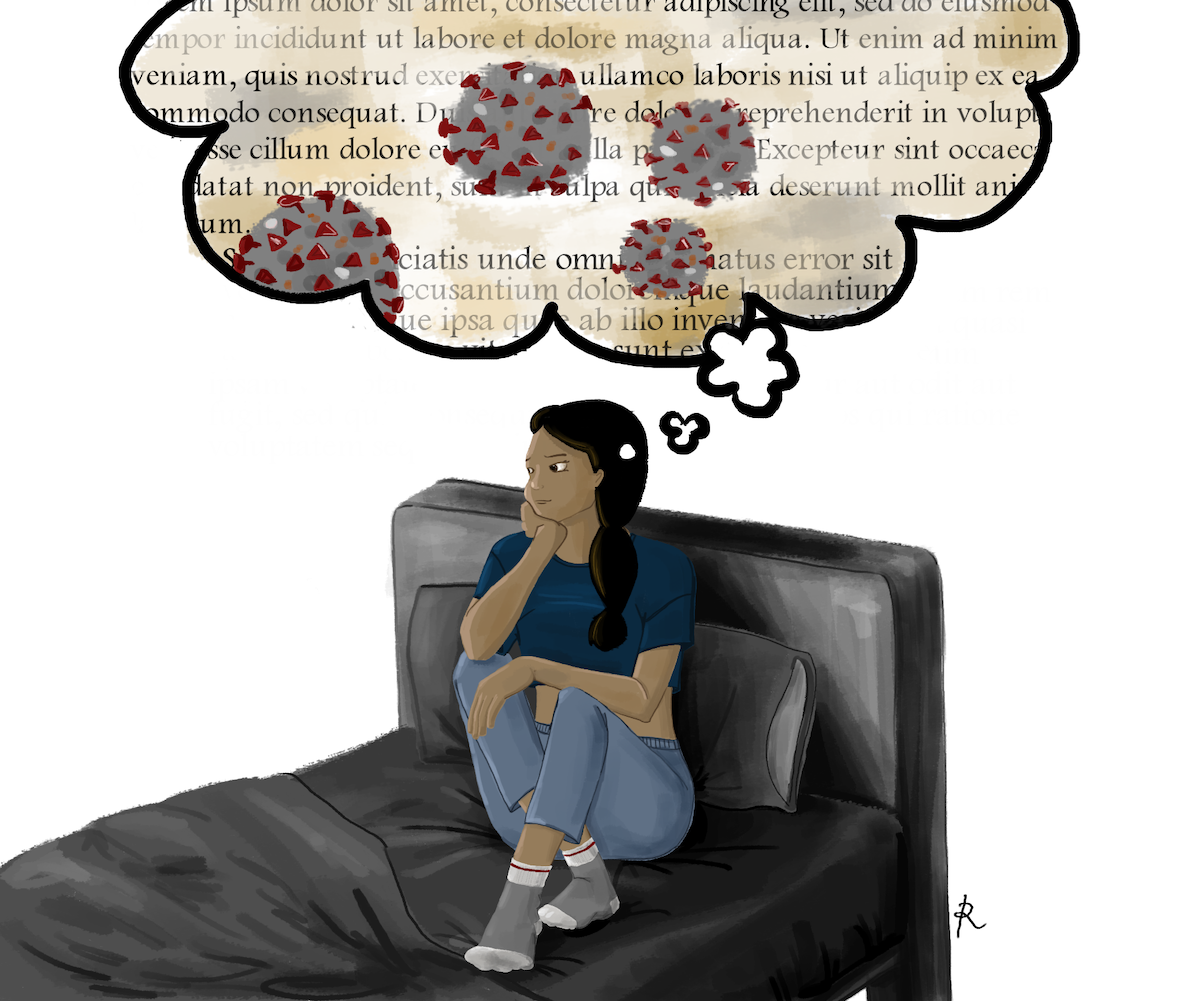
Remote semesters are just one of many protective measures adopted by universities and colleges worldwide to help combat the rapid spread of COVID-19. Unfortunately, the same social distancing measures that have succeeded at reducing the spread of COVID-19 have in turn led to adverse psychological effects on many students.

“Social distancing has resulted in social isolation for many, which can have negative impacts on our mental health and well-being,” Jos Porter, Local Wellness Advisor at the McGill Student Wellness Hub, wrote in an email to The McGill Tribune.

Since the start of lockdown measures, students have reported experiencing heightened feelings of anxiety and depression. Many specified that the lack of regular social interaction was a common factor behind their increased stress levels.   

When people engage in social interaction, their brains release a chemical called oxytocin, a hormone produced by the hypothalamus, which plays a vital role in various social functions, such as social recognition and bonding behavior. Scientists hypothesize that oxytocin is released during stressful situations to dampen the physiological response and thus also the psychological effects of stress. 

Some doctors worry that lowered levels of oxytocin due to lack of social interactions may result in increased levels of stress and anxiety, presenting additional problems for those with or predisposed to anxiety disorders. 

“People who, prior to the pandemic, were already struggling with mental health issues will probably fare worse during the pandemic under the effects of stress,” Anna Weinberg, Assistant Professor in McGill’s Department of Psychology, said in an interview with the Tribune. “People who are experiencing more severe stressors are going to be more vulnerable to the effects of stress on mental health.” 

Loneliness and anxiety have repeatedly been shown to have negative effects on the human body. Loneliness has been linked to an increase in the concentration of cortisol, another hormone in the body’s stress response pathway. Under normal circumstances, cortisol helps regulate mood, motivation, and fear but during periods of extended stress, cortisol levels in the brain can rise to dangerously high concentrations that come with their own set of health concerns. 

Weinberg described some of the effects cortisol has on the brain, including the possibility of tissue damage. 

“If you have a lot of cortisol flowing through your body, one of the things that you see is damage to the hippocampus,” Weinberg said in an interview with the Tribune. “It can cause death in some of the cells in the hippocampus and decreased connection [between] cells.”

Prolonged overexposure to stress hormones has been correlated with damage to hippocampus cells, which can cause lowered cognitive functionality, memory loss, and trouble concentrating. Issues with concentration and memory could present further problems for university students once online classes begin in September. Coupled with “zoom fatigue,” high stress levels can trigger the perfect storm of  disengagement and physical strain. 

“Physiologically, we know that stress exerts a huge toll on the body,” Weinberg said. “You can see people develop digestive issues, chronic muscle tension, problems with their jaw and musculature around their necks.” 

Fortunately, there are some steps that the average stressed student can take to mitigate the adverse psycho-social effects of social distancing.

“The key elements here are to stay connected, stay occupied, and to stay active,” Porter wrote. “Physical activity is so important for our mood, quality of sleep, and ability to concentrate, not to mention our overall health.” 

Sleep, meditation, and maintaining a consistent routine are other scientifically proven approaches for students to cope with the psychological and physiological effects of quarantine, beat the burnout and, hopefully, return to classes refreshed come the new year. 

Commentary, Opinion

COVID-19 calls for a shift in how McGill students view the elderly

Michelle Wilson was shocked to find her father looking unrecognizable during a window visit to his nursing home in May, his lips cracked and arms ridden with sores, despite reassurance from staff that he was doing just fine. He died shortly thereafter. There’s no shortage of stories like this: Blood-curdling tales of neglect in senior homes across Quebec have abounded since late February, exposing the injustices in the province’s long-term care facilities. More than 80 per cent of COVID-19 deaths in Quebec are linked to these facilities, a figure that has forced administrators in the elder care industry to reckon with the treatment of seniors in society. This reckoning is a perfect time for McGill students to strengthen connections with Quebec’s elderly.

Young people often believe that they are invulnerable, disconnected from the glum world of nursing homes, perhaps save for a grandparent or a former neighbour. What’s more is that students, swept up by their busy schedules, may find themselves far too tied up to act on matters that do not directly concern them. McGill students hardly have the time to complete their 15-page paper by midnight, much less to revolutionize long-term care facilities. But this tacit acceptance of elder care injustice does not just hurt the elderly. When students refuse to acknowledge the flaws in senior care homes, they are not only discounting the value of elders, but they are also blinding themselves to the very institutions that await them. Testimonies reveal the inhumane treatment of seniors in various long-term care facilities: Seniors left in their beds for nearly hours; widespread neglect due to staff shortages or an inadequate training of employees; residents being deprived of basic sanitary services such as baths and dental care; rampant loneliness; shortages of testing and protective equipment. A lack of resources and funding in nursing homes failed to protect seniors from ravages of COVID-19; in effect exposing the pre-existing flaws in elder care. In the absence of reform, these are the bleak spaces that students can look forward to when their time comes.

Although young people may find it easier to be passive than to help reform geriatric care, any apathy on the part of the young only perpetuates the grisly reality seniors face. To overturn society’s latent disregard for seniors, McGill students must make it a priority to provide assistance and companionship to the elderly. Students should offer to deliver groceries to an elderly neighbour, or simply engage them in conversation. They should volunteer for one of the many social and health organizations in Montreal that support seniors, such as The Yellow Door, which runs intergenerational programs to combat the isolation of seniors in the Milton-Parc community. McGill Students for Geriatric Health (MSGH) is another group working to improve geriatric health outreach by hosting annual symposiums and connecting students with volunteer opportunities in Montreal. MSGH aims to bridge the gap between seniors and youth, and is currently locating remote volunteering opportunities for students around the world for the Fall 2020 semester.

The median age of Canadians killed by COVID-19 is 84 years old. Victims of the pandemic, however, are not merely statistics. These are siblings, teachers, cousins, parents, friends—people to whom we are inextricably tied. This is the class of 1958. We must reject the rhetoric that casts the elderly as expendable bearers of bygone tradition, and instead see them for what they are: Human beings with inherent value.

Some members of the McGill community have already made strides toward mending the gap between older and younger generations. Claire Webster is the founder of the McGill Dementia Education Workshops, an authority in the field of ageing and caring for individuals with dementia, and, most importantly, a former caregiver to her late mother. She emphasized the vital role empathy and education play in revamping elder care. 

“Education is the key to everything,” Webster said. “If you are properly educated, you have power. When you see the elderly, it is almost as if they have been the forgotten ones. But what you have to remember is that once upon a time, they were you.”

e-commerce
Science & Technology

E-commerce booms in a time of retail uncertainty

The e-commerce industry has existed for over 40 years, but never in its history has it experienced such a period of immense growth as during the current COVID-19 pandemic. Within two weeks of Canadian cities beginning to lockdown in mid-March, online sales in the country had already doubled, with a net increase of 99 per cent across all retail sectors combined. 

The global crisis came as a shock to businesses that were reluctant or unable to adapt, driving some companies to file for bankruptcy while online businesses flourished. Shopify, a Canadian e-commerce giant, had reported a record 62 per cent surge in the creation of online stores in just six weeks. These developments have made Shopify one of Canada’s largest publicly listed companies. 

Hoda Mottaghi, senior e-business consultant at Desjardins and lecturer at McGill’s School of Continuing Studies, explained that for businesses, developing an engaging online interface during this period of retail uncertainty is crucial. 

“User experience is everything,” Mottaghi said in a video interview with The McGill Tribune. “A good website gets the content to the customer at the right time.” 

Mottaghi emphasized that a successful online platform requires tried and tested website infrastructure able to evolve with consumer needs. Small changes, such as the strategic placement of buttons on web pages and attention-grabbing graphics, can substantially increase user engagement.

“Market research is the first essential step, followed by the development of a mobile-friendly website before the web version,” Mottaghi said. “The limited screen space forces web developers to be creative but concise.” 

As the push into a digital marketplace persists, three McGill undergraduate students have taken an entrepreneurial approach to help local businesses reach customers. By helping to bring small businesses online, at a time when global dependence on e-commerce is surging, these students are providing support to those facing financial burden during the pandemic.  

Laid-off from his summer job, Owen Cumming, U2 Arts, founded ShopBaxter. ShopBaxter is a service-based business that specializes in designing e-commerce stores for small businesses looking to have an online presence on existing platforms such as Shopify or Squarespace.

“Shopbaxter was founded by students who were affected by the pandemic to help other students and businesses that were also affected,” Cumming said in a phone interview with the Tribune. 

Cumming developed ShopBaxter when he recognized that small businesses without an online presence required affordable solutions to create engaging digital platforms. 

“Not only do people pay thousands to build a website, they have to repay web developers for any additional changes once the website is set up,” he said. 

Alongside Cumming, Jake Furniss-Yesk, U3 Arts, and Will Croke-Martin, U3 Arts, work closely with their clients to build websites that are affordable, customizable, and easy to update. 

“Online is the future, and we can finally see why [….] Following the pandemic, more and more corporations will start looking to young people,” Cumming said. “Investing in an online presence has become necessary in order to be self-sufficient and [to] survive the post-pandemic market.”

In the near future, while many social distancing measures may still be in place, data scientists and web developers will remain hard at work reinventing the online business standard. Research suggests that consumers are unlikely to revert to shopping traditionally, foreshadowing high competition amongst retailers in the e-commerce sector. During the COVID-19 pandemic, the success of a business may not only be determined by the quality of their products and services, but also their ability to engage users online.  

Arts & Entertainment, Film and TV

‘Influence’ presents a damning portrait of Lord Tim Bell

Influence, written and directed by Montreal-based documentary filmmakers Diana Neille and Richard Poplak, sets forth a captivating portrayal of Lord Tim Bell, the British advertising executive who co-founded the public relations firm, Bell Pottinger, and helped to put Margaret Thatcher into 10 Downing Street. Influence does not get lost in the PR giant’s allure; the documentary is scathing and rich, albeit oversaturated at times.

The documentary, which premiered on May 21 as part of Hot Docs Festival Online, invites viewers into the fascinating world of Bell while also sounding the alarm against the regime-influencing communication he pioneered. The opening sequence encapsulates this. Influence begins with a slow close-up of Bell, who at first appears mysterious and unknowable, sitting at a distance from the viewer. But as he comes into focus and falls into a coughing fit, tapping his cigarette butts into an ashtray, the allure fades away, and the mirage is displaced by an image of decay and poison. This vivid skepticism towards Bell and the duplicity he embodies is what makes the documentary great. 

This glimpse into the mind of the PR executive who capitalized on a divided and vulnerable public to win elections is relevant in the age of fake news. The project uses stock footage and interviews with Bell and his adversaries to chart Bell’s ascent from salesman to spin-doctor. Bell emerged from making jean adverts with his advertising agency, Saatchi and Saatchi, eventually lending his PR expertise to authoritarian politicians such as Chilean despot Augusto Pinochet and Belarusian dictator Alexander Lukashenko. He transformed the public images of despots, rogues, and politicians alike, giving them a more palatable air. To do this, Bell employed a brutal style. The documentary illustrates his methods by featuring Bell’s legendary “Labour Isn’t Working” ad campaign, which presaged Margaret Thatcher’s first election victory in 1979.

Influence explores the relationship between advertisement and state politics, placing this phenomenon within a context of rising public distrust. The film shows the eerie consequences of Bell’s work, such as during the Gupta controversy. A family of businessmen, the Guptas ran a shadow government in South Africa, employing Bell Pottinger to run campaigns that presented them as victims of “white monopoly capital,” fomenting racial tensions in the process. Bell Pottinger’s role would later be exposed, forcing the PR firm to file for bankruptcy. Flashing between campaign ads and footage of strife in South Africa, the documentary shows, through the Gupta controversy and the fall of Bell Pottinger, the destructive link between cunning advertising and social unrest. Influence condemns Bell Pottinger bluntly and vividly, featuring jarring footage and images that highlight the dangers of public deception. 

But there is only so much scheming one can take in a single sitting, and Influence suffers from over-saturation. The film scrambles to fit every facet of the Bell Pottinger story into an overstuffed 92-minute runtime. It juggles too much: Bell’s career; the PR guru’s relationship with Pinochet; the birth of corporate PR and strategic communications; attempts to sell the Iraqis on the American message of regime change through commercials and soap operas; the emergence of Russian information warfare; and more. Although untangling the complicated web of modern day spin-doctoring is a laudable task, the project would benefit from information downsizing. The documentary’s patchwork approach only weakens its timely message.

Figures like Bell have always lurked in the shadows of giants. The wider-scale trend of disinformation and half-truths that plague current mainstream media makes Influence ambitious and intriguing, despite its overly vast scope. The documentary goes far beyond chronicling the rise and fall of Bell’s career: It sheds light on a mirage of influence that risks poisoning hearts and minds. For a deeper understanding of the dark underbelly of modern-day advertisers, Influence is a required summer viewing.

Read the latest issue

Read the latest issue