Latest News

Letters to the Editor, Opinion

Letter to the Editor: On asking permission and giving credit

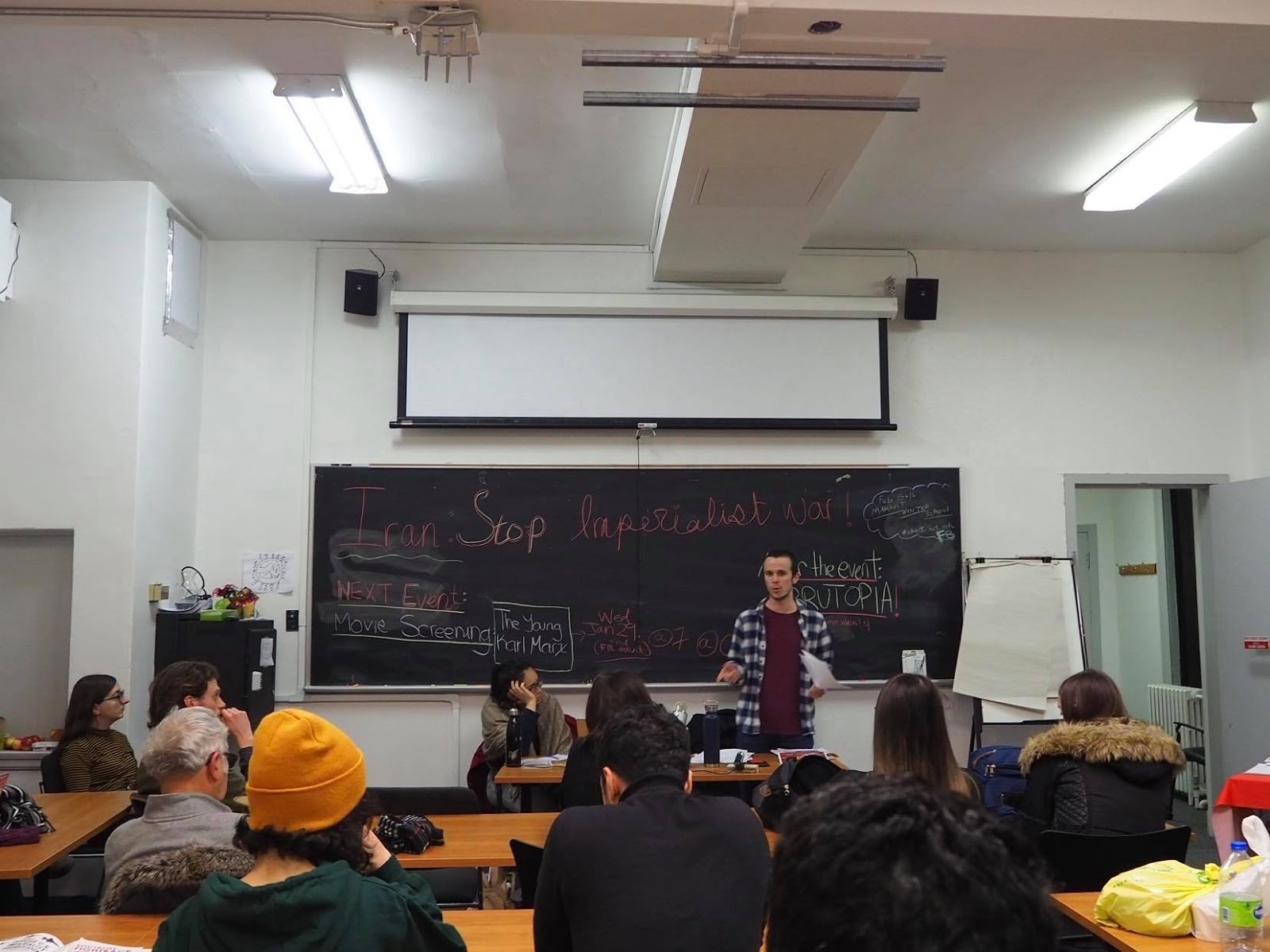
In The McGill Tribune’s Jan. 21 editorial, a photo that I had taken earlier in the month at a demonstration was used to accompany the article, without my permission and without credit.

It is true that, at student publications, mistakes are often made, and without a journalism school at McGill, they are more likely to occur. I too am guilty of making journalistic errors. But, it is unacceptable to use a photo for an article without first asking for permission.

When a newspaper does not ask a photographer about using their photo and fails to credit them, especially when they display it as the symbol of an article with which the photographer may hold concerns, it feels really disrespectful. In a Facebook post summarizing the editorial, the Tribune purports an understanding that “it is imperative to highlight the experiences of McGill students who are directly affected by jarring political events,” yet the Board used my photo, that of an Iranian-American journalist–someone whose family is affected by the ramifications of the American government’s decisions and whose mental health has suffered this past month–without permission or credit.

Asking the photographer if they are comfortable with their image being displayed as the visual representation of an article is crucial. But, there is also more to it than showing respect and courtesy; without giving credit, it is plagiarism, and it is especially ironic given my lived experience and the Tribune’s claims to be uplifting marginalized voices.

In an industry that heavily underrepresents racialized women, it is imperative that publications, even student ones such as the Tribune, respect our work. It is not enough to claim that one supports marginalized peoples–it must be consistently demonstrated through concrete actions.

Features

Excluded voices

It begins on the first day of the semester: The syllabus is monopolized by white men. When universities emphasize privileged voices, they dominate classroom conversations and textbooks, leaving little space for marginalized groups’ experiences. While academic institutions like McGill continue to enact policies against discrimination, these initiatives raise questions of what kinds of discrimination ought to be recognized within the university context.

Research Briefs, Science & Technology

Solving the mysteries of Earth’s Cryogenian ice age

Typically, one wouldn’t think to ask a geologist about the most pressing issues in evolutionary biology. Yet, for some biologists, rock formations and fossil records—which have only gained the attention of natural scientists in the last 50 years—provide a plentiful source of untapped information about the history of life on Earth.

A recent study released in the journal Proceedings of the National Academy of Sciences applies geological theory to questions of how some of Earth’s earliest eukaryotes—tiny, multicellular organisms—survived one of the coldest periods of Earth’s history. 

Using the presence of mineral deposits in rock formations across the globe, Maxwell Lechte, lead author of the study and postdoctoral fellow in McGill’s Department of Earth and Planetary Sciences, and his colleagues proved that liquid water containing a relatively high abundance of oxygen was present underneath the ice masses of what scientists now call ‘Snowball Earth.’ A tumultuous period in Earth’s geological history, Snowball Earth occurred over 700 million years ago during the Cryogenian ice age. During this period, ice was almost everywhere. The proliferation of ice masses across the globe caused the separation of the oceans from the atmosphere, blocking out the sun and plunging earth under ice sheets up to two miles thick. 

“Reconstructing ice ages using geology is quite a well-established technique because they are quite apparent in the geological record,” Lechte said in an interview with The McGill Tribune. “Ice sheets are extremely powerful erosive forces […] and are quite distinctive in the rock record.” 

The eternal frigid waste of the Cryogenian Period presents a perplexing question for evolutionary biologists: How complex eukaryotic life, which requires oxygen to live, survived though 100 million years of frozen temperatures when the waters of the ocean contained little to no oxygen.  

Luckily for baffled biologists, a geologist was asking the same thing. 

“The question I was interested in is [was] what effect this would have on the biosphere,” Lechte said. “There is no doubt that covering the whole planet in ice would reduce the amount of habitable area.” 

Scientific consensus has approximated that complex eukaryotic life was first evolving around the same time that Earth was becoming covered in ice. 

“If you cover the whole oceans in ice, that separates them from the atmosphere, and so all these more complex life forms should have been killed off,” Lechte said. 

The authors assumed that since eukaryotes survived the ice age, complex life living underneath massive ice shelves must have gotten oxygen from a source other than the atmosphere. 

“Iron is soluble in sea water under anoxic conditions, so when there is no oxygen around, iron can dissolve,” Lechte said. “But as soon as you have any oxygen around, iron rusts out of the water and becomes insoluble and deposits out as solid iron oxides. The fact we had found all these [iron oxides] in glacial deposits suggests that something interesting was going on with oxygen.” 

From these observations, Lechte, along with researchers at the University of Melbourne, proposed that meltwater may be the key to supplementing oxygen to organisms living under the ice’s surface. They suggested that air bubbles from the atmosphere had become trapped in the ice shelves as they were forming. These air bubbles, which contained ample oxygen, then became a vital lifeline for marine eukaryotes that could survive off of meltwater that contained much higher levels of oxygen. 

The implication that oxygen stores could be found on Earth hundreds of millions of years ago is an invaluable link in the evolutionary chain of events. These questions about the long-term evolution of complex life date back as far as Darwin himself.

“A lot of our understanding of the past Earth is based on modern Earth,” Lechte said. “People historically have assumed Earth has just always been this way, but we have come to understand these changes as a recent phenomenon.”


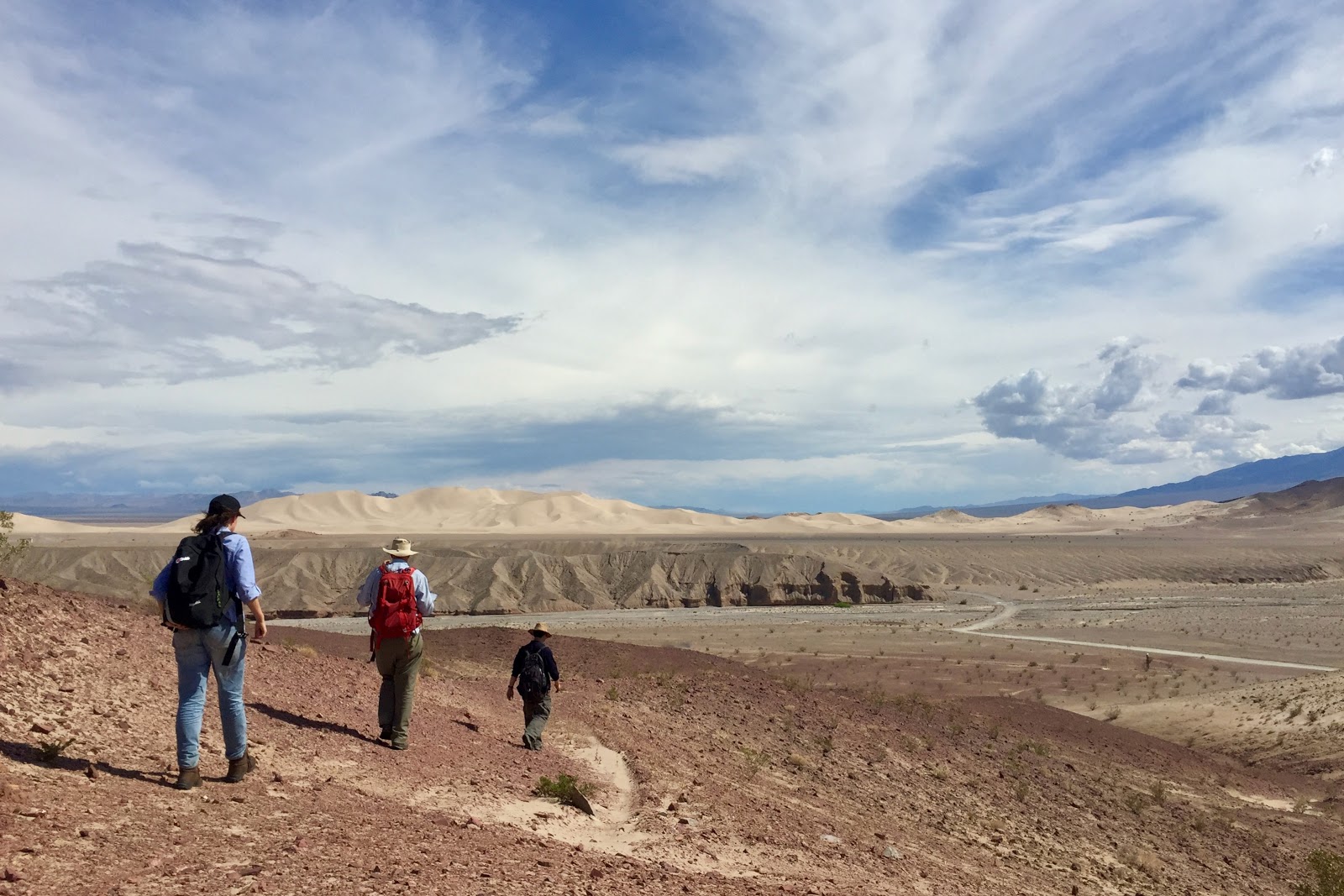
Layers of iron-rich glacial deposits exposed in the desert illustrate the history of marine environments during Snowball Earth (Death Valley, California). (Maxwell Lechte / The McGill Tribune)

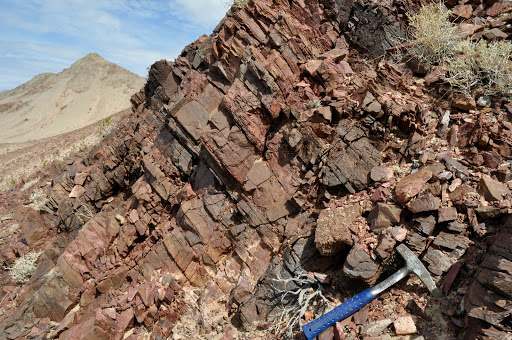
A small dropstone within marine sediments with red layers of iron oxides tells the tale of marine oxygenation during Snowball Earth (Ikara-Flinders Ranges, South Australia). (Ashleigh Hood / The McGill Tribune)

Sports

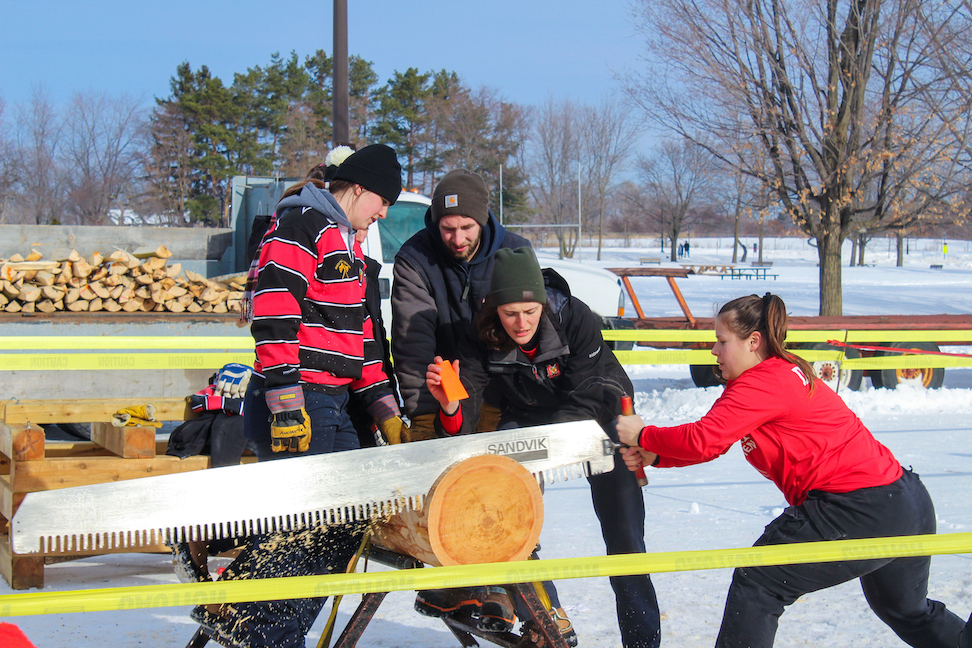
Mac campus culture on display at annual Woodsmen Competition

Battling frigid temperatures, the McGill Woodsmen team hosted the 60th Annual Macdonald Woodsmen Competition at Watson Field on McGill’s Macdonald Campus on Jan. 27. The event, which has become a staple of Mac campus culture over the years, was an exciting affair, with close to 160 participants competing in 14 action-packed events ranging from axe throwing to the singles water boil.  

The Macdonald Woodsmen Competition, which remains unknown to many downtown McGill students, is one of the four major tournaments held by the Canadian Intercollegiate Lumberjacking Association (CILA) for young lumberjacks across the country. The road to the competition is grueling, and participants put in strenuous hours of labour in the weeks leading up to the event. 

“It’s hard [because] we have practice every morning at 6 a.m.,” McGill Woodsman Gregoire Herzog said. “Before we go to school, we go and cut some wood. It’s cold, and it’s [the same] from Monday to Thursday. [But] that’s the thing; it’s hard to get people going, but I think what keeps them [coming] really are the bonds that you create.”

With anticipation in the air, the competition finally kicked off at 9 a.m., following the ceremonial first chop. The morning stages of the competition were structured to maintain a sense of perpetual action, with events occurring all around the audience. One could watch a Lumberjill swing her axe down on a log in the standing block chop, then walk across the field and find themselves enthralled by an intense round of pulp throwing, a timed event that entails throwing logs into a target. Events like the snowshoe race—a Mac Campus special—generated much excitement, with athletes running a tiresome 1.5 kilometers in a snow-covered field.

“You really gotta get used to [the snowshoes],” first-year woodswoman Lea Taillandier said. “First of all, it’s [a lot] harder than what [you would] expect. And [you] practice and practice and get a bit better, but still, it’s so, so hard. But it’s also so much fun [at the] same time.” 

Come afternoon, the athletes and the audience retreated to the cozy Ceilidh Bar to prepare for the second session. After a hearty meal of chili and sandwiches along with beer, the second phase of the competition got underway. Athletes were corralled into their respective groups and prepared for the final four events of the day.

The team-cross and swede-cut, two sawing events, came first, followed by the doubles underhand chop, then finally the singles water boil, a frantic race to build a fire capable of bringing a pot to simmer.

The McGill lumberjacks and lumberjills were impressive in their showing, leaving the audience buzzing by the display they had witnessed. To many Macdonald students, the event is a symbol of pride, etched in 60-years of tradition and historya pride they are all too eager to share with their peers downtown. 

“Maybe [we] should rally up a petition, get the bus to come here [on Saturday],” first-year Woodsman Jacques Gross said. “I would really encourage [students downtown] to come down to our campus. I mean, we’re always having fun.”

Basketball, Sports

Remembering Kobe Bryant

The basketball world is mourning the loss of Los Angeles Lakers legend Kobe Bryant, 41, following the shocking news of his tragic death on Jan. 26 as a result of a helicopter crash. Eight other people died in the crash, including Kobe’s 13-year-old daughter Gianna Bryant.

The outpouring of love following the announcement of Kobe’s death speaks to the many connections he made around the league. Whether it be the fans he inspired or the players he influenced, everyone has their own Kobe story. For me, Kobe was a role model who, without ever knowing it, helped me overcome my performance anxiety and rediscover my love of basketball.

As a young teenager and aspiring athlete, I battled serious performance anxiety and perfectionism. Every missed shot was such a devastating blow that I began to suffer immense stress. The game began to lose its magic, and I was on the verge of giving it all up. But a quote from Kobe inspired me, rekindling my love of basketball and helping me overcome my mental blocks.

“If you miss the shot, you’ll still be here learning,” Bryant said in a 2013 interview. “You’ve been in moments where you missed a shot, but you’re okay [….] What you have to understand is that those pressures are self inflicted [….] You have to be able to control your mind and understand […] that pressure does not exist [….] We create pressure ourselves.”

Kobe introduced an entire generation of young athletes to the idea of sport as a mental game, which he called “Mamba Mentality.” And even beyond the court, combined with Kobe’s tireless work ethic and perseverance, this mindset inspired individuals from all walks of life to overcome their toughest challenges.

And yet, one serious decision marked Kobe’s life, for, in a City of Angels, he was not one. In 2003, Kobe was accused of raping a 19-year-old woman, and he admitted to cheating on his wife, Vanessa.   

But Kobe’s legacy challenges our understanding of whether someone is capable of redemption. Kobe’s growth as a human—famously symbolized by his switch from number eight to 24—was increasingly evident on the basketball court in his later years and in retirement. He was an extremely proud father of four girls, with whom he joyously shared the game of basketball. He also became an avid supporter of the WNBA, in which he hoped to see Gianna play one day, and an Oscar-winning storyteller.

The question that then remains is what legacy will Kobe leave behind? By what narrative will his six-month old daughter and namesake, Capri Kobe Bryant, know her father? The answer, as with the stories, will be informed by a multitude of personal experiences. To me, mixed somewhere alongside all the good and the bad, the answer is this: Kobe loved the game I love, more than anyone else. This love drove his singular pursuit of excellence, it informed the Mamba Mentality, and it is the reason Kobe touched the lives of more people than he could ever know.

As was poetically demonstrated by Kobe’s final public words the night prior to his death, in which he congratulated the Laker’s new star LeBron James on passing him on the all-time scoring list, the game will move forward. And yet, because of his unmatched love of the game, every time a kid shouts his name while shooting a balled up piece of paper into the recycling bin, Kobe’s legacy will forever live on as an integral part of basketball. 

Science & Technology

The Australian wildfire anomaly

Every year, patches of Australian forests are consumed by fire, an ecologically necessary process that releases soil nutrients and stimulates plant growth. When the fire season is exacerbated by drought and high temperature, however, the devastation is so great that some citizens are forced to flee their homes. In the most extreme circumstances, natural habitats are ruined completely, even to the point of species extirpation. 

This year, these conditions converged in a perfect storm, ravaging large swaths of the Australian continent in dramatic wildfires. The scale of its current bushfire season is unprecedented: Almost 13,000 square kilometres have burned, taking the lives of 29 people and more than 800 million animals. 

Increases in the mean average temperature were a contributing factor to the bushfires’ severity, according to Morgan Crowley, a Ph.D candidate in the Department of Natural Resource Sciences at McGill. 

“Bushfires are normal in Australia, but this fire season [is] exceptionally hot and dry […], which is why it is even longer and [more] dangerous,” Crowley said.  

Historically, such extreme weather patterns have arisen along with El Niño conditions, but this year is an exception. The El Niño Southern Oscillation is a climate phenomenon resulting in unusually warm water off the Pacific coast of South America, pushing hotter weather to the East. Although no El Niño has occurred this year, temperatures have continued to rise. Combined with the adverse effects of limited rainfall in Australia, these inconsistencies point to greenhouse gas emissions as a likely source for changing weather patterns. 

The disturbing relationship between climate change and Australia’s wildfires does not end there. Species struggling to deal with higher temperatures have been hit hardest by the flames. For example, efforts to protect the Kangaroo Island dunnart, a small marsupial, have been crushed by the recent blazes. After years of rebuilding their population, only one has been found alive

“One of the most devastating impacts of this fire season is […] that it is burning in species-rich areas,” Crowley said. “The fires are threatening many unique species that are not found outside of these areas.” 

Species such as the koala are especially threatened by the loss of habitat area. Since koalas are endemic to Australia, meaning they are native to the island continent and not found anywhere else in the world, populations will have a harder time recovering from the fires. Already, koalas have lost 30 per cent of their previous habitat area, taking the lives of more than 25,000 animals. 

Still, Australia’s rich biodiversity is thought to make its ecosystems more resilient, and able to bounce back from disturbances. Additionally, many species have evolved adaptations to frequent bushfires, like the eucalyptus plant that encases its seeds in woody capsules to protect them from intense heat.

Yet even species, such as birds and rodents, who previously managed to survive the blazes have found little respite from this year’s massive wildfires. Instead of burning in patches, the fires are all-encompassing, burning through animals’ familiar hiding spots. 

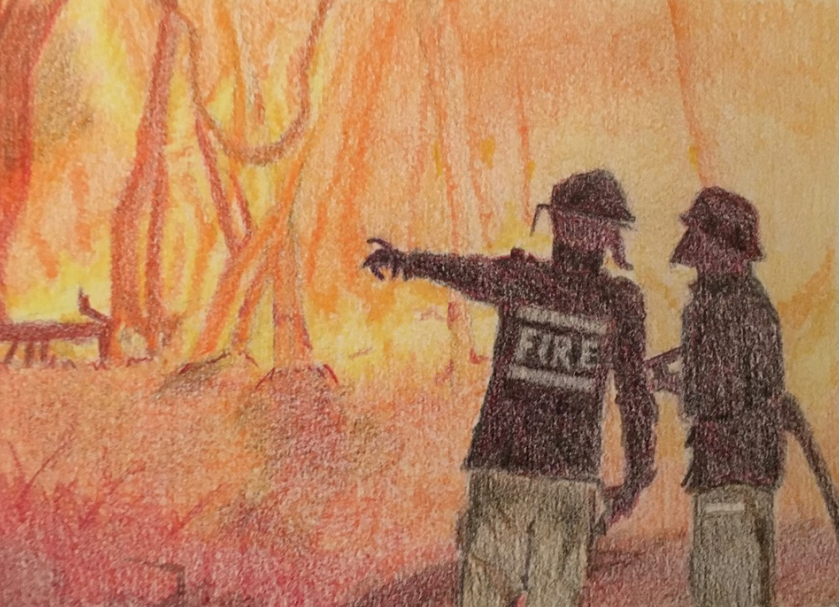
The reduction in disaster response funding from the Australian government has stretched resources thin. Both paid and volunteer firefighters all over the country have been putting their lives on the line to protect citizens and wildlife. At the same time, scientists around the world have employed fire visualization technology, such as MyFireWatch, to anticipate the spread of the blaze and its aftermath

“Mapping and analytical tools are already being used by firefighters and scientists to examine the active wildfires,” Crowley said. 

Researchers like Crowley are developing technology to map bushfires in real time and get the information to firefighters as quickly as 30 minutes after the fire is detected. 

“Eventually, when the Canadian ‘WildfireSat’ satellite is launched in 2024, […] it will hopefully be able to help the firefighters not only in Canada, but maybe eventually around the world,” Crowley said. 

Wildfires in California, Western Canada, and Australia in the past year have pushed scientists to become innovators of mapping technology and environmental preservation. The question remains, however, if governments will take appropriate action to reduce emissions, or if they will continue to add fuel to the fire. 

Science & Technology

Making room for data science in the humanities

The Centre for Social and Cultural Data Science (CSCDS) held their first Data Science Expo on Jan. 21. Among the many speakers presenting on the new and exciting roles that data science will play in the modern world was Aengus Bridgman, a political science PhD candidate at McGill.

Bridgman’s lecture delved into the plethora of political data collected during and after the 2019 Canadian federal election, detailing the importance of data science in the social sciences as well as what characterizes a good data scientist.

A senior political analyst at the Digital Democracy Project, Bridgman began his talk by explaining the emergence of the term ‘data science’ and the role of a data analyst, a title he has only recently adopted.

“What’s really great about the label of data science is there’s all this work that was being done by social scientists, engineers, computer scientists, and […] folks in linguistics, that was kind of using the approaches of data science but didn’t have a nice sexy name attached to it,” Bridgman said.

Bridgman noted that with the new official label, data scientists have been getting more attention from a variety of groups who previously were uninterested in the world of statistics. However, data science is there to direct people towards answers, not provide them outright.

“We can get the best data, we can have massive resources to gather data, to do analysis, we can have a whole research team, and we can still only get partway to an answer,” Bridgman said.

This being said, the statistical information provided by Bridgman’s team on the 2019 Canadian election has shown promising results. He spoke at length about political polarization among Canadians, their susceptibility to misinformation, and what issues they prioritized during the election period. 

Though Canada’s political culture is not as starkly polarized as it is in the US, Bridgman’s data showed that public opinions are also turning away from the centre of the political spectrum. Bridgman and his team also found that people were more likely to share information from sites that aligned with their political views. 

Collected data have revealed that political polarization results from confirmation bias and the propensity of different groups to misinformation, or at the very least information that stands behind political partisan positions of what they already believe. 

Bridgman found that partisans were more likely to read articles about the successes of the party they support. For example, an article by the Journal de Montréal titled “Bloc: le cœur et la raison” [Bloc: The heart and the reason] had most of its shares from members of the Bloc Québécois. 

Bridgman explained that usual methods of political analysis such as surveying have fallen short in helping data scientists make sense of the 2019 election results.

“If you ask Canadians what issue [they] most care about, what do you think they say?” Bridgman said. “The economy. They always say the economy.”

By dividing the population into three groups—the public, broadcast media, and party candidates—Bridgman’s team got a better grasp on the similarities between groups, allowing them to measure how the political opinions of people differed. 

Immigration was a topic mostly avoided by politicians, although it was widely covered by broadcast media. Similar results were shown for discussions on foreign affairs. 

On the other hand, all three groups were relatively interested in environmental policies. Ethics were one of the lowest-mentioned topics by politicians and the broadcast media but were a big concern for the public. These results demonstrated to Bridgman that what politicians considered important did not always align with the views of the Canadian public.

Combining statistics, computer science, and domain-specific knowledge, data science is a promising new field in which historians, policymakers, and others in the humanities can find their place. As Bridgman’s work reveals, engaging with data in any field wields the power to observe important trends and make discoveries.

McGill, News

Socialist Fightback groups denounce possibility of international war

Nearly 60 people filled a room in Concordia University’s School of Community and Public Affairs on Jan. 23 to discuss the recent escalation of tensions between the US and Iran. Students and activists advocated for a cessation of violence in the region and debated possible socialist alternatives for both countries as a means of averting war.

The event, “Iran: Stop Imperialist War!”, was organized by Socialist Fightback at Concordia and McGill and attracted students from both universities, as well as dozens of members of the Montreal community. 

Fightback activist and former Université du Québec à Montréal (UQAM) student Julien Arseneau led the meeting with a 40-minute presentation briefly describing the hostilities between the US and Iran. Tensions have recently heightened between the two countries since the assassination of Iranian general Qassem Soleimani by the US government on Jan. 3. Arseneau linked the socialist movement with the antiwar movement, arguing that, under the capitalist system, another war in the Middle East is inevitable.

“War is a constant threat as long as we live in a system where profit is the most important thing, and in a system where a few big companies dominate politics, [and] benefit from war,” Arseneau said.

Arseneau suggested that alternative socialist systems would divert money away from the military towards public infrastructure and services instead.

“These trillions that go to build tanks and drones and military bases in foreign countries would go to build hospitals, schools, housing, public transport,” Arseneau said. “Obviously this cannot be done as long as the profit motive is overruling everything. We can’t ask [defense technology company] Lockheed Martin to build schools. They won’t do it.”

Following the presentation, attendees participated in an animated discussion during which they expressed their concerns about the current instability in the Middle East and proposed possibilities for socialist revolution in the region.

Banafseh Cheraghi, a sociology student at Concordia, gave a firsthand account of the turmoil in Iran and her perspective on how the socialist movement should achieve its aims.

“As someone who has participated in some mass protests in Iran […] I can […] claim that revolution is not what Iran needs right now,” Cheraghi said. “Before that, [Iranians] need awareness, because when you are blocked from the media for this many years you begin to make your own stories from your reality.”

Cheraghi blamed the dominance of US media in Iran for manipulating public political discourse in the country. 

“Even the US is responsible for that because the only foreign media that Iranians have access to are controlled by […] the American news and none of them talk about the real issues,” Banafseh said. “None of them try to […] give [people] knowledge.”

Fightback activist and former Concordia student Fehr Marouf was pleased with the meeting’s high attendance. He believes it is indicative of the increasing popularity of the socialist movement across university campuses and in Montreal.

“Every year, we keep getting more and more people out to these [events] and it just shows how far the process of radicalization and polarization in North America has gone,” Marouf said. “A lot of the bourgeois media is focused on the far right but [I’m sure] that the far left is growing a lot faster. We just don’t get any free coverage for it, except from capitalist media.”

Recipes, Student Life

Supper and snacks: Soups do it all

As the temperature steadily drops, we look at the pots simmering on our stove and wonder the place that soup has within the spectrum of meal courses. Soup is often cast into either a dipping sauce for bread or a supporting actor in a four-course culinary drama. While soup may seem like nothing more than a thin, salty liquid, soup takes on many wonderful forms. In its most primal form, soup can be thought of as an appetizer dish, but it can be more than that; it can be whatever you like. The following recipes will take you through a journey of the wonderful personalities of soup.


The Appetizer Soup: Homemade Miso Soup

Miso soup is a traditional Japanese soup, often served as an appetizer before the meal. While absolutely delicious, it exemplifies the qualities of soup that gives way to its perception as a starter.

Ingredients for 2 servings:

  • 4 cups vegetable broth
  • 1 sheet nori, cut into large rectangles
  • 3–4 tbsp white miso paste, a fermented soybean paste (Optional: Add bonito, a fish flavour, though bonito is not vegetarian)
  • 1/2 cup chopped green chard or other sturdy green such as cabbage  
  • 1/2 cup chopped green onion
  • 1/4 cup firm tofu, cubed

Instructions:

  1. Place the vegetable broth in a medium saucepan and bring to a low simmer.
  2. Add nori and simmer for five to seven minutes.
  3. In the meantime, place the miso into a small bowl. Add hot water and whisk until smooth, ensuring that it doesn’t clump. Set aside.
  4. Add 1/2 cup green chard, 1/2 cup green onion, and 1/4 cup tofu to the pot and cook for five minutes. Remove from heat, add miso mixture, and combine while stirring. 
  5. Taste and add more miso or a pinch of sea salt, depending on your preference. This dish is best served warm and fresh.

(Recipe adapted from minimalistbaker.com


The Real Deal: Contest-Winning Hearty Hamburger Soup

A wonderful characteristic of soup is that you cover all of your food groups covered in one shot: The abundance of vegetables provide carbs, fibre, and vitamins, the meat adds fat and protein, and oregano is rich in antioxidants and has anti-inflammatory properties. This humble hamburger soup is much more than the sum of its parts because it perfectly marries all of its different ingredients to create a wonderful new flavour. 

Ingredients for 8 servings:

  • 1 pound ground beef
  • 4 cups water
  • 1 can (14-1/2 ounces) diced tomatoes, undrained
  • 3 medium carrots, sliced
  • 2 medium potatoes, peeled and cubed
  • 1 medium onion, chopped
  • 1/2 cup celery, chopped
  • 4 teaspoons beef bouillon granules
  • 1-1/2 teaspoons salt
  • 1/4 teaspoon pepper
  • 1/4 teaspoon dried oregano
  • 1 cup cut fresh or frozen green beans

Instructions:

  1. In a large saucepan, add brown beef and drain. Add four cups water, one can undrained diced tomatoes, three carrots, two potatoes, one onion, 1/2 cup celery, four teaspoons beef bouillon granules, salt, pepper, and oregano. Bring to a boil. 
  2. Reduce heat then cover the pan. Add green beans after simmering for 15 minutes or until the potatoes and carrots are tender. Cover once again and simmer for another 15 minutes or until the beans are tender.

(Recipe adapted from tasteofhome.com


Breaking the Definition of the Dish: Strawberry Dessert Soup

Dessert soup, you dare say? 

Ingredients for 7 servings:

  • 1 cup water
  • 1 cup unsweetened apple juice
  • 2/3 cup sugar
  • 1/2 teaspoon ground cinnamon
  • 1/8 teaspoon ground cloves
  • 2 cups fresh strawberries, hulled
  • 2 cups strawberry yogurt
  • Optional: 2 to 3 drops red food colouring
  • 1/4 cup sour cream
  • 2 tablespoons milk

Instructions:

  1. In a large saucepan, combine 3/4 cup of water, one cup apple juice, 2/3 cup sugar, 1/2 teaspoon cinnamon, and 1/8 teaspoon cloves. Bring to a boil, stirring occasionally, then remove from the heat.
  2.  Place the strawberries and remaining water in a blender. Cover and process until soup consistency is smooth. Pour into the apple mixture and stir in the yogurt and food colouring, if desired. Cover and refrigerate for at least two hours or until chilled.
  3. Ladle soup into bowls. Combine the sour cream and milk and place about 2-1/2 teaspoons into the centre of each bowl. Using a toothpick, pull the mixture out, forming a design of your choice.

(Recipe is adapted from tasteofhome.com)

McGill, News

Well Week 2020 aims to promote student health

McGill’s Student Wellness Hub and the Healthy Living Annex will host the second annual Well Week from Jan. 27-31. This year, Well Week coincides with Bell Let’s Talk, a campaign to raise awareness and discuss stigma around mental health. The Hub hopes that Well Week will build on last year’s events. Well Week comes at a time where the Hub has faced criticism from students, who have complained about waiting up to 80 days for appointments even after the Wellness Hub’s renovation and questioning the impact of awareness campaigns. Kathleen Bateman, Associate Director of Health Promotion and Outreach at the Wellness Hub, spoke on the goals for the week.

“Well Week was created to provide students with spaces and activities to talk about wellness and understand how it affects all aspects of their life, from academics to mental health,” Bateman said. “It’s also an opportunity to connect with others and try out the kinds of activities we offer all year long that can help improve their well-being.”

Student service groups such as the McGill Office of Religious and Spiritual Life and the Peer Support Centre are organizing their own events across campus. Activities range from sports, such as ice skating, to presentations explaining how to navigate healthcare services on campus. 

“We’re really excited about McGill Let’s Skate, our feature event for Bell Let’s Talk day,” Bateman said. “It’s a great opportunity for students to try skating with peers, share a hot chocolate with other McGillians, and learn how physical activity can contribute to overall well-being. Another big event is the #SleepMatters Challenge, happening all day Tuesday. We’re encouraging staff and students to wear PJs to work to remind us of the importance of sleep.”

This is the first time the Student Wellness Hub and Healthy Living Annex are collaborating to organize Well Week. Bateman emphasized the importance of student involvement in the planning process.

“Students have been part of the planning process from the outset,” Bateman said. “Our HLA Student Advisory Board and Peer Health Ambassadors [has been] collaborating and offering input on all of our events.”

Another group involved in Well Week is the McGill Observatory on Health and Social Services Reform (MOHSSR), which will be hosting an event on Jan. 29. Dr. Amélie Quesnel-Vallée, an associate member of MOHSSR, hopes their event will create a lasting impact on students’ wellbeing. 

“One of the goals of the MOHSSR is to serve as a platform to improve knowledge exchange and public understanding of health policies,” Dr. Quesnel-Vallée said. “As a professor, I am keenly aware of the needs of our student body so that’s why I thought it would be more impactful to hold our annual event during Well Week, rather than in November as usual. Our panelists will provide a complementary view of the policy landscape that’s shaping our health system and the lived experience of someone with depression who’s had to navigate this system.”

Dr. Quesnel-Vallée notes that the issue of mental health support does not end after Well Week is over.

“We’ve come a long way in recognizing mental health issues,” Dr. Quesnel-Vallée said. “However, there is still a lot of work to do, and [this week gives wellness issues] a lot of visibility and allows for more [awareness].”

Beyond Well Week 2020, the Student Wellness Hub aims to support students’ mental health needs. According to Dr. Vera Romano, Director of the Student Wellness Hub, support from the Hub includes same-day appointments and individual or group therapy services. 

“We’re constantly working to bring in new clinicians so we can offer more appointments,” Romano said. “The Healthy Living Annex offers health promotion activities year-round, including three monthly collectives throughout the academic year. There [is] also additional support coming this semester to help students more easily access care that we’re really excited to talk about.”

Read the latest issue

Read the latest issue