

Latest News

Commentary, Opinion

Anonymous grading: Reducing bias in educational institutions

Despite professors’ efforts to be objective, grading students can involve personal bias. Recently, certain McGill departments have adopted anonymous grading, that is grading papers and midterms without knowing the identity of the student, as a way of combating this bias. Anonymous grading is an educational policy that all McGill faculties should consider implementing.

Perhaps the most appealing case for anonymous grading is its potential to begin dismantling institutional racism in education by reducing bias in grading. While not all professors and instructors at McGill are explicitly racist or biased toward students of a visible minority, it is difficult for anyone to completely rid themselves of the implicit biases that are informed and shaped by the unequal society that we live in. Simply being aware of these biases is not enough: Until institutional racism and sexism are dismantled entirely, implicit biases will continue to manifest and perpetuate societal inequities. 

Regardless of one’s personal views, there is no denying that stereotypes can subconsciously influence one’s actions. For instance, one study revealed the bias of elementary school pre-service teachers, who graded students with migrant backgrounds significantly worse than students without a migrant background. Another study found that students with stereotypically Black names, such as ‘Darnell’ or ‘DeShawn’, tended to receive more discipline for the same action as students with stereotypically white names like ‘Jake’ or ‘Connor.’

Similarly, other experimental studies have shown that teachers discriminate against female students, Black students, less attractive students, less liked students, and students with less appealing surnames.

White men have historically been the original scholars of many disciplines in the arts, such as philosophy and political science; despite significant gender equality progress in education, the former association between men and intellectual success is likely still present in one’s implicit attitudes. One paper by philosopher Jennifer Saul examining implicit bias and women in philosophy explained that if grading is not anonymous, men are more likely to be given higher grades than women for the same quality of work. An individual’s implicit biases can often lead them to behaviour that disadvantages or privileges certain groups of people over others: Disregarding the impact of these attitudes allows for institutional racism and sexism to persist.

 To see it another way, in situations where the grader is familiar with their students, graders could be more susceptible to biased grading. Anonymous grading would reduce the ‘halo effect’—the tendency for one’s impression of someone to influence one’s opinion or judgement in another, unrelated area, and would also reduce the bias against students who have a poor precedent of prior work.

The process of anonymous grading entails nothing but small format adjustments: Students put their student ID number in place of their names on assignments, and submit papers without deviating from the usual submission procedures on MyCourses. The McGill Faculty of Law has been using this policy for many years, and The Association of Graduate Students Employed at McGill (AGSEM) and Post Graduate Students’ Society (PGSS) passed motions in 2014 in support of adopting an anonymous grading policy. Very little interest has been taken in the policy in the years since.

Under an anonymous grading scheme, receiving personalized feedback on assignments would still be possible. Instructors grade the anonymous assignment, and then submit feedback after assigning the grade. Alternatively, assignments could be submitted with the students’ names and professors could obscure the name until grading is complete, should the student ID system be a burden to graders. Professors might even choose to reveal the identity of the student after they have marked it in order to provide reflections on the student’s improvement. 

With the policy of anonymous grading, the grader clearly separates the student’s personal attributes from their work and effort which is exactly the way grading should be done.


 

Student Life

Addressing homelessness, one student at a time

Homelessness is a growing problem in Montreal, with more than half of Quebec’s homeless population living within the city’s limits. It is estimated that over 3,100 individuals are in need of shelter, food, and warm clothing. This does not account for the hidden homeless—those who are temporarily staying with family, friends, or in motels. With the cold, dreary winter underway, the city’s shelters are at full capacity, leaving these individuals and their families struggling to find a warm place to spend each night. 

Ending homelessness means addressing all the aspects of the issue, such as a lack of decent, affordable housing and adapted health care. Micheal Pearce, CEO of Old Brewery Mission, described how homelessness is more prevalent in marginalized communities. 

“[According to Montreal’s last homeless count,] an increasing number of women are experiencing homelessness,” Pearce said. “The results also showed that Indigenous people are disproportionately represented among Quebec’s homeless population.”  

This overrepresentation is highlighted within a survey conducted by Quebec’s Ministry of Health and Social Services in 2018. The study found that despite making up only 2.3% of the Quebec population, 10.4% of the homeless population identifies as part of the Indigenous community.  Organizations like the Old Brewery Mission seek to alleviate the matter by providing specialized health programs, psychosocial counselling, and emergency services, while also working to increase the amount of affordable housing in the city. Additionally, the organization has conducted studies in partnership with McGill to better understand the phenomenon of homelessness. A recent Old Brewery Mission study based on the clients of the overflow shelter in the Old Royal Victoria Hospital last winter found deficiencies within Montreal’s network of shelters and community organizations. 

“The homeless men and women who participated in the study signalled many gaps in our city’s current service network,” Pearce said. “For example, […] we’re missing resources [specific to]  heavy substance users [that] services like a wet shelter would help [to get them] off the streets.” 

Similar projects in Montreal work toward the same goals of solving the underlying factors behind homelessness while ensuring that these individuals have access to basic resources. Sarah Sajedi, director of Angels of Mercy, explained that donations are important, making it possible for them to purchase items such as socks and underwear for those in need. Additionally, the non-profit serves hot meals and collects clothing and warm coat donations. Sajedi believes that giving back to the homeless instills a great deal of satisfaction in her volunteers. 

“Angels of Mercy is here to remind [the homeless] that somebody cares, […] but this also helps the volunteer community, [since] there are a lot of people who want to give, [… and]  know that we have way too much and waste too much,” Sajedi said. “This is our way of giving back to the community, but it is almost as if the homeless give back to us.” 

With school, extra-curriculars, and part time jobs, it is easy to get caught up in work and forget how lucky many McGill students are to have the most basic amenities at their disposal. By spending one weekend a month with a Montreal non-profit, an individual can help feed, clothe, and house thousands of Montreal citizens as well as better understand the factors behind homelessness. At Angels of Mercy, volunteers are asked to give at least two hours a month to the organization where they can help make and serve food.  For the Old Brewery Mission, students can take part in a fundraiser or coordinate with the organization to donate clothes, money, or time to support their community. 

“We must continue to work together as a community, rallying our respective networks to create a continuum of services for Montreal’s homeless men and women,” Pearce said. “All our efforts must be squarely focussed on ending chronic homelessness in Montreal [….] Anything less is unacceptable.” 

Students interested in volunteering at Angels of Mercy can fill out a volunteer form on their website, helpfeedthehomeless.org.

For those interested in helping the Old Brewery Mission organize an event, take part in a fundraiser, or serve dinner, check out their website missionoldbrewery.ca or send a message to their email, [email protected] for more information. 

Arts & Entertainment, Film and TV

‘1917’ excels in its experimental approach to cinematography

Grim, realistic, elaborate, astounding, and thrilling. These five adjectives are what makes Sam Mendes’ 1917 a truly great film. Exploring the harms and horrors of war, 1917 redefines the military genre not as a measly backdrop for an entertaining action movie, but as a recognition of the ultimate sacrifice paid by soldiers. Inspired by the events of Mendes’s grandfather’s life, the film is a candid representation of the tragic moments faced by many young men. In a market which seems oversaturated with action movies glorifying violence, 1917 stands out as a revolutionary film thanks to its storytelling, score, and scene design that set the standards for others to follow.

1917 introduces the audience to Lance Corporal Blake (Dean-Charles Chapman) and his companion Schofield (George MacKay) as two ordinary soldiers who are about to face the most paramount task of their duties: They traverse some of the bloodiest battlegrounds to deliver a military order. MacKay depicts genuine desperation as he stumbles through a field of soldiers, unknowingly marching to their demise in a captivating performance that rivals that of the big-name actors also present in the film. The cast and makeup crew perform the exemplary task of portraying the horrors that arise from the aftermath of a battle without exaggerating the amount of blood and gore present in the scene, mostly presenting the pale cadavers of civilians and combatants alike. Where 1917 is strongest, however, is in its ability to place the audience side by side with the characters, through Roger Deakins’ captivating cinematography that creatively binds one scene with another.

At first glance, it seems as though 1917 is comprised of two continuous takes. However, crafty cinematography creates this illusion, for the precision of each transition contributes to the overall effect of the film. The lengthy set pieces, such as a run-down village or vibrant green plains, call for extensive coordination off-screen to transition a camera from the hands of a crew member to the arm of a crane. This effectively demonstrates the scope of the challenge faced by the two soldiers, as they must weave through hostile armies to deliver the message of utmost importance. 

Fixed on portraying the aftermath of a battle, 1917 falls victim to some prolonged moments of stillness which appear to be mere filler for a film that has run out of stories to tell. Such scenes do not contribute to the overall story arch, and are a missed opportunity for the much-needed character development. Throughout the narrative, the two soldiers share some stories from their personal lives, from nights with old friends to moments spent with loved ones. However, not much time was dedicated to such conversations, resulting in a lack of personal connection to the characters.  Nonetheless, these moments create great tension, with a phenomenal score that leaves the viewer anxious for what is to come, despite not a single bullet being fired.

1917 goes beyond being a mere action drama: Its fluid cinematography and editing take away obvious cuts and to create greater immersion. The film took the run-of-the-mill war story and turned it into a unique experience through stunning visuals, in a feat truly deserving of over half a dozen Oscar nominations and a visit to the nearest movie theatre.

Science & Technology

Top advancements of the past decade

A look into the past reveals some of humanity’s greatest achievements: The discovery of fire, the domestication of animals, the invention of the car. The past decade in particular has seen large technological change. Gadgets and apps have become so commonplace that it is difficult to imagine a time without them. From technologies like smartphones to social trends like selfies, certain advancements in the past decade have become strong enough to revolutionize science and change people’s lives.

Virtual Assistants

Although the idea of artificial intelligence (AI) has been around since the 1950s, there were significant advances in the past decade. Among other functions, AI now increases security, assists with surgeries, and powers voice assistants. In 2010, Apple acquired Siri, the first modern digital virtual assistant, revolutionizing the iPhone. In general, virtual assistants are capable of handling many tasks, ranging from making to-do lists and setting alarms to providing real-time information, such as the weather, traffic, and the news. The Amazon Alexa and Google Assistant can now also control smart home devices, functioning as home automation systems. 

Self-driving car

Developments in AI have also led to automation in the car industry in the form of self-driving cars. In 2009, Google introduced Waymo, their self-driving car project. Since Tesla Motors announced its first version of the Autopilot in 2015, the company has developed the self-driving car to include features such as adaptive cruise control, self-parking, automatic lane changes, and the ability to summon the car to a garage or parking spot.

CRISPR-Cas9

CRISPR is a family of DNA sequences found within the genomes of single-celled organisms. Over the past decade, scientists have used CRISPR to quickly edit genes in other organisms, such as mice. Since the commercialization and patenting of CRISPR-Cas9 in 2012, it has taken on a wide range of uses, such as genetically modifying plants and treating genetic diseases. Researchers believe that with this technology, Huntington’s disease, cystic fibrosis, and other such genetic diseases could be cured. 

SpaceX’s reusable rocket

SpaceX spent much of the past decade developing its reusable rocket system. The company’s Falcon 9 rocket launched, delivered a payload into orbit, and then landed at Cape Canaveral in December 2015, marking the beginning of an era of accessible space travel. A Falcon 9 launch costs about $62 million, one-quarter what it cost a decade ago. SpaceX also revealed that the Falcon was able to use the same booster—the first stage of a rocket that provides thrust for launching—three times and opened a new landing site that would reduce post-launch processing time.

Tesla Powerwall

In the past decade, climate change has come to the forefront as one of the world’s major issues, resulting in greater implementation of environmentally-friendly alternatives. One such option is using solar power instead of gas or coal. While solar power has become more affordable, it is a major challenge to store excess solar energy so that it can be used later. Tesla’s Powerwall, launched in 2015, allows solar energy users to control their energy usage to store it during off-peak hours and consume it at peak times. The Powerwall is a rechargeable lithium-ion battery, making it both lightweight and low maintenance.

Beyond Burger

While veggie burgers have been around for a while, Beyond Meat’s Beyond Burger looks and tastes like an actual beef burger. Awarded the 2018 Environment Champion of the Earth Award from the United Nations, the burger is completely plant-based and contains no genetically-modified organisms (GMOs), soy, or gluten. According to a life-cycle assessment conducted by the University of Michigan, the Beyond Burger generates 90 per cent less greenhouse gas emissions and requires 43 per cent less energy than a typical beef burger. Since its commercialization in 2012, Beyond Meat can be found in many fast food restaurants, including A&W (only in Canada) and McDonald’s. 

Sports

McGill breaks records on home track

McGill Track and Field hosted the McGill Team Challenge, the largest indoor track and field meet in Canada, on Jan. 24 and 25. The meet brought together teams from all over eastern Canada and the northeastern US to compete. 

On the first day of the meet, sophomore Jorden Savoury broke the McGill record for the 60-metre sprint twice. She beat the previous record of 7.69 seconds—which she set just two weeks prior—with a time of 7.66 seconds in a preliminary race and again in the finals with a time of 7.65 seconds, to finish third place overall. Second-year graduate student Allison Frantz won the women’s pentathlon with a score of 3,486 points, helping the McGill women to second place at the end of the first day of competition. 

The McGill men ended the first day in sixth place out of 14 teams. They won the 4 x 800m relay with a time of 7:48.25, a mere 10 seconds away from a school record. The relay team was comprised of first-years Sebastian Danson and Nicolas Bernard and second-years Jasper Ross and Jack Crosby. Second-year graduate student Simon Bernier, finished the 3000m race in 16th place out of over 50 runners, with a personal best time of 8:46. 

“The 3000 is my favorite event,” Bernier said. “It’s long enough that you have time to enjoy it but short enough that you don’t have time to get bored.” 

On the second day, Bernier placed 23rd out of 72 runners in the 1500m, with a time of 4:06.57. Bernier hopes to improve on his times throughout the season with the goal of making Nationals next year. 

“I have a goal for this year to be ‘halfway’ to Nationals,” Bernier said. “[I want to] improve on my times, so that next year, I will have a good base to work off of.” 

Also running the 1500m on the second day was fourth-year Rachel Langelaan. Although she did not get the personal best she was hoping for and was later disqualified, her main goal was not a specific time but rather to enjoy the event. 

“It’s my last home race at McGill, so I am just hoping to go out there and have fun,” Langelaan said prior to the race. “It’s my last season, so I just want to enjoy it with my teammates and hope that the team does well.”

Langelaan ran the 1000m on Jan. 24, finishing with a time of 3:16.1. 

“I felt pretty good, [and] I was pretty happy with [my race],” Langelaan said “It was my first time running the 1000 in a bit, so it was fun.” 

Other highlights from the second day included the men’s heptathlon, in which fourth-year Kurt Soderstrom finished third overall with 4,301 points, second-year Alexander Stathis finished fifth with 4,103 points, and graduate student Taylor Leger finished sixth with 3,979 points. While the McGill women’s and men’s teams finished the competition in fifth and sixth place, respectively, the athletes enjoyed their time at the Team Challenge. 

“It was good to be able to run with people [who] are the same speed as I am,” Bernier said. “That’s why the McGill Team Challenge is so great.”


Moment of the meet 

Second-year Jorden Savoury broke the McGill 60-metre sprint record twice in one day. She beat the previous record of 7.69 seconds, which she also held, bringing it down to 7.66 seconds in the preliminary round. She then brought it down again in the finals with a time of 7.65 seconds.

Quotable

“I used to always do the same thing [before races, but then] this summer at Nationals, they sat me down for an hour in the waiting room before my race, and that’s when I realized pre-race rituals really don’t matter, and so what I try to do is just get mentally ready, and then my body will just follow.” – Simon Bernier on his pre-race rituals.

Stat Corner

Three McGill athletes placed in the top 10 of the men’s heptathlon, with fourth-year Kurt Soderstrom finishing third with 4,301 points, second-year Alexander Stathis finishing fifth with 4,103 points, and graduate student Taylor Leger finishing sixth with 3,979 points

Editorial, Opinion

Divestment is not “symbolic,” it’s necessary

Following McGill’s most recent refusal to divest, tenured McGill professor Gregory Mikkelson has resigned from his position. Principal and Vice-Chancellor Suzanne Fortier defended the university’s decision to remain invested in the fossil fuel industry, stating that the university’s commitment to decarbonization would be more valuable than a “symbolic” divestment from fossil fuels. Although most people cannot afford to make as bold a gesture as Mikkelson, everyone should try and align their actions with their values, including the McGill administration. By willfully ignoring and dismissing climate change research of tenured professors at their institution, the McGill administration has sent a clear message that they do not intend on following through with their supposed commitment to sustainability. The administration has an extensive history acting “symbolically rather than practically,” and students, alumni, and faculty deserve better.

In her response to Mikkelson’s departure, Fortier defended McGill’s commitment to reduce its overall carbon footprint rather than fully divest. While Mikkelson has characterized divestment as a clear, substantive step to take, in contrast to the university’s complex and unclear goal of decarbonization, Fortier’s comments include labeling divestment a “symbolic” gesture. As a professor of chemistry and esteemed academic, it is unlikely that Fortier is unaware of the reality that divestment is one of the most substantial institutional actions to combat climate change. With countless scientific reports that McGill scholars produce on climate change, Fortier’s denial of the effects of continued fossil fuel investment leaves students questioning why the university is ignoring evidence. Fortier’s dismissal of Mikkelson’s resignation shows disrespect for a professor who contributed deeply to McGill’s intellectual community and to the lives of his students. The university’s response follows from a long trend of McGill overlooking staff recommendations. Last year, McGill’s failure to hear professors’ recommendations on the importance of divestment led to two professors resigning from the Board of Governors.

Even if divestment was merely a symbolic action, Fortier’s contention that symbolism is unimportant does not hold. For example, the previous men’s varsity team name symbolized the continued oppression of Indigenous peoples. Although getting rid of the name was by definition a symbolic action, the change has had tangible consequences for many members of the McGill community.  Further, the James McGill statue that greets McGill visitors at the Roddick Gates symbolizes McGill’s damaging colonial history and legacy of slavery. These symbols have direct and tangible consequences for the marginalized communities they affect.

“Further, the James McGill statue that greets McGill visitors at the Roddick Gates symbolizes McGill’s damaging colonial history and legacy of slavery. These symbols have direct and tangible consequences for the marginalized communities they affect.”

In a variety of areas, McGill’s administration has built a reputation for itself in which it opts to act in a way that is symbolically significant while shifting the real responsibility of substantive action to other student activist groups as well as university faculty and staff. When Indigenous students spoke out against the continued use of a racial slur as a mascot for the men’s varsity teams, which made them feel unsafe on campus, McGill took years to even consider removing the name. Even more disappointing is the fact that the burden of petitioning for change and explaining the harmful nature of the name fell on Indigenous students. A new name has still not been chosen. Similarly, when McGill abruptly cut its eating disorder program, former Students’ Society of McGill University (SSMU) Vice-President (VP) Student Life Cody Esterle took on the burden of supporting students and created the eating disorder support and resource centre. This year, McGill also cut funding for student note-takers who provided course notes to students with disabilities, again representing McGill’s mismanagement of financial resources.  

Finally, in the Art History department, a new course is running this semester called “James McGill was a slave owner,” by Dr. Charmaine Nelson. This course is just another instance of McGill professors trying to illuminate the problems that the school refuses to address. Rather than simply allowing its employees to elaborate on the university’s overtly problematic legacy of racism, McGill should own up to the reality of its history.

Students and faculty deserve an administration with a level of institutional awareness that recognizes their needs, appreciates their efforts, and heeds their counsel. McGill must reconsider its distribution of resources: Investments in fossil fuels should be focused on paying note-takers for their labour, providing improved healthcare services and acknowledging faculty research and initiatives with concrete actions. Mikkelson’s resignation was one of many instances of students and staff taking self-sacrificing measures just to be heard on campus. 

The McGill community has only ever asked the administration to step up to its role as a leader of the institution, and the administration’s failure to do so has consistently shifted work onto students and staff who are already overburdened.

Off the Board, Opinion

A lesson from my mom

I am sure that my mom is not the best cook in the world, but at some point in my childhood, I realized that all of my friends’ parents couldn’t cook nearly as well as my mom could. Every night, even when she complained of being tired or of a lack of ingredients, she found a way to prepare a delicious meal for our family.

My mom’s talents go beyond dinner: She is an excellent baker, too. Whether it was chocolate chip scones, banana muffins, or dense chocolate cake, her baked goods were flawless in my eyes. 

As I grew up, I started baking too. Every time I baked something, I would desperately seek her approval. My mom is not one for compliments—she loathes the Western culture of regularly praising your children—so I was elated every time she said, “This is not so bad, Miya.”   

When I came to McGill, I quickly found myself, as many students do, missing my mom and her cooking. However, living in a MORE house afforded me the opportunity to try to recreate her dishes in an effort to cure some of my homesickness. I journeyed to Chinatown and the Japanese markets near Concordia to track down ingredients I couldn’t find in the tiny ‘ethnic’ or ‘international’ section of the local supermarkets. Finally, I found the labels that I recognized, and it felt like I was back home with my mom, shopping at her favourite markets. 

I tried to get my mom to teach me how to make some of her dishes before I moved away, but she always told me to sit there and watch her do it, since that was how she had learned from her mother. Being impatient and not liking being told what to do, I didn’t hang around the kitchen like she said to.

So, at the university, I called her and asked her how to make certain dishes, how long to cook things, how much of each ingredient to add. In a classic—unbelievably frustrating—Asian mother fashion, she told me that she didn’t follow any recipe. She just did what she felt was right. 

I started with what I knew: Chahan (fried rice) and onigiri (rice balls) were the two things I had somewhat decently prepared at home under my mom’s careful, judgemental watch. With the Asian products I knew and loved, both were simple enough to make. Plus, even if I messed up, my mom would never have to know. 

I started to venture out of my comfort zone, mostly relying on doing what felt right and eating my mistake if I was wrong. Soon enough, I was consistently crafting dishes that I could not wait to tell my mom about. I still wished that she could taste them and give me her ‘not bad’ seal of approval. 

Over this past winter break, my mom was too tired to make dinner one night, so I did it instead. I did not have much to cook with, but curry doesn’t require many ingredients so I made do. Perhaps it was because she was so tired, or maybe I really had perfectly combined the flavours from the various spices and ingredients that I had scrounged up, but my mom was grateful and baffled that I could cook something she enjoyed so much. 

Really good, my mom said to me. 

Even though I do not get homesick as much as I did in first year, I miss my mom every day. We call each other often, sharing the milestones we reached at both of our respective swim practices or breaking down the latest season of Terrace House, but it’s when I cook that I feel closest to her. My voice tells me what feels right, but her voice tells me to trust myself.

Commentary, Opinion

Protesting from positions of privilege

McGill announced that they will refuse to divest from the fossil fuel industry for the third time on Jan. 8. Gregory Mikkelson, a professor in the School of Environment and Department of Philosophy at McGill, resigned as a result of the school’s continued investment in coal, oil, and gas companies. Though an impressive action in protest of McGill’s refusal to divest, Mikkelson’s use of his privilege sets a precedent that is hard to follow for others in the community. By resigning, Mikkelson has deemed his own personal moral comfort more important than that of the students and overall community he was working alongside.

Mikkelson’s actions succeeded insofar as he drew media attention to the situation at McGill. As a result of his resignation, the McGill community put additional pressure on the administration to defend their position on fossil fuels and acknowledge comments made to the media. Ethically, Mikkelson’s notion that, as a professor of environmental studies, he could no longer work somewhere that ignored the values he and his students hold is understandable. 

However, the question remains of whether a different method of protest could have been used to utilize his privilege and power in an academic space. It is not possible to determine whether the media attention received from his resignation will have more of an impact on the Divest McGill movement than if he had continued in his efforts as a professor. 

Just as he intended, Mikkelson’s resignation sent ripples through the McGill community, but there is a level of privilege that comes with being able to leave your job that needs to be acknowledged. Few members of the McGill community would be able to leave the institution in response to a moral dilemma.  The majority of students and professors have no choice but to stay and be part of the extremely frustrating fight against McGill’s investment in fossil fuels. There are countless groups in the community that have had to work tirelessly for what they deserve, and none had the option to quit as a final hurrah of protest. For example, social work students continue to protest against the 800 hours of unpaid field placement work they are required to do for their degree. These are difficult issues that require continued commitment. 

Those involved with Divest McGill acknowledge that Mikkelson is a driving force in the academic conversation surrounding the university’s investments and the ethical issues that arise from being paid by an institution that goes against one’s core beliefs. By quitting, he has removed himself from his position and, though he has vowed to keep helping Divest McGill in an unofficial capacity, his absence from the academic conversation is something he cannot make up for. Mikkelson knowingly removed his voice as an educated white male, one of the loudest and most privileged voices, from the fight for divestment specifically in the academic space. There is no pretending that this will benefit the movement. If this becomes the new precedent set for professors, nobody will be left to support the student movement for divestment. 

Mikkelson held an extremely valuable position of power in terms of his ability to criticize the administration’s choices and, in giving up this position, he has removed one of Divest McGill’s most important actors on the inside, making the struggle for divestment that much harder. 

This should cause McGill to reexamine their actions and to what extent it affects their community, Mikkelson has also put the burden on his fellow faculty members to take over what work he has done and move beyond his resignation. Though this may have been the best move for Mikkelson’s conscience, the fight is far from over, and he may have caused more harm to the on-campus fight for divestment than good.

Commentary, Opinion

Professors’ late submissions to Minerva reveal a larger problem of inconsistency at McGill

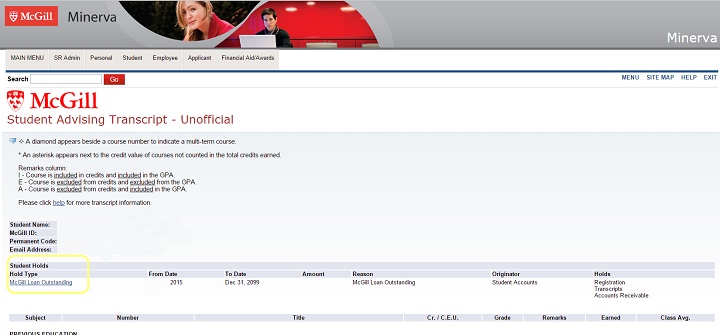
The beginning of the semester is often an exciting time to reconnect with friends, celebrate returning to Montreal, and begin new classes. Unfortunately, for some students, the beginning of this semester is full of uncertainty as they continue to wait for grades from the fall semester. Despite the school’s promise to return grades by Jan. 5, many students had not received feedback from professors by the first day of classes this semester. This recurrent problem shows that, in coming years, McGill must significantly improve course feedback processes and hold its professors more accountable for returning final grades.

While this may merely be annoying for some students, others rely on their grades from previous semesters to help determine what courses they choose in the semester to come. Similarly, many are required to receive passing grades in a prerequisite before moving on to subsequent courses. This systemic and recurring issue at McGill poses not only technical problems for students, but increases stress and anxiety in an already demanding time. 

The difficulties resulting from late Minerva updates are exacerbated over the summer break, where a delay in receiving feedback can mean that students have to wait months before conferring with professors about their progress in the class. Upon returning to classes the following fall, students may find that their professors are too busy to discuss the previous semester’s grades or that their understanding of the material has dwindled over the four months away from class, and decide that it is not worth reaching out. 

This shortcoming at the beginning of each semester is ultimately indicative of a larger problem at McGill. In many classes, professors give students little to no feedback throughout the semester. This results in significant uncertainty about which concepts students have mastered and which require more work. Given that a significant number of classes at McGill, particularly introductory classes, rely on midterms and finals as the only forms of assessment, professors may not be able to provide substantial feedback to students, who then may enter these tests with only a cursory knowledge of how to prioritize their time. 

Feedback processes at McGill consistently demonstrate that the school is focused on the superficial results portrayed by a grade rather than the actual enrichment and education of its students. Throughout their degrees, students are left with only a transcript in place of adequate advising, feedback, and support. This framework gives little consideration to how much information students actually retain or to the quality of the education and feedback. Despite these barriers, some professors strive to give students a higher quality of education, offering a plethora of resources to engage and receive additional help in the form of office hours, tutorials, and email. However, this level of support can be difficult to maintain in large lectures.

While it is clear that the responsibility to improve the quality of education and assessment lies within the hands of both students and professors, McGill needs to do significantly more to promote the success of their students and strive to educate them in a meaningful way. To get the most out of their education, students should actively seek opportunities for feedback. However, McGill must provide opportunities that support students’ success and improve grade reception. At the very least, the school must hold themselves accountable to the same standards as their students by returning grades by the date that was indicated, just as students must hand in assignments by the submission deadline.


Creative

Tribune Presents: Tshizimba & Boy 2 King

Montreal-based emcee and producer Tshizimba dropped by the Tribune’s office with Boy 2 King to show us some of his new music. His influences are rooted in Hip-Hop, Rap, Ambient, Punk and Chillwave, bringing a unique sound to the office.

Video by Aidan Martin and Sarah Ford

Read the latest issue

Read the latest issue