


Latest News

a, News, SSMU

Fall 2014 SSMU referendum period revisits building fee levy

Voting has begun for the Students’ Society of McGill University (SSMU) Special Fall Referendum. The questions under consideration pertain to the implementation of a University Centre Building Fee. The ballot comes as a move by the SSMU to gather the necessary funds to afford to continue its current level of operations under its new lease agreement with McGill, signed in Winter 2014.

The referendum is divided into two questions. The first asks whether students support the creation of a University Centre Building Fee.  According to the SSMU website, the fee is “payable and non-opt-outable on Minerva […] at $5.78 per full-time student per semester and $2.89 per part-time student per semester.” The second referendum question asks if the fee should be indexed to inflation yearly for the next seven years  to cover the rising costs of the SSMU building during the term of the lease.

The question is posed in response to the new lease agreement the SSMU signed with McGill and the $230,000 in back fees owed by SSMU to McGill for upkeep and electricity charges and keeping the building operational while the lease was being negotiated from 2011 to 2014.

This is not the first time SSMU has asked students to vote on the implementation of the University Building fee. In the Winter 2014 referendum period, a set of nearly identical questions were rejected by the student community, with 53.6 per cent of students voting “No” to the first question and 60.8 per cent voting “No” to the second.

According to SSMU President Courtney Ayukawa, although voting “Yes” on the proposed referendum would ultimately see a rise in fees for every undergraduate student attending McGill at the downtown campus, voting “No” would involve drastic reductions in the services that the building offers.

“A concrete change that will happen [is] starting Sept. 29, the building hours are set to drastically decrease,” Ayukawa said. “The building would close at 1 a.m. on Mondays through Fridays and wouldn’t be open on Saturdays or Sundays.”

According to Ayukawa, the establishments and services located within the premises that are run by SSMU, such as Gerts and Mini Courses, would also see price increases.

She stated that SSMU is re-running the question because she believes that students last year were not able to make an informed decision on the SSMU building fee levy. The lack of the formation of a “Yes” committee was a major criticism of SSMU’s dissemination of information for the Winter 2014 referendum questions.

“[There is] no mention of a moratorium [for referendum questions] in the SSMU constitution or bylaws,” Ayukawa said. “I think it’s important that SSMU re-asks the question. This time around, SSMU gave out a lot of information through its website and Facebook page and formed a ‘Yes’ committee […] and people have an opportunity to make a more informed decision. If this time around, students make an informed vote and it happens to be a ‘No’, SSMU will move forward and hopefully find another place for that money to come from.”

Students who share Ayukawa’s point of view do not see the harm in a small increase of fees associated  with the SSMU building. Isabelle Oke, U1 Arts, believes that since the building has such an important role in the student community and in the individual lives of many students, reducing its services in any way would be detrimental for students at McGill.

“The SSMU Building gives [students] so many opportunities, and a reduction in those or an increase in their [services’] prices would be much worse than a small fee everyone has to pay,” Oke said.

Not all the students agree with the “Yes” committee, however. Niketan Valapakam, U0 Management, said that as an international student, an additional fee would increase his cost of schooling, something some students already have trouble affording. He also voiced his concern that if this fee should pass, many more like it will end up on the ballot.

“I think that approving more and more fees could lead us down a dangerous road,” Valapakam said. “It always starts off small—with 5 dollars—but in the long run could end up costing students much more.”

a, Arts & Entertainment, Books

Edge of Eternity provides engrossing ending to historical trilogy

History has a bad rap for being a seemingly perfunctory field of study. As a history major, I certainly have gotten my fair share of skepticism when I profess my interest in our past. But history, more than almost any other subject, carries a certain humanity with it. It is the story of us, of how we got to where we are, with all the emotions, tragedies, and strange foibles that only real people can afford.

Few books tap into this feeling better than Ken Follett’s Edge of Eternity.

The third and final instalment of the renowned novelist’s Century Trilogy, Edge of Eternity follows four families from Russia, Germany, Britain, and the United States. It captures the early days of the Civil Rights movement, the collapse of the Berlin Wall, and everything in between.

The plot offers little in the way of added complexities or depth because it is essentially the Cold War retold. Rather, it is the characters and the different lenses through which they view the events that offer the crux of the drama. While the interwoven family trees are cumbersome at first, Follett does a good job reintroducing the characters and keeping them isolated enough that their arcs unfold at separate, brisk paces.

Readers familiar with the series will enjoy some satisfying moments of closure from the first generation of characters, long forgotten and living out the last days of their lives. That is not to say new readers will not enjoy Edge of Eternity without having read the previous instalments; but there is simply a level  of familiarity that goes with following these five families for three generations.

The book’s predecessor, Winter of the World, focused less on the history than on the love lives of the characters. While this worked well in the first instalment, Fall of Giants, for the second book, it occasionally descended the piece into the trappings of a cheap soap opera. Fortunately, it is a trapping that Edge of Eternity deftly avoids. While melodrama is still present—and those infuriated by love triangles in fiction may find themselves gnawing their teeth at times—Edge of Eternity chooses to focus on the politics of the era and the men and women that shaped it. Historical figures such as Robert Kennedy and Nikita Khrushchev are deeply explored, and Follett’s painstaking attention to detail gives the read an air of engrossing realism even in its more outlandish moments.

This is not to say that the book is perfect—while it isn’t as overbearing as its predecessor, what little romantic plot points do remain are grating at times, with seemingly every main character getting a clear soulmate to play “will they, won’t they” with. Additionally, while most characters are interestingly fleshed out, antagonists appear somewhat more one-dimensional by the standards of the rest of the narrative, particularly a German Stazi officer whose main characterizing feature is ‘petty jerk.’

Despite these shortcomings, Edge of Eternity is an engrossing read. Follet’s manages to switch seamlessly from character to character, making this decades spanning story feel absolutely epic.

Edge of Eternity was released in Canada by Penguin Books on September 16, 2014.

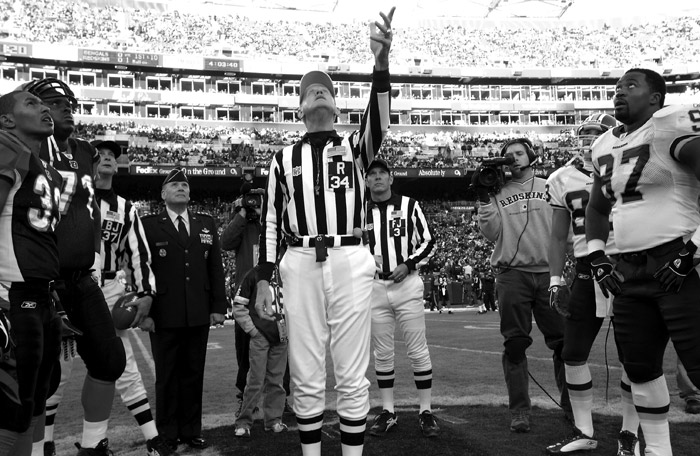
NFL Coin toss
a, Football, Sports

Changing the game: NFL overtime rules

Two minutes to save the world

One of the most exciting sequences in any football game is the fabled “two-minute drill.” Offences open up when they are up against the clock; more risks are taken, the pace is faster, and the crowd is on its feet. Whichever team starts on offence will receive the ball on the 20 yard line and will have, you guessed it, two minutes to score. After the initial team scores, squanders possession, or exhausts their alloted time, the opposing team gets a chance at redemption. This would then continue for two minutes at a time until one team emerges victorious.

Additionally, each team will be required to attempt a two-point conversion after each touchdown scored. This is because the rate at which placekickers convert the standard one-point conversion is preposterously high and adds little surprise to the game.

This proposed solution has the potential to add a new dimension to professional football that would be different than the college game. Rather than borrowing completely from the NCAA, this finds a somewhat happy—or entirely absurd—medium that promises to keep fans on the edge of their seats.

– Mayaz Alam

Luck schmuck

I see no reason to change the current overtime rules in the regular season. They allow for the game to end quickly, which reduces the chance for a game to drag on and lose some of its excitement. It also adds an element of pressure and luck that can spice up even the most boring regular season games. Also, with the principle of regression towards the mean at work over the course of a sixteen-game regular season, the current rules aren’t going to have significant playoff implications for any team involved in an overtime match.

In the playoffs, the teams should have extra time, as they do in soccer, and play until one team comes out with more points at the end of the game. The post-season is a knockout tournament, and the fans want to see the best team of the day win–not the team that wins the coin toss. The importance of minimizing the effect of luck is magnified in the playoff setting, as there are no second chances.

– Zikomo Smith

Play on

The current NFL overtime rules are worse than those in any other professional sport. Before the 2010 rule change, the sudden death format put an inordinate amount of importance on the coin toss. It kept superstar players like Peyton Manning on the sidelines, with as much ability to affect a game’s outcome as someone sitting at home yelling at the television would have. Unfortunately, the current format isn’t much better. Requiring both teams to possess the ball is a great change, but the touchdown exception makes the rule little more than a half-measure, and thus practically ineffective. The current system can be compared to playing extra innings in baseball, but not allowing the home team to bat if the visitors hit a grand slam in the top of the 10th inning.

The most entertaining alternative for fans would be to play a full fifth quarter and accept a tie in the regular season if the score is still level at the end, as is done in soccer. Sudden death can work in a sport like hockey, where the possession is free-flowing and both teams have the opportunity to make plays, but the format of football is fundamentally different and the overtime rules should reflect that.

– Nick Jasinski       

I love college

When the NFL switched its overtime rules, its aim was to eliminate the issue of coin tosses determining winners. This clearly has not been the case, and it is because of the provision that a touchdown can win a game on the first possession, leaving one team’s offence on the sidelines. To remove the importance of the coin toss entirely, the NFL needs to adopt a similar system to that of college football. In this version of overtime, each team gets one possession and the game plays out like a shootout of sorts. The first team on offence starts with the ball on the 25-yard line, and their possession ends when they score, turn the ball over, or miss a field goal. The second team then has to match or do better. If they score the same number of points, a second round of possessions ensues–and so on and so forth–and if one team has scored more, that team is crowned the winner.

This removes the importance of the coin toss, as it is now only used to determine who gets to go on offence first. Another improvement would be to have possessions begin on the 40-yard line rather than on the 25. This would make scoring easier, and hopefully add a little bit of extra excitement to overtime.

– Wyatt Fine-Gagné


a, Research Briefs, Science & Technology

Research Briefs — Sept. 30

Face the truth: Mites found on human skin

Microscopic eight-legged creatures make their homes in the faces of all people, a study recently published in PLOS ONE has shown. The Demodex mites are a group of hair follicle and sweat gland-dwelling species. Two different species of these mites reside on the face. The first, Demodex brevis, burrows into the sweat gland. The second, Demodex folliculorum, resides on the follicle above the gland.

Thought to have been present in only a small portion of the population, the mites have now been shown to be almost completely ubiquitous. Researcher Megan Thoemmes, from North Carolina State University, found that 100 per cent of 253 people over the age of 18 had Demodex DNA on their faces. By using DNA collected from the sweat of facial samples, the team was able to get a more accurate reading of mite presence, as opposed to that of classical mite-counting techniques.

These mites can be used as a way to trace the migration of humans. The team used the 18 rRNA gene as a marker for differing gene structure, to trace the evolution of the mite. Using its phylogeny to find common ancestors, the researchers can see when the mites were transmitted to humans, and when certain species where introduced to differing demographics.

Study on over 100 billion animals show GMOS are safe

Heard over the noise of alarming headlines from anti-GMO crusaders was a study conducted by geneticist Alison Van Eenennaam and her assistant Amy E. Young from the University of California-Davis Department of Animal Science. The two reviewed 29 years of livestock productivity and health data to show that overall, there is no difference in genetically-modified feed versus regular.

Globally, food-producing animals consume 70 to 90 per cent of genetically engineered (GE) crop. Starting from 1983—before the introduction of GE crops in 1996—through 2011, the data shows that trends in livestock health never fluctuated. While no previous studies have shown any real correlation between GE food consumption and overall well-being, it is the sheer magnitude of the study that is so impressive.

Because the body digests DNA and protein, which are the components that are usually modified in GE foods, there are never any detectable traces of GE components in milk, meat, and eggs after the consumption of the GE food. The same concept applies to humans—there are no risks involved in the consumption of GM food.

Chinese scientists are designing  a collider so massive it could encircle Manhattan

When thinking of atoms, particles, and physics, most people think of the LHC-CERN— the Large Hadron Collider located outside Geneva. However, Chinese scientists based out of Beijing are planning on changing that. The new laboratory, which will focus on cutting-edge particle physics, will be so large that it could encircle the island of Manhattan.

The project, called the Circular Electron Positron Collider (CEPC), is the shining symbol of China’s growth as a scientific hub. The collider’s purpose is easily discernible from the name. Electrons are collided with their anti-matter counterparts at higher and higher speeds. The experiment hopes to recreate the Big Bang—the start of the universe.

The group will be addressing questions regarding matter, energy, the Higgs Boson, and the space-time continuum. The larger size of this new collider allows for higher energy levels to be attained.

This centre will also act as a campus, attracting scientists to China from various specializations abroad. This will increase competition with the U.S., which has so far released very few plans for furthering research in fundamental physics.

Montreal Canadiens intra-squad scrimmage
a, Hockey, Sports

From the cheap seats: Canadiens red vs. white scrimmage

I’m a die-hard Ottawa Senators supporter, but any hockey fan would jump at the opportunity to watch a game at the Bell Centre, home of the Montreal Canadiens. (more…)

a, Opinion

Commentary: Is McGill really too Liberal?

There is a popular narrative among certain students—often conservatives—that universities are no longer the bastions of free speech they once were.

(more…)

a, Student Life

Campus Spotlight: Astronomy Club

Whether you come from a small mountain town in southern France or the concrete jungle of New York City, there’s something to be said about the enchantment of the open sky. The McGill Students’ Astronomy Club, which was started in August 2012 by a few graduate students in the physics department, offers a welcoming environment for members to explore areas of amateur astronomy.

“I joined the club out of pure interest really,” said Jerry Kurian, a master’s student in chemistry. “The universe […] is one of the most interesting things to learn about. There is an insane amount we do not know, and the scale, objects, and materials of the universe blow me away. Thinking about how minuscule we really are is quite a humbling experience.”

Hosting four main types of events throughout the year, the club offers something for everyone—whether you are a physics major who wants an outlet to delve deeper into astrophysics or an Arts student with an appreciation for stargazing. For the more science-oriented individuals, there are “astrotalks,” which are presentations delivered by both students and professors that feature a range of astronomy related topics.

The Astronomy Club also hosts observation nights on the McGill campus. With the aid of an advanced telescope, members are able to examine stars and constellations on a clear, dark night.

The third category of events allows students to observe the sky in a more secluded environment by going on stargazing trips that take place outside of the city.

“We go out to Saint Bernard de Lacolle or Mont Mégantic,” explained Astronomy Club President and U3 physics student, Dhruv Bisaria. “Those are dark sky reserves where you get even better observation quality, so you can get a much better picture of the stars and bring more students there.”

The stargazing trips allow students to witness the night skies first-hand.

“I would tell students that if [they] have any interests in astronomy at all, they should definitely come out to the star gazing event,” Kurian said. “It’s one thing to read about the different galaxies, planets, and stars nearby and be amazed at their different properties, but it’s a completely different experience to actually be there and witness these objects with your own eyes.”

Other events are grouped into a fourth miscellaneous category, which include trips to the planetarium. Bailey Sadowsky, a U2 civil engineering student and the club’s VP Events, is proud of the reputation the Astronomy Club has established.

“I just feel like we’re a club that you can rely on,” Sadowsky said. “You can always look forward to coming and doing something new every week. We’re not going to have the same presentation, the same talk, or even the same trip frequently. It’s always going to be something different.”

In addition to these events, the Astronomy Club also plans social gatherings such as bowling trips, trivia, and game nights. The members’ common interest of astronomy is only a starting point from which many bonds form.

“I feel like it’s important to keep that aspect of a community going,” Bisaria said. “I think we engender that type of community where everyone’s nice [….] We’re an amicable bunch.”

Anyone can join the Astronomy Club at any time. The beauty of astrology is that it’s accessible to everyone, no matter their background.“Where I grew up, when you look into the sky, there are so many city lights that you can’t actually see the stars,” said Lilly Gates, U0 Arts & Science. “But occasionally, when [we] would go to the suburbs, my dad would always point out the constellations and it would almost feel magical being able to see them. Now that I’ve heard about this club, I think it would be fun to experience that magic as a part of a group in the wonderful city of Montreal.”

a, Arts & Entertainment, Music

Album Review: Odesza – In Return

Having made names for themselves in their local electronic music scene, Seattle-based Catacombkid (aka Harrison Mills) and BeachesBeaches (aka Clayton Knight) brought their individual talents together to create ODESZA in 2012. Since then, the partnership has flourished, as demonstrated by the duo’s dynamic sophomore album, In Return.

The record is a consistent stream of pop-infused electronic bliss.  The characteristic glitched-out vocals and atmospheric soundscapes have carried over from the duo’s earlier sound, but In Return also showcases the sonic development ODESZA has undergone. Their songs are never overwhelmingly complex; instead, each track has a subtlety that allows you to discover different nuances with each listen.

Influences from all over the musical spectrum can be found throughout the record. Particularly notable is the clear world-music tinge, including recurring African percussion beats and Asian-inspired woodwind and string sounds. 

Unlike its first album, ODESZA’s second album features collaborations a number of vocalists for In Return to develop fuller, more user-friendly songs. The vocal focus means that the tracks have become less beat-oriented. With performances from Zyra, Py, Shy Girls, and Madelyn Grant, to name a few, this album is successfully attempting to cross over the mainstream bridge.

Cinematic and dark, yet still somehow uplifting, “It’s Only,” featuring Zyra, is one of the standout tracks. The dreamy vocals somehow lend themselves perfectly to the jungle-vibes of the song’s percussion. “Say My Name,” another Zyra collaboration, is a second highlight. More upbeat, this tune is driven by the drums and bass line. It’s hard to listen to without dancing along at least a little bit.

Electronic music looms large in today’s cultural scene, but despite this influx, In Return still manages to present a refreshing listening experience.

a, Arts & Entertainment, Music

Deep Cuts: Forgotten gems from one-hit wonders

Lawyers, Guns, and Money

Artist: Warren Zevon

Album: Excitable Boy

Released: January 18, 1978

Though you probably don’t know who Warren Zevon was, you’ve probably heard “Werewolves of London” before—though it’s likely more often associated with Halloween or being one of the samples on Kid Rock’s “All Summer Long” than it is with Zevon. “Lawyers, Guns, and Money” is off Excitable Boy, which ended up being Zevon’s most successful album. Zevon was known for his dark, humorous and occasionally ridiculous lyricism, and that’s certainly at play in this song. The instrumentation isn’t particularly unique—a couple guitars, drums, and bass—but Zevon’s words make him special. As a musician he may not be unique, but as a songwriter there’s no one else like him.

Mexican Wine

Artist: Fountains of Wayne

Album: Welcome Interstate Managers

Released: June 10, 2003

It took me a long time to accept that Fountains of Wayne was going to end up being a one-hit wonder. Its catalogue is filled with great songs, but “Stacy’s Mom” is the only one by the four-piece power-pop group to ever get mainstream recognition. Welcome Interstate Managers is jam-packed with catchy riffs and quirky imagined characters in its songs. I still go back to listen to it now and then, and when I do, it’s “Mexican Wine” that stands out for me. It’s fun, slightly bittersweet, and, perhaps most importantly, very satisfying pop music.

https://www.youtube.com/watch?v=RTYASJQNtA0&feature=youtu.be

Tiny Little Bows

Artist: Carly Rae Jepsen

Album: Kiss

Released: September 14, 2012

The sheer magnitude of “Call Me Maybe” meant that any other Jepsen track would likely be a disappointment—and this ended up being the case. Her album Kiss did sell fairly well, but it was largely on the back of that one megahit. “Tiny Little Bows,” the album’s opening track, is solid candy pop built on layered synths and a funky, slapped bass part. The sample of Sam Cooke’s “Cupid” also adds a nice touch. Though the lyricism is not all that strong—rarely deviating from the structure used in the first verse and chorus—it’s hard to get the words out of your head once they’re caught there.

White Houses

Artist: Vanessa Carlton

Album: Harmonium

Released: October 21, 2004

Like Jepsen, Vanessa Carlton’s rise was due largely to a single massively popular song that ultimately overshadowed any of her later releases. “White Houses” was the only single off of her second album, Harmonium, that was considered a commercial failure. Musically, “White Houses” follows a similar formula to her hit “A Thousand Miles”—piano laying the foundation with strings swelling and drums pushing things along. But in “White Houses,” Carlton is reflecting on mistakes, not yearning for love. While her sophomore album may have been a disappointment, this song remains a bright spot.

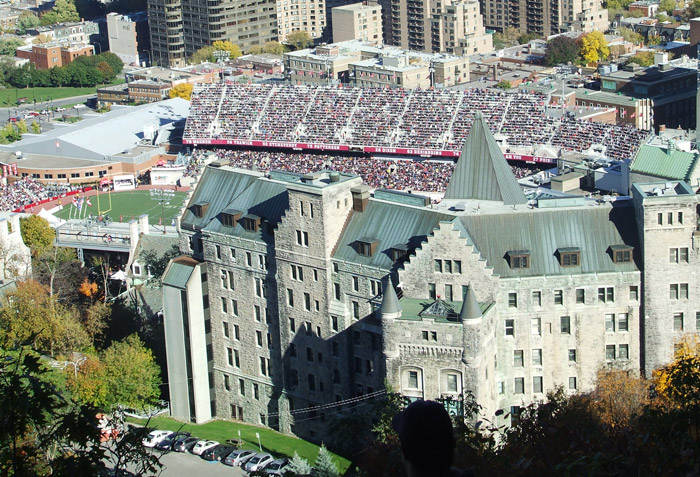
Picture of Molson Stadium
a, Off the Board, Opinion

Off the board: Changing the conversation on athletic hazing

Recent events surrounding the McGill Redmen football team have prompted a renewed conversation about the values, rules, and processes that govern athletics at this school.
(more…)

Read the latest issue

Read the latest issue