

Latest News

McGill, News

McGill Senate presents COVID-19 reports, discusses accommodations and long-term planning

During a remote meeting on Feb. 16, the McGill Senate discussed a report on pandemic-associated accommodations for students. Other presentation points included the annual report of the Ombudsperson for Students, and the annual report on Enrolment and Strategic Enrolment Management. 

Principal and vice-chancellor Suzanne Fortier presented the opening remarks, noting that McGill is monitoring the current COVID-19 situation in Quebec and following the government’s proposed reopening plans. 

“We will, of course, inform our community on how these various stages of lifting restrictions affect our own university and campuses,” Fortier said. “We have not been informed of any significant outbreaks in our classrooms or in our research activities.”

The majority of the meeting, however, focussed on the report presented by the Ad Hoc COVID-19 planning committee, also known as the Ad Hoc Committee on COVID Academic Planning and Policies, led by Christopher Buddle and Associate Provost (Equity & Academic Policies) Angela Campbell. Associate Provost (Teaching and Academic Programs) Christopher Buddle summarized the report, which addressed student accommodations like the 24-hour period final examination windows and hybrid learning options. The report reaffirmed that professors do not need to implement mandatory lecture recordings.

Some senators were against adopting more academic changes, beyond those already implemented, before the end of the term. Senator Anja Geitman felt that students should be encouraged to return to campus first, then should decide after whether or not they feel comfortable with the increasing activities on campus.

Senators then discussed the accommodations that had already been put in place in response to the pandemic, and whether the Senate ought to consider them for long-term implementation. The proposition of mandating lecture recordings for all professors was again mentioned by several senators, including group 5 rapporteur, but some raised concern that students would somehow take advantage of the opportunity. 

“Lecture recordings were discussed, not in the idea that they should be mandatory, but just discussing their values and drawbacks,” a rapporteur from group five said. “Though they have values, there are also certain risks sometimes [that] students may ‘free ride.’”

Toward the end, the Satisfactory/Unsatisfactory (S/U) option for the current semester was floated amidst the discussion of long-term academic adjustments. Although some Senators, like Derek Nystrom, were in support, many, including Senator Gillian Nycum were not.

“Following the decision to increase S/U flexibility during the Fall 2020 term and Winter 2021 term, we had a lot of negative feedback,” Nycum said. “[The option] created a lot of confusion around things like GPA calculations, scholarships, admissions to graduate programs [….] We had many, many angry students.”

Although ideas were introduced and deliberated, the Senate ultimately came to no consensus regarding how to proceed with the information from the COVID committee’s report. The only approved motions of the meeting came for the appointment of new members to certain Senate standing committees. 

Moment of the meeting: 

Professor Patricia Hewlin, Ombudsperson for students, presented her annual report, detailing the diverse reasons that students reach out to her with complaints. She noted that the majority of the complaints were academic, a category in which requests for support increased by 45 per cent between 2019-2020 and 2020-2021. Hewlin further critiqued the existing power dynamics between students and their institutions, noting that many of the requests she received did not progress past her office.

Soundbite: 

“Mental health and sensitivity was mentioned, [particularly] how to notice when something is wrong with a student, and how it is impacting [their] academic performance. Professors need tools and training to identify this kind of issue,” — Senator Momar Ndao, Faculty of Medicine and Health Sciences, on how to improve students’ mental well-being in classrooms.


Features

Oh, the humanities

It is a truth universally acknowledged, that every single employer in possession of a good fortune, must be in want of a humanities graduate. The humanities graduate was spiteful. It was the best of times, it was the worst of times. How do I turn from my degree and live? For students of the humanities, all this happened, more or less.

Any student of the humanities understands the power of stories: How they unite us, how they diffuse past borders, how they free us. For example, the story that I jokingly tell myself and others about my English literature major is that it acts as a way of combating thoughts that I am an interventionist. Unfortunately, not everyone believes that understanding stories is still necessary––or relevant. 

The humanities have a long, if not fraught, history. Part of it might be its softness or subjectivity. Unlike science’s hard empiricism, humanities take on critical, historical, and oft-conflicting lenses in their quest for truth. In ancient Greece, there was the concept of paideia, a broad-ranging system of education meant to guide men to becoming good, active citizens. Later on in western Europe during the Middle Ages, the Catholic Church took a decisive role in creating strong programs of liberal education. By the late 12th century, the university was born in Bologna and Paris, where instructors typically emphasized teaching theology––quite literally the interpretation of texts. More recently, some universities have touted Great Books programs and Western Civilization courses with the aim of making students read “our” civilization’s venerated works––though these reading lists skew European and Anglophone and propagate Eurocentrism. Perhaps the greatest modern manifestation of the humanities is the liberal arts college. Though they are more of an American phenomenon, north of the border, small, boutique universities like University of King’s College, Bishop’s University, Mount Allison University, and Acadia University stress a liberal arts curriculum. Carleton University’s Great Books program, Western University’s School for Advanced Studies in the Arts and Humanities (SASAH), and McGill’s own Liberal Arts major show that even large research universities can incorporate humanistic content. 

What is essential about the humanities is that these fields take a normative approach to answering abstract questions about the good and how we should live, whereas the sciences focus foremost on gathering empirical information. These approaches do not need to be mutually exclusive, however. The rise of the medical humanities and environmental humanities––fields which assess human impacts in medicine and climate change––shows that humanistic approaches to the sciences can have positive concrete effects on practice and knowledge creation. In social sciences, there has been a turn to the affective, where scholars focus on emotions in politics and society, and the rise of qualitative methods like narrative counter-storytelling used to magnify the experiences of marginalized communities. These approaches to humanistic inquiry challenge the “hard,” positivist science turn that has taken over some social sciences.

The interaction between the two different communities of sciences and humanities fascinates Victor Wang, a U2 Arts student studying computer science and English literature.

“I get to find really lovely connections and intersections between these two disciplines, the disciplines of computer science, or the skill of programming, along with the skills of reading and writing within English literature,” Wang said. “It may be different to finish, like the coding project versus finishing an essay. One really nice thing to know, as well, is how similar these students’ work and struggles are as well.”

My journey to studying English literature is decidedly not unique––I love to read and write, I love how politics and art intersect, I want to change the world. But I’ll confess that these clear-cut signs alone still did not stop me from starting my degree in management. As a convert to the humanities, I’m especially grateful to finally study my passions. It was not an easy choice. I still grapple with what literature does, what humanities offers, and what theory means, beyond the academy. We live in a profoundly unequal world. The ability to face the pressure to get a job after choosing a pathway of study typically known for its unemployability reflects my own class privilege. Having had the privilege to study the humanities, I want to be able to do something substantial with them. Studying the humanities only to be a passive agent in the face of injustice is a fundamental contradiction that needs to be addressed, unpacked, and dismantled at all times.

Resisting the cultural pressures to study something more “useful” is something that Thai Judiesch, a U3 Arts student in the English cultural studies stream and Gender, Sexuality, and Feminist Studies (GSFS), takes seriously. To Judiesch, the humanities open up discourse on our social context and lived experiences.

“Humanities articulate something differently which tries to get at the unanswerable questions of the world,” Judiesch said. “And I think that there was something in that level of mystery that felt more intriguing to me [….] I stand pretty firm. I don’t get really wavered.”

After starting at the individual level—through, usually, closeness with a text—humanities students and scholars have to go out into the world. In the wider community, humanities offer opportunities for collaboration and can encompass making, creating, and doing interdisciplinary work. Michelle Hartman, a professor of Arabic literature at the Institute for Islamic Studies and an acclaimed literary translator, emphasized the rewarding outcomes of interdisciplinary scholarship. Hartman, who has collaborated with education scholar Rosalind Hampton and Black disability studies pioneer Therí Pickens, brought together methods from Black Studies and critical Arab American studies in her most recent book, //Breaking Broken English: Black-Arab Literary Solidarities and the Politics of Language//.

Science & Technology

Student Research: Emma Dawson-Glass on pollination and plant ranges

When Emma Dawson-Glass, BSc ‘20, was completing her Honours degree in environmental science,  she confronted the age-old question: What would be the subject of her undergraduate thesis?

An unexpected encounter with professor Anna Hargreaves of McGill’s Department of Biology turned out to be the answer Dawson-Glass was looking for. At the time, Hargreaves was studying how the distribution of plant species changed geographically depending on pollen limitation—the limited availability of pollen due to a lack of pollinators or poor-quality supply. Dawson-Glass was fascinated by Hargreaves’ research, and it just so happened that Hargreaves was in need of a student to assist her.

Over the next three years, Dawson-Glass and Hargreaves would conduct one of the largest meta-analyses in the world, using data collected by several other researchers to measure the effects of pollen limitation across nearly every corner of the planet. In January 2022, the study was published in the journal Philosophical Transactions of the Royal Society B. Their results were surprising to many in the biology and ecology communities.

Previous assumptions held that pollen limitation should increase toward the edges of a geographic range. Intuitively, this makes sense—where a field or forest approaches a road or city, one would expect to find fewer plants and animals, and thus to see less pollination occurring. Instead, Dawson-Glass and Hargreaves discovered no significant link between the location of plants in a range and pollen limitation. 

The results of the study indicate that the lack of access to pollen is not the only factor limiting plant growth toward the edges of geographical ranges. Instead, pollen is part of a complex web of factors that influence rates of reproduction. 

In other words, lack of pollen is not the main contributor to dwindling concentrations of plant species—other factors are likely at play. For Dawson-Glass, the opportunity to run this study was an exciting way to learn about an important topic often overlooked by ecologists.

“[Pollen limitation] directly impacts plants’ ability to reproduce [….] It’s also cool because it’s a mutualistic relationship,” Dawson-Glass said. “A lot of studies focussed on what impacts plants have [looked at] abiotic factors, like […] temperature, […] but there’s been less focus on the biotic factors.”

Understanding the relationship between plant reproduction and the activities of other organisms gives scientists a more holistic view of an ecosystem. It also enables them to better understand how changes in climate or topography may impact the health of various species.

Going forward, Dawson-Glass is eager to see the research on pollen limitation develop.

“Since our study is a meta-analysis, we’re using data from other studies that were not specifically designed to test the question that we’re asking,” she said. “It would be cool to try to do experiments specifically tailored to test how pollen limitation might change throughout a plant range.”

Dawson-Glass is also interested in learning more about specific latitudinal tests for analyzing pollen limitation. Biological theory holds that biotic interactions become more important closer to the equator and less important around the poles, where abiotic factors like weather play a larger role in ecological dynamics. Testing whether this theory applies to pollen limitation would add to the field’s understanding of how plants interact with their environments. 

Since graduating, Dawson-Glass has gone on to continue her research and work with plants at the Holden Arboretum in Cleveland, Ohio, as a research specialist in community ecology

(Holdenfg.org)
Editorial, Opinion

The cancellation of the Dawson expansion cuts deeper divides

On Jan. 28, the Coalition Avenir Quebec (CAQ) government announced its decision to pull the $100-million grant dedicated to funding the expansion of Dawson College. Under the leadership of former Premier Philippe Couillard, the Quebec Liberal Party initially approved the project in 2018 to address the college’s overcrowded campus. Plans included the construction of a new pavilion, which would have created an additional 11,000 square metres for health profession programs, such as the college’s nursing, radiation oncology, and physiotherapy programs. Defending the call to cancel the project, Premier François Legault argued that French CEGEPs should be given priority in infrastructure projects, citing his plans to increase their capacity by 22,000 seats by 2029. But the legitimacy of such a decision is questionable when it uses education as a political playground to further political ends, fuel the language divide, and deepen inequalities.

Many have accused the Minister of Higher Education, Danielle McCann, of discriminating against anglophone students by prioritizing French-speaking colleges in expansion plans. Although it is good public policy to invest in francophone colleges, the means of improving their situation do not have to come at the cost of pulling resources from anglophone ones. Teachers, parents, and students from the anglophone community believe that the decision to cancel Dawson’s expansion renders them second-class citizens who are on the backburner of government plans. Indeed, in cancelling the expansion, Dawson, one of the largest CEGEPs in Quebec, will not have the minimum equipment necessary to ensure their students’ success. 

While the decision could be seen as an earnest part of the CAQ’s ongoing effort to protect French culture in Quebec, it necessarily infringes upon the opportunities of non-French speakers—and French speakers who wish to learn English. This misguided effort at preservation follows a marked pattern: Take, for example, the government’s choice to cap the number of places in English-speaking colleges until 2029 and pass secularizing bills like Bill 21 that seek to consolidate a monolithic Quebec identity.

In reality, however, fanning the flames of a language divide between francophones and anglophones is not the solution the CAQ thinks it is. For instance, several former Dawson students from the francophone community recently highlighted that attending an English-speaking college will not make them any less French. The barriers to attending English-speaking colleges could even risk encouraging the outward migration of French speakers who want to pursue higher education in English or sharpen their language skills for future multilingual careers. The CAQ must understand that providing resources to both French and English colleges does not pose a threat to Quebec society––the province will be better off if it equips students with the best tools for their futures.

A major critique of the decision to cancel Dawson’s expansion is the increasingly partisan nature of public policy, which often leaves disadvantaged youth falling through the cracks. The limited number of spots in English-speaking colleges heightens the risk of anglophone students underachieving if they are forced to attend French-speaking colleges where the language barrier makes it impossible to keep up. If the government fails to address this inequality in access to fair education, then social and economic disparities are bound to emerge between French and non-French speakers in the future.  

The CAQ should not be using education as a pawn of partisan politics in public policy, especially under the toil of the pandemic. It must commit to providing better education for all students, rather positioning education funding as a zero-sum game. Instead of fearing English assimilation, the CAQ should look to encourage ties between both language communities to protect the French language. If the anglophone community feels more accommodated than ostracized, then the government will be able to garner broader support for the preservation of Franco-Quebec culture. Amid the pandemic, it is not the time to play games with the budget—Legault must be a unifying force against language divides and distribute funds where they are desperately needed, French and English alike.

Know Your Athlete, Sports

Know Your Athlete: Caiden Daley

After being drafted 22nd overall to the Brandon Wheat Kings in 2015, Caiden Daley, a forward for the McGill men’s hockey team, was forced to choose between starting a professional career in the Western Hockey League (WHL) or playing NCAA DI hockey at the University of North Dakota. His decision to stay close to his hometown of Winnipeg, Manitoba and play with the Wheat Kings kicked off an impressive five-year career in the WHL. 

From the get-go, Daley played a key role right on the Wheat Kings, starting in 60 of 72 games in only his second season. Prior to his final season in the WHL, Daley was traded to the Regina Pats in 2019, then the Saskatoon Blades in 2020, where he rounded out his WHL career. With the Blades, Daley took part in the 2021 shortened season WHL bubble, where he was a centrepiece in the team’s third-place finish in the Eastern Division. Not only was he an assistant captain, but Daley was indispensable as the team’s designated “snack guy.” 

As the bubble came to an end last spring, Daley decided that he was ready to move on from playing out West. 

“I wanted to try something new and experience a new culture,” Daley said in an interview with The McGill Tribune. “That was what drove me to make the decision [to come to McGill], to try a new thing and get out of my comfort zone. [McGill] gave me a lot of time to just decide what I really wanted to do and sit back and focus on myself [….] It’s been awesome, and the city is amazing.”

In his first eight games with the Redbirds, Daley, a U0 Arts student, has already begun to establish himself as a powerful forward, working to model his game after Evgeni Malkin of the Pittsburgh Penguins. 

Growing up as a multi-sport athlete, Daley’s success in hockey eventually overruled his passion for basketball and football. But in choosing hockey, a predominantly white sport, Daley often found himself to be the only person of colour in the rink. 

“My parents did a really good job of teaching me,” Daley said. “There’s not a lot of Black athletes in hockey but I just didn’t really focus on that at all. I just wanted to go out there, have fun and enjoy myself. And that’s just kind of what I did in every aspect of the game, off the ice and on the ice.” 

Daley added that in the context of team dynamics, his role has transformed from mentee to mentor as he has gotten older. 

“I’ve tried to be a good role model for people in my community and young Black athletes in hockey,” Daley said. “That’s just something that I’ve always strived for.”

Following the last two years and the “racial awakening” that has consumed the sports world, Daley presented himself to his coaches and teammates as a person they could talk to. 

“I told my coaches, if you guys want to talk about that stuff, ask me questions,” Daley said. “I think people sometimes are scared and end up tiptoeing around talking about [race]. To talk about what’s acceptable, what’s right, and what’s wrong is only going to help the world and the sport get better.”
If Daley’s not at the rink, you can find him on the links golfing with his dad, or in the kitchen pursuing his journey to be the next Chopped star. As a U0 student, Daley has an abundance of open doors at his disposal. What’s for certain, however, is that his love for hockey will surely be a part of his life for the foreseeable future.

Science & Technology

From tusked to tuskless in one generation

During the Mozambican civil war, which spanned 15 years from 1977 to 1992, armed forces poached African elephants to sell their tusks and continue to fund their respective war machines. This caused a drastic reduction in the elephant population by the time the conflict began to subside. As much as 90 per cent of the elephant population was decimated in some areas, including the Gorongosa National Park.

When the conflict ended, elephant populations began to slowly replenish, but a nonprofit called ElephantVoices noticed that there was something different about these animals compared to those in pre-civil war Mozambique. A large fraction of the female elephants were birthing calves without the tusks that had been so sought after during the conflict. The growing population of tuskless elephants was attributed to the selective pressure caused by poaching in that area. The tuskless elephants tended to fare better, as they were missing the ivory that made other elephants walking targets.

Tuskless elephants are one fascinating example of a phenomenon termed “rapid evolution” which was the focus of a recent paper led by Sarah Sanderson, a PhD candidate in McGill’s biology department, and Kiyoko Gotanda, an assistant professor at Brock University. The paper is part of an ongoing study of rapid evolution that began over two decades ago, when this phenomenon first started to gain the scientific community’s attention.

Andrew Hendry, a researcher on the paper and a biology professor at McGill, was one of the first people to calculate the rates of change in populations and combine them into a database

“My involvement goes back 25 years,” Hendry said in an interview with The McGill Tribune. “Back when I was a graduate student, we started to see people talking about rapid evolution [….] We’ve had several expansions of this database since the most recent one.”

The project has been a huge undertaking and one that Sanderson has been involved with since her work as a master’s student at McGill over four years ago. Aiming to conglomerate previous research into a massive dataset on rapidly changing traits from organisms around the world, much of Sanderson’s work involves filling in the gaps left by previous iterations of the database.

“I got interested in how these human disturbances are affecting rates of change in natural populations. With a bunch of other students we worked hard to fill in a bunch of gaps and add [new] data to the database, and that took a few years,” Sanderson said in an interview with the Tribune.  

The dataset combined examples of rapid evolution with immediate environmental responses, as the two are often hard to distinguish. This means that some of the behaviours studied are not examples of true evolution, but rather single generational responses to environmental changes. Regardless of whether these responses are evolutionary or plastic in nature, their impact is felt throughout the local ecology.

An example of rapid evolution featured in the paper that is especially relevant to Canada is a slow decline in salmon body mass. Although it is a challenge to pinpoint any single environmental factor as being responsible for the decrease, the effects are felt throughout the salmon’s ecosystem and also by the Indigenous peoples along the Yukon River who rely on it as a food source.

The project is ambitious and will lead to a deeper understanding of how species react to changes in the environment, with human-driven changes being the main factor currently. Both Sanderson and Hendry hope that their work will benefit conservation biologists by giving them a launchpad for future investigative studies.

Formula One, Sports

Pole position in disappointment: Exploring Formula One’s hollow attempts at diversity and inclusion

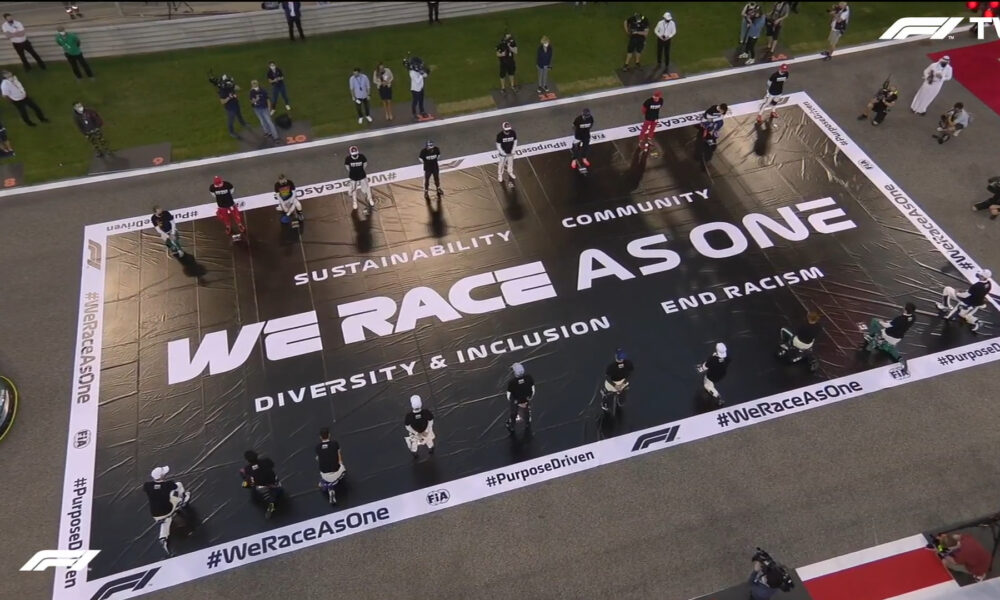
On the eve of their 2020 season, Formula One (F1) released its #WeRaceAsOne initiative in tandem with the #PurposeDriven movement launched by the Fédération Internationale de l’Automobile (FIA). Cited as both a response to the COVID-19 pandemic as well as the Black Lives Matter protests, the initiative aimed to harness F1’s international reach to address what the FIA called the world’s two current major problems: COVID-19 and inequality. While F1 officials have stated that this initiative will be an ongoing process, the main goals seem to have been lost since the end of the 2020 season. 

In the original announcement detailing the #WeRaceAsOne initiative, F1 declared that they would accessorize cars and parts of race circuits with rainbows. The stated meaning of the rainbow was to represent unity across communities during the COVID-19 pandemic, rather than its common association with the queer community. However, prior to the 2021 season, they announced that this element would be dropped

The other key element of #WeRaceAsOne was for drivers to take a knee prior to national anthems preceding races. The action originated with American football player Colin Kaepernick, who took a knee during the national anthem as an act of protest against police brutality and systemic racism in the United States. When the action was first introduced at the 2020 Austrian Grand Prix, 14 of 20 drivers took a knee, but by the first race of the 2021 season, half of the F1 drivers remained standing. Last week, F1 announced that the 2022 season will no longer have a scheduled moment for the gesture.

The current CEO of the Formula One Group, Stefano Domenicali, stated in a recent interview with SkyNews that it was time to “move on” and start taking concrete action instead of focussing on gestures. As it stands, however, the only action taken in this vein has been an extension of the previously existing engineering scholarship program for marginalized students until 2025.

While there has been some effort made toward creating a more inclusive space in the sport, F1 continues to take problematic actions that counteract its goals. For example, the F1 race calendar features visits to countries that have anti-LGBT governments despite their stated commitment to improving diversity and inclusion. 

Both individual drivers and F1 teams have made their position clear on this matter, with drivers like Aston Martin’s Sebastian Vettel and Mercedes’ Lewis Hamilton having voiced their concerns. Prior to the 2021 Hungarian Grand Prix, Vettel received a reprimand for wearing a pride shirt during the national anthems because of the Hungarian government’s support of discriminatory, anti-LGBT legislation. During races in Qatar and Saudi Arabia, Hamilton donned a helmet with a pride flag across the top in response to anti-gay laws that he called “terrifying.”

Teams have also made an effort toward inclusivity and diversity. Last June, Aston Martin partnered with Racing Pride, an organization focussed on increasing LGBTQ+ representation in motorsports. The team underwent diversity workshops and reviewed existing policies to improve visibility and acceptance of the queer community within F1. Aston Martin is certainly a leader in this regard, as many other teams have not matched their efforts. 

F1 still has many steps to take in eradicating persistent prejudice and apathy. Following last season’s British Grand Prix, the FIA, F1, and Mercedes condemned racist abuse online against Hamilton, the only Black driver in the circuit. Despite this, F1 still chose to remove the scheduled opportunity to take a knee, one of the only gestures they made in the first place. 

The sport has demonstrated its ability to make positive change, but continues to reverse its efforts in accordance with hesitation from the higher-ups of the sport. Stefano Domenicali and president of the FIA, Jean Todt, even commented that politics have no place in motorsport. This instance, along with many others, leads many to rightfully challenge F1’s hollow, performative commitment to fostering diversity. 

Science & Technology

Top five podcasts to grab science on the go

For university students, podcasts can provide a much-needed respite from the monotony of studying and attending online classes. Their portable format makes them a great tool to learn science on the go while commuting, running errands, or doing chores. The McGill Tribune has compiled some of our favourite science podcasts for easy and informative listening.

Ologies with Alie Ward 

Every week, actress and journalist Alie Ward invites an expert in a random scientific field to discuss their research in a way that appeals to any listener, regardless of their level of scientific literacy. From thanatology, the study of death, to dendrology, the study of trees, Ward learns alongside us as the guest expounds on their favourite -ology, complete with fun asides to break down the scientific jargon. The show’s tagline, “Asking smart people dumb questions,” captures the lighthearted curiosity that inspires Ward’s love of science and reels in listeners. 

Since its inception in 2017, Ologies has grown enormously popular and now boasts more than 50 million listeners across over 250 episodes. Part of its appeal is Ward’s unique ability to keep the science accessible and fun with witty banter and her bubbly personality. 

Favourite episode: Cheloniology (SEA TURTLES) with Camryn Allen

This Podcast Will Kill You

In light of the current pandemic, many people may not be reaching for a podcast about deadly diseases. But hosts Erin Welsh and Erin Allan Updyke manage to make learning about the science of illnesses an escapist experience. In under two hours, the Erins explore not only the mechanisms of disease at the molecular level, but also the social and historical contexts of a given virus. In fact, the show’s strong point lies in its attention to how disease research interacts with social justice: Episodes exploring the nonconsensual use of Henrietta Lacks’ cells or the stigma surrounding Hepatitis B ties medical research to activism. And for those who can still stomach pandemic content, their ongoing mini-series, Anatomy of a Pandemic, delves into the myriad effects of COVID-19, from physical symptoms to government mismanagement and a growing mental health crisis. 

Favourite episode: Sickle Cell Disease: Invisible Illness, Enduring Strength

Daniel & Jorge Explain the Universe

For those who may be intimidated by the complexities of astronomy and astrophysics, look no further than Daniel and Jorge Explain the Universe, an entertaining romp through space-time concepts from quirks and quarks to the Higgs boson. Each episode entices listeners with questions that are both endlessly fascinating and terribly complex, like “Can we build a wormhole?” and “Could a solar flare wipe out humanity?” The hosts are Daniel Whiteson, a physics professor at the University of California, Irvine and researcher at CERN, and Jorge Cham, a scientist-turned-cartoonist and science communicator. Both have a talent for distilling complicated scientific concepts down into digestible segments for listeners, especially those who may not be well-versed in physics. Where many podcast host duos sound like they are trying a little too hard to infuse the episode with humour, Cham and Whiteson have an organic chemistry that is infectious and easy to listen to. 

Favourite episode: Is there an explanation for the Universe, or is it random?

SciShow Tangents

With new episodes released every Tuesday, SciShow Tangents was launched in 2018 as a podcast offshoot of the popular Youtube science channel SciShow. The hosts include science communicators Hank Green, Ceri Riley, and Sam Schultz. 

Each episode is under an hour and tackles one broad topic—anything from birds of prey to mirrors to volcanoes. Filled with hilarious and oftentimes weird science facts, the hosts try to one-up each other while trying to avoid going on a “tangent.” However, staying on topic is usually unsuccessful, resulting in a a podcast that feels like listening to a conversation between friends. The hosts often play Two Truths and a Lie as they try to guess which bizarre fact from a list is a falsehood, making it an interactive experience for the listener as well.

Favourite episode: Black Holes

Nature Podcast

The allure of the Nature Podcast is simple—every week, in under 20 minutes, it covers the best emerging stories in science, ranging from vaccines and ecology to astronomy. For those who get their latest scientific intel from podcasts, this one can be an easy way to stay up-to-date on a spectrum of science news.

If you were wondering whether it has any relation to the prestigious research journal Nature, you are not mistaken. The podcast features a selection of exciting research from each issue of the journal, and takes time to showcase the scientists behind the research, too. 

Favourite episode: Recreating the lost sounds of spring

Arts & Entertainment, Pop Rhetoric

Wordle’s popularity is no puzzle

Sick of time-consuming crossword puzzles, or endless online games with thousands of repetitive levels? Wordle, the latest internet craze boasting roughly 3,000,000 daily players, might be your jam. The premise is simple: Try to guess a random five-letter word in six or fewer tries. Once users guess a word, the game reveals the similarities between the guess and the winning word. Incorrect letters become grey, correct letters green, and misplaced letters yellow. The catch? Players can only play one game per day and everyone in the world gets the same puzzle. 

Software engineer Josh Wardle created the game in 2013 for his partner, who loved playing the New York Times Spelling Bee and daily crosswords. Taking inspiration from these two puzzles, Wardle created a hybrid puzzle that he and his partner could play together. Eventually, Wardle shared the game with his family’s WhatsApp chat, and eventually made it publicly accessible in October of 2021. He even named Wordle after a pun on his last name. Three months later, Wordle has become a global phenomenon, leading The New York Times to buy it for over a million dollars

Combining luck, vocabulary, and gameplay scarcity into a five-minute game, Wordle is genuinely addicting. It is easy for players to incorporate into their daily routines. What’s more, there are no ads or paywall on the site—just a grid of blank boxes on a screen. But this does not mean that the game is boring; Wordle promotes friendly competition between players, as every participant in the world plays for the same five-letter word. Since there is only one puzzle per day, players can compare daily gameplay streaks, correct letter guesses, and numbers of attempts with fellow users. To ensure a level of spoiler-free result sharing, Wardle programmed the players’ responses to appear as a grid of coloured square emojis matching the attempt progression. As Wardle attempted to eliminate spoilsports, several Twitter bots have been taken down for cracking and leaking the Wordle algorithm. Several human users have also flocked to Twitter to post their funny, yet revealing results. 

Families have also been using Wordle to keep in touch. As game results can be easily shared through text messaging, loved ones can compare their results and check in with each other each day. In fact, some families have been so consistent that missing a Wordle check-in can be a reason for concern. For instance, when  80-year-old Denyse Holt’s daughter did not receive a Wordle text from her mother living across the country, she called Holt’s landline, only to find it was disconnected. The daughter enlisted the help of Holt’s neighbour, who ultimately ended up rescuing Holt from a knife-wielding intruder who had locked Holt in her basement. Shockingly, Wordle has saved lives. 

Wordle has gotten so popular that many app developers are creating spinoffs to try and grasp a sliver of the original game’s success. These imitation games include Squirdle, for guessing Pokemon, Lewdle, which uses rude words, and more. But what these spin-off apps are missing is the simple, gimmick-less feel of older 2010s internet games like Flappy Bird, which Wordle somehow managed to achieve in 2022. The basic graphic and premise model is reminiscent of 2048—a number game created in 2014 that remains popular among bored university students. But what makes Wordle especially unique is its constraints against being binged. It is perfect for every puzzle-enjoyer, no matter how much free time they have. Wordle may not be the most original game, but its attractive gameplay awards it the 2022 gaming C-R-O-W-N.

Behind the Bench, Hockey, Sports

Growing the game: The importance of the Olympics to women’s hockey

On Sunday, Feb. 6, an article titled “Why women’s hockey doesn’t belong in the Olympics” was published—and no, it was not by the Onion. A columnist at the Toronto Star berated women’s hockey, arguing that because Canada and the United States dominate the sport at the Olympic level, the women’s team simply does not deserve to play. The columnist further insulted the sport, calling Olympic women’s hockey another form of “affirmative action” and a “cheap medal.”

What are the Olympics for, if not to put the talents of the most skilled athletes in the world on display? The speed and calibre of the women’s game is the best it has ever been, with achievements extending well beyond those of the North American teams. This is why women’s hockey deserves to be broadcast on the world stage. A team’s purported skill differential is not a reason to dismiss every player’s dedication to the game.

Jenni Hiirikoski, a 34-year-old Finnish defenceman, was ranked as a top-three generational player by the Athletic. As a member of the national team for 20 years and the captain for the last 10, Hiirikoski has averaged more than 25 minutes a game throughout her international career and has appeared in 75 world championship games—more than any other women’s player. 

Alina Müller, a 23-year-old forward for Switzerland, is at her third Olympics in Beijing this year, with two Patty Kazmaier nominations to her name after lighting it up with the Northeastern Huskies since 2018. 

Klára Peslarová, the 25-year-old goalie for Czechia, put on an outstanding performance in the Olympic quarter-final against the United States this year, making 56 saves on 59 shots. How could the world not want to watch that? 

On the McGill women’s hockey team, the Olympics are a huge motivating factor for highly skilled players. The Martlets’ associate coach, Katia Clément-Heydra, emphasized the importance of the Olympics as an attainable goal. 

“If you look at TSN, there’s no women’s sports at night,” Clément-Heydra said in an interview with The McGill Tribune. “Having that recognition [at the Olympics] brings our value up. We’re sold short, because no one knows about us. No one recognizes us as being elite because we’re women.” 

Clément-Heydra also stressed the lack of professional opportunities for women’s hockey.

“We have some graduating players that are close to the top elite athletes of the country, but there are not a lot of places for the girls to play [professionally] right now, unless it’s going overseas,” Clément-Heydra said. “I see so many girls that are so good at hockey retire after university, just because they’re not in a city where there is a [professional] team. It’s really important to have the Olympics, but the next piece would be more investment in women’s professional hockey.” 

A peak audience of 1.3 million people watched the Canada vs. U.S. women’s hockey game on Feb. 7, drawing CBC’s largest late night audience so far this Olympics. 

Inconsistent and inadequate television coverage of women’s hockey at the professional and collegiate levels across North America has resulted in the Olympics being the single moment of exposure for many fans. The Olympics remain one of the only opportunities for many to discover international stars and watch hometown favourites such as Mélodie Daoust, a McGill graduate. 

“The product is there,” Clément-Heydra said. “The girls are really good. It’s TV [that] people are going to watch.”

Currently, two professional women’s leagues exist in North America: The Premier Hockey Federation (PHF), formerly known as the National Women’s Hockey League, and the Professional Women’s Hockey Players Association (PWHPA), which is a hybrid between a league and players union. The two leagues remain divided in their abilities and demands, with the PHF being unwilling, or unable, to provide players with the necessary health benefits, living salary, and professional hockey infrastructure the PWHPA is demanding. The NHL’s statement that they would only support a united women’s league in combination with the PHF’s deal with ESPN+ has created an incentive for the two to come to an agreement. 

Until there is a cohesive professional league, the Olympics is a vital event to the continued growth of the women’s game. It’s beyond time to drop the age-old, sexist debate over whether or not women’s hockey belongs, and focus on enjoying the incredible display of skill at the 2022 Olympics.  

Read the latest issue

Read the latest issue