Latest News

Commentary, Opinion

Students should deal with choice, not chance

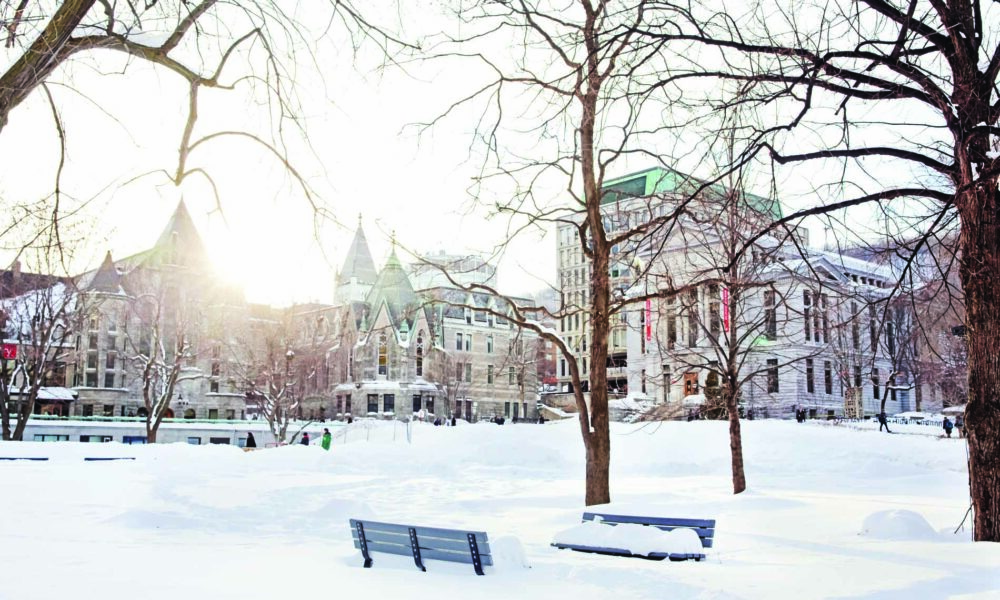
On Dec. 31, McGill sent an email to all students and staff announcing that, in line with new Quebec regulations, the return to in-person learning would be delayed until January 24. The announcement came amid the surge in Omicron cases in the province and the world at large. However, despite McGill’s compliance with Quebec health mandates, the news puts students in a difficult position, stripping them of the option to choose when to come back to Montreal

Online learning has been very challenging for students due to increased screen time and prolonged isolation. While health risks associated with COVID-19 prompted many to postpone their return to Montreal, for some, the added support of family and friends made staying home during online school the best choice. Furthermore, even though individuals still need to pay rent in Montreal, staying home can be a way to save some money on daily things like laundry, food, and transit, especially when considering that many service jobs have been interrupted due to restrictions. In addition, the advantages of student life in Montreal, like being on campus, going to cafés, exploring the city, and hanging out with friends, are severely limited due to the Quebec lockdown. As a result, staying home might help avoid feelings of isolation and uncertainty. Considering the high rates of COVID-19 cases in the city, being home might also be the safest option for some, or at least a reassuring one—being sick and alone can be a very stressful situation. Lastly, depending on where it is that students call home, not going back to Montreal can mean better weather, safer COVID-19 environments, and more lax COVID-19 restrictions. 

But beyond the potential benefits of staying home, it is important to question why students were put in the position to make that choice in the first place. A major factor, of course, is the rise in COVID-19 cases. The epidemiological situation is critical right now and it has to be taken seriously. Furthermore, considering how COVID-19 disproportionately affects disabled, racialized, and low-income people, individuals should be doing all in their power to curb the spread. However, there is a limit to what individuals can do in the face of a surge as big—and as transmissible—as this one. The Omicron spread comes after months of the Quebec government mishandling the pandemic in many ways, including imposing ineffective curfews and having insufficient testing capabilities. There is little scientific evidence that curfews actually prevent a rise in COVID-19 cases, and yet the Quebec government decided to implement yet another one despite its known toll on mental health and disproportionate impact on other vulnerable communities. Other measures like accessible testing, timely booster shot rollout, and vaccine mandates may have been able to prevent this surge.

Institutions like McGill also have the responsibility of prioritizing the health of their communities. Although McGill has taken the necessary steps to comply with Quebec regulations, it has failed to provide safe and accessible learning environments for immunocompromised and disabled students throughout the pandemic. McGill has only taken steps to provide online alternatives when the government mandates them—but not when students advocate for them. Measures like continuing the S/U option, mandating professors to record lectures, and implementing a university-wide vaccine mandate could make the stress of university during a pandemic more manageable. 

Despite the recent  end of the curfew and the return to in-person classes, the pandemic is still not over, and neither are its impacts on students’ lives. Universities should not put student’s physical and mental health at risk. McGill should put their students’ interests first and take the necessary steps to make sure that its environment remains safe and accessible to all, no matter what type of instruction the government mandates. 

McGill, News

André Brock charts the hidden history of Black cybercultures

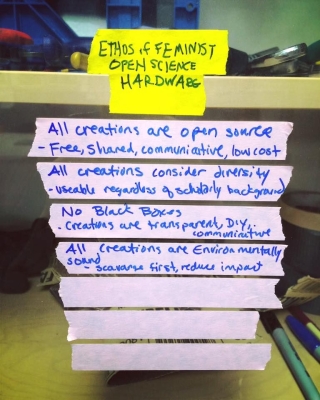
André Brock, an associate professor of media studies at the Georgia Institute of Technology, drew on the connections between Blackness, social media platforms, and Western technoculture in a webinar held on Jan. 12. The lecture was part of the Feminist and Accessible Publishing, Communications, and Technologies speaker series, which was founded by Gender, Sexuality and Feminist Studies Faculty Lecturer Alex Ketchum.

During the webinar, Brock discussed his 2020 book Distributed Blackness: African American Cybercultures, which is based on 15 years of research on Blackness and digital spaces, ranging from weblogs and periodicals to video games. The book argues that Black communities have been ardent participants and builders of a distinct and recognizable cyberculture.  

In his introductory remarks, Brock explained that while his goal with Distributed Blackness was to reframe the agency of Black communities, he thought it was essential to first acknowledge the limits Western technoculture poses in the digital medium. 

“My aim in that book was to unpack what Black technology use, or Black technoculture, would look like from the perspective of Black folk,” Brock said. “In doing so, however, I had to consider the context of what Black technoculture is gestated, that is, the white Western world and Western technoculture.”

Brock observed that while many name the trio of Jeff Bezos, Elon Musk, and Richard Branson as the tech pioneers that will lead humanity into a bold era of space exploration, they have in fact only proved to be masters of the venture capital game. Instead, he sees these men as building a post-human and surveillance-state that goes hand-in-hand with a harmful culture of technophilia.

“There are a multitude of examples of technophilia to work with, whether it is the genital waving exercise of the three billionaires to see who could get to the outer reaches of lower reach orbit, or the current fascination with Web 3 and NFTs,” Brock said.

In the early days of the internet, systemic barriers such as high costs and sporadic broadband availability prevented Black communities from accessing online networks and resources. But by leveraging the tools they could muster, Brock argues, these communities were able to build an expansive and dynamic online space to call their own. 

In considering viable solutions to what Brock terms “weak-tie online racism“—racism that is enacted indirectly through digital networks of social interaction—Brock concluded that “online harms” cannot be fixed by technology.

“How do you fix this though? I don’t know if it can be fixed,” Brock said. “I’m wary of technical solutions to online harms or even the idea that ethics will fix the problems of technoculture [….] Perhaps, instead, we should be talking about a moral code of harm reduction when deploying complex algorithmic solutions to social problems.”

Following the event, Ketchum underscored the relevance of Brock’s book in light of McGill’s temporary return to remote teaching.

“[Brock’s book] is vital during a time when we are so online,” Ketchum wrote. “As we begin Winter 2022 on Zoom again, Brock’s work highlights the racism embedded in our digital technologies, which, as Brock explains, isn’t just a glitch.”

Madi Bothelo, U3 Arts, enjoyed the webinar, remarking on the importance of the conversation Brock has spurred.

“I feel like most people in the tech industry avoid speaking about race, but the relationship between the two has a layered history worth studying,” Botelho said in an interview with the Tribune. “If we can continue at least having this dialogue, maybe people can start intervening in the process of new and developing technologies.”

Features

Changing the narrative

I have a go-to answer when someone asks how I speak English so well, despite it not being my mother tongue: “I consume a lot of Western media.” Despite the benefits of this habit, that short phrase also encompasses the constant struggle of disentangling my self-worth from the harmful messages I have absorbed from the screen.

I was fortunate enough to grow up in Pakistan largely surrounded by people who shared my culture and experiences. Because I could see myself reflected in those around me, I was mostly protected from the prejudices built into Western media.

Things changed when, in 2019, I moved to Canada to attend McGill. Suddenly, I found myself in the “Western World” that I had idealized in my head, and I was met with an identity crisis: Where did I fit in? It became painfully obvious that as a South Asian Muslim woman, I had never identified with anyone I had seen on-screen. Most of the people I interacted with here had preconceived notions of me that clashed with my self-identity and threatened to shake themy notion of who I believed I was. 

For better or worse, popular media has shaped my view of the world for better or worse. Media plays an important role in society, acting not only as a source of information about the world but also as a reflection of social norms and attitudes. On average, people around the world spend over 7.5 hours per day consuming media of some form, with American consumers tending to have a higher daily average than most. 

However, the dominant media we consume rarely  reflects the diversity of its consumers. According to U.S. Census Bureau estimates, almost 40 per cent of the U.S. population was non-white, yet in 2017 people of colour only made up 19.8 per cent of lead film actors, as per the UCLA Hollywood Diversity Report

This disparity persists across multiple forms of media. A 2020 //New York Times// article revealed that only 11 per cent of books published in 2018 were written by people of colour. Similarly, a study conducted by Women in View that explored racial diversity in the Canadian film industry found that of all people given TV writing credits, only 6.3 per cent were Black, Indigenous, and women of colour.

Science & Technology

Faculty of Science presents the 33rd edition of Soup and Science

The 33rd edition of Soup and Science, a popular Faculty of Science event showcasing the diversity of research being conducted at McGill, aims to provide students with an opportunity to interact directly with professors from different disciplines. Held remotely this semester, the mini-lecture series took place from Jan. 10 to 14. As always, we at the The McGill Tribune compiled some of the highlights of the week.

What can we learn about antibiotic resistance? A super close-up view of superbugs might help — Madhura Lotlikar

Since the first antibiotic was used on humans in 1910, antibiotics have saved hundreds of thousands of lives. Today, however, 700,000 people die every year due to antimicrobial drug resistance (AMR). The overuse of antibiotics in people, animals, and food agriculture has given bacteria the chance to evolve rapidly and produce proteins that make these antibiotics ineffective, thus leading to antimicrobial resistance (AMR). 

In his talk, Albert Berghuis, a professor in McGill’s Department of Biochemistry, explained how bacterial resistance arose against Plazomicin—a three-year-old drug that treats complicated urinary tract infections (UTI). Plazomicin attaches to ribosomes—the protein-making machineries of bacteria—and inhibits protein synthesis, eventually killing them.

Unfortunately, Plazomicin’s chemical structure resembles that of many naturally occurring antibiotics which, millions of years ago, many bacteria evolved to resist. Berghuis and their team discovered that the 3D atomic structures of Plazomicin bound to ribosomes. Within the bacteria that contributes to UTIs, they also discovered an enzyme that alters Plazomicin’s structure, rendering it ineffective.

Identifying these 3D structures is a huge leap forward in designing drugs that can evade antibiotic resistance. Berghuis’ next step is to tweak the structure of Plazomicin so that the drug will eliminate the binding site of drug-resistant enzymes while still being able to bind ribosomes, thus preserving its effectiveness.

Governments and private funders are budgeting millions of dollars to develop more antibiotics, curb AMR, and save lives. The World Health Organization lists AMR under the top 10 pressing global health issues.

Computational and mathematical biology in health and disease – Zoe Karkossa

It is possible to describe cellular and molecular processes in the human body using a wide array of modeling and computational approaches. Anmar Khadra, a professor in the Department of Physiology at McGill, uses quantitative techniques to investigate the dynamics of a variety of physiological and biological systems, from cellular receptors to neural connections.

“Typically we use quantitative methods to conduct this research […] using two different avenues. One of them is developing mathematical models or biophysical models,” Khadra said. “Or we could develop computational techniques or algorithms that analyze the experimental data that we have, or even fit this experimental data to the mathematical models that we develop.”

An important theme of the work being conducted at Khadra’s lab is tuning into biological rhythms. For example, the recording and modeling of electrical activity of individual neurons allows for insight into the behaviour of ion channels. Rhythmic patterns can be detected through fluctuations in membrane voltage, interactions between different channels, and effects on hormone release.

“We do all of this type of computational work to make predictions, to validate mechanisms, generate hypotheses, test hypotheses, and […] generate the technological tools that could allow us to manipulate these systems,” Khadra said.

Our universe as a particle physics experiment – Adam Matthews-Kott

First discovered when the calculated mass of galaxies repeatedly failed to line up with the observed mass, dark matter has drawn interest and speculation from much of the scientific community. It was also the subject explored by Katelin Schutz, an assistant professor in the Department of Physics, in her talk.

“We have a huge amount of evidence for the existence of dark matter,” Schutz said. “We have evidence across nine orders of magnitude in length.” 

Schutz went on to explain that dark matter is extremely pervasive in the universe, being five times more abundant than regular matter. This means that the majority of the universe is made up of a form of matter that humans still do not understand.

“We know how much of it there is by mass,” Schutz said. “We know it’s cosmologically stable, […] but most of all, we know it to not be accounted for by known physics.”

With this nebulous concept being on the front lines of scientific discovery, Schutz’ talk successfully summarized a complex topic that humanity still knows little about.

From soils to the Great Lakes: Tracing phosphorus in the environment – Jackie Lee

Following World War II, the rate of fertilizer production rose dramatically, and has only continued to accelerate since. The same is true for the use of phosphorus, an element essential to all living organisms, which agricultural producers often apply to conventionally farmed fields—with a generous hand—to ensure high yields and food security.

However, this agricultural enhancement has proven to be a double-edged sword, explained Christian Von Sperber, a professor in McGill’s Department of Geography. Phosphate fertilizer inevitably seeps from the soil into freshwater bodies, wreaking havoc on ecosystems through eutrophication, a process whereby an excess of nutrients prompts toxic algal blooms. The algae chokes aquatic ecosystems of oxygen, exterminating entire fish populations and contaminating drinking water, among other ecological consequences. Wetland restoration may offer a solution. 

“They actually retain phosphorus and other nutrients and contaminants in the solids and in the biomass,” Von Sperber said.  

His team is currently mapping and quantifying sources and sinks of phosphorus in both natural and rehabilitated land. They also look specifically at the prairie pothole region in Manitoba, whose unique topography allows for thousands of shallow wetlands. 

“We’re thinking that the restoration of wetlands might actually be a nature-based solution to the problem of eutrophication,” Von Sperber said. 

Beyond the context of phosphorus, wetlands also sequester large amounts of CO2, and are integral to wildlife.

“[Wetlands] provide a habitat for endangered species like waterfowl, or assistant professors and PhD students at McGill,” Von Sperber joked.

The Cytoskeleton – Madison McLauchlan

Students may know Gary Brouhard, a professor in the Department of Biology, from his fascinating BIOL 201 (Cell Biology and Metabolism) lectures, where he introduces large swaths of biomedical undergraduates to the micro-workings of the cell. In his brief talk, Brouhard gave a digestible overview of the main protein players in our cells and why it is so important that researchers investigate subcellular behaviour. 

Brouhard started out with a simple question: If every cell in our body contains the same DNA, how is it capable of making cells with a myriad of different shapes, from the arborized structure of a neuron to the flat pancake of an epithelial cheek cell? Rather, what internal elements allow them to specialize and perform their functions so well? 

“Just as the shape of an organism is determined by its skeleton, […] cells have an internal skeleton underneath their plasma membrane that determines their shape,” Brouhard said. “We refer to this as the cytoskeleton.” 

One component of the cytoskeleton are microtubules, cylinder-like polymers that flare out at the ends, assembled from individual proteins. They are constantly breaking down and reforming, lending these structures versatility in their function: Not only are they important for maintaining cell structure, but they also help form the mitotic spindle during cell division and even act as “cellular highways” to transport materials to key locations in the cell. 

“[Proteins] assemble like magic lego building block[s] into this long structure, and that is how cells can reorganize their microtubules,” Brouhard explained. “[Cells] can break these tubes down, and rebuild them in different places.” 

Beyond the basic research importance of Brouhard’s lab work, this domain has implications for understanding human health. Malfunctions in key proteins linked to microtubules, like doublecortin, have been associated with diseases such as type 1 lissencephaly, or a condition called “smooth brain syndrome” where the cerebral cortex is missing folds. By observing the behaviour of microtubules in the lab, researchers can understand what patterns are leading to disease phenotypes. 

McGill, News

Students release open letter calling for hybrid learning and stricter campus safety measures

An open letter, written and published just hours after McGill’s Jan. 14 announcement that in-person learning would recommence on Jan. 24, has been circulating among the student body. The letter, titled “Open Letter to the McGill Administration – Return to in-person learning on January 24th,” denounces the administration’s decision to return on the 24th, contending that it ignores and dismisses the reality of the pandemic. As of Jan. 17, the petition has garnered close to 22,000 signatures.

Written and drafted by U1 Arts student Lavinia Auhoma and co-written by the Students’ Society of McGill University (SSMU) vice-president (VP) University Affairs Claire Downie, the letter calls on the administration to mandate hybrid learning strategies, regulate the supply of adequate Personal Protective Equipment (PPE) for the community, and release a more detailed plan for an eventual move to in-person learning. The writers also demand a comprehensive account of McGill’s contact tracing procedures and methodology, both on and off campus. 

The letter has been signed by members of the McGill community—including students, faculty, and parents—along with faculty and staff from other Canadian universities, such as Concordia University and the University of Toronto.

In an interview with The McGill Tribune, Auhoma noted that she was compelled to write the letter after reading McGill’s announcement which, in her view, dismissed and downplayed the reality of the ongoing pandemic. 

“I think everyone knows someone else who has COVID, maybe right now,” Auhoma said. “As the situation developed so rapidly, and with how unpredictable it was, I found it quite reckless and a bit shocking of McGill to carry on with its decision to open up so promptly. I think we even see in the specific language of the email, ‘Despite the rising case count in Quebec,’ [that] there is a lot of language that downplays the severity of COVID.” 

Auhoma believes that McGill’s decision prioritizes students’ desire for a regular university experience, rather than public safety at large, noting that it ignores members of the McGill community who are immunocompromised or vulnerable. 

“I think they’ve pushed forward with this in-person messaging to appease a big population of the student body who just want their university experience back,” Auhoma said. “I do want my university experience, but I don’t want it at the cost of people’s lives [….] And when McGill is dismissing that plea, because it wants to reflect the majority, I think the minority deserves to be heard too.”

McGill has followed through on its plan to resume in-person learning for most classes consisting of less than 200 people, despite the high case count in Quebec and the province’s limited testing capabilities. In a statement to the Tribune, McGill media relations officer Frédérique Mazerolle justified McGill’s decision to move in-person, citing Quebec’s public health guidelines and the McGill community’s vaccination rate. 

“McGill has an excellent track record in keeping our community safe,” wrote Mazerolle. “Although there have been cases on campus, safety measures have worked [….] Nevertheless, our planning for Winter 2022 remains flexible and if the COVID-19 situation changes, we have contingency plans in place. We are monitoring the situation extremely closely and are prepared to act quickly in line with public health directives.” 

In an interview with the Tribune, Downie questioned the university’s assertion that it would pivot to online if the situation worsens. The unclear case counts due to the lack of available tests in the province, coupled with McGill’s decision to move academics in-person amid rising hospitalizations, led her to question McGill’s metric for being able to return to campus.

“I have been asking this question of administration members, what metrics they would use to decide that things […] aren’t going as well as they need them to be or what they’re willing to handle,” Downie said. “You can’t really get a PCR test in Quebec, unless you’re a member of a specific group. So I just assume that there will be outbreaks, but that there will be no real way for the university to confirm that they have occurred.”

While the letter has garnered much support, it has also been controversial. Some students, like Adam Menikefs, U2 Arts, are concerned that the letter does not take full account of the marked differences in this phase of the pandemic, notably the low hospitalizations, deaths, and vaccination rates among the 20-29 age group. 
“I do not want to invalidate people’s concerns, [but] some students I believe have yet to treat the current situation to what it will become, an endemic,” Menikefs wrote in a message to the Tribune. “Obviously I do not agree that everyone should be forced back, and accommodations should be made for those who are immunocompromised or live with high risk individuals, but [I] also think it is difficult to assume that McGill can make an entire decision based on individual accommodations.”

Editorial, Opinion

McGill’s rushed reopenings are reckless

On Jan. 6, just two days after the McGill School of Social Work announced that their classes would be held virtually until Feb. 24, the McGill administration sent a follow-up email stating that they had declined the plan. The move came as a surprise to students, especially considering the policy that the McGill Senate passed Nov. 5—Course Delivery Parameter for the Winter 2022 Academic Term—that states it is ultimately up to individual faculties to choose whether or not to adapt to in-person learning. Since then, McGill has confirmed that all faculties will resume in-person classes on Jan. 24, despite a sore lack of accommodations for immunocompromised and disabled students, and an unrealistic and inequitable demand that all students be back in Montreal by that date. This rushed, forced return to in-person instruction without proper accommodations or adequate consideration for faculties—especially those like social work, whose students are directly involved in at-risk communities —is a mistake that McGill keeps repeating.  

The return to in-person teaching was announced in an email that lacked both concrete details regarding safety measures and empathy for students and faculty. While a safe, gradual return to campus is possible, it has to be done with proper foresight: The plan should have given students and faculty the option to make decisions based on their needs, instead of pushing everyone into classrooms. With only a vague promise to communicate safety measures and address concerns in the coming days, students have been left in the dark about what exactly is being done to prevent outbreaks of the Omicron variant on campus. 

All the while, there has been no clear explanation of the options in place for students or professors who are more vulnerable to the effects of COVID-19—whether due to underlying health conditions or age—or who live with people who are more vulnerable. The university’s choice to recommend the booster shot for concerned individuals ignores the possible dangers of contracting COVID-19 even with a third shot, the appointments for which are already difficult to snag. It seems unlikely that the majority of the McGill community will be triple vaccinated by Jan. 24. And even if those in the McGill community were completely protected themselves, going back to school will inevitably increase transmissions, putting the broader Montreal community more at risk. 

While it is important to acknowledge the role the Quebec government plays in directing universities go back in person, other institutions such as Concordia have managed to push their return dates back by a week or two. McGill’s race to re-open has been a thoughtless one: Their refusal to respect the Faculty of Social Work’s decision to extend online learning, despite their own Senate decision, reveals a lack of consideration for students and faculty and for the communities and at-risk groups with whom they work.  Students complete fieldwork programs, often working with vulnerable communities disproportionately affected by the pandemic. In turn, being forced to return to classes risks serious harm to these groups. The importance of the work done by social workers throughout the pandemic cannot be understated––the mandated return to in-person learning potentially violates an ethical mandate social work students have to those communities who rely heavily on their support. 

To everyone’s disappointment, McGill continues to make the same mistakes with their re-openings over and over again.  Students, alongside The Students’ Society of McGill University vice-president University Affairs Claire Downie, have penned an open letter to the administration demanding the release of an extensive return-to-school framework, and have also worked with professors to create a document crowd-sourcing information about Winter 2022 classes. Otherwise, McGill students must rally behind the School of Social Work as they fight to protect the health and safety of their students and those they work with.

Know Your Athlete, Sports

Know Your Athlete: Iman Ibrahim

Montreal native Iman Ibrahim has always preferred team sports—her time as a Martlet has only bolstered her love for basketball. The point guard joined the team after being scouted while playing for Dawson College during her CEGEP studies. After considering a few different schools, Ibrahim ultimately decided that McGill would be the best fit.

Ibrahim had already been considering McGill for a few years after meeting former coach Ryan Thorne in high school. She credits Thorne for giving her a good impression of McGill and its team—an impression that ultimately helped consolidate her choice during CEGEP.

Ibrahim started playing basketball when she was six years old, after her elementary school coach was impressed by her running skills during recess and asked her to try out for the team. Since those elementary days of shooting hoops, Ibrahim has never looked back.

Throughout her basketball career, Ibrahim has found that a large part of success in basketball hinges on team chemistry and effective communication.

“I’m social and open-minded, which is important for basketball as you spend time with a group and have to communicate with people,” Ibrahim said. “This communication reflects on game performance, which is why it is important to have a bond outside of the court.”

Through her many years on the court, Ibrahim says she has forged meaningful connections and friendships that she hopes to maintain for life. 

“I still have friends from my old teams, I met some of my closest friends through basketball. I also met my boyfriend through the sport,” said Ibrahim. “It literally built my life.”

Beyond the camaraderie Ibrahim shares with her teammates, she also values her coaches, whom she credits with helping improve her performance.

“The head coach used to be the assistant coach, so she knows what she’s doing. I regularly saw her in the bleachers at Dawson College,” said Ibrahim. “Associate coach Dianna Ros used to play with McGill and won during their strong era. They are both people with experience that know what it takes to win.”

Like her coaches, Ibrahim has a solid winning mentality and has total faith in the Martlets’ ability to succeed. She explained how this year, the other teams had more experience playing together, so the Martlets had to work on strengthening their mental resilience. Once they gain the right experience and team cohesion, Ibrahim is confident that they will become unstoppable.

“People see us lose a lot, but you need to trust the process,” Ibrahim said. “I know that before [this year] they were super strong but we are young and trying to rebuild, and that is a process. We will come back even stronger.”

In addition to basketball, Ibrahim enjoys watching other McGill teams play. She has attended football, soccer, and rugby games, and follows all the team pages on Instagram. As both a viewer and athlete, Ibrahim has noticed disparities in attendance between the men’s and women’s games—an unfortunate reality that she has seen continue throughout her life.

“I think women’s basketball is really interesting and it should be followed by more people,” Ibrahim said. “I understand the NBA has more viewers than the WNBA. It would be intelligent if they had the women play before the men in an effort to bring more viewers who would tune in before the NBA game.”

Ibrahim has learned to deal with the pressure and commitment of basketball as it has been a part of her life for such a long time. Thanks to her drive and dedication, she has always managed to balance both her coursework and athletic commitments. However, if she gets overwhelmed, she knows that she has a solid support network she can reach out to.

“If I feel down, I discuss it with my friends or boyfriend,” Ibrahim said. “They also play the sport, so they are able to understand my feelings and know what to say.”

Her proudest moment as a player was when she won the National Championship in Quebec after winning Provincials with Dawson College. The best part: She didn’t expect the victory, which made it all the more incredible. 

Iman Ibrahim has the capabilities and drive to help push her team to achieve success. With her discipline, passion, and remarkable skill, the Martlets can count on the point guard to give her all to bring victory back to McGill. 

Arts & Entertainment, Comedy, Film and TV

Rest in Peace, gold-hearted Betty White

Television comedian and actress Betty White passed away on Dec. 31, just three weeks before her 100th birthday. Often nicknamed the “grandmother of America,” White had the rare quality of being beloved by all, regardless of generation or political stance. The actress leaves behind a spectacular legacy as a pioneer of television, with a career that spanned over eight decades, earning her the Guinness World Record for the longest TV career by a woman.

White first entered the spotlight as a radio host in the 1940s, until her television breakthrough in 1952 as the host of talk show The Betty White Show. Only one year later, she became the first woman to produce a TV show with Life with Elizabeth, which earned her the honorary title of “mayor of Hollywood.” After hosting and starring in various TV shows, White gained international success in 1973 with The Mary Tyler Moore Show. White’s brilliant performance as the sassy and salacious Sue Ann rapidly transformed her into a comedy icon. Ten years later, she joined the main cast of cult classic The Golden Girls as the sweet and naive Rose Nylund. She spent the last decades of her career proving that comedy has no age limit. White made history as Saturday Night Live’s oldest host in 2010, leading the show at 88 years old. Her appearance on SNL turned her into an internet sensation, allowing a new generation to discover the genius of her wit. 

White’s impact on 1950s Hollywood makes her one of the most influential figures of contemporary entertainment. She had the bravery to dive headfirst into Hollywood’s misogynistic boy’s club as one of the first women to take on an executive role, breaking barriers for all women following her path. As a performer and host, her wit and self-awareness pushed back against the stereotypical portrayal of women as compliant housewives in the media.

Beyond her unmatched humour, what made Betty White such an iconic figure was the time and effort she dedicated to social causes and animal rights activism offscreen. She possessed a combination of empathy, warmth, and talent that is rarely found in Hollywood.

White was a vocal advocate for gay rights, even in the 1980s, when holding such an opinion could have destroyed her career. As one of the first sitcoms to tackle issues related to the queer community, The Golden Girls is often dubbed as a classic of gay television. White has always supported her queer fans, both by being vocally supportive of the community and by dedicating herself to the fight against AIDS. Years before the United States legalized same-sex marriage, White never hesitated to assert her support for the cause. She was also a long-time supporter of the Elton John AIDS Foundation and the Trevor Project, among other 2SLGBTQIA+ organizations. 

Another one of White’s lifelong causes was advocating for the welfare of all animals. The actress produced and hosted a talk show called The Pet Set, which showcased celebrities and their pets in the 1970s, also discussing wildlife conservation. The organization American Humane was always present on set to make sure their animal guests were treated fairly. White remained involved with the organization until her death. 

Upon hearing of her death, fans launched the #BettyWhiteChallenge to encourage people to donate money to their local shelter for Betty White’s 100th birthday, which was on Jan. 17.  

Science & Technology

Three-factor model predicts psychiatric illnesses with 90 per cent accuracy

Remember the butterflies in your stomach and the tingling sensation that gives you shivers when you are just about to pitch an exciting project idea to your professor? Or when you finally deliver your handmade gift that you spent countless hours perfecting? Last summer, Marco Leyton, a professor in the Department of Psychiatry at McGill, experienced a similar feeling. He and his research team spent months trying to find errors in their three-factor model that can predict a lifetime history of multiple mental illnesses by tapping into just three factors: Biology, behaviour, and childhood trauma.

“Not only did the three factors predict who had a psychiatric problem, but the strength of the effect was extraordinary,” Leyton wrote in an email to The McGill Tribune. “We then spent the next few months searching for an error but couldn’t find one. It was an exciting summer.”

Fortunately, the model was accurate and could predict the participants’ lifetime history of psychiatric illnesses with 90 per cent accuracy based on incidences of childhood trauma, temperamental traits, and midbrain dopamine regulation


The 52 participants, who were followed since birth, showed various psychiatric illnesses such as attention deficit hyperactivity disorder, mood and anxiety disorders, substance use disorders, eating disorders, and more. The fact that the three-factor model could predict a wide variety of psychiatric illnesses, Leyton argued, bolsters the notion that they may have common origins.   

Comorbidity is a norm: People who meet criteria for one disorder are also likely to meet criteria for other disorders either at the same time or in succession,” said Leyton, whose research focusses on finding causes of addiction-related psychiatric illnesses. 

The striking strength of this model comes from the team’s ability to assess all three factors together for the first time. 

“Childhood trauma is the most quintessential, unanimously known risk factor for every psychiatric disorder, unfortunately,” said Maisha Iqbal, the first author of the paper and a neuroscience master’s student at McGill.”

The team assessed childhood trauma from a self-report questionnaire that included questions about emotional and physical neglect and abuse. However, due to many contributing factors, including genetic predisposition, family history, resilient brains, and flexible coping skills, some people were able to live their adult lives relatively unscathed. Thus, individual factors alone cannot accurately predict the onset of psychiatric illnesses.  

Researchers combined this with scores obtained from another questionnaire assessing participants’ externalizing traits between the ages of 11 to 16. These included their temperamental traits, aggression, and impulsivity.   

Adding positron emission tomography scan data to the model revealed that poorly regulated dopamine increased the prediction accuracy of the model even further. Dopamine is a chemical produced in the brain that influences mood, and triggers feelings of reward, pleasure and motivation. It is the same chemical that makes people feel rewarded when someone likes their post on Instagram, or makes them feel punished when they get scolded. It is also involved in pathways regulating drug addiction and movement disorders. When misregulated, it affects one’s motivation, attention, emotional and behavioral responses to situations, posing a biological risk for various attention and mood disorders.  

Administering early diagnosis and intervention protocols for psychiatric illnesses has the potential to greatly improve patient well-being at various levels. Studies like this one may help convince policymakers to encourage the use of predictive algorithms, like the three-factor model, in clinics—which are often discredited due to the inaccuracy of the ones currently available.

Further complications arise if models include neuroimaging or biological analyses, because of their logistical limitations as well as a need for higher levels of expertise to run them. But with the emergence of new technologies aiming to make portable and cost-effective neuroimaging devices, this research still holds promise. 

Note that this study establishes only a predictive, rather than a causal link between these factors and psychiatric illnesses. The team’s next steps are to replicate this effect in a larger and more diverse cohort of participants.  

 Seek access to mental health resources and assistance when needed. 

Off the Board, Opinion

A race for comfort

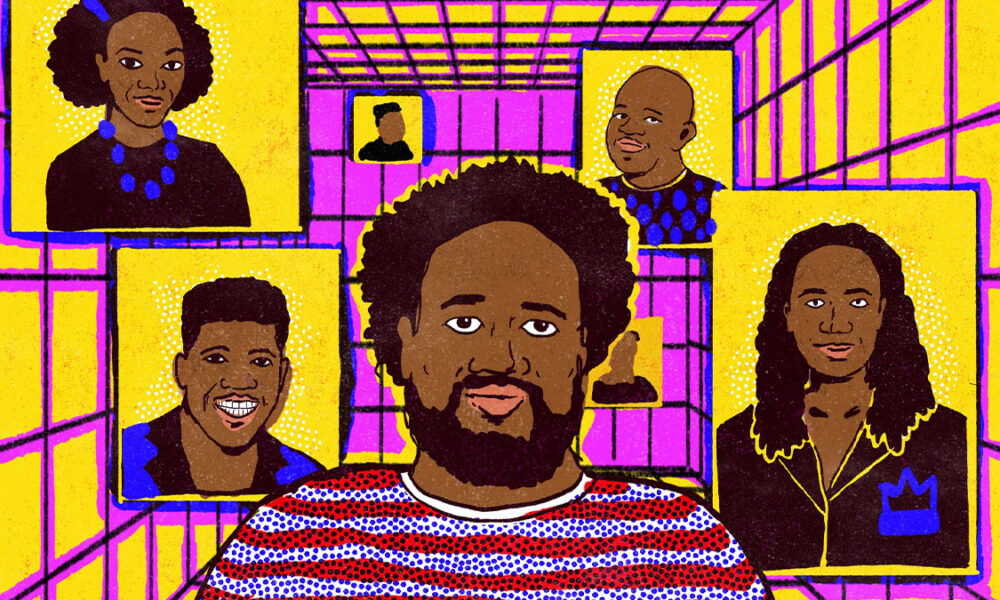
A question that continues to trouble Black Lives Matter activists and organizers almost two years after the largest uprisings in recent history is how to disseminate powerful, transformative messages to those uninvolved, unaware, or uninterested in racial justice. To answer this question, critics pen a deluge of columns: Defund the police does not help real people, in-your-face activism hurts trans people, performative Instagram posts embolden “soft moralizers.” The list goes on and. In short, progress remains far from reach as radical, divisive action keeps us behind. But, in dealing with these plentiful critiques, those interested in the pursuit of liberation should be cautious about the underlying messages these counter-intuitive lines of argument send: To tailor interactions, demands, and movements to people’s comfort levels instead diminishes their credibility.

Beyond my own involvement in activist groups, in countless of my interpersonal encounters with white people, I notice a glaze when I speak about race. Perhaps I am doing something wrong––it is too early, too late, too political, too ‘heavy’ to discuss this topic. It is my fault for assuming they do not know, the person probably has good intentions, they disavow yet accept their “white guilt,”—perhaps I should be lucky that they’re listening. I know I am not alone in facing these thoughts that plague me; I am surely one of many Black individuals, among other people of colour, who feel this emotional, yet often essential, toll to educate. Carefully scripting my experience and my knowledge into palatable pieces for my interlocutor’s digestion exhausts my energy; I wonder what I will receive in return.

Without denying the shift in attitudes during racial discourse, there must be a turn toward embracing discomfort in conversation. In popular culture, activism, and in the workplace, ideas of civility, respectability, and safe spaces need to be enhanced to account for their limiting potential for engagement. Civility and respectability politics uplift the already uplifted, placing socially constructed restrictions on what one can and cannot say above the justified emotions of racialized people. It may seem rude to make another person uncomfortable, but confronting these uncomfortable realities is a risk necessary to mobilizing for justice. Articulating one’s experiences with white supremacy is something that transcends dialogue. Put simply, when the fleeting conversation ends, we go back into––if we ever left––the real, unequal world, we re-enter unjust systems and institutions where we are unsafe. When I prioritize someone’s comfort over my experience, for instance to avoid triggering oppressive white tears, it is disrespectful to the both of us. This misrepresentation misses the mark, the discussion achieves nothing, and our chances for coming to mutual respect becomes merely a guise. 

This formulation of discomfort is years in the making. In 1981, Black feminist Bernice Johnson Reagon argued that discomfort is a foundational aspect of coalition-building and solidarity. Importantly, this applies across causes; as people begin to conceive of themselves as allies to different marginalized groups, Reagon suggests that allyship hinges on a profound sense of discomfort at our world. It, in fact, would be the only logical response to recognizing and combating how structural injustice and oppression affect people’s lives not only in Canada, but around the globe. Likewise, political philosopher Iris Marion Young viewed communication across difference as a gift-giving process, and some trans activists of colour, like actress Alexandra Billings, urge cisgender people to listen silently as if underground, as a reflection of historically suppressed trans resistance. To learn later that Canada enslaved Black and Indigenous people, that Canada’s normalized anti-Asian racism goes back centuries, that Canada continues to commit cultural and colonial genocide of Indigenous peoples, is the gift of privilege. Rather than shy away, our discomfort should compel us to act not against the subject of these histories, but the system that perpetuates and erases these histories.

Though discourse alone will not save us, it is a valiant first step in intersectional fights for justice in Canada and around the world. By accepting discomfort as an integral component in conversation and activism, we take the risk of sharing our truest selves, transforming contrived comfort into communal courage to move to liberation for all. 

Read the latest issue

Read the latest issue