


Latest News

McGill, News

Federal government requires international students to be doubly vaccinated to enter

The rapid rise in cases of the highly transmissible Omicron variant has spurred the Canadian government to implement a restriction requiring all international students entering the country to be fully vaccinated, as of Jan. 15. The Quebec College of Physicians has also called on the government to enforce stricter vaccination requirements, such as mandating three doses of an accepted vaccine in order to hold a vaccine passport. 

The Canadian government considers a person to be fully vaccinated if they have received two doses of an approved vaccine and it has been 14 days past their second dose. Booster shots—a third dose of a COVID-19 vaccine—became available in Canada on Jan. 4 and became available to those aged 18 and over in Quebec on Jan. 14. However, Dr.Theresa Tam informed Canadians that the government would not change the definition of a fully vaccinated person. 

Frédérique Mazerolle, a McGill media relations officer, told The McGill Tribune in an email that the administration will respect the Quebec government’s evolving directives regarding the vaccine passport. 

“At McGill, vaccination passports are required to access a wide range of non-essential activities on- and off-campus,” Mazerolle wrote. “[The] university intends to apply the passport to the fullest extent possible under law to provide strong incentives for members of the McGill community to get vaccinated.”

Some international students, however, do not think McGill is doing enough to guide students through the changing safety measures. Anna Tripier, U1 Math and Biology, who is returning to Montreal from the United States, feels that the administration has shown a lack of concern for the wellbeing of its students.

“Though McGill has put a lot of effort into handling vaccination by following the Quebec laws,  I’m actually disappointed with the lack of resources and effort McGill has shown toward helping its students and faculty feel safe,” Tripier told the Tribune.

To help rectify this, Tripier suggests that more testing sites should be made available, along with higher quality tests. More importantly, she believes a university-wide vaccine mandate would be an effective tool in combating COVID-19. 

“I strongly support [a] decision to mandate vaccines,” Tripier said. “I think it’s the fastest way to slow the spread of COVID and reduce the amount of people heavily impacted by it.” 

Lucille Applegate, a U1 Arts student from France, too, is in support of a campus-wide vaccine mandate. The ethics and legality of requiring vaccines has, however, been hotly debated at McGill, with professors from the faculty of Law warning the university  of the liability risk of not imposing a vaccine mandate. Applegate believes that those hesitant about getting vaccinated should “trust science,” even if “it’s new and can be scary.”

Students’ discontent with McGill’s vaccination policies also extends to the federal government’s regulations. Tripier, for instance, has mixed feelings about the Canadian government’s new travel restriction because she worries some international students may not have access to vaccines. Applegate, on the other hand, feels this new rule is a natural progression in Canada’s regulations.

“I think this guideline is the only logical sequence of what Canada’s policy has been for the last few months, especially with the vaccine passport that has been in place,” Applegate remarked. 
As of Jan. 13, the McGill COVID-19 Situation Dashboard reported that 96.3 per cent of students were “adequately vaccinated.” Statistics regarding faculty and staff were last updated on Dec. 9. At the time, McGill reported that 92.2 per cent of McGill faculty and staff were adequately vaccinated. The Quebec government considers “adequately vaccinated” people to be those who have received two doses of a COVID-19 vaccine, who caught COVID-19 in the last six months, or who caught COVID-19 more than six months ago and have received one dose of a COVID vaccine. 

Arts & Entertainment, Film and TV

Pop Dialectic: The duality of dark teen dramas

Content Warning: Mentions of drug addiction and sexual violence.

Even for university students, TV shows that centre teenage characters in and around high school have widespread appeal. Skins, which premiered in 2007, and Euphoria, which premiered in 2019, stand apart from other shows for their brutal depictions of partying, drug use, sex, and mental illness. Although only the latter is still airing, The McGill Tribune weighs how each show marks the dark teen drama genre. 

Skins: E4’s drama that transformed teen TV for good — Signy Harnad

In 2007, audiences were introduced to a group of teenagers from Bristol who got high on drugs, had promiscuous sex, and swore like sailors. The world would never be the same.

The British E4 network commissioned this television series, Skins, as their flagship show. Penned by father-and-son writing duo Bryan Elsley and Jamie Brittain, it was set to be a “show about teenagers, but one that actually means something.” The series zeroes in on a group of mates in Bristol who sleep with each other, attend raucous house parties, and drink to excess. More than 10 years later, it remains an authentic, wickedly funny, and indulgently offensive slice of late 2000s British teenage life.

For six seasons—and one final run we will not speak of—Skins veered from nightclub escapades to existential reflections on mortality, mental health issues, and smoking more “spliffs” than you know you ought to. It treated viewers to a gold rush of generation-defining characters, ranging from the rebellious to the quirky—I remember having a soft spot for Mike Bailey’s endearing Sid

And then there was the way the show was able to overhaul its image every two years by culling the entire cast across three generations of characters. This not only enabled viewers to meet a brand new group of teens every two seasons, but also served as a glaring reminder that no matter how immutable this time in our lives may seem, it does end—we grow up.

Perhaps what was most groundbreaking about Skins, though, was that the personal struggles of the characters were not simply the glossy dramas of adults transplanted onto teenagers—programming that dominated TV schedules in the early 2000s (think Gossip Girl, The O.C., and One Tree Hill). The stories were more raw, honest, and relatable.

Despite all its ups and downs and occasional missteps, Skins became symptomatic of a pre-Instagram, post-indie era, providing an intimate snapshot of teen life in all its idealistic glory. Granted, during certain over-the-top moments, such as when fan-favourite Freddie is clubbed to death by a rogue psychiatrist, Skins really takes the I don’t remember that happening at my high school cake. Nevertheless, the show was never meant to depict anything but a state of sustained mayhem, much like adolescence itself.

Euphoria: HBO’s teen noir that 2022 needs — Paulina Kasak

HBO’s Euphoria first premiered in June 2019. The series is an adaptation of an Israeli show of the same name, which first aired in 2012. This epic series continues to make a mark on teen pop culture, simultaneously mesmerizing and utterly shocking the viewer through scenes of drug abuse, sex, drinking, bullying, and more. It is this alluring taboo content that paints the perfect picture of chaotic and misguided teenhood.  

The series’ title best encapsulates the internal goals of the show, which portrays the darkest moments, thoughts, and actions of a group of high school teens as they try to find joy by any means possible. Euphoria’s teenagers go to extreme lengths in search of what they hope will make them feel alive. The second season, which premiered on Jan. 9, focusses on Rue (Zendaya), who continues to struggle with drug addiction, while other beloved characters such as Cassie (Sydney Sweeney) and Maddy (Alexa Demie) deal with the vicious repercussions of being constantly objectified by almost everyone around them. Though only two episodes have been released, season two seems to surpass the shock value of its predecessor in the best way possible.   

There is something daring about placing teens at the centre of darkness and violence. Although it isn’t the first show to do this, Euphoria captures dark teen drama in a way that others do not—it inspires empathy for its characters, despite each of their fatal flaws. The viewer is often caught between the desire to watch on and feelings of overwhelming discomfort in watching teens experience such hardship. As appalling as Euphoria’s characters and their actions can get, the series provides realistic commentary on the realities of contemporary American teenagers. It is the undeniable plausibility of these violent mental and physical experiences that make the series what it is.

The series also offers a captivating take on the rather melancholic lives of this group of teens, destigmatizing topics such as mental illness and abusive relationships, rather than romanticizing them as other TV predecessors have done. It is the series’ inclusivity and bravery, in all respects, that marks it as a must-watch unique to contemporary culture.     

Arts & Entertainment, Film and TV

‘The Lost Daughter’ dares to grant nuance to mothers in film

Warning: spoilers ahead

Maggie Gyllenhaal’s directorial debut The Lost Daughter, released on Netflix on Dec. 31, contains all the familiar ingredients of a substantial horror film: Dark omens, riveting tension, and a score that has the audience constantly bracing for impact. Despite the film’s mundane activity and warm setting, its chilling subtext leaves viewers clawing into their seats with anticipation. When it comes to evoking unsettling emotions, Gyllenhaal doesn’t settle for child’s play—pun intended. In lieu of demonic jumpscares or tales of twisted abuse, the film tackles a forbidden subversion of what is perceived as innate human nature: The begrudging mother.

Said mother, Leda Caruso (the brilliant Olivia Colman) is a 48-year-old professor of Italian literature on summer vacation on a fictional Greek island. Almost as soon as she arrives, dark bodements encroach, including a bowl of rotting fruit, a piercing cicada, and an obnoxiously loud Italian-American family who interfere with the quiet ambiance of the beach. Although these phenomena may seem like normal disruptions one would expect on vacation, the shuddering tension imbued in the cinematography warns of something much more sinister.

Nina (Dakota Johnson), the enchanting and languid young mother of the American family, and her three-year-old daughter, immediately capture Leda’s attention. When Leda notices the child go briefly missing, spurring Nina into a maternal panic, she is flooded with memories. The audience then meets twenty-something Leda (now portrayed by Jessie Buckley) fraught and splashing about in search of her own daughter Bianca at that same beach. Alarm colours her voice enough to prepare the viewer for imminent tragedy—but it doesn’t come until far later in the film.

When the climactic reveal unearths itself in Leda’s dialogue with Nina, it is not at all as harrowing as the viewer expects. The film sets viewers up for a stomach-churning revelation. But instead, we learn that Leda, battered inside and in great need of respite, renounced her role as a mother and left her daughters with her husband (Jack Farthing) for three years. The plot reveal is still incredibly unnerving because of how transgressive Leda’s aversion to motherhood seems. It is often said that motherhood is a crucially enlightening stage in a woman’s self-actualization; that it gives women a key purpose. Whether in film or in life, mothers are expected to willingly forgo their identities and submit to their duties. Like the Virgin Mary, they are to be selfless child-bearers devoid of sensuality. And above all, they are to relish  in these sacrifices.

Leda’s rejection of motherhood—however temporary—is deeply unsettling. Rarely is maternal defiance explored on screen, despite the much deeper sins that television has dared to portray. Of course, there have certainly been representations of anti-mother characters, as seen in Hereditary, Carrie, Cinderella. But almost always, if a mother character shows the slightest bit of resentment or dissatisfaction toward her role, she is immediately painted as a villain. 

It is immensely refreshing to see a character like Leda, one with such rich complexity that the audience simply cannot hate her, despite her selfish actions. Though the responsibilities of young parenthood seemed to weigh on her like a crushing burden, the film depicts Leda as anything but uncaring. In one scene, for instance, Leda takes a hairpin and combs it through the young mother Nina’s hair, securing it in her hat. Nina melts under Leda’s nurturing touch, closing her eyes to savour being looked after for once. Leda also often calls her now-grown children, smiling and at peace, and inquires about their lives, suggesting that her maternal relationship with them has become easier. In her flashbacks throughout the film, younger Leda can indeed be harsh and vengeful toward her children. But she can also be radiant, inquisitive, and at times even ardent with her daughters. Colman and Buckley’s stirring performances make it all the more impossible to condemn the character.

Leda’s absence, though undeniably selfish, was a desperate move for self-preservation. Women of her stock—who feel plundered by motherhood, not bolstered by it—do not only exist in fiction. Gyllenhaal does an excellent job introducing this insanely human posture to film. One can only hope that women continue to be portrayed as truly autonomous individuals rather than one-dimensional caregivers. 

McGill, News

Omicron wave disrupts athletics programs and sports clubs at McGill

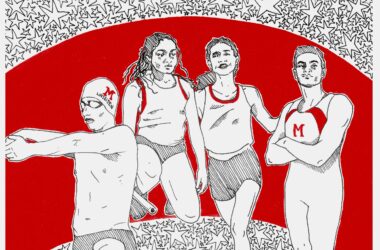
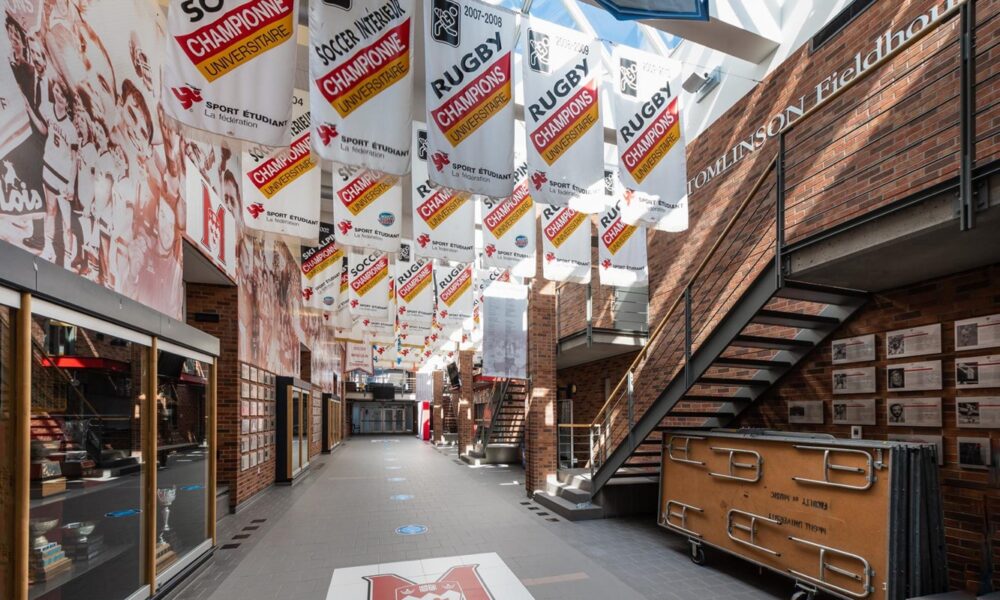
All Athletics and Recreation programming at McGill came to a halt on Jan. 6, when the university suspended athletic activities—including both recreational and varsity sports—due to the rapidly spreading Omicron variant. In a Jan. 11 update, the university announced that a limited amount of individual athletics programming, such as running, would return on Jan. 17. Intramurals and sports clubs are to remain suspended. 

In an email to The McGill Tribune, Zachary McRae, Athletics and Recreation’s communications officer, explained that the closure of the fitness centres and cancellation of sporting activities was in adherence to Quebec’s public health mandate. On Jan. 13, the government stipulated that the 10 p.m. curfew would be lifted on Jan. 17, but that gyms and indoor recreation facilities would remain closed.

“Athletics and Recreation [now] has permission to resume offering jogging, singles tennis, singles badminton, recreational skating and lap swimming,” McRae said. “Advanced bookings will be required to participate.”

Assistant Manager of Intramurals Ryne Bondy informed the Tribune in an email that there is no date planned for team intramurals to resume, as government restrictions continue to prohibit team sports. When the government eases these restrictions, Athletics and Recreation is considering implementing a shortened season, similar in format to Fall 2021, that would consist of only four games, rather than the typical six. Bondy explained that a plan is in place in the event that team intramurals are allowed to continue.

“We have everything ready to go and just need the green light to safely resume from public health,” Bondy wrote. “We had numerous protocols in place in the fall, increased buffer between matches, roster limits, no fans, increased sanitation. These can easily be transferred to the winter season and won’t be new for our participants.”

The suspension of activities has also affected the operations of McGill’s many sports clubs. Mei Yang, an executive of McGill’s Naginata Club, explained in an email that the suspension of in-person activities has complicated the training process for members as partner drills like sparring are not possible.

“In the past, we have run online practices and other social activities, but the scope of techniques that we can teach beginners online is drastically reduced,” Yang wrote. “Anything beyond the very basics is near impossible to properly teach without adequate space and in-person advising, so beginners tend to suffer the most during online practices.”

Akiko Nakagawa, another Naginata Club executive, agreed that the suspension has been difficult for athletics clubs because online training is not as effective in maintaining one’s physical fitness. 

“Naginata is a very technical practice, so we can all definitely feel our skills getting rusty after not practicing for a few months,” Nakagawa wrote. “It’s also pretty decent aerobic exercise, so I’m definitely more out of shape now than I was when we were practicing in person.”

Yang explained that club activities serve as an important opportunity for social interaction. In lieu of in-person activities, the club plans to organize game nights, movie screenings, and online viewings of tournament videos.

“Normally we socialize during or after our in-person practices, but since that’s no longer possible under the suspension we plan to move our socialization online through platforms like Discord,” Yang wrote. “The Naginata Club is the one of the few places where I can consistently talk to people who I consider to be friends, and taking this opportunity away deprives all club members of much-needed human contact.”

Commentary, Opinion

Blood in the stadium

When the Olympic flag rises in Beijing’s National Stadium this February, it will not be a moment of prestige or celebration. It will be a painful reminder that, in the eyes of the world, the horrors and abuses of the Chinese Communist Party (CCP) can be swept aside to make way for a flashy spectacle. To us Hongkongers fortunate enough to speak from the relative safety of Canada, the event symbolizes how the CCP has jailed or exiled an entire generation of young Hongkongers in its quest to crush dissent and manufacture a sanitized image of China for the world. McGill students must push their Members of Parliament to support a full boycott of the Beijing 2022 Winter Olympics

The human rights abuses of the Chinese state are more serious than ever before. In East Turkestan, the CCP’s ongoing genocide of Uyghur Muslims has resulted in at least one million people locked up in concentration camps, where many suffer torture and forced sterilization. In Tibet, forced relocation, arbitrary arrest, and torture in police detention are all common tactics to prevent Tibetans from speaking up like they did against the 2008 Beijing Olympics. And in Hong Kong, over 10,000 protesters—many of whom are teenagers—have been arrested as a government crackdown on university unions and student activism charges on. 

Despite the ever-worsening human rights situation in China, preparations are going ahead as planned for what some activists are now calling the “Genocide Games.” The world must not make the same mistake that it did in 1936: Despite a global “boycott” campaign against the Berlin “Nazi” Olympics, many countries ultimately still sent their athletes to the Games, which Hitler used to promote the Nazi regime. Consequently, an opportunity to censure his regime was lost. However, Olympic boycotts have been effective in the past: In 1976, 22 African countries boycotted the Montreal Olympics in protest of the International Olympic Commitee’s indifference toward apartheid in South Africa, and as a result, Canada lost one million dollars—equivalent to nearly five million dollars today––in hotel and ticket sales. A boycott of the Genocide Games would deny the CCP a chance to use media coverage of the Games to distract worldwide viewers from their various human rights atrocities.

Some counter that a boycott is detrimental to the well-being of the athletes—the Olympics only happen once every four years; a boycott would mean that athletes lose their chance at competing at one of the highest levels of sport. While this is true, it is important to keep in mind who pays the price for these Olympic dreams. For every young Canadian who receives a medal on the winner’s podium in Beijing, there are thousands of young Uyghurs, Tibetans, and Hongkongers who remain locked behind bars. Long after the medal-winners and foreign journalists have departed, the targets of the CCP’s ire, left behind in China, pay the price. 

Politics and sports are inseparable; nowhere is this truer than in China, where political freedom is severely repressed. The recent case of Peng Shuai, a tennis star who vanished after daring to accuse a former senior Communist Party official of sexual assault, shows that even Olympians enjoy no special exemption in the eyes of the regime. In support of Peng, the Women’s Tennis Association has rightly pulled out of China entirely—the equivalent of a full boycott of the country’s actions. 

Those looking forward to the sights and spectacle of the Beijing Olympics should consider how many lives they would be okay sacrificing for the sake of a sporting event and its associated advertising revenue. Consider how many people will be silenced to appease a repressive dictatorship. While moral questions are rarely easy to answer, hopefully in this case, the human cost of business as usual with the Genocide Games is clear.

McGill, News, PGSS

Council members voice grievances about inadequate stipends at PGSS Legislative Council meeting

McGill’s Post-Graduate Students’ Society (PGSS) held its first virtual council meeting of the Winter 2022 semester on Jan. 12. Secretary-General Kristi Kouchakji announced the society’s efforts to improve COVID-19 safety standards for graduate students, such as distributing higher quality masks in graduate-student work areas. Councillors also discussed possible ways to distribute the pool of money from the now-defunct Legal Support Fund, and heard a presentation from the McGill Trainees’ Poverty Observatory on how to make the Faculty of Medicine’s harmonized stipend policy more equitable.

With the imminent return to on-campus learning on Jan. 24, Kouchakji noted that the PGSS is working closely with McGill facilities to add more mask dispensers in graduate school buildings and work areas. 

“I’m also very excited to say that we are in the early stages of organizing access to some higher quality masks for our members,” Kouchakji said. “N-95s, KN-95s, KN-94s, and any other mask-related PPE that you might want to use on campus can be put in the recycling bins, so that’s very exciting.”

The requirements to enter buildings such as The PGSS Thomson House—which will soon require proof of three vaccine doses for entry—were also discussed. Councillors then spoke about the continuation of online extracurricular activities for the foreseeable future.

Financial Affairs Officer Sophie Osiecki held discussion with various councillors regarding best how to  distribute the funds accrued from the Legal Support Fund. The society ceased collecting student fees for the fund as of Fall 2021. Osiecki advocated for putting the funds—which total approximately $125,000—toward McGill’s Need-Based Bursary Program. Councillors offered other suggestions, such as subsidizing the society’s legal protection plan, donating the money to the McGill Wellness Hub, or contributing it to the Society’s Special Projects Fund. In the end, they decided to postpone the verdict, encouraging members to send in their ideas via email for how they want the funds allocated.

The society’s final topic for the evening regarded a presentation by Morgan Maher, a third-year Philosophy PhD candidate, on behalf of the McGill Trainees’ Poverty Observatory—a group of student trainees from various departments advocating against student poverty. Maher’s presentation recounted a number of recommendations the Observatory has brought forward to the Faculty of Medicine regarding their Stipend Policy, including raising stipends. This Stipend Policy is intended to provide complete tuition and fee coverages, standardized living allowances, and a standardized policy on scholarship Top-Up awards for all thesis-based graduate students in the Faculty of Medicine.

Maher acknowledged that the policy is a step in the right direction for improving living standards for graduate students, but that it fails to address student poverty. According to Maher, the Harmonized Stipend Policy does not account for inflation and increasing costs of living. Even in 2019, when the policy was originally written, the living stipends were insufficient in providing students with enough money to live above Quebec’s poverty line. 

During the question period following Maher’s presentation, a representative from the McGill Biology Graduate Student Association (BGSA) detailed how Biology Graduate stipends can be deducted if students are also working as a teaching assistant (TA). 

“It is written in the [Department of Biology’s] contracts […] that TA pay can be deducted from stipends, meaning that, in some cases, you are actively punished for TA-ing,” the representative said. “It’s creating situations where some people working in the same lab are being paid drastically different amounts.”

Upon learning of the deducted TA wages, Kouchakji announced, “I am really mad, and I am going to close my microphone and keep yelling at the walls now.”

Soundbite:

“Deducting TA wages or [research assistant] wages from your funding is not acceptable, it is a form of wage theft,” said Kouchakji in response to the BGSA representative. “Doing it specifically with TA wages is actually a violation of the AGSEM collective agreement [….] This is not meant to be happening and the new funding letter template, when it was given out to [graduate program directors], made it explicitly clear that you cannot do this, as per the terms of the AGSEM collective agreement.”

Moment of the Meeting: 

Students from other departments, such as Languages, Literatures, and Cultures, aired frustrations about how their living stipends are inadequate for paying McGill’s tuition. Kouchakji detailed how, in her program, Communication Studies, students begin to receive lower stipend payments after four years of graduate work at McGill, effectively penalizing them for continuing in the program and doing research under the McGill name.

Arts & Entertainment, Internet

Where do I begin: ‘Hot Ones’

In the Internet’s depthless sea of celebrity interviews, YouTube series Hot Ones offers a refreshingly authentic look into the lives of celebrities. The secret? Feeding guests unbearably hot chicken wings.

Hosted by Sean Evans and produced by First We Feast, the show draws audiences in with promises of, as Evans puts it, “hot questions and even hotter wings.” In each episode, Evans sits down with a famous guest to eat 10 chicken wings, each one topped with a hot sauce that gets increasingly spicier than the last. As if doing it once isn’t enough of a challenge, Evans manages to finish all 10 wings in every episode. With hot sauces ranging in spiciness from 1,800 to over 2,000,000 Scoville units, it is not uncommon for guests to react with statements similar to Joey Diaz’s during Season 3: “That is fuckin’ hot, Jack.” 

In between each wing, Evans asks guests questions about their personal life, public personas, and creative processes. With such a simple concept, it’s miraculous that the show is so popular. But after finishing its 16th season, the Hot Ones YouTube channel has garnered over 715 million views. On a platform flooded with content, the show manages to hold viewers’ attention by doing what no other show dares to do: Torture its guests. 

The show’s brilliance lies in how it puts its guests in vulnerable positions, encouraging them to open up. As the wings get progressively spicier, the questions become deeper and more personal. Although Evans’ interview style is seemingly laidback and casual, he lets the wings do the talking. As guests suffer and toil in the heat that lies on their own tongues, they tend to give honest, and often insightful answers. Sometimes they even lose bowel control.

Currently, the most-watched Hot Ones episode features Evans’ interview with Gordon Ramsay, from the eighth season. This episode gives us a private peek of a more soft-spoken Ramsay that directly conflicts with his belligerent TV persona. With a glimpse into his training as a chef, personal reflections on past contestants of his hit reality show Master Chef Jr., and the recipe for the perfect burger, Ramsay’s appearance is a perfect example of what the show does best; it allows—or at times forces—celebrities to turn off the act and really connect with the host. 

Possibly the most viral clip from the show is from “Paul Rudd Does a Historic Dab While Eating Spicy Wings.” Rudd reflects on the inauthentic nature of late-night talk shows and press junkets while offering insight on succeeding in show business for over 25 years. After finishing off the final wing, Rudd remarks to Evans, “Hey, look at us…who would have thought?” Rudd’s statement has been clipped into a six-second audio clip dubbed the ‘#paulruddchallenge’ which has been viewed just under a million times on TikTok

A favourite episode of mine is the fourth episode of season nine: “Aubrey Plaza Snorts Milk While Eating Spicy Wings.” Like many things Plaza is known to do, this interview can only be described as unhinged. As the video title suggests, to cope with the pain of the hot sauce, Plaza decides to pour milk up her nose. When the pain of the hot only sauce gets worse, Plaza entertains the possibility that she may be hallucinating. 

On a platform oversaturated with content, Hot Ones is a strange breath of fresh air. Evans’ interview style flawlessly rounds out the show’s unique format, cultivating original and light-hearted conversations that allow audiences to gain a new perspective on the guests. With its increasing popularity, Hot Ones has even released its own line of hot sauces so that fans of the show can play—or suffer—along at home. 

Chill Thrills, Student Life

Six cures for winter workout blues

Temperatures dipping into the negative 20s. Streets covered in ice, snow, and grey slush. Gyms closed. In Montreal, getting exercise is more challenging now than in warmer—and not to mention pre-pandemic—times. Even when considering indoor workouts, many students struggle with a lack of space and equipment, the presence of roommates, and stressful, busy schedules. Nevertheless, regular exercise is incredibly important as it improves mental and physical health, which can help with students’ academic performances and can also lead to the release of endorphins, which decrease the perception of pain.

Although exercise options may be limited because students are stuck indoors for most—if not all—of the day, it’s possible to still stay active. A survey that concluded in 2021 revealed that the start of the pandemic triggered the growth of home fitness app downloads by 46 per cent globally. From the comfort of home, or even in small shared spaces, there are always creative ways to reach your daily exercise goals.

  1. Shadow boxing

One type of workout to try is shadow boxing, a type of cardio. Specifically, it is a martial art training method and endurance workout that involves punching the air. While it may feel unnatural to some, shadow boxing is a great full-body workout, and helps improve coordination, physique, and posture. Also, there is no need for punching bags, boxing gloves or headgear!

  1. Apartment-friendly cardio

Apartment-friendly cardio is not limited to boxing. Such types of exercises are great if you need to be mindful of neighbours, roommates, or family members. There are short-but-effective online workouts, like Zumba classes, that are fun and make people happy. Cardio is a beneficial form of exercise known for improving brain and joint health, promoting REM sleep, and increasing circulation, which helps to clear skin, aid digestion, and combat depression, all without the necessity of purchasing equipment.

  1. Yoga and pilates

Other types of popular indoor workouts include yoga and pilates. Both workouts aid stress management and relaxation, which can be beneficial for university students during a difficult semester. Yoga and pilates also help improve physical coordination, balance, and flexibility. While it may be helpful to invest in a yoga or pilates mat for comfort purposes, they are not necessary for completing the exercises.

  1. Strength training

Strength training is another type of indoor workout that is a great way to keep bones strong and healthy, boost your metabolism, and reduce the risk of many diseases such as cardiovascular disease and Type 2 diabetes. Though strength training traditionally involves more equipment, calisthenics is one form that utilizes only your body mass; this type of workout can include exercises like jump squats, pushups, crunches, and plank. 

  1. High Intensity Interval Training

High Intensity Interval Training, also known as HIIT, is another popular indoor training to try, as there are many HIIT videos to follow that are short and sweet––perfect for university students to use in between online classes. While they don’t take much time to complete, this kind of exercise increases metabolic rate for hours even after completion.

  1. Taking a walk

Last but not least, though it may be cold, slippery, and slushy, going outside and getting fresh air is still incredibly important for mental and physical health. Some benefits of going on walks include improved cardiovascular fitness, moods, cognition, memory, and sleep, as well as increased energy levels and stronger immune systems––take that, COVID! Walks can also help to reduce stress and tension. If you prefer your outdoor venture to be a bit more intense, try running at a slow pace that feels comfortable to you; this way, you won’t begin to see the exercise as a grueling task to avoid and will more likely stick to it in your fitness routine.

Emerging Trends, Student Life

Balaclavas: Where practicality and personality meet

Balaclavas have recently stepped on the scene, taking the fashion world by storm. In the past year, the Google search “how to knit a balaclava” grew by five thousand per cent. What was once deemed unfashionable has dramatically taken off. 

Typically made out of wool or other kinds of yarn, balaclavas are meant to cover almost the entirety of your neck, head, and face. Clearly, the idle hands that took up crocheting and knitting during the pandemic are itching to create their own balaclava project.  

If you’ve been on TikTok these past few months, you might have encountered the accessory on your feed in a handmade variation, with commenters demanding tutorials and asking for stitch-types.

For frigidly cold places like Montreal, balaclavas are practical, explaining their quick rise in popularity. The necessity of face protection in our lives the past two years have definitely influenced what we find trendy as well as convenient, making the balaclava a perfect accessory that keeps users both comfortable and fashionable while donning our facial masks. Others simply might use it as a unique alternative to the beanie.

The original use of the balaclava leans into its practicality. The accessory’s roots can be traced back to the Crimean War in 1853. Its name comes specifically from the Battle of Balaclava fought during the war. 

During the Battle of Balaclava, British troops were stuck in the port of Balaclava in the southern Crimea while on their way to siege the Crimean capital, Sevastopol, from the Russians. Supplies were impossible to deliver to British troops because of the freezing weather, leaving many soldiers to starve or develop frostbite. Britain officials promptly supplied their troops with knitted headgear to keep them safe and warm in the subzero temperatures. The goal was to cover the entire head, the place where most heat is lost in the body.

Although the balaclava’s rise as a trend comes under less urgent circumstances, the accessory is certainly a testament to people’s turn to creative outlets with tangible results during the pandemic. Though neutral styles can be a staple for warmth, many have picked up crocheting or knitting to create balaclavas with their own sprinkle of individuality, especially as the project doesn’t take much yarn, or time. 

“I’ve been eyeing them since last winter,” said recent balaclava purchaser and U3 Arts student Yu Xuan Zhao. “It’s a good way to support small businesses [….] If you ask to commission a piece or even DIY it, it can be even more unique and sentimental because you get to choose your own yarn.” 

On a more immediate scope, the balaclava reflects an overarching trend in pandemic-era fashion: The desire for practicality and style. From bright athleisure to rubbery crocs to fluffy uggs, it seems most people are turning to comfortable, convenient styles that still leave room for individual expression. 

For others, the accessory is tied to race, gender, and religious issues. The accessory resembles the hijab, a religious head scarf worn by Muslim women. While some Muslim women hope that the trend can propel a more empathetic understanding of the hijab, others see it as evidence of the freedom given to white femininity. In Quebec, a teacher was recently fired from her job for wearing a hijab after the school board determined she was in violation of Bill 21.

There’s no telling whether balaclavas might simply be another microtrend or an accessory that sticks around each wintertime, but like any fashion trend, the garment carries complex communal and individual significance for its wearer. 

Student Life

Travelling with caution

After cancelling the Fall 2021 exchange program and nearly cancelling the Winter 2022 exchange program, McGill announced in November 2021 that this semester’s exchange program would proceed as planned. But with the ongoing pandemic causing travel disruptions worldwide, this year’s exchange program is not without its complications. Despite the rapid spread of the Omicron variant and Quebec’s latest lockdown, McGill students are still packing their bags for international destinations this winter. 

The decision to reinstate the exchange program for Winter 2022 came after Global Affairs Canada lifted a travel advisory on all non-essential travel outside of Canada. However, as of Dec. 15, 2021, the COVID-19 Global travel advisory once again encouraged Canadians to avoid all non-essential international travel due to the Omicron variant. Nevertheless, McGill Abroad decided not to cancel this semester’s exchange, but is encouraging students to proceed with caution

Students planning to go on exchange this semester have had to navigate the ongoing COVID-19 developments, as well as mixed messages from McGill Abroad. 

Molly Westrup, U3 Arts, is planning to attend Trinity College Dublin this semester. Westrup expressed to the Tribune that she had doubts about the COVID-19 situation while planning her exchange. 

“[O]f course I was nervous because everything’s so up in the air all the time,” Westrup said. “In early October it did get cancelled [because] of COVID.”

Westrup noted that while she had “made peace with it [being cancelled],” she “was happy when it got reinstated.” 

Megan Waters, U3 Arts, explained that McGill’s lack of clarity on whether exchanges would happen this semester contributed to her anxiety.

“McGill added a lot to my anxiety during the whole process with the constant cancelling, reinstating, and properly cancelling,” Waters said. “So that made me nervous, not just because of COVID, but because of the lack of clarity of what I will be doing in two, three months time.” 

Waters was far from the only student frustrated with McGill’s communication about exchanges. In an email to the Tribune, Henry Ceffalio, U2 Arts, highlighted how McGill’s decision to cancel and then reinstate the exchange made organizing his affairs abroad particularly challenging. 

“McGill’s cancellation and later [reinstatement] of exchanges caused a lot of logistical challenges for me,” Ceffalio wrote. “McGill cancelled exchanges on October 5th and didn’t confirm that my exchange was fully reinstated until November 11th. I didn’t receive my visa until just days before travelling and nearly all of the housing options offered by my university in France were filled by the time I applied.” 

Ceffalio further explained that he would have been unprepared to stay in Montreal had the exchange been cancelled. 

“I was blind-sided when McGill initially cancelled exchanges,” Ceffalio wrote. “I had no backup plan for how I’d be able to live in Montreal and attend McGill in Winter 2022. I wasn’t signed up for Winter classes and didn’t have an apartment in Montreal. I had to scramble to figure those things out, only to be told that I could actually go abroad.”

Although students expressed frustration over the university’s poor communication with regards to the winter exchange program, many are excited to embark on their international adventure. 

When asked whether she worried that COVID-19 regulations would taint her experience on exchange in Dublin, Westrup replied enthusiastically that she would make the best of the situation, while proceeding with caution. 

“Technically I’m abroad right now [as an American],” Westrup said. “My second year was tainted by COVID regulations […] but now I’m much more accustomed to what I’m comfortable with and [determining] what seems safe to me. So I think I’ll be able to have a really good experience on my own terms without having COVID take hold of it.” 

After nearly two full years of living through a global pandemic, McGill students feel both thrill and uncertainty in dusting off their suitcases for a long-awaited semester abroad. 

Read the latest issue

Read the latest issue