Latest News

Campus Spotlight, Student Life

McGill Farmers’ Market creates community for sustainable eating

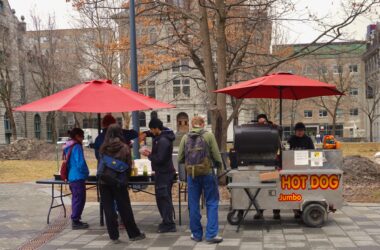
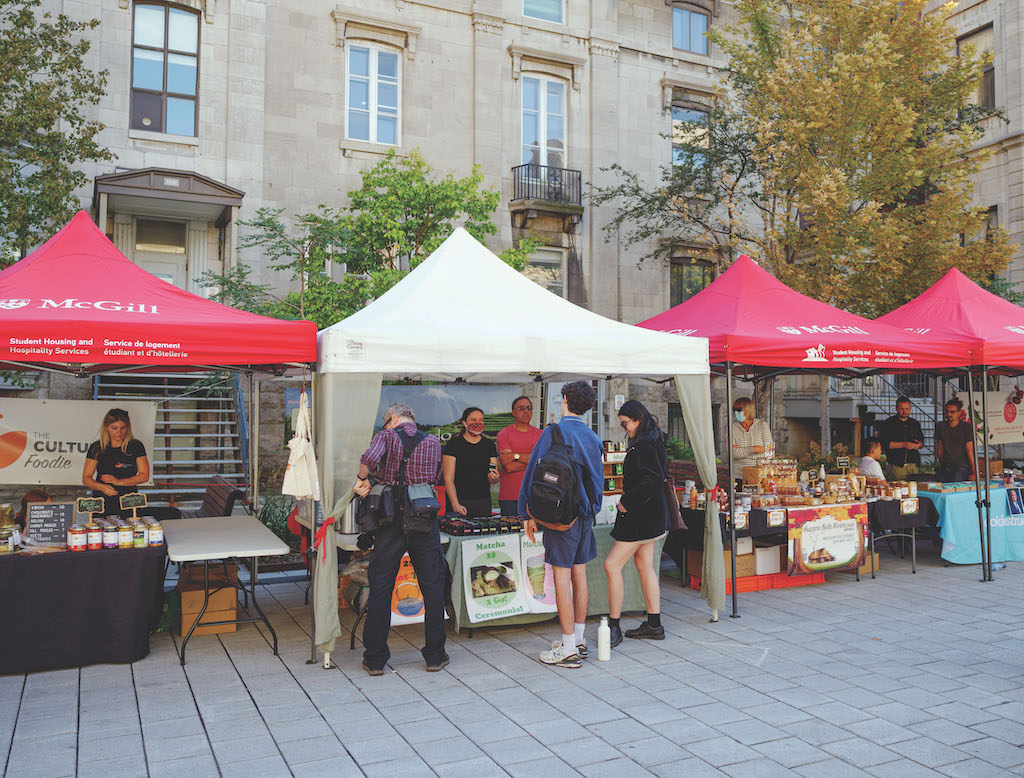
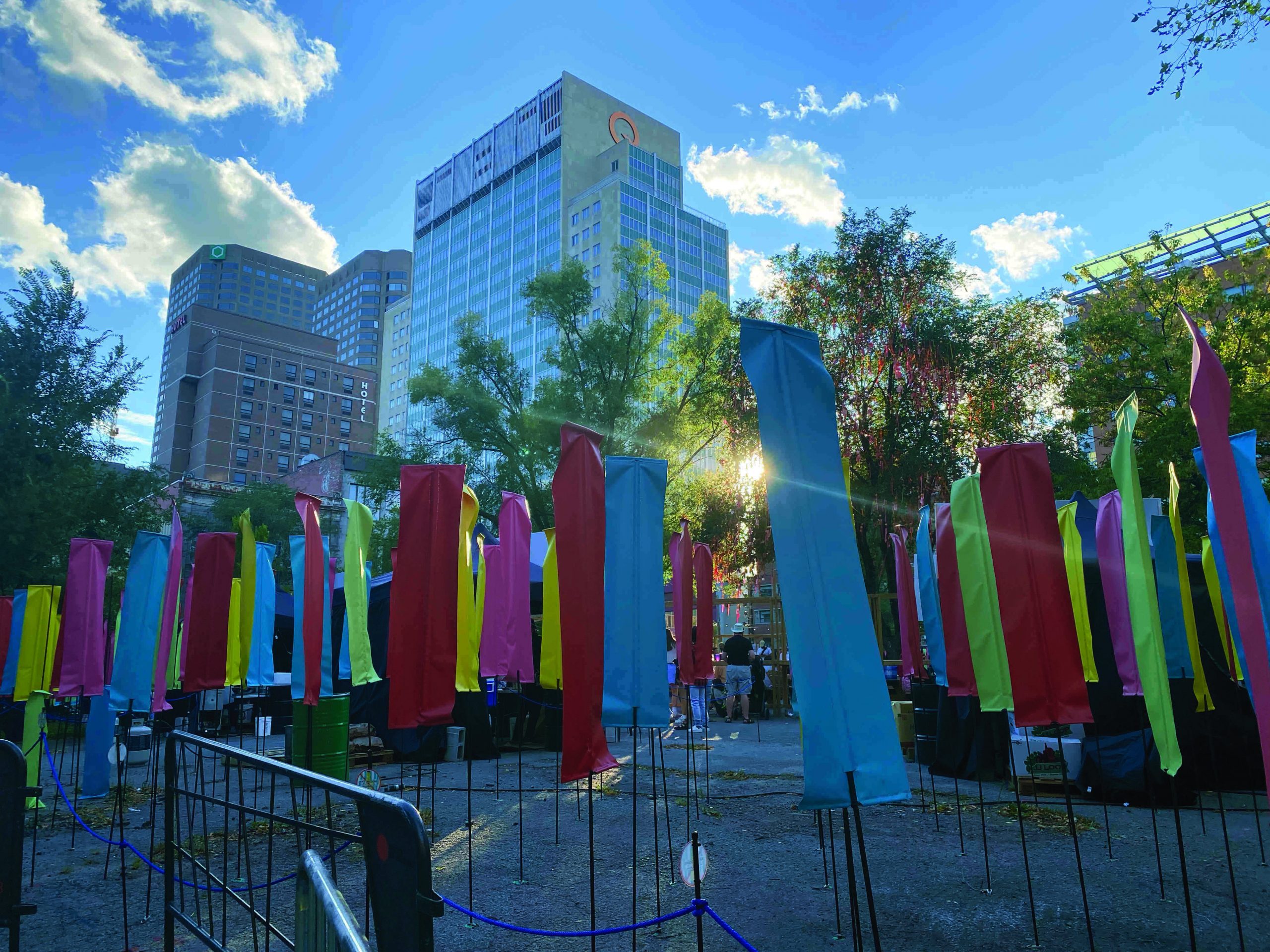
The McGill Farmers’ Market has been a staple of the summer and fall seasons at McGill since 2008. It returns again to McTavish Street this year, open on Thursdays from 11:00 a.m. to 5:00 p.m. Multiple vendors selling their signature products offer students a variety of food and flavour options, from De Sucre & de Miel’s avocado cakes and biscoff cookies, to the Cultured Foodie’s kimchi and pickled carrots.  

Jodie Anderson, U3 Arts, and her best friend Aneeka Anderson, U3 Arts, visit the market regularly. 

“We met up last week here and we are meeting up again this week to make this a little tradition,” Aneeka Anderson said. “We’re in our final year and, with COVID interrupting these traditions that we were forming [on-campus], we’re happy to be back and making the most of our last year.”

“It’s hard to shop locally and get such fresh stuff,” Jodie Anderson added. “Otherwise, if this wasn’t here, I might just be going to a big chain grocery store.”

Emma Leaden, MA2 Information Science, who visited the market for the first time, found it conveniently located and easily accessible. 

“This was right on campus,” Leaden said. “I know there’s a couple other farmers markets in the city that I haven’t been to because it’s just not as convenient.”

Leora Schertzer, U4 Arts and the coordinator of the farmers’ market, said that the market’s mandate is to provide accessible and sustainable food options to students.

“The goal is to promote local agriculture and local food production,” Schertzer explained in an interview with The McGill Tribune. “I think people like to meet the people who are producing their food as well. It makes it feel more personal. It makes you feel like you have more of a connection to what you’re eating and what you’re putting in your body.”

In addition to connecting students to local vendors, the market team organizes the Community Supported Agriculture (CSA) program, an initiative that offers local and seasonal produce through a weekly basket subscription service. The baskets are sourced from Co-op au Bout du Rang, a farm based in Saint-Felix-de-Valois—approximately an hour away from McGill by car—that grows over 40 varieties of vegetables. 

With current agricultural production systems causing substantial harm to the environment, Schertzer said a shift in food industry practices is urgently needed to confront climate change. 

“I think, in order for that change to happen, people need to have some sort of personal investment [in their food],” Schertzer said. “It makes people really happy to see the farmers’ market. They recognize familiar faces of the vendors who are super into what they’re doing and care a lot about their projects.”

Among these vendors is Elba Vasquez, owner of Café Elba. Vasquez started her business in 2013 to help struggling farmers in El Salvador. 

“I grew up in a small coffee farm in El Salvador, and I know what it’s like to be working there all day long in the coffee plantation,” Vasquez explained. “When I was a teenager working as a coffee picker, I was making 50 cents for every 35 pounds of coffee that I picked […] Some people make only $10 a day working all day long.”

The proceeds from the coffee Vasquez sells at the market help communities in Central America. She has recently been sending money to students in El Salvador to help them buy school supplies.

Although she takes part in a number of other farmers’ markets, Vasquez appreciates the student demographic unique to the McGill Farmers’ Market.

“Young people are very interested in [my business],” Vasquez said. “They want to help us by buying [the coffee]. They are very curious.”
Student Life

Bringing Pride to Chinatown

There was once a time when the terms “Pride” and “Chinatown” would not be associated unless you were talking about a restaurateur’s delight in the quality of their har gow (Cantonese dumplings). However, these days in Montreal’s Chinatown district, pride has a new meaning.

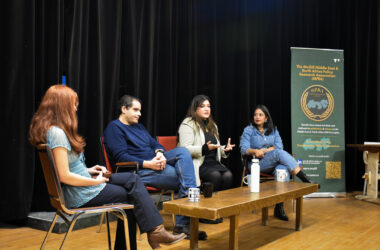
On Sept. 12, queer folks and allies united at Place des Souhaits for “Fierté au Quartier Chinois,” an event organized by Sticky Rice magazine, to celebrate Chinatown’s first pride and to mark the magazine’s one-year anniversary.

In an interview with The McGill Tribune, Viet Tran, Sticky Rice’s editor-in-chief, explained the importance of the event for Montreal’s queer Asian community.

“It became necessary to break the silence around [being queer and Asian],” Tran said. “What has been expected from Asian folks was to be quiet and to make ourselves discreet.”

Sticky Rice magazine explores what it means to be an Asian Canadian by highlighting the experiences of the Asian diaspora communities across Canada. Through essays, interviews, films, and other mediums, the magazine promotes an ever-changing dialogue around Asian-Canadian culture and identity.

Sticky Rice was founded in 2020, when anti-Asian hate crimes were on the rise. Amid this difficult period, the team decided it was time for Asian-Canadians to express themselves creatively from a place of vulnerability and authenticity.

The challenge to explain and understand what queer folks experience in predominantly Asian spaces is a difficult one, as Asian cultures are not homogenous. All with their own traditions, values, foods, belief systems, and people, Sticky Rice and its contributors recognize that they cannot speak for the experiences of all queer Asians.

“It’s not a secret that older generations are known to be more conservative with regard to sexual diversity,” Tran said. “There’s also something to be said about the relative lack of jargon in many Asian languages to address LGBTQ+ issues. We’re hoping that by giving queer Asians the permission to celebrate themselves in a more traditional neighborhood will inspire them to continue taking up space.”

Tran felt it was important to invite people from all demographics to the event.

“I do think that in any culture in which the pillars of family life sometimes take priority over individual differences, there are more efforts put into calling in people from all generations,” Tran said. “It was really important that this event be multi-generational, because the goal was to build bridges between younger queer demographics, local business people, and their legacies.”

Last weekend’s event featured performances from Montreal-based artists Hua Li, Waterboi, Miranda Chan, Beau Gomez and Die Nasty, Molly Gum, Frantz Lin, and Kai.

Frantz Lin described the significance of the event for him and others involved. 

“As far as I know, this was the first Pride in Montreal’s Chinatown, period,” Lin said. “It’s historic. It’s pretty important for Asian and Chinese youth to take our energy and community to partake in and claim Chinatown.”

Attendees enjoyed Asian street food and drinks provided by the on-site Asian Night Market and also learned about the Chinatown area through community-led walking tours. 

Tran described the significance, and importance, of holding this event in Chinatown. 

“It’s a neighbourhood that harbours a lot of cherished memories for us and our families, so we wanted to really pay respect to its history and to the resilience of its culture through guided walking tours, and by re-appropriating the space through an Asian-led party,” Tran said.

Sticky Rice’s second volume focusses on opening up the conversation around what it means to be Asian and queer. Titled (BE)LONGING: The Queer Edition, the volume showcases queer Asians from all backgrounds who have not historically been centred in mainstream 2SLGBTQIA+ platforms.

“​​As a musician of Asian descent, it also meant a lot to have such a diverse audience full of allies alongside the intergenerational support I felt from other Asians in the audience,” Montreal-based performer Hua Li said. “Sticky Rice highlights the margins of the Asian experience and gives us the space to break free from the model minority myth.”

Out on the Town, Student Life

Exploring Montreal’s thrifting scene

With the return to campus, many members of the McGill community are meeting off-screen for the first time, finally getting the chance to express themselves through their fashion choices. For the budget-conscious university student, this may sound daunting. However, Montreal’s wide selection of thrift stores, each with their own unique ambience, offer cheaper and more environmentally friendly alternatives to the big name-brand clothing stores. 

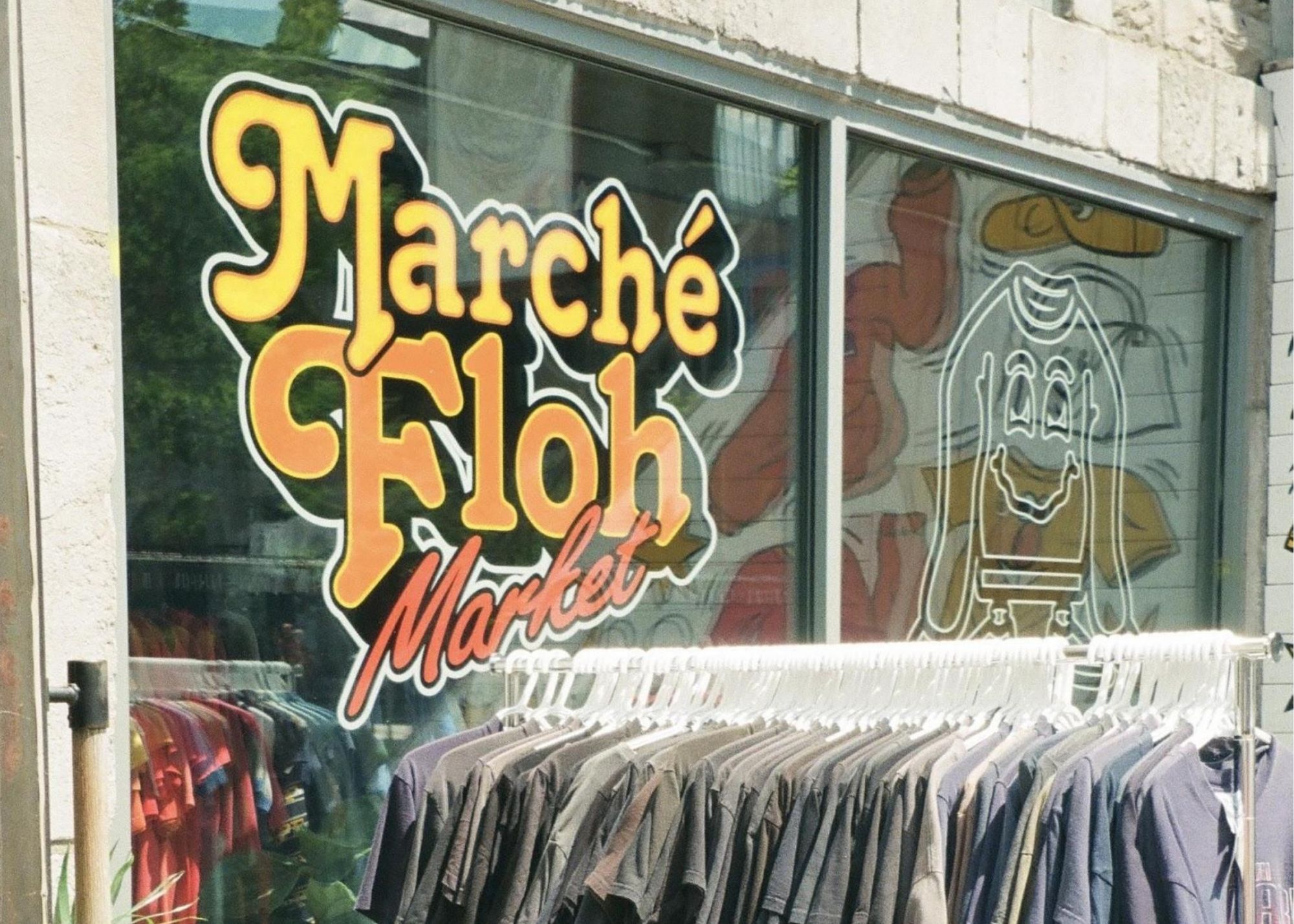
1. Marché Floh – 4301 Saint Denis Street

Marché Floh is a three-story vintage market that boasts 20 different resellers.

Alex Mondry, the market’s founder, has been passionate about thrifting for years. The business began as a pop-up thrift shop from Mondry’s own home, and eventually grew into larger pop-ups in Montreal’s commercial spaces in collaboration with other vintage resellers. The idea of hosting resellers all under one roof, Mondry explained, became what is now Marché Floh.

“The environment that we want to offer is very judgment-free, inclusive, [and] expressive, [where someone can] look for any type of piece and probably find it,” Mondry said in an interview with The McGill Tribune

Marché Floh’s stock includes ‘90s and early 2000s streetwear, baby-doll and goth styles, as well as hand-painted pieces.

Key to thrifting’s appeal, Mondry said, is the eclectic flare that vintage pieces bring to one’s wardrobe.

“Thrift shopping simulates a creative style that is different from shopping in a big-box store,” Mondry said. “You’re rarely going to run into someone with the same outfit as you.” 

Mondry also recognizes that thrift shopping helps minimize waste in the fashion industry. 

“People who thrift are helping us keep garments out of the landfill,” Mondry said.

2. LNF Shop – 5319 Park Avenue

For those looking for a thrift shop focussed on ‘90s nostalgia and high-quality brand name accessories, look no further than LNF Shop. Known for its denim, graphic T-shirts, and accessories, the shop is conveniently located within walking distance of the McGill campus.

Charlie Whitley, LNF Shop’s co-owner, is a former American Apparel employee who was inspired to add to Montreal’s vintage scene—which was lacking when LNF Shop started 10 years ago. 

“[It’s very] heavy ‘90s nostalgia, while trying to keep up with current trends,” Whitley said. “The care that goes into the products and the selection process [sets LNF Shop apart].”  

Items come from a variety of independent suppliers across Canada and are sold at affordable prices. 

The number of students opting to shop at thrift shops instead of big-box retailers is encouraging to Whitely, who is happy to see that many have shifted toward a more environmentally conscious lifestyle. 

3. Cul-De-Sac – 3794 St. Laurent Boulevard

Cul-De-Sac sells a variety of collectable pieces spanning multiple decades. It also boasts an in-house workshop where thrifted pieces can be modified and repaired.

Co-owner and manager Marc Jetté is no stranger to Montreal’s thrifting scene: 17 years ago, he began selling bags made out of recyclable materials, and his business eventually grew to include other accessories and clothing items.  

Jetté highlighted that many of Cul-De-Sac’s garments are of high quality because they were made during time periods when production methods were more thorough than they are now in the fast fashion industry.

“When people buy [from Cul-De-Sac], they are buying from a time period where things were made better.” 

Martlets, Soccer, Sports

Martlets Soccer earn their first point of the year

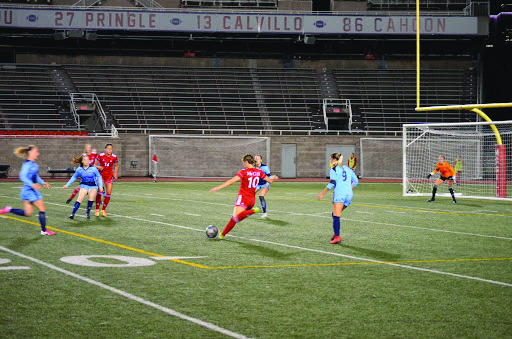
A week after their home opener defeat to Laval, the Martlets took to the pitch in hopes of earning their first points of the 2021-2022 season. While they hoped for a win, the Martlets came home with a singular point following a 0-0 draw to UQAM. Similar to the game versus Laval, McGill played well in the first half but lost their shape and patience as the game wore on. UQAM was able to slow down McGill’s build-up and the game entered halftime at a stalemate that neither team seemed ready to break. In the second half, the Martlets came out energized, playing long balls and pressing high. Despite several high-quality chances in front of goal, the Martlets were unfortunately not able to capitalize. 

“We deserved a better fate,” head coach Jose-Luis Valdes said in an interview with McGill Athletics. “We didn’t necessarily have a lot of possession and turned the ball over too much, but we didn’t allow them too many scoring opportunities in the first half. After the intermission, we decided to press and that gave us a little more confidence, which resulted in our side getting the ball higher up-field and created more chances to score.”

According to spectator Shaz Kassimali, U4 Science, McGill’s press on offence added an energy in the second half that was noticeable from the stands.

“The girls’ effort was relentless, they pushed through till the end, and their resilience is inspiring and admirable,” Kassimali said.

In addition to the team earning their first point of the season, first-year goalkeeper Brenna Bordeniuk earned her first McGill clean sheet. Bordeniuk delivered a commanding display in nets, making a key save from close range on UQAM forward Eve Levesque at the end of the first half. Second-year team captain Olivia Mazzarello also spearheaded a talented backline, helping Bordeniuk with added protection.

“I think we were able to create some more goal-scoring chances,” Mazzarello wrote in a message to The McGill Tribune. “We’re going to continue looking to improve our creativity up top and working on our collective play all around.” 

The game was the first of a doubleheader with the men’s team, yet the stands only started to fill toward the end of the Martlets’ game. The men’s team went on to win behind two incredible penalty saves, which are proven to be influenced by crowd noise. 

“The energy in the stands was impeccable and really affected the outcome of the game,” said Safa Khalifa, U1 Arts, who attended the men’s game. “Everyone was standing and cheering for even the smallest things, saves, steals, good passes [….] I think it really encouraged the guys on the team to keep doing what they do. The crowd’s passion really motivated the team to score that game-winning goal.”

The Martlets began a series of away fixtures with a 3-0 win on Sunday, Sept. 19 versus Université du Québec à Trois-Rivières (UQTR). In a little under two weeks, on Oct. 1, the Martlets will return home to face rival Concordia under the Molson Stadium lights at 6 p.m. A packed crowd certainly would help spur our Martlets on to their first home win of the season.

Moment of the Game

In the 58th minute, first-year forward Annika Schmunk forced a top-drawer save from UQAM’s Andreanne Dubeau to keep the game at 0-0.

Stat Corner

The Martlets went into this fixture having lost their last three contests against UQAM, dating back to 2019.

Quotable

“It feels great and it’s motivating because we are expecting to get a lot more wins and [to] just keep getting better as a team,” said first-year defender Stephanie Hill regarding their first point of the season.

Student Life

Showcasing queer culture through cookbooks

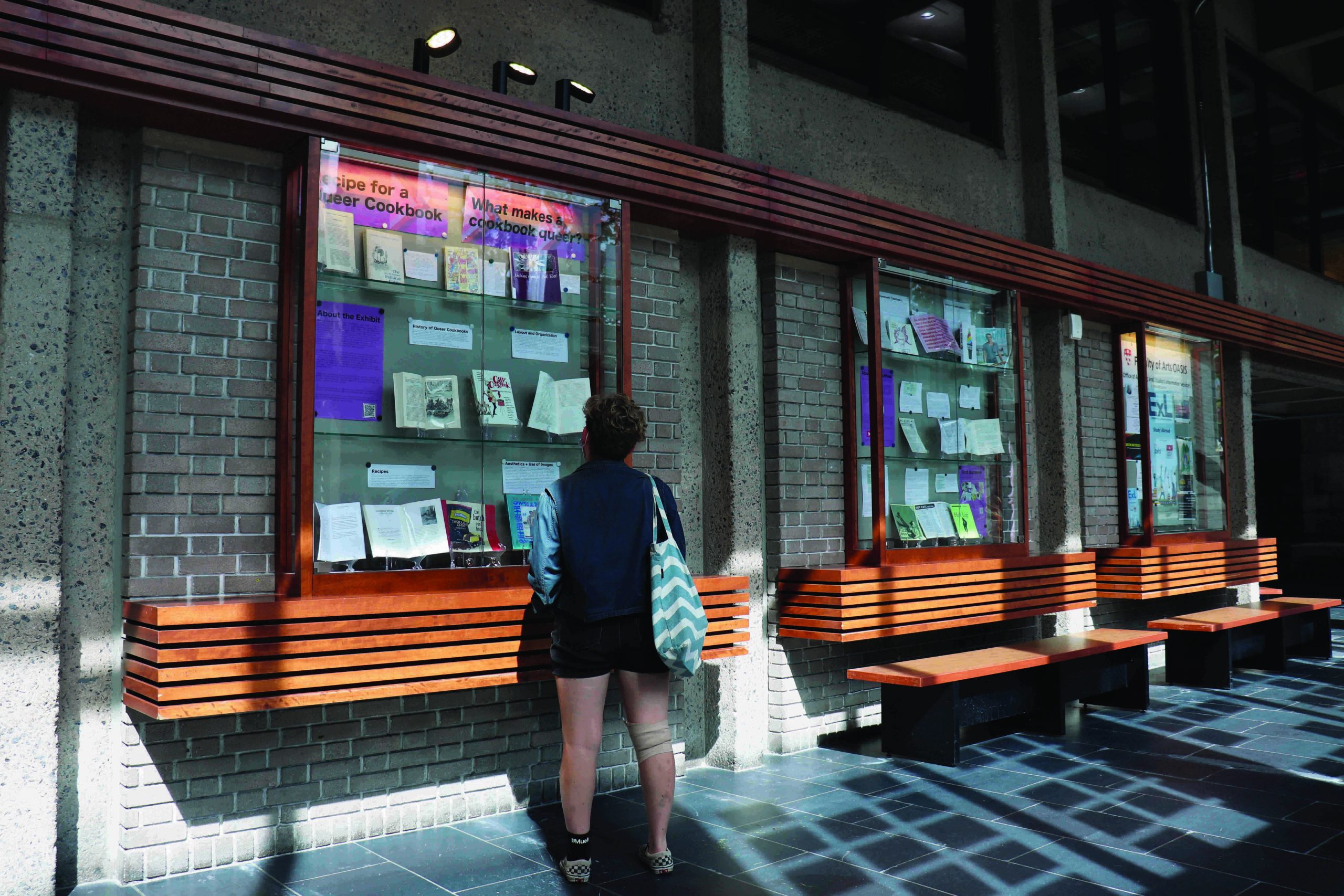
Up until Dec. 20, students walking down the Leacock corridor will notice a new addition to the glass cases lining the wall: The “A Recipe for a Queer Cookbookexhibition. 

Curated by Alexandra Ketchum, a faculty lecturer at McGill’s Institute for Gender, Sexuality, and Feminist Studies, the exhibit showcases more than 20 cookbooks that, for one reason or another, can be described as queer. 

Ketchum’s interest in queer cookbooks stems from her research into feminist restaurants. Her love for the subject was born out of a formative experience from her undergraduate years, when she visited Bloodroot, a self-proclaimed feminist restaurant and bookstore located in Bridgeport, Connecticut. Ketchum ended up writing about the spot in her undergraduate honours thesis and eventually pursued her master’s and PhD at McGill, where she studied feminist restaurants, cafes, and coffee houses in North America. 

The exhibit itself is inspired by lesbian feminist restaurant owners, some of whom put together their own cookbooks. 

“Bloodroot [has produced several cookbooks],” Ketchum said. “The first one was in 1980, called The Political Palate. In many ways, it’s like a political manifesto and a cookbook.”

While she has many research interests, Ketchum explained that amidst the difficulty of the pandemic, putting together the project was an opportunity to have fun with her research. 

“I’m into these cookbooks as artifacts and what they tell us about history, what they tell us about different cultural movements,” Ketchum said. “It allows me to ask […] deep questions about identity, queerness, politics, access to publishing and so forth, but it was also just fun.”

When asked what exactly makes a cookbook queer, Ketchum pointed to the importance of the viewer’s own interpretation.

“Part of the exhibit was to […] invite viewers and readers […] to think about, ‘what do I think makes it queer?’” Ketchum said.

However, there are some characteristics Ketchum includes in her own personal definition of a queer cookbook. For example, the authors of the book must, in some way, identify as part of the 2SLGBTQIA+ community, and the cookbook should connect to queer communities—be it through fundraising efforts, raising awareness about queer issues, or gathering recipes from community members.

But overall, the cookbooks vary––some are plant-based,  some have religious affiliations, and some emphasize sexuality and include nudity. A few of Ketchum’s personal favourites include The Kitchen Fairy’s Be Gay! Eat Gay!: The Gay of Cooking and Lagusta Yearwood’s Sweet and Salty

While most of the cookbooks on display come from her own personal collection, Ketchum also collaborated with the Quebec Gay Archives and Quebec Lesbian Archives, who provided the zines. Beyond loaning material for the exhibit, Ketchum wanted to collaborate with the archives in order to inform viewers that they are available for research on queer history

“[Viewers or readers] can scan the QR codes [in the exhibit] and find out how to make an appointment where they can see what other collections are available, or what’s digitized,” Ketchum said. “And all of a sudden, archives don’t feel like these spaces that are behind locked doors that you can never go to.”

For those who are not able to visit the physical exhibit in Leacock, the digitized version is available online at The Historical Cooking Project, a blog Ketchum has been editing since 2013. 

Science & Technology, Science Rewind

Science Rewind: Eight scientific advances discovered at McGill

Since 1821, McGill University has climbed the ranks and established itself among Canada’s high-performing research institutions. It is no understatement that McGill professors and alumni went on to excel in their respective fields, particularly in scientific domains. 

Ernest Rutherford, who was a professor of experimental physics at McGill, conducted world-renowned research on the concept of radioactivity. In 1908, he was awarded the Nobel Prize in Chemistry for his work, which included coining “radioactive half-life” and distinguishing between alpha and beta radiation.  Past these remarkable achievements, The McGill Tribune has compiled a list of lesser-known accomplishments that have irrevocably altered and advanced various scientific disciplines.

  1. The discovery of radon in 1899

Anyone who has taken basic high school chemistry courses will have come across this noble gas in the periodic table. With an atomic number of 86 and an atomic weight of 222, radon sits just below xenon, and forms as a result of the radioactive decay of uranium. Radon was the fifth radioactive element to be discovered, with the first four being uranium, thorium, radium and polonium. Rutherford, after whom the physics building on campus is named, made yet another groundbreaking discovery when he identified the noble gas alongside fellow McGill professor Robert B. Owens

  1. The development of the first artificial cell

Biological cells are the building blocks of life: A group of cells are arranged into tissues, which form the organs that make up nearly every part of our bodies. In 1957, Thomas Chang, a then-undergraduate student in the Faculty of Science, engineered the world’s first artificial cell that imitates one or more actions of a biological cell. Chang developed an artificial cell that was able to carry haemoglobin as efficiently as a red blood cell does. 

  1. The first internet search engine

Imagine having thousands of files stored on a computer with no way to easily sift through them to find a specific result. Fortunately, search engines exist to avoid this issue. A search engine probes the information stored on a computer to pick up the specific data the user requests. Examples of search engines include web search engines like Google or Yahoo, for example, and are designed to find and display information that was already stored on the World Wide Web. The first web search engine was developed by Alan Emtage in 1990, a postgraduate student at the School of Computer Science, after he was tasked, along with a team of other students and staff, to connect McGill to the internet. 

  1. The first veterinary pathology course 

Often dubbed the “father of modern medicine,” Sir William Osler completed his medical studies at McGill, receiving his MDCM degree at the age of 22 in 1872. He went on to complete his postgraduate training and returned to McGill in 1874 to pursue professorship. Osler was the first professor to teach a course on veterinary pathology in North America with the aim of furthering his students’ understanding of the origin and development of diseases. He later joined the University of Pennsylvania faculty, became one of the four founding fathers of the Johns Hopkins School of Medicine, and established the first formal residency program there.

  1. The invention of Plexiglass

Plexiglass, also known as acrylic, is a chemical compound invented by William Chalmers, PhD ‘30. The material became widely used in the manufacturing of airplane windows during the Second World War and has also seen a revival throughout the COVID-19 pandemic—where it was quickly implemented in vaccination centres and grocery stores to curb the transmission of the virus. Due to its strength and durability, plexiglass is typically sold as a shatter-resistant alternative to glass. Common applications of plexiglass include aquariums walls, building windows, and greenhouse panels. 

  1. The discovery of cytokine interleukin-2

Cytokines are a family of small proteins secreted by cells that send messages to the immune system to perform a certain function, thus playing a pivotal role in regulating the body’s immune response. The ‘interleukin-2’ hormone entered scientific discourse when a team of researchers were studying the impact of retroviruses on human disease; the hormone was necessary for the maintenance of T-cells in the lab. This cytokine, later referred to as ‘interleukin-2,’ was discovered by McGill researcher and Royal Victoria Hospital’s surgeon-in-chief Dr. Lloyd D. Maclean in 1965.

  1. The creation of MUSIC/SP

Punch cards, physical pieces of paper with lines of code punched into them, were once used to store digital data. However, the Multi-User System for Interactive Computing/System Product (MUSIC/SP), formerly known as “McGill University System for Interactive Computing,” was invented as a time-sharing operating system that allowed students and university staff to enter and extract information from the modern, newly developed terminals. Released in 1972, MUSIC/SP was able to expand globally. By the time the operating system became obsolete due to more efficient methods of data storage, it had already reached 250 research institutions and schools.

  1. The invention of the Montreal Procedure

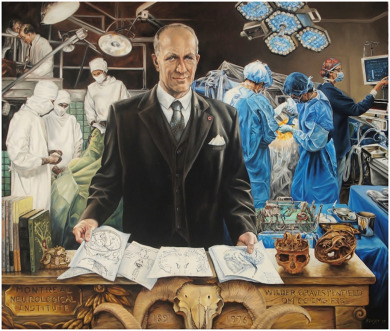
The Montreal Procedure, used to treat epilepsy patients, was developed in 1952 by renowned neurosurgeon Wilder Penfield, a then-professor at McGill and founder of the Montreal Neurological Hospital and Institute along with neurologist Herbert Jasper, who was a professor of experimental neurology. Epilepsy is characterized by groups of nerve cells signalling in an abnormal manner, causing seizures. The Montreal Procedure is an epilepsy treatment that attacks the nerve cells that cause these seizures. During the operation, patients are given a local anesthetic, thus remaining conscious throughout the procedure. The surgeon would then use electrical brain stimulation and let the patient inform them of the sensation they receive from such stimulation, allowing the surgeon to identify and remove the tissues affected by the seizure.

McGill, News

Safety concerns loom as WALKSAFE and DriveSafe halt operations

Content warning: Discussion of physical and sexual violence.

Two volunteer-based security services on campus are halting operations, with a firm date for resumption yet to be determined. Run by the Students’ Society of McGill University (SSMU), WALKSAFE announced the suspension of their regular services on Facebook Sept. 13, following SSMU DriveSafe’s similar announcement on Sept. 3.

WALKSAFE president Leon Picha, U2 Management, attributed the shutdown to limited staffing and phone line complications during the SSMU University Centre’s multi-year closure.

“As the University Centre moved, we did not have access to our landline for some time and we actually do not have access to the WALKSAFE phone,” Picha said. “But also we do not have enough volunteers. A lot of our volunteers have graduated and, if we were to operate, we predicted that volunteers would have to do three times their original commitment.”

Tiffany Leung, vice president (VP) operations at DriveSafe, also blamed their services’ suspension solely on their inability to access the landline. The issue of DriveSafe’s hiatus is currently being handled by SSMU representatives.

While both services have been out of day-to-day operations since March 2020, they have still provided security services by special arrangement, like both services’ helping out during  Frosh Week and Drivesafe’s partnership with the Montreal Student Initiative for COVID-19 Response and Relief.

SSMU vice president (VP) student life, Karla Heisele Cubilla, explained that COVID-19 has also played a role in disrupting the operations of services like WALKSAFE.

“The pandemic has been really rough on our services and our clubs,” Cubilla said. “The government keeps giving us updates daily, and it takes time to plan how a service is going to be run.”

According to Yossef Levin, Med 3 and former WALKSAFE volunteer, the service suffered internal difficulties such as understaffing even before the pandemic.

“When I was part of WALKSAFE during my bachelor degree, we operated on tight staffing, and often they would ask people to help fill out shifts,” Levin said. “Many of the executives would take on an excessive amount of shifts from what I remember [….] There were days when they had to cancel services because of understaffing. This happened every so often, especially in 2019.”

(Brian Schatteman / The McGill Tribune)

The shutdowns have left some newcomers to Montreal uncertain of how to stay safe on and around campus. Sarah*, U1 Arts and Science, was disappointed to hear that the security services on campus had been suspended.

“Coming from a small town, my family and I had concerns with a lot of what you hear about the city,” Sarah said. “But then looking at these services that McGill provides, and knowing that they existed, was quite comforting. Getting here, and realizing that they are not in operation, was a bit nerve-racking.”

Earlier this month, Sarah was walking downtown with her roommates when they witnessed an assault. She attempted to reach WALKSAFE the following evening. 

“We saw this girl in front of us get aggressively groped,” Sarah said. “The next day, I had an appointment late at night and thought, ‘I should use WALKSAFE,’ but was not able to.”

The shutdowns come on the heels of grave campus incidents elsewhere in Canada. In the early morning hours of Sept. 11, an 18-year-old student at Western University in London, Ontario, died of injuries sustained in an assault on a street adjacent to campus. In addition, four separate cases of sexual assault were reported to Western campus authorities during the week of Sept. 6.

Lapses in current security offerings are unacceptable, argued U3 Arts student Mikaela Fasold. Remarking on the dwindling security options available to students, Fasold called on volunteers to rise to the occasion.

“Students now have even fewer resources […] short of building their own buddy system or gambling that campus security can always be there to provide protection,” Fasold said. 

“The onus lies on all of us to step up.”

Emergency aid can be reached through a Security Services Safety Escort  (Downtown: 514-398-30000. MacDonald campus: 514-398-7777). The Sexual Assault Center of the McGill Student’s Society hotline is 514-398-8500. McGill Students’ Nightline can be reached at 514-398-6246. SSMU WALKSAFE and SSMU DriveSafe are actively recruiting, see their respective Facebook pages for more details. 

*Sarah’s name has been changed to preserve their anonymity.

Science & Technology

The social and environmental toll of concrete production

Names like McCall MacBain Arts, Redpath Museum, or Stewart Biology may bring to mind lecture halls and study spots, but all these McGill landmarks have at least one more thing in common: They all use concrete in their construction. Just about every infrastructure project in Montreal, and across the world, relies on the sand and gravel mining industry. These materials are used as aggregate—a mixture of sand, gravel, and crushed stone used to produce construction materials such as concrete and asphalt—and are then incorporated in infrastructure projects such as bridges, roads, and walkways.

At around 23 billion tonnes annually, concrete is the second most consumed material in the world, after water. The sand and gravel used in concrete production are the most mined materials globally, with 32 to 50 billion tons extracted each year. Despite the size and scale of this industry, the human and environmental impacts of sand and gravel mining, especially in low- and middle-income countries (LMICs), are not yet well understood.

To fill this research gap, Mette Bendixen, assistant professor in the Department of Geography at McGill, and her colleagues set out to review and assess the effects of sand and gravel mining in LMICs, especially as they pertain to the United Nations Sustainable Development Goals (SDGs).

“Sand is definitely a complicated topic that interacts with fields including science and health,” Bendixen said in an interview with The McGill Tribune. “It is a global challenge that is often overlooked. So many people don’t know that it’s such a highly used commodity.”

In an article published in One Earth, Bendixen and other researchers from institutions around the world argue that aggregate mining can alter local topography and damage surrounding freshwater and marine ecosystems. Not only do these mining activities affect the health of the environment and its flora and fauna, but they also affect human health. Some of the potential health effects of sand and gravel extraction include respiratory diseases from the inhalation of small crystalline particles, as well as exposure to environmental contaminants such as arsenic, lead, and cyanide. 

The communities most impacted by sand and gravel mining are often the most marginalized in their local contexts. The article notes that the low-income and uneducated workforce is heavily dependent on aggregate extraction, and that these populations are particularly vulnerable to poor health outcomes such as lung cancer and silicosis. Artisanal and small-scale miners in LMICs, controlled by sand mafias, are often criminalized and subject to violence as well.

“[Miners] are not criminals. They are just trying to make a living,” Bendixen said. “Actually, sand and gravel mining can provide a relatively good income.”

Bendixen and co-authors explain that communities, especially in LMICs, need extractive industries to provide jobs and build infrastructure, which are key elements of the United Nations’ SDG. For instance, children from these families can afford to go to school, furthering SDG 4’s goal of quality education for all. For these reasons, Bendixen believes it is not productive to ban mining activities outright, but instead advocate for better solutions, including circular material usage—a concept supporting the necessity of reutilizing already-consumed resources. 

“We, in high-income countries, have the moral obligation to reuse the material we already have,” Bendixen said. “We should try and look for other alternatives.” 

This call to action begs the question: Do McGill’s buildings and roads use materials that are eco-friendly? Bendixen thinks not, although she says it is often hard to tell where building materials come from. 

“I would be surprised if the resources were sustainably sourced,” Bendixen said. “There are very few incentives to use recycled materials.”

Bendixen compared the situation to the looming threat of climate change, and believes that it is the responsibility of governments to implement solutions. 

“We need political leadership,” Bendixon said. “Just as we are committing to limiting global warming to 2°C, we must commit to the circular approach, to reusing materials.”

Off the Board, Opinion

‘Where We Were’: From reality to memory

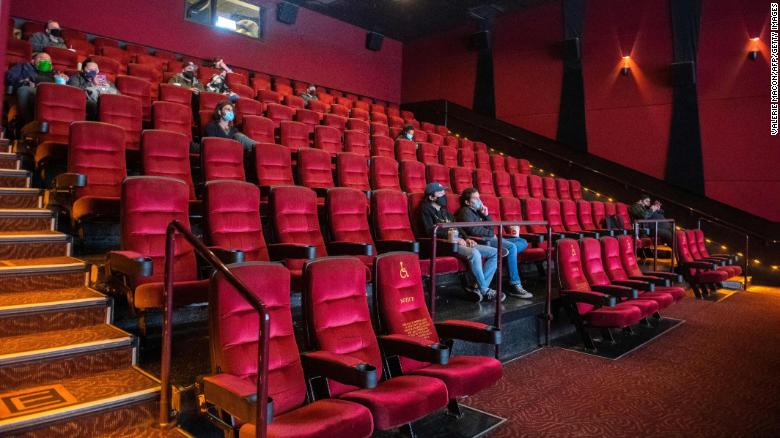
This summer, McGill’s Tuesday Night Cafe Theatre, a student-run, anglophone theatre company affiliated with McGill’s English department, screened the short film Where We Were. The film feels reminiscent of the COVID-19 outbreak as the story makes connections between how people process memories of large-scale catastrophes and our current reality. This film takes on special meaning during the pandemic, as it inspires the viewer to reflect on how to react and live following a world-altering event. 

While watching this film, memories flooded back to me of when I first heard about the COVID-19 outbreak in China. Although I was in Montreal, the shock and fear I felt for my friends and family remain deeply rooted in my memory. It began as a terrifying rumour spread on WeChat. Immersed in the joy of the Lunar New Year festivities, most people did not take the rumours seriously. But then, the government confirmed the “rumour.” Cities were placed under lock-down, shopping malls and small businesses closed, and my mom even lost her part-time job at the popcorn store. The parallels between the characters and the audience, such as their age and place in the world, immerse the audience in the narrative world of the film. 

The Lunar New Year should have been the most delightful and exciting time in China. But instead, the streets laid empty and quiet, deserted because everyone was isolated at home. However, I did not foresee how quickly things would get out of control and how differently people around the world would experience this pandemic. Although things are slowly getting better in many parts of the world, the shadow of COVID-19 still affects our lives in ways. The various racial, gender, and class backgrounds of Who We Were’s five characters impact the way they experience and remember the same event—also shaping how they react to and process it. The film then explores how reality transitions into collective memory, a phenomenon that we are all undergoing during the pandemic.

There is one character named Nikki that I particularly empathize with. Nikki is an immigrant who might never get the chance to see her father again due to the undisclosed event in the film. Similar to the real world, when COVID-19 became a global health crisis, travelling between countries became extremely difficult. Many friends of mine still cannot return to their homes in China because of limited flights and increased prices. Besides, different countries’ policies regarding travelling abroad change so fast that even if one can manage to come home, there is no guarantee that they will be able to return to Canada in time to continue their studies. This is also why I have chosen to stay in Canada since the beginning of the pandemic. I have had to sacrifice the chance to see my family in China to avoid the risk of not completing my degree on time. 

Due to the ongoing pandemic, all productions of the McGill Tuesday Night Cafe Theatre were adapted to virtual formats. Where We Were was an experimental pandemic film production, with intriguing production techniques that combine Zoom recordings and in-person shots. As we move into the post-pandemic world, restrictions will ease, and with this comes changes to how this time will be remembered. Knowing that we have gotten to a point where media and film reflect and represent our lives during the pandemic only strengthens the theme of the film, revealing the plurality of ways different situations can be experienced by different people.

McGill, News

Activities Night ‘after hours’ party marks return to in-person SSMU events

The Students’ Society of McGill University (SSMU) held its first in-person event of the Fall term, “Activities Night ‘after hours,” on Sept. 14 at Muzique—a nightclub on St-Laurent Blvd near campus. “After hours,” promoted as a celebration for the return to student life on campus, was the second part of SSMU’s two-day Activities Night series

In keeping with Quebec’s COVID-19 regulations for bars and restaurants, protocols included mandatory mask-wearing when moving around the venue, enforcement of the Quebec vaccine passport, and fixed seating arrangements at pre-reserved tables. Plexiglass separated the individual booths and tables. Attendees were allowed to visit Muzique’s three rooms: The Main Room, the Hip-Hop room, and the Terrasse.

Although attendees were required to wear masks, many of the Muzique staff, including the bouncers and the DJ, were seen without masks. Nevertheless, many students, like Joey Hershkop, U1 Engineering, said the event’s vaccine policy eased his concerns. 

“I feel completely safe, considering the vaccine passport,” Hershkop said in an interview with The McGill Tribune. “Having the peace of mind knowing that everybody here is vaccinated is crucial.” 

Abdel Madrid Rafai, U2 Engineering, agreed that the safety precautions at the event were sufficient. Madrid Rafai expressed his eagerness to participate in student life this year, after completing his first year at McGill entirely online.

“I really do not have many concerns,” Madrid Rafai said. “We did not have many cases [at] McGill these past few weeks and the regulations were followed [….] I am just excited to be with other students.” 

At around 10:45 p.m., Montreal Police (SPVM) inspected the venue to ensure that the venue was adequately enforcing COVID-19 safety regulations. The police found no violations, leaving Muzique after 10 minutes.

“I talked to the police,” Karla Heisele Cubilla, Activities Night organizer and SSMU vice-president student life said. “They told me that they received a phone call, saying that there was a party and [asking] if [the police] could go check that regulations were being followed [….] The police came in, they found nothing wrong.”

Heisele Cubilla said that while she primarily received enthusiastic responses from the McGill community after the event, she said she also received concerns from SSMU members about how the after party would adequately adhere toCOVID-19 protocols. 

“I brought it to [SSMU’s executive committee],” Heisele Cubilla explained. “The entire team approved this event. I explained […] all the regulations we are taking, and they said, ‘okay, this seems like it is per Quebec’s laws and regulations.’”

SSMU president Darshan Daryanani looked back on the event as a welcome return to student life at McGill. 

“From what I have heard, after more than 18 months of remote learning, students appreciated a venue where they can finally re-engage with each other and restore an experience that students have missed for so long,” Daryanani wrote in an email to the Tribune. “Some students are COVID-19 cautious and prefer online events, so in the near future, we will be planning for both.”

Read the latest issue

Read the latest issue