
Latest News

Student Life

Reshaping public commemorations in Montreal

This summer’s series of Black Lives Matter protests around the globe have sparked greater awareness of colonial legacies that persist in public spaces. Recent petitions calling for the removal of the James McGill statue and the Sir John A. MacDonald monument, and a name change of the Lionel-Groulx subway station have forced Montrealers to reconsider these celebrated figures and their history of upholding racist beliefs and practices. 

The university honours its founder, James McGill, in many respects on campus. From the Le James Bookstore to the James Administration Building and his statue near the Roddick Gates, his image is omnipresent at the university— however, any acknowledgement of his participation in slavery is absent. 

According to Dr. Charmaine Nelson, former professor in the Department of Art History and Communications Studies, James McGill owned between five to seven slaves, at a time when it was rare for Montrealers to own more than two, and represented other white community members in the sale of slaves in Montreal. 

The success of the #ChangeTheName campaign has demonstrated that collective movements are effective tools to drive change on campus. McGill students are now using petitions to force the university to reconsider the legacy of its founder, James McGill. Hannah Wallace, U0 Education at McGill, created a petition demanding that the administration remove the statue of James McGill and acknowledge his racist past. 

Beyond campus grounds, Montrealers are taking action by demanding that monuments of racist historical figures be removed from public spaces. Isobel Walker, the creator of the petition to remove the Sir John A. MacDonald statue, explained how recent protests have led us to rethink the meaning of these monuments. 

“While some have had the privilege of simply observing this monument and not actively questioning its racist roots, for many it has always stood as a monument to white supremacy,” Walker said. “I think recent events have shifted the focus of many Canadians towards the latter.” 

Timothy Stanley, a professor in the Department of Education at the University of Ottawa, argued that MacDonald’s biographers often justify his racism against people of Chinese and Mongolose descent and Indigenous Peoples as a product of the time. Stanley noted that other members of the Parliament of Canada, who were in office at the same time, strongly opposed MacDonald’s discriminatory policies.

Walker is optimistic that the recent public awareness in the history of monuments will result in progress towards racial justice. 

“Montreal has always prided itself on being a multicultural and open place, and yet the municipal, provincial, and federal government continue to place certain voices, bodies, and values above others,” Walker said. “The fight is not over yet, and I think it is of the utmost importance for individuals to continue showing up for others in hope [for] a better future for all.” 

Many are also demanding the renaming of public spaces. In June, infection control practitioner at the McGill University Health Centre and IR-CUSM Naveed Hussain called for the Lionel-Groulx subway station to be renamed after jazz musician Oscar Peterson. 

Lionel Groulx, who was a proponent of the nationalist movement in Quebec during the silent revolution, also discriminated against Jewish people and anglophones in the province. During World War II, Groulx created a campaign to boycott Jewish-owned shops. 

It is difficult to come to terms with the fact that many commemorated figures have upheld and perpetuated racist attitudes in Canadian society. From protests to petitions, Such social movements can teach us how honouring historical figures without discussing the ways in which their personal prejudices negatively affected certain populations oversimplifies their legacies. These petitions help us consider not only who we are honouring in public spaces, but also what values we are placing on a pedestal. 
Student Life

Community Cooks Co-operative builds resilience and kinship

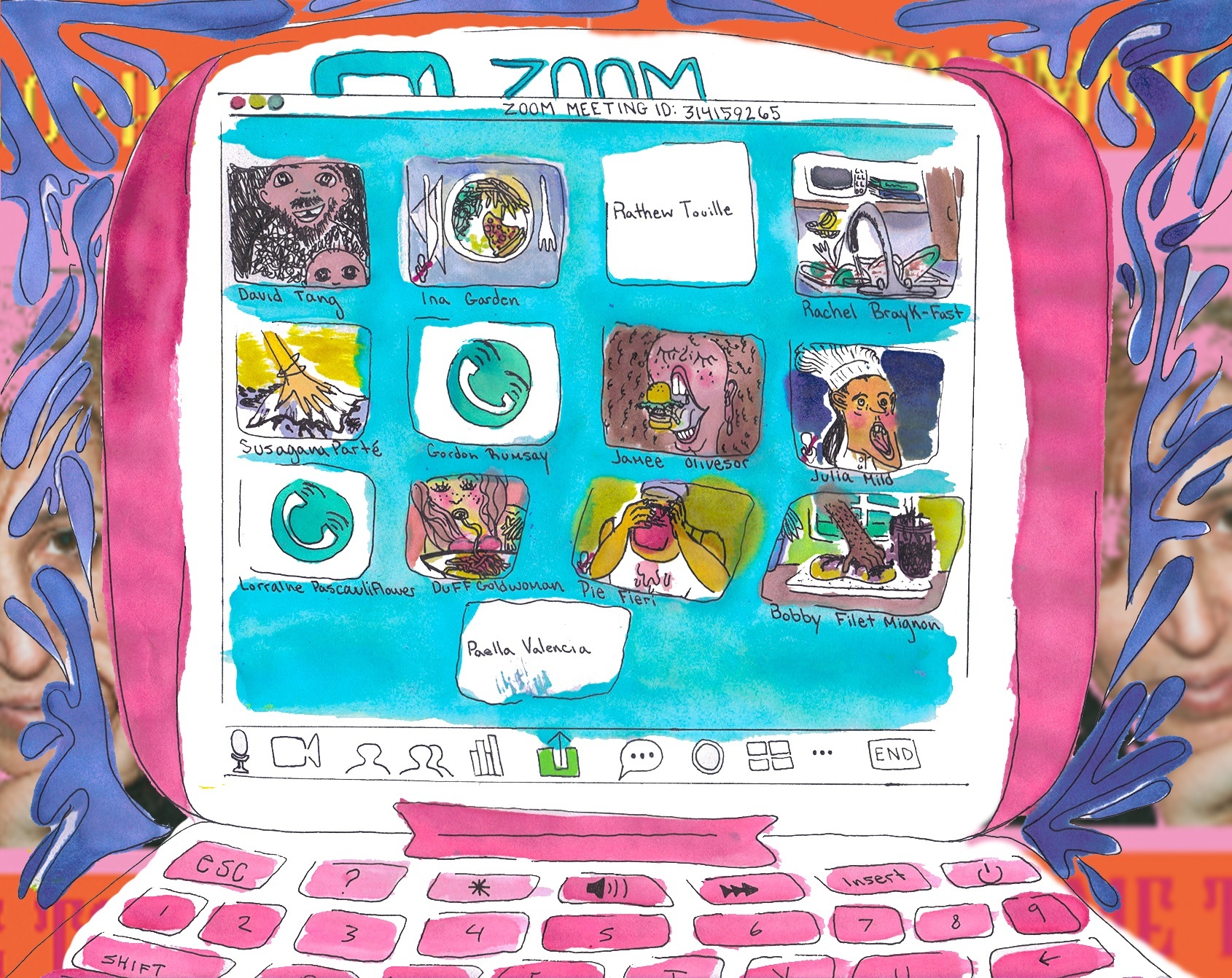
On a hot July evening, the flushed faces, happy chatter, and sound of oil snapping in pans made the Community Cooks Co-operative’s (CCCoop) Zoom session feel almost like a real kitchen. This volunteer group has weekly virtual meetings to catch up, meet new people, and exchange cooking advice, all while preparing a bulk donation of meals for Resilience Montreal, a non-profit day shelter.

CCCoop is a mutual-aid organization that serves a dual role acting as an intermediary between its volunteers and Resilience Montreal while also providing community members a socially distanced way to stay connected.

Located in Cabot Square, Resilience Montreal facilitates a gathering space for Indigenous Peoples, especially Inuit community members. The shelter offers meals, sleeping space, clean laundry, and community support. Resilience Montreal has a standing call for donations of food and essentials, including socks, blankets, and hygiene products.

Tomo Newton, a second-year master’s student in Music at McGill, founded CCCoop in response to the COVID-19 pandemic. 

“A few weeks into quarantine, when everything was really shut down, I was walking on Sherbrooke and seeing the same Indigenous Peoples on the streets, really exposed to everything,” Newton said. “I realized that while my life had stopped […] and I had all the resources I needed to be safe and sheltered, the people that did not have that before still don’t have that.”

According to recent statistics from the Quebec government, there are more than 3,100 people living on the streets of Montreal at any given time. In 2018, Indigenous people made up 0.6 per cent of the city’s population, but 12 per cent of its unhoused people. This mirrors circumstances across Canada, where Indigenous people are four per cent of the overall population, but 28 per cent of the unhoused population.

Since April 2020, CCCoop has coordinated 18 consecutive weekly cooking sessions, each with 10 to 20 volunteer participants. Newton explained that all are welcome to volunteer, and that CCCoop is currently on the lookout for more help.

The McGill Tribune joined a CCCoop cooking session where Newton pointed out that her social circle had actually expanded during the lockdown, as her initiative helped her meet new people.

Although it is still growing, Newton believes that CCCoop is contributing to larger social movements. 

“With all these social movements taking place, we are trying to be a part of them,” Newton said, citing the Black Lives Matter and Indigenous sovereignty movements. “What we’re trying to do is create some sort of bridge between these communities. A lot of [the volunteers] are students [and] a lot of us live in the Plateau, which is pretty far away from Cabot Square where this work is being done.”

Some forms of political action focus on pushing the government to respond to social problems, while other groups organize to address those problems themselves. CCCoop takes the latter approach through mutual aid.

“Pressing for government action is what needs to be done,” Newton said. “I’m not going to say [our work] is the definite solution, but what we’re doing is tending to immediate needs.”

CCCoop volunteer Jeremy Tatar, a third-year McGill doctoral student in Music, shared how volunteering has helped him feel fulfilled during quarantine.

“At a time when people are socially distancing and networks are contracting, it’s so amazing to meet people and work together in this common cause. That’s been a huge benefit for me.”

The future is uncertain for CCCoop, but Newton is not worried. An openness to change has always defined the co-operative, and she expects the strength and creativity of the group to push their work beyond the fall.

“I just found myself with a lot of time on my hands, and this was a way to help out and give back,” Newton said. “Anyone can do this.”

To get involved with the co-operative, visit their Facebook page for more details.

Science & Technology

Satellites: Concerns 2,000 km above the Earth’s surface

Satellites are possibly the most notable example of space technology used in daily life. Portable GPS devices and mobile applications, such as Google Maps, both rely on satellites to ensure commuters arrive at their destination. Telecommunication satellites have connected the world far more than ever before, while meteorological satellites can monitor weather and help us prepare for storms. Now, researchers from a number of disciplines embrace space technology to observe everything from how the Antarctic sea ice is changing to scouting for minerals on the Earth’s surface

However, satellite use comes with its own set of difficulties. One of the greatest challenges for satellite technology in the 21st century is space debris. There are approximately 500,000 pieces of debris in addition to 3,000 non-operational satellites orbiting Earth. Some debris are as small as a loose screw or a fleck of paint, but most of these seemingly insignificant pieces travel at speeds of up to 18,000 miles per hour, which is fast enough to damage a satellite or a spacecraft. 

Professor Arun Misra, chair of the Space Committee for the McGill Institute of Aerospace Engineering, has examined the problem of space debris for the past decade. 

“Many satellites, like the [International] Space Station, have to maneuver to get away from the path of the debris, and then to get back to the original orbit after the debris has passed,” Mirsa said in a video interview with The McGill Tribune.

According to Misra, there are two ways of collecting space debris. 

“One [way of collecting debris] is using a tether net which is similar to catching fish,” Misra said. “The net is thrown, wrapped around the debris, and pulled using a removal satellite to a lower or higher altitude. Another approach is to use a space robot like the Canadarm with a manipulator mounted on it to capture the debris.” 

Whereas the tether net method is reserved for smaller debris, large “dead” satellites are usually captured by space robots.

The challenges of space debris removal raises important legal and ethical questions pertaining to which country the debris belongs and who has the responsibility to remove it. 

“Even though there are thousands of unwanted space objects, not a single one has been removed yet because of many political, legal, and economic reasons,”  Misra said.  

In the last decades, space law has become an important topic for not only questions regarding the removal of space debris but also in space exploration, mining, and space colonization. McGill’s Institute of Air and Space Law is one of such research groups that takes a dual focus on the legal and scientific implications of these important questions. 

The expenses of space debris removal are also important to consider. While some dead satellites can be recycled, it is not always economically viable to do so, especially if the satellite has sustained physical damage. Satellites in geostationary orbit, meaning they rotate with the Earth as it turns, are found at extremely high altitudes, making them expensive and more complicated to access with a service vehicle. 

Looking forward, space debris will continue to grow as a problem for satellites until it is entirely removed from orbit. Ignoring the problem puts satellites at risk of losing their functionality and creates further possibilities of debris falling back to Earth and endangering lives

Arts & Entertainment, Film and TV

Where do I begin? ‘The Kissing Booth’


When Netflix released The Kissing Booth in May 2018, it appeared to be just another one of the teen rom-coms that the streaming service had become known for. Most Netflix users simply ignored it, and they were right to do so: It’s a terrible movie rife with misogynistic tropes and campy dialogue. The film gets its name from the main characters’ fundraising stall at their school’s fall carnival, because of course, a kissing booth is a very normal and hygienic thing to have at a high school fundraiser. Despite The Kissing Booth being a flaming, toxic wasteland of a movie, Netflix dropped The Kissing Booth 2 on July 24, 2020––a movie that, somehow, managed to be worse than the original. There is a lot to unpack in this franchise–let’s start at the beginning. 

The first movie opened with a fast-paced highlight reel of two best friends’ shared childhood with a voiceover narration from Elle Evans (Joey King), a classically sassy-but-awkward teenage girl about to start her junior year. This introduction scene includes fun facts about Elle and her best friend Lee (Joel Courtney), as well as the significantly less fun fact that Elle’s mother died when Elle was a teenager, which was tossed into the mix with no real follow-up. 

A major trait of The Kissing Booth is that it is both dangerously and immaturely misogynistic. Elle’s first conversation of the film with her love interest, Noah Flynn (Jacob Elordi), sets this tone:  The conversation boils down to Noah pointing out that Elle’s breasts grew over the summer. This is hardly a promising start to a healthy romantic relationship, but a romantic relationship between the two characters is what the film pursues nonetheless. The power imbalance between Noah and Elle is key to the setup of their relationship, further normalizing predatory relationships to the film’s young audience. Noah is both older and has a reputation for sleeping around, while Elle has never been on a date or kissed anyone, which are among the fun facts offered in the first minutes of the movie. 

Another key scene demonstrating The Kissing Booth’s insanely gross attitudes towards women’s bodies involves Elle’s too-short uniform skirt eliciting a fight between Noah and Tuppen (Josh Eady), after Tuppen gropes Elle. Later, Tuppen apologizes by writing “I’m sorry” on a crumpled piece of paper in detention, then asks Elle on a date. She inexplicably agrees, stating that it was a very nice apology. This scene sends a terrible message to young women about what a real apology is and what personal growth can and should be, as Tuppen never really addressed what he did or the harm he caused. Additionally, in the principal’s office after the fight, Elle says that Tuppen touched her “lady bump,” which is possibly the most disturbing and haunting line in the franchise and one that now likely lives rent-free in viewers’ heads. 

By the time The Kissing Booth progresses in its so-called plot to the beginning of Noah and Elle’s illicit relationship, Noah has shown several more red flags. These include: Telling the boys at their high school not to date Elle, informing Elle that he is interested in her almost exclusively because she is not interested in him, and slamming the hood of a car loudly while yelling at Elle to get in that car. But of course, per the movie’s warped logic, these are just the ways that Noah shows his love for Elle. 

When Netflix realised that the Noah Centineo Industrial Complex (NCIC) they created was becoming too powerful to control, they built another monster to fix their problem. But in funding The Kissing Booth and The Kissing Booth 2, they created a franchise so bewilderingly bad that, instead of defeating the NCIC, it became a parallel beast.

Commentary, Opinion

Is WE “A global force for good?” — An alumni’s perspective

As a nine-year-old, I became committed to ‘doing good’ through my involvement with Little Women for Little Women in Afghanistan, a non-profit organization that helps girls in Afghanistan receive an education. Since then, activism has been a prevalent part of my life. When it came to choosing my university major, the natural next step was to delve into an academic understanding of my passions by studying International Development at McGill. WE, an organization that calls itself a “global force for good,” has played a central role in my activism journey. I went to ‘WE Days,’ joined the ‘Me to We’ club at school, attended ‘Take Action Camp,’ volunteered at their Toronto offices, and, most recently, went on a “Women’s Empowerment” trip to India in 2017. My experiences left me with nothing but admiration for the organization. Prior to beginning my degree, this optimistic outlook largely filtered how I viewed development work.   

While sitting in my first International Development class, however, I learned that being critical of development is a key component of work within the field. It became apparent to me that not only are there negative aspects to international development, but that they should be pointed out and addressed. However, as my class explored the problematic effects of voluntourism, I continued to tell myself that WE Trips were different. 

I had many exceptional experiences with WE and met plenty of people that genuinely wanted to positively impact the world. However, the recent scandal surrounding WE has encouraged me to critically reflect on my trip to India. As participants, we had no educational background in development to contribute, nor did we have any particularly useful skills to provide. The trip instead emphasized creating an experience for us, the customer, rather than on making a sustainable impact for the local communities we were there to help. Although it was a life-changing experience, it would be unethical for me to focus solely on my personal gain and to prioritize my own development over evaluating whether the trip had meaningful effects on the local communities. 

My major has instilled in me the importance of being critical of “good” work. I say “good,” because a distinction must be made between work that is only good in its intentions and work that holistically generates positive change without introducing harm. The merging of my education and my wanting to ‘do good’ morally compels me to be critical of WE Trips. Through the trips, WE creates a false narrative of what development work looks like by presenting it in a digestible and simplistic package. Some believe that just doing something is better than nothing, but naively accepting WE’s work as ‘good’ allows it to persist by distracting from the fact that a better approach is necessary. 

The increased scrutiny surrounding WE’s work has prompted alumni to reflect on how the organization’s core values of inspiring young people to advocate for social justice have drifted—how the ‘Spirit of WE’ has been clouded over.  Longtime supporters have voiced criticism about WE’s involvement abroad by questioning the usefulness of volunteer work, and WE staff has been calling out oppressive behaviour towards staff members of colour. Still, over the years, WE has played a key role in encouraging many to speak up about social injustice, and it is this ‘Spirit of WE’ which is worth salvaging. WE helped shape me into an activist, but my degree has turned me into an individual capable of the discernment needed to hold the organization accountable.

If I fail to learn from this, to make my own positive contribution to the field, I would not only be betraying the ‘Spirit of WE’which teaches to not stay silent when injustices occurbut also the field of international development. It has been challenging to criticize an organization that I’ve looked up to for such a long time and for which I believe has the potential to do better. However, being critical of “good” work does not equate to being cynical. Rather, being critical is quite the oppositeit is necessary in development work to build better organizations that can serve communities in less oppressive and more ethical ways. Being critical of “good” work is not something to be afraid of. 

online lab
Science & Technology

Lab classes move online, revamped for distance learning

Laboratory classes have long depended on hands-on teaching, the kind that instructors can no longer provide as the COVID-19 pandemic pushes the Fall semester online. Lab skills, however, remain an essential component of many science degrees, prompting professors to develop creative solutions to ensure that students can continue to learn a variety of skills, both on and off the lab bench.

According to Danielle Vlaho, an academic associate in the Department of Chemistry who is coordinating the switch to online labs, students taking general chemistry will require “take-home” lab kits. The kits will allow students to run experiments over Zoom, under the supervision of teaching assistants. Students will continue to submit lab reports and take online quizzes. 

For some courses, instructors like Vlaho also plan on filming themselves completing lab work to walk students through experimental procedures. 

“We’ll be filming interactive videos in the lab of myself doing the techniques […] so that [students] at least kind of see how techniques are done and what good form looks like,” Vlaho said in an interview with The McGill Tribune

Smartphone applications will also be used as a tool to help students perform experiments at home. Applications such as iNaturalist will be used to encourage students in BIOL 111 to take photos of plants and animals in their neighbourhood. 

“We thought we could use these tools for students to connect and to share their observations, but also to discover what kind of biodiversity they have around them,” Léa Blondel, a teaching development fellow in the Department of Biology, said in an interview with the Tribune.

Computational science labs will also be reimagined. On the Office of Science Education’s webpage, professor Giulia Alberini of the Department of Computer Science explains that the practical component of COMP 202 will involve assigning students to breakout rooms on Zoom. There, students are being asked to to collaborate on presentations, peer assessments, and discussions.

For other courses, such as organic chemistry, the transition to digital platforms has proven more difficult, as many of the necessary materials are too expensive or hazardous for students to use at home. Instructors have decided that chemical theory will be taught online during the fall semester, while in-person labs are to be delayed until the winter or summer semesters.

Jean-Marc Gauthier, Director of Undergraduate Chemistry Laboratories, remains confident that the quality of teaching will not be diminished by the transition to online learning.

“You are not losing anything by getting these courses delivered remotely,” said Gauthier. “We made sure that at the end of your academic year, you will have the same preparation and the same outcomes as in a regular semester.”

Some students have voiced concerns about the accessibility of remote courses, which could disadvantage students with disabilities as well as students with limited internet access. Other students are skeptical that the plans for online labs will make up for the loss of an in-person learning experience. 

“I think [holding labs online] is going to really impact the learning experience,” Clara MacMahon, U4 Science, said in an interview with the Tribune. “You learn by doing, especially in labs [….] You need to be ‘good with your hands’ in a lab, which you can’t really improve on in front of a computer.”

Lab coordinators, however, are taking the opportunity to update and explore new ways of delivering course material. 

“[Now, online,] we’re looking at computational chemistry, rather than experimental chemistry,” Vlaho said. “It’s something that our students are not actually introduced to until much later on in their academic careers.”

Gauthier hopes that lab courses will prove to be a successful experiment in online teaching, even if that means instructors and students have to adapt to this new normal. 

“We’re preparing students to work in science, and experiments and research are about investigating something new,” Gauthier said. “That’s part of the training too. We have a new experiment here. Let’s see if it works as well as we thought.”

Science & Technology

The science of tear gas

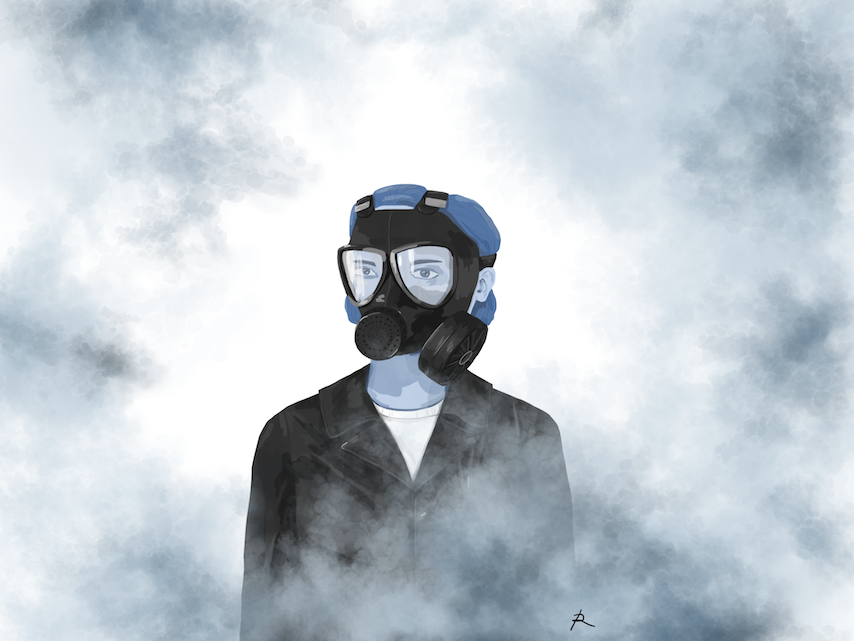
In an effort to dismantle protests, police departments across the U.S. and Canada, including in Montreal, have taken violent measures to repress civil demonstrations. From rubber bullets to water cannons, police units and municipal governments have been criticized for what many are calling the use of excessive force to disperse peaceful protests. The image of a smoking canister of tear gas has become emblematic of police responses to protests.

The use of tear gas on civilian protesters has sparked worldwide outrage, with some government and public health officials calling for its removal from police arsenals. However, other authorities—including top lawmakers in the U.S.—continue to defend its use

While the science behind tear gas remains a mystery for advocates on both sides of the dispute, proponents of its use may be surprised to find that tear gas is not a single compound, but is instead used to reference a wide variety of chemical agents.

“Tear gas refers to a range of chemicals that are all lachrymators,” Joe Schwarcz, director of the Office for Science and Society at McGill, said in an interview with The McGill Tribune. “Anything that causes tearing [of the eyes] is a lachrymator.”

There are several types of lachrymators. Until the 1950s, the most commonly used types of tear gases were CN and CS, two gaseous chlorine-based compounds, although neither remain in police arsenals today. According to Schwarcz, that title now rests with the more widely available compound capsaicin, better known as pepper spray.

Pepper spray, which was developed as an animal repellent in the 1960s, was first used by American law enforcement agencies in the 1980s. Despite their variability in terms of potency, toxicity, and chemical makeup, CN, CS, and pepper spray are all functionally similar, targeting the same part of the respiratory tract.

“What all of these substances do is irritate the mucous membranes,” Schwarcz said.

Mucous membranes line various body canals and openings such as the mouth, nose, eyelids, and lungs. The secretions that they produce are the primary form of protection against particulate matter and pathogens, including the chemicals that compose tear gas. 

“The function of the mucous membrane is to protect the body,” Schwarcz said. “So, chemicals [of] the mucous membrane perceive tear gas to be a foreign substance that needs to be eliminated.” 

Excessive irritation of the mucous membrane can cause tearing, coughing, and sneezing. However, the more acute effects of tear gas can also lead to difficulty swallowing, chest tightness, shortness of breath, blurred vision, and feelings of choking. These effects usually last for about 15 to 30 minutes, but can have lasting and permanent damage to the eyes and lungs.

“There are people who have had corneal scarring because of some tear gas and also exacerbation of asthma,” Schwarcz said. “Some people [also] have allergic reactions to the chemicals and that can cause rashes all over the body.”

Blindness, glaucoma, and respiratory failure are other possible long-term effects of tear gas exposure.

The history of tear gas is as long and as fraught with controversy as its appearance on city streets in recent months. The first tear gas compounds were developed during World War 1 as a form of chemical warfare. Following the end of the war, the use of chemical and biological weapons in war was banned by the Geneva Protocol of 1925. By 1993, the United Nations General Assembly finalized the Chemical Weapons Convention, which further limited the use of riot control agents on the battlefield, but included a now-controversial exception which allows law enforcement to use chemical agents for domestic riot control purposes. 

Given tear gas’ complicated past and potent consequences, many have asked why police forces continue to use it today. The answer is simple: Effectiveness.

“If you are exposed to a bit of tear gas […], you want to turn around and get out of there as fast as you can because it is extremely irritating and very painful to the eyes and the nose,” Schwarcz said.

Student Life

Making a statement with face masks

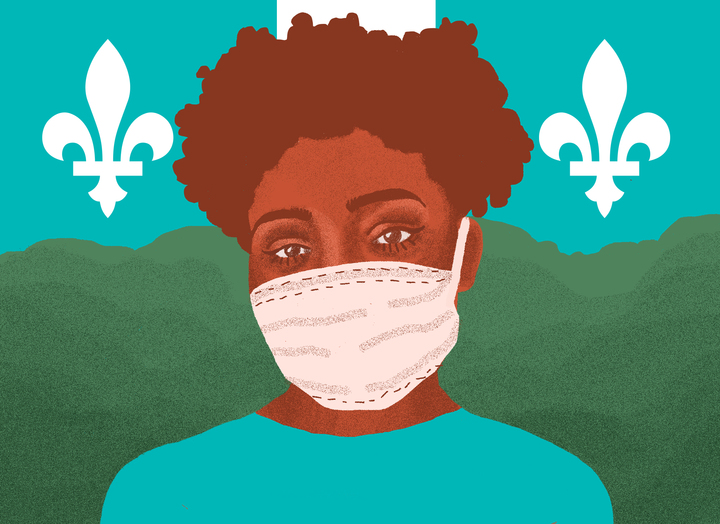
As the COVID-19 pandemic continues, face masks have become a part of everyday life. In Quebec, it is mandatory to wear a face covering in indoor public spaces, which includes retail stores, shopping plazas, and grocery stores. While face masks are important for health and safety reasons, colourful and personalized options are a way for people to actively express themselves. Montrealers can integrate face masks into their individual style and wear it as a creative accessory.

As face masks become the norm with our daily apparel, the demand for fashionable options has risen considerably. According to Allied Market Research, the production of face masks has not only increased during the pandemic but is also predicted to consistently rise until 2027, which has led to a surge in fashion-forward face mask options. While various high-end brands such as Rag & Bone and Tory Burch have started to sell luxury face masks aimed at affluent shoppers, affordable options on Amazon and Etsy have boomed. Etsy disclosed that between April 4th and 6th, the term “face mask” was searched more than two million times. The reach of face masks in fashion has also been widened further with the presence of face coverings on the runway and in haute couture. Earlier this year, Paris Fashion Week introduced the idea of couture face masks, and this sentiment was followed by a recent Seoul fashion show where facial accessories complimented the clothes adorned by models. 

Despite the growing popularity of face masks in fashion, purchasing a face mask is not the only way to obtain appropriate face coverings. A more creative way to approach the face mask policy is through DIY methods. While a common technique is the scarf hack, which uses a total of three items, the top alternative is the T-shirt hack. In lieu of alternative coverings, some creators have used traditional face masks as a medium to express their creativity. Artist Linda Woods has promoted her work by using fabric printed with her paintings to make custom masks. Similarly, the M.AD School of Ideas has created “FUN MASKS,” which seek to familiarise children with face masks through the use of their own art skills. While innovative designs can encourage creativity within the realm of public health, art is not the only way face masks have been used to display thoughts. 

The creative expression afforded by face masks can even make political statements. Take inspiration from Nicola Sturgeon, First Minister of Scotland. Her go-to mask—a simple, grey colour highlighting the Scottish pattern with different coloured lines—was a nod to subtle patriotism. The impact was entirely the opposite, though, spiking sales and promoting Scottish culture, charities, and businesses. Alternatively, since face masks became mandatory for many restaurant and retail workers across the United States, many employees have walked out in protest of not being allowed to wear masks in support of the Black Lives Matter movement. This version of political activeness has prompted questions about first amendment rights in America, leading to a rise in face masks with statements that reflect individual stances on political issues.

The importance of face coverings in containing COVID-19 is pivotal, but it also presents a new avenue of creative expression for those who want to transform a face mask into a statement. Montrealers can mold face coverings into a unique and personal accessory by using inspiration from politics, fashion, or art. At the end of the day, whether you buy a face mask or make a face mask, just ensure that you wear one and stay safe.


Basketball, Sports

In conversation with Ryan Thorne

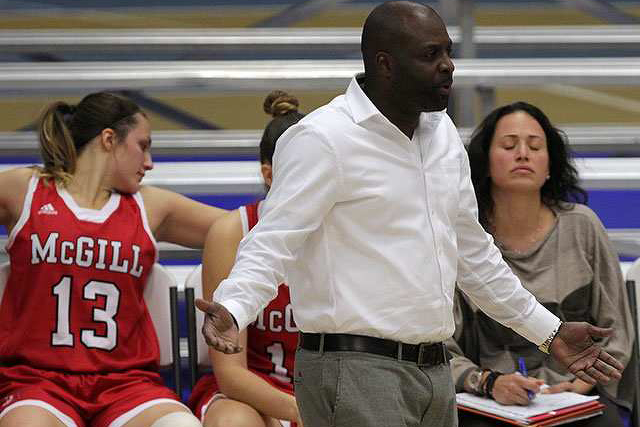
On June 22, Ryan Thorne, Martlet Basketball Head Coach of 17 years, signed a new contract as head coach of McGill’s men’s basketball team. Thorne will be succeeded by Rikki Bowles, whose experience as an assistant coach with the women’s team for the past four years will help make for a smooth transition.

“I battled with this decision for a number of weeks [.…] It was a tough time to communicate [this decision] to a number of players,” Thorne said in an interview with The McGill Tribune

Thorne’s experience playing at the U SPORTS level his entire university career has helped his coaching evolve. He expects a lot from the players, but understands that each student athlete is different. 

“You’ve got to coach athletes to the level they want to be coached,” Thorne said. “You can’t project what you want for them onto them. Everyone comes in with their own opinion on what they want to do and what they want out of this experience [….] If you try to give them what they don’t want, [it makes] the relationship sour.”

Thorne also described the importance of effective communication between coaches and student athletes.

“We don’t all see things the same way,” Thorne said. “We don’t receive information the same way [….] Even if the information is right, if [student athletes] are not receiving [that information] in the right manner, it can create a bad vibe or bad connection between the [coach and the athlete].”

Thorne emphasizes the importance of the learning process and coaching each game rather than the sole objective of winning a championship. 

“If your [only] goal is […] winning  a national championship, then you are probably missing out on [the] great successes […] of your […] athletes,” Thorne said. “You have to celebrate [small successes] as they go. As a coach, one needs to be a lot more transformational as opposed transactional.” 

Heading into the next school year, one of the team’s main priorities is strengthening relationships.

“The game is not changing, I’m just coaching different athletes,” Thorne said. “The most important thing for me is building trust [and] building confidence. Those things are important in any relationship.”

Thorne does not plan to drastically change his coaching techniques in this transition, and any adjustments will be based on past experiences with the Martlets. 

“[I will] definitely try to bring my experience from the women’s side to the men’s side,” Thorne said. “The difference between the men’s and women’s game has more to do with athleticism, so there might be some things on the side of athleticism that I might be able to implement.”

In this period of uncertainty caused by the COVID-19 pandemic, Thorne advises student athletes to follow the provincial health guidelines and remain optimistic. 

“I think the toughest thing right now is not seeing your teammates,” Thorne said. “Find any means you can to stay connected. Regardless of what kind of isolation, there has to be a connection with friends and family [for you] to stay stimulated and engaged.”

To Thorne, social interactions and support networks are also important for mental health during this time. 

“This is a time when mental health issues can be really brought out and you need people,” Thorne said. “We lean on each other, we talk to each other, we communicate and benefit from that communication.” 

Both the men’s and women’s teams have arranged regular video calls on Zoom to  stay connected with their teammates. 

“We do Zoom workouts, see each other on camera, have meetings about what’s going on,” Thorne said. “Both groups meet on Zoom three times a week. On the women’s side we have workouts and a basketball IQ lab, and [sometimes we have] ‘how you are feeling’ sessions and talk about what’s going on in our lives. On the men’s side, we’re just chatting and getting to know each other.”

The varsity basketball seasons are currently suspended due to the pandemic, and there is uncertainty around when the regular season will resume.

Read the latest issue

Read the latest issue