


Latest News

In Competition With, Sports

Weekly wrap-up: McGill Athletics at RSEQ playoffs

Last week was significant for McGill Athletics, as three varsity teams—Martlets Soccer, Redbirds Soccer, and Redbirds Rugby—qualified for the Réseau du sport étudiant du Québec (RSEQ) playoffs.  

After a 2-0 victory versus the Université du Québec à Trois-Rivières (UQTR) Patriotes, Redbirds Soccer finished the regular season ranked third in the RSEQ. They faced off against the Patriotes in the division semifinals on UQTR’s turf on Friday, Oct. 25. The team concluded the season with a 5–4–3 record, making the playoffs for the first time since 2018. While some teams may feel discouraged playing their first playoff game on the road, captain Stuart Klenner, U1 Engineering, shared the team’s positive outlook with The Tribune.  

“We’re all excited,” he said. “We’ve beat them two times this season, both games we’ve played them. But they’re always a strong team [.…] We don’t mind [playing away]. We’ve played well away, at least against [UQTR].” 

The team’s enthusiasm served them well as the Redbirds beat the Patriotes 2-1 on a penalty kick taken by striker Mujtaba Mirhasan in the second half of added time, and will travel to the Université de Montréal on Nov. 1 for the RSEQ Championships. More notably, though, the victory secures the Redbirds’ ticket to the U SPORTS national championships from Nov. 7-10 in Oshawa, Ontario. 

Martlets Soccer has also been unstoppable this year, and headed into the postseason with a record of 8–4–2, ranking second in the league behind the Université de Montréal Carabins. The Martlets played Laval on Oct. 24 at Percival Molson Stadium in the RSEQ semifinal game. The two had matched up twice during the regular season, with the Martlets tying them on Sept. 15 and losing 4-1 on Oct. 6. Captain Mara Bouchard, U3 Arts, reflected on the team’s preparation for the upcoming game. 

“It’s very exciting,” Bouchard said in an interview with The Tribune. “In all the years I’ve been at McGill, it’s the first time we’re hosting playoffs, the first time we’re finishing second instead of third [….] We know what our main objective is: We want to go to nationals. We know what the steps are. So yes, it’s pretty exciting, but we’re focusing on the [first game] and are going to give everything we have on that day.”  

Unfortunately, the team faced a devastating 1-0 loss against Laval in which a Martlet scored an own goal in the 27th minute. Regardless, the season was one of the most successful in Martlets soccer history.  

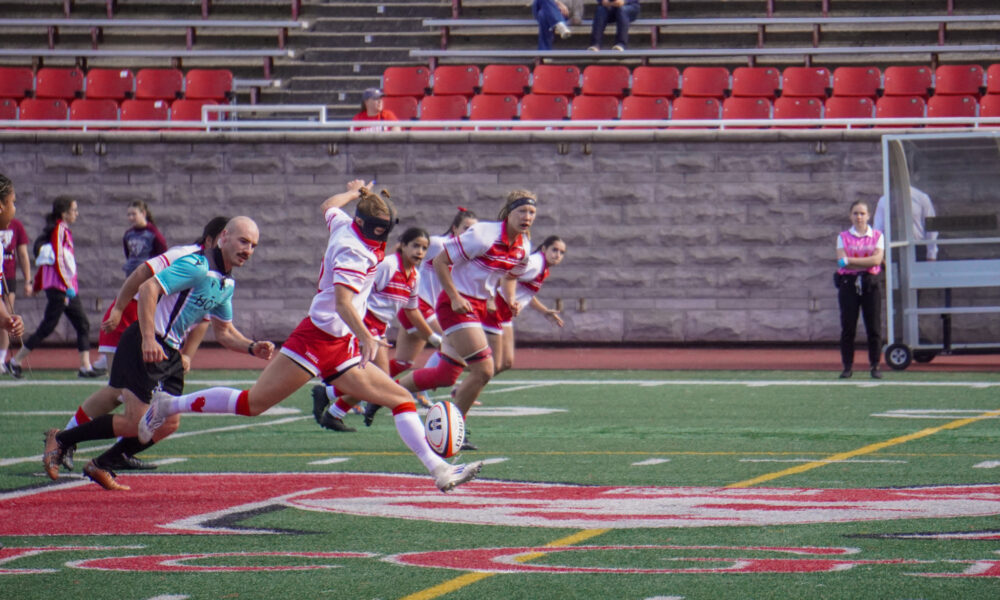
Soccer is not the only sport sending McGill teams to the RSEQ playoffs—Men’s Rugby headed to Matt Anthony Field on Saturday, Oct. 26, to face the University of Ottawa Gee-Gees in a battle for a spot at the RSEQ Championship. Rugby had a successful season, finishing with a 5–1 conference record and ranked third in the league. They entered the semifinals following a 57-0 win over the Harvard Crimsons in the 150th anniversary of the Covo Cup—an honoured tradition that celebrates the first intercollegiate rugby game in North America, played in 1874. Sitting down with The Tribune, flanker Elliot Descarreaux, U4 Science, reflected on what the Covo Cup means to the team.  

“It means a lot to us […] because of the history of it,” he said. “We often speak about how when you put on your jersey it’s not just for the guys you’re playing next to or the coaches, but for the history of our program and our team. It’s also important for keeping the alumni society active. It usually brings them together. This weekend there were 30 or 35 alumni there, so that was really fun for us, and nice to see that our program keeps having lasting effects even after you graduate.” 

Descarreaux shared that the victory was a testament to the team’s ability to work together and that team spirit was high as they approached playoffs.

Despite a valiant effort, the Redbirds lost to UOttawa, falling short with a final score of 24-12

With Martlets Soccer and Redbirds Rugby advancing to the RSEQ semifinals, and Redbirds Soccer heading to the RSEQ finals and U SPORTS national championships, McGill Athletics can take pride in the program’s impressive recent performance. This success highlights the dedication and talent of the athletes and sets a promising tone for the future.  

All Things Academic, McGill Recommendations, Student Life

How do we escape our phone during midterms?

While the end of October highlights the traditional joys of the fall season, such as Halloween and pumpkin-spice lattes, it also stands as a gruelling reminder of midterm season. Given the anxiety and stress that can easily wash over us during exams, we tend to gravitate to our phones as a temporary distraction from these negative emotions. Yet when we browse through feeds, messages, or media platforms, we’re all aware—whether we admit it or not—that doomscrolling only digs us deeper into a hole.

Fortunately, this shared experience has inspired many students around campus to find different approaches to staying focused. Olive Bohdanowycz, U1 Arts, discussed how she manages her school work while being mindful of her screen time, sharing her personal strategies for different study locations. 

“When I’m at Schulich or McLennan, I normally use the phone lock machines to completely remove myself from my phone’s distractions. When I’m at home though, I just rely on DND [do-not-disturb] to silence everything,” Bohdanowycz said. 

In addition to the basic do-not-disturb function, many phones now have versatile personal, work, and sleep modes allowing you to customize which specific apps you receive notifications from. Setting these precise restrictions on your phone can improve self-discipline and help prevent procrastination.  

Daphne Barrett, U1 Arts, also found success with limiting access to her phone. Along with adopting similar do-not-disturb approaches to Bohdanowycz, she used strategies that relied on other people to get involved with her personal screen time limitations. 

“I’ll either have one of my friends or housemates take my phone away, or set timers so I can see how much work I’ve done without my phone,” she explained. “It’s motivating to see my time and track my hours of studying.” 

Through methods like this, Barrett was able to balance effective studying habits with a feeling of satisfaction and progress, specifically through her timer strategy. This approach of transforming screen time restrictions into a motivating process seemed to be effective and popular with many other students as well. 

Juan Garnica, U2 Desautels, mentioned apps that use similar tactics as a motivating tool. For instance, Flora is an app that plants a virtual tree for a set duration of study time. When the timer runs out, the tree appears fully grown in your virtual garden. He explained how closing the Flora app kills your tree, forcing you to restart the process. 

“Seeing that I’ll kill my tree makes me think twice if I really want to go on my screen. It is a way to make me realize my priorities,” Garnica said.

Like Barrett, Garnica uses this app to stay focused on his work by reducing distractions and using the virtual trees as a motivating reward. Turning focused work and studying into a game is an ideal way to get through difficult tasks. 

On the other hand, Shirley Tu, U2 Arts, tries to avoid their phone entirely whenever possible.  

“Usually when I’m listening to music, I try to always connect my headphones to my laptop instead of my phone so if I’m changing the song or volume, I’m not distracted by any notifications or feel the need to look at other apps,” Tu said. 

Using an alternative device like a computer, which lacks the disruptive qualities of phones such as constant sporadic alerts and the ease of getting lost in distractions, can be effective for staying on task. While we may try to justify constantly having our phones close by to listen to music or keep up with text messages or other vital alerts, Shirley’s method shows that it is possible to do these things without a phone. 

While simply silencing their phone may be enough for some, others might need to find alternatives to fight the urge to scroll and keep themselves focused on school. Whether you use a screen time regulation app or completely remove your phone from the equation, these insights can help us develop strategies for balancing work and phone usage. By locking up our phones, we can unlock our full study potential to achieve a successful midterm season.

McGill, News

Recap: Queerness and AI roundtable

McGill community members gathered for a roundtable discussion on Queerness and AI organized by Web Services and Equity at McGill as part of Queer History Month (QHM) on Oct. 23. Three panellists—McGill’s Associate Director of Inclusive Excellence Kit Malo, Senior Employment Equity Advisor Ande Clegg, and Digital Communications Manager Joyce Peralta—led the talk alongside the roundtable’s emcee, Digital Communications Associate Jaylen Gordon. The goal of the event was to interact with and spread awareness about those AI misrepresents and discriminates.

The panellists led guests in an exercise, prompting Microsoft Copilot to generate an image of “Queer McGill University community members for a McGill website.” The resulting picture showed a large group of people holding rainbow pride flags, many with the colours in the wrong order. Attendees observing the image were quick to point out the lack of diversity with Microsoft Copilot depicting the figures in the image as uniform in body type, ability, style, and identity. Throughout the discussion, many participants expressed feeling offended, but not surprised, by the stereotypical depictions of queer communities by Microsoft Copilot. 

The theme of this year’s QHM is visibility, with events and programming slated throughout the month of October. The roundtable also discussed journalist Reece Rogers’s Wired article “Here’s How Generative AI Depicts Queer People.” In it, Rogers discusses how AI’s depiction of queerness relies on and amplifies stereotypes around lesbian, gay, and bisexual individuals while mischaracterizing the transgender community completely.  

McGill offers a “secure version” of Microsoft Copilot to its student body with the disclaimer that “Human biases may skew the data that was used to train an AI tool […] resulting in content that reflects or amplifies those biases” in its general guidelines

The group acknowledged that issues in AI’s depiction of queerness reflect society’s historic and present mischaracterization of 2SLGBTQ+ people. Panel members argued that for AI to begin generating fair representations of the queer community, it must be trained to reject biased and discriminatory images of queerness while embracing fair representation of the 2SLGBTQ+ community. 

Behind the Bench, Soccer, Sports

FIFA accused of “sportswashing” by women’s soccer stars over Saudi deal

This past April, soccer’s governing body, FIFA, announced a landmark partnership and sponsorship deal with the Saudi Arabian Oil Group, Aramco. Owned almost entirely by the Saudi Arabian government and the country’s Public Investment Fund (PIF), this collaboration between FIFA and Aramco marks another milestone in FIFA’s continued relationship with the nation. Saudi Arabia is also set to host the men’s FIFA World Cup in 2034, solidifying the country’s growing presence in global soccer.

Women’s soccer’s biggest names fought back against the deal in the wake of the Saudi government’s continued mistreatment and repression of women and minority groups, such as the male guardianship system, imprisonment of women’s rights activists, and criminalization of the 2SLGBTQ+ community. 

These players claim that FIFA is continuing to assist Saudi Arabia in “sportswashing,” a tactic used by repressive governments and corporations, which aims to distract the eyes of the public from controversies through the promotion of sport. 

In a letter to FIFA, 130 players, including Canadian legend Jessie Fleming and the Netherlands’ all-time leading scorer Vivianne Miedema came out strongly against the partnership. They expressed feeling let down by people who were supposed to be looking out for the players’ best interest, and that the sponsorship with Aramco went directly against many causes that women’s football players were passionate about. The players cited Aramco’s massive levels of emissions, the continued oppression of the 2SLGBTQ+ community, and the state-sponsored restrictions against Saudi Arabian women as reasons why this sponsorship is antithetical to the continued growth of women’s soccer.

In an era where the growth of women’s soccer outpaces many other sports, fans and players see the Saudi deal as a step in the wrong direction. The letter rightly points out the deal was made by 37 decision-makers, of which only eight are women. Male decision-makers are not at risk of being affected by the Saudi government’s regressive policies, and some of the main stakeholders—women—are typically excluded from the decision-making process. It is an indictment on FIFA and its leadership that the requests of their players are not being heard or acted on. It would be in the sport’s best interest for FIFA to cease relationships with a government that is antithetical to the best part of soccer: Inclusivity. From the No Room for Racism campaign to the Rainbow Laces project, players and fans frequently stand up for marginalized communities. Soccer’s leaders, however, show no such inclination, to the detriment of the sport and its players.

Aramco CEO and President Amin H. Nasser explained in a press release that the partnership with FIFA attempts to use the power of sport to make global impacts and develop the game of soccer. This has been a trend not just in world soccer, but also in many other international and well-recognized sports. The controversial PIF-owned LIV Golf League aims to compete with the PGA Tour to be the foremost golf competition in the world, while a PIF-led financial takeover of Newcastle United F.C. in the English Premier League sparked outrage from fans. Additionally, one would be hard-pressed to watch a Formula 1 race without spotting Aramco advertisements scattered throughout the circuit. In fact, Aramco is the main title sponsor of the Aston Martin F1 Team.

When Nasser speaks of “harnessing the power of sport,” he is not being disingenuous. The end goal of this sportswashing is to use the global adoration of sports to continue to normalize the behaviours of the Saudi Arabian government by injecting its finances and advertising into the sports and teams fans hold so dearly. Normalization will continue as eyes are pulled away from domestic issues within Saudi Arabia. FIFA has made the decision that abuses against the 2SLGBTQ+ community, oppression of women, and poisoning the planet are acceptable in the name of financial gain and brand recognition. They simultaneously profit off of the popularity of women’s soccer and the oil money of a nation whose laws oppress women daily. By pointing out the hypocrisy of this decision, players are taking a brave stand against financial interests, and hopefully FIFA will follow suit.

Off the Board, Opinion

Cross-section pollination enriches our writers and our paper

My first article for The Tribune was not for News, the section for which I’m now an editor, but for the Arts and Entertainment (A&E) section. 

This is not an uncommon story. A&E is one of our most popular sections, and it attracts writers eager to share their takes on music, film, theatre, and television every week. It was this same love for the arts that compelled me to write a review of the show Human Resources in 2022 and to continue contributing to the section. 

The first time I sat in on a meeting for the Sports section, I had originally been planning on attending a Tuesday night A&E pitch meeting. That evening, I peered into The Tribune’s office to find that there was a particularly large group of contributors excited for the A&E editors to get started. Feeling a sudden rush of stress at the thought of joining the crowd, I sat down with the only other section meeting at the same time. This group was mercifully—sorry Sports, it’s just the truth—much smaller. 

I walked out of the University Centre that night having picked up a pitch not on celebrity drama or a local poetry slam, but on Varsity Basketball. I attended the game, loved it, and covered another the following week. A couple of months later, I found myself a Staff Writer for Sports. 

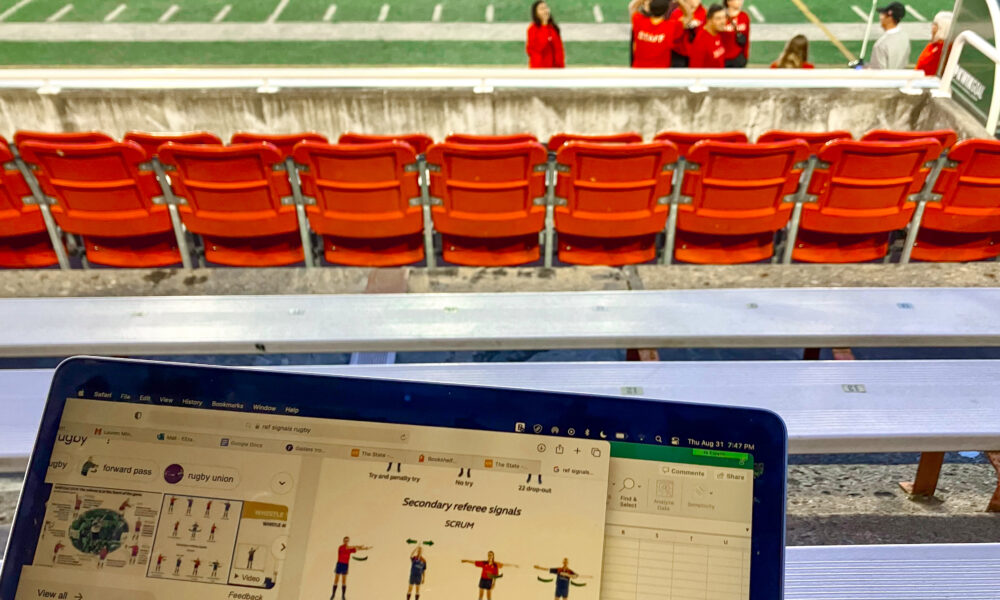
At this time, I had little prior knowledge of many sports that the section covered. I tried my best to arrive at games prepared, but there were moments during play when I had to split the screen of my laptop into two embarrassing halves: My notes on the left side, a diagram explaining rugby referee hand signals on the right. 

I recount this to highlight that complete beginners are welcome in all sections at The Tribune. Our paper seeks to not only produce high-quality articles that carry out our mandate and commitment to anti-oppressive journalism, but to foster a learning environment where students have the chance to grow as writers and reporters. Although I started as a beginner, the guidance of then-Sports Editors Tillie Burlock and Sarah Farnand helped me improve and gain confidence in my coverage.

Picking up the style and method of a new section also led me to unexpected skills and interests that I would have otherwise not discovered. Navigating post-game conversations with coaches and athletes taught me the basics of interviewing. From writing recaps of games, I learned how to summarize events and organize an article around the most crucial details. What started as a kernel of interest for sports coverage grew into a broader passion for reporting. Without Sports, I would have never started writing regularly for News.

I’m far from the only writer to venture beyond my go-to section. By contract stipulation, every editor at The Trib must pen a feature, a governance piece for News, and, uh, an Off the Board for Opinion. Though the paper has a central style guide, each section has its own motivating questions, types of articles, and approaches to reporting that make it unique. To me, this means that when writers venture beyond their typical page of the paper, it’s a chance for them to bring different ways of writing and thinking about university life to other sections. Cross-section pollination enriches the hive as well as the bees.

To any contributors, staff writers, and editors who feel a spark of interest to write for a new section, I recommend following it—especially if it’s telling you to write for News! These days, our pitch meetings are looking very inviting to those afraid of crowds! That curiosity yields multifaceted approaches to student journalism that strengthen our paper, and for me, it led me to the section I now call home.

Split your screen into two embarrassing halves and see where it takes you.

Arts & Entertainment, Film and TV

(Non-scary!) Halloween media

Howl’s Moving Castle

In this Studio Ghibli film, young hatmaker Sophie encounters a mysterious wizard named Howl. The Witch of the Waste curses her by turning her into an old woman. Sophie then meets a mysterious anthropomorphic scarecrow who leads her to Howl’s castle. There, she takes up residence as a live-in cleaning lady, hoping to break free from her curse with the help of the wizard’s magic. The world of the film is filled with sorcery, curses, a magical castle, and an animated flame, making it perfect for Halloween while never being scary. Along with the world and plot of the film, the relationships between the characters and the romance between Sophie and Howl create a captivating story. Not only does this story follow Sophie’s journey of independence and self-discovery, but the film explores anti-war themes with Howl’s critique of the war between two neighbouring kingdoms. The stellar cast of voice actors for the English dub of the film, consisting of Christian Bale, Billy Crystal, and Josh Hutcherson, is the cherry on top. 

Over the Garden Wall

In this animated show, half-brothers Wirt (Elijah Wood) and Greg (Collin Dean) find themselves lost in a spooky forest (for reasons unknown until later in the series), desperately trying to return home. In each episode, the two boys discover a new cast of characters who travel across time and space, while the woods and a few recurring characters connect each new adventure to the next. This critically acclaimed show has adorable and quintessential autumnal visuals, a great original soundtrack, and clever and hilarious dialogue. Over the Garden Wall is also filled to the brim with references and connections to other media, like the plot’s similarities to Dante’s Inferno and 19th- and 20th-century Americana culture. This take on a story about folklore has the perfect amount of spooky vibes while never being overly scary. Interspersed with humour, this show makes for a tremendous non-scary watch for Halloween. 

Agatha All Along

In this new Marvel miniseries, Agatha Harkness (Kathryn Hahn), who first appeared in WandaVision (2021), gets her moment in the limelight. This series returns to the fictional town of Westview three years after the events of WandaVision, with Agatha still trapped under the Scarlet Witch’s (Elizabeth Olsen) spell. After finally being released from the spell thanks to the help of Teen (Joe Locke), Agatha creates a coven consisting of Lilia Calderu (Patti LuPone), a divination witch, Jennifer Kale (Sasheer Zamata), a witch gifted at potion-making, Alice Wu-Gulliver (Ali Ahn), a blood witch (a child of a witch), and Mrs. Hart (Debra Jo Rupp), Agatha’s neighbour and their “green witch,” to embark on a journey through the trials of the Witches’ Road in hopes of regaining her lost powers. Similarly to WandaVision, this series explores different genres and time periods, as each trial of the road takes them to a different place and transforms their costumes to match, like when they were transformed into the 70s for one of the trials. Agatha All Along has a great cast of characters, and the sapphic tension between Agatha and Rio Vidal (Aubrey Plaza), a romantic figure from Agatha’s past, is immaculate. The final two episodes will be released on Oct. 30, just in time for Halloween, making this the perfect binge-worthy show for the spooky holiday! 

A Discovery of Witches 

A Discovery of Witches is a series based on Deborah Harkness’ All Souls Trilogy of novels. The story starts in Oxford, where the non-practicing witch and history of science professor Diana Bishop (Teresa Palmer) discovers a centuries-missing bewitched manuscript at the university’s famous Bodleian Library. This discovery leads to Diana meeting Matthew Clairmont (Matthew Goode), a vampire and professor of biochemistry, who work together to uncover the mystery behind this enchanted manuscript. This show is the scariest on this list, as it does get violent and suspenseful at times, but since I could handle it despite my extremely low tolerance for frightening things, it merits its place on this list. This time last year, I became obsessed with this show; the autumnal dark-academic aesthetic of Oxford, the magic, the mystery, and the romance entrap the viewer into this fantastical reality, making it an excellent watch for Halloween!

McGill, News, SSMU

SSMU VP Student Life Chloé Muñoz resigns

The Students’ Society of McGill University (SSMU) Vice-President (VP) Student Life, Chloé Muñoz, announced her resignation from the role at the Oct. 24 Legislative Council meeting. Her resignation is effective Oct. 29. SSMU will run a by-election to fill the position and the remaining executives will share the responsibilities of the Student Life portfolio in the interim. 

In an interview with The Tribune, Muñoz explained that her resignation was due partly to personal reasons and internal restructuring in SSMU which made her portfolio as VP Student Life particularly difficult. 

“These roles take on a huge managerial role, which I don’t think I personally was prepared for, and I think the year-to-year transition makes it at times unfair for the permanent and casual staff that remain,” Muñoz said. “I just think there needs to be a remodelling of what is expected of executives, so that there is more support for people entering the role. The model right now makes the position very overwhelming and difficult for any real progress to be made in a way that can support student groups and students better.” 

Muñoz also mentioned that the bureaucratic nature of SSMU was ultimately at odds with the action that she wanted to enact within the union.

“There were also a lot of structural pushbacks that made it really difficult to uphold the communication and transparency that students deserve, and I no longer wanted to be a part of that dynamic,” Muñoz said.

While she is stepping down from the position, she expressed support to the remaining executives. 

“Ultimately this was a personal decision and I recognize that SSMU just might not be the place for me at the moment and I wish all the remaining executives the best of luck in all that they […] are doing,” she said.

The VP Student Life portfolio covers three main pillars: Student groups, mental health, and family care. As the process for a by-election gets underway, SSMU President Dymetri Taylor explained that he will take on responsibilities regarding services and family care, VP Operations and Sustainability Meg Baltes will take on the clubs, and mental health responsibilities will go to VP University Affairs Abe Berglas.

Susan Aloudat, VP Events for the Arab Student Network, told  The Tribune she is concerned that the lack of a VP Student Life might pose a challenge to student clubs and services.

“It can be really hard working on a service with SSMU when they’re transitioning between execs because it makes already slow processing times go slower and then we can’t provide certain deliverables […] on time,” Aloudat wrote. “It would be nice if SSMU removed a lot of the unnecessary communication that happened between services and SSMU execs, for example room bookings and financial affairs, because the wait and the back-and-forth is what makes it hardest to do our job.” 

The two-week nomination period for the by-election will begin on Monday, Nov. 4 and will be followed by a week-long campaign period. This timeline will be extended if there are no candidates for the role. In the event no one runs in the by-election, the executives will either continue to share the responsibilities, or SSMU will hire staff to help fulfill the tasks. Taylor estimates that if someone is elected, they will likely fully take on the role in January 2025.

To Taylor, this resignation is indicative of a broader issue of a lack of student engagement with SSMU.

“In the past, the SSMU didn’t see as much resignation as it does now, and that is due to an abundance of reasons. One is simply just due to waning interest in the SSMU, which is predictable based on how things have gone for the past few years,” Taylor told The Tribune. “Things remain relevant if they are […] doing things for the student body. They don’t remain relevant when they’re doing things that aren’t really out there and engaging with the student body.”

Science & Technology

Think your partner is anxious-avoidant? Think again.

With pop psychology invading every social media platform, the line between self-help and self-sabotage has never been so thin. Pop psychology refers to psychological theories, strategies, or concepts popularized through the media—particularly social media. From attachment style assessments that can make or break your dating life to the allure of “therapy speak” that fills our conversations, these simplified concepts seem harmless—sometimes even empowering. Yet beneath the surface of this accessible facade lies a minefield of misconceptions and a serious potential for harming relationships. 

In the 1950s, psychologists John Bowlby and Mary Ainsworth developed Attachment Theory to transcend the paradigm that we attach to parental figures solely for survival. Their research, along with subsequent studies in the field, identified four attachment styles: Secure, anxious-avoidant, anxious-ambivalent, and fearful-avoidant. 

In recent years, the theory has surged in popularity, especially as unqualified social media “psychology gurus” have capitalized on the trend of making psychology accessible to the masses. While the intent to democratize psychology is commendable, real danger lurks in the oversimplification of mental health issues. Kristina Tchalova, a psychology professor at McGill University, shared her perspectives on pop science’s approach to interpersonal relationships. 

 “I think people might be too quick to jump to a diagnosis of a potential partner,” Tchalova said in an interview with The Tribune. “Once you form this conception of your partner, you risk interpreting all their subsequent behaviour through that lens. Confirmation bias is a powerful force.”

Contrary to pop-psychology beliefs and older research, recent literature views attachment as a continuum, where one falls along dimensions of anxiety and avoidance and moves between them throughout their life, rather than a concrete, categorical measure. Tchalova explained that many people can exhibit different attachment styles across various relationships. For instance, someone who generally identifies as insecurely attached may still have multiple secure relationships that provide stability and comfort. 

“People think of attachment as being unchangeable, very rigid, whereas we know from research that […] attachment can change,” Tchalova said. “At its worst, misunderstanding attachment theory can rob people of their sense of agency or can be used to excuse their bad behaviour.” 

Attachment theory is not the only psychological concept rewritten by social media. Many people, especially those seeking to better understand their relationship dynamics, over-rely on ideas such as the “Love Languages”—originally coined by Baptist Pastor Gary Chapman, with no scientific backing—and misinterpret terms like “gaslighting,” “boundaries,” “codependency,” and “limerence.” The more these terms become watered-down, the more difficult it becomes for victims of real-world situations to identify their struggles. This misconception around terminology is especially problematic when individuals base their understanding of complex psychological concepts on superficial online quizzes.

It is human nature to be curious about the inner workings of our minds, and online resources can be a good start to understanding our thoughts and behaviours—especially when research can be inaccessible, and finding a professional to talk to is harder than ever. However, the risk lies in the overreliance on labels. 

“Often, people stop at the diagnosis or self-diagnosis stage, which leads to the common tendency to be fatalistic,” Tchalova explained. 

Of course, not all internet advice is bad advice. Pascal Vrticka, associate professor in psychology at the University of Essex, is known for his online content addressing common misconceptions in a knowledgeable way and is a great resource to turn to for information on attachment. However, it is critical to acknowledge that consumers, and often producers, of pop psychology content are not experts. Psychological research is complex and messy, and trying to interpret it for a mass audience is fraught. 

So, the next time you encounter a pop psychology trend online, consider Dr. Tchalova’s advice:

“Ask yourself: What am I being asked to believe here? What is the supporting evidence for that? Are there alternative explanations for what’s being described? Seek out contradictory sources and weigh the strength of the evidence.”

Science & Technology

Mindfulness: A potential solution for depression and anxiety in seniors

In Canada, up to 20 per cent of older adults experience symptoms of depression, and these rates increase to up to 40 per cent for those in hospitals and long-term care homes.

Depression and anxiety disproportionately affect older adults and are associated with adverse health outcomes, reduced quality of life, and increased healthcare costs. Traditional treatments such as one-on-one psychotherapy and medication use may often be inconvenient for older adults due to low accessibility and negative side effects. Therefore, alternative therapies that provide a non-pharmacological, safe, and more accessible option would be beneficial.

Mindfulness-based cognitive therapy (MBCT), a type of psychotherapy that combines elements of cognitive therapy and mindfulness, usually includes eight weekly two-hour sessions, typically delivered in a group format. It has become widely used and has shown to be effective in the treatment of depression and anxiety, particularly among older adults. However, studies regarding the psychological pathways through which MBCT improves psychological outcomes, including depression and anxiety, are scarce.

In a recent paper, Soham Rej, associate professor in McGill’s Department of Psychiatry and Principal Investigator at the Lady Davis Institute for Medical Research (LDI), and his team investigated whether MBCT influenced mindfulness and psychodynamic defense mechanisms.

“Defense mechanisms are ways that we cope with reality and the ways we react to difficulties in life,” Rej said in an interview with The Tribune.

Namely, these mechanisms are unconscious psychological responses that protect people from feelings of anxiety and threats to self-esteem. In addition, Rej’s team also looked for changes in depression and anxiety symptoms.

The three defensive categories, from the least to the most adaptive, are “immature,” “neurotic,” and “mature” defenses.

Immature mechanisms are counterproductive and can involve using projection or passive-aggressive behaviours, while the neurotic category includes the repression and detachment of emotions. These behaviours still aren’t ideal, but they are generally considered more adaptive than immature mechanisms. Rej underscored how immature and neurotic defenses can lead to psychological distress and worse health. 

On the other hand, mature defenses are considered adaptive and involve using humour or rationalization to cope with challenging emotions or situations. According to Rej, mature defense mechanisms are usually more socially acceptable and help promote better mental health outcomes. 

“We found that MBCT improved mature defenses and reduced neurotic and immature defense mechanisms,” Rej said. “In addition, MBCT improved mindfulness as self-reported by the patients, and this improvement was statistically significantly associated with improvements in anxiety.”

These findings emphasize the potential for short interventions, such as MBCT, to change defense mechanisms, suggesting that treating depression and anxiety can lead to healthier ways of coping.

“If somebody is depressed and has certain immature defense mechanisms, we shouldn’t have any prejudice against such people and should try to treat their depression,” Rej said.

Rej’s study is the first to evaluate the effects of MBCT on defense mechanisms and their relationship with depression and anxiety symptoms. 

Although Rej’s team observed a trend of change toward increased mature defense mechanisms and decreased neurotic and immature defense styles, larger studies are necessary to confirm the role of MBCT in promoting psychodynamic defense mechanisms. 

Moving forward, Rej would like to see future studies continue exploring different psychological and biological mechanisms underlying various types of psychotherapies. He also points to the need to increase access to psychotherapy. 

“In Quebec, you can be waiting 12 months, or even longer, to get psychotherapy, so access needs to be improved. Ways to do that include giving consultations via Zoom and offering group therapies,” Rej said. “The future is about increasing access by scaling up access to these interventions using new technologies.”

Rej highlights the potential application of MBCT in preventing mental disorders before their onset.

“We need to have low-cost, highly scalable ways of preventing depression and anxiety through exercise, diet, and programs like MBCT targeted at people at risk of anxiety or depression,” Rej said.

McGill, News

Deanna Bowen discusses anti-Black racism in the world of art history

On Oct. 24, approximately two dozen academics gathered in Room W-215 of the Arts Building to hear Deanna Bowen, assistant professor in Concordia’s Department of Studio Arts, speak about her research-creation practice and art exhibits, her family’s history with racism in Canada, and anti-Black sentiment in the art history world. The event is the first of McGill’s Art History and Communication Studies (AHCS) Speaker Series 2024-25, organized by department assistant professors Kenji Praepipatmongkol and Bobby Benedicto

In an interview with The Tribune, Praepipatmongkol explained the department’s motivations for organizing this year’s speaker series. 

“This semester in particular, there’s a few of us [including] myself [and] Reilley Bishop-Stall who are teaching courses on modern contemporary art and visual culture […] with an interest in the histories of ethnicity in relation to art history [and the] racialization of art. So it felt particularly appropriate to invite Deanna,” Praepipatmongkol said. 

After a brief introduction from Praepipatmongkol, Bowen explained that her work is largely motivated by her own family’s silence on the anti-Black racism they experienced in Canada. She then turned to focus on the story of her fluke discovery of a 1911 anti-Black petition from Edmonton, which had requested that former Prime Minister Wilfrid Laurier limit the immigration of Black individuals into western Canada and called for a violent white mob rule. On the petition, Bowen found an unexpected signatory: Barker Fairley, a prominent Canadian artist and proponent of the Group of Seven,  a collective of famed Canadian landscape painters. Bowen proceeded to reach out to the University of Alberta—which hosted many of Fairley’s works—to cross-check Fairley’s signature with that of his art pieces. She found the signatures to be a match. 

“It begs the question: What does it mean? […] What does it mean if this man was willing to sign a petition calling for mob killing of Black and Indigenous people, and then what does that say about the Group of Seven and the work that they produce?” Bowen asked the audience.

Bowen also discussed the violent settler-colonial history of Kitchener, Ontario—formerly called Berlin, Ontario—and how it led to her subsequent project: Black Drones in the Hive.

“It is a site-specific archive based project that looks at the overlapping Black, Indigenous, and white histories of the region surrounding the Kitchener-Waterloo Art Gallery,” Bowen wrote in a statement to The Tribune. “The region is the site of numerous wars between the British and America, postwar German settlement, industrial innovation, anti-Slavery abolition, Black settlement and the Canadian terminus of the Underground Railway.” 

Bowen’s next project, Conceptions of White, includes select artworks that illustrate white origin myths and how the historical foundation of the white man’s burden fuels white guilt and supremacy in the contemporary context. Bowen touched on the violent response she got when the project came out. 

“I was just decimated in the press. I’ve never met any of the white people that came out against me,” Bowen said. “All that mattered in their white male minds was that I blasphemed the Group of Seven [….] I’m telling you, the violence changed my life. I live my life differently now because of the amount of hatred that came at me in producing this work.” 

Abigail Celis, assistant professor in decolonial Art History and Museum Studies at the Université de Montréal, was present in the audience. She spoke to The Tribune about what she hopes art history academics take away from Bowen’s talk. 

“I think the whole questioning of what is the narrative of Canadian art history, who is it protecting, [and] who is it invisibilizing is something to take away,” Celis said. 

Bowen will be the first tenured Black Studio Arts professor in Canada. She touched on the monumentality of the matter. 
“The truth of the matter is that Blackness is a very late addition to Canadian cultural discussions. Most of the new Black faculty entering Canadian institutions were hired in response to Dereck Chauvin’s killing of George Floyd,” Bowen wrote. “At the same time, I am thrilled to be the first Black professor to many of my students. I didn’t have that when I went to school, [but it] would have made a world of difference.”

Read the latest issue

Read the latest issue