


Latest News

Arts & Entertainment, Film and TV

‘White Bird:’ A heartbreaking tale of courage and kindness in the face of mass destruction

How is it that we can enter a theatre dry-eyed and fresh-faced and emerge several hours later, eyes glistening with tears? It is not simply violence or harm that touches our soul. To elicit such a visceral reaction, something more is required: Injustice. Harm inflicted upon the innocent and kind is what squeezed at the hearts of those who have gone to see the 2024 film White Bird: A Wonder Storya sequel to the 2017 film Wonder. A story that may seem on the surface acrimonious is in fact a beautiful depiction of kindness and its capabilities in the face of hardship. 

From the title to the end credits, the film relies on the motif of the “white bird,” symbolic of comfort, purity, and peace, whilst war and hatred seek to consume everyone and everything around it. The white bird provides comfort not only for the audience but also for Sara Blum (Ariella Glaser), a young Jewish girl struggling to stay afloat as her beloved hometown in France becomes infiltrated by Nazi soldiers. Forced to flee her home, her family, and all the comfort she has ever known, the white bird is the only thing to console her in the icy solitude of the woods. Sara’s white bird, however, is not just an image, but the young boy Julien Beaumier, who despite being subjected to brutal affronts every day at school, retains a glimmering kindness in his heart. He hides Sara in his barn, threatening his own life in the process every day. 

But perhaps what appeals to the audience most is the reason why this story is being told. In the film’s “present day,” Sara is an elderly woman, portrayed by Helen Mirren, revealing her heart-breaking story to her grandson, Julian Albans, in an attempt to make him understand that being kind is the most courageous thing anyone can attempt. As Julian learns about the courage and kindness of his namesake, we sit along with him, helpless to do anything but listen to the horrors inflicted upon Julien Beaumier, an innocent child just trying to do the right thing. 

Sara, as a narrator, allows us to view Julien Beaumier through her eyes as he transforms from what the film describes as “the pathetic, crippled” boy at school, to the person she admires most in the world. He demonstrates kindness as something that isn’t weak or passive, but instead something difficult and powerful. Orlando Schwerdt’s portrayal of Julien is aptly complex, exemplifying sincerity that is at no point excessive. His presence is magnetic, compelling every person watching to get hopelessly attached. He is the white bird in the darkness of the war. It makes his unceremonious murder all the more guttural. Without even watching it occur, a gunshot was all that was needed to fill every eye in the theatre with tears. It wasn’t just a life being taken, but a speck of kindness snuffed out by hate. 

The story itself deserves applause as each of its characters—even the ones that epitomize kindness—are multi-dimensional. Sara Blum begins as a selfish, inconsiderate bystander with little regard or understanding and grows to care for others. Julian Albans, expelled from his previous school for bullying another student, embodies apathy; he just wants to exist without any regard for others. Even Julien Beaumier has moments of frustration and anger, taken out on others. That is what makes the film so compelling; kindness isn’t easy. It is a choice that requires sacrifice. 

As the tear tracks on your face are harshly illuminated by the theatre’s lights, you remember Julien Beaumier and Sara’s advice to Julian: “You might forget many things in your life, but you never forget kindness. Like love, it stays with you…forever.” The moments of kindness that Sara was offered allowed her to carry kindness forward to Julian, now. It can be difficult to see the light of kindness outside of a world of darkness; that is what Sara’s story reveals to the audience. Even if the impact cannot be observed, an act of kindness can send an immeasurable ripple through someone’s life.

McGill, Montreal, News

Mohawk Mothers bring legal battle with McGill to Supreme Court of Canada

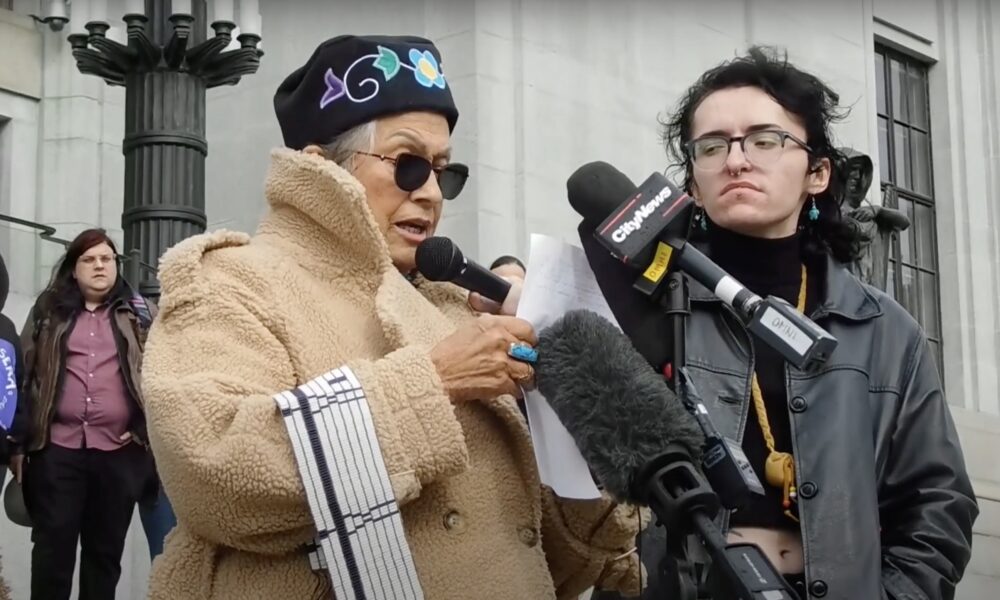
On Oct. 15, the Kanien’kehá:ka Kahnistensera (Mohawk Mothers) filed a motion with the Supreme Court of Canada seeking an independent investigation into possible unmarked graves at the site of McGill’s New Vic Project at the former Royal Victoria Hospital (RVH). 

“We stand in front of the Supreme Court of Canada facing a political violation by the people of Canada that we wish to discuss so that we may get justice,” said Mohawk Mother Kahentinetha at a press conference outside the Court in Ottawa. 

McGill’s New Vic Project, a plan to expand the downtown campus, will occupy 15 per cent of the former RVH site, the rest of which is managed by the Société québécoise des infrastructures (SQI). During the 1950s and 1960s, the RVH’s Allan Memorial Institute was one of many sites across North America on which the CIA conducted MK-ULTRA mind control and chemical interrogation experiments. The Mohawk Mothers believe that the site houses both ancestral burials that predate colonization and unmarked graves from the CIA’s experiments, which they allege disproportionately targeted Indigenous peoples. Since 2015, the Mohawk Mothers have been advocating against construction and excavation until a comprehensive investigation into possible unmarked graves is completed.

Karonhia’no:ron, a graduate student at McGill and cultural monitor for the Mohawk Mothers, called on McGill and the Quebec government to prioritize reconciliation over construction at the press conference.

“Perhaps it was naïive of me to believe that my university and the province of Quebec would agree that protecting Indigenous children was more important than a campus redevelopment project,” said Karonhia’no:ron.

In April 2023, the Mohawk Mothers reached a settlement agreement with McGill, the SQI, the RVH, the City of Montreal, and the Attorney General of Canada, which mandated that a panel of archaeologists jointly appointed by all parties immediately begin archival, testimonial, and archaeological investigations into the site. The Mohawk Mothers allege that McGill disbanded the panel in August 2023, before the investigation had been completed. However, in a statement to The Tribune McGill’s Media Relations Office (MRO) asserted that the panel dissolved after they fulfilled their mandate by completing their investigation and issuing their final report in July 2023. The MRO maintains that no unmarked graves “have been made” on the site and that all archaeological work is being done in accordance with the settlement agreement and the recommendations of the panel.

The Mohawk Mothers argue that there is evidence of unmarked graves on the site that necessitate further investigation. At the press conference, Kwetiio, one of the Mohawk Mothers, explained that in June 2023, historic human remains detection dogs detected the scent of potential human remains near Hersey Pavilion. Ground-penetrating radar surveys then revealed dozens of anomalies, as announced by Provost and Executive Vice-President (Academic) Christopher Manfredi on Aug. 3, 2023.

Kimberly Murray, a member of the Kanehsatà:ke Mohawk Nation and the Independent Special Interlocutor appointed by the Minister of Justice and Attorney General of Canada, voiced her solidarity with their motion to the Supreme Court at the press conference on Tuesday. Murray, who is responsible for making recommendations to improve Canada’s legal processes to help identify and protect the unmarked graves and burial sites associated with residential schools, emphasized that Canada’s legal system continues to fail the Mohawk Mothers and other Indigenous communities.

“Canadian law has been used to oppress Indigenous people for decades. The [Truth and Reconciliation Commission] has said that the law has operated to stop the truth from coming out,” Murray said. “So I support this appeal. It’s of national importance.”

In November 2023, Justice Gregory Moore ruled to reinstate the panel of archaeologists, asserting that their mandate had not been completed in July as McGill argued. However, McGill successfully appealed this decision at Quebec’s Court of Appeal this August. 

By submitting an application to appeal to the Supreme Court, the Mohawk Mothers are hoping to reverse the Quebec Court of Appeal’s decision and reinstate the panel of archaeologists to oversee the investigation. According to the Mohawk Mothers, this represented the first time that traditional Kanien’kehá:ka legal documents were submitted to the Supreme Court.

Kwetiio underlined that Canada must reckon with the genocide it has committed against Indigenous peoples before reconciliation can be pursued in good faith.

“Truth comes before reconciliation,” Kwetiio said. “We hope that Canadians and their Supreme Court will see that.”

Editorial, Opinion

Student protest is meant to disrupt the status quo

In anticipation of heightened tensions on Oct. 7, the McGill administration preemptively closed campus, silencing student protest and increasing policing. The university moved classes online and required students to show identification at security checkpoints, with some students reporting that they were denied entry into academic buildings despite valid credentials. Fences restricted access to certain entrances, and vague emails from the administration fueled the confusion. While McGill claimed to be protecting its campus, its disproportionate response to student democracy by using armed officers and tear gas demonstrates a prioritization of property and image over addressing violence and genocide. 

On the afternoon of Oct. 7, students in Montreal protesting the ongoing genocide in Palestine were met by over 80 officers from the Service de police de la Ville de Montréal (SPVM), more than a dozen officers from the Sûreté du Québec (SQ), and campus security. The event was organized by the Concordia and McGill chapters of Solidarity for Palestinian Honour and Resistance (SPHR), which demanded that both universities disclose and divest from partnerships tied to illegal Israeli settler colonialism. The demonstration took place in response to escalating Israeli terrorism, invasion, and occupation of Palestine and Lebanon in the past year.

Upon reaching McGill, protesters walked to 505 avenue des Pins Ouest, a McGill-owned building under construction, set to be the site of the Sylvan Adams Sports Science Institute—a “twin” institute to the one at Tel Aviv University. The project is named after Sylvan Adams, an Israeli billionaire and endorser of Israeli apartheid and violence. Some protestors took part in breaking windows with metal rods and bricks and tagging red triangles, a symbol associated with the Palestinian liberation movement. Riot police—some of them on bikes—stormed students, dispersing them using tear gas and pushing them off campus with physical violence. 

On Oct. 8, McGill sent a message to staff and students informing them of a 10-day injunction preventing any members of SPHR and “all those who become aware of the judgment” from protesting within five meters of campus buildings. The ambiguity of McGill’s language and policies enables discriminatory enforcement, allowing authorities to selectively target certain groups while permitting others to demonstrate without the same restrictions. This frames some protesters as acceptable while portraying others, many being students of colour, as threats. McGill’s actions set a troubling precedent, suggesting that dissent is only tolerable within narrowly defined boundaries, stifling the very essence of meaningful protest. 

The students’ act of breaking windows was not senseless destruction. When institutions remain indifferent to peaceful and democratic demands for justice, protest must disrupt the very symbols of power and complicity in order to make change. This infrastructure is not neutral; it embodies McGill’s investment in systems of violence and colonialism. 

Language itself also poses a threat to progress, as McGill’s administration is unable to acknowledge Israel’s actions as genocidal. Recently, an anonymous legal notice forced the Post-Graduate Students’ Society (PGSS) to reframe their solidarity motion with Palestine as a “Commitment to Peace” motion, reflecting a trend of students having to refrain from explicit condemnation of genocide. While the McGill administration has supported Israeli students over the past year through student-wide emails, its support for those affected by the violence in Lebanon has been through private emails sent only to registered international Lebanese students, disregarding those with familial ties or dual citizenship who are also affected. By choosing when to offer public support, McGill demonstrates clear value signalling, and by choosing when to publicly engage, McGill aligns its messaging with political convenience rather than genuine care.

While much of McGill’s rhetoric encourages “peaceful protest,” it also demands that protests don’t disrupt or challenge the institution. However, protest that aligns with convenience will never change the status quo. Student activism is a critical artery for real change, and thus, it must pressure institutions to abandon the status quo on which a given issue is founded. McGill celebrates past movements only after they are safely in the rearview mirror, but condemns today’s activism as it challenges authority. The absence of protests should be far more alarming than their presence; silence in the face of genocide is more dangerous than disruption. The demands from students are clear—McGill must meet them. Anything less than divestment perpetuates the very injustices these protests seek to end.

Arts & Entertainment, Film and TV

What we liked this fall break

Pretty Little Liars – Lily Dodson, Contributor 

Every fall, there’s little my sister and I enjoy more than sitting on our couch and binging episodes of Pretty Little Liars (PLL). Since discovering it on our parents’ Netflix account at the ages of 10 and 12, we’ve been hooked. 

The eerie, ominous nature of the show makes it perfect for fall. Set in the fictional town of Rosewood, PA, PLL follows a group of four friends grappling with the murder of the fifth member of their clique, while also receiving threatening messages from an anonymous stalker who signs off as “A.” Even though it has some of the most absurd story arcs and one-liners in television history—“Call off your techno boy toy, or I tell the cops what your mom keeps in the lasagna box” is a quip I can’t begin to explain to a non-viewer—it is thoroughly entertaining. Despite rewatching it around half a dozen times, the show’s seemingly endless supply of nonsensical plot twists ensures it never gets tiring.

Beyond its absurdity, the show is a touching ode to friendship. The four ‘liars’ stick together despite all of the chaos they face throughout the show’s seven seasons. My sister and I enjoy watching to get a good laugh in, but I have grown to appreciate the absolute loyalty that the girls have for each other, and that itself reminds me of why we keep going back to it every fall.

Tell Me Lies Season Two – Siena Torres, Contributor

Season two of Tell Me Lies just finished airing last week, and I am still reeling from its cliffhanger ending. Since it first aired in 2022, Tell Me Lies has created a scandalous, raunchy, and toxic world worthy of its Gossip Girl influences. One major difference is that it is a rare television show set in a university, which allows for more scandal and consequences than a high school setting does.

Told mostly through the eyes of Lucy (Grace Van Patten), we follow her from her freshman year with her new friends and observe how she becomes involved with the narcissistic Stephen (Jackson White). The show is held together by the real-life couple’s intense chemistry, which provides the only justification for why Lucy keeps coming back to such a toxic relationship.

In flash-forward moments, the friend group celebrates a wedding that threatens to implode due to past secrets. The new season expands on other characters’ troubles including an affair, a sexual trauma, and explorations of queerness. The episodes aired weekly which allowed for anticipation to build for the finale and its relentless string of reveals. If you are looking for a new show to binge with characters that will provoke out your emotions, Tell Me Lies is well worth a watch.

Saturday Night – Annabella Lawlor, Staff Writer

90 minutes until showtime. The final bricks are being laid. There are too many sketches for too little time. Cigarettes are smoked in anticipation. The microphones stop functioning. There’s no one to work the lights. Fights break out over a bee costume. Scripts are burned. 20 gallons of blood are misplaced. It’s Oct. 11, 1975, and Saturday Night Live is set to premiere at 11:30 p.m.


Jason Reitman’s new film, Saturday Night, thoughtfully replicates the growing tensions between the cast and crew of the historically acclaimed sketch-comedy show. The film follows showrunner Lorne Michaels (Gabriel LaBelle) on his quest to tame the chaos of comedic creativity. With his performance, LaBelle captures the looming fear of failure in the show’s conception and the anxieties of harnessing the self-involved talents of up-and-comers including Chevy Chase, John Belushi, and Gilda Radner. The set and costuming transport the audience back to 1975, perfectly capturing the dying state of late-night comedy in the period with its juxtaposition of the kitsch comedy then airing to SNL’s seemingly revolutionary approach to the genre. Saturday Night is an ode to the original show’s everlasting legacy and cultural impact, memorializing it in 16mm film as the rebirth of comedic culture. It’s emotional and tense, reminding viewers of the young comedians who once sought to revitalize late-night television with their daring absurdism and refreshing humour.

Science & Technology

Turning pollution into power: McGill’s green energy innovation

At the First Earth Summit in 1972, the world set out guidelines to help preserve the Earth and prevent climate change. Since then, climate change has gained a prominent place in the global political agenda and has remained a matter of international importance for decades. But what has changed since then? Despite 196 countries uniting at the Paris Agreement of 2016 and committing to achieving green goals by 2030, the rate of global greenhouse gas emissions was at an all-time high between 2010 and 2019, and the world continues to experience devastating natural disasters at an increasing rate

While governments address climate change by implementing policies like carbon taxes, scientists like Hui Su, a Postdoctoral Fellow in McGill’s Department of Chemistry, and Jing-Tan Han, a PhD student at McGill’s C-J Li Lab, have been striving to develop alternative ways to combat the climate crisis. 

In a recent paper published in Nature Communications, Su and Han discuss their success in using light to catalyze the conversion of greenhouse gasses, specifically methane and carbon dioxide, into valuable industrial chemicals such as green methanol and carbon monoxide.

“We wanted to combat the climate change caused by the emissions of greenhouse gasses, so that was our starting point,” Han said in an interview with The Tribune. 

With a background in small molecule transformation, Han found the reactions he studied often produced carbon monoxide and other greenhouse gasses as byproducts. This observation inspired him to use carbon monoxide and methane as reactants and transform them into useful products.

Since 2014, Han’s team has been dedicated to this research, and after a decade of work, their efforts have begun to come to fruition.

Through their innovative process, gold and palladium ions are added to gallium-nitride, creating a photocatalyst—a substance that alters the reaction rate of a chemical reaction upon exposure to light. With the photocatalyst present, the activation energy required to break the carbon-oxygen bond in carbon dioxide and re-bond that oxygen atom to one of the carbon-hydrogen bonds in methane is decreased, creating methanol.  

Methanol, a type of alcohol made primarily from natural gas, serves as a valuable chemical in the production of plastics and construction materials and can be used to fuel vehicles and ships.

Han and Su’s method can synthesize methanol from pollutants without producing any toxic byproducts.

“We didn’t anticipate this product,” Han explained.

Han and Su were expecting the production of carbon monoxide and hydrogen, two gasses that contribute to climate change far less than carbon dioxide, but instead produced methanol and oxygen—a more beneficial result.

This process could help combat climate change—fuel could be created from factory exhaust and other emissions, and recycled to power those same factories and vehicles. 

By transforming pollutants like carbon dioxide into usable resources, this new method has the potential to help pull carbon dioxide out of the lower atmosphere, reduce reliance on fossil fuels, and cut greenhouse gas emissions.

Before achieving success, the team spent over six months optimizing each aspect of the project. 

“We’re still trying to optimize our parameters, but we are trying to scale this process up,” Han explained. In order to decrease costs, they are looking at utilizing other photocatalysts, such as nickel or iron, as gallium-nitride is comparably expensive. In addition, they are exploring ways to potentially synthesize cheaper gallium-nitride.

In the meantime, while they continue to optimize their product before they commercialize, the team has patented their new technology. 

“[It’s a] new, novel process, which has never really been reported before, [so we’ve created] new opportunities for research,” Han expressed.  

Moving forward, this advancement in green-energy technology promises to be a useful tool in the global fight against climate change.

Science & Technology

How does sign language impact deaf children’s ability to learn spoken language?

An infant’s first three years of life are their most intensive period for acquiring language. At this stage, parents often speak to their children to stimulate language development and avoid communication challenges later on for their infant. However, this period can be difficult to navigate for speaking parents of deaf infants, as the children cannot absorb the parents’ spoken language. 

Expert opinions on how to navigate early childhood education for deaf infants have changed over the years. In the nineteenth and early twentieth centuries, teachers often discouraged sign language for deaf children, instead focusing on lip reading and producing speech sounds. In addition to the ethical concerns around preventing children from accessing communication methods that are most natural to them, current research shows that this approach may impair children’s language development. Audrey Delcenserie, a McGill graduate pursuing a PhD at the Université de Montréal, has published a paper regarding language deprivation and its adverse impacts on deaf children’s linguistic development.

“If you don’t expose [deaf children] to sign language, they actually go through linguistic deprivation, as they are not exposed to auditory inputs and they are not exposed to visual inputs,” Delcenserie said in an interview with The Tribune. “This means that [deaf children] start [language learning] after what we call the ‘critical’ or ‘sensitive’ period for phonological development.”

If deaf children only begin learning language after this critical period, they may struggle with learning any language, whether it be visual or auditory. As such, Delcenserie emphasized that parents should use any available resources to teach their children sign language.

The Visual Takeover Hypothesis (VTH) is often cited by those concerned with sign language being taught to deaf children, as the hypothesis asserts that learning a visual language may impair auditory language development. This hypothesis argues that deaf children who receive a cochlear implant—a device that makes sound waves perceptible to deaf individuals by synthesizing the waves—later struggle with auditory language, as their brain has been primed for visual learning.

However, Delcenserie argued that the concerns regarding the VTH are overstated. She asserted that exposure to any language, even in suboptimal conditions, is better than having no exposure at all.

“An increasing number of studies show that [the VTH] is not the case,” Delcenserie said. “The changes that happen in the brain are actually more of a consequence of deafness itself than exposure to signs.”

In Delcenserie’s research, she observed positive outcomes in cognitive growth for children who were exposed to sign language. Delcenserie calls these children ‘multimodal bilinguals,’ as they show proficiency in both auditory and visual languages and have the potential to further develop these skills.

“As the results point out, [multimodal bilingual] kids actually do quite well in terms of auditory perception when we tested these kids in French,” Delcenserie explained. “So this means their exposure to sign language may not be detrimental for their acquisition of French.”

Delcenserie also stated that even if VTH was a valid model, the speech pathology community would need to decide whether auditory difficulties are preferable to language deprivation. 

“It’s possible that my results may not be replicated, and that people will come up with different results—it’s science, it’s perfectly fine,” Delcenserie said. “Even if [VTH] is true, I think parents should ask themselves what’s the best for their child: These perceptual difficulties, or language and cognition?”

Delcenserie is hopeful that her paper will positively contribute to the discourse on sign language exposure and its benefits for deaf children.

“It’s quite clear that an increasing number of studies actually suggest that not exposing kids to any language input, whatever the modality is, is detrimental for language acquisition and cognitive development,” Delcenserie explained. “I don’t really know why [some speech pathologists] persist in thinking that linguistic deprivation might be a good idea, but I hope the article will help.”

Science & Technology

Exploring Montreal’s bilingual identity

Living in a vibrant and multicultural city such as Montreal exposes us to a variety of languages each day. Montreal’s linguistic mélange encourages us to consider how these different languages impact our perception of one another’s languages, and the key factors in this process.

In a study conducted in Montreal, Ruo Feng, a recent graduate from McGill’s Honours Psychology program, investigated the multilingual language attitudes of 123 French-English bilingual adults with emphasis on two common sociolinguistic metrics: Status and solidarity. She obtained data using self-report questionnaires that collected information about participants’ demographics and their attitudes toward languages.

“My first language is Mandarin, but growing up in Montreal, I’m fluent in both French and English,” Feng said in an interview with The Tribune. “With Quebec having many different French laws, I personally have my own attitudes about both languages.”

According to Feng, a central metric they studied was solidarity: The feeling of belongingness towards a given language.

“It’s much more personal in that way, whereas status is more so how valuable or important you think a language is, so it’s a little bit more removed from the self,” Feng said.

Feng explained that participants’ reported level of solidarity for their first language (L1) was lower for participants whose primary language was English, compared with those whose primary language was French.

“We thought that it could be because English is more like a lingua franca, meaning that it’s [a language] of globalization,” Feng said. This means that we may think of English as a universal language, which may help explain why for some individuals, it does not evoke a strong sense of belonging.

In the study, neighbourhood diversity—which they quantified by measuring the levels of variation and diversity within languages in a given neighbourhood—was investigated as a core environmental influence on language attitudes.

“The finding that resonated with me the most was that having more languages in your neighbourhood does affect your attitudes towards the importance of minority languages,” Feng said. “It speaks to the importance of respecting and honouring all these diverse languages that exist, especially as someone who speaks Mandarin, which is why I think it’s important to me.”

To quantify and explore these effects, Feng utilized the systems framework of bilingualism—developed in part by Debra Titone, a professor in McGill’s Department of Psychology—which suggests that bilingual individuals experience an interrelated system of linguistic influences that shape their language use and linguistic attitudes.

“Individual, interpersonal, and environmental factors affect people’s perceptions about different languages,” Feng said.

Interpersonal language dynamics are person-to-person interactions in daily life within various contexts. Feng quantified this in her study using language-tagged social networks. The findings indicate that having a more interconnected French-speaking personal network was associated with more positive solidarity attitudes toward French.

Next, ecological language dynamics refer to the broader, physical network of language exposure, such as your neighbourhood, work, or school environment. Feng measured ecological language dynamics using Canadian Census data

“The findings of our cities are important because having a diverse neighbourhood of different languages can have an influence on our attitudes about those diverse languages, like in the workplace or in organizations,” Feng said.

Thirdly, societal language dynamics encompass the political and sociocultural contexts in which individuals live. These dynamics are particularly complex in Quebec due to the provincial government’s language laws, such as Bill 101 and Bill 96. While Feng did not examine these dynamics, they remain an important aspect of studying bilingualism.

Although there is much more research to be done, studies such as Feng’s provide insight into the factors that shape language attitudes. Since Montreal poses a unique case of a population governed by Bill 96, Feng explained the importance of looking outward to other multilingual cities to determine whether her findings are common across multilingual environments, or are impacted by Quebec’s unique political situation.

Moving forward, a more holistic understanding of language attitudes, along with advanced quantitative tools, can significantly benefit language planning policies in multicultural societies, including Montreal.

Science & Technology

High and dry: How does drying affect weed quality?

While many students spend their day surrounded by cannabis, not all of them can claim that it’s “for research purposes.” For some bioengineering researchers, though, this is their reality. With cannabis slowly rising in popularity among Canadians, research in the field is more relevant than ever.

In a recent publication in the journal Industrial Crops and Products, Mark Lefsrud, associate professor at the McGill School of Environment, examined how various postharvest practices affect cannabis quality. 

Specifically, Lefsrud and his colleagues investigated how different treatments and dehydration techniques used after harvesting affected the concentration of cannabinoids—chemicals found in cannabis, including THC and CBD—the colour of the flower, and the drying time. Treatments and techniques included pre-freezing, adjustments in temperature, vacuum drying, and microwave drying.

“After you harvest the cannabis plant, you have to dry it down, and then you can sell it as a bud after it’s been pruned or trimmed. We were trying to come up with ways to improve the quality of the bud,” Lefsrud said in an interview with The Tribune. “We found that if we pre-froze the product and then [vacuum]-dried it or microwave-dried it, we could actually improve some of the product, specifically increasing [its content of THC—compounds that cause the high and intoxication].”

Pre-freezing additionally helped to preserve the bud’s chlorophyll, a compound known for giving plants their characteristic green colour. However, this is not necessarily a desired outcome, depending on where the product is sold and to whom. 

“Some like [the buds] to be green, some like them to be kind of golden, and some like them to be almost bleached out white. Some smokers actually maintain that chlorophyll is what causes a harshness in the smoke, and so we shouldn’t have it. There are others that maintain that [chlorophyll] has nothing to do with it,” Lefsrud explained.

A combination of pre-freezing and vacuum-drying also improved the drying time, in some cases reducing it by as much as 71 per cent. 

This study was one of many on cannabis conducted in Lefsrud’s Biomass Production Lab. Among other topics, the lab has studied production methodology, observing how the quality of light in a cannabis plant’s environment can increase its rate of growth and cannabinoid content. 

Lesfrud has also examined the environmental consequences of producing and distributing cannabis in Canada. He noted, however, that this study was not exhaustive and that more work is needed to answertowards answering the questions that arose after its publication.

To further his impact on cannabis research, Lefsrud and his colleagues across the country are trying to get graduate students involved in the industry. After receiving a $1.65 million CAD grant from NSERC in 2020, they founded a program to further this goal.

“We called it the Quality Assurance and Quality Control for Cannabis CREATE Training Centre, with the goal of training about 52 to 54 graduate students on better economic mechanisms for cannabis production, as well as working with the companies to try to improve their technology too,” Lefsrud said.

Because recreational cannabis was only legalized in Canada in 2018, researchers have had relatively little time to explore the field. The legalization presented Lefsrud with the unique opportunity to both make new discoveries and add scientific rigour to a field that previously lacked it.

Lefsrud’s work not only allows cannabis growers to optimize their harvesting techniques but also provides them with new insights about the plants they’ve worked so closely with; it is a learning experience for everyone involved.

 “It’s not everyday that you get to play with a crop that has been ignored for thousands of years from a research perspective,” Lefsrud said.

Off the Board, Opinion

Activism must be shaped beyond spectacle

A few weeks ago, my professor began our history seminar on Black Internationalism by asking if we had ever imagined ourselves or our families enslaved. Given the subject matter of the class, the question wasn’t necessarily surprising, but I found it unnecessary. As upper-year history students, hadn’t we learned that we don’t need to put ourselves in others’ shoes to understand or humanize them? 

What was even more striking was the demographic being asked. The idea of my majoritarily white peers imagining themselves as enslaved in order to empathize with Black suffering was unsettling. I wondered, “Am I being oversensitive, or am I just growing increasingly frustrated with how we as humans choose to engage with the historical, and current, suffering of others?”

This experience led me to consider how we digest imagery of others’ hardships on social media and how sharing images of suffering, particularly the suffering of people of colour, has become so common. In an age of hyper-visibility, we increasingly encounter images of human misery—whether it’s police brutality, children killed in conflict zones, the conditions of migrant workers, or any other gruesome injustices. These images often spark outrage and mobilize action, especially among white allies, but history shows that this energy quickly fades. The constant exposure risks turning suffering into a routine part of our daily media consumption, numbing us rather than inspiring lasting change. 

The expectation that viewing images of suffering will inspire empathy and action also overlooks the unequal burden placed on marginalized communities. For instance, to Black Americans, videos of police violence that shock white viewers are not new revelations—they are painful reminders of a history that lives in their everyday experience. As American theologian James Cone wrote, “Black Americans cannot forget the terror of the lynching tree… It is buried deep in the living memory and psychology of the Black experience in America.” The same goes for those in African countries and their diasporas who face the generational trauma of colonialism paired with the ongoing harm from neo-colonialism. 

More troubling is the underlying assumption that witnessing suffering is necessary to care about or act against injustice. Today, as we scroll through endless images of war, brutality, and displacement, we risk becoming passive consumers of other people’s agony. Images depicting the hardships faced by people of colour, which have long served to reinforce racial hierarchies, evoke empathy no more effectively than a familiar song that calls to mind a past experience. This reliance on graphic imagery or imagining ourselves in others’ shoes reduces adversity to spectacle, framing empathy as something triggered only by what we see. Instead of fostering meaningful action, this approach desensitizes us, trapping us in outrage without the imagination needed to envision a future beyond pain. 

Honouring ongoing suffering, as well as those who have lost their life to it, requires more than passive media consumption; it calls for meaningful action and reflection beyond the visual. We must question whether witnessing suffering interrupts power dynamics or merely reproduces them. Are we being proactive, or are we just watching? 

If advocacy relies on the continual display of suffering, we remain in a cycle where pain is the primary currency for creating change. We need to imagine a way forward that does not depend on the circulation of violent imagery. Instead of waiting for the next shocking video to reignite our activism, we must shift towards effective strategies that centre community care, justice, and long-term policy solutions. Our advocacy must be based less in reactivity and more on building a world in which the exploitation of violent imagery is no longer necessary. This shift requires us to move beyond empathy that is sparked by trauma and towards solidarity rooted in shared humanity. We do not need to see another video of a Black person killed by police or a child carried from the ruins of war in Palestine to know that injustice exists. What we need is the imagination and commitment to act before the next tragedy is captured on camera. 

McGill, News

First Board of Governors meeting of the academic year discusses admissions following government-mandated tuition increases

The McGill Board of Governors (BoG) convened for its first meeting of the 2024-25 academic year on Oct. 9. The board discussed enrolment, an update from the Committee on Sustainability and Social Responsibility (CSSR), and the university’s communications strategy.

The first and last portions of the meeting were not open to the public. The open session of the meeting began with remarks from McGill President and Vice-Chancellor Deep Saini, who focused on the encouraging enrolment statistics for the 2024-25 academic year. 

“Enrolment […] is a good news story this year, despite the fears that we had last year when the government introduced a new funding framework for universities, as well as new measures on tuition at the university,” Saini said. “Enrolment is either comparable to last year or up in all faculties across the board in the university, with the largest growth occurring in Science, Desautels, and Engineering.”

He also noted that the number of students from CEGEPs enrolled in bachelor’s degrees at McGill increased by 5.2 per cent, and new registrations from out-of-province Canadian high school students increased by 11 per cent. 

Despite these increases in enrolment, Saini expressed concern about Canada’s continued tightening of regulations around international students, specifically the 10 per cent reduction in the number of study permits issued across Canada for 2025. He pointed out that masters and doctoral students, previously exempt, are now subject to this reduction

“This has introduced a new hurdle for our ability to attract top-tier talent [at] the graduate level, where global competition is already very fierce,” Saini warned. 

Saini added that McGill was cooperating with other research institutions like Université Laval and the Université de Montréal to advocate for fewer restrictions that impact enrolment at Quebec universities.

Following Saini’s introduction, Regional Vice President of Private Banking for Quebec and Eastern Canada and Chair of the CSSR Alan Desnoyers presented a report from his committee. Desnoyers noted that during committee meetings on Aug. 29 and Oct. 2, the CSSR had discussed McGill community members’ concern around the university’s investment in companies complicit in the Israeli genocide of Palestinians in Gaza. Desnoyers also explained that the CSSR is consulting the McGill community on the possibility of a broader divestment from weapons manufacturers through a webform which was available for people to fill out until Oct. 1. 

“The committee agreed to launch a broad consultation process with the McGill community concerning the question of divestment from direct investments in companies that derive a dominant portion of their direct revenues from the production of military weapons, regardless of the countries in which they operate,” Desnoyers noted.

Philippe Gervais, who has served as Vice-President of Communications and Institutional Relations since Aug. 1, outlined his plans for re-organizing the university’s communications staff, such as separating the previously combined “Issues Management” and “Content Production” teams. He also plans to integrate AI-assisted translation to reduce the burden of labour for the translation staff. 

Gervais also discussed how McGill is responding to the Quebec government’s mandated tuition increases, and highlighted that these new measures require 80 per cent of non-Quebec students to achieve a Level 5 proficiency in French. Gervais stated that the university is trying to combat the challenges imposed by the new expectations for French proficiency by offering an opportunity to learn a new language over the course of their degree. 

Subsequently, the Board approved the 2023-2024 Financial Report, which was verified by an external auditor. The last report was a presentation from the Faculty of Medicine, which gave an overview of the recently opened medical education program at the Outaouais Campus, where the first class of students graduated in spring 2024. 

Moment of the meeting:

Saini highlighted McGill’s 2024 Canada Award, which offers up to $12,000 CAD for out-of-province Canadian students entering in 2024-25 academic year, has helped to encourage out-of-province students to enroll despite Quebec’s new fee requirements.

Soundbite:

“We’re looking ahead at a little bit of a rebranded McGill, a little bit of a refresh, bringing it a little bit up to date [….] This will be a long process. It’s not something we can do overnight. It’s not finding a new catchphrase for McGill. There’s a lot of work to be done there.” — Gervais on how he sees McGill’s image developing in the future.

Read the latest issue

Read the latest issue