


Latest News

Science & Technology

Demystifying sports injuries for effective prevention and treatment

Sports and physical activity are vital for health, offering benefits such as reduced risk of chronic diseases, lower morbidity, and better mental health. However, excessive exercise can lead to injuries and affect the musculoskeletal system, resulting in prolonged recovery, increased risk of further injury, and stress. 

A recent review published by Chinchin Wang, a PhD graduate in epidemiology, and her team under the supervision of Ian Shrier, an associate professor in McGill’s School of Population and Global Health, aimed to provide epidemiologists with a concise introduction to musculoskeletal (MSK) sport injuries. Wang, who also currently works as an epidemiologist at the Public Health Agency of Canada, focused her research on gaps in how epidemiological standards of injuries describe MSK injuries. 

“I spend a considerable amount of time doing endurance training for myself, and I am aware that injuries often occur when you push yourself too hard. I think that’s how my pursuit of knowledge in studying MSK injuries and their preventive measures began,” Wang said in an interview with The Tribune. 

The definition of “injury” varies widely. From a biological perspective, an injury is broadly defined as tissue damage resulting from forces that exceed the tissue’s load capacity, causing deformation and stress. However, researchers in sport injury epidemiology take a different approach. They instead define an injury based on its impact on a patient’s ability to participate in sports while undergoing treatment and rehabilitation for the injury. These injuries are typically categorized as any “complaint” injuries, “medical attention” injuries, or “time-loss” injuries. This categorization emphasizes the functional consequences of the injury and the necessity for medical intervention or time away from sports. 

“Ideally, we aim to enhance our understanding of how epidemiologists categorize injuries and their severity in subject groups by incorporating more scientific background into the classification process,” Wang elaborated. 

While acute injuries are commonly associated with MSK injuries, the accumulation of microtraumas—microscopic tears on muscle cell surfaces—can also significantly contribute to prolonged recovery periods following intense physical activities. 

Microtrauma injuries represent early stages of tissue injury that can accumulate over time, potentially leading to more significant injuries if not properly managed. Understanding these processes can help individuals better identify risk factors and develop strategies to prevent sports injuries. 

Recognizing microtraumas also allows for the assessment of injury mechanisms and the impact of repetitive loading—applying a force repeatedly to a tissue over days or weeks, which is crucial for designing interventions to enhance athletes’ safety and performance.

“Neglecting little problems often leads to more stress in life afterwards. That’s how it works with muscles too,” Wang said. 

The review also provides a precise outline of muscle, tendon, and ligament injuries, the most damaging of which are joint injuries—problems that arise in parts of the body that connect bones together. 

Joint injuries are common because joints are complex structures that endure significant stress during physical activities, especially in sports that involve high-impact movements, twisting, or sudden directional changes. These stresses can lead to acute injuries, such as anterior cruciate ligament tears in the knee that often need surgery for repair. 

Adding further obfuscation, pain is often attributable to nerve impingements and damage rather than being solely related to muscle injuries. As a result, clinical studies often struggle to predict the outcomes of individuals who report similar damage from sports injuries but have different causes of trauma. 

Wang’s contributions establish the necessary foundation for applying epidemiological methods to identify the most efficient strategies for preventing and treating sports injuries and their related health consequences. Further research in this field may shed light on the possibility of developing targeted interventions and tailored rehabilitation programs that can minimize the risk of injury, optimize recovery, and enhance long-term health outcomes. A stitch in time saves nine.


Science & Technology

Six must-see items at the Maude Abbott Medical Museum

The Maude Abbott Medical Museum is one of the hidden gems of McGill’s downtown campus. Chock-full of real anatomical specimens, tools from bygone eras of medicine, and unnerving 20th-century medical models, the collection is not for the faint of heart, but if you have a strong stomach, it’s worth the trip to the Strathcona Anatomy and Dentistry building to check it out. Here are six items to make sure you see on your visit!

Aviation medicine research helmet

This helmet and control box were part of research carried out by Dr. Geoffrey Melvill-Jones, a physiologist who taught at both McGill and the University of Calgary during his career, and served as a long-time director of McGill’s Aerospace Medical Research Unit (AMRU). During the 1960s and 70s, the AMRU was also involved in early in-orbit experiments and helped to train NASA astronauts to perform experiments during their flights. This particular experiment, which was conducted in 1962, focused on nystagmus—a condition involving uncontrolled eye movements—among pilots. 

Miner’s lung specimens

There are actually two exhibits showing the effect of prolonged exposure to mining conditions in the museum. One displays an actual miner’s lung, preserved in 1910, belonging to a miner who suffered from anthracosis—more commonly known as black lung disease. The other is a series of extremely thin slices of miners’ lungs, collected during the 1950s, which are just four micrometres thick and are mounted to filter paper. These cross-sections show the effects of anthracosis and silicosis—a long-term lung disease caused by inhaling fine dust containing silica over many years. 

Wax model of vessels and nerves on skull surface

Produced by Maison Tramond, a Paris-based workshop that created anatomical models from wax and bone during the late 19th and early 20th centuries, this skull is one of several jarringly realistic wax models housed in the museum collections. At the time, medical schools were beginning to transition away from using only real specimens and towards more anatomical models, which could be specially produced to illustrate specific maladies and were easier to store and manipulate than organic tissue. This model in particular illustrates what’s going on underneath the skin, highlighting the role of blood vessels and the nervous system.

Aspirated peanut

One of many organs showing medical anomalies and fatal conditions in the museum collections, this preserved specimen shows the trachea and lungs of a young child who breathed in a peanut, which became caught in the airway and ultimately caused their death. This specimen, although morbid, is a well-known holding from the collection and a good illustration of the choking hazard posed by having small objects accessible to young children. 

Anatomy dissecting lab logbook

Tucked to the side of the museum, this logbook lists the actual names and descriptions of the people whose bodies were donated to McGill’s dissecting lab in the 19th century. The patients cataloged had died of complications from tuberculosis in May of 1896. It goes on to list their ages, religion, and the cemetery they were buried in, all in curly Victorian longhand. 

Bonus: Nosce Te Ipsum exhibits

Before you even reach the museum, you may notice that there are several mini-exhibits dotted around the Strathcona Anatomy and Dentistry building, housed inside old fire-extinguisher boxes. It’s hard to miss their bright-red casing, but if you take a closer look, you’ll see that they contain skeletal models, historical drawings of human anatomy, and QR codes if you’re interested in learning more. Each case also sports the motto Nosce Te Ipsum, which means “know yourself” in Latin.

Science & Technology

Dress to impress: How attire shapes perception and identity

Clothing is much more than fabric—it’s a form of self-expression, a cultural marker, and a powerful communicator of identity. From job interviews to social gatherings, fashion often determines the first impression we make on others. But just how much does clothing influence perception, and why is it so important? 

Eric Hehman, an associate professor of Psychology at McGill, studies the dynamics of prejudice, group interactions, and how we perceive others. In a recent study, he explored the critical role that clothing plays in shaping impression formation—a continuous process in which individuals develop and update their perceptions of others, such as beliefs, stereotypes, and attitudes. 

Hehman proposed a working model that incorporates dress as a key component of person perception—the cognitive processes involved in making judgments about people and their behaviour. The first step in this process is defining what actually counts as “dress” and what is just an aspect of someone’s body. 

“We define dress in the paper as everything you can add to your body that is not natural,” Hehman explained in an interview with The Tribune. “Hair is not dress, but styling your hair, we do consider dress because that’s a choice, and it conveys information. If I have a mohawk versus a shaved head, versus super long surfer hair, those are choices that I’ve made that are conveying different sorts of things about me. Your earrings would be dress, necklaces would be dress, makeup, possibly even tattoos.” 

While we often turn to faces to make initial judgments about qualities like intelligence and confidence, Hehman’s research reveals that dress communicates much more. In the model, impressions are formed by analyzing three main components of a person: their face/body, dress, and context. These are processed through the lens of the perceiver’s own beliefs, stereotypes, attitudes, and cultural knowledge. 

He identifies four factors that observers may infer from a person’s attire: social category, cognitive state, status, and aesthetics.

The first category relates to how clothing reveals a person’s social identity. While faces offer clues, Hehman is concerned with what lies beyond this trait-level perception

“If you add clothes to the mixture, it adds way more information,” Hehman said. “Cultural clues from what people wear can reveal their sexuality, political affiliation, or what subculture they are part of.”

Subtle choices in attire—like colour scheme, accessories, or overall style—signal cultural affiliations and preferences. For example, someone at a concert may use their clothing to implicitly indicate loyalty to a particular genre or band.

The second category focuses on cognitive states, where dress informs inferences about mental states, goals, or intentions. Perceivers can gauge whether someone is attending a formal event, seeking attention, or avoiding harm based on their clothing. 

For instance, role theory in dress suggests that clothing can communicate expected societal roles, such as uniforms indicating authority, while further setting up expectations for specific behaviours. 

The third factor, status, concerns how dress signals one’s place in social hierarchies. Clothing can indicate wealth, class, or professional standing. 

“Wealthy folks have a lot of avenues for self-expression, while those with fewer resources often face limited opportunities. Even within, say, Canada, there’s rich and poor, and the richer folks just have more ways that they can customize their existence,” Hehman explained. “So [wealth] might manifest more for those folks in their appearance and what they can modify.” 

The fourth category, aesthetics, focuses on the visual appeal of clothing and how it impacts judgments about someone’s personality or taste. Fashion choices are often tied to values like creativity or conformity. However, Hehman emphasizes the challenges posed for research by the subjective nature of aesthetic appreciation. 

The field of dress perception remains understudied due to its complexity and variability and the challenges in running formal tests. By developing a structured model, Hehman emphasizes how clothing is an important part of social perception, offering opportunities to have a better understanding of how attire shapes our identities.

Behind the Bench, Sports

Trying out: The McGill novice men’s rowing team

On Sept. 4, the first day of the McGill novice rowing (NR) tryouts, the Jacques Cartier bridge braids across the sky. The sounds of cars passing drive like nails against what’s left of last night. Then sleep begins to dissipate, finally, from your veins; it joins the shadows forming your wake. It’s 5:55 a.m..

Figures on bikes climb the opposite hill without their front lights on, their tires swaying like they might be dancing. But the sun hasn’t risen yet, and you know they’re not.

The boathouse is reminiscent of a factory in the cloudy predawn, like a figure in rain boots might step out of a loading bay and light a cigarette. The sky, red over the trees, strains to illuminate the water. A flock of students wiping the sleep from their eyes form most of a circle looking toward the Olympic basin.

This year marks the 100th anniversary since the founding of the McGill University Rowing Club (MURC) and the club’s 48th consecutive season. Tryouts, held in early September for the past 48 years, emphasize bringing beginners to the sport. MURC invites interested students to utilize its world-class facilities during the 10-day trial period. Coaches begin tryouts by running the crowd around the perimeter of the over 2,000-square-metre basin, which they tell prospective team members is the only one of its kind in North America. The students line up to take turns in the indoor practice boat, a contraption called The Tank. The rest sit down on ergometers, ergs—simulation rowing machines that, in the off-season, sculpt race-winning skills. 

About 80 athletes are vying for 20 spots: 16 novices and four spares. While the first three days are spent on inclusive fun, the news eventually breaks that the shell is going to fill up: On Monday there will be a test, and that will be the end of the lane for some. But MURC is a well-oiled machine of motivation; the promise of Saturday’s late wake-up (9 a.m.) on the mountain for a fun run with the varsity athletes (celebrities) provides some relief. 

The test on Monday morning, 2,000 metres, leaves some in the group less destroyed than others.

Tuesday arrives. The remaining 25 enter the hangar, among varsities for the first time. Getting from the loading bay to the launching dock takes 45 minutes at first—after two tries, it’s done in less than 10.

Three (up from zero last year) coxswains are auditioning for two places on the team, meaning steering is in novice hands as well. Coxies repeat instructions yelled, sometimes rather urgently, by a coach on a bike. Jogging behind are three or four boys, to be swapped into the boat halfway through practice.

The narrower margins of the second half of tryouts bring an air of competition. A crew member who is unsatisfied with his performance on day nine refuses to relinquish his seat for the spare. As the coaches introduce drills to be done in half-boats—stern and bow—unnecessary initiative sometimes tips the boat off its set. Varsities speed out of the mist and past, heads turn and the boat careens toward the basin wall. Everybody is eager to learn, but eagerness can’t replace the two short weeks of work needed before the new MURC novice boats can race, in Ottawa, on Sept. 29.

It’s hard to deny that the NR tryouts feel like an unparalleled opportunity at the end of that first morning. Having a sense of completion about you at 8:00 a.m. is an addictive feeling. It almost tricks you into thinking that there is no other way to live. It seems easy to keep up—until it fades, and you’re dead asleep in a 10 o’clock lecture.

News, SSMU, The Tribune Explains

The Tribune Explains: SSMU and UTILE affordable student housing

The island of Montreal’s apartment vacancy rate dropped to 1.6 per cent in 2023, with neighbourhoods like Plateau-Mont-Royal plummeting to 0.6 per cent, according to the 2024 report by the Canada Mortgage and Housing Corporation. In parallel, the average rent price for a two-bedroom has increased by a record-high of 7.9 per cent between 2022 and 2023. The rising costs are inhibiting students’ ability to access affordable housing. To combat this, the Students’ Society of McGill University (SSMU) is working with L’Unité de travail pour l’implantation de logement étudiant (UTILE) to break ground on Le Méridien, an affordable housing development catered to students. //The Tribune// unpacks the development of this partnership and what it means for present and future students.

What is UTILE?

UTILE is a social economy enterprise, a nonprofit dedicated to developing affordable student housing across Quebec. Founded in 2012, they collaborate with student unions to create affordable housing projects specifically designed to meet student needs. As housing costs in Montreal continue to rise and affordable options become scarce, UTILE’s projects present an alternative to for-profit housing for students. UTILE has previously worked with the Concordia Student Union, leading to the construction of the student affordable housing building The Woodnote. The nonprofit has four buildings for rent and nine more projects underway in the province.

How did SSMU get involved?

SSMU began working with UTILE in 2014 when they partnered on a survey about key indicators of student housing, seeking to understand the reality of housing for students. In January 2019, UTILE presented its model and project to the SSMU Legislative Council. SSMU then proposed a question on the 2019 winter referendum, where 77 per cent of participating SSMU members voted “Yes” for the SSMU to “further prioritize affordable housing, including, but not limited to, further actions to explore developing student housing.” In October 2019, SSMU approved the creation of the Affordable Student Housing Committee (ASHC), aimed at exploring ways to secure and promote affordable housing for students and advise developers on students’ housing needs.

The final step in securing SSMU’s involvement with UTILE happened during the 2020 winter referendum when the undergraduate body voted to create an affordable housing fee of $6.53 CAD. The core mission of this fee is to fund about 300 units and create the infrastructure for future projects. The levy allows SSMU to collect $1.5 million CAD that goes to UTILE’s Popular University Student Housing Fund, which itself helps fund the $47 million CAD tower dedicated to McGill undergraduates, Le Méridien.

What is the state of housing for the McGill student population?

The ASHC published its final report in May 2023, presenting the state of housing for students at McGill. The review highlights that McGill’s own residence fees are considerably higher compared to other local universities and the private rental market. With the average cost of McGill’s residence rooms being 23.8 per cent more expensive than that of a room in a three-bedroom in the Plateau-Mont-Royal according to the ASHC report, many students are left struggling to find affordable accommodation.

The report also points to a broader issue of housing affordability, exacerbated by rising rents in Montreal. Many students, especially those with limited financial support, find it difficult to secure affordable housing close to campus, which intensifies the pressure on the private rental market and contributes to issues of gentrification and studentification.

What is Le Méridien?

Le Méridien is an upcoming student housing project, resulting from the collaboration between SSMU and UTILE. Located on Boulevard Saint-Laurent and Rue Ontario Est and scheduled to open for the 2026-2027 academic year, Le Meridien will offer 170 apartments to about 281 residents, primarily SSMU members. 

Thanks to a successful reclassification of the plot in the urban fabric of the Quartier des spectacles, the building will offer a number of units that aligns with the range of 200 to 300 originally contracted. Each new project UTILE completes helps fund future developments, as the organization’s status as a non-profit requires that it reinvest any surplus earnings. While rent prices for the building have not yet been finalized, they will be 15 to 30 per cent below market rates as per the contract between SSMU and UTILE.

Off the Board, Opinion

Disabled athletes deserve better media coverage

This summer’s Olympic and Paralympic season abounded with incredible feats of athleticism. As a disabled journalist, I was pleased to see Paralympic athletes garner significant media coverage across Canadian news outlets. But while some media agencies got disability coverage right, others perpetuated harmful stereotypes, framing disabilities as obstacles to be overcome. 

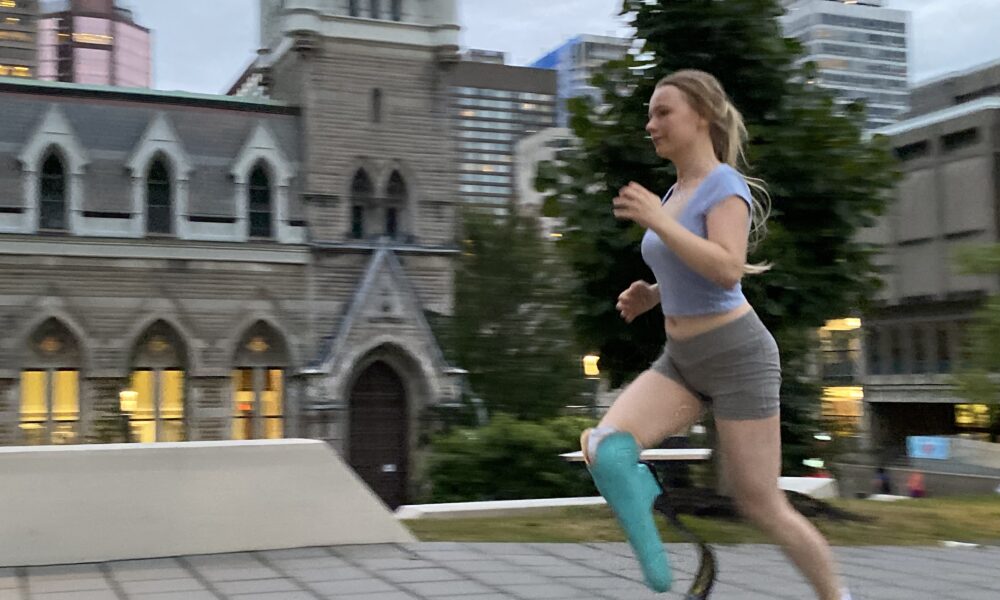
Although I never deliberately try to hide the fact that I’m an amputee in my everyday life, it’s fairly easy for me to do so. My below-the-knee prosthesis is slim, coloured to my skin tone, and easily concealed under pants. Whenever I go running, however, my amputation is on full display. The shape of my running prosthesis—a slim socket attached to a curved running blade—makes it impossible to hide. While running, strangers not only keep their eyes trained on me, but frequently come up to me to ask invasive questions and praise my courage, charisma, and resilience. I am routinely subjected to an uncomfortable excess of attention. Although strangers generally mean well, their celebration of my character is misguided; after all, they don’t know me. 

Despite rarely explicitly mentioning my amputation, it’s clear that these individuals praise my running because they see my amputation as a barrier I have to surmount. Of course, it is harder to run as an amputee. Not only is it something I had to re-learn how to do after my amputation, but it’s more painful for me to run than for many of my able-bodied peers. Friction between my leg and running prosthesis creates skin irritation, and running with the prosthesis itself often leads to pain at the bottom of my stump and lower back. Moreover, it can be difficult to find accessible routes amidst Montréal’s worn-down and often uneven sidewalks. Still, my running is more ordinary than it is inspirational. Framing my amputation as an obstacle places me in opposition to a fundamental part of who I am, an aspect of my everyday life. My amputation is something I work with, not something I work against. 

Journalists often make the same mistake of portraying disabilities as obstacles. Of course, my sweaty, tomato-faced runs around my Montréal neighbourhood are hardly comparable to the athletic performances seen at the Paralympic level. Unlike my ordinary runs, Paralympic athletic achievement is inspirational. Nevertheless, media coverage of the Paralympics often portrays disabled athletes’ victories as being achieved in spite of their disabilities. Presenting disabilities as obstacles only perpetuates the cultural narrative that disabled people need to be cured—that we are not welcome to exist in this world as we are. 

Disabled athletes not only deserve greater visibility, but more persistent coverage year-round. Although the 2024 Paris Paralympic Games were the first in history to receive some coverage of all 22 sports played, writing about disabled athletes only once every Paralympic season falls short of consistent representation. Similarly, news agencies overwhelmingly favour coverage of man athletes, and must also work to rectify the unequal representation of woman athletes in sports journalism. 

We have a responsibility as journalists to lead by example. Media coverage shapes our values and worldview, and how the media represents disabled people inevitably influences how individuals interact with disabled people in the world. When we are simply going about our ordinary lives, we deserve to be represented as just that—ordinary—rather than as reductive objects of inspiration or feel-good stories for able-bodied audiences. As journalists, we should strive to let disabled people tell their own stories, rather than force stereotypical narratives onto them. By asking questions rather than making assumptions, we can more authentically represent disabled people’s stories. Ultimately, our responsibility as journalists to inform the public is rooted in an even greater responsibility: To truly listen.

News, Recap, SSMU

Recap: SSMU Legislative Council Sept. 19 meeting

The Student Society of McGill University (SSMU) met for its first Legislative Council meeting of the semester on Sept. 19. Speakers discussed various departments’ progress on projects throughout the summer, reviewed the McGill Sustainability Projects Fund (SPF), and addressed a motion for a call-to-action regarding a pro-2SLGBTQ+ demonstration.

The SSMU Executive Committee began the meeting by providing updates on its work over the summer. The Committee noted that it worked with the Dental Students’ Association and Macdonald Campus Students’ Society to adopt a new online voting system with Simply Voting now that the groups’ elections are no longer supported through myInvolvement. Additionally, the Committee explained that it has been working to bolster student engagement. Lastly, the Committee discussed amending the SSMU Constitution with the aim of addressing issues within the Judicial Board. The proposed amendments would give the Judicial Board power to produce binding decisions on SSMU governing documents and create a process for appeals.

The meeting then turned to the SPF’s summer activities. The SPF approved numerous projects including the distribution of compost bins and materials for Science Frosh and the creation of a sustainable materials library for students in architecture and engineering. Budgets for the SPF’s projects ranged from $500 to $5,000 CAD.

Lastly, the Legislative Council heard a call-to-action proposed by Vice President University Affairs Abe Berglas. Berglas that the SSMU sign on to a call-to-action put forth by P!NK BLOC, a Montreal-based queer revolutionary collective, on Sept. 20. The call-to-action was in conjunction with a planned protest in response to calls for national protests by Hands Off Our Kids, an organization advocating for the regression of civil education and free expression, and Ensemble Pour Protéger Nos Enfants, a Quebec-based group that champions similar ideas. Berglas’ motion was amended for the SSMU to advertise the protest and the call-to-action on its Instagram as opposed to being a direct signatory. The motion passed 15-0 with four members abstaining.

An previous version of this article stated that SSMU VP University Affairs Abe Berglas’ motion called for the Council to share information on a counter-protest on its Instagram. In fact, this was the amended version of the motion which was passed. The original motion was for the Council to sign on to the September 20 Call to Action put form by P!nk Bloc among other organizations. The Tribune regrets this error.

Commentary, Opinion

The people-pleasing is not pleasing the people

For many students, university marks the first leap into adulthood—living with strangers, taking on leadership roles, and meeting people from all walks of life. In these situations, conflict is not just a possibility; it’s a certainty. 

Just last week, my colleague and I were discussing how to resolve an issue of poor communication when he shrugged and said, “It only becomes a problem if we talk about it.” I couldn’t help but think, “But it’s already a problem for me!” The reality is that issues don’t disappear when we stop talking about them; they fester and grow beneath the surface instead. 

Somewhere along the way, Gen Z developed the belief that pretending everything is fine makes everything fine. In reality, conflict avoidance is not a virtue; in fact, it becomes more damaging than facing conflicts head-on. We’ve created a generation of people-pleasers who think that staying neutral and avoiding disagreement keeps everyone happy. But, under pressure, this shallow contentment is quick to fall apart. The truth is, if a relationship can’t withstand honest communication, then it probably wasn’t built on solid ground to begin with. Healthy relationships are strengthened by addressing disagreements, not by pretending they don’t exist.

Whether it’s through changing the subject, delaying important conversations, or ghosting, conflict-avoidant behaviours are not only ineffective but downright harmful—especially for a generation already struggling with high rates of anxiety and depression. A 2021 study revealed that individuals who confront and resolve daily conflicts tend to experience lower stress levels and a more stable emotional state. Conversely, suppressing emotions has been linked to an increased risk of serious health issues, including premature death. Additionally, relying on nervous laughter or fake smiles rather than addressing distress can exacerbate feelings of loneliness and depression.

Conflict avoidance can also have detrimental effects on interpersonal relationships. It can lead to gunny sacking, a term used by psychologists to describe the unhealthy practice of storing up unresolved grievances and negative feelings about someone or something instead of addressing them as they arise. Over time, this buildup creates a metaphorical “gunny sack” filled with complaints, which can lead to explosive confrontations when the person finally reaches a breaking point. 

Worse, avoiding conflict often leads to passive-aggressive behaviour—where people express their frustration indirectly, through sarcasm or subtle digs—because they don’t know how to confront it directly and lack effective conflict-management skills. The discomfort of long-term, underlying resentment has much more dire effects than the uncomfortable experience of direct communication. 

There is a prevailing notion—especially in Canada—that being “nice” means never taking a stance that might upset someone else. But niceness is not the same thing as kindness. Niceness is surface-level, often driven by fear of judgment or rejection, while kindness involves deeper understanding, honesty, and sometimes difficult conversations. Direct communication is a genuine act of care; these conversations imply that someone is willing to embrace the discomfort of vulnerability and open dialogue to strengthen the relationship because they want it to work. In doing this, we offer others the chance to change their behaviour and extend them grace. We need to recognize this kind of communication as an expression of love. I would choose this kind of kindness over mere “niceness” any day.

Of course, this doesn’t mean every minor inconvenience requires a major discussion, nor should we jump to criticize someone for every small misunderstanding. In some cases, if someone is particularly unreceptive, it’s healthier to step back rather than push for a conversation. However, more often than not, people are more open to communication than anticipated. If an issue can be resolved through dialogue, we should engage in that conversation.

For a generation that has the capacity to turn anything into a joke, it’s time to get serious. The key lies in learning how to approach conflict constructively without making it personal or hurtful. This means being honest, maintaining a solution-focused mindset, using “I” statements rather than “you” statements, and leading with compassion and empathy. This direct communication, as opposed to avoidance, is what truly pleases people.

Arts & Entertainment, Film and TV, Pop Rhetoric

Applause for representation, but can we get an encore? 

Criticism rained down on the 76th Primetime Emmy Awards this past weekend. Only six months after the previous Emmys in January, the ceremony felt repetitive. However, the Emmys have increasingly devoted airtime to recognizing marginalized communities; the Sept. 15 ceremony marked historic wins for Shōgun’s Hiroyuki Sanada and Anna Sawai, the first Japanese actors to win in their respective categories, and The Bear’s Liza Colón-Zayas, who became the first Latina to win Best Supporting Actress in a Comedy. These wins lead to a wider variety of voices being shared within a competitive industry. Yet, as this continues, we must raise a critical question: Is representation enough to truly celebrate and uplift marginalized communities?

There is no doubt that representation at awards shows matters. It provides visibility and recognition to historically underrepresented groups such as racialized people, the LGBTQ+ community, and disabled individuals, giving audiences role models to look up to. Coming from a high school in Malaysia, Michelle Yeoh’s historic Oscar win for her role in Everything Everywhere All At Once filled me with hope and pride. 

However, representation is often seen as the final goal, rather than the starting point for deeper structural change within the industry. The risk behind heaping praise on this recent—and deserved—rise in representation at award ceremonies is that it becomes tokenistic. If we don’t continue fighting for more meaningful ways to represent marginalized communities, the status quo could become a superficial medium for the industry to appear diverse without addressing the power dynamics that continue to marginalize voices behind the scenes.

While it is exciting to see talents like Sanada, Sawai, and Colón-Zayas gain recognition, the industry frequently prioritizes celebrating individual achievements over systemic change. Award wins don’t address the deeper inequalities that marginalized groups face within the industry such as the hidden difficulties of being a woman or BIPOC director. As a result, representation, while essential, often feels like a checkbox rather than a meaningful step toward greater inclusivity. It seems absurd that audiences should applaud award shows for “making history” while overlooking systemic issues that persist within the industry. 

While representation takes centre stage, not nearly enough attention is being brought to the more explicitly political acts and statements at the Emmys. For instance, Oji-Cree actor D’Pharaoh Woon-A-Tai of Reservation Dogs arrived on the red carpet with a red handprint painted over his mouth: A symbol for the Missing and Murdered Indigenous Women movement across the U.S and Canada. Pro-Palestinian protestors gathered outside the awards ceremony, not unlike those who delayed the Academy Awards in March, to protest the ongoing siege on Gaza. These examples of outcry against horrifying violence are only some of many. Amongst the glitz and glamour of the evening, these political acts are muffled and difficult to find in the media unless explicitly searched for. 

The media also often highlights marginalized artists’ achievements over their political activism. This selective enthusiasm highlights the industry’s ongoing struggle to engage sensibly with marginalized communities. Colón-Zayas’ acting in The Bear is rightly celebrated, but when she used her platform to speak out on injustice, ending her speech with “vote, vote for your rights,” she received far less attention. The Emmys’ focus on representation without engaging with broader social issues limits the industry’s potential to truly amplify marginalized voices.

The sheer amount of power and influence the television and film industry has is astounding. To say that it should not be used as a platform for promoting diversity and equity is missing the beauty of the art in the first place. The industry should recognize more political activism and aim to highlight actors from marginalized communities who fight for justice and challenge power structures. However, to lead this change beyond representation, the industry must be willing to embrace the full spectrum of what it means to create a more inclusive, transformative celebration of marginalized identities.

Arts & Entertainment, Film and TV

‘The Substance’ is difficult to stomach

I’d never been to a movie by myself before, so when I discovered that the Québec premiere of The Substance at Cinéma Du Parc sold out before my friends had bought their tickets, I listened to their encouragement about the “peaceful” nature of solo movie-watching and decided to go alone. Midway through the movie, as I witnessed no less than five walk-outs and heard the man behind me whisper, “I think I’m going to pass out,” I realized this might not be the cozy viewing experience that I’d had in mind. 

Director Coralie Fargeat’s sophomore film is disgusting to the point of absurdity. After Hollywood studio executives fire Elisabeth Sparkle (Demi Moore) from her long-term aerobics show on her 50th birthday, she is forced to reckon with her middle age. This is when she learns about “The Substance:” A black-market drug that promises to unlock a younger, better version of its user. After following the concerningly vague instructions that accompany the drug, Elisabeth spawns Sue (Margaret Qualley), her younger, shinier counterpart, who takes her place every other week through a gruesome spinal tap. At first, both women seem satisfied with this arrangement, but as Sue bends the rules of their symbiotic relationship, Elisabeth begins to undergo a monstrous transformation that rivals David Cronenberg’s The Fly or Julia Ducournau’s Titane

Fargeat’s visceral gore is elevated almost to the level of camp. Extreme close-ups snap in on bloody stitches, sagging skin, or two mutated eyes battling for dominance inside one socket, while ASMR-like sound effects punctuate every moment. In one scene, as a man masticates a pile of shrimp, I could only imagine that the Foley artist was slapping a plate of jello to produce such revolting sounds. 

This penchant towards excess extends beyond the film’s gore. When Sue steps into a dazzling reality, Fargeat’s visuals magnify her sexy, glamorous lifestyle so that it, too, becomes hard to look at. Through oversaturated colour, Sue’s bubblegum-pink lip gloss appears sickly sweet, and zoomed-in shots chop up her spandex-clad curves into pieces. As Sue’s youthful qualities are made uncanny and strange, both women’s lives are imagined as a double-edged sword of dissatisfaction and self-hatred. 

The Substance’s final 30 minutes are made to be seen in a packed theatre. While the film’s horror is pushed to shocking extremes through slimy prosthetics and practical effects, Moore simultaneously injects each scene with sardonic humour. Culminating in a spectacular, blood-soaked, reverse Carrie sequence, the entire audience around me was laughing in shock. 

Although its sci-fi-ish premise reads like a Black Mirror episode, The Substance is not the nuanced satire on anti-aging that it presents itself to be. The film opens with several clear—yet somewhat unimaginative—examples of sexism in Hollywood: Casting calls for women are marked with strict age limits, while panels of casting agents ruthlessly scrutinize their bodies. In one scene, a patronizing producer spouts phrases like “pretty girls should always smile!” as he ignores the tears in Sue’s eyes, while in another, he refers to the ticking biological clock of women over 25. 

Instead of building on these examples, however, Fargeat leaves them behind in favour of focusing on the film’s body horror. Despite continuously identifying Hollywood’s obsession with youth and its impossible beauty standards, Fargeat ultimately positions Elisabeth as the character that we are cringing and laughing at by the film’s conclusion, witnessing her transformation into a monster as she suffers the consequences of her own self-hatred. In this sense, The Substance can’t seem to decide whether the subject of its critique is the patriarchal beauty industry, or the women who buy into it. 

The Substance’s commentary may be somewhat simplistic, but Fargeat uses it as a provocative jumping-off point for the rest of the film, which transforms—like its protagonist—into something nauseating and deranged, yet entirely singular. 


The Substance is now playing in theatres.

Read the latest issue

Read the latest issue