

Latest News

Sports

Fasting at full speed: The extraordinary challenge of Ramadan for Muslim athletes

Picture this: You wake at 4:30 a.m. to eat a pre-dawn meal, knowing it’s your last chance to eat or drink until sunset. By evening, you will have run 10 kilometres or competed in front of millions of spectators, all without a single sip of water or morsel of food. For Muslim athletes observing Ramadan, this is reality for an entire month.

Ramadan, the ninth month of the Islamic lunar calendar, requires Muslims to fast from sunrise to sunset as one of the Five Pillars of Islam. No food. No water. No exceptions during daylight hours. For athletes, this creates an extraordinary challenge where they must compete at elite levels while deprived of basic sustenance. Research on Algerian soccer players, for example, found significant declines in speed and endurance while fasting, with 70 per cent of athletes reporting that their performance suffered. Yet worldwide, Muslim athletes continue competing at the highest levels while maintaining their observance.

The Premier League showcased this during the 2025-26 season, with 55 Muslim players across its 20 clubs navigating Ramadan while fighting for titles. Liverpool FC’s Mohamed Salah habitually observes his fast even as his team chases Premier League titles. This year, Salah and his teammates are set to compete in the high-stakes Round of 16 in the Champions League against Galatasaray S.K. on March 10, where he will once again likely have to break his fast on the side of the field. Analysts consistently acknowledge potential dips in form during crucial matches, highlighting that competitive calendars do not pause for faith.

In the National Basketball Association (NBA), Kyrie Irving became the most visible advocate for Muslim athletes during Ramadan. After disclosing his conversion to Islam, Irving scored 34 points in a 2022 playoff victory against the Cleveland Cavaliers while fasting, later explaining how he felt connected to millions of Muslims worldwide observing alongside him.

The challenges extend beyond physical deprivation. Fasting disrupts sleep patterns, as athletes wake before dawn for suhoor and stay up after sunset for iftar and prayers. The body shifts from glucose to fat utilization after 12 to 16 hours without food. Dehydration becomes critical for sports requiring constant movement. Yet athletes from Lamine Yamal at FC Barcelona to Jaylen Brown with the Boston Celtics continue competing at elite levels.

Some sports organizations have implemented accommodations. Since 2021, the Premier League allows referees to pause matches briefly around sunset, enabling fasting players to break their fast with dates and water. Manchester United hosted its second historic Ramadan iftar celebration at Old Trafford in February 2026. Clubs like LA Galaxy in Major League Soccer (MLS) have detailed how they provide tailored nutrition plans emphasizing high-fibre carbohydrates and lean proteins at sunrise to maximize energy throughout the day, with glycogen-replenishing meals at sunset to aid in recovery. Alongside this nutrition work, many clubs adjust training schedules to evenings, and work with sports scientists to optimize their players’ performance whilst observing Ramadan.

However, approaches vary dramatically. While the Premier League embraces accommodation, France’s Football Federation banned official pauses for breaking fasts in the name of neutrality, forcing players like Achraf Hakimi to wait until halftime. Even where protocols exist, acceptance isn’t guaranteed. During Leeds United’s match against Manchester City on Feb. 28, audible boos erupted when play paused for Muslim players to break their fast. Despite messages on stadium screens explaining the stoppage, Pep Guardiola and anti-discrimination group Kick It Out made sure to condemn the fans’ callous disrespect. This patchwork approach highlights the need for universal standards respecting religious observance while maintaining competitive integrity. 

Sports bodies ought to formalize and universalize their support systems, provide education for coaches and teammates, and recognize that accommodation is not special treatment—it is equality. Muslim athletes should not have to choose between their faith and their profession, especially amongst the additional struggles that come with their careers or religious alignments. 

As Jaylen Brown noted: “Ramadan is something special. It’s something that’s saved my life in a lot of ways [.…] Some things are bigger than basketball.” 

The extraordinary commitment of athletes who fast while competing demands strong institutional support. It is simply the bottom line for allowing athletes of all ages, shapes, sizes, and crafts to honour both their faith and career without compromise.


News

Panel examines Islamophobia and ICE enforcement

On Feb. 24, the Teaching Palestine: Pedagogical Praxis and the Indivisibility of Justice initiative held an online open classroom on Islamophobia to examine historical and contemporary forms of anti-Muslim racism, immigration enforcement, and political repression. The event, titled “Enemy Alien/ICE, Racism & Empire,” was the first session of their Ramadaniyat series

The panel was moderated by Rabab Abdulhadi, director of the Arab and Muslim Ethnicities and Diasporas Studies program at San Francisco State University (SFSU). She opened the event with a moment of silence honouring the victims of global conflicts, including Israel’s ongoing genocide in Palestine. 

Abdulhadi said the series was launched after the cancellation of the only class on Islamophobia at SFSU, which raised concerns about academic freedom. 

“We felt it was necessary to continue this conversation publicly,” Abdulhadi explained. 

She also emphasized that the discussion is particularly crucial in the context of the Trump administration’s use of the Enemy Alien Act to ‘divide and conquer’ immigrant populations.

Throughout the discussion, panellists described Islamophobia as part of a long-standing pattern of racialized state power. Hatem Bazian, lecturer at the University of California, Berkeley, described Islamophobia as a persistent form of racism directed at Muslims. He argued that while the issue is widely recognized, institutions and policymakers often only engage with it symbolically.

“Data shows continued high levels of Islamophobic sentiment,” Bazian said. “Absence or only symbolic engagement with addressing Islamophobia limits Muslim, Arab, and Palestinian freedom to participate and speak up in civil society.”

The event’s title references the legal concept of the enemy alien used by the United States during World War II to justify the internment of Japanese Americans. Abdulhadi said similar legal frameworks and rhetoric have re-emerged in contemporary immigration enforcement, particularly through U.S. Immigration and Customs Enforcement (ICE) operations targeting immigrants and international students.

Panellists then discussed several individual cases to illustrate these dynamics.

Amal Thabateh, a staff attorney with the legal advocacy organization Creating Law Enforcement Accountability and Responsibility (CLEAR), discussed the case of Leqaa Kordia, a 33-year-old Palestinian woman currently held in ICE detention in Texas. According to Thabateh, Kordia was arrested during a pro-Palestine protest in 2024. Although the charges were dropped, she was detained by immigration authorities in 2025 while pursuing a green card.

Thabateh said immigration judges have twice ordered Kordia released on bond, but government appeals have kept her detained.

“It is no secret that Leqaa is being targeted and continues to be confined because of her advocacy for Palestine and because she is Palestinian,” Thabateh said. “She is experiencing her second Ramadan in detention [….] It’s really inhumane, the conditions she’s endured.”

Palestinian author and journalist Laila El-Haddad explained that Kordia’s case shows how intersecting identities can increase vulnerability within immigration systems.

“She is quadruply vulnerable,” El-Haddad said. “She is Muslim, she is a woman, she is Palestinian, and she has a precarious legal status. All of those characteristics have been weaponized.”

Another panellist, Momodou Taal, a doctoral student at Cornell University, described his experience with disciplinary action and immigration scrutiny following pro-Palestine activism on campus. Taal said he was suspended after participating in protests calling for university divestment from companies linked to Israel. 

In March 2025, Taal’s legal advisors warned he could become a target of immigration enforcement, and he chose to self-deport from the United States.

After returning to the United Kingdom, where he holds citizenship, Taal said he was detained by counter-terrorism police under Schedule 7 of the UK Terrorism Act, which allows authorities to question individuals at the border without suspicion.

During the six-hour interrogation, he said officers asked questions about his views on Palestine and his religious identity.

For the panellists, cases like Kordia’s and Taal’s illuminate broader patterns linking Islamophobia, national security, and political repression.

“The crises we’re facing with Islamophobia are part of a long history of empire, colonialism, capitalism and racism,” Bazian said.

Speakers encouraged participants to follow cases like Kordia’s and raise awareness about immigration detention and surveillance targeting Muslim and pro-Palestinian communities.

“Say her name,” Thabateh urged attendees. “Spread the word. Too many people still don’t know about her case.”

Album Reviews, Art, Arts & Entertainment, Books

What we liked this winter break

Shrinking – Loriane Chagnon, Staff Writer

Shrinking returned to Apple TV+ for its third season, delivering a well-needed dopamine surge after midterms. Created by Bill Lawrence, Brett Goldstein, and Jason Segel, the show follows the life of grieving therapist Jimmy, who begins breaking the ethical guidelines of his trade by telling his clients exactly what he thinks. The show’s supporting cast is incredible and makes it worth returning to every season. Harrison Ford shines in what I consider the best role of his career as the cynical senior therapist Paul, who has Parkinson’s disease.

The show balances humour with rawness and honesty whilst exploring deep themes and navigating the personal growth of every character. This season explores parenthood, aging, loneliness, and learning how to love again after surviving a tragedy. Interestingly, for this season, Shrinking has also cast Michael J. Fox, who famously played Marty McFly in Back to the Future, as Gerry, a patient with Parkinson’s disease. This marks the inspiring return of the actor who retired due to his Parkinson’s diagnosis. Fox’s dynamic with Ford is funny and effortless, revealing the skill of two of Hollywood’s biggest movie stars.

If you need a show to make you smile, cry, laugh, or feel hopeful again—look no further—Shrinking delivers exactly what you have been craving. 

Blue Sisters by Coco Mellors – Alexandra Lasser

Brutal fights, long silences, devastating losses, and stubborn distances will never undo love formed through a shared childhood. Coco Mellors’s second book, Blue Sisters, explores the sacred and unbreakable bond between sisters. The story follows three of the Blue sisters as they spiral and recover from the loss of the fourth. 

Mellors introduces each sister as a stereotype: The responsible lawyer, Avery; the reckless partier, Lucky; the tough boxer, Bonnie; and the unassuming teacher, Nicky, whose death rocked them all. However, with each page, these seemingly solid identities crumble, revealing the humbling truth that they are all lost, in pain, and desperately in need of emotional support. Avery, for instance, is only responsible so long as someone else is in crisis, but who is she when she is the one in shambles? Nicky’s unexpected death exposed the fallacy of their constructed identities most of all, in that her outwardly conventional life was a coping mechanism for severe endometriosis and an addiction to painkillers.

Though some themes are perhaps slightly overdone—the put-upon, responsible eldest and the plight of the beautiful—Blue Sisters delivers an emotionally rewarding tale with lifelike and sympathetic characters. The ending doesn’t bring a shiny resolution to all that life has thrown at the Blue family, but it provides closure as each sister decides to pursue happiness and stability. 

The Vanishing Cherry Blossom Bookshop by Takuya Asakura and translated by Yuka Maeno – Bianca Sugunasiri 

The companionship of the soft pages of a book never seems quite so compelling as when one is in a time of need. When sorrow or worry overwhelm us, we seek comfort in what is steady and familiar. For many, that comfort lies in the pleasant voice of a story. Takuya Asakura’s voice paints a space between the real and imagined that whimsically emulates the experience of seeking comfort from a book within periods of waywardness. 

The Cherry Blossom bookshop is a mysterious entity—a melange of coffee shop and bookstore—complete with a charming young waitress, Sakura and her deific cat, Kobako. Appearing only to those facing hardship, the bookshop toes the line between a world of logic and the universe beyond. Once inside the bookshop, you are invited backwards into your past, offered memories that defy explanation, and given the clarity to continue intentionally forward. 

Although a fiction, Asakura draws emotion from your chest as tangibly as a physical ache. Each bookshop patron occupies a different sphere of tragedy: A guilt-ridden daughter facing the death of her distanced mother, an elderly gentleman grasping at fading memories of his passed lover, and a pair of twins growing apart and into themselves. The magic woven within these pages takes root in your soul and follows you—demands from you compassion, capriciousness, and childlike wonder. 

Science & Technology

GameDev McGill: From inspiration to invention

Have you ever wondered what it takes to make a video game? The Game Development Student Society (GameDev) at McGill sets out to answer this question. Whether you dream of designing the next Super Mario, or you are simply interested in what actually happens in the digital universe, GameDev turns your curiosity into creation.

Kelly Lio, U3 Engineering and Vice President External of GameDev McGill, explained in an interview with The Tribune that the club hosts monthly social events where members come together and exchange ideas.

“People come and show their games and whatever they’ve worked on. It’s very fun, and we always have pizza for everyone,” Lio said. “A lot of the time, some people I know have been like, ‘I’m trying to make this game a reality, but I don’t know how to do art, or I don’t know how to code’ […] [and] they find other people in the club and collaborate.”

Lio then emphasized GameDev’s inclusive environment, particularly through its collaboration and mentorship.

“[The club] can bring a sense of community as well,  and we never discriminate against those who don’t know [or] are less experienced,” she said. “Having a club or a community can help, [allowing] those who are more experienced to share their knowledge.”

Lio also explained that sponsorships provide most of GameDev’s funding.

“We basically don’t use money from the school,” Lio said. “This year we have around ten companies, including Ubisoft and Behaviour [Interactive] [as sponsors] [….] In exchange, they have places for promotions, prizes, and involvement in our club.”

President Hussein Serageldin, U3 Arts, highlighted some of the club’s other achievements in an interview with The Tribune.

“We do a bunch of […] workshops and talks, social events, demo nights, and studios. We’re trying to be as active as possible, so a few events a week,” Serageldin said. “There are two games that came from out of the club that have done tremendously well. One of them is called Starvaders. You can find it online, there’s a bunch of people who made YouTube videos about it. There was another one called ANEURISM IV [….] It has over 100,000 sales publicly.”

Other notable games created by members of the club include Feline Fortress, Nebula’s Descent, and Sleep Herd. While managing a club of 400 members may be a challenge to many McGillians, Serageldin enjoys working with a group of students deeply passionate about game-making.

“Having to worry about the club falling apart at any point, but also trying to elevate it as much as possible, can be stressful,” Serageldin said. “This year we had a recruitment season. We got over 190 new members [….] I’m not a very lenient president. We’re very intense. But everybody does so amazing and really wants to do good for the club, and so everything runs smoothly.”

Every year, GameDev McGill hosts McGameJam—Quebec’s largest games hackathon. McGameJam 2026 took place from Jan. 30 to Feb. 1, during which around 400 participants were given 48 hours to develop a game. Lio, who won this year’s McGameJam, shared that attending such events is a great way to network and discover postgraduate pathways.

“[McGameJam] is the biggest event we host, and we [even] have a dedicated executive for it,” Lio said. “A lot of our members, or at least the alumni, have a lot of experience in the industry, so it’s a very good way to break into [the industry] [….] The sponsors are especially important because they come directly to us during GameJam. We host a career fair, they are […] right there, and you can connect with them.”

Lio reaffirmed that community is the most important aspect at GameDev McGill.

“It’s a club that aims to help students be in a community where they can focus on making games, whether it’s as an artist, a programmer, sound designer, or just a level designer,” Lio said. “That’s the main goal at GameDev McGill.”

Interested students should note that GameDev McGill is currently recruiting executives for the 2026-2027 school year. The deadline to apply is March 15.

Sports

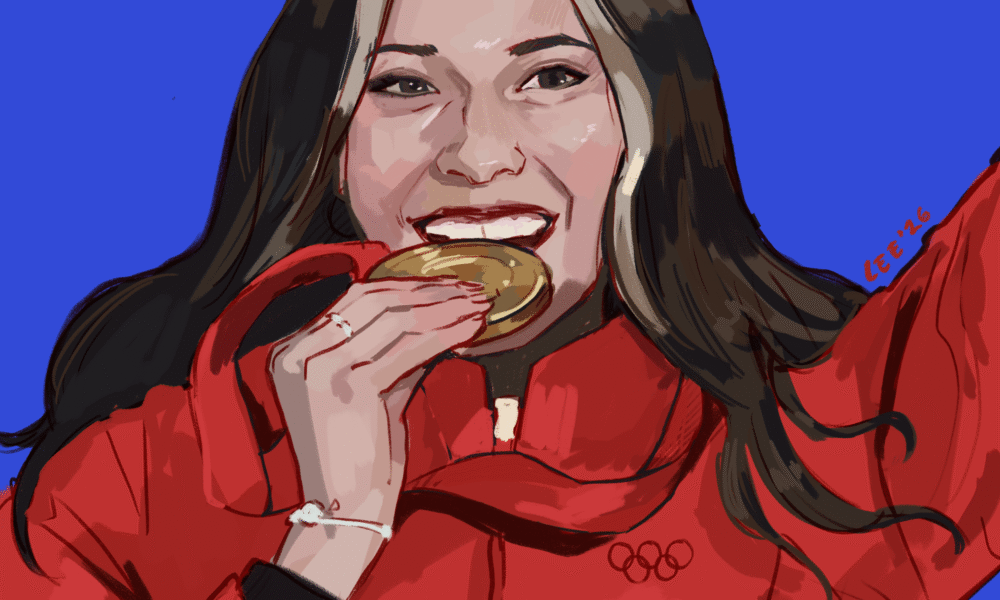
China’s Eileen Gu carves a new path at the Milano Cortina Winter Olympics

On Feb. 22, the 2026 Milano Cortina Winter Olympics came to an end. While the Olympic Games featured talented athletes from all over the globe, some aspects of the event sparked controversy. One of these conversations was centred on American-born freestyle skier Eileen Gu.

Gu is an international superstar: A superb athlete, a fashion model, and a student of quantum physics at Stanford University. At 22, Gu has become one of the most decorated skiers of all time. In 2022, she made her debut at the Beijing Winter Olympic Games, making history as the youngest Olympic freestyle skiing champion. Gu was the first freestyle skier to win three medals in one Olympic Games, winning gold in the big air and halfpipe events and silver in slopestyle.

At this year’s Games, Gu built on past successes, adding three more medals to her collection—two silvers and one gold—and defending her title in the women’s freeski halfpipe event. She left the Milano Cortina Games as the single most-decorated freestyle skier in history.

However, while Gu is the pinnacle of success on the slopes, her achievements have created a great divide between supporters and critics. Back in 2019, after competing for Team USA in three World Cups, Gu took to Instagram to announce that she would no longer be competing for the United States and would instead represent the People’s Republic of China.

Her decision faced major backlash at the time. She claimed that by honouring her mother’s identity and her biracial background, she wanted to inspire young girls in China, acting as a representation of a successful Chinese-American woman athlete in an underrepresented sport. Her goal was “to unite people, promote common understanding, create communication, and forge friendships between nations.”

Gu’s decision continues to spark debate seven years after her initial announcement. Some applaud Gu for embracing both her American and Chinese identities, but others criticize the decision, questioning her choice to ski for China given their complicated human rights history and fragile relationship with the United States. US Vice President JD Vance claims that she is the product of an American system but is choosing not to compete for her country. Others are taking to social media to brand her as a “traitor.”

Many of these criticisms are rooted in the compensation Gu receives from the Chinese Olympic Committee. As a Chinese athlete, she is paid more than she would be if she continued to compete under Team USA. However, a majority of her current earnings come from partnerships rather than the Chinese government. She is also a symbol of the fight to close the gender pay gap in sports, as she is one of the highest-paid female athletes in the world. 

While questioning Gu’s decision to compete for Team China is reasonable, these critiques walk a fine line between questioning and aggression. In 2022, Gu reported that the criticism escalated to harassment: She was physically assaulted, received death threats, and her dormitory at Stanford was robbed. Beyond this escalation, critics have unfairly compared her to other Asian-American athletes from similar backgrounds who chose to compete for Team USA, like figure skater Alysa Liu. These comparisons assume that athletes with similar ethnic backgrounds should make the same choices, ignoring personal and cultural factors that shape each athlete’s identity.

Instead of pitting high-achieving women athletes like Liu and Gu against one another, the media needs to uplift the narratives of two women athletes with similar stories, both achieving greatness. Liu and Gu are models for future generations, not rival stories.
Gu’s decision to represent China will likely always remain controversial. But framing her choice as just a matter of financial incentives or resources overlooks the context in which it was made. Gu’s decision reflects her genuine connection to her Chinese identity and heritage. Instead of reducing her choice to opportunism, we need to ask more nuanced questions: Why do athletes sometimes feel compelled to represent countries other than their birthplace? What does this reveal about the political climate of the United States, particularly as anti-immigration and xenophobic sentiments resurface? Gu’s decision shows that nationality in sport is not just about opportunity or funding, but is centred on belonging and identity.

Montreal, News

Demonstrators rally outside City Hall demanding that Martinez Ferrada make Montreal a sanctuary city

“So, so, so, solidarité ! Avec, avec, avec les sans papiers!”

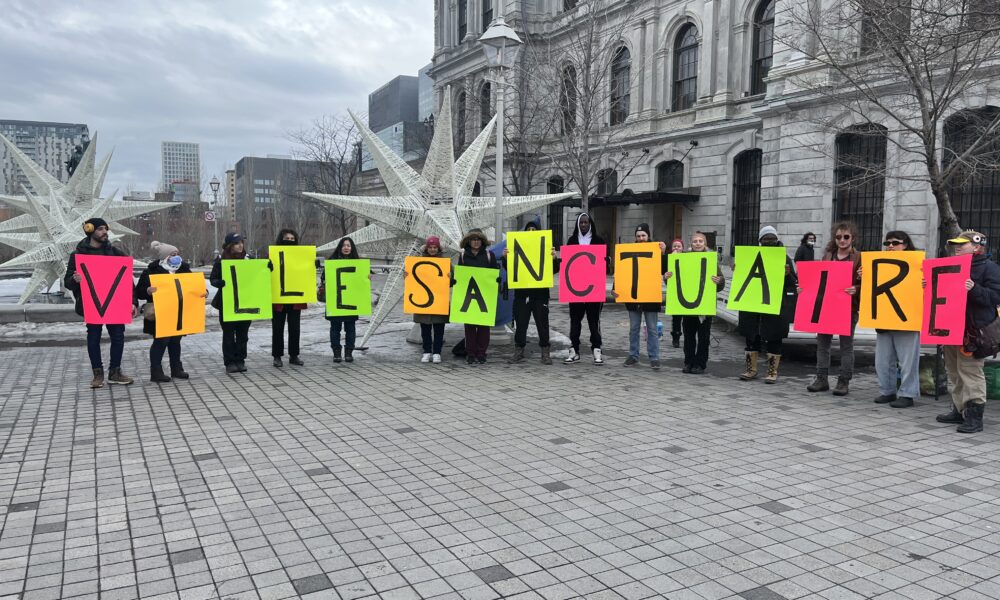
On March 7, around 100 demonstrators gathered outside the Montreal City Hall for a rally demanding that Mayor Soraya Martinez Ferrada make Montreal a sanctuary city. According to Solidarité sans frontières—one of the organizations that held the rally—making Montreal a sanctuary city would allow everyone in the community to feel protected regardless of their legal status. This includes increasing undocumented immigrants and foreign workers’ accessibility to housing, employment, healthcare, and social aid.

The rally started at 2:00 p.m. when Samira Jasmin, a representative from Solidarité sans frontières,  explained the need for Montreal to become a sanctuary city.

“In Montreal, tens of thousands of residents live and work in fear of being arrested and deprived of their dignity and human rights,” Jasmin said. “They do not have any political, economic, or social rights. They suffer from violence and exploitation in their workplaces as much as in their own homes.”

Jasmin then posed a question to the Martinez Ferrada government.

“What have you done to represent and defend the rights of immigrants of precarious status, […] their right to live and exist, as well as their most fundamental rights?”

The next speaker was a representative from Women of Diverse Origins. In her speech, she read out a letter her colleague Dolores Chew wrote to Martinez Ferrada.

“Soraya, you are familiar with how people flee persecution, violence, and torture in our countries of origin and come here to build lives in peace and security,” she said. “The Head Tax imposed on Chinese migrants, the Continuous Journey Clause that impacted migrants mostly from the Punjab in India, the exclusion from voting rights, and on and on [….] The precarity of asylum seekers is part of a historical trajectory in Canada of laws that are put in place to exclude racialized populations.”

The representative also emphasized the need for immediate action in order to protect the city’s most vulnerable.

“On the eve of International Women’s Rights Day, we highlight the particularly critical situation of undocumented migrant women in precarious situations,” she said. “They are exposed to exploitation and abuse in their work environments [….] Fighting for women’s rights also means ensuring that the most vulnerable among us have access to services and resources. Soraya, sanctuary city now!”

A representative from the Defund the Police Coalition also gave a speech. The coalition, which comprises over 80 civil groups, aims to reduce the power and impunity of the Service de police de la ville de Montréal (SPVM) and the Canadian Border Services Agency (CBSA). They demanded that the Martinez Ferrada government shift the municipal budget’s priority to invest in services that support the Montreal community and its marginalized groups. The representative stressed that municipal politicians must shift away from exploiting migrant identities during political campaigning.

“The mayor of Montreal, a former migrant herself, has used this position to help her get elected in the municipal elections, while doing nothing for the migrant community,” the representative explained. “The weaponization of the migrant community to gain votes while standing idly by mass deportation and massive budget cuts of provincial support for migrants show how identity politics do not work [….] We are here to stand in solidarity with undocumented folks across Canada to demand the regularization of everyone and to demand that Montreal become a sanctuary city.”

The representative concluded her speech by emphasizing the policies that the Martinez Ferrada government must implement.

“Soraya Martinez Ferrada can prove that she cares about her constituents by doing three simple things,” she pointed out. “End the collaboration between the SPVM and CBSA. Ban arbitrary street checks, reduce the police budgets, and stop funding racial abuse and dystopian surveillance technologies. Use that money to fund social services that will help everyone, including undocumented folks.”

*All quotes were translated from French

Student Life

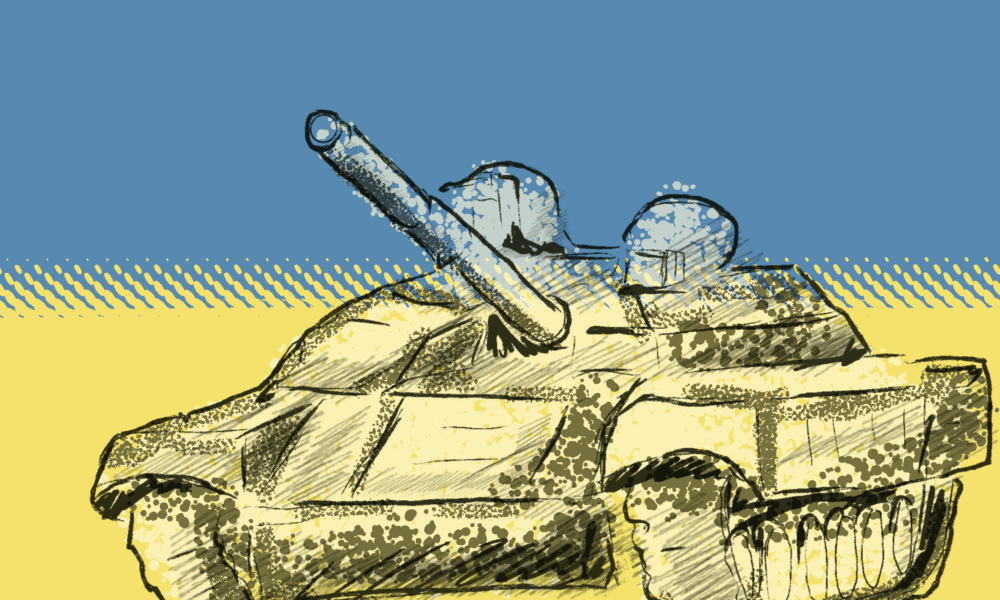
Four years of full-scale war in Ukraine: McGill braces for more uncertainty

Tuesday, Feb. 24, was like any other day on McGill’s campus. Students crammed in final revisions before tackling their midterms and counted down the days until the long-awaited reading week break. But for Ukrainians, this date was of supreme importance. It marked four years since Russia launched its full-scale invasion of Ukraine—four years of immense suffering and resilience.

As Europe’s deadliest war since World War II enters its fifth year, The Tribune spoke to McGill students and professors to gauge campus sentiment regarding the gruelling conflict.

The frenzied state of international politics and the relentless pace of the media cycle seem to have pushed the Russo-Ukrainian war to the margins of many students’ psyches.

In an interview with The Tribune, Lilian Yates, U0 Arts, reflected on how many people seem to have ‘forgotten’ about the conflict.

 “I really don’t feel like it’s that present in the daily culture [….] I do think it’s kind of been buried under other concepts.”

The unexpected length of this war of attrition has contributed to a growing mental detachment from Ukraine’s fight for survival. When Russian President Vladimir Putin launched the full-scale invasion in February 2022, the Kremlin sought to take Kyiv in three days. Emilie Jodoin, U1 Engineering, commented on the prolonged duration of the war, which has now raged for years.

 “No one thought it would last this long [….] I thought it would be over in a year.” 

Contrary to popular expectations, as of Jan. 12, the Russo-Ukraine war has surpassed the duration of the Great Patriotic War, arguably the most fundamental historical narrative for Russia’s national mythology. However, Maria Popova, Professor of political science, explained in an interview with The Tribune that it was clear this was going to be a very long war from the beginning.

“It’s an existential war for Ukraine. It’s really a choice between losing your independent statehood or continuing to try to resist [.…] But I think it has also become clear […] that for Putin […] there is a very deep commitment to this war […] and he is not ready to withdraw as a result of losses,” she said.

Despite this, the enormous losses suffered by Russia and the dire state of Ukraine’s energy infrastructure have pushed the countries to the negotiation table, with U.S. President Donald Trump pressuring Ukraine to make concessions. 

Juliet Johnson, Professor of political science, clarified to The Tribune that while Ukraine’s losses are visible, Russia is not invincible from the war’s destructive consequences. 

“The Ukrainian suffering is obvious, but Russia is also in a really devastating situation [….] They need this to end too, but my feeling is that the Russian regime thinks that with Trump in the White House, they can actually get what they want.”

However, Ukraine and Russia’s irreconcilable demands have made it challenging to negotiate a peace deal that satisfies both sides, especially since Russia’s overarching goal is regime change in Ukraine. This makes it hard to envision how the war can end. 

“Ukraine is obviously not willing to sacrifice a part of its own territory and basically abandon its people [….] On the Russian side, […] capitulating on their maximalist demands […] would be perceived as losing to the West,” Johnson explained. 

“Right now with an expansionist, authoritarian, Russian regime, and a Ukrainian regime that’s committed to Europe and democracy, [the positions are] irreconcilable,” Johnson said.

McGill students echoed this pessimistic outlook.

“There’s a feeling of impending doom [….] I don’t know that the tensions are going to go down, honestly, I’m not sure how they can,” Yates added.

Despite the bleak prospects of sustainable peace in Ukraine, Popova expressed that there are reasons to be hopeful.

“The reality is that Russia is running out of time, and Ukraine doesn’t show signs of catastrophic strain. Kind of on the contrary, it shows signs that Ukrainian society has sort of adjusted, accepted that this will continue and they just have to mobilize to outlast Russia,” Popova continued.

Against all odds, Ukraine has heroically defended itself from Russia’s full-scale imperial conquest for four years. Heading into its fifth year, it is critical not to forget that Ukraine needs our support, as much now as ever.

Research Briefs, Science & Technology

McGill researcher Danielle Berbrier investigates new therapeutic for women with PCOS

Polycystic ovary syndrome (PCOS) is a disease characterized by excess hormone production from the ovaries, resulting in irregular menstrual cycles and fertility issues. PCOS affects around one in ten women, making it one of the most common endocrine disorders among women of reproductive age. Beyond its relationship to menstruation and fertility, PCOS is also associated with significant long-term cardiometabolic consequences, such as hypertension, type 2 diabetes, and obesity.

Hyperglycemia—elevated blood sugar levels—is a key culprit in PCOS-related cardiometabolic complications. High blood sugar can result in endothelial dysfunction, in which the thin layer of cells lining blood vessels cannot circulate blood and maintain a balanced cardiovascular system. Endothelial dysfunction is particularly common among women with PCOS.

These complications led Danielle Berbrier, a recent PhD graduate of McGill’s Department of Kinesiology and Physical Education and current first-year medical student in McGill’s School of Medicine, to search for a potential intervention.

In her recent study, published in the American Journal of Physiology, Endocrinology and Metabolism, Berbrier investigated the role of ketone monoester (KME) as a therapeutic for mitigating high blood sugar and endothelial impairments in women with PCOS. Berbrier employed a double-blind randomized control design, comparing 10 females with PCOS and 10 matched controls.

Berbrier’s desire to study PCOS stemmed from the lack of attention the syndrome has received in scientific research thus far.

“You put 10 women in a room, and the stats say one out of 10 should have it,” Berbrier said in an interview with The Tribune. “The other part that drove me was how understudied it was and how there’s no real universal treatment for [PCOS]. The more [I] worked with women and heard their stories of what they’ve been through, it felt like the least I could do was do research in this area.”

Berbrier’s study found that women with PCOS had higher blood glucose levels when administered the oral glucose tolerance test—a drink containing  75 grams of sugar—compared to their controls, which could be a marker of pre-diabetes or metabolic impairment. Researchers then administered KME and placebo supplementation to determine whether the treatment altered blood sugar levels.

“We found that [women with PCOS] had higher glucose levels and that their blood vessel health was impaired following that glucose [ingestion], but with a quick shot of KME, both their glucose levels and vascular health improved,” Berbier said.

The findings also demonstrated that KME’s ability to reduce hyperglycemia improved endothelial function, which is critical for preventing cardiovascular disease.

“Endothelial dysfunction is one of the earliest indicators of cardiovascular disease risk, and it’s a key role in the development of hypertension and atherosclerosis [….] It could also occur way before cardiovascular disease even happens,” Berbrier explained.

Other studies have found that ketogenic diets may improve hormone levels in women with PCOS. So, could KME supplementation through dietary sources achieve similar benefits for women with PCOS who have hyperglycemia and endothelial dysfunction?

“The dose of KME that the participants took was really high and so acute, […] ketone diets would take longer to see those types of benefits,” Berbier said. “It would be a hard comparison just because of dosing differences, but both [avenues] are promising.”

Berbier emphasized how meticulous her recruitment of participants was, noting that it represents both a strength and a limitation to the study’s findings.

“Anyone on Metformin or Ozempic were excluded, [which] ended up excluding a lot of females who were in the obese category,” Berbrier explained. “So, not by design, but by my rigorous inclusion criteria, I studied a non-obese cohort, which allowed me to look at the syndrome through its intrinsic symptoms with no confounding variables.”

However, up to 80 per cent of women with PCOS are obese. Berbrier noted that her findings are therefore not fully generalizable and suggested further investigation with more diverse cohorts of participants.

Given the increased prevalence of cardiometabolic diseases among females with PCOS, early intervention strategies are critical to preserving long-term health. PCOS must be addressed as being related not just to reproductive issues, but as having further significant cardiometabolic implications. Berbrier’s study helps address those implications through KME treatment, a promising avenue.

This work was funded by the Canadian Institutes of Health Research and was conducted in the Cardiovascular Health and Autonomic Regulation Lab under the supervision of Dr. Charlotte Usselman.

Private, Student Life

Is another economic model possible? Working Alternatives McGill thinks so

On Feb. 24, Burnside 1B16 was filled with students eating falafels and discussing neoliberalism. This wasn’t a class—it was a workshop put on by Working Alternatives McGill (WAM). The student group aims to foster a community that explores sustainable futures amid late-stage capitalism and the climate crisis. WAM’s most recent workshop was the second installment in a series called “Economics for Everyone.” By focusing on neoliberalism as the current dominant form of economic policy and thought, WAM built upon its first workshop, which traced the evolution of economic systems in Europe and North America over the last 500 years. Content particularly analyzed neoliberal capitalism as a root of many current issues, including the housing crisis, ecological crisis, and market concentration in the grocery sector.

Organizer Basil Dogra, a PhD student in the Faculty of Education, majored in Economics during his undergraduate degree. He says students may internalize economic myths from “advocates of the capitalist economy” through economic courses or general media, and explained that one goal of all of WAM’s activities—and particularly the Economics for Everyone workshops—is to examine these underlying assumptions.

“For example, [there is] the idea that capitalism is the best system because it allocates resources efficiently. This is something which […] is in fact not the case,” Dogra said in an interview with The Tribune.

Another common claim he addressed is that capitalism uniquely enables innovation.

“Innovation is a direct product of people’s public investment first, and then certainly it’s often a labour of love,” said Dogra.

He pointed to open-source software as an example. Much of the world’s digital infrastructure relies on software developed collaboratively and shared freely rather than produced for profit. Dogra also spoke about rational choice theory as a foundational assumption of traditional economic thinking. Rational choice theory is a model for human thinking used in microeconomics, theorizing that individuals will make decisions that maximize their personal benefit and satisfaction. The discipline itself is increasingly recognizing the limits of rational choice theory, particularly following Richard Thaler’s 2017 Nobel Prize win.

While some advanced economics courses cover similar debates, Dogra says that, in his experience, a single core assumption often remains.

“[It is assumed] that you cannot think about any kind of economic activity without a profit motive.”

By studying economic structures such as worker cooperatives, the group hopes to challenge what many commentators identify as a central feature of contemporary capitalism: the belief that the current economic system is the only possible one.

In addition to the Economics for Everyone series, WAM is running two other projects this semester. One is a series of discussion circles about different practices for economic change, including union organizing and mutual aid.

Organizer Harlan Porfiri, U3 Science, explained the format of these sessions.

“[They] are less directly educational and more about having nuanced conversations,” Porfiri said.

The third project is a career fair featuring organizations within the social and solidarity economy, and WAM links students to explanations of the solidarity economy from resources such as the Solidstate website. Planned for the end of March, organizers aim to showcase organizations that provide alternative employment options for STEM students who are typically recruited by fossil fuel companies and defence contractors.

What, exactly, is a ‘solidarity economy’? Dogra describes it as an economic model in which “the economy is run by firms and organizations that have community welfare and broader prosperity as their priority rather than profits.” SEIZE, a Montreal group and cooperative incubator from Concordia University working to build solidarity-economy practices, also collaborates with WAM.

 Dorga sees WAM’s environment as an essential complement to other forms of political organizing.

“There is one aspect to leftist organizing where you organize protests, picket, or call out the McGill administration. That is an absolutely important dimension,” he says. “But an equally important dimension is building popular education, the intellectual orientation to the leftist enterprise.”

Students interested in attending events or getting involved are encouraged to explore WAM’s Instagram page, @workingalternativesmcgill.

A previous version of this article published on March 10, 2026, stated that Working Alternatives McGill’s third project is “a career fair featuring organizations within Solidstate, a ‘cooperative of cooperatives, bound together by a commitment to friendship and mutual aid’ based in British Columbia.” In fact, the career fair will feature organizations within the social and solidarity economy more broadly, and WAM’s career fair will not be limited to groups from Solid State. The Tribune regrets this error.

Research Briefs, Science & Technology

Accidental discovery reveals a potential plant-based anti-aging compound

Geroscience, the study of aging and age-related diseases, has become a popular area of research in recent years. Here, the focus is not on treating age-related illnesses, but preventing or delaying their onset by understanding the biological mechanisms underlying aging. In a recent study, researchers discovered that Cyrene, a plant-derived solvent, can extend lifespan and improve health in model organisms, raising new questions about how small molecules might influence aging.

Published in npj Aging, the study examined Cyrene’s effects on two organisms used in aging research: The microscopic roundworm Caenorhabditis elegans and the fruit fly Drosophila melanogaster. These species share many biological pathways with humans, allowing scientists to observe aging-related changes quickly across many generations.

Abdelrahman AlOkda, a former PhD student in McGill University’s Integrated Program in Neuroscience who worked in the Van Raamsdonk Neuroscience Lab, led this study. In an interview with The Tribune, AlOkda noted the discovery of Cyrene’s anti-aging effects was unexpected. While evaluating Cyrene as a potential solvent, he noticed that worms exposed to the compound lived significantly longer than untreated worms.

“This was just a side discovery,” AlOkda said. “Cyrene is a solvent. It’s not supposed to do this. When we saw the animals living longer and resisting stress better, the reaction was, ‘What is happening here?’”

AlOkda exposed worms to several concentrations of Cyrene and monitored their lifespan. A concentration of about one per cent produced the best results, significantly extending lifespan while producing only mild side effects such as slight developmental delays and small reductions in fertility.

The compound did more than simply extend lifespan. Worms treated with Cyrene also maintained stronger movement as they aged, suggesting improvements in what is called ‘healthspan.’

“You could extend lifespan but still have animals that are unhealthy,” AlOkda added. “What researchers really care about is healthspan, [which is] the period where the organism is still functioning well. There’s no point living longer if you’re sick the entire time.”

The treated worms also showed increased resilience when exposed to environmental stress. They survived heat, oxidative damage, and other stress conditions better than untreated worms, particularly later in life. Because aging often reduces the body’s ability to cope with stress, maintaining this resilience may indicate that protective cellular systems remain active for longer.

Moreover, cyrene appeared to help protect against neurodegenerative disease in experimental models. Worm strains engineered to mimic conditions similar to Alzheimer’s, Parkinson’s, or Huntington’s disease typically show reduced movement as toxic proteins accumulate in their cells. Worms treated with Cyrene, however, maintained higher levels of activity, suggesting the compound may help preserve nervous system function.

“A geroprotective compound affects the process of aging in a positive way,” AlOkda explained. “Instead of treating just one disease, you’re modifying aging itself. When you slow aging down, you can potentially protect against multiple age-related diseases.”

Another finding involved the worms’ bacterial food source. In some experiments, chemicals extended worm lifespan simply by altering the metabolism of bacteria used in laboratory cultures, indirectly changing the worms’ diet. AlOkda tested this possibility and found that Cyrene extended lifespan even when worms were fed bacteria that could not grow or reproduce, implying that the compound acts directly on the organism itself rather than the bacteria in its food.

To test whether Cyrene’s effects extend beyond worms, AlOkda repeated similar experiments with fruit flies. Flies exposed to certain concentrations of Cyrene lived longer than untreated flies, with lifespan increases ranging from about 11 to 29 per cent depending on the dose and the sex of the flies. These results suggest that Cyrene may influence biological mechanisms shared across different species.

However, AlOkda cautions that the findings remain preliminary. Studies in worms and flies provide perspective into biological mechanisms, but they do not guarantee that the same effects will occur in mammals or humans. Further research is needed to understand how Cyrene interacts with cellular pathways and whether similar benefits could appear in more complex organisms.

“This discovery was really just a side quest,” AlOkda concluded. 

For now, the discovery shows how unexpected observations can lead to important scientific breakthroughs: A compound originally developed as a sustainable solvent may now offer new clues about how organisms maintain resilience against aging.

Read the latest issue

Read the latest issue