

Latest News

Arts & Entertainment, Theatre

The McGill Classics Play brings a chilling new ‘Antigone’ into the modern world

Sophocles is having a moment. The Ancient Greek playwright may be well over two millennia old, but his plays are seeing new life; his famed Oedipus Rex was recently adapted for an acclaimed Broadway run, and, here at McGill, his terrifying Antigone could not have been a more fitting choice for this year’s Classics Play.

Antigone, chronologically the last of Sophocles’s three Theban plays, culminates the story chronicled in Oedipus Rex and Oedipus at Colonus. In a move to modernize the work, translator Adam Zanin, adapter Caroline Little and director Madelyn Mackintosh set this production in the 1930s, on the heels of European fascism.

Starring Anelia Stanek, U2 Arts, as the eponymous daughter of Oedipus, the tragedy follows the rise of Oedipus’s advisor, Creon (Nikhil Girard, U3 Arts), to the throne of the city of Thebes after a violent civil war. His first act is to honour the fallen Eteocles, brother of Antigone, who fought to protect Thebes against their rebellious brother Polynices. For his treason, however, Creon denies the latter traditional Greek burial rites. The play’s conflict surrounds Antigone’s choice to bury her brother in spite of the edict.

Antigone’s actions create a storm in Thebes: Her sister, Ismene (Neela Perceval-Maxwell, U1 Arts), disagrees with her, fearful of Creon’s wrath. It can be easy to scorn her as cowardly, but in an interview with The Tribune, Mackintosh provided a more sympathetic perspective on the character.

“Most of us, maybe, would like to be Antigone but are Ismene, and would not necessarily accept execution, even for the strongest principles,” Mackintosh said. “But I don’t think that makes Ismene or anyone else weak […] and I don’t think it’s a responsibility to all be martyrs, or to all be some unforeseen level of bravery. I think it is our responsibility to be as courageous as we can.”

Mackintosh’s direction brings out the play’s debate over what loyalty entails, humanizing the struggle of the fight for the audience. Much of it feels familiar even now; many of the play’s subjects, such as the tempting of fate and the idolization of leaders, resonate brightly.

“The show was written 2500 years ago, it’s set a hundred years ago,” Mackintosh said. “And it pulls on references from today, and I think it is demonstrative of the way that tyranny is cyclical and destructive that the same story is applicable in all of those contexts.”

In this regard, Sam Snyders, U4 Arts, takes his part as “The Bartender” seriously. His near-constant presence throughout the production, as a spectator and aide to those in need, anchors him as the man who has witnessed and endured the cycle of tyranny. As the closest figure to a narrator, Snyder’s passionate performance brings with it anticipation and a will to fight.

While staying generally true to Sophocles’s original plot, there were several notable changes. One of them is the adaptation of the traditional Greek Chorus into a more modern ensemble; another is the introduction of death scenes, which were never performed in Ancient Greece. Together, these changes heighten drama in the production, resulting in a powerfully modern show that treats its source not just as history, but as a warning of what might be coming.

Ruminating on how Antigone mirrored the current state of U.S. politics, Mackintosh shared mixed emotions regarding global politics. Still, she highlighted a silver lining—that so many are willing to help keep Antigone’s fire alive through their work.

“A very significant part of me wishes the show was not as prescient as I feel it is, but at the same time, I also think that is why it is necessary and why I’m really proud of it […] a lot of people have put a lot of heart into the production, and I’m so incredibly proud of them.”

Sports, Varsity Round UP

McGill varsity sports roundup

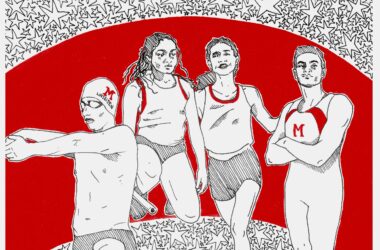
This past week delivered a wide array of results for McGill’s Redbirds and Martlets, with overtime heartbreak, senior celebrations, and a tough road loss setting the stage for the upcoming Winter semester regular season finales. From volleyball victory to hockey hurt, McGill teams battled across multiple venues as they prepared for their respective playoff pushes.

The Martlets Volleyball team banded together for a dramatic 3–2 victory over the École de technologie supérieure (ÉTS) Piranhas on Feb. 8 at Love Competition Hall. The match marked the squad’s first five-setter of the season, with McGill prevailing 25-17, 25-15, 21-25, 19-25, 15-10.

Emma Waskiewicz recorded a match-high 16 kills while Selima Guidara dished out 38 assists in what proved to be a fitting home finale for the program’s graduating players. Seniors Guidara and Emilia Grigorova were fondly celebrated in a post-game ceremony following their final match at Love Competition Hall.

The victory lifted the young and slightly rebuilt Martlets squad to 7–13 on the season and snapped a six-match losing streak. McGill then travelled to Université du Québec à Trois-Rivières (UQTR), suffering a 2-3 defeat on Thursday before moving forward to wrap up the regular season against Laval University on Valentine’s Day, where they unfortunately fell short 1-3 against a relentless opposition.

Redbirds Hockey persisted through a difficult week on the road, dropping both of their games by painfully narrow margins. After a thrilling 3-2 overtime victory over the Queen’s University  Gaels on Feb. 6, McGill unfortunately could not build and maintain its positive momentum in its subsequent matchups.

The week began with a heartbreaking 4-3 overtime loss to cross-town rival, the Concordia University Stingers, in the Corey Cup showdown on Feb. 7 at the Ed Meagher Arena. After battling back from a 2-0 deficit to take a 3-2 lead in the third period on Mathieu Gagnon’s goal, the Redbirds saw Concordia equalize and eventually prevail when captain Simon Lavigne scored on a breakaway in overtime.

The struggles continued Wednesday night with a 5-4 loss at Carleton University, leaving McGill with a 16–8–2 record leading up to their regular season finale. The Redbirds hosted the Ottawa University Gee-Gees on Valentine’s Day at the McConnell Arena in a dominant 4-0 victory in what was their final regular-season tilt before the OUA playoffs begin next week.

Bouncing over to basketball, the Martlets Basketball team suffered a disappointing 56-53 loss to the Bishop’s University Gaiters on Feb. 5 at Mitchell Gym, as a dominant second quarter from the Gaiters proved decisive. After leading 16-9 following the opening frame, McGill was outscored 23-12 in the second quarter, turning a seven-point advantage into a six-point halftime deficit they could never fully erase.

Emilia Diaz-Ruiz, still recovering from injury, paced McGill with 16 points and nine rebounds in 20 minutes off the bench. Lily Rose Chatila added 13 points and Daniella Mbengo contributed 12, but the Martlets struggled from beyond the arc, converting a faltering four of 20 three-point attempts.

The loss snapped McGill’s three-game winning streak and dropped them to 9–4, slipping into second place in the Réseau du sport étudiant du Québec (RSEQ) standings behind Laval University. However, a hard-fought victory in the late stages of their home win against Concordia (57-52) shifted their momentum heading into the last two games of the season against Laval and L’Université du Québec à Montréal (UQÀM). That being said, a comfortable first-seeded Laval team fought off the McGill momentum in Quebec City to close out another 57-52 victory, securing their spot at the top of the rankings for the season. The Martlets, currently holding third place in the league, will be determined to secure a victory in their last game of the season.

As Redbirds and Martlets compete on home ice and courts in what is shaping up to be a bitter winter, a high-stakes playoff season looms ahead, giving the regular season finales added significance across all McGill programs. Teams will look to build momentum heading into the postseason, with strong performances serving as crucial confidence boosters before the stakes rise even higher. For McGill athletics, February has delivered its fair share of drama, but the most important games have yet to come.

Commentary, Opinion

Quebec immigration reform has left bright minds behind

Monica Colín Silva and her family moved to Quebec City from Mexico four years ago, during which she obtained a Master’s degree at Université Laval. After completing the program and becoming fluent in French, she felt hopeful for her path to permanent residency in Quebec. 

In late 2024, the federal government started requiring post-graduation work permit applicants to take a language test. Colín Silva’s score of 427 on the written section of the required French exam fell one point short of the minimum 428 threshold. Because the permit is directly tied to the applicant’s authorization to work, Colín Silva’s failing score meant that neither she nor her husband would be eligible for employment in Quebec. Facing limited options to support her family, Colín Silva is preparing to return to Mexico. 

While framed as measures to protect Quebec’s linguistic and economic priorities, these reforms place educated international graduates in a state of uncertainty, where years of academic achievement and language acquisition are undermined by shifting immigration policies.

The stricter language requirements are just one example of controversial policy changes made to Quebec’s immigration system under Immigration Minister Jean-François Roberge this year. In September 2024, the government replaced the Quebec Experience Program (PEQ) with the new Skilled Worker Selection Program (PSTQ), shifting to a points-based system that evaluates applicants across several categories to determine how strongly they “match Quebec’s needs.” Roberge has argued that the new program allows Quebec to select workers in the sectors it considers most valuable, such as healthcare, education, and construction. 

The PEQ’s dissolution has left thousands of international students, along with countless professors and other academics in Quebec, feeling suddenly abandoned, as it is almost impossible to predict one’s chances of being approved under the PSTQ. The point system leaves much to the government’s subjective interpretation of the value of one’s job instead of providing a clear checklist for hopeful applicants. 

29.8 per cent of McGill’s student body of over 40,000 is made up of international students—and for many, repeated shifts in immigration policy can generate uncertainty around their chances of a future in Quebec. Quebec’s universities rely on international students for tuition and academic contributions during their studies, but its evolving immigration framework has made long-term settlement far less predictable once those students graduate.

For students like Colín Silva, the inherent issue lies not in Quebec’s desire to preserve French, but in how narrowly immigrants are defined under the law. When one score on an exam outweighs years of living, studying and working in French within Quebec’s institutions—including the completion of a Master’s degree in the language—it calls into question whether the current paths to permanent residency are fairly and holistically evaluating applicants.

Besides increased scrutiny on an applicant’s field of work, Quebec’s updated permanent residency pathways now require graduates to have completed at least three years’ worth, or 75 percent of their coursework in French, in order to qualify. For students who began their studies under previous criteria, the change has caused great anxiety, particularly for non-Francophone university students, as they now struggle to make up for the French coursework they’re missing. 

When single factors such as line of work or language policy become the determinant in deciding who gets to stay and who must leave Quebec, the province sacrifices the minds of countless talented individuals whose stories, if considered through more holistic measures, would more than demonstrate their eagerness and dedication to contribute to the province’s workforce. While Quebec has the right to protect French and its cultural identity, rigid criteria excludes many graduates with proven intentions of contributing to Quebec in the long term. Colín Silva’s story demonstrates that she belongs in Quebec, and that the value her family can offer Quebec cannot be reduced to a single point on a standardized exam.

Student Life

Welcome home: A day in the life of a 2016 McGillian

I wake up to the sound of birds chirping after 9 hours of blissful sleep. As my eyelids flutter open, my Hipster Indie Boho Chic Urban Outfitters curtains soak up the September sun and drench my room in a haze so warm and rich I almost want to call it “Rio De Janeiro?”  Before my feet hit the ground, I know that today is already perfect.

After throwing on my American Eagle skinny jeans, a loose tank top, and a flannel, I’m ready for the day. The sun hits my stack of rose gold bangles as I step out the door. I snap a quick pic on my new iPhone SE and upload it to Tumblr, not caring who sees it or how many interactions I get. I shared it because it made me happy. I go back and add a caption: #HappyThursYAY.

On my way to Starbucks, I listen to a new album that I can’t get enough of, Blonde by Frank Ocean. I order a venti Unicorn Frappuccino. To my surprise, they accidentally make two, and let me keep both. This day just keeps getting better.

I head to campus and surprise my friend, who’s going through a breakup, with the second drink. She tells me he wants to keep seeing her—only without a label. He misses her, she tells me, but the responsibility of being 21 makes him far too busy for “the relationship she deserves.” She describes her state of affairs as ‘being benched.’ A backup girlfriend, given just enough attention to stay attached. 

Sitting in my Comparative Politics lecture, my professor explains what the United Kingdom’s referendum to leave the European Union actually means. The UK has been a member of the European Union for 43 years. I think of all the history that has passed from then to now, and how exciting it feels to live through this moment in history. My friend interjects, pointing out how every moment of every day is a moment in history. He’s right, but nonetheless, it feels new to study a contemporary global event.

I race over to McLennan, eager to squeeze some reading in before heading home. All the floors are open, and the shelves are overflowing with books. Once I am settled at a desk, all optimism falters when I realize the sheer volume of my assigned readings. Two hours later, the weight of my readings only a month into the semester makes me plead with a higher power. I beg for a magical tool that could do my readings in seconds. It would break down the core concepts, I could access it at any time, but I would still learn everything I need to and ace all of my exams. Doesn’t that sound great and completely unproblematic? But alas, it is only 2016, so I sit in the library with nothing but full bookshelves and tired eyes.

Back at home for a quick meal before Bar des Arts (BdA), I treat myself to a rainbow bagel. Always up with the latest trends, this week’s BdA theme is “Pokemon Go-DA.”  One of my roommates is going all out, creating a look with an uncanny resemblance to Pikachu. I decide to keep it classy and focus on my makeup: A nude lip, arched eyebrows, cut crease eyeshadow, and everything matte. I put on a choker, switch my tank for a tube top, and I’m off to the races. 

At BdA I drink a few too many Pabst Blue Ribbons and watch as the crowd attempts the Mannequin Challenge. Tonight feels endless in the best possible way. Right now, sitting in Leacock’s sweaty basement feels like the result of all the stars aligning. Gratitude fills me, and I think about where I will be 10 years from now. I vow to never let my optimism waver. I trust that the world will still be full of too much colour, light, and warmth to ever surrender to tyranny. My faith in our goodness brings me to my feet. I dance around the room, “Closer” by The Chainsmokers fills my ears, and I slowly close my eyes. 

McGill, News, Recap

Recap: Sabaa Quao calls for creativity among disruption 

On Feb. 12, McGill’s Equity Team, in partnership with the Desautels Faculty of Management, invited Sabaa Quao, president of PlusCo Venture Studio, to speak at a keynote event in honour of Black History Month (BHM). Preceding Quao’s speech, Yolande E. Chan—the current and first Black dean of the Faculty of Management—took the stage to offer remarks on behalf of the faculty. She brought up two notable milestones: 2026 marks McGill’s ninth official BHM and the 30th anniversary of Canada’s recognition of BHM. 

Following Chen’s opening remarks, Quao addressed the crowd. He highlighted the title of his speech, “One Step Back, Two Steps Forward,” and then transitioned into an analogy of worldbuilding and creative destruction, urging the audience to take a step back. He described how destruction is inherent to creativity and that disruption is crucial to moving forward. Nonetheless, Quao reaffirmed that taking a step back is equally important to see the progress that has already been made. 

Quao then highlighted the ‘dark side’ of stepping back, which he noted is still very powerful. 

“Right now, we’re dealing with an erosion of institutional trust,” Quao said. “We also are in a period where elections [….] Feel like each one is a kind of existential threat. How is it that something that was so consistent in terms of how we used to move forward has now become a point of tension and a point of anxiety? [….] Two things can exist at the same time. We can have a sense of progress that does coexist with unresolved justice. And you’ve taken the same step back in order to be able to recognize that something does have to change. It has to change.” 

Quao referenced a 2024 study by the McKinsey Institute for Economic Mobility which found that it will hypothetically take 320 years for Black people to achieve equal quality of life. 

“Everyone in this room knows in their gut that you have to reject those numbers. Not just for yourself, not just for kids, not just for your grandkids,” Quao affirmed. “Resistance to change is natural and it’s a human tendency. But at some point, […] you ignore the resistance to change. You ignore the hurdles, and you maximize the space of what you need to build [….] The survival instinct is more powerful than the resistance to change.” 

Behind the Bench, Sports

The NFL’s 2026 season is set to kick off with a record-low three Black head coaches

On Feb. 8, the National Football League (NFL)’s 2026 hiring cycle concluded. The 2025 season left 10 head coaching positions vacant, and no Black head coaches were hired to fill them for the upcoming season. The hiring cycle resulted in one minority hire, Tennessee Titans’ head coach  Robert Saleh, who is of Lebanese descent. There are now only three Black head coaches in the league: The New York JetsAaron Glenn, the Tampa Bay BuccaneersTodd Bowles, and the Houston TexansDeMeco Ryans. This marks the fifth time since 2003—the start of the Rooney Rule—during which no Black coaches were hired during a coaching cycle. 

The Rooney Rule was adopted following the unjust firings of Black coaches Tony Dungy and Dennis Green, aiming to counteract the historically low number of minorities in head coaching positions. Originally, the policy required that every team with a head coach vacancy must interview at least one Black candidate before making a new hire. 

After several changes over the following years, the current policy outlines three main rules. First, teams must interview at least two external minority candidates for head coaching vacancies and at least one external minority candidate for coordinator positions. In addition, they must interview at least one minority and/or female candidate for senior-level positions, such as team president and senior executive.

Second, as of 2022, clubs must conduct external interviews with a minority and/or female candidate for open quarterback coach positions, which are often a stepping stone to coordinator and head coaching jobs. The rule was implemented to help increase the pool of qualified minority coaches in the future.

Finally, the league introduced incentives for developing diverse talent. Teams with minority candidates who are later hired as head coaches or general managers will receive third-round compensatory picks for two years, with an additional year awarded if both a coach and executive are hired elsewhere.

While the Rooney Rule aims to balance representation and diverse hiring within the league, its regulations ultimately do not dictate who occupies positions of power. According to a survey conducted in 2023 by The Institute for Diversity and Ethics in Sport (TIDES), Black athletes make up 53.5 per cent of the players in the NFL. However, in this season alone, the number of Black head coaches remains less than 10 per cent, occupying just three of 32 positions. The last time Black representation was this low was in 2002, before the adoption of the Rooney Rule, when there were just two Black coaches in the entire league. The imbalance in head coaching roles highlights a broader power dynamic within the NFL: Black athletes overwhelmingly populate the field, yet decision-making authority remains in the hands of white coaches. 

In a period when the United States is growing increasingly conservative, the issue of representation in sports is at the forefront of the conversation. Recently, U.S. President Donald J. Trump has moved to end federal government diversity, equity, and inclusion (DEI) programs, while many large companies are following suit

While NFL commissioner Roger Goodell has stated his continuous commitment to “diversity efforts” in the league, it is clear that the NFL has failed to deliver on its promise of DEI.
Following the backlash of the recent hiring cycle, Goodell has reflected that the league needs to reevaluate its approaches to minority hiring. Yet, the shortcomings of the Rooney Rule should not be taken as proof that diversity policies are unnecessary. Rather, they expose the limits of such rules in confronting and dismantling deeply embedded institutional racism. Interview mandates alone cannot dismantle power structures that have historically excluded Black leadership. If anything, the NFL’s continued disparities underscore that these policies are a starting point, and that more meaningful reform is needed.

Research Briefs, Science & Technology

How socioeconomic inequality accelerates musculoskeletal decline

As we get older, our muscles and bones gradually weaken, a progression that can lead to falls, fractures, and a devastating cycle of hospitalization and physical decline. But not everyone experiences this decline at the same rate—social and economic conditions over a lifetime can profoundly shape how the body ages, influencing access to nutrition, physical activity, and preventive health care. New research co-published by Gustavo Duque, the Dr. Joseph Kaufmann Chair in Geriatric Medicine and professor in McGill’s Department of Medicine, suggests that a patient’s position on the socioeconomic ladder may play a significant role in how quickly that deterioration occurs—and that the disadvantage begins well before a patient ever reaches a hospital.

The study examines the relationship between socioeconomic status (SES) and bone, muscle, and physical function in 300 community-dwelling adults aged 50 and older in the metropolitan region of Melbourne, Australia.  Researchers measured five indicators of SES—education, income, employment, health care card ownership, and area-level disadvantage—against outcomes including bone mineral density, muscle mass, grip strength, gait speed, and leg power.

Notably, the researchers found that participants who completed post-secondary education had significantly higher bone mineral density, greater muscle mass, stronger handgrip strength, faster walking speed, and greater leg power than those with less education. Higher income and possessing a private health care card—as opposed to a government health card—were similarly associated with better outcomes across most measures. 

Duque said in an interview with The Tribune that the findings confirmed what the research team had long suspected.

“People with lower levels of income and lower levels of education […] were the ones who showed the worst situation in terms of muscle and bone,” Duque said.

One unexpected finding is that employed participants showed different patterns of deterioration, regardless of salary. Duque attributed this to the physical demands of their work, noting that those still employed tended to be active throughout the day. For those who were retired or unemployed and in the lowest socioeconomic brackets, however, the outcomes were markedly worse.

Osteoporosis, a condition characterized by low bone mineral density, which ultimately raises the risk of fractures, affects approximately 18 per cent of older adults globally. Sarcopenia, the progressive age-related loss of muscle mass and physical function, affects between 10 and 27 per cent of individuals over 60. Although a growing body of work links SES to musculoskeletal health, evidence on how social gradients operate in specific musculoskeletal conditions such as sarcopenia and osteoporosis remains limited. Prior studies have typically relied on secondary analyses of existing datasets rather than directly investigating the relationship.

Since the study is cross-sectional, it captures a snapshot of health outcomes at a given point in time and cannot determine whether interventions would prevent or reverse the disparities observed. Duque acknowledged this limitation, which is why his future research aims to explore the longitudinal impacts of socioeconomic status on bone and muscle decline.

The study also raises questions about health literacy—the ability to access, understand, and apply health information—as a potential mechanism linking a lower SES to worse musculoskeletal outcomes. Both osteoporosis and sarcopenia require patients to adopt and maintain lifestyle changes such as increased physical activity and dietary adjustments.  However,  lower education and income are strongly correlated with lower levels of health literacy, meaning that socially disadvantaged groups may be less likely to receive, understand, or act on prevention and treatment advice. Consequently, the same communities that enter older age with weaker bones and muscles are also the least equipped to access the information and resources needed to slow that decline, further entrenching existing disparities.

Duque stressed that prevention does not need to be expensive or complicated.

“It does not demand a lot of resources. A good physical activity can be done in a park or in a mountain,” Duque said. “There are some dietary recommendations, […] there are good sources of calcium that do not necessarily have to be very expensive.”

But he also emphasized that individual behaviour change alone is not enough, and that policy-level action is essential.

“We need a policy [….]The problem is that some of these policies are not necessarily applied, developed, or funded,” he said.Duque’s team is now launching a Quebec-based screening project in collaboration with the World Health Organization to identify musculoskeletal decline early in older adults across the province. Musculoskeletal data cannot close the socioeconomic gap in bone and muscle health alone, but knowing where that gap starts is the first step toward designing interventions that effectively address it.

Commentary, Opinion

Nunavik’s disproportionately high suicide rate reveals colonialism’s continued impact on mental health

Content warning: Mentions of suicide

Feb. 2 to Feb. 8 marked Quebec’s Suicide Prevention Week. The province entered the awareness week with a statistic that sounds like a clear public health win: The suicide rate has dropped to 11.9 per 100,000 people, making it the lowest observed since 1981. However, this provincial average obscures the fact that progress has not occurred evenly across Quebec. The Institut national de sante publique du Québec (INSPQ) reports that Nunavik, an arctic region in Northern Quebec primarily inhabited by Inuit, had the highest suicide rate by far, with 122.7 suicides per 100,000 people—over 10 times more than the provincial average. 

The uneven jump in suicide rates disproportionately affects Indigenous people in Canada, and this difference is not coincidental. If a region’s suicide rate is over 10 times higher than the rest of the province, this discrepancy cannot be explained as a statistical outlier. Nunavik’s case reflects the persistence of the deeply embedded power structures of colonialism, racial discrimination, and the intentional erasure of culture and language in the province. 

Quebec’s suicide-prevention messaging often emphasizes reaching out, breaking the stigma around mental health, and reminding people that they are not alone. Those are not empty gestures, but stigma alone cannot explain a tenfold regional gap. This year’s campaign theme, “tendre la main, soutenir l’espoir” (extend a hand, support hope), captures that emphasis on individual intervention and interpersonal relations as key to combating suicide. 

But if awareness and social stigma were the main barriers, there wouldn’t be a stark geographic pattern; Nunavik’s disparate suicide rate instead points to an uneven landscape of support and access. In practice, ‘reaching out’ can take on very different meanings depending on whether suicide-prevention services are stable, staffed, culturally safe, and close enough to be accessed before a crisis escalates. A generalized campaign cannot, and should not, substitute consistent, local, and culturally-grounded care. 

Research on the pervasive harms of Canada’s residential school system demonstrates that state policy has created intergenerational risk through family separation, abuse, and cultural suppression. A Western University study highlighted the link between increased rates of suicide, intergenerational trauma, and residential schooling. By forcibly separating children from their families and communities, residential schools also laid the groundwork that perpetuates downstream inequities and raises suicide risk today, including lower educational attainment, lower income, unstable employment, and poorer housing conditions. 

INSPQ also noted that Nunavik lacks emergency rooms, and that consultations in its 14 local community service centres may not be as effective as ER visits elsewhere. When staffing is unstable and specialized services are concentrated at the two regional hospitals, this can result in time-sensitive delays and transfers.  

With Nunavik’s small population of approximately 14,000, each death in the province carries an outsized statistical weight. In small, tight-knit villages, the impact of a single suicide can ripple through extended families, peer groups, schools, and frontline workers, intensifying grief and strain on already limited support systems. Public health guidance on suicide clusters emphasizes that closely connected communities can face a heightened risk of additional deaths after an initial loss. This cascading vulnerability is itself a product of the structural conditions colonialism created: Isolated communities with minimal services bear disproportionate grief, with disproportionately fewer resources to absorb it.

The Quebec government must treat colonial policies as living determinants of health, not just features of history. When the province headlines its declining suicide rate, it obscures the systematic inequalities keeping Nunavik’s rate disproportionately high. The same report used by Quebec to demonstrate progress also shows where mental health programming has not translated into prevention outcomes and well-being.

The key imperative during Suicide Prevention Week isn’t just whether reaching out matters—it’s applying that message to systems that people can actually reach. Culturally safe care is inseparable from addressing racism and power imbalances in service delivery. 

Nunavik’s disparate rate doesn’t erase Quebec’s progress, but it does complicate it. It suggests that any honest accounting of prevention has to hold two truths at once: The provincial average is falling, but regional crises remain severe. If Suicide Prevention Week is meant to describe the province’s reality—and not just offer a reassuring statistic—then local disparities are where the prevention has to begin.

If you or someone you know needs support, help is available 24/7 via suicide.ca or the AQPS.

Arts & Entertainment, Film and TV

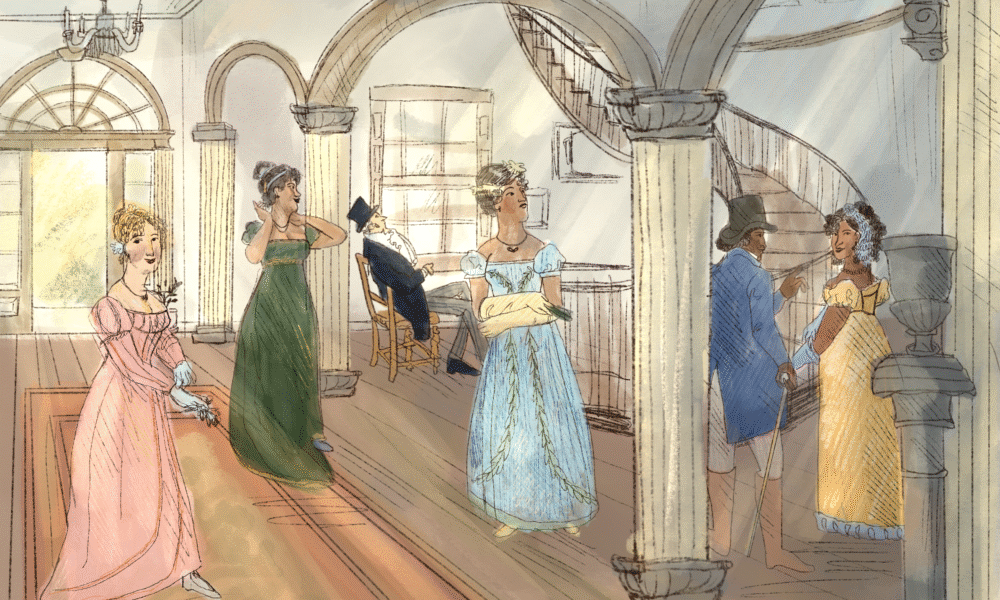
‘Bridgerton’ Season 4: A peek behind the curtain

Warning: This piece contains spoilers.

Dearest Gentle Reader: It has come to my most attentive notice that this midterm season is hereby interrupted by the return of Netflix’s crown jewel, Bridgerton, which graces our screens with its fourth instalment. While young McGill students sharpen their minds in the hopes of succeeding in their upcoming examinations, they may find respite in this hit television series, which follows the lives of the Bridgerton family in a reimagined Regency-era England. An adaptation of Julia Quinn’s third novel from the Bridgerton series, An Offer from a Gentleman, the first part released on Jan. 29 with the second arriving Feb. 26. The fourth season explores the blossoming romance between second son and notorious rake Benedict Bridgerton (Luke Thompson) and Sophie Baek (Yerin Ha), the illegitimate daughter of a nobleman who is forced to become a maid by her evil stepmother.

In this reimagined Cinderella story, the beloveds meet at a masquerade ball where Benedict falls hopelessly for Sophie, who is, well, not like other girls. Dissatisfied with society women, whom he deems dull and uninteresting, Benedict has traded his faith in true love for short, passionate, and meaningless encounters. He finds, in Sophie, the infatuation for life that he has been secretly yearning for in a partner, whilst pretending to be a free-spirited bachelor. Unaware of her identity and social standing, he develops romantic feelings for her, which she reciprocates. Yet he cannot pursue her openly, since she is a maid and he, a gentleman.

For the first time, Bridgerton explores the upstairs-downstairs divide between the noble ton and the servant’s working class. Masters need servants to sustain their lifestyle, whilst servants depend on the masters for a living wage and employment. This season delves into the servants’ lived reality, class dynamics and the interdependence between those above and below. Bridgerton highlights how depersonalized that system is and how it keeps the lower class at the mercy of the upper class, exemplified notably when a young maid is treated in an untoward manner by a supposed gentleman, or in the uproar and confusion that the ton experiences because of the Maid Wars. Further, it exposes the unfairness of the fate of children born out of wedlock, who are kept out of society on account of their status as ‘illegitimate.’

This peek behind the curtain is a breath of fresh air, providing a new perspective by centring the narrative on the lives of servants for once. Both Sophie’s story and her romance with Benedict are authentic and a welcome departure from the last season. Ha’s acting is genuine and honest, and her chemistry with Thompson is refreshing. She revealed during her appearance on Royal Court, the YouTube show hosted by internet sensation Brittany Broski, that she worked closely with showrunners to reimagine the role of Sophie, making her more authentic to her heritage. Most notably, she changed Sophie’s family name from Beckett to Baek. As the first East Asian lead of Bridgerton, she shines beside her co-star as a relatable character who deals with real-life problems whilst retaining her individuality. This comes across most notably when Sophie refuses Benedict’s offer to be his mistress despite her attraction to him. She has too much self-respect to debase herself in such a way and teaches Benedict a well-deserved lesson. 

Now, the ton feverishly awaits the next chapter of this season’s captivating drama. Lest we forget the people who make their lifestyle possible and hope that a happy ending soon befalls Ms. Baek and Mr. Bridgerton, who yearns to reunite with the lady in silver that he met at the ball. Until then, this author wishes you great success in your midterms and hopes that you find peace and wellness despite the cold and busy season. 

Laughing Matters, Opinion

Point-Counterpoint: On the divine right of groundhogs

For the Divine Right of Groundhogs

The media is rich with speculation about The Most Honourable Punxsutawney Phil, the Pennsylvania native behind everyone’s favourite holiday: Groundhog Day. Some doubt his immortality—140 years of age is abnormal for a groundhog—but Phil is no ordinary groundhog. Others argue his eternal rule is undemocratic, a violation of popular will. //Au contraire!// Phil is a guardian of the United States and its people. No other hog could match his talent for serving the nation. 

Look into his piercing eyes and dare question his coat’s lustre. His fur, denoting royal lineage, allows him to sip the Elixir of Life, a nectar every bit as crucial to the nation’s well-being as water.

Phil protects his nation, dictating appropriate February attire since 1886. In fact, he leverages his power to safeguard his country’s freedom. During the heat of World War II, Phil withheld a prediction altogether, unwilling to risk handing such potent climate information to enemies.

Those who doubt Phil’s accuracy only have themselves to blame. Climate change has rendered unrecognizable the weather patterns Phil once knew like the back of his furry little paw. Sustainable climate action must accelerate—not simply for the planet, but for Phil.

Phil is a father and husband. He lives in a humble stump with his kin, devoted to the traditional values that make America great—protecting his burrow, serving his country, and speaking America’s true language: Groundhogese

Quebec’s Fred la Marmotte’s recent passing is a poignant reminder that the U.S. is fortunate to have an immortal groundhog like Phil. Hopefully, his Canadian disciples will begin producing their own Elixir of Life, so that this painful transition of power between Freds might be the last.

All hail Most Honourable Punxsutawney Phil! 

His divine power shall endure, protecting governmental institutions and serving as a beacon of hope for political order everywhere. 

For a groundhog democracy

Tyranny corrupts even the best of groundhogs, and groundhog predictions are crucial for national security. The selection process cannot be left to nepotism. Yet Fred la Marmotte Junior did not earn his power; he inherited it after his father’s death. 

Groundhogs are Quebecers too, and they deserve a voice in groundhog authority. They are jolly participants in the province’s community events, such as the Canadian Grand Prix, where they eagerly await their favourite Formula 1 drivers at the finish line. 

At the Davos World Economic Forum, Prime Minister Mark Carney called for middle powers to pivot away from reliance on and imitation of the ultra-powerful. Might does not make right, a message that the young Fred ought to heed. His American counterpart, Punxsutawney Phil, has consolidated power, causing harm even here in Montreal by exploiting the rich local groundhog labour market.

As any McGill student who has spent time near Upper Residences knows, groundhogs are abundant in Montreal. Their prevalence has created tension at the Notre-Dame-des-Neiges cemetery, where they were discovered digging up graves.

No one should have to worry about groundhogs frolicking with their deceased family members. The root of this problem must be addressed. In this context, Phil’s Elixir of Life now appears troubling. How exactly is his serum crafted, and why is the recipe kept secret? Perhaps nefarious necromancy is afoot.

Clearly, Phil is outsourcing his vile elixir production process to Montreal, taking advantage of the weaker Canadian dollar and the large supply of groundhog labour to excavate bones for his mystical potion. Montrealers are subsidizing an American groundhog’s immortality, as loved ones are snatched from their resting places to fulfill the fancies of a tyrant.

Fred’s arbitrarily bestowed power must be redistributed to the people. 

All groundhogs should cooperate under one Union of the Groundhogs, by the Groundhogs, for the Groundhogs. Under this union, democracy shall be a vessel for careful experimentation with participants’ shadows and conscientious debate, leading to deliberative surveys and a unified announcement of the season’s upcoming weather. 

Down with the Divine Right of groundhogs. Long live groundhog democracy.

Read the latest issue

Read the latest issue