
Latest News

McGill, News

Arts, Science Undergraduate Societies endorse MNPH letter to divestment and democratization

The McGill Arts Undergraduate Society (AUS) and the Science Undergraduate Society (SUS) have voted to endorse a call to action letter penned by the McGill Nurses for Planetary Health (MNPH). The document demands that the university divest from fossil fuels and democratize its Board of Governors (BoG). MNPH sent the letter to the BoG on Dec. 12, 2022, and AUS and SUS voted to formally support it on March 15 and March 22, respectively.

The letter highlights the links between planetary and human health and outlines a number of concerns regarding McGill’s investment in fossil fuels. It emphasizes McGill’s connection to companies such as the Royal Bank of Canada (RBC), Canada’s largest fossil fuel funder, and TC Energy—the company behind the Coastal Gas Link pipeline going through unceded Wet’suwet’en territory. McGill had invested $11,982,749 in RBC and $2,610,419 in TC Energy as of Dec. 31, 2022.

“We wanted to come at divestment from a different angle,” Naomi Pastrana Mankovitz, U2 Nursing and the co-chair of MNPH, told The McGill Tribune. “Climate change is intimately tied to health [….] With the increase in temperatures, there’s an increase in communicable diseases [….] As nurses, we have a duty to advocate for public health. So it falls within our mandate to advocate for climate justice.”

MNPH’s decision to write the letter came on the heels of a 2022 report by the Intergovernmental Panel on Climate Change that identified the urgent need to protect public health from the worsening effects of global warming, a call health-care professionals have been making for years

AUS hopes their vote of solidarity will continue to raise awareness about McGill’s connection to the fossil fuel industry. 

“[The letter is] aligned with the views and beliefs of the AUS and the constituents we represent,” AUS President Ghania Javed wrote to the Tribune. “We hope to incorporate and follow sustainable event planning at AUS and will be also looking into ways we can stop supporting companies that have investments in fossil fuels and instead support companies and initiatives that are actively fighting climate change.” 

The university’s refusal to divest despite widespread student support has led to calls for the democratization of the BoG—which is primarily made up of unelected members. The BoG has repeatedly rejected divestment motions passed by the Senate, McGill’s highest-ranking elected governing body. The Students’ Society of McGill (SSMU) has also called for divestment and pressured the BoG to accelerate its review processes. 

“At this point, it falls into the hands of a few people that are not reflecting the majority interest of the university,” Pastrana Mankovitz said. “Democratization is to make sure that the voices of the university are heard.” 

The letter has garnered support from staff members across McGill. With over 80 professors, assistant professors, and faculty lecturers signing on, MNPH believes the movement to divest and democratize will continue to gain traction across faculties. Natalie Stake-Doucet, a faculty lecturer at the Ingram School of Nursing, signed the letter as she believes the BoG’s continued investment in fossil fuels contradicts the body’s mission statement. 

“By refusing to divest, the [BoG] is making a political statement, one that appears to put profits before students. Divesting from fossil fuels should no more be a debate in the academic community than discussing whether the earth is flat. It is frankly shocking that we would need a petition to convince the [BoG] to divest, but here we are.”

– Natalie Stake-Doucet via email to The tribune

MNPH also consulted Divest McGill throughout the letter-writing process. DivestThey supports the call to action and believes it is well- timed as, with the BoG set to reconsider divestment on April 20.

[The call to action] shows that we’re great in numbers,” Emily Hardie, U1 Arts and a member of Divest McGill, told the Tribune. “It’s very contradictory when McGill itself as the university produces so much climate research when they’re actively profiting and funding from the top emitters of the climate crisis and, therefore, threatening our futures as students, faculty, and staff.” 

Ask a Scientist, Science & Technology

Glycans: The key to better gut health

The gut microbiome has attracted a slew of research interest, leading to the discovery that a poor gut microbiome can cause various diseases, including Type 2 diabetes and cancer. More recent research has delved further into the negative health outcomes associated with a poor gut microbiome while proposing strategies to improve gut health. 

In a new paper published in Nature, Bastien Castagner, an associate professor in McGill’s Department of Pharmacology and Therapeutics, and his team detail their recent discovery of the fascinating connection between the gut microbiome and glycans—large carbohydrate molecules found in plants, animals, and microbes. The use of fluorescence-activated cell sorting (FACS), where glycans are labelled with fluorescent tags, allowed them to identify potential clinical interventions to improve gut health.

Glycans, also known as polysaccharides, are essential for maintaining tissue structures and energy storage. They are obtained from foods such as buckwheat, mung beans, peanuts, soybeans, and papayas, and can be secreted by the body through mucus.

Most glycans consumed cannot be broken down by enzymes in the body. Instead, they are fermented into short-chain fatty acids, which serve as nutrients for gut microorganisms and cells in the colon. 

Some species of the gut microbiome prefer certain glycans over others, which suggests that the type of glycans we consume can influence which microorganisms proliferate in our gut. 

Dietary glycans, then, could be used to promote the growth of desirable species in the gut, thereby improving overall health.

Although past approaches, such as stable isotope probing and genetic screening, have been used to study the link between glycans and human gut microorganisms, their applications are limited to controlled settings in laboratories. To circumvent this conundrum, Castagner and his team proposed a new approach that can be applied in natural, more complex bacterial communities, such as the gut microbiome.

“The method that we developed to label bacteria consuming a polysaccharide molecule does not require the bacteria to grow, nor do we need to have prior knowledge about the genes involved,” Castagner wrote to The McGill Tribune. “We need the bacteria to be alive and actively take up the fluorescent glycans, but we do not have to give them all the nutrients they may need to thrive and multiply, which is difficult to do in vitro.”  

FACS works by attaching fluorescent molecules to glycans, allowing glycans to have a shiny, fluorescent appearance. Upon taking up the fluorescent glycans, the bacteria will begin to glow, making them identifiable under the microscope. The researchers will then be able to pinpoint the glycan-consuming bacterial species based on their fluorescence.

Using FACS, the study found that bacterial species, such as Prevotella copri, Collinsella aerofaciens, and Blautia wexlerae, are able to consume glycans.

“As we understand more and more the role of the gut microbiota in diseases, we see that we can probably develop therapies for some diseases by manipulating the gut microbiota,” Castagner wrote. “This can be done in different ways, but using glycans that support specific bacteria is a good way to do this.” 

The use of glycans to feed certain bacterial species is known as the prebiotic approach, which the human body can typically do on its own. 

“Indeed, nature uses this trick. In human breast milk, there are human milk oligosaccharides, whose function is to support some bacteria in the developing microbiota of the infant,” Castagner wrote. “Similarly, we can change the microbiota of adults using glycans. But in order to do this, we need to understand exactly who is eating what[.]”

Castagner and his team believe that their paper lays the groundwork for future clinical strategies to improve the gut microbiome using glycans, which may have important implications for treating diseases like cancer and diabetes.

Campus Spotlight, Student Life

BtS of BdA

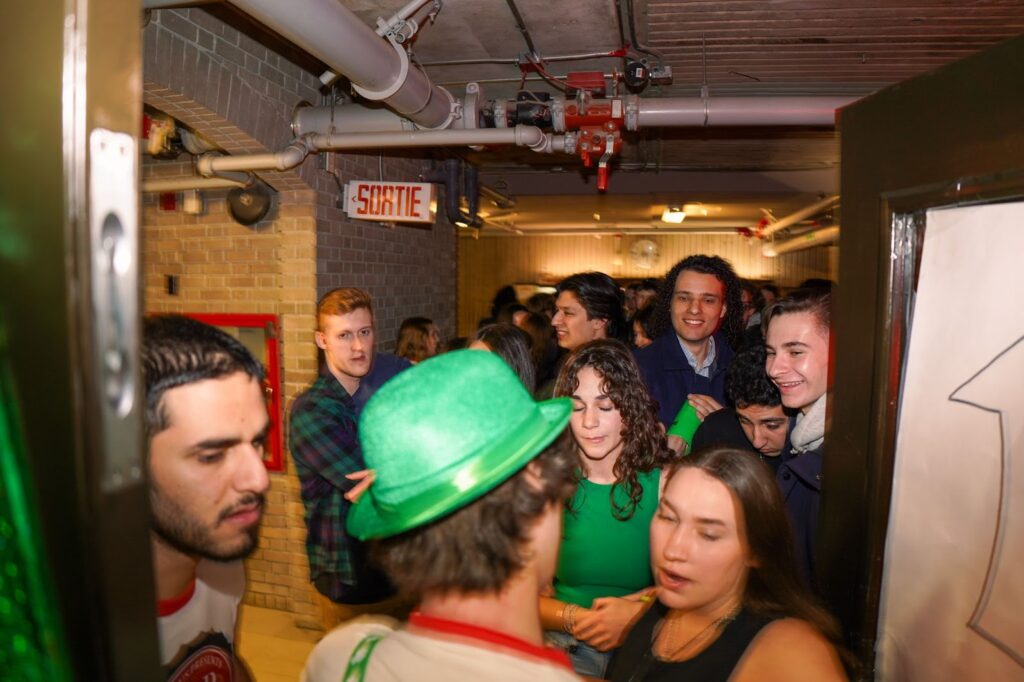
If you happen to be located within a kilometre of the Leacock basement on a Thursday evening, then surely, you’ve grown accustomed to the faint smell of beer and the distant sound of a 2000s hit blaring from the speakers. If you’ve even so much as wandered down the stairs leading to the basement, you’ll find a seemingly never-ending line of undergraduate students slouched against the wall, anxiously staring down the door of the Arts Lounge. And, if you brave the line and successfully make it in, you’ll get the chance to join in on all the fun that is navigating a small basement area jam-packed with sweaty students all desperately trying to avoid eye contact with every person they’ve ever matched with on a dating app. 

As unappealing as that may sound, Bar des Arts (BdA) is actually a huge hit: Week after week, faculty-wide undergraduate students pile into the Leacock basement and queue for over an hour just to get a taste—or, should I say, a sip—of the experience. What may seem like a benign student bar to many raises the question: To what does BdA owe its ongoing success? 


For an event involving hundreds of students, BdA is impressively well-coordinated. Weekly, the 41 staff members and seven managers undertake significant preparation with Thursday looming. Throughout the weekend, staff members choose the theme and promote their event on social media, and every Sunday, a beautifully-crafted Instagram post reveals the theme for the following week. Better than their excellent use of Canva are the event titles: Witty puns that combine “BdA” with a reference to the weekly theme, the best one being “PdA”—BdA’s Valentine’s Day event.

(MingXi Gu)

On the day of, staff members arrive 45 minutes before the start of the event, at which point students have already started queuing up, and get the basement ready before assuming their roles for the evening. 

“Anouk, our Personnel Manager, is mainly responsible for coordinating that,”  Mitchell Horwood, U3 Arts and BdA co-chair, shared in an interview with The McGill Tribune. “During the weekend, she creates a schedule for all available staff for the evening, with three one-hour shifts.” 

Staff work two shifts out of three, during which they rotate between the bar, the grilled cheese table, the ticket booth, and the door. There are also a few staff scheduled on walk-around to ensure the event runs smoothly. 

That being said, there have been a few BdA mishaps—one of which occurred early into the academic year when a student brought a glass cup into the Arts Lounge. 

“That’s why we have staff stationed at the entrance—their job is to check bags,” Horwood explained. “At our third event of the year, this guy came in with a backpack with a hidden pocket we didn’t see, which contained a glass cup. Naturally, he used the cup to drink and dropped it, at which point it shattered everywhere. Aside from having to clean up the mess in the middle of BdA, the mop we used had not been washed from the week before. It smelled awful and stank up the entire Arts Lounge. It was a very stressful 30 minutes—which we feared would tarnish our reputation—but thankfully, it didn’t.”

Behind BdA—or “the most democratic space on campus,” as manager Sam Baron, U3 Arts, refers to it— is a team of dedicated undergraduate students committed to serving $1 beer and providing an accessible and affordable space for students to let loose. 

“I really think that’s what brings people here—this sense of community, where everyone has a place,” Sam Reiken, U1 Arts and BdA publicity manager, shared with the Tribune. “BdA is something on campus that reminds people that studying isn’t the only thing McGill has to offer.” 
As the academic year comes to a close, so will BdA—the final event of the year takes place this Thursday before the student bar goes on a four-month hiatus. After such a successful year, one can only hope that the next one will be just as promising. By the looks of it, students have nothing to worry about: BdA’s reputation, along with its 2,000-follower Instagram account, just goes to show, once again, that Arts does it best.

(MingXi Gu)
Know Your Athlete, Sports

Know Your Athlete: William Rouleau

As a kid, William Rouleau was always a fan of sports. His natural athleticism made things easy: Golf, tennis, baseball. Whatever sport he was put into, Rouleau excelled––except for hockey. 

“I first got into hockey when I was about three, four years old,” Rouleau told The McGill Tribune. “Wasn’t the greatest, probably one of the worst out there. I was kind of a lunatic as a kid, too. I didn’t really care about the puck, just saying hi to my parents in the stands.” 

However, this quandary didn’t last long. Rouleau started to get serious about hockey around age 10, when the goals started to come with ease. 

“I was the youngest player on my team that year,” Rouleau explained. “And still, I think I was in the top three scoring leaders in [the whole] league, and then a year after, I was the first, and then just in general, I had a better understanding, like, oh, I’m good at [hockey].” 

Unlike many of his peers, Rouleau never considered playing in the NCAA—playing in the Quebec Major Junior Hockey League (QMJHL) was always the goal. And despite the difficulty of moving to Rouyn-Noranda—10 hours away from his home in Saint-Basile—at just 17 years old, he doesn’t regret it for a second. 

“Surprisingly, in my first year [with the Rouyn-Noranda Huskies], I was part of a team that broke multiple records,” Rouleau said. “We won the President’s Trophy, the Memorial Cup. We set a record for the most wins in a season, we tied a record of most consecutive wins of 25 in a row [….] I had the chance to play with such great players.” 

His time with the Huskies also gifted him the most memorable moment of his career: A game-tying goal against the Halifax Mooseheads in the 2019 Memorial Cup round-robin. 

“That was a good way to start the career,” Rouleau said with a grin. 

The decision not to pursue professional hockey was tough for Rouleau, especially considering his remarkable final year in the QMJHL with the Chicoutimi Saguenéens, where he racked up 27 goals and  34 assists.

“Playing pro means there is a lot of uncertainty,” Rouleau explained. “I’ve always had an interest in my schoolwork and in my first year of Junior, I talked with one of the guys that’s here [Matthieu Gagnon], and we talked about how coming [to McGill] together would be amazing, so it was always in my head.” 

The busy travel and playing schedule Rouleau maintained throughout his Junior career meant school was often a secondary priority, but he has found the academic side of McGill, where he studies finance, just as enjoyable as the athletic. 

“I like my program, but to see how competitive it is around here [….] It’s scary. But as a competitor, I like it. I like that challenge of being good at something other than hockey.” 

But the transition to McGill proved no easy task. Not only did Rouleau, a francophone, have to play on a majority English-speaking team for the first time, but he had to adjust his playing style—he wasn’t in the QMJHL anymore. 

“There is a big difference just in the way the format is because you don’t play as many teams or games [in USPORTS],” Rouleau said. “The physical aspect of the game is so different. The speed is different. It’s a lot tougher to play in this league than it was playing Junior.” 

Rouleau found what he missed the most from the QMJHL was the big crowds at games, mentioning the Carnival game as one of his most memorable moments of the season. 

Despite the adjustments, Rouleau found the Redbirds to be more than welcoming. Teammate Max Blanchard even piqued an off-ice interest for him. 

“He’s so good at guitar, insanely good,”  Rouleau said. “He played for me at the start of the year [….] [and] I picked it up right after.” 

After a promising first year where he took home USPORTS All-Rookie honours, Rouleau looks forward to next year with the ‘Birds. To conclude the interview, Rouleau answered the all-important question: What is your favourite Taylor Swift song? 

“22.” 

Features

Constellations of responsibility

Among lush Amazonian flora in Oriente, the eastern region of Ecuador, pits of viscous, black oil dot the landscape. Iridescent streams infiltrate the rainforest. Aerial shots of unobstructed canopy cover are starkly contrasted with footage of large oil rigs set up in the forest. A few frames follow before the video shows a baby writhing from a skin rash. Minutes later, a woman cries as she describes the struggles she faces trying to pay for her 18-year-old daughter’s cancer treatment. 

Sitting over 5,000 kilometers away in a lecture hall at McGill, I watched these scenes unfold before me in the documentary, Crude: The Real Price of Oil. My class was discussing Aguinda v. Texaco, Inc., a court case filed in 1993 in which the plaintiffs—over 30,000 Ecuadorians from the Oriente region—argued that they had been adversely affected by oil extraction in the region at the hands of Texaco, an American oil company and a subsidiary of Chevron Corporation. The Oriente region is home to less than five per cent of Ecuador’s population, and a large portion is a part of the region’s five Indigenous groups, including the Cofán, Secoya, Siona, Huaorani, and Quichua. 

The plaintiffs alleged that Texaco used sub-standard technology and, in the process, spilled over 18 billion gallons of toxic waste in the Ecuadorian Amazon. They claimed that oil entered water sources that locals used for drinking and bathing. Following the pollution, the plaintiffs said their communities saw increases in sickness, cancer, and death, which they believed were due to the contamination from Texaco’s operations in the region.

Before digging into the details of this case, I only had a notion of the impact that extractive corporations can have on the communities they operate in. I had read about similar cases, but as I dove into this lawsuit, my sense of the barriers to convicting corporations was heightened. I went down a seemingly endless rabbit hole of legal documents, corporate strategies, and horror stories of what happens to those who try to oppose them.

Chill Thrills, Student Life

Your guide to student elections

Election season always creeps up sooner than you expect it to. Throughout April, clubs, services, and offices all over campus are recruiting new executives, and students are thrown into the frenzy of student election season. Bulletin boards fill with posters, Instagram stories become base camp for campaigns, and CVs everywhere hold their breath. But what exactly does running for a position look like? What’s happening behind the headshots and the almost-ironic captions? Could you ever brave the student election? I sat down with some current execs to discuss their experiences running for student-elected positions. 

Hassanatou Koulibaly, U3 Arts and Science, is currently vice-president (VP) Student Life of the Students’ Society of McGill University (SSMU) and recently clinched next year’s VP Sustainability and Operations position. She told The McGill Tribune that those who are interested in a spot on the team must nominate themselves and fill out an election kit (simple enough), attend the candidate’s meeting to learn about election procedures (and scope out the competition), meet with the current position holder (to get the tea), and then, with the help of a $300 budget, campaign, campaign, campaign. 

Koulibaly explained that her road to involvement with SSMU came simply from enjoying doing fun things with friends in clubs at McGill. Having been involved in different clubs during her time here, she was looking at her experiences and asking, “what’s next?” 

“I’m not really a student government type,” Koulibaly said in an interview with the Tribune. “I like vibes. I like student engagement, student life, and extra-curriculars.” 

Having seen some of the amazing opportunities, Koulibaly said she only wanted to be more of a part of it all. 

Amidst the campaign itself, Koulibaly cited her friends as a huge source of strength and her biggest support system. She relied on them to fill in wherever she needed help, whether that was designing campaign posters or spreading the word about her plans for office. 

“Your friends are helpful because they kind of create a network for you,”  Koulibaly explained. “The friends of your friends will know who you are because of your mutual friend […] even if you’ve never spoken to them, they have an unspoken faith in you.” 

Current Arts Undergraduate Society (AUS)’s VP External Rohan Rastogi, U1 Arts, also decided to run for a student-elected position after falling in love with his extracurriculars. Following his role as recording secretary for AUS in his first year, meeting the team, and attending legislative council meetings, he decided he had to be a part of it. 

“The best part of the process was researching the position and figuring out my platform,” Rastogi told the Tribune.  

Both executives saw running for a position as something to do for themselves, while expanding both their personal and professional networks. Koulibaly explained that, as a student studying STEM, it was nice to do something completely outside of her realm of study––it made her approach it with a renewed intentionality. The election process was, for her, a chance to learn an incredible amount about herself and different communities within the school. She also learned to stretch her ideas and see just how far they could go. 

“When you campaign and you hear what [ideas] other people have, or you see what needs are, you realize how your ideas can change,” Koulibaly said. 

She cites the competition as pushing her to make her own ideas and initiatives better.

Both candidates highly encouraged others to run for student government positions and provided their peers with a few tips. Rastogi suggests reading up on the different positions and finding one that best aligns and suits your interests, and then just going for it. Koulibaly, in a similar vein, emphasized, particularly to people feeling fearful or concerned about the campaign, the importance of finding a position that aligns with their interests. 

“There’s no right or wrong answer, you just run for what you believe in,” Koulibaly said. 

So, choose a position that suits your fancy, take a deep breath, and whoosh your CV through, leaving all fears behind. Happy campaigning! 

Campus Spotlight, Student Life

McGill’s hidden campus

You walk out of class, belaboured and exhausted, and attempt to find someplace to study or hang out. You jump from Redpath to McLennan, soon to realize that all of your options are either overcrowded, noisy, or not to your liking. Are you in desperate need of a calm, isolated place, or just something different, but don’t know where to look? Say no more; here is a list of some of McGill students’ favourite underrated spots on campus that everyone should enjoy. 

Marvin Duchow Music Library

Located on the third floor of the Elizabeth Wirth Music Building, the Music Library offers students a variety of different spaces, from silent study zones to collaborative work areas. As you enter the space, you are greeted with warm natural sunlight stemming from large windows, as well as comfortable couches and large tables to spread out your work. 

Max Finn, U3 Arts, is a big proponent of studying at the Music Library. 

“I love coming here. There are big windows, it is very spacious and calm, and it is never crowded,” Finn said. “I love the large desks, and there is even a floor where you can sit and observe vinyls.”

When in dire need of a break from school work, take a stroll and discover the material of the Rare Books and Special Collections Room. You will find one of the most important academic music collections in Canada, with more than 200,000 scores, recordings, books, journals, and online resources. The library’s knowledgeable staff can also help you locate any material you are interested in. 

680 Sherbrooke

After indulging in Montreal’s rich musical scene, take a short trip to 680 Sherbrooke and make your way to the ninth or 12th floor. Tucked away in this hidden gem of downtown campus are breathtaking views of McGill that often grace Instagram stories. Surprisingly, only a handful of McGill students are aware of what this building holds beyond language classes, so don’t miss out on the chance to discover this secret oasis for yourself!

Charlotte Mineret, U2 Arts, told The McGill Tribune more about what students might not know about this spot.

“I really enjoy going to 680 Sherbrooke on the ninth floor,” Mineret said. “The view and open space are fantastic, and since not many students know about it, it is generally empty.” 

Islamic Studies Library

Nestled in the heart of the downtown campus on McTavish Street, facing the Students’ Society of McGill University (SSMU) University Centre, lies the perfect building for students seeking a peaceful study spot: The Islamic Studies Library. As you step inside, take a moment to appreciate the stunning Gothic architecture, with almost all furnishings crafted from wood. You’ll feel as if you’ve stepped into a fairytale. For the ultimate calm study environment, head to the Octagon Room. With its stainless steel windows casting a warm light, it’s the quietest spot on campus. 

Gery Delepiere, U3 Arts, discovered this library in his first year and has gravitated toward it ever since.

“The Islamic Studies Library is very calm and small enough to be cozy,” Delepiere told the Tribune. “The Octagon Room is just beautiful, and the books surrounding you give off a nice work vibe.”

However, the Islamic Studies Library offers more than just a tranquil place to hit the books. With over 100,000 volumes of monographs and almost 1,000 serial titles, it boasts a rich collection covering the entire span of Islamic civilization. From early Turkish and Egyptian printed books to Arabic, Ottoman Turkish, and Persian manuscripts from the 12th century, this library is a treasure trove for anyone wanting to learn more about the world of Islamic culture and history.

McGill’s campus has so much more to offer than the overcrowded, loud libraries of the McLennan-Redpath complex. Try immersing yourself into the warm musical atmosphere of the Music Library, snapping a picture of campus from the ninth floor of Building 680, or losing yourself in the fairytale of the Islamic Studies Library to find your ideal study spot on the downtown campus. 

Montreal, News

Paper straw–infused beverages might become norm amid single-use plastics ban

At Bar des Arts (BdA), students are encouraged to bring their own reusable cups or buy old Frosh ones to avoid single-use plastic. But BdA manager Sam Baron estimates that the student bar goes through approximately 50 plastic cups every Thursday.

As of March 28, however, a Montreal municipal by-law has banned the distribution of all single-use plastic items across the food industry. With only one more day of operation left in the school year, BdA is still working out the details of its transition away from plastic, a struggle shared by many campus businesses. 

The City of Montreal passed the by-law in August 2021 as part of the city’s efforts to make Montreal a zero-waste city by 2030. Since December 2022, manufacturing and importing “harmful single-use plastics” has been banned by federal legislation, and the sale of these items will be prohibited as of December 2023. While Montreal’s ban was announced 18 months ago, many campus businesses have yet to part ways with their plastic consumption.

“It’s all up in the air right now,” Baron told The McGill Tribune. “As great as it sounds, in theory, there’s not been much guidance from the province on how to actually implement it on the ground.”

Baron says the bar intends to clear out its supply of plastic cups before locking up shop on April 6, after which the upcoming management team will spend the summer sketching an alternative plan.  

To ease the transition for businesses, the City of Montreal has developed a webpage to list restrictions and guide food vendors towards alternative suppliers. Rabih Rouhana, manager of Café Castel, located steps away from Desautels Faculty of Management, believes the guidelines are not clear enough and says the café did not have enough time to adapt. 

“The customers don’t like the new recycling things, they like the plastic more,” Rouhana said in an interview with the Tribune. “Now we’re in the process of changing, [but] we didn’t get [much time]. We have found several suppliers but we’re discussing the prices and everything.”

Kyun Ko manages the Korean eatery Opiano, located inside Le Cartier building on Peel Street. He is also dissatisfied with the lack of notice and guidance from the city. 

“Honestly, it would have been much better if we had received [a notice] through mail or something like that so we would have been able to prepare,” Ko told the Tribune. “Mostly we had to […] hear through other people that plastic will be banned.”

While BdA does not foresee any price hikes caused by the plastic ban, both Opiano and Café Castel will likely increase their prices in the near future. Rouhana says the markups might be around two to three per cent, increasing Café Castel’s current $5.07 latte to $5.22 before taxes. 

“[No price changes] for now just to make the clients get used to everything, but in the future? Of course, it’s going to affect our prices,” Rouhana said.

The city has promised to be lenient as merchants exhaust their old stock of plastic items. Though a first visit for violating the by-law will result in only a warning, borough inspectors—who have been tasked with enforcing the ban—can penalize both businesses and individuals alike for failing to adhere to the ban, with fines ranging from $300 to $4,000, depending on one’s record of offences. 

While client cooperation has been fairly high, with the majority bringing their own cups to BdA, Baron is frustrated with those who still resist or fail to partake in eco-friendly practices. 

“Every single time this happens, I’m really at a loss. I just don’t know why people can’t bring their own mugs,” Baron said. “I think that our best move personally is you either come with a cup, or you don’t get a cup. Or you buy one of the reusable ones, which is more expensive [….] Even if it is paternalistic and it forces people [into] sustainability, I kind of don’t mind.”

Image source: https://www.ecolife.zone/reducing-single-use-plastics/

Commentary, Opinion

Why Montreal stands out above the rest

As a Torontonian, I, like many, have always recognized Montreal as better than our own city. The ability to legally drink fresh out of high school in such an artsy city was just one of the many reasons McGill was number one on my list. While oftentimes I do yearn for the familiarity of the streets of Toronto, Montreal has been an incredible new adventure in itself. With so much to offer, I can confidently say that it is the best place to be as a student, and a recent report by The Honest Professor agrees with me. Montreal ranks as the number one student city in the world, and special mention is given to McGill as the best institution to study at in the city.

One thing that most young people, particularly students, are looking for is aesthetics––and to enhance their social media feeds. What else would we use as the cover of our Instagram photo dumps if not some random person’s house that happens to have a beautiful spiral staircase, colourful door and big bay window? Montreal is one of the rare places where ill-favoured modern North American architecture doesn’t line the streets, and the charm of historic buildings with old-style masonry still stands. This sets Montreal apart from other cities, particularly Toronto, where historically-infused urban configurations are confined to only a few neighbourhoods. Instead of seeing the same grey condos at every corner, you get to see the charming Victorian-style Plateau houses—and maybe even live in one, too. 

Pair that architectural beauty with walkability, and the streetscapes can resemble a gallery. Very few university students living downtown have cars, and paying for a monthly metro pass is not necessary or feasible for all students. So, when you can walk with ease to various destinations without worrying immediately about contributing to vehicle pollutants, you find yourself in a greener, and more pleasant, home. 

The blend of French and British colonial influences that can be seen in Montreal’s architecture, language, and cuisine define the city’s unique history. But this city is also where immigrants, their descendants, and Indigenous peoples have resisted the imposition of a unilingual and monocultural identity, contending that what we now call Montreal has a more dynamic character.

On top of the unbeatable nightlife that makes it the Sin City of the North, Montreal serves as a vibrant cultural hub, putting the Canadian mosaic into practice. Numerous establishments boast an interior design and ambiance that represents the city’s reputation for art, music, and fashion. Want Afrobeats or Latin fusion or Caribbean jazz? Do you need to stock up on Australian or Russian-Jewish goodies? Montreal’s got you set. The city also has several excellent universities, places where people of different cultures and nationalities meet and come together. When the institution supports individuals and embraces their history and diversity, it marks a site of possibility. And known for having flourishing music and art scenes, Montreal features a large number of theatres, museums, and art galleries presenting both domestic and foreign talent. The Montreal Jazz Festival, Osheaga, and Igloofest make up just a few of the music festivals held at various times of the year in the city. Having festivities and activities to look forward to year-round, indoors and outdoors, is one of the great, unique aspects of Montreal. 

While this all may seem like an ad to convince students to choose Montreal as their four-year home, it isn’t. The truth is, Montreal, like any city, has its flaws. In a perfect world, the city would not be getting less and less affordable for students, inflation would not have us pinching pennies, and housing prices would not be going up. However, compared to other cities like Toronto or Vancouver, Montreal has a more affordable cost of living, and a lot of history and culture to offer in turn. The learning doesn’t start or stop in the classroom—our city brims with lessons. With a never-ending Montreal to-do list, I feel grateful to be in such a great student city, the best one in the world. 

Along Party Lines, News

Along Party Lines: Communist Party of Canada launches new campaign to slash living costs, raise wages in Quebec

On the night of April 1, the Communist Party of Canada (CPC) held a meeting in Montreal to kickstart a campaign against unaffordable living costs at the Greek Workers’ Association of Quebec. Before the meeting, The McGill Tribune sat down with Liz Rowley, leader of the CPC, to learn more about the campaign and its implications for students.

The CPC’s campaign to roll back prices depends on the formation of a coalition between students, trade unions, farmers, and other financially vulnerable groups. Rowley hopes this strategy of mass mobilization will take the form of students and workers joining together to protest, sign petitions, organize public meetings, and pressure their Member of Parliament. 

According to Rowley, most of the Communist Party’s newest recruits are under the age of 40. In her opinion, the participation of students in the CPC, and the political engagement of non-voting Canadian youths, shows promise for change. 

“I have great hopes that young people today are just as gripped with the notion of the importance of peace, of social justice, of equality, and of socialism, as they were when I was young,” Rowley said. “And that being the case, I have great hopes for […] and confidence in the future [….] Young people and people of conscience can change this picture. I am sure they will.”

Since the age of 17, Rowley has been interested in political activism, social equality, and workers’ rights. Stirred to action by her strong views on the Vietnam War, Rowley joined the CPC in 1967. Today, she is mounting a campaign in pursuit of those goals—more specifically, to lower the cost of food, fuel, and housing, and to raise wages.

In 2022, the cost of food rose by 10.3 per cent, the cost of rent by 12.4 per cent, and the price of gas temporarily reached 207.2 cents per litre in June of that year. Meanwhile, wages relative to labour productivity in the business sector have fallen by an average of three per cent. Rowley blames big corporations for the hikes and believes that only the federal government has the power to curb these trends.

“The government should be raising corporate taxes, which are very low. They should be introducing a windfall profits tax, which the NDP [New Democratic Party] is also calling for,” Rowley explained. “They should be providing tax reductions for working people, [and] we would like to see a progressive tax system where the load is on those most able to pay, which means corporations.”

Unless the government adopts policies to roll back prices and lower taxes—the Goods and Services Tax in particular—Rowley warns that students will see the consequences of government inaction in the form of higher tuition fees, more expensive groceries, and rising costs of off-campus housing.

“I think [McGill students] need to be concerned about student debt,” Rowley said. “And also tuition fees, which are very high, and are going to exclude people who might want to go to university. A lot of students are eating out of food banks.”

Earlier this year, the Tribune reported on the increasing number of McGill students experiencing food insecurity due to the soaring cost of meal plans and on-campus food prices. In some cases, this has led to disordered eating and malnutrition among students.

About 39 per cent of post-secondary students in Canada suffer from food insecurity, often sacrificing meals to pay for tuition, rent, and textbooks. At the same time, the average cost of rent nationwide also surpassed a record-breaking average of $2,000 in 2022.  

“Students are worried about […] the question of what [to] do if you have a huge debt when you graduate,” Rowley said. “Can you afford to buy a house, can you decide that you want to marry, can you decide that you want to start a family?”

Read the latest issue

Read the latest issue