


Latest News

Arts & Entertainment

Alternative drag: Screwing the patriarchy and feeding the children

When host Selma Gahd opens her show Coven, she invites her audience to take an oath where they promise to fuck with the patriarchy. From there, the cozy Diving Bell Social Club becomes a witching circle—an entrance into the wondrous world of alternative drag.

Coven is a far cry from the traditional drag that populates mainstream media. Instead of glossy queens lip-syncing to top-40 hits, the show features burlesque performers, drag kings, and plenty of fake blood. 

Over the past four years of producing and hosting Coven, Gahd has created a space to cultivate community and empower queer people who enjoy the unexpected. The latest edition of the show, which I attended on March 24, served as a tribute to Björk, an Icelandic avant-garde performer who’s become an absurdist icon. Performers welcomed the challenge, coming to the stage as a spiked brain-eating demon, singing live with the help of a rubber chicken, and performing burlesque dressed as an oyster (you’d have to see it to believe it). Every performance took the audience on a new journey, matching Björk’s thematic range throughout her career. But that’s what alternative drag should be—an adventure into the unexpected.

“[Alternative drag is] kind of like an extreme sport,” Gahd said in an interview with The McGill Tribune. “You don’t know if the artist is going to do something absolutely insane, you’re not going to understand if it’s going to turn left or right or up or down. You have no idea—and that’s the part I find thrilling. It’s like a rollercoaster in the dark.”

Armed with a background in circus and street performance, Gahd and her (drag and personal) partner of 20 years, Uma Gahd, have used their platform to create space for alternative artists. Selma spoke about the lack of opportunities for alternative drag, citing the unique requirements for a performance of that calibre, not a lack of interest. 

“You can’t go to a regular Friday show at a bar that’s not aware of what’s happening and vomit blood on stage,” Selma said. “It’s not okay for the audience; it’s disrespectful because they did not consent to it, and it’s not a good place for your art to be celebrated.”

Together, Selma and Diving Bell have fostered a space where alternative performers can really go wild. When performer Anaconda LaSabrosa makes it rain (with potato peels) or Uma Gahd’s freaky skin-peel prosthetics clutter the stage, Selma addresses the crowd in a semi-intermission while her fellow drag artist Moxxi Hollow mops up the evidence. 

While Coven is a space for queer people to be silly and perform in front of a loving and supportive crowd, it also serves as a radical horizon of possibility. Within the transphobic repressions of our current political environment, it’s impossible to ignore the exponentially increasing legislation threatening the safety and existence of drag artists and trans people, not just in the States, but here in Montreal as well. 

During the show, Uma spoke about how American drag bans are a stepping stone to banning trans people as a whole. Selma also reminded the audience that homophobic violence is still prevalent in Montreal, where people send Selma and Uma hate messages for hosting drag brunches where children are present. Under their powerful ignorance, these homophobes can’t understand that as professional artists, the queens create shows that are appropriate for their audience. 

Selma uses Coven as a place to aggressively take up space as a queer person and empowers fellow queer people to do the same. While alternative drag—in all its horror-filled and unexpected glory—may not be for everyone, any ‘danger’ found within the art form serves the positive reciprocal exchange of energy between audience and performer. Selma goes to great lengths to offer trigger warnings and get consent from her audience and performers to harbour a safe environment. 

“We’re dressed up like adult clowns,” Selma said. “Whoever you are, there’s a drag show for you. Look into the world and check out a show that fits your interests, because drag artists do so much.”

Check out future renditions of ‘Coven’ and other House of Ghad performances on Instagram or on the Ghad’s website.


Sports

Varsity Report Card: Winter 2023

Artistic Swimming: A+ 

Winter 2023 was a successful season for the McGill artistic swimming team. After a two-year hiatus due to COVID-19 restrictions, the team returned to the Canadian University Artistic Swimming League (CUASL) with a hunger for success. The young team, composed mainly of first-year swimmers, faced not only teams that had competed over the past two years, but also coordination challenges with the majority of the team never having swum together before. However, this new core seems to only have bolstered the group’s creativity and added to its momentum. 

After dominating at the McGill Invitational in January, with medals across the experienced and novice categories, the team took the Eastern divisional championships in stride, taking home five medals—including two golds and two silvers. 

For their spectacular season, resilience, and overall creativity, the artistic swimming team deserves the coveted A+. 

Redbirds Hockey (14–8–4): A- 

After narrowly missing out on the University Cup Tournament last season, the McGill men’s hockey team returned to the ice for the 2022-23 season with high expectations. The Redbirds sported a relatively young team this year, with first-years making up over a quarter of the roster. But, where the Redbirds lacked in experience, they made up for in an abundance of talent and determination. The team got off to an explosive start, winning seven of their first 11 games thanks to their rock-solid defence. The Redbirds maintained their momentum throughout the season and finished third in their division, earning a spot in the OUA playoffs

The team breezed past the Ottawa Gee-Gees in the first round but fell to the Concordia Stingers in the quarterfinals, abruptly ending their season. Despite the loss, the future is bright for this young Redbirds hockey team with a year of experience under their belt and a number of new additions on the horizon. 

Martlets Hockey (2–20–3): C 

It was a rough year for the Martlets hockey team: They walked away from the season with a whopping two wins. The team had to learn to succeed without star forward Jade Downie-Landry and star goaltender Tricia Deguire, both of whom graduated at the end of last season. The absence of these two phenoms was evident—the team had 17 more wins last season with much of the same roster otherwise.  To the Martlets’ credit, one of their wins was against Université de Montréal, who finished second in the RSEQ conference this season. For now, our best advice for the Martlets is to forget this season and focus on the next. 

Martlets Volleyball (12–6): A 

The Martlets volleyball squad left both crowds and opposing teams in awe with their spectacular play throughout the season. Incredible service aces, digs, and stuff blocks set the tempo for the fast-paced sets that defined matches. The Martlets’ impressive athleticism earned them the silver medal in the RSEQ championship, finishing behind the Citadins with 12 victories and six defeats. This performance earned the team a Nationals qualification, where they finished seventh overall, a fine end to a remarkable season.

A key factor in the Martlets’ stellar performance was the variety of talent on the team. Co-captains Victoria Iannotti and Charlėne Robitaille were both named first-team all-stars in the RSEQ Conference. Robitaille also earned USPORTS All-Canadian Status. Clara Poire, right-side hitter, also played a key role in the qualifications for play-offs, while Audrey Trottier landed her 1,000th career assist during the season. 

The Martlets earn an A for their brilliant achievements during the season. The team dominated due to their sportsmanship and the expert leadership of coach Rachèle Béliveau. With the team’s strong core of returning players and newcomers, fans can expect the Martlets to fight for the title next year.

Redbirds Basketball (6–10): B 

The McGill men’s basketball team entered the season as defending RSEQ champions, but their quest to win their second consecutive championship got off to a rocky start and never recovered. The Redbirds lost their opening four games in heartbreaking fashion, with two of the four losses decided by a single basket, and were unable to string together wins  all season. The tide began to turn in the final stretch of the year, with the Redbirds winning three of their last four games, but it was not enough to earn them a spot in the RSEQ playoffs. The season did provide some positives, however, as fifth-year transfer guard Samuel Chaput and third-year forward Haris Elezovic were named RSEQ All Stars. Top performers like Elezovic supply hope for the future, but the few bright spots couldn’t save the Redbirds’ disappointing season.  

Martlets Basketball (3–13): B- 

The start of the 2023 season left fans hopeful that the Martlets Basketball team had finally found a winning recipe after two consecutive wins against Concordia and Laval. The game against Laval marked coach Rikki Bowles’ first official RSEQ win and was a well-deserved breakthrough for the Martlets, who went winless last season. Despite the great start, the Martlets were unable to maintain that momentum and repeatedly lost games by significant margins, with an average point differential of 13 in their losses. However, rookie Daniella Mbengo earned the RSEQ title of Rookie of the Year and made the All-Rookie team alongside teammate Stephy Tchoukuiegno. Not only did the contributions of both players boost the Martlets’ performance this season, but they are also a beacon of hope for the team’s future. 

The Martlets finished the season last in the RSEQ standings and did not qualify for the playoffs. The outcome was disappointing considering the team has the resources and player strength to achieve better results, if only they could find the right rhythm. 

Track and Field: A 

The track and field team had a fantastic season, with strong individual performances leading the team to all-around success. One standout was third-year Matthew Beaudet, who broke record after record in the 1,500 and 3,000-metre races. At the end of the season, Beaudet was awarded USPORTS Track Athlete of the Year as well as RSEQ Track Performance of the Year. Success stemmed from the experience of the team’s veterans, but was also fostered by a talented cohort of rookies who consistently picked up points. Thrower Ella Villeneuve and sprinter Donna Ntambue were two such rookies: Both athletes performed consistently at regular season meets, medalled in RSEQ championships, and competed in the USPORTS National Championships. At McGill’s home meet, Ntambue broke the 60-metre dash record previously set by phenom Jorden Savoury. Both teams finished third overall in the RSEQ rankings, just a cut below their top finishes at regular season meets.

Swimming: A 

The swim team’s long season wrapped up with impressive third place and fifth place finishes from the women’s and men’s teams, respectively, in the USPORTS National Championships, where 22 teams competed. McGill athletes won seven medals, including a double gold from second-year Pablo Collin in the 400-metre freestyle and the 200-metre freestyle. Other stellar performances came from second-year Naomie Lo and second-year Isabel Sarty, who won bronze medals in the 200-metre butterfly and the 50-metre butterfly, respectively. Their performance at Nationals was a culmination of their success throughout the regular season—the women’s team won all four of their Quebec Cup competitions, while the men finished first in two of the meets and second in the other two. Both teams also dominated in the RSEQ Championships, with each finishing first. Due to their success across both the men’s and women’s divisions, McGill swimming earns a well-deserved A from the Tribune. 

Arts & Entertainment, Film and TV, Pop Rhetoric

What’s on the marquee?

In an age of endless sequels and superhero movies dominating the box office, a select few repertory theatres remain in Montreal, working to persevere the rich history of film and expose audiences to a broader selection of films, from new indies to classics. Repertory cinemas, otherwise known as revival houses, primarily screen classics, but many also showcase arthouse films on their first runs. 

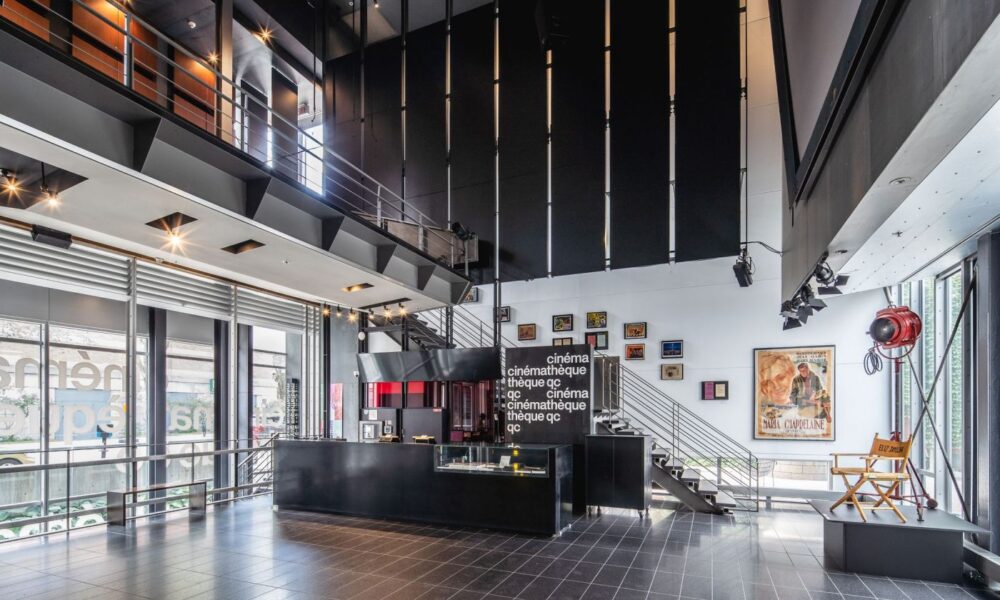
Montreal staples Cinema du Parc and Cinémathèque Québécoise do just that, running classic Canadian, French, and international films while also offering a platform to films from established arthouse directors and up-and-coming auteurs. 

Where chain movie theatres, like Cineplex, screen any new release from a large studio, regardless of its quality, repertory theatres pay careful attention to curating an experience that both educates and enriches the moviegoer. They act as counter-programming to the indistinguishable heaps of mass-market entertainment churning through multiplexes every six weeks or so, offering a way to not only engage with cultures you may not be exposed to in your day-to-day life but also film cultures that Hollywood does not place a premium on. Doing so allows viewers to see films on the big screen released long before your time and far from your surroundings. The McGill Tribune asked staff at repertory cinemas about their programming philosophies and what their theatres have in store this summer.

Jean-François Lamarche, assistant general manager of films at Cinema du Parc, explained how the theatre screens films and manages distribution in Quebec and Canada. The theatre owns and operates three separate cinemas, each catering to a different neighbourhood. Cinéma Museé, located near the Montreal Museum of Fine Arts, primarily screens English documentaries, while Cinema du Parc screens new arthouse releases and older films featured in collections such as Parc at Midnight. Movies shown at Cinema du Parc are primarily in English but cater to a bilingual clientele by offering films subtitled in French. The third theatre, Cinéma Beaubien, may be most unique in its approach to programming. Serving a primarily francophone neighbourhood, Beaubien screens almost exclusively French films from all over the globe. Lamarche, who has been working with Parc since 2006, is not only involved in program selection at all three theatres, but plays a major role in the distribution of several films that screen at Cinéma Beaubien. Annually, he visits international film festivals in the hopes of finding some hidden gems.

“So when we go to these festivals, most of the time these films are not [acquired] yet for Quebec, Canada or North American [distribution],” Lamarche told the Tribune. “We help them scatter.” 

Back at Cinema du Parc, Lamarche is in constant search of the newest arthouse sensation, be it from an established auteur like Wes Anderson—a favourite of the theatre’s patrons—or a surprise hit like Everything Everywhere All at Once (2022), which holds the record for the longest-playing film at the theatre at 26 consecutive weeks. This year, he has his eye on acclaimed horror director Ari Aster’s Beau is Afraid (2023) as the theatre’s next big sensation. Apart from Beau is Afraid, Lamarche is excited for audiences to get a chance to see Brother (2023), a new film set in Toronto that started its run at Cinema du Parc on March 17. 

“We don’t see many films from elsewhere in Canada,” Lamarche noted. “Most of the productions [are from] Quebec.” 

Guillaume Lafleur, programming head at Cinémathèque Québecoise, shared a different philosophy about Canadian cinema, choosing to focus more on its preservation than distribution. In an interview with the Tribune, Lafleur explained how Cinémathèque Québecoise not only operates as a theatre and showroom for the public, but also as an extensive archive, particularly for Canadian projects. Founded in 1963, the Cinema now possesses Canada’s second-largest film archive, just behind the National Archives. Today the collection boasts nearly 40,000 films, mostly of Quebecois and Canadian origin. Although films from the archives are frequently screened, Lafleur works with many international distributors and consulates to curate featured collections or retrospectives unique to the Cinémathèque. The process of curation, he says, is inherently political and reciprocal as the process involves collaborators from across the globe. 

“For instance, we could go to the Italian Cultural Institute to talk to them about a retrospective that we want to do, for instance, we could do one on [Mario] Monicelli,” Lafleur said. “We have like 10 films of Monicelli. If Italian diplomacy could help us, we will be able to show 20 films.”

In June, Cinémathèque Québecoise will screen a retrospective of the films of Mauritanian director Med Hondo, which Lafleur believes will be a highlight of their spring schedule. Harvard University is home to an extensive collection of Hondo’s work and will collaborate with Cinémathèque Québecoise to curate the exhibition. The retrospective will also feature work from French and Canadian film historians. This isn’t the first time that his work will be displayed at the theatre—the filmmaker came to Montreal in the 70s to attend the conference on independent filmmaking in South America and Africa held by Cinémathèque Québécoise.

“I’m just discovering his work, and I was clearly amazed,” Lafleur said. “We’re just discovering all this tremendous work from filmmakers from Africa. So it’s just wonderful that we will have the chance to share it very soon.”

From beloved classics to long-forgotten gems, there’s a palpable sense when you enter both Cinema du Parc and Cinémathèque Québécoise that you’re in good hands: Someone has picked the best of the best for your viewing pleasure. Repertory theatres are vital for keeping the culture and history of film, both domestic and international, intact. By preserving and rescreening films, these theatres ensure a brighter future for independent filmmakers looking to connect with audiences buzzing for cinematic experiences. 

Repertory theatres also provide a low cost and low barrier to entry for exploring new films. With student prices often available and tickets hovering around $10 for a student ticket, these theatres are much more affordable alternatives to going to Cineplex, where ticket prices are currently on the rise. They also offer a mode of discovering a variety of filmmakers and styles that may have been lost within the algorithm of a streaming service. Unlike algorithms, curators make selections based on quality and historical significance rather than simply what most resembles another piece of content you enjoyed. They open the doors for anyone to access film history and experience it as it was originally intended, with other people and on the big screen. The medium of film was created to provide an escape from reality while reflecting and providing insight into the world around us, not just as vessels to view more CGI. The movies shown at these repertory theatres place value on craft and creativity rather than just content.

Montreal is home to a rich and diverse scene of independent repertory theatres, giving Montrealers a glimpse of modern and historical, independent and international films. Cinema du Parc and Cinémathèque Québécoise are two shining examples of theatres that care deeply about the movies they show, curating collections for their audiences and celebrating independent filmmaking, both new and old.

Arts & Entertainment, Theatre

Lights, Camera, Fokus!

It was a 1920s-movie-premiere-meets-after-class-hangout. The vibe and fashion of the crowd at Cinema du Parc on March 23 seemed the perfect mix of what the night’s event represented: A showcase for some of Montreal’s up-and-coming film directors and a celebration of the friendships that made the films possible. 

Consisting of over 40 submissions, this year’s Fokus Film Festival presented a wide variety of talent, which, thanks to Fokus’ new rule, allowed entries from anyone in the greater Montreal area and broke outside of the typical McGill bubble. Acting as McGill’s longest-running (but not its only) film festival, Fokus gives Montreal filmmakers a platform to share their work, creating opportunities often not present at the university level. While the provincial government allots creative funding to Concordia and UQAM, McGill is designed as more research-focused.

 “My biggest gripe with McGill, which I love going to and enjoy, is we have little creative support at an academic level for people who want to venture into fields that aren’t as academically oriented,” said Sofia Andrade (U1 Arts), President of Student Television at McGill (TVM), in an interview with The McGill Tribune. “TVM’s greatest impact at McGill is that we offer the opportunities and the equipment and the funds to those who want to do creative things on campus, to do it without having to sacrifice other things.”

Anyone can submit their pieces to the Fokus Film Festival either through an open-call general submission option by March 12 or by participating in TVM’s 72-Hour Filmmaking Contest from March 9-12. Six general submissions, representing the filmmakers’ artistic toils of months or years, were nominated for awards such as Best Picture, Best Director, and Best Performance. A panel of six judges, including John Castillo, a music professional development professor at McGill, and Ned Schantz, a cultural studies and cinema professor in McGill’s English department, judged the films then and there. 

The 72-Hour films—which had to be written, shot, and edited in under three days—had the opportunity to take home the coveted Best 72-Hour Film. This year, The Story of Chad Chambers claimed the honour, a comedy which tied in social media and hair dryers in a medley that had the whole theatre crying with laughter. The creativity and passion of all participants were evident in the other 72-Hour films as well. With wide-ranging topics from Night of the Attack of the Killer Bubbles From Outer Space, a sci-fi flick that featured…well, killer bubbles, to Bug, an experimental film taking the focus of both a bug and a computer virus, you couldn’t help but wonder how these films came together in such a short amount of time. 

The general submissions were no less impressive. Composed of mixed media films, such as claymation and animation, as well as student-made movies, the range of films kept the audience on the edge of their seats for the entire festival. Featuring scenery like iconic staircases and colourful apartment buildings that will seem all too familiar to Montreal residents, the film La Ligne followed a ballerina who steps outside of the bounds of her profession and trusts herself. In Travail d’equipe, created by the makers of Night of the Attack of the Killer Bubbles from Outer Space, deadtime media, a nightmare group project got a little too out-of-hand. 

“Filmmaking is scary because it feels like there’s a high barrier to entry, [and] that’s true,” Andrade said. “You need a lot of money, people to teach you, but TVM is there to provide that, so you can only worry about learning the stuff.” 

As the interview ended, Andrade then turned to wave at one of the actors in The Story of Chad Chambers who yelled, “Thank you for the opportunity to show our film!” Not a paid ad, but it might as well have been.

 This year’s screenings and awards ceremony drew a full house, immediately followed by an afterparty at Tipsy Cow. Hopefully, in upcoming years, the films will showcase collaborations between McGill students and the larger Montreal community, which judging by the hard-core networking happening that night, might very well make the cut.

Editorial, Opinion

We need to talk about Montreal’s secret conversion therapies

Last week, an investigative report by Journal Métro revealed that churches across several Christian denominations in Montreal were enacting sexual orientation change efforts (SOCEs) for 2SLGBTQIA+ people, a practice more commonly known as conversion therapy. Although it was officially criminalized by federal law last year, these churches perpetuate the psychologically harmful, abusive, and traumatic practice behind closed doors. During Journal Métro’s investigation, an email warning of journalists’ undercover infiltration was sent to over 100 churches, indicating the pervasiveness of SOCEs in Montreal churches and the active collaboration to protect the cult of secrecy that surrounds them.

These “therapies,” which at times resemble exorcisms, find their roots relatively recently in the 19th century and reflect the remains of various Christian churches’ ongoing attempts to exert power and control over people. By brainwashing mostly young, and often vulnerable queer and trans people into thinking their sexual orientation or gender identity is an illness or deformity, these branches of the Christian Church impose and form their ideal vision of a nuclear, heterosexual family. 

Quebec has a long history of resistance to religious intervention grounded in laïcité, the separation of the state from religion, and its religious neutrality. But Journal Métro’s  investigation exposes the province’s hypocrisy, specifically how the Church relies on covert endorsement from politicians. Bill 21 prohibits the province’s citizens who work in public service from wearing religious symbols on duty, but the persistence of conversion therapies—despite being far more harmful—does not receive the same fervour. And the province’s repeated financial support for transphobic organizations that support SOCEs, such as Pour les Droits des femmes Québec, blatantly proves where its values stand. 

Mayor Valérie Plante reacted to the outcome of the investigation with an outraged tweet, demanding that SOCEs be stopped. Yet the municipal government has not offered any concrete solutions. If Montreal wants conversion therapies to “cease immediately,” then action must be taken accordingly. The current federal ban on conversion therapies is not retroactive, indicating that these therapies were acceptable before the law was implemented in 2022, while simultaneously invalidating the trauma of survivors who cannot seek legal redress. When exposed by Journal Métro, the accused churches claimed to have misinterpreted the law, or blamed the provincial government for not making it clear enough. 

Under the guise of simple “conversation” or the alternative name of “reparative” therapy, these pseudoscientific conversion practices are still allowed to take place. This problem does not simply exist in a vacuum within antiquated psychological practices or Christian belief systems, but is systemic to the province. Quebec’s health-care system similarly misrepresents queerness and relies on scientifically unsound and homophobic stereotypes, signalling the need for a larger reform of how state institutions approach queer identities. Conversion therapies, even when they don’t bear the name, happen anywhere that an individual is treated as deviant for their sexual orientation or gender identity. Banning SOCEs must be accompanied by not only necessary justice for survivors, but also a dramatic change in the way our institutions approach queer and trans flourishing: By listening to the concerned communities first. 

The pro-conversion therapy argument that individuals are free to “seek help” can no longer be accepted. SOCEs imply that a queer identity is something to be healed from, and that one must change their sexual orientation or gender identity instead of challenging the homophobic and transphobic system that invalidates their existence. Criminalizing conversion therapies will not suffice to make internalized oppressions disappear. Queer and trans people need representation, life and joy, and resistance.

As institutions like McGill are burgeoning with young students still exploring their identities, universities can play a key role in changing the harmful biologically essentialist and heteronormative codes of today’s society. One concrete way is to increase funding for the Gender, Sexuality, Feminist, and Social Justice Studies department. McGill must also acknowledge the existence of SOCEs in Montreal and take a clear stance against bigotry, as the general ignorance about Montreal’s conversion therapies only perpetuates their existence. Spreading the word about Journal Métro’s investigation and shining light on the risks taken by their journalists will be essential in finally putting an end to the continuous invalidation of queer and trans people’s humanity. 

Sports

Marathon of Sport brings together students and Special Olympians

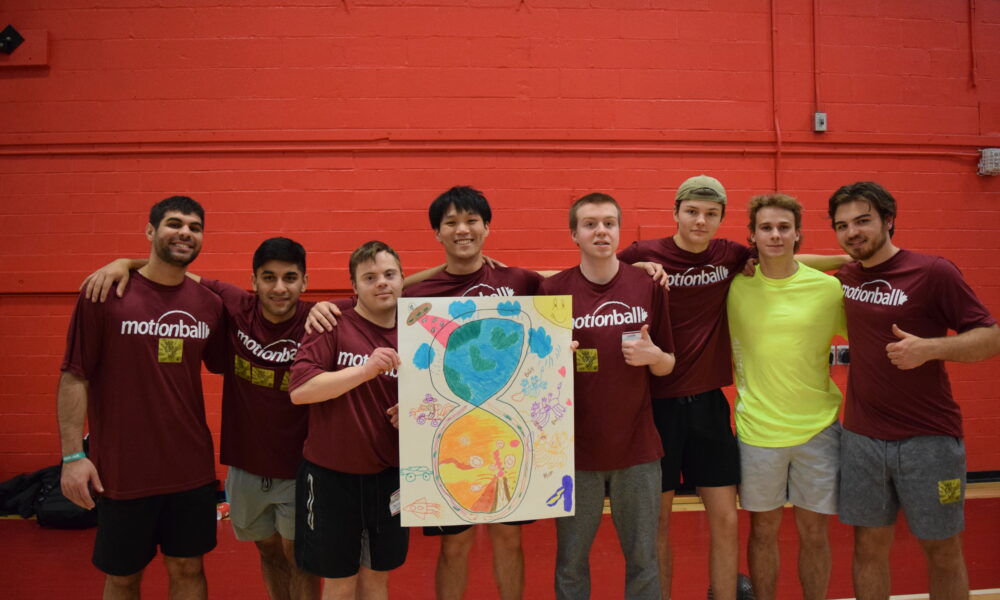
On April 2, 19 Special Olympic athletes and roughly 70 student participants gathered at the McGill Currie Gymnasium for the motionball Marathon of Sport. The day included various competitions, like floor hockey, dodgeball, soccer, a relay race, and benchball, as well as a pizza lunch, poster-making competition, raffle, and an awards ceremony. 

motionball is a nonprofit organization that raises funds and awareness for the Special Olympics Canada foundation. This year, McGill’s motionball chapter raised $7,365 in two months, with the top team raising $1,779. 

The event was organized by a large team of McGill students including motionball co-directors, Avery Alexander, Alyssa Barbuto, and Chrissy Colizza. Ten teams with different-coloured t-shirts hosted a mix of Special Olympic athletes and McGill students, with representatives from several varsity teams including both men’s and women’s hockey, men’s rugby, baseball, and lacrosse, and women’s volleyball and soccer. Among other student groups in attendance were a team representing the Faculty of Education, a fraternity, and even some friend groups.

“I think getting involved allows for the gap to be bridged together between the McGill community and Special Olympic athletes,” Alexander told The McGill Tribune. “And we just want to create a more inclusive sport environment for everybody at McGill and Montreal.”

After putting the committee together only two months ago, the preparation for Sunday’s event was hectic.

“Given that we did this event in record time, it was pretty intense. But it all turned out wonderfully. We had a great turnout,” Barbuto told the Tribune

Alexander added, “A lot of the parents have been coming up, just telling us how much they appreciate this, how much their kids are having fun.”

Many of the Special Olympic athletes have been participating in motionball’s Marathon of Sport for years. Peter Yong, a member of the green team, has been attending since 2015. 

When asked what his favourite part of the Marathon of Sport was, Yong had no doubt: 

“Benchball.” 

Benchball involves tossing balls to your teammates who are lined up on the other side of the gym behind a bench. If you successfully complete a pass without being blocked by the other team, you join your teammates, with the ultimate goal of having the entire team behind the bench.

Yong also enjoys meeting the other athletes and playing with his team. Outside of the Special Olympics, he plays soccer in Montreal. 

“[I play on the] West Island at the Lakeshore, ” Yong told the Tribune. 

Another athlete, Michael Kucyznski, is also a long-time motionball participant. His passion for sports and love for meeting new friends keeps him involved with the Special Olympics. 

“[I have been coming] for a couple of years, I think since 2018 but I am not too sure,” Kucyznski said. “I like everything [about motionball]. Sports [are] my number one thing.”

Kucyznski is a true sports fanatic who enjoys watching hockey and baseball and playing floor hockey and softball. 

Hakeem Walker Bruce, a five-time motionball-er, was ecstatic to be back at the Marathon of Sport. When asked about his favourite event, Walker Bruce went with a more general answer: 

“motionball. Just everything included.” 

Outside of motionball, however, Walker Bruce enjoys soccer and basketball, and—evidenced by the moves he busted out later that day—dancing. 

Walker Bruce wrapped up his interview with a hug (a practice varsity teams should strongly consider adopting). 

The day finished with a dance party-turned-battle, where all participants ended up in a conga line, before meeting at the centre of the gym for awards. 

The motionball Marathon of Sport program serves as a crucial bridge between McGill and the Montreal community. It gives Special Olympians a much-deserved opportunity to play the sports they love and meet new people in a relaxed environment dedicated to community building—something we could all use a little more of in our lives. 

McGill, Montreal, News

“One of hundreds”: Student group platforms McGill’s street harassment stories

Content Warning: Mention of sexual harassment, assault

Walk Them Home Montreal, a McGill student group dedicated to tackling street harassment in Montreal, began sharing students’ anonymous testimonies of harassment over Instagram on March 16. The group reports receiving over 100 submissions since January 2023.

Students submit their stories using the testimony link on Walk Them Home’s Instagram page or by messaging the organization directly. The student group then posts the stories anonymously on their page. 

The posted stories have included accounts of chasing, stalking, cat-calling, racist comments, aggressive shouting, unwanted sexual gestures, and physical groping. One individual wrote that their experience was just “one of hundreds.”

Walk Them Home Montreal President Laura Voermann, U2 Arts, founded the group in October 2021 after her friend encountered street harassment late at night. Initially, the group provided educational resources and volunteer services, such as walking people home. Now they focus on prevention and increasing awareness. 

Voermann said they started sharing stories to platform student experiences similar to her friend’s. 

“Whenever I hear stories like this, it just kind of makes me think, what if that was my friend, what if that was me? What if that was one of my family members?” Voermann told The McGill Tribune. “It’s just terrible. It happens so often. And a lot of women have no idea what to do, or a lot of women have said they’re used to it and they kind of just play it by ear and understand it’s something they have to be concerned about. It’s just weird to me how normalized it is.”

The initiative follows similar efforts in the U.S. and U.K.—such as Everyone’s Invited, which exposed rape culture in some 3,000 U.K. schools in 2021. 

Walk Them Home Montreal—who are not affiliated with McGill or the Students’ Society of McGill University (SSMU)—previously shared anonymous testimonies in early 2022 but re-launched the initiative this year with the help of Spotted: McGill, a student-run culture and meme page, who posted about the initiative. 

Spotted: McGill told the Tribune via Instagram that it is important for student groups such as Walk Them Home Montreal to tackle sexual and street harassment. 

“We think any initiative aimed at lending visibility towards sexual harassment & prevention is so vital to the McGill community,” a representative wrote. “Most women [and] BIPOC [Black, Indigenous, and People of Colour] can relate to a lot of the responses the page has been getting, and it’s really disheartening to see how many of us have gone through scary incidents of harassment on the street.” 

In a statement to the Tribune, McGill media relations officer Frédérique Mazerolle did not comment directly on the Instagram posts but outlined how McGill’s Campus Public Safety Department works with the community to promote student and staff safety. She pointed to the services the department provides, such as safety escorts available 24 hours a day, at both the downtown and Macdonald campuses.  

“Agents patrol the campuses, manage access, transport students and staff with disabilities as well as respond to incidents and emergencies. Ensuring the safety of the McGill community is our ultimate and continuous goal,” Mazerolle wrote. “The Campus Public Safety department’s Night Route Maps also outlines recommended routes for navigating the campus in the dark and locate[s] emergency phones for contacting additional security.”

Other initiatives to tackle harassment around McGill include SSMU’s WalkSafe, a volunteer-led service that walks students home. The Office for Sexual Violence Response, Support and Education (OSVRSE) and the Sexual Assault Centre of the McGill Students’ Society (SACOMSS) also provide free support, educational tools, and sexual violence sensitivity training. 

OSVRSE had to close in mid-October due to staff shortages—the Tribune found that the office had only one employee at the beginning of Fall 2022. Services were re-routed through the Office of the Dean of Students to ensure continuity for ongoing cases. OSVRSE reopened in January at a limited capacity. 

McGill also mandates the sexual violence education program “It Takes All of Us,” which was re-launched earlier this year. The program seeks to educate students and staff on the bystander effect and how to prevent sexual harassment and violence.  

Walk Them Home Montreal vice-president Lily Marchand, U3 Arts and Management, however, believes that the testimonies highlight how McGill is still not dealing with street harassment sufficiently. She noted that the emergency phones around campus, which have a blue light at night, need to be more readily available. 

I have mostly discovered how unequipped McGill is to deal with this sort of stuff,” Marchand said. 

Voermann also feels that McGill needs to take street harassment more seriously. 

“McGill and SSMU need to do […] more to prioritize street safety as a major issue that affects McGill students,” Voermann said. “[They should] read the testimonies of so many students who have encountered street harassment and feel unsafe.”

Gabrielle Adams, U1 Arts, was recently harassed in the metro by a man who followed her around the car and made unwanted sexual gestures at her. Bystanders made no effort to intervene. 

She told the Tribune that there needs to be more awareness at McGill and that men, in particular, must listen to those who have experienced harassment so they can learn to intervene in the moment.

“Girls get it. I don’t think I know one girl who hasn’t been at least cat-called,” Adams said in an interview with the Tribune. “Talking to guys, it’s kind of different. It’s more like focused on what consequences he should face rather than listening and saying, ‘oh, how are you feeling?’” 

Adams also believes McGill needs to publicize its security services more effectively and take action to prevent street harassment in general. 

“The school needs to be prepared at all times to be able to deal with their students that go through this,” she said. “I’m sure it happens every single day, multiple times a day […] we’re 40,000 students.”

In 2018, a Statistics Canada study of gender-based violence and unwanted sexual behaviour found that one in three women had experienced sexual harassment in public places in the previous 12 months. The most common types were unwanted sexual attention and unwanted physical contact. 

The posts on Walk Them Home Montreal started just before McGill’s latest Policy Against Sexual Violence annual report was presented to the McGill Senate on March 22. The report detailed 105 sexual violence disclosures in 2022, with the definition of sexual violence including actions of sexual assault, sexual harassment, stalking, sexual exploitation, indecent exposure, and distribution of sexual images. Of the 105 disclosures, only 15 individuals chose to file a report. 

For any member of the McGill community in need of support regarding sexual violence, OSVRSE can be reached at 514-398-3954 or [email protected]; SACOMSS can be reached at [email protected] or over Zoom using the instructions on sacomss.org; the Office of Mediation and Reporting can be reached at [email protected]; and the province-wide Sexual Violence Helpline can be reached at 1-888-933-9007.

Off the Board, Opinion

‘Basant’: A fading memory 

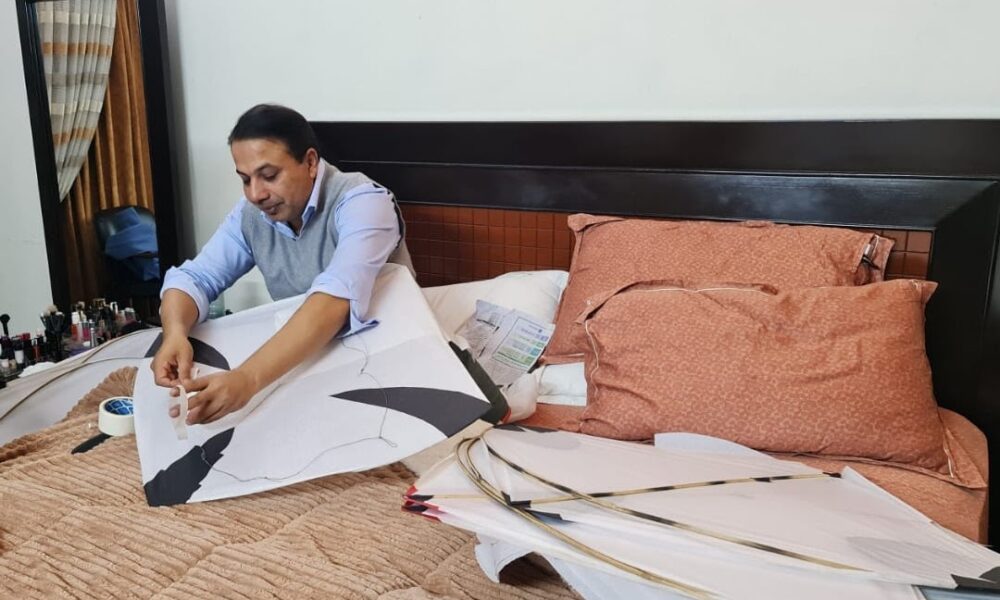
The paper rustles in my hands, light on my fingers, delicate, flimsy, daring to tear apart if treated with the slightest harshness (much like me). I put the wire through the holes, stretch the paper out, and add a little tassel to the end, making the patang my own. My dad stands on the opposite end, guiding and guarding, because he knows if this kite, my beloved guddi, gets the slightest rip, my eyes will let loose the river Nile. 

Slowly, gently, tenderly, we prepare the kite, making sure it’s armed and ready for its biggest fight. Tomorrow, it will be time to launch it into the sky, along with the many other kites on perhaps their first flight. Signalling the coming of spring, the patangs will speckle the horizon with splashes of yellow, red, blue, black, and white. 

I wake up to the smell of jalebis and halwa wafting in from the kitchen, inviting us to adorn ourselves in pink, yellow, and orange for the much-anticipated festival of Basant. My siblings and I put on our sharpest kurtas and run up to the roof, where my father is setting up the kites and making light-hearted conversation with the neighbour, boasting about the strength of his string and already challenging him to a duel. 

All around us, roofs and terraces fill up with families submerged in electrifying joy, as vendors hark from down below, inviting us to buy sweet and savoury delicacies and traditional artifacts. The sun begins to rise, kites take to the sky, and the beats of the dhol gain momentum. 

It is the spring of 2007. My relatives and cousins have all arrived, and we carry my great uncle, Aachoo Mamoo, who is terminally ill, up to the roof, along with his bed, in order to fulfill his dying wish of “celebrating Basant one last time.” He lies on the charpai, a traditional, woven bed, as my dad and uncles take up their kites, arm them with the most powerful dori (the string used to fly the kites), and wrap their hands in cotton bandages––a necessary precaution to prevent the string from slicing your hands through––to prepare for the kite fights. 

They put themselves in teams, my dad with his brother and my mom with hers, with one member holding the big, heavy roll of dori and the other flying the kite itself. To make us feel included, they ask us to run with their patang, from one end of the roof to the other, so the kite has enough wind and momentum to soar directly into the sky. 

And then, chaos ensues. “Pecha lag gaya!” shouts Baba, announcing that his kite is caught in another and the first battle of the day has begun. Everyone halts, holding their breath and staring high up into the sky, squinting to watch the two kites battling it out. Masterfully, Baba begins pulling on the string and letting it go, as his brother supports him by skillfully rolling and unrolling the string, artfully displaying the last 28 years of kite-flying teamwork.  

Aachoo Mamoo props up on the charpai in excitement and, using all his strength, begins to guide my father and uncle, with his 50 or more years of experience in the art. Shortly, we see the other kite start to dwindle, and as it falls from the sky, our entire family bubbles with cheer and excitement, commending Baba on his skill and celebrating the win. And so, the evening passes. The battles continue, the kites soar high and fall low, and by evening, we’ve all had a hearty share of celebration and are already anticipating next year’s festivities. 

However, next year never came. Not only for Aachoo Mamoo but for the rest of us as well. With the increasing production and use of unsafe doris, coated with glass and metal fillings that proved fatal for many, the government banned the festival altogether. So, if tomorrow I was granted one wish, I would channel Aachoo Mamoo and ask to relive the spring of 2007, to celebrate Basant once again. 

Ask a Scientist, Science & Technology

Some stones are better left unturned

In recent decades, the many negative effects of tillage, the practice of turning over soil after harvesting crops, have become increasingly evident: It disrupts soil structure, accelerates soil erosion, and causes runoff of pesticides and fertilizer, damaging adjacent ecosystems. 

No-till farming, a practice that involves leaving the soil largely undisturbed, has been proposed as a more sustainable and less destructive alternative. The technique does not require the use of colossal tractors and instead proposes planting seeds in small, shallow openings in the ground, and pressing down the soil to cover them by employing smaller tractors or even doing it by hand.

Professor Joann Whalen, who teaches in McGill’s Department of Natural Resource Sciences, has been on sabbatical in Morocco this year at Mohammed VI Polytechnic University, working on the Daily Century Model (DayCent)—a model that simulates the movement of carbon and nitrogen through agricultural systems—and researching the effects of no-till farming. Her recent publication shows her findings while exploring the logistics of implementing no-till farming in Morocco.

“We use this model to make tools that farmers can use to see how choosing no-till methods and other carbon-saving practices […] will increase their carbon sequestration and reduce greenhouse gas emissions,” Whalen said in an interview with The McGill Tribune. “Farmers that can show such improvements will be eligible for payments in the emerging carbon markets.”

Whalen believes there are two major benefits to no-till farming: Measurable improvements in soil stability and minimal resource consumption.

“We measure soil parameters to have an idea about the soil’s ability to resist erosion, store water, and support a rich diversity of microbial and animal life,” Whalen said. “Because no-till farms minimally disturb the surface vegetation and plant residues, they can store more carbon in the soil under certain conditions.” 

Farms often benefit from hidden ecosystems that preserve nutrients and moisture. In arid and semi-arid regions such as Morocco, it is especially crucial that the soil retain moisture if it is to remain fertile. Scientists like Whalen also closely measure the carbon-absorbing properties of hidden ecosystems to better understand whether they can mitigate climate change.

No-tillage farming also requires a smaller quantity of typical resources than traditional farming methods. According to the U.S. Department of Agriculture, no-till farming saves 33 litres of diesel fuel per hectare

“Burning less diesel fuel saves the farmer money while reducing carbon dioxide emissions from the tractor,” Whalen said.

Widespread adoption of no-till farming could be key in making agriculture more efficient and sustainable, but there are challenges to implementing it.

“The main barrier to implementing no-till farming in Morocco is the cost of investment in the suitable farm machinery,” Whalen explained. “A big farm can justify the investment cost, but the majority of farms in Morocco and throughout sub-Saharan Africa are owned by smallholders who subsist on less than two hectares of land. Those with limited resources are not able to finance the purchase of no-till machines.”

The climate crisis compounds this issue because it disproportionately impacts smallholders. Droughts and heat waves, for example, strain crop yields, causing shortages that are much harder to handle for smallholders than large farm owners. 

“Smallholder farmers need our support to carefully manage their scarce water resources, already under pressure due to overpopulation and inefficient distribution networks,” Whalen said.

Whalen believes that supporting carbon markets, trading systems in which carbon credits are bought and sold, is essential to making no-till farming more feasible. 

“Farmers will be able to do more carbon farming when they get compensated for doing so,” Whalen said. “When you are offered the option to offset your carbon emissions, for instance when you buy an airline ticket, check the box. Your dollars could be a source of extra income for a smallholder farmer enrolled in a verified carbon farming program. By supporting this farmer’s livelihood, you help them to keep producing healthy, nutritious food for their family and local community.”

Commentary, Opinion

An act of transparency for the Jesuits of Canada

On March 13, the Jesuits of Canada, a religious order of the Catholic Church, released a list of priests and brothers that have been “credibly accused” of sexually abusing minors. The list dates back to the 1950s, accounting for more than 27 accused men, 24 of whom are deceased. Several of the men listed worked for a period of time in Montreal, in institutions such as Loyola High School and Collège Jean de Brébeuf. This repeated pattern of abuse, which is far from unique to Canada, within the Catholic spiritual community and system of worship creates ripples of abuse that continue to permeate the lives of many, especially those assaulted as children. Growing up in the Catholic Church and attending a Catholic high school, priests were presented to me as all-knowing figures of guidance, making it that much easier for them to prey on those who follow. In order to continue to fight against sexual assault in sacred spaces, there needs to be a continuous effort to eliminate abuse and larger monetary reparations to those who have been harmed in the past.

In December  2019, the Jesuits of Canada began compiling an audit of all cases of abuse and boundary violations, pledging to release a list of those credibly accused to the general public. The term “credibly accused” refers to a situation where there is enough evidence to legitimize allegations, but not necessarily enough to prove guilt beyond a reasonable doubt. These efforts can be validating to survivors; seeing the name of their abuser called out for their crime can at times provide peace of mind. The list is meant to be a living document as ongoing investigations into abuse continue. The Jesuits have further pushed for efforts of reconciliation by establishing guidelines for healing, accountability, and prevention of future acts of abuse and sexual harassment. Additionally, every Jesuit candidate must partake in a psychological evaluation to ensure they are fit to become a Jesuit, as well as yearly training on abuse prevention and celibate living. 

While these efforts certainly take steps in the right direction, the church must do more to eradicate sexual violence within its sacred spaces. In France, cash reparations ranged from $21,128 to $63,386 per individual case. Another potential measure, albeit controversial, should be the removal of mandatory celibacy from the Catholic priesthood. Though the pressures of celibacy should never be granted as a legitimate excuse for pedophilic abuse, abolishing this measure could modernize the church and create a safer environment for all. 

The statement issued by the Jesuits of Canada asserts that the past cannot be rewritten, but this reveals calculated accountability on the Church’s part. With many accused priests and brothers deceased, little judicial action can occur against specific perpetrators. The lack of criminal proceedings allows them to get off scot-free, condemned for their actions only beyond the grave. The Jesuits’ involvement in the creation and perpetuation of residential schools across Canada, for example, has not been adequately redressed. Ten of the 27 men on the list abused minors in residential schools in First Nations communities and in Spanish, Ontario. While minor reparations have been paid, the government must begin to take larger steps to support Indigenous peoples in Canada, especially survivors, and that begins with greater transparency about the past, such as in the Catholic Church’s recent repudiation of the Doctrine of Discovery. 

We must ask the essential question—did the Church know all along, and keep it under wraps while the priests were still practicing? There exists a long history of secrecy within the Church, with information only being revealed when convenient, as seen in the recent exposé on active conversion therapy practices in Montreal churches. The Jesuits of Canada must reveal more names, for if the priests still living fit into the pattern, abusers still exist within the system and will perpetuate this cycle until exposed. 

The Church must continue to be held accountable, starting with reparations for the past and proactive steps toward safeguarding the dignity of its followers in the future. For an institution as old as the Catholic Church, a reckoning is long overdue. 

Read the latest issue

Read the latest issue