


Latest News

Arts & Entertainment, Joke

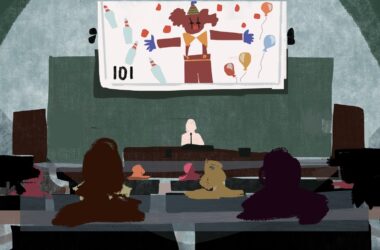
TikTok is an institution, and we are its humble students

It’s 1:00 p.m., and I’ve settled comfortably on my couch after a harrowing day of class. With last night’s leftovers in hand, I pull out my favourite entertainment receptacle––the iPhone––and begin a tricky balancing act, placing the bowl between my legs, a fork in one hand and my phone in the other. I unlock my phone and go immediately to the one app that will satisfy my ache for productivity: TikTok. The app acts as a fresh-pressed juice of self-indulgence, escapism, and education—the only means to easily absorb the internet’s vitamins and minerals. 

The week of March 5, the United States Senate backed a bill that would support a ban on TikTok. Though Canada has yet to pass any similar legislation (beyond preventing anyone with a government-issued phone from using the app), I take personal preventative measures each day. Even if a ban goes into effect, a daily dosage of scrolling for an hour minimum will hopefully inscribe my mind with TikTok users’ numerous precepts. The algorithm assists in my success, presenting content just for me with a white satin glove. Amongst the odd celebrity drama or elaborate soap-making video, there are two types of TikToks that dominate my feed—lifestyle and news—each serving an essential purpose. 

A pseudonym for individuals displaying their excess wealth, beauty, and other unobtainables, lifestyle TikToks, in their most primitive form, keep me fiercely humble while giving me something to work towards. “Outfit of the Day” videos (or more colloquially known as “OOTDs”) inspire my style, yet politely suggest that it’s unlikely I’d be able to pull off the pictured look. 

TikTok news shapes my critical thinking, feeding me information that tests my scepticism with a fun game of “Real or Fake?” And I know that if I study enough Tucker Carlson clips, I can learn how to effectively and carelessly get enough people to believe my lies––an attribute that will certainly be useful when I enter the corporate workplace, with companies like Enron and Raytheon as my ideal employers, of course. Without these strangers’ OOTDs or fake (and actual) newscasters’ intelligible opinions, I’d be arrogant, lazy, poorly dressed, ignorant, unintelligent, and certainly not as humble. For my most redeeming attributes and presumably yours as well, we have the algorithm to thank. 

If ever I’m upset by the reality that my family and friends cannot, unfortunately, read my thoughts, I receive the most wonderful consolation from the algorithm: A psychic mind that, somehow, just knows me. I feel a kinship with this inanimate system like it’s a childhood companion I grew up with, someone who can sense my likes and dislikes without asking or invading my psyche, but who knows when I need some tough love and even harsh criticism. 

Excellent character and appearance are not the algorithm’s only irreplaceable contributions to the hordes of young people using TikTok daily. For academics like you and me, TikTok is the ideal mode of cultural production. The app is a place where artists create for other artists to consume at no economic cost. The algorithm ensures that the content gracing our screens matches our penchant for the highbrow. Evidently, people don’t use the platform to gain capital; each creator creates genuine art. What is a sponsored make-up routine if not a visceral reaction to, and expression of, beauty standards and gender roles or individuals reclaiming finances lost to the wage gap or opposing rampant stereotypes? Intellectual value saturates even a simple video of a gorilla eating a pineapple—providing an apt commentary on wild animals’ captivity and exploitation.

From CNN to Fox News, the usual rhetoric surrounding TikTok is all too negative (yet curiously, one of few things with bipartisan support in the United States). Without stealing and farming our data, the algorithm couldn’t feed us such personalized videos. How can something be so positively impactful on one’s appearance and attitude yet debilitating to their mental health? 

We must end these harmful, propaganda-ridden ideas that further infect the media and general population with each new emerging “danger.” We must heed the truth: TikTok holds tremendous potential through which we can all learn and grow. If this absurd fear-mongering continues, Canada will be next in tow, falling down the same slippery TikTok-ban slope that the United States is currently falling into. 

Arts & Entertainment, Joke

QUIZ: Guess these eight  movie and TV characters, out of context

Here’s a hint: Each character is a university student—just like us!

  1. The next time you and your new friends chill out by the Roddick Gates, make sure to act like this character and start accusing them of trying to murder you. It’s not her fault—she’s just trying to look out for her loved ones after eight murders in their hometown. Her favourite subway station is the Burnside tunnel, but she’s worried a copycat killer is just around the corner—and there could be more than one. But don’t worry, McGill students! Her college campus looks exactly like yours, but this is Montréal, not New York. 
  1. This guy is a legacy at his university, but his best friend is still learning the ropes as a newcomer who can’t get into his program of choice. When his best friend bets his entire education on his misfit fraternity winning intramurals, this character reluctantly offers to help, knowing they might have to drop out if this plan goes badly. 
  1. Imagine you didn’t get into McGill, or even Harvard—your safety school. What now? For this character, the answer is to create their own university and fool their parents in the process. It’s easy! All you need is a children’s shoe salesman to teach your ethics class, a friend who can blow up your enemy’s car with his mind, a comp sci student to make your dupe website, and some cash to bribe your little sister to keep her mouth shut. This is legal… right? 
  1. ACAB, but this cop should quit and become a slam poet. Now that’s talent.
  1. This character is a tech-savvy, rebellious media studies major at an Ivy League university where most students are white—she, as well as the film’s three other main characters, are Black. Armed with her intelligence and a campus radio show to snarkily respond to their classmates’ racism, her activism leads to an explosive Halloween party. I guess it’s hard for some people to hear the truth. 
  1. While people now may call this character a lizard man in real life, know that he was once a respectable Harvard student on academic probation. It wasn’t his fault—he was only trying to get revenge on his girlfriend. Of course, that turned into making a creepy rating website for girls in his class, which turned into making a flop dating website for Ivy League schools, which turned into making the biggest social platform of our generation. But who needs friends IRL when you can make friends online?
  1. Whether it’s battling the know-it-alls in class, facing the condescending boyfriend who thinks he’s going to be president, or befriending the he’s-definitely-not-my-type-but-why-am-I-attracted TA, there’s a bit of all us in this student. From California to Massachusetts, they’re all about dedication, loyalty, and the power of believing in yourself, with more than a little sparkle thrown in. Riddle us this: What do you get when you mix impeccable hair-perming knowledge, a trusty sidekick, an unrelenting pursuit of the family rock, and a gleaming French mani? The correct answer: One kick-ass lawyer. 
  1. Imagine this: Elie Saab gowns, high tea at the Ritz, and a boyfriend who doesn’t believe in feelings (other than feeling like “you betrayed him” when all you were trying to do was protect what he cares about most—but now he’s saying you were what he cared about most—but it didn’t look like that way when Jack was here and now… anyway). Who needs class when you have a city to run, princes to fend off, and schemes to be schemed? All with the help of an elusive local blog that can’t get enough of you and your friends. 

Answers: 1. Mindy Meeks-Martin, Scream VI 2. Sully, Monsters University 3. Bartleby Gains, Accepted 4. Schmidt, 22 Jump Street 5. Samantha White, Dear White People 6. Mark Zuckerberg, The Social Network 7. Elle Woods, Legally Blonde 8. Blair Waldorf, Gossip Girl

Joke

That one kid in every conference

It was another Friday morning spent sitting in the Education building, listening to my peers drone on about economics. I rolled my eyes, opening my bag to find Basic Economics by Thomas Sowell, the only economic education I would need. I had been reading it for a few months. Just as I was about to immerse myself in page two of the foremost intellectual work of our times, I heard a voice from across the room.

“Maybe we should raise the minimum wage,” said a nervous girl. “So many people are having trouble affording housing in Canada.”

Instantly, my killer instinct engaged—I had been challenged. I slid my glasses up my nose as I rose out of my chair. I took a second to compose myself and remembered the last Ben Shapiro ‘SJW DESTROYED’ video I saw before confronting the liberal. 

“Excuse me, I didn’t realize employers were obligated to pay you whatever you want,” I began. “Trudeau’s already made Canada communist, but now you’ve gone too far.”

I continued addressing the girl, her bright blue hair falling across her face as she withdrew in fear. But hiding behind her bangs was not going to save her from my wrath.

“Besides,” I continued, “it’s well-known that the more you make an employer pay, the fewer people they will hire—or did you not know that either?”

“Wait,” interjected the TA as the girl’s eyes filled with tears, “this is a third-year course, everyone knows about labour mark–”

I turned to face the TA. “And you! You’ve filled our minds with nothing but liberal gibberish this entire term. I know you’ve made up half of the concepts we needed to learn. Tragedy of the Commons? Really? Liberal bullshit!” 

The class slowly began recovering from its initial shock at my righteous rebuttal. The initial commenter’s friend, surely an emasculated “male feminist,” decided he would try to defend her honour.

“Actually, a majority of economists now thi—”

“You mean a majority of charlatans,” I sneered, careful to not be put on the defensive, just as Ben Shapiro had taught me. “You probably think the Moon Landing happened too, don’t you, sheeple?” The entire room burst into laughter, delighted that I had given the soyboy such a witty tongue-lashing.

Finally, my real prey entered the fray. The pierced communist I had always despised finally looked up from her book (how dare she read in a conference!). “But Karl Marx said—”

“You mean the well-known antisemite?!” I responded. “I didn’t know you loved racists. For my part, I only read Thomas Jefferson and Sir John A. Macdonald.”

Finally, the class began to understand my vast intellect. The women all wanted me, and the men all wanted to be me.

“Maybe if you listened to The Daily Wire, like I do, you’d understand,” I continued, “but you’re all too busy worrying about how Big Pharma tells you viruses are real.” I adjusted the bald eagle pin on my sportscoat and sat back down, leaving the class totally silent.

Suddenly, applause broke out across the room. Only my interlocutors sobbed silently. The applause grew louder and louder until I could hear no more. I grinned as I put on my coat—it was time to go outside and confront some more snowflakes.

Joke, Student Life

A labour of love

Times are tough, fellow McGillians. It seems like Tinder, Bumble, and Hinge just aren’t doing the trick anymore—they’re all tricks themselves without any treats. The same faces repeat, over and over: How often do you need to scroll through blurry mirror selfies of George, U3 Mech Eng, a moderate from Laval who “likes” callisthenics, or clustered candids of Karlynn, U2 Nursing, from NDG who eats raw food and loves Taylor Swift before you make a change? The McGill Tribune’s Student Life team has collectively got your single back––here’s how to make LinkedIn (or LinkedIn Pro) your first stop for career and couple advancement.

Comment me your comment baby, I know who you are 

While it may initially seem intimidating, the best way to show your affection for your newly-found professional (and soon-to-be romantic) connection is none other than the LinkedIn comments section. As soon they post about a new position or career opportunity, this is your time to shine. Start off by congratulating them and letting them know just how impressive their new position is—but of course, it’s not quite as impressive as your latest VP Finance position at The McGill Investment Club, which you would be happy to help them get involved in if they’re interested. 

Make sure your crush knows that you want to get to know them in more than just a professional setting, so offer them some subtle hints in your comment that you might be interested in a date. Mini golf, anyone??

To add that little bit of flirtatious energy, winky faces will be your best friend, so be sure to end your message with one…or three. And if you really wanna show off your financial stability, remember that the LinkedIn Pro badge can’t hurt.

Targeted for the very first time

When you’ve mastered the art of the cute comment, you must shape the course of your interactions. Set the scene by targeting them, implicitly or explicitly, in your postings. Career transitions might just be the new thirst traps. You don’t even need to wait to strike after you post your internship at Raytheon. Start talking about the privilege you have to join the family environment at Deloitte. It’ll make you seem like a provider, with the security to start your future together. You worked hard for this position, so ensure that you have a sweaty picture of yourself in your thread, captioned “Sleep? Never heard of it!” Your crush will know that you’re available at all hours of the day and that you put your best, and most tired, foot forward. Make at least five references to McGill’s work hard/play hard culture and five humble jokes that the “play hard” was your favourite part. The more humour, the better.

Your acknowledgements will be the place to shine. Don’t hesitate to tag your beloved in the list of people who helped you: Your local bartender, the students who bring down class averages, Big Suze, end of list. Saying “And @ Leslie, we don’t know each other but let’s be real, you got me to Lockheed Martin” is the new “u up.”

And I am a direct message girl

When all this groundwork is done, prepare your professional writing skills to type out the most sensually charged advertisement for a job and slide it into their blue box. Make sure to clearly outline what is required for the role, such as good communication skills, the ability to multitask, three developmental experiences, etc., as well as what duties you expect them to perform on a daily (or weekly basis)—that I will leave up to you to decide. In the midst of sponsored messages, therefore, your tailor-made listing (titled perhaps ‘Emotional Support Intern’) will be sure to arouse a curious excitement, especially when it comes to turning it into a full-time role—provided that their performance is above average, of course. 
Remember that for this to work, you should be fully committed to the process because, once that job is accepted, all of LinkedIn must be informed through an award-winning announcement post. After all, a cringe-worthy declaration is the only way to show the world that you are theirs, solely and forever bound.

Joke, Science & Technology

Asbestos, the best therapy animal

Look no further, fellow McGillians, our struggles have come to an end.

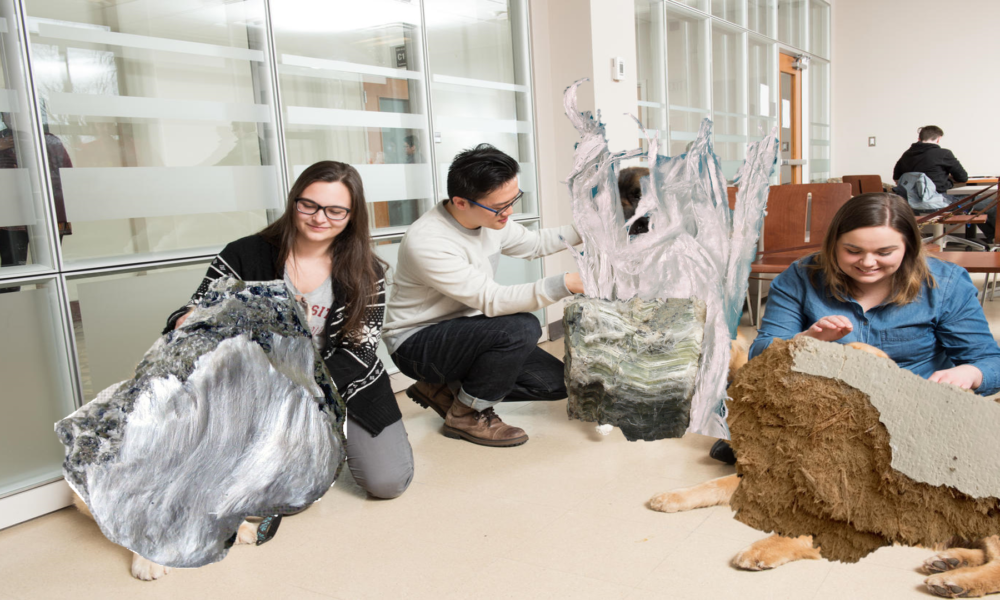
We at The McGill Tribune are pleased to announce the recruitment of a new therapy animal, commonly known by its endearing name asbestos, who is easily accessible to students and faculty alike. No need to schedule a visit to the Wellness Hub—all you have to do is take a stroll to the Stewart Biology Building at the downtown campus, or really any available university building for our readers over at Macdonald campus. Seek, and ye shall find yourself spending quality time with our new campus pet, free of charge.

Do take a moment and appreciate the brilliance of this solution. Instead of spending more money on improving our student wellness services or renovating deteriorating buildings (as any sane post-secondary institution would do) our beloved university is offering a unique, yet cost-effective opportunity to form deeper connections with this historic species, one who has accompanied us for decades, keeping our homes, workplaces, and schools warm. 

Forget about the ludicrous prices of food on campus. Forget about all the financial strains and potential eating disorders it causes. Forget about the utter lack of physician or psychiatrist appointments available at the Hub.

Asbestos will make all these inconveniences seem trivial. 

It’s free. It’s omnipresent. It’s used in everything, from heat-proofing to poisoning every single living creature in the building. It is a carcinogen that can cause a range of deadly diseases—giving the pharmacology majors something to work with—making it a leading supporter of student research on campus.

But these are just a few of the benefits asbestos has to offer. By recruiting asbestos as our campus pet, McGill indoctrinates us into an age-old Quebec tradition: True immersion in Canada’s largest asbestos mining province. Without travelling all the way to the infamous mining town of Asbestos, QC, we are privileged enough to interact with asbestos first-hand, right in the heart of Montreal.

Plus, it’s like playing a game of Russian roulette. Every time you go to class, you get to experience the butterflies of not knowing if you will be diagnosed with lung cancer 40 years down the line, all because you walked into an asbestos-filled building back in your days at McGill. Then again, those butterflies could be asbestos taking root, saying “hi, I’m here for the ride.”

Some critics, however amateur, have noted dangers associated with asbestos exposure. But according to a totally unbiased McGill study back in the 1970s, Dr. John Corbett McDonald at the School of Occupational Health determined that being an asbestos miner is just fine and poses no health concern whatsoever. 

So, the next time someone tries to convince you that asbestos is dangerous and should be eradicated, just remember how it has seen us through thick and thin, how it’s been a pillar of our community, how it’s proven itself to be much more accessible and generous than mandatory meal plans, Students’ Society of McGill University Studentcare coverage, or any other student services McGill has to offer. 

Asbestos has been a part of our lives for so long that it’s practically a member of the community. Who among us will not have fond memories of dragging our feet through asbestos-infested halls, or breathing in its sweet, carcinogenic dust while battling our inner demons during a lecture? Asbestos is a part of McGill’s history, our culture, our very being. Who needs health and safety when you can have cheap and life-threatening therapy sessions with asbestos? It truly is the campus pet that keeps on giving.

Joke

McGill Tribune attends first international tournament as newly minted varsity team

It was a crisp fall morning in October when The McGill Tribune’s varsity Stack Cup team piled into the car to begin our journey. Where were we headed? New York City. What were we doing? Team bonding—and taking on our first challenge as a varsity team. We trained for months, gathering at each other’s apartments to practice our throws and pong ball bounces from dawn till dusk. So, when the Bronx came calling, we answered. Bags in hand, all we had to do was stop at a bodega to pick up our equipment. 

The tournament was hosted just outside of Fordham University: An academic powerhouse with a decorated 182-year history, making it the perfect location for a prestigious competition. But Fordham wasn’t prepared for how big the McGill team was. 

“I was surprised by how ready [McGill] was to play,” said host Brittany* in an interview with the Tribune. “I assumed that as Canadians, everyone would be too nice to play rage cage well.” 

After a hearty two-for-$5 pizza dinner at the shop around the corner from our hotel, we got on the subway, hyping each other up and trying to calm our nerves. Our reputation was on the line, and we needed to show McGill that we deserved to keep our new varsity status. Fordham students greeted us warmly when we arrived, daring us to explain Canadian geography and take pictures in front of the Gibby shower curtain, our ultimate idol. But we didn’t waste much time chatting—it was game time.

We gathered around a folding Lifetime table in the compact backyard of a Bronx home—Fordham is in the Bronx for all you non-locals—and dispersed red Solo cups in a large circle, then proceeded to fill them with an assortment of beer, saving the nastiest combination of beer, White Claw, wine, and tequila for the dreaded bitch cup. Our palms were sweaty, knees weak, arms were heavy. We looked forward to the first few sips of Natty Light that would calm our nerves. This was going to be a rage cage match for the ages.

But Fordham came to play dirty. Both in the traditional sense of the term—beer splattered on the table and all over our hands—as well as mentally, as we sank into inebriation.

Any varsity team has to be prepared for the shouts, the player engagement, the mid-match trash talk. But the regional differences between our schools meant we had to be careful what we screamed at strangers across the table: Our references had to be both quippy and comprehensible. 

The game felt like a blur—even now, it’s hard to pinpoint exactly how many times each of us ended up “in the cage,” with the participant to our left repeatedly stacking their cup into one of ours as the rest of the table looked on in anticipation. Hardly anyone can even recall who really won and who really lost, though being on the edge of a blackout certainly didn’t help. 

Regardless of the gaps in our collective memory, McGill claimed a certain type of victory that night: We definitely consumed the most, but were unable to hold it together post-match. At the end of the night, we left the tournament, trophy in hand—a borrowed fire alarm that was proudly displayed in the Tribune office—until it had to be returned to event organizers in preparation for next year’s match-up (and to avoid incurring fines at the end of their lease). 

Victory celebrations ensued over the course of the weekend. Instead of drinks, we enjoyed some bagels with lox and book shopping, even stopping by Central Park to bask in the sun—and our glory. Our months of training paid off, but we suffered physically for days because of the fierce competition. All we can say now is, look out, aspiring rage-cage international competition participants—McGill is not known for giving up a championship title once we’ve earned it.

Names have been changed to preserve anonymity—we couldn’t do anything else to protect them from further embarrassment after losing to us.

Arts & Entertainment, Music

Wednesday Night Fever in the Quartier Latin

One night this semester, at a bar on St. Denis, I was watching the closing set of Growve, a jam session I regularly attend. Some professional musicians barged in at the last minute, ecstatic and hugging friends they had not seen in a while. They were there to hang out, but given their credentials, the hosts immediately welcomed them on stage. For two minutes, the bassist, drummer, and keyboard player tried to lock into a groove. It was awkward, and the audience could tell that the jam was not going too well. Suddenly, the bass player found a rhythmic low end complementing the drumline, and the keyboard player played rich synthesizer lines. With every passing minute of their set, the music only got better. It was the closest thing I’ve experienced to a musical trance; I was locked into their unique soundscape. Sweat dripped off the drummer playing his final big lines while the keyboard lingered on the last chord of the set. The crowd roared in awe, and the host yelled out one last time: “This. Is. A. Jam!”

Growve occurs every Wednesday night at 8 p.m. at Turbo Haüs. Musicians come and take a break from regular life, playing their hearts out. The three hosts, Shayne, Shem, and Marcus, offer a free performance for an audience that wants to dance to improvised R&B, neo-soul, and hip-hop. Among the musicians, you will find artists, industry producers, session musicians, and even hobbyists. The vibes are right, and the music is tight. Every session, Shem calls out “this is a jam,” the show’s motto, to a raucous crowd under the signature arrow-shaped lights.

“The quality of the jams [are] very good,” guitarist Joseph Anidjar said in an interview with The McGill Tribune. “The hosts are very welcoming. Sometimes the jams are cutthroat, and this is what I like.” 

For those like Joseph seeking an artistic challenge, the jam often delves into technical and jazzier sounds as professionals drop in to perform. Yet, there is always a place for those going out with their friends or those who want to show their hidden talents on any instrument.

Growve traces its roots back to Le Cypher, a jam session produced in the now-defunct Bleury Bar à Vinyle. Shayne, Joseph, and Shem, who were CEGEP students in 2017, used to go to test their chops. 

“There were couches in the middle of the venue,” Shayne said. “We hung out and played tunes we could not perform in music school.” 

Soon, Shayne, Shem, and others began hosting Mercredi Live at Bleury. Even though the bar closed before the pandemic, Marcus joined in and the show moved shop to Turbo Haüs, bearing its current namesake.

Saxophone player Seuss (U3 Music) frequents the jams—his playing is improvisational and rooted in traditional jazz, but as he says, “I want to have fun, man.” 

“It’s relaxed,” Seuss told the Tribune. “You meet so many nice people, you get to show off, and you get gigs. All these people know me thanks to Growve.” 

You will find jazz students at the bar ready to play some Beyoncé or D’Angelo, casual flavours compared to the rigidity of academic music. The ease of the songs and their broad appeal keep the jam inclusive by bridging artistic backgrounds. Additionally, bands and artists that got started through Growve play their original music. The jam, and Turbo Haüs in general, showcases the city’s musical zeitgeist. 

“Many acts started thanks to this event,” Shem and Shayne said. “We can tell people where to go when they ask where the music is.” 

Whether you’re a suit, musician, or anyone else under the rare Montreal winter sun, everyone is welcome at Growve. The equipment and musicians on stage may cost thousands of dollars, but you won’t have to pay a Canadian dime to get down on a Wednesday night.

Sports

We’ve got the(m) beat

Music at sporting events has the remarkable ability to intensify each twist and turn of a game, create a gripping narrative, and even sway the outcome in one team’s favour. 

Some might say this is best evidenced by the opening scene of High School Musical 3, where Troy Bolton (Zac Efron) plays his final basketball game at East High School. With just 16 minutes left on the clock, the high-energy Wildcats weave through the defence singing, “this is the last time to get it right / this is the last chance to make it our night,” while the crowd claps along. When Troy is shoved to the ground by the rival team, the encouraging words sung to him by Gabriella Montez (Vanessa Hudgens) motivate Troy to get his head back in the game and lead the Wildcats to victory.

Although McGill’s varsity sporting events sadly lack East High’s spontaneous musical outbursts, the music played at games serves the same purpose: It fosters team spirit and energizes athletes to perform their best. At the same time, music creates a thrilling atmosphere for the audience, making for an entertaining game. 

Meeting the musical needs of both the players and the fans is a difficult task that requires attention to detail and careful deliberation. However, McGill Athletics Varsity Sports Official Tommy Schnarr is up to the challenge. The U2 Education student has set the tunes for lacrosse, hockey, basketball, and volleyball games, and his song choice is dependent on what audience the sport draws. For example, the crowd at volleyball games is often made up of newer fans who don’t follow the sport. Because of this, Schnarr plays high-energy pop to keep the atmosphere fun and exciting. 

“We go for, like, fast-paced songs with high levels of energy,” Schnarr told The McGill Tribune. “A lot of EDM [electronic dance music] kind of stuff, especially for time-outs, [which are] a lot more intense. In between sets we’ll play “Country Roads,” kind of thing, but to get the crowd nice and into [the game].”


The influence of hockey culture


In contrast to volleyball, there is a far more pronounced hockey culture in North America, given the sport’s popularity. One important part of this shared tradition is classic rock from the 1980s and 1990s featuring artists such as AC/DC and Guns N’Roses mixed in with newer rock from the Black Keys and Green Day. Much of what Schnarr plays stems from this culture, a culture he was exposed to through his own experience playing and watching the sport. 

Zoe Frantz, a forward on the Martlets hockey team, echoed the role that broader hockey culture in North America has had in shaping the songs played at games throughout her career. The first-year athlete noted that the nostalgia associated with older songs from her childhood makes them especially meaningful.

“These aren’t just songs that your team shares, it’s like, ‘I remember this from my other team, I remember this from when I was a kid,’” Frantz said. “And the same thing with throwback songs [from the 2010s] [….] It’s just this really cool thing where it’s like, ‘this song has been such a big part of my life and I didn’t consider it until now.’”


Adapting to unique preferences


When crafting playlists for games, the Martlets hockey team puts their own spin on the song selection while including tracks that speak to North American hockey culture. Many of their picks rally and energize the team because they hearken back to season highlights. One song played at games is “Jimmy Cooks” by Drake and 21 Savage, which the team bonded over before their match against Carleton University on Nov. 4.

“I don’t like saying, […] ‘vibes,’ but it had really good vibes,” Frantz said with a laugh. “Everyone was [really] into it and you could feel the room wasn’t tense or stressed, it was more just like, ‘okay, we got this.’”

Schnarr explained that part of catering to audience preferences means carefully observing the crowd’s reactions to music throughout the game and modifying the playlist to adjust to their taste.

“If I see someone not [liking] Ozzy Osbourne for instance, you know, I’ll look at them when I play a Taylor Swift song in the next stoppage, see what they like there,” Schnarr said. “If people are moving a little bit, that’s a good sign. If they’re standing still or ignoring the music, that’s not really what you want.”


Fostering community through popular songs


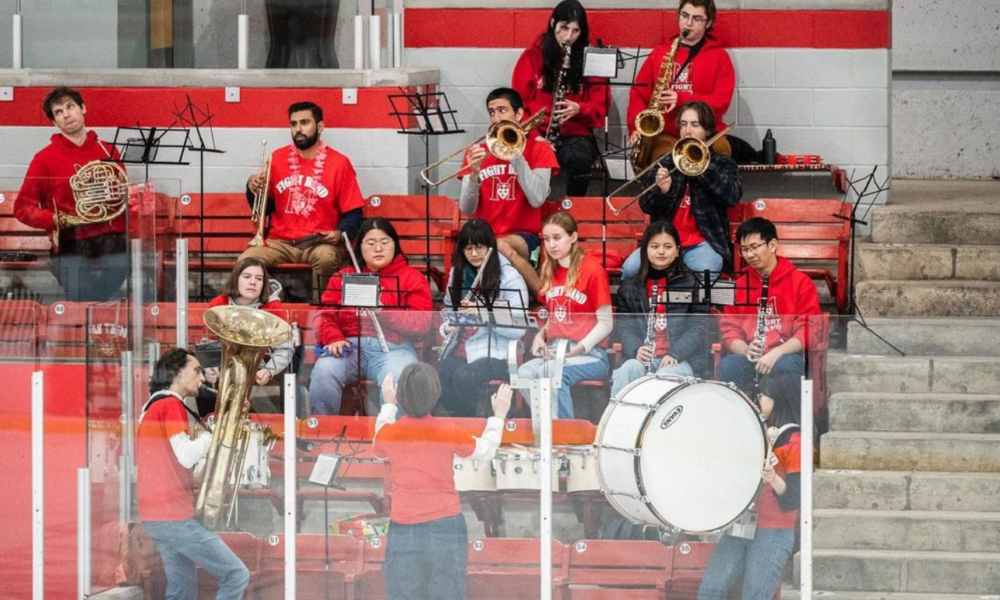
Being attentive to the audience’s taste is just as important for the McGill Fight Band. The student-run band has been playing live music at varsity games since 2006 and is an integral part of McGill varsity culture. Fight Band incorporates both older and more contemporary music into their repertoire, from “Hey! Baby” by Bruce Channel to “Bad Romance” by Lady Gaga, the latter being one of Fight Band’s hallmark songs. According to Fight Band vice-president Administrative Zachary Roberts, one important feature that shapes the band’s music selection is how recognizable songs are to the audience. 

“[The purpose is] to remind the team and the crowd […] it’s not time to give up yet,” Roberts said. “Because people will recognize the song and be like, ‘oh what’s that song, what’s that song?’ And they’ll go, ‘Don’t Stop Believin,’ and they’ll say the word mentally, and in that sense, they’ll be thinking it.”

That same audience recognition works to create an encouraging atmosphere for players, Frantz says. Like Troy and Gabriella exchanging a duet from the court to the stands, enjoying a popular song together can unite the audience and athletes, creating a sense of community and motivating the team to keep pushing for victory.

“It’s cool because you’ve got your team who knows the song, but then you’ve got the audience kind of recognizing the song,” Frantz said. “When you see that everyone’s just kind of enjoying themselves and having a good time […] [it creates a] connection [because] I know you’re there to support me, and we’re connecting on this deeper level, and we all go to McGill, and we’re all just kind of there to have fun.”


Game day music strategy


Music selection varies along with the events of the game itself. Schnarr plays different music depending on how much time is left in the game. In the case of hockey, Schnarr plays more popular songs during the first and second periods to keep the audience engaged, while in the third period, he changes the music in favour of an energetic atmosphere that will benefit the players first and foremost.

“First period and second period, [the players are] still hyped from the music that they have playing in their locker room, from the music that they have in warm-up,” Schnarr explained. “The third period is when they really need that extra boost of energy from the songs that have high beats per minute, so I play a lot of EDM for that.”

As for Fight Band, they base their music on the play happening in the moment. Band President Rosalie Joly-Simard noted that the band will play the theme from Jaws after an opposing hockey team draws a penalty to build anticipation for McGill’s upcoming power play, or will loudly play their instruments to distract a rival basketball player during their free throws. 

“Sometimes it works really well, sometimes the players are like, too focused, it doesn’t work.”  Joly Simard said. “We give ourselves really good credit when they miss.”

This careful selection of songs is designed to build excitement and keep spirits high. Even when the game is not in McGill’s favour, the band still strives to create a fun atmosphere—in the event of a loss, the band will play “Fuck You” by CeeLo Green. 

Thanks to the thoughtful intention that goes into song choice at varsity games, the music at McGill varsity events is far from background noise. Songs can unravel memories of an entire career in the game, foster team bonding, and rally a crowd around a team. The music at games is more than a beat for audiences to clap along to—it’s a tool to uplift athletes, a source of community, and an expression of a love for the sport.

Arts & Entertainment, Books

‘All Things Move’ restores a timeless work of art

Jeannie Marshall lived in Rome for 12 years before setting foot inside the Sistine Chapel. 

I could hardly bear the thought of standing amongst a crowd only to look at something that seemed simultaneously too complex to be understood just by looking at it and too worn out from overexposure,” she writes. “[I]t never seemed like the right time to take on such an enormous symbol of Western culture.

Then her sister Marion died. Over the next few years, her mother and brother Ken passed away, as well. So did her husband James’s father, followed by his brother-in-law Michael, and then his mother. 

After her mother’s death, she decided it was time to set foot inside. Her decision wasn’t spurred on by a grand epiphany or a sudden compulsion, but rather, by emptiness. The long-awaited visit was unfulfilling. It was overwhelming. It “seemed too much, too enormous, and too religious.”

Then she went back. Again. And again. 

Marshall’s book All Things Move, which started out as an essay, raises crucial questions about how we interact with art and why it matters at all. How should we look at art? What makes art great? Who is art for? What if you wait and prepare your entire life to see a great piece of art, and it doesn’t live up to your expectations? 

All Things Move explores how relationships to art can evolve over different stages of life. Beginnings and endings are carefully woven into the narrative. Chronologically, Michelangelo painted The Deluge first, starting with the end of the world. During her third visit, Marshall has a crucial realization: The people depicted on this panel trying to climb out of the water are not survivors—they’re all about to die. 

The book is also chock-full of lyrical descriptions of everyday life in Rome. Marshall describes the different parts of Rome she sees while running errands: The metro, fruit sellers, groceries, pigeons, and art shops. But also apartment buildings abandoned during the 2008 financial crisis, graffiti (both fascist and anti-fascist), and brass cobblestones in front of houses engraved with the names of their former inhabitants who had been sent to concentration camps during the Second World War.

Douglas Anthony Cooper’s accompanying photos are beautiful, but he is careful to not only capture beautiful things. Marshall was drawn to the candour of his photos. Art blends into everyday streetscapes: A red ball, a dog in a sweater, and a nun on the metro. The photos of the city are often black and white. The art is mostly in colour. 

Marshall puts moments into melody when writing about photos in colour. The book explores how art has the ability to not only uniquely capture and explain key moments in human history, but to do the same for one’s own personal history. In other words, art should matter because it matters to you. 

Intriguingly, Marshall is not Christian. She ruminates on the idea that perhaps we ought to approach religion in the way we approach art. The Sistine Chapel has served as both the backdrop and foreground for many religious conflicts throughout history. In a time when the humanities are increasingly seen as decorative, art can evoke an invaluable sense of openness and uncertainty.  

“Great Art” can often have a highbrow, inaccessible aura, but Marshall’s individual approach to the Sistine Chapel makes it so compelling. She writes about her grandmother, growing up in a family of fur trappers in North Bay, and falling in love with Michelangelo. She weaves her personal history alongside centuries of religious conflict, struggle, beauty, and identity. 

I wanted to see something enduring, something that outlasts its creator. I wanted to feel part of a world that means something, a world that continues; I wanted to feel that those we had lost were part of it too.”

All Things Move will be published on April 4, available at your local bookstore and as an audiobook.

Commentary, Opinion

CCP interference allegations are not an excuse for anti-Asian racism

News coverage about the Chinese government’s alleged interference in Canada’s 2021 federal elections has continued for more than a month since The Globe and Mail reported that CSIS received intelligence about the Beijing government’s possible meddling in the 2021 federal election. 

The media attention has created a public uproar because of how it could threaten faith in our democracy and in Prime Minister Justin Trudeau’s leadership—to certain lawmakers’ benefit. Even if they seem to only concern the Chinese and Canadian governments, the Asian Canadian community is already feeling the repercussions of recent allegations. 

For legislators working on China-Canada relations, these repercussions could not be more detrimental. After reports that he helped the Chinese consulate interfere in the 2019 election and advised against the release of Michael Spavor and Michael Kovrig, Member of Parliament Han Dong, who represents Don Valley North in Ontario, left the Liberal caucus to become an independent. Dong stated that he received hateful, aggressive comments, and even death threats in light of recent allegations. 

As Dong is a powerful legislator, his missteps have consequences for Chinese residents in Canada. As new developments have rolled out, increasing political distrust towards China and the Chinese Communist Party (CCP) manifests in the mistreatment of Chinese Canadians. These developments are only adding to the reasons why some are sceptical of high-profile politicians, and wondering whether Chinese and Asian Canadians more broadly are more loyal to Canada or to their home country—a racist and dangerous sentiment.

Despite the understandable concern about these allegations, we must note that no politician has stated that the Chinese government manipulated the election in a way that changed any outcome. The Angus Reid Institute conducted a survey amongst nearly one-fourth of the Canadian population and revealed that 42 per cent of past Conservative voters believe the election was “stolen.” Does that ring a bell? It should. With existing distrust in our political institutions, any proceeding into inquiries on interference in our elections therefore must be thorough, rigorous, and attuned to institutional trust. 

Since the COVID-19 pandemic started in 2020, North America has seen a resurfacing of overt racism and xenophobia toward the Asian community through rising hate crimes. At the same time, the relationship between the Canadian government and the Chinese government has become more strained. Anti-Asian racism is embedded in Canadian history. As early as 1885, the Chinese head tax dictated that every Chinese person wanting to enter Canada needed to pay up to $500, explicitly deterring immigration inflow amongst that population. And from 1923 to 1947, the Chinese Immigration Act openly denied entry to all Chinese people. 

More recently, anti-immigration agendas have been used as a political tactic by many of Canada’s politicians, including Premier François Legault during the 2022 Quebec provincial elections. Economic crises and other historically difficult periods are often a justification for politicians and the general population to use immigrant groups as scapegoats to explain large societal issues and to cull favour from voters. Even though the CCP’s policy decisions are not representative of the beliefs of Chinese Canadians, the negative impression of the CCP overflows and washes over the community. Canada’s Chief Public Health Officer, Theresa Tam, was even berated by the Conservative Derek Sloan, who questioned her loyalty towards Canada. This kind of suspicion targeted at Chinese and Asian immigrants could reinforce Asian Canadians’ sentiment of not belonging to the country in which many of them are born.

Of course, the allegations made about interference in Canadian elections must be investigated so as to ensure the validity of our democratic process. In the meantime, the Canadian government and citizens must work to mitigate the growing discrimination and hatred against Asian Canadians. Institutions and individuals are equally responsible to ensure that our country stays a civil, accepting place that treats people with respect and that supports a racially-inclusive democracy. As immigrants represent almost a quarter of the Canadian population, ensuring the well-being of minority groups is ensuring the well-being of a significant part of our city, province, and country, and the democracy that unites them all.

Erratum: “A previous version of this article incorrectly stated that Derek Sloan was leader of the Conservative party. In fact, Sloan was a Member of Parliament who unsuccessfully ran for party leadership. The Tribune regrets this error.”

Read the latest issue

Read the latest issue