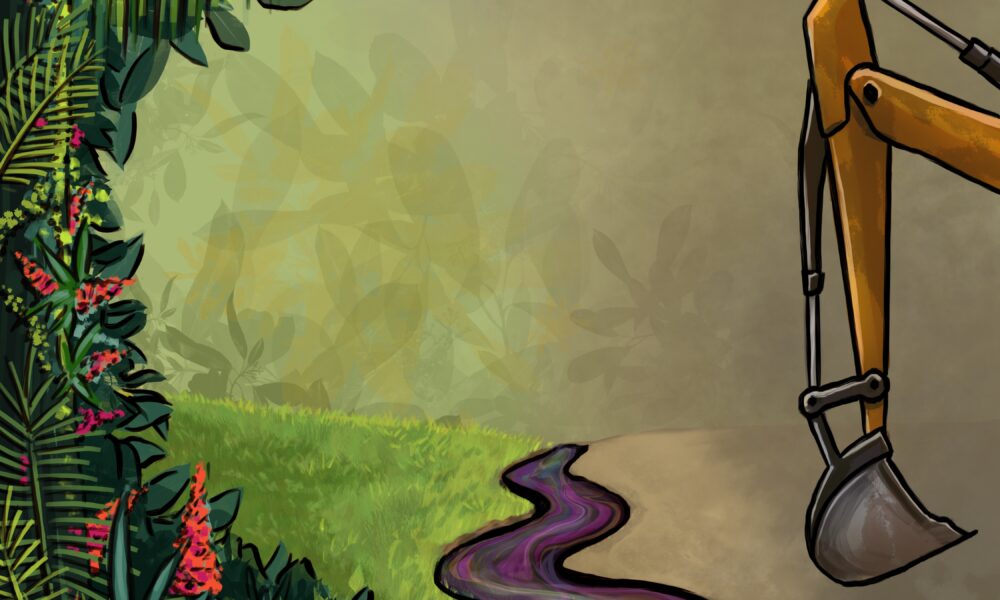


Among lush Amazonian flora in Oriente, the eastern region of Ecuador, pits of viscous, black oil dot the landscape. Iridescent streams infiltrate the rainforest. Aerial shots of unobstructed canopy cover are starkly contrasted with footage of large oil rigs set up in the forest. A few frames follow before the video shows a baby writhing from a skin rash. Minutes later, a woman cries as she describes the struggles she faces trying to pay for her 18-year-old daughter’s cancer treatment.
Sitting over 5,000 kilometers away in a lecture hall at McGill, I watched these scenes unfold before me in the documentary, Crude: The Real Price of Oil. My class was discussing Aguinda v. Texaco, Inc., a court case filed in 1993 in which the plaintiffs—over 30,000 Ecuadorians from the Oriente region—argued that they had been adversely affected by oil extraction in the region at the hands of Texaco, an American oil company and a subsidiary of Chevron Corporation. The Oriente region is home to less than five per cent of Ecuador’s population, and a large portion is a part of the region’s five Indigenous groups, including the Cofán, Secoya, Siona, Huaorani, and Quichua.
The plaintiffs alleged that Texaco used sub-standard technology and, in the process, spilled over 18 billion gallons of toxic waste in the Ecuadorian Amazon. They claimed that oil entered water sources that locals used for drinking and bathing. Following the pollution, the plaintiffs said their communities saw increases in sickness, cancer, and death, which they believed were due to the contamination from Texaco’s operations in the region.
Before digging into the details of this case, I only had a notion of the impact that extractive corporations can have on the communities they operate in. I had read about similar cases, but as I dove into this lawsuit, my sense of the barriers to convicting corporations was heightened. I went down a seemingly endless rabbit hole of legal documents, corporate strategies, and horror stories of what happens to those who try to oppose them.