

Latest News

McGill, News

Three Macdonald Campus buildings closed immediately after asbestos discovered

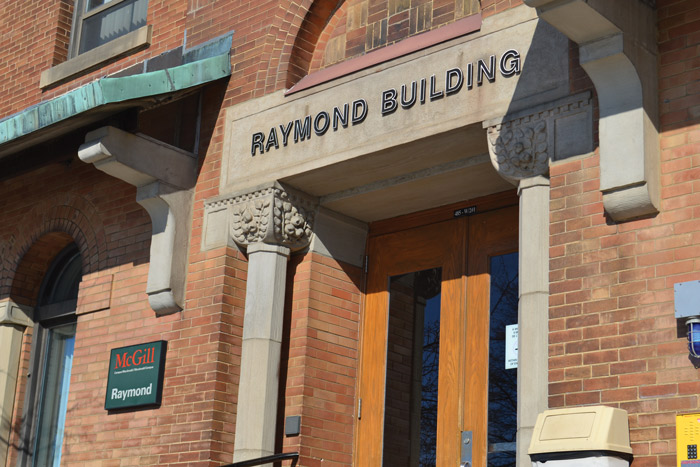
The McGill community received word from Director (Campus Public Safety) Pierre Barbarie on Jan. 31 that three Macdonald Campus buildings were to be closed, effective immediately, due to the detection of asbestos in the Raymond building. All classes conducted in the Raymond, Macdonald-Stewart, or Barton buildings were either re-located, held virtually, or cancelled. Some research personnel who needed to tend to animals, plants, or live cell cultures were allowed back into the buildings with proper personal protective equipment.

Asbestos—a group of naturally occurring minerals made up of microscopic fibres—was used as an insulant in many buildings built between 1930 and 1990 because of its strength and resistance to high temperatures. While asbestos is harmless if undisturbed, it can be dangerous when inhaled, causing mesothelioma, a type of cancer, and fibrotic lung disease, in the worst cases. 

In a statement to The McGill Tribune, McGill media relations officer Frédérique Mazerolle noted that the university is taking this issue very seriously and is working to ensure the safety of students and staff. 

“Extensive testing will be conducted over the next few days to find and isolate the source of the problem,” Mazerolle wrote. “The Macdonald-Stewart and Barton buildings, while not under construction, are being closed out of an abundance of caution while testing is conducted.”

In an update email sent on Feb. 1, Barbarie wrote that third-party testing for asbestos would prioritize the Macdonald-Stewart and Barton buildings before the Raymond building.

According to the President of the Macdonald Campus Students’ Society (MCSS), Defne Helvacioglu, the closure of these three buildings has left the campus with only one main building—Centennial Centre—accessible to students and staff. Helvacioglu outlined the scale of the issue in an email to the Tribune.

“These buildings have most of our laboratories, our only library, one of the two food resources on campus, computer labs, all offices of faculty staff, and most research labs,” Helvacioglu wrote. “Right now students do not have access to any of these facilities, they cannot perform their labs and are moved to online lectures [….] I personally know that a lot of undergraduate and graduate students’ research labs are affected by this.”

Blake Callan, U1 Agricultural and Environmental Sciences, told the Tribune that one of the primary concerns for students and staff is the disruption of labs and research. 

“We are just unsure whether or not our labs will continue, as online lectures are definitely doable,” Callan said. “Life at Mac has been affected, as I cannot use the library and I like to use it, especially with midterms approaching.”

Helvacioglu said the Centennial Centre will remain open at full capacity in order to support students. She disclosed that the detection of asbestos as well as the recent closure of the only grocery store in Ste-Anne-de-Bellevue have greatly affected student life at Macdonald campus.

“It creates frustration when things are unstable, and Ste-Anne is becoming more of a food desert and now we cannot access our main buildings where most of the academic activities happen,” Helvacioglu wrote. “We acknowledge that large-scale construction can bring unexpected situations, however, all these things are adding up.”


Behind the Bench, Sports

No more Pride: The slow erosion of 2SLGBTQIA+ initiatives across the NHL

Pride night at hockey games always presents itself as somewhat of an oxymoron. Like all major men’s professional sports leagues, homophobia courses through the veins of hockey from youth leagues all the way up to the National Hockey League (NHL). So often, players, coaches, and analysts not only fail as allies, but actively stand against any progress in the direction of the NHL’s “Hockey is for Everyone” initiative, leaving fans with the question: Why does the NHL keep trying? 

On Jan. 17, the Philadelphia Flyers were set to host their annual Pride Night. The Flyers marketed the event promising fans “special guests, merchandise, and more,” but as players went out for their pre-game skate donning Pride-themed warm-up jerseys and sticks with rainbow tape, someone was missing—Ivan Provorov

As hockey Twitter spiralled over hypotheticals that could have led Provorov to miss warm-up, they were surprised to see him starting right back on defence when the puck drop came around. Was he getting his ankle taped up? Did he have a stomachache? Was there something wrong with his equipment? As the game went on, reports explaining the reason behind Provorov’s absence began to trickle out: He was boycotting the team’s Pride initiatives. 

In his post-game media availability, Provorov was curt with the media. He cited his Russian-Orthodox religious beliefs and stated that he “respected everyone’s choices.” As if calling queerness a “choice” wasn’t enough of a blow to a night that was meant to mark progress within the NHL, Flyers’ coach John Tortorella was sure to make his support for Provorov clear. Tortorella went so far as to say he believed Provorov did nothing wrong and he respected that he was “true to himself.” 

The Flyers provided the league with a benchmark. It is now acceptable to opt out of Pride night. In response to Provorov and Tortorella’s actions, the NHL put out a statement reiterating their stance that clubs “decide whom to celebrate, when and how” and that players “are free to decide which initiatives to support.” While recognizing the legal jargon and inability of the league to take action on Provorov directly, the NHL’s spineless statement sent the invitation for other teams and players to echo Provorov’s homophobia. 

So how does the rest of the league respond? Do they come out in aggressive support of the 2SLGBTQIA+ community? Do they stay silent? For the New York Rangers, they seemingly believed that Provorov had it right. Despite promoting a Pride Night on Jan. 28 that would include Pride-themed warm-up jerseys and sticks, the Rangers did not wear either. The decision not only shocked fans at the arena who had bought tickets and arrived early under the impression they would see some form of allyship from the players, but it also shocked the co-chair of NYC Pride, Andre Thomas, who had been brought in for the pre-game ceremonial puck drop. 

Over a week later, the Rangers still have not provided an explanation for why they did not wear the jerseys.

Although the Rangers made a donation to the Ali Forney Center on Pride Night and rainbow lights lit up Madison Square Garden, the lack of player participation left a bad taste in many fans’ mouths. 

The NHL’s institutional protection of homophobia is made clear as day by the past three weeks of failure. In tandem with the All-Star game taking place in Florida, it’s easy to see where the league’s priorities stand. NHL commissioner Gary Bettman’s silence in response to Governor Ron DeSantis’ attempt and eventual success in shutting down the leagues’ diversity and inclusion initiatives in the state is disappointing yet unsurprising. 

Hockey is certainly better off now than it was a decade ago. Bright spots emerged from the All-Star festivities, with the Gay Men’s Chorus of South Florida singing the national anthem at the Skill Competition and openly queer athletes Emily Clark, Alex Carpenter, and Hilary Knight participating in the event. That said, it’s hard to see the NHL’s attempts at inclusivity as anything more than performative moneymakers desperate to grow the league’s dying fanbase. The NHL needs to protect itself against a regression into the culture wars that characterize America or else they’ll end up right back where they started.

Ask a Scientist, Private, Science & Technology

Tick Talk: Fighting the spread of tick-borne pathogens

The prevalence of several tick-borne pathogens, which are living organisms or viruses that spread disease, are on the rise in Canada, including the bacterium responsible for Lyme disease. Evidence has also shown that these tick-borne pathogens have spread beyond the defined “risk areas” identified by professor Virginie Millien, an associate professor of biology and curator at the Redpath Museum. This makes it difficult to keep up with the pathogenic spread.

Lyme disease is Canada’s most common vector-borne disease, creating serious health concerns for people across the country. Tracking these ticks and thus their pathogens can help us follow the spread of Lyme disease and keep the illness under control.

“In vector-borne disease, there [are] many actors, and you need a host, a vector, and a pathogen, and so that makes a triangle,” Millien explained in an interview with The McGill Tribune. “Pathogens are transmitted by a vector species, which then will feed on a host, and that’s where the pathogen can then multiply and so on.” 

In order for the tick—the vector—to move on to its next life stage, it must have a blood meal, which is when ticks feed on other animals. During a blood meal, the tick remains attached to the host and transfers pathogens into their bloodstream. Millien said these pathogens could then be transmitted back to new ticks if they feed on the infected host later.

According to Millien, the winter months are crucial to limiting a tick population’s ability to survive in a region. With global warming, however, many of the hosts that the ticks depend on, such as the white-footed mouse, are migrating farther north. The white-footed mouse is an effective host, able to re-transmit the pathogen to any new tick feeding on it 80 to 90 per cent of the time. Milien also explained that since mice are generalists—able to adapt to many different environments—they are prime vectors for disease.

Each mouse can feed hundreds of ticks over its lifetime, accelerating the pathogenic spread. As white-footed mice travel and settle farther north, the ticks travel with them, establishing themselves in new places and creating new areas for Lyme disease to emerge.

Another way in which tick-borne pathogens have become more prevalent across Canada is through migratory birds carrying ticks from south of the border into Canada. 

“There are still areas north of the St. Lawrence where we see ticks and there’s Lyme disease there, but it’s not our own—it’s been brought in every year by birds,” Millien said.

Millen explained that the challenge of keeping track of ticks is both spatial and temporal. For example, predicting white-footed mice distribution on a map is difficult, as there are always individual mice that travel to unexpected areas like urban centres. The challenge is also temporal because Lyme disease is spreading more rapidly than Millien’s current models predict. 

“We’re discovering that it’s happening much faster than anticipated,” Millien said. “Ten years ago, we had some models, but it looks like Lyme disease is appearing in places that we didn’t think it would be [….] It’s really challenging to obtain enough data to have a good estimate and be able to make some accurate predictions of the next decade.” 

Deducing the future movements of infected white-footed mice is pressing. Millien explained that the data collected is “opportunistic, noisy, and unsystematic,” meaning that there will be little useful data to analyze. However, since ticks in general cannot live in areas where the temperature routinely drops below -14 degrees Celsius, a solution could be to propose new “risk areas” that encompass regions where the weather is above that temperature. 

To combat these disease-spreading ticks directly, insect repellent is advised to reduce the chances of a tick bite. However, the root of the problem lies in climate change—addressing the issues caused by a heating world will also inhibit Lyme disease spread by cornering off its vectors.

Ask a Scientist, Private, Science & Technology

Flying cars must make way for the real future of transportation

Elon Musk and other Silicon Valley–style futurists would like you to believe that the future of transportation holds flying cars, conveyor-belt tunnels for high-speed vehicles, and completely self-driving cars. All of these innovations are designed to free drivers from driving and the annoyance of getting stuck in traffic.

While those innovations may sound appealing, McGill researchers argued a few months ago in a paper published in Futures that this approach fundamentally distorts the problem of congestion and traffic safety. Instead of imagining a future with more advanced cars, they argue that we need to imagine a future with no cars at all, or at least one where reliance on cars is dramatically reduced.


Paris Marx, the paper’s first author, earned his master’s in urban geography from McGill and has gone on to host the popular podcast Tech Won’t Save Us. Their first book, Road to Nowhere, came out in July 2022 and expands on ideas of a car-free future. Kevin Manaugh, professor of geography at McGill, advised Marx and co-authored the Futures article. 

During an interview with The McGill Tribune, Manaugh explained how the ‘flying cars’ approach, which treats urban infrastructure improvement as a purely technological issue, fails to consider the full scope and complexities of modern cities. 

“We’ve defined transport as a technical problem. And then these technical solutions seemed like the only way to solve them,” Manaugh said. 

The technical solutions that Silicon Valley CEOs come up with may be exciting, especially in the case of flying cars or Elon Musk’s Boring Company, which promises to drill below-ground tunnels that could shoot cars forward at speeds of up to 240 kilometres per hour. 

“I think people are inspired or intrigued by these kinds of futuristic types of things, and I think we, as a culture or society, are impressed by these flashy new things,” Manaugh said. 

But getting caught up in an extravagant idea can lead entrepreneurs to solve problems in ways that don’t address underlying causes like faulty urban planning, inequitable zoning laws, and an over-reliance on cars instead of more ecological modes of transportation such as walking or biking. 

“You’re not taking into account how this thing scales, you’re not taking into account the number of people who can be served by this, and you’re not really reducing congestion because you’re just making another thing that people can use—but it doesn’t deal with the space issue at all,” Manaugh explained. 

In order to enact real change, the authors argue, society has to fundamentally reevaluate the role of cars in cities. 

“When you’re walking around, or even in your car for that matter—if you’re experiencing the city, imagine just how many decisions have been made to prioritize this mode of transport,” Manaugh said. “Our campus is an exception, but as soon as you cross over into Sherbrooke, you’ve got multiple lanes of traffic, there’s all this space for cars, there’s parking garages. And that’s space that can be doing something much more important or productive.”

Cars are so ubiquitous that it’s difficult to imagine a world without them. But as history shows, it’s more than possible to build cities around different modes of transportation. 

“For literally thousands and thousands of years, humans built really beautiful civilizations and cities where the only way of getting around was by human or animal power,” Manaugh said. 

One way to work towards a world where the car’s role is reduced in cities is to imagine transportation as more than a technical pursuit. 

“I think there’s other ways to think about it—as a social issue, or as an equity issue,” Manaugh said. “If you define the problem as not everyone can access what they need, you might not start thinking about how we need new vehicles. You might start thinking about it as we need to redesign how we allow land uses to be put next to each other, or we might realize it’s actually a housing affordability question more so than a fancy new vehicle question.”

Re-envisioning transportation as a social, health, or justice issue allows researchers, entrepreneurs, and governments to prioritize genuinely innovative approaches, instead of just updating our existing cars with each new Silicon Valley fad. 

Out on the Town, Student Life

There’s no coffee at this café

Most incoming McGill students know about the rites of passage that they’ll experience, like living alone for the first time or a late night at McLennan cramming for an exam. What these students don’t know is that, at this university, there is another experience considered equally formative: Their first trip to Café Campus.  

The 56-year-old club, known to most as ‘Café,’ is one of the most popular dance venues for McGill students. As a stop on Frosh bar crawls, students are introduced to Café Campus before they meet their professors—and the visits only go up from there. Its proximity to campus and themed music nights, like ‘Retro Tuesdays,’ have proven to be big draws for McGillians. Café isn’t just a freshman spot, either—it also hosts a number of McGill-affiliated events, like the Management Undergraduate Society’s Winter Carnival or the Engineering Undergraduate Society’s E-Week.  

Sofia Gobin, U0 Arts, was one of many McGill students who visited the club during Frosh week. Her introduction to the club as a McGill venue has kept her coming back so many times that she’s lost count.

“I’ve been to Café countless times,” Gobin said. When pressed on why, she responded: “Just because it has the reputation of being a student club and a lot of first-years, in particular, go there on nights out […] [it] was definitely a bit different because we were just playing games in the main area, but I think the fact that it was introduced so early on made it seem like it was a ‘McGill club.’”  

So the club is considered a quintessential part of the McGill experience. Andrea Goldstein, U0 Arts, thinks the music nights and its prime location are the main reasons. 

“It’s so close to all of us, which makes it such an easy walk,” she explained. “I [also] think Café is so popular among students because everyone is looking to go where their friends are going, so it gets really busy on certain nights, like [2000s] nights on Thursday.”  

Since so many McGill students visit the club, club-goers will often be among friends, creating a unique sense of community. Harry Brar, U0 Management, remembers that other McGill students helped him out during his first visit to the club. 

“During my first time at Café, I lost my phone there,” Brar said. “But everyone helped me find it, which was awesome.” 

The McGill community gathers at Café in the same way as they gather in McLennan during exam season, making the club a hotspot for students.  

Although many students seem to agree that Café is not a main component of McGill life, its wide variety of drink options, proximity to campus, and multiple dance floors make it a must-visit.

“It’s not essential to a student’s life at McGill in general, but you need to go at least once for the experience,” Goldstein said. “I’m not sure how many times I’ve been, maybe four-ish?”

Gobin agrees, saying that McGillians “must go at least a couple of times. At least to give it a try.” 

It seems that what makes Café so quintessential to McGill’s student life is its consistency. 

“I don’t think that it’s a vital component of McGill student life, but with that said, Café is always a good time,” Brar said. 

According to Gobin, along with many other students, there is no doubt that the club is a sort of McGill trademark. 

“It’s just kind of iconic, it’s exactly what you expect,” she said. “It’s never going to be horrible; it’s never going to be especially incredible or amazing […] it’s reliable.”  

Ask a Scientist, Private, Science & Technology

Copy–pasted nucleotides found to cause neurodegenerative disease

Neurodegenerative diseases such as Alzheimer’s, Parkinson’s, and ataxia are caused—as their categorization would suggest—by the degradation of nervous system cells. One to three individuals per 100,000 are affected by late-onset cerebellar ataxias (LOCA), a disease characterized by impaired muscle control that worsens over time. While most types of ataxia set in during childhood, LOCA is exhibited by patients older than 30. Other, more common types of ataxia are well-studied, but the causes of LOCA were unclear until Dr. Bernard Brais and his team made a breakthrough.

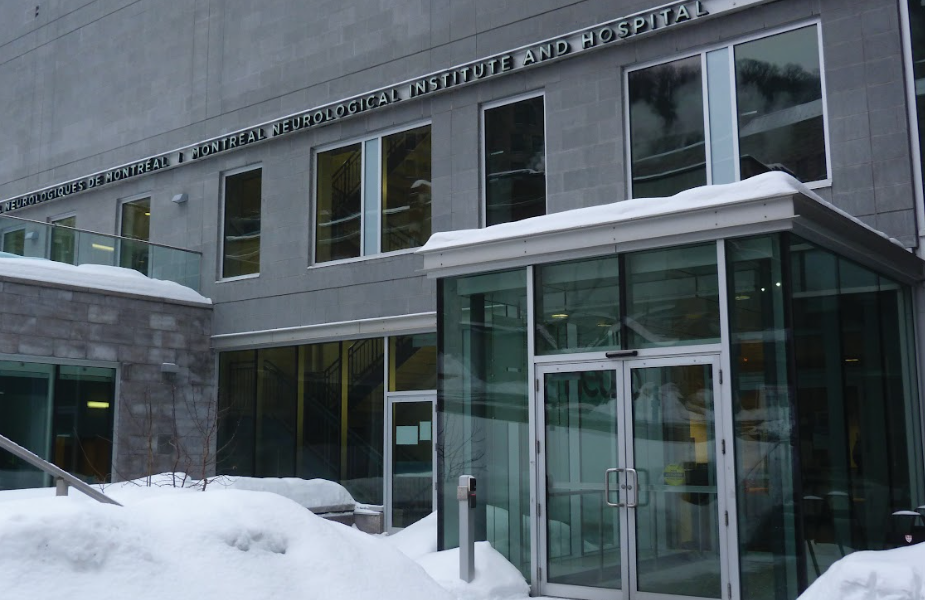
Brais, a researcher at the Montreal Neurological Institute (The Neuro) and McGill professor of genetics, identified a genetic mechanism highly correlated with the onset of LOCA in a recent article published in The New England Journal of Medicine. The researchers found that the accumulation of long strings of repeating GAA segments—a specific sequence of three DNA nucleotides—causes underexpression of vital proteins responsible for nerve impulses and impairs the expression of a vital gene called fibroblast growth factor (FGF14). Nucleotides, which are the building blocks of genetic information, form a code that tells the cell how to produce proteins.

Brais explained that LOCA is characterized by deteriorated movement coordination: Patients experience difficulty walking and speaking, are easily exhausted by physical exercise, and manifest a high intolerance to alcohol. 

At the cellular level, LOCA is caused by a reduced number of ion channels in nerve cells called Purkinje neurons in the cerebellum—the bulbous region on top of the brainstem—that are responsible for movement control. Ion channels are proteins embedded in the membranes of neurons that allow certain ions, which are charged atoms, to pass through. These channels regulate the number of ions travelling in and out of cells and establish a voltage difference across the membrane, which is crucial for sending signals down the neuron. Without these signals, the nervous system couldn’t perform important functions like muscle contractions, reflex responses, and sensory processing.

The FGF14 gene carries instructions for how cells should make proteins to help organize ion channels in DNA sequences. Brais’ investigation revealed that LOCA is caused by a mutation that creates more GAA repeats in the FGF14 gene: A kind of copying and pasting is happening, where three nucleotides reappear hundreds of times in the middle of a sequence. Such a mutation prevents cellular machinery from ‘reading’ the gene properly and ultimately producing the right number of ion channels. According to Brais, GAA repeats are responsible for 61 per cent of LOCA cases in French-Canadian patients.

“We think [that] from the DNA on FGF14, there is no [protein] produced. It creates a region that prevents this copy of the gene from being expressed,” Brais said in an interview with The McGill Tribune. “If [the repeated region] is large enough, it will decrease the expression of one copy to the extent that, with time, those cells will find [it] more difficult to organize their channels that are so important for their electrophysiological activity.”

This discovery also explains why patients with fewer GAA repeats in the FGF14 gene have mild or no symptoms of ataxia, as the disease’s severity depends on the GAA region’s size. Brais explained that unaffected people have eight to 35 GAA copies—as numbers approach 250, there is an increased risk of developing LOCA, and 300 repeats are sufficient to cause ataxia.

Finally understanding LOCA’s cause brings researchers closer to developing a cure. In fact, a drug developed to target GAA repeats in Friedreich’s ataxia is a promising treatment for LOCA. 

“There’s a lot known about Friedreich’s because it was cloned many years ago, […] that’s why we know so much about the GAA repeats,” Brais explained. “[The] GAA repeat in [another] gene has been studied extensively and it does the same thing as in FGF14.” 

Is there a way to remove GAA repeats from FGF14 once and for all? Yes and no. There is a powerful technology called CRISPR which, in theory, can delete any sequence in the genome. Removing over 300 repeats in LOCA patients, however, is not a straightforward task. 

“I don’t think we’re close to a therapeutic trial, at least with those long repeats for sure,” Brais said. “Delivering [CRISPR agents] to the brain is still a major challenge. But yes, at least in theory, you can […] remove that expansion.”

McGill, News

McGill announces creation of postvention framework during Quebec Suicide Prevention Week

Content warning: Mention of suicide

On Feb. 7, McGill will hold its first community consultation regarding a suicide postvention plan that has been in the works since a need was first identified in 2019. The postvention plan is one third of a larger project designed to address suicide on campus. McGill is updating the community on the status of the framework during Suicide Prevention Week in Quebec—the week of Feb. 5 to 11. The Association québécoise de prévention du suicide first launched the awareness week 33 years ago and has held it every year since. 

The postvention component, which details the procedures McGill will follow after the death of a student by suicide, will eventually be accompanied by prevention and intervention frameworks. According to Melissa Lutchman, McGill’s crisis intervention and suicide prevention specialist, the postvention plan was developed first because it was identified as the largest gap in suicide-related services at the university. 

“It’s also the largest gap for many universities across Canada,” Lutchman said in an interview with The McGill Tribune. “With student consultations, and faculty, and staff, [we learned] what the needs were around postvention, [like] knowing how to talk about suicide, knowing what to do when a student returns from a suicide attempt. What do you say? What do you not say when a student dies by suicide? What does McGill do?”

Currently, McGill is not equipped to help students experiencing a mental health crisis. McGill recommends that students go to a hospital or call Suicide Action Montreal in case of emergencies. For students not in a crisis but still experiencing difficulty, ODoS provides case managers who are trained to guide students and facilitate access to care, whether that is at the Wellness Hub or an external clinic

The postvention framework will not be immediately accessible to the student population, says Maya Willard-Stepan, the Students’ Society of McGill University (SSMU) mental health commissioner. She told the Tribune that the plan’s delayed public release is because the Students’ Suicide Prevention Framework Committee will be holding community consultations to ensure the document can properly serve students. 

“The other really important part [is] making it readable [and] ultimately smooth on the other side of things, [and] transparency around these protocols is going to be very important,” Willard-Stepan said. “We want to produce something that is safe to put out and accurate and true and that the community can take comfortably”

Lutchman was recently hired by McGill to work full-time in order to complete the three-pronged framework in a timely manner—she was initially hired on contract. Before coming to McGill, Lutchman spent 18 years working at Suicide Action Montreal and Talk Suicide Canada, formerly known as Crisis Services Canada. Her expertise in the field and deep knowledge of crisis care have allowed her to ensure the larger framework project focuses on suicide rather than general mental health care.

“There is a lot to say about not confounding mental health with suicide,” Lutchman explained. “Although there [are] a lot of people with mental health diagnoses who die by suicide, there are a lot who don’t. When you confound the two, you contribute to stigma and labelling.”

Stigma surrounding suicide is something first-year nursing student Madeline Dumouchel has come across in her time both in John Abbott College’s nursing program and at McGill. Dumouchel believes that destigmatizing suicide is crucial and something McGill should continue working toward.


“Having [an] open discussion can save [the] lives of others who are afraid to speak up and feel lost or alone,” Dumouchel wrote in a statement to the Tribune. “The university should be very involved in times of crisis, as many students rely on their school for support and access to resources [because] crises can impact students’ academic performance, their life at school and at home [….] Some individuals […] may feel like school is their safe place and comfort zone.”

Ask a Scientist, Private, Science & Technology

Should AI chatbots display emotions?

If you’ve visited an online retail store, you’ve likely encountered a chatbot before. It’s the small message that pops up in your screen’s bottom corner, saying something along the lines of, “Hi there! Thanks for visiting our site. Can we help you look for something?” 

Elizabeth Han, a Desautels Information Systems professor, investigates these AI chatbots and their use in the modern world. She recently published an article in //Information Systems Research// looking into whether it is beneficial for AI chatbots working in customer service to express, or display, positive emotions.

Existing research suggests that when human customer service representatives express positive emotions, customers feel like the quality of service is higher. Psychologists theorize this to be a result of “emotional contagion”—when a person sees someone else feeling an emotion and they begin to feel it as well. 

The question Han and her team set out to answer is if this effect translates to exchanges with chatbots. They hypothesized that while emotional contagion may still have an effect, it could be negated by customers’ feelings of discomfort toward a machine expressing human emotions. 

To answer this question, Han and her colleagues asked participants to complete online tasks using virtual chatbots, like requesting an exchange for a textbook they had previously ordered. Some participants interacted with chatbots that were programmed to express positive emotions, while others interacted with ones that were more robotic.

The emotion-expressing chatbots used lines like “I can help you with that, and I am excited to do so!” while the straightforward chatbots kept it to a simple “I can help you with that.”

After participants completed these interactions, they rated the quality of the customer service experience. Han and her colleagues found that customers who interacted with positive-emotion chatbots did not experience the increase in perceived service quality that you would have expected had they been interacting with human agents. 


This new information presents businesses with a tricky question: Save money by replacing customer service employees with chatbots, or provide a better customer experience by continuing to use human agents? 

In an interview with The McGill Tribune, Han explained how the switch to chatbots increases company efficiency. 

“Essentially, these service employees are doing emotional labour by interacting with perhaps annoying customers, but chatbots are not really affected by that,” Han said. “The chatbot doesn’t feel anything, and they can just make whatever appropriate response.”

Given how much more efficient chatbots are, some companies may be tempted to simply not tell customers that they are interacting with a chatbot instead of a human.

“There is research that has been done that has looked into the effects of disclosing the chatbot’s identity, and it actually reduces those business outcomes. There is a tradeoff between better business outcomes versus keeping the line of ethical and legal codes,” Han explained.

This then becomes an ethical and legal question: Do customers have a right to know when they are speaking to a computer? And would companies honour this right if it meant a loss in profits?

“I think there are many regulations coming up regarding disclosure so eventually companies will move more and more towards disclosing the identities of those chatbots,” Han said. 

The field of AI is rapidly developing, and thinking about how these AI chatbots have been created and will continue to evolve raises many difficult questions. It might even make you wonder the next time you’re browsing an online store and get the pop-up notification to chat: Are you talking to a human or a machine?

McGill, News

Reports of alleged predatory behaviour at Redpath raise security concerns

Content Warning: Description of sexual harassment

Since late December, multiple posts have circulated on social media reporting that a man has been preying on women at McGill’s McLennan-Redpath Complex. Posts on r/McGill, a student-run Reddit subpage for the university, have denounced the man for soliciting multiple women students in Redpath. Various sources confirmed being approached by a man with a similar description in Redpath at different dates. 

Teddy Laughton, U2 Nursing, was having lunch in the Redpath cafeteria when she was approached by a man in his late 20s who was “standing around in the cafeteria.” According to her, the man did not appear to be a McGill student.

“After making it clear that I didn’t want him to keep talking to me, a few minutes later I saw that he was talking to another group of girls, shaking their hands and I could tell that they were all uncomfortable,” Laughton told The McGill Tribune

Laughton notified the employees of Redpath Café and was assured that staff would “keep an eye on him and call security if necessary.” Yet, she recalls seeing the man in the cafeteria some 20 minutes later, and believes that he should have been removed from the premises.

Anne-Émilie Demaison, U1 Arts, also had an encounter with the man in early January, this time on the second floor of Redpath.  

“I felt an insistent gaze, and whenever I would look up from my computer he would be staring at me,” Demaison said in an interview with the Tribune. “He was sitting one table across from me and had one hand constantly on his [crotch]. There were few people on the floor and I began to panic and called as many of my friends as I could for them to come and help me. I left to go to the bathroom, and when I came back to my seat I saw that he had moved to my table. I quickly gathered all my stuff and got out of there.” 

Demaison says that her first reflex was to seek assistance from her friends instead of searching for security guards who roam the floors of the Redpath and McLennan but are otherwise difficult to locate.

Demaison feels that the security presence in the library is lacking considering the entire complex has nine floors. 

“It was late and there weren’t many people on the floor, so I didn’t have many options to turn to,” Demaison said. “Maybe security at the entrance of the libraries, or even signs to indicate how to contact security services in the case of an emergency could help students feel safer.”

An increased security presence would not necessarily guarantee the safety of all students. Many studies show that increased surveillance, even by campus security guards or police officers, lead to a disproportionate number of negative encounters for racialized students. 

The Tribune reached out to librarians at the McLennan-Redpath Complex to inquire about the university’s student safety measures. The staff present at the time declined to comment, and referred the Tribune to the university’s communications team instead. 

Fréderique Mazerolle, a McGill media relations officer, explained that the Campus Public Safety Department strives to promote a safe environment for students, faculty, and staff to work in. 

“Our agents patrol the campus, manage access, transport students and staff with disabilities as well as respond to incidents and emergencies on a 24-hour basis,” Mazerolle wrote in an email to the Tribune. “Ensuring the safety of the McGill community is our ultimate and continuous goal.”

The Tribune was unable to get a statement from the library’s security guards, whose contracts are outsourced to Garda Security Group and cannot comment on security protocols. The Campus Public Safety Department also declined to comment. 

If you are concerned for your safety on campus, McGill’s security services can be reached at 514-398-3000. The Campus Public Safety department’s Night Route Maps also outline recommended routes for navigating the campus in the dark and locate emergency phones for contacting additional security.

McGill, Montreal, News

MISC panel tackles anti-Black racism in academia and beyond

Content Warning: Mention of racist violence

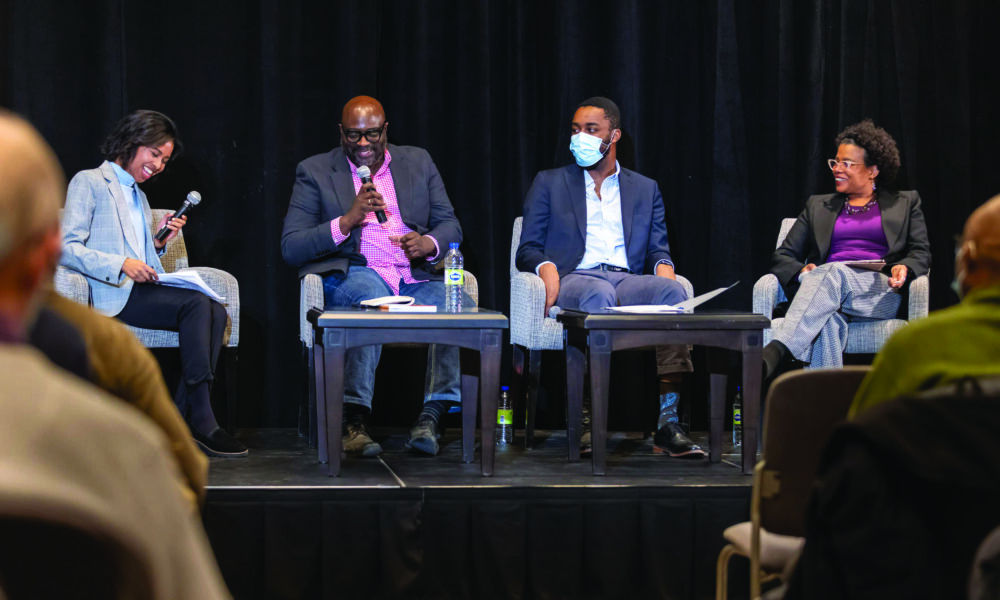
The McGill Institute for the Study of Canada (MISC) brought three McGill academics together for the “Anti-Black Racism in Canada and Beyond” panel at Centre Mont-Royal on the evening of Feb. 2. The event delved into entrenched systems of power and oppression that limit Black participation in academia and in everyday life across the country. 

Hosted by Holly Cabrera, CBC journalist, BA ‘19, MIst ‘22, and former editor at The McGill Tribune, the panel featured David Austin, a course lecturer at MISC and professor at John Abbott College; Terri E. Givens, professor of political science at McGill and the Provost’s Academic Lead and Advisor on McGill’s Action Plan to Address Anti-Black Racism; and Tari Ajadi, an assistant professor of Black politics at McGill. 

The sold-out hybrid event began a few minutes after 5 p.m. with an introduction and land acknowledgment by MISC director and professor of political science Daniel Béland

Cabrera opened the panel by addressing recent examples of police brutality: The murders of Nicous D’Andre Spring, a 21-year-old Montreal man who was killed by correctional officers while illegally detained at Bordeaux Prison in Montreal, and Tyre Nichols, a 29-year-old man who was killed by five Black police officers in Memphis, Tennessee. 

“You’ll recall that many have referred to 2020 as a moment of racial reckoning—and since police murdered George Floyd, we’ve seen more beatings, more book clubs, and more backlash,” Cabrera said. “So it bears repeating: Anti-Black racism has existed for centuries, and Black people continue to resist it.”

Austin added that defining the capitalist roots of anti-Black racism is crucial if we are to dismantle it. All panellists were clear on the historical connection between capitalism and the subjugation of Black people—from the transatlantic slave trade to mass incarceration. 

“I really believe change cannot come about until we all are willing to have that vulnerability and say, I am a part of this system,” Givens said. “Nobody wants to admit that they are part of a racist system, but we are […], and that it’s […] part of the structures of white supremacy that are built into the system of capitalism that we live in today.”

Next, Cabrera broached the question of performativity in institutional equity, diversity, and inclusion (EDI) initiatives. Though EDI initiatives seek to increase the representation of people of colour within organizations, Ajadi explained, they cannot change what an organization was originally conceived to do. 

“EDI is a tool of management, it helps you to make your organizations better. That’s not liberation,” Ajadi said. “Right? That’s not what structural change looks like. To me, it looks like changing the organization so that the organization achieves its goals in a more efficient or effective way.” 

When Cabrera asked whether the institution of policing is salvageable, the panellists agreed that reform efforts have not gone nearly far enough. 

“As the author of a report on defunding the police, you can imagine what my response is,” Ajadi quipped. “But I’d rather flip the question—what does policing do well?”

Austin pointed to policing as a prime example of how large-scale structural change is needed to address institutionalized racism.

“That’s the only way we can actually understand what happened in Memphis,” Austin said. “We’re talking about structural power, and how even with the representation of more Black faces in high places, the structures of power are not transformed.”

At McGill, there were 14 Black tenure or tenure-track faculty members out of approximately 1,800 in 2021. McGill pledged to increase this number to 40 by 2025, and 85 by 2032. Over the past two years, 28 Black tenured or tenure-track professors were appointed. Black students make up 4.6 per cent of the student body according to the Student Demographic Survey

“I think people want to say, ‘Oh, we’ve made progress [….] We’ve done enough for Black students at McGill,’” Givens said. “The point is: Have we created an environment where students want to come to McGill, where Black faculty feel like they belong and can thrive and flourish? Have we created an environment that makes McGill look like a place people want to be, period?”

Read the latest issue

Read the latest issue