Latest News

Arts & Entertainment, Film and TV

Brian Tyree Henry captures hearts by opening his own

For some, his name may not ring a bell, but his face definitely does—and for others, his name alone garners instant respect. Ranging from Broadway to Emmy-winning TV shows and blockbuster films, Brian Tyree Henry has done it all. Born in Fayetteville, North Carolina and raised in Washington, D.C., his childhood was forever changed when he first saw John Singleton’s classic 1991 Boyz n the Hood and was blown away by Angela Bassett’s character, Reva Styles. Impressing him with both her presence and versatility, Bassett’s performance cemented Henry’s desire to be an actor. 

Henry’s career contains the tried and true elements of hard work, talent, and sheer good luck, as exemplified by his breakout performance as the General in the original Broadway cast of The Book of Mormon in 2011. In 2016, he garnered critical acclaim for playing Alfred ‘Paper Boi’ Miles in the FX dramedy Atlanta, a role that landed him an Emmy nomination for Outstanding Supporting Actor in a Comedy Series. He was later nominated for a Tony Award as Best Featured Actor in a Play for his performance in Lobby Hero in 2018. And as of this past week, he was nominated for an Academy Award for his role in Causeway, where he starred alongside Jennifer Lawrence. Coming full circle, Henry is nominated alongside his former idol, Bassett, for her role in Black Panther: Wakanda Forever. Henry celebrated with a stranger in an elevator when he first got the news, later writing on social media, “…thank you for hugging me and not freaking out!!” 

Brian Tyree Henry has been slowly but steadily working his way up the ladder of success, amplifying underrepresented voices through the characters he chooses to play along the way. Beginning from his roots at Morehouse College, a historically Black college in Atlanta, Henry has put conversations about Black masculinity and vulnerability into the spotlight. Henry admits he used to not get too close to his characters, keeping them at arm’s length and, using them as a shield, making a clear divide and not letting his personal emotions affect his acting.

But now, Henry is moving away from this emotional austerity and embracing vulnerability—and it’s doing wonders for his career. In recent performances, audiences are connecting with not only Henry’s portrayals, but with the actor as well. This on-screen authenticity breaks down the wall that separates where the actor ends and the performance begins, immersing viewers in a more genuine experience, a side effect that he derives a lot of joy from. Henry’s new vulnerability is especially evident in Causeway, which was directed by Lila Neugebauer, a longtime friend of his from the Yale School of Drama. His role as James Aucoin, a mechanic dealing with physical and mental trauma, forced Henry to come to terms with how his own grief has affected him, and allowed him to translate that on-screen. 

Balancing the intimately personal aspects of his characters with the universal, the roles that Brian Tyree Henry has played have helped him establish a good rapport and reputation amongst audiences while uplifting the diverse experiences of Black men for the film industry. His character, Phastos, in Marvel’s Eternals is the first openly gay super-powered person in the Marvel Cinematic Universe and will hopefully pave the way for better inclusion and range within this often ‘straight’-laced set of characters. He is also set to reprise his voice role as Jefferson “Jeff” Davis, the father of Miles Morales, a.k.a. Spiderman, in Sony’s upcoming Spider-Man: Across the Spider-Verse. The openness and vulnerability with which Henry approaches his work truly makes him one of the people’s favourite actors and has helped him capture the hearts of audiences everywhere. 

Editorial, Opinion

Stricter bail is a far cry from justice

On Jan. 13, all of Canada’s premiers signed a letter addressed to Prime Minister Justin Trudeau urging him to take immediate action in enforcing stricter bail measures. Such reform would place the onus on the accused to qualify for bail, increase the number of people held in jail without trial, and lead to the financing and construction of more prisons in the country—when the only steps taken should be toward the abolition of the carceral system.

Trudeau’s decision will resonate particularly closely with those in Montreal, considering the malicious murder of Nicous D’Andre Spring on Dec. 25. D’Andre Spring, killed by guards at the Bordeaux Prison under illegal detention—he was innocent of any crime and supposed to have been released the day before. 

Unfortunately, the case of D’Andre Spring is far from isolated. Today, over half of prisoners in provincial jails are being detained without trial, and their right to justice denied. Reforming bail would further undermine the “innocent until proven guilty” principle that is purported to underpin the Canadian justice system. 

Systemic racism is deeply embedded in the carceral system, with people of colour, Indigenous peoples, unhoused populations, and those suffering from mental illness significantly overrepresented in prisons nationwide. Implementing stricter bail measures would only increase the disproportionate incarceration of lower-income Black and Indigenous populations, who are already over-policed and racially profiled. 

The premiers’ letter—and Trudeau’s entertainment of it—reflects the “tough on crime” rhetoric dominating Canadian politics. This discourse ignores that investing in education and health care is actually the most effective solution to reduce crime. Yet, politicians concerned about reelection focus instead on short-term “band-aid” measures that are more appealing to voters while pretending that convictions equal safety. In addition, bail reform is motivated by the Western emphasis on the prison-industrial complex, a mutual system of lobbying working in the best interests of both political actors and the massive prison industry, which will only grow if bail measures are tightened. Since the Canadian government uses the prison system as a means to levy taxes, amounting to approximately $550 per person per year, every taxpayer is complicit. 

The premiers’ response calls for a larger conversation not only about bail reform but the Canadian justice system’s use of punishment instead of rehabilitation in general. The colonial and oppressive roots of the carceral system are inescapable and historically used to dispossess Indigenous nations of their land. Such a system, one that continues to perpetuate colonial violence, is so fundamentally broken that innocent inmates plead guilty to avoid being killed behind bars. Its whole purpose must be rethought, rather than simply reformed. As Black and Indigenous people continue to die at the hands of police, their conception as “first responders” must be completely overhauled.

Ultimately, it is in the taxpayers’ hands to decide where they want their money to go. As the media’s crime alarmism amplifies the “tough-on-crime” discourse, voters must remember that they will be paying the cost of stricter bail conditions by financing mass discriminatory incarceration with their tax money. 


To this day, Nicous’ family has received little justice. The correctional officer in his case received only a suspension. Nicous was not the first, and without large-scale transformation, he certainly won’t be the last. Abandoning the fundamental “innocent until proven guilty” principle of justice is a slippery slope, promoted by a short-sighted government under the guise of safety. Instead, it is crucial that the government fights crime with rehabilitation, not punishment, and that justice is granted for all of the innocent people behind bars, waiting for a trial that they might not ever see. The failure of the carceral system proves the need for another kind of bail reform, one that would respect a human’s right to only be convicted after trial, and one that would be the first step toward abolishing the punitive system as a whole.

Album Reviews, Arts & Entertainment

‘Five Easy Hot Dogs’: Mac DeMarco’s listless instrumental road trip

Mac DeMarco was trying to break out of an artistic rut, a process that led to the conception of his latest project, Five Easy Hot Dogs. The album, released on Jan. 20, follows DeMarco’s road trip after a Bay Area show in mid-January of last year. He began driving north up the California coastline, planning to stay on the road and write every day until he had completed a record. The songs were mixed in childhood bedrooms and basements of friends’ houses; each title corresponds to the city where it was written. The album tracks his journey chronologically, encapsulating DeMarco’s musical and geographical progression in an ambitious but ultimately flat way. 

While writing on the road, DeMarco explored the limits of minimalism: The record was made with only an eight-channel system, DeMarco’s guitars, a bass, a half-sawed drum kit, some mics, an old Model D portable synthesizer, and a keyboard. The sound is stripped down, lightly percussive, cohesive, and ever-shifting.

The album features a few standout songs, such as “Gualala,” which exhibits DeMarco’s dreamy, plucky guitar riffs and classic soft drums. It sounds like a lazy afternoon on a Californian highway: repetitive, lightly pushing forward, but nonetheless relatable. DeMarco later makes his way to the Canadian West Coast, starting in “Victoria.” A melodic xylophone line over consistent bongos and guitar perfectly mimics the town’s slow pace and hippy-ish culture. He eventually moves into “Vancouver” with a metropolitan coolness and an almost jazzy guitar and bass line that’s the most playful of all the tracks. 

The album is far from bad, but tends towards blandness. The instrumentals are simple, and the songs lack his usual compelling lyricism. His slow, repetitive arrangements mimic the album’s theme of losing yourself on an endless road trip; DeMarco succeeds in making his boredom musically palpable, but this leads to a somewhat dull album overall. This road trip was supposed to break him out of his routine, but instead is reminiscent of a bizarre, transient fugue state. Through each song, and the story of the album’s conception, he tracks a listless artistic journey north.

Ask a Scientist, Science & Technology

Peering into the universe with gravitational lensing

Radio waves coming from galaxies millions or billions of light-years away—an immense distance compared to only eight light-minutes between the Earth and the Sun—gradually fade as they lose energy. Many become essentially invisible even to today’s powerful telescopes by the time they reach our little, blue planet. 

So it’s not surprising that the recent news from Arnab Chakraborty, a postdoctoral fellow in the Department of Physics at McGill, was met with great enthusiasm and interest when he detected a radio signal from a distant galaxy. Chakraborty, who works with the Canadian Hydrogen Intensity Mapping Experiment (CHIME) telescope, picked up the longest-range radio signal to date—from galaxy SDSSJ0826+5630—thanks to a phenomenon called gravitational lensing. 

As the name suggests—physicists are not quite as inventive with terminology as biologists—gravitational force can and does act as a lens. It collects and concentrates waves into a single radiation beam, which is a lot like a converging optical lens commonly prescribed to shortsighted patients.

“There is [another] source between the galaxy and us, the observer, which acts as a lens,” Chakraborty said in an interview with The McGill Tribune. “If there is a large amount of mass, like a black hole, it will bend the space-time around itself, so when light is passing through [a region near the massive object], it will be bent.” 

The bending effect magnifies signals—kind of like burning paper with a loupe on a sunny day—to make detection significantly easier. 

Objects that bend light may sound like science fiction, but Einstein’s theory of relativity provides a consistent explanation for this effect. Imagine stretching a tablecloth from all its edges and then putting an object in the middle. The matter around the object—the fabric, in this case—becomes curved. The same curvature is applied to the space around extremely massive bodies, like planets and stars. Electromagnetic waves such as light change their trajectory because of this “lensing” though space distortion. 

What were the chances of finding something that huge between our Milky Way and some distant galaxy in the observable universe’s outer edge? As it turns out, it’s largely a matter of probability.

“We are lucky in that sense, it is a natural phenomenon, [otherwise] it would not be possible to detect a galaxy so far away from us,” Chakraborty explained. 

At the same time, the odds of a “gravitational lens” being out there increase with the distance. 

“If we want to see a far galaxy, it can always happen that in the path, there is another galaxy or a cluster of galaxies,” Chakraborty said. “Presence of a huge mass will bend light and magnify it.”

The probability of a black hole being positioned between the Earth and the Sun is ridiculously low compared to Earth and, for example, the Andromeda Galaxy, which is about two million light-years away from us. 

Signals coming from very distant objects are “running late,” which means that they may reach the Earth within minutes, as is the case with our Sun, or within millions of years. Signals are not transmitted instantaneously; their speed is limited by the speed of light, causing a delay. In some cases, the original source might well be dead in our ‘present’ on Earth. 


The progress made by Chakraborty and his team is only the first step toward building a complete picture of how the universe works. As more signals are detected, they can be compiled to establish an image of what the universe looked like in the past. 

“When we have more observations and more detections, we can do studies to understand the evolution of galaxies over cosmic times,” Chakraborty said. 

Detections can then be compiled into a “lensing catalogue” so that scientists can gain insight into star formation. 

“Currently, we do not have that information since it is just one detection. I think in future we will [obviously] push there,” Chakraborty added. 

If more sensitive telescopes are developed in the future, astronomers may be able to detect waves originating billions of light-years away by way of a more advanced technique called gravitational microlensing. But until then, traditional gravitational lensing is perhaps the exclusive route to researching distant galaxies. 

News, SSMU

SSMU offers free sustainable menstrual products at monthly pick-up

A line of students filled the McLennan-Redpath library complex lobby on Jan. 23, waiting for the first menstrual product pick-up of the semester to begin. The Students’ Society of McGill University (SSMU) organized the pick-up as part of its Menstrual Health Project––an initiative that began in 2017 to provide free menstrual products to students via dispensers in bathrooms across campus.  

Among the free products available to students were disposable pads and tampons, along with reusable products, such as menstrual underwear, reusable pads, and menstrual cups and discs. All the disposable products are biodegradable.  

The SSMU Menstrual Health Project funds the initiative through a non-opt outable undergraduate student fee of $2.40 per semester. The project also received $50,000 from the McGill Office of Sustainability’s partially student-funded Sustainability Projects Fund (SPF) to offer more sustainable products as of Fall 2022.

SSMU vice-president (VP) University Affairs Kerry Yang explained that reusable products, although more cost-effective in the long run, tend to be more expensive up-front, making them inaccessible for many students. 

“Some students find out they don’t really like [a reusable product] but we want to give students the option to try different things and see what they like and not have cost be a barrier that prohibits them from getting access,” Yang said in an interview with The McGill Tribune

SSMU Menstrual Health Commissioner Julia Miracle noted that most reusable products require access to private sinks, which may not always be available for students in university bathrooms or residence halls. So, offering sustainable disposable products is also critical to ensure that students can use what is most comfortable for them. 

Universities across Canada such as Western University and the University of Toronto are increasingly receiving administrative support to provide free menstrual products. While Yang is in support of funding and administrative support from McGill, he feels that there are benefits to the project being student-run. 

“The team does have the ability to push in different directions which is really great and we want to keep the autonomy,” he said. 

Miracle agrees thatt McGill should step up to support the free menstrual product initiative but maintains that student involvement in the pick-up is important as the products offered are personalized and based on student requests.

“Keeping the monthly pick-ups student-run could be a great initiative […] for students to learn facilitation roles, connect with the community,” Miracle said. “We could potentially […] have McGill institutionalize the bathroom [product distribution], but have [SSMU] keep the pick-ups and try to expand.”

Students interviewed by the Tribune feel positively about the student-funded aspect of the project. Julia Toth, U3 Arts and Science, appreciates the quality of the service the fee has made possible.   

“I love it. I think we have so many non-opt outable fees that we might as well start having things that actually benefit us, and this really benefits me,” Toth said. “I hardly actually go buy tampons anymore.” 

Amelie Philipp Kirschner, U1 Arts, pointed out that the fees seem inconsequential compared to the lifetime costs otherwise associated with menstrual products. In Canada, menstruating people can spend up to $6,000 on menstrual products over their lifetimes. 

“If we paid for all this by ourselves it would be so much more […] so I am fine with it because I use it,” Kirschner said.

One student in line for the pick-up told the Tribune that having the pick-up in a public location helps destigmatize periods. Providing students with access to hygienic products also means lessening the worries menstruation may otherwise bring, such as bleeding through clothes or not being able to participate in sports. 

Yang and Miracle echoed these concerns. By removing the financial barriers associated with menstrual products, menstruating students can use their money for other necessities. 

“We really want students who menstruate to have equal opportunities,” Yang said. “We want to foster a culture and community of sustainability not just economically, not just socially, [but also] addressing menstrual equity.”

Ask a Scientist, Private, Science & Technology

Photogrammetry: A new approach to detailed, accessible flower imaging

There are hundreds of thousands of flower species in the world, each with their own shapes, colour patterns, and natural habitats. Scientists aim to accurately preserve and document every single species, but the complexity and delicateness of these natural decorations make this a challenging endeavour. 

Researchers from McGill and the University of Montreal recently published an article in New Phytologist outlining a new, innovative approach called photogrammetry, which assembles a 3D model of a flower from digital photographs. The resulting 3D models are available online for free at BioSource

Photogrammetry has existed for several decades and has been used in other fields, such as archeology and entomology, but had never before been applied to the scientific study of flowers. While there is no concrete explanation as to why, Daniel Schoen, a professor of biology at McGill, believes the intricacies of the photogrammetry process slowed down its implementation.

The first step in using photogrammetry is simply to collect pictures from all sides of an object. 

“You can put your subject on either a turntable or a rotating shaft motor, and basically what you’re doing is you’re rotating it, and you’re taking a picture of it  every time it changes by a degree or two, and you come back full circle,” Schoen explained in an interview with The McGill Tribune.

Computer software then analyzes the collected photos to detect overlapping points. From these points, the software constructs a 3D model, complete with colour data from the photographs. 

Photogrammetry is a major improvement from current techniques, such as micro-computerized tomography (CT) scanning

“[Micro-CT scanning] is a little bit like when you get a CT scan in the hospital,” Schoen explained. “They basically take photograph after photograph in different planes, and then they assemble them all together into a solid structure.”

Micro-CT scanning also allows scientists to obtain a detailed 3D model, but it has some drawbacks. First, the machinery used to create the scans is both heavy and expensive, making its use impractical for many researchers. Also, it can’t capture colour data, which is critical when studying flowers. 

Since photogrammetry takes digital photographs as an input, it can preserve high-quality colour detail. In addition, the set-up only requires a good camera and a turn-table, making it easy to take into the field—a major boon for biologists looking to document flowers before they wilt or fade. 

Having access to detailed, coloured models of flowers opens up new research techniques for biologists, such as quantitatively comparing colour and shape information to determine differences in flower varieties, and conducting experimental research by 3D-printing replicas of existing flowers. 

“I’m on the thesis committee of a student who’s interested in whether flowers of a species that occur in an urbanized environment have evolved a different form compared to the more natural environment,” Schoen said. “The idea is to compare shape quantitatively using data captured with photogrammetry.”

Photogrammetry would also allow biologists to perform quantitative analysis on features that are called “nectar guides,” or spots on a flower’s surface.

“The nectar guide is thought to serve as a way to channel the movements of the insect into the flower in a very precise fashion,” Schoen said. “We think flowers work that way. They manipulate their pollinators by both their shape and their colour patterns and it’s the two working together. The colour pattern has to be in the right place on the flower in order for this to work.”

One other exciting possibility is that, with sufficiently advanced 3D-printing technology, these 3D models could be printed to produce accurately-coloured, to-scale flowers, potentially even printed using organic material.

Innovative research techniques like these rely on accurate and accessible 3D data, which is now easier than ever to produce thanks to photogrammetry and modern software analysis.

Student Life

Student life, through the generations

McGill University welcomes more than 6,000 undergraduate students to its downtown and Macdonald campuses every year. To promote student well-being amidst the high demand of academic degrees, the university stresses the importance of maintaining an active and well-balanced social life. Student-based organizations, such as the Students’ Society of McGill University (SSMU), the Arts Undergraduate Society (AUS), and the Engineering Undergraduate Society (EUS), have encouraged these ideas through various social, personal, and cultural activities for generations. But a lot has changed when it comes to social engagement over the years at McGill. To obtain a multi-generational perspective, I met with Ken Wright (BComm ’55, who also happens to be my grandfather), Alexandra Clark (BA ‘92), Rhiannon Turgel (BA ‘16), and Amélie Barsoum (BEng ‘23) to find out what social life looked like during their time at McGill. 

Some of the most popular and meaningful forms of social life on campus are clubs and student groups, and many of McGill’s 250 clubs have been operating for decades. For Clark, the McGill Debating Union was a dominant part of her social life. She joined the club during her freshman year in 1988-1989 and spent the greater part of her four-year undergraduate degree hanging out with them.
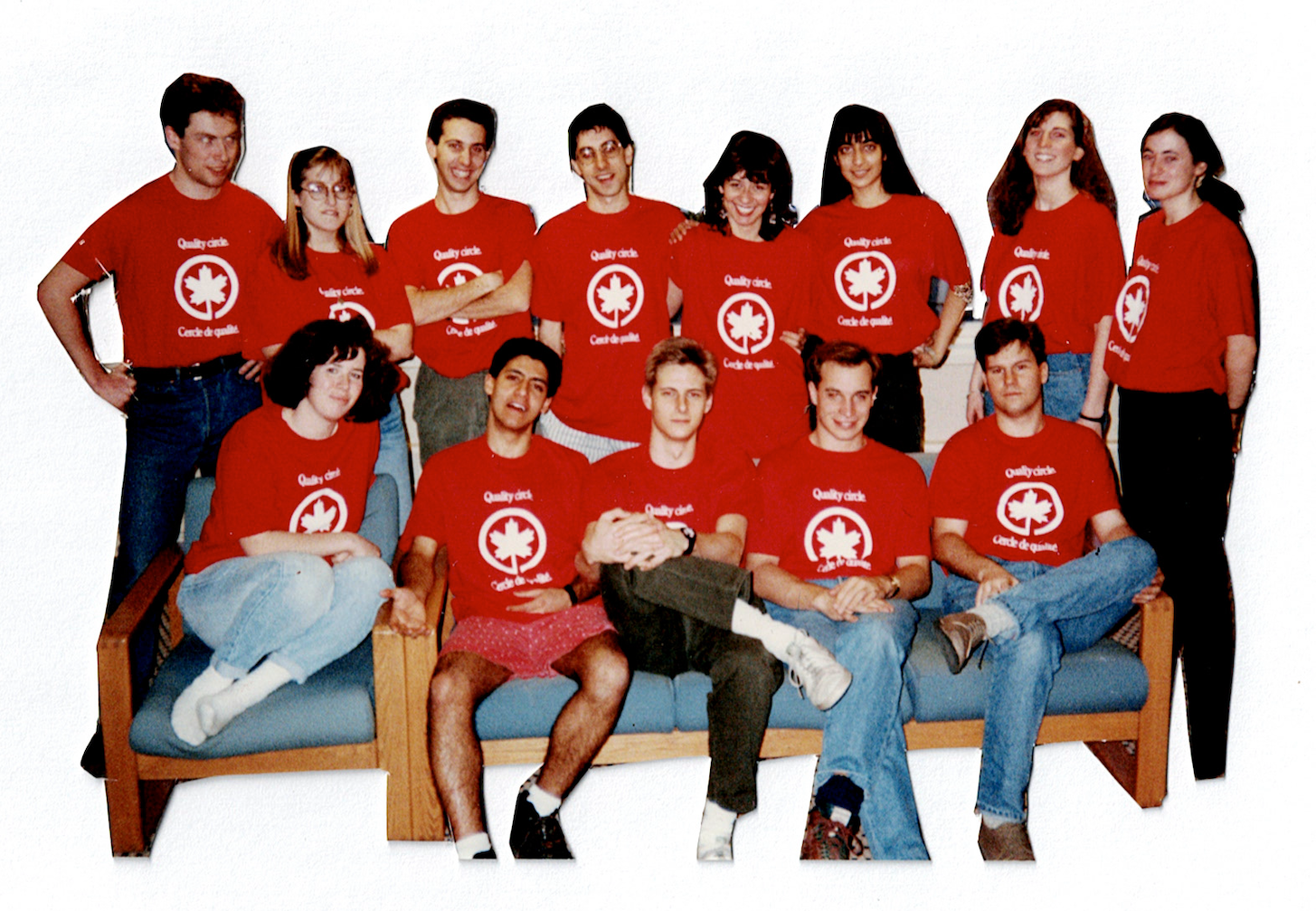
“It was a big commitment, involving club meetings and debating competitions that happened off-campus,” Clark said. “What kept me in the club was the community of people I met through it: An incredibly diverse, challenging, fun, and outgoing group of people.”

Some students come to McGill with the advantage of already having a circle of friends. Rhiannon Turgel, who went to CEGEP before attending McGill, told me that she wanted to build a community beyond her existing connections. In her case, she actively participated in multiple events hosted by different clubs without formally joining them. 

“At the end of my first year, I realized that I wanted a McGill community beyond [what I had at CEGEP],” Turgel said. “That’s when I started participating in all of these events: The McGill Athletics ‘hype team’, pub crawls with out-of-province and international students, Model UN, as well as the HSA [History Students’ Association].” 

At the start of 2020, the pandemic transformed what social opportunities looked like for students at McGill. Club involvement was limited, as were in-person encounters. Amélie Barsoum, who began her bachelor’s degree that same year, had to navigate this highly challenging social and learning environment.

“When COVID-19 restrictions started lifting, I joined P.O.W.E. [Providing Opportunities for Women in Engineering] so I could have a sense of belonging with the engineering community at McGill,” she shared. “I’m also very passionate about the mission of P.O.W.E., as I’m a woman in engineering myself.”

She emphasized that socializing during COVID-19 was incredibly challenging for off-campus students. 

“I definitely think that those who spent their first year in residence, and who were made aware of a broader range of school activities as a result, have a huge advantage over those who didn’t,” Barsoum said. “This has improved since the lifting of COVID-19 measures, but I still feel behind compared to some of my peers.” 

McGill’s active Greek life, composed of fraternities and sororities, often represents a large part of the community-building aspects of student life. Frats and sororities plan and host events for their members, which are often, but not always, open to the McGill community at large. Most of McGill’s frats and sororities are among some of McGill’s oldest student groups, dating back to the late 1850s. In an interview with The McGill Tribune, Wright shared his experience with McGill’s Alpha Delta Phi during his undergraduate degree in the 1950s. 

“Fraternities, back then, were very popular,” he said. “At McGill, they were the centre of your social life. Fraternities were very involved in student life on campus, and its members planned and organized many winter events, such as the McGill Winter Carnival.” 

This annual event formerly took place around February. It included a series of winter-themed activities such as hockey games, ice sculpting, the crowning of a Carnival Queen and a spectacular closing event: The Carnival Ball. 

Despite being a widespread social and cultural phenomenon in universities across North America for over a century, social perceptions of Greek Life organizations have now shifted. 

“Fraternities aren’t as big of a deal now,” Wright added. “I probably wouldn’t join one today, but back then, they were the driving force of all student activities on campus.” 

Ironically, a culture of selectivity and prejudice, including purposeful exclusion, hazing, and sexual misconduct often surrounds these groups, which are intended to promote values of familyhood and togetherness, Wright explained. “Those aren’t features we admire as individuals and organizations.” 

Student clubs as we know them today, however, work to form connections with others, as they bring together like-minded students from a range of backgrounds with common interests. In some cases, fellow club members can lead to lifelong friends. Clark, who now works as a lawyer and litigator in the Toronto area, shared that many people within the Debating Union still keep in touch.

“I continue to cross paths with people from that time, many of whom I am still friends with today,” she said.  

Sometimes, joining a club can lead to meeting a handful of people who are important connections. But this isn’t always the case. 

“Clubs have a reputation of being a place where you meet your closest friends, which isn’t always true,” Barsoum said. “In my case, clubs have given me a network of acquaintances, potential roommates and people I could participate in events with, which allowed me to expand my network of connections within my faculty and department.” 

Interviewees also reflected on their student experience in Montreal beyond the walls of the University Centre. Despite becoming increasingly expensive to newcomers, Montreal’s city life has remained vibrant and diverse over the years, which students and alums reflect back on fondly. 

“I loved being an out-of-province student at McGill,” Clark recalled. “There was always something to do or see to distract you when academic life became too much. In general, McGill—and Montreal—made it an easy transition for someone who hadn’t seen a lot of life.”

McGill’s location in the heart of downtown Montreal stimulates the possibility for new connections.

“Being on campus downtown was great,” Turgel said. “We were close to public transit and streets filled with bars, coffee shops, and stores. Everything you needed was there.” 

Well known for their work-hard-play-hard ethic, McGill students take the play-hard part seriously. On weekend evenings, the city’s streets fill with students roaming to and from parties and clubs, enjoying a well-deserved break after a week of classes. The partying scene, however, varies between faculties and, of course, between generations.

“I would describe the partying scene at McGill as being very organized,” Amélie Barsoum (BEng ‘23) said. “In engineering, a lot of the partying happens at organized events, which are inclusive to McGill’s entire student body. Although [they are] accessible, these events can vary in affordability.”

McGill’s nightlife involves events for all tastes: Events centred around drinking, like “bar crawls” and wine-and-cheese soirées or “dry events,” like coffee houses, where drinking is limited and the evening focuses on other activities. 

“The event selection is very diverse,” Barsoum added. “Many new events pop up yearly, whereas others are annual.”

Regardless of the event type, these environments are, for the most part, respectful of their attendees. 

“I found events to be very inclusive: As I wasn’t a big drinker, I would often participate in games and activities with water and never felt pressured to drink,” Turgel said. 

Engagement in McGill’s student life activities across time suggests that, despite generational differences, McGill’s social life remains a flourishing environment for undergraduate students. Although the reality of a post-pandemic, digital era challenges the in-person interconnectedness of some of McGill’s original social activities, hopes are that current and future McGill students will continue to forge their own social paths.


Football, Sports

The 2023 NFL playoffs so far: Takeaways from the wild card and divisional rounds

The 2023 National Football League (NFL) playoffs kicked off on Jan. 14, leaving some overjoyed and many more with broken hearts. The wild card and divisional rounds produced 10 riveting matches that left fans no choice but to learn some valuable lessons about the playoffs, the teams, and what is still to come.  

No lead is safe

On Jan. 14, the Los Angeles Chargers faced the Jacksonville Jaguars and quickly jumped into a commanding 17-0 lead to close the first quarter. Jacksonville quarterback Trevor Lawrence threw four interceptions and the Chargers’ offence scored at will, allowing Los Angeles to go up 27-0 late in the first half. The second half was a different story, however, as the Jacksonville defence held the Chargers to a measly three points. Lawrence threw touchdowns on four consecutive possessions and kicker Riley Patterson hit a walk-off field goal as the Jaguars completed the fifth-largest comeback in NFL history. 

The Tampa Bay Buccaneers can’t only rely on Brady

There was once a time when Tom Brady could instantly turn any team into a Super Bowl contender. At 45 years old, it seems that time is finally catching up to the GOAT. Brady threw only 25 touchdowns in an underwhelming season for the Buccaneers, culminating in a crushing 31-14 playoff defeat to the Dallas Cowboys where Brady barely completed 50 per cent of his passes. Brady could still feasibly win another Super Bowl, but he’ll need to be supplemented by an elite offence and defence to even stand a chance. 

The Cowboys need a new kicker

Despite a dominant 31-14 win over the Buccaneers, the Cowboys’ victory was undercut by one player’s performance: Brett Maher. The Cowboys’ kicker caught a bad case of the yips and set an NFL record by missing four of his five extra point attempts against Tampa Bay. Maher missed another extra point the following week in the Cowboys’ 19-12 loss to the San Francisco 49ers, and currently holds the record for the most missed extra points in the playoffs.

Last season’s Cincinnati Bengals were not a fluke

The Bengals shocked the world last year by conquering the American Football Conference and narrowly losing to the Los Angeles Rams in Super Bowl LVI. While the Bengals gained considerable respect, there were doubts as to whether they could repeat last season’s heroics. Cincinnati squashed such suspicions this postseason by putting on a defensive masterclass against the Baltimore Ravens before dismantling the Buffalo Bills in a 27-10 victory. With quarterback Joe Burrow’s elite performance all season long, the Bengals have proven that their 2022 miracle was not a flash in the pan. 

The Philadelphia Eagles are the team to beat

In case their 14–3 record wasn’t enough, the Eagles cemented their status as Super Bowl favourites by conquering the New York Giants 38-7. Quarterback Jalen Hurts quelled any injury concerns by scoring three touchdowns, and the Eagles’ defence put on a clinic against the Giants. Kansas City, the Bengals, and the 49ers are all worthy contenders, but the high-flying Eagles are arguably the most complete team in the NFL and undeniably look like Super Bowl champions.

The 49ers don’t need an elite quarterback

When quarterback Jimmy Garoppolo broke his foot in week 13, many thought the 49ers’ season was over. Cue Brock Purdy: the 2022 NFL draft’s “Mr. Irrelevant”. The rookie quarterback helped San Francisco finish the regular season undefeated and threw three touchdowns in their 41-23 playoff victory over the Seattle Seahawks. San Francisco followed up this win by defeating the Cowboys 19-2 in a hard-fought defensive battle. While Purdy has undoubtedly played well, the 49ers’ key to success is their depth: San Francisco’s offence is loaded with star players like running back Christian McCaffrey and tight end George Kittle, and their defence is a force to be reckoned with. In a quarterback-dominated league, the 49ers stand out as contenders without a big-name play caller. 

What’s next?

On Jan. 29, two teams had their hearts broken. On the first drive of the game, Purdy was hit with a blow to his throwing arm, forcing the 49ers to turn to their fourth-string quarterback and ultimately fall 31-7 to Philadelphia. As for the Bengals, the five sacks on Burrow proved to be too much and they fell to Kansas City 23-20. The Super Bowl XLVII will kick off on Feb. 12 between the Eagles and Kansas City.

Ask a Scientist, Private, Science & Technology

On a mission to remission: How researchers are trying to combat type 2 diabetes

What we call insulin today was first manufactured in 1921 by Charles Best and Frederick Banting. The hormone, originally called pancreatic extract, gives those with diabetes a chance at a healthy life, especially the six million people in Canada who live with some form of the disease.

There are three kinds of diabetes: Type 1, type 2, and gestational. Type 1 diabetes, where the body produces minimal quantities of insulin or even none, is an uncommon manifestation, accounting for only five to 10 per cent of patients. Gestational diabetes is the least known and the least common, as it only develops in pregnant women and typically goes away after giving birth. 

Type 2 diabetes is the most common iteration of the disease. Around 90 per cent of people with diabetes have type 2, which is caused by insulin resistance—when one’s cells stop responding as efficiently to the insulin produced by the pancreas—resulting in elevated blood sugar. The reason for this resistance isn’t exactly known, but it’s related to certain lifestyle factors, such as being overweight and physically inactive, or genetic factors such as family history

RESET for REMISSION, a collaborative effort between the McGill University Health Centre (MUHC) and the Diabetes Research Centre in the United Kingdom (DRC), is a study geared toward helping those with type 2 diabetes go into remission, to be launched in 2024. Dr. Kaberi Dasgupta, a professor at McGill’s Faculty of Medicine and the Director of the Centre for Outcomes Research and Evaluation (CORE) at the Research Institute of the MUHC (RI-MUHC) is spearheading this study.

“We’re trying to help people 18-45 years of age go into remission with their type 2 diabetes,” Kaberi said in an interview with The McGill Tribune. “What we’re doing is testing a dietary approach […] but we’re combining it with a supervised exercise strategy. By packaging the two together, we want to tackle not just the blood sugar definition of diabetes, but heart health, liver health, and kidney health.”

Kaberi explained that RESET for REMISSION is looking at heart and liver health because diabetes can lead to issues such as blood vessel damage and fatty liver disease.

Participants of the study will be randomly assigned to an experimental or control group. The experimental group will have their diets and exercise routines modified for the duration of the study, while the control group will be administered standard insulin therapy.

“On top of that, [the participants] will have a dietitian and there’s a regular follow-up and a physician as well,” Kaberi added. “The participants who are in that group, the experimental group, besides the diet, will also go to an exercise centre […] and they basically have a high-level personal trainer, an exercise physiologist.”

Doctors will have to rigorously check a patient’s health to discern the diabetes’ severity prior to and post-study. For example, glycated hemoglobins, also known as A1c, are a form of iron-carrying red blood cell that indicates the presence of sugars like glucose, galactose, and fructose in the bloodstream. It is a crucial measure to monitor in diabetics.

“[At the end of the study] we’re going to look at their […]blood sugar levels […] to see if they’re under 6.5 per cent, which is the threshold for diabetes, and if they’ve been off their blood sugar lowering medications for the three months before [they will be considered in remission],” Kaberi said.

Even if the participants don’t achieve total remission, any degree of insulin regulation may improve their quality of life. If the trials are successful, they will hopefully be a catalyst for the creation of similar programs across Canada.

“The idea is that with [the exercise and diet] they’ll lose weight […] and get rid of their diabetes for a while,” Kaberi said. “It could come back, and they have to be monitored, but, if it works, it means […] less time having diabetes, which means fewer complications.”

McGill, News

McGill commemorates victims of Holocaust in annual Remembrance Day event

Content warning: Mentions of antisemitism, genocide

On Jan. 26, members of the McGill community gathered in the atrium of the Macdonald Engineering Building to commemorate International Holocaust Remembrance Day. The event, hosted by Associate Provost (Equity and Academic Policies) Angela Campbell, was held in collaboration with Hillel McGill, the Rohr Chabad Jewish Student Centre, and McGill’s Department of Jewish Studies

Jan. 27 is the United Nations–-designated International Holocaust Remembrance Day and marks the anniversary of when Soviet forces liberated prisoners from Auschwitz-Birkenau. McGill decided to hold the ceremony a day early as Jan. 27 fell on a Friday, the day of Shabbat.  

The commemoration began with a speech from Campbell, who paid tribute to the six million Jewish victims of the Holocaust, and the five million other LGBTQIA+, Roma, and disabled victims of the Second World War.  

“We must learn from the lesson of the past and relentlessly defend our democratic and humanist values,” Campbell said. 

Campbell’s opening speech was followed by a discussion from Interim Principal and Vice-Chancellor Christopher Manfredi about rising antisemitism since the onset of the COVID-19 pandemic and the university’s measures to combat anti-Jewish hate and discrimination. 

“The observance of this commemorative day will be an important way of raising awareness among our community about Jewish history for years to come, but there’s still much more work to be done,” Manfredi said. 

Some of the speakers included city councillor Peter McQueen and the Consul General of Israel, Paul Hirschon. Following their remarks, Eta Yudin, the Quebec vice-president of the Center for Israel and Jewish Affairs, said that “we are moving further and further away from the living memory of the Holocaust.” 

Campbell then welcomed Judith Nemes Black, a child victim of the Holocaust, to share her story. Born in Budapest, Hungary in 1941, Nemes Black recalled Hungary’s antisemitic laws and her family’s experience of the Holocaust. 

Nemes Black and her mother were forced into hiding after being expelled from their apartment in July 1944. She was also made to wear a yellow star, a symbol used by the Nazis to target Jewish people. Her father, meanwhile, was forcibly moved between multiple eastern European concentration camps.

“In 1943, my father was sent to the Bor mines in Serbia, which was one of the worst labour camps in the Nazi German-occupied territory,” Nemes Black said in her speech. “In 1944, he was forced on a death march to Germany and was finally liberated in the terrible camp of  Bergen-Belsen [….] Despite his thinness and his physical differences, I recognized him based on the pictures I [had] been shown.” 

She described her family’s reunion in October 1945 as being “one of the most beautiful moments of my life.”

After Nemes Black’s testimony, Rabbi Shmuly Weiss, the rabbi of Chabad McGill and the university’s Jewish Chaplain, recited a prayer. McGill students lit candles in remembrance of victims and heroes of the Holocaust. The room then quieted for a minute of silence, which was broken by a recitation of the poems “The Butterfly” by Pavel Friedman and “Never Shall I Forget” by Elie Wiesel. 

In an interview with The McGill Tribune after the event, Rabbi Shmuly stressed the importance of Holocaust education and fighting misinformation, especially in light of a recent survey that found 22 per cent of Canadian millennials have never heard of or were unsure if they had heard of the Holocaust. 

“Even if there were no antisemitism in 2023, it would still be incumbent upon everybody to study about the Holocaust to make sure things like this don’t happen ever again to anybody,” Shmuly said. “The fact that Canadian citizens today have not heard about it is very disturbing.” 

The event closed with a prayer by Rabbi Shmuly and Hillel McGill President Sam Abemoyer, followed by a speech from Yael Halevi-Wise, associate professor in McGill’s Departments of Jewish Studies and English. 

“In a way, we are all Holocaust survivors,” Halevi-Wise said in her closing remarks. “Whether as first hand victims, witnesses, spectators, or traumatized remnants, we are all survivors of this horror because it remains a collective responsibility to cry ‘Never again; never again anywhere’.”

Read the latest issue

Read the latest issue