Latest News

News, SSMU

SSMU offers free sustainable menstrual products at monthly pick-up

A line of students filled the McLennan-Redpath library complex lobby on Jan. 23, waiting for the first menstrual product pick-up of the semester to begin. The Students’ Society of McGill University (SSMU) organized the pick-up as part of its Menstrual Health Project––an initiative that began in 2017 to provide free menstrual products to students via dispensers in bathrooms across campus.  

Among the free products available to students were disposable pads and tampons, along with reusable products, such as menstrual underwear, reusable pads, and menstrual cups and discs. All the disposable products are biodegradable.  

The SSMU Menstrual Health Project funds the initiative through a non-opt outable undergraduate student fee of $2.40 per semester. The project also received $50,000 from the McGill Office of Sustainability’s partially student-funded Sustainability Projects Fund (SPF) to offer more sustainable products as of Fall 2022.

SSMU vice-president (VP) University Affairs Kerry Yang explained that reusable products, although more cost-effective in the long run, tend to be more expensive up-front, making them inaccessible for many students. 

“Some students find out they don’t really like [a reusable product] but we want to give students the option to try different things and see what they like and not have cost be a barrier that prohibits them from getting access,” Yang said in an interview with The McGill Tribune

SSMU Menstrual Health Commissioner Julia Miracle noted that most reusable products require access to private sinks, which may not always be available for students in university bathrooms or residence halls. So, offering sustainable disposable products is also critical to ensure that students can use what is most comfortable for them. 

Universities across Canada such as Western University and the University of Toronto are increasingly receiving administrative support to provide free menstrual products. While Yang is in support of funding and administrative support from McGill, he feels that there are benefits to the project being student-run. 

“The team does have the ability to push in different directions which is really great and we want to keep the autonomy,” he said. 

Miracle agrees thatt McGill should step up to support the free menstrual product initiative but maintains that student involvement in the pick-up is important as the products offered are personalized and based on student requests.

“Keeping the monthly pick-ups student-run could be a great initiative […] for students to learn facilitation roles, connect with the community,” Miracle said. “We could potentially […] have McGill institutionalize the bathroom [product distribution], but have [SSMU] keep the pick-ups and try to expand.”

Students interviewed by the Tribune feel positively about the student-funded aspect of the project. Julia Toth, U3 Arts and Science, appreciates the quality of the service the fee has made possible.   

“I love it. I think we have so many non-opt outable fees that we might as well start having things that actually benefit us, and this really benefits me,” Toth said. “I hardly actually go buy tampons anymore.” 

Amelie Philipp Kirschner, U1 Arts, pointed out that the fees seem inconsequential compared to the lifetime costs otherwise associated with menstrual products. In Canada, menstruating people can spend up to $6,000 on menstrual products over their lifetimes. 

“If we paid for all this by ourselves it would be so much more […] so I am fine with it because I use it,” Kirschner said.

One student in line for the pick-up told the Tribune that having the pick-up in a public location helps destigmatize periods. Providing students with access to hygienic products also means lessening the worries menstruation may otherwise bring, such as bleeding through clothes or not being able to participate in sports. 

Yang and Miracle echoed these concerns. By removing the financial barriers associated with menstrual products, menstruating students can use their money for other necessities. 

“We really want students who menstruate to have equal opportunities,” Yang said. “We want to foster a culture and community of sustainability not just economically, not just socially, [but also] addressing menstrual equity.”

Ask a Scientist, Private, Science & Technology

Photogrammetry: A new approach to detailed, accessible flower imaging

There are hundreds of thousands of flower species in the world, each with their own shapes, colour patterns, and natural habitats. Scientists aim to accurately preserve and document every single species, but the complexity and delicateness of these natural decorations make this a challenging endeavour. 

Researchers from McGill and the University of Montreal recently published an article in New Phytologist outlining a new, innovative approach called photogrammetry, which assembles a 3D model of a flower from digital photographs. The resulting 3D models are available online for free at BioSource

Photogrammetry has existed for several decades and has been used in other fields, such as archeology and entomology, but had never before been applied to the scientific study of flowers. While there is no concrete explanation as to why, Daniel Schoen, a professor of biology at McGill, believes the intricacies of the photogrammetry process slowed down its implementation.

The first step in using photogrammetry is simply to collect pictures from all sides of an object. 

“You can put your subject on either a turntable or a rotating shaft motor, and basically what you’re doing is you’re rotating it, and you’re taking a picture of it  every time it changes by a degree or two, and you come back full circle,” Schoen explained in an interview with The McGill Tribune.

Computer software then analyzes the collected photos to detect overlapping points. From these points, the software constructs a 3D model, complete with colour data from the photographs. 

Photogrammetry is a major improvement from current techniques, such as micro-computerized tomography (CT) scanning

“[Micro-CT scanning] is a little bit like when you get a CT scan in the hospital,” Schoen explained. “They basically take photograph after photograph in different planes, and then they assemble them all together into a solid structure.”

Micro-CT scanning also allows scientists to obtain a detailed 3D model, but it has some drawbacks. First, the machinery used to create the scans is both heavy and expensive, making its use impractical for many researchers. Also, it can’t capture colour data, which is critical when studying flowers. 

Since photogrammetry takes digital photographs as an input, it can preserve high-quality colour detail. In addition, the set-up only requires a good camera and a turn-table, making it easy to take into the field—a major boon for biologists looking to document flowers before they wilt or fade. 

Having access to detailed, coloured models of flowers opens up new research techniques for biologists, such as quantitatively comparing colour and shape information to determine differences in flower varieties, and conducting experimental research by 3D-printing replicas of existing flowers. 

“I’m on the thesis committee of a student who’s interested in whether flowers of a species that occur in an urbanized environment have evolved a different form compared to the more natural environment,” Schoen said. “The idea is to compare shape quantitatively using data captured with photogrammetry.”

Photogrammetry would also allow biologists to perform quantitative analysis on features that are called “nectar guides,” or spots on a flower’s surface.

“The nectar guide is thought to serve as a way to channel the movements of the insect into the flower in a very precise fashion,” Schoen said. “We think flowers work that way. They manipulate their pollinators by both their shape and their colour patterns and it’s the two working together. The colour pattern has to be in the right place on the flower in order for this to work.”

One other exciting possibility is that, with sufficiently advanced 3D-printing technology, these 3D models could be printed to produce accurately-coloured, to-scale flowers, potentially even printed using organic material.

Innovative research techniques like these rely on accurate and accessible 3D data, which is now easier than ever to produce thanks to photogrammetry and modern software analysis.

Student Life

Student life, through the generations

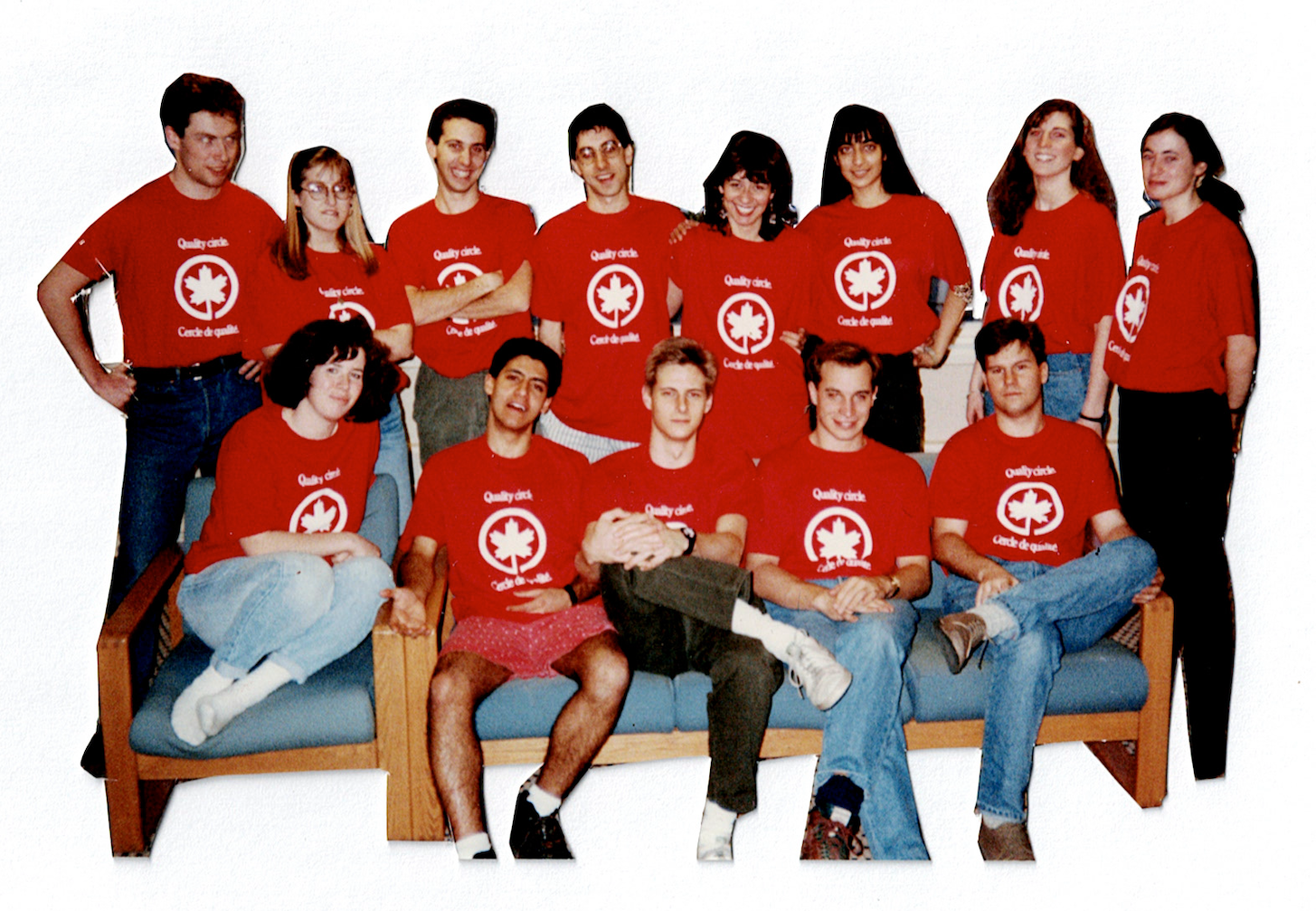
McGill University welcomes more than 6,000 undergraduate students to its downtown and Macdonald campuses every year. To promote student well-being amidst the high demand of academic degrees, the university stresses the importance of maintaining an active and well-balanced social life. Student-based organizations, such as the Students’ Society of McGill University (SSMU), the Arts Undergraduate Society (AUS), and the Engineering Undergraduate Society (EUS), have encouraged these ideas through various social, personal, and cultural activities for generations. But a lot has changed when it comes to social engagement over the years at McGill. To obtain a multi-generational perspective, I met with Ken Wright (BComm ’55, who also happens to be my grandfather), Alexandra Clark (BA ‘92), Rhiannon Turgel (BA ‘16), and Amélie Barsoum (BEng ‘23) to find out what social life looked like during their time at McGill. 

Some of the most popular and meaningful forms of social life on campus are clubs and student groups, and many of McGill’s 250 clubs have been operating for decades. For Clark, the McGill Debating Union was a dominant part of her social life. She joined the club during her freshman year in 1988-1989 and spent the greater part of her four-year undergraduate degree hanging out with them.

“It was a big commitment, involving club meetings and debating competitions that happened off-campus,” Clark said. “What kept me in the club was the community of people I met through it: An incredibly diverse, challenging, fun, and outgoing group of people.”

Some students come to McGill with the advantage of already having a circle of friends. Rhiannon Turgel, who went to CEGEP before attending McGill, told me that she wanted to build a community beyond her existing connections. In her case, she actively participated in multiple events hosted by different clubs without formally joining them. 

“At the end of my first year, I realized that I wanted a McGill community beyond [what I had at CEGEP],” Turgel said. “That’s when I started participating in all of these events: The McGill Athletics ‘hype team’, pub crawls with out-of-province and international students, Model UN, as well as the HSA [History Students’ Association].” 

At the start of 2020, the pandemic transformed what social opportunities looked like for students at McGill. Club involvement was limited, as were in-person encounters. Amélie Barsoum, who began her bachelor’s degree that same year, had to navigate this highly challenging social and learning environment.

“When COVID-19 restrictions started lifting, I joined P.O.W.E. [Providing Opportunities for Women in Engineering] so I could have a sense of belonging with the engineering community at McGill,” she shared. “I’m also very passionate about the mission of P.O.W.E., as I’m a woman in engineering myself.”

She emphasized that socializing during COVID-19 was incredibly challenging for off-campus students. 

“I definitely think that those who spent their first year in residence, and who were made aware of a broader range of school activities as a result, have a huge advantage over those who didn’t,” Barsoum said. “This has improved since the lifting of COVID-19 measures, but I still feel behind compared to some of my peers.” 

McGill’s active Greek life, composed of fraternities and sororities, often represents a large part of the community-building aspects of student life. Frats and sororities plan and host events for their members, which are often, but not always, open to the McGill community at large. Most of McGill’s frats and sororities are among some of McGill’s oldest student groups, dating back to the late 1850s. In an interview with The McGill Tribune, Wright shared his experience with McGill’s Alpha Delta Phi during his undergraduate degree in the 1950s. 

“Fraternities, back then, were very popular,” he said. “At McGill, they were the centre of your social life. Fraternities were very involved in student life on campus, and its members planned and organized many winter events, such as the McGill Winter Carnival.” 

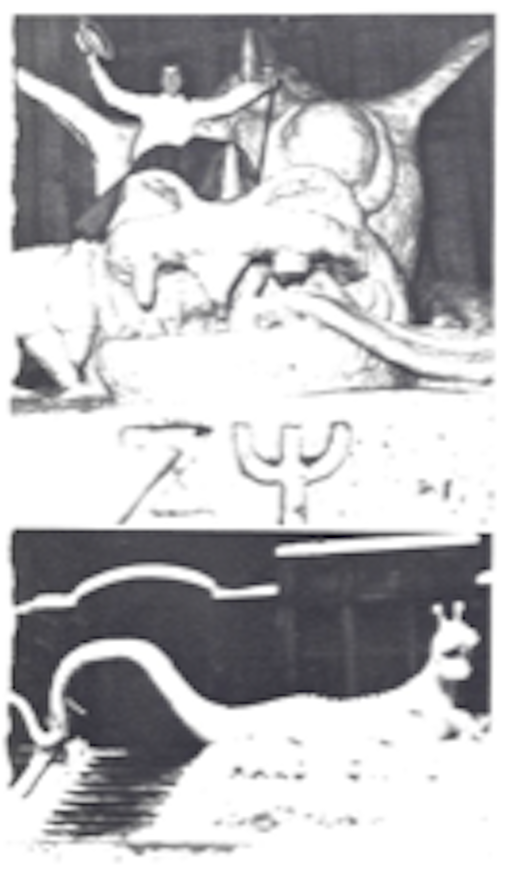
This annual event formerly took place around February. It included a series of winter-themed activities such as hockey games, ice sculpting, the crowning of a Carnival Queen and a spectacular closing event: The Carnival Ball. 

Despite being a widespread social and cultural phenomenon in universities across North America for over a century, social perceptions of Greek Life organizations have now shifted. 

“Fraternities aren’t as big of a deal now,” Wright added. “I probably wouldn’t join one today, but back then, they were the driving force of all student activities on campus.” 

Ironically, a culture of selectivity and prejudice, including purposeful exclusion, hazing, and sexual misconduct often surrounds these groups, which are intended to promote values of familyhood and togetherness, Wright explained. “Those aren’t features we admire as individuals and organizations.” 

Student clubs as we know them today, however, work to form connections with others, as they bring together like-minded students from a range of backgrounds with common interests. In some cases, fellow club members can lead to lifelong friends. Clark, who now works as a lawyer and litigator in the Toronto area, shared that many people within the Debating Union still keep in touch.

“I continue to cross paths with people from that time, many of whom I am still friends with today,” she said.  

Sometimes, joining a club can lead to meeting a handful of people who are important connections. But this isn’t always the case. 

“Clubs have a reputation of being a place where you meet your closest friends, which isn’t always true,” Barsoum said. “In my case, clubs have given me a network of acquaintances, potential roommates and people I could participate in events with, which allowed me to expand my network of connections within my faculty and department.” 

Interviewees also reflected on their student experience in Montreal beyond the walls of the University Centre. Despite becoming increasingly expensive to newcomers, Montreal’s city life has remained vibrant and diverse over the years, which students and alums reflect back on fondly. 

“I loved being an out-of-province student at McGill,” Clark recalled. “There was always something to do or see to distract you when academic life became too much. In general, McGill—and Montreal—made it an easy transition for someone who hadn’t seen a lot of life.”

McGill’s location in the heart of downtown Montreal stimulates the possibility for new connections.

“Being on campus downtown was great,” Turgel said. “We were close to public transit and streets filled with bars, coffee shops, and stores. Everything you needed was there.” 

Well known for their work-hard-play-hard ethic, McGill students take the play-hard part seriously. On weekend evenings, the city’s streets fill with students roaming to and from parties and clubs, enjoying a well-deserved break after a week of classes. The partying scene, however, varies between faculties and, of course, between generations.

“I would describe the partying scene at McGill as being very organized,” Amélie Barsoum (BEng ‘23) said. “In engineering, a lot of the partying happens at organized events, which are inclusive to McGill’s entire student body. Although [they are] accessible, these events can vary in affordability.”

McGill’s nightlife involves events for all tastes: Events centred around drinking, like “bar crawls” and wine-and-cheese soirées or “dry events,” like coffee houses, where drinking is limited and the evening focuses on other activities. 

“The event selection is very diverse,” Barsoum added. “Many new events pop up yearly, whereas others are annual.”

Regardless of the event type, these environments are, for the most part, respectful of their attendees. 

“I found events to be very inclusive: As I wasn’t a big drinker, I would often participate in games and activities with water and never felt pressured to drink,” Turgel said. 

Engagement in McGill’s student life activities across time suggests that, despite generational differences, McGill’s social life remains a flourishing environment for undergraduate students. Although the reality of a post-pandemic, digital era challenges the in-person interconnectedness of some of McGill’s original social activities, hopes are that current and future McGill students will continue to forge their own social paths.

Football, Sports

The 2023 NFL playoffs so far: Takeaways from the wild card and divisional rounds

The 2023 National Football League (NFL) playoffs kicked off on Jan. 14, leaving some overjoyed and many more with broken hearts. The wild card and divisional rounds produced 10 riveting matches that left fans no choice but to learn some valuable lessons about the playoffs, the teams, and what is still to come.  

No lead is safe

On Jan. 14, the Los Angeles Chargers faced the Jacksonville Jaguars and quickly jumped into a commanding 17-0 lead to close the first quarter. Jacksonville quarterback Trevor Lawrence threw four interceptions and the Chargers’ offence scored at will, allowing Los Angeles to go up 27-0 late in the first half. The second half was a different story, however, as the Jacksonville defence held the Chargers to a measly three points. Lawrence threw touchdowns on four consecutive possessions and kicker Riley Patterson hit a walk-off field goal as the Jaguars completed the fifth-largest comeback in NFL history. 

The Tampa Bay Buccaneers can’t only rely on Brady

There was once a time when Tom Brady could instantly turn any team into a Super Bowl contender. At 45 years old, it seems that time is finally catching up to the GOAT. Brady threw only 25 touchdowns in an underwhelming season for the Buccaneers, culminating in a crushing 31-14 playoff defeat to the Dallas Cowboys where Brady barely completed 50 per cent of his passes. Brady could still feasibly win another Super Bowl, but he’ll need to be supplemented by an elite offence and defence to even stand a chance. 

The Cowboys need a new kicker

Despite a dominant 31-14 win over the Buccaneers, the Cowboys’ victory was undercut by one player’s performance: Brett Maher. The Cowboys’ kicker caught a bad case of the yips and set an NFL record by missing four of his five extra point attempts against Tampa Bay. Maher missed another extra point the following week in the Cowboys’ 19-12 loss to the San Francisco 49ers, and currently holds the record for the most missed extra points in the playoffs.

Last season’s Cincinnati Bengals were not a fluke

The Bengals shocked the world last year by conquering the American Football Conference and narrowly losing to the Los Angeles Rams in Super Bowl LVI. While the Bengals gained considerable respect, there were doubts as to whether they could repeat last season’s heroics. Cincinnati squashed such suspicions this postseason by putting on a defensive masterclass against the Baltimore Ravens before dismantling the Buffalo Bills in a 27-10 victory. With quarterback Joe Burrow’s elite performance all season long, the Bengals have proven that their 2022 miracle was not a flash in the pan. 

The Philadelphia Eagles are the team to beat

In case their 14–3 record wasn’t enough, the Eagles cemented their status as Super Bowl favourites by conquering the New York Giants 38-7. Quarterback Jalen Hurts quelled any injury concerns by scoring three touchdowns, and the Eagles’ defence put on a clinic against the Giants. Kansas City, the Bengals, and the 49ers are all worthy contenders, but the high-flying Eagles are arguably the most complete team in the NFL and undeniably look like Super Bowl champions.

The 49ers don’t need an elite quarterback

When quarterback Jimmy Garoppolo broke his foot in week 13, many thought the 49ers’ season was over. Cue Brock Purdy: the 2022 NFL draft’s “Mr. Irrelevant”. The rookie quarterback helped San Francisco finish the regular season undefeated and threw three touchdowns in their 41-23 playoff victory over the Seattle Seahawks. San Francisco followed up this win by defeating the Cowboys 19-2 in a hard-fought defensive battle. While Purdy has undoubtedly played well, the 49ers’ key to success is their depth: San Francisco’s offence is loaded with star players like running back Christian McCaffrey and tight end George Kittle, and their defence is a force to be reckoned with. In a quarterback-dominated league, the 49ers stand out as contenders without a big-name play caller. 

What’s next?

On Jan. 29, two teams had their hearts broken. On the first drive of the game, Purdy was hit with a blow to his throwing arm, forcing the 49ers to turn to their fourth-string quarterback and ultimately fall 31-7 to Philadelphia. As for the Bengals, the five sacks on Burrow proved to be too much and they fell to Kansas City 23-20. The Super Bowl XLVII will kick off on Feb. 12 between the Eagles and Kansas City.

Ask a Scientist, Private, Science & Technology

On a mission to remission: How researchers are trying to combat type 2 diabetes

What we call insulin today was first manufactured in 1921 by Charles Best and Frederick Banting. The hormone, originally called pancreatic extract, gives those with diabetes a chance at a healthy life, especially the six million people in Canada who live with some form of the disease.

There are three kinds of diabetes: Type 1, type 2, and gestational. Type 1 diabetes, where the body produces minimal quantities of insulin or even none, is an uncommon manifestation, accounting for only five to 10 per cent of patients. Gestational diabetes is the least known and the least common, as it only develops in pregnant women and typically goes away after giving birth. 

Type 2 diabetes is the most common iteration of the disease. Around 90 per cent of people with diabetes have type 2, which is caused by insulin resistance—when one’s cells stop responding as efficiently to the insulin produced by the pancreas—resulting in elevated blood sugar. The reason for this resistance isn’t exactly known, but it’s related to certain lifestyle factors, such as being overweight and physically inactive, or genetic factors such as family history

RESET for REMISSION, a collaborative effort between the McGill University Health Centre (MUHC) and the Diabetes Research Centre in the United Kingdom (DRC), is a study geared toward helping those with type 2 diabetes go into remission, to be launched in 2024. Dr. Kaberi Dasgupta, a professor at McGill’s Faculty of Medicine and the Director of the Centre for Outcomes Research and Evaluation (CORE) at the Research Institute of the MUHC (RI-MUHC) is spearheading this study.

“We’re trying to help people 18-45 years of age go into remission with their type 2 diabetes,” Kaberi said in an interview with The McGill Tribune. “What we’re doing is testing a dietary approach […] but we’re combining it with a supervised exercise strategy. By packaging the two together, we want to tackle not just the blood sugar definition of diabetes, but heart health, liver health, and kidney health.”

Kaberi explained that RESET for REMISSION is looking at heart and liver health because diabetes can lead to issues such as blood vessel damage and fatty liver disease.

Participants of the study will be randomly assigned to an experimental or control group. The experimental group will have their diets and exercise routines modified for the duration of the study, while the control group will be administered standard insulin therapy.

“On top of that, [the participants] will have a dietitian and there’s a regular follow-up and a physician as well,” Kaberi added. “The participants who are in that group, the experimental group, besides the diet, will also go to an exercise centre […] and they basically have a high-level personal trainer, an exercise physiologist.”

Doctors will have to rigorously check a patient’s health to discern the diabetes’ severity prior to and post-study. For example, glycated hemoglobins, also known as A1c, are a form of iron-carrying red blood cell that indicates the presence of sugars like glucose, galactose, and fructose in the bloodstream. It is a crucial measure to monitor in diabetics.

“[At the end of the study] we’re going to look at their […]blood sugar levels […] to see if they’re under 6.5 per cent, which is the threshold for diabetes, and if they’ve been off their blood sugar lowering medications for the three months before [they will be considered in remission],” Kaberi said.

Even if the participants don’t achieve total remission, any degree of insulin regulation may improve their quality of life. If the trials are successful, they will hopefully be a catalyst for the creation of similar programs across Canada.

“The idea is that with [the exercise and diet] they’ll lose weight […] and get rid of their diabetes for a while,” Kaberi said. “It could come back, and they have to be monitored, but, if it works, it means […] less time having diabetes, which means fewer complications.”

McGill, News

McGill commemorates victims of Holocaust in annual Remembrance Day event

Content warning: Mentions of antisemitism, genocide

On Jan. 26, members of the McGill community gathered in the atrium of the Macdonald Engineering Building to commemorate International Holocaust Remembrance Day. The event, hosted by Associate Provost (Equity and Academic Policies) Angela Campbell, was held in collaboration with Hillel McGill, the Rohr Chabad Jewish Student Centre, and McGill’s Department of Jewish Studies

Jan. 27 is the United Nations–-designated International Holocaust Remembrance Day and marks the anniversary of when Soviet forces liberated prisoners from Auschwitz-Birkenau. McGill decided to hold the ceremony a day early as Jan. 27 fell on a Friday, the day of Shabbat.  

The commemoration began with a speech from Campbell, who paid tribute to the six million Jewish victims of the Holocaust, and the five million other LGBTQIA+, Roma, and disabled victims of the Second World War.  

“We must learn from the lesson of the past and relentlessly defend our democratic and humanist values,” Campbell said. 

Campbell’s opening speech was followed by a discussion from Interim Principal and Vice-Chancellor Christopher Manfredi about rising antisemitism since the onset of the COVID-19 pandemic and the university’s measures to combat anti-Jewish hate and discrimination. 

“The observance of this commemorative day will be an important way of raising awareness among our community about Jewish history for years to come, but there’s still much more work to be done,” Manfredi said. 

Some of the speakers included city councillor Peter McQueen and the Consul General of Israel, Paul Hirschon. Following their remarks, Eta Yudin, the Quebec vice-president of the Center for Israel and Jewish Affairs, said that “we are moving further and further away from the living memory of the Holocaust.” 

Campbell then welcomed Judith Nemes Black, a child victim of the Holocaust, to share her story. Born in Budapest, Hungary in 1941, Nemes Black recalled Hungary’s antisemitic laws and her family’s experience of the Holocaust. 

Nemes Black and her mother were forced into hiding after being expelled from their apartment in July 1944. She was also made to wear a yellow star, a symbol used by the Nazis to target Jewish people. Her father, meanwhile, was forcibly moved between multiple eastern European concentration camps.

“In 1943, my father was sent to the Bor mines in Serbia, which was one of the worst labour camps in the Nazi German-occupied territory,” Nemes Black said in her speech. “In 1944, he was forced on a death march to Germany and was finally liberated in the terrible camp of  Bergen-Belsen [….] Despite his thinness and his physical differences, I recognized him based on the pictures I [had] been shown.” 

She described her family’s reunion in October 1945 as being “one of the most beautiful moments of my life.”

After Nemes Black’s testimony, Rabbi Shmuly Weiss, the rabbi of Chabad McGill and the university’s Jewish Chaplain, recited a prayer. McGill students lit candles in remembrance of victims and heroes of the Holocaust. The room then quieted for a minute of silence, which was broken by a recitation of the poems “The Butterfly” by Pavel Friedman and “Never Shall I Forget” by Elie Wiesel. 

In an interview with The McGill Tribune after the event, Rabbi Shmuly stressed the importance of Holocaust education and fighting misinformation, especially in light of a recent survey that found 22 per cent of Canadian millennials have never heard of or were unsure if they had heard of the Holocaust. 

“Even if there were no antisemitism in 2023, it would still be incumbent upon everybody to study about the Holocaust to make sure things like this don’t happen ever again to anybody,” Shmuly said. “The fact that Canadian citizens today have not heard about it is very disturbing.” 

The event closed with a prayer by Rabbi Shmuly and Hillel McGill President Sam Abemoyer, followed by a speech from Yael Halevi-Wise, associate professor in McGill’s Departments of Jewish Studies and English. 

“In a way, we are all Holocaust survivors,” Halevi-Wise said in her closing remarks. “Whether as first hand victims, witnesses, spectators, or traumatized remnants, we are all survivors of this horror because it remains a collective responsibility to cry ‘Never again; never again anywhere’.”

ABCs of Science, Science & Technology

Lessons in community care from rural India

India is the world’s second-most populous country and home to one of the fastest-growing world economies. Much of this economic growth results from the burgeoning health services industry. And yet, India is experiencing a health care dilemma, with a growing disparity in care and resources between the country’s rural and urban areas. 

Anurag and Madhavi Bhargava travelled to the rural areas around Bilaspur, India, to help establish Jan Swasthya Sahyog (JSS), a voluntary, non-profit society of health professionals. Their goal: To tackle the primary viral diseases present in these regions, such as tuberculosis and malaria.

In a recent seminar organized by the McGill Global Health Programs titled “Lessons from our journey in clinical medicine and public health in India,” Anurag and Madhavi Bhargava, now both professors at Yenepoya Medical College in Bangalore, India, shared their experiences working in public health. One of the most crucial insights gleaned on the job is the importance of meeting a community’s needs outside of clinical medicine. 

“We always talk of some binaries and dichotomies in clinical medicine and public health. Should we focus on treatment or prevention, medical or surgical care, and of course, who will deliver the services: Physicians versus non-physicians,” Anurag said during the talk. “I think these are artificial—our communities require all of these things.”

The doctors worked to build health facilities and a testing lab, bought medicine in bulk to save costs, and refused to charge for care. They worked with the community as well, earning the trust of their patients and training locals to help, many of whom now run care centres themselves. By providing cost-effective care and building trust with community members, the Bhargavas were able to provide medical attention to many who otherwise would not have received it. 

In terms of fighting diseases through a community-oriented approach, Anurag specifically explained their approach regarding tuberculosis. 

“We found that tuberculosis was more a disease of families and communities rather than of individuals,” Bhargava explained. “We realized that it was intimately related to poverty, but undernutrition appeared to be a major mediating factor. So although we could not remove poverty, we could actually address undernutrition.”

They noticed a pattern where people who visited their clinic were often undernourished, a sign the doctors understood as the continuing cycle of malnutrition and poverty. Anurag and Madhavi, on the front lines, are uniquely positioned to address these issues and to advise governments on policy changes.

Both professors are now working tirelessly on further clarifying the link between tuberculosis and malnutrition. They have developed an app to measure patients’ body mass index and track malnutrition levels, and have worked to guide doctors and nurses on how to treat malnutrition in tuberculosis patients.

Recently, Anurag and Madhavi were involved in a large-scale study called “Reducing Activation of Tuberculosis by Improvement of Nutritional Status” (RATIONs). Gathering data on thousands of adult patients with tuberculosis in India, they hope to determine the effect of nutritional supplementation on the incidence of tuberculosis.

“The chicken-and-egg argument that goes on in tuberculosis—what comes first, is it TB or undernutrition—we were able to partly answer that,” Madhavi said.

They found that feeding the household of tuberculosis patients would help prevent its spread. The findings only reinforced the importance of working with the community and tackling social issues as central to preventing disease.

As the doctors said, poverty and malnutrition will continue to exacerbate one another if left unaddressed. To this day, and for decades before, Anurag and Madhavi recognized this cycle and fought to break it. And this is, of course, not exclusive to India—doctors’ indifference to the underlying causes of disease has been well-documented throughout the world, especially in Canada. Although Anurag and Madhavi’s experience lies primarily in India, the impact of their advice can be felt globally, too. 

Commentary, Opinion

The profligacy of Canada’s new warplanes

On Jan. 9, Canadian Defence Minister Anita Anand confirmed the deal to purchase 88 F-35 jet fighters from the United States to replace the Air Force’s CF-18s, introduced in 1983. Each F-35  will cost Canada $85 million USD, with the project’s budget sitting at $19 billion CAD. This represents an unexpected reversal of the government’s previous commitment to purchasing less expensive jet fighter replacements.

The military already receives a disproportionate amount of government funding and should be managing that money more judiciously. Instead of increased military investments, the government must devote more of its budget towards combatting climate change while also ensuring prudent spending decisions are made within the military. 

The Canadian Armed Forces has an exorbitant budget of roughly $23.3 billion per year, which they often do not entirely exhaust. The government has trouble spending the money it receives due to the long time frame for acquiring weapons. The waste can be attributed to poorly planned military procurements that end up taking too long to secure and are significantly above the estimated price tag. The government sometimes even buys the wrong equipment, such as when an Arctic Patrol Ship was purchased in September but did not function properly—it’s now undergoing mechanical repairs on the taxpayer’s dollar. 

Consistent with the military’s pattern of poor spending, the F-35 jets have been widely criticized. Due to issues regarding cabin pressure and damage when they fly at high speeds, United States Air Force chief of staff General Charles Brown called the F-35 program a failure. Considering the chronic waste of taxpayer dollars on military equipment, the last thing the government should be purchasing are fighter jets rife with technical problems.

Canada’s defence spending is projected to double between 2016 and 2026, and these jets will add a significant tally to the bill. The mentality to increase military spending arises from politicians and companies complicit in the military-industrial complex that profit from war. The F-35s are clearly in line with this mentality, being purely offensive weapons that are designed to inflict destruction on a massive scale, with the capability to carry over 18,000 pounds of weaponry. Proponents of the military-industrial complex push the idea that national security only depends on military spending when, in fact, it also depends on protecting the environment and diplomacy.  

The defence industry is one of the worst greenhouse gas emitters. As of summer 2021, the Department of National Defence is responsible for 59 per cent of federal government greenhouse gas emissions. The F-35s are also significant offenders as each jet is expected to release 48.76 tons of carbon dioxide into the atmosphere annually. The construction and use of these fighter jets will only add to this climate burden and undermine national security concerns. 

McGill student groups have long advocated against the university assisting with military research, specifically in the Aerospace Mechatronics Lab. In 2015, the Students’ Society of McGill University passed a policy that encouraged McGill to be transparent about military research on campus. This resulted in a 600-page document being released to Demilitarize McGill concerning the experimentation. But the policy expired in 2020, and it’s unclear if any measures have been taken to renew it. 

To make matters worse, McGill itself invests in various military aircraft and weapons producers including Raytheon Technologies and Lockheed Martin, which both participated in the creation of F-35 jets. As of August 2022, McGill had over $700,000 invested into the former and over $500,000 into the latter. This money comes from the McGill endowment fund, which students are forced to contribute to through their tuition dollars. Instead, McGill must divert money away from these investments and towards the students who pay tuition and deserve support. 

Spending billions on the new fleet was hasty and ignored what Canadians inside and outside the military needed. Each year that the Canadian military increases their budget, taxpayers, students, and the environment suffer as a result.

News, Tribute

Remembering Professor Peter Hoffmann

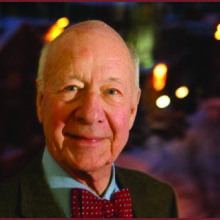
Born in Dresden, Germany in 1930, Peter Hoffmann joined McGill as the chair of German History in 1970. His research focused on World War I and II, as well as the German resistance to Nazism, which were the topics of his published books The History of the German Resistance, 1933-1945 (1977), Hitler’s Personal Security (1979), and Carl Goerdeler and the Jewish Question, 1933–1942 (2011). On Jan. 6,  the beloved McGill professor passed away at the age of 92. Some of Hoffmann’s former students shared their memories of the late academic and mentor with The McGill Tribune

Colin Gilmour worked with Hoffmann as a graduate student after asking him to supervise his doctoral studies. 

“I approached Dr. Hoffmann to be my doctoral supervisor in 2011 because, in reading his work, I saw the kind of historian that I wanted to emulate: One whose research was meticulous, writing clear[,] and one who remained faithful above all to the evidence, wherever it led,” Gilmour wrote. 

Hoffmann was not only active in academia. Gilmour recalls the 85-year-old professor walking home and back for lunch some days and opting for the stairs instead of elevators. His physical energy matched the energy he brought to the classroom.

“[T]he snapshot-memories I shall cherish with the greatest fondness are of course of Peter Hoffmann the man,” Gilmour wrote. “Closing my eyes I see him, as always, with his trademark bow tie, sitting amidst the columns of books that went from floor to ceiling in his small office gathering his hand-written notes and green, blue[,] and red overhead transparencies for a lecture.”

Eliza Wood is another one of the many students who enrolled in Hoffmann’s undergraduate courses. Yet, Wood’s academic life was impacted beyond the three credits added to her transcript. 

“Professor Hoffmann’s seminars caused me to abandon my half-hearted plans to work in politics and instead pursue a master’s degree in history at McGill, where I was Professor Hoffmann’s graduate student and his teaching assistant,” Wood wrote to the Tribune.  

Wood, who first attended a class with Hoffmann in the third year of her undergraduate degree, continued her studies in German history with a second Winter seminar on the German Resistance. She remembers Hoffmann jokingly referring to the returning students as “the necessary ‘old dough’ mixed in with the fresh ingredients used to make bread.”

 “He clearly enjoyed our company—inviting his seminar students to his home for tea, and taking his teaching assistants on a shockingly fast walk for lunch at Schwartz’s,” Wood said. “I feel privileged, 10 years since I was last in his classroom, to have visited with him before his passing. It will surprise none of his former students to learn that despite his illness, in our last conversation, he was still teaching.”

Ellen Gilley, who also took Hoffmann’s undergraduate classes, remembers the questions on his history exams to this day. She describes herself as belonging “to the band of McGill History students who painstakingly selected their courses around Professor Hoffmann’s teaching schedule.” In her letter to the //Tribune//, Gilley reminisced on the 18 credits she took with Hoffmann, which she describes as “the equivalent of a minor at the time.”

“In front of a 200+ person classroom at 8:00 a.m. on a cold, dark morning, professor Hoffmann is intimidating—he is formally dressed, appears stoic, and delivers an 80-minute lecture of pure content.  I have no memory of him ever pausing for a drink or using notes.  But approach him outside of these lectures, and his warmth and genuine interest in his students’ success were at the forefront,” Gilley said. 

Gilley extended her “gratitude and appreciation” for all the additional effort Hoffmann put into teaching. Such dedication must have taken “many hours during nights and weekends.” 

Former students agree that Hoffmann was a professor who made the Department of History and Classics a welcoming environment that fostered learning and curiosity. His presence in McGill’s lecture halls and the stairways of Leacock will be missed, as will his passion for learning and dedication to his students.


Read the full tributes:

Hearing the news that Peter Hoffmann had passed away came as a shock, despite his 92 years. Such a sentiment is almost cliché nowadays, but for all who had the privilege of studying under him as I did, Dr. Hoffmann truly was a giant, not only as a member of the McGill History Department but as a scholar whose lifetime of study shaped the way we look at German history.

To say Professor Hoffmann’s impact upon his field was significant would be an understatement. His works on the German resistance to Hitler remain seminal, fuelled by his unending devotion to making known not only the facts of but especially the motivations behind this movement. So unshakeable was this devotion that he withstood controversy and criticism in his homeland, which has long struggled with the memory and legacy of that terrible time. There are few historians to have achieved the heights of impact and respect that he did in his long career; he was one of the greats.

As one of the fortunate young graduate students, indeed the last, to have worked closely with him in that career, though, my memories naturally focus most strongly on what he meant to me. I approached Dr. Hoffmann to be my doctoral supervisor in 2011 because, in reading his work, I saw the kind of historian that I wanted to emulate: one whose research was meticulous, writing clear and one who remained faithful above all to the evidence, wherever it led. Over the following years, he patiently mentored me, spending hour after hour helping me to understand, to challenge and to be confident in my own research. I can almost see the familiar, elegant blue handwriting in the margins of this page right now admonishing me gently (as he often had to) to be more concise! Sorry Professor, not this time.

Aside from my own research, I also learned about teaching from Peter Hoffmann while serving for years as his teaching assistant. His classes always filled quickly, and were among the most popular in the department. By all undergraduate logic, though, this shouldn’t have been the case. His classes were not easy, he brooked no nonsense for ‘dog-ate-my-homework’ excuses, and, most important of all, they were always first thing in the morning. Yet full they were, and it soon became clear why: he was firm but always fair, treating his students as mature scholars and expecting corresponding commitment in return. On many occasions I saw firsthand how many students identified with and appreciated being challenged like this, and left his classes as more capable and confident thinkers.

One memorable example sticks in my mind: After some less-than-stellar midterm results one day, Dr. Hoffmann announced to one of his classes that as part of their final exam he expected them to draw a map of Europe freehand from memory, including political borders, major cities and rivers. Sitting in the front row, I can still remember the audible gasp and angst-filled silence that followed as students saw their GPAs slipping away. Week-after-week, though, Dr. Hoffmann would encourage them that with practice they could do it, and, sure enough, I saw many hunched over pad-and-paper in the coffee-shops surrounding McGill doing just that over the following weeks. When the final exam came, the other T.A.’s and I were surprised at some of the atlas-quality results. Dr. Hoffmann, however, was not; he knew what his students could do. In later years some of these students would recall their “Hoffmann test” to me with fondness, noting with feeling how much they appreciated being pushed and how well the skill had served them since. It was such things, seemingly so small, that made him such a beloved instructor.

Yet, the snapshot-memories I shall cherish with the greatest fondness are of course of Peter Hoffmann the man. Closing my eyes I see him, as always, with his trademark bow-tie, sitting amidst the columns of books that went from floor to ceiling in his small office gathering his hand-written notes and green, blue and red overhead transparencies (!) for a lecture. Likewise, I recall the amused look in his eyes whenever I, the young grad student, would angle towards the elevator when leaving his office. Peter Hoffmann, the then 85-year-old professor, always took the stairs (Indeed, he often walked several kilometres to McGill from home, and sometimes back for lunch!). Most of all, I can hear the low, chuckling laugh that often followed one of his many stories about the farm where he spent much of his free time, as well as the genuine interest on his face as I told him of my own passions, hopes and goals.

For all of these memories, and the deep and lasting presence which shall be sorely missed around the world amongst his students and admirers, I am grateful to have known him. 

-Dr. Colin Gilmour


At the start of my third year at McGill, I registered for a seminar on Interwar German history taught by Professor Peter Hoffmann. I chose this course just because it fit my schedule, and I certainly did not expect Professor Hoffmann to completely change both my approach to learning and my planned career path. 

Professor Hoffmann began the first class by asking our group of around 15 students a series of questions about the First World War. When I raised my hand to confidently answer a question, Professor Hoffmann informed me that my answer was surface-level and mostly incorrect. I was stunned and stayed silent for the rest of the three hours, just listening and trying to repair my wounded confidence. Looking back, that moment was a breakthrough for me–I needed to have my complacency challenged. 

Because of Professor Hoffmann, for the first time in my academic career I began to slow down and appreciate the mental struggle that precedes real learning. I found fulfillment in spending hours on the sixth floor of McLennan, finding obscure sources on German history and revising my papers to meet his expectations. Professor Hoffmann expected us to push ourselves as we attempted to comprehensively understand every facet of a historical event and he taught us the importance of humility in the face of difficult history.

He challenged us and we pushed ourselves, but Professor Hoffmann also expected us to work as a community and lean on one another. He frequently implored us to meet after class to study and share notes. Any inclinations toward academic selfishness were squashed quickly in Professor Hoffmann’s seminars, because in order to succeed, we had to work together.  

After that first semester, I (as well as several other members of the Fall seminar) eagerly signed up for Professor Hoffmann’s Winter seminar on the German Resistance. Professor Hoffmann jokingly referred to the returning students as the necessary “old dough” mixed in with the fresh ingredients used to make bread. In this course, we continued to practice the rigor and collective spirit that he had drilled into us in the first seminar, bringing the “new dough” into the fold. Together we spent hours trying to understand the actions of resistors in one of the darkest moments of history. We all pushed ourselves to exceed our own expectations and meet his. 

Like many of Professor Hoffmann’s students, I found that the standards he had set in his class became the new baseline for my efforts in all my classes. As I studied, I could practically hear his voice in the back of my head if I was considering cutting corners or leaving out important information. To this day if I begin to type the word “importantly,” I laugh to myself and revise. 

Professor Hoffmann’s seminars caused me to abandon my half-hearted plans to work in politics and instead pursue a master’s degree in history at McGill, where I was Professor Hoffmann’s graduate student and his teaching assistant.

Professor Hoffmann was not just an uncompromising historian and teacher, he was also a kind and helpful man who spent hours with his students in his office hours to help them better understand the material–or just to visit with them. He clearly enjoyed our company–inviting his seminar students to his home for tea, and taking his teaching assistants on a shockingly fast walk for lunch at Schwartz’s. I feel privileged, ten years since I was last in his classroom, to have visited with him before his passing. It will surprise none of his former students to learn that despite his illness, in our last conversation, he was still teaching.

Professor Hoffmann has made an indelible mark on me. He set me on my course to graduate school and ultimately to teaching. He inspired me to expect more of myself and look beyond the grades on my transcript and inwardly question whether there is more I could do to better understand the past. In my classroom today, I try to push my students beyond the simple solutions and help them strive for deeper understanding. Professor Hoffmann’s passing is a great loss. The hundreds of students he impacted will miss him and we are grateful for all he taught us. 

-Eliza Wood


What international treaties were signed between 1871 and 1914? What were all the land battles fought on the Western Front during World War I (in chronological order) and what were their outcomes? What five minutes changed the outcome of the War in the Pacific? Any student of Professor Peter Hoffmann’s World War I and World War II history classes will remember the fact-based questions of his exams and his commitment to rooting his research and teaching in primary source documents. The  fact that I can recall some of these exam questions over 15 years later is a testament to the force of his presence and thoroughness of his teaching. 

I belong to the band of McGill History students who painstakingly selected their courses around Professor Hoffmann’s teaching schedule. Through good timing, I was able to take his classes on the history of World War I and World War II, his year-long seminar on the German Resistance to National Socialism, and his two individual seminars on German History from 1918-1933 and from 1933-1945: altogether, 18 credits of Hoffmann (the equivalent of a minor at the time).  Initially, I saw his fact-intensive approach to history as a challenge. I liked reciting timelines with precision and viewing history in these concrete terms.  What became apparent in our smaller seminars, however, was that these facts simply provided an infrastructure for analysis.  The goal was never to stop at a two-dimensional view of history as a timeline or the people as good or bad actors. Rather it was to carefully evaluate each piece of research to gain insight into the complexities of the time—including the personalities, political climate, society, and conflict.  He taught us to evaluate all evidence, question our perceptions, and acknowledge—not obscure—the inconsistencies, limitations, and disagreements across sources.  By doing so, we could first understand what happened and then, to the extent possible, why.

Beyond the academic rigor he demanded, what made Professor Hoffmann such an impactful teacher was his dedication to his students.  Admittedly, it surprised me.  In front of a 200+ person classroom at 8:00AM on a cold, dark morning, Professor Hoffmann is intimidating—he is formally dressed, appears stoic, and delivers an 80-minute lecture of pure content.  I have no memory of him ever pausing for a drink or using notes.  But approach him outside of these lectures, and his warmth and genuine interest in his students’ success were at the forefront.  During one of our meetings, I was frustrated with the progress of a paper, and he could tell. Without my prompting, he suggested I have a week extension, take a few days off, and return to the sources without driving an agenda.  During our small group seminars, he rewarded us with a beaming smile during productive conversations, challenged us with pointed questions and new research, and, every so often, added levity with a joke—of course, delivered so dryly that he had to clarify.  He invited us into his home, spoke of his family history, introduced us to his wife, Helga, and continued to answer questions long after graduation.

It would be hard to overstate the impact Professor Hoffmann has had on me.  Professionally and academically, I continued to study regime changes and the impact on international relations, culminating with a clerkship on an international tribunal.  Analytically, he taught me to be exacting and rigorous and not distracted by initial theories.  Most of all, through his group seminars, he showed me the value of sharing knowledge and seeing others as teammates and colleagues, not competitors. To his family, please accept my gratitude and appreciation for everything he did to prepare for classes and support his students; I can only imagine this took many hours during nights and weekends.  I am a better student, lawyer, and teammate because of him.

-Ellen Gilley

Emerging Trends, Student Life

Bringing the outdoors in: How to make your student apartment greener

A healthy indoor plant is seen as the mark of a student life well-balanced. Not only do they add a touch of colour and life to any living space, but they also provide numerous health benefits. For many McGill students, however, caring for these green babies can be a challenge. From a dearth of sunlight in cramped bedrooms to long breaks with nobody home, keeping indoor plants alive and thriving can be a difficult task. Whether you have a green thumb or are a keen beginner, read on to learn more about the benefits of indoor plants and how to care for them in your student apartment. 

Benefits of indoor plants

Houseplants are an affordable way to add a touch of nature to your indoor spaces and enhance the overall aesthetic of your home. This decorative appeal prompted Eléonore Beauregard, U3 Science, to buy some houseplants for her apartment. 

“They make great décor that is not super expensive and doesn’t encourage overconsumption,” Beauregard said. “When they flower, it’s the best feeling to know that I’ve cared for them so well.”

Indeed, houseplants are known to have certain psychological benefits. Taking care of living creatures, watering and fertilizing them, and removing dead leaves can be therapeutic. Caring for your plants gives you a purpose and, when they bloom, you feel rewarded. 

Additionally, the bright green colours and earthy feeling that these plants produce will reduce stress levels and elevate your mood. 

For Kenza Zarrouki, U3 Arts, living in a windowless bedroom has made caring for plants even more special. 

“I recently purchased several plants, and they bring life into my tiny bedroom,” Zarrouki said. “This is very soothing and makes me feel much better, especially since I don’t have a window and my room can get very dark.”

Through the process of transpiration, plants also add humidity to the air, which can help combat the dryness of cold winters. They also absorb carbon dioxide and release oxygen, helping keep the air fresh. 

Overcoming the challenges of student apartments

Many students find themselves in small apartments with low levels of natural light and, like Zarrouki, often do not have a window in their bedroom. This presents the biggest challenge for indoor plants that need light to grow. To combat this, Professor David Wees, Faculty Lecturer in the Department of Plant Science at McGill, recommends investing in a plant-based alternative. 

“Light will always be a limiting factor. So for someone with a small apartment and the only light is a north-facing window with no direct sunlight, you might want to consider putting in a plant light,” Wees said in an interview with The McGill Tribune.

Another reason why maintaining healthy plants may be challenging for students is the limited time spent at home. Camille Lederer, U3 Environment, finds the time needed to grow most plants a particular challenge as an international student. 

“When I go home for summer or winter breaks, my plants don’t survive,” Lederer said. 

Thankfully, certain plant species, such as succulents, are better adapted for students in these situations, especially for those who are away for long stretches. 

“Plants that people like to use indoors include the spider plant since it is easy to grow,”  Wees added. “Another one is the snake plant––it is very drought-tolerant, so you can forget to water it for months and it will survive. Finally, pothos is great for low light. One thing to look out for is that it’s not as drought-tolerant, so you need to water it at least once a week.” 

Once you have purchased your plant, there are some final things to keep in mind. To ensure your new plant thrives, remember to not over-water it, which can lead to root rot. Also, when introducing a new plant to a room with existing plants, it’s a good idea to place it in quarantine to prevent the spread of bugs or parasites. 

With all of this in mind, you’re ready to start your own plant oasis. Happy gardening! 

Read the latest issue

Read the latest issue