

Latest News

McGill, News

McGill Senate wrangles over ‘academic excellence’, New Vic, and donations

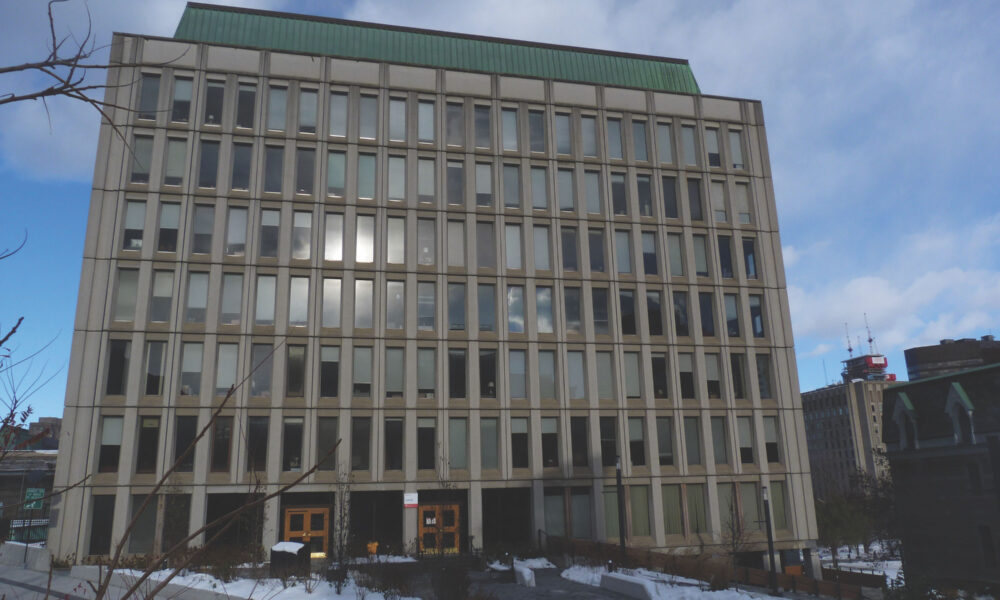
The McGill Senate convened in room 232 of the Leacock Building for the third meeting of the academic year on Nov. 16. Senators delved into reports from the Senate Nominating Committee and Academic Policy Committee, and participated in an open discussion on the university’s evaluation of “academic excellence” among professors. After several Senate committees presented their annual reports, conversation turned to recent donations and McGill’s New Vic Project.

Christopher Manfredi, Interim Principal and Vice-Chancellor, opened the meeting by addressing the recent provincial elections and expressed his wishes for better engagement with the re-elected government. Discussion then broke into tables of senators, who were asked to ponder how the university community conceptualizes “academic excellence for academic staff.” 

Senator Patrick Hansen, an associate professor at the Schulich School of Music, pointed out that measures of “excellence” will be evaluated uniquely in every discipline. Terri Givens, professor of political science and the Provost’s Academic Lead and Advisor on McGill’s Action Plan to Address Anti-Black Racism, elaborated on how traditional measures of “excellence” can work against those in marginalized fields.

“I’ve experienced this personally, when you are working in areas that are considered, you know, on the sidelines of a discipline, it’s often difficult to publish in the top journals,” Givens said. “We have to be very careful about […] how we assess these things like h-scores, [which] don’t necessarily apply. Somebody can be seen as a really top scholar in a field that just doesn’t get a lot of the same traction as other fields.”

Senator Sam Baron, a student representative for the Faculty of Arts, pointed out the importance of centring the student experience by hiring good lecturers, not just good researchers.

“The professors who are going to be here permanently in such a capacity should, of course, be the best of the best at passing their knowledge on to the next generation of students who are coming into the field,” Baron said.

In response, Manfredi admitted that McGill has not yet found the perfect mechanism for evaluating both the research achievements and the teaching prowess of teaching staff. 

The Senate then moved to the Annual Report on University Advancement, which outlined the donations made to McGill during the 2022 fiscal year, over which a total of $241.8 million was raised in gifts and pledges.

“Donors have helped us build the number one student aid program in Canada, allowing us to welcome the second largest proportion of students from lower socio-economic backgrounds in the province of Quebec,” said Vice-Principal (University Advancement) Mark Weinstein. “We also launched, during the pandemic, the student emergency fund, and in the past year we received over $130,000 in gifts from over 1,000 donors for this important cause.” 

David Vaillancourt, a senator representing undergraduates from the Faculty of Engineering, questioned how the university will fundraise for the New Vic Project in the wake of McGill’s recent loss to the Kanien’kehá:ka Kahnistensera in the Superior Court of Quebec.

“It’s obvious to me that fundraising is completely inherent to the university’s continued existence and excellence,” Vaillancourt stated. “But I would caution, specifically with the fundraising of the New Vic, to really read the room and fundraise in ways that are socially appropriate given the situation.”

Moment of the meeting: 

When presenting the Annual Report on the Investigation of Research Misconduct, Dr. Christina Wolfson mentioned a general rise in cases flagged for investigation, with funding now being spared for a Research Integrity Officer. Wolfson described an “increase in the number of anonymous allegations from colleagues,” which was met with nervous laughter amongst many in the Senate.

Soundbite: 

“I would really like to thank the disciplinary officers for their service, this is not a fun job to do.” — Dean of Students and professor Robin Beech, upon presenting his first in-person Annual Report on the Code of Student Conduct


Creative, Video

Fashion at McGill

Multimedia Editors Wendy Lin and Anna Chudakov are joined by Contributor Atta Wongsuchat talk to McGill students about fashion on campus.

McGill, News

McGill Board of Governors and Senate discuss barriers to accessing internships and exchanges

At 4 p.m. on Nov. 10, Chancellor John McCall MacBain kicked off the first in-person joint Board of Governors (BoG)-Senate meeting since 2019. The meeting, which took place at the Faculty Club at 3450 McTavish Street, centred on “experiential learning at the local, national and international levels.” Attendees worked to identify and resolve hurdles that prevent students from accessing internships and foreign exchanges through the university.

Deputy Provost (Student Life and Learning) Fabrice Labeau set the tone for the evening by highlighting the importance of the university’s Enriched Education Opportunities (EEO) while also acknowledging that McGill has not done enough to promote them.

“[EEOs have] academic benefits for students, bringing them closer to the real working world, out of their comfort zone in the classroom,” Labeau said.

Citing the financial, academic, and administrative concerns of students considering EEOs, Labeau added that McGill hopes to provide better financial support to student interns. Labeau also said that the university would expand efforts to advertise foreign exchanges to the student body. 

Three questions were laid out for small-group discussion amongst members: What types of EEOs McGill should fund and promote, what could be done to remove barriers to these new programs, and whether they should focus on local or global opportunities.

Interim Principal and Vice-Chancellor Christopher Manfredi stated that against “the inevitability of rapid change,” McGill students should be prepared with skills suitable for both academic and practical environments. This was a general consensus among members, with McCall MacBain pointing to a need to “create and support bridges to industry.” 

One member of the BoG suggested that the federal government’s recent increase of the number of working hours authorized on international study permits should be seen as a chance to expand opportunities for international students. 

Members of the BoG and Senate also urged the university to take advantage of its network of successful alumni when pairing students with organizations for internships. In the same vein, attendees called for EEOs to count towards course and credit requirements. 

One member of the Senate added that McGill should require all students to submit a resume to the university so as to best pair students with opportunities.

One of the most consistent contributors to the meeting was Students’ Society of McGill University vice-president (VP) University Affairs Kerry Yang. 

Yang believes that both financial costs and the “bureaucratic red tape [surrounding] EEOs” are “putting off students” from taking the opportunities available to them. Not only do internships and exchanges rack up costs in travel and rent, but opportunities outside of Canada are often unpaid, leaving students without an income for an entire summer. He also called for opportunities that were “more than just research in science.”

Yang added that these opportunities should not only be available and affordable, but easily accessible, too—McGill should actively pair opportunities in specific fields with students interested in those fields. 

“It is often the responsibility for students to search for internships themselves rather than have McGill actively work to bring internships to McGill itself for students to choose from,” Yang wrote in an email to The McGill Tribune following the meeting. “I believe there needs to be more resources dedicated towards bringing these opportunities inward rather than having students search outwards.”

Moment of the meeting: While discussing the financial burdens placed on students doing unpaid internships and exchanges, Chancellor John McCall MacBain fielded suggestions from the floor. Following heckling from the tables of Senators and Governors, jokes began on the size of his microphone, with him declaring “mine’s bigger” than the microphones prepared at each table. This was met with laughter from the floor.

Soundbite: “We must begin humbling ourselves and recognizing that other universities have more and better co-op schemes.” —Chancellor John McCall MacBain on McGill’s shortcomings in offering student learning and work opportunities

McGill, News

Dr. H. Deep Saini to become McGill’s next Principal and Vice-Chancellor

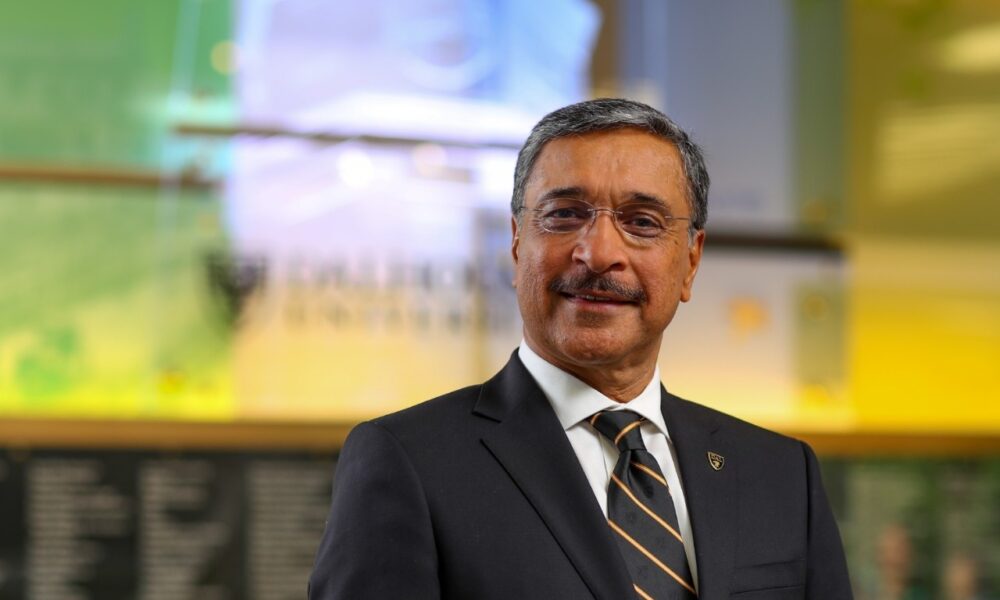
On Nov. 14, McGill announced that Professor H. Deep Saini will be the next Principal and Vice-Chancellor of the university. The Principal is tasked with representing the university on the global stage and helping shape the future of the institution. 

Saini will take over the role from Christopher Manfredi, who has occupied the position of Interim Principal since McGill’s former Principal, Suzanne Fortier, stepped down at the end of August. McGill Principals serve five-year appointments, and Saini will begin his first renewable term on April 1, 2023. 

Saini holds a Master of Science (Honours) in Botany from Punjab Agricultural University in India and a PhD in Plant Physiology from the University of Adelaide in Australia. He is currently serving as Principal and Vice-Chancellor of Dalhousie University, a role he has occupied since January 2020. He will be McGill’s first non-white Principal in its more than 200-year history.

McGill Principals are approved by the Board of Governors (BoG) upon recommendation from the Advisory Committee for the Selection of the Principal and Vice-Chancellor, which was assembled after the university announced in January 2022 that Suzanne Fortier would be departing. In a statement to The McGill Tribune, McGill media relations officer Frédérique Mazerolle elaborated on the role of the Advisory Committee, which is composed of 14 people, including members of the BoG, faculty, students, and outside consultants.

“The Advisory Committee was responsible for defining the role and set of competencies for the position of University Principal and Vice-Chancellor,” Mazerolle wrote. “As part of the Committee’s work, consultation sessions were held with various groups and individuals in the University.”

Richard Gold, a law professor at McGill, sat on the Advisory Committee that unanimously nominated Saini. He is confident that Saini will bring much-needed transparency and trust to McGill.

“There was a hunger for someone who was transformative—that is, someone who would not merely rely on McGill’s past glory but who understood that a contemporary university needed to actively embrace the world and current problems,” Gold wrote in an email to the Tribune

“We heard a strong desire for someone who does not just speak about [Equity, Diversity, and Inclusion] but who embodies it and is committed to it. I believe that Dr. Saini is such a candidate, someone who will strive to repair the broken trust on campus, who will restore collegial governance, and who will engage rather than talk down to us.” 

Kerry Yang, Students’ Society of McGill University (SSMU) vice-president University Affairs, expressed similar optimism about Saini’s leadership. Yang, who also sat on the Advisory Committee, felt great responsibility representing the undergraduate student body, stressing the importance of choosing a leader who would communicate with students and take student advocacy to heart. 

“Even though Suzanne Fortier did a good job, she wasn’t able to really connect with students,” Yang said. “Being able to sort of find a next Principal who is more student-centric, is able to connect with them […]I think was something that I really went on.” 

Karol Kapsa, U3 Arts, hopes the new Principal will work to address the staffing shortage and program cuts they have witnessed during their time at McGill.

“I know like in the English Department and other Arts departments, there’s been a serious lack of just teachers, of like, professors, to the point that a lot of undergraduate courses, and programs are getting slashed because like [Master’s] students take priority,” Kapsa said in an interview with the Tribune. “That’s pretty worrying to see, like the wheels just kind of feel like they’re falling off after COVID.”

According to Gold, a smooth transition of power should be a priority for the McGill administration ahead of Saini’s arrival. .

“As we go through the next few months, I hope that the current administration will start building bridges so that Dr. Saini starts with a strong and united community,” Gold wrote.

Off the Board, Opinion

I’m so tired of being a person of colour

It’s a thought that fills me with unparalleled shame. As soon as it forms, I want to bury it. But as I sit with my friends, at home, at work, I feel the burden of existing as a radical act, as political praxis: The thought creeps back in. How do I stop dwelling on something I will never be? How do I stop imagining my life without this roadblock? How do I accept this relentless stream of oppression as normal?

These days, when I, or those around me, experience racism, all I feel is a resigned exhaustion. As I desperately grasp for the anger I know must be inside me, I can’t help but wish it were different, that I were different. I get lost in the daydream.

I imagine being vocal, loud, and confident in my opinions without being characterized as aggressive. I imagine being allowed to only have a surface-level, condemnatory understanding of racism. Ignorance is a bliss I too often long for and trust me, I’m ashamed of it. A world where all my articles are not somehow related to race, because my life does not revolve around it. Where I don’t give up, smiling like I don’t care, shortening my name to “Sepi” whenever somebody mishears me (no matter how many times I promise myself I’ll stop).

I snap back. Back to the place where people press their arms up against mine, “oh my god, you’re fully Persian? I’m, like, way darker than you though!” The look of pity when I say I’m from Iran is one that I can’t stand. White people tell me that it is so great that I work hard to humanize the people in Iran when all I’ve done is talk about their current struggle. As they leave the conversation, happy with their anti-racism, I am left wondering what they saw in front of them before I was humanized.  

A defining feature of musing with whiteness is the overwhelming need for secrecy. It isolates me. I could never mention the exhaustion of being racialized to non-racialized people because this is not the strength expected of, almost mandated onto, people of colour. When allyship is so fragile, any wrong move can project “allies” into a frenzy rife with racist sentiments. I am not allowed to represent myself. I am a woman of colour, a journalist of colour, an unwillingly elected representative. The consequences of every mistake I make will reverberate on all those I am forced to represent. And it’s scary. 

When I speak with “too much” emotion, when I use the sharp words that come to me too naturally, I play it back in my head a million times. I lay in bed, paralyzed by fear, condemning myself for making mistakes, for being human, for forgetting that I am not allowed to be. Some days I worry my passion will be permanently muted out of fear. Will this silencing come from my surroundings or from me? The question haunts me.

I wish I could present a solution for this exhaustion, but I don’t have anything. I don’t need to have anything yet. All I know is that writing it down helps. That talking to other people of colour helps. I make a home out of people of colour I love, make sure they know that my heart aches for them as I watch them be forced to mince their words the way I work hard to mince mine. As sad as it makes me, not sharing a fake smile or greeting but exchanging an exasperated, defeated, “I’m so exhausted,” acts as solidarity and understanding in a way that I cannot fully describe. And right now, maybe that’s all we’ve got.

Editorial, Opinion

Unionize McGill

On Nov. 8, the Association of McGill Professors of Law (AMPL) became McGill’s first professor’s union. The AMPL, which represents tenured and tenure-track professors, filed to certify their union in November 2021. However, they faced a combative McGill administration that attempted to discredit the AMPL’s attempts every step of the way through aggressive litigation. The university’s attempts to prevent unionization are disappointingly consistent with a history of indifference and hostility towards workers’ rights. Despite this victory for McGill professors, university employee organizations are still fighting for their rights, and the momentum from the AMPL’s unionization must be harnessed to improve workers’ rights for all of McGill. 

The university’s litigation stood on the grounds that law professors were already represented by McGill’s Association of University Teachers (MAUT) and that it would be unfair to prioritize the unionization of law professors over others. This argument, however, conveniently ignores that MAUT cannot represent workers’ rights in the same capacity as a union. The AMPL argued that a faculty-specific union is important to preserve its members’ rights in a highly-centralized university. Despite these arguments, McGill assembled student tuition dollars to fund a litigious union-busting campaign against attempts to receive proper representation from professors at its very own law school. 

Unionization gives workers the power to negotiate with their employers through collective agreements:A framework to defend their rights, avoid exploitative contracts and salaries, and create safer working conditions. In 2020, Quebec had the highest rate of union coverage in all of Canada. Despite this, prior to the faculty’s win, McGill was the only Quebec Labour Tribunal Federation member where no professors benefitted from negotiated employment contracts. This allowed the McGill administration to trample on professors’ rights: They are overworked and baited with the prospect of tenure while the university maintains its prestige. A blatant example of McGill’s disregard for law professors’ rights took place during the COVID-19 pandemic when the administration forced instructors to teach in person and refused to implement a vaccine mandate despite persistent pleas from the faculty. 

The untenable working conditions that law professors endure are consistent with McGill’s treatment of its workers beyond the classroom. In Winter 2022, students at the McGill School of Social Work went on strike after McGill refused to offer online options for students, knowing their in-person placements were a risk to both students’ health and that of the communities they serve. In the past year, two unions representing non-academic employees at McGill, the Association of McGill University Support Employees (AMUSE) and the McGill University Non-Academic Certified Association (MUNACA), went on strike due to abhorrent working conditions and unfair pay. As of Sept. 13, only one of McGill’s 14 labour unions has an updated collective agreement with the university due to internal administrative delays. Collective agreements dictate the wages, hours, and working conditions of unionized members, and because of their delayed renewals, most union workers are being paid outdated salaries that are not adjusted to inflation or minimum-wage increases. 

Although AMPL’s unionization is a big victory, it is important to note that its membership is made up of predominantly white, socioeconomically advantaged men. Meanwhile, non-tenured lecturers and teaching staff, who are more likely to experience precarious working conditions, still do not have an updated collective bargaining agreement. The AMPL has laid the groundwork for the unionization of other faculties at McGill, who must follow the AMPL’s example as soon as possible and take advantage of this ruling’s momentum. This decision, however, must also motivate a renewed push to support the rights of unionized workers, like those represented by MUNACA—who have been in an ongoing fight with the McGill administration to secure a collective agreement and improve their conditions. 

The Faculty of Law’s push for unionization is especially significant as they are educating a future generation of policymakers to understand the importance of the right to collective organization and representation. The security and protection provided by unions will facilitate better teaching from professors, who will be put on equal footing to advocate for their rights to the McGill administration. The AMPL’s work is commendable and sets a historic precedent for all McGill workers. Moving forward, McGill students must encourage professors in positions of leadership to advocate for unionization, and recognize that all workers at McGill should be treated with respect and dignity.

Erratum: A previous version of the article stated that all teaching staff did not benefit from a negotiated employment contract at McGill before this certification. In fact, it is all professors who did not benefit. The Tribune regrets this error.

Commentary, Opinion

On queer space, futurity, and inclusion

It’s Friday night and you’re done with midterms. You leave the heteronormative institution (if you really ever can), text a few friends, pick your favourite club, and dance the night away. You’re listening to queer icons––Cher or Madonna, Gaga or Rihanna, Diana Ross or Gloria Gaynor, Fiona Apple or Kim Petras, take your pick. When Gaga, hitting new heights in “Free Woman,” sings “This is the dance floor / I fought for,” we must remember this place remains a welcome site of refuge, of possibility for queer life. You feel unbound to heteronormativity, you see a new world on the horizon.

A perplexing problem arises when considering the very fact that this night seems universally enjoyable. What’s better than spending the night with some of the best dressed or funniest or most dynamic people you will find? Why wouldn’t straight people want a queer world? On a serious note, for straight women or women who do not label their sexuality, queer spaces can be one of few places where there isn’t the outright threat of predators, protected by patriarchal (or frat) legal systems. This rings true, even despite the fact that intracommunal violence affects lesbian women and queer men can still be aggressive. 

By “queering” our mainstream, public cultures propel rights and advancements––do queer people exist if they are not seen? While understandable, straight people’s increased entrance into queer spaces of gathering should be addressed critically. In fact, this problem, minor yet overplayed, detracts from the ways queer spaces––tending cis, white, male, and gay––currently do not serve or promote the diversity of the community.

Typical points about keeping queer spaces queer rest on dangerous, exclusive premises upheld by interlocking systems of domination. We fall down slippery slopes by insisting everyone must be queer. How does one prove this? Queer people of colour do not have the same, full privileges of disclosure that white queer people often conceal. Your coming out story is valid and important. You are heard. And we also see you. We see the spaces you hold. Thank you for teaching us the word intersectional.

We need queer spaces that centre not on profit, not on drinking cultures exclusively, but on inclusion and listening. For instance, the police regulate Black and Indigenous embodiment and transness––identities so often transcending the limited and repressive Western sense of the binary. They are threats to white supremacy, patriarchy, and heteronormativity. People want to venture into these spaces without suffering a politics of recognition that alienates them. I worry that this surveilling mode, both in its informal approach and its business strategy, of “knowing one’s queerness” legitimates an unjust security apparatus. We have internalized that establishments must know everything about their patrons to manipulate them, and this system works to kill us all and our planet. Alternatives abound.

You might be thinking: “We fought for this very approach!” We can do better. Perhaps our more radical ancestors can help us return to our community, re-vision this contested, uneven ground. It starts from a multitude of communal forms of being with each other that do not rely on sex, alcohol, or drugs, and that do not replicate the chains that bind us. Isolating our queer comrades who do not partake for religious reasons and our queer family members in recovery, we raise a momentary, and even unbeatable, buzz over our shared experiences. This haze blocks other opportunities from materializing, trounces networks of solidarity. The potential of queer libraries, cafés, and bookshops matter, but so do democratic and popular forms beyond institutions. 

In taking these simultaneous options of the specialized bar and public space, and the uninstitutionalized private space with care, we may find pathways to inclusion. If queer culture values constructed spaces above all with no liberatory force, we neglect meaningful transformation, like with the land; we obfuscate queer complicities in the settler colonial project here and abroad. Where we can converse, find joy, love, and hope from one another across our differences, and no longer be alone, is where we can be authentically queer.

Behind the Bench, Hockey, Sports

Mitchell Miller and hockey culture’s continued failure

Content warning: Racism, ableism, physical assault, bullying

What comes to mind when you think of hockey culture? Sexual assault? Hazing? Racism? There is no doubt that the culture of Canada’s game is a travesty to all those it touches. The recent Hockey Canada scandal has provoked an unprecedented level of scrutiny regarding the sport’s culture and despite public outcry for systemic change, the Boston Bruins signed defenceman Mitchell Miller to an entry-level contract on Nov. 4. 

In 2016, Miller and a fellow classmate pleaded guilty to one count of assault and one count of violation of the Ohio Safe Schools Act. From the second grade onwards, Miller emotionally and physically abused Isaiah Meyer-Crothers, a Black and developmentally disabled classmate. The bullying ranged from racial slurs to physical attacks, with Miller repeatedly calling Meyer-Crothers the N-word and forcing him to eat a piece of candy that had been rubbed inside of a urinal. At the time of his plea, the juvenile magistrate contended that Miller showed no remorse for his actions. 

In 2020, the Arizona Coyotes selected Miller in the fourth round of the NHL draft. Upon receiving major backlash, the Coyotes renounced their rights to Miller. In an attempt to absolve themselves of blame, Arizona cited a background check that did not involve contacting Meyer-Crothers or his family and a desire to be “part of the solution.” In a letter to the Coyotes following the draft, Meyer-Crothers’ mother outlined the damage that Miller inflicted on her son and explained that Miller had continued to harass Meyer-Crothers for two years after the court case had been settled. The Coyotes did not respond. 

Many, including Meyer-Crothers’ family, believed this would be it for Miller. He was cut from the University of North Dakota hockey team and sat out the 2020-21 season. But Miller was given yet another chance, returning to his former United States Hockey League (USHL) team, the Tri-City Storm. Not only did Miller play, he was awarded USHL Player and Defenceman of the Year for the 2021-22 season. 

This recognition from the USHL put Miller back on the NHL’s radar. Almost two years after the Coyotes scandal, the Bruins moved forward with his signing. Anticipating backlash, the team reassured fans that they had worked on the signing for “almost a year” and believed Miller deserved a “second chance.” 

In the days following, the Bruins and Miller’s agent doubled down on their decision, citing attempts at “restorative justice” and releasing disingenuous statements about working with organizations to help “rehabilitate” Miller. Once again, neither Meyer-Crothers nor his parents were contacted by the Bruins as general manager Don Sweeney did not believe it was necessary.

After three days of public outcry from fans, media, and even the Bruins locker room, team President Cam Neely announced that, based on “new information”, the team would “part ways” with Miller. Neely claimed the team believed that Miller’s pattern of abusive behaviour was an “isolated incident” and concluded his statement with a warning “as a father” to young people that the repercussions of “careless behaviours” can be felt for a lifetime. 

On Nov. 9, Meyer-Crothers released his own statement on the Hockey Diversity Alliance’s Twitter account detailing the ways in which Miller tortured him. He spoke of racist and hateful messages he has received from those defending Miller on social media. He described Miller’s insincere attempts at an apology, and ended with the heartbreaking line: “I can’t take more of this.” 

Despite NHL commissioner Gary Bettman condemning the signing, Miller’s contract would have been approved by the NHL’s central registry as per the collective bargaining agreement. Regardless, the Bruins will likely have to pay Miller’s contract through the 2022-23 season and many believe that the NHL Players Association will file a grievance on Miller’s behalf despite him not having played an NHL game

Playing in the NHL is a privilege. A privilege that cannot be extended to those who display a pattern of anti-Black and ableist abuse. Professional hockey leagues cannot continue to exist for the purpose of saving privileged white men from their actions—they need to be punished. And until they are, hockey will continue to fail.

Basketball, Behind the Bench, Sports

The NBA: Notoriously Bad (at) Accountability

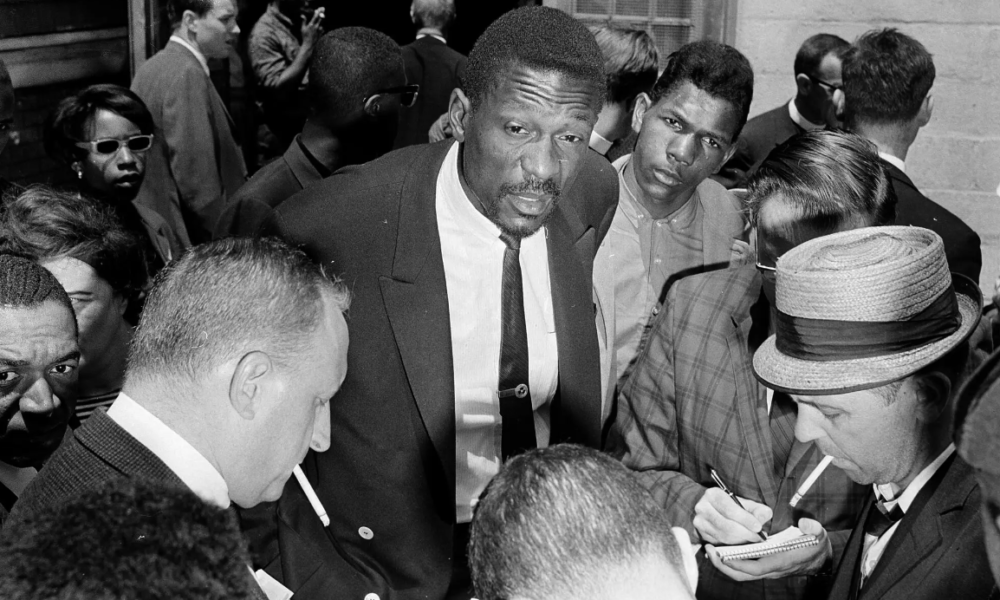
From its inception, the National Basketball Association (NBA) has not only been an arena for high-flying hoopers, but also for advocates for equitable sport. The league began as an all-white initiative following the commercialization of the sport in 1946. Black athletes began to be integrated in 1950, but did not reach high levels of visibility until two Hall of Famers emerged onto the scene in Wilt Chamberlain and Bill Russell. Russell stands as one of the bastions of Black civil rights leadership, pushing for Black civil rights from his entry into the league until his recent death. His legacy as a vocal player has been adopted by many who play in the league today. Efforts within the NBA to hold each other to an equal standard of accountability, however, are lacking, especially between players. 

Players have begun to harness social media and accessible sports journalism to ensure that their personal activism echoes across their platforms. What began with Russell boycotting a game to protest segregation in 1961 culminated in the NBA’s single largest boycott by its players to rally against police brutality in the summer of 2020 amidst a global pandemic. 

As the league has exploded with talent and profitability, the breadth of the individual players’ voices has grown accordingly. Advocacy on grassroots levels from players across the league has demonstrated the power of individual players’ voices in realms outside of basketball: Michael Jordan showed that dominant play and off-court charisma could turn a hooper into a global icon, but players such as Chris Paul and Giannis Antetokounmpo showed that meaning behind play could turn icons into activists.

NBA players have demonstrated a willingness to advocate for equality and condemn external discrimination, whether that be supporting the Women’s National Basketball Association, taking a stand against police brutality, or supporting the economic empowerment of Black communities.

But outspoken advocacy in the NBA has historically been met with resistance, often resulting in players being blackballed from the league. In 1993, three-time NBA champion Craig Hodges handed George H. W. Bush a letter denouncing the treatment of Black communities during the Bulls’ post-championship White House visit and has not played a minute in the NBA since. In 1996, Mahmoud Adbul-Rauf boycotted the national anthem and, despite putting up career-highs in stats, was traded, cut, and denied NBA tryouts to rejoin a team. 

The onus of accountability for racial, religious, or economic equality has been placed on NBA management, but rarely its own players. The NBA Players’ Association (NBPA) formed as a union to address financial inequality through their first collective bargaining agreement under Bob Cousy in 1964. In 2005, they fought David Stern and his efforts to whitewash Allen Iverson’s “ghetto realness.” The NBPA grants players representative power in many domains, but addressing discrimination from among their own is not yet at the top of their priority list. 

It is no secret that the NBA has had difficulty managing forms of racial discrimination among its players. Taiwanese-American Jeremy Lin has often spoken about anti-Asian discrimination in the league, such as his experience being called a “coronavirus” on the court. Even so, it was only after his retirement that he felt comfortable speaking out. As recently as September, Timberwolves superstar Anthony Edwards broadcasted homophobic slurs on Instagram before issuing a PR-led Twitter apology. In late October, Kyrie Irving tweeted a misinformative documentary filled with anti-Semitic narratives, quickly following it up by peddling Alex Jones’s New World Order conspiracy.

On all these matters, the league’s most vocal advocates, its players, have been eerily silent. Hall of Famer Reggie Miller is one of many voices condemning such stillness, saying that players leaving such discrimination unaddressed is disappointing to many in a league built on the shoulders of activists.

An arena within which advocacy was once taboo has now become a catalyst for change, as players have begun to use the basketball-industrial complex to their advantage. Loose standards of accountability targeting only league management have tarnished such conceptions of advocacy, as a culture of discrimination remains rampant. The issue is not one of regulation, but rather education to prevent further injustices. To follow in Bill Russell’s gargantuan activist footsteps, the NBA’s players, as well as its management, must commit to the condemnation of bigotry in all its iterations, and they must begin immediately.

Arts & Entertainment, Dance

Contemporary dance ‘If My Body Had a Name’ narrates one dancer’s path to self-restoration

Syrian dancer and choreographer Hoor Malas is cloaked in a pink shawl, lying in near-darkness in a fetal-like position on the floor. Malas’s breaths echo through the performance space. Her arm extends weakly, yet with purpose, as she attempts to pull herself over to the singular illuminated light, beaming at her eye-line on the opposite side of the stage. Thus commences the four movements of If My Body Had a Name, a fervent and vulnerable psychosomatic exploration of self through dance.

The contemporary piece, inspired by British author Ken Robinson’s link between the mind and the body, was Malas’s first endeavour as a solo creator. It was produced jointly by Montréal Arts Interculturels (MAI) and Danses de résistances and ran from Nov. 3-5 at MAI. Using Stockholm-based musician Shadi Ali’s compositions and Montrealer Mark Croteau’s lighting designs, If My Body Had a Name addresses Malas’s relationship between her mind and body, investigating the hand and full-body gestures she frequently encountered in Syria during her youth and revealing their influence on her through various life stages.   

The first movement portrays Malas in-vitro. In near-darkness and silence, she is a being that has yet to develop, but is already experiencing struggle. Malas pursues light after light––small bulbs that surround the stage floor––each one going dark until, at last, the light remains on, projecting a quasi-birth as Malas removes her shawl. What follows in the second movement is a physical self-realization of infancy and childhood: In one moment, she sits, observing her hand as if just discovering its existence. In the third and fourth movements, Malas examines her adolescence and adulthood, respectively. In my conversation with Malas, she explained that each movement grapples with “a certain amount of time and certain ideology of a place.” 

This phenomenon is particularly present and poignant in the third movement. Malas places herself in squares of light on the stage floor—each associated with a specific gesture. In one, she salutes, alluding to the presence of military ideology in her Syrian education. She flits from square to square, frantically repeating motions and poses—a nod to how imposed ideologies harmed her ability to shape her individuality. The movement prompts the audience to consider what forces have influenced their own identities. One member (whom Malas later told me was a friend of hers from Syria) was moved to tears. 

If My Body Had a Name showcases ragged, disconnecting movements, with moments of bodily isolation that expose the mind-body struggle endured on her journey of self-discovery. Malas’s talent is evident in the piece’s fluidity. Slower, sharper, articulated motions display her masterful control and quality of movement. The soundtrack seems to inform Malas’s dancing rather than guide it; the two, along with the lighting, are intimately engaged with one another. The piece was obviously rehearsed with purpose, but Malas gives glimpses of improvisation. She incorporates flairs of creativity that add to the piece’s genius and vulnerability as a genuine, stripped expression of the self. 

In our conversation, rehearsal director Neil Sochasky described this vulnerability similarly, saying, “[the dance] is very naked […] what made it seem this way is [Malas is] not hiding behind techniques and tricks.”

In If My Body Had a Name, Malas uses dance as an expressive medium similar to that of a diary. Through movement, Malas, jarringly yet gracefully, addresses past traumas and victories. Focusing on the individual mind and body, she extracts herself from the impositions and interpolations of the external. The contemporary choreography, along with her use of Syrian gestures in the piece, resists and reclaims the power that individuals and institutions previously held over her, finding hard-fought peace at the performance’s end. Malas’s connection to dance provides catharsis in dissecting her traumas, but not everyone would approach such journeys similarly.  If the mind and body may be reconciled for Malas, perhaps they can be for everyone. 

Read the latest issue

Read the latest issue