

Latest News

News, SSMU

SSMU’s VP Operations and Sustainability executive position remains vacant despite attempts to fill it 

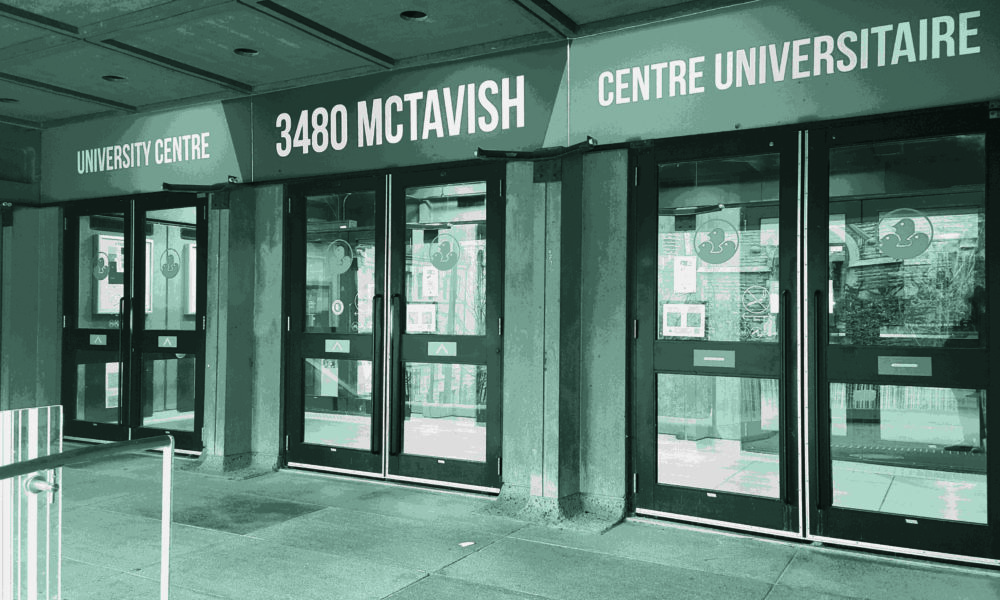
Since the resignation of Anuradha Mallik in 2017, the Students’ Society of McGill University’s (SSMU) vice-president (VP) Operations and Sustainability position has been vacant. The SSMU Legislative Council approved a motion in January 2022 to remove the position from the SSMU Constitution. The motion, however, was never ratified through a referendum, despite it being the required procedure for amending the SSMU Constitution per section 20 of the governing document.

In an email to The McGill Tribune on behalf of the entire executive team, SSMU President Risann Wright explained the position’s origins and why SSMU has since phased it out.

“The role was established in 2016, following the reorganization of the vice-president (Finance and Operations) role,” Wright wrote. “In 2017, the former VP Operations and Sustainability resigned from the position in the summer, and the Executives and the Board opted to not re-elect the position for that year. Following this, the subsequent cohorts of executives have approved motions to not elect a VP Operations and Sustainability role via the Legislative Council and Board of Directors (BoD), and the responsibilities have been absorbed by the executive committee.”

Ahead of the 2022 SSMU executive election, Alice Clauss, U3 Arts and Science, submitted her nomination packet to Elections SSMU with the intent of running for VP Operations and Sustainability. She was informed, however, that the position would not be included in the election, despite it being mandated by the SSMU constitution to hold a seat on the BoD.

According to Sarah Paulin, 2021-2022 SSMU VP Internal, the VP Operations and Sustainability portfolio needed to be more substantial to warrant a full-time executive role. Paulin explained that the responsibilities of the position were redistributed amongst other executives and full-time SSMU staff to compensate for its removal. 

“After […] COVID started, we found […] ways through hiring more full-time staff and redistributing the positions within the executives, that having a VP Operations would just be a financial strain on the company,” Paulin said in an interview with the Tribune. “So we figured, why pay another salary when we’ve already found a way to manage without a [seventh] executive?” 

Clauss believes this decision violates SSMU’s constitutional mandate to fill all executive positions or otherwise ratify any motions to amend the constitution through a student referendum. She brought the issue to the SSMU Judicial Board at a hearing on April 5 to determine whether SSMU’s decision not to run the election was unconstitutional and if the role should be reinstated. Six weeks after the hearing, the Judicial Board released their ratified decision, determining that the role would not be reinstated and that SSMU’s decision to not run the position was constitutional. The decision stated, “the Board of Directors’ decision supersedes what is written in the SSMU Constitution.” 

In an interview with the Tribune, Clauss said she finds SSMU’s internal structure to be overly bureaucratic and believes that SSMU’s actions demonstrate a lack of accountability.

“It’s really important that our students’ Society is accountable to us; it’s a student society,” Clauss said. “The reason I went through this process is I thought it was important to try to find that accountability there. And then in an ideal outcome, it would have ended up with that role being returned and then having that more focused attention on the environment and sustainability at SSMU.”

Clauss argues that SSMU must dedicate a full-time executive position to adequately address environmental concerns.

“Sustainability is a very important concept right now,” Clauss said. “Imagine all the different sustainability initiatives that could have been happening if it had been […] someone’s sole duty.”

The Tribune reached out to all current SSMU executives to learn more about how the Society has reallocated the VP Operations and Sustainability’s salary and responsibilities, but none responded.

Research Briefs, Science & Technology

Innovative algorithm develops theories on rules of human language

Over the last several years, artificial intelligence (AI) has made huge strides forward in the areas of language modelling and translation. Recent improvements are exemplified by the accuracy of machine translation services such as Google Translate, the ability of devices like Amazon’s Alexa to interpret and respond to instructions given in conversational speech, and the automated production of summaries based on a source text. 

However, traditional language-modelling AIs still require exposure to massive amounts of examples, often in the millions, to learn how to understand or produce language. Additionally, while these AIs do develop an understanding of language rules, exactly how this understanding works remains unclear. 

“There’s been this huge and quite breathtaking improvement in the performance of things like language models […] but what they do internally, the kinds of implicit theoretical representations that they learn, are just not available for humans to read,” explained Timothy O’Donnell, assistant professor in McGill’s Department of Linguistics, in an interview with The McGill Tribune.

O’Donnell recently co-authored a research article published in Nature Communications describing an innovative approach to training AI to understand the rules of human language. O’Donnell and his team of researchers from McGill and the Massachusetts Institute of Technology focused on an area of linguistics problems in morphology—a branch of the discipline that seeks to understand the internal structure of words. The team looked more specifically at patterns of sound change within languages and they took morphology problem sets from standard introductory textbooks as their testing grounds for the AI. 

To solve these simple linguistics problems, the researchers developed an AI that could turn them into complex logical expressions, which could then be understood and solved by a computer.

“We took a problem that we can read, we transformed it to an extremely complicated logic problem, which we can’t,” O’Donnell said. “If you looked at it, you would have no idea what was going on. But there’s specialized software that’s really good at solving these kinds of logic problems.” 

By transforming linguistics problems into logic problems, O’Donnell and the researchers could train their model to develop morphological rules and patterns using significantly fewer examples than traditional AI techniques would usually require. 

Another advancement is that its output is completely human-interpretable. In other words, the system creates rules that can be read and understood by a human researcher. Taken as a whole, the process is remarkably similar to the way that human linguists develop theories about language. 

“We are very inspired by the way in which […] professional linguists proposed theories,” O’Donnell said. “If you go and you’re studying a new language somewhere, you collect some data, and then people immediately, even when the datasets are relatively small, start proposing theories of phonology and the morphology of these new languages.” 

This software could even be considered a “theory builder,” or an AI that analyzes a set of data and is able to develop its own scientific theories to explain the data. Models like this, which are also being worked on in other scientific fields, have the potential to drastically change the way that researchers develop theories. 

“One of my collaborators called it thinking prosthetics, so, a way to extend the ability of researchers to think by using automated tools to help them search for good theoretical proposals,” O’Donnell explained.

This particular model is still functioning at a fairly basic level and being tested mostly on pre-determined examples. However, given the speed of development in AI right now, one can imagine a near future where researchers are assisted by, or even surpassed by, this type of theory-building AI.

Emerging Trends, Student Life

Tote bags: Tote-ally cute or tote-ally cringe?

From my daily commute, to literature classes, to my close friend group—everywhere I go, tote bags follow me. I have always dismissed this as an aesthetic trend, making fun of my friends carrying a tote to campus compared to the practical, and may I say classy, backpack. However, I recently bought one as a birthday gift for a friend and, as hypocritical as I feel in admitting this, am now considering buying one for my own daily use. Why this change in opinion, one may ask? Simply, because I have been convinced that, in some cases, they may be even more practical and convenient than the age-old backpack itself. There, I said it. Phew. 

The tote bag market has seen a boom because of the multi-faceted nature of this versatile bag. Going grocery shopping? In go your (expensive) fruits, vegetables, bread, milk, and that extra thing you don’t really need but bought anyways. Headed to the gym? You’ll only need one bag for your towels, water bottles, shoes, and headphones. Heck, you can even take it to work or university, with all your books and chargers thrown in with your laptop—as long as that expensive MacBook you bought last semester is covered for accidental damage.

As Mira Cantor, U3 Arts, explained, the tote bag is helpful in more than one way.

“I prefer to carry a tote bag because it gives me something to do with my hands. I can grab the handles while walking, which is something I’m unable to get with a backpack,” Cantor told The McGill Tribune

Aarthy Thiruthanikan, U3 Arts, further highlighted the versatility of a tote. 

“It allows me to focus on the essentials, easier on my shoulder[s], and it’s stylish,” Thiruthanikan said. 

There are many factors that go into deciding what your perfect tote bag would be . However, the aesthetics of its design and the quality of the material often take precedence. So, when you head over to buy your first tote bag, make sure the art on it speaks to your soul and that it’s built strong enough to last through those heavy grocery runs and your two-kilogram laptop. 

“[The key to a successful tote bag purchase is] getting one with long enough handles that don’t slip off your shoulders and having one with a unique design,”  Cantor said. 

So, where did this trend emerge from? The Tribune tried to get to the bottom of this new and popular fashion statement, only to find out that it largely arose out of peer pressure.

“I saw all my roommates get one to go grocery shopping and I thought, ‘why do I not have one?’ and that’s the story of why I bought my first tote,” Cantor admitted. 

Thiruthanikan was also driven to this trend by a thoughtful friend.

“When I got my first tote bag as a gift, I decided to see if I would actually use it in my everyday life. I found it to be extremely practical and decided that I wanted many more in different designs,” Thiruthanikan said.

Now, you may be wondering—after this wonderful, albeit unpaid, promo of tote bags—where can you get one? Thiruthanikan recommends Society6 or Amazon and Cantor swears by Citizen Vintage. However, both of them also claimed that most of the tote bags they currently own are gifts from friends—so, perhaps the best way to obtain some totes is to invest in generous friends whose love language is gift-giving. 

Or, for those of you who are lucky enough to have been blessed with the art of graphic design (yes, I’m envious), you could also consider options that allow you to customize your own totes, such as Custom Ink, Vista Print, and Zazzle.

Whichever option you choose, this purchase is guaranteed to be a life-changing experience for those who have shunned this trend until now. While backpacks and crossbodies will always have a special place in my heart, the versatility of the tote will make it tote-ally worth it, I promise. 

Out on the Town, Student Life

Patati Patata is the charming, local diner we all love

Oh, I’m exhausted. Now there’s an opening sentence to remember. I’m sorry; I didn’t mean to yawn in your face. It’s 6:30 p.m. on a Saturday and St. Laurent is subdued. It’s not deserted—the street’s just napping before the partying commences. Normally I’m able to find some time to write, but it seems this Saturday got away from me.

This week I’m reviewing Patati Patata. Heard of it? Thought so. But for those who haven’t been confined to their houses, Patati Patata is a petit diner on the corner of St. Laurent and Rue Rachel.  

The exterior is plastered with jagged blue and purple on one side and yellow and red on the other, along with a dash of illegible graffiti, and a ginormous ‘Patati Patata’ billboard that lights up at night. Also, before I forget: It’s not Pa-ta-ti Par-ta-ta. It’s Pa-tar-tee Pa-tar-tarrr—roll those Rs. Hermione Granger would be all over this. 

By the way, if you are still here, I’m now on overtime, and I most certainly do accept cash as payment—none of that fiddly crypto stuff. Call me old-school, but it has to have Queen Liz’s smutty smile on it.

The line for Patati Patata normally comes outside and snakes around the block. Most go for takeout here, which is fair enough if you prefer eating hot food cold. I try to dine in for this reason. So, I wait in line and eventually grab a stool at the far end of the serving counter. 

It’s a compact, chaotic room, but the chaos adds to the design. Students flock here like excited cattle, but families, with children under 10 years old, as well as local workers, come for a bite, too. The walls are a modest yellow with light-brown wooden beams and are covered in Quebecois posters and local music fliers. The cooking area takes up the biggest chunk of the room, leaving an L-shaped area for customers. There are only about 12 stools, so it’s cramped—but cozy, like an inner-city Quebecois cabin. There’s also a sign that says, “To go or for here? Think about it please do not change your mind,” just in case you forget you’re in Quebec.

The menu offers poutine, the real crowd-pleaser for students at 3 a.m., from $9.50 and beef burgers from $4.50, which are like sliders. There are also ample veggie options, a selection of breakfast sandwiches, and pints of sweet malty beer for $7. 

I order two beef burgers, with fries on the side. The burgers could fit in the palm of my hand, with faintly char-grilled black patties that are thinner than a cigarette. The patty is tucked in between an overflowing pile of lettuce and a soft, lightly toasted bun. Surprisingly, the burgers are neither fatty nor greasy and hit the spot in the same way as a mini muffin. I could munch on these all day. 

The fries suffer from height complications. I don’t want to height-shame them, but they’re on the shorter end of the spectrum. Something I can personally sympathize with. But no, seriously, they can’t ride the roller coasters. Stabbing them with a fork is recommended—but watch out, the inspired might try to abandon ship. Despite this, these crispy wee potatoes please the heart. I left full.  

As you eat, you’re able to watch the 20-something, tank-top-wearing servers hustle strenuously: Chopping, cleaning, frying, grilling, cleaning some more, taking orders, and dishing them out. Time begins to slow down and the world begins to speed up; you’re able to appreciate the simpler moments. This hole-in-the-wall is not your average fast-food diner. It offers something more unique: A taste of the local hustling Plateau. It’s the pulse of St. Laurent, the gem everyone knows, and the one that offers warm, delicious food through the day and well, well into the night.  

Score: 4 / 5 Stars

McGill, News

McGill’s volunteer-based note-sharing service falls short according to users and volunteers

Three years ago, Student Accessibility and Achievement (SAA) transformed the note-taking role from a paid to a voluntary position. Note-takers are students who provide their notes to other students registered with the SAA. Since the change, many students registered for the SAA’s note-taking accommodation and note-takers themselves have been disappointed with how the service is run. The McGill Tribune looked into how the service functions and the Association of Graduate Students Employed at McGill (AGSEM)’s fight to unionize note-takers and secure fair compensation. 

Note-sharing is a service provided by the SAA, formerly known as the Office for Students with Disabilities. Students with disabilities can obtain class notes from other students registered in the same course who sign up with the SAA to provide detailed, high-quality notes. In exchange for their services, note-providers now get volunteer hours added to their Co-Curricular Record and are entered into a raffle to win a $50 gift card to a McGill service, such as Le James Bookstore or the McGill Gym.  

Teri Philips, SAA Director of Communications, believes that the accessibility of the note-sharing program has not been affected by the switch to a volunteer-based service.

“Student Accessibility & Achievement ensures that its resources provide the best possible across-the-board support for students with disabilities, and we have seen from our peer institutions that a non-financially driven volunteer model works for notes,” Philips told the Tribune in a written statement. “The change in monetary recognition was frustrating for some students, but those resources are now being redirected to a wider range of supports for students with disabilities [such as] a new platform [Clockwork] making it easier for students to request and manage their supports and accommodations.”

For some note-providers, the change disincentivized them from continuing to share notes. In an email to the Tribune, former note-taker Natalia Savkovic, BA ‘21, explained that she stopped participating once SAA stopped paying note-takers.

“Personally, I no longer wanted to be a note-taker after they implemented the change. I knew the workload, and it didn’t seem fair for it to be essentially a volunteer position,” Savkovic wrote. “For me [note taking] meant spending an hour or two after every class ensuring that I had all the information and that it was represented well.”

Noor Jetha, U2 Engineering, who relies on the note-sharing service, has not found any note-takers to assist her since she registered with the SAA in Fall 2021. Jetha explained in an interview with the Tribune that she has had to find other ways to access notes, including asking friends and posting requests on various social media platforms.

“It was incredibly difficult to find a note-taker, even when they were paid. And now that they are not paid, it is virtually impossible,” Jetha said.

When she was first accepted to both Concordia and McGill, Jetha was told that the student services at both universities were of the same quality, so she chose McGill. However, after reaching out to her friends at Concordia, she found out that they were all immediately assigned note-takers who were financially compensated. Jetha told the Tribune that she regrets her choice to attend McGill.

AGSEM has been trying to unionize note-providers since 2020 and has repeatedly requested a list of all the note-takers at McGill. Yet, AGSEM President Mario Roy told the Tribune that McGill has curtailed its efforts.

“McGill has done everything possible to slow down the process by providing a list of note-takers, which we consider incorrect, and created long delays in their response,” Roy said. “The university is primarily responsible for giving quality education to their students, so they should provide good tools to the workers and people at the university in order to succeed. That includes paying part-time academic workers for all tasks, including note-takers.”

Roy stated that AGSEM will not stop fighting until all academic workers are unionized, and that the union invites people to join the movement and mobilize against the university for fair wages.

Recipes, Student Life

Quick and easy recipes for crunch times

Alas, we have arrived in November, a time when we are plagued by grey skies, the end of daylight savings, and store shelves prematurely filled with holiday decorations.

Although the days are supposed to get shorter, they feel much longer as midterm season comes to an end and exam prep begins. Whether it’s too many late nights at the library, working on assignments up until 11:59 p.m., or just overall exhaustion from trying to save your GPA at the last minute, allocating time to cooking meals becomes more and more of a challenge. I can’t blame you—when you walk out of class at 5 p.m., and it’s already dark outside, all you want to do is get home, be warm, and relax with some hot cocoa. 

However, as we all know (but never actually stick to), the better we eat, the better we feel, and the more energized we will be to get through those assignments. But don’t fret—The McGill Tribune is here to share some easy home-cooked meals and snacks to help get you through those long, exhausting days.

Easy cream of mushroom chicken

Ingredients

  • 4-5 chicken breasts or 5-6 chicken thighs
  • 1 box of white mushrooms (sliced)
  • 1 tsp of olive oil
  • 1 tsp butter
  • 2 cloves of chopped garlic
  • 1/3 cup chicken broth
  • 1 cup heavy cream
  • ½ tsp lemon juice
  • A few pinches of cracked pepper
  • Optional: spinach, pasta

1. Add oil and garlic to a large pan over medium heat.

2. Sauté garlic until fragrant. Add chicken, salt, and pepper if desired.

3. Cook the chicken on each side for five minutes (or until internal temperature reaches 165 degrees Fahrenheit).

4. Remove chicken from the pan, then add butter, more garlic, and sliced mushrooms.

5. Sauté mushrooms, then remove from the pan.

6. Add chicken broth and lemon juice to the pan and simmer until about one-third reduces.

7. Add in cream, cooked mushrooms, and cooked chicken.

8.   Cook until the sauce begins to thicken, then serve!

Baked salmon with sweet tomato sauce

Pairs well with quinoa

Ingredients

For 1 large filet of salmon

  •  2 tbsp tomato paste
  •  2 tsp honey
  • 1 tsp melted butter
  •  Chopped garlic (as much as you desire)
  •  ½ tsp lemon juice
  • 2 pinches of cracked pepper
  • 2 pinches of thyme
  •  2 pinches of basil 
  •  Parmesan cheese (enough to create a thin layer over the fish)
  • Optional: Cherry tomatoes, sliced white onion

1. Preheat the oven to 400° F (or 200° C).

2. Mix tomato paste, honey, butter, garlic, lemon juice, basil, and thyme in a small bowl.

3. Oil a sheet pan and place the salmon on it.

4. Poke the salmon with a fork and season lightly with salt and pepper.

5. Spread the topping (from step 2) over the salmon and season with more herbs if desired.

6. Optional: Place halved cherry tomatoes and onions on the salmon.

7. Sprinkle parmesan cheese over fish (you can be very generous––if you add more parmesan, it will create a crunchy texture).

8. Place in the oven for 10-14 minutes.

9. Optional: Add more parmesan and broil for one minute for a crisp topping.

10.  Serve! 

Sweet and savoury quinoa bowl:

  • ½ cup of quinoa
  • ½ of a red or orange pepper (sliced)
  • ½  white onions (sliced)
  • 2 inches cucumber (diced)
  • ½ tomato (diced)
  • Handful of mixed greens
  • Feta cheese (as much as desired)
  • ½ cup tomato sauce
  • 1 tsp of honey
  • Handful of dried cranberries
  • Handful of sliced almonds

1. Cook quinoa according to package directions, after rinsing thoroughly.

2. Sauté onions and peppers.

3. Once onions and peppers brown, add quinoa to the bowl and season to taste.

4. Mix in tomato sauce and honey, then mixed greens.

5. Optional: Add in tofu, legumes, or other proteins.

6. Add feta, cranberries, and almonds on top, then serve!

Easy shrimp mac and cheese

Ingredients

  • 1 bag of frozen shrimp
  • 1 clove of chopped garlic
  • 2 tsp of butter
  • 1 tsp of lemon juice
  • A pinch of salt & pepper
  • Boxed mac and cheese (suggested: Annie’s white cheddar)

1. Make mac and cheese according to the package instructions.

2. On medium heat, melt butter in pan. 

3.   Add garlic and lemon juice.

4. After garlic begins to sauté, add in shrimp, cooking each side for three minutes. 

5. Season with salt and pepper, add to macaroni and serve!

Soccer, Sports

The 2022 World Cup and the murky ethics of sports consumption

On Nov. 20, the long-awaited FIFA World Cup will kick off in Qatar. Despite the excitement of fans worldwide, the 2022 World Cup has been rife with intense controversy. Qatar has been accused of devastating human rights violations against the workers who built the stadiums, and the country’s lack of environmental concern has also been a source of international contempt.

In 2010, FIFA officials granted Qatar the prestigious right to host the World Cup––a right that brings financial and political benefits. This decision was met with immediate backlash after allegations arose that a number of senior FIFA officials had been bribed to vote for Qatar. After a two-year-long investigation, FIFA’s ethics committee concluded that Jack Warner, Mohammed bin Hammam, and Reynald Temarii—the individuals most likely to be implicated—were no longer involved in football and elected to allow Qatar to host the event. 

However, former FIFA president Sepp Blatter revealed in his autobiographical book, Ma Vérité, that the Qatar bid committee cheated to gain the rights to host the World Cup. Blatter explained that the Qatari government bribed and placed intense political pressure on FIFA’s senior officials, and that if the officials had properly reviewed Qatar’s candidacy, they would never have awarded Qatar the rights.

In the decade that it has taken for Qatar to build the necessary accommodations to host the World Cup, sources have reported over 6,500 migrant worker deaths due to the inhumane working conditions at many of the country’s construction sites. Despite reforms put in place, Qatar largely abides by the kafala system, which creates a fixed sponsorship between migrant workers and their employers. Workers are highly dependent on their employers, leading to rampant human rights abuses and exploitation. Amnesty International disclosed that workers’ passports were stolen, that they had been lied to about their salaries, and that their remuneration had been withheld from them. Workers were also prevented from leaving not only the country but the stadium itself, receiving constant threats from their superiors. 

Furthermore, FIFA pledged that the 2022 World Cup would be carbon-neutral and many are now accusing Qatar of green-washing due to the significant amount of carbon emitted during construction. 

These environmental and humanitarian concerns make the 2022 World Cup a highly contentious event, leaving many fans to debate boycotting the event. For Blanche Cartier, BA ‘22, the right choice is clear.  

“I will be boycotting the World Cup because it is an environmental and humanitarian disaster,” Cartier told The McGill Tribune. “I feel absolutely no desire to watch games that were built on the deaths of over 6,500 people. Even though Belgium and Canada are playing, which are my two favourite [teams], I refuse to watch because I do not want to support this.”

With the World Cup only taking place every four years and the Canadian National men’s team qualifying for the first time since 1986, many football fans are choosing to watch simply out of their excitement and love for the sport. For Peter Cocks, a third-year political science and history major, the decision to watch is complicated yet worthwhile. 

“Football has a magical quality; regardless of controversy around a game, once that ball is in play half the world forgets everything other than the game,” Cocks told the Tribune. “We all get hooked in by the spectacle, it’s an escape from the real world and all the troubles it holds. FIFA can’t just pull wool over our eyes. Football can, but only for 90 minutes.”

Regardless of who chooses to boycott the World Cup, the event is undoubtedly tainted by the appalling human rights violations faced by the workers. Ignoring human rights violations sets a precedent that FIFA cares more about money than migrant lives. FIFA’s decision to allow the World Cup to proceed in Qatar—despite their knowledge of the conditions—has upheld the demand for migrant labour, exponentially increasing the number of lives harmed during the construction process. This event has tarnished the legacy of FIFA, and for many fans everywhere, it has marred their respect for the organization.

Features

The resistance politics of art, through an honest lens

In my first year at McGill, I took ENGL 279, an intro to Film History course. We started with what is widely recognized as the first film in history, Man Riding Jumping Horse, explored slapstick comedies by Buster Keaton, and traversed the advent of sound in motion pictures until arriving at post-war Italy’s neorealist movement in the 1940s. This is when I was first introduced to the wonders of neorealist cinema—initially a conscious move away from Hollywood filmmaking and towards a distrust of government and large institutions. The form is characterized by the use of non-actors, on-location shooting, heavy dialogue, and ultra-realistic depictions of everyday situations. The movement brought the medium of film into the hands of everyday people, providing a domain to portray the struggles of the working class and placing a critical lens on the role of the ‘actors’ and filmmakers. This introduction to the movement would later open the door for me, as an amateur filmmaker, to discover different forms of self-reflexive media that completely redefine the conventional roles of the camera, cast, and audience. 

With my past projects, I had always felt like I was striving toward a message that was somewhat inauthentic and contrived. As I’ve started to take filmmaking more seriously, I’ve realized that my politics would always be inextricable from any story I hoped to tell. Exploring the techniques of self-referential and neorealist media has made me realize the extent to which radical and anti-oppressive doctrines can bear on a film project. 

Later in the film history class, we visited the Iranian New Wave, a movement influenced in part by Italian neorealism and pioneered in the years after the 1979 Islamic Revolution. Filmmaking in Iran, fettered by heavy state censorship post-revolution, required creative mediums to critique the government, often resulting in self-reflexivity, if not total political transgression. Jafar Panahi, a filmmaker barred from making films in 2010 and placed under house arrest for making “anti-system” propaganda without a permit, documents his life under confinement in This Is Not A Film. He films illegally on his iPhone, forbidden by the government to even speak the words “action” or “cut.” Upon completion, the film was smuggled on a USB stick hidden inside a cake sent to France, where it was screened at the 2011 Cannes Film Festival. Panahi’s story exemplifies the perpetual risk of exile for filmmakers in Iran. Under the Islamic regime, where the political ramifications of consuming and producing anti-government content can be life-threatening, the producers and audiences of films are hyper-aware of the fact that they are watching films. The real threat of violence makes it ever more necessary for Iranian filmmakers to probe the intention behind their films. What makes a film worth risking a prison sentence? This underlying question shapes self-reflexive media and its provocative techniques at large.  

Reenactment, one remarkable filmmaking tool of the neorealist tradition, requires real people to recreate scenes from their lives. The technique can help its participants process trauma, explore radical degrees of honesty, and challenge institutional oppression. It levels the playing field of everyone involved in filmmaking and its consumption, giving its subjects and audience greater agency over each narrative and its real-life implications.

Despite the space that reenactment gives people to process their trauma and challenge higher powers, the ethics of this technique are highly debated. 

In Nathan Fielder’s The Rehearsal, for instance, Fielder guides real-life people as they rehearse elaborate re-creations of their regular lives to prepare for stressful moments in the future. In one episode, Fielder helps a man, Patrick, prepare to confront his brother about the will of their late grandfather. He and Fielder exhaustively rehearse every possible scenario of the conversation for days. After Patrick erupts into tears during one rehearsal, embracing the paid actor playing his brother and wishing they could leave the matter behind them, he leaves the set and never returns. In another episode, where Fielder creates an orchestrated simulation of a family, he hires a child actor to play his son. Without a real-life father figure, the child becomes attached to Fielder and starts calling him “daddy” outside the simulation. 

Jonathan Liu, U3 Arts and creator of McGill’s Facebook film group, sees the blurring of boundaries between real and fake as a productive method for managing personal hardships. 

“When you consider The Rehearsal, you might want to consider what’s real and what’s fictional, or whether or not this question still matters,” Liu said. “In a way, the person who immerses himself in a constructed rehearsal of trauma is experiencing a fake reality. But it is precisely such fake reality that facilitates his reconciliation with his reality.” 

Ned Schantz, a professor of cultural studies and cinema at McGill, notes that as projects like The Rehearsal progress, they develop an intimate relationship with failure. 

“So what seems to happen is that the projects keep evolving,” Schantz said. “Because you can’t get what you thought you wanted, so you change what you want a little bit, and that changes the project. And then that fails. So there’s something about reenactment as a mechanism of spiralling failure that is worth looking into.”

Schantz reminded me that with reenactment, it’s not uncommon for deceit, exploitation, and manipulation to coil around each other in dynamic patterns. 

“There’s always a question of: When could something tip over into exploitation? When could [the director] essentially be stealing their meaning and conscripting it for his own ends?” Schantz reminded me. 

No show exemplifies this ethical tension better than The Show About the Show by Caveh Zahedi. Zahedi, an independent filmmaker and professor of screen studies at The New School in New York City, is the mastermind behind the first and only show about its own making. The first episode outlines how he came up with the idea for the show, and how he pitched it to a Brooklyn cable network. Each subsequent episode is about the making of the previous episode, featuring reenactments of events behind the scenes. If his wife is upset that he’s divulging too much in the show, he’ll ask her to reenact their argument with him so that he can include it in the following episode. Throughout his career, Zahedi has employed radical honesty: He expresses exactly how he feels about everything, even if it makes others angry or upset. Zahedi gives his complete and unsuspecting trust in the story, expecting it to write itself.  

“The word on the street about my work, is that it like, ruined my life, destroyed my marriage,” Zahedi told me one morning on FaceTime. “You know, some kind of like, I don’t know, Kamikaze? And my work has definitely created fault lines that have pushed things in a certain direction. But I think those things would have happened anyway. And it just sort of sped up a process. I mean, the thing about honesty is it speeds up the process of growth, right?” 

Albeit sometimes self-destructive, Zahedi’s philosophy is certainly freeing. Stylistically, we often see the director working on the project, silently puppeteering and engaging with the actors and subjects. For Fielder and Zahedi, they’re confronted about their intentions. Understandably so: Why would they subject people to uncomfortable, seemingly gratuitous, and even personally traumatic situations? To what degree is this kind of filming exploitative? Some friends of mine that I’ve shown Fielder or Zahedi’s work are appalled, ethically stumped, but mostly uncomfortable. The self-righteous neorealist in me begs to challenge them by asking how they’d react differently if what they’d seen was entirely fictitious. These directors decided to include their confrontations in the final product. They are honest about the problems that arise. Fielder breaks down, and Zahedi files for divorce. But they never try to absolve themselves from wrongdoing, and they never shy away from moral condemnation.

Most of the films I’ve seen that offer social and political commentary tend to replicate, within their own production, the same systems of oppression and exploitation that they critique. I feel a deep disappointment when monolithic Hollywood production houses spoon-feed us anti-capitalism on their own terms. And the worst part is, people buy it. Take Don’t Look Up, whose A-list cast gets to critique climate inaction on screen and then cruise the world by private jet, or Nomadland, Hollywood’s attempt at realism, which enlisted a well-endowed award-winning actor to try her hand at acting ‘poor.’ Many self-reflexive works, however, are challenging the bureaucratic structures and dehumanizing institutions that dominate our lives. I see them as authentic, politically revolutionary responses against grave social injustices and frameworks of oppression. 

In my second semester at McGill, I enrolled in ENGL 382, International Cinema 1: Arab Cinema at 3475 Peel. Each Friday at noon, we would watch a film. One of these films—a 2015 Egyptian experimental documentary entitled Out on the Street—stuck with me. Filmmakers Jasmina Metwaly and Philip Rizk deploy reenactment and enactment to expose the exploitation faced by nine factory workers in the context of Egypt’s January 25 Revolution, the uprising against Hosni Mubarak’s regime in 2011. These men begin by constructing their set, painting white outlines marking the factory’s different rooms and offices on the floor of an abandoned building. They then proceed to reenact lived interactions with corrupt police officers who harass and detain them, as well as factory superiors who constantly threaten to fire them. The workers function as writers, directors, and characters, drawing upon collective and individual experiences of their exploitation at the hands of both the public and private sector. 

“On one hand, it gave the actors more agency,” Rizk told me in an interview. “They weren’t following a script but were writing the script as they were speaking.”

Techniques of enactment venture to democratize filmmaking by accurately representing its subjects, holding the audience accountable, and reducing the camera to a passive observer—refuting the sensationalist lens Western media imposes on narratives of Egyptian resistance and Arab struggles more generally.

I recently watched Ghost Hunting, a Palestinian film by Raed Andoni. To me, the film revealed the potential of reenactment to offer methods of processing trauma, both collective and individual, and resistance against oppression. Andoni starts by asking a group of Palestinian men to rebuild the interiors of the Al-Moskobiya, the infamous Israeli prison in occupied Jerusalem used to incarcerate and abuse Palestinians. From memory and by hand, the men reconstruct the interrogation rooms and extremely small solitary cells where they were once incarcerated. As the prison begins to take form, the former inmates call upon fragmented—in some cases, repressed and guilt-ridden—memories of the humiliating torture the Israeli occupation forces subjected them to. 

One participant, incarcerated at the same time as his brother, who committed suicide in his cell, breaks down as he recollects his memories from the prison. Another describes how, handcuffed and with a bag over his head, he hallucinated his mother uncovering his head and feeding him water. Together, the men reflect, comfort each other, and reenact their experiences to better process their trauma. Since 1967, the Zionist regime has detained over 700,000 Palestinians, and Palestinian men, women, and children are still regularly incarcerated in Maskobiya and elsewhere. 

Both Ghost Hunting and Out on the Street depict a collective experience of processing severe mistreatment—the resistant and confrontational purpose they serve requires the films to transcend the traditional hierarchy of director and directed subjects. Andoni has made it clear that the men in Ghost Hunting are not actors, but protagonists who are in charge of what they decide to portray. Despite intense, emotional interactions with the past, both films are forward-facing and look to envision the future. Ghost Hunting ends with a celebration of the upcoming marriage of one of the men, while the workers from Out on The Street imagine a future where they take ownership of the factory and run it as a cooperative. 

“[Enactment] opens the power of the imaginary because you’re not engaging with a past event and so you’re not restricted by how events occurred,” Rizk explained. “[It] instead opens up a large number of possibilities and scenarios that are not tied to the political deadlock of the moment when we were shooting Out on The Street.

These films taught me the potential that radical filmmaking has to renegotiate conventional power dynamics. The potential to be revolutionary in nature.

McGill is an institution that holds its own boardrooms of concentrated power and heavy-handed indifference. We have lost multiple leaders fighting for a more just campus. Dr. Greg Mikkelson resigned in 2020 due to the university’s refusal to divest from fossil fuels, and Dr. Charmaine Nelson in the same year, due to its failure to redress how slavery structured James McGill’s rise to power and their lack of commitment to Black and Indigenous faculty and Black Canadian Studies. This past May, SSMU slashed the democratically passed Palestine Solidarity Policy. It’s easy to see how its countless failures to recognize student demands demoralizes the student body. It’s even easier to feel as a student that you’re fighting with brutalist buildings, documents, and statues, all of which are absurd, arbitrary, and remarkably unresponsive to real-life human needs. I don’t doubt that any of the filmmakers I spoke with would think of what a challenging and fascinating exercise it would be to overcome and harness this absurdity.

Earlier this year, I saw someone freak out when their laptop got stolen after he left it unattended on the fifth floor of McLennan. I found the building deserving of a bureaucratic-nightmare story and wrote a short screenplay about a student whose laptop gets stolen at the library. I imagined how this student might spend the next hour lamenting to the library staff at the front desk. I then imagined that he might spend the following hour arguing with the head of security because they told him they weren’t responsible for it, that he hadn’t read the signs saying not to leave his property unattended. He might ask to view the security footage, and they might say they aren’t authorized to review it until an investigation is opened. 

He might give up, wait it out, or use the desktops on the McLennan main floor to search in the “Low to High” price range of Best Buy’s laptop listings. He might not, though, and instead swim upriver, thrusting against the currents of statements from aloof employees like “there’s nothing I can do” and “this office might be able to help you.” Ultimately, the emails he sends might get lost in the void, and the people he chooses to confront at their offices might be on their lunch breaks. Such a sequence might seem hardly worth capturing. But envision this real person, boxed within the soulless, artificially lit, lime-green painted walls of the back offices of McLennan main, beaming with tremendous frustration and bitterness. 

McGill, News

McGill Policy Association hosts ‘Indigenous Voices in Resource-Sector Policy’ panel

On Nov. 9, the McGill Policy Association (MPA) hosted a panel titled “Indigenous Voices in Resource-Sector Policy,” which centred around Indigenous activism within environmental policy. 

The first of the two panellists was Yolanda Lopez-Maldanado, an Indigenous Maya from Mexico and the recently appointed Traditional Ecological Knowledge and Indigenous Affairs Officer at the Montreal-based Commission for Environmental Cooperation. The second panellist was Jen Gobby, an activist, scholar, and current course lecturer at McGill’s Bieler School of Environment and an affiliate assistant professor at Concordia University.

The panel began with a discussion of the challenges Indigenous groups face in the context of environmental policy and protection. As a researcher, Lopez-Maldanado spoke to the neglect of traditional forms of knowledge within academia and the effects that this exclusion has on environmental policy.

“We […] forget that Indigenous peoples are [at] the forefront of conservation and the majority of the information that is around the government policy in environment is influenced by science,” Lopez-Maldanado said. “We need to understand that over the years, science has not been including the voice and the perspectives of Indigenous peoples […] for understanding the natural world.”

Gobby added that Indigenous communities are mostly excluded when it comes time to make policy decisions. She explained that many corporations and governments, including the Canadian federal and provincial governments, claim to consult with Indigenous groups but often do not heed their suggestions or needs.

“When an industry wants to put a pipeline or a mine in […] they consult with Indigenous people, tell them what they’re planning, ask for their feedback, and then do what they want anyways,” Gobby said. “That’s how our federal climate policy was made, reproducing the same settler-colonial relations [….] In my view that’s a very big challenge that needs to be addressed immediately if we have any hope of addressing the climate crisis.”

Lopez-Maldanado stressed the non-homogeneity of Indigenous communities around the world. The nuances of Indigeneity are overlooked, she says, and  to be good allies, settlers must acknowledge that Indigenous people are more than capable of determining what solutions are best for them.

“Stop romanticizing Indigenous peoples. We are the same [as] you. We go to school, we get our PhDs, we are very well prepared to defend ourselves,” Lopez-Maldanado said. “So you can be allies to us and not […] always trying to defend [us] because we can do it by ourselves.”

The panel helped fulfill the MPA’s goal of diversifying the content of the organization’s events and engaging students from different backgrounds and academic interests. MPA Executive Director, Michelle Marcus, expanded more on the organization’s goals for the year in an interview with The McGill Tribune

“One of our goals as an organization altogether is to really play into the interests of not just political science and [economics] students, but really trying to be interdisciplinary and appealing to a wide range of students on topics that are relevant, but that people don’t always realize have such deep roots in policy,” Marcus said.

Marcus is a firm believer in the importance of intersectional conversations in the context of policy.

“I think the idea of having both Indigenous perspectives represented, but also the point of having those cross-conversations […] puts us, as settlers, in our place,” Marcus said. “[These conversations allow us] to change how we’re approaching policy, especially in a sector like environmental policy where Indigenous […] prioritization of land is so crucial to how we approach and tackle anything related to the climate or sustainability.”

McGill, News

Association of McGill Professors of Law to become first faculty union at McGill

A decision rendered by Quebec’s Tribunal administratif du travail (TAT) on Nov. 7 certified the Association of McGill Professors of Law (AMPL) as a union and bargaining agent for tenured and tenure-track professors at the Faculty of Law. This is the first time in McGill’s history that an individual faculty association will be allowed to unionize. The judgement marked the finale of McGill’s legal battle with AMPL, which began in November 2021 when AMPL first petitioned the TAT for certification. 

AMPL Interim President Evan Fox-Decent was delighted by the decision. He believes that the establishment of a union is opening a bright new chapter for the Faculty of Law and McGill.   

“We want to make our faculty a better place,” Fox-Decent said in an interview with The McGill Tribune. “We are of the very strong view that with this decision from the Tribunal, we will be in a position to do that, so naturally the decision was received […] with great joy and enthusiasm.”

Although the application to certify AMPL was filed a year ago, law professors have had the desire to unionize for a while. According to Fox-Decent, the primary motivation for a union was to counter the “creeping centralization” plaguing McGill’s faculty-administration relations over the past few decades.

“Whereas we used to do many things entirely at the faculty level, now various things are done centrally or have to be done through centralized processes,” Fox-Decent said. “So we are hoping to recover a certain amount of local control.”

Communication between McGill’s faculties and administration occurs mostly at the McGill Senate, which meets roughly once a month to discuss academic and administrative affairs. Jonathan Sterne, a McGill professor in the department of Art History and Communication Studies, shares Fox-Decent’s aversion to McGill’s centralization. Sterne believes that the balance at the Senate is unfairly tipped in the administration’s favour.

“The composition of the Senate is weighed down with people in administrative positions, such that it is very difficult for it to be run as a faculty majority,” Sterne said in an interview with the Tribune. “I always thought I would be the kind of professor who would take his turn on faculty Senate, and I’ve actually had colleagues advise me not to do it because they say it’s a waste of time, it’s not an effective mode of governance [….] I believe the Senate is broken as a mode of faculty governance.”

Although she was “really thrilled” with the law faculty’s victory against the administration, Charlotte Sullivan, L3 and President of the Law Students Association (LSA), still wonders why McGill opposed AMPL’s certification in the first place. She condemned the university’s uncompromising position against unionization efforts.

“I would love to ask McGill why they would even try to fight this in 2022, when every other school in Quebec also has unions involving their professors,” Sullivan told the Tribune. “To me, it is shocking that McGill has waited this long [to see a faculty union], and it is even more shocking that McGill would try to counter this measure.”

The TAT’s decision to certify AMPL has left Fox-Decent optimistic about the upcoming negotiations with McGill to ratify their first collective agreement. A collective agreement is a written agreement between employers and unionized employees that outlines the rights and duties of all implicated parties. 

“When we gather members in our faculty now to decide on what our bargaining position is going to look like, we’re going to discuss that amongst ourselves, and we’re going to vote on it, and we’re going to assert it as fairly and forcefully as we can with the university,” Fox-Decent said. “Hopefully we will find that our interests align […] and we’ll reach an amicable collective agreement.”


In a written statement to the Tribune on behalf of the administration, McGill media relations officer Frédérique Mazerolle said that “the university acknowledges the decision rendered by the Tribunal administratif du travail. We will be examining the decision thoroughly over the coming weeks.”

Read the latest issue

Read the latest issue