

Latest News

Science & Technology

War: The enemy of air, land, and sea

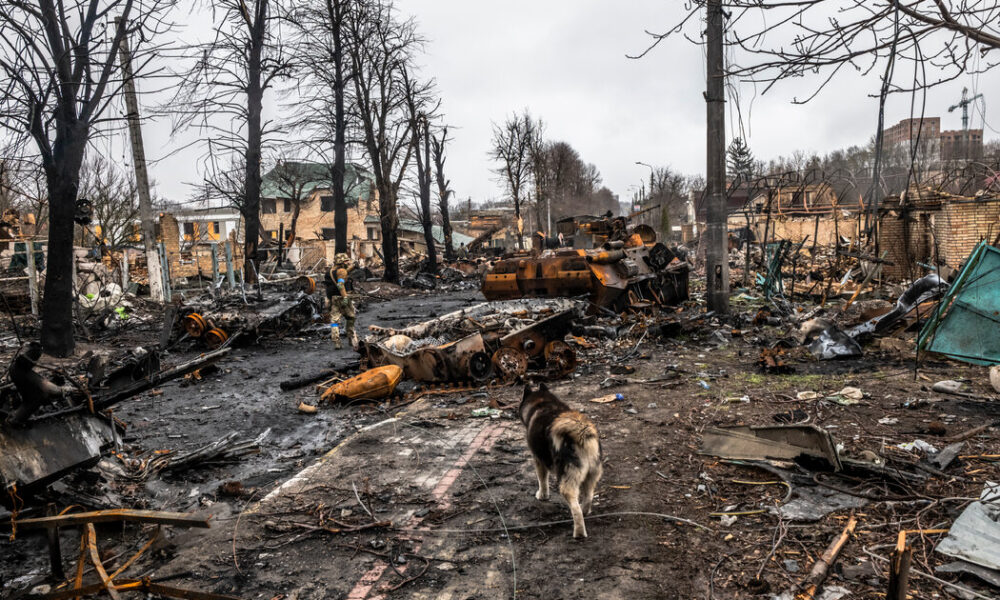
On Feb. 24, Russian troops launched an illegal invasion of Ukraine that rapidly escalated into full-blown war. On televisions and on the front pages of newspapers, the world watched as families were split apart on crowded train platforms and cities were leveled by bomb blasts. Ukrainian civilians faced the harrowing decision of whether to flee or fight. 

But while the political and social aspects of Ukraine’s humanitarian crisis have garnered the lion’s share of media attention over the past two months, there is a less obvious, but no less insidious, threat to Eastern Europe that few are talking about: Irreparable environmental damage. 

Too often, pollution, destruction of infrastructure, and biodiversity loss are seen as unfortunate, but inevitable, costs of warfare whose alleviation should come secondary to humanitarian aid. However, no understanding of the human costs of war is complete without also considering the environmental costs.

“People still view the protection of civilians and the protection of the environment as somehow separate from one another, when instead they are two sides of the same coin,” wrote Doug Weir, founder of the Conflict and Environment Observatory, in an email to The McGill Tribune. Weir’s observatory is a not-for-profit research organization that has been reporting on the intersection of warfare and environmental damage since 2018.

Weir described how Putin’s army has indiscriminately bombed industrial zones in Ukraine, releasing toxic fuels and waste into the air, water, and soil. This contamination will present health threats for decades to come. Coal, for example, is produced across Ukraine, and the subsequent release of fly ash from damaged production facilities can cause asthma, cancer, and neurological disorders in humans under direct exposure or consumption.

Even more troubling is Russia’s occupation of nuclear sites such as Chernobyl and Zaporizhzhia. In the days following Russia’s occupation of Chernobyl, public monitors showed spikes in radiation readings around the site’s buildings before Russian soldiers cut off access to the plant’s information systems. Some speculate that controlling potentially lethal nuclear sites is part of a long-term Russian military strategy.

Unfortunately, Russia’s tactics are nothing new. As long as there has been human conflict, the environment has been both a victim and a weapon of war. Ancient Assyrian texts reference victors salting the fields of their enemies to prevent future crops from ever taking root even after the conflict has ended. 

Political scientists have long studied these tactics, but not always through a purely environmental lens. Daniel Douek, a professor in McGill’s Department of Political Science, teaches courses on African politics and Middle Eastern foreign policy. In an interview with the Tribune, he detailed examples of devastating environmental damage in other wars. In Iraq, for instance, Saddam Hussein responded to dissent from Marsh Arabs by cutting off their water supply, forcing 85 per cent of the population to flee their homes and migrate elsewhere.

“That wasn’t a strategy of conquest or subjugation so much, it’s just a strategy of spitefulness,” Douek said.

He sees similarities between Hussein’s actions in Iraq and Putin’s occupation of nuclear zones.

“[Putin is] kind of intimating that he’s willing to target Chernobyl or target some of the other nuclear power plants, and thus release catastrophic radiation,” Douek said.

It is not only despotic dictators who resort to catastrophic environmental measures in times of conflict. During the Vietnam War, the U.S. military used Agent Orange, a chemical herbicide, around roads, cities, and agricultural areas in Vietnam, despite knowing that it causes physical disability and damage to the nervous, muscular, and cardiovascular systems. Thousands of civilians and U.S. soldiers are still dealing with the fallout today. 

Though Russia has not, and hopefully will not, use chemical weapons, the destruction of coal mines and nuclear power plants is likely to have long-lasting health effects, the likes of which are becoming apparent as reports surface of Russian soldiers suffering radiation poisoning due to the mismanagement of occupied nuclear plants.

Then, there’s the question of climate change, burning hot on everyone’s mind as the world edges closer to the UN’s 2050 deadline for net-zero emissions. 

Beyond the toxins released from jet fuel, explosions, and chemical weapons, armed conflict also contributes enormously to fossil fuel emissions. Since 2001, the U.S. military alone has emitted more than 1.2 billion tons of CO2, the same as entire countries such as Portugal or Denmark. And that’s just at the domestic level—the U.S. does not record or publish data on the emissions they produce overseas or on air missions, so the true number is much higher.

Despite the noted effects of war on the environment, some, including Chris Ragan, director of McGill’s Max Bell School of Public Policy, believe those effects should be understood in the context of broader societal structures.

“Climate change is a long-run problem,” Ragan said. “It is not fundamentally about war—it is not fundamentally about peace, for that matter. It is fundamentally about how our economies are structured, and in particular, the massive use of fossil fuels.” 

Though the emissions generated by war may not make or break the long-term environmental damage we’ve done to the planet, the resulting disruption to energy markets caused by sanctions against Russia could lead to new innovations in the energy sector.

“I actually think this moment, and hopefully it isn’t much longer than a moment, […] is going to spark a very serious rethink about our reliance on Russian oil and gas,” Ragan said.

No matter what the future holds for Ukraine, policy makers will need to decide what role the West will play in helping Ukrainians in their recovery. Ragan cited the need for a new kind of Marshall Plan, a reference to the U.S.-led financial and infrastructural rebuilding program that helped Europe recover from World War II. Though there’s a dearth of academic research surrounding war’s impact on the environment, there are few clear strategies for repairing urban or rural environments damaged during conflict.

Jon Unruh, a geography professor at McGill, specializes in migration, resettlement, and environmental change during times of conflict. Unruh is also one of few researchers who tackle the subject of conflict recovery through an explicitly environmental lens. It’s given him insight into the ways that human behaviour changes to inadvertently harm the environment during times of war.

“When very large numbers of people switch into a crisis livelihood, they do things that tend toward a very short-term decision making horizon [….] That’s a problem, because very short-term decision making in terms of one’s livelihood is always […] extracting from the environment,” Unruh said. 

Changing one’s fuel source from ordinary gasoline to wood is one example that, along with off-cycle crop harvesting, offers a short-term solution at the expense of the environment. For example, in temporary refugee camps, it’s common to use wood burning stoves using local materials because they are more accessible than natural gas or propane. However, this can deplete the surrounding area of resources.

In a world where 40 per cent of wars result from failed peace agreements, and where climate change will increase the risk of violent conflict, any recovery strategy that does not consider environmental recovery is doomed to fail. 

It’s unlikely that the damaging tactics of war will change anytime soon, but the way we respond to them can. Right now, world leaders face a challenge of daunting scale, but they also face an opportunity to chart a new course forward and to pioneer new strategies for conflict recovery that will allow humans and the environment to work in tandem.

A previous version of this article incorrectly stated that Russian forces had bombed over 500 industrial zones. In fact, there exist over 500 industrial zones in Ukraine, but not all of them have been bombed.
Art, Arts & Entertainment

Visual artist Sampson McFerrin gives an intimate presentation of his favourite work yet

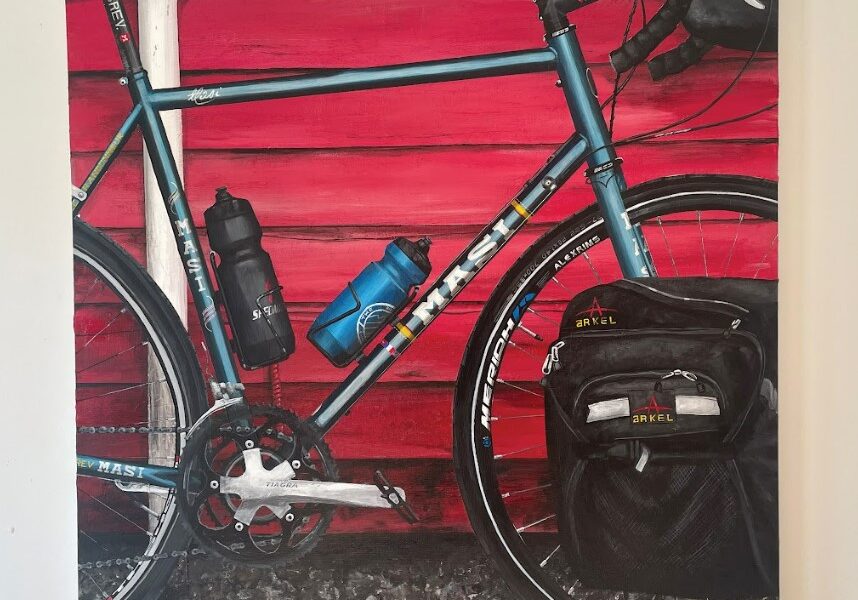
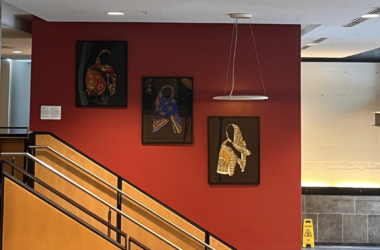
Sampson McFerrin, Montreal-based visual artist and Print Media student, opened his Checarré exhibition the first weekend of April, issuing a display of his artistic adroitness in all its blossoming splendour. Providing a candid presentation of his maturing technique, Checarré features a multiplicity of art forms, ranging from oil to acrylic, inkjet to photopolymer, photography to sketch work—all arranged in a striking visual concoction embellishing the brick-walls of McFerrin’s Montreal apartment.

(Karthikeya Gautam / The McGill Tribune)

In an interview with The McGill Tribune, McFerrin acknowledged the lack of uniformity in his artwork, noting that his aesthetic is still evolving. His aim with Checarré is to open his work to public opinion by taking a creative backseat. McFerrin engages with this goal through the exhibition’s name, a witty triple-entendre itself. 

Checarré is a mix of two words,” McFerrin said. “Firstly, it is ‘checking-in’ to see where my art is at right now, where it has been, and where it is headed to in the future. The second word, carrée, is French for square. A lot of my works have ended up in squares, despite having initially framed them differently. My brother added a further note to that—chez moi. Because the exhibition is at my apartment.”

McFerrin does not cite any single individual for inspiring this creative enterprise. Instead, he credits his experiences abroad over the years as a major driver behind his work.  

“I have spent over three years of my life on a bike, sleeping in a tent, in almost 30 countries around the world,” McFerrin said. “That experience has made me who I am, given me the belief systems that I have, along with the flexible mindset I approach every day with.”

(Karthikeya Gautam / The McGill Tribune)

McFerrin places value on a piece of art by following a unique code, wherein an artwork’s worth is extracted from a quartet of interconnected sources—the aesthetic value the artist derives from it, the aesthetic value the audience derives from it, whether it has a personal connection with the artist, and whether it has a personal connection with the audience. In creating a piece, he tries to achieve all four, as he believes them all to be of equal importance. 

“To spark dialogue or conversation is [an] inspiration for me,” McFerrin said. “Discussing my pieces with others, so that it’s not just me in the process, is what’s important. A piece can just grow by others’ involvement in it.”

(Karthikeya Gautam / The McGill Tribune)

Rain Pants Party, a 36×36-inch acrylic made by McFerrin, is not only his personal favourite, but also a piece he believes fulfills all four sources of value.

“When my brother, my best friend, and I were biking across Canada, there was a particular day when it was raining heavily outside, and we were wearing our rain pants,” McFerrin explained. “The farmers we were staying with said that we can cook our meal and stay dry in their barn. So, we took off our raincoats, sitting there in the barn in our rain pants, listening to tunes and having fun. That’s when we said, it’s a rain pants party.”  
While McFerrin has no galas or exhibits planned for the near future, he is optimistic about spreading his work and message as his artistic vision progresses. 

The second opening of Checarré will occur on April 10 at 3546 Avenue Lorne, Apartment #6, from 1 p.m. to 8 p.m. 

Know Your Athlete, Sports

Varsity highlights of the 2021-2022 season

(McGill Athletics)

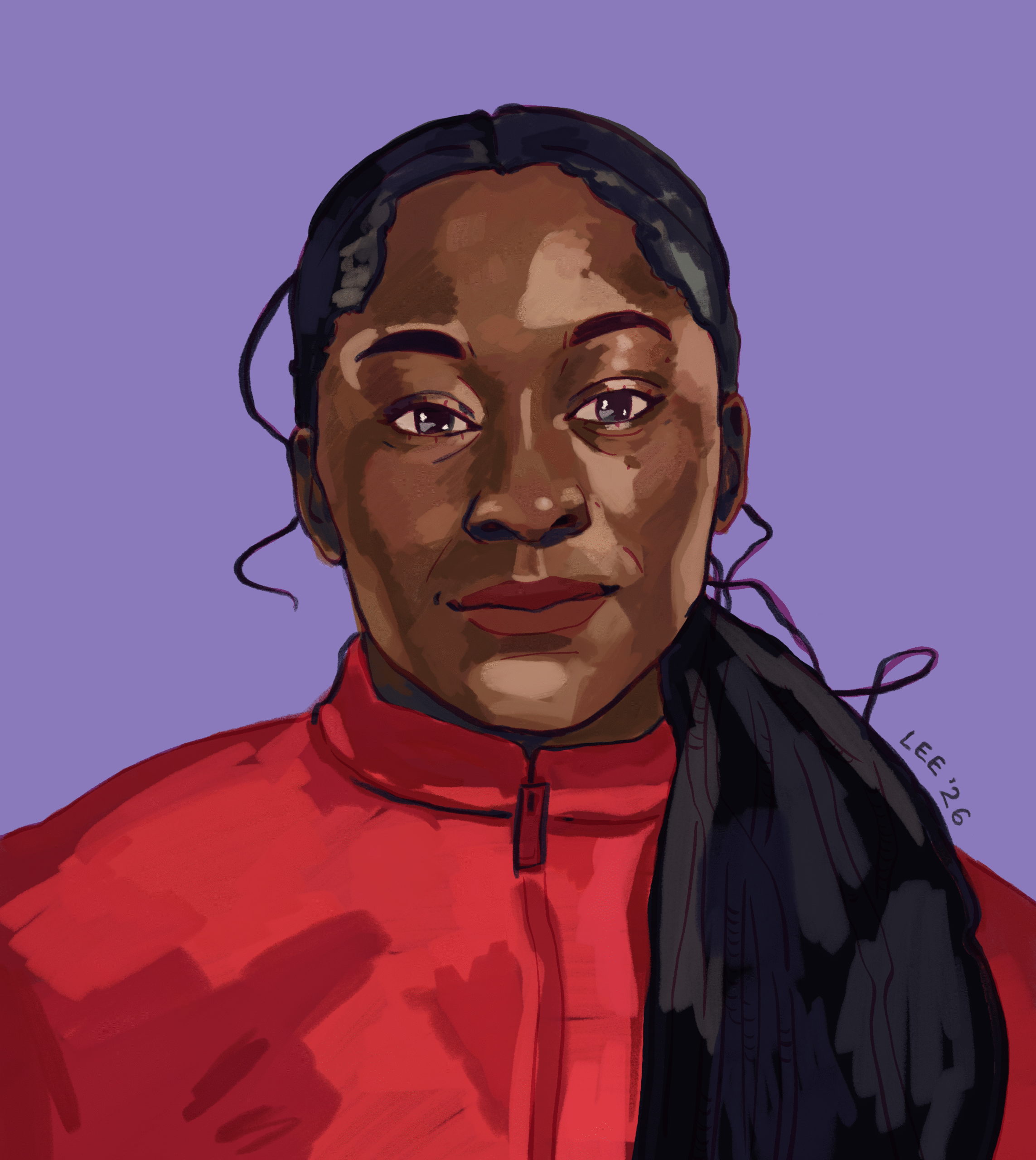
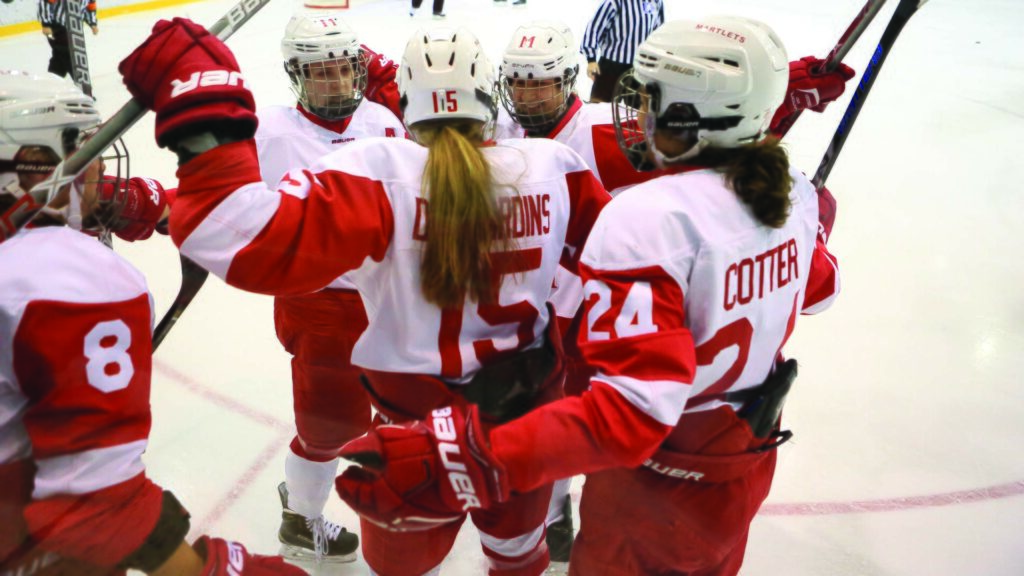
Stephanie Desjardins (Martlets hockey, fifth-year)

“The season was challenging with the pandemic coming back at full swing right after the Christmas break. We fought adversity throughout the entire season with restrictions, practicing, and playing with masks. The girls fought hard physically and mentally for the last eight months and showed tremendous character and grit. I think my greatest memory this year is just being at the rink and being surrounded with amazing people every day who push you to become a better hockey player and person.” 

Matthew Beaudet (Redbirds track runner, second-year)

“My favourite moment this year was competing at the U Sports Cross Country championships. The atmosphere was great, with people cheering all along the course, and I was excited to run at this high level meet for the first time. The race itself was very difficult due to the hilly course, cold weather, and fast pace. I was aiming to finish top 10 at this race and I knew I could do it, but at the same time, a lot can go wrong in cross-country races. I started struggling and lost contact with the leaders at about 6.5 kilometres (out of eight kilometres) and started worrying that I was going to start dropping places rapidly, but then I heard one of my teammates’ dad tell me to relax and that no one was close behind me. That helped me regain composure and finish with a strong last kilometre to finish seventh.”

(Mathieu Belanger)
(Monique Francoeur)

Karl Hunger (Redbirds rugby captain, fourth-year)

“I think my most memorable varsity moment was the first game of the season where I got to share the field with my brother Brad. He scored the first try in McGill Redbirds history. We embraced almost halfway down the field. I vividly remember telling him I couldn’t let him go, or else I might burst into tears. As an older brother who couldn’t be outdone by his younger sibling, I scored two tries of my own that very same game. I remember my mom and dad being so proud of us both after the game. That is truly one of the greatest moments of my McGill rugby career.” 

(McGill Athletics)

Charlene Robitaille (Martlets volleyball captain, fourth-year)

“I know I won’t be very original, but my favourite moment is when we won the provincial at home, and when the whole team ran to hug our coach. [It was] the first time she won provincials in 30 years! It was 25-14 on the fourth set for us. I was already starting to cry a little bit on the court because I knew we were going to win […] We will for sure have the same objective to win another provincial championship and go back to the Canadians. We had the advantage of playing against really good teams last week, the girls from Canada West were extremely good, so we now know what we have to improve and focus on next year.”

Mika Chang (Martlets hockey forward, first-year)

“Getting to go to nationals was an incredible experience and what made it even more special was getting to go with the group we had. Having gone through so much adversity this year, with COVID outbreaks and general obstacles, [it] was something that […] brought us closer together. I think both on and off the ice, I’ve been able to step out of my comfort zone, which is something I’m proud of. It’s intimidating as a first year to join an incredibly talented group of new faces, but coming out of this year having developed on the ice and having created lifelong friendships is a huge win in itself.” 

(Marc St-Pierre)
(McGill Athletics)

Jamal Mayali (Redbirds basketball guard, fifth-year)

“My favourite moment was when we won the Quebec championship. It really was special to see all of us happy to achieve that and in the fashion we did it in [….] Adversity definitely was felt when the season was put to a halt earlier this year. It was really challenging because as a team we had a really good first semester and, at the time, that break may have put our momentum to a halt. However, we hit the ground running once the season was back up.”

Editorial, Opinion

The Church’s apology requires devoted action

On April 1, Pope Francis made a long-overdue apology to Indigenous peoples in Canada for the role Catholic leaders and administrators played in committing cultural genocide through the residential school system. The Pope called these leaders’ behaviour “deplorable” and asked for both God’s forgiveness and the forgiveness of Indigenous peoples for how Catholics wounded, abused, and disrespected Indigenous people’s identities, cultures, and spiritual values. Though his words serve as an important acknowledgement and indictment of the Church’s crimes, this apology is only one step toward reconciliation in Canada. Various Indigenous leaders have expressed both relief and concern in response, while also emphasizing that it is not their responsibility to accept it—rather, it is the Church’s responsibility to make good on their promise to actively redress the broad, historic, and enduring harm it inflicted. Repairing past wrongs requires substantive commitment to dismantling the Church’s doctrine that enabled, and continues to enable, Canadian settler colonialism. The impact of the Catholic Church’s apology can only be realized when it is accompanied by structural changes that place Indigenous humanity over absolving Catholic and Canadian guilt.

The Pope’s apology comes after decades of Indigenous advocacy and must be matched with the material demands Indigenous leaders have made. If the Catholic Church does not follow through on its promises, such as the $29-million payment for programs that benefit residential school survivors, the apology may look self-serving. At times, the Church appears to entertain the dangerous notion that restorative justice measures relitigate dark pasts at the expense of present struggles, but in reality, the past and present cannot be separated. Residential schools, led by Catholic organizations along with other Christian denominations, tore children from their families in order to “civilize” them and to legitimate Canadian rule over the land that belonged to generations of Indigenous people. The “schools” worked to eradicate Indigenous cultures, and were sites of state-sanctioned physical, sexual, emotional, and psychological abuse. Intergenerational trauma from these “schools” endures in various structural forms—from fractured families to poverty to houselessness to immense mental distress—all of which undermine Indigenous self-determination. As such, reparations in the form of a lump sum payment, while crucial, is not enough. 

Following the discovery of the initial 215 unmarked graves in Kamloops, Indigenous community leaders continue to search the sites of former residential schools. Investigators have found over 1,800 so far, but this number is rapidly increasing. Given the scale of this tragedy, any attempts to overcredit the Pope’s apology, however innocuous, should be put into perspective. No matter how thorough and apologetic the Pope’s words may seem, he must use his institutional power to accept and amplify current Indigenous struggles against the reprehensible crimes carried out at the hands of the Catholic Church.

Given how embedded the Catholic Church is throughout Canada and Quebec to this day, Canadians must remain resistant; the apology should only ground solidarity moving forward. This acknowledgement is not only a much-needed apology, but also a statement that allows activists to hold the Church accountable. The Church and Canada must unequivocally denounce the Doctrine of Discovery that Christian, European imperial powers used to justify their claims to ownership when conquering Indigenous land. To do so would be to repudiate a racist, long-standing doctrine and would also follow up on previous apologies Popes have made for Catholic sins. At the same time, Pope Francis and Catholics should not use this apology to salvage the Church’s optics and save face for its harmful actions around the globe.

Governments and church officials should follow Indigenous leaders’ demands by actively resisting and rethinking policies in Quebec. Catholic-influenced Quebec social welfare programs should be scrutinized when Catholic-run shelters, for example, can further marginalize Indigenous people. When a group of the Kanien’kehá:ka kahnistensera (Mohawk Mothers) suspect that there are unmarked graves under Royal Victoria Hospital and have taken McGill to court, students must stand in solidarity and remember that reconciliation is an uncomfortable process that requires everyone to confront McGill and Canada’s shameful history. The Pope’s trip to Canada, set for late July, is an opportunity for the Church to actively listen to those affected and to be held accountable. No one can remain passive in the face of persisting settler colonial injustice.

Arts & Entertainment, Pop Rhetoric

The enemies to lovers trope: Tried-and-true or time for something new?

From impassioned kisses in the rain to meet-cutes in high school hallways, romantic literature and entertainment have never failed to engage audiences through beloved clichés. One that continues to withstand the test of time is the enemies-to-lovers trope, in which two characters’ mutual hatred toward one another progressively transforms into feverish love. Boasting both a long record of positive receptions and a rocky history, this dynamic keeps us coming back for more through touching demonstrations of love’s resilience in spite of denial.

In the case of period pieces, the trope engages readers by placing familiar feelings in historical contexts, challenging the disconnect we often feel between our lived experiences and those of people from centuries past. The second season of Shonda Rhimes’s whimsical and provocative period drama Bridgerton, released on Netflix on March 25, centres around a hate-to-love storyline between Anthony Bridgerton (Jonathan Bailey) and Kate Sharma (Simone Ashley). Based on Julia Quinn’s eight-part book series of the same name, the show follows the large, wealthy Bridgerton family as they navigate London’s competitive seasons of Regency-era courtship. Through extravagant balls, romantic promenades, and passionate declarations of devotion, both verbal and physical, viewers witness each Bridgerton child find and express love in ways rarely, if ever, depicted in period pieces. 

The contrast between ardent displays of adoration and disgust within the Regency era’s stiff social rules of etiquette and formality has enraptured audiences for centuries, as demonstrated by the resonating power of Elizabeth Bennet and Mr. Darcy’s hate-turned-love relationship in Jane Austen’s Pride and Prejudice (1813). The enemies-to-lovers narrative functions effectively in period dramas as it shocks readers with an emotional aspect of the Regency era that was firmly suppressed by the upper class, and therefore rarely included in the epoch’s representation in media. Audiences are unable to look away from these period-era characters, as they are brought to life through outward expressions of the same emotions that we feel today. This relatability is not restricted to previous historical contexts: People often feel most connected to characters who are at their most vulnerable, regardless of the divide in life experiences.

However, the cliché’s “enemy” aspect can sometimes go too far. In some cases, this relationship trope is filled with disturbing demonstrations of loathing, before all is magically forgiven and the characters end up together—as is the case in the relationship between Claire (Molly Ringwald) and John Bender (Judd Nelson) in The Breakfast Club (1985). Although Claire and Bender eventually realize their feelings for one another, this resolution implicitly recontextualizes the string of mutual acts of hatred toward one another as “flirting.” At one point, Bender sexually assaults Claire, peering under her skirt and making her clearly uncomfortable. Films should demonstrate the persistence of love despite each characters’ initial resistance toward it without making characters minimize and forgive inexcusable actions, including sexual assault. The main flaw of the enemies-to-lovers storyline is thus its reluctance to hold characters accountable in favour of moving the plot forward.

Meanwhile, representations of 2SLGBTQIA+ couples fare no better under the trope. While the celebrated Netflix series Sex Education has received praise for its authenticity and inclusivity, the relationship between Eric (Ncuti Gatwa) and Adam (Connor Swindells), his former bully, has been criticized for perpetuating the idea that racialized and queer characters should forgive people who have abused and mistreated them for the sake of love. 

Nevertheless, we continue to feel the addictive comfort in watching love triumph over hate, especially considering the numerous ways different people and institutions try to place restrictions on who can love who, and how. Whether lovers are first enemies due to family rivalries (Romeo and Juliet (1597)), class divides (Titanic (1997)), or other forms of division, witnessing the heartwarming resilience of love in the face of hate momentarily restores our faith in humanity. 

Demand for enemies-to-lovers content shows no signs of disappearing any time soon. From TikTok’s fascination with Sally Thorne’s romance-novel-turned-movie The Hating Game, as well as Bridgerton’s newest season, viewers and readers alike continue to be captivated by the evolution from enmity to endearment. While many critics may be determined to hate it, if there’s anything that the trope has shown, love often follows closely behind.

McGill, News

MUNACA to vote on whether to strike following McGill’s proposal to reduce salary increases

McGill University’s Non-Academic Certified Association (MUNACA), a union that represents approximately 2,000 support staff employees, such as laboratory assistants and service representatives, will vote whether to go on strike on April 6. This is after McGill proposed measures that would decrease members’ pay increases that were negotiated in the previous collective agreement (CA). The previous CA expired in November 2018, and the two parties have yet to come to an agreement on a new one. The announcement to put a strike to vote comes amidst a strike by floor fellows, who are represented by the Association of McGill University Support Employees (AMUSE). 

MUNACA members receive two forms of salary increases. The first increase compensates for inflation. The second, called a step increase, is when employees do not get their full salary when they first get the job, instead agreeing to receive a 2.97 per cent increase yearly, capped at 12 years—when employees would reach the maximum salary set by the CA. McGill has proposed a reduction of the step increase to 1.97 per cent and a lower top salary. 

According to MUNACA representatives, the proposal would result in members earning less money per year, and step increases being eliminated for those who have reached the newly proposed top salary—even if they were scheduled to receive more according to the previous CA. McGill has stated that the pay decreases will allow the university to raise the base salary of lower-earning MUNACA members. Thomas Chalmers, MUNACA president, told The McGill Tribune that it was these measures that prompted MUNACA members to vote on a strike mandate. 

“The disrespect has to stop,” Chalmers said. “If not, then the ultimate tool we have is a strike mandate [….] It’s a misnomer that unions want to go on strike: They don’t. It’s disruptive, it’s difficult, but at times, and this is one of them, it’s the right thing to do, to stand up and say you can’t treat us like shit.”

Nancy Crowe, MUNACA vice-president labour relations, believes McGill’s justification—compromising certain MUNACA members’ salary increases for lower-earners—is unfair, and ultimately unbelievable, considering how well some top McGill administrators are paid. 

“There were decisions made to pay Suzanne [Fortier] and not others,” Crowe said. “Their priority becomes clear.” Fortier was paid over $860,000 dollars last year.

In a statement to The McGill Tribune, Frédérique Mazerolle, a McGill media relations officer, stated that the university believes its offer to MUNACA employees is fair and covers inflation by allowing for an average salary increase of 21 per cent over the 5 year period the new CA would cover. 

“In January 2022, discussions continued, now in the presence of a conciliator [and] on March 10, 2022, McGill presented its latest offer,” Mazerolle wrote. “Despite this, on March 28, 2022, the McGill administration was informed that the union will seek a strike mandate from its members.”

Chalmers, however, believes that McGill’s proposed changes are dishonest and that the step increase is not a salary increase because employees will earn less than a full salary when they begin working.

“You don’t get paid the amount of the position right away, you have to go through these steps to get to the value of that position,” Chalmers said. “We understand that it takes time for people to learn the job […] but it’s disingenuous to say that you’re covering inflation.”

Floor fellows, represented by AMUSE, went on strike for similar reasons; however, AMUSE President James Newman cited that a lack of respect was also a central reason.

“What it came down to was an issue of respect. Throughout the negotiations there was a very strong lack of it,” Newman said. “You can see they’re doing the exact same thing to MUNACA.”

Arts & Entertainment, Fashion

Oscars 2022 Fashion Roundup

In spite of falling ratings, one recent trend of contemporary Academy Awards ceremonies has steadily risen in popularity—fashion commentary. Millions of creators across social media channel their inner Miranda Priestly each year to judge the always extravagant, sometimes ostentatious outfits worn by celebrities on different red carpets throughout the night. Here are some of the best outfits from this year’s event, as selected by members of the Arts & Entertainment team.

Lily James — Post-Pam Princesscore

There are no two ways about it: Lily James has entered her bombshell era. The Pam & Tommy actress transformed from Baywatch megastar to red carpet marvel at the 2022 Academy Awards, rocking a lacy Atelier Versace number complete with a thigh-high slit, pink platforms, and a long train adorned with embroidered flowers. Doing away with her striking resemblance to Pamela Anderson, James traded in her signature blonde locks for a sultry brunette hairstyle. But don’t be fooled—the British actress hasn’t shed her old skin just yet. On the contrary, James’s ethereal look, dripping in TikTok’s viral princesscore aesthetic, served up a nod to her breakout performance in 2015’s Cinderella. We, too, wish we could appoint Versace to be our very own Fairy Godmother.

(instyle.com)

Zendaya — Secret Service Realness

Zendaya has come a long way since her days on the Disney Channel, not just as an actress, but as a fashion mogul, too. Though she was not nominated in any individual categories, the film Dune, in which she starred, was up for 10 awards, including Best Picture. The face of Valentino’s Spring 2022 campaign surprised the world by swapping her dazzling red carpet outfit for a fierce Sportsmax suit at the Vanity Fair Oscars after-party. The jacket’s prominent shoulder pads and perfectly cinched waist created a stunning silhouette. Complementing the garment, Zendaya beautifully executed an edgy, Secret Service-type look: Her slicked-back low ponytail, dark eyeshadow, and eyeliner tied the look together.

(glamour.com)

Timothée Chalamet — The Hottest Bad-Boy in Hollywood

Chalamet donned a black and bedazzled Louis Vuitton lace jacket, which belongs to the Spring 2022 womens wear collection and opened to reveal Chalamet’s bare chest. The pairing of the nontraditional bold jacket and the peek of skin was a powerful choice, and especially striking in light of previous complaints about the dullness of men’s red carpet fashion. Chalamet’s Cartier pendant necklace—a white gold panther with emerald eyes—served as the final ornamentation to his smouldering appearance. Chalamet effortlessly pulled off the fit, with black dress pants anchoring the sparkle of his top.

(esquire.com)

Jessica Chastain — All that Glitters is Glory 

California-born actress Jessica Chastain took the red carpet by storm with a dazzling floor length gown that gave off a sparkling glow. Its bottom section’s beautiful lavender tone epitomized elegance—much like the actress herself. The top of the dress had a rose gold hue and sequins, which perfectly complemented Chastain’s red hair. The ruffled tulle bottom added an extra flair to her already stunning look. Custom-made by Gucci, the dress’ flowy material and sparkles were echoes of old Hollywood glamour. Such a style managed to match Chastain’s prestige for the night, for she indeed won the Academy Award for Best Actress for her lead role in The Eyes of Tammy Faye.   

(people.com)


Commentary, Opinion

Between climate denial and climate anxiety

During their time occupying the Arts Building, Divest McGill screened movies and documentaries shining light on the climate emergency. As the chilling images of fires, floods, and famines flashed across screens, the air became heavy. Silence reigned, and only a few deep breaths disturbed it from time to time. It brought forth the concept of “climate anxiety,” the distress caused by today’s environmental crisis. This feeling, which particularly affects younger generations, was reflected in the banners urging McGill to divest from fossil fuels. Yet, although the climate crisis raises anxiety among McGill students, the urgency of the issue is often downplayed, despite scientific consensus.

That week, the urgency of the climate crisis attenuated until it reached complete silence just past the Roddick Gates. On the other side of the gates, all one could hear was a muffled sound; the quiet but familiar melody of denial. The skyscrapers of downtown Montreal are not yet threatened by rising sea-levels nor global warming, even though Quebec’s average yearly temperature has increased by 1.2 degrees Celsius from 1979 to 2016. Among the many studies alerting the public to the climate emergency are the Assessment Reports, one of the most influential sets of documents published by the Intergovernmental Panel on Climate Change (IPCC). However, regardless of its eminence, the latest report published on Feb. 28 was barely covered by the media. Unlike the war in Ukraine, which is rightfully receiving its share of attention from most news outlets, journalists are blatantly overlooking the release of this deeply alarming document.

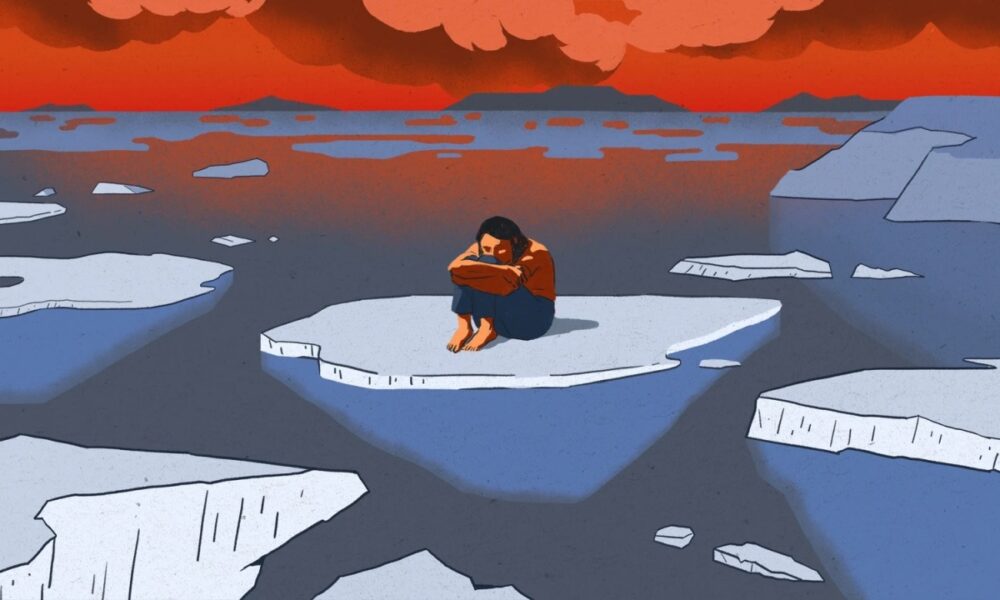
With a focus on how societies could continue to adapt to climate change, the newest report is a damning ultimatum to humanity, calling attention to the brief and rapidly closing window of opportunity to act against climate change. As the global temperature increases to 2.7 to 3 degrees Celsius from the pre-industrial era, the damaging effects could be irreversible. Entire ecosystems will be in jeopardy, endangered species’ extinction risks will be 10 times higher than they are today, the numbers of deaths due to heat waves could be multiplied by a factor of two or three, and three billion people could be suffering from chronic water shortages. With entire populations seeing their existence threatened, especially those in coastal regions, sitting in silence is not an option. 

Canada will not be spared the consequences of climate change, as the country will experience extreme weather conditions and longer fire seasons. The report shows that certain areas that would have suffered from wildfire only once every 400 years will now be subject to it every 50 if gas emissions are not lowered. Moreover, climate injustice will particularly affect certain Indigenous peoples in Canada; for example, rising temperatures will threaten the Anishinaabe tradition of “manoomin,” or wild rice, harvest.

With each sinister prediction, the report describes a dystopia that is nearer and nearer to our certain future. Humanity is at risk: Approximately 150,000 people die every year in poor communities because of climate change, while universities like McGill continue to invest millions of dollars in pipeline projects that intrude on Indigenous territory. Once again, the trappings of capitalism prove to be the environment’s biggest threat. Yet, the report clearly emphasizes the negative economic impacts of the climate crisis on Canada, from rebuilding entire infrastructures to coping with a weakened agricultural sector.

Beyond the anger and distress, this report ultimately raises a new feeling among young people: The impression of being powerless, condemned to watch future generations grow up in a world which can no longer support them. It is time to walk back into the Arts building, where McGill students can transform this feeling of helplessness into empowerment by carrying on individual and collective action while also calling out institutions in their assault on the environment. 

Commentary, Opinion

The threat of incel violence runs deeper than we think

Content warning: misogynist violence, white supremacist terrorism

In February 2018, a young man stabbed a woman in a Toronto massage parlour. That same year, another man killed 10 people in a van attack in Toronto. In December 1989, a man barged into Montreal’s École Polytechnique just a few miles away from McGill and murdered 14 engineering students, all of them women. The common thread linking these attacks is incel ideology. Incels, or “involuntary celibates,” men who, frustrated at their perceived ostracization from society, blame women and sexually active men for their own lack of sexual activity. The incel movement is a misogynistic one, oftentimes borrowing violent tactics and rhetoric from white supremacists and homophobic movements. Although incels are mostly active on online forums, away from public scrutiny, they rose to popular attention after the 2018 Toronto van attack. The perpetrator was a self-identifying incel whose social media accounts were filled with misogynistic posts. Since the attack, security experts and the media have fuelled a public debate on whether incels pose a national security threat as terrorists, or whether their danger is overestimated. This debate, however, does very little to address the daily instances of misogynistic violence that feminine-presenting people experience in spaces like their homes, public transportation, and even university campuses.

Those who argue that the media inflates the incel threat also tend to claim that the problem is first and foremost a mental health issue. According to this logic, incels should not be treated as terrorists or violent threats, but rather understood as lonely men struggling with mental health. However, this debate is unhelpful in stopping men from adopting incel ideology. Although non-carceral alternatives to justice are necessary to reimagine our deeply racist and ableist society, the fact that the first instinct is to claim that these men are acting out of distress, and not hatred, proves how much we are willing to excuse the behavior of white men. Instead of engaging in a debate over semantics, we should reframe what we understand as violence.

The question of whether incels are violent terrorists should not depend on how many people they victimize or kill. This approach fails to address the root causes of misogyny and violent nature of incels in the first place. Incels are not violent only when they kill. Regardless of physical action, their rhetoric is violent in and of itself because it rests on the idea that they are entitled to women’s bodies. The links between incel rhetoric and other discriminatory ideologies particularly endangers women experiencing intersectional oppression. Incels blame women for their feelings of inadequacy, and although they express anger at systemic issues of discrimination that also affect men, like fatphobia, their main grievance is a nostalgia for the past when the concept of consent had not entered public consciousness.

Although their views push misogyny to the extreme, incel ideology and rhetoric exists far beyond their chat forums, even creeping into university spaces. As such, we should reframe our conceptions of what counts as violence to include the systems of oppression that protect men at all costs, at the expense of others. At McGill, class debates about women’s rights, queer identity, and racism manifest as frequent instances of marginalized people’s lives being treated as debatable topics. These daily forms of oppression alienate non-men in classrooms and send a clear message that people’s humanity can be contested, potentially reinforcing budding incel ideology. Furthermore, these oppressive systemic factors, such as class discussions upheld by professors, force marginalized people into positions of resistance, whether they want to or not. 

Where the incel movement is afforded compassion, or even pity, the existence and experiences of women and queer and racialized people receives unfiltered contention. This should force us to question what we are willing to tolerate and what we categorize as violence. Whether incels should be labelled terrorists or not does little to prevent violence—it only encourages preventative action after someone has been murdered. Violence exists on a spectrum and men must understand the consequences of their complicity in pushing that spectrum to the extreme. It is their responsibility, as well as that of university administrations and instructors, to identify signifiers of misogyny, violence, and incel arguments and to counteract them well before they morph into murder.

News, SSMU

SSMU executive requirements pose unique challenges for international students

International students holding an executive position in the Students’ Society of McGill University (SSMU) face significant challenges due to conflicting credit requirements imposed by Quebec immigration laws and the SSMU constitution. To contend with their 40 to 70 hour weekly workload, SSMU requires executives to drop to part-time status, enrolling in a maximum of one or two classes per semester. However, this contradicts the Certificat d’acceptation du Québec (CAQ) requirement that international students must maintain full-time student status during their studies—the equivalent of a minimum of 12 credits per semester. 

These restrictions have deterred international students from running for SSMU executive positions in the past. Adhering to SSMU’s requirements can jeopardize future renewals of study permits and even, depending on the situation, put international students at risk of deportation.

As an international student from Indonesia, SSMU president Darshan Daryanani, U3 Arts, has experienced challenges with the conflicting SSMU and immigration requirements. Daryanani was supposed to graduate at the end of the Summer 2021 term, before he assumed the role of SSMU president. He intended to take up his position at the SSMU after having completed his undergraduate degree, and use a post-graduate work permit that would have allowed him to work at the Society without having to take any courses. 

However, at the end of the summer, Daryanani was informed by the Deputy Provost (Student Life and Learning) Fabrice Labeau that doing so would violate section 11.4 of the Society’s Memorandum of Agreement (MoA) with McGill, which stipulates that officers of the Association must be undergraduate students. 

“Unfortunately, this placed me in a vulnerable situation as not complying with this would have led to a default of the Memorandum, which is dangerous for the SSMU,” Daryanani wrote in an email to the  The McGill Tribune. “I faced a dilemma with SSMU, having to request for [its maximum credit] requirement to be waived. Ultimately, SSMU and McGill’s rules are inconsistent [with each other] and have resulted in major challenges and barriers.” 

In an email to the Tribune, the associate director of International Student Services, Anastasia Koutouzov, stated that international students face distinctive challenges if they wish to become SSMU executives because of immigration requirements. 

“Student executive positions at McGill require a major time commitment, and some students choose to pursue their studies part-time while serving in these roles,” Koutouzou wrote. “This option isn’t available to international students, as they are required by Immigration policies to remain full-time throughout the duration of their studies (except for their last term).”

According to the MoA renewed in 2019, McGill must “ensure the availability” of up to 12 academic credits to SSMU directors and officers that count toward their degrees. These credits are registered as “independent reading and research” courses or an equivalent on academic transcripts. The provision allows executives to only take independent study courses during their tenure so they can focus on their duties for the SSMU while respecting minimum course credit requirements. 

Discussing the importance of international students in student government, Arts Undergraduate Society (AUS) president Adin Chan, U3 Arts, emphasized the makeup of international students in the McGill body.

“We have multiple international students on executive both this year and in years past,” Chan wrote in an email to the Tribune. “[International students] bring a unique perspective that is often missing in student government. In order for our student governments to be representative of our student body, it is crucial that international students, who make up approximately 30 per cent of the McGill student body, are also meaningfully represented in the executives of student associations.” 

A previous version of this article stated that SSMU President Darshan Daryanani said that McGill and the SSMU’s rules regarding international student SSMU executives were inconsistent with government regulations. In fact, Daryanani said that McGill and the SSMU’s regulations rules were inconsistent with one another, not the government’s. The Tribune regrets the error.

Read the latest issue

Read the latest issue