


Latest News

Off the Board, Opinion

Redefining the I’s in Identity

The first year of university is a major transition for all students. For me, the biggest change was not just moving across the country, but additionally learning to adapt to a completely different environment, both culturally and socially. Culturally, as I grew up as a Taiwanese immigrant in a small, predominantly white town; I was almost always an anomaly at school and work. Besides just looking different on the outside, I found that having “two” cultures gave me a different worldview than many of my classmates. Socially, I had to sacrifice some of my passions in order to keep up with the university course load. As I reflect back on my first year, I realize that I depended on tangible things to make up my identity, things that ultimately do not make me, “me.” 

I remember one particular interaction that triggered me to question my identity based on my outward appearance. It occurred on a fall evening when a fire alarm went off in my residence. As we waited outside for the all-clear, I worked my way through the crowds of students, hoping to find my friends. Before I could make it to them, I was stopped by a student, and her first and only question to me was whether or not I spoke Chinese. Annoyed by her intrusion, I angrily said no, even though I did know how to speak Mandarin, and walked off toward my friends. It was not until later that night that I realized I was not bothered by her stopping me, but her question. Why was that her first and only question? Could she not have asked me what floor I lived on, my faculty, or even who I was looking for in the crowd? It was frustrating that how I appeared to others had so much to do with the identity others assigned to me, whether that has to do with the language I speak or my personality. This event, however, resulted in long term upset that I could not pinpoint the cause of at the time. 

I was not new to the idea of having an identity crisis, I just never imagined that I would have one—how could I question my identity if I was so confident? 

This crisis was only made worse when other factors I considered so important to my identity began crumbling down. Throughout grade school, my schedule was jam-packed with band performances, orchestra rehearsals, and skating practices. I could not imagine a life without all the time I spent pursuing these passions, and assumed that I would still be able to continue these activities in university. At the Fall Activities Night, I made sure to check in with the music societies and the skating club, and tried out for as many groups as I could. However, my course load piled up, and by the time November rolled around, the mid-semester stress coupled with seasonal affective disorder caused me to fall down a mental health spiral. I could not even find solace in my grades because I was struggling so much in my classes, nor could I make the time to join any clubs or groups, leading me to lose all social and creative outlets that I’d relied on so heavily back in high school. I’d completely lost my sense of identity. Looking back, I can see how trying to understand myself and my identity through my hobbies was a mistake. 

First year is just the beginning of a journey of self discovery that will surely continue throughout university. Though I am still trying to figure out why certain interactions made me upset, I think that acknowledgement is the first step in allowing growth and self acceptance. I have learned, and am still learning, that I wanted so badly to define myself on my own terms that I ended up suppressing core parts of my identity while placing too much importance on futile interests. Identity is not something that comes easily for everyone, but it is certainly a rite of passage that everyone experiences, albeit in totally different ways.


Arts & Entertainment, Theatre

Finding self-love as an exiled love poet

For Ancient Romans, “following your heart” rarely resulted in finding true love—more often than not, it ended in untimely death, being transformed into a tree, or thousands of years of exile. According to Ovid’s Metamorphoses, the 2022 edition of the McGill Classics Play, love is to blame for the many divine mishaps recorded in Roman mythology. However, as the play unfolds, Metamorphoses reveals that love is a power that one should embrace, not reject. 

Publius Ovidius Naso (43 BCE–17 CE), commonly known as Ovid, was one of the most famous writers from what is called the “Golden Age of Latin Literature.” While Ovid gained success from his love poems, he was also forced into exile in 8 CE for allegedly encouraging illicit love in his elegy Ars Amatoria—an exile that was only revoked in 2017, more than 2,000 years later. Fortunately, most of Ovid’s poetry survived, including his most well-known work: The narrative poem the Metamorphoses

Although no less impressive in artistry, the McGill Classics Play, supported by a non-profit venture of the same name, is a tradition slightly younger than Ovid’s poetry. In 2011, Lynn Kozak, a McGill Classics professor, offered a simple challenge to ambitious Classics students: Translate original Greek or Roman texts and adapt them into original amateur theatre productions. Since then, the McGill Classics Play has staged a diverse array of impressive works, ranging from Sophocles’ Philoktetes to Euripides’ Hekabe. This year, Taryn Power, U3 Arts, and Keisuke Nakajima,  BA ‘21,  took on the roles of co-directors. After nearly a year of hard work, they successfully adapted Ovid’s poetry into a narrative that tackles questions about the nature of love. 

“We did the translations ourselves,” Nakajima said in an email to The McGill Tribune. “A lot of the dialogues [and] monologues are taken from Ovid’s poems [….] On the other hand, there are a few scenes where we took more creative freedom.” 

Some of these liberties included Orpheus’ (El Bush, U1 Arts) love of wearing Crocs in sport-mode, a Romeo-and-Juliet-inspired dialogue between star-crossed lovers Pyramus (Alexandra An) and Thisbe (Emma Weiser, U1 Arts), and the main narrative that ties the story together: Ovid’s (Gabrielle Gaston, U3 Arts) creative slump after his exile. Luckily for him, Amor (Fiona Vail, U2 Arts), a goddess of love, comes to joyfully persuade him to retell his favourite stories in hopes of rekindling his love for poetry—and possibly for the goddess Amor as well. 

Ovid’s work often played with gender and sexuality—meaning that the play was ripe for interpretation. Nakajima and Power spent time carefully interpreting each line. For example, a skit starring Iphis (Sierra Burgoyne, U3 Science) describes a situation where Iphis, who is biologically female, presents themselves as a man to protect themselves from their father’s misogynistic beliefs. 

“There was essentially two readings of the story in Ovid, and we ended up choosing one,” Power said. “One is that it’s a lesbian story, and then the other one is that it’s a story about gender non-conformity. We ended up going with the second one, just because honestly, I think it’s more ‘Ovid’ [….] It’s very much not like a physical metamorphosis. It’s all performative.”

The directors’ translations of the texts themselves were exercises in creativity and critical thinking. The play features several original funny folk tunes and wistful ballads created by Troy Lebane (U4 Music Education) and musician Taya Kendall, which further emphasize the themes of love and heartbreak in Ovid’s poems. The success of Ovid’s Metamorphoses only confirms the cast and crew’s resilience: They created a show from a dead language, brought characters to life, and produced a performance all within the chaos of a pandemic. The love that the directors have for the production goes to show that Ovid’s words on love—although from a different time and language—continue to bear weight today. 

“It’s truly been a production where everyone’s been helping,” Power said. “Troy did the music, my best friend Taya did music and graphic design and everything else. Grace, [the set designer], has literally devoted her life to this play, and so I couldn’t ask for more support outside the cast and inside the cast.”

Student Life, Word on the Y

Word on the Y: Experiences with burnout

With finals season upon us, McGill students and faculty alike are entering a period of intense academic stress and anxiety. The turmoils of the past months, from online classes to several spikes in COVID-19 cases, have offered no relief. These high-pressure situations are the perfect recipe for burnout and ––the exhaustion that comes from prolonged stress. While these moments can leave you feeling alone, it is important to remember that many other McGill students face similar mental and physical fatigue. Here are some of their experiences with learning to combat burnout. 


“I did not know what burnout was until a few months ago as I was starting my first year as a university student. Back when I burned out in middle and high school, I thought I was simply disinterested or lazy, which just caused the negative cycle of thoughts to continue to persist. I recently booked an appointment with my local wellness advisor and got connected to a counsellor at the Wellness Hub, and though I can’t speak for everyone’s experience, it’s personally been one of the best choices I’ve made this year. They’ve helped me to pay attention to things I didn’t even know were going on in my body, have a way better sense of what is healthy for me, and learn that it’s okay to lighten my load. Even though many unexpected stresses and barriers have hit me this year, I’m happy I have this new knowledge and set of skills to tackle future ones and I feel more hopeful for the future than I have in years.”

—C.S., U0 Science

“Continuous uncertainty surrounding whether I get to have in-person classes has led to burnout for me in my first two years at McGill. What gets me through rough patches is having established habits and routines with regards to my schoolwork that establish a sort of bare minimum, so I at least never fall too far behind. I guess it’s not really a solution for burnout, but it minimizes the damage.”

—Jacob Van Oorschot, U1 Science 

“Burnout has hit me really hard with the McGill workload. Things tend to snowball one way or another. I have found it helpful to turn the snowball around toward productivity by forcing myself to get moving so that I am likely to continue that momentum.” 

—Ophelia Kaya, U2 Arts 

“I struggled with burnout for a few years in high school and into my first year of university. I felt so much pressure to perform well and get good marks. I had taken on too many responsibilities and my expectations for myself were too high. I began to detach and make excuses for why I couldn’t do things. I eventually reached out to a therapist who helped me realize I needed to change my expectations and just do enough, that I couldn’t do everything. I took a step back and focussed more on what I could enjoy in each thing I was doing, rather than what I was achieving in every aspect of my life.”

—C.W., U0 Arts 

“It was like I could not focus on anything. I could not delay gratification and I had a hard time getting easy things done, like cooking and doing laundry. I’m not out of it yet, but I had to take a step back from school and other activities to start my recovery.”

—L.R., U2 Science

Ask Ainsley, Student Life

Ask Ainsley: How should I handle rejection?

Dear Ainsley, 

It’s been a rough couple of weeks for me. I’ve sent out over 20 summer job applications, got two interviews, and no offers. I’m entering my final year next year and am worried that I’ll be unprepared to enter the workforce without professional experience. Plus, though I know I shouldn’t compare myself with others, seeing my friends all getting offers and being set for the summer months makes me feel awful about myself. How do I stop feeling this way? 

From, 

SAD (Searching Aimlessly Daily)


Dear SAD, 

I feel you! Rejection, though a universal experience, is never easy. Despite the urge you may have to hop on Indeed.com and immediately start the job search again, we suggest you take an adequate amount of time to feel. Take a few hours, or however much time you need, to spend alone with yourself. It’s important to acknowledge, rather than suppress, any painful emotions so they don’t fester and hinder you from putting yourself out there in the future. At the same time, avoid overanalyzing your every decision throughout the failed hiring process—you won’t arrive at any concrete answers and this kind of circular thinking will only compound negative emotions. 

After the grieving process, remind yourself that these instances of rejection do not define your worth or skill level in any way. The recruiters on the other side of the job board are not omniscient. They’re fallible, messy humans just like you. A one-page cover letter, C.V., and 15-minute interview can’t accurately encapsulate all of your assets and skills, and is an inherently unnatural way of meeting people. Mastering this process, like any other exam or course, is a matter of practice. As students just entering into the workforce, rejections don’t reflect on your inherent abilities, but rather on your familiarity and experience navigating the specific forms of self-presentation that job searches typically require. 

It’s cheesy, but my word of encouragement to you is—don’t give up. Forget obsessing over your past applications, and instead reflect on the areas you can improve on. You may be avoiding your friends who have received acceptances out of anxiety or jealousy—and of course, we know that you’re happy for them, but a tinge of envy is only natural. However, rather than indulging in those negative emotions and cutting off a source of support during a difficult time, take advantage of their wisdom: Ask if they’re willing to read over your future cover letters and host mock interviews with you. Do they have any unique tactics? Especially if these folks are in the same field as you, it’s likely that the jobs they’ve applied for have similar expectations to your own prospects. By seeking to learn from your friends’ successes, it will be easier to see their achievements as logical results rather than a personal affront to your competence. 

Putting yourself out there is an accomplishment in itself—with each interview, you’ll become more prepared for the next one, and each cover letter you compose is a great writing experience. It’s also important to remember that rejection is normal, even necessary. Regardless of you who are, everyone has had the experience of sending out dozens of resumes without receiving a response. Many famous writers, for instance, have been rejected at one point or another—try, like them, to shift your mindset entirely. If you frame your goal around receiving 100 rejections instead of acceptances, your success will be inevitable! It’s a matter of putting yourself out there, even when the going gets tough.

I hope you find this advice helpful as you navigate your job search. Remember, all you need is one yes. 

Sincerely,

Ainsley

Science & Technology

Tannic acid might help develop a drug to treat COVID-19

Although most of us would like to forget about the pandemic as Canada eases its restrictions yet again, the threat of COVID-19 overwhelming the health-care system is still present as the country enters a sixth wave. A team of researchers from McGill, Institut national de la recherche scientifique (INRS), Université de Montréal, and Université du Québec à Montréal is still looking for suitable drug candidates to treat severe cases of COVID-19.

In a recent paper published in the International Journal of Molecular Sciences, the team shared their discovery that tannic acid (TA), a naturally occurring polyphenol compound, shows promising results in inhibiting the activity of the SARS-CoV2 virus. The researchers took a multidisciplinary approach to this collaborative project, with each contributor working on different experimental techniques, from molecular modelling simulations to enzyme assays in the lab. 

Currently, the best weapon against the virus is the vaccine, which is a preventative measure. With mutative SARS-CoV2 variants like Omicron emerging with increased infectivity, there is a pressing need to find effective and accessible drug candidates.

Roger Gaudreault, one of the authors on this paper and a researcher at the Université de Montréal, explained why TA is an ideal drug candidate.

“As TA is a natural product obtained from plants, some of which are recognized for their use in food,” Gaudreault said in an interview with The McGill Tribune. “It appears that it will be a drug candidate of great relevance.”

According to Hannah Wiebe, a graduate student in McGill’s Department of Chemistry and one of the authors on the study, developing therapeutic drugs from natural products is actually not uncommon. Nearly 50 per cent of drugs developed in the last four decades are naturally derived.

The spike protein present on the outer membrane of the SARS-CoV2 virus facilitates its entry into human cells. It binds to the surface receptors, called ACE2, which are present on several tissue cells in humans. Both the spike protein and its ACE2 receptor serve as important targets for therapeutic drugs to prevent the entry of the virus into cells, stopping it from propagating throughout the body. Researchers found that, along with TA, two other natural polyphenol compounds called TGG and corilagin showed significant reduction in the binding between the spike protein and ACE2 receptors. Strikingly, TA reduced the binding by 95 per cent, the most effective of them all.

TA was also able to inhibit the enzymatic activity of other proteins involved in establishing an infection, which makes TA a very promising option as a multi-target drug.

Wiebe cautioned that their work is a very preliminary finding, limited to in vitro studies—meaning within an artificial environment—on isolated chemicals and proteins. It can often be hard to predict whether the same effects will be seen in real viruses and cells, or even COVID-19 patients, if the drug makes it to clinical trials.

The current antiviral drugs approved by the U.S. Food and Drug Administration include Remdesivir, Paxlovid and Molnupiravir, which have substantial side effects or very low rates of effectiveness. They are also extremely expensive and thus inaccessible to much of the world population.

Gaudreault emphasized that as with most polyphenols, TA’s efficacy is contingent on its bioavailability, which in turn depends on multiple factors such as the properties of the molecule itself, intestinal microbiota, pH values, and consumption alongside other compounds. He also said that while developing therapeutics, it is also important to consider the inter-variability between individual COVID-19 cases.

The discovery that TA might be able to inhibit the entry and multiplication of SARS-CoV2 in human cells paves the way for development of an efficient and accessible therapeutic drug. The main challenge now is to take this discovery from the lab to preclinical trials, and ultimately, to treat COVID-19 patients. 

News, The Tribune Explains

Tribune Explains: McGill’s Office of First Nations and Inuit Education

McGill’s Office for First Nation and Inuit Education (OFNIE), nested under the Department of Integrated Studies in Education and part of the university’s Faculty of Education, has been in operation since 1975. In the decades since its inception, the office has amassed partnerships with five different Indigenous education organizations across Quebec: The Cree School Board, Kativik Ilisarniliriniq, the Listuguj Education Training and Employment Directorate, the Kahnawà:ke Education Centre, and the Naskapi Education Committee. Currently, the office provides six in-community post-secondary programs, including certificates in education, Indigenous language and culture, and Bachelors of Education degrees.

Assistant director Jim Howden remarked that despite its age, it is often underappreciated at McGill. 

“We are probably one of the best-kept secrets here at McGill,” said Howden.

What are the office’s current priorities?

The office is always working to improve its current programs as well as expand them to other communities and more students. In an interview with The McGill Tribune, Howden noted that the Listuguj Education Training and Employee Directorate had its first graduating class in the Bachelor of Education First Nations and Inuit program in 2020. The four-year program graduated 15 students. Its success influenced the Kahnawà:ke Education Centre to create a similar program with OFNIE for their students. These programs, Howden explained, are useful in providing a path for Indigenous people to become educators in their own communities. 

“And that’s a truly remarkable feat,” said Howden. “Because, it’s creating Indigenous teachers for Indigenous children in Indigenous communities, and so there’s less need for non-Indigenous teachers like myself.”

Greta Cheechoo, director of education services at the Cree School Board and graduate of two programs partnered with OFNIE, spoke to the Tribune about the value of offering Bachelor of Education programs.

“The programs help the communities to have [many] qualified and competent teachers to teach in our schools,” said Cheechoo.

What do OFNIE partnerships bring to Indigenous communities?

Many of the students pursuing Bachelors of Education or education certificates with OFNIE are adult learners going back to school. Bethany Douglas, a post-secondary counsellor for the Kahnawà:ke Education Centre, explained the significance of having in-community education opportunities as opposed to programs offered on a university campus. For Douglas, the urgency, uniqueness, and usefulness of the partnership with McGill allows these groups to offer the degrees in their students’ communities.

“Our cohort is made up of primarily mature learners, adult students who are returning to school after being out of the school system for a few years. Many have families of their own and have been working in the field of education already for a number of years,” said Douglas. “It would be impossible for most, if not all, our students, to leave full-time jobs to attend post-secondary full time. Our program is in-community, with community instructors as much as possible, so our students have access to a unique program that isn’t found on any [other] campus.”

OFNIE meets annually with a steering committee that provides feedback and guides the office in course delivery and successful programming. Howden emphasized that the partnership between McGill and the associated education organizations is collaborative. 

“We co-create,” said Howden. “We don’t parachute in with the BA program [….] It truly is a discussion working through and creating new courses.”

What role do Indigenous leaders take in these partnered degrees?

While the number varies depending on the partnership, many of OFNIE’s program instructors are Indigenous. Howden spoke to the importance of highlighting Indigenous knowledge and leadership in course delivery.

“There’s a lot more Indigenous knowledge that is brought in, there’s a lot more of the beliefs and values of the community,” said Howden. “We work with the communities, scholars, knowledge holders, and elders in some situations where they deliver the course. We encourage and welcome the McGill presence at every step of the way. But we also favour the Indigenous instructors that know the culture that know the programs that know the children.”

McGill, News, SSMU

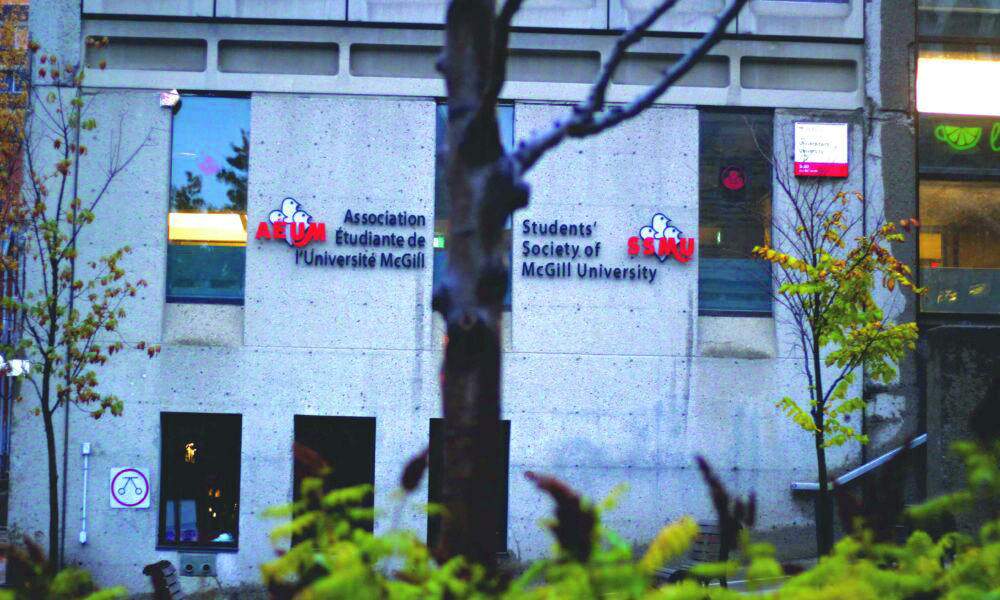
SSMU BoD meeting dominated by discussions about McGill Palestine Solidarity Policy MRO

The Students’ Society of McGill University (SSMU) Board of Directors (BoD) convened on March 31 with all directors present except vice-president (VP) Student Affairs Claire Downie. Downie had submitted her notice of resignation to the SSMU leadership and campus media outlets earlier in the day, explaining that her resignation was due to the SSMU’s harmful work environment

SSMU president Darshan Daryanani presented a working document with a timeline of events, beginning March 21 with the adoption of the Palestine Solidarity Policy and ending with the March 29 meeting between himself, VP finance Eric Sader, VP student life Karla Heisele Cubilla, and Deputy Provost Fabrice Labeau. Daryanani clarified in an email to The McGill Tribune that the discussion with Labeau featured the Palestine Solidarity Policy, the notice of default, the MoA, and the MRO. The SSMU is still in its 30-day grace period regarding the notice of default and in the process of reviewing the remedies requested by McGill before taking any formal steps. 

Daryanani also thanked the Legislative Council for passing a motion regarding McGill’s MRO at its March 24 meeting and announced that the executive committee approved $5,000 on March 28 to retain legal counsel regarding the official notice of default. The SSMU leadership further expressed their intent to uphold student democracy, evidenced by two statements to the McGill community following the March 24 MRO email.

In the question period following Daryanani’s executive committee report and announcement, Director Yara Coussa asked Daryanani if there was a precedent for McGill using MRO communications to publicly pressure SSMU.

“Yes, the MRO has been used as a tool to inform SSMU,” Daryanani said. “[On November 28] 2019, [Labeau] came to Legislative Council and spoke publicly regarding a particular motion, [the Motion Regarding Free Trip Offers to Student Leaders], and once the motion was adopted by the Legislative Council, the deputy provost also sent an email to the student body.”

All of the Legislative Council motions on the agenda were promptly ratified with unanimous approval. The remainder of the Board’s public session was dominated by discussions about Coussa’s motion to publish the Legislative Council-mandated statement by April 5. In a lengthy debate period, directors and members of the gallery alike expressed concerns over the back-and-forth between the university and SSMU escalating into a costly legal feud. The motion was ultimately ratified after the addition of three amendments regarding a legal review of the statement before its publication. 

“As a director, I feel strongly about legal consultation on [SSMU’s statement in response to the MRO],” said Charlotte Gurung, a Council representative to the Board. “I do think the statement is great, but I think that we’re in a precarious situation with McGill, and just because they have made a public statement, and that is potentially a misstep for them, I don’t think we need to be justifying us making a public statement without legal consultation because that could just as well be a misstep for us.”

Moment of the meeting: During the question period, council representative Mary Zhang asked the Board if Downie’s resignation could have been prevented, and how they plan to mitigate the vacancy. Delouvrier responded that he was saddened to hear of Downie’s resignation, and that he would answer objectively by directly quoting Downie’s letter, in which she said the resignation was preventable. 

Soundbite: “I would encourage all directors to vote in favour of this statement pending the approval of legal, because I think that as directors we have a duty to SSMU and SSMU’s mission, and our long-term stability as a Society depends on our ability to carry out our mission. That’s not something we’ll be able to do if we are dependent on the university. It’s our duty as directors to approve this motion in order to send out a message that we are independent from the university, and we have agency, and that we take a stance against this form of pressure.”

—Director Coussa during the debate period on the ratification of the motion regarding the Legislative Council-mandated statement against the MRO.

Chill Thrills, Student Life

Tried and true hangover cures

The end of the semester is fast approaching, and with that, an influx of graduation parties and end-of-year get-togethers await you. Don’t get too ahead of yourself though: Finals are also right around the corner, so you can’t slack off just yet. Excessive drinking and hangover symptoms can ruin that fragile work-life balance so many of us seek to perfect. So, whether it’s nausea, headaches, fatigue, or simply regret, the Tribune has vetted some hangover remedies to get you back into tip-top shape.

Solution 1: The pantry

         Eating well in the morning can make all the difference after a big night out. While some people swear by greasy foods like bacon or hash browns, they can upset your stomach and leave you feeling worse. It’s recommended to eat foods that will hydrate you, pump up your blood sugar, and replace lost nutrients like salt and potassium. Fruits, including oranges, strawberries, and bananas, are a good place to start. Staples for treating colds also work for treating hangovers—toast, bagels, and bouillon soup can nourish you without upsetting your stomach.

Solution 2: The bed

         If you’re feeling hungover but want to push yourself to study, take a step back and assess your energy levels: If you can afford to rest for a couple more hours, you’ll be left with fewer, but ultimately more productive, hours to study. Even if you have to wake up early, don’t ignore any rest throughout the day. Naps of even 20 minutes, whether at your place, on the bus, or on campus, can be great for reducing fatigue and other hangover symptoms. Close your blinds and turn on the “do not disturb” phone setting so that your sleep can be as restful as possible.

Solution 3: The Elkay

         Since alcohol is a diuretic, the best hangover preventative is to drink plenty of water the night of the party and, at the very least, drink a glass of water or two before you go to sleep. But if you wake up and remember that you barely drank a drop of water all night, start rehydrating as soon as you can. Fill up a big bottle of water and keep it with you the entire day.

Solution 4: The gym supplies

         Beyond rehydrating with water, it’s important to replenish the electrolytes you lost. Electrolytes, which include nutrients like sodium, potassium, calcium, phosphorus, and magnesium, come bottled, as a gel, and in powdered form. If you’re looking for a drink, Gatorade, Vitamin Water, and Bai are some of the readily available choices. For electrolyte powder, try Nuun or Biosteel. 

Solution 5: The medicine cabinet

         If your head is pounding, reach for some ibuprofen, commonly found in Advil. It is  recommended to avoid acetaminophen, commonly found in Tylenol, as acetaminophen reacts negatively to remaining alcohol in the body. When combined with frequent and heavy alcohol use, repeated doses of acetaminophen can result in liver damage. 

Solution 6: The nightstand

A common hangover symptom is sensitivity to light and sound. It’s easy to control your environment when you live alone, but if you have roommates or need to head out, insulate yourself by grabbing your sunglasses, baseball cap, and earplugs. A pair of earbuds with rubber tips will do wonders at keeping ambient noise at bay. 

McGill, News

McGill Residences face COVID-19 surge as preventative measures loosen up

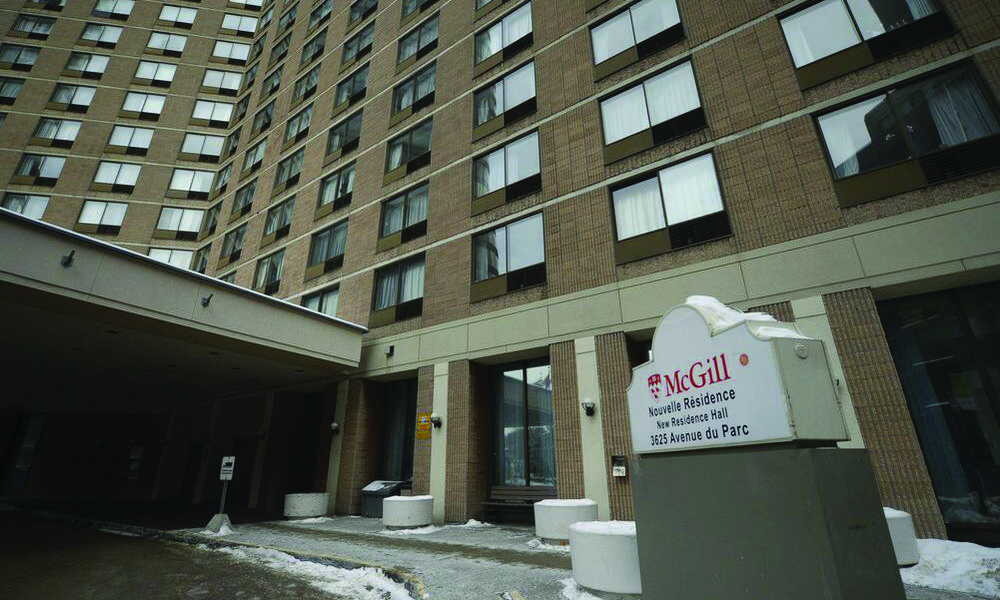
Between March 20 and 26, McGill reported 473 COVID-19 cases on campus, an increase of 330 from the previous week. Along with the rise in cases, many preventative measures are being lifted by both the Quebec government and McGill. After the province disabled the vaccine passport application, McGill announced it would drop vaccine passports at McGill starting March 28, and that all in person final exams would go ahead as scheduled. Starting April 1, McGill will also be consolidating rapid testing in residences into a single site at Carrefour Sherbrooke. Previously, there were four sites—Carrefour Sherbrooke, New Residence Hall, McConnell Hall, and Macdonald Campus Laird Hall—and rapid testing was only available for symptomatic students living in residence.

On the McGill subreddit, students and floor fellows living in residences have expressed concern regarding the sudden increase in cases and the lack of preventative action taken by the university. Christian Tonnesen, vice-president floor fellow, suspects that the number of cases reported by McGill is not representative of the actual number of COVID-19 cases within the campus community, noting that students often do not inform McGill of their positive test results. 

“I have had many floor fellows approach me and let me know that they suspect, and/or have often been told, that a majority of their students have COVID-19, or have been in close contact with someone who does have it,” Tonnesen wrote in an email to The McGill Tribune. “It strikes me as ironic that for an institution that was very hardline on COVID-19 and took many precautions regarding isolating students and relocating them last year, to have them throw up their hands and say, ‘Welp, we tried, but there are not enough rooms. Good luck everyone.’”

Nina McConnell, a U1 Economics student living in New Residence, approves of McGill’s management of the new wave. For her, tight restrictions at the start of the year, like visitor limits, made socializing difficult and felt arbitrary at times. 

“​​I appreciate the loosening up of the restrictions even despite what’s going on,” McConnell said. “There was a period when it was a little scary when they were out of isolation rooms in residence, but other than that I think they’ve been handling it pretty well. We still need to mask, we still go down to the dining hall and are distanced. But I think, overall, it’s better to manage it this way than to have the extremely tight restrictions that were happening at the beginning of the year when there were less cases.” 

Dr. Anne Gatignol, a professor in the Department of Medicine at McGill, believes that loosening restrictions will increase contamination, which she believes is inevitable at some point. Nevertheless, given that so many students have been contracting COVID-19, Gatignol encourages students to take precautions to protect themselves against the new variant and other respiratory infections. 

“If you remove the mask, you increase the circulation of all respiratory viruses, and we already see an increase in flu and colds due to many other viruses,” Gatignol said. “As SARS-CoV2 Omicron BA.2 variant circulates and is more contagious than the original Omicron, it would be much better to keep masks on most of the time when distancing is not possible. It would protect against COVID, but also against the flu and other respiratory infections.”

Frédérique Mazérolle, media relations officer at McGill, wrote to the Tribune that McGill had revised its protocols in residence to support student safety in light of the recent spike in COVID-19 cases in Quebec. She explained that appropriate measures will remain in place, and that McGill will remain vigilant as the pandemic evolves. 

“We urge students that test positive to continue isolating in their rooms and to report their test results to the McGill Case Management group. In the event that our self-isolation rooms reach capacity, and in order to accommodate all students in residence, a new room may be temporarily assigned if necessary,” Mazérolle wrote. “If there is increased demand in the future for rapid testing in residences, we will ensure that testing is ramped up to meet capacity.”

Tonnesen believes that the current measures McGill has implemented to tackle the surge are insufficient. As a result, he explained, floor fellows have had to work with students to create their own COVID-19 safety measures as best as they can. 

“Since McGill is failing to act, there are groups of students and floor fellows in residences with shared bathrooms who have had to do the work McGill hasn’t, such as creating ‘COVID’ and  ‘NON-COVID’ sinks and bathrooms in residences with shared facilities or organizing food delivery,” Tonnesen wrote. “If I didn’t know any better, I’d say McGill has weighed the pros and cons and decided that the COVID disaster in residence will hopefully pass with minimal media coverage and is therefore not worth the financial cost of ensuring the bare minimum safety requirements for students and floor fellows.”

McGill, News

Tribune Explains: Winter 2022 exams amid sixth wave of COVID-19

McGill’s Winter 2022 final exams will take place in a hybrid format from April 13 to 29, amid increasing COVID-19 cases and waning restrictions. Experts say that Quebec is officially in a sixth wave fuelled by the highly contagious BA.2 subvariant, a trend evident in McGill’s rising case numbers. At the same time, Quebec is standing by its plan to end restrictions and begin “living with the virus.” McGill, for its part, has rolled back measures like the vaccine passport and strict isolation for those who test positive in residences. The McGill Tribune looked into the updated exam procedures that students can expect for Winter 2022 exams.

What are the distancing and masking guidelines for exam rooms?

Students are required to wear masks for the entirety of their exams. According to Frédérique Mazerolle, McGill media relations officer, “Ventilation in exam rooms has been verified based on room capacities. In some cases, rooms are at reduced capacity based on ventilation assessments.” Mazerolle emphasized that members of the McGill community can feel safe writing in-person final exams due to these ventilation measures, as well as McGill’s over 96 per cent vaccination rate, as of April 2022. 

What should students do if they test positive for COVID-19 before an exam?

Just like the Fall 2021 semester, students are directed to fill out the COVID-19 accommodation form and isolate for the required five-day period if they test positive. Those who test positive may not attend in-person exams, and should seek alternate accommodations including deferred exams or supplemental exams when necessary. Students should also report any COVID-19 cases to McGill’s Case Management Group.

What are the accommodations available to students who cannot attend an in-person exam?

Those who cannot go to in-person exams, for any reason, are encouraged to email their instructors to explain their situation as soon as possible. Students can also apply for deferred exams, approvals for which are not always guaranteed and are evaluated on a case-by-case basis. While the university continues to offer accommodations for health-related issues, according to the dean of students, online exams will not be offered as an alternative to in-person exams when students are unable to attend, so students should plan to be in Montreal for any in-person exams.  

Are accommodations available for students with ongoing health issues?

According to Robin Beech, McGill’s dean of students, students with ongoing health issues are expected to have already completed the COVID-19 Academic Accommodations Request Form on Minerva, and to have sent the relevant medical documentation to the Office of Students with Disabilities. For immunocompromised students who have not yet filled out the accommodations form, it is recommended to contact the Office of the Dean of Students as soon as possible.

Mazerolle maintained that McGill has learned to quickly adapt to the changing circumstances of the pandemic, and that the health and well-being of the community remain the university’s top priorities.

The dean of students, Robin Beech, encourages students with questions regarding final exams or COVID-19 procedures to reach out to his office at [email protected]. Additionally, students should report their COVID-19 cases directly to McGill’s Case Management Group at 514-398-2920.

Read the latest issue

Read the latest issue