Latest News

McGill, News

McGill Senate discusses identification policy, election rules, and budget outlook

On Jan. 14, the McGill Senate convened for its first meeting of the Winter 2026 Semester, discussing a proposed codification of the Senate’s electoral procedures, a draft identification policy governing access to university spaces, and McGill’s budget outlook for the 2026-2027 fiscal year.

The meeting began with McGill’s President and Vice-Chancellor Deep Saini’s opening remarks, in which he gave thanks to outgoing Provost and Executive Vice-President Academic Christopher Manfredi. Saini announced in November that current Interim Deputy Provost Student Life & Learning Angela Campbell will replace Manfredi beginning Feb. 1.

Secretary-General Edyta Rogowska then presented a proposed codification of Senate electoral procedures, scheduled for approval at the Senate’s next meeting on Feb. 11. 

“Historically, Senate elections have been administered in line with […] statutory provisions [and] longstanding administrative practices,” Rogowska said. “While these practices have generally functioned well, they have not been consolidated into a single Senate-approved framework, which these procedures now provide.”

During the discussion, Senator Victor Muñiz-Fraticelli, associate professor in the Faculty of Law, raised concerns regarding the proposal’s ranked-choice voting process.

“The option of not ranking someone is […] unavailable under the current ranking system,” Muñiz-Fraticelli noted. “The truth is, very often, we either have absolutely no opinion about some of the candidates […] or perhaps we have a very strong, negative opinion about a particular candidate, and we would not like to rank them.”

The Senate then discussed the proposed Identification Policy for Access to Properties Owned, Occupied, or Used by the University, presented by Vice-President Administration and Finance Fabrice Labeau. If approved, this policy would allow authorized personnel—such as exam invigilators, faculty and staff, and campus security—to demand students, faculty, staff, and visitors identify themselves by providing IDs or removing face coverings “for a legitimate purpose.”

Amina Bourai, University Affairs Officer for McGill’s Post-Graduate Students’ Society (PGSS), expressed concern for what she saw as the “multiple red flags” in the policy.

“We are asking professors and staff to act as quasi-security officers, which is neither appropriate nor safe,” Bourai said. “Even police officers cannot force someone to identify themselves, unless detained or arrested. This policy is going to have a very chilling and punitive impact on students that […] must protect their identity during protests and public events.”

Senator Victoria Kaspi, representative of the Board of Governors, then acknowledged that this policy may help ensure campus security, citing her experience with classroom disruptions involving individuals wearing face coverings.

“[I am] someone who was strongly impacted in [the] classroom by masked intruders who disrupted class and physically blocked my entry to the classroom,” Kaspi shared. “Without any way to identify, anyone from anywhere can come and choose to influence, disrupt, vandalize, or […] affect peace on campus.” 

Bourai commented that the identification policy risks discrimination against certain groups.

“It is fully guaranteed that this policy will be applied unequally. Even with training, police officers always fall disproportionately on marginalized people,” Bourai said. “I find it very troubling knowing the steps that this province is currently taking to force the unveiling of Muslim women.”

The meeting ended with Manfredi presenting the Budget Planning 2026-2027 Report. Manfredi’s budget report estimates McGill will deliver a balanced operating budget for the coming fiscal year starting on May 1, 2026, despite its major deficit in 2025. 

“Language requirements, immigration changes, and uncertainty around student permit allocations all affect our ability to recruit students,” he noted. “Because more than 80 per cent of our operating revenue is enrollment-driven, even small shifts can have outsized financial consequences.”

Despite the impact of declining tuition revenue, Manfredi emphasized that measures to reduce McGill’s budget deficit should not be conflated with a shift in the university’s priorities.

“It’s not panic-driven crisis management, and it’s not austerity for its own sake. No one involved finds any of that appealing. Ultimately, the goal is to have sufficient resources to reasonably invest in the key elements of our core mission.”

Moment of the meeting 

When discussing the proposed identification policy, Senator Donald Morard compared the identification requirements to his own experiences completing his Master’s Degree in Russia under high security presence.

Soundbite
“We may want security, and in fact the majority of us want it, but it cannot come at the expense of people’s rights and entitlements to be treated as equals [….] You cannot balance rights and security.” – Catherine Lu, Political Science professor, on the ID requirement.

Sports

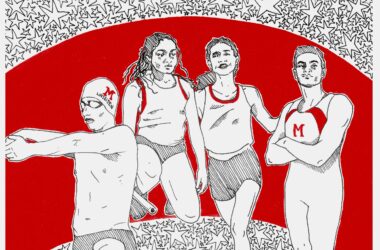
Controversy in the cold: Katie Uhlaender makes accusations of Olympic sabotage

The International Bobsleigh and Skeleton Federation (IBSF) has denied the allegations of Olympic ‘sabotage’ involving the Canadian national team and cleared the coaching staff of any wrongdoing. The controversy stems from American skeleton veteran Katie Uhlaender, a five-time Olympian whose hopes of competing at a sixth Winter Games Milano Cortina were swiped from her despite winning a key qualifying race. 

The disagreement came down to how skeleton athletes earn Olympic qualification points. Points are not only based on finishing position, but are also tied to the size of the field. The more athletes in a race, the more points are available. In this situation, four of the six Canadian women who had originally been entered in a North American Cup race in Lake Placid from Jan. 7 to 11 were withdrawn before competition. That significantly reduced the field size, which lowered the total points that could be earned. Although Uhlaender won the race, the reduced points haul meant she could no longer qualify for the Olympics.

Uhlaender, one of the most experienced athletes in the sport, accused the Canadian head coach of intentionally withdrawing athletes to manipulate the points system. From her perspective, the decision was a strategic move to protect Canada’s Olympic spots by limiting the ability of rival athletes to earn points. This was perceived as a clear message that even winning was not enough when tactical decisions could override performance.

Bobsleigh Canada Skeleton (BCS) has strongly rejected those allegations. The organization insists the withdrawals had nothing to do with points or Olympic strategy, but instead had everything to do with athlete welfare. According to BCS, the athletes who were pulled were young and relatively inexperienced, and they had already endured a difficult week on a demanding track. After assessing their readiness, coaches concluded the athletes were not prepared to race for a third consecutive time, and withdrawing them was framed as a responsible decision rooted in safety and long-term development.

This clash of perspectives highlights why the situation has become so controversial. On one hand, Uhlaender’s frustration is entirely understandable. Winning a qualifying race is usually the only thing that matters, and for athletes who have worked for so long to achieve this dream, having it stripped away would be devastating. The idea that another team’s roster decisions can determine the value of a victory feels fundamentally wrong, especially for something as highly regarded as Olympic qualification.

On the other hand, Canada’s explanation cannot be dismissed outright. Coaches regularly make judgment calls about athlete readiness and risk, particularly in extreme sports like this, where mistakes can lead to serious injury. Athlete safety is not a convenient excuse; it is a legitimate reason and is necessary to protect the team and its athletes.

The deeper issue seems to lie not in proving malicious intent, but in the structure of the qualification system itself. The fact that this controversy is even possible exposes a colossal flaw in how points are awarded. A system where the withdrawal of athletes could alter another competitor’s participation is logistically unsound. Even if Canada acted in good faith, it is hard not to see how it could have been manipulated. 

Ultimately, this controversy is not just about Canada versus the United States or athlete versus federation. It is about whether Olympic qualification systems truly reflect athletic performance. The investigation may have determined responsibility, but it is clear to see that when winning on the track is not enough, the system itself needs reform. Olympic dreams should fall to the fate of hard work and performance, not the unintended consequences of decisions made behind the scenes. 

Student Life

Making the most of your final semester

Your final semester is a liminal space: A mere 13 weeks in which past, present, and future warp relentlessly into one another. The library that sheltered you in your darkest hour no longer feels like home, but it is not yet a memory either. You half-listen to a lecture by your favourite professor, mentally rehearsing post-grad plans. Swept in the undercurrents of fear and excitement, it can feel that you’re already half elsewhere. But your last semester will draw to a close, whether you savour it or not: As a tenant of this tenuous time, you can choose whether to let it pass unremarkably or allow it to shape a deliberate, meaningful goodbye. 

Be present

The impending end of student life may usher in a host of forward-thinking concerns. Amidst the chaos of inevitable LinkedIn rabbit holes and polarizing grad school Reddit threads, do not get lost in the future while your present moment escapes you. For some, this might mean refraining from filling out applications while sitting in class. For others, mindfulness may constitute taking mental notes of the way the afternoon light filters through a library window or allowing yourself to linger in the small, unremarkable moments of campus life that once felt permanent and now feel transient. Before the deadlines, decisions, and titles trickle in, making constant attempts to define your adult life, there is value in remembering who you were when your primary obligation was to learn—and in recognizing that this version of yourself deserves your full attention, if only for a little while longer.

Make time for friends

At a time when plans are postponed in favour of productivity and conversations are cut short by the pressures of what comes next, try to use these final months to exist alongside those who have shaped and supported you at this stage in your life. Make time for shared meals, late-night talks, and the long way home. Be honest, caring, and kind. The assignments will be submitted and the emails will be answered, but the moments shared among friends are the ones you will reach for when campus life becomes something you speak about in the past tense.

Visit the places you love

McGill students come from over 150 countries, and many will leave Montreal after graduating. Take the time to visit the places that have made this city home. Whether it’s the cafe that witnessed your first nervous midterm season, the park where conversations stretched long after the sun set, or the slushy streets that sent you off to class, these spaces have held versions of you that will not return in quite the same way. A complete goodbye bids adieu to places too.

Express gratitude

Allow the constant stream of reflection to make way for gratitude. As you take stock of the moments that have shaped you, turn your attention to the people who made them possible. Thank the mentor who made you a better leader, the friend who always listened, and the professor whose encouragement made all the difference. Gratitude does not need to be elaborate or performative; you can channel it into a brief message, a simple acknowledgment, or a conversation you have been meaning to initiate. These expressions may seem small, but they have weight for both you and the recipient. In recognizing the support you received, you affirm that no chapter of your life is written alone—and that this one, too, was shaped by more than just your own efforts.

Prof Profiles, Science & Technology

Meet your prof: Nikolas Provatas

Despite being friends with several physics majors, when discussions of gravity and inertia inevitably shift into abstract theory, I can’t help but wonder, what is physics all about, anyway? 

If you’re studying science or engineering here at McGill—or just interested in the mysterious inner workings of physics overall—there’s a pretty high chance you’ll find yourself at some point or another sitting in Leacock 132, as one in a sea of 650 students, taking an introductory physics class. 

PHYS 102 is one such introductory course. In this introduction to electromagnetism, students learn the fundamentals of electric current, circuits, magnetism, and optics. These concepts are not only interesting but foundational to later studies in physics and engineering, and McGill students are in good hands: PHYS 102 is taught by Nikolas Provatas, a Tier 1 Canada Research Chair and member of the Department of Physics.

Like many scientists, Provatas traces his interest in science to early childhood. In an interview with The Tribune, he recalls being just seven years old when a picture book about Galileo Galilei and his theory of the pendulum captivated him.

“At that age, I had no clue about equations or anything, but I remember the text said that [Galilei] observed [his theory] by watching […] how long it takes the chandelier to swing,” Provatas explained. “So when I would go with my father to [his] restaurant in the morning, around 5:30 a.m. […] it would take a long time till things got busy. [So], I remember I took up a string, and I tied a little mass at the end of it. I can’t even remember what it was, [it] must have been a cup or something. And I would tie it somewhere, and I would just swing it in the kitchen and just watch it. And I remember my father looking at me, thinking, you know, like, ‘Do something productive with your life,’ [….] And I thought, ‘This is productive. The scientist did this. I’m trying to figure out how it works.’”

From here, Provatas’ curiosity continued to grow, eventually leading him through post-secondary education; he graduated from McGill with a PhD in theoretical physics in the late 1990s. 

Given that he was interested in how the world works and why it works the way it does, Provatas found theoretical physics to be a natural fit. Unlike experimental physics, which focuses on data collection and analysis, theoretical physics relies on math and other models to explain phenomena. 

After completing his PhD, Provatas went on to complete two postdoctoral positions—temporary research positions—where he explored different areas of physics. He emphasized the importance of these experiences, describing them as the academic equivalent of a doctor’s residency training.

“Labs hire you on a contract basis, and say, ‘Solve a problem or do something interesting, and then we’ll pay you to do that, and then we publish together.’ So I do the work, I publish, and then they provide me [with] some environment [or] ideas,” Provatas said.

His first postdoc was in Helsinki, Finland. 

“I spent three years at the University of Helsinki, at their Institute for Theoretical Physics, doing work there on something called Percolation theory,” Provatas explained. “It’s a theory of how random things diffuse through materials so as to percolate through them, and this is very important when considering the structure of materials, ranging from paper to even metals.”

After his time in Finland, he completed a second three-year postdoctoral appointment at the University of Illinois Urbana-Champaign (UIUC). 

It was after this second postdoc that Provatas began searching for stable work. Life as a postdoc is inherently uncertain; each job is contracted for a specified number of years, after which researchers are left to find new roles, potentially on opposite ends of the globe.

“I literally owned nothing because I knew that in any apartment I would go, whether here as a PhD, in Helsinki as a postdoc, [in the] United States as a postdoc, I knew I couldn’t really buy stuff because I’d be on the move in a couple of years,” Provatas explained. “So literally, I would just have my backpack and a suitcase to hold some clothes, and that was my whole ownership at that time.”

At UIUC, he worked under two professors: one in statistical thermodynamics and another in mechanical engineering. Mentorship from this engineer proved to be pivotal to Provatas’s future career, as he taught him how to communicate his research in ‘engineering terms’ rather than purely theoretical language

“He taught me how to talk the talk and walk the walk of engineers, and to focus on what’s important when you sales pitch your stuff to engineers versus just pure scientists,” Provatas said. “And he actually made me wear a suit to give conferences. And I started to go to engineering conferences and give seminars.”

It was through attending these engineering conferences that Provatas was able to land a job at Bush Paper Company, working as a Research and Development scientist. Eventually, through his work at Bush, Provatas was invited to apply for a professorship at McMaster University—not in the physics department, but rather in the materials science and engineering department.

“I thought, ‘Oh, boy, you know, this is nice.’ I’ve always wanted to be a prof, but I thought it’d be a physics prof.” Provatas said. “I didn’t know I’d go work as an engineering prof. So I practiced and practiced and got over the fear, and I went and gave an interview, and to my shock, they hired me.” 

Provatas worked at McMaster for 11 years. It was only after an opportunity to teach physics at the university level—as opposed to materials science and engineering—that Provatas left McMaster. This opportunity was from none other than McGill University. 

“I’ve been here since 2012, teaching physics, doing research on the same topic. I’m still a material scientist, but looking at it from a very physics[-oriented] point of view,” Provatas explained. “What ultimately made me make the transition from an engineering department to a physics department, is that you know, you can ask the questions that, on one hand, they could be useful, but on the other hand, it could be very impractical, but you know, it’s there. So, ‘Why does gravity work?’ So someone might say,’ Oh, come on, do something important [and] practical with your life,’ but [gravity is] there. I see it. It acts on me every day.”

As a professor, whether at McMaster or at McGill, Provatas has always taught freshman courses. Classes like PHYS 102 allow him to connect his research to his course content, finding ways to keep the material engaging and interesting for students. 

“I always like to take what dry theory we’re learning, and say, you know, ‘this is important, because power generation works this way. Let me show you how making material works this way. An aircraft works this way.’ And I find that students like the fact that it is connected to the real world. It’s not just ‘Oh, I’m sitting here in a physics class learning all these equations.’”

Provatas’s current research focuses on understanding the microstructures of material—in other words, how they form and how they respond to material phase changes.  

“If you now explore the depths of this material, at the level of atoms and thereabouts, you start to see that the material is just not some monolithic, boring object. It’s a myriad of interesting patterns [and] that the atoms [are] forming the tapestry of a solid form,” Provatas explained. “My research focuses on why these patterns form […] how they form, [and] what controls their formation. And it’s beautiful.”

This semester, Provatas is teaching PHYS 102 and PHYS 657—but anyone interested in learning more about physics or materials science is welcome to stop by his office hours: 3:30 p.m. to 5:00 p.m. on Mondays, in Rutherford 218.

While Provatas’s path to McGill wasn’t linear, his interests and curiosity led him to a career of research that his seven-year-old self may not have even been able to imagine. Ultimately, Provatas shows that the trick to life is the same as the answers to PHYS 102: Achieving through dedication and hard work, and seizing the opportunities in front of you.

Arts & Entertainment, Pop Rhetoric

Welcome back, 2016

Today’s agenda: Perfecting your duck face, finding the rarest Pokémon on PokemonGo, and blasting Zara Larsson‘s “Lush Life” from your iPod touch. Bliss.

History may not repeat itself, but trends do—and right now, nostalgia is staging a dramatic return. According to the BBC, TikTok searches for ‘2016’ have risen by 452 per cent in the past two weeks. The minimalist, muted tones of 2025 are out, and the unapologetic cringe of 2016 is back in.

In honour of 2016’s comeback, here are the ultimate throwback highlights in fashion, pop culture, and music.

Skinny jeans

Skinny jeans were an absolute staple in every 2016 wardrobe. Looking to find something more unique? Why not try ripped skinny jeans, or pair them with your favourite Converse high-tops? Brands released skinny jeans in all colours and styles, with American Eagle and Old Navy leading the way.  Icons like Kendall Jenner, Gigi Hadid, and Jennifer Lawrence turned skinny jeans into a must-have look. While baggy jeans now dominate, skinny jeans still hold a sacred place in fashion history. It even seems as though skinny jeans are making a comeback—whether this is a blessing or a curse is up for debate.

Coachella

Hosted in Indio, California, Coachella was not just a music festival, it was the music festival of 2016. Known as the defining event of the time, Coachella was what every teen and young adult dreamed of. Those lucky enough to attend planned for months, while everyone else refreshed their Instagram feeds and Snapchat stories in desperate anticipation. Influencers flooded their feeds with sporting flower crowns, boho-chic, and peace signs. Coachella 2016 was the biggest Coachella to date, making $84 million USD in revenue. Headliners included Major Lazer, Guns n’ Roses, Calvin Harris, and Sia. It wasn’t just a festival; it was a place of self-expression, and a symbol of the cultural moment of freedom and community defined by social media, fashion, and music.

Musical.ly

Before TikTok’s rebrand, we called it ‘Musical.ly.’ The app allowed users to create short, lip-synced videos to popular songs and trending sounds, turning everyday teenagers into viral stars overnight. Lisa and Lena, teenage twins from Germany, went viral on the app for making dancing videos. In March 2016 alone, their number of followers increased by 256 per cent, bringing them from 112,000 to 377,000 followers. Musical.ly became a launchpad for influencers, musicians, and artists alike, encouraging creativity, humour, and self-expression. It had something for everyone, from beauty influencers like Baby Ariel to upcoming young artists like Jacob Sartorius. Its popularity highlighted a shift in how young people consumed media. It was a clear indicator of shifting focus from long-form media to short, fast-paced digital content.

 The Mannequin Challenge

Speaking of social media, the Mannequin Challenge was a must-try with all your friends. The trend involved groups imitating mannequins, while Rae Sremmurd’s “Black Beatles” played in the background. Soon, this trend spread to family gatherings and classrooms. One of the most famous Mannequin Challenge videos was titled ‘High School Mannequin Challenge 1500 Students’ and was uploaded by a teacher at a secondary school. This video alone had 9.4 million views. It even reached some well-known faces, from Beyoncé and The Rock to Michelle Obama and the New York Giants.

YouTube

Instead of high-tech, polished studios and scripts, YouTube allowed viewers to watch content filmed in something as simple as a bedroom. Liza Koshy was just 19 when she began making funny YouTube videos at home, but gained over five million followers almost overnight, leading her to win the Streamy’s 2016 Breakout Creator award. Creators like PewDiePie, who had more than 50 million subscribers in 2016, rose to the top by yelling at video games, somehow building a fanbase larger than many TV networks. They even coined their own name—the ‘Bro Army.’ On the other side of the platform, creators like Emma Chamberlain took over with chaotic vlogs, challenges, and fashion videos. Her popularity came from the personal connection she built with viewers. These forms of videos offered something television couldn’t: Intimacy and immediacy. YouTube remains a major entertainment platform today, exemplifying the idea that anyone with a camera could be a star.

And finally, the ultimate playlist of 2016

 Justin Bieber, “Love Yourself” – The perfect breakup anthem. 

 Major Lazer, “Lean On“- A must-play at any house party, club, or event that involves dancing.

Drake, “One Dance” – Smooth, rhythmic, and the perfect beat for a chilled summer night.

The Chainsmokers, “Closer” – A nostalgic and catchy pop hit, perfect for sing-alongs.

Mike Posner, “I Took a Pill In Ibiza” – For those who are at a beach club somewhere, or who wish they were.

Commentary, Opinion

Mayor Soraya Martinez Ferrada is not serious about fighting homelessness

This past week, Montreal’s new mayor, Soraya Martinez Ferrada, announced her first budget, in which she plans to triple spending on homelessness initiatives. Her new Tactical Intervention Group on Homelessness (GITI) commits $29.9 million CAD to policing infrastructure, surveillance in public places, and social workers. 

Despite the increase in allocated resources to fighting homelessness, Martinez Ferrada’s government has missed the big picture: The only way to solve the homelessness crisis is to put people in homes. However, Martinez Ferrada’s government has scrapped the 20-20-20 bylaw that required developers to allot 20 per cent of their units to social housing, 20 per cent to affordable units, and 20 per cent to family-sized units. 

By scrapping the bylaw, Martinez Ferrada’s pledge to address the unhoused crisis in Montreal will persist unfulfilled. Instead of connecting more people with affordable housing, this approach will force more people onto the street.

There are two major types of homelessness: Visible homelessness which refers to people who are sleeping on the street, and hidden homelessness, referring to people who have no fixed address, bounce between friends’ couches, sleep in their cars, or live in shelters. In the fight against visible homelessness, the THRT could be quite useful. Martinez Ferrada’s emphasis on locating where many unhoused people are and providing them with the resources to get into some kind of shelter directly tackles the crisis. 

However, the GITI—and Martinez Ferrada’s budget plan in general—does nothing to combat hidden homelessness. The social workers hired for work under the GITI cannot help a person if they do not already know the person is looking for help. It is impractical to design support systems for unhoused people in which police are expected to go up to everyone on the street and ask if they need help looking for an apartment. Hidden homelessness can only be wholly addressed by creating permanent, affordable housing options something which the 20-20-20 bylaw aimed to achieve. 

According to the Institut de la statistique du Québec (ISQ), about seven per cent of Quebecers aged 15 or older have experienced hidden homelessness in their lives, while 0.9 per cent of Quebecers experienced visible homelessness. The primary identified cause of hidden homelessness is eviction followed by individuals not being able to find a new, affordable place.

With more affordable housing, individuals experiencing homelessness will have an easier time finding another place after being evicted. Shelters are another solution, as might be the GITI—but these are not mutually exclusive of affordable housing. 

Martinez Ferrada’s repealing of the 20-20-20 bylaw reduces the number of affordable units available for people experiencing homelessness or financial insecurity. When announcing her decision to repeal the bylaw, Martinez Ferrada claimed that the regulation’s requirements actually prevented new development in Montreal by discouraging developers from building more housing. Instead, the Martinez Ferrada administration chose to implement a set of incentives, including tax breaks, for developers to build more within the city. However, the evidence that the bylaw stemmed housing growth is not definitive.

Martinez Ferrada’s incentives offer no provisions for social and affordable housing, meaning there is no guarantee of any new affordable units for unhoused individuals experiencing hidden homelessness. While the 20-20-20 bylaw was not a guarantee of increased affordable housing, it at least ensured that something would be built. Mayor Martinez Ferrada’s new plan fails to do that. 

If the Martinez Ferrada administration wants to get serious about combatting homelessness, it needs to get serious about building affordable housing. With the repealing of the 20-20-20 bylaw, it is not off to a good start.

Know Your Athlete, Sports

Know Your Athlete: Luca Nicoletti

McGill Athletics announced on Nov. 20 that it would cut the Track and Field program. Just nine days later, Luca Nicoletti, U3 Engineering, shattered the team’s longest-standing record by breaking the 300-meter dash mark that had stood since 1986. Nicoletti clocked a 34.11-second finish—three milliseconds faster than Earl Haughton’s 34.14-second record—at the Martlets Open Meet on Nov. 29, the team’s first competition of the season. In an interview with The Tribune, Nicoletti reflected on his emotions before and after the race.

“Going into the meet alone was insane because our team was getting cancelled. I had ‘SAVE MCGILL TRACK’ written all over my arms. I wanted to show the school that our team is still competitive,” Nicoletti said. “After the race and seeing the time was exciting. I’m like, at least [McGill Athletics] gets to know what they are missing out on.”

Nicoletti’s expectations were high going into this meet. After showing consistent progress over the summer, he wanted to break 34 seconds, putting him closer to the Tomlinson Fieldhouse record of 32.94 seconds set by Shane Niemi from York University in 2014. He also hopes to get a spot on the podium at the U SPORTS Track & Field Championships in March.

“I think [breaking 34 seconds] will come this season, but this was a mini-achievement and a mini-milestone on the way to U SPORTS, which was super exciting.”

Nicoletti started his track career at École secondaire catholique Paul-Desmarais in Ottawa, where he represented his high school team. However, he began training outside of school at the Ottawa Lions Club in 2019 at his friend’s insistence. Nicoletti competed in the Ontario Federation of School Athletic Associations Championship youth category that year, placing first and second in the 100-metre hurdles and 300-metre hurdles, respectively. 

“I was like a big success off of very little training, so it solidified it as a sport for me there,” Nicoletti said. 

Despite both his early promise and recent success, Nicoletti endured a serious hamstring injury during his first year on the McGill team. During his recovery, he prioritized regaining his speed, which ultimately led him to transition to short-distance events. Having moved away from his family a few months earlier, Nicoletti found it especially difficult to cope with the setback. 

“I was losing two things I was comfortable with. I was away from my family, and I would have had the familiarity of track, but I lost that as well,” Nicoletti said. “Watching others get better wasn’t the worst part of it, but it was more just not getting to do the things I love doing.”

His injury, however, led him to appreciate the sport even more. 

“On my recovery journey, every workout was painful, but I was just smiling. I remember the first summer back, my friend and I threw up after training. He was like, ‘Man, this sucks.’ I was like, ‘I’m just happy I can do this.’”

Nicoletti also attributed the success of his recovery journey to his coach, Tyrone Edge, and his teammates.

“Coach Edge is really good with competitive athletes, and he helped me get back into fashion after my injury,” Nicoletti said. “I think you have to have the self-discipline to train on your own, but you need your teammates to make the pain throughout the season worth it.”

Entering his third season with the team, Nicoletti approached training with far greater intention, restructuring nearly every aspect of his life around track. He began taking his diet more seriously, closely monitoring his protein intake and incorporating supplements that support recovery. 

While his dedication paid off, the news of the track team’s cut casts a lingering shadow over the moment, complicating what should have been a purely celebratory milestone.

“It’s bittersweet because what if my record is the last one that gets recorded? People are coming up to me and saying how you might have it forever, but I want the rookies under me to be able to challenge it and break it.”

Montreal, News

Activist groups across Montreal unite against U.S. military invasion of Venezuela

On Jan. 11, 10 activist groups in Montreal joined together for a demonstration against the military invasion of Venezuela. The protest began at 2:00 p.m. at 1134 rue St.-Catherine Ouest, with members of each group holding signs representing their organizations and condemning the United States’ recent actions in Venezuela.

The United States Army’s Delta Force unit conducted ‘Operation Absolute Resolve’ on Jan. 3. The military mission captured and transported the president of Venezuela Nicolás Maduro and First Lady Cilia Flores to Manhattan for prosecution on charges of conspiracy to possess and the possession of machine guns and destructive devices, as well as conspiracy to import cocaine. Maduro has also been charged with narco-terrorism.

Operation Absolute Resolve follows escalating U.S. military interventions in Venezuela, with the intention to curb drug trafficking from South America into the U.S. On Sept. 2, U.S. President Donald Trump carried out the first military strike on a water vessel connected to the drug trade. All 11 people on board were killed in what Democratic senators have likened to execution without trial. 34 additional strikes were conducted between then and Jan. 3, killing at least 115 people. The United Nations has described it as a violation of international human rights law. 

Following Maduro’s capture, there have been mixed reactions among Venezuelans. While some citizens have expressed gratitude for the United States’ interference given Maduro’s history of corruption, others have expressed deep concern for Trump’s plans for the U.S. to run Venezuela in Maduro’s absence.

In Montreal, protesters focused on how U.S. interference could harm the already shaky democratic system in Venezuela, allowing the U.S. to take advantage of the power vacuum for its own economic gain.

The Revolutionary Communist Party (RCI) held a table on the corner of rue St.-Catherine and rue Stanley, where the demonstration was set to begin. They offered informative pamphlets on their mission as well as reading materials on capitalism and imperialism across the globe. 

In an interview with The Tribune, a representative from the RCI, who wished to remain anonymous, explained that the United States’ intervention in Venezuela is directly tied to capitalistic motives, claiming that Trump was not seeking to free those in Venezuela from dictatorship, but to instead gain access to the largest oil reserves in the world. 

“We know that there are people in Venezuela who are partying right now because Maduro is gone, but I believe that this positive energy will soon go away because the conditions there will not get better,” the representative said. “If you kidnap some politician, or you kill them, it’s not gonna make a change.”

At around 2:30 p.m., an event organizer made a speech to launch the march. The organizer explained that while demonstrations such as this one are effective at rallying the public, they often go unnoticed by government officials who can take meaningful legal action. 

“I thank you for your camaraderie, for coming out, but we need to think about what comes next,” the organizer said. “We don’t want to just keep doing the same thing and going through the motions and sending petitions to a government that, quite frankly, doesn’t give a single fuck about us.”

The event organizer also emphasized the need for Canadians to take a more vocal stance against imperialism in their daily lives, calling for citizens to observe and criticize the country’s own colonial history alongside that of the United States.

“I wanted to speak to our position here in the imperial core, or at least in the embarrassing appendage to the imperial court that is the USA,” they said. “We have no moral high ground to take, […] especially if you are a settler here, accepting comfort at the expense of Indigenous Peoples or any peoples throughout the world.”

The crowd of protesters began to march down rue St.-Catherine, periodically pausing to light American flags on fire. At the corner of rue St.-Catherine and av. Union, the march came into contact with a separate protest for Palestine. The two joined together as one voice, both crowds chanting, “Free, free Palestine.” One protester brought an Israeli flag to be burned alongside the American one. The march continued on, with the pro-Palestinian crowd moving in a separate direction.

A demonstration organizer from Socialist Unity who wished to remain anonymous shared with The Tribune that this meeting was coincidental, and that the solidarity between the two groups is a naturally occurring outcome of similar fights against imperialism across the globe.   

“There is a role for every person on Canadian soil to play, to stand in solidarity with the Venezuelan people, to defend the achievements of the Bolivarian revolution, and to resist imperial aggression,” they said. “Everybody who’s here needs to be talking to the people in their lives […] to come up with the strategies that are going to make a difference beyond just protesting in the streets [….] It’s good to bring people together, but if we keep only protesting, then we’re not going to make any significant difference.”

The march concluded at Complexe Guy-Favreau, where protesters gathered to hear speeches from each activist group before departing.

Jela de la Peña, a representative of Anakbayan Montreal, a Filipino youth organization dedicated to fighting for social democracy with a socialist perspective, told the crowd that working-class people bear the hardest consequences of imperialist action. She further stated that exploitation through conquest, such as that of the United States’ intervention in Venezuela, is a tactic often used by imperialist forces.

“Filipinos and Venezuela are bound by the same imperialist fists. The same system that drove bombs on Mindoro, Philippines, is the same system that has bombed, sanctioned, and strangled Venezuela for decades,” de la Peña said. “This is about silence. Venezuelans know this pattern well, just like we are told Venezuela is a narco state, that its leaders are criminals. These are old lies. These are recycled propaganda […] used to justify invasion, sanctions, coup and plunder.” 

De la Peña continued, echoing the sentiments of several other activist groups present.

“Why Venezuela? Because it holds the largest proven oil reserves in the world […] The U.S. monopoly capitalists do not care about Venezuela. It does not care about people. It only cares about profit, about control, about domination. This is why […] Filipino and Venezuelan struggles are inseparable. Our shared enemy is U.S. imperialism,” de la Peña said. “Together, we say our lives are not collateral, our lands are not for sale, and together, across borders, we refuse to be silenced.”

Arts & Entertainment, Theatre

‘Cutlass’: A story of fleeting and forgotten queer love

Jan. 15 marked the opening night for Cutlass’s debut workshop performance at Tuesday Night Café Theatre, directed by Ruby Isaacs and written by Elise Holbrook. The show follows pirates Anne Bonny (Elise Holbrook, U2 Music Composition) and Mary Read (Abby Wyland, U3 Art History Honours), who sailed the Caribbean in the summer of 1720. Both Anne and Mary disguised themselves as men on their excursion to ensure their safety, but the moment they discovered their mutual secret, their relationship ignited. 

The show features a live band of cello, violin, and piano, which elevates the drama in each scene. The score spans a wide range of emotions, with the cello evoking a dark moodiness while the piano uplifts the score, conveying excitement. The dialogue also drives the emotional rollercoaster: You’ll laugh at the absurd jokes made by the comedic-relief pirates, then cry as Anne and Mary’s relationship faces its tragic fate. 

Anne is a complex character whose story completely enraptures the audience. She is eccentric and angry, yet her chaotic humour makes her lovable. Among the crew of pirates, she stands out as the life of the party and excites the other crew members with her stories. Mary, on the other hand, is awkward, making her passionate love for Anne result in tears for the audience. The physicality between the two pirates emphasizes their chemistry. Specifically, the staging of their duets highlighted their relationship dynamic. Starting from opposite ends of the stage, they would get closer with each note, illustrating their attempted restraint overpowered by the strength of their feelings for each other. 

Their love story is particularly important because, throughout history, queer romance has been criminalized and erased from literary narratives. The love between these two women was written off as “a close friendship,” concealing the truth. Learning about sapphics from the 1700s is critical in modern times because it emphasizes the fact that queer people have always existed. Queer people have made history—and will continue to make history—just as these two women have. Seeing this musical offers both a learning experience and a chance for audience members to connect with both the story and queer historical figures. 

The music in the show is ethereal. Anne and Mary have several duets throughout the musical, with many moments of mystical harmonization, capturing their intense feelings. Their siren-like voices blend together beautifully, with Anne’s soprano voice balancing well with Mary’s longing alto voice. 

“If you burn, I burn with you.” This powerful line spoken just before a kiss illustrates their willingness to face the danger that their love brings. They accept the risk of punishment for their queerness, choosing to endure it together forever.

The costumes and set are also astonishing. These are the types of outfits you can imagine a pirate from the 1700s wearing; the details of each outfit both convey the time period and reflect each character’s personality. The small, intimate theatre invites the audience onto the ship. 

The end of the show took my breath away. The pirate ship gets seized, the crewmates are hanged, and the two women are imprisoned. The final scene was brought to life by Golbrook’s heartbreaking scream upon realizing that Mary is dead. This devastating ending highlights the impermanence of love, reminding us to appreciate those we love, even if it means rejecting social boundaries. 


25 per cent of Cutlass ticket sale proceeds went to Watermelon Sisters, an organization based in Chicago that provides humanitarian aid in Gaza.

Commentary, Opinion

The Big O could be more than a costly relic

This year marks the fiftieth anniversary of the 1976 Montreal Olympics. To this day, the Olympic Stadium, also known as the Big O, remains one of Montreal’s biggest architectural and cultural landmarks. Featuring the world’s tallest deliberately leaning tower and over 50,000 seats, the stadium is impractical to maintain from an engineering perspective. Due to its hefty maintenance costs, Quebecers frustrated by the continued use of their tax dollars have dubbed the stadium the “Big Owe,” as the facility remains unequipped to host large events, including the upcoming FIFA World Cup

Despite calls for demolition, Quebec committed long-term to renovating the Olympic stadium. If taxpayers are funding this renovation, the stadium must stop functioning as a historical monument and instead operate as an active, publicly accessible venue that generates global attention through its events, creates quality jobs, and yields measurable economic returns for Montrealers.

The impacts of large government investments in sports stadiums have long been studied to determine the extent of their benefits to the surrounding communities. Academics largely agree that publicly funded stadiums rarely deliver strong measurable economic returns, often mostly profiting the few wealthy team owners and executives. Large stadiums rarely generate  meaningful economic output such as higher local property values, tax revenue, or employment. The Big O’s inability to regularly host large events since the Expo’s 2004 departure shows that these indicators are even lower compared to other cities with fully functioning stadiums of similar capacities. These findings rightfully fuel public skepticism toward continued spending on the Olympic Stadium.

Recently, the Quebec tourist minister unveiled an $870 million CAD plan to rebuild the stadium’s roof, which was damaged in over 20,000 areas in 2024. This significant expense is compounded by other costs, such as $28.6 million CAD for the electric system and $20 million CAD for sound equipment. The new roof is anticipated to last only 50 years after the project is finished in 2028. 

The other option for the stadium’s fate—demolition—also carries a hefty $2 billion CAD price tag, meaning the stadium will remain whether Quebecers like it or not. So if public money is what’s keeping the stadium alive, the public must be able to access it. To ensure that the investments made in the stadium’s recovery have the best chance at providing economic benefits to all Quebecers, this plan cannot repeat the unwise choices of other cities with large stadiums that have not delivered such benefits. 

Meaningful efforts must move beyond renovation and include enforceable commitments regarding how the stadium is used. Investments should guarantee that the stadium hosts and supports community events, youth sports, and cultural programming for Montrealers. If these commitments are made properly with insight and collaboration from local residents, the surrounding neighbourhoods, the city, and the province as a whole would see tangible returns. The Olympic Stadium should function as a shared civic space, not a sealed monument maintained for hypothetical use in the ever-distant future.

Quebec’s hesitancy to develop an investment plan until 2024 led to countless missed opportunities for Montreal to host global events. Perhaps one of the biggest losses was the 2026 FIFA World Cup, where Montreal declined hosting due to financial concerns. Montreal was also unequipped to host Taylor Swift’s record-breaking Eras Tour, which would have brought millions into the city’s economy as it did in other Canadian cities such as Toronto and Vancouver. Missing out on these events caused Montreal to forgo tourism spending, employment opportunities, and international visibility that could have directly supported the city’s small businesses and surrounding communities.

Cities are not recognized globally for simply maintaining their world-famous infrastructure, but for using it to bring people together. Since the Olympic Stadium is here to stay, Quebec has the opportunity to have Montreal recognized on the world stage and make meaningful contributions to its local economies. The public funding for this project should be tied to protocols, including event-hosting benchmarks, community access guarantees, and transparency about its use and impacts. The true cost of the Olympic Stadium is not how much Quebec spends on it, but whether that spending is managed in a way that allows all Quebecers to reap its benefits.

Read the latest issue

Read the latest issue