

Latest News

McGill, News

Ghania Javed clinches next AUS presidency after tight race

Arts students headed to the virtual polls from Feb. 21 to 25 for the Arts Undergraduate Society (AUS) Winter 2022 General Elections, voting on next year’s AUS executive council, as well as the arts representatives to SSMU and the McGill Senate. A referendum on constitutional amendments and fee renewals was also held over the same period. 

The 2022-2023 AUS executive council will comprise of Ghania Javed as president; Charlotte Gurung as vice-president (VP) Finance; Annie Costello as VP Social; Nicklas Rieck as VP Academic; AyeCham Myayh Pan Mort Aung as VP External; Britney Vu as VP Communications; and a VP Internal to be appointed by the outgoing council, per election bylaws. Javed, U2 Arts, won the presidency by a paper-thin margin of 0.6 per cent—the difference of four voters proving decisive amidst 114 (12.9 per cent) abstentions. 

President-elect Javed says awareness and transparency will be a core tenet of her tenure.

“Raising awareness of the services and key infrastructures that student leadership positions and student government offers to students is important,” Javed said. “I look forward to increasing transparency and approachability within the AUS and establishing initiatives that will leave a lasting impact on students.”

The voting period began with a technical stumble that nullified ballots cast within the first 15 to 20 minutes. Current AUS president Adin Chan, U3 Arts, explained that the ballot rerun was because the pen sketches—summaries of candidates’ main campaign promises—were missing from the first ballot. 

“This is really important because in an electorate of 8,000 people, the Facebook events and posters can only be seen by so many,” Chan said in an interview with The McGill Tribune. “The decision was made to cancel that ballot within 15 to 20 minutes of the poll being open—a very low number of people had voted—and make sure the pen sketches were incorporated. This makes it a fairer election, and people are more informed when they vote.”

As a result of the first poll’s annulment, eligible voters received upwards of six emails on Feb. 21, including error messages and new voting reminders, on top of the original communications. Chan explained that while excessive campus listservs and emails can sow irritation among students, they are one of the only channels student government can use to share information and resources about its services.

“We have these two competing things that people are upset about: One is that they don’t know what’s happening, and two is that they get too many emails,” Chan said. “It is sort of a multi-layered problem about student engagement while also being respectful of people’s inboxes.”

Student participation has been in steep decline over the past few years. AUS executive elections in 2017, 2018, and 2019 saw approximately 20 per cent of the electorate participating, a number that dropped to 13 per cent in 2020 and 2021. This year, it hit a record low of 10.2 per cent. Moreover, four out of the seven available executive council seats were uncontested, and there were no candidates for VP Internal. Charlotte Gurung, U2 Arts and incoming VP Finance, said the widespread apathy is of major concern.

“Students have become disillusioned with student government, particularly in light of issues regarding sexism, racism, and toxic work culture in student governments,” Gurung said. “I believe many students are hesitant to get involved. Having uncontested positions is reflective of much larger issues, [and are also] detrimental to democratic process and genuine representation.”

Chan agreed, adding that he hopes that the incoming AUS representatives will rise to the challenge. Although two years of online school have deprived current AUS executives of an empirical foundation for day-to-day in-person functions, the team was able to bring back offline elements and accomplish multiple projects. This year’s council renegotiated their Memorandum of Agreement (MoA) with McGill, launched an AUS store, redesigned the website, and amended bylaws to make governing documents more legible and accessible. 

“There is an impression amongst the student body that faculty associations or student government is a place where people come to bicker and enter scandals,” Chan said. “That stereotype in people’s minds does impact turnout, it does impact people’s association with student government. But I would challenge and say that there’s more to it than that [….] I think this year has shown that a team can overcome challenges and really deliver a strong service. I’m really happy with the momentum we can pass on.”


Sports

Investigating the pandemic’s effect on student athletes’ mental health

For the past two years, amidst numerous lockdowns, athletics have repeatedly been shut down in accordance with government and university public health regulations. Without access to equipment or athletic facilities, many athletes were unable to practice their sport. What once served as a source of regular exercise and stress relief was now taken away from them.. 

Athletes were often left in the dark regarding when they could return to training or when the athletic season would resume. Varsity soccer player Victor Henry, U2 Science, was among the many athletes who faced such struggles over the past two years.

“COVID gave me anxiety as to how long I’d go without playing soccer and if I’d lose my level,” Henry said in an interview with The McGill Tribune. “Especially after recently joining the team, I wanted to have the best performance possible.”

The combination of this drastic change in lifestyle and increased pressure chipped away at the mental wellbeing of many athletes. Dr. Gordon Bloom, a professor from McGill’s Department of Physiology and Physical Education, has conducted studies looking at virtual interventions for athletes struggling with mental health. According to Bloom, there is a lack of empirical data regarding the effect of isolation on athletes.

“I’m not aware of any research that ties in to lack of physical exercise, isolation, and performance, so to speak. I suspect we’ll start seeing a lot of that research getting published from 2022-2025,” Bloom wrote in an email to the Tribune. “For example, we did a virtual coach mentoring intervention during COVID and we’ve only just submitted the [manuscript] for review. It likely won’t be published for another year and a half.”

Isolation and confinement have also affected the way athletes approach their sport. For Henry, the prolonged isolation increased his performance anxiety.

“Because of COVID, we’ve had very limited games and practices this semester,” Henry said. “This means we have few chances to prove our worth on the team, making every game we participate in that much more important and stressful.”

Bloom hypothesizes that there is a correlation between performance anxiety and prolonged isolation. Despite being unable to connect in person, many teams engaged in social activities online to alleviate the stressful parts of athletic performance.  

“A lot of my interventions with teams at the start of COVID involved ‘connecting’ athletes with their teammates via Zoom or other social media outlets,” Bloom wrote. “A lot of athletes’ identity is tied to their sport, and the people who are a part of their inner circle. Most sport psychology professionals worked with the coaches of their teams to encourage ways to keep people connected.”

Many athletes, especially those struggling with their mental wellbeing, will seek the help of a sports psychologist to help improve both their mental health and physical performance. 

“The field of sport psychology has accumulated a large amount of empirical research on the psychological aspects of sport, from how psychological characteristics can affect sport performance to how participating in sport can affect psychological characteristics,” Bloom wrote. 

According to Bloom, there is mounting empirical evidence pointing to the importance of mind-body wellness in athletic performance. In his capacity as a sports psychology practitioner, Bloom has seen firsthand the impact of psychological interventions on athlete student wellness.

Bloom explained that since the start of the COVID-19 pandemic, his consultants have been working with athletes to map out the impacts of social isolation both inside and outside of their sport. 

McGill’s lack of transparency regarding sporting decisions further has exacerbated the negative effects of the pandemic on the mental wellness of student athletes. The cancellation of nine varsity sports at the beginning of the 2021-2022 season left many athletes who were hoping to get back to the grind disheartened.

McGill’s initiative to support varsity athletes through sports psychologists is a great one. Still, the institution needs to recognize the crucial importance college athletics holds for university students—and the effect repeated cancellations have on athletes’ mental health. After two years of isolation, uplifted only by the hope of returning to competition and practice, these athletes deserve more than a quick and sudden send-off.

Campus Spotlight, Student Life

The companionship and versatility of r/McGill throughout the pandemic

When the pandemic abruptly forced students into quarantine almost exactly two years ago, it brought with it the intangible consequences of physical distancing, such as increased feelings of isolation and loneliness. Unable to connect with peers in person, many turned to the internet to find connection. Though COVID-19 necessarily disconnected the McGill community in some ways, the r/McGill subreddit has offered displaced McGillians a place to find support. 

Students use the McGill subreddit in a myriad of ways. Though the online forum can appear chaotic––frankly reflecting a university student’s brain amid a busy semester––students flock to the page to find practical solutions, solid advice, and a community support system. For example, throughout the pandemic, many students who faced travel restrictions and were not able to physically learn about the housing market in Montreal relied on r/McGill’s dedicated thread on housing for first-hand experiences and opinions.

The forum helped students find lost Jimmy Choo wallets, facilitated advice on how to make friends after returning to in-person classes, and assisted international students in navigating Canadian taxes.

“I use the McGill Reddit page to simply get an overall sense of what the McGill community is feeling,” Thomas Houlahan, U2 Arts, said. “Being an anonymous forum website, people tend to feel very comfortable sharing anything regarding McGill, from questions about classes and exams to gaining career advice from alumni. Best coffee places, best food, best study spots, comedy clubs, live music near McGill.”

The pandemic has given r/McGill an especially meaningful purpose: Mental health support. 

“There are a lot of posts about people feeling extremely down recently, mentions of depression, anxiety, failing classes, losing hope, even suicidal thoughts,” Houlahan said. “I would like to say that of any other social media the McGill people are active on, Reddit is the most open-minded, caring, and appreciative.” 

It’s no surprise that students log on to feel less alone. Some have gone to r/McGill to rant about mistakes and seek reassurance that they will be okay. User u/Majestic_Lifeguard81, who wrote a post titled “Took every wrong turn and crashed into myself,” asked community members at the end, “Anyone else ever make mistakes like this?” Fellow r/McGill community members flooded the comment sections with positive reassurances and pieces of advice. In other situations, some students have made posts about overcoming personal struggles and then give peers advice themselves.

Students have also taken to the McGill subreddit to express frustrations with experiences in their classes or on campus as a way to hold their peers accountable. One user, u/WasabiConsistent1485, used the platform to reach out to a stranger they saw crying at McLennan and offered a word of encouragement. There is even good news Monday, which is all about spreading positivity within the community.

“After being subject to online school and going to university with many online classes, I was slightly worried about the community aspect,” Jonny Shoshani, U0 Arts, said. “But, with r/McGill, I was able to receive tips and advice on how to meet people and clubs to join, so I was able to leave the isolation of online living and embrace the McGill community I was entering.”

The McGill subreddit has been around for years, but, especially in recent pandemic times, it has been a prominent social hub for students. r/McGill provides a community-gathering spot for the lighthearted, but also for the serious—having a space to share feelings of isolation and receive support, or just recognition, can be crucial in the alienating environment of university. 

Out on the Town, Student Life

Know your neighbourhood: Little Burgundy

Little Burgundy, also known as la Petite Bourgogne or St-Antoine, is a small neighbourhood of around 10,000 people in Montreal’s Sud-Ouest district. 

Located around two kilometres southwest of McGill campus, Little Burgundy is only a 30-minute walk away. The area borders Shaughnessy Village and the 720 Highway to the north, Pointe-Saint-Charles and the Lachine Canal to the south, Griffintown and Guy Street to the west, and Saint-Henri and Atwater Street to the east. To reach Little Burgundy by public transit, take the metro to stations Georges-Vanier or Lionel-Groulx. 

Architecturally, the district is similar to other mid-density neighbourhoods in the Sud-Ouest, with multiplexes, red-brick facades, and minimal setbacks from the street. Former industrial buildings, now converted to apartments and condos, dot the canal and its surrounding streets.

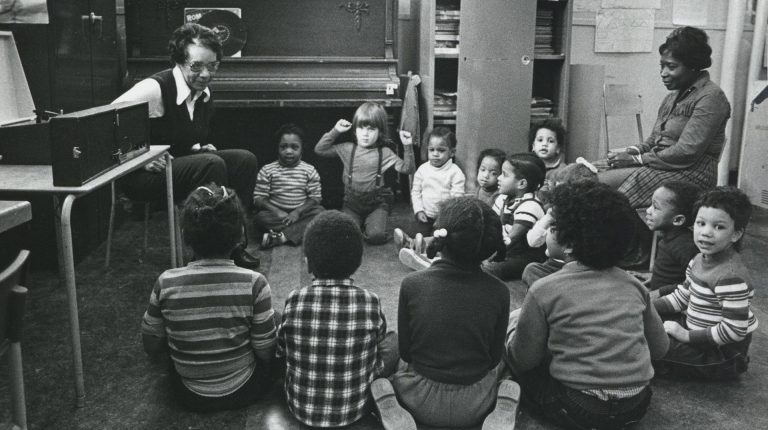
In the early 20th century, Little Burgundy became the centre of Montreal’s Anglophone Black community. Nearly 90 per cent of men in the neighbourhood were employed by the nearby Windsor and Bonaventure rail stations, despite many of them having college degrees, as few other industries were willing to employ Black workers due to pervasive anti-Black racism. During the sleeping car era, most hires were porters; many described it as demeaning work that fixed the image of Black workers to the railroads. The transport companies provided housing in Little Burgundy for the porters, and as the area became more inhabited, Black-run services and facilities that catered to these workers and their families became concentrated in the area. Other businesses typically refused services to Black customers. 

In the 1920s, a decade now considered a golden period of Montreal’s Black history, there were numerous nightclubs and casinos that catered to white tourists looking to gamble and drink. Musical performances were a key part of the nightlife; Black musicians of the neighbourhood helped Montreal become one of the three main jazz hubs on the continent. Jazz clubs such as Rockhead’s Paradise hosted greats like Louis Armstrong, Nina Simone, and Sammy Davis Jr., while also serving as a launching pad for local talents like Oscar Peterson. 

But when the Great Depression spread to Canada, Little Burgundy was hit particularly hard and the neighbourhood was unable to hold onto the success of the 1920s. To make matters worse, in the 1960s, mayor Jean Drapeau launched a series of urban renewal projects on the island of Montreal. The city’s intentions in Little Burgundy were two-fold: First, they wanted to “modernize” the area with a “slum clearance” project, and second, they wanted to build a highway to connect the majority-white suburbs to the downtown core.

The project was immense and irrevocable. The city sent in assessors to photograph the buildings and identify which ones would be expropriated, and pushed the project through without consulting local residents. Little Burgundy’s homes, restaurants, and business were all expropriated. The final result was a gentrified neighbourhood devoid of the culture and community it had built over the years. Many Black families were displaced: In 1966, the Black population was over 14,000, but by 1973, it had dropped to only 7,000. 

The expropriations of the ‘60s had lasting consequences,, including the dispossession of key institutions that served the Black community. The Negro Community Centre, for instance, was a community hive and safe space where neighbourhood members gathered and immersed in art and music, but it closed in 1989 due to financial struggles and was later demolished. Black Montrealers have called for its revival in recent years. The Black community in Little Burgundy is not as numerous as it had been before the urban renewal programs, but community activists have made local efforts to highlight its past by renaming the streets and parks and installing public art honouring community icons.


Today’s Little Burgundy is quite different from that of the 20th century. In recent decades, the borough has undergone even more gentrification, kickstarted by the creation of a linear park along the Lachine Canal, the revitalization of the Atwater Market, and the redevelopment of former industrial buildings. Members of Little Burgundy today continue to fight the dispossession of Little Burgundy’s working-class population and the neglect of its history—one that is central to the story of Montreal.

McGill, News

Students split over McGill’s ‘return to full in-person activities’ for Fall 2022 semester

After two years of pandemic-related closures and restrictions, Provost and Vice-Principal (Academic) Christopher Manfredi and Vice-Principal (Administration and Finance) Yves Beauchamp announced on Feb. 22 that the Fall 2022 semester will be held entirely in person. The statement came as COVID-19 cases and hospitalizations in Quebec continue to decline and the provincial government gradually eases many of its pandemic restrictions—such as the vaccine passport, limits on private gathering, and work-from-home orders.

All classes, regardless of size, will take place on campus in the Fall 2022 semester. This is a marked change from the Fall 2021 and Winter 2022 semesters, which had in-person courses capped at 150 and 200 people, respectively. Other activities, such as research and extracurriculars, will also return to routine pre-pandemic operations. 

Manfredi and Beauchamp clarified in their announcement that students should still expect some COVID-19 measures to continue into the coming semester. Frédérique Mazerolle, a McGill media relations officer, said that the university will provide further information as the fall semester approaches.

“Appropriate measures will still be in place to ensure that our campuses continue to be safe and we will remain vigilant as the pandemic continues to evolve,” Mazerolle wrote in an email to The McGill Tribune. “As usual, we will provide regular updates as we continue to return to more in-person activities over the coming months.”

Student reactions to McGill’s announcement have been mixed. Some, like Herman Korsunov, U2 Management, believe that it is time to lift pandemic restrictions. Korsunov noted that many core, introductory-level classes in his program often exceed the capacity limits that were set for in-person delivery over the last two years—resulting in some students experiencing university almost solely online. These students, Korsunov argued, have been put at a serious disadvantage by their lack of in-person schooling, particularly because they have missed out on networking opportunities.

“A major part of business, and the whole Desautels Faculty of Management, is that you need to communicate with people, you need to make some friends, you need to network,” Korsunov said. “That’s how, for example, […] I found my internship, I met some people, I’ve done some extracurriculars. They’re all thanks to communication and talking to people [….] We need to have all classes to be in person mainly for the social and meeting-the-people part. I think the education technique can be online, but it’s not as efficient from what I saw.”

Others, like Anthony Georgaros, U2 Arts, say the university’s decision is premature, given the pandemic’s past unpredictability.

“In my opinion, it’s a little early to make such a bold call,” Georgaros wrote in a message to the Tribune. “[The] administration should probably wait until the summer to confirm if they should return to fully in-person classes because chances are they will have to go back on that if the trend from the last couple years continues.”

The university did not answer the Tribune’s questions on what accommodations will be available for the coming semester, how the rollback of the vaccine passport will transpire at McGill, and under what circumstances, if any, the decision to resume full activities may be modified.

Creative, Video

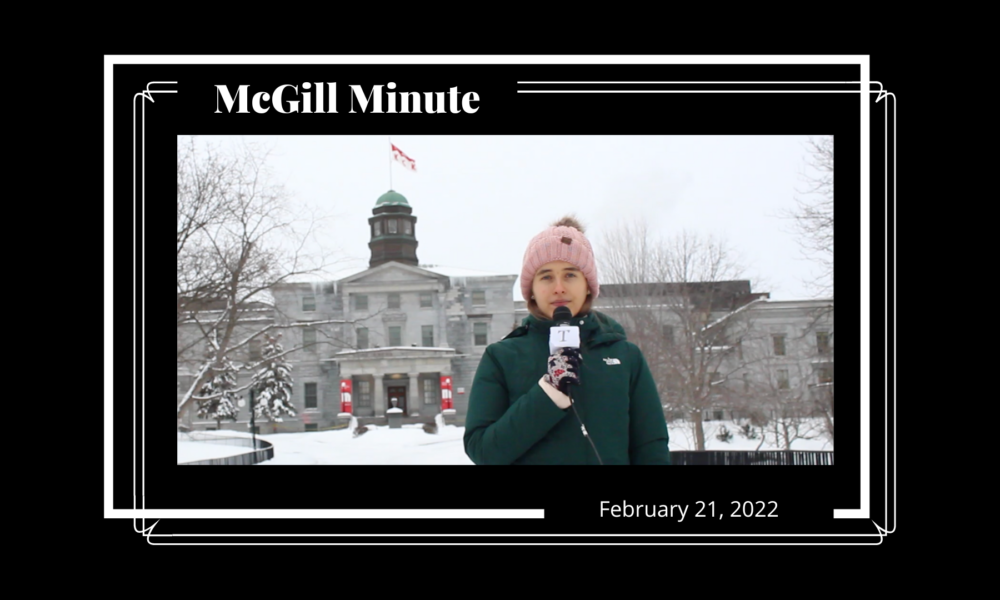
McGill Minute – February 21, 2022

Contributor Sabrina Nelson brings you the top news stories in the Tribune’s weekly news segment, “McGill Minute”.

Hockey, Sports

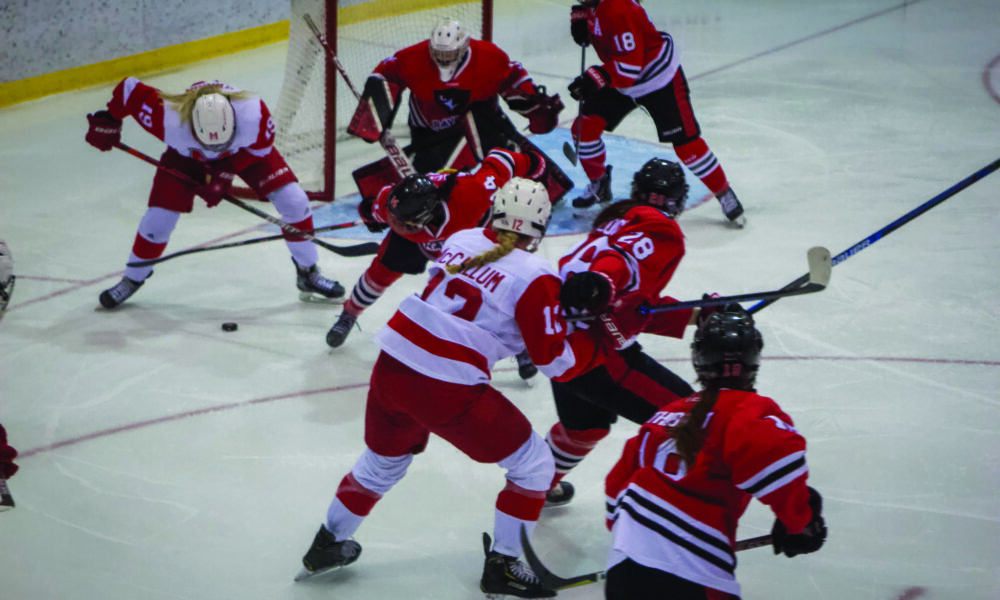
Martlets hockey returns with a bang, winning first game back against Carleton Ravens

On a chilly evening at McConnell Arena, the McGill Martlets hockey team (10–3–0) played their first game of the semester after over two months of hiatus due to recurring pandemic restrictions. The McGill team returned on Feb. 18 with style and determination, beating out the Carleton Ravens 3-0 (4–9–0).

From the get-go, the game seemed promising, with McGill taking first possession of the puck and team captain Jade Downie-Landry taking the first shot on goal. However, both the action and the enthusiasm died down for the rest of the first period.

Martlets forward Makenzie McCallum explained that the prolonged hiatus resulted in the team needing some time to find their footing on the ice once again. 

“It took a period for us to get back into the swing of things,” McCallum wrote to The McGill Tribune. “But once we found our rhythm, we were flying.”

Indeed, toward the end of the first period, a new-found energy made its way through the Martlets, and their shots on goal increased. But the Ravens’ defence remained strong, proving difficult to penetrate for the McGill attackers. Though the puck spent more time on the Ravens’ side of the ice, the Martlets were busy solidifying their strategy.

The second period saw a shift in the Martlets’ spirit. Netminder Tricia Deguire made several incredible saves, keeping the score at zero through her agile goaltending. Finally, after relentlessly pressuring the Ravens’ defence, first-year defenceman Jaime Kastelic scored the first goal of the game, assisted by forward Katie Rankin. The second period ended at 1-0, with every McGillian in the audience rejuvenated and at the edge of their seats. 

Both teams eased slowly into the third period, with McGill remaining cautious to keep the game in their favour. Several players, including Downie-Landry and centre Marika Labrecque, attempted shots on goal to no avail. 

Energies on both teams were high, yet the first half of the last period began to suggest a 1-0 finish. Then, with a burst of adrenaline, Downie-Landry scored with an assist by forward Stephanie Desjardins and defenceman Elizabeth Mura, bringing the game to 2-0 for the Martlets. 

Celebrations had barely ceased before Downie-Landry scored an unassisted third goal. Cheers soared through the crowd and players alike. With the score now at 3-0, and only 12 minutes left in the game, it was a sure win for the Martlets. With another game in hand, Downie-Landry is currently first in the nation for points among women’s U Sports hockey. 

Looking ahead to future games, Downie-Landry explained that the key to maintaining the streak is for the team to constantly adapt and adjust after every game. 

“As the game progressed, we started getting back into our good habits which we had worked [on] towards the first half of the season,” Downie-Landry wrote to the Tribune. “What will be important for our upcoming games is to build off of the positive, yet learn from what we could have done better. Our growth has been tremendous up until now.”

Moment of the game: Early in the second period, the Ravens were able to get the puck to the Martlets’ side. In a whirlwind of back and forths, goaltender Tricia Deguire was alone defending the net, with the puck fast approaching. The crowd sat in suspense, as a goal against McGill seemed inevitable. Yet, Deguire beat the odds, blocking the shot, saving the puck, and retaining a score of 1-0 for the team.

Quotable: “Our coaches have really helped our team develop to the group we have today and I think it showed last night. The young group of defence have done a great job stepping up, which helps our overall success.” – Forward Makenzie McCallum


Stat corner: With 196 points to her name, Martlets captain Jade Downie-Landry is close to becoming the seventh player in team history to break the 200-point mark.

Editorial, Opinion

McGill’s commitments to Black History Month require sustained action

On Feb. 1, an opening ceremony with keynote speaker Dr. James Jones marked the lineup of events for McGill’s fifth annual celebration of Black History Month. In an email to students, Principal and Vice-Chancellor Suzanne Fortier and Provost and Vice-Principal (Academic) Christopher Manfredi acknowledged that the work of McGill’s Anti-Black Racism plan builds upon ongoing advocacy by the Black Students’ Network, the McGill African Students’ Society, and the Dr. Kenneth Melville Black Faculty Caucus, and that celebrating Black excellence should be a year-round commitment. These words are an important, yet minimal, first step in reversing the documented apathy toward the sustained, storied, and long-standing realities of anti-Blackness at McGill. Committing to promises of anti-racism and truly honouring Black History Month requires bolder, multilateral solutions that fundamentally reimagine the core structure of the university—which disproportionately impacts Black community members’ abilities to flourish.

McGill’s commitment to year-round care for Black history has yet to be realized. This, in part, stems from the university’s initial reluctance to officially recognize Black History Month—21 years after the House of Commons’ official recognition and years of grassroots Black student advocacy. McGill’s involvement fails to extend beyond surface-level engagement. For example, the university often pigeon-holes Black academics’ events into February, rather than offering them prime speaking opportunities at more “prestigious” events, like the Beatty Lecture. Although McGill has finally admitted that its namesake, James McGill, enslaved at least three Black people and two Indigenous people, it took repeated instances of vandalism before his statue was taken down—for “repair and restoration.” Year-round support for Black lives means well-intentioned engagement, beyond funding, that challenges McGill’s tendency to exclude and ignore Black presence on campus.

McGill’s hesitancy to engage could be perceived as giving Black student groups autonomy to organize, but it is critical to remember that the administration ultimately holds power over the university’s direction. Consider the underrepresentation of Black faculty––who made up just 0.8 per cent of the over 1,700 tenure-track or stream academics in September 2020––especially in, but not limited to, disciplines like science and engineering. The focus on Black excellence, already concerning in its validation of Black humanity only within spheres of neoliberal achievement, has not translated to representation on the syllabus or in the classroom. 

At the faculty level, departments must question why race-critical approaches sit on the periphery of curricula. Professors have a responsibility to understand that teaching one Black thinker on their Eurocentric syllabus is hollow without meaningful engagement. Courses centred on race are often offered solely at the 400 and 500 levels, rather than being seriously integrated into introductory courses across the sciences and humanities. In turn, programs continue to value a white status quo over the experiences of Black and racialized people often affected by the radical, white supremacist misinterpretations of these disciplines. McGill students can currently graduate without understanding how colonialism and systemic racism subsist and survive as all-consuming forces—all of which affect what courses are taught, who gets to teach them and how, and how Black students connect lived experience in the world with those in the classroom. 

McGill students are not exempt from these changes. To lazily criticize McGill without taking action or changing one’s own attitude is to allow systemic anti-Black racism to propagate for personal, performative benefit. In spite of their limited diversity, McGill student organizations need to go beyond rhetorical shows of support—and in the Students’ Society of McGill University’s case, need to go beyond utter radio silence—they can further share calls to action and concretize constitutional commitments to equity. Unburdening Black students involves fairly compensating them for their labour and sharing power, rather than consulting them in symbolic “safe spaces.”

McGill needs to hold itself accountable for its commitments to Black people. These actions are neither all-inclusive, nor easy for students, faculty, or the administration—and they should not be either. McGill needs long-term changes across all levels and must raise the bar to which it holds itself. McGill should communicate progress updates on their Anti-Black Racism plan more clearly and consistently, as should SSMU with the Black Affairs Committee. The tiered, multi-layered process of breaking barriers and making space for McGill’s Black community is necessary in the pursuit of an equitable, just, and anti-racist future.

News, SSMU

‘I never went on any leave of absence’: SSMU President Daryanani makes first appearance at Legislative Council since Sept. 23

On Feb. 17, the Students’ Society of McGill University (SSMU) Legislative Council convened for a long 5.5 hours, with SSMU president Darshan Daryanani’s return dominating the meeting and discussions about concerns of racism and harassment within SSMU. Councillors voted on several motions, including one regarding a moratorium on ancillary fees, and heard presentations from several student groups, including Student Support, Athletics and Recreation, and Divest McGill, about the different fees and services up for referendum at the SSMU General Assembly

Providing long-awaited transparency, Daryanani addressed the council directly during the meeting, revealing that he was not on a leave of absence, but that he had been suspended by the SSMU Board of Directors (BoD) since Sept. 23, 2021. The suspension was set to end on Nov. 5, 2021, but the BoD extended it several times and did not give Daryanani a definitive end date.

“Only on Sunday, February 13, was I informed by the SSMU Board of Directors that all reasons to justify the suspension were unfounded and declared inadmissible,” Daryanani said. “I can assure you that at every step, I fully collaborated with the process, despite the fact that the board frequently violated my rights as a SSMU officer and employee. To be clear, I never went on any leave of absence.”

In the question period that followed, Daryanani said that he was never told the reason behind his suspension, but responded to several inquiries about his time out of office. 

Several student representatives and members of the gallery raised concerns about the lack of transparency on the part of other SSMU members regarding Daryanani’s suspension. Although all of the SSMU executives were present at the meeting, only Daryanani responded to questions regarding his suspension, with the others stating that such information was confidential. 

Engineering representative Hiraku Murakami questioned vice-president (VP) Finance Éric Sader about executives refusing to acknowledge Daryanani’s suspension due to confidentiality. Several other councillors also brought up the topic, with management representative Nathaniel Saad later adding, “There is a fine line between confidentiality and withholding information that students deserve to know.”

As attention turned toward the actions and responses of the SSMU executives, many attendees became emotional when discussing questions about the “toxic” workplace culture for women and gender minorities at the SSMU. After member of the gallery and former SSMU president Bryan Buraga questioned why executives were acting “glib” about such a serious matter, VP Student Life Karla Heisele Cubilla quickly responded, claiming that executives were also “victims of the structure” and calling the question “insulting, almost.”

While all the executives agreed that there are major issues in SSMU’s working culture that need to be addressed, tensions were high and the responses of executives differed greatly in manner. VP University Affairs Claire Downie spoke out broadly about the actions of male employees at SSMU. 

“Men who work at SSMU, men who are in these circles, please consider that you may be part of the problem,” Downie said. “You may not have these egregious examples that some people talk about, but many many men are part of the problem and I want people to be mindful.””

Councillors then addressed five motions concerning the Feb. 21 General Assembly before the session was adjourned: The Motion Regarding Amendment on the Moratorium Ancillaries Fees was not approved; the Motion Regarding the French Accessibility Fee Referendum Question and the Motion Regarding Referendum Question on the Increase of the 2022 SSMU Membership Fee were both approved; and the Motion Regarding Reintroduction of the Facility Improvement Fee Referendum Question and the Motion Regarding Ratification to the Society’s Board Of Directors were both postponed. The remaining motions, including the Motion Regarding Referendum Question on the Creation of a Black Affairs Fee Levy, were postponed to email approval.

Moment of the meeting:

During the announcement period, VP internal Sarah Paulin interrupted president Daryanani with a point of order, claiming that the revelation that he was absent because of suspension was confidential information. Members of the Dias—which includes the Speaker, Speaker On Call, the Parliamentarian, and the Governance Manager—met in a breakout room for 15 minutes to decide on whether to sustain the VP Internal’s point of order, before allowing Daryanani to continue.

Soundbite:

“I just want to bring up one thing: That this is not a clash of McGill Athletics and Divest McGill. McGill Athletics is with the climate movement [….] However, this is a chance for the Student Union to actually stand up and protect the students […] from the administration [….] This is a chance for […] the thousands of students that use McGill Athletics to have a better experience and to be better able to control that experience out of the hands of administration.” —Gallery Member James Mulvaney, on how amending the SSMU moratorium of ancillary fees uplifts McGill Athletics without devaluing Divest McGill’s efforts.

A previous version of this article stated that the Speaker of Council and a couple non-voting members of the council convened in the breakout room. For clarification, it was the members of the Dias (which includes he Speaker, Speaker On Call, the Parliamentarian, and the Governance Manager) who met in the breakout room to decide on a governance question—whether to sustain the VP internal’s point of order.

Science & Technology

Anger, crime, and punishment: Can we control our own emotions?

A team of scientists from McGill, the National Institute of Scientific Research (IRNS), and the University of Ottawa have identified anger as being an intuitive, near-instantaneous reaction to crime in a recent study published in Psychology, Crime & Law. Their research shows that emotion, alongside factual evidence, can play a significant role in determining punishments for criminalized individuals.  

Led by Carolyn Côté-Lussier, professor of urban studies at the INRS and assistant professor in the University of Ottawa’s criminology department, the experiment asked participants to make snap decisions about the degree of punishment 52 males should receive based on their photo. Participants were told that the men had previously been convicted of a crime, but their actual crimes were not listed. 

By measuring both the participants’ electrical impulses that control facial expressions and their punitive decisions, Côté-Lussier’s team concluded that anger could manifest itself physiologically within only 500 milliseconds. Participants had decided on a punishment for a criminalized person after only 1.3 seconds, on average.

The researchers used facial electromyography (fEMG), a technology that records minute movements in facial muscles down to the millisecond, to quantify the physiological manifestation of emotion. The movements of corrugator muscles, those directly responsible for frowning, were specifically recorded to isolate instances of anger. 

“We respond to other people’s facial expressions and emotions, and we also have our own facial expressions that express our emotions,” Côté-Lussier said in an interview with The McGill Tribune. “I’m very interested in these micro expressions, in how we feel intuitively. You might not be aware of where an emotion is coming from, but it [manifests] itself on your face.” 

The team observed that participants felt varying levels of anger toward the individuals they were shown, and that there was a correlation between how “warm”—or friendly—the individual was perceived to be and the degree of punishment the participants said they should receive. 

“When I was creating the groups of pictures, I was focussed on how they differed on the dimension of warmth,” Côté-Lussier said. “Because this […] is the thing we pay attention to the most [in this experiment] and will really orient our emotions to a particular social emotional group.” 

Côté-Lussier noted that this intuitive manifestation often stems from biases founded upon demographic characteristics like race, age, perceived social status, or attractiveness.

“These kinds of biases […] are infusing our reasoning, they are tinting the way that […] we see people, and we can work actively to try and dismantle that. But when we look at the data, we tend to see the same kind of biases being manifested,” Côté-Lussier said. “So there is a link here between the intuition and the outcome that we end up seeing.”

Côté-Lussier says that other characteristics that provoke such biases pose possible areas of future study, now that the link between the intuitive nature of anger and punitiveness has been quantified. 

“For instance, I haven’t considered the race dimension in the analyses themselves, partly because I made an effort to control for that by having the same kind of composition across the two groups,” Côté-Lussier said. “But that doesn’t mean that that stops us from looking at those dimensions [in the] future.”

And according to Côté-Lussier, it is these internalized biases and tendencies to make snap judgments that proliferate and fester in our criminal justice system, even if we make efforts to check them at the door of the courthouse.

While Côté-Lussier recognizes that this research does not directly emulate what occurs in the courtroom, specifically because judges and jury members are expected to make decisions based on evidence, not just a photo, she reminds us that our innate tendencies can lead us to make emotionally-guided judgements. 

“I think it would be incorrect to expect that a judge or a jury member could do away with the emotional intuitive reactions,” Côté-Lussier said. “For me, the important thing is less about how I hope people will pay attention to [this research] in the criminal justice system, and more about how I want it to tackle social, structural inequities. If we reduce those inequalities, we’ll see less crime and less anger about crime.” 

Read the latest issue

Read the latest issue