

Latest News

McGill, News, SSMU

SSMU hosts virtual Activities Night, student groups cite low engagement

The Students’ Society of McGill University (SSMU) hosted its Winter Activities Night on Jan. 17 and Jan. 18. During the Fall Activities Night, the virtual hosting platform Gather.Town crashed almost immediately after it failed to accommodate the high volume of participants attempting to join the event. To prevent another malfunction, SSMU partnered with another platform called TriplePlay, hoping for a smoother virtual experience. 

Attendees had the option to choose between different categories of clubs, including charity and environment, athletics and recreational sports, political and social activism, and more. Once clicked, each link directed the attendees to TriplePlay. From there, they could drop into virtual “rooms” wherein club representatives were waiting. Students could choose which room to enter and could bounce between rooms at their discretion.

Karla Heisele Cubilla, SSMU vice-president Student Life, was responsible for organizing the event. Heisele Cubilla told The McGill Tribune that there were 131 groups present and  597 web log-ins on Jan. 24, and 112 groups and 597 web log-ins on Jan. 25.

Though the event was originally supposed to be held in a hybrid format, government directives forbidding most in-person school events forced organizers to hold it entirely online. According to Heisele Cubilla, the responsibility to plan the event was compounded by the pressure to find a new platform that would work better than Gather.Town. Nonetheless, Heisele Cubilla believes that the event was largely successful.

“It’s a huge project, Activities Night, but this year it’s virtual, so the main hope is to get the word out,” Heisele Cubilla said. “It is the winter semester, so we expect less attendance, but we still wanted to encourage students to come. And virtual events are not usually very successful, but we’ve been very lucky at SSMU to have a big attendance.”

While many clubs and services looked forward to Activities Night to reach new students, many representatives, like HeForShe president and co-founder Aakshi Puri, acknowledged that in-person Activities Nights allowed for more dynamic interaction than a virtual version could.

“Activities Night is a great way to reach out to as many diverse groups of people as possible,” Puri wrote to the Tribune. “This was especially true when it was held in person in previous years, which would allow us to have open discussions about gender inequality, particularly with those who aren’t typically involved in the feminist movement.”

Many clubs, however, reported relatively low attendance rates to their booths. Puri estimated that about 10 people showed up to the HeForShe booth throughout the two-day event. Socialist Fightback Club president Lucas Marques told the Tribune that a total of six people attended the club’s virtual booth. This low turnout, Marques argues,  is a testament to a persistent issue within SSMU that runs much deeper than just Activities Night.

“I think this [problem] even goes into stuff like elections,” Marques said. “This is a reflection on the student union itself, certainly not the students, and I think that it’s because SSMU doesn’t present a fighting leadership, so students don’t actually look up to it as something that will fight for them.”

Some clubs, including Socialist Fightback often elect to host their own events to draw in members because they are not confident that participating in Activities Night will expand their membership. 

“Last semester we hosted two events, and 90 people showed up to both,” Marques said. “We find that [independent events are] better for growing membership as opposed to Activities Night. Obviously we would never discard any avenue for people to be interested, so we do partake in Activities Night, even if it is not the most efficient.”

News, SSMU

SSMU Legislative Council passes motion to address doxxing of students

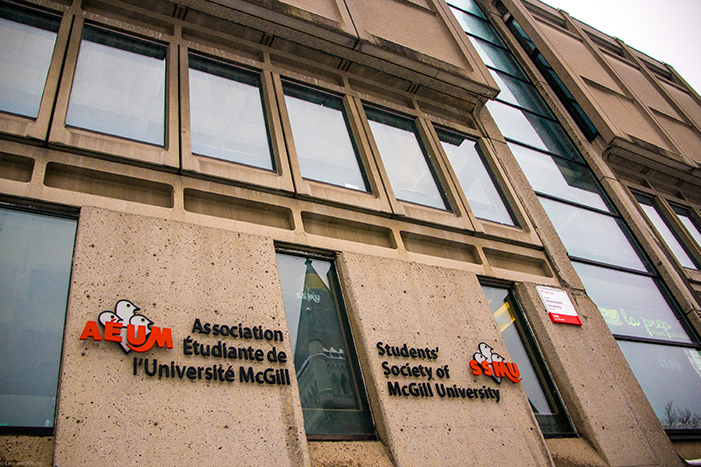
On Jan. 20, the Students’ Society of McGill University (SSMU) Legislative Council held their first meeting of the winter semester, discussing several annual reports and announcements, including the AUS Town Hall on the return to classes, and approving five motions. One motion will require SSMU executives on SSMU’s Divestment and Demilitarisation Campaign Mandate to provide progress updates; another motion sought to create an anti-surveillance master plan to protect McGill students who, because of their anti-colonial activism, have been doxxed and harassed on websites such as Canary Mission and Campus Watch. This master plan would institute a SSMU anti-surveillance commissioner to lead an anti-surveillance committee under the Council. 

During the question period, vice-president (VP) University Affairs Claire Downie spelled out how SSMU organized their campaign to facilitate a safer return to campus on Jan. 24, including measures such as making respirator-style masks available.

“On Monday we announced that we’re going to be providing respiratory-style masks on a pay-what-you-can basis to students who are especially vulnerable to COVID,” Downie said. “We’re hopefully going to be announcing details about this in the coming days.”

VP Finance Éric Sader engaged in several back-and-forths with councillors regarding president Darshan Daryanani’s continued absence. Sader told inquirers and the broader gallery that it is in the BoD’s “fiduciary duty to act in ways that benefit the company,” which includes, according to Sader, the “responsibility not to answer these questions” surrounding the president. 

Councillors Ghania Javed and Yara Coussa then presented the Motion Regarding the Creation of an Anti-Surveillance Master Plan within the SSMU. Coussa spoke of public websites which blacklist and expose personal information about advocates and activists, including pro-Palestinian McGill students and staff, students involved in Uyghur, Tibetan, or Hong Kong liberation advocacy, as well as Muslim students since the enactment of Bill 21.. 

“These forms of intimidation and attacks impact students’ mental health, physical health, and discourage their involvement on campus,” Coussa said. “Some students have reported that it has prevented them from applying to leadership positions on campus [….] These examples […] highlight how students have been victims of racist surveillance.”  

The motion, passed with 24 in favour and two abstentions, will mandate VP Internal Sarah Paulin publish a master plan by April 7, 2022 detailing how SSMU will help combat and end racist surveillance and doxxing at McGill.

Moment of the meeting:

During the announcement period, VP Finance Sader made a public apology to Councillors Coussa and Javed for his “unprofessional comments” toward them during the Nov. 25, 2021 Legislative Council meeting. Sader also noted that, going forward, it is important for him to acknowledge power dynamics at play, given his position as a white man speaking to two racialized women during the incident. 

Soundbite:

“I think it’s important to point out that McGill Athletics and Recreation are not funded by the university […] and [are] not in a position to take a stand regarding divestment [….] It’s outside of the scope of McGill Athletics and Recreation. I just want to point out that what’s happening right now is students are losing out on services [….] Basically, Athletics and Recreation has their hands tied.”— Member of the gallery Chloe Parsons, U3 Education and chair of the Student Athletics Council, on how the SSMU moratorium on auxiliary fees impacts the McGill Athletics and Recreation facility services available to students.

Arts & Entertainment, Film and TV

‘Too Hot to Handle’ season three enforces unhealthy sexual values

The Netflix series Too Hot to Handle’s season three presents an even hotter, more dramatic mess than its previous seasons of scandal. The dating show brings 10 horny young adult participants on an erotic vacation, only to enforce sexual abstinence after the 12-hour mark. The show documents the contestants as they struggle to choose between winning the $200,000 prize money or giving into their sexual urges—and they often choose wrong. At best, Too Hot to Handle is unbelievable, and at worst, it’s exploitative. 

According to Deadline, Too Hot to Handle’s viewership decreased after the release of its second season, dropping from 51 million households to 29 million. This lapse in popularity may explain some of the show’s changes—for instance, a flash announcement revealing that money lost by rule-breaking can be won back by good behavior, and the surprise of some participants returning to the show even after being kicked off. Each episode is a rollercoaster with no clear destination, as viewers buckle in for a dizzying experience.

To criticize Too Hot to Handle for its absurdity would be superfluous; the show makes no effort to hide its selling points of voyeurism and drama-laden guilty-pleasure watching. There are many sexually suggestive scenes, often brought out by producer manipulation through sensual workshops like body painting.

But what does go beyond the garish is how Too Hot to Handle fetishizes its representations of queer relations. When Izzy and Georgia inaugurate the contest’s first rule-breaking with some kissing, the narrator phrases the act as an attention-seeking grab rather than portraying it as having any legitimate intimacy or emotional connection. The kiss is followed by a cringey montage of the male contestants voicing their appreciation at the idea of sapphic sexual acts. The gender binary is still rigidly enforced: Men pursue the women and manipulate their male competitors. The kiss shared between Izzy and Georgia is never acknowledged as part of the romantic conquests.

Though previous seasons have featured competitors open to polyamorous relations, this season’s participants act jealous and competitive toward one another, lending the episodes an air of toxicity. Viewers aren’t meant to sympathize with the contestants’ plights of sexless vacation; rather, the show’s selective editing and snarky narrator portrays them as entitled and arrogant. Edited and manipulated to showcase the worst of these contestants, the show makes naturally dislikeable personalities even more unsavoury.

This season stigmatizes sex even more than previous iterations. According to the rule-enforcer character, Lana, sexual acts are a barrier for emotional connection. Too Hot to Handle enforces heteronormativity and traditionalism by offering contestants as an example of what not to be, setting them up as detestable through edited interview clips and explicit narration mockery. The show delights in personal misery, preaching “deep emotional connection” to the contestants, who are simply not looking for that type of relationship. Given that the premise of the show is to lure in people interested in a month of sexual flings, the narrator’s demeaning attitude does not take into consideration the lack of interest participants have in long-term romance.

It is not unusual for viewers to detest the young singles as they prioritize immediate sexual gratification over financial success while manipulating those around them. However, the season’s drama-obsessed, insincere contestants are a regression from the show’s previous portrayals of individuals who were sex-positive. Still, the real blame lies with the show’s producers, as they manipulate and exploit the contestants to manufacture punchlines rather than meaningfully considering diverse forms of attraction.

Album Reviews, Books, Poetry

Literary theorist Jeff Dolven pays a virtual visit to the English department

On Jan. 19, the McGill English Department held its 2022 Spector Lecture, an annual event that highlights contemporary work in the literary field. This year, the department welcomed Jeff Dolven, a poet, literary critic, and Princeton professor of English. Later, students and faculty had a chance to hear several of his new poems at a virtual reading hosted by Poetry Matters on Jan. 20. Originally planned to take place in McGill’s Wilson Hall on Mar. 24, 2020, organizers moved the lecture online after the pandemic prompted numerous reschedulings. 

To start it off, Dolven introduced attendees to his most recent area of study: Poetry and simultaneity. Dolven explored how human conversation is naturally inclined toward turn-taking—a tendency that poetic structure can disrupt to create metaphors that form overlapping connections. 

Dolven then explained the importance of taking turns during conversation. No known human language prefers both parties to speak simultaneously during a conversation; overlapping speech often leaves us disoriented and overwhelmed. However, English poet Sir Philip Sidney’s double-sestina poem “Ye Goat-Herd Gods”—Dolven’s case study for the lecture—challenges this inherently human pattern. As the two speakers, shepherds Strephon and Klaius, lament their love for an ambiguous and distant feminine figure, the poem begins to abandon the typical back-and-forth of human speech until the shepherds’ duet loses all essence of natural human behavior. While Strephon begins wailing “For she whose parts maintained a perfect music,” Klauis follows, echoing “For she, with whom compared, the Alps are valleys,” emphasizing the heavily formulated, yet related nature of their cries. With stark shifts between each shepherd’s longing confessions, Strephon’s and Klaius’ proclamations appear in sync, yet disconnected.  

Dolven highlighted that the shepherds repeatedly echo each other’s form, rhetoric, and figurative language, imbuing metaphors and figures of speech with multiple “stacked” meanings. Though literary theorists commonly argue that metaphors link, or condense, two disparate objects together through speech, Dolven argues that this constant echoing and build-up of multiple meanings deconstructs the metaphor’s linear connections, instead fusing them into a web of multiple meanings.

A recording of the lecture will be available soon on the Poetry Matters website, and Dolven intends to elaborate on these ideas as well as others in his upcoming project exploring poetry and simultaneity, tentatively titled All Together Now.

In addition to being a prominent literary theorist and critic, Dolven also writes poetry. His works have been featured in The New Yorker and/The Paris Review, and he also edits for Cabinet Magazine. Dolven’s poetry reading, focussing on attention and solidarity, was an effective counterpart to his denser, more theoretical lecture the day before. 

Discussing his forthcoming poetry collection, A New English Grammar, and Other Poems, Dolven explained his formula: Each poem begins with a grammar rule copied from a textbook, which he proceeds to break in the poem’s following lines. The rules encourage him to play with fun phrases that may make grammar purists uncomfortable, such as the line, “we’ve got any milk, but only any,” replacing the commonly used “some” with “any.” 

“[Grammar textbooks have] a bunch of sentences that have asterisks in front of them. That means this sentence is going to tell you something about how English works, but it’s wrong—don’t use it,” Dolven said during his presentation. “[I was] interested in what it would mean to try to make poems or make worlds within which this sort of strange, busted, broken language was, in fact, good currency.”

In addition to his grammar-defying poems, Dolven read several others that similarly break preconceptions, such as “State of Expectations,” a sweet lyric poem about an elephant, who, despite his title as “king of the beasts,” feels quietly insecure about living up to his status. On a heavier note, “Let the World Breathe for You” is a haunting pandemic poem about releasing self-ownership while living in an iron lung, a primitive respirator that helped save numerous polio victims in the 20th century. The poem asks readers to “sing poli-o, sing poli-oli-o,” using song to confront fear, much like the childhood tune “Ring Around the Rosie.”

Covering a wide range of literary terrain, from reading to theorizing about poetry, Dolven shared his love of literary experimentation with McGill’s faculty and students. His presentations proved that the rules and presumptions of grammar, conversation, and ultimately the human experience become meaningless—or rather, meaning-full—in the world of poetry.

McGill, Montreal, News

Max Liboiron leads webinar on anti-colonial technology within universities

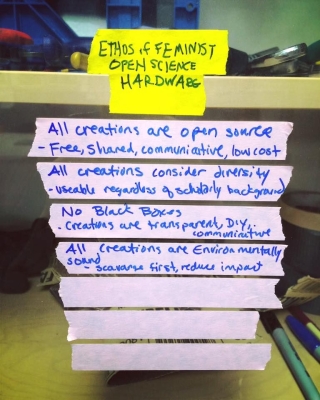
On Jan. 20, Max Liboiron led a webinar on “Building feminist and anticolonial technologies in compromised spaces” as a part of the fourth season of the Feminist and Accessible Publishing and Communications Technologies Speaker and Workshop Series. Co-sponsored by Alex Ketchum, a faculty lecturer at the McGill Institute for Gender, Sexuality, and Feminist Studies (IGSF), and Concordia University professor Damon Matthews, the webinar detailed how to navigate work in sites tainted by strong histories of colonialism—and ultimately, how to achieve structural change.

Liboiron, an associate professor in geography at Memorial University and formerly the school’s Associate Vice-President of Indigenous Research, is Métis and a leader in developing and promoting anticolonial research methods across disciplines. As the founder of the Civic Laboratory for Environmental Action Research (CLEAR), an interdisciplinary plastic pollution laboratory that operates out of Memorial University, Liboiron has shaped public policy on both plastics and Indigenous research.

During the webinar, Liboiron discussed the concept of “compromise”—not as a failure, as some proponents of institutional change might see it, but as a condition of doing ethical work within uneven power relations. They highlighted the necessity of establishing equitable research methods and policies within colonial systems and institutions.

According to Liboiron, even in the process of decolonization, individuals will inevitably reproduce parts of colonialism due to its pervasiveness. 

“When I’m talking about compromise and reproducing parts of the system that we are trying to change, it’s the condition of doing the thing. It is the condition for making change,” Liboiron said. “You don’t get to start from somewhere else, there isn’t somewhere else, this is the place, and that is the basis of your collaboration in the world.”

Liboiron also highlighted the role infrastructures play in upholding and defining colonial spaces and institutions. They explained that within the research sphere, structural power difference between Indigenous communities and universities is often downplayed; in practice, university researchers, rather than Indigenous people, often stand to gain the most from data collected on Indigenous communities. Thus, one of the key ways to decolonize research and combat unequal power dynamics, Liboiron explained, is to establish data agreements that empower Indigenous communities to own their own data. 

“Indigenous data sovereignty is about how and why they need to own and control their data,” Liboiron said. “A sovereignty model for a research collaboration with an Indigenous group can be that the Indigenous groups decide the priorities, the overarching ethics and goals of the research, but then I as the researcher ‘fuck off’ and do the work. That’s the recognition of unevenness and of owning your place in the uneven infrastructure.”

Ketchum, writing to The McGill Tribune by email after the talk, said she feels inspired by Liboiron’s recent book, Pollution is Colonialism, and is motivated to bring anticolonial scholarship into the classroom. 

“Dr. Liboiron thinks critically about university structures, lab structures, and research practices,” Ketchum said. “I’ve loved being able to assign Liboiron’s work in the GSFS feminist research methods courses that I teach, because their work helps students and researchers question what it means to do feminist and anticolonial research.”

Matthews, a professor, research chair of climate science and sustainability at Concordia, and director of the Leadership in Environmental and Digital Innovation for Sustainability (LEADS) program, hopes universities will use their influence to promote social and environmental sustainability.

“I really appreciate the idea that we can work toward achieving transformative change while also acknowledging the flawed nature of many of the institutions that we operate within,” Matthews said. “But, as institutions, few universities have succeeded in challenging the power structures that propagate the fundamental inequalities and injustices that could undermine our sustainability goals.”

Science & Technology

ROAAr symposium delves into the complicated relationships between scientists

The science behind friendship and how it develops between people has been a longstanding object of study. However, much less research has looked into the friendships between scientists themselves. The Rare & Special Collections, Osler, Art, and Archives (ROAAr) branch of the McGill Library held a symposium on Jan. 20 to explore exactly that. 

Stopes and Hewitt: A correspondence for the ages

Laura Jean Cameron, professor of Geography and Planning at Queen’s University, first met Ingrid Birker, manager of the Public Program at McGill’s Redpath Museum, when she reached out to her in hopes of gaining access to part of the Redpath’s fossil collection. Cameron had requested access to some Fern Ledges fossils housed at Redpath. These fossils had a history: They were important items in the friendship between Charles Gordon Hewitt, an entomologist, and Marie Stopes, a palaeobotanist and suffragette. 

Hewitt was first Stopes’ student at the University of Manchester, where in 1904 he attended her lectures on palaeobotany, the study of fossilized plants. When Hewitt moved to Canada in 1909 to become dominion entomologist, he and Stopes continued to communicate through letters. The two connected over the newly emerging field of ecology, but their friendship also inspired many of Stopes’ feminist writings. 

“The success of their friendship was […] one of the important contributions she may have wished to make for science,” Cameron said during her presentation. “In her writing on behalf of women’s suffrage […] Stopes expressed her belief that a friendship of equality between men and women was not only possible, but was an evolutionary imperative.” 

While Birker and Cameron acknowledged the other friendships that Stopes and Hewitt had with problematic figures in Canada such as Duncan Campbell Scott, the notorious deputy superintendent general of Indian affairs, and Helen MacMurchy, a staunch promoter of eugenics, the presenters glossed over Stopes’ involvement in the eugenics movement. Stopes was a vigorous supporter of birth control and family planning, but primarily because she believed these to be key tools in the practice of eugenics—which, for her, meant selective breeding to preserve the white race. 

Penfield and Cone: Advancement of science but the end of a friendship

Borrowing from his research for a larger exposé published by The Globe and Mail, journalist Eric Andrew-Gee examined the once prosperous, but ultimately volatile friendship between Wilder Penfield and William Cone

Penfield and Cone began working together at the New York-Presbyterian Hospital in 1924, where Penfield practiced surgery, primarily on the brain. When Penfield moved to Montreal in 1928 after being recruited by McGill University, he invited Cone to join him. The pair would eventually found the Montreal Neurological Institute-Hospital (MNI) in 1934. 

“[Penfield and Cone] led a team together that made groundbreaking discoveries about memory, pleasure, anxiety, and learning,” Andrew-Gee explained. “They worked together in ‘double-harness,’ as they both liked to say, for 35 years.”

The friendship devolved, however, as Cone’s skills as a surgeon and dedication to the field of medicine surpassed Penfield’s, causing Penfield to grow jealous. Even worse, in 1953, Penfield was chosen over Cone for the directorship of the institute.

“By the 1950s, there were two camps at the [MNI],” Andrew-Gee said. “Cone’s people focussed on spinal surgery [while][…] Penfield’s focus[sed] on epilepsy.” 

Cone became extremely depressed not long after these events and eventually died by suicide in 1959, which greatly upset Penfield. Despite the tragic ending, Andrew-Gee concluded his talk by acknowledging the instrumental role friendship played in the lives of the two men and their scientific developments.

“Cone and Penfield had a deeply loving friendship, and together, sitting and talking over a microscope or the head of a patient, they helped give birth to the romantic mathematics of neuroscience,” Andrew-Gee said.

Science & Technology

A mother’s fight to bring an understanding of autism outside of the clinic

From last century’s fears surrounding poor parenting to modern vaccine hesitancy, persistent misconceptions about the causes of autism have often resulted in the developmental condition being wrongfully associated with moral panic. During a recent talk hosted by McGill’s Division of Social and Transcultural Psychiatry for the Culture, Mind and Brain Program’s Speaker Series, Marga Vicedo, an associate professor at the University of Toronto studying the history of science, highlighted the story of one mother determined to understand her daughter’s experience with autism. 

Clara Park gave birth to Jessica, her third child, on July 20, 1958. After three years, Park realized that her daughter was different from the rest of her siblings. Seemingly uninterested in other children, Jessica was instead fascinated by numbers, art, and the aurora borealis.

As a stay-at-home mother, Park spent a great deal of time carefully observing her daughter and figuring out how to best support her, and was disappointed when her findings were dismissed by the child development experts she consulted. At the time, psychoanalysis would have interpreted  Park’s efforts to understand her daughter as evidence of refrigerator motherhood—an offensive term used to describe detached, uncaring mothers of autistic children.

“Rejecting the separation of thinking and feeling, Park aimed to show that objectivity and reason are not incompatible with love, and can be a valuable part of mothering,” Vicedo said. “[And] further, that intelligent love could be also a way to reach reliable knowledge.”

Despite the initial opposition, Park remained convinced that her efforts were not at odds with her mothering. She found fellowship in her beliefs through a correspondence with Bernard Rimland, a researcher who attributed autism to organic causes, and her collaboration with Marie Battle Singer, a psychoanalyst and fellow innovative thinker.

Contemporary clinical methods to treat autism were underdeveloped and prevalent therapies, including Applied Behaviour Analysis (ABA), were often criticized as cruel and ineffective. Park reworked such programs by identifying useful principles and tailoring them to the domestic sphere in a pragmatic way. Inspired by certain elements of ABA, Park collaborated with her daughter to develop a practical system for behaviour modification. Incorporating Jessica’s love for numbers, Park and Jessica assigned points to specific behaviours and tracked them using a golf counter.

“Jessica set her goals, chose her rewards, and agreed to the penalties,” Vicedo said. “Their program did not try to eliminate autistic behaviour such as rocking or flapping, but focussed on behaviour that Jessica said she wanted to change, because they made her feel anxious or interfered with other things she wanted to do.”

Park’s impact extended far beyond her household. She presented her knowledge in ///The Siege///, the most comprehensive account of raising an autistic child at the time and an invaluable resource to parents and therapists. She also brought together a large circle of mothers of autistic children who supported each other and corresponded at length.

This vibrant community met regularly at conferences and shared their experiences with each other, discovering important insights along the way. The children were also invited to speak at the gatherings to share their stories and perspectives once they were old enough.

Park was a dedicated proponent of the value of maternal insight and the fight against mother-blaming. She recognized the value of what she called the “deep knowledge of the child in context,” which refers to personalized catering to a child’s needs using observation of children in a wide variety of situations and a full understanding of their history. To Park, this lived maternal experience was a unique tool that did not undermine clinical methods, but complemented them.

“Park was not only questioning widespread notions of good mothering, but also challenging a central tenet in scientific epistemology,” Vicedo said.

Park harnessed both her love and her will in order to better understand her daughter. Her work remains a significant achievement that is deeply relevant to the current era of misinformation surrounding autism. Jessica has grown to be an accomplished artist.

Commentary, Opinion

Students should deal with choice, not chance

On Dec. 31, McGill sent an email to all students and staff announcing that, in line with new Quebec regulations, the return to in-person learning would be delayed until January 24. The announcement came amid the surge in Omicron cases in the province and the world at large. However, despite McGill’s compliance with Quebec health mandates, the news puts students in a difficult position, stripping them of the option to choose when to come back to Montreal

Online learning has been very challenging for students due to increased screen time and prolonged isolation. While health risks associated with COVID-19 prompted many to postpone their return to Montreal, for some, the added support of family and friends made staying home during online school the best choice. Furthermore, even though individuals still need to pay rent in Montreal, staying home can be a way to save some money on daily things like laundry, food, and transit, especially when considering that many service jobs have been interrupted due to restrictions. In addition, the advantages of student life in Montreal, like being on campus, going to cafés, exploring the city, and hanging out with friends, are severely limited due to the Quebec lockdown. As a result, staying home might help avoid feelings of isolation and uncertainty. Considering the high rates of COVID-19 cases in the city, being home might also be the safest option for some, or at least a reassuring one—being sick and alone can be a very stressful situation. Lastly, depending on where it is that students call home, not going back to Montreal can mean better weather, safer COVID-19 environments, and more lax COVID-19 restrictions. 

But beyond the potential benefits of staying home, it is important to question why students were put in the position to make that choice in the first place. A major factor, of course, is the rise in COVID-19 cases. The epidemiological situation is critical right now and it has to be taken seriously. Furthermore, considering how COVID-19 disproportionately affects disabled, racialized, and low-income people, individuals should be doing all in their power to curb the spread. However, there is a limit to what individuals can do in the face of a surge as big—and as transmissible—as this one. The Omicron spread comes after months of the Quebec government mishandling the pandemic in many ways, including imposing ineffective curfews and having insufficient testing capabilities. There is little scientific evidence that curfews actually prevent a rise in COVID-19 cases, and yet the Quebec government decided to implement yet another one despite its known toll on mental health and disproportionate impact on other vulnerable communities. Other measures like accessible testing, timely booster shot rollout, and vaccine mandates may have been able to prevent this surge.

Institutions like McGill also have the responsibility of prioritizing the health of their communities. Although McGill has taken the necessary steps to comply with Quebec regulations, it has failed to provide safe and accessible learning environments for immunocompromised and disabled students throughout the pandemic. McGill has only taken steps to provide online alternatives when the government mandates them—but not when students advocate for them. Measures like continuing the S/U option, mandating professors to record lectures, and implementing a university-wide vaccine mandate could make the stress of university during a pandemic more manageable. 

Despite the recent  end of the curfew and the return to in-person classes, the pandemic is still not over, and neither are its impacts on students’ lives. Universities should not put student’s physical and mental health at risk. McGill should put their students’ interests first and take the necessary steps to make sure that its environment remains safe and accessible to all, no matter what type of instruction the government mandates. 

McGill, News

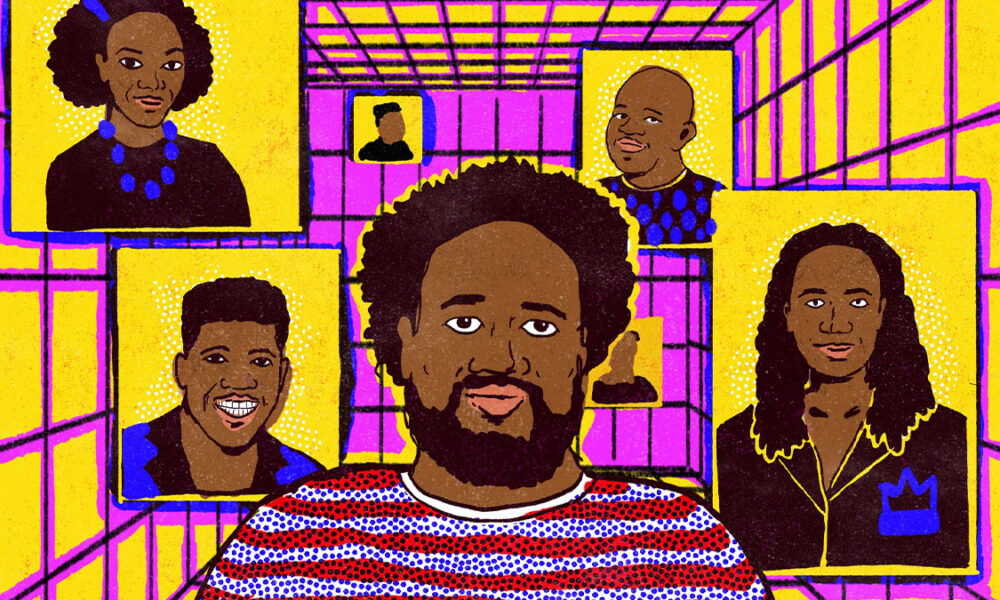
André Brock charts the hidden history of Black cybercultures

André Brock, an associate professor of media studies at the Georgia Institute of Technology, drew on the connections between Blackness, social media platforms, and Western technoculture in a webinar held on Jan. 12. The lecture was part of the Feminist and Accessible Publishing, Communications, and Technologies speaker series, which was founded by Gender, Sexuality and Feminist Studies Faculty Lecturer Alex Ketchum.

During the webinar, Brock discussed his 2020 book Distributed Blackness: African American Cybercultures, which is based on 15 years of research on Blackness and digital spaces, ranging from weblogs and periodicals to video games. The book argues that Black communities have been ardent participants and builders of a distinct and recognizable cyberculture.  

In his introductory remarks, Brock explained that while his goal with Distributed Blackness was to reframe the agency of Black communities, he thought it was essential to first acknowledge the limits Western technoculture poses in the digital medium. 

“My aim in that book was to unpack what Black technology use, or Black technoculture, would look like from the perspective of Black folk,” Brock said. “In doing so, however, I had to consider the context of what Black technoculture is gestated, that is, the white Western world and Western technoculture.”

Brock observed that while many name the trio of Jeff Bezos, Elon Musk, and Richard Branson as the tech pioneers that will lead humanity into a bold era of space exploration, they have in fact only proved to be masters of the venture capital game. Instead, he sees these men as building a post-human and surveillance-state that goes hand-in-hand with a harmful culture of technophilia.

“There are a multitude of examples of technophilia to work with, whether it is the genital waving exercise of the three billionaires to see who could get to the outer reaches of lower reach orbit, or the current fascination with Web 3 and NFTs,” Brock said.

In the early days of the internet, systemic barriers such as high costs and sporadic broadband availability prevented Black communities from accessing online networks and resources. But by leveraging the tools they could muster, Brock argues, these communities were able to build an expansive and dynamic online space to call their own. 

In considering viable solutions to what Brock terms “weak-tie online racism“—racism that is enacted indirectly through digital networks of social interaction—Brock concluded that “online harms” cannot be fixed by technology.

“How do you fix this though? I don’t know if it can be fixed,” Brock said. “I’m wary of technical solutions to online harms or even the idea that ethics will fix the problems of technoculture [….] Perhaps, instead, we should be talking about a moral code of harm reduction when deploying complex algorithmic solutions to social problems.”

Following the event, Ketchum underscored the relevance of Brock’s book in light of McGill’s temporary return to remote teaching.

“[Brock’s book] is vital during a time when we are so online,” Ketchum wrote. “As we begin Winter 2022 on Zoom again, Brock’s work highlights the racism embedded in our digital technologies, which, as Brock explains, isn’t just a glitch.”

Madi Bothelo, U3 Arts, enjoyed the webinar, remarking on the importance of the conversation Brock has spurred.

“I feel like most people in the tech industry avoid speaking about race, but the relationship between the two has a layered history worth studying,” Botelho said in an interview with the Tribune. “If we can continue at least having this dialogue, maybe people can start intervening in the process of new and developing technologies.”

Features

Changing the narrative

I have a go-to answer when someone asks how I speak English so well, despite it not being my mother tongue: “I consume a lot of Western media.” Despite the benefits of this habit, that short phrase also encompasses the constant struggle of disentangling my self-worth from the harmful messages I have absorbed from the screen.

I was fortunate enough to grow up in Pakistan largely surrounded by people who shared my culture and experiences. Because I could see myself reflected in those around me, I was mostly protected from the prejudices built into Western media.

Things changed when, in 2019, I moved to Canada to attend McGill. Suddenly, I found myself in the “Western World” that I had idealized in my head, and I was met with an identity crisis: Where did I fit in? It became painfully obvious that as a South Asian Muslim woman, I had never identified with anyone I had seen on-screen. Most of the people I interacted with here had preconceived notions of me that clashed with my self-identity and threatened to shake themy notion of who I believed I was. 

For better or worse, popular media has shaped my view of the world for better or worse. Media plays an important role in society, acting not only as a source of information about the world but also as a reflection of social norms and attitudes. On average, people around the world spend over 7.5 hours per day consuming media of some form, with American consumers tending to have a higher daily average than most. 

However, the dominant media we consume rarely  reflects the diversity of its consumers. According to U.S. Census Bureau estimates, almost 40 per cent of the U.S. population was non-white, yet in 2017 people of colour only made up 19.8 per cent of lead film actors, as per the UCLA Hollywood Diversity Report

This disparity persists across multiple forms of media. A 2020 //New York Times// article revealed that only 11 per cent of books published in 2018 were written by people of colour. Similarly, a study conducted by Women in View that explored racial diversity in the Canadian film industry found that of all people given TV writing credits, only 6.3 per cent were Black, Indigenous, and women of colour.

Read the latest issue

Read the latest issue