

Latest News

Science & Technology

The glowing DNA that can act as protein motion sensors

In the methodical world of scientific research, there is irony to be found in serendipitous stories of discovery. More often than expected, a scientist’s day in the lab is filled with more head-scratching than “eureka” moments. It is in these moments that a curious scientist would dig deeper, even in the negative data. Alexis Vallée-Bélisle, an associate chemistry professor at Université de Montréal, did just that, eventually coming to invent a fluorescent DNA nano-antenna that glows to indicate a change in the structure of proteins.   

The story begins in 2016, when Valleé-Bélisle developed the world’s smallest thermometer. This technology acts as a flambeau torch, where the stick is DNA and the flame is a dye attached to it, glowing bright when the temperature around proteins changes. 

However, Vallée-Bélisle told the The McGill Tribune that the team soon realized that the dye was not glowing due to the change in temperature, but due to a change in protein structure. This occurs when the protein performs its function or interacts with other molecules in the cell. The dye is sensitive to the environment around it and thus detects the nanoscale twists in the protein structures.

 “It was unexpected,” Vallée-Bélisle said. “But we knew we were on[to] something big.”  

“Structure equals function” is a well-known axiom in biochemistry. The proteins in the nails and skin and the proteins in our gut and brain are both made from amino acids, but they work differently because they fold into a variety of 3D structures

Once the structure of proteins is known, it is easy to predict their function. This knowledge, combined with synthetic biology, can be used to develop drugs that bind specific pockets of the 3D structure to inactivate the viral proteins, in order to fix the misfolded proteins observed in diseases, or to design novel proteins

Although the field of structural biology took a huge leap forward in 2020 with DeepMind’s AlphaFold2 algorithm—which could computationally predict the 3D structure of proteins from their amino acid composition—research still depends heavily on experimental studies. X-ray crystallography and Cryo-EM are the current gold-standard methods of determining protein structures. But these experiments are complex enough to consume one’s entire PhD, and require expertise in structural biology, limiting their broader use.  

“People are struggling to have a simple assay [method] to monitor their favourite protein’s activity,” Vallée-Bélisle said. “We need[ed] to come up with an antenna that probes small changes in the conformation of protein.”  

To determine the structural changes of these biological nanomachines, Vallée-Bélisle turned to his favourite molecule—DNA—for nano solutions.  

“DNA’s language is simple, its chemistry is much simpler and programmable,” Vallée-Bélisle said. “We have a DNA synthesizer and we can have a [DNA] antenna by the end of the day.”    

Researchers repurposed their serendipitous discovery of the DNA antenna to detect the changes in the structure of proteins occurring at the time scales of micro to milliseconds. One of the most important parts of this antenna is the glowing dye attached to the DNA. Since different dyes interact differently depending on a given protein structure, the researchers were able to detect five different types of structural changes in a single protein within months of using the same DNA antenna.  

Vallée-Bélisle plans to scale up this technology from detecting one protein structure at a time to detecting 96 possible structures of proteins with different antennas at the same time, all combined on a single palm-sized plate. 

“The goal of any scientist is to have your technology out there,” Vallée-Bélisle said. “If we could build those 96 well plate readers then we probably can make [this technology] available to everybody.”


Discoveries like this one will enable scientists to put more time into thinking of solutions and less time mixing solutions in the lab.  

Science & Technology

Millipedes: A fascinating gateway into the world of entomology

It’s safe to say that most people are familiar with the creepy-crawly known as the millipede; from scuttling out of the dirt in your garden to gnawing on leaves in your attic, millipedes are a common sighting. 

Many creatures, from spiders to snakes—and even some species of butterfly—evoke fear due to their numerous defence mechanisms, such as poison, claws, or fangs. Though these features are often perceived as a threat, they are rarely targeted at humans; they are typically used by animals to defend themselves or attack their prey.

Though millipedes are feared by many, like most other arthropod species, they are little more than many-legged composters. Millipedes are actually arthropods—invertebrates with jointed legs—not insects. Why, then, do we fear millipedes? And more broadly, why do we fear insects in general when most pose no danger? 

Morgan Jackson is a postgraduate entomologist working in the field of taxonomy at McGill’s Macdonald Campus. Jackson says that most people don’t fear bacteria in the same way they do insects or arthropods, despite bacteria being arguably more dangerous. Insects and species that resemble them are a visible unknown in our own space, and they present themselves as a surprise.

The way that [their presence] is violating our space, the way that [it] is violating our bodies, [is] in a way that very few other instances of wildlife do,” Jackson said in an interview with The McGill Tribune. 

Millipedes provide us with a fascinating look into the world of entomology—the study of insects—and are a prime example of the potential that arthropods have to captivate curious individuals. Even though they may not technically be insects, their study is often lumped in with entomology.

“All the terrestrial arthropods people stick together,” Jackson said. “Even the arachnologists go to the entomology conferences.” 

Millipedes belong to the class Diplopoda and are more closely related to crabs and shrimp than to insects. They vary from their close relatives, the centipedes, because their legs usually attach to their undersides, whereas centipedes’ legs splay out from their sides. They also differ in that they have two sets of legs per body segment, whereas centipedes only have one. 

The many-legged critters are generally harmless: They do not have pincers or stingers, and they pose no threat to building integrity. Given that they rely on plant matter as their main source of nutrients, millipedes did not evolve any adaptations for hunting prey. Rather, they have a number of defence mechanisms to keep predators from eating them. Some species roll into tight coils to better defend themselves with their hard exoskeletons, while other species have pointy protrusions that would make them quite an unpleasant meal—and then there are millipedes that secrete the poisonous gas hydrogen cyanide.

The word millipede means “thousand feet”—however, no previously known millipede species was found to have that many. The previous record holder had fewer than 800. Recently, Bruno Buzatto, an entomologist and arachnologist at Macquarie University, discovered a new millipede that had 1,306 legs—the first to exceed the thousand-leg mark. Found in Australia, this new species of millipede, named E. Persephone, lives tens to hundreds of meters underground.

With this single discovery, two assumptions were challenged: One, that most millipedes live in moist environments, and two, that no millipede species has over 1000 legs. 

Even though it may not seem groundbreaking, there is a certain satisfaction to making discoveries and learning what was before unknown, or thought to be impossible—a satisfaction that can’t be shared with those who let their fear conquer their curiosity. 

As Jackson puts it, “Just the fact that it is so long, and actually hits that thousand-foot name mark again—it’s just all cool, it’s just really, really neat.”

McGill, News

Professor Debra Thompson on the ‘absented presence’ of Black communities in Canada

The African Studies Students’ Association of McGill (ASSA) hosted a talk by professor Debra Thompson on Jan. 27 titled “The Great White North: Blackness in Canada.” An associate professor in the political science department and Canada Research Chair in Racial Inequality in Democratic Societies at McGill, Thompson spoke about the under-valued and often obscured history and contemporary politics of being Black in Canada—ideas also expanded on in her forthcoming Sept. 2022 book, The Long Road Home.

Thompson began her talk by providing historical context on the oft-forced Black migration to Canada, surfacing the names of some of the first Black people who were enslaved in the country. Olivier Le Jeune was the first person to be bought and sold in Canada in 1629. He was between six and nine years old.

Thompson explained that in examining Black experiences, it can be harmful and misleading to compare the histories of slavery and racism in the U.S. and Canada, as people tend to falsely perceive Canada’s history as less violent or significant.

“A lot of Canadians don’t know, or don’t like to admit, that slavery existed here and my sense is that it’s because, or at least partially because, of a spectre of American slavery,” Thompson said. “On the eve of the Civil War […], there were more Black folks enslaved in the U.S. than the population of Canada at the time.”

Thompson explained how, despite the diversity of Canada’s Black communities, the flourishing tradition of Black Canadian scholarship can act as a unifying force in the fight against white supremacy. Canadian scholars use the oxymoronic term “absented presence” to describe how Canadian culture simultaneously attempts to erase Black Canada while relying on it to prove Canada’s supposed multiculturalism.

“There are active agents and there are active discourses […] which work together to give the impression that there are no Black people in Canada, that Blackness is recent, that we don’t really belong,” Thompson said. “We are interlopers on this great Canadian experiment, in the ‘Great White North.’ The ‘presence’ part of ‘absented presence’ […] talks about the ways that so many narratives of Canadian identity depend on our existence, even as they erase us.” 

In the context of Quebec, Thompson noted the rampant appropriation of Black activist rhetoric in nationalist Francophone discourse. She pointed to Pierre Vallières’ infamous 1968 analysis of the Quebecois as the “white N-words” of America.

“White Francophones have often used the language of Black freedom struggles to describe their own conflict with Anglophone Canada and it is so problematic,” Thompson said. “There are literally Black people in Canada, in Montreal, fighting […] rampant anti-Black racism […] without any kind of platform to counter the appropriation of this language, this anti-colonial, Black, freedom struggle language that white Francophones have essentially stolen and used as their own.”

ASSA co-president Leïla Ahouman, BA ‘21, and vice-president Academic Laïka Decelles, U3 Arts, spoke to The McGill Tribune after the event, explaining that the ASSA works to emphasize and spotlight Black academia. The pair highlighted Uhuru—the McGill Journal of African Studies—and discussed the importance of Black student-faculty relationships.

“It’s the connection between professors and students that’s missing,” Ahouman said. “And being of African descent [or] from the diaspora, what’s difficult is we rarely, if ever, have the chance to learn from our own. This is very sad because we are often faced with perspectives of our own lives, of our own peoples, from people outside of our cultures, and things being said are not always respectful.”

Decelles added that she believes the ASSA plays a vital role beyond the McGill community as well, acknowledging that universities tend to discount and overlook Black scholarship.

“One important point to highlight is to have Black bodies and academia together,” Decelles said. “There’s this long history of being secluded and marginalized and put aside. I think that the ASSA is just great for its members that it’s representing, but also […] it offers a platform in Montreal for others to be able to see Black scholars share their thoughts.”

McGill, News

#McGillOnStrike gains momentum as Law Students Association votes to strike

The Social Work Student Association (SWSA) passed a motion to strike on Jan. 17 after McGill denied the faculty’s decision to continue online learning until Feb. 25. Since then, many other faculty student associations have followed suit, joining forces under the hashtag #McGillOnStrike to protest the timing of McGill’s reopening amid COVID-19 and the lack of accommodations offered to immunocompromised community members. 

On Jan. 25, the Education Graduate Student’s Society (EGSS) successfully passed a motion to extend their strike until Feb. 25 at a General Assembly (GA), with 71 in favour, 13 against, and 16 abstaining. Students taking part in the strike will attend all remote activities, but will withhold in-person participation until the administration complies with their demands. 

Though the initial resolution called for exclusively online classes, the motion was amended to demand a hybrid approach instead, which would give students the choice of attending classes virtually without penalty. Striking students also insist in the resolution that McGill provide safer learning conditions, such as supplying N95 masks and high efficiency particulate air (HEPA) filtration. Additionally, EGSS members ask that instructors be given the option to teach online, independent of what the university had decided.

Emma McKay, a PhD candidate in education and one of the EGSS strike organizers, expressed skepticism over the administration’s handling of the Omicron variant, calling into question its decision to reopen. McKay explained that students pursuing a Master of Arts in Teaching and Learning (MATL)—the largest program in the Faculty of Education—are currently doing internships across Montreal that require them to come into close contact with students lacking sufficient personal protective equipment (PPE).

“Classes in that program […] are continuing online in accordance with the 20 per cent allotment of online classes and with instructors who heard about the strike,” McKay said in an interview with The McGill Tribune. “But, if those classes were to follow McGill’s instructions, McGill would be doing something really dangerous and frankly immoral [by putting] many people in danger of contracting a harmful and possibly deadly virus.”

Bryan Buraga, U4 Arts & Science and 2019-2020 president of Students’ Society of McGill University (SSMU), has called on the Faculty of Arts to implement a hybrid learning system similar to that of the Winter 2021 semester. The Arts Undergraduate Society (AUS) granted Buraga’s request to call a GA after he obtained the 200 signatures required to call an assembly. The meeting is scheduled for Feb. 2 where, if it reaches its 500 person strike quorum, attendees will vote on the motion to strike. 

Buraga expressed frustration with McGill’s continuous stifling of community efforts, such as their shutdown of the law students’ contact-tracing initiative or the School of Social Work’s decision to remain online. 

“[T]he top-down approach that the admin has been leaning on has shown it’s not working. It shows a lack of trust in community members […] but it also ignores the expertise in this university,” Buraga said in an interview with the Tribune. “If we don’t rely on our community members, who the admin continues to use whenever they put out their press releases about how prestigious McGill is, then what are we? I think with the actions that we’re taking in the next few days, it’s really going to start a discussion about who this university is really for.”

On Jan. 28, the Law Students Association (LSA) convened for a GA, after which a ballot was emailed to students to vote on whether to strike at the Faculty of Law. The motion passed with 56.6 per cent in favour of a strike, though instead of a general strike where students refuse to attend both online and in-person classes, LSA is on a targeted strike where students refrain only from attending in-person activities. 

Christopher Ciafro, 3L, who has been independently campaigning for a general strike at the Faculty of Law, shared Buraga’s comments about McGill’s lack of consultation with the student body.  

“We are seen more as consumers and not as contributing members to a greater university society,” Ciafro said. “You see that in the language, I think, from some of the administration who are denouncing strike actions, saying it’s a boycott. Well, if it is a boycott, what does that mean of how you see us? It’s a strike because there’s labour that goes into being a student. We’re contributing to the academic success of the university.”

McGill, Montreal, News

McGill administration, student groups hold vigil marking the fifth year since Quebec City mosque shooting

The Institute of Islamic Studies, the Muslim Students Association (MSA), and McGill’s Associate Provost (Equity & Academic Policies) Angela Campbell held a remote vigil on Jan. 28 to commemorate the six lives lost in the 2017 Quebec City mosque shooting. This year marks McGill’s first commemoration of the tragedy since the federal government declared in 2021 that Jan. 29 would officially become a national day of remembrance for the victims.

Ehab Lotayef, a founding member of Muslim Awareness Week (MAW), introduced the speakers at the vigil. This year, MAW had events in Montreal as well as Gatineau, Sherbrooke, and Quebec City. Lotayef hopes that running an informative and open MAW will help reduce the rise of Islamophobia.

​​”The goal of [MAW] is really to take the issue of ignorance and fear that led to what happened in Quebec City, to deal with it in a core way, and that core way in our belief is to have people […] know [more] about the Muslim community,” Lotayef said.

McGill’s Principal and Vice-Chancellor Suzanne Fortier began the vigil by recognizing the importance of honouring those lost and acknowledging the necessity of fighting discrimination in the McGill community.

“This tragic anniversary also reminds us of the need to reaffirm in our own community at McGill our ongoing commitment to the values of mutual respect and inclusion, and ensure that we all live up to these values,” Fortier said.

Also present at the commemmoration was Alia Hassan-Cournol, the first Arab woman with a Muslim and Christian background to sit on the Council of Montreal. Hassan-Cournol urged McGill students to get directly involved in activism resisting Islamophobia. 

“I want you guys to remember to continue on acting, to continue on being involved in politics, in your communities, in your associations, because that’s exactly what we need right now,” Hassan-Cournol said.

McGill students then took turns reading the names and honouring the lives of the victims of the shooting: Ibrahima Barry, 39, Mamadou Tanou Barry, 42, Khaled Belkacemi, 60, Aboubaker Thabti, 44, Abdelkrim Hassane, 41, and Azzedine Soufiane, 57.

Michelle Hartman, director of the McGill Institute of Islamic Studies, described the institute as a space for Muslims and non-Muslims alike to share in the research, teaching, learning, and sharing of Islam in Quebec and internationally.

“The impact of the tragedy, we have to remember, is felt not just on January 29, once a year, but all year round,” Hartman said. “The Institute of Islamic Studies continues our steadfast rejection of all forms of racism and Islamophobia and our commitment to fighting them in our local communities and beyond.”

In order to further the vigil’s discussion of Islamophobia, Sarah Abou-Bakr, this year’s recipient of the Centre culturel islamique de Québec (CCIQ) Memorial Award, spoke of her experience in combating discrimination. During the vigil, she recalled the moment she arrived at the CCIQ during an annual visit and saw a man teaching kids the Quran.

“One of the board members told me that this man [who was teaching] was shot in the stomach during the [Quebec City mosque] attack, but he made it,” Abou-Bakr said. “I think that this is a reminder that regardless of hate, we’re still here and we will be here spreading love and kindness no matter what. We will get back on our feet every single time.”

If you or someone you know if experiencing Islamophobia, support can be found at Association des musulmans et des arabes pour la laïcité au Québec (AMAL Quebec), Paroles de femmes, Justice Femme, and Lavoiedesfemmes, and the Islamophobia Legal Assistance Hotline at 604-343-3828.

In a previous version of this article stated that Sarah Abou-Bakr spoke to the Tribune in an interview. In fact, Abou-Bakr was not interviewed, her quote came from the speech she made at the vigil. The Tribune regrets this error.

Formula One, Sports

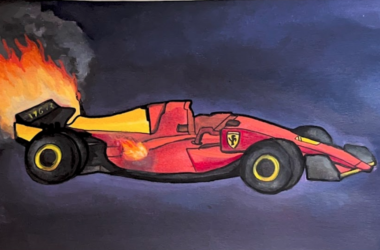
Looking back on a high-octane Formula One season

The 2021 Formula One season will go down in history as one of the most memorable seasons the sport has ever witnessed, featuring a riveting rivalry, thrilling races, and surprising podium results. Formula One fans around the world held their breath watching a season where the only certainty was that anything could happen.

George Russell’s front row qualification and first podium

On Aug. 28, 2021 at Circuit de Spa-Francorchamps for the Belgian Grand Prix, Williams driver George Russell completed a fantastic Q3 lap that earned him a front-row start in P2. His spectacular qualification came as a result of calculated decisions made by the team and his excellent knowledge of his car’s abilities.

On Aug. 29, terrible weather conditions made the 2021 Belgian Grand Prix the shortest race ever in the history of Formula One. The drivers drove two laps under the safety car and a final lap that ended with a red flag, marking the end of the race. The results were taken from lap one, earning Russell a second-place finish and his first podium in Formula One.

This result highlighted Russell’s potential for success in a stronger car than the Williams, which falls short in comparison to cars developed by Mercedes or Redbull Racing. Not even two weeks later, Mercedes announced that Russell was set to drive alongside Lewis Hamilton as part of the team. This sparked excitement amongst Formula One fans, such as Samuel Nidelli, U1 Engineering, who is looking forward to the start of a new Mercedes driver pairing, noting Hamilton’s long history with the team.

“I’m really happy to see George Russell in a Mercedes seat,” Nidelli said. “I feel like [he] and Hamilton will have some great battles and Hamilton will be able to mentor Russell and make him into the driver he was always meant to be.”

Kimi Raikkonen’s retirement 

The 2021 season also saw the departure of Formula One legend Kimi Raikkonen, who chose to retire after his 349th Grand Prix in Abu Dhabi. The former world champion, known across the grid for his level-headed and cool approach to racing, which earned him the nickname “Iceman,” will be dearly missed by fans. Samuel Jachir, U2 Arts, had hoped to see Raikkonen win some races in his final season.

“I’m very fond of Kimi Raikkonen and the child in me was kind of hoping that he would surprise me,” Jachir said. “But with an Alfa Romeo, it is not surprising that he only managed to score 10 points.”

The Verstappen and Hamilton rivalry

The most memorable motif of the 2021 season was undeniably the rivalry between Mercedes racer Lewis Hamilton and Red Bull racer Max Verstappen. Throughout the season, the two made exciting and sometimes dangerous decisions in the hopes of gaining a championship lead. This rivalry had some fans, like U2 Arts student Maya Sorguc, on the edge of their seats.

“Compared to the seasons before, it was much more exciting because of the intense competition between Hamilton and Verstappen,” Sorguc said. “The viewers were divided into two groups, which made it more fun to watch or talk about it with friends.”

Throughout the season, risky maneuvers led to both drivers colliding or being penalized during certain races, with Hamilton denouncing Verstappen’s driving as dangerous. Nevertheless, both drivers arrived at the last race in Abu Dhabi tied for points, meaning that the championship winner would be decided by whoever passed the checkered flag first. Verstappen overtook Hamilton in the final lap after a safety car procedure change, which allowed racing to resume for the very last lap instead of finishing under a speed limit. The FIA’s additional decision to allow Verstappen to start immediately behind Hamilton, despite originally having to lap several other drivers, presented the Dutch racer a final chance at victory, which he then seized. 

After seven seasons in the sport, Dutchman Max Verstappen became one of the youngest world champions ever, at only 24 years old. This win was highly controversial, as Hamilton had an advantage over Verstappen the entire race. Commentators and fans alike criticized the FIA’s sudden rule change for not accounting for Hamilton’s lengthy advantage. As of today, Hamilton has not commented or discussed the situation, but Mercedes’ boss Toto Wolff described Hamilton’s loss as a robbery. It will certainly be interesting to see the impact of this defeat on Hamilton’s racing in 2022.

Hockey, Sports

The course of true love never did run smooth

Many Montrealers will be able to tell you where they were on June 24, 2021, when the Canadiens scored an overtime goal in game six of the second-to-last round of the playoffs against the Las Vegas Golden Knights—a win that propelled the team to the Stanley Cup Final for the first time since 1993. 

I was away at a cottage with friends at the time, crowded around an old television watching the game. When Artturi Lehkonen scored that goal, the three of us watching went wild––much like many across the province and even the country. When we managed to settle down, the first thing I did was call my mom, the person from whom I inherited my love for the Habs. She, too, was over the moon and mentioned how she wished her dad was around to see it happen. 

As I was growing up, my mom would tell my grandfather, ahead of each season, that this year might be the one the Habs would surprise us and finally win their 25th Cup. Each time, regardless of how well the team was doing, my grandfather would reply, “No, not this time.” Evidently, he was always right. 

It should have been unsurprising, then, when the team succumbed to the Tampa Bay Lightning two weeks later. After all, the boys had put on a lacklustre regular season performance, somehow managing to scrape by only when it counted. With each round, first against their arch-nemeses the Toronto Maple Leafs, then against the Winnipeg Jets, and finally against the Golden Knights, commentators who had been positive that the end of the Habs’ run was imminent were forced to eat their words. Despite the unlikely odds, the city was sent into a period of mourning when the final series came to a close. 

Given the team’s stellar run last year, fans had high expectations going into the 2021-2022 season. But the off-season brought with it the losses of key players like Phillip Danault and Corey Perry––and not to mention injuries that prevented captain Shea Weber and star goaltender Carey Price from returning to the ice in the fall. Now, the team is standing dead last, making it statistically impossible for them to make the playoffs. Between injuries and placements into the NHL’s COVID-19 protocol, several games in December and January saw the team made up almost entirely of players from the Laval Rocket.

While this fall from grace is rather extreme, it hearkens back to past episodes of Cup hopes that electrified the city. In 2009-2010, Jaroslav Halak’s success briefly called into question whether Price would remain the city’s starter or even remain in Montreal. That season, the team made it further into the playoffs than they had in years, but ultimately failed to make the final, losing their shot at clinching the Cup. 

The recurring pattern begs the question of why Canadiens fans remain so deeply devoted to a team that consistently disappoints. The Habs are said to have the “most intimidating home-ice advantage in the league,” with the Bell Centre known to draw in the loudest, most passionate fans. Beyond the atmosphere of their arena, furnished with energy that travelled across downtown Montreal from the historic Forum in 1996, the team also boasts the most Cups and the most retired numbers in the league. 

Perhaps it’s the way the franchise’s history is so intimately tied to the culture of the city and the province. Or, maybe it’s the lack of another highly popular professional sports team in Montreal, or even the overwhelming number of iconic players to have sported the bleu-blanc-rouge. Regardless, the Canadiens have become a staple in many––arguably, the majority of––Quebecers’ lives, making them a cultural giant rather than merely a sports team. 

With new leadership and the looming possibility of a rebuild, some Habs fans are cautiously optimistic about the possibility of a team that is consistently great, not just in random, haphazard bouts. But I’ll always take the lengthy droughts in exchange for even a once-in-a-decade chance to experience the thrill, camaraderie, and joy that comes with times like the playoff run of summer 2021. 

Editorial, Opinion

Closing the curtain on political theatre

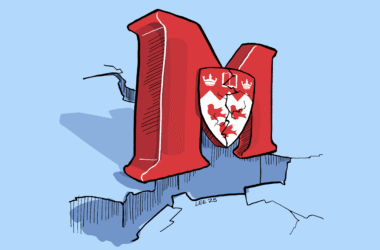
On Jan. 20, Quebec Premier François Legault held a press conference in which he made two statements: First, that citizens should “stand in solidarity” with hospital workers, and second that they should “stay prudent.” Combined with the shifting recovery plans in light of the Omicron variant, these remarks show that the province’s response to the COVID-19 crisis remains chock full of political theatre. The government’s mismanagement and poor communication conceals important decisions being made on travel, schools, and health, among other issues. To individuals’ risk, political theatre obscures government responsibility, and Quebec is certainly matched in performative statements coming from the federal, municipal, and university levels. 

While these theatrical actions reveal the oft-improvised nature of government preparation, idle, action-less rhetoric continues to emerge. While seemingly innocuous, messages like “Canadians, please come home” and “the pandemic does not discriminate” use emotional calls for unity to distract from the ways that structural inequalities disproportionately affect groups in Canada and around the world. Closing borders, for example, after South African scientists discovered the Omicron variant, was discriminatory toward African countries that had similar rates of infection as European countries. What is more, when leaders position healthcare workers as “heroes,” their sincerity rings hollow, as they appear benevolent without taking concrete steps to improve material conditions for these “heroes.” Similarly, the McGill administration encourages students to focus on their mental health, all while their asinine decision-making and messaging leaves students confused and without flexible accommodations. It was these same aggressive displays of authority that forced social work students into the classroom and their fieldwork placements. Communication between the Canadian government and Canadians, the Quebec government and Quebecers, and McGill and McGillians is rife with disparities between what authorities say, and what they actually do.

This theatre from powerful leaders, of course, has its audience: With a federal minority Parliament and a provincial election on the horizon, the importance of popularity should not be prioritized over successful action or proper public health measures. Furthermore, contradicting information from the top-down breeds immense distrust within the public. We have come to a point where politicians have not only politicized masks, but also restrictions—encouraging skeptical and vaccine-hesitant citizens to embrace individual freedom over collective safety. When a curfew is implemented and lifted seemingly at random, politicians face the risk of undermining science. For example, some  Indigenous people rightfully hold mistrust in Western medical institutions and, by extension, COVID-19 vaccinations.  Quebec’s health-care system has a brutal history of systemic racism. The death of Joyce Echaquan, an Atikamekw woman who died at the hands of medical professionals in 2020, highlighted the degree to which  racism is embedded in multiple levels of health treatment. Over federal jurisdiction, Canada also conducted unethical vaccine experiments in residential schools. These reasons qualify mistrust and hesitancy in interacting with governmental health services—and all the while, the government’s political performance does nothing to address these issues head-on. 

Efforts to scale back political theatre tend to put the onus on individual citizens, who face the impossible task of overcoming their own lacklustre, yet powerful, elected officials. For instance, it is unfair to ask students to compensate for McGill’s ever-changing decisions. Nevertheless, when governments separate science from their actions and McGill trades effective change for tired buzzwords like “student accomodations,” without actually providing them, citizens and students are burdened with mobilizing against their higher-ups’ overall ineptitude. At the municipal level, Montreal must hold newly elected Mayor Valerie Plante to her commitments to double the budget for services for the unhoused—and not let her get away with only making PR-fueled statements on shelters without addressing structural barriers to housing equality. Similarly, citizens should stress the importance of vaccination and vaccine equity, and support initiatives like Park Ex’s vaccine confidence measure WeCanVax. By matching meaningful measures to collective action, individuals can work to pull back the calculating and capricious curtain of political theatre.

Baseball, Behind the Bench, Sports

An axe to grind: It’s time for Atlanta’s ‘chop’ to go

The transition away from dehumanizing caricatures of Indigenous peoples within the sports world has been marked by many teams dropping their blatantly racist names. After years of activism, McGill changed the moniker of their men’s varsity teams to the “Redbirds” in 2019. The Washington Football Team eliminated their degrading nickname in 2020 and the Cleveland Guardians followed suit in 2021. 

Throughout their successful bid for a World Series ring in 2021, the Atlanta “Braves” and their notorious “Tomahawk chop” received rightful scrutiny while being placed in the spotlight. As the audio cue for the “chop” rang throughout Truist Park, the TBS channel panned out to show Atlanta fans in cartoonish regalia and headdresses chanting a “war-cry” while chopping their arms back and forth. The refusal of Atlanta to move away from the “chop,” combined with Major League Baseball (MLB) and TBS’s encouragement of the cheer, has left many fans perplexed as to why MLB would endorse such an objectionable act. 

Racism within the Atlanta “Braves” organization traces back to the team’s sale in 1912 to James Gaffney. Gaffney was an alderman for Tammany Hall—a New York City political organization named after Chief Tamanend of Lenape Nation. Tammany Hall referred to its members as the “Braves,” a term associated with Indigenous warriors. 

In 1991, when the “chop” was adopted from Florida State University, a number of Indigenous groups protested outside the Metrodome, criticizing the chant and hand motion for making reference to scalping, a violent practice stereotypically associated with Indigenous peoples that is, ​​in reality, practiced predominantly by white settlers who were institutionally encouraged and rewarded for this horrifying practice. 

When partnered with Atlanta’s legacy of racist caricatures and the “Braves” name, the “chop” becomes a harmful misrepresentation of Indigenous peoples that marginalizes the Indigenous experience. As an accepted part of baseball fandom, the “chop” and its associated “war-cry” instill settler-colonial stereotypes of the “savage Indian” into mainstream baseball culture. 

The National Congress of American Indians (NCAI) has also been unwavering in its calls for MLB, TBS, and FOX Broadcasting Company to refrain from showing the “chop.”

In a conversation with the Post Dispatch, Ryan Helsley, a pitcher for St. Louis Cardinals and a member of the Cherokee Nation, described his experiences playing at Truist Park as disappointing and disrespectful. 

“It depicts them in this kind of caveman-type people way who aren’t intellectual,” Helsley said. “I don’t see why professional teams are so far behind on that.”

In response to this comment, Atlanta decided to stop distributing red foam tomahawks to fans, and to refrain from playing the audio cue—but only when Helsley was in the park. 

In an interview with The McGill Tribune, Yann Allard-Tremblay, assistant professor in McGill’s Department of Political Science and a member of the Huron-Wendat First Nation, expressed his disappointment with Atlanta’s response. 

“You can acknowledge that it is wrong but [the MLB] is still in a position where it doesn’t have to change,” Allard-Tremblay said. “[They’re] consolidating [their] dominance. It says a lot about how much care is taken to the relationship with Indigenous peoples. As it is presented to me, Ryan Helsley seems to be saying that there is something wrong, that he is not comfortable, and the response is, ‘well local Indigenous people are fine with it.’”

If MLB commissioner Rob Manfred is going to continue to make weak excuses for his ongoing support of the name and its associated chant, Atlanta needs to take a name change into their own hands. Circulating petitions have suggested the Atlanta Hammers as a tribute to former Atlanta baseball star, Hammerin’ Hank Aaron. 

“There is often an attachment to power,” Allard-Tremblay said. “Being questioned about the power you exercise is often something that will lead to no answer. You see that in so many social dynamics of people who have entitlement and do not want to lose their entitlement. I am sure that is present here [with the MLB and Atlanta].”

As a team that has held six different names in three different cities, it is clear that Atlanta is not resistant to a name change or rebrand of the team. What they are resisting is the transition away from the exploitative representation of Indigenous peoples that continues to be profitable for Major League Baseball.

McGill, News

Faculties rally to strike as McGill resumes in-person classes

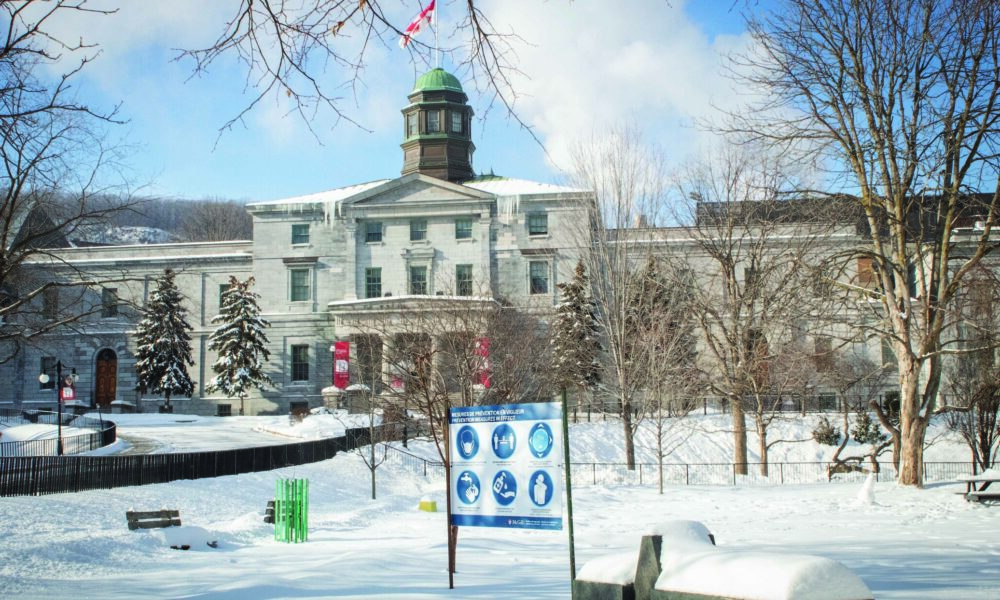
Many McGill students entered the classroom for the first time this semester on Jan. 24. The majority of McGill courses—except Tier 1 activities—began online due to the spread of the highly contagious Omicron variant of COVID-19 and a subsequent provincial lockdown. The university’s decision to require students and staff return to campus has been met with controversy, particularly from students who worry it is premature.

From open letters and statements to strikes, many members of the McGill community and student organizations have opposed the timing and execution of the university’s reopening. Students have called attention to the highly contagious nature of Omicron, the weak accommodations for students and staff who are immunocompromised or live with at-risk people, the speed at which the university is reopening, and the lack of respirator-style masks available on campus.

In the weeks leading up to the re-opening, the administration sent a slew of university-wide emails, spoke to campus media and other student bodies, and made a 40-minute video interviewing students and faculty about their perspectives on the reopening in an attempt to ease safety concerns and address student confusion.

The Arts Undergraduate Society (AUS) followed suit, holding a town hall on Jan. 21. The first substantial point on the agenda was a question-and-answer period with Arts Faculty Associate Dean (Student Affairs) Manuel Balán, which ran well over the allocated 30-minute period. Most questions regarded McGill’s COVID-19-related accommodations and the possibility of making course materials accessible remotely. Balán explained that rules in place to protect instructors’ autonomy and intellectual property prevent the university from creating a blanket requirement to record classes.

“Given our rules, there is no possibility of mandating […] instructors [to record class content], and MAUT and instructor associations have been really protective of me, as an instructor, and my freedom to manage my content,” Balán said. “I’ve been working with a number of instructors who have those concerns, to try to get them to post recordings.”

Balán also recognized the gaps in the accommodations framework, but vowed that the university is working to address them, urging students facing difficult circumstances to reach out to him directly in the meantime. 

“There’s a framework for […] instructors who are in a position that may put dependents [at] risk [of contracting COVID-19], but for students, there’s no such framework in place,” Balán said. “In the absence of that framework, […] we don’t have easy answers right now, but […] I will ask to hear from students in those situations and we will do our best, within our abilities, to try to help you navigate that.” 

After the question period with Balán elapsed, Anya Narang, AUS speaker of the council and town hall facilitator, conducted a “temperature check,” polling the 40 or so attendees on their willingness to accept McGill’s plans for a Jan. 24 return to campus. The majority voted “no” in the informal poll. The town hall then entered an open period to discuss what position the AUS should adopt in regard to the return to in-person instruction, with talk of a potential strike front and centre.

George Ghabrial, U0 Arts and town hall attendee, suggested that a larger assembly with more AUS members present would be a good next step in deciding whether the society should call for strike—a decision that would translate to a refusal to attend in-person classes.

“I think one of the most important things, really, is to […] have some sort of general assembly that is open to the broad [arts] student body,” Ghabrial said. “We have seen time and time again […] that the McGill administration just does not […] seem to have the students’ best interest in mind.”

Codey Martin, U3 Social Work, town hall attendee, and active participant in the School of Social Work’s strike emphasized the need for compassion during these times given the many factors that affect the accessibility of both in-person and online instruction.

“Our mandates, and our efforts to strike this in-person is about compassion and an understanding [of] the realities of the respective homes that we come from,” Martin said. “We are all placed in unique, and difficult, situations. Some may, or may not, carry internet, or have limited access. [Some may have] learning disabilities, whatever it may be.”

Martin also shared a sentiment echoed by many throughout the event: That McGill is prioritizing profit over student safety. 

“A lot of us that are advocating and speaking up to this colonial power and oppression, that comes from the heart, that is compassion,” Martin said. “What McGill, and everything about this situation, is building off of is capitalism [and] loss of revenue on the campus downtown.”

Though it failed to establish concrete action items, the town hall concluded with high energy levels and a clear need for further discussion. 

On the same day as the AUS town hall, Jan. 21, the McGill administration held a student media roundtable on the return to campus with Associate Provost (Teaching and Academic Programs) Christopher Buddle and Deputy Provost (Student Life & Learning) Fabrice Labeau. Both Buddle and Labeau stressed that McGill believes conditions are safe enough to return to in-person instruction. 

When asked whether the procedural masks the university is distributing provide adequate protection against the Omicron variant—a point of contention raised in the Students’ Society of McGill University’s (SSMU) press release—Labeau referenced a recent Institut national de santé publique du Québec’s (INSPQ) comparison of the efficacy of procedural and respirator-style masks. 

“That report—which, by the way, is very much corroborated by our own medical experts—[finds] that there are not many settings in a university environment that could justify wearing an N95,” Labeau said. “Overall, given the conditions under which we interact and the level of risk, a procedural mask is really what we should go with.”

SSMU announced on Jan. 21 that it will be distributing respirator-style masks on a pay-what-you-can basis to at-risk students and those who come in contact with at-risk people frequently. Additionally, SSMU has created a spreadsheet with information about courses’ remote accessibility. 

During the roundtable, the provosts also explained that there has been a shift in Quebec’s, and thus McGill’s, attitude toward pandemic management, noting that the Omicron variant, while more contagious, looks to cause less severe disease in most. Labeau acknowledged that McGill’s COVID-19 dashboard will be less accurate and will provide less detail given the decreased availability of testing and the onus now being placed on individuals who test positive to conduct contact tracing themselves.

“What we will be watching is the trends: Are we getting more calls this week or is it going down?” Labeau said. “That will give us a sense of the trend at McGill, but we will never have access to the absolute number of cases.”

As of Jan. 24, undergraduates in the School of Social Work and graduates in the Education Faculty have decided to strike until Feb. 25 and Jan. 25 respectively. Each faculty will hold a vote over whether or not to extend the strike when each respective date approaches. Some students within both the Faculty of Law and the Faculty of Arts are mobilizing for potential strikes as well.

Read the latest issue

Read the latest issue