Latest News

Sports

As the 2026 World Cup expands, access to it narrows

Last July, a father and asylum-seeker took his two children to the Fédération Internationale de Football Association (FIFA) Club World Cup final at MetLife Stadium in New Jersey. He was cited for a minor drone ordinance violation in a nearby parking lot. Instead of releasing him, officers handed him to Immigration and Customs Enforcement (ICE) agents. He spent 11 weeks in arbitrary detention before self-deporting to Colombia. The 2026 World Cup final will be played on the same field this summer, just over one year later.

The 2026 edition promises the largest World Cup yet: 48 teams and 104 matches across 16 host cities—11 in the U.S. and five split between Canada and Mexico. FIFA’s infamous slogan is that “football unites the world,” but as the tournament grows in size and spectacle, the world it claims to welcome is shrinking, staged behind the most restrictive entry regime in World Cup history. Fans from Haiti—who will compete for the first time in 52 years— Iran, Senegal, and the Ivory Coast face almost a complete travel ban that suspends tourist visas for those without one already in hand. Fans from Algeria, Tunisia, and Cape Verde—which qualified for its first-ever World Cup this yearmust deposit up to $15,000 USD per person under the State Department’s Visa Bond Pilot Program just to obtain a tourist visa. Under a new rule expected to take effect before the tournament, travellers from 42 additional countries will be required to provide five-year social media disclosures as a condition of entry.

This is not what was promised. The U.S., Canada, and Mexico pitched the 2026 tournament to FIFA in 2018 as the United Bid—a trilateral showcase of continental cooperation. For the first time, human rights commitments were embedded directly into the hosting agreement. Each host city was required to develop action plans addressing discrimination, workers’ rights, and protections for vulnerable populations. The bid’s campaign video declared the tournament would be “more inclusive [and] more universal than ever.”

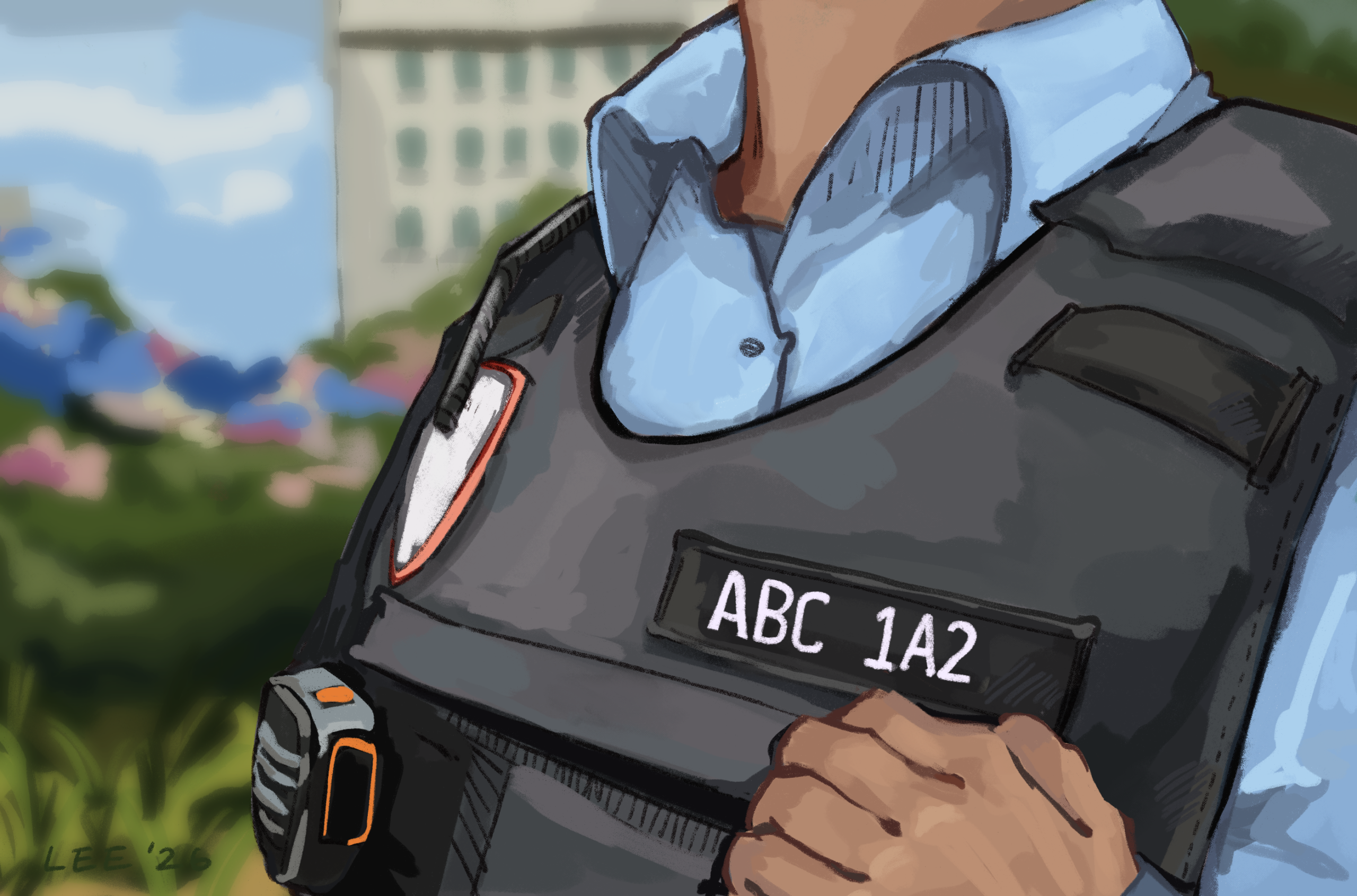
Those commitments have been hollowed out, pressing FIFA to match its rhetoric with action. As of March 2026, only four of the 16 U.S. host cities had published their plans, and Amnesty International found that none of them addressed protections from ICE operations. ICE’s acting director, Todd Lyons, testified this February that the agency would be a “key part of the overall security apparatus for the World Cup” and refused to rule out enforcement at venues. From January to October 2025, ICE arrested at least 92,392 people in and around the 11 U.S. cities hosting World Cup matches. Of these arrests, 65.1 per cent involved immigrants with no criminal convictions. Amnesty International’s March 2026 report described the U.S. as facing a “human rights emergency” and warned that the tournament was drifting far from the safe and inclusive event promised eight years ago.

FIFA is not a neutral arbiter of these failures. President Gianni Infantino has met with U.S. President Donald Trump at least a dozen times since January 2025.  In December 2025, Infantino created the FIFA Peace Prize and awarded it to Trump at the World Cup draw for his “tireless efforts to promote peace.” An institution so closely aligned with the administration producing immigration policies that leave so many human rights organizations and fans in fear is in no position to challenge them.

In 2018, Infantino gifted Trump a referee kit with yellow and red cards, joking that the red card could be useful for Trump if he wanted to kick anyone out. Trump picked it up, grinning, and pretended to throw it at the press. Today, that ‘joke’ has hardened into reality. A tournament that bars, targets, and surveils the very fans it is supposed to unite is a bigoted red card being wielded before the games have even begun.

Arts & Entertainment, Film and TV

You’re a hobbit, Grogu: Arts & Entertainment reflects on the revival of nostalgic film franchises

Star Wars, how I’ve missed you  – Dylan Hing

It’s been almost seven years since the last Star Wars movie hit cinemas, and I’m eager for more. While there has been a plethora of new shows to fill the gap, including the fan-favourite Andor last year, spring 2026 marks the franchise’s return to the big screen with The Mandalorian and Grogu. Based on the Disney+ show The Mandalorian, the film continues the story of the eponymous bounty hunter and his sidekick Grogu, more famously known to audiences as “Baby Yoda.” 

My dad first introduced me to the original six films, having seen them in cinemas himself. I watched the great battles in awe as armies clashed and light battled dark. I was about eight when, after almost 10 years with no new movie, I experienced Star Wars for the first time in the cinema with Episode 7. I saw it, I loved it, and that was when I knew I would be a Star Wars fan for life. Even after all of these years and countless movies and shows, it’s impossible to grow tired of these galactic adventures.

Lord of the Rings, finding our way back to Middle-Earth – Loriane Chagnon

Every year without fail, my sister and I find our way back to Middle-Earth in rewatching the Lord of the Rings trilogy. With a hot cocoa in one hand and a bowl of popcorn in the other, we are entranced by this enchanting world of dwarves, elves, magicians, and hobbits. Hearing Aragorn softly say, “I would have gone with you to the end, into the very fires of Mordor,” brings me back to the doe-eyed 11-year-old that I used to be, who wholeheartedly believed in Frodo’s mission and in the imminent defeat of Sauron

After the highly divisive TV show Rings of Power, Peter Jackson, director of the original trilogy, is taking back control of the mythical world, as he is set to produce not one, but two new original movies. The Hunt for Gollum, which is set to release in 2027, is directed by Andy Serkis, who is also reprising his role as the One Ring-obsessed creature Gollum. The second movie, Shadow of the Past, has just been announced. It is to be written by The Late Show host Stephen Colbert. Being a lifelong Lord of the Rings fan, Colbert seems overjoyed by this career opportunity after the cancellation of his talk show. I, for one, am eager to return to my favourite fantasy world to see many of the original actors reprising their roles, and to experience the magic of Middle-Earth once more whilst eating second breakfast”—the greatest hobbit tradition.

The revival of Harry Potter: magic or mockery? – Lia James

A world where children inhabit a towering castle as they learn to master magic spells is enchanting. Even 15 years after the final Harry Potter film, the wonder created by its universe full of mystical creatures is infinite. Perhaps this is why the Harry Potter franchise is getting a TV show adaptation this year. While the trailer looks promising, many are skeptical, questioning: Who asked for this? I would have preferred a prequel—one exploring the Marauders’ storyline. Instead, this remake revisits a series that one could say is close to perfection. 

Still, maybe this skepticism is fogged by nostalgia. Growing up with the original Harry Potter movies—the impressive shots of Hogwarts and magical creatures captured our young hearts. This new show targets a younger audience, but will parents introduce their kids to it, or will they simply return to the original movies? And while the show may capture that same charm and whimsy for the next generation, one could argue that this might still be best achieved through the movies. It should also be noted that some are calling for a boycott of the franchise due to J.K. Rowling donating profits to anti-trans legislation efforts. So, will the new adaptation reignite the magic for a new audience, or will it fall short of its legacy? Only time will tell. 

Science & Technology

A blast from the past: Revisiting some of our favourite SciTech pieces

A look at Artificial IntelligenceMalika Logossou, Managing Editor

A few months ago, I wrote a piece on Artificial Intelligence (AI) tools, examining whether they reduce cognitive skills and how this extends to students and adults. Drawing from Nandini Asavari Bharadwaj’s expertise, a PhD candidate in McGill’s Department of Educational & Counselling Psychology, she explained that the effect of AI on our critical thinking skills depends on how we use it—but it can also serve as a powerful instrument to assist learning

Since Alan Turing’s 1950 proposition of the ‘Imitation Game’ to test machine intelligence, to Arthur Samuel’s checkers-playing program, AI has evolved considerably. Most recently, a humanoid robot gave a speech alongside the U.S. First Lady at the Fostering the Future Together Global Coalition Summit. Though AI is not new, it has become increasingly present in our everyday lives.

“AI has been around since the 1950s [….] Currently, we are seeing significant interest and development in generative AI, particularly large language models and related conversational interfaces such as chatbots,” wrote Bharadwaj in an email to The Tribune.

The trajectory of AI highlights its dual nature: It can enhance our thinking, but overreliance risks dulling our critical reasoning. Its growth also has environmental implications and social costs, and affects how we view and understand art and friendships. As we look back on why these tools were initially created, it’s important to remember that struggle, reasoning, human contact, and creation are central to human learning. 

Reviewing perceptions of public transport– Sarah McDonald, Science & Technology Editor

When I first joined SciTech as a staff writer, the third article I wrote examined public perceptions of public transportation developments. Reflecting on recent Réseau express métropolitain (REM) station openings, I reached back out to Lancelot Rodrigue, a member of the Researchers at Transportation Research at McGill (TRAM), to see how the team’s research has progressed since November 2024.

“The research project which we were talking about [in 2024] was […] part of our bigger project on the REM, so this project has been ongoing. I think now we just collected the wave six or seven […] of the survey,” Rodrigue explained. 

TRAM’s projects have included comparing reception from the Pie-IX BRT and the REM—finding that the BRT has been far less controversial than the REM—and analyzing the difference between projected and actual demographic use of the REM stations in a recent article.

Recent work has validated public concerns that Rodrigue described to me back in 2024.

“There are elements that we discussed about two years ago, which were issues with the references in terms of governance and planning, [such as], it might have gone too fast, and people weren’t feeling certain about it. We did have some confirmation that these were kind of valid fears in terms of issues that the REM has been having during the winter.”

With their research still ongoing, TRAM continues to evaluate both the impacts and perceptions of public transport developments such as the REM. 

Additional details on The James Webb Space Telescope – Leanne Cherry, Science & Technology Editor

One of the first pieces I wrote as a SciTech editor came after attending a Physical Society Colloquium on the James Webb Space Telescope. While every component of Webb is a feat of engineering, one particularly incredible aspect which I wasn’t able to mention in my original article is the telescope’s sunshield.

Webb captures images of our universe by detecting and interpreting the low-energy infrared light emitted from astronomical objects. The telescope itself must be kept at exceptionally low temperatures to accomplish this—a process which is largely mediated by the sunshield. The shield is larger than a tennis court, and is composed of five layers of Kapton—a tough and sturdy plastic—each layer thinner than a human hair. Acting as a wall between Webb’s lenses and the sun, the shield reduces the temperature by nearly 300 degrees Celsius from one side to the other.

Perhaps most impressively, the engineers figured out how to fold this massive structure into something that would not only fit inside a rocket but could be unfurled upon reaching its orbit without tearing. This required around 150 different mechanisms working in perfect harmony, and 7000 flight parts.

Commentary, Opinion

Critics must balance linguistic priorities with human impact when discussing Air Canada’s faux pas

On March 22, an Air Canada plane departing from Montreal collided with a Port Authority firetruck at LaGuardia Airport in New York City. The crash, which tragically killed pilots Captain Antoine Forest and First Officer Mackenzie Gunther, elicited an outpouring of grief. Shortly after the event, Air Canada CEO Michael Rousseau released a video statement delivered entirely in English, with French subtitles, offering his condolences. However, Rousseau immediately faced backlash from figures including Prime Minister Mark Carney and Bloc Québécois (Bloc) Leader Yves-François Blanchet, who said that the condolence message was insensitive in its unilingual format. 

Shortly thereafter, the House of CommonsCommittee on Official Languages summoned Rousseau to Ottawa to defend his decision to speak solely in English, leading the CEO to deliver a public apology first in French and eventually resign from his position at Air Canada. While Rousseau’s resignation was not explicitly linked to his court summons, its timing happened to coincide with the scandal timeline. The controversy surrounding Rousseau’s English condolence message garnered a significant amount of attention, even as communities struggled to make peace with the pilots’ deaths. While it is important to consider the potential impacts of exclusively using English in messages addressing Canada’s bilingual communities, this debate must not overshadow the severe human impact of the Air Canada tragedy itself. 

Yves-François Blanchet expressed particular disappointment, given that Captain Antoine Forest was a francophone Quebec resident. In Blanchet’s view, Rousseau’s refusal to speak in French signalled a blatant disregard for Forest’s heritage and Canada’s bilingual identity. However, Rousseau attested that he made this linguistic decision primarily due to his lacklustre French. According to Rousseau, speaking in French would have significantly curtailed his ability to articulate a crucial message with the nuance and sensitivity it warranted. Furthermore, the video was subtitled in French, reducing potential language barriers for francophone Canadians. Clearly, public gripes with Rousseau stem from concerns about francophone representation rather than reservations over practical aspects of the message’s linguistic accessibility. It appears politicians are more concerned with the optics of Rousseau’s decision than its actual impact on communities. 

Undoubtedly, the languages that public figures choose to use for important communications can signal which linguistic groups are prioritized and considered mainstream. Especially given Canada’s complicated linguistic history, it is understandable that Carney, Blanchet, and others would raise an eyebrow at Rousseau’s pattern of unwillingness to speak French. For Mario Beaulieu, the Bloc’s spokesperson on Official Languages, Rousseau’s statement was an unwelcome manifestation of Anglophone encroachment within Quebec.

Condemnation of the condolence message has quickly escalated into a public spectacle separate from the airline tragedy itself, becoming  a medium through which to critique English-language dominance in Quebec. However, given the tragic human toll of the crash, it is inappropriate and insensitive to use the tragedy as a vehicle for political discourse. This crash has had a deep personal impact on francophones and anglophones alike—weaponizing it to further a political agenda, and memorializing it as a language scandal is abhorrent

As Canada grapples with its fraught linguistic legacy, national memory should inform political rhetoric without reducing issues to an anglophone or francophone-serving binary. French and English language use are not mutually exclusive, and should be treated as complementary facets of Canadian culture rather than opposing forces. Legislation like the Official Languages Act exists to meld a shared national identity under two vastly different language systems, a process that, though worthwhile, will be inherently messy and imperfect. While Canadian leaders must take steps to promote French-language equality, this process should not overshadow the humanity of those citizens it claims to serve. Though Rousseau’s linguistic choices must be examined critically, focus should be placed primarily on the event’s human impact. An overemphasis on language politics during a time of mourning eclipses the humanity of those Quebecers that francization claims to serve.

McGill, News

COFAM rallies outside the Arts building demanding counteroffer from McGill

On April 2, around 60 professors gathered outside the McCall MacBain Arts Building in a rally organized by the Confederation of Faculty Associations of McGill (COFAM). Following a few speeches delivered by faculty representatives, the group walked to the James Administration Building while chanting “Le mépris, ça suffit !” and “Quoi ? Une contre-offre ! Quand ? Maintenant !

COFAM consists of five associations: the Association of McGill Academic Staff of the School of Continuing Studies (AMASCS/AMPEEP), the Association of McGill Professors of Education (AMPE), the Association of McGill Professors of the Faculty of Arts (AMPFA), the Association of McGill Professors of Law (AMPL/AMPD), and the Association of McGill Library Academic Staff (AMLAS). Amid ongoing negotiations with McGill to improve faculty working conditions, the rally marked COFAM’s launch of the “Full Counter-Offer Now!” campaign.

In an interview with The Tribune, Edward Dunsworth, associate professor in the Department of History and Classical Studies and organizer with AMPFA, explained that professors have gathered at the rally to denounce McGill’s stalling tactics in bargaining.

“The university has been around [for] 200 years,” Dunsworth said. “[Professors] have never been unionized until the last few years, compared to the rest of Quebec, where [at almost] every other university [professors] are unionized [….] More and more faculties are continuing to unionize, so McGill needs to adapt to that new reality and bargain seriously, and get things moving at the bargaining table.”

Dunsworth continued to mention that COFAM had delivered their list of demands in July 2025. Up until the rally, COFAM still has not received an adequate or complete response from McGill.

“One thing that’s been really challenging is that McGill has responded piece by piece to certain articles,” Dunsworth noted. “It’s really difficult to bargain like that. We need a full response to be able to properly negotiate and possibly make advances in one area and make compromises in another. It’s impossible to do that without a full picture of what the counteroffer is.”

Barry Eidlin, associate professor in the Department of Sociology and second vice president at AMPFA, delivered a speech to the crowd highlighting why a counteroffer is important for achieving COFAM’s non-monetary demands.

“We believe in this university, and we want to be able to teach our students with adequate support,” Eidlin said. “We have a message to the administration today. Come to the table, negotiate. You might not like something in the offer, that’s fine. That’s why you make a counteroffer. That’s how bargaining works. Rest assured that this is not a problem that the McGill administration can simply ignore, because we’re not going away.”

COFAM’s non-monetary demands call for better transparency and fairness for faculty, with little to no financial impact on the university. Such demands include a tenure-track pathway for ranked Contract Academic Staff (CAS), improved retirement options, and more transparent regulations in tenure, appointments, renewals, and promotions. In a speech to the audience, Kyle Kubler, a CAS faculty lecturer at the McGill Writing Centre and the AMPFA’s treasurer, highlighted some of COFAM’s other non-monetary demands—including enshrining academic freedom into the framework of labour relations.

“We’ve seen over the past couple years the way that our academic freedom has been challenged in various situations. We want to take academic freedom, put it into our collective agreement, and make it stronger than it currently is,” Kubler said. “[We also want] unique recognition for our Black and Indigenous colleagues, to identify ways that we can also recognize the service and the research that they do for their academic profiles, as well as making sure that the histories of racism and colonialism are […] recognized within our country.” 

Dunsworth highlighted that bargaining must happen more efficiently in the interests of both the university and its faculty.

“We have made some progress in bargaining, but we need to move things along quickly,” Dunsworth said. “That’s the best for the university, for us to reach a deal, carry on doing the teaching and research and service that we care a lot about and want to continue to do.”

Commentary, Opinion

Campus Conversations: Memory

Are these the good old days? 

Julie Raout, Staff Writer

“I wish there was a way to know you’re in the good old days before you’ve actually left them.” 

The Office’s Andy Bernard nudges us with a gentle reminder that happiness often goes unnoticed until it has slipped away. 

Haven’t we all reopened a keepsake box, smiled in remembrance of childhood memories, and wished we had spent more time existing in their softness as the moment had taken place? 

Amid the tumult of university life, we often make the same mistake. We overlook the threads of joy that keep our lives from unravelling into a cluster of deadlines and crises. We get caught up in eight-page essays, Perusall assignments, and MyCourses notifications. Schoolwork also gets tangled up in other gusts of life’s hurricane—finding time for hobbies, contending with bureaucracy, and dealing with The Big Personal Thing we seldom talk about. 

Yet, one day, just like any other, our time at McGill will be over. As I brace myself for my last year as a McGill student, Andy Bernard’s words echo in my mind. I know that by graduation, I will be leaving the good old days. It’s a weird feeling, knowing that I will fondly look back on a time in which I am still living. 

Knowing sneaks up on you. It lurks in the comfortable silence of a late-night conversation. It rests in the small pleasure of a sweet treat bought as an ephemeral escape from the readings sitting dauntingly on a McLennan desk. It blends with the warm chaos of laughter around a dinner table and manifests in the quiet realization that these are the people you will miss when you move away. It even lies in reaping the consequences of your academic irresponsibility, knowing you won’t regret—not even one bit—having spent time with friends instead of studying. 

Today, I stress about final exams, finding an internship, and having time to make dinner. But I know that I’ll look back at this whirlwind of assignments, bad decisions, messy conversations, and all the times I have smiled in between, and think: “I was happy back then.” 

Sometimes, happiness is not a feeling noticed in the moment; it’s the joy you don’t consciously feel because you’re too caught up in living it. Maybe all we can do, then, is welcome the premature nostalgia, take a second to breathe it in, and, when we have let it settle in our chests, dive right back into the moment we can’t let unfold without us. Don’t let the good old days pass by and drift into memory like the pretty candle you never wanted to ruin, or the childhood stickers you never used out of fear of running out. 

A requiem for my old self—Do growing pains ever end?

Defne Feyzioglu, Opinion Editor

Change isn’t always welcomed with celebration. Sometimes it comes with mourning. Sometimes it feels like losing someone you once knew so well—the body you lived within. And usually, it is the old you who gets left behind. 

It is not easy to bid farewell, regardless of when or to whom. Leaving behind pieces of yourself isn’t always a clean break, it often resurfaces—like it did for me one afternoon in early winter, as I found an old diary buried deep in one of my ‘everything drawers’. That day, as the sun was setting way too early, I realized for the first time that those scribbles belonged to my former self—not to the person I had become. 

That’s the strange part about moving: You don’t just change—you become someone in a new place, and in the process, you lose parts of yourself that once felt absolutely vital. You learn what kind of person makes sense in your new environment. You translate your humour, enhance your softness, dilute your anger, and retell your story until the version of you that first arrived is not the version that stays. Yet while relocation is growth, it is also erosion. And no one really teaches you how to mourn what gets worn away. 

That evening, I came to terms with the fact that the girl I used to be was gone because, somewhere along the way, I had stopped being her. I had moved countries, survived Montreal’s harsh winters with my dangerously low iron levels, met people I would have never encountered, connected with new cultures, set aside my native language in the process, and refound my identity. If immigration teaches you anything, it’s that ‘becoming yourself’ is not a clean, triumphant arc. You gain a life that fits the place you now call home, but you leave behind a version of you that you can never really return to. 

If we are souls—and not in the Cartesian way, but in the way often described in a romanticized coming-of-age novel—then the body I once carried, though it is still mine, now belongs to a completely new person. I recognize what I have lived through, but I no longer feel like the person who has lived it. 

While I have wished to grow, to learn and explore, I am not sure if I have ever wished to be erased. One hopes to change and accepts the moments that have been foregone in the process, but celebration, reinvention, and growth must leave room for the grief that comes with them. It seems strange to think that I was gone once, and I will be gone again and again and again—then remade. I wonder if it will hurt as much each time, if the pain of change and growth will ever ease. 

Yet, I now welcome this fear and the pain I carried; the bittersweet ache of nostalgia I once felt for the person I used to be has quietly become subsumed by sympathy. And maybe that is where life’s strange mercy is hidden: We never quite stop grieving, but instead learn to hold the people we once were gently as we grow beyond them. It is a lovely day to be reborn, after all. 

The responsibility of memory

Asher Kui, News Editor

As you leave campus through the Roddick Gates, drifting out into the bustling traffic on rue Sherbrooke, the city unfolds into an endless stream of cars—each carrying a license plate that reads Je me souviens.

The motto of Quebec, Je me souviens—or I remember in English—was first coined by Eugène-Étienne Taché in 1883, and was inscribed beneath the province’s coat of arms on the Quebec Parliament façade. It was not officially adopted as the provincial motto until 1939, and only began appearing on license plates in 1978.

Taché never explained what Je me souviens truly meant, leaving it open for interpretation today through the context in which it was created. The same year the motto was added to Quebec’s coat of arms, former Prime Minister John A. MacDonald authorized the creation of the residential school system, placing Je me souviens within a broader pattern of systemic oppression and violence against Indigenous Peoples in Canada. The Indian Act had come into power just seven years earlier, in 1876. 

Taché’s slogan was added to the Parliament’s façade alongside bronze statues, each commemorating important figures in Canadian history. Out of 26 statues that were supposed to create a pantheon of Canada’s founding narrative, only two featured references to Indigenous life—the Nigog Fisherman and A Halt in the Forest. Such diminished representation—along with the overemphasis of the ‘noble savage’ image of Indigenous Peoples in Canada—reflects a broader colonial framework of commemoration, in which Taché’s work reproduces a narrative that continuously marginalizes Indigenous voices and experiences.

In such light, Je me souviens is not merely a celebration of our heritage; it implores us to reconsider what we remember and what we ought to remember. The memories we reproduce are not neutral—just as Taché curated his own version of history through the Parliament’s design, collective memory is moulded by our perceptions, our values, and our prejudices. What is preserved as heritage worthy of celebration, what is relegated and marginalized, and what is deliberately suppressed are choices—choices that have decided how we understand the past. To remember, then, is not simply to recall what happened, but to critically engage with existing narratives.

Memory thus becomes a responsibility. Je me souviens is more than a catchphrase found in souvenir shops, or a slogan carved in stone. It is an omnipresent reminder that memory holds immense power. If memory can be used as a tool of silencing and distortion, it also has the capacity to drive meaningful change. Our responsibility is to ensure that memory preserves truth, rather than just echoing the past—so that it can be used to reconcile, inspire, and build a future we are willing to stand behind.

Art, Arts & Entertainment, Culture

Live long and prosper, Notre-Dame-de-Grâce

It can be easy to drift toward the known hotspots of Montreal’s art scene; if you are looking for an artist, throw a stone in Little Burgundy, Griffintown, or Little Portugal, and you’ll hit 10 of them. As international students, it’s also way too easy to stay within the McGill bubble or, when feeling “adventurous,” head to the Plateau and convince ourselves we’re experiencing all of Montreal’s artistic culture. However, neighbourhoods like Notre-Dame-de-Grâce (NDG) carry memories forged through generations of creativity. 

Known for its communal charm, you might not find the vibrant network of artists and meeting places that dot those more immediately attractive areas. However, if you take a closer look, you will find that art is not always a painting, a poem, or a photo, and it is not always created by a trained hand.

The municipality of NDG was first established in 1876, and primarily encompasses the community served by the beautiful Church of Notre-Dame-de-Grâce. In a borough abundant with churches like the impressive St. Joseph’s Oratory, NDG’s church may seem quaint, but that only accentuates the neighbourhood’s artistic subtlety. It evokes feelings of intimacy through simplicity to focus its faith, with quiet touches of beauty in details such as the stained glass that colour this as a place of communal worship.

Four decades later, in 1916, Loyola College moved to NDG. The central building, opened in 1947, represents the grandeur of the College’s broader architectural style, creating cohesion with the rest of the campus despite its mid-20th-century construction. Loyola College and Sir George Williams University merged in 1974 to create Concordia University, which now boasts state-of-the-art journalism and media facilities. Although these facilities primarily serve the students of the university, they allow NDG to serve as a home for journalistic arts, nurturing future journalists such as CBC reporter Hana Gartner.

Today, the neighbourhood is well-represented in the field of community visual arts. A standout is the Our Lady of Grace mural just past rue Sherbrooke and Madison, created by art agency Ashop in 2011. The industrial-looking but colourful mural brightens an otherwise dreary Montreal winter, featuring a Madonna rising from a city while surrounded by red and turquoise nature. It harkens back to NDG’s past, with art bringing a community together as its religious subject once did.

While that mural stuns all who see it, it is not the only artwork to come from the neighbourhood. The impressive NDG Art Hive, which provides free access to workshops and studio spaces to those interested in trying visual art, was born out of the Cheap Art Collective of St. Raymonds in 2015. This concept, part of a larger network of art hives that seek to connect communities, uses art to provide a gathering space for people of all ages and socioeconomic backgrounds under the common pursuit of artistic endeavour.

Any discussion of NDG’s artistic legacy would be incomplete without mention of actor William Shatner, of Star Trek fame. He grew up in the neighbourhood, having spent his youth acting with the NDG-based Montreal Children’s Theatre. Founded at the height of the Great Depression, youth arts programs like this represent the best of art culture. The theatre’s persistence serves as a reminder that, while culture can be found in Picasso or Shakespeare, it can also come from two ladies in a basement putting on a show with their kids.
Not every neighbourhood can be a cultural cornerstone–but they don’t all have to be. At its best, art is an expression of the unique memories a community shares. Culture is a mural of a saint; it is student journalists amplifying the voices of those who are overlooked; it is a group of ordinary people picking up paint brushes; it is the final frontier of self-discovery. The Notre-Dame-de-Grâce community draws on these collective memories boldly.

Student Life

Finding home in Montreal 

What defines home? For some, it’s your favourite comfort food, the cozy feeling of your bed at the end of a long day, or being surrounded by the love of your family and friends. And in Montreal, home is rarely limited to one thing. In this vibrant, multicultural city, shaped by a rich and layered history, people find their own sense of belonging in many different ways. The Tribune presents a few places across the city and on campus where students can foster their own meaning of home. 

Food and cultural heritage

Established in the 1890s, Montreal’s Chinatown exudes a strong sense of history and community. Formally home to Wing Noodles—famous for making the first bilingual fortune cookie—Chinatown remains a hub for restaurants and markets that continue to serve locals. With urban sprawl and gentrification threatening Chinatown neighbourhoods across the country, it is integral to support these communities and small businesses. Organizations like the JIA Foundation work to protect and celebrate the neighbourhood’s cultural heritage, while advocating for their future. On your next visit, explore the wide range of dishes and desserts, immersing yourself in the culture and history that define the community. Wander through the neighbourhood and discover murals, street performances, and festivals that have thrived for generations. 

Urban oasis/

Home to a diverse ecological web of plants and animals, Parc La Fontaine is the perfect place to spend an afternoon basking in the sun while appreciating the nature around you. With the park’s rich native biodiversity, this 34-hectare green space provides the city with a lush oasis amid the urban jungle of downtown Montreal. Across all seasons, visitors can enjoy a number of activities, including cycling, soccer, tennis, cross-country skiing, and more. Bird watchers can also take part in spotting out local species, or simply sit by the pond and admire the park’s beauty.

Religious spaces

Beyond physical spaces, many students find a sense of home within their religious communities. Whether through on-campus clubs such as the Muslim Students’ Association, McGill Sikh Association, McGill Chavurah, or the McGill Christian Fellowship, these communities provide a place where individuals can feel safe, supported, and connected with others who share their beliefs. These spaces become even more essential in the context of Quebec’s increasing restrictions on religious expression, such as Bill 21, which bans public employees from wearing visible religious symbols, and Bill 9, which extends to newly-hired daycare workers, bans prayer rooms in public institutions, prohibits public prayer without municipal authorization, and bars public institutions from solely offering food based on religion. These campus groups offer spaces of belonging for practising faith freely.

Music and representation

Music is another powerful way students can feel at home thanks to its transcendent and intergenerational scope, bridging cultural and geographical gaps alike. It can tie people together by creating shared memories and evoking sentiments that language cannot always express. Music festivals also help foster this sense of community, bringing people of all creeds together to celebrate art they collectively cherish. Montreal hosts a number of such events, such as the Montreal International Jazz Festival, Festival International Nuits d’Afrique, Fuego Fuego, Les Francos de Montréal, LASSO, and more, giving students spaces to celebrate music and culture, and helping them feel rooted—even far from their original homes. 

Drag shows and queer spaces that centre music have long served as safe havens for 2SLGBTQIA+ individuals, fostering community, self-expression, and belonging. Many Montreal artists have also found music to be an outlet for exploring and merging their different identities. Montreal-based pop singer Zeina, for instance, is of Lebanese and Egyptian descent and incorporates Arabic music into her songs by singing in English, French, and Arabic, demonstrating how music offers a creative medium to celebrate both cultural heritage and diffusion.

Memory

Last but not least, memory plays a powerful role in shaping what “home” means. Our own reinterpretation of physical spaces, familiar smells, sounds, or experiences transports us back to a specific time or space. Whether you and your community host a potluck or make crafts together, acts that appear mundane can gain newfound meaning once removed from a familiar reality. These moments of nostalgia recreate a sense of comfort and belonging, allowing us to carry a piece of home with us wherever we go.

Commentary, Opinion

The pattern behind Hassan’s denial of entry

Rima Hassan, a French-Palestinian Member of European Parliament (MEP), was denied entry into Canada days before she was scheduled to attend conferences in Montreal on the suppression of Palestinian advocacy and the rise of the far right. Canada’s Office of Immigration, Refugees, and Citizenship (IRCC) did not provide a specific reason for refusing Hassan’s entry, merely blaming the situation on Canadian legal requirements. According to the IRCC, Hassan had failed to announce a previous visa refusal or denial of entry as well as an alleged criminal offence, arrest, indictment, or conviction. 

Hassan has since described the IRCC’s decision as an “attempt at censorship” and an “obstacle to parliamentary action and freedom of expression.” Québec solidaire member Andrés Fontecilla seconded her declaration, calling upon the government to explain itself. Contrastingly, Jewish advocacy groups such as B’nai Brith and the Centre for Israel and Jewish Affairs (CIJA) have supported the denial of her entry, claiming that speech that “justifies terrorism, glorifies violence, and denies Jewish history” ought to be limited. 

There has been a rise in censorship in Canada, particularly through the mainstream media’s warping of news and content related to Palestine. Often, Canadian mainstream media manipulates language to minimize or misrepresent the genocide, excluding Palestinian voices. The lack of credibility awarded to journalists on the ground in Gaza, as scholar Adel Iskandar explains, perpetuates a colonial dynamic where “the native cannot speak for themselves.” This selectiveness silences Palestinian perspectives to distort the public’s worldview. Taken together, Hassan’s exclusion and the media’s framing of Gaza reflect this imbalance, where those affected by a conflict are not given the right to speak for themselves. 

Hassan being denied entry is not the first time Canadian institutions have limited public discourse on Palestine. In Sept. 2025, the IRCC banned Liam Óg Ó hAnnaidh, a member of the Irish hip-hop band Kneecap, better known by his stage name ‘Mo Chara,’ from entering Canada based on unproven allegations of terrorist activity. Similarly to Hassan, the band was quieted with opaque justifications before even being given the chance to speak. 

These constraints on speech also extend to universities. In 2024, McGill instituted a 10-day injunction against Students for Palestine’s Honour and Resistance (SPHR), banning the group from protesting on campus. Since then, McGill has threatened to terminate its agreements with other student groups, such as Quebec Public Interest Research Group (QPIRG) at McGill and the Students’ Society of McGill University (SSMU), for refusing to sever ties with SPHR. This form of censorship is a consistent pattern, with the administration interfering in a democratic vote of the Law Students’ Association (LSA) to boycott Israel last week. Universities play a crucial role in shaping the beliefs of the next generation; excluding important perspectives on global conflicts inhibits students from thoroughly grasping them. Not only do they have the right to hear all points of view, but obstructing them maintains colonial power dynamics where dissenting voices are intentionally suppressed

Such gatekeeping and political obstruction hinder collective understanding of global issues, with consequences at a broader level. Not including all of the historical perspectives involved in an issue distorts publicly understood narratives, which most affects those whose stories are already underrepresented. It maintains power imbalances where the freedom of expression of those already oppressed is perpetually hindered. 

Some may argue that Hassan’s denial of entry occurred due to administrative reasons, not political motives. However, regardless of the IRCC’s intentions when restricting Hassan’s entry, the refusal’s effects remain the same: Rima Hassan cannot tell her story.

The cornerstone of a democratic society is free expression. Failure to do so puts the public’s right to know at risk and continues to perpetuate a system that maintains the censoring of some while uplifting others. 

Arts & Entertainment, Film and TV

“Project Hail Mary” reads the sign of the times

Warning: This piece contains spoilers.

Amaze! Amaze! Amaze!” sums up my experience watching the biggest debut of the year: Project Hail Mary. Adapted from Andy Weir’s 2021 book and directed by the duo who brought us 21 Jump Street and The Lego Movie, Phil Lord and Christopher Miller, Project Hail Mary shows us thateverything is awesome when you give Ryan Gosling glasses and cast him as a molecular biologist-turned high-school teacher-turned astronaut, who wakes up in space with no memories of how he got in a space ship.

The premise is straightforward: The sun and stars in the galaxy’s solar system are dying because of an alien microorganism called astrophage—literally “star-eater” in Greek. These organisms threaten to drastically drop the Earth’s temperature and trigger global extinction within decades. Dr. Ryland Grace (Gosling) awakes as the sole surviving traveller on a spaceship, light-years away from Earth, with retrograde amnesia, and must carry out a mission to understand why the star Tau Ceti remains the only one undimmed. He soon learns, however, that he has been sent on this mission knowing he will never be able to come back.

Gosling is both swoon-worthy and endearing as Dr. Grace, who develops a close bond with the extraterrestrial Rocky (James Ortiz), whom he meets in space and a team of puppeteers nicknamed “the Rocky-teers”. The supporting cast includes Sandra Hüller as Eva Stratt, the morally grey character leading the international task force against the astrophage crisis. The movie explores themes of memory, friendship, duty, and bravery, with the protagonist sacrificing himself for humanity. 

Coming from the Catholic Hail Mary prayer, the expression describes a last-ditch effort to rectify a hopeless situation. The film encapsulates this desperation. The spiritual themes of the story are not lost, but what is most striking is the optimism with which it approaches its difficult subject matter. Grace’s tale is supported by an enticing soundtrack by Daniel Pemberton and beautiful cinematography, with wide shots of space that lean into warmer tones and away from common representations of space in cold and desaturated colours. 

The era that we currently live in has felt dominated by confusion, consumerism, the rapid growth of technology, and war. The movie industry is no exception, favouring big-budget blockbusters over original scripts. It feels like genuine passion projects are slowly replaced by extended trailers, with big explosions, empty declarations, and characters that lack depth. Project Hail Mary stands out with the love and care imbued into its soul, exemplified by Gosling and Ortiz’s acting. Instead of having Gosling work alone while talking to a tennis ball that stands for Rocky—as is customary for computer-generated imagery—the directors chose to work with practical effects and to have Rocky’s puppet built by the renowned special effects artist Neal Scanlan. This made Grace and Rocky’s relationship seem genuine and multi-layered, as the actors were developing a deep friendship over months.

Furthermore, with the recent launch of Artemis II, which holds four astronauts—including Canadian Jeremy Hansen, who will venture around the moon for 10 days—the importance of scientific discoveries in space exploration cannot be forgotten. Project Hail Mary calls for much-needed optimism about the good faith of humanity after this year has shown us how unsettling it is to be human in the 21st century. Watching Grace save humanity in space reminds us why scientific discovery and missions like Artemis II are important: they help us gain knowledge, foster international cooperation, and inspire next generations of scientists. If there is one thing that I encourage you to do, it is to go watch Project Hail Mary in theatres to experience the magic firsthand. If you need, be like Rocky and borrow “Ryan Gosling money” to go see Project Hail Mary; you might even catch a rendition of Harry Styles’s Sign of the Times or fall in love with an adorable alien proudly stating, “Grace Rocky save stars.”

Read the latest issue

Read the latest issue