Latest News

Student Life, The Viewpoint

Viewpoint: The cost of community, learned in aunties’ basements

I was pulling at the grass on the Lower Field, talking about McGill with all the idealistic excitement of a first-year, when my friend (Canadian, white) said she was scared of “adult loneliness.” Once you graduate, she said, you never really see anyone again unless you really try. The other friend (American, white) nodded instantly, as if this were obvious.

I had no idea what they were talking about. 

Growing up in the Arab diaspora meant that friendships didn’t disappear when the school year ended or when people moved to another country. Every weekend, you were dropped into some auntie’s basement with thirty kids and no adult supervision, and told, “play.” You hated half of them on principle; someone was always crying, someone tattled, and someone broke something. Repeat the next weekend. Travel didn’t save you either. You’d land in another country, and someone you’ve never met would have already been notified. Suddenly, you were on her plastic-covered couch drinking tea you didn’t want.

Eventually, you learn that showing up isn’t a choice; you inherit community, whether you want it or not. It’s an intergenerational debt you keep paying because your parents once needed someone else to pay it. Westerners, on the other hand, view culture as an external container instead of a system they actively co-create, and that misunderstanding is part of why they perceive adult loneliness as inevitable.

As capitalism begins to lose its shine, 20-somethings in the West have grown hungry for community. They cosplay it in their Plateau apartment ‘friendsgivings’ and their shared grocery lists. But ask them to clean the kitchen and suddenly there’s an hour-long household meeting about who’s responsible for wiping down the counters. In my world, that conversation would be humiliating. You clean the kitchen because you use it, because other people use it, and because the space isn’t just yours.

Community, as Arabs practice it, is not gentle. If anything, it’s surveillance, obligation, and being witnessed in moments you’d prefer to hide. It is unglamorous labour. You don’t get the luxury of pretending your actions don’t affect anyone. If you disappoint someone, you fix it because you will see them again. If you don’t show up, people notice. If you leave a mess, it becomes everyone’s burden. Western individualism, on the other hand, is built on the assumption that you can always leave—the city, the friend group, the relationship. If you’ve spent your whole life believing you are free from obligation, the moment a community requires anything from you, it starts feeling like a constraint. But that’s exactly why diasporic communities survive: People understand they’re accountable to something larger than their own feelings in the moment, something that predates them and that will outlast them by decades. They behave accordingly.

There were years when I wanted nothing more than to escape this inherited debt. To have the peaceful, independent adulthood I imagined white Canadians grew up expecting, one where you choose your people and draw boundaries without guilt. 

Then, my grandmother died. People I hadn’t spoken to in years came to our home to honour her with a khitma, a funeral ceremony where the Qur’an is divided among everyone and read piece by piece until the whole thing is completed. Every auntie showed up: The ones who barely knew us, the ones who didn’t like us, the ones who always kept their distance. They came carrying food, children, plastic bags filled with whatever they thought might help. They lined the walls of our house, Qur’ans in hand, and read until the entire 600 pages were done in less than an hour. There were so many women present that each of them carried only a sliver of the burden.

Moments like this remind me that community isn’t about intimacy or affection; it’s about dependability. You can dislike each other, avoid each other, forget each other, but none of this will absolve you of your obligation to one another. It’s not always pleasant, but it’s how we survive.

Baseball, Cross-Country / Track, Field Hockey, Golf, Martlets, Rugby, Sports

Varsity or bust: Inside the fallout of McGill Athletics’ restructuring

A condensed-for-print version of this article was published in The Tribune’s Dec. 3, 2025 issue.

On the evening of Nov. 20, members of varsity and club teams under the McGill Athletics portfolio were informed via email that 25 of 44 varsity and club teams will not have a future at the university upon the conclusion of the 2025–2026 academic year.

Daniel Méthot, McGill Athletics’ Director of Sport Programs, stated in the announcement that the review was “guided by [McGill Athletics’] responsibility to ensure the long‑term sustainability and excellence of Athletics and Recreation at McGill,” and acknowledged that the review’s results “leave some feeling relieved and others disappointed.”

McGill Athletics has been the brunt of media backlash since their review announcement—and “disappointment” does not begin to capture how cut teams are feeling. By sitting down with many members of cancelled varsity and club programs, The Tribune has learned from athletes that, though a varsity review was announced over the summer, the scale and scope of McGill Athletics’ ultimate cuts were understated by such announcements. These cuts have unprecedented implications on the inclusivity, quality, and community that sports provide at McGill.

Women’s Lacrosse Club

McGill Athletics recently honoured Abigail Tannebaum-Sharon, who founded the university’s Women’s Lacrosse team in 1996, by inducting her into the McGill Sports Hall of Fame on Oct. 24. Just a month later, McGill Athletics announced the club team was cut.

Co-captain Sarah Sinclair, U3 Arts, has been with the team for four years. In an interview with The Tribune, she expressed her frustration and disappointment over McGill’s sudden choice to axe the program.

“I was not initially super angry, but just really sad,” Sinclair explained. “The progress we have made since my first year here has been immense. We’ve been able to schedule so many more games, and have such a strong interest in the sport.”

McGill Athletics’ decision to cut the only university-level women’s lacrosse team in Quebec undermines opportunities for women players in the province, according to Sinclair.

“I think gender equity in sports is extremely important,” Sinclair emphasized. “It’s unfortunate to see how many women’s teams, like Women’s Rugby and Women’s Field Hockey, have had to fight for so long to earn their status.”

Known as the Creator’s Game, lacrosse was created by the Haudenosaunee. The Martlets honour the sport’s Indigenous roots by wearing orange shirts for the National Day for Truth and Reconciliation and learning about Indigenous heritages from their teammates.

“We work to support not only the Indigenous athletes on our team, but also the Indigenous roots of the sport,” Sinclair stated. “It is vital to acknowledge that both on and off the field.” 

As for the future of women’s lacrosse at McGill, Sinclair remains hopeful amid uncertainty.

“It’s going to be difficult no matter what, but being part of a community of athletes facing the same challenges gives me some hope,” Sinclair explained. “This may help us develop an even deeper appreciation for the sport.”

Men’s and Women’s Varsity Track and Field 

For Track and Field, the cuts end a 125-year-old program; the varsity team is not even relegated to club status. Co-captains Ashleigh Brown, U4 Arts, and Robert Gerstner, MSc, discussed the scale of the situation in an interview with The Tribune.

“[McGill Track and Field] has a long history. [The program being cut is] going to be like wiping a whole legacy clean,” Brown said. 

Despite cutting the Track and Field team, McGill will continue to use its tracks for Réseau du sport étudiant du Québec (RSEQ) events—without a McGill team competing, and despite the stadium bearing alumnus and Track and Field Olympian Percival Molson’s name. 

“We’re hosting RSEQ this year, the provincial championships for Track and Field. Our track is one of [only three] banked tracks in Canada [and] is the only one in Quebec,” Brown explained. “That it’s just going to go to waste [after the cuts] [….] What else can you use it for? It’s a track. It’s for the track team.”

Gerstner discussed how this cut creates a national athletic problem beyond just McGill.

 “As many Olympians [have] mentioned, university Track and Field is the bridge between recreational sports in high school and becoming a professional or Olympian. All of these athletes come through the university system [first],” he added. “So if McGill is setting [a] precedent that Track and Field [isn’t a priority], it could have broad implications across Canada.”

Brown cited how McGill Track and Field has garnered media support from many Canadian Track and Field Olympians, including Andre Degrasse, Bruny Surin, and Glenroy Gilbert, who all called on McGill to reverse its restructuring decision. 

“It goes to show that it’s not just a McGill-isolated event, but it’s just something within the community that’s a concern,” Brown reflected. “If Track at McGill gets to the chopping block, then who’s to say what other [university] track teams won’t go?” 

Brown, who is also the president of McGill’s Black Varsity Association, outlined the impact the cut has on athletes of colour at the university. 

“The cutdown reduces a [significant] portion of athletes of colour who come to McGill for Track and Field. That’s quite a big concern to me,” she emphasized. “Also, many other sports require considerable money for equipment, [which] depending on your socioeconomic background, is not always accessible. Track and Field is one of the least expensive sports, so this cut sits at the intersection of race, equality, and inclusion.”

McGill Nordic Ski Club

Vice-President Competitive of the Nordic Ski Club Matthew Randall, U3 Science, manages the team’s racing and training schedules. In an interview with The Tribune, he expressed confusion about McGill Athletics’ decision to cut Nordic Ski, a completely student-funded and largely student-administered club.

“[After the cuts], there’s not really going to be any sort of a transitional model [provided by McGill Athletics],” Randall shared. “[They’re] like, ‘We’re hands off at this point.’ But for us, it’s felt like they’ve been hands off for four years, so it’s not really any different [….] I just can’t imagine how much [money] this is possibly saving [McGill Athletics] [….] I can’t imagine how much strain we could be putting on this system that they need to eliminate us.”

Randall shared that Nordic Ski has filed an access to information request, hoping to review the 2024 internal and the 2025 external KPMG audits that McGill Athletics cited as reasons for making cuts in their Nov. 20 announcement. He highlighted the important community McGill’s Nordic Ski team fosters, which varsity restructuring takes away.

“When you’re going away to university, it can be kind of daunting to be on your own. [It’s important] to find that club or that little niche where you’re able to fit in and have that community already sort of built for you,” he stated. “You just don’t want people to miss out on that.”

Men’s and Women’s Squash Club

The McGill Squash Club has over 100 years of history, and the Women’s Squash team has won two consecutive Jesters League Championships in the past two years. The team hoped at the start of this season that their winning record would help them gain varsity status. However, despite being one of the most historic and successful programs in the country, the team was cut.

Squash co-captain Sofia Llewellyn, U3 Management, described her first reaction after hearing the news during an online Zoom call in an interview with The Tribune.

“[They] started by saying how they love squash. Then, they were like, ‘That’s why it’s really hard for [us] to say that we cut the team.’ We were all very confused and shocked. Mouth agape,” she said. “We are winning. So why were we cut? No clear answers. Nothing.”

As a club team, Squash is not financially supported by McGill Athletics. Instead, the team pays for their coaches, transportation, and accommodations with funds they raise during McGill24.  

“If it were my first year and the squash team were cut, I would consider transferring. If McGill didn’t have a team, I wouldn’t be here. It made my undergrad experience,” Llewellyn said. “[Someone] commented on our petition that [their] son was thinking of coming to McGill for the squash team, and now he’ll have to reconsider.”

Notably, McGill Women’s Squash was Canada’s first women’s university squash club—a legacy which McGill is now erasing.

“It’s ridiculous, especially for a school that prides itself on equity and receives funds for women in sports,” Llewellyn said. “The fact they’ve done this doesn’t make any sense, and it looks really poor on the school [….] It’s not like this decision sets us back a few steps. It sets us back all the way at the beginning.”

Men’s and Women’s Varsity Golf

The Men’s and Women’s Varsity Golf teams finished fourth and third, respectively, in the RSEQ and qualified for Nationals in the upcoming spring. 

In an interview with The Tribune, team captains Astoria Yen, U1 Management, and Camden Purboo, U4 Arts, explained the shock they felt after McGill Athletics’ announcement, as they believed the Golf team aligned with McGill’s restructuring evaluation factors.

“With the criteria that they gave us, we thought that we were one of the teams that were safe,” Purboo said.

“We don’t practice much at McGill, and when we do practice, it is in the gym complex and not in the [Tomlinson] Fieldhouse. So we [aren’t] taking up any space,” Yen explained. “Not only are we part of [the] RSEQ, but we are thriving within it. We’re going to Nationals. It doesn’t make any sense.”

As a second-year student, Yen noted the unfairness of unexpectedly losing a part of her university experience.

“Playing university golf is a decision that you make. The fact that the ability to make this decision has been stripped from us is devastating,” she said. “My last tournament could have been in October, and I wouldn’t have known. I didn’t know that that was the last putt. I didn’t know that that was the last time I was going to step on the tee.”

Yen and Purboo also expressed their frustration about McGill Athletics’ lack of transparency regarding the announcement.

“If [McGill Athletics] had said, ‘Hey, we’re considering cutting your team because of x, y, and z, [but] if you’re able to fix these issues, we can keep you,’ we could’ve at least had a chance. We weren’t told what was ‘wrong’ with our team,” Yen shared.

“It’s really going to hurt McGill’s reputation because of how they treat their athletes,” Purboo emphasized. “It affects the entire McGill Athletics community.”

Women’s Varsity Rugby

McGill Women’s Rugby has struggled on the pitch the last few years, but the Martlets capped off their 2025 campaign with their first victory since August 2023. Captain Raurie Moffat, U4 Education, sat down with The Tribune along with her teammates vice-captain Catherine Murphy, U3 Science, and Sarah Van Heyst, MSc, to share that their team was notified in January 2025 that they must win at least half of their games in order to maintain their varsity status.

“[McGill Athletics] basically told us, ‘We will give you less [resources], […] you guys need to improve everything, otherwise you’re [at risk],’” Moffat said.

Murphy added context on how the team has felt throughout the last few years.

“[It] feels like they’ve been slowly cutting us. [The] entire time that I’ve played on the team here, our practices stopped right after our season ended, which is really valuable time to keep improving,” Murphy shared. “Even in the winter, before I was here, [the team] used to go play in the Concordia dome. But then that didn’t happen [for us].”

Van Heyst commented on the gender bias shown by the cuts.

“The decision they made favoured [men’s] athletics over women’s athletics, and that’s a really hard pill to swallow, especially because the university does have a strong message of [gender] equality and [supporting] women in sport and supporting all of us,” she said. “But at the end of the day, the statistics […] don’t actually match that message at all.”

The comments from the three teammates painted a picture of a squad that forged strong bonds on and off the field, but due to a lack of resources and support, was unable to improve to the level that they aspired to over the last few years.

Men’s Varsity Baseball

Since the Toronto Blue Jays captured the hearts of the nation during their run in the World Series this fall, baseball in Canada has surged in popularity—yet a new generation of players will not be able to continue their journeys at McGill.

In an interview with The TribuneAgastya (Gus) Kushari, U3 Arts, starting pitcher for Redbirds Baseball and Baseball’s representative to the Varsity Council, described how the factors leading to his team being cut by McGill Athletics were unclear.

“To be completely frank, […] we are shocked that we were cut,” he emphasized. “We are financially sustainable. We don’t rely on funding from Athletics. We have a successful culture.”

Kushari described how the team received inconsistent communication from McGill Athletics on the steps they needed to take to ensure their varsity status would remain unchanged. 

“Athletics told us that to remain varsity, we needed to establish a championship pathway […] [so] we created a National Championship [….] Suddenly, the focus quickly shifted to [us needing to create] an RSEQ baseball league with almost no notice.”

Kushari reiterated that this decision will hopefully not mark the end of baseball at McGill for next year.

“I think there’s no question on the team that we are going to try our absolute hardest to make sure that there is some form of McGill Baseball continuing in the future,” he affirmed.

Women’s Varsity Field Hockey

Martlets teams are left grappling with the gender disparity evident in McGill Athletics’ restructuring, which has cut over 100 women athletes from the varsity program: Inequity the vice captain of varsity Field Hockey Grace Hodges, U3 Arts, discussed in an interview with The Tribune.

“Throughout the [restructuring] process, we were reassured that there would be an equal number of men and women’s teams when there is, in fact, not,” Hodges emphasized. “Given McGill is a [university with] 60 per cent women to 40 per cent men, that overrepresentation feels like a glaring oversight […] [and] shows McGill Athletics prioritizes its [mens’] athletes over [women’s] athletes, again and again.”

Hodges also commented on the “mismanagement” evident in the restructuring process, sharing that McGill Athletics has not instated a clear transition plan to support cut varsity teams.

“[McGill Athletics’] inability to hire adequate staff, their inability to effectively run a home game, and just in general, [their] neglect [of] the field hockey team […] shows […] [the university] investing in what they consider to be flashy [programs], and not in teams that can really build themselves up,” she shared.

Hodges emphasized the strong community McGill’s Field Hockey team supports at the university and beyond, citing how the Martlets help train the Quebec provincial field hockey team, as well as run tournaments for recreational adult leagues.

“We help fill the gaps where [these programs] need,” she said. “McGill Field Hockey is a really important pillar of the sport in the province, and in taking this away, McGill Athletics has affected not only the students at this school, but also girls in sport in general.”

According to athletes, McGill’s varsity restructuring places women on the margins, penalizes clubs that have been self-managed and self-funded for years, interrupts decades-long legacies of success, and erases the communities of support and student life that teams foster.

Many cut teams are circulating petitions community members can sign and share in solidarity. Students’ Society of McGill University members can also vote in the non-binding Special Plebiscite Concerning Cut Varsity Teams and Competitive Clubs until 8:00 p.m. on Dec. 4, to indicate their support for a robust and inclusive McGill Athletics program.

Sports Editor Clara Smyrski and Sports Staff Writer Jenna Payette are members of the McGill Women’s Field Hockey team. Sports Staff Writer Lialah Mavani is co-captain of the McGill Women’s Squash Club. Smyrski, Payette, and Mavani were not involved in the writing, editing, or publication of this article.


Montreal, News

Behind one eviction notice:  A community debate over land, contamination, and control

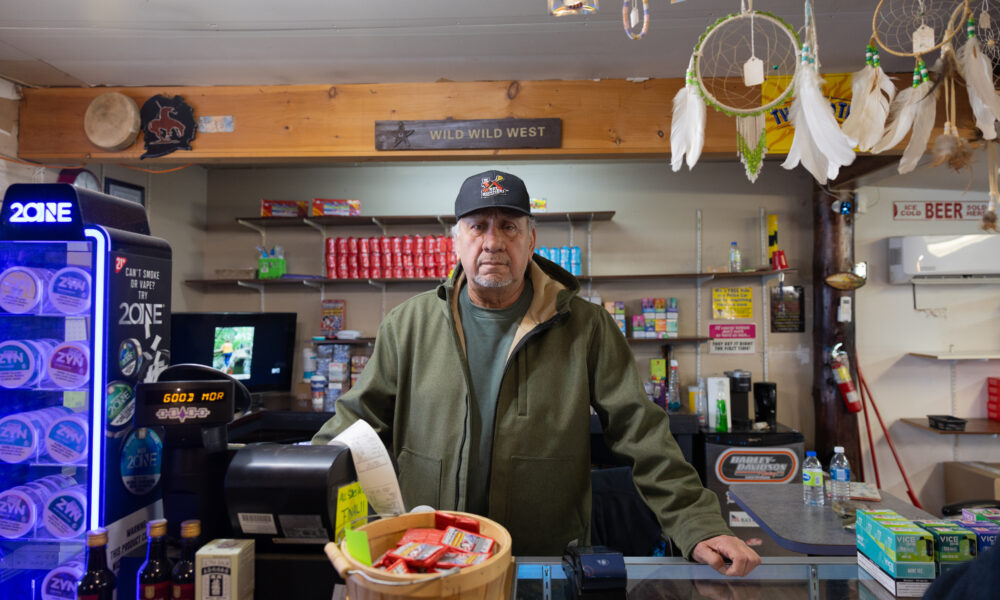
On a strip of land in Kahnawà:ke, where drivers speed toward the Honoré Mercier Bridge on Route 207, Jason Diabo’s Wild West Smoke & Vape shop now sits boxed in by a newly carved bypass road that diverts traffic from his storefront.

In October 2025, the Mohawk Council of Kahnawà:ke (MCK) issued Diabo an eviction notice. Since then, a rotating group of community members has gathered in their shop daily, prepared to intervene if enforcement arrives.  

For those keeping watch, the dispute is part of a concerning pattern in Kahnawà:ke: Years of opaque land deals, an industrial project involving contaminated soil, and the expanding jurisdiction of the MCK—whose authority, community members say, has stretched far beyond its original sphere.

“Do govern yourselves accordingly”: Diabo’s eviction notice

Diabo, who suffered from health issues following his work doing cleanup at Ground Zero, later invested his settlement into his roadside shop, which he has since operated for over 20 years. Diabo originally leased the land from a private owner under a five-year agreement, with the option to renew for an additional five years. 

In an interview with The Tribune, he shared that when MCK bought the land in 2013, the former owner stipulated Diabo’s renewal clause must be carried over. Instead, the council allowed his lease to lapse without negotiation. 

“They cancelled my contract in 2019. It was supposed to be renewed after five years, [but] they didn’t ask me to renew,” he said. “They said my lease is terminated […] with no just cause.”

The eviction letter, obtained by The Tribune, gave Diabo 30 days to vacate the property or face removal by “any and all remedies available,” at his own cost and expense.  

According to Diabo and several residents present during The Tribune’s visit to Kahnawà:ke, the MCK and Tewatohnhi’saktha (Tewa), the Economic Development Commission of MCK, used community funds of around $1.3 million CAD to purchase the 17-acre lot on which Diabo’s shop lies, without holding required consultations with the community.

“I invested all my money in this place,” Diablo said in an interview with The Tribune. “I built this whole place with my partner, literally with our hands.”

Diabo’s niece, kwetiio, is one of the Kanien’kehá:ka Kahnistensera (Mohawk Mothers), the group currently in a legal dispute with McGill over allegations of unmarked Indigenous graves on campus. kwetiio has been helping her uncle navigate his potential eviction. She shared that the MCK’s lack of consultation with Kahnawà:ke community members violates Mohawk consensus-based protocol under the Haudenosaunee Great Law of Peace, which the Band Council has pledged to uphold.  

“When land is purchased from a person with a certificate of possession, the land process is that it goes back to the people, not to a corporation like Tewa or MCK. It is supposed to be for the use and enjoyment of the people,” kwetiio clarified in a written statement to The Tribune. “In this case, the community was never consulted.”

For MCK to make land decisions, it must acquire a Band Council Resolution to submit to Indigenous and Northern Affairs Canada for approval. kwetiio told The Tribune that these kinds of resolutions should be brought to the community for discussion, but MCK did not inform the community.

Furthermore, it was later revealed in court that Tewa and MCK had made an agreement with the Quebec government, under which Quebec would return land acreages to the Mohawk community—land that already belongs to the Haudenosaunee—in exchange for no interference with Transport Quebec’s construction plans for Route 207.

“When asked in court, Marissa Leblanc (executive of Tewa operations) said that Tewa could be leasing the land to someone and collecting revenue if Jason vacated the premises,” kwetiio wrote.

Other residents reaffirmed this sentiment in interviews with The Tribune, stating that MCK’s acquisition and eviction procedures in Diabo’s case illustrate a broader pattern of council decisions being made without community consent. 

Diabo’s eviction notice itself ended with a final line that some residents described as “threatening”: “Do govern yourselves accordingly.”

Band Council and traditional governance

While the MCK operates as Kahnawà:ke’s official governing body under the Indian Act, its authority remains a subject of contention. The Act imposes a federally designed band council system—accountable to the Canadian government—on Kahnawà:ke’s community, rather than using the consensus structure outlined in the Great Law of Peace, in which clan mothers select chiefs

Many Kahnawà:kero:non—Kahnawà:ke community members—argue that major land decisions, including purchases, leases, and industrial agreements, must follow these principles of collective choice instead of Indian Act procedures, which they view as colonial administrative structures rather than structures of legitimate governance.

“The Band Council creates the illusion that they can make laws, that they can sign on our [communal] behalf, […] [but] they’re not lawmakers,” kwetiio said. “They don’t have any legislative power. They don’t have power over us as individuals.”

“It sounds like a conspiracy movie”: Residents fear a hidden industrial agenda

MCK has publicly described the highway project built outside of Diabo’s shop as water and sewer infrastructure improvement for residents in the area. However, residents believe the project has an unpromoted purpose: Enabling industrial truck traffic linked to the JFK Quarry company, a gravel and asphalt operation just down the road. 

Several residents said they were unaware of any agreement between the MCK and the JFK Quarry company involving contaminated soil until documents suggesting a relationship were circulated at a recent council meeting. Solterra, an environmental services company, lists the JFK Quarry company site in Kahnawà:ke on its website as a “coming soon” contaminated soil facility.

The Tribune could not independently verify the documents pertaining to an alleged contaminated soil agreement between the MCK and the JFK Quarry company, and the MCK did not respond to request for comment in time for publication. 

“Why is this so important, my little spot I have here?” Diabo asked. “It’s because of [MCK’s] highway. They want to modify the highway so over 30,000 trucks can pass here within the next 30 to 40 years to fill the quarry with contaminated soil.”  

Concerns about contamination are not isolated to Diabo’s property. In April 2025, The Eastern Door reported that families living near the JFK Quarry company site have suffered rashes, persistent coughing, nosebleeds, and dust coating their houses and yards. Some community members such as Kerry Diabo also mentioned independent testing results in conversations with The Tribune, indicating that their groundwater samples showed elevated manganese levels—which pose serious health threats, especially for children. 

“[Manganese is] all over this area […] [in] the air, the trees, the water,” while pointing toward land he remembers playing on as a child. “Vegetation doesn’t grow [anymore].”

Jason reaffirmed this, describing the environmental effects already taking place on the land.

“There was all this wildlife, […] turtles that used to lay eggs underneath my porch. No more because of the road.” 

The MCK’s selective enforcement and unclear authority 

Residents also expressed frustration with what they view as heavy-handed MCK enforcement in Kahnawà:ke land disputes, with MCK relying on Band Council-appointed, police-like Peacekeepers. kwetiio recounted a situation where officers entered her property during a cannabis-related dispute. 

“They came in like they were on Spike TV,” she recalled. “Instead of serving us properly, they made an example of us so nobody else would assert their rights [….] When they came on [my mother’s] land […], she [said], ‘I thought you’re supposed to be peacekeeping.’ [They] said, ‘Nope, we’re police’ [….] They train with the RCMP.” 

Diabo’s eviction notice stands in uneasy contrast to how other land disputes are handled in Kahnawà:ke. In a 2020 letter reviewed by The Tribune, the MCK informed resident Angus Brian Lahache, who was involved in a private encroachment dispute, that the MCK “does not currently have a judicial mechanism” for civil matters, advising him to seek recourse through the external Quebec court system. Residents argue that this inconsistency—strict enforcement in some cases, deference to outside courts in others—leaves individuals feeling both overpoliced and underprotected, with no clear path for resolving disputes. 

“My uncle, every day, lives with this [uncertainty],” kwetiio said. “He wakes up wondering, ‘Is today going to be my last day of work?’”

Beyond Route 207

As work on Route 207 continues and community mistrust of MCK lingers, residents say their daily presence at Diabo’s shop is both practical and symbolic: A refusal to let a community member face eviction alone, and a challenge to Band Council decision-making processes that they view as undemocratic. For them, community is not an abstract value, but an active practice that entails mobilizing, showing up, and demanding that major developments reflect collective will.

“[We] don’t have the luxury of not asserting [ourselves],” kwetiio said. “Because then, we would be non-existent.”

Across the river, McGill’s ongoing legal battle with the Mohawk Mothers has raised similar questions about the sincerity and integrity of Indigenous consultation, and about whose voices are heard and respected in land-related decisions. In both cases, the stakes are about more than one building or one project; they concern the meaning of Indigenous community governance and the obligations of institutions operating on unceded territory. 

The Route 207 dispute is one more reminder that community is not something simply invoked at ceremonies or in land acknowledgements, but something negotiated—and defended—every day.

“[The Band Council has] no business to do what they’re doing,” one resident shared. “They have to ask the people, and they didn’t.”

A previous version of this article more broadly described the certificate of possession process, stated that the MCK used community funds of around $2 million CAD to purchase the 17-acre lot on which Diabo’s shop lies, and did not mention Tewatohnhi’saktha’s specific involvement in land purchasing in Kahnawà:ke. In fact, clarifications from kwetiio were necessary to accurately inform paragraphs 9, 12, 13, 14, and 15, and to adjust the community funds figure to $1.3 million CAD. The Tribune regrets these errors.

Science & Technology

Vroom! Reintroducing McGill Formula Electric

If you’ve walked through the McConnell Engineering Building, you may have wondered why on earth a racecar sits in the centre of the lobby. It seems vaguely fitting—after all, it is the engineering building—but the central questions remain: Who built it, and why?

The answer: McGill Formula Electric (MFE). 

MFE is McGill’s Formula One team. It competes in events organized by the Society of Automotive Engineers (SAE), with the season culminating in a key competition each June in Michigan.

At MFE’s workshop, U3 Electrical Engineering student and team captain Raj Kirpalani, and the team’s technical program manager Lora Izambard, U3 Mechanical Engineering, detailed the inner workings of the mysterious team that lurks in the McConnell basement in an interview with The Tribune.

“When people think about Formula One within a student context, they think Formula One with a slightly smaller car, which is actually not really exactly how it goes,” Kirpalani said. “It is still a very formula-styled car, especially when it comes down to the engineering of it. Things like the aerodynamics and the vehicle dynamics, they stay very similar.”

However, in Formula SAE events, speed is not the only important metric. 

“The competition’s goal is really to create well-rounded engineers at the end of the university cycle,” Izambard explained. “Because it does teach you about the actual technical engineering, but you also need to have a very strong background in project management, overall organization, managing the budget, managing logistics, [and managing] a lot of business and commercial relationships.”

The competition is split into seven categories, only four of which involve the car actually moving. There is an acceleration event—a 75 metre dash, if you will—and a 22 kilometre endurance event. A ‘Skid pad’ event measures cornering capabilities, and, lastly, teams compete in the traditional ‘Hot Lap’ race around the track.

After months of designing, manufacturing starts with a bang during an intensive, month-long chassis layup session; over these weeks, the team works 24/7 to build the structural frame for the car. While most North American university teams rely on welded steel-tube skeletons, MFE boasts a carbon fibre monocoque. This single-piece frame allows their final design to be lighter with increased torsional rigidity, helping the frame resist twisting under pressure. 

Next, each subteam attaches its pseudo-independently constructed systems to the chassis, ultimately creating a functional car. The team then tests the car until competition season arrives. 

By competition season, a central transition has occurred: What starts as a muddle of 400 general members—with disciplines ranging from engineering and computer science to business and history—grows into one cohesive community. 

“MFE feels like a very close-knit family where, especially when the workload gets very tough, I think we lean a lot on each other,” Kirpalani explained. “I think a lot of people would think that if you get so involved in the design team, you might lose out a bit on that side of your social life [….] I would almost say it’s the opposite […] [MFE] kind of becomes a friend group in and of itself.” 

The MFE community, however, is decidedly male-dominated. While women make up 35 per cent of McGill engineering students, they account for 25 per cent of the MFE team leads. They are actively addressing this by implementing women-only workshop sessions and collaborations with groups like POWE McGill

“It’s one of my personal life battles, getting more girls on the team,” Izambard said. “I want to keep emphasizing that we’re super open, and that […] we actually need more women.”

Still, MFE works to foster feelings of belonging. They host social events for members, have holiday traditions, and participate in events like Engineering Frosh

“We have an award ceremony at the very end of every competition, at the Airbnb, just for us. And it’s cute awards like ‘rookie of the year,’ stuff like that, to really bring us together.” Izambard said.

While many join teams like MFE with their resumes in mind—many of the leads intern at companies like the Canadian Space Agency, Tesla, and Astranis—MFE’s sense of community is what keeps people coming back year after year.

As Kirpalani said, “You come for the CV-building and the technical [skills], but you stay for the family.”

MFE is hosting a competition for its car’s wrap design, with submissions open until Dec. 10.

Album Reviews, Arts & Entertainment, Film and TV, Music

The Tribune presents: The best/worst of 2025

Best: Music

Deadbeat by Tame Impala – Alexandra Lasser

Tame Impala’s latest album, Deadbeat, introduces hypnotic beats and bold electronic psychedelia. The album opens with “My Old Ways,” where Kevin Parker, the musician behind Tame Impala, laments his inability to progress and evolve, instead sinking into his old habits and mindset. This song introduces the strange pessimism that pervades the album as Parker emphasizes feelings of loneliness, isolation, and being an outcast. Instead of being ashamed of this, he wears his perceived lowly status as a badge of honour, with the track “Loser,” proudly and repeatedly labelling himself as such. Deadbeat contrasts vulnerable lyrics with Parker’s usual aloof beats and synthesizers, creating his signature, unique effect of distant sensitivity. 

In the five years since his last album, Parker produced pop hits for Dua Lipa, wrote for various movie soundtracks, and worked as a DJ. Deadbeat reintroduces Tame Impala as a solo artist and songwriter, delivering an immersive experience of self-affirmation through Parker’s musical style.

Mark William Lewis by Mark William Lewis – Annabella Lawlor

Have you ever longed for a little more harmonica in your life? With a metallic sharpness and a sonorous hum that resonates loudly atop every melody it encounters, Mark William Lewisself-titled record from this September is the record to turn to. The project is both vibrant and mellow, cruising through its jiving soundscapes with tender lyrics and disposition. 

London-based Lewis became the first artist signed to A24’s music label in June, marking the artistically ambitious production company’s new ventures into music entertainment. Embedded in London’s sounds of dark, avant-garde grooves, his latest record is a remarkable work that drips in style. You can feel the brisk chill of these English nights on the terrific “Tomorrow is Perfect” and a cavernous hunger for memory on “Silver Moon.” Having had the chance to see Lewis play these tunes at L’Esco on Nov. 12, I’ve never cheered louder for someone playing a little metal box.

Best: Film & TV

Bugonia (Yorgos Lanthimos) – Annabella Lawlor

A thrush of symphonic bees looms outside an unassuming American suburbia. Beneath its quaint architecture lies a secret: The kidnapping of pharmaceutical corporation CEO and culturally renowned girl-boss, Michelle Fuller (Emma Stone). Cousins Teddy (Jesse Plemons) and Don (Aidan Delbis) hold Fuller captive in their dank basement, accusing her of being an Andromedan, an alien occupying Earth to destroy the human race.

Bugonia is a glorious and unflinching film: Disturbing in its moments of torture, heart-wrenching in its exploration of Teddy and Don’s familial past, and startling in its uncompromising vision of our reality. Director Yorgos Lanthimos, known for films like Poor Things and The Lobster, produces a perturbing spectacle of life. 

Stone, Plemons, and Delbis deliver stunning embodiments of their characters. Ranging from calculated composure and cruel outbursts to heartbreaking misery, Plemon’s performance is the most unbelievable feat of the film. Bugonia’s marvellous encapsulation of our contemporary cultural anxieties makes it one of the most unforgettable films of the year.

Chainsaw Man — The Movie: Reze Arc – Bianca Sugunasiri

Based on Tatsuki Fujimoto’s manga Chainsaw Man, this animated Japanese film tiptoes the lines of horror and romance in a devastating dance. Chainsaw Man — The Movie: Reze Arc followsReze and Denji as they are ripped from innocence and mutilated into weapons. Groomed by the Soviet Union to capture his heart, Reze entraps Denji in her affections, only to falter as her own fragmented upbringing is reflected in his gaze. Whilst extorted for their militarized abilities, Reze and Denji flounder in their mislaid affections. 

The film’s animation is boundlessly talented, capturing a breathtaking cacophony of explosions at one moment, and the stillness of a quiet pool punctuated by muted laughter at another. However, it was the score that came alive, plunging into my chest and squeezing until my tears flowed freely. Soft, haunting piano keys caressed like whispers of a childhood never to exist beyond moments submerged underneath the rain. Aching pulls at violin strings barely allowed me to take a full breath. Quivering notes held every word unspoken, echoing long after the theatre was empty. 

Worst: Popular Culture

First AI artist on the Billboard Charts – Alexandra Lasser

Xania Monet, an Artificial Intelligence (AI) singer created by Telisha Jones, hit No. 30 on Billboard’s Adult R&B Airplay chart in the first week of November with the song “How Was I supposed to Know.” The artist amassed 1.4 million listeners on Spotify and is now signed with Hallwood Media in a $3 million USD record deal. Monet demonstrates the profitability of AI artists, having already released two albums and countless singles since her creation in July. This milestone represents the threat of AI technology to authenticity in the music industry.

Jones insists, however, that there is humanity behind the music, using Suno to create songs around her poetry. Spotify CEO Daniel Ek defended his decision not to label AI music, noting it makes music production accessible to beginners. Monet’s success signals a new era for music listeners, who will need to be consciously aware of the music they consume. AI as a tool for self-expression or as a profitable alternative to real artists remains a central question in discourse around AI music.

Worst: Music

The Life of a Showgirl by Taylor Swift – Norah Adams

Taylor Swift dropped her 12th studio album this past October. Before the release of The Life of a Showgirl, she teased fans with images of herself adorned in jewels and feathers, her eyes shining pensively with reflection of her life. 

The Swiftie community rumbled with anticipation, her longtime listeners eager to receive an album, expressing how both they and Swift have matured over the course of her career. Instead, what Taylor Swift gifted to fans was a disingenuous group of songs wrought with internet lingo and mentions of her meathead football boyfriend. 

The pop star’s lyrics sound like an AI-generated imitation of her previously poetic songwriting. In “Cancelled,” she sings, “Good thing I like my friends cancelled / I like ’em cloaked in Gucci and in scandal.” 

What sets this album apart from her others is that it is not just the public who dislikes it—as with her previous album, The Tortured Poets Department—but also Swifties. Her newest album has left us all wondering if maybe the show shouldn’t go on.

Worst? Best?: Popular Culture

Labubus – Norah Adams

Despite standing just 22 centimetres tall, the Labubu made massive waves this year. Designed by Hong Kong-born and Netherlands-based artist Kasing Lung, the fluffy keychain monsters gained popularity after Lisa from Blackpink was spotted with one clipped to her bag. Labubu quickly surpassed being a fun toy and reached internet fame. 

TikToker Jungle Pops made a viral satirical video claiming to own “the one and only 24k gold Labubu […] the most expensive Labubu in the world.” With a $55 CAD price tag, many wishing to participate in the trend bought knock-off versions, and fast fashion brands began slapping the Labubu face on everything. Mounds of these items ended up in landfills after the trend died down.

Labubu is beneficial to us all this year, as it serves as a reminder of how quickly trends can become harmful. In a world where memes are not just funny jokes among friends, but prompts to consume, Labubu can teach us how to keep memes online and in conversation, and off our credit cards.

Love Island USA – Malika Logossou

Season seven of Love Island, a reality dating show, temporarily became the internet’s obsession this year. Contestants live in a secluded villa under constant camera surveillance and must repeatedly recouple to avoid elimination through viewer votes. Memes, TikTok edits, songs, and host Ariana Madix’s ever-changing outfits made the season a shared cultural experience. However, the premise of finding love was replaced by lust and performative drama, as contestants appeared more focused on winning voter approval than forming genuine connections. 

Of the final couples—Huda Mustafa and Chris Seeley, who split during the finale, Pepe Garcia and Iris Kendall, Amaya Espinal and Bryan Arenales, and Olandria Carthen and Nicolas Vansteenberghe—only the last pair remain together. The winning couple, Espinal and Arenales, barely lasted one month in the real world. 

Student Life

Amnesty McGill panel highlights the urgent need to address Sudan’s ongoing genocide 

On Nov. 26, Amnesty McGill hosted a speaker panel that brought attention to the ongoing genocide in Sudan—an issue that remains largely absent from mainstream media coverage. The panel featured Professor Jon Unruh from McGill’s Department of Geography and graduate student James Achuli, both of whom study conflict and development in East Africa. Together, they provided important context regarding the history behind the violence in Sudan today, why the conflict has continued, and what makes peace so difficult to achieve.

Amnesty McGill co-president Anna Sophia Everett, U3 Arts, opened the panel, welcoming attendees and introducing the two speakers. 

In an interview with The Tribune, Everett explained why a panel like this matters; actively raising awareness about Sudan is crucial because many students simply do not learn about the crisis anywhere else.

“There’s not any immediate benefit for a Global North actor to involve itself in a conflict like this,” she said, pointing to how geopolitical interests—rather than dire humanitarian need—tend to drive international intervention.

During the panel, Professor Unruh walked students through the history of conflict in Sudan. He explained how Arab militias’ seizure of land from Black farming communities, government corruption, and the rise of armed groups have all contributed to large-scale violence and displacement. He traced how the genocide is inflicted and targeted upon Black, non-Arab ethnic groups, a pattern that began with the Janjeweed militias under al-Bashir and continues today with the Rapid Support Forces (RSF), many of whose fighters were former Janjaweed members. He stated that groups were pushed out of their land, farming communities were neglected, and the interests of colonial powers—including the pursuit of gold and other resources—made the region even more unstable.

Unruh emphasized that stories and messaging play a major role in framing the conflict as militia groups in Sudan seek to justify the acts of violence they commit. 

“Narratives prevail in conflict,” he said. “Each group in the armed conflict has a narrative, a story they tell themselves. It’s a narrative of grievance always. They’re the victims, and those people over there are at fault against us.” 

Unruh emphasized that the presence and messaging of organizations like Amnesty International can reshape conflict dynamics in unexpected ways. While Amnesty’s reports are directed at international audiences—calling for sanctions or intervention—combatants in the field hear them too.

“Even the presence of Amnesty International, [a] well known and powerful group with a powerful voice internationally, weighed in here,” he said. “Even when the organization is simply present in a conflict zone, its reputation in messaging can influence how combatants frame their own actions.” 

While Amnesty International’s messaging was aimed at the international community—calling for sanctions and intervention—it had an unintended effect on combatants in the field who were listening, too. When news of al-Bashir’s indictment for war crimes filtered down to Janjaweed fighters, it disrupted their narrative—suddenly, they questioned whether they would actually keep the land they’d seized through violence. The threat of accountability, even if distant, altered calculations on the ground, he explained. Without mechanisms to hold perpetrators responsible, crimes against humanity fueled by anti-Black racism remain unchecked.

After Unruh’s presentation, the panel opened the floor for questions. Students asked about the role of international actors, how climate and land use shape conflict, and what meaningful intervention could look like. The discussion gave attendees space to connect Unruh’s analysis to other humanitarian issues unfolding today.

When asked about the relationship between the UAE and the RSF, Unruh traced the connection back to Yemen.

“The RSF actually loaned itself out to the UAE in its international conflict,” he explained. “These are Sudanese fighters that ended up fighting at the behest of the UAE in Yemen.” That relationship, he noted, evolved into an arrangement in which gold flows out of Darfur and weapons flow back in.

The second speaker, James Achuli, began by grounding the conflict in lived experience. He explained how decades of instability in Sudan and South Sudan have shaped daily life for families in the region, especially those who have endured multiple experiences of displacement. He explained that displacement is not just a single event—it fractures communities, interrupts education, separates families, and forces people to rebuild their lives with very few resources or guarantees of safety.

Achuli also spoke about the difficulty of creating long-term stability. In his opinion, international actors often respond too slowly or focus on short-term relief rather than supporting structures that foster lasting peace. He stressed that real change cannot come from the outside alone—peace requires both global engagement and local leadership to have sustainable results. 

“It’s up to the South Sudanese people and an international community coming together to create genuine peace in South Sudan,” he said.

To close, Achuli emphasized the importance of humanitarian aid and how organizations like UNICEF help by providing basic literacy, teacher training, and safe spaces for children in Sudan. After his remarks, the floor was once again open for discussion, giving attendees the chance to ask further questions.

During the question period, Achuli was asked more about his personal story. He shared how he grew up when Sudan and South Sudan were still one country, spending his youth in a southern region where educational infrastructure was severely underdeveloped relative to Sudan’s capital, Khartoum. The disparity was a legacy of colonial-era policies that had systematically marginalized southern Sudan, leaving communities without the schools, teachers, and resources that were more readily available in the capital. While the British developed government schools in the north, they left education in the south to Christian missionaries with minimal resources. This colonial policy heavily invested in northern Sudan, creating pervasive disparities. By the time Achuli was born, southern Sudan remained one of the country’s most underdeveloped regions. When civil war erupted in 2013, he was just ten years old and found himself internally displaced, separated from his family while trying to continue his education.

His story underscored why events like this panel matter: They connect abstract policy discussions to the real experiences of those affected by conflict. Closing his remarks, Achuli addressed the event attendees directly. 

“When you sit in here, I’m wondering, what are you going to do with this information?” The question reframed awareness as a responsibility—not an endpoint, but a call to action.

In an interview with The Tribune, Everett shared what makes Amnesty McGill distinct on campus. She explained that the club offers a space where students can engage with human rights issues beyond academic analysis in a class setting. 

“I love school, I love academics,” she said. “But I think the best part about Amnesty is really focusing less on putting the perfect spin on something or trying to analyze it.” 

She stated that Amnesty’s strength comes from pairing strong research with meaningful advocacy. What matters most, she added, is the commitment of the students who attend.

“The nice part is that people do show up. They really care. It’s more so feeling like you’re taking an action on a day-to-day basis, even if it’s on campus.” 

The event elucidates the criticality of keeping conversations about Sudan visible at McGill. By creating space for students to learn, ask questions, and hear from experts, Amnesty McGill aims to highlight a deeply pressing genocide, transforming a conflict that is often ignored by mainstream media into a campus conversation that demands response. As Unruh emphasized throughout his presentation, narratives—including the stories combatants tell themselves, the frameworks international actors use to justify intervention or inaction, the language that shapes whether atrocities are recognized or minimized—determine how conflicts unfold. Keeping Sudan visible on campus is the first step toward holding institutions accountable for their role in perpetuating violence.

McGill, News, SSMU

New campus food initiatives aim to fill the gap Midnight Kitchen’s closure left

On Oct. 27, the Students’ Society of McGill University (SSMU) launched a free vegan lunch program, offered Monday through Friday from 12:30 p.m. to 2:30 p.m. on the first floor of the University Centre. Students can pick up a meal as part of SSMU’s efforts to address food insecurity on campus. The current program was established after SSMU closed Midnight Kitchen—a student collective known for its free lunch service—on Oct. 1. This semester, meals are prepared by a catering company; SSMU is working towards a permanent lunch service run by a Food Services & Hospitality Manager that would operate out of a kitchen space in the University Centre.

In a written statement to The Tribune, SSMU President Dymetri Taylor outlined the current program’s timeline and plans, highlighting that it could extend into the Winter semester depending on the success of an alternate plan for replacing Midnight Kitchen. 

“[The program will] run until December 12th, as that’s the last day that the University Centre is open for this semester,” Taylor wrote. “It may continue to run during the Winter semester, depending on whether it’ll be possible for 5-meals/week to be served out of the 3rd floor kitchen space [by the Food Services & Hospitality Manager].”

Taylor explained that the SSMU has received frequent feedback on how to improve the current program, whether it be requests for larger serving sizes, or concerns about the ingredients used in meal preparation. One of the most common suggestions—asking that SSMU increase the number of meals offered—prompted the union to expand the program. 

“Initially it was 100 meals, increased to 125, and we will now be increasing to 175 meals/day starting next week (total of 875 meals per week),” Taylor wrote. “The frequency is going to remain at lunch servings once per day.” 

Taylor added that SSMU evaluates the program’s success by monitoring daily turnout.

“[Our measure of success is] that all the servings each day are gone and there’s no one left at the end of the serving without food,” Taylor wrote. 

Student reactions to the program remain mixed. One student who has attended the lunch program several times, who wished to remain unnamed, shared concerns about SSMU’s ability to adequately replace Midnight Kitchen in an interview with The Tribune

“I don’t think [the lunch program] fulfills the needs that Midnight Kitchen once provided [….] I’ve gone [about] four times now, on different days, and the [SSMU] portions are significantly smaller [than Midnight Kitchen’s], and you’re only given one meal option,” they said. “There’s no […] side salad, there’s no […] dessert.”

The student also emphasized the loss of a sense of community that Midnight Kitchen’s closure has created.

“Midnight Kitchen was great because it was also […] a collective effort of students making [the food served]. Now it’s a catering company that [provides the SSMU meals], and so you kind of lose that sense of community [….] The community and social justice aspect is completely gone.”

Maria Konovalov, U3 Arts, echoed these concerns about the quality of food SSMU is serving through its new lunch program in an interview with The Tribune.

“What I do like is that [the program] is daily. However, what I will say is that I have eaten there twice, and I will not go back because the food fully made me nauseous,” they stated. “There’s no dessert, [the food is] unseasoned [….] I really do hope that [SSMU will] improve the quality of their food.” 

The Arts Undergraduate Society of McGill (AUS) has also piloted its own initiative in response to the demand for accessible meals on campus following Midnight Kitchen’s closure. On Nov. 21, the society test-ran its Food Security Program, offering 50 free meals to students in the Faculties of Arts and Arts & Science who registered in advance through AUS Express for pickup from the Arts Lounge.

For more information on McGill’s accessible campus food services, consult SSMU’s Free Lunch Program schedule and menu, and the AUS Instagram @ausmcgill.

Research Briefs, Science & Technology

Uncovering Parkinson’s disease

Parkinson’s disease (PD) results from the progressive loss of specific brain cells responsible for movement. As these neurons deteriorate, patients experience tremors and difficulty with balance and coordination. Although treatments can alleviate specific symptoms, nothing slows the progression of the disease. Projections estimate that by 2031, approximately 163,000 Canadians will be living with Parkinson’s, emphasizing the necessity of effective therapeutic options. 

PD is often associated with aging, as most patients are diagnosed after the age of 60. However, some patients develop symptoms decades earlier. Early-onset Parkinson’s—which develops before age 50—puts patients at a particular disadvantage because they live with the disease for longer and consequently face limitations during important stages of adulthood, often experiencing heavier emotional and economic burdens.

Sabrina Romanelli, a third-year PhD student in Pharmacology at McGill, is currently working in the Trempe Lab to better understand the molecular factors that drive this form of Parkinson’s.

“I really wanted to work in PD research because my grandmother had the disease [….] I saw her go through it, and I understood the toll that it takes on people, and the way that people suffer with the disorder,” Romanelli said in an interview with The Tribune.

The Trempe Lab concentrates on early-onset Parkinson’s by studying two proteins: PINK1 and Parkin. These proteins maintain the health of the mitochondria. Under normal conditions, the mitochondria powers cellular functions; however, when mitochondria become damaged, they generate harmful by-products that can cause neuron death. PINK1 detects the damage, stabilizes on the surface of defective mitochondria, and signals that it must be eliminated. Parkin then follows this signal and clears the defective mitochondria. Mutations in either PINK1 or Parkin disrupt this process, preluding to early-onset Parkinson’s.

McGill researchers are particularly interested in how PINK1 stabilizes on damaged mitochondria long enough to activate Parkin. The TOM complex, a protein structure responsible for transporting proteins into mitochondria, is at the heart of this process. One of its subunits, TOM7, may help hold PINK1 in place when mitochondria are damaged; in the absence of TOM7, PINK1 fails to function.

“I’m trying to better understand how PINK1 is able to interact with this complex,” Romanelli said. “And the reason why this is so important is because the PINK1-TOM complex has become this key therapeutic target for Parkinson’s disease.”

The Trempe Lab currently studies how TOM7 influences PINK1’s behaviour to determine how this subunit affects PINK1 stabilization.

“One thing that I’m doing is taking wild type cells and cells that have TOM7 not present and running that on mass spectrometry to see if there’s any key differences between the conference composition of the cells,” Romanelli explained.

Studying PINK1 is challenging because the protein is unstable under normal conditions. Cells rapidly degrade it when mitochondria are functioning normally. As a result, experiments require timing and careful manipulation of mammalian cells, which can be unpredictable and sensitive to their environment. Despite this, mammalian cell systems are essential for Parkinson’s research because they are comparable to the characteristics of human neurons.

“I think it’s an important field to study primarily because […] as the population keeps aging, we are going to see more people being diagnosed with neurodegenerative diseases,” she said. “But I think what’s really good about our lab is the fact that we’re focusing on early-onset Parkinson’s, […] because these people have to suffer with the disease for longer periods of time.” 

Studying the interactions between PINK1 and the TOM complex has important implications for future therapies. The PINK1-TOM7 connection is a promising therapeutic target, and drug candidates may already be affecting this pathway. However, without a good understanding of how PINK1 stabilizes on mitochondria and initiates the removal of damaged components, drug design remains challenging. Understanding this mechanism could allow for the development of treatments that act preventively rather than mitigating existing symptoms.

“What I would want people to take away is the fact that basic research could be very powerful. It starts at the lab bench,” Romanelli said. “I won’t find a cure in my PhD, but hopefully my PhD will bring us a step closer to a cure.”

Arts & Entertainment, Film and TV, Theatre

Double, double, Oz is in trouble!

The releasification occurred on Nov. 21 at the 13th hour on the silver screen downstage-right of the Time Dragon Clock—the direct result of adaptifying Act One of Academy Award-winning composer Stephen Schwartz’s stage classic into a movie musical. Yes, the second act of WickedWicked: For Good—is officially in theatres. Thank goodness

I couldn’t be happier. No less than a clock-tick later, the truly wonderful Wicked has us off to see the Wizard once more. Come out, come out, wherever you are, and rediscoverate the death-defying conclusion of Elphaba’s origin story, now soaring to the gravitas of a $150 million USD budget. Audiences everywhere are obsessulated with the indelible blonde of female friendship and the extraordinary brains, heart, and courage required to set the merry old land of Oz back down its rightful yellow-bricked path. Wicked: For Good is an invitation to reinvestigate the poppylar understanding of technicolour Oz through new eyes and ruby-tinted glasses.

Wicked: For Good opens with the newly arranged “Every Day More Wicked,” a series of brief first-act song reprises—including “No One Mourns The Wicked,” “The Wizard and I,” “What Is This Feeling?” and “Popular.” They reacquaint audiences with everything that’s transpired since Wicked, making it clear we’re not in Kansas anymore

It really was no miracle; what happened in the film was just this: Hiding deep in the forest, thick with shadows, Elphaba flies on her broomstick. She tries to warn the Ozians of Madame Morrible’s tricks. MM begins to flip into a Wicked Witch! Fiyero, Gale Force captain, hopes to find Elphaba and ditch. Glinda, now in politics, unveils roads of yellow brick. Lavender-wed Fiyero, Friends of Dorothy click-click-click! Ding-Dong! The Witch has fled! Which old Witch? The Wicked Witch! Ding-Dong! Will Elphaba end up dead? 

This opening sets a darker tone while establishing continuity with L. Frank Baum’s The Wonderful Wizard of Oz. Wicked: For Good undertakes the unlimited burden of offering narrative resolutions to these dissonant but intertwined stories; it incorporates Dorothy’s arrival and aligns the rainbow trajectory of Wicked author Gregory Maguire’s characters with Baum’s intended fates, without ever feeling contrived—oh my! Wicked: For Good needs to have all the convincing answers and deliver it asbestos it can.

With something oldish, something new, something battered, something askew, Wicked: For Good reveres the integrity of the stage classic while expanding its world through the addition of two original, politically resonant solos. Elphaba’s “No Place Like Home” and Glinda’s “The Girl in the Bubble” honour the intentions of Maguire’s political critique by framing Oz’s authoritarian regime through a dual lens: One of resilience, as Elphaba searches for hope in times of despair, and one of responsibility, as Glinda awakens from her political apathy to confront the systems of injustice that her privilege upholds. 

Elphaba’s central lament in “No Place Like Home”—“Why do I love this place that’s never loved me?”—captures the grief of holding space in your heart for a society beyond redemption. It’s a perseverance born from love, the defiant will to forgive a homeland that has systematically marginalized her since birth. Glinda’s solo marks a pivotal turning point as she awakens to the hollowness of her complicity in an emerging fascist state—a world gone to Shiz enabled by the fragile comforts her willful ignorance affords. In choosing to become “Glinda the Good,” she sacrifices privilege for principle, illustrating that moral clarity demands personal sacrifice—that in Oz, as in our world, no good deed goes unpunished.

The Wicked duology represents the culmination of a 22-year-long theatrical legacy—a love letter to the generation it raised—crafted by the community that cherished it. It’s a rare milestone: A passion project that celebrates the storytelling tradition and the enduring magic of stagecraft. It’s not just good, it’s great and powerful. It’s a gift to the theatre world that proves pink goes good with green. Who can say whether all its changes have been for the better? One thing is certain: The wonderful world of Oz has been changed—for good.

Baseball, Cross-Country / Track, Field Hockey, Football, Golf, Lacrosse, Martlets, Men's Varsity, Rugby, Soccer, Sports

Varsity Report Card: Fall 2025

Redbirds Baseball: C+

A rebuilding year showed in Men’s Baseball’s final record: 11–18, with a tough 3–11 mark on the road and no conference play on the schedule entering fall nationals. The team’s strong 8–6 home record kept the season from slipping further, as did steady pitching flashes and an improved structure. However, inconsistency at the plate and difficulty stringing wins together made it hard for McGill to climb above a .500 win rate. This was not a lost year by any means; the team’s foundation was visible as its members tried to reaffirm their identity after key veterans graduated last season.

Men’s and Women’s Cross Country: A-

McGill’s Men’s and Women’s Cross Country teams delivered a strong and eventful fall. On the women’s side, Sophie Courville captured the individual RSEQ championship with an 8 km time of 28:29, becoming the first McGill women’s athlete to win the conference title since 2016. The women’s team also opened their season by winning the 6 km McGill Invitational out of a nine-team field, led by Sienna Matheson’s silver and a bronze by Courville. On the men’s side, the Redbirds secured third place as a team at the RSEQ championship meet, with a standout performance by the 14th-placing Sean Adams, who completed the 8km course with a time of 25:17. Between Courville’s breakthrough individual title, consistent depth from both the women’s and men’s top‑five scorers, and strong showings at key invitationals, the program demonstrates competitiveness and promise.

Martlets Field Hockey: B-

McGill’s Women’s Field Hockey squad faced a challenging fall, finishing with a single win: A hard‑fought 1-0 victory over the Queen’s Gaels on Oct. 19. While their season included some heavy losses, the team showed resilience and determination, especially defensively and through competitive moments against stronger opponents. Despite offensive struggles, their late‑season win demonstrates that the Martlets have grit to build upon and grow from. Their season was a testament to true dedication and sportsmanship. 

Redbirds Football: B 

Men’s Football finished 3–7 in RSEQ play, closing out a season defined by narrow margins and late-game swings. Despite ending with a five-game losing streak, McGill produced its highest number of U SPORTS First Team All-Canadians since 2002; running back Jerry Momo, defensive back Jahnai Copeland-Lewis, and offensive line Domenico Piazza all earned national honours. The talent at the team’s top end is undeniable—but converting that individual success into consistent team results remains Football’s next step. The Redbirds’ season was frustrating but not hopeless, with bright moments such as their upset victory over the Université de Montréal’s Carabins hinting at a stronger 2026 campaign.

Men’s and Women’s Golf: B

McGill Varsity Golf quietly put together a steady fall, as both programs consistently landed in the middle of competitive RSEQ fields. The Martlets finished third at Omnium 1, third at Omnium 2, and fourth at the RSEQ Championship. The Redbirds matched that stability with three straight fourth-place finishes, reflecting the overall team’s solid, but unspectacular, season. While neither team cracked the podium in the final standings, both showed improvement and stayed firmly in contention at every event, bolstered by some gargantuan performances from Astoria Yen—who was named Athlete of the Week and came third in the season’s overall rankings

Redbirds Lacrosse: A

The Redbirds delivered another top-tier campaign, finishing 9–3 overall and 8–2 in conference, powered by one of the Canadian University Field Lacrosse Association (CUFLA)’s most balanced offences. McGill looked like a title threat all season, dominating at home 5–1 and earning a semifinal berth at the Baggataway Cup. Their season ended in a gritty 15-12 loss to the Nipissing University Lakers, despite a hat-trick from midfielder Joshua Jewell. Still, the Redbirds saw five of their players make the CUFLA East Division All-Star Team, underscoring the team’s depth and the program’s continued national relevance. 2025 was a strong year for men’s Lacrosse, and the goal of winning a championship remains at the forefront of the team’s future aspirations.

Men’s and Women’s Rowing: B+

McGill Rowing put together one of its strongest fall campaigns to date, highlighted by their standout performance at the Head of the Rideau Regatta, where the Martlets captured the Kandahar Trophy as the top university program among 10 teams. The Head of the Trent Regatta offered the team valuable racing practice, though without scoring. At the Ontario University Athletics Championships, the Redbirds impressed with a fourth-place finish out of 14, while the Martlets battled through a deep field to place 10th. Both the men’s and women’s team seasons peaked at the Canadian University Rowing Association National Championships, where host team McGill held its own against the country’s best. The Redbirds finished 6th of 28 teams, and the Martlets 10th of 28. The rowing program enjoyed a competitive, upward-trending season that showcased depth and national relevance.

Martlets Rugby: B-

Women’s Rugby’s 1–5 record must not obscure one of the best moments of McGill Athletics’ semester: A miraculous 38–35 comeback over the Bishop’s University Gaiters to close McGill’s season, with the Martlets finally overcoming a 16-game losing streak. Behind by 21 at the start of the second half, McGill stormed back with four unanswered tries, capped by Evelyne Desmarais’s game-winning try and conversion in injury time. While the overall results reflect a rebuilding group, the team showed clear improvement in their structure, fitness, and attacking ambition. Ending the year with their first win since 2023 would have given the program genuine momentum moving forward, if not for the unprecedented cuts to the varsity cohort announced on Nov. 20.

Redbirds Rugby: A

McGill’s Men’s Rugby squad had quite a strong season, cruising to an impressive 73‑3 win over the Carleton University Ravens in their RSEQ opener and finishing with a 5–1–0 record overall—achieving second place in their conference. The season featured several standout performances: A 45‑19 win over the University of Ottawa Gee-Gees, where the Redbirds scored seven tries and a bonus point, and a powerful 50‑25 Hardy Cup victory over the Concordia Stingers that sealed McGill’s status as a top team. Notably, players Henry (Harry) Corkum and Brad Hunger both earned first‑team All‑Canadian honours for their offensive work and consistency. 

Martlets Soccer: B

Women’s Soccer had an up‑and‑down fall season, finishing with an overall record of 5–74, and a fourth‑place finish in the Réseau du sport étudiant du Québec (RSEQ). The team showed grit with a key 3-1 win on Seniors Day and during a 2-0 victory in their final regular‑season match to secure their postseason spot. But offensive struggles held them back for the majority of the season; with just 11 goals scored, their attack lacked consistency. Defensively, the Martlets held together well under pressure, giving themselves chances late in close games. In the end, their playoff qualification and resilience throughout the season impressed, but limited scoring kept the Martlets from notably advancing. 

Redbirds Soccer: B

The Men’s Soccer team had a season of mixed results, finishing 4–4–8 overall to land them just outside RSEQ playoffs. Their highlights included a 3-0 win over Université du Québec à Montréal’s Citadins, and strong individual performances from Lefika Noko, Esteban Roy, and freshman Romain Dallery. But inconsistency took a toll on the team throughout the season, with heavy losses, scoreless draws, and missed goal opportunities limiting their progression. Solid defence and standout players give hope for next year’s prospects, but the Redbirds ultimately did not advance as expected.

Sports Editor Clara Smyrski and Sports Staff Writer Jenna Payette are members of the McGill Women’s Field Hockey team, and Sports Staff Writer Zain Ahmed is a member of the McGill Men’s Rugby team. Smyrski, Payette, and Ahmed were not involved in the writing, editing, or publication of their team’s respective sections of this article.

Read the latest issue

Read the latest issue