


Latest News

Know Your Athlete, Soccer, Sports

Catching up with Noah Eisenberg

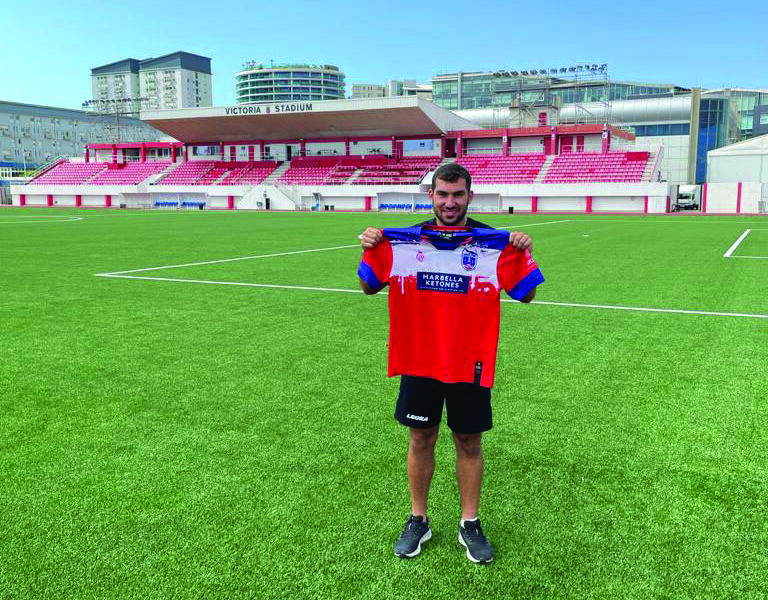
Former Montrealer turned professional soccer player Noah Eisenberg has moved on to a new stage of his career. After several stints in Belgium, Northern Ireland, and Wales, the 23-year-old has made it to the first division in Gibraltar, signing for Europa Point FC, who finished 10th in the Gibraltar League 2020-2021 season.

The new season starts on Oct. 17. Eisenberg will be playing for both the Europa Point FC, which competes in the Premier Division of the Gibraltar League, and the U-23 youth team which acts as a feeder for the first team’s roster. 

Because the Gibraltar league rules demand that at least five Gibraltar-born players be on the field at any given moment, playing time is limited for international players like Eisenberg. 

“[The club] has registered [international players] under 23 in both the U-23 and first team, [so that] we get the minutes to play [for the club],” Eisenberg said in an interview with The McGill Tribune.

Littered with obstacles created due to the pandemic, such as immigration restrictions and the protection of local leagues from an influx of international players, Eisenberg’s soccer journey in Europe has not been an easy one. The Montrealer considers the Welsh league’s move to reduce the number of international players to be an important factor in his move to Gibraltar. 

“I left Wales. There was no choice after Brexit [since immigration to Wales] became stricter with COVID-19,” Eisenberg said. “Between [Brexit and COVID-19] it was impossible to get a visa to play in Wales [….] [There is a push] to make the Wales league only for British players.” 

Fortunately, with the help of friends and his agent, Eisenberg’s transition to Europa Point FC was a smooth one. 

“I had a friend playing in Gibraltar who put me in touch with the owner [of Europa Point FC],” Eisenberg said. “In August [of 2021], the owner offered me a contract [for the new season]. I have an agent and we work together and when an opportunity comes, he negotiates [the contract] and finalizes the deal with the club.”

Playing in the first division in the Gibraltar league could give Eisenberg the unique opportunity to play in the Champions League, the Europa League, and the UEFA Conference League. 

“The first placed team [in the Gibraltar league] will qualify for the [preliminary rounds] of the Champions League. The second, third, and fourth will go to the Europa League,” Eisenberg explained. “Lincoln Red Imps [from the Gibraltar League] is currently competing in the UEFA Conference League. [The team] played against PAOK [from the Greek first division] last week, which is one of the best teams in the world.”

Although Eisenberg faces exciting challenges ahead of him in Europe, he hopes to return to North America to play soccer in the future. The newly formed Canadian Premier League is another option Eisenberg is open to exploring. 

“I have a list of goals for the near future. CF Montreal is definitely on my bucket list,” Eisenberg said. “Montreal would definitely be a place I would like to play in front of friends and family.” 

Eisenberg acknowledged that luck played a big role in a lot of opportunities he was afforded. For Montrealers who aspire to play pro soccer in Europe or North America, he advises hard work and dedication.

“Being good enough is not always enough,” said Eisenberg. “[You have got to be] at the right place at the right time [to] be as ready as you can for when that opportunity comes.”


Commentary, Opinion

SSMU’s failed activities night undermines its integrity

On Sept. 13, over 1,000 students barricaded the virtual entry doors to the Students’ Society of McGill University (SSMU)’s Fall 2021 Activities Night. Internet disconnection alerts flooded the screens of many confused students and club leaders. Although students might have anticipated a mediocre gaming platform with thousands of live participants to spell disaster, the degree to which the event failed was striking.

Activities Night is one of the most important opportunities for student involvement, especially this year, as student life makes a comeback following a year of remote learning. As the highlight of many students’ time in university, it is unfortunate that students were robbed of the chance to explore the broad array of student life at McGill. SSMU hosted the event on Gather.Town, a platform that allows users to walk around a virtual venue and send messages or start calls. However, the blame for the site’s technical failings should not be placed on its developers—it is common knowledge that online programs are prone to overload when flooded with users. Last year’s event was held on a different platform, Eventus, and did not experience mass technical difficulties. SSMU should have either tested the system prior to the event or at least had a backup plan, such as having prepared a list of organized Zoom links for each club or setting up a more reliable platform.

As a result, clubs were forced to find alternate avenues to interact. For example, some clubs posted their own Zoom meetings in the mass chat or on their individual social media accounts. SSMU did not immediately respond following the event, although they did post a blurry apology on a now-expired Instagram story and did dole out leftover Frosh goodies at a measly stand on McTavish. Karla Heisele Cubilla, SSMU vice-president (VP) of student life has since announced that a second Activities Night was on the way. 

Although it was logical to hold the event online to prevent the spread of COVID-19, SSMU illogically hosted a party at the Muzique nightclub the following day. SSMU has been pushing for the university to implement a vaccine mandate and other accommodations, writing an open letter critiquing McGill’s Fall 2021 Plans and Accommodations, staging a protest of McGill’s COVID19 policies on Sept. 1, and partnering with WeCanVax to create #2Jabs4McGill to encourage students and staff to get vaccinated. SSMU’s disorganization with their online Activities Night while hosting an in-person party calls their integrity into question. 

If SSMU did not allow Activities Night to be held in person, Muzique should not be an exception. While Muzique is an established business that must follow governmental COVID-19 protocols such as requiring vaccine passports and mandatory masks for entry, the regulations that make it a safe place to meet at this time could have been easily transferred over to an in-person Activities Night. Some student clubs under SSMU’s umbrella already conduct their own vaccine passport checks and require mask-wearing for participation, but most clubs have limited resources and members. The student union, on the other hand, is a large organization comprised of numerous staff and volunteers; they have all the resources they need to host a grand event.

SSMU could have easily made Activities Night a better experience had they only put in more effort. SSMU’s leaders are not only event hosts, but leaders who represent students and are meant to lead by example. Actions always speak louder than words: As helpful as their COVID-19 safety campaigns have been, the Muzique gathering suggests that SSMU puts their activism to the side when they want to have a night of fun.

Arts & Entertainment, Music

POP Montreal festival showcases a diverse repertoire from a safe distance

POP Montreal International Music Festival returned to Montreal on a high note this September, after hosting their 2020 edition via hybrid format. Presenting a series of concerts, exhibitions, and multidisciplinary art events, the festival showcased many burgeoning, unique artists. The McGill Tribune experienced POP Montreal’s colour and vibrancy, with highlights from a few different concerts below. 

Laura Niquay – reviewed by Louis Lussier-Piette

The air of Théâtre Rialto’s parterre was ecstatic with spectators eager for in-person concerts after an almost two-year hiatus. That same excitement energized the opening acts Claire Morrisson and Kae Sun, as well as main act Laura Niquay, who all gave one hell of a show. 

A natural performer, Niquay combined music with storytelling by explaining the meanings behind each song, all sung in Atikamekw. Among the songs on her set list were “Aski-Terre,” a beautiful homage to our planet and the people who live on it, and “Otakocik – Hier,” an emotional ballad about the unexpected death of her sister’s best friend. Her band was on fire from start to finish, especially percussionist Gotta Lago, who kept the audience on their toes throughout the show.

Bad Skin – reviewed by Anna Berglas

Punk as a genre commands energy, but the crowd for Bad Skin was seated, not standing, and applauded rather than danced. Despite the formality of the venue, a joyful indignation radiated from Dope, the lead singer, guitarist, and creator of the group. The strobe lights set the mood for a fast-paced set list, and Bad Skin delivered. Songs included “Fuck You,” dedicated to Quebec premier François Legault, and a ‘90s cover of “Barbie Girl,” rock-and-roll style. The song “Riot Girl” alluded to the Riot Grrrl movement, a subculture that combines feminism, punk music and politics. The four musicians head-banged their way through the performance, keeping smiles on their faces to match the musical intensity. The close relationship between the band was palpable in the way they leaned inwards and communicated musical cues. It was exhilarating to witness the tenacity and camaraderie needed to achieve the success they have in the male-dominated punk genre.

Asuquomo – reviewed by Louis Lussier-Piette

Asuquomo, a Nigerian-born, Ottawa-based Afro-Fusion musician and producer, played a sold-out first show in Quebec at the Clubhouse Rialto packed with ecstatic fans. 

Asuquomo’s Afro-Fusion music mixes West African spirituals with American hip hop, a combination of energetic beats and jazzy rhythms that makes dancing hard to resist. The moment he and DJ Seiiizi climbed up on stage, the crowd went ballistic. His ingenuous charisma made him a natural MC, keeping the audience active and entertained from start to finish. His song “Wide Awake” attracted much excitement from the audience, who sang the refrain alongside the artist. Even with a maximum capacity of 50, the crowd had the energy of hundreds. 

Backxwash – reviewed by Louis Lussier-Piette

At L’Entrepôt 77, rapper and producer Backxwash delivered a mesmerizing performance full of theatrics, headbanging, and crowd surfing. With touches of experimental hip hop and horrorcore, Backxwash’s music explores themes of faith, queerness, and self-destruction. Backxwash performed on stage alone, supported solely by the visuals of her eccentric face paint and white dress splattered with fake blood. She delivered a furiously vigorous show, performing one song after the other with almost no breaks or signs of exhaustion. She yelled, jumped, and moshed alongside her fans, turning her metal-inspired beats into something communal. The venue was packed like it had never been before, with an audience completely bewitched by the power of her performance. Everyone was either neck-deep in the never-ending mosh pit in the front, or head-banging to the point of whiplash.

Arts & Entertainment, Music

McGill funk band ‘Stop, Drop & Groove’ performs for a full house

After nearly 16 months without live performances, McGill funk band Stop, Drop & Groove delighted students and jazz enthusiasts on Sept. 25 with a return to an in-person show. Crammed into the Quai des Brumes bar, listeners were eager to groove to the blues under the light of a disco ball. Founded by Oz McClamrock and Michael Gorlin, both U2 Music, the band played covers of hit funk songs, though they have recently begun writing original music. While their new album Faraway Places features 34 musicians, 13 performers involved with Stop, Drop & Groove collaborated to usher in a hopeful revival of live music.

The set list included “Get Funky” by Daft Punk, “What is Hip?” by Tower of Power, and the forever iconic “Boogie Wonderland” by Earth, Wind, and Fire. Different members of Stop, Drop & Grove took turns playing adventurous musical solos while the rest of the band crouched out of the way, grinning and clapping. The singers could have easily stolen the show if not for the equally dazzling instrumentalists. Every performer had their chance to shine in the spotlight. 

Modifying pieces originally written for a small group to suit 13 players is no easy task. In an interview with The McGill Tribune, McClamrock detailed his process for arranging music.

“I listen to the song, I’ll jot down what I hear in some scoring software, [and then] I’ll harmonize appropriately,” McClamrock explained. “The horns are loyal to the originals, which lays a foundation for the more experimental rhythm and vocal section. People don’t have to play exactly what it is on the records. I think that’s what makes us more interesting, the vocals and the rhythm are really different.”

During the performance, McClamrock occasionally gave visual cues with his hand, leading the band in the right direction. For the most part, however, everyone remained well in sync, perhaps due to band members’ background in music theory—all players are either past or present students in jazz performance at McGill’s Schulich School of Music. 

Following the evening of funky covers, fans enamoured with Stop, Drop & Groove can look to the band’s original work for more jazzy tunes. After eight months of recording remotely, they released their first album Faraway Places this past August. The name references the remote production method, since participating musicians were unable to meet in person. 

“We started with the drummer. He would play his track alone with a metronome, then he’d send his track off to the bass player, and keyboard, guitar, and build it then send it to the vocals,” Gorlin said. “Everyone was recording in faraway places all around the US, Canada.”
Fans can look forward to Stop, Drop & Groove’s next concert on Oct. 22 at La Petite Marche. Listeners can keep up with the band on Facebook or Instagram.

Off the Board, Opinion

Let your unconscious dance

I often wake up and wholeheartedly believe I am still dreaming. The scenes in my slumber world and my reality meet and intertwine, carrying the affect of my dream into the start of my day. Sometimes, I am 50 feet tall and walking for miles down unrecognizable roads; other times, I am my ordinary self but older and…pregnant? Yes, pregnant. I have an uncomfortable amount of recurring dreams like this. It is as if my sticky subconscious latches onto my fleeting thoughts and infiltrates every night, becoming part of my awakening. The impacts of these awakenings are twofold; a blessing because I get to tell everyone around me about my weird dreams, and a curse because I wake up disoriented and dazed. The act of dreaming is far from mundane; it is a conversation between our subconscious and unconscious. There is infinite value in contemplating the worlds our mind conjures.

But, as I continue to speculate the meaning of my own dreams, I have come to recognize that they are filled with an inevitable unknowing. Sleep psychologists and neurologists have formulated many theories about why we have dreams, such as strengthening memories; processing emotions; clearing out unnecessary information; or replaying life events. Some scientists, on the other hand, theorize that dreaming is but a by-product of sleep with no other function at all. If the sleep experts have yet to pin down why we dream at all, then I, a sleep amateur, have little capacity to grapple with the accurate meaning behind my unusually hyper-realistic dreams, most of which are about being suddenly, and immensely, pregnant. 

Some scientists find that dreams mostly contain negative affect, meaning that they feel significant because dreamers are biased toward negative information. Those same scientists would probably tell me that discussing my pregnancy dreams with others is far from a good idea. In their opinion, doing so would likely only serve to bore or dismay my listeners. Nevertheless, I continue to incorporate them into my everyday interactions with others. Discussing dreams is a fascinating conversation-starter: People inquire all about what one gets up to during the day, so it should only feel natural to ask about where their mind went last night. I personally love explaining my dreams—and, if I am feeling up for it, acting out all the gritty details—to the people around me. I find it is always particularly entrancing to compare the kinds of dreams I have to others. 

It is a disappointing cultural norm that the dream realm is often left out of conversation. In fact, discussing one’s dreams with loved ones and the rest of one’s community is considered a vital aspect of Indigenous cultures all over the world. For instance, the Dene people, inhabiting what is now known as Western Canada, believe that dreams are enmeshed with reality and that they hold prophetic significance. Aboriginal and Torres Strait Islander mythology finds even greater meaning in dreams, viewing ancestral dreams as the origin of Earth’s creation. So, before writing off dreams as a no-go in conversation, consider their social, emotional, and cultural value in the world. 

As I near the end of my degree at McGill, I have spent some time reflecting on my dreams—real and metaphorical—and their place in my life. Part of living is striving to make peace with the unknown, and to believe in the present, not the future. I cannot wake up knowing exactly how the rest of my life will play out, just as I cannot lie my head down at night and know what kind of dreamlike dance my unconscious will invite me to join. Letting go of the unknown is never easy; it is anxiety-inducing, and oh boy, am I anxious about it. Yet I learn a lot from the effortlessness of the dream world. Perhaps I should revel in the disorientation of the first eyelid’s blink of a new morning, because the imaginative, carefree spirit of my dreams can bleed into my reality if I let it.

McGill, News

Minimal turnout at McGill’s second COVID-19 vaccination clinic

McGill held a second walk-in vaccination clinic in Redpath Hall from 1 p.m. to 6 p.m. on Sept. 28 as part of its ongoing effort to make vaccines accessible to the student body. The university currently estimates 10 per cent of students have yet to be fully vaccinated against COVID-19. According to the event announcement, the clinic had the capacity to administer 250 doses—whether a first, second, or a booster shot—of the Pfizer-BioNTech vaccine during its five opening hours. 

This clinic saw a lower student turnout than the university’s first vaccination clinic held on Sept. 14, when students waited in line all day and many were turned away. This time, there was no line for most of the afternoon. An hour and a half in, McGill sent a university-wide email reminding students of the clinic’s re-opening. The email stated that five public health service nurses would be accepting walk-ins until 6 p.m. 

Carter Nagy, U1 Education, who arrived at the clinic early, told The McGill Tribune he anticipated a long line because of his experience at McGill’s first clinic, but was pleased to discover no line at all. 

“I was here the first time they did the clinic, and that’s when I got my first shot,” Nagy said. “I came around this [same] time [for the first clinic]. It’s obviously not the same today, but I saw what it could be like so I made sure to come here early.”

Nagy got his second shot after waiting around 45 minutes, less time than the one and a half hours he waited in line at the first clinic. Nagy said that it was important for him to get vaccinated from a public health standpoint, but also because he does not want to put up with the vaccine passport restrictions in Quebec.

“My family is pretty anti-vax,” Nagy said. “But, I am here [at the clinic] because I think it is important and I want to be able to do things that I would not be able to […] do if I did not get vaccinated.”

Dr. Anne Gatignol, professor in the Department of Medicine and senior investigator at the Lady Davis Institute for Medical Research, believes on-campus vaccination clinics play a vital role given their convenience and potential for spreading knowledge on the vaccine.

“It is certainly beneficial for McGill to hold a COVID-19 vaccination clinic on campus and for students to have another place to get vaccinated,” Gatignol wrote in an email to the Tribune. “Although most Canadian students have had access to a vaccination clinic within the last few months, it may not be the case for international students. This is important for them to have […] easy access to vaccination. Furthermore, several students might still have hesitancy to get vaccinated and this is a good place to ask questions and get answers.”

Gatignol believes that McGill should keep holding clinics as long as there is demand for vaccination and suggested the university reduce clinic hours or create a sign-up system as demand wanes. She also stressed the importance of getting vaccinated amidst the spread of the Delta variant. 

“The vaccination is the best way to get protected against the Delta and all variants,” Gatignol wrote. “In young people, the decrease in efficiency against the Delta variant for mRNA vaccines is no more than five per cent and it protects against all severe forms. The increasing presence of the Delta variant should encourage students and everybody even more to become vaccinated to avoid severe complications.”

Many students have already heeded McGill’s calls to get vaccinated. Ana Maria, U1 Arts, said she knew about the clinic but did not need the service because she was already vaccinated. Maria speculated the low turnout was because others were in the same position. 

“I got [an] email but I did not pay attention to it,” Maria said. “I think people knew [about the clinic] but, like me, already […] got their vaccines someplace else.”

In an email to the Tribune, McGill media relations officer Frédérique Mazerolle drew attention to the importance of vaccination and emphasized McGill’s ongoing efforts to vaccinate the community.

“COVID-19 cases in the province have been on the rise, but fully vaccinated individuals are still much less likely to get COVID,” Mazerolle wrote. “By having the majority of our students, faculty, and staff vaccinated, along with properly following McGill’s health and safety guidelines, McGill will remain a safe place to learn and work.”

Student Life

Spots for shut-eye: Where we sleep on campus

Shirley Xu, Contributor

The sun warm on your face, the grass a soft cushion, the faint murmur of students passing by—what more could you ask for in a napping spot? That settles it––my go-to location to nap is Three Bares Park. During the 30-minute breaks between my classes in first year, this was the perfect location to drift away and, thanks to its proximity to Leacock 132, maximize my nap duration. My favourite sleep position is simple: Head on backpack, hat over face, phone alarm in hand, lying on the incline. The best part was the warm sunlight, and as we move into chilly October, I can’t help but reminisce about those September naps. Napping during school hours was something I never had never done before university, but it’s a great way to re-energize between long classes and catch up on missed sleep when schoolwork and extracurricular life becomes hectic. In fact, researchers at McGill encourage napping!

Wendy Zhao, Student Life Editor

During the school year, the hours of sleep I get in my apartment every night never feel like enough. Even with my yearly goal to schedule in the recommended eight hours each night, friends, schoolwork, and odd corners of the internet regularly keep me up into the wee hours. When exhaustion hits, a library desk and the fold of my arm provide enough comfort to put me to rest for a few minutes. For a longer nap, the couches on the upper floors of the Music Library are a haven. Facing away from the study spaces and instead toward the large glass windows, you are both hidden from other students and warmed by the sunlight. To assuage the fear of having my things stolen, I hug my backpack while I sleep. 

But setting alarms in a quiet atmosphere can be tricky, so I’ve resorted to using my earphones. Sudden blasts of noise streaming into your ears can be a terrible way to wake up, especially when enjoying a sweet dream, but I’ve decided it’s a price I am willing to pay for a few added minutes of midday rest. 

Holly Wethey, Student Life Editor

I used to find it really hard to nap in public and I definitely would never have been caught dead napping on campus in my first year. However, over time, I’ve gradually come to realize the necessity of rest, even if that has to happen away from home. Key to this realization is the fact that no one really cares when you nap in public; everyone is simply too busy with their own day to notice someone curled up in a corner snoozing. This is why I have taken to lying in the lower field, with my head on my tote bag and resting my eyes. In all honesty, I usually go there to try to study, but this proves to be difficult when you’re lying on your stomach in the grass. It’s a dangerous game, and I often give up and close my eyes while people rush busily by on the Y-intersection.

Kennedy McKee-Braide, Managing Editor

Anyone who has ever travelled with me has likely been filled in on the fact that I struggle to sleep in places I’m not “meant to”––even on red-eye flights, I usually end up staying wide awake. My ideal napping set up involves my bed and a good set of blackout curtains. 
However, as I’ve gone through more of my degree, naps have become more necessary, and I’ve had to try and adapt. In my first year, I found I was able to doze off on the––admittedly disgusting––couches in the Arts lounge in Leacock basement. Once the iconic spot shut down for renovations, however, I found some other spots, including the Ferrier lounges’ homely couches. While my on-campus naps are still rare, a good couch does wonders when needed.

Student Life

Fantastic felines of McGill

As I studied on lower field the other day, something strange happened: I was approached by a small, golden cat. As it turns out, this cat’s name was Keanu—yes, after the famous actor. His owner, a McGill student, frequently walks him to campus, often drawing crowds of admirers.

Cassia Nasralla, U4 Arts, adopted the one year old Abyssinian in early January 2021. She spoke with The McGill Tribune about how having a pet helped her cope during the pandemic. 

“I really needed a ‘COVID kitty’ because I was down in the dumps and not feeling too good being locked up and isolated,” Nasralla said. 

Though Nasralla is a full-time student, she doesn’t find that pet ownership interferes with her academics. In fact, it’s quite the opposite.

“It’s very nice to be able to […] just take him out for walks,” Nasralla said of Keanu. “I get that break between my class time and then bring my cat, so he helps keep the work-life balance.” 

Aside from helping Nasralla manage her time, her cat—who once provided much-needed companionship in a time of isolation—now gives her a sense of purpose.

“It’s so nice to just come home to someone who loves you,” Nasralla said. “That’s the best thing and then when you wake up in the morning, you’ve got this other being to look after on top of yourself, and it just keeps you going […] because they need you and you need them.”

Nasralla isn’t the only student who recently adopted a cat—Eve Cable, U4 Arts, and Chloe Maclagan, U3 Arts, have been fostering their cat Sundae since the summer. Cable, who had wanted a pet ever since she was little, decided that it was the right time to foster a cat after moving in with Maclagan.

Whereas dogs require a lot of attention, cats are more independent. Researchers at the University of Bristol found that degree-holding adults tend to own cats rather than dogs, because cats better suit those who commute and work late. 

“Cats are definitely more manageable in university,” Maclagan said. “They can be left alone [longer].”

The experience of looking after an animal is also something that Maclagan and Cable cite as an important step toward independence.

“I feel like it’s a really rewarding thing to do, especially as students [are] gaining a bit more independence for the first time,” Cable said. “I think having your own cat is really one of the first steps in adulthood.”

Both Maclagan and Cable also appreciated the experience of cat-ownership.

“It’s like having a silly little kid around who makes a lot of the mess,” Cable said. “She loves to play with yarn, which is a very traditional thing, but […] she has hours of fun with just a piece of string. I bought her some cute, nice toys and her favourite thing is just this piece of yarn with a hair tie.”

Each animal also comes with its own quirks and discovering these traits can be a small pleasure amid the stress of university life.

“She likes to sit at the window and look out […] which is kind of cute, because you can see little kids sometimes stopping and pointing,” Cable said. “She [also] likes to eat her food when you’re in the room with her. I feel like she really appreciates us.”

Football, Sports

Redbirds homecoming football game a soggy nightmare

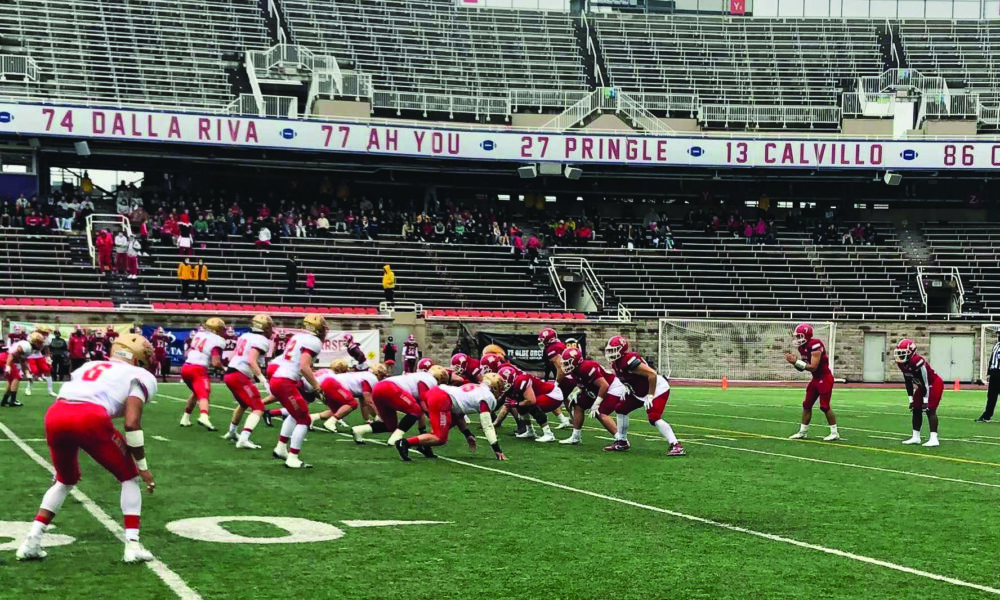
Rainy weather and grey skies set the mood for the Oct. 2 homecoming game as the Laval Rouge et Or (3–⁠2) dominated the McGill Redbirds (1–⁠4), coming away with a 55-2 win in their second encounter of the season. Despite the 2,000 game tickets sold, the crowd was meagre, huddling under the rain cover in the bleachers. The low energy seemed to trickle down onto the field. 

The Rouge et Or opened up the scoring with a touchdown by receiver Kevin Mital just over a minute into the first quarter. After Laval jumped to a 9-0 lead, McGill managed three first downs in a row, edging their way up the field with strong rushes by first-year running back Elijah Williams and an impressive pass reception by second-year wide receiver David-Amani Kabwe

Trouble kept adding up for the Redbirds as quarterback Dimitrios Sinodinos made several incomplete passes and narrowly avoided a turnover when Laval fumbled a pick. Two overshot snaps by the Redbirds led to turnovers, giving Laval more opportunities to move up the field. Laval forced six McGill safeties throughout the game, as the Redbirds tried to fend off their rivals’ ever-growing momentum, which eventually turned into an insurmountable lead. Unfortunately, the Rouge et Or outran McGill several times, making few errors and a lot of headway on the scoreboard. 

Coming out of the half, Laval led 42-0, but McGill managed a 13-yard safety in the third quarter that prevented a complete shutout. 

Overall, the second half proved to be more of an evenly matched game, with the Rouge et Or only outscoring McGill 13-2 in the final two quarters, a much better showing than the first half. 

Laval was never going to be an easy team to beat—this game followed the first two-loss streak the team has had in almost 20 years, and they were desperate to turn things around.  

Wide receiver Kabwe was disappointed with the result, but said he is looking forward to the opportunity for redemption. 

“It was an embarrassing game for us, because we know that we can compete with any team,” Kabwe wrote in a message to The McGill Tribune. “You have to remember that we played Laval in our first game of the season and we showed up, unlike yesterday.”

Williams shared Kabwe’s sentiments, noting that the poor weather conditions may have dampened their mindsets. 

“Things just didn’t go as planned for us,” Williams said. “I felt the weather brought the energy and tone down, [while] the other team was simply there to play. But football is a tough sport and you have to be prepared for whatever comes your way. Most importantly, we have to execute more on special teams.”

The team hopes to redeem themselves next weekend against Sherbrooke on Oct. 9. The away game is their only remaining chance to make the playoffs, as Sherbrooke and McGill have matching 1–4 records and either could qualify. Kabwe is confident that the Redbirds have more than enough fight left to challenge the Vert et Or. 

“We are a young team, so it’s normal to be inconsistent right now,” Kabwe wrote. “Once we are consistent, we will be able to cause many surprises in the league.” 

QUOTABLE

“We have a very good team and a great coaching staff, I’m not really worried about the next few games. I’m pretty excited to face this adversity!” — Second-year wide receiver David-Amani Kabwe

MOMENT OF THE GAME

The Redbirds paid tribute to McGill Football alum Michael Soles at a reception before the game. Soles passed away in July at the age of 54 after a 16 year battle with ALS. After playing for McGill, Soles went on to play professionally for the Edmonton Elks and Montreal Alouettes. Many of his teammates and family members were in attendance for the pre-game ceremony.

STAT CORNER

Elijah Williams led McGill in yards rushed, carrying the ball 12 times for a total of 60 yards.

Recipes, Student Life

Meal-prepping for hibernation: Student-friendly autumnal recipes

Sweet-and-spicy roasted tofu and squash (vegan)

Squash never fails to bring comfort and delight. This recipe is an ode to the vegetable in all its curvaceous glory, which together with baked tofu makes for a protein-rich addition to a bed of rice or spinach. 

smittenkitchen.com

Squash never fails to bring comfort and delight. This recipe is an ode to the vegetable in all its curvaceous glory, which together with baked tofu makes for a protein-rich addition to a bed of rice or spinach. 

Ingredients

  • 1 block extra-firm tofu
  • 2 lbs acorn or butternut squash, halved and seeded
  • 1 ½ tablespoons soy sauce, more to taste
  • 1 tablespoon sriracha or other hot sauce
  • ¼ cup peanut oil
  • 2 tablespoons maple syrup
  • 1 tablespoons toasted sesame seeds
  • 2 tablespoons chopped cilantro for garnish

Steps

  1. Preheat the oven to 425 degrees fahrenheit. Slice tofu into 1/2-inch-thick slabs and cut squash into 1/2-inch-thick half-moons. Cut each slice in half again.
  2. In a small bowl, whisk together soy sauce, sriracha, and a pinch of salt. Whisk in peanut oil. Spoon three tablespoons of the mixture into a separate bowl and set aside for later. Whisk maple syrup into the original mixture. 
  3. Sprinkle squash lightly with salt and pepper and toss well. Spread slices of squash out on a large baking sheet lined with parchment and pour the maple-soy mixture over it. Roast for about 20 minutes or until golden. Flip the squash and roast until uniformly golden and soft, around 10 minutes more. Transfer squash to a large bowl.
  4. Adjust the heat to broil and position a rack just below the heating element. Toss tofu with reserved soy mixture and arrange in a single layer on a baking sheet (you can use the same one you used for the squash). Cook until crispy and golden, about two minutes on each side. Toss hot tofu with squash and sesame seeds, adding more soy if desired.

Hot tip: Try adding other seasonal vegetables like sweet potato, beets, or Brussel sprouts alongside the squash to make your plate a rainbow.

Creamy Mushroom Ramen (Vegan)

‘Twas the night before midterms, so it’s crucial to always have a quick meal on hand. Enter: Instant ramen. Ready in under 15 minutes, this recipe is elevated by an unlikely but budget-friendly ingredient: coconut milk! Be sure to use the full-fat kind to ensure the broth is rich and creamy. 

budgetbytes.com

Ingredients:

  • 1/2 tablespoon vegetable oil 
  • 4 oz. mushrooms, sliced
  • 1.5 cups vegetable broth
  • 1 handful fresh spinach, or frozen equivalent 
  • 1 package ramen noodles

Optional Garnishes:

  • 1 green onion, sliced 
  • 1 tablespoon sriracha 

Steps

  1. Add oil and sliced mushrooms to a small sauce pot and sauté over medium heat until the mushrooms are soft and dark, and all the moisture at the bottom of the pot has evaporated.
  2. Add the vegetable broth, turn the heat up to medium-high, and bring the broth up to a boil. Once boiling, add the ramen noodles to the broth. Cook the noodles in the boiling broth for about 3 minutes, or until tender.
  3. Turn the heat off, add a heaping handful of fresh spinach, and stir until the spinach is blanched (about 30 seconds). Pour the coconut milk into the pot and stir to combine.
  4. Optional: Garnish with green onion or sriracha.

Hot tip: Toss in any leftover veggies, like carrot or beans, before adding the noodles to clean out your fridge and add more substance to the broth. For non-vegans, try topping your ramen with a fried egg.

Golden Apple Crisp  

Take advantage of the apple harvest season by making this non-finicky apple crisp. An autumnal staple, each spoonful will be a perfect combination of crunchy oats and pillowy apple. 

bonappetit.com

Ingredients: 

  • 6 medium-sized tart apples, peeled and sliced (Pink Gala, Lobo, Spartan, McIntosh, etc.)
  • ½ cup packed dark brown sugar
  • 6 tablespoons unsalted butter, melted
  • ¾ cup old fashioned oats 
  • ⅓ cup whole wheat flour 
  • ½ teaspoon ground cinnamon 
  • ½ teaspoon kosher salt 

Optional: 

  • ​​One handful each of black and white sesame seeds

Steps

  1. Preheat the oven to 350 degrees fahrenheit. Mix apples, ¼ cup brown sugar, and 2 tablespoons of butter in a baking dish. 
  2. Mix oats, sesame seeds if using, whole wheat flour, cinnamon, salt, remaining ¼ cup of brown sugar, and remaining butter in a bowl until no oats are dry. Sprinkle oat mix on top of apples and bake until golden brown on top, around 50 to 60 minutes. Let cool for 10 min.
  3. Enjoy hot from the oven or with ice cream. 

Hot tip: If you are far from a microwave, pour some fresh coffee on top of the crisp for added warmth and a subtle bitter note. 

These recipes are adapted from the following sources: Roasted Tofu and Squash, Creamy Mushroom Ramen, Apple Crisp

Read the latest issue

Read the latest issue