
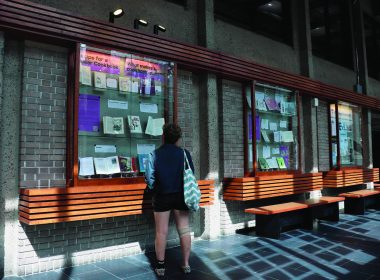
Up until Dec. 20, students walking down the Leacock corridor will notice a new addition to the glass cases lining the wall: The “A Recipe for a Queer Cookbook” exhibition. Curated by Alexandra Ketchum, a faculty lecturer at McGill’s Institute for Gender, Sexuality, and Feminist Studies, the exhibit showcases more[Read More…]
Latest News

Martlets Soccer earn their first point of the year
A week after their home opener defeat to Laval, the Martlets took to the pitch in hopes of earning their first points of the 2021-2022 season. While they hoped for a win, the Martlets came home with a singular point following a 0-0 draw to UQAM. Similar to the game[Read More…]
Bringing Pride to Chinatown
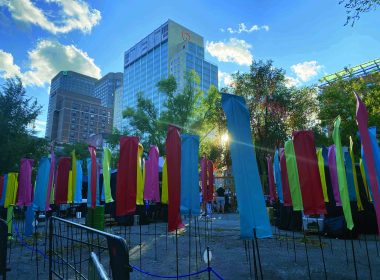
There was once a time when the terms “Pride” and “Chinatown” would not be associated unless you were talking about a restaurateur’s delight in the quality of their har gow (Cantonese dumplings). However, these days in Montreal’s Chinatown district, pride has a new meaning. On Sept. 12, queer folks and[Read More…]
Exploring Montreal’s thrifting scene
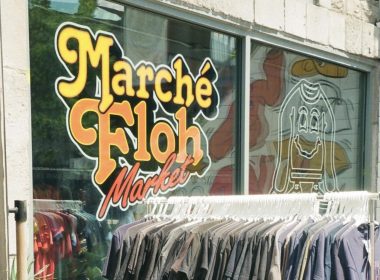
With the return to campus, many members of the McGill community are meeting off-screen for the first time, finally getting the chance to express themselves through their fashion choices. For the budget-conscious university student, this may sound daunting. However, Montreal’s wide selection of thrift stores, each with their own unique[Read More…]
McGill Farmers’ Market creates community for sustainable eating
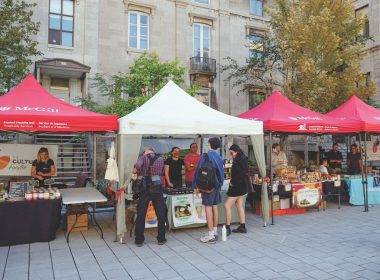
The McGill Farmers’ Market has been a staple of the summer and fall seasons at McGill since 2008. It returns again to McTavish Street this year, open on Thursdays from 11:00 a.m. to 5:00 p.m. Multiple vendors selling their signature products offer students a variety of food and flavour options,[Read More…]

Ronaldo’s return to Manchester United is an exercise in spectacle
At the age of 36, Cristiano Ronaldo is still undoubtedly a superstar of world soccer. Alongside Lionel Messi, Ronaldo has been the joint best player in the world for more than a decade. He has encapsulated fans’ imaginations with a myriad of iconic moments, spanning his early days as a[Read More…]

Federal candidates must work harder to earn students’ support
Viewers of the federal leaders’ debates on Sept. 9 and 10 heard many promises to solve the country’s problems. Unfortunately, details about the implementation of these sweeping goals were missing. Young people, in particular, may have felt left out of the discourse, as student issues were barely mentioned in either[Read More…]

Meeting myself halfway
“Hi Halmoni,” I say, as I draw my Korean grandmother into an awkward, very loose, hug. “Hi say-quoi-yah,” she beams back at me, purple puffer jacket, tattooed eyebrows, and all. My grandparents are very predictable; Halmoni will measure herself against me and tell me I should enter Miss Universe; Haraboji[Read More…]

Five science myths perpetuated by your favourite movies and TV shows
Movies and TV shows are notorious for sacrificing sound science in favour of cinematics that capture audiences’ attention. While this provides good entertainment, viewers may be shocked when scientific reality does not match up with fantasy. The McGill Tribune busts five incorrect portrayals of science in the popular media. Myth[Read More…]
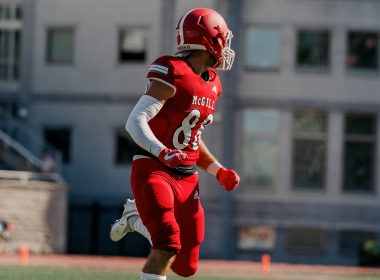
Know Your Athlete: Mathieu Soucy
Mathieu Soucy is one of McGill Football’s most impressive athletes. From athlete of the week to Réseau du sport étudiant du Québec (RSEQ) football player of the week accolades, Soucy has proven that he is a force to be reckoned with. However, it was not always his dream to pursue[Read More…]