

Latest News

Art, Arts & Entertainment

Heartbreak Museum offers students a cathartic space to express hurt

For those who are single, have recently ended a relationship, or are simply not interested in romance, Valentine’s Day can often feel like a punch in the gut. With the additional isolation of the COVID-19 pandemic, this year’s solitude hits especially hard. 

Enter the Heartbreak Museum, an annual exhibition hosted by Mcsway Poetry Collective. The Heartbreak Museum provides a digital space for artists and poets to share their heartache—romantic, platonic, or otherwise—authentically. This year’s edition was held virtually through a website and Zoom open mic. 

Event organizer Zeina Jhaish, U3 Education, spoke with The McGill Tribune about the impetus for this event. 

“I joined Mcsway three years ago as a project lead,” Jhaish said. “I had to create a project for that year, and […] I remembered the [Museum of Broken Relationships and] seeing white empty rooms and objects that represented heartbreak. I really thought the idea was nice and I wanted to see it in the Mcsway context [.…] For me, the inspiration personally was [that] heartbreak is always relatable.” 

When viewers enter the website, they are greeted by a digital painting of a heart with a gash down the middle and stitches alongside to patch the wound. Immediately, the audience is drawn in by the painful beauty of a broken heart. 

Along with its virtual exhibition, the Heartbreak Museum hosted an open mic on Feb. 12 where poets shared their most intimate heartbreaks. These readings revealed that heartbreak is not limited to simply romantic relationships. Jhaish explained that the Heartbreak Museum is meant to be an inclusive space that discusses many different types of heartbreak. 

“We have a lot of heavy material and a lot of great sensitive, amazing poetry from our participants,” Jhaish said. “We always emphasize that heartbreak is not just about relationships and Valentines [….] So, our audience can also talk about family and friend-heartbreak and maybe even self-heartbreak.”  

The exhibition hosts a range of work, including sites where photographers documented their broken hearts and artifacts from past relationships, collages, and short films. In one set of images entitled “the sound of leaving,” the artist, Amanda, shows that moving from one place to another can also feel heartbreaking. 

Despite the fact that Zoom often feels like an impersonal platform to share art, the open mic offered a welcoming and supportive space for artists. As participants read their poetry, the chat box was flooded with loving and encouraging words. Poets shared experiences detailing the loss of friends and family, the pain of unrequited love, and the turmoil of toxic relationships. 

Jhaish discussed how moving the event online allowed Mcsway to expand its programming to include the open mic element. 

“We all love [the] Heartbreak Museum, so we thought we should find a creative way to bring it to life in COVID-19,” Jhaish said.“We decided to put it in the form of a website […] and then we also wanted to create a platform for people to perform their pieces [….] We wanted to add a little more pizazz to it and have an open mic where people could share and discuss and talk […] and use Zoom to our advantage.” 

Jhaish emphasized that the Heartbreak Museum offers students a sense of catharsis at a challenging time of year, which has been exacerbated by stay-at-home orders. 

“This year [heartbreak] hits differently because it’s COVID and all the frustration that comes with it,” Jhaish said. “It’s especially important to continue with this because we saw that a lot of people obviously want to share and […] and we believe in […] channelling our energies into expressing ourselves and having a platform to do that.” 

 

Album Reviews, Arts & Entertainment, Music

‘OK Human’ is sort of human, but definitely less than okay

Due to the indefinite nature of the pandemic, the subgenre of the “pandemic album” has become an increasingly large fixture. Although some, such as Taylor Swift’s folklore and Charli XCX’s how i’m feeling now, were massive critical and financial successes, Weezer’s latest album, OK Human, is not poised to join those ranks. While the album is clearly inspired by the classic Beach Boys album Pet Sounds, OK Human comes off as an odd imitation of Coldplay with quirky yet unremarkable lyrics and string orchestras in place of more brooding melodrama. 

Although the album deserves a certain amount of credit for sticking to a moody, dramatic aesthetic and producing a cohesive vision, this vision is ambivalent and mediocre. In what can be viewed as an unintentional homage to the band’s pop-punk roots, most of the songs sound almost exactly the same, and virtually none of them are memorable or good enough to propel the album to a higher quality. While “Screens” and “Here Comes the Rain” stand out amongst the sea of homogeneity and are more indicative of Weezer’s typical alternative rock sound, most of the songs on the album feel like a misplaced and half-hearted attempt to revisit a once-experimental, now dated style of production.

The high concentration of orchestral backing throughout the album is at its best in the final song, “La Brea Tar Pits,” where it takes on a more subdued version of the role that a guitar riff might have filled in earlier Weezer work. However, any power built up in the standout songs is fundamentally washed away by the bland repetitiveness of OK Human as a whole. While it may feel briefly representative of the moody blues of the pandemic, there is no quality or longevity beyond this pedestrian work. 


Commentary, content warning sa, Opinion

The problem with the pornography industry

*Content warning: This article includes mentions of sexual violence and discrimination.

A December 2020 New York Times article by Nicholas Kristof exposing Pornhub’s refusal to take down videos depicting rape and child abuse has sparked international outrage. Since then, credit card companies like MasterCard and Visa have cut ties with the Montreal-based site. Financial institutions are now part of the public debate of whether porn should be banned entirely by governments. The fact that 93 per cent of male and 62 per cent of female college students watch porn before turning 18 shows that pornography influences students’ sexual interactions. But beyond the popular prohibitionist feminist stance that porn is dangerous for women and the permissive stance that rejects moralist concerns, there is an often-overlooked point: The business model behind the industry. The problem with porn is how it makes money. Understanding how it works is important and can ultimately change harmful consumption habits. 

The purpose of porn is to entertain and arouse viewers. Although porn is available to everyone who has access to the internet, it caters to white, straight, cisgender men. From Hugh Heffner’s Playboy to many Pornhub videos, a lot of free and mainstream pornography objectifies women. Women are often at the centre, but we see them through the eyes of men. This does not mean that women, people of colour, or gender and sexual minorities cannot watch or enjoy porn. But the filming is done with a certain demographic in mind, tapping into harmful gender and racial stereotypes to please its audience.

Pornography, like any industry, prioritizes profits above all else. Its business model provides little to no incentives to regulate the content that users upload. It would not be profitable to get rid of something that people clearly enjoy. In this sense, Pornhub is the perfect blend of racism, patriarchy, and capitalism because it takes advantage of people’s biases to make a profit. Pornography platforms make money off leaked videos of 14-year-old girls, revenge porn, violent depictions of rape, and in a broader sense, racist and sexist content. One could argue that porn is subversive and that it defies moralist and prudish values that seek to villainize sex by representing hidden sexual desires that people cannot publicly claim. However, the racist and sexist mainstream porn industry challenges nothing; it upholds the oppressive systems on which it is built. 

Debates about the ethics of porn can often seem abstract and ideological, but it is important that they centre around the people they tangibly impact. The critique should not seek to criminalize and punish sex workers for making a living. Moreover, not all porn is created equal, and the rise of ethical porn provides an important alternative. Instead, criticism should be aimed at companies like Pornhub and their respective business models, which incentivize them to profit off of the violence and trauma of others.

Rather than debating whether porn should be banned, it is important to focus the discourse on the systems and the companies that facilitate and actively partake in harm. Discussions should not fall into the trap of individual responsibility that tends to distract from the true perpetrators. The danger of criticizing porn is punishing people for their sexual desires. But as Kristof states, criticizing the porn industry and being sex-positive should not be mutually exclusive. 

Awareness of the structural dynamics that enable porn should not become an excuse for mindless porn consumption. People can choose what type of pornography to watch, what stereotypes they buy into, and to stop consuming violence. Young people and students have the power to shape the way we understand sex, and resignation to injustice should not eclipse the power of dissent.

Arts & Entertainment, Books

Celina Caesar-Chavannes calls to build an inclusive world

On Feb. 12, the West Island Black Community Association (WIBCA) hosted a virtual book launch for Can You Hear Me Now?, the memoir of businesswoman and former Member of Parliament (MP) Celina Caesar-Chavannes. Caesar-Chavannes, the first Black person representing Whitby, Ontario, in Parliament, was among the most outspoken Liberals and later Independents during her tenure, advocating for causes like mental health, international development, and gender and racial equity in the House. Her commitment to humanity-based governing principles brought her acclaim as Secretary to the Prime Minister and as Minister for International Development, yet that principled commitment ultimately caused her to leave the Liberal caucus and choose not to run for re-election in 2019. Can You Hear Me Now? explores Caesar-Chavannes’ mistakes, guilt, and pain in the creation of a call to action.

The launch began with a set by DJ Don Smooth Garrett, which introduced the hosts and Caesar-Chavannes into the groove of Marvin Gaye, Al Green, and Stevie Wonder. But it was Sam Cooke’s “A Change Is Gonna Come” that aptly introduced the author.

The conversation between Caesar-Chavannes and moderator Fimo Mitchell, a Montreal meditation coach, covered her memoir and beyond, delving into topics like Caesar-Chavannes’ childhood, career, and love for Prince.

Like her public service, Caesar-Chavannes’ memoir is a work of authenticity, and writing it pushed her to pen several letters to family members informing them of its unflinching content. Caesar-Chavannes and Mitchell spoke about the former’s upbringing. Having immigrated to Canada from Grenada as a toddler, she noted memories of her parents taking care of her through her childhood.

Her description of her mother’s tough parenting outlines Caesar-Chavannes’ need to show realities of Black motherhood coupled with the immigrant experience.

“It’s not the soft and squishy that sharpens me,” Caesar-Chavannes said. “I feared her while she feared for me [….] She treated me in a way that she knew the world would.” 

Caeser-Chavannes’ father grappled with racism at work, which also presented her with an understanding of the power of words.

“The haunt around my dad made him look gray and emaciated,” Caesar-Chavannes said. “It would be years until I understood that the haunt was racism and that is part of the Canadian experience for Black people.” 

In light of the 2020 Black Lives Matter protests, Caesar-Chavannes urged listeners to engage in dismantling systemic racism. Stressing fact-based dialogue, she referenced the deaths of Toronto’s Regis Korchinski-Paquet and Joliette’s Joyce Echaquan, and highlighted the disproportionate consequences that Canada’s COVID-19 response and policing practices have on Black and Indigenous peoples. Democracy, she argued, is key to change.

“Democracy does not belong to a man with well-coiffed hair on Parliament Hill,” Caesar-Chavannes said. “Politicians have borrowed jobs. We decide whether they get that job again.”

She further emphasized that passion results in substantive progress, not just virtue-signalling. Caesar-Chavannes left her work running clinical trials across Canada to run for office because of her passion for people. However, people often do not understand why she left her position in office.

“I’m not interested in being at the table to eat the crumbs off the floor [or] even worse, to be on the menu,” Caesar-Chavannes said. 

After a federal election in 2019 promising change, Caesar-Chavannes still sensed that same haunt her father felt seeping in. The government reverted promises, like electoral reform and ending mandatory minimum sentences, and antagonized independent voices in their party, especially women of colour like Jody Wilson-Raybould and Caesar-Chavannes. After being told in early 2019 to support the party over principles, she left the Liberals.

“I was left alone […] so cold on that side of the House,” Caesar-Chavannes said. “I didn’t deserve anything they did over the three years. I don’t know why they did that.” 

After a gripping two hours, Caesar-Chavannes rallied the audience to do the work, unpack toxic environments, and importantly, extend humanity. 

“I want my tombstone to read, ‘All she had left to do was die.’” Caesar-Chavannes said. “But I ain’t going anywhere soon.”

Can You Hear Me Now? is available for purchase now.


News, SSMU

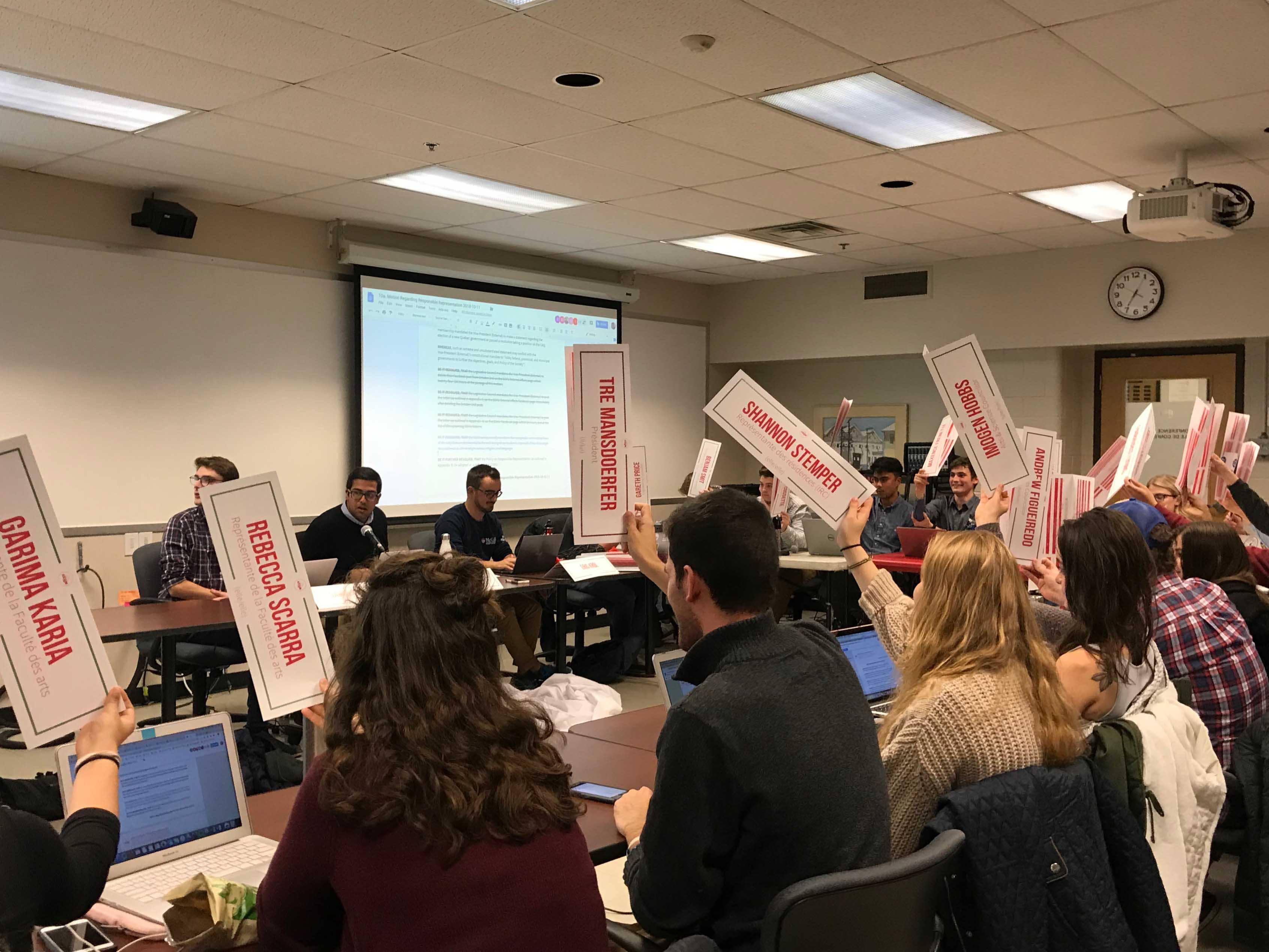
Student organizations collaborate on SSMU ‘Divest for Human Rights’ motion

Seven McGill student organizations have collectively drafted a motion titled the “Divest for Human Rights Policy” to advance at the upcoming Students’ Society of McGill University (SSMU) General Assembly (GA) on Feb. 16. Divest McGill, Climate Justice Action McGill, Students in Solidarity for Palestinian Human Rights (SPHR), McGill Students for a Free Tibet, McGill Stands with Hong Kong, Indigenous Student Alliance, and Students for Peace and Disarmament (SPD), collaborated to develop the policy which demands that McGill divest from companies that either aid or are complicit in human rights violations and environmental destruction.

With each group addressing different areas of McGill’s investment portfolio, the policy targets corporations and institutions complicit in a variety of human right abuses, such as Canada’s militarization of Wet’suwet’en territory, China’s forced labor camps for Uyghurs, and the state-sanctioned crimes against Palestinians.

In an interview with The McGill Tribune, Maya Garfinkel, U3 Arts and SPD representative, and one of the founders of the campaign responsible for the policy, highlighted the main objectives of the motion.

“What we want from this motion is to basically set the foundation for mobilization in the future,” Garfinkel said. “In the motion, we break it down into specific bodies within SSMU, within the McGill administration, of what we are demanding from those institutions [….] We just [want] this policy to be a foundation for education for mobilization towards the ultimate goal of divesting from these harmful companies.”

An anonymous source representing SPHR elaborated on the importance of the policy in an email to the Tribune and explained how it serves to direct resources to areas that students are concerned about. 

I hope that this motion can be a conversation starter,” the source wrote in an email to the Tribune. “[It is] the kind of conversation that forces us to really think about what our tuition money is being invested into. [A conversation] that forces us to think of our positionality as settlers on stolen land and not think of injustices in Palestine, Yemen or East Turkestan as ‘far away.’ Instead, as McGill students, we must recognize the power and responsibility that we have to pressure institutions like McGill until they stop investing our tuition dollars in corporations which directly facilitate and profit from violent oppression and exploitation, in Turtle Island and abroad.” 

Brooklyn Frizzle, SSMU Vice-President (VP) University Affairs, believes that the motion’s implementation will require further work from SSMU’s executives.

“This campaign will be a multilateral effort from the Offices of the President, VP External Affairs, and VP University Affairs, alongside nearly a dozen politically-oriented student groups,” Frizzle wrote in an email to the Tribune. “In the weeks following the GA, if we are successful [in the policy’s implementation], we will start by mobilizing public support through outreach and education campaigns before setting up our action plan for […] advocacy.”

Garfinkel is confident that passing the policy will strengthen student sentiment that McGill’s divestment from human rights violations should no longer be delayed.

“Historically, the McGill administration has required a lot of pushing from the outside, from the student body, for things like this to really move,” Garfinkel said. “[…] I think that we are preparing for the worst and hoping for the best when it comes to the McGill administration response.”

In a statement to the Tribune, McGill Media Relations officer Frédérique Mazarolle relayed a comment from the university administration on its investments and commitment to following recommendations from the McGill Board of Governor’s Committee to Advice on Matters of Social Responsibility (CAMSR).

To better align the mandate of its investment committee with the CAMSR recommendations, the Board of Governors has approved in June 2020 changes to the Statement of Investment Policy of the Endowment Fund to include ESG, [environmental, social and governance], considerations and a socially responsible investment concrete action plan,” read the statement from McGill.

A previous version of this article incorrectly referred to McGill Students for a Free Tibet as Students for a Free Tibet. The Tribune regrets this error.

Student Life

Searching for the cities of the future

A panel discussion about the future of sustainable cities was presented by Sustainable Development Goals Student Hub (SDG), ECOLE, and the Research and Sustainability Network on Feb. 12 and marked the close of Sustainable Development Goals (SDG) week. SDG week ran from Feb. 8-12, featuring panel discussions and movie screenings open to all who were interested. The panel addressed the 11th and 12th of the United Nations’ 17 sustainable development goals, and the three panellists—Building, Civil, and Environmental Engineering professor Dr. Ursula Eiker, Urban planner Louis Mazerolle, and Geography PhD candidate Kerstin Schreiber—presented research to show how academics, planners, and city governments are working hard to meet these goals. 

Eiker, who teaches at Concordia University, opened with a presentation on creating cities with smaller energy demand and carbon footprints. Eiker argued that planners should build cities in a compact formation to lower energy consumption in buildings and reduce the amount of transit required for movement. Eiker works in the Next Generation Cities Institute at Concordia, where researchers use computers to model the impact of planning for sustainability on cities’ greenhouse gas outputs. Developed countries tend towards increasing levels of urban sprawl, and Eiker’s research argues why this sprawl is highly detrimental to the environment and health of people living in cities. 

“Cooperative or communal housing needs to see a renaissance,” Eiker said. “It is good for social interaction, and it is a good way to slow the rebound effect we see where people with money choose to spend their money on goods that are less sustainable.”

The rebound effect, also known as the Jevons paradox, is a widely discussed phenomenon in sustainability. It occurs when technological advancements introduced to reduce emissions fail to do so because of a rise in improved technology use. In developed countries with more resources, communal goods are a thing of the past because most people have their own products. The rebound effect will continue to strengthen as wealth builds and more people can purchase their own cars instead of taking public transit.

Next, Mazerolle argued that safe public spaces and large green areas are important for creating sustainable cities that benefit their residents. Currently, Mazerolle is working on a project in Laval to update development bylaws for environmental protection. Mazerolle’s approach to planning sustainable cities is similar to Eiker’s, in that it is better to build up than out. 

“It is always better to start building a new sustainable city on top of the older city,” Mazerolle said. “Green fields are easier to build off of, and there is less of a wait for permits, and the land is often cheaper. We need to flip the incentives so that it is easier to build on what is already there.”

The final speaker was Schreiber, who discussed the issues of food accessibility in high density cities. Since cities are not usually conducive to food production, city dwellers have always relied on others to procure their food. This is part of the reason for food deserts, areas where healthy food is not available, and other inefficiencies in the food system, such as food waste. Schreiber proposed several solutions to these problems, including the food waste ban that was piloted in French supermarkets. Urban agriculture has also seen a revival in the past 10 years, with rooftop farms and community gardens appearing across North America. This offers a sustainable way to close food cycles and serves as a short term antidote to food deserts. 

“We are still figuring out which is the most sustainable way to feed cities: Food supply coming from local food systems, or global trade of food,” Schreiber said. “Global trade keeps food affordable and accessible, but the emissions are also higher, so it is likely that neither of the two extremes will be the solution, but rather a combination of those and other ideas.” 


Student Life

The history of Black History Month

Every February, Canadians are called to reflect upon the nation’s history from the perspective of Black Canadians. While Black History Month began in the U.S. in the 1920s, it is now observed in other countries including Canada, the U.K., and the Netherlands. The McGill Tribune examines how this celebration came to be. 

The origins of Black History Month can be traced back to 1926 and to Carter G. Woodson, an eminent African American historian. Woodson, who believed that Black history had long been neglected in academia, designated the second week of February to celebrate the accomplishments and history of African Americans. Woodson selected February to commemorate the birth month of two influential figures in Black American history: Frederick Douglass, a formerly enslaved abolitionist, and Abraham Lincoln, 16th president of the U.S., who issued the Emancipation Proclamation. By 1976, President Gerald Ford officially recognized Black History Month, making a call to action for Americans to honor the overlooked accomplishments of Black Americans. 

Black History Month was adopted in Canada in 1955, following a motion introduced by Jean Augustine, the first Black Canadian woman elected to Parliament. Although 1955 marks the official recognition of Black History Month by the Canadian government, it did not mark the first time that Black history was celebrated in Canada. Similarly, while 2021 marks the fifth year of institutional celebration of Black History Month at McGill, Black community members have organized during and outside of Black History Month for decades. When considering Black History Month, it is important to always acknowledge the labour and legacy of all those that came before, as their contributions are often erased. 

In an interview with the Tribune, Senior Advisor of Anti-Racism and Equity Education Shanice Yarde discussed the importance of Black history when reflecting on Black History Month. 

“Every place creates its own narrative about itself […], but it’s important that we challenge these narratives to make sure that they tell the fullness and richness of the story,” Yarde said. “[There is] denial and dismissal of oppression here [in Canada] and we compare to the U.S. to deflect. When honouring and celebrating Black History Month, it is important to have a global perspective but it is also critical to focus on the local context. Black history here is incredible, but overlooked.”

Many people do not recognize the vastness that exists when it comes to Black history in Canada. Yarde explained that due to the censorship in history textbooks, many Canadians are not aware that Black people were once enslaved in Canada. 

“[There is a] narrative that Black people don’t exist or face violence here,” Yarde said. “There is a particular way in which Blackness gets erased from a space based on what narratives are perpetuated and challenged and which ones are not [….] Every single year I learned about Rosa Parks and [Martin Luther King], and not to discredit the incredible contributions that they have made, but there are so many other important and notable people. ”

While February is a month to learn and celebrate Black history, students should continue this work and dialogue year round. 

“[It is] also important for people to continue and push this work beyond February,” Yarde said. “[There are] all of these events that happen in February, but once March 1 arrives, it’s just crickets. There is a role for people to continue these dialogues and education beyond February. How are we creating spaces outside the designated time period? What work are we doing when the cameras are off and the spotlight is no longer on?”

Furthermore, Black History Month is often used as an opportunity to talk almost exclusively about racism and oppression, perpetuating a narrative that Blackness is only connected to trauma and violence. It is clear that understanding Black history transcends learning about oppression Black people have endured: It is also about the ways they have fought to survive and thrive in Canada. 

Visit Equity at McGill for resources to educate yourself on anti-racism and allyship as well as ways to honour Black History Month.


Student Life

‘Love in the Time of…’ allows history students to cozy up

The Classics Students’ Association (CSA) and History Students’ Association (HSA) teamed up on Feb. 11 to host the Love in the Time of… lecture series remotely. As they did for their Haunted Histories Halloween event earlier this academic year on Oct. 27, each student association invited two professors from their respective departments to give a short lecture, this time centred around the theme of Valentine’s Day and romance.

Under normal conditions, students would pass around sweetheart candies or heart-shaped lollipops. Even without such traditions, HSA President Dalton Liggett, U3 Arts, still fervently believes in the event’s power to bring students together.

“My favourite thing about organizing HSA events is definitely being able to meet and converse with History students,” Liggett wrote in an email to The McGill Tribune. “Amidst these ongoing circumstances, it’s rare for History majors to be able to gather together safely, even if virtually, so I cherish that.”

CSA President Taryn Power, U2 Arts, also sees these events as crucial for facilitating student connection in spite of remote learning.

“My favourite part about events this year is getting to see everyone in my program, even virtually, and we’ve had a lot of really good attendance for events,” Power wrote in an email to the Tribune. “It’s nice to be able to see that the community in the department is still pretty close knit. Plus, it’s always nice to get to learn something new for fun, outside of class, and the lecture series always deliver on that,”

For this event, the History department was represented by Brian Lewis, professor of modern British history, and Rachel Sandwell, who studies the history of women’s movements. Classics was represented by Lynn Kozak, who teaches epics and classical performance texts, and Naomi Kaloudis, who researches performance theory.

First to speak was Kozak, who spoke about her research on the NBC television series “Hannibal.” She discussed the queer subtext of “Hannibal” and its many same-gender relationships that contain romantic and sexual undertones, transcending traditional definitions of friendship. Kozak also talked about the parallels between the characters in “Hannibal” and Achilles and Patroclus from The Iliad. By looking at modern entertainment through the lens of classical literature, Kozak gained a more in-depth understanding of the forces that shaped the hit series’ plot.

Sandwell then discussed love between South African revolutionaries. Movement organizers believed that romantic and sexual relationships made young people weaker and less trustworthy. As a result, organizers dictated how young people in exile conducted relationships, thereby shaping the way young people interacted with South African politics.

After that, Kaloudis talked about pastoral poems in classical history, which are defined by their descriptions of a male figure’s unrequited love. In Theocritus’s Idylls, a goatherd falls in love with a woman named Amaryllis. Rather than casting Amaryllis as primarily the object of male fantasy, both parties possess equal agency in their relationship—a deviation from typical genre conventions of the time. 

Last to speak was Lewis, who covered the history of perception regarding sexuality. Traditionally, most considered there to be a sexual binary between a heterosexual majority and a homosexual minority that was deemed deviant. In reality, throughout history, sexual attraction between people of the same gender has existed across cultures. 

Given their varied academic backgrounds, the featured Classics and History professors all contributed unique perspectives to the time of love. Seeing students’ faces light up on screen when lecturers made jokes spoke to the event’s success. 

“I’m really happy with what the CSA has been able to do so far, and proud of my team for doing so well adjusting to the online format,” Power wrote. “I’m just hoping that, whether I’m organizing or not, we will slowly (and safely!) get to see some of our normal traditions start back up in the coming year, but if not, it’s nice to know after this year, getting together virtually can still work so well.”

Student Life

‘Black Mental Health Matters’ unpacks systemic racism in healthcare

The Office of the Provost and Vice-Principal (Academic), the Social Accountability and Community Engagement Office (SACE) in the Faculty of Medicine and Health Sciences, and the McGill initiative Supporting Young Black Students (SYBS) hosted “Black Mental Health Matters,” held virtually on Feb. 10. As part of McGill’s Black History Month 2021, the event consisted of a presentation on mental health, a panel discussion, and a conversation centered around mental health in the Black community. 

The presentation was given by Maureen Owino, who resides in Toronto, but joined the Zoom event from Nairobi. Owino is a first generation immigrant who is currently a PhD student at York University studying the impact of the HIV/AIDS and COVID-19 pandemics on Black communities in Canada. Owino is also a program coordinator for the Committee for Accessible AIDS Treatment in Toronto. 

In her presentation, Owino discussed the history of racism in Canada, transgenerational trauma, and the way in which anti-Black racism impacts mental health. 

“Racism and anti-Black racism are policies and practices rooted in Canadian institutions,” Owino said. “This can be understood through education, health care, and justice that mirror and reinforce beliefs, attitudes, prejudice, stereotyping, and discimination towards people of Black-African descent.”  

Owino continued by speaking about her traumas of experiencing systematic racism. She shared several first-hand experiences as a Black immigrant in Canada navigating the Canadian health care system while facing mental health challenges, despite legislation intended to protect individuals facing these issues such as the Canadian mental health acts.

“I have witnessed and experienced through my work how Black men and women, when they are in crisis, are sent to prison instead of receiving help,” Owino said. “It just shows how the Canadian mental health acts do not protect Black Canadians.” 

The second part of the night consisted of a panel moderated by Leatitia Mbassegue, SYBS member and McGill first-year medical student. Speakers included Owino, Khan Bouba-Dalambaye, a councellor at Openspace Clinic, Melissa Cobbler, wellness advisor for the Faculty of Science, and Aishah Seivwright, external coordinator for Black Mental Health Connections. 

The panel members spoke about their lines of work, personal experiences with mental health and racism, and how these encounters negatively affect mental health.

Throughout the talk, panelists emphasized the lack of mental health resources available to the Black community in Montreal, and more broadly in Canada, offered by Black practitioners. According to Bouba-Dalambaye and Cobbler, understanding the demographics of the mental health workers in Montreal is just one way to comprehend the disparity of Black practitioners. 

Shanice Yarde, Senior Advisor: Anti-Racism and Equity Education at the Office of the Provost and Vice-Principal (Academic) played a large role in planning the event. Yarde spoke with The McGill Tribune about the evidence of systemic inequity in Montreal. 

“Khan is one of two Black Anglophone male counsellors that I know of in Montreal,” Yarde said. “The lack of Black practitioners has nothing to do with a lack of knowledge, interest, or capacity, but in part, the barriers to entry to those programs that make it possible for people to be in those roles.”

The panel and community conversation also highlighted the ways that non-Black students can better support their Black peers’ mental health. Mbassegue underscored the importance of allyship in an interview with the Tribune

“An ally stands up with no fear,” Mbassegue said. “So messaging us in private and saying ‘I am so sorry about what is happening in the world’ or ‘it must be tough’ does not help much [….] Somebody else standing up and not making us be the only one to call something out is a way to start being an ally.” 

As Seivwright and Owino discussed, Black students have dealt with having their hair touched and being called names for too long. 

“I think an important takeaway from this conversation for non-Black students is being willing to listen first and believe in Black people’s self determination abilities,” Mbassegue said. “We are the experts of our own experiences so we can tell you what we need, and then you can help us from there.” 

For information on Black History Month 2021, check out this website.

Erratum: A previous version of this article stated that Shanice Yarde’s title is equity education advisor (anti-oppression and anti-racism). In fact, her title is Senior Advisor: Anti-Racism and Equity Education. The Tribune regrets this error. 

Erratum: A previous version of this article misquoted Shanice Yarde when discussing Black mental health practitioners in Montreal. The quote has been updated. The Tribune regrets this error.

Montreal, News

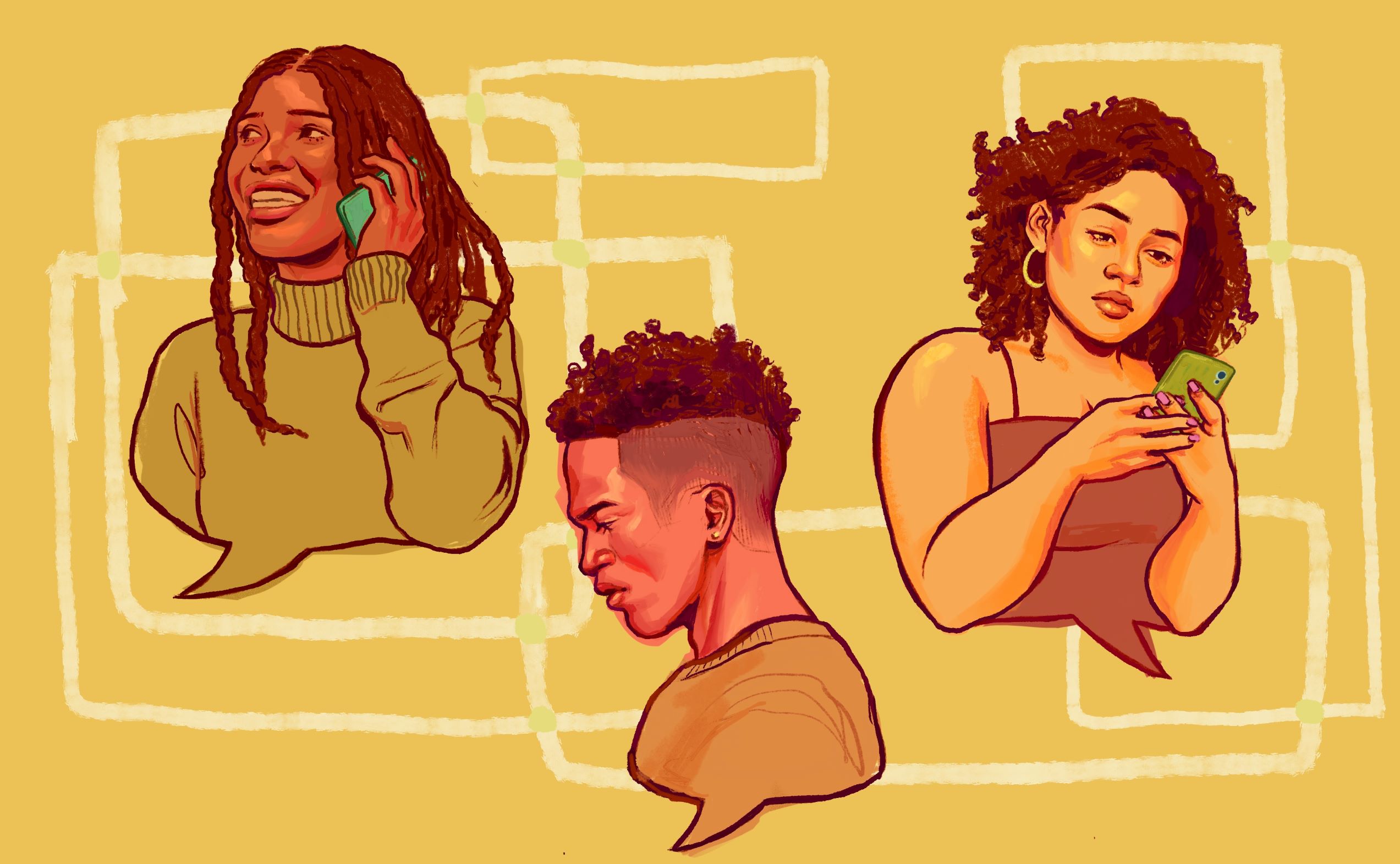
Black Healing Fund receives first round of applications for mental health care funding

The Black Healing Fund, established in Oct. 2020, offers resources to Black people in the Montreal area who are looking for mental health services. Kat Charles, a queer Haitian writer, playwright, performer, therapist-in-training, and community organizer, created the fund with the belief that Black people should not have to pay for their own healing in a system that harms them. Since then, the fund has been managed entirely by volunteers who collect donations through sites such as PayPal, Patreon, and GoFundMe.

In order to apply for funding, individuals seeking financial support are required to provide their name, location, and requested total amount. From there, recipients will be randomly selected. Those who do not receive funding during the most recent round, for which applications closed on Feb. 6, will be placed on a waitlist.

Naïka Champaïgne, a Concordia student, is one of six team members. As coordinator for the fund’s communications, Champaïgne emphasized the importance of the organization’s mandate.

“There is a huge community of Black people in Montreal, and a constant lack of acknowledgement that systemic racism exists in Quebec,” Champaïgne said. “For example, over the summer [during the Black Lives Matter protests] there was a much larger police presence in Montreal Nord where there are more Black people. There needs to be active support for Black people in Montreal.”

Maya Willard-Stepan, U2 Sciences, is the McGill Students Chapter of Jack.org‘s Equity and Sustainability Officer, and recognizes that the Black community is disadvantaged when it comes to accessing mental health resources.

“BIPOC youth are 26 per cent less likely to receive sufficient treatment if struggling with their mental health,” Willard-Stepan wrote. “It is crucial to the health and wellbeing of BIPOC youth to create supportive communities with meaningful mental health dialogue and provide affordable access to professionals who will assist without discrimination or bias.”

The Black Healing Fund does not bar anyone from requesting help, but they do remind people to be considerate when applying.

“We remind people to be mindful of social positionality, colorism, and socioeconomic status when applying,” Champaïgne said. “This fund is really intended for low-income Black people.”

The fund does not require recipients to spend the money on any particular practice, but provides a list of recommendations for potential healers whom they have vetted and linked on a page of the fund’s website. 

While the Black Healing Fund is not directly affiliated with McGill organizations, campus mental health groups have voiced their support for the initiative. 

Pratik Mahajan, U2 Arts, Vice-President External of McGill Students’ Nightline, and recognizes the importance of mental health resources from personal experience as a student from India who juggled several responsibilities.

“Every low income Black student faces unique barriers,” Mahajan wrote in an email to The McGill Tribune. “But the tallest one of them all is the one that keeps them away from seeking the support they need to overcome the mental toll of trying to overcome barriers every single day.” 

Julia Caddy, U3 Arts and Students’ Society of McGill University (SSMU) Mental Health Commissioner and Chloe Holmquist, U4 Arts, Co-President of Students in Mind, and the chair of the Peer Support Center recognize that free mental health services are in high demand during the pandemic, which has disproportionately harmed Black and Indigenous communities.

“Through financial support to Black people seeking mental health resources [with the Black Healing Fund], there’s an opportunity for not only timely support but for culturally appropriate support,” Caddy wrote in an email to the Tribune.

Holmquist commented on the barriers facing Black people as they look for mental health support. 

“Mental health services can often be both financially inaccessible as well as feel unsafe due to the limited number of Black mental health professionals available,” Holmquist wrote.

The fund hopes to open a second round of applications later this year, and regularly posts updates on its Instagram profile and Facebook page.

Read the latest issue

Read the latest issue