

Latest News

Commentary, Opinion

Harm reduction in residences can save lives

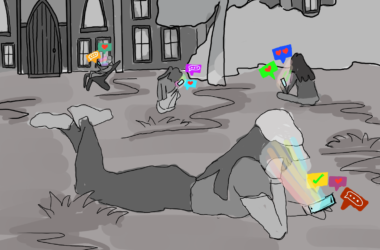
For many students, experimenting with recreational drugs is part of the university experience, and a subculture of illicit drug use exists at McGill. To mitigate harmful consequences such as addiction and overdose, floor fellows in first-year residences have historically been trained to practice a harm reduction approach to drug use, based on the principles of non-judgement, compassion, and openness. However, in January, McGill enacted changes that shifted its policies towards a zero-tolerance, abstinence-only approach. This decision can have dangerous ramifications for students since a lack of honest communication about drug use can prevent students from seeking help for drug-related issues. McGill can better protect students in residences by reinstating a harm reduction policy that focusses on safety rather than punishment.

Abstinence-based policies penalize drug users rather than prioritize their safety. On the other hand, harm reduction methods have proven to be more effective than zero-tolerance policies because they destigmatize drug use and encourage users to seek treatment if they want or need it. Accordingly, places that have implemented harm reduction methods have seen decreases in addiction, overdose, and drug-related diseases. However, under the new policy, McGill students who need such support may fear they will be punished for coming forward. This could make them less likely to seek guidance from health and support services, including the Student Wellness Hub. It is unrealistic for McGill to believe these policies will prevent students from using drugs, and it would therefore be more effective for the administration to prioritize making drug use as safe as possible. 

One way to implement harm reduction is to foster open communication, but McGill’s new policy compels students to report any suspicion of drug use by their peers. This creates a hostile atmosphere that pits students against one another and discourages them from being honest with their friends about using drugs. If someone is struggling with addiction, they may be less likely to tell their friends, who could risk punishing the user by reporting them or being punished themselves for keeping quiet. Harm reduction encourages openness and honesty, while abstinence-only policies isolate drug users.

New policies also put significant pressure on floor fellows, who are now obligated to file reports to administration or law enforcement if they learn of a student’s drug use. This alters the role of a floor fellow from a supportive to an authoritative figure, discouraging students from seeking help if they or their friends are facing addiction or an overdose. Many popular party drugs in the city have been laced with opioids such as fentanyl, which makes them especially dangerous. If McGill returned to a harm reduction approach, floor fellows could distribute testing kits to students who intend to use drugs so that they can be conscious of what exactly they are taking. Instead of encouraging floor fellows to report their students, McGill should want students to see them as trusted resources. This way, students using drugs can do so in the safest way possible.

By turning to an abstinence-only policy, McGill is ignoring both the realities of student drug use and the research proving the benefits of harm reduction-based policies. It is impossible to keep drugs out of residences, but it is possible to treat drug use as a health issue and encourage students to receive support if they face problems related to addiction. Condemnation and punishment do nothing to keep students safe. McGill students should call upon Student Housing and Hospitality Services to reinstate a harm reduction policy that includes drug testing kits in residences and further training for floor fellows. In doing so, they could reduce the risk of addiction and overdose and potentially save lives.

Sports

In conversation with Sophia Monahan

Over the course of the pandemic, physical activity has become somewhat of a rarity. Though Montreal is, unfortunately, still in the red zone, sports teams at McGill have been doing their best to stay active. Typically, varsity sports teams are applauded for their adaptability, but various McGill dance teams have shown similar resilience and creativity to keep their season alive.

Sophia Monahan, U0 Arts, is a part of two dance groups: Mosaica and United Groove (UG). Mosaica, founded in 1984, is one of the oldest dance companies at McGill. They do not have a specific dance specialization, but rather invite dancers of all styles to join. UG is a more recent group, formed in 2009, focussing on hip-hop dance. 

Despite imperfect conditions this year, Monahan explained that having practices over Zoom can have many benefits.

“What’s really nice about the Zoom platform, especially on UG, [is that] there are a lot of students who are not in Montreal,” Monahan said in an interview with The McGill Tribune. “One girl is actually doing a roadtrip across America, and she can do this while she’s still in the dance crew since it is on Zoom.” 

For Monahan, dancing is almost as natural as walking. She shares her journey as a dancer and the many different styles of dance that she competed in. 

“I began dancing when I was three [years old] at a community centre in Ottawa,” Monahan said. “I loved it so much that I began increasing my hours by one extra hour of dance a week pretty much every year. I also switched to a real studio at the age of 12 and that’s when I started competing in ballet, jazz, acro, contemporary, hip hop, and lyrical. I’ve been super involved in the last six years from Grade 7 to 12, and I was even more involved in my last year of high school, as I did competitive [dance] for two separate teams back home in Ottawa.”

Monahan added that no matter how gruelling the training was, she kept dancing because she enjoyed it.

“I was training over 30 hours a week,” Monahan said. “I stuck with dance because I love how challenging it can be. You can never be perfect and there are always things you can improve on.”

When she arrived at McGill, Monahan did not want her dancing career to end. 

“[At McGill] I did not want to stop dancing and lose the fitness aspect of it [….] I really wanted to continue in any way possible, so I joined the two teams,” Monahan said.

Dance has been an integral part of McGill’s Physical Education Department since the early 1900s. The department played a key role in spreading modern dance in Montreal. During the department’s start, almost all classes were taught by Ethel Mary Cartwright, the department’s original director, and dance only continued to grow at McGill from there, especially with the hiring of Thelma Wagner as a dance teacher in 1938. Wagner founded the Dance Club, which still puts on yearly productions

The dance diploma program shut down in 1990, 20 years after movement classes became a part of the Faculty of Education. Yet, today, dance at McGill is still alive and thriving, with over a dozen groups dedicated to different forms of dance. 

Dance teams have remained creative in their operations during the pandemic. Recently, on Nov. 8, Alegria Contemporary Ballet Company, Recreational Dance Company, K-Rave, and Mosaica collaborated to hold a virtual dance-a-thon. The event will donate 50 per cent of their proceeds to Big Brothers Big Sisters, a local youth mentoring program. 

Offering students a creative and physical outlet is incredibly important in a year as stressful as this one. The McGill dance teams have set an impressive example for all clubs trying to remain active during this pandemic, by continuing to provide a space for activity and self-expression.


Arts & Entertainment, Theatre

Tuesday Night Cafe Theatre takes theatrical activism to the radio

Although the COVID-19 pandemic has considerably hindered live theatrical productions at McGill this year, Tuesday Night Cafe (TNC) Theatre has persevered. State of Denial, written by Rahul Varma and directed by Zachary Couture, U3 Arts, was TNC’s first production of the year, and instead of taking to the stage, it took to the radio waves. State of Denial premiered on Oct. 29 on SoundCloud and was broadcast on McGill’s radio station, CKUT 90.3 FM until Nov. 6. 

The play is primarily set in 1996, and follows Odette (Emily-Rose Njonde, U1 Arts), a Rwandan-Canadian documentarian who travels to Turkey to record stories about the Armenian genocide for a film project. After meeting Sahana (Andrea Kilajian, U4 Arts), an elderly Muslim woman, she is shocked by Sahana’s stories of the Armenian genocide. Odette becomes determined to share Sahana’s stories with the world, no matter the cost.

Each act of the play was approximately an hour long, broken into a Thursday evening performance of Act I, followed by a Friday matinee performance of Act II. While the auditory medium of radio had the potential to alienate actors and audiences, the cast successfully adapted to the format. The pacing of the recording felt natural, and the use of sound effects greatly enhanced the listening experience for viewers. The narrator, voiced by Max Clark, U3 Arts, grounded the play’s context and made the transitions and settings of the show easier to understand.

State of Denial deftly examined the heavy material of state-sanctioned mass murders and genocides. The production did an excellent job of addressing grave topics by effectively balancing the necessary facts and the nuanced emotions of the characters and story, providing the right amount of information without feeling like a textbook history lesson. Couture excellently wove together the plays’ myriad of narratives. Although Odette’s actions spur the plot progression, it is her close relationship with Sahana that changes the course of both of their lives and the emotional centre of the play. The similarities in the characters’ experiences are slowly revealed, bridging the individual gaps between the Armenian and Rwandan genocides to reach a larger theme of shared experiences of trauma.

Though State of Denial relies on specific historical narratives, the play does not simply act as an educational lesson: Its ability to maintain a strong narrative structure through Couture’s direction and the efforts of the cast creates an emotionally resonant core.

In dealing with such serious topics, the production respectfully navigated its subject matter for both the performers and the audience. In one scene, Sahana tells Odette the story of an Armenian girl named Sinam, who had experienced firsthand the horrors of the genocide and the lack of accountability taken for it by the Turkish government. Sinam’s story is extremely heartbreaking and graphic, with the narrator giving a trigger warning in the middle of the scene. This interruption did not disrupt the flow of the show, and provided needed context for the audience’s wellbeing. Despite taking place far away from the other contexts of the play, the raw and brutal truth of Sinam’s story resonates equally with the other characters and the audience.

The denial alluded in the play’s title becomes apparent as audiences listen to all the characters shielding different truths in different ways. From the state ignorance and violence that allow for genocides to occur, to the evasions and ignorance over individual identities, practically everyone in the play denies something about themselves. The show cautions against this notion, demonstrating that the only way to genuinely move forward from horror and tragedy is to be internally and externally truthful. 


Arts & Entertainment, Internet, Pop Rhetoric

Where do I begin: 5-Minute Crafts

No contemporary filmmaker has captured the absurdity and fragmentation of our postmodern condition better than 5-Minute Crafts (5MC). The YouTube channel and Facebook page are best known for producing short video compilations of “life hacks,” typically named something along the lines of Brilliant hacks and crafts for your home that you’ll want to try right away! 

Although this description may sound innocuous, viewers will quickly find that these hacks are, at best, an inspiration for better DIY projects, and at worst, simply unhinged. For example, in the aforementioned video, 5MC recommends tucking in bedsheets with a spatula, turning a plant pot into a fully functioning sink, and using a drill to clean glassware. But as bizarre and impractical as these videos are, I can’t help but watch them in their entirety every time. Like their 90 million Facebook followers and 69 million Youtube subscribers, I am completely and utterly engrossed by the absurdity of 5MC’s DIY transformations. 

The channel

Believe it or not, 5MC videos are not made by aliens who are poorly attempting to replicate human activities and hobbies. The channel is owned by TheSoul Publishing, a studio based in Cyprus, and the company produces over 500 original videos each month. The strategy of quantity over quality works well with social media algorithms, making 5MC currently the fifth most-subscribed channel on YouTube. With this in mind, it’s no wonder the team at TheSoul continues to churn out increasingly crazier DIY ideas—all of their feasible ideas were used up long ago. 

The name of the channel itself is mysterious—I have no idea where the “5-Minute” part comes from. The length of the videos range from three to 15 minutes, and crafts like making an epoxy table or an edible coffee mug take much longer than five minutes to make. Much like the breakneck speed at which the crafts are presented, the “5-minute” idea rejects realism and the idea of linear time in favour of simplicity and productivity. 

The videos

Most 5MC videos use a point-of-view shot from the perspective of the anonymous life-hacker. This format is commonly associated with cooking channels like Tasty and beauty channels like MetDaan. I’d venture to guess that this format’s popularity on social media lies in the feeling of personal productivity that is evoked by merely watching the video. You might be goofing off during a lecture and scrolling on Facebook, but at least you’re learning how to make a lamp out of ping pong balls in the meantime!

My favorite part of the 5MC video is the short skits that come before the crafts, particularly common in their “sewing” videos. They usually play out something like this: A girl spills wine all over her shirt, so she makes a face, wags her finger at the camera, then proceeds to cut up the shirt—while she’s wearing it!—to create a hideous off-the-shoulder crop top. As much as I love seeing the final result of these crimes against clothing, I appreciate 5MC’s attention to plot and character. 

The experience

Oddly enough, I have never actively sought out to watch a 5MC video. I don’t subscribe to their YouTube channel, and I haven’t liked them on Facebook, yet these videos constantly appear on my timeline. This is probably due to the algorithms of social media websites, but then again, I actually watch the full videos every time. They appeal to my short attention span, seeking instant gratification through endless scrolling, but the content itself resonates on a larger scale of our culture of productivity and efficiency. 5MC could be read as a covert parody of the neo-liberal idea of maximizing productivity and capital, wasting no materials or time in an attempt to be endlessly thrifty and useful. The videos show you supposedly practical ways to recycle and save money, but making a chair out of egg cartons rather than simply buying a new chair is an awe-inspiring level of insanity. The resulting feeling of disgust and wonder at this absurd spectacle is well worth the watch.

Commentary, Opinion

Gyms are not a COVID-19 risk

On Oct. 26, Quebec Premier Francois Legault announced that Montreal’s red zone restrictions would be extended until Nov. 23. This, among other things, means that gyms and fitness centres in the Montreal region are to remain closed. 

A group called Centres d’activités physiques du Québec, composed of some 200 fitness professionals, stated that they planned to resume operations despite this directive, defying the government restriction. Due to the threat of large fines, however, many have since backed down. 

Still, this pushback is necessary for the government to be held accountable for the restrictions it is implementing—specifically, on what basis it is implementing them. There is very little data to support the idea that gyms are unsafe: There have been no recorded COVID-19 outbreaks linked to gyms or fitness centres in Montreal. In fact, a Europe-wide study, commissioned by EuropeActive and conducted by Sheffield Hallam University and Kin Juan Carlos University, found that of the 62 million visits to the gym, there were only 487 reported positive cases, making the average infection rate only 0.78 per cent per 100,000 visits. Another study conducted in the U.S. by the IHRSA and MXM collected data from fitness clubs that opened during the beginning of May, and found that of 49.4 million check-ins, the incidence of COVID-19 cases was 0.002 per cent. According to these studies, the risk of COVID-19 spreading at gyms appears statistically insignificant. The Quebec government’s decision to close gyms, therefore, seems misguided—and ought to be challenged.  

As the winter months approach, opportunities for outdoor exercise will dwindle. Days will get darker and colder, and the few outdoor fitness activities people have been able to do will quickly become more difficult. In order to help fight the virus, it is imperative for people’s physical and mental health that they are able to exercise. Many Montrealers are already facing increasing isolation due to red zone restrictions. Many work or study at home, live alone, or are unable to see their friends and family. If they are also not able to exercise, their overall health and well-being will undoubtedly suffer.

Students in particular will suffer if gyms remain closed. McGill students are facing a primarily online fall and winter semester. This means most students spend much of their time sitting at home on their computer, rarely—if ever—on campus or interacting with their peers and professors. Some students live alone, and due to restrictions, do not often leave their homes. If the government is asking them to sacrifice their ability to exercise as well, it must provide sufficient evidence to support that decision.

Aspects of the government’s current strategy, which has Montreal constantly in and out of lockdown, are ineffective, as was pointed out in a leaked report from Montreal’s health authority. Some restrictions, such as those in place for gyms, are implemented without proper evidence to support them and without considering the other effects they may have. This reactionary strategy seems only to take into account overall case numbers. This results in enforced restrictions and closures, some of which, like those on gyms, are not based on evidence and can potentially be detrimental to people’s health and well-being. The government needs to devise a consistent long-term strategy that factors in more than simply the overall number of COVID-19 cases, and consider the effect their restrictions will have on not just case numbers, but also on people’s well-being. 

Some of the government’s policies in response to COVID-19 are haphazard at best. Gyms do not appear to pose a significant threat for COVID-19 transmission. People need to try to get back to some semblance of a normal life, as the current approach to tackling the virus strains our overall well-being. In the coming months, gyms are not going to be detrimental to health, but rather essential for it.

Album Reviews, Arts & Entertainment, Music

‘Positions’ never reaches its climax

Over the lightly plucked strings of Positions’s opening track, “shut up,” Ariana Grande sings, “All them demons help me see shit differently / So don’t be sad for me.” The self-assured lyrics swiftly address the emotional core of her two previous LPs, Sweetener and thank u, next, with a nonchalance meant to herald a new, more carefree era in the pop superstar’s music. For the most part, Positions is just that: A continuous slew of understated R&B beats paired with the bravura of Grande’s vocals, escaping track after track into the simple joys of vibing with someone you may not love, and having lots of sex with them, too.  

Positions’s sonic cohesion, though, is its biggest weakness. Without the producing genius of Sweetener‘s Pharrell Williams—who made what could have been repetitive tracks into endlessly loopable listens—Grande too often breathily croons her lyrics over indistinguishable low-tempo riffs. “nasty” and “six-thirty” lack the sparse string arrangements that liven the album’s highlights, and are as forgettable in their sound as the one-night-stands that Grande sings about. In “34+35,” Grande coyly asks, “Can you stay up all night? / Fuck me ’til the daylight,” without the vocal acrobatics needed to keep the chorus’ unabashed sexuality exciting for the entire song. Sex is hardly new in Grande’s discography, but without the euphemistic playfulness and catchy hooks of past hits like Side to Side and Into You,” too much of Positions overstates its horniness to the point of boredom.

The album’s best moments, then, are featured when Grande explores the more personal sentiments underlying Positions’s flirtations. On “off the table,” a more cautious Grande sings about the uncertainties of finding love again until she rushes to the end of her chorus with, “Just want to know, is love completely off the table?” framing the line more like a desire than a question. In these brief moments, songs like “pov” and “safety net” feature the same earnest lyricism that cast doubt on Positions’s easygoing attitude, though the sincerity of Grande’s singing can equally be found in the album’s lighter tracks. Like a breath of fresh air to the LP’s dull assembly, “my hair” is a jazzy, tongue-in-cheek bop where Grande flexes her vocal range as she sings about letting her hair down for a lover. The song’s subject matter is a clever and intimate reversal of the singer’s most publicized feature—and unlike so much of Positions, Grande finally seems to be embracing her album’s concept, letting loose and just having fun with it.  

Emerging Trends, Student Life

How the absence of nightlife has affected McGill student culture

Going out to clubs and bars is a huge part of social life at university, especially at McGill. Due to public health restrictions introduced amidst the pandemic, it could be a while before students will be able to have a night out again. Beyond the current negative impacts on students’ social lives, the loss of nightlife may change the way students blow off steam in the coming months. 

Zenya Hendricks, U0 Arts, is currently living in Carrefour Sherbrooke. Hendricks expressed her disappointment regarding the first year experience amidst a pandemic. 

“I wasn’t particularly interested in partying [before university] because I don’t drink, but I was hopeful that I could make friends with people who wouldn’t mind if I didn’t drink and I would still be able to experience the Montreal nightlife with them,” Hendricks wrote in a message to the Tribune

 Nightlife acts as an outlet for student connection outside the academic context. Previously, for many first-year students, going to pubs and clubs was a quick way to get to know people, as well as explore Montreal. 

“I wanted to come to Montreal instead of staying home this semester because I wanted to meet lots of like-minded people, but since there are so few ways to do that now, I have very few friends, with whom I can’t even meet,”  Hendricks wrote. “We’re cooped up inside our dorms most of the time, unable to meet with friends very often, with ridiculous workloads that often don’t take into account the fact that many of us are feeling depressed and/or anxious.”

However, some students are handling the circumstances by exploring different hobbies with the new-found alone time. In a Reddit poll of McGill students surrounding the topic, 53 out of 262 student participants said they were trying a new hobby, while 112 said they were playing video games to pass time, and the rest were either on virtual hangouts or learning new skills. It seems that students are finding new ways to unwind, attempting to fill the void that nightclubs have left. 

For Gabriel Richard-Gaudet, U1 Arts, the absence of the city’s nightlife has allowed him to develop a new hobby. Richard-Gaudet has used the newfound time to develop his music production skills, an interest developed while reminiscing about club music. 

“I really miss some aspects of going clubbing, like the music, so I thought instead I could try and recreate some of the sounds I hear myself,” Richard-Gaudet wrote. “I’ve been producing beats with my roommates and we’ve been having a great time just playing with sounds. My other friends like to make beats and sing as well and we just recently got signed into a student record label, [called Green House Effect].”

For students like Richard-Gaudet, the loss of nightlife can also lead to a potential gain: More time for other activities or to connect with our peers in novel ways. However, this may not be possible for all students, especially those living in residence by themselves or those residing outside of Montreal. For these students, it is important to be reminded that these are unique circumstances and these difficulties will not be permanent. The days of dancing the night away in a club will return soon.

Student Life

Global Health Night fosters discussions for a better future

The McGill Global Health Program’s (GHP) 12th annual Global Health Night, held on Nov. 2, brought together students and faculty members for an evening celebration, recognizing McGill’s involvement in international health-related fields. The night’s programming highlighted student research and featured keynote speaker professor Senait Fisseha, the Director of Global Programs at the Susan Thompson Buffett Foundation as well as the Chief Advisor to the Director-General of the World Health Organization

As with previous years, the night began with a poster fair. Since this year’s event was moved to an online platform, attendees were able to join virtual breakout rooms where McGill students, residents, and postdoctoral fellows presented their research. There were over 50 simultaneous breakout poster sessions that covered a variety of global health topics such as COVID-19, HIV/AIDS, and malnutrition. The poster session illustrated the interdisciplinary nature of the global health field, as presenters tied together a variety of topics, such as medicine, public health, economics, and political science.

After the poster fair, Fisseha gave a relevant and timely lecture addressing the vast asymmetry of power and privilege that permeates every aspect of global health. In her speech, Fisseha emphasized how the COVID-19 pandemic, coupled with worldwide racial injustice, has sharpened the focus on the intersectional disparities in global health. Key issues included racial inequalities and exclusion based on citizenship, gender, and other identities. Fisseha addressed McGill students, urging them to find ways to use their positions of power and privilege to change the oppressive structures that currently shape the field.

“We are at a pivotal and urgent moment of uprising and reckoning,” Fisseha said. “How will you use your power to call out single stories, dismantle harmful norms, and reconcile the colonial history in global health? [Right] now, we have a very unique and historic opportunity to accelerate transformation [….] I urge you to seize this moment and to challenge the system in which you live and work.”

In an interview with The McGill Tribune, GHP’s Senior Administrative Coordinator Stéphanie Laroche-Pierre, Interim Director Dr. Charles Larson, and Global Health Program Manager Kevin O’Neill explained how Global Health Night has evolved throughout the years by becoming more inclusive to the entire McGill community.

“[In the beginning], Global Health Night was an opportunity to reach out to students, [and it] was an event focussed on curriculum, development, and educating medical students and health personnel students,” Larson said. “Now, it is much more than that. It’s a campus wide event where we want to reach out and create a sense of community at McGill among those who are interested in global health.”

With the event being held virtually this year, the coordinators had to adapt their strategies to create an engaging online experience, which has informed a new vision for future Global Health Nights.

“The aim [of Global Health Night] is to create awareness of the fantastic work that students are doing […] and display it to the rest of the McGill community,” Larson said. “[In the future], we are planning on a hybrid event, both in-person and virtual.”

With over 450 participants from around the world, Global Health Night successfully highlighted the important work of McGill’s students and staff. Additionally, it allowed for a moment of reckoning, calling on both students and faculty to acknowledge the sensitive issues permeating the field of global health. 

A recording of Global Health Night is now available online here. It will be available up until the end of this week. If you are interested in future Global Health events, you can sign up for their newsletter here.

McGill, News

McGill plans on enhancing in-person teaching activities for the Winter 2021 semester

In an email sent on Nov. 4, McGill’s Associate Provost (Teaching & Academic Programs) Christopher Buddle and Deputy Provost (Student Life & Learning) Fabrice Lebeau announced plans to increase in-person teaching activities for the Winter 2021 semester. As stated in September, remote learning will still remain the primary delivery method for courses. 

McGill’s administration outlined the two tiers of academic activities for Winter 2021. The first tier, for which in-person attendance will be mandatory, includes courses and learning activities that are difficult to deliver remotely, such as critical laboratories, clinical activities, and project courses. Second-tier classes will provide students with the option to be on campus or use remote alternatives, and include seminar courses, tutorials, conferences, laboratories, and some lectures.

Prior to the Nov. 4 announcement, McGill emailed department chairs and professors on Oct. 30 explaining their plans. Those internal emails requested that department chairs compile a list of courses that can potentially be taught in person. 

These plans to hold some in-person classes have received backlash from members of the McGill community. At a Town Hall on Oct. 30, members of McGill’s Biology Graduate Students’ Association discussed various concerns about the safety and feasibility of the transition to in-person learning. In an interview with The McGill Tribune, Travis Chen, a chief delegate for the Association of Graduate Students Employed at McGill (AGSEM), explained how many teaching assistants (TA) were caught off guard by McGill’s announcement.

“The safety of TAs is a main concern,” Chen said. “The ventilation [of classrooms] would not be up to standard […], McGill is not requiring students to wear masks, [and] TAs and professors are not allowed to enforce masks [usage] themselves [….] McGill’s plans do not line up with the scientific consensus on how to limit [the spread of COVID-19].”

Beyond safety concerns, Chen is concerned that in-person teaching will place additional strain and extra work hours on TAs. 

“There is no other way to look at this, [as] it is going to hurt the quality of teaching,” Chen said. “[TAs] will be more stressed, they will have more work to do, and they’re not going to be paid more even though they’re working more hours and working harder.”

Shannon Dunphy, president of the Biology Graduate Student Association (BGSA), said that the McGill administration has been unresponsive to the BGSA’s complaints. Dunphy is concerned that the university’s plans might create an unlevel playing field for students.

“I imagine students will feel pressured [to attend the on-campus activities],” Dunphy said. “McGill will essentially be creating two ‘tiers’ or ‘classes’ of students, but with both groups expected to perform at the same calibre.”

In an email to the Tribune, Provost and Vice-Principal Christopher Manfredi stated that student feedback helped inform the decision to provide the option for in-person classes.

“We have heard from students that they are seeking connection to McGill,” Manfredi wrote. “[Many] instructors and administrative and support staff are also missing opportunities to connect with students in person.”

On Oct. 30, the same day the email went out, La Presse published an article signed by Suzanne Fortier, Principal and Vice-Chancellor of McGill, and seven other university administrators across Montreal. In it, they explained how Montreal’s revival is dependent on the thousands of students, both domestic and international, who attend the city’s universities.

Chen recognizes that many TAs and students may enjoy in-person teaching more than online delivery, but does not believe that it was the main reason McGill has made its new plans. Chen believes a probable drop in enrollment is at the root of the issue.

“The student survey said that students missed in-class teaching, but that ignores the idea that students [might not] want to go to class during a pandemic, [and that] they just miss the in-class aspect,” Chen said. “They’re worried about funding and their source of income. The implication at the town hall is that this must be done to keep the undergraduate experience.” 

For more information on online and in person courses, visit McGill’s FAQ page for the Winter 2021 semester.

Football, Sports

Ninety-nine years ago this week: The first forward pass in Canada

On Nov. 5, 1921, a Syracuse football player completed the first forward pass in Canada at McGill’s Percival Molson Memorial field. The forward pass was a monumental step in the development of modern-day North American football, which originally resembled rugby. 

Many fans are unaware of the origins of American football: It was first developed in Canada, specifically at McGill University. In 1874, almost 40 years prior to the historic forward pass, McGill competed against Harvard University in a two-game series that comprised the first intercollegiate football games. The games drew around 500 spectators, mostly students, who each paid a $0.50 USD admittance fee, equivalent to roughly $13 CAD in 2020. While Princeton and Rutgers University had already faced off in 1869 in what some may consider the first collegiate football game, that match was more similar to soccer, as only kicking the ball was allowed. The McGill-Harvard games, which had comparable rules to English rugby, allowed both carrying and kicking in what was the start of the now multi-billion dollar industry of North American football. Harvard had different rules, known as “Boston rules,” where players could only kick the ball, which was round. In their first game of the two-game series, the teams played with Boston rules, and Harvard won 3–0. In the second game, they played with McGill’s rugby-style rules, and the game ended in a scoreless tie. Harvard liked the rugby style of play much better, and in their next meeting a few months later, Harvard decided to permanently adopt McGill’s rules. While McGill proceeded to score no points that season, the mark they made in history has lasted for almost 150 years.

As the game increased in popularity, more and more schools formed teams. While many of them started playing the soccer-like style popularized by Princeton and Rutgers, all universities eventually shifted towards McGill’s rules. The game continued to evolve in Montreal, and teams from the United States loved playing the new version. Schools from the U.S. would come to Montreal with their own spin to the rules that included features like blocking and the forward pass. In a 1921 game against McGill, Syracuse University completed the first forward pass in Canada, a key stepping stone in the transition from traditional rugby rules to those of the new American version. 

At the time, many Canadians did not appreciate the American transformation of their game. They believed the English rugby version of the game was better than this new American form. The Montreal Gazette expressed their disdain for these American innovations in an article published in November 1921.

“Recent rule changes had made backfield play in Canadian football much more sparkling,” the article read. “[But] if the Canadian game was still not good enough, better to retreat toward the rules of English rugby than to go for the American version.” 

While Canadians may not have appreciated the style at the time, its popularity grew, especially in the United States. Today, football is one of the most popular sports in North America, with events like the NFL Superbowl drawing tens of millions of viewers every year. 

The development of the forward pass was a step in the creation of the modern game of football, and its completion in Montreal was a testament to the role McGill played in the development of the game.

Read the latest issue

Read the latest issue