

Latest News

McGill, News

McGill Policy Association hosts virtual post-presidential election panel

The McGill Policy Association (MPA) hosted an hour-long virtual panel on Nov. 13 to discuss the implications of the 2020 U.S. presidential election on Canada and the world. MPA events usually focus on domestic policy, but given the importance of the recent election, the independent student group decided to host a talk addressing the ramifications of Joe Biden’s victory. 

Matthew McLaughlin, U3 Arts and co-executive director of the MPA, moderated the panel alongside Michelle Marcus, U1 Arts. The two moderators guided the event’s panellists, McGill Law professor Andrea Bjorklund and Max Bell School of Public Policy professor David Shribman, through a list of students’ questions. With expertise in international and commercial law, public policy, and journalism, the two professors analyzed the results of the election in relation to their fields of study. In an email to the McGill Tribune, McLaughlin discussed why the MPA covered the U.S. election.

“We decided that this year’s U.S. presidential election was simply so important [that] it made sense for us to host an event discussing its potential policy ramifications,” McLaughlin wrote. “Canada and the U.S. are each other’s largest trading partners. Canada depends on the U.S. for military protection, [and] our economy is intrinsically tied to the fate of the American economy [….] Our bilateral relationship is immensely important.”

Hosted on Zoom, the event was divided into a 40-minute discussion panel, followed by a 20-minute Q&A session with audience members. Following brief introductions, the panellists shared their opinions on Trump and Biden’s campaigns, the presidential debates, election day, and the extended vote counting process. Applying his experience working as a national political correspondent for The Wall Street Journal and The New York Times, Shribman provided students with a summary of his observations of the 2020 election.

“[The election] was nasty, brutal, and not short,” Shribman said. “It was horrifying in many elements. [The first debate] was absolutely the worst presidential debate in American history. At least one of the candidates was rude and intemperate, while the other was barely visible [….] There are even more difficulties ahead.”

Bjorklund and Shribman covered additional topics, including the role of the Electoral College and the popular vote, voter turnout, and polarization in American politics. The second half of the discussion panel focussed more heavily on Biden’s approach to domestic and foreign policy. In explaining what Canadians can expect from the new administration, Professor Bjorklund discussed Joe Biden and Kamala Harris in contrast to the outgoing Trump administration.  

“[There will be] more coordination and cooperation about things like the border, and about what should happen to protect people on each side [of the border] from the virus from getting ill,” Bjorklund said. “I think [we will see] more co-operation generally [….] The whole tone of the [new] administration is going to be so different, and it seems like such an anodyne thing to say [that] they’ll be positive, they’ll be pleasant, they’ll be easy to deal with, [so] that will be different.”

Students who attended the panel prepared enough questions to fill the allocated one-hour time slot. McLaughlin explained in the email to the Tribune what he hopes students who attended the panel will have gained. 

“Our goal for the panel [was] to delve into the policy implications of Joe Biden’s win, with a special focus on how those implications will affect Canada,” McLaughlin said. “Hopefully, the audience members [left] with a better grasp on what the next four years have in store, public policy-wise.”

Students interested in the McGill Policy Association can find out more about future events via the student group’s Facebook page and website.

McGill, News

Panellists convene to discuss human rights abuses against Uyghur Muslims in China

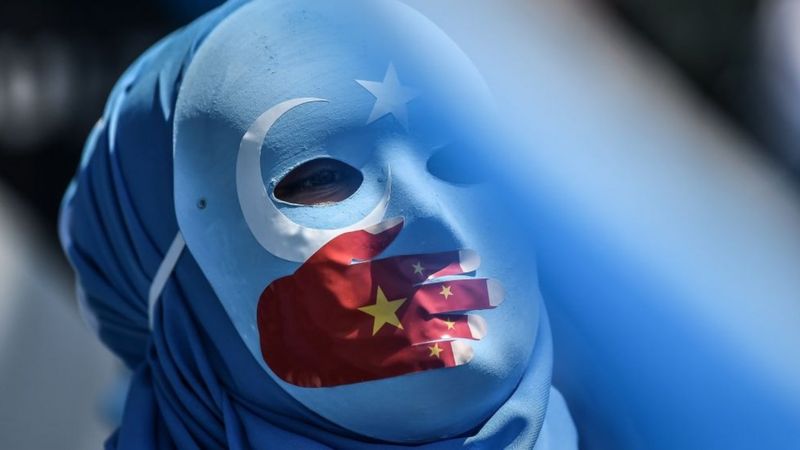
McGill’s Muslim Law Students’ Association hosted a panel titled “What’s happening to China’s Uyghurs?” on Nov. 11 to discuss the Chinese Communist Party’s (CCP) imprisonment of the minority Muslim group in the Xinjiang province in northwestern China. The discussion featured Conservative Member of Parliament (MP) Garnett Genius, who currently sits on the House of Commons Special Committee on Chinese-Canadian relations; McGill law professor Jérôme Beaugrand-Champagne; and Rukiye Turdush, president of the East Turkistan Information Centre. 

While historical tensions between the Han Chinese and Uyghur Muslims are deep-rooted, the CCP’s recent crackdown on Uyghurs began in 2009, when Uyghurs protested the murder of a migrant Uyghur worker. Although the CCP justified its oppression on the basis of Uyghurs being a perceived “security threat,” members of the international community have yet to define the measures—which include concentration and forced labour camps, forced sterilization, and the elimination of Uyghur cultural identity—as genocide. 

Turdush described the CCP’s actions as part of a larger process of cultural genocide by which the CCP is systematically destroying Uyghur culture.

“Uyghur language textbooks have been removed from all schools in the region, Uyghur bookstores have been closed, and all geographic Uyghur names, including street and city names, have been changed to Han Chinese,” Turdush said. “Anything we can use for a sense of belonging with each other [has been] destroyed with the aim of exterminating […] the whole Uyghur nation as a group.”

The panellists called on students to support Uyghurs by boycotting brands like Nike, which profits off of the labour of enslaved Ugyhurs, and other products, like the 2020 film Mulan, which was partially filmed in Xinjiang and whose leading actress voiced support for the CCP’s brutal repression of Hong Kong protestors. 

“When we buy products made by slave labour, they make more,” Turdush said. 

Beaugrand-Champagne, who spent much of his career working on infrastructure projects in China, connected the CCP’s ability to commit such massive human rights violations without challenge to the expansion of its influence through the Belt and Road Initiative (BRI). The BRI, which seeks to develop infrastructure in low-income countries, has enabled the CCP to entrench the narrative that its oppression of Uyghurs is part of a fight against terrorism.

“When I was working in Africa on some infrastructure projects, some state-owned enterprises [forced] the local government to recognize the fight against terrorism that would, of course, support their claim on Xinjiang,” Beaugrand-Champagne said. “And that’s where we need to do more and fight [the CCP] every time they use those terms, to confront them.”

Various nations, including Canada, have been reluctant to term the human rights abuses occurring in Xinjiang as a “genocide” due to the international legal obligations that the word triggers. In addition to applying targeted sanctions and disconnecting supply chains from forced labour camps, Genius argued that officially recognizing the CCP’s actions as “genocide,” constitutes one of the most significant actions the federal govenrment could take to address the situation.

“The point of the doctrine of the Responsibility to Protect is that if we solidify that a genocide is taking place, then you have to do something about it,” Genius said. “But unfortunately, the link between recognition and the necessary action has simply led, in many cases, to a failure to recognize.”

Despite the CCP’s human rights abuses against Uyghur Muslims, the Canadian government has yet to take significant action. Genius pointed out that divesting funds from the Canadian Pension Plans that are currently invested in Chinese state-owned corporations is a concrete step that the government could take to address the issue instead of deferring to verbal platitudes.

“The [government’s] response is, ‘We are very concerned, we are deeply disturbed about these events,’” Genius said. “And my response back is that people that are victims of modern-day mass atrocities do not care how you feel. They care what you do.”

McGill, News

MEDLIFE McGill hosts talk on ageing in the modern world

Over 20 people tuned in on Nov. 12 for MEDtalks 2020: Aging in Today’s World, a lecture series hosted by MEDLIFE McGill. First held in 2012, MEDtalks is an annual event intended to provide the McGill community with an opportunity to learn about current medical issues on both a local and global scale. 

Gabrielle Belloir, U2 Kinesiology and co-vice president Informational Outreach at MEDLIFE McGill, explained that the unique challenges the world’s increasingly elderly population present were selected as this year’s MEDtalk topic because they are not discussed as much as necessary. 

“As of today, the ageing population is the highest it’s ever been in human history,” Belloir said. “With [that] comes various problems, like lack of proper healthcare and retirement aid [….] As young people, we associate ageing [with] our grandparents, and many of us don’t think of it as something that is relatable. [However], whether it’s a societal or individual level, ageing is an issue we all face.” 

First to speak was Myra Giberovitch, a social worker, adjunct professor at McGill’s school of social work, trauma consultant, and author of the book, Recovering From Genocidal Trauma: An Information and Practice Guide for Working with Holocaust Survivors. Giberovitch spoke about the impact of loss experienced by elderly. 

“There are significant losses [experienced by] older people, a loss of financial security, their spouses [and] family members die, they lose their autonomy, and they may need to relocate,” Giberovitch said, “So there are losses that they’re going through which may cause vulnerability and a sense of helplessness.”

Giberovitch elaborated on the impact that isolation caused by loss of friends and family members can have on the elderly, particularly those who have experienced trauma. 

“We know that when people are isolated, they reflect on the past, and that’s a significant difference between survivors of war, […] and the older adult population in general,” Giberovitch said. “[Survivors] go back to traumatic experiences […] whereas older adults who didn’t experience trauma, they have positive memories, happy memories that they go back to.”

Next to speak was Dr. Howard Bergman, a professor of geriatric medicine and oncology in McGill’s Faculty of Medicine. During his talk, Bergman summarized his work, which includes creating the Canadian team for health care services, as well as improving the system to better serve patients in dementia care. He highlighted the importance of this initiative due to the impact that Alzheimer’s disease has on both individuals and the community. 

“[Alzheimer’s] is a complex disease, requiring interest both inside and outside the health care system,” Bergman said. “It’s complex because it’s medical [and] biological [and] it’s a problem [of] mental health. [Alzheimer’s] has an impact on the immediate caregiver in the family and it has a tremendous societal impact. It requires mobilization of different sectors of our healthcare system and social care system.”

Dr. Celena Scheede-Bergdahl, faculty lecturer for McGill’s Department of Kinesiology and Physical Education and  member of the Department of Anesthesiology at the Montreal General Hospital, closed the evening with a discussion on the prevalence of cancer in the ageing population, as well as possible intervention strategies. 

“We have a [large] ageing population right now, and as the population ages, there are more chronic diseases that take place,” Scheede-Bergdahl said. “We have to really think about what these patients are going through. We can’t treat them all on a one-size-fits-all prescription. We have to take a look at cancer now, not just as a question of treating cancer, but […] in terms of survivorship after that.” 

Belle Pan, U2 Science and co-vice president Informational Outreach with Belloir, summarized the goals that MEDLIFE McGill had for this year’s online lecture series in a message to The McGill Tribune

“We hope that [this talk] will help raise awareness of the need for adequate care and support for our ageing population, as ‘care’ and ‘support’ are very vague terms,” Pan said. “It is our hope that everyone was able to learn something new and gain awareness of the challenges we are or will eventually face in caring for our elders.” 

Basketball, Sports

NBA teams and players forced to adjust to early start

The National Basketball Players Association (NBPA) and NBA League officials reached an agreement on Nov. 4 for a 72-game season starting on Dec. 22, 2020. The implications of this decision are significant for players, franchises, and fans alike. The McGill Tribune examines the biggest consequences teams and players will face as a result of the early season start.

Title Contenders: Lakers, Heat, Nuggets, Celtics

With just 74 days between the end of the 2020 Finals and the start of the 2020-21 season, the Heat and Lakers will be facing the shortest offseason in American sports history. With less time to recuperate from their respective playoff runs, both teams gain advantages and disadvantages from the early start. Given the relatively weak free agent pool and both teams’ desire to save cap space for 2021, they will likely maintain the same rosters as seen in the 2020 Finals. The abbreviated training camp will thus have minimal impact on the play of both teams; the chemistry and rhythm built during those gruelling playoff runs should carry over to the first few months of the season. However, this short compressed off-season will surely fatigue both teams in the later stages of the season, particularly for an ageing Lakers roster. Fans can expect both teams to frequently load-manage their key players throughout the season. Other title contenders such as the Denver Nuggets and Boston Celtics will face similar durability issues from their deep runs in their respective conferences.

The 2020 Rookie Class

Rookies often have a tough time adjusting to the NBA style of play, as transitioning from a slower and less physically demanding game in college is challenging. As such, this year’s rookies will face the toughest introduction to the NBA in history. With a shortened training camp and the absence of a summer league, even star prospects such as Anthony Edwards and LaMelo Ball could struggle to adapt to the NBA.

Free Agents:

This year presents a difficult transition period for veteran free agents hoping to sign with new teams. With only a 12-day turnaround between the start of free agency and training camp, free agents not re-signing with their respective organizations will have little time to adjust to their new teams. Players will have to scramble to find new homes, and those with children will also have to arrange their schooling under short notice. To alleviate these difficulties, teams and players can come to an agreement well before the start of free agency. However, uncertainty regarding free agency and the risk associated with making multi-year commitments to new teams means that many veterans won’t be making decisions until the later stages of free agency.

Teams absent from the Bubble:

These teams will have had more than 200 days of rest as they were not invited to the 22-team Orlando Bubble in June. While the abbreviated training camp and transition period for new signings will hinder team cohesion, these teams will be the most rested coming into the season. The Golden State Warriors in particular will benefit the most from this early start. The team’s core of Curry, Thompson, and Green, who have played together since 2012, should have no trouble resuming play under Head Coach Steve Kerr’s system and re-establishing the Warriors as a clear contender. 

Teams making Major Adjustments: Rockets, 76ers, Pacers, Pelicans, Clippers, Thunder

With all of these teams planning major coaching and player changes, it will be difficult for new coaches to integrate new players into their systems during a shortened training camp before the early start. For the Rockets and Pacers, both of whom face uncertain futures and trade rumours with their star players, this early start will be particularly difficult as new coaches need time to establish which players to build their systems around. This season will truly test coaches’ ability to motivate their players to commit to their offensive and defensive schemes and ensure all players accept their team roles as quickly as possible without the intervention of unnecessary egos and tensions.

McGill, News

McGill students host a ‘Fight Night,’ violating red zone restrictions

Just after 8:00 p.m. Monday, Nov. 9, a group of students gathered on Forbes Field—the sports field behind McConnell Hall—to engage in planned, and spontaneous, wrestling matches. The event, which later moved to Parc Jeanne-Mance, drew first-year students from several of McGill’s residences, and even some non-McGill students.

Jordan*, who was present and who participated in the fighting, estimated that there were around eight fights and 30–40 people present throughout the night, while passersby accounts claimed they saw alcoholic beverages, and that there were 50–60 people. Another person who fought estimated that there were over 10 fights throughout the night. While punching was prohibited during the wrestling matches, Jordan alleged that one participant pulled their calf, but recovered quickly. Video evidence of the night that shows students circling and cheering on the fighters revealed that many attendees were not wearing masks, and not socially distanced. Jordan recalled the timeline of the night’s events.

“The police or the McGill security shut it down probably around 8:45 [p.m.] on Forbes Field and didn’t fine anyone,” Jordan wrote in a message to The McGill Tribune. “They stayed parked behind [Jeanne Mance] while people took the fight to [Jeanne Mance]. The police stayed, and I am almost 100 per cent sure [they] knew what was going on and seemed okay with it as they didn’t get out of their car and [instead] stayed between [Jeanne Mance] and Forbes field for the entire fight, which lasted [until] just before 10:00 [p.m.].”

In an email to the Tribune, Marisa Albanese, the Senior Director of Student Housing and Hospitality Services stated that the university’s administration was made aware of a possible gathering before Monday, but that they could not confirm the event took place.

“Security Services were dispatched on site, but did not witness any gathering,” Albanese wrote. “There were additional patrols that evening, and no incidents or gatherings were reported.”

Although the invitation graphic reads, “betting will be organized by [Royal Victoria College residences’] floor 11 casino,” multiple witnesses attest that no betting actually occurred at the night.

Awareness of the event was contained to small social circles in student residences before Monday, but after Instagram meme accounts picked up the story, the news spread quickly across social networks, reaching the McGill poll party group, Twitter, Reddit, the Students’ Society of McGill University, MTL Blog, CTV Montreal, and the Montreal Gazette. Jordan believes that the internet’s reaction to the fight night was misconstrued and overblown.

“This was not the infamous ‘fight club’ that major Montreal news sources are claiming it to be,” Jordan said. “This was a few guys wrestling in a park while people watched, and while it was [definitely] not the best call for Montreal’s red zones, the real story is, unfortunately, much more boring than the internet has made it out to be.”

While much of the coverage of the event has revolved around memes, tweets, and jokes, others, like Simon Kidd, U3 Arts, felt that the event was no laughing matter.

“The event demonstrated why some people were concerned when we learned that [residence] was going to reopen during COVID[-19],” Kidd said. “Even though the majority of students won’t participate in these sorts of events, 50 students did during [the red zone] [….] This is a global pandemic, and a lot of students are suffering socially by keeping themselves at home for the greater good of society.”

McGill’s COVID-19 tracker, which counts cases on campus and in residence, has reported zero cases since Nov. 1. Matthew Oughton, assistant professor in the Department of Medicine and attending physician in the Division of Infectious Diseases at the Jewish General Hospital, said that gatherings like the fight night pose a risk of COVID-19 transmission through prolonged and direct physical contact.

“If someone had heavily contaminated themselves and their clothes, and someone else is wrestling with them, then it’s conceivable [that] there’s some degree of risk through that direct physical contact,” Oughton said. “I would not recommend that this kind of activity continue, especially while [Montreal] is at this plateau [….] We are running almost one new case of COVID-19 every minute.”

*Jordan’s name has been changed to preserve their anonymity.

Creative, Video

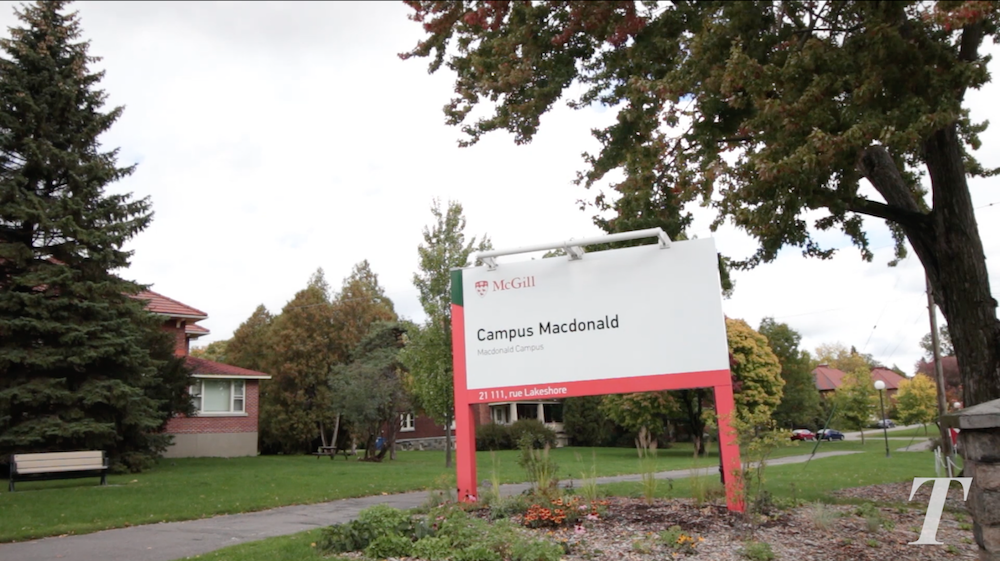
Exploring Mac Campus

Multimedia Editor Sarah Ford explores McGill’s Macdonald campus, and learns how it differs from McGill’s downtown campus in its location, departments, and atmosphere.

Edit: This video incorrectly states the degrees offered at McGill’s Macdonald campus. The five degrees offered are as follows: Nutritional Science, Food Science, Agricultural and Environmental Science, Bio-resource Engineering, and a concurrent Food Science and Nutritional Science degree. More information can be found at https://www.mcgill.ca/macdonald/prospective/degrees.

Features

Feeding ourselves, and our roots

Drinking cold sweet tea has always been my preferred way to pass a warm summer’s day. Growing up in Georgia, sweet tea was one of my favourite treats as a young child. While seemingly every Southern household had a pitcher of the sugary beverage in the fridge, ready to be enjoyed at any time, now that I live in Montreal, I have to brew sweet tea myself. As adults, it’s these specific foods and drinks that help us remember our families, even when we move far away from our hometowns. Having the dishes we grew up with not only reminds us of our childhood, but also keeps us connected to our roots. With limited options in Montreal to enjoy food from back home, however, finding these dishes can require a bit of effort.

Kayin Queeley, a case manager for the Office of the Dean of Students, grew up eating the national dish of Saint Kitts and Nevis: Saltfish and dumplings served with potatoes, breadfruit, and fried plantains. Now living in Longueuil, most of Queeley’s family remains in Saint Kitts and Nevis, making it all the more important for him to continue cooking Caribbean cuisine with his wife and daughter.

“In many ways, when I’m cooking something that my mom cooked, [that] I saw my aunt cook or my brother cook, it’s like sharing that experience, even though they’re not there,” Queeley said. “So really, it just means keeping my culture alive.”

Recreating the dishes made by loved ones is an integral means of staying connected to home, but there are limited options in Montreal. Restaurants might not serve regionally specific dishes, and attempting to make it yourself may require travelling out of the way to buy ingredients at specialty stores. Yet, this does not mean that finding echoes of familial dishes is entirely impossible.

Science & Technology

Data scientists seek the perfect picture of a whale

For most Quebec residents, whale watching is a special occasion. For Whale Seeker, a Montreal-based artificial intelligence (AI) developer, it’s everyday business. To meet the needs of ecological research, Whale Seeker uses cutting-edge AI technologies to detect marine mammals with imaging methods that can be delivered as quickly and as easily as possible. Fast and simple whale tracking is vital to helping governments and environmental organizations develop fishing quotas and manage shipping lanes.

Co-founded by biologists Emily Charry Tissier and Bertrand Charry and software designer Antoine Gagné-Turcotte, the very heart of Whale Seeker lies in the combination of biology and AI. Tissier and Charry had previously worked together in visually analyzing images of whales for the World Wildlife Fund. Usually done by hand, this process was tedious and time-consuming. Tisser and Charry were frustrated by the lack of widely available software to make their analysis easier. Tissier met the third future co-founder and software developer Gagné-Turcotte by chance, and the three founded the company. Whale Seeker has since added five more members, including specialists in unmanned aerial vehicles, remote sensing, and water quality. 

Software developed by Whale Seeker can automate the process of image filtration by searching through and identifying images that contain whales from aerial or satellite footage. Adding to this automatic image analysis and sorting, which on its own can cut weeks or months of work, Whale Seeker’s AI can also generate heat maps, along with plot data. These tools permit clients to observe patterns in whale movement, helping them create models that allow whales and humans to coexist better.

Despite these incredibly useful tools, ethics remain a major concern in AI, especially when it comes to marketing a company at the forefront of AI development. Whale Seeker maintains that their products are to be used for good.

Whale Seeker was created to provide cutting edge solutions for detecting marine mammals from imagery, delivered as fast and easy as possible,” the company wrote in a statement on their website. “We do not support our work being used for whaling, illegal fishing, skirting other environmental laws and regulations, and other activities we perceive as going against our core values.”

The blog section of Whale Seeker’s website also includes several articles on the ethics of AI, addressing both the issues of privacy violation and inequalities in the workplace, as well as the potential benefits that AI presents. Above all, they stress the need for regulation in the world of AI development. 

Whale Seeker has also made a commitment to the Sustainable Development Goals set forth by the United Nations. These include actively seeking to hire women in STEM to ensure gender equality and gender empowerment. 

To create a sustainable economy, Whale Seeker dedicates much of its research to environmentally-friendly solutions that not only can solve the short-term needs of their clients but also ensure an ongoing positive impact on the natural world. Actors such as oil companies are mandated to track whales in order to regulate their environmental impact, and more efficient analysis and data plotting will make that much more effective. In keeping with their commitment to combating climate change, Whale Seeker uses drones and satellites to capture footage. Unmanned aerial vehicles like drones use fewer fossil fuels than traditional methods of data collection. Not only do methods like motor boats have higher emission levels, they can also create disturbances underwater, potentially harming marine life. Studying marine biology and ecology is key to effective climate action, and human actions above the ocean’s surface have great impacts below it.

Whale Seeker’s impact stretches beyond the immediate world of whale watching and into the  larger ecosystem of marine biology and climate action in STEM research. Through custom-developed AI, Whale Seeker’s novel methods of data analysis aim to create a more equal and sustainable world.

Editorial, Opinion

Bill 21 is guilty as charged

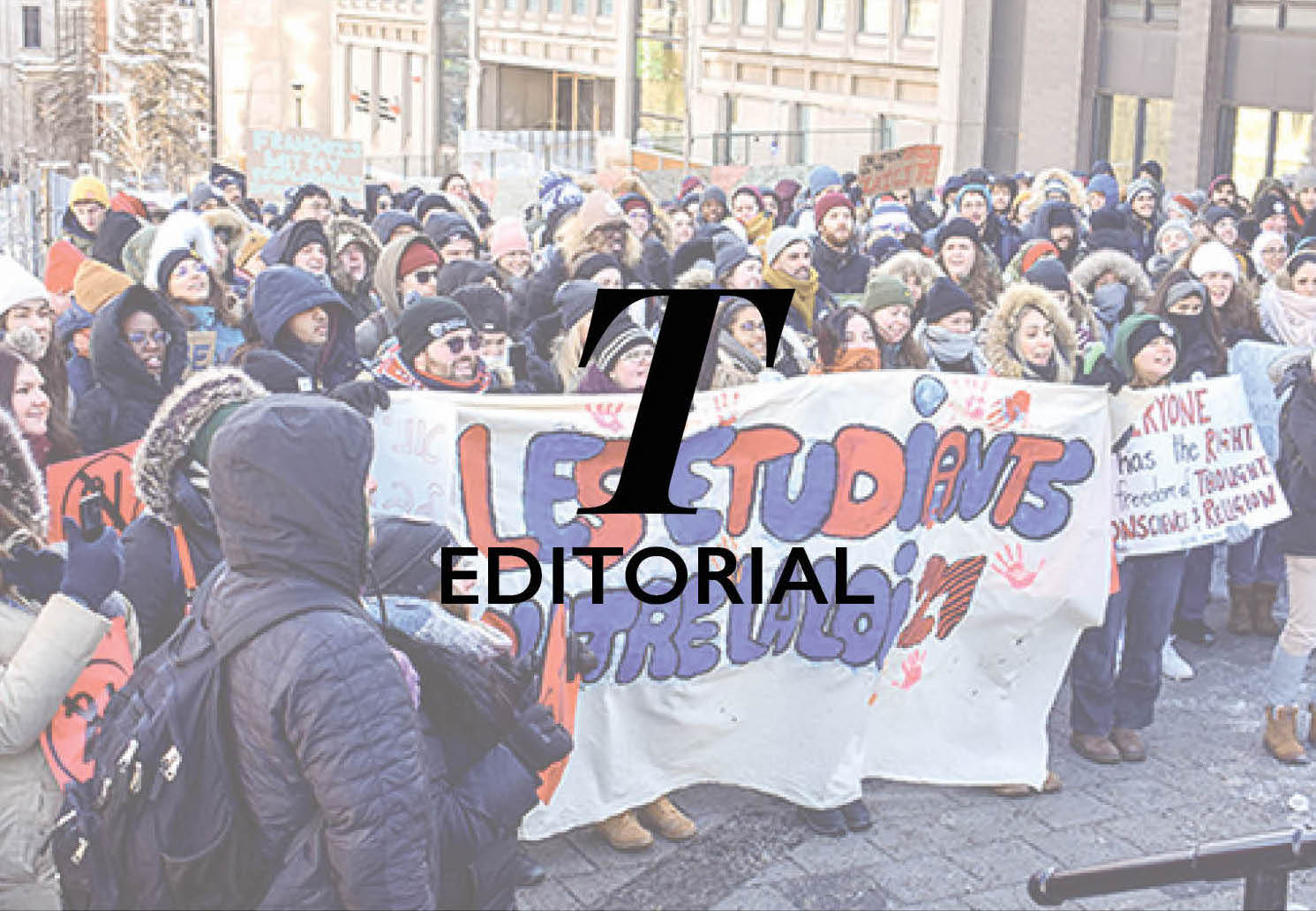
The Quebec Superior Court began hearing testimony on Nov. 2 in a civil case against Bill 21, a 2019 policy that prohibits certain public sector employees from wearing religious symbols in the workplace. Although the plaintiffs contend that the Bill violates certain fundamental rights protected under the Canadian Charter of Rights and Freedoms (CCRF), the Coalition Avenir Quebec (CAQ) has pointed to popular support for secularism and invoked the CCRF’s notwithstanding clause, arguing that religious freedoms fall under provincial jurisdiction. If the Court favours these arguments, many McGill students pursuing employment in the public sector will continue to be discriminated against. Moreover, considering the magnitude of the constitutional issues in question, the outcome of the proceedings could turn the Canadian legal system on its head. 

But respect for basic human dignity cannot become a casualty of limitless litigation and performative politics. On trial is not just the wording of the Constitution, but also the CAQ’s fervent xenophobic agenda. Canadians’ civil liberties must be upheld by the courts, notwithstanding the notwithstanding clause. Yet it is equally incumbent on McGill and other educational institutions to protest such legislation that undermines the livelihoods of their students.

If the law affected Quebecers equally, it would still be unconscionable because it insinuates that Quebec is a cultural monolith, whereas it is and always has been diverse. But its proscriptions are not equally distributed. Unlike Muslim women who wear hijabs, Sikhs who wear turbans, or Jews who wear kippahs, people of the Christian faith do not traditionally wear conspicuous garments. Although some may wear rosary necklaces or other religious adornments, these can easily be hidden under clothing, allowing them to more easily comply with the law. 

This double standard is morally bankrupt, and it should not become legally permissible. Secularism must be a ruse if it favours Christian religious expression over others, as its most passionate prosecutors paradoxically advance it under the shadow of the giant cross atop Mount Royal while touting other legacies of colonial French Catholicism. Even if Bill 21 is propped upon stilts of legal technicalities, it will nonetheless fail to differentiate between religious and public affairs because it was only intended to exclude some religions, not all. Instead, the law will triumph when the CAQ’s cultural intolerance expels thousands from public careers in a misdirected effort to preserve Quebec’s cultural idiosyncrasies. 

Still, Bill 21’s proponents claim that separating Church and State is especially necessary in the classroom. Nevertheless, by denying teachers’ right to religious expression, the law is preventing them from doing their jobs, pushing them out of schools, and hindering their chances of promotion. But the law does not only harm teachers, it also harms their students. Psychologists have shown that all students benefit from diversity, not just students from specific religious or cultural backgrounds—although it is important for these students to be able to relate to their teachers. 

The CAQ’s mission of exclusion threatens McGill as an institution. It is likely to discourage many Muslim, Jewish, Sikh, and students of other faiths from applying, as its implications not only suggest that their faith would hinder their economic mobility, but also that they are unwelcome in Quebec. Although McGill has released statements of “concern” and provided resources to assist current students who are affected by Bill 21, the university can do more to protect students. Many medical and education students, for instance, are required to complete professional experience components in classrooms and hospitals across the province. Administrators must facilitate these programs in a safe manner that ensures students’ right to religious expression. 

Above all, as sanctuaries of learning and critical discourse, universities have a responsibility to promote the moral integrity of the societies that produce them. Likewise, as reservoirs of capital, innovation, and national reputation, they possess tremendous political influence that their administrators often underestimate. Bill 21’s secularism belies Quebec’s multicultural reality, but universities are indeed a source of public wisdom and guidance. It behooves McGill to denounce bigotry and demand that Quebec’s courts dig channels of social equality rather than deep trenches of fortified ignorance.

Science & Technology

New research centre to usher in the era of digital democracy

In an age of increased globalization, social media makes it easy for people to voice their opinions online, discuss issues, organize around causes, and hold leaders accountable. However, media and technology have a tendency to amplify both positive and negative trends in contemporary discourse. In recent years, media technologies, and social media in particular, have progressed to a point where they have started to undermine democracy.

McGill’s Max Bell School of Public Policy recently launched the Centre for Media, Technology and Democracy to combat threats to democracy through research and public debate about how media and technology affect social systems and shape public policies. 

Threats to democracy include fake news, user privacy breaches, influence campaigns, “bots,” and the growth of information cocoons. These can lead to an increase in media fragmentation, political polarization, and, in the worst cases, extremism. Despite having access to huge amounts of knowledge at their fingertips, most people live in an information cocoon—interacting only with a limited number of people online who tend to share the same views. These social media “bubbles” can become ideological echo chambers reverberating with the same types of online content and opinions, regardless of their veracity, to the exclusion of a diversity of ideas. As such, those in power and with large online platforms can use media and technology to set agendas and spread hate and disinformation. 

“The kinds of democratic harms we see arising today—from mis- and disinformation to political polarization and election interference […] are not the result of ‘bad actors,’ they are baked into our tech infrastructure, and into our social investments and institutions,” Sonja Solomun, the Research Director of the Centre, wrote in an email to The McGill Tribune.  

The Centre is run by a team of researchers and journalists who are committed to changing how the public receives online media. They hope to bring about lasting structural change through the design of new technologies and economic models to foster accountable governance, and are thus attempting to rebuild and reimagine digital infrastructure in the public interest. 

“I joined [the Centre] because this is public-facing work that directly speaks to the communities and groups that are most affected by the kinds of harms we see arising,” Solomun wrote. “At the end of the day, I firmly believe in the power of the public to mobilize for a different future, and to hold governments and technology companies to account for that future.” 

The team is currently working on several projects. One of these is Tech-Informed Policy (TIP), an initiative to inform policy makers by explaining the implications of new technologies and their social consequences. They are also developing an essay series to examine how surveillance technologies deployed by public institutions and governments during the pandemic are disproportionately affecting historically surveilled populations, like low-wage workers and racialized groups.

The Centre is planning to hold events for students and the public. Aside from a monthly reading group, they are also hosting the Annual Beaverbrook Lecture, a two-part virtual event on abolishing surveillance capitalism

In the future, the Centre hopes to support and amplify other initiatives working on issues of democracy and technology. 

“A more democratic future for me is one where we value collective human life over property,” Solomun wrote. “That means thinking of technology––be it AI, data, or even things like privacy, as a possibility or as a relationship, rather than a commodity or as property. Once we depart from this premise, we can reimagine how we build, use, and govern these possibilities in ways that enrich collective life and public institutions.” 

If you are interested in learning more about the Centre for Media, Technology and Democracy, their research, future events, and other resources, visit their website and subscribe to their newsletter.

Read the latest issue

Read the latest issue