


Latest News

Out on the Town, Student Life

Calling all McGill foodies: A guide to MTL à Table

MTL à Table is a unique celebration of Montreal’s vibrant culinary scene. From Oct. 30 to Nov. 16, the event features over 150 restaurants across the city offering three- to four-course tasting menus ranging from $35 CAD to $80 CAD. With a list this expansive, decision fatigue is bound to set in for adventurous McGill and Montreal foodies eager to try out some new spots. To counter that, The Tribune has compiled a list of must-try spots before the event is over.  

Downtown

If you find yourself in downtown Montreal, you must stop by Brasserie Le Pois Penché, located at 1230 boul. De Maisonneuve Ouest, for a delicious three-course menu for $65 CAD. On a cold Montreal evening, this is the perfect spot for a meal that warms you from the inside out. Its French classics are unmatched, especially its French onion soup. This traditional brasserie is highly acclaimed for its other French fare as well, such as its delectable onglet à l’échalote and frites. This year, Le Pois Penché is partnering with MTL à Table to offer an affordable brunch menu for $25 CAD, perfect for a leisurely weekend meal with friends!

Old Montreal

Kwizzin Vieux-Port, located at 311 rue St.-Paul Est, serves Afro-Caribbean flavours with a Montreal flair. The vibrant fusion restaurant is serving up a four-course menu for $80 CAD that blends traditional Caribbean spices with modern culinary techniques to create mouth-watering dishes. We recommend the duck foie gras with Haitian-style corn soufflé to capture the unique culinary experience of this establishment. The natural and inviting atmosphere will leave you wanting more—especially on their featured jazz nights every Thursday from 6:00 p.m. to 9:00 p.m.!

Plateau-Mont-Royal

Chai-Yo, nestled in the heart of the Plateau right past Square St.-Louis, features an entirely plant-based, vegan menu. For this limited time, it is offering a three-course menu for $35 CAD. Its culinary mastery rests in its addictive, flavorful dishes, inspired by the fusion of street food and traditional Southeast Asian family recipes. For diners who grew up with traditional Thai and Chinese flavours, this restaurant’s comforting dishes are guaranteed to bring back childhood nostalgia. The fried brussels sprouts with peanut sauce and braised seasonal vegetables in a five-spice sauce satisfy every craving for warm, hearty Thai and Chinese comfort food. 

The Plateau is also home to Le Virunga, located at 851 rue Rachel Est, a 2025 Michelin restaurant that celebrates West African cuisine with enthusiasm and passion. For $65 CAD, this three-course menu will take you on a journey from Mali to Senegal to Cameroon and back, filling you up with rich and satisfying dishes. With a wine list featuring a 100 per cent South African selection, diners are guaranteed to experience a traditional African experience featuring Congolese and Nigerian dishes with a modern Quebecois flair. Order the cream of sweet potato soup followed by the slow-cooked beef chuck roast from Bon Boeuf and enjoy a truly unique culinary masterpiece. 

Little Italy

If you’re looking for traditional Italian food that will transport you to the heart of Naples, look no further. Boggeta Pizzeria is a classic spot in Little Italy, perfect for a cozy, satiating meal, warmed by a huge wood-fire pizza oven (shipped in one piece from the port of Naples). The four-course menu is offered for $50 CAD, and it is remarkably simple and unchanging—a testament to long-lasting Italian culinary tradition. This restaurant’s ingredients are always fresh and bold, allowing for the beauty of simplicity to shine, where the fresh ingredients speak for themselves. The authentic Napolitana-style pizza is a must-try, defined by its raised golden crust and traditional ingredients that explode with flavour. 

Sud-Ouest

Heni Restaurant, located at 2621 Notre-Dame Ouest, is frequently voted one of Canada’s best restaurants. It was a finalist on Air Canada’s Best New Restaurants in 2024, charming diners with its Middle Eastern cuisine that boasts seasonal ingredients for optimal freshness. For this select menu, Heni is offering a four-course menu for $65 CAD. This unique restaurant combines flavours of Southwest Asia and North Africa in a refined and inviting space. Their menu tells a story of the chef’s heritage through its inventive menu, crafted with local expertise and attention to every detail. 

Student Life

Le Quémino: A walk of hope against cancer

What do a 142-kilometre trek and the McGill community have in common? A lot more than you might initially think. Over the course of five days—from Oct. 24 to 28—McGill students embarked on a formidable journey from Montreal to Mont-Tremblant on foot, in support of the Quebec Cancer Foundation and the estimated 67,219 Quebecers diagnosed with cancer just last year

Primary organizer, Gabrielle Lavoie, U4 Engineering, dedicated the walk to her grandfather, who passed away from cancer earlier this year.

“Cancer touches so many lives,” she said in an interview with The Tribune. “Walking in his memory allows me to honour him, carry forward the love he gave, and stand in support of everyone affected by this disease.” 

With roughly 184 new cases diagnosed each day, and an estimated 22,800 deaths per year—an average of 62 per day—cancer remains the most pervasive cause of death in Quebec, surpassing even cardiovascular disease. In Quebec alone, someone learns they have cancer every eight minutes, and every 23 minutes, someone dies from it. Walking in memory of those we’ve lost, it’s impossible not to feel the weight of what cancer has taken. Yet it is the courage, resilience, and love it leaves behind that inspires action and fosters solidarity for all those still fighting. 

Of all the students who walked, Lavoie was the only participant able to complete the full 142 kilometres. Although she has a background in running and has competed in a half-marathon before, this was an entirely different realm of physical and mental challenge. Some days stretched for 13 hours, taking her past dusk through the Laurentides terrain. Following the P’tit Train du Nord trail with stops in Bois-des-Filion, Saint-Jérôme, Sainte-Adèle, and Saint-Agathe-des-Monts before concluding at Mont-Tremblant, the walk traced a historic railway-turned-recreational path—a route once used daily by local residents, and a path that has connected communities for generations.

Le Quémino is not just an extraordinary act of endurance—it is a testament to the human spirit and the power of will we are all capable of. It is a performance of good-faith solidarity in the face of apathy, an opportunity to look inward and affirm: ‘I believe in possibilities.’ 

“It is inspiring to see hope in action [….] I’m just a McGill computer engineering student, but the truth is anyone can take on an initiative like this. When we believe something is impossible, it becomes impossible,” Lavoie reflected. “We kind of make it impossible. We often think we know ourselves but we only discover our limits by testing them. Sometimes we need to see what we are capable of to believe in ourselves and sometimes we need to see ourselves in others to act with the kindness and courage that real change requires.”

The fundraiser more than doubled its initial goal, raising $2,300 CAD over the five-day journey. 

Lavoie hopes that the project will carry with it a ripple effect, inspiring others to take positive action. “Just because you’re one person doesn’t mean you have to feel powerless. Each person has the ability to step out of their comfort zone and create the kind of change we want to see.” 

When asked about a particularly memorable moment on her journey, Lavoie recalled a small navigational hiccup. 

“I typed the destination into Apple Maps and it said no route could be found.” This, of course, didn’t stop the journey. “To make a goal a reality you need to take it one step at a time. Though you may not always see the whole way forward, if you put one foot in front of the other and give yourself permission to believe in your own strength, you will find a way.”

“We found a route. We always do.”

Know Your Team, Sports

Know Your Team: McGill Men’s Lacrosse

Redbirds Lacrosse headed to Brampton, Ontario, from Nov. 7 to Nov. 9 for the Canadian University Field Lacrosse Association (CUFLA) Baggataway Cup with the same expectation as every fall: Play fast, play together, and play for silverware. 

Captain and midfielder John Miraglia, U3 Arts, says this year’s group is better for having been tested. After a perfect 2024-2025 regular season ending short at Nationals, 2025-2026’s 9–2 campaign, composed of two one-goal losses, forced the team’s collective growth. 

“We finally felt some adversity, and it really helped us adapt and sharpen what we need to win playoff lacrosse,” Miraglia said in an interview with The Tribune

The path was clear: A Friday bye as the number one seed, then a Saturday semifinal, and, if earned, a Sunday final with a shot at glory. The Redbirds’ biggest edge in the tournament, according to Miraglia, was their tempo and their time to rest. 

“We play faster than anyone, and I have no doubt we have the highest skill level in the tournament,” Miraglia explained before the weekend. “Our bye means whoever we face played less than 24 hours earlier.”

The team’s speed is underwritten by depth and buy-in. Their rallying cry this season was ‘as one.’ Veteran short-stick defensive midfielder Jack Buzby, U4 Arts, shared in an interview with The Tribune that after last year’s stumble, this attitude is a shift. 

“We wanted more trust, less leaning on individuals,” he said. “Those tight, one-goal games made us comfortable under pressure. It’s us against us. [We need to] do our jobs, play our game, and take it one day at a time.”

The team also has a younger back-end than it did a year ago. Long-stick midfielder Preston Norris, U2 Arts, commented on this learning curve. 

“The rookies took criticism, adapted fast, and kept communicating. That’s what has won us our games,” Norris said in an interview with The Tribune.

If there is a snapshot of this group’s identity, it is their overtime play-in escape versus the Ottawa GeeGees on Nov. 2. The Redbirds, down 10-5 late in the game, rattled off five unanswered goals before attacker Mark Symon buried the winner off a tantalizing sprint and feed from roommate and fellow attacker Rowan Birrell. The bench never flinched. 

“No one thought we were going to lose [against Ottawa], and it’s that energy that won us the game and hopefully can win us Nationals,” Miraglia said.

The team has further motivation: This is the final season for head coach Nicolas Soubry. For senior members of the team like Buzby, who took the field at Nationals with his brother Benjamin Buzby for the second time in their varsity careers, the stakes are personal.  

“Playing with my brother is everything. We grew up playing together and it’s truly special to be able to continue that,” Jack Buzby said before the Cup. “For Coach Soubry, I want to end it on the high note he deserves.”

The Redbirds Lacrosse’s season sadly ended in a 15-12 loss on Nov. 8 at the hands of a relentless Nipissing University Lakers opposition in a fast-paced semifinal game—though Nipissing had lost their last nine games against McGill. McGill’s indomitable spirit saw them claw their way back from multiple deficits, tying the game 12-12 early in the fourth quarter before the Lakers closed with three unanswered goals, led by high-impact grad transfer Jason Knox

Despite the loss, Joshua Jewell led McGill’s offence with a hat trick, while Dylan Fenton and Liam Miletich nailed two goals apiece. Goals from Owen Howard, Charlie Hostetter, Torsten Blodgett, Massimo Thauvette, and Norris rounded out the scoring in a hard-fought contest marked by fiery pace and physicality.

Nipissing’s attack, driven by Knox’s nine-point game, ultimately proved too much for even the top-seeded Redbirds. While their defeat brings a painful end to a strong season, McGill was still well-represented in the Nov. 8 CUFLA All-Rookie Game, with Hostetter, Fenton, Spencer Mason, Ryder Sunday, Jake Brady, Nick Gutin, Yoan Pinsonneault, Brennan Visokey, and George Carayiannis all earning selections.

Science & Technology

How aspects of body image may predict self-injury in university students

Content warning: Self-injury

Nonsuicidal self-injury (NSSI) remains an urgent and often overlooked mental health concern, and one that demands greater attention from universities worldwide. As many as 44 per cent of those who engage in NSSI in adolescence continue to do so when they start university, and eight per cent of all university students report engaging in NSSI behaviours in the past year. 

The transition from secondary education to university represents a critical period of academic pressure, personal exploration, and increased social opportunities. During this timeframe, students face a heightened risk for mental disorders. Researchers have suggested that body regard—how one perceives, lives in, and cares for one’s body—plays a pivotal role in NSSI engagement.

In a recent publication in the Journal of Affective Disorders, Julia Petrovic, a recent PhD graduate of McGill’s Educational Psychology program and current post-doctoral fellow at Harvard University, explored binary gender differences in the domains of body regard and NSSI. Petrovic hopes that the results of her research can guide the types of resources and support institutions provide.

“The McGill community is very diverse, and so should be the mental health resources that are made available to its students,” Petrovic said in an interview with The Tribune. “It is my hope that my research eventually informs the way that student services at universities will respond to students’ mental health challenges.”

Petrovic’s study investigated four body regard domains—body acceptance, athleticism, body care, and body connection—among students reporting NSSI over the past year. Using a quantitative approach, her study examined 3,343 college students, with 12.7 per cent reporting NSSI history in the past year. Of this 12.7 per cent, 82.4 per cent were women. 

“We had a large sample with over 3,000 university students, so we can be confident in the results we found,” Petrovic said. “It was also the first study to explore body regard in its different domains, which really deepened our understanding of how aspects of body regard might contribute to the prediction of NSSI and how this differs by gender.”

Petrovic’s findings revealed that, on average, females were less accepting of their bodies and perceived themselves as less athletic relative to males. Furthermore, lower levels in the four domains of body regard were linked to a higher likelihood of self-injury in the last year among females, whereas in males, only lower levels in body care and body connection showed this effect. Despite these differences, both reported taking similarly good care of their bodies and felt similarly connected to them.

“We essentially found evidence that having a positive regard for one’s body played a protective role in relation to self-injury, as well as some nuances for gender,” Petrovic said.

Petrovic emphasized the importance of repeating the study with university students who report more diverse gender identities to achieve more inclusive and generalizable results.

“University students who did not identify with a binary gender were unfortunately excluded from our analyses because there were too few individuals to include in a statistically [significant] way,” she said.

Petrovic also noted that the levels of body regard domains in predicting NSSI should be explored through longitudinal research, which follows participants over a longer period of time.

“An important limitation is the study’s cross-sectional design, so our results are really a snapshot of how things are interrelated at a given moment,” she said.

Petrovic concluded by emphasizing the importance of moving away from a ‘one size fits all’ approach and tailoring interventions to more personalized strategies.

“Each individual’s history, whether they have lived experience of self-injury or unique ways in which they view themselves and their body, can impact what sort of mental health support would work best for them,” Petrovic explained. “The best we can do is try different strategies, like meditation, journaling, spending time in nature, exercising, talking to a friend or a mental health professional, so we could really find what works best for the individual.”

Arts & Entertainment, Film and TV

Jafar Panahi breaks his enforced silence with a defiant new film

In 2010, police arrested the celebrated Iranian filmmaker Jafar Panahi on fabricated charges of ‘anti-government propaganda.’ After a brief imprisonment at the notorious Evin prison in Tehran, he staged a hunger strike to protest his detention, which drew global outrage. He was released and placed on house arrest with a 20-year ban on filmmaking and leaving the country. In 2022, Panahi was arrested again, prompting yet another hunger strike and his subsequent release. Nevertheless, these arrests and bans haven’t stopped the filmmaker from doing what he loves most: Making movies. 

Despite constraints, Panahi managed to smuggle his 2011 film This Is Not a Film into the Cannes Film Festival—hiding it famously on a USB drive inside a cake. In the years that followed, he secretly made four more acclaimed works while still officially banned: Closed Curtain in 2013, Taxi Tehran in 2015, 3 Faces in 2018, and No Bears in 2022.

Now, after years of secrecy and silence, Panahi has returned with his boldest statement yet: It Was Just an Accident, which was released this October.

The film begins with a routine late-night drive that sets off a thrilling chain of events. When a man strikes a dog with his car and seeks help near a remote mechanic’s garage, the mechanic—Vahid (Vahid Mobasseri), a former political prisoner—recognizes the sound of the man’s fake leg. Convinced that the stranger is Eghbal (Ebrahim Azizi), an interrogator who once tortured him, Vahid kidnaps the man and drags him into the desert, intent on enacting his revenge. But as the day stretches on and doubt creeps in, Vahid begins to question whether he’s punishing the right man or merely repeating the cruelty that once broke him.

As the film progresses, more eccentric characters enter the story, each complicating Vahid’s quest for certainty. Through their interactions, the film creates a deeply human tale of trauma, vengeance, and forgiveness in the face of violence. What starts as a simple revenge story becomes a meditation on how trauma perpetuates and reinvents itself, and whether true accountability is possible in a society haunted by its own political wounds. 

Part suspense-laden thriller, part dark comedy, and part psychological drama, It Was Just an Accident tackles multiple genres while maintaining Panahi’s typical political critique. Its bold themes and moral depth evoke the influence of Panahi’s fellow Iranian filmmakers, Abbas Kiarostami and Asghar Farhadi, while remaining true to his own voice. The film not only reflects his trauma from his imprisonment in Iran but also illuminates the stories of his fellow inmates from Evin prison. One of the film’s most striking moments occurs near the end when Panahi, in a single take, captures Vahid’s confrontation with his alleged torturer. The scene pulses with both rage and restraint. The characters’ resilience and shared grief clearly echo the real-life experiences of those who endured personal loss under state oppression, grounding the film’s suspense in a human reality. 

Distributed by the French company mk2 Films, the movie premiered at Cannes 2025, where Panahi, now permitted to travel outside Iran, appeared in person for the first time in over a decade. The film won the Palme d’Or, Cannes’ most prestigious award. Critics have hailed the film as Panahi’s most daring work yet, not just for its political defiance but for its raw, emotional poignancy and unflinching sincerity. While some might attribute this acclaim to solidarity with his defiance under censorship, It Was Just an Accident warrants its full praise for its masterful storytelling and innovative cinematography alone.

Although Panahi remains under sporadic surveillance in Iran, his renewed visibility signals a small but significant victory for artistic freedom. He continues to use film to advocate for Iranian artists and filmmakers who are silenced by the government, wielding his platform and popularity to amplify their voices on a global stage.

It Was Just an Accident isn’t just another arthouse drama. It is a courageous act of resistance disguised as a film. Its universal insight into human nature transcends national and cultural boundaries, resonating with audiences everywhere. Watching this film means bearing witness to Panahi’s refusal to be silenced, and to the resilience of creative truth in the face of repression. 

Commentary, Opinion

The Port of Montreal expansion can be great—if Carney listens to residents’ concerns

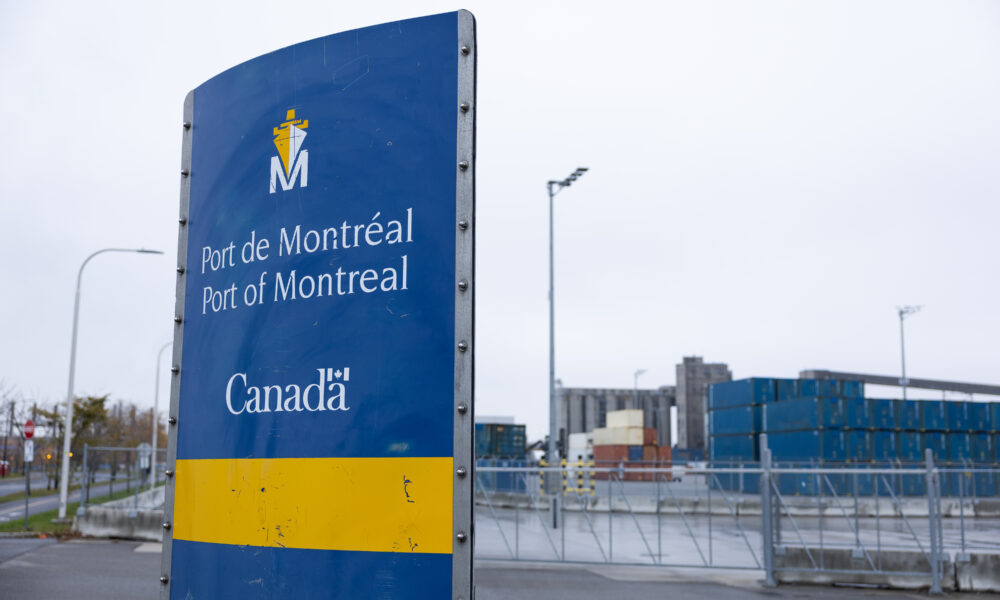
The long-planned Contrecœur Terminal Expansion Project aims to expand the Port of Montreal’s shipping container capacity by 60 per cent by building a new port 40 kilometres away from Montreal. At its core, this expansion is a good idea: It will create jobs and stabilize Canada’s American-skewed international trade dynamic. However, residents worry it will harm their quality of life, local ecosystems, and the broader environment, while others claim its increase in size is unnecessary

Critics’ ecological concerns, as well as their concerns about quality of life, are valid. Locals are the ones who will have to live with the consequences of this massive development. Prime Minister Mark Carney must give affected communities a voice in the planning process rather than steamrolling them. Incorporating community consultation into the expansion project will improve the benefits and sustainability of the port, while simultaneously strengthening public trust in government and its projects. 

Canada’s economic future looks uncertain after President Donald Trump abruptly ended trade negotiations and promised increased tariffs as retribution for an anti-tariff advertisement aired by Ontario Premier Doug Ford. Canada’s economy has historically relied on the U.S., but that trust has recently been frayed, meaning that it is fiscally prudent for Canada to diversify its trading portfolio.

Opponents to the legislation argue that the port expansion violates Bill C-5—which aims to increase Canadian economic autonomy by facilitating free trade between provinces—since it makes Canada’s economy less autonomous and more dependent on international trade. However, by broadening capacity for maritime trade across the Atlantic, the port expansion critically lowers dependence on one specific and increasingly unpredictable trading partner: The U.S. Even though the port expansion will bring external competition for Canadian producers, it boosts Canadian autonomy by diversifying trade partners to offer a safety net to Trump’s flip-flopping policies. Bill C-5 explicitly permits exceptions for certain projects deemed to be in the national interest of Canada, and this plan meets that criterion.

However, this project poses environmental concerns for locals: Over 1,000 cubic litres of river water will be used each day to clean machinery on-site, and it is very possible that dredging may harm the local copper redhorse fish. While minister of Environment and Climate Change Julie Dabsuran has approved the original plan under strict conditions, involving environmental impact mitigation and collaboration with some First Nations communities, the government’s environmental responsibilities cannot end there. It must continue to incorporate input from local residents about the new changes. 

One of the most blatant instances of neglect of community feedback is the project’s abrupt decision to allow construction work to continue late into the night. Instead of tailoring the project to address residents’ concerns, preliminary work began on the site almost immediately after the end of the comment period last month, sending a message to locals that their input is a low priority.

Residents’ environmental concerns about the port expansion are intimately tied to questions about Canadian autonomy. Some residents highlight that the port contributes to an economy fueled by international trade, which contributes more to global warming. However, an economy oriented towards international trade //can// coexist with a healthy environment. Surprisingly, studies have shown that trade within North America is actually more carbon-intensive than trade across the Atlantic or Pacific. Most goods traded between the U.S. and Canada are transported into Canada on trucks, which emit far more carbon than ships do. To be clear, however, a massive expansion in shipping capacity will undoubtedly increase emissions in the shipping sector; a better alternative would be a smaller expansion that accommodates a growing shipping sector without creating surplus capacity. 

Community concern about the effects of the port expansion on Canada’s sovereignty and the global environment is misplaced. However, local issues like water pollution, habitat destruction, and noise disturbance are real risks that the project planners have not clearly accounted for and have poorly communicated to residents under time pressure from the government. Carney’s administration must not let its ambition get in the way of due process. A smaller expansion could address constituent concerns by lowering water usage, requiring fewer construction hours, and curbing greenhouse gas emissions. 


Whatever the compromise the people of Contrecœur and the government of Canada end up finding, the best solution will ultimately be one reached through genuine collaboration.

Commentary, Opinion

Reporting on the Garment District’s new bike path doesn’t tell the full story

Last spring, the borough of Ahuntsic-Cartierville installed a new bike lane, slicing through Montreal’s historic Garment District. Businesses claimed to suffer sales losses as customers who could not find parking started shopping elsewhere. At least, that’s the narrative that news outlets perpetuate. In reality, while controversy around new bike lanes is expected as they require a redistribution of public space, this controversy often finds itself in relentless opposition to much-needed infrastructure projects. 

The Garment District, a block of buildings along a narrow section of rue Chabanel, runs less than a kilometre east-west; to the north stand eight evenly spaced massive multi-storied glass and concrete cubes, the manufacturing hubs of Montreal’s historic fashion industry. To the south, mid-rise mixed-use storefronts open onto the street, behind which dense suburbs sprawl. The district can be walked in less than ten minutes. 

However, the effects of globalization—and the resultant shift towards international manufacturing—can be felt in the changing urban fabric, with garment stores, cafes, convenience stores, restaurants, and banks. Today the area is home to over 2,000 companies with tens of thousands of employees. And of course, a new bike lane.

Earlier this month, CTV News produced a breathless article reporting on the local uproar around the bike lane’s addition to the streetscape. Alongside interviews with cantankerous local business owners, the article uncritically recites the bullet points of a write-up by Société de developpement commercial District Central, a non-profit association of businesses in Ahuntsic-Cartierville that commissioned a survey of local businesses. The survey found almost 90 per cent of local businesses self-reported “difficulty accessing their facilities.” It also found 66 per cent believe their company is less competitive due to the path’s addition. 90 per cent of business owners in the area also reported they were not properly consulted on the case. 

This is especially apparent when one takes into account sampling bias. The survey’s vast majority loses rhetorical power once placed in the context of its meagre 16 per cent turnout, representing only 170 businesses out of the 1,048 surveyed. Assessing the study’s measurands through a series of opinion questions about a piece of infrastructure yet to see a single winter can hardly be considered reputable data on the issue.

A study that finds that an overwhelming 90 per cent of a given population shares alignment on niche local planning issues boasts a consensus enviable for even the world’s most sycophantic regimes. But especially considering Montreal’s diverse mix of business class apparently reflected in the results, it casts doubts as to the legitimacy of the sampling process. Regardless of whatever statistical findings it produces, a business lobbying group essentially surveying itself about a contentious new infrastructure addition is not expected to find anything but the result that best serves its own economic interests.

When considering the uproar, one may be reasonably deceived into believing the bike lane moves through rue Chabanel—the area that would typically be considered the Garment District. Far to the contrary, the path runs next to said Garment District: North-south down rue Meilleur before cutting one block over to continue down av. du Parc. One must walk the entire length of the Garment District just to glimpse the modest bike path, two thin strips bordered by green bollards on either side of the road. A single BIXI station sits on an otherwise wide sidewalk. After getting a sense for this supposedly problematic section of road, the criticisms around it begin to seem more disingenuous. 

A 2024 McGill study found bikes are underserved by allotted road space compared to their share of trips by 212 per cent. This outrage has little to do with genuine harm to local businesses; rather, it demonstrates how narratives of personal inconvenience and burdensome bureaucracy are mobilized to oppose even modest urban improvements. 

For those who may be interested, the Garment District is relatively easy to get to, even in spite of the STM strike. All one needs to do is grab a BIXI and ride it north. The bike paths are pretty much uninterrupted all the way up, and it’s a decently pleasant ride.

Montreal, News, The Tribune Explains

The ‘Trip’une Explains: The legality of psilocybin mushrooms in Montreal

Psilocybin mushrooms, colloquially known as ‘magic’ mushrooms or ‘shrooms,’ contain a psychedelic compound—either psilocybin or psilocin—and are considered Schedule 3 substances under Canada’s Controlled Drugs and Substances Act, alongside lysergic acid diethylamide (LSD)  and ketamine. The cultivation and distribution of all Schedule 3 substances, unless prescribed by Health Canada, are punishable with up to ten years of jail time. The Tribune explains how these legal constraints on ‘shrooms’ play out in Montreal.

Is taking ‘shrooms’ illegal?

Yes, possession or consumption of psilocybin is illegal everywhere in Canada, unless you have an exemption from the government for the purpose of performing clinical trials with ‘magic’ mushrooms. Possessing ‘shrooms’ is punishable with a $1,000 CAD fine and up to three years jail time, while their production holds a penalty of ten years in prison. 

Former Mayor of Montreal Valérie Plante has advocated for the decriminalization of simple drug possession and personal use of Schedule 3 substances, including ‘magic’ mushrooms,  since 2017. Still, the Service de police de la ville de Montreal (SPVM) has continued to pursue charges in both instances, with Plante telling the Canadian Broadcasting Corporation that the SPVM “will continue to enforce the law,” despite her cabinet’s stance. 

What constitutes a charge?

A first-time offence of possession of less than 200 grams of ‘shrooms’ is typically considered a misdemeanour and is punishable by a $1,000 CAD fine, jail time of up to a year, probation, or legally mandated enrollment in a drug treatment program. Charges can only be filed if the prosecutor can prove the defendant had prior knowledge and control of the drug’s whereabouts. 

Possession with intent to distribute, sell, or traffic ‘magic’ mushrooms is a felony which can be met with a fine from $10,000 CAD to $1 million CAD and a possible prison sentence of twenty years. Charges can be further escalated if offenders have prior criminal records, and based on the location of the offence: For example, a dispensary operating near a middle or high school can receive harsher penalties than one in a business district.

What about magic mushroom dispensaries?

Storefronts often avoid police scrutiny by marketing themselves as wellness or medical clinics instead of dispensaries, and sometimes sell journals and other therapeutic tools alongside ‘magic’ mushrooms. Storefront dispensaries can also sell growing kits by claiming that their product is for non-psychedelic purposes, such as educational, agricultural, or cooking uses. 

Many dispensaries operate online to avoid pressure from the SPVM to shut down. This allows them to doubly protect their employees and buyers, who may otherwise run the risk of being arrested during police raids of in-person stores. 

Which dispensaries get raided?

It is unclear how and why specific dispensaries in Montreal are targeted, while others operate freely. Funguyz, a franchise dispensary with several locations across Montreal and Toronto, has been raided several times by police in both provinces. 

Their first Montreal location was opened and raided on July 11, 2023, with the SPVM seizing its merchandise and making four arrests. The location reopened a week later and was again raided on July 21, coupled with simultaneous searches of the apartment above the store and at another location on the island. 

On Aug. 3, the SPVM conducted a third raid, making one more arrest and seizing four bulk kilograms, 753 grams of edible products, and 1,643 tablets of psilocybin. All those arrested were employees of the chain and faced varying charges of trafficking and possession. 

The frequent raids led FunGuyz to announce in November 2024 that their business was moving entirely online. Despite this, some storefronts have continued to service customers in person.

Student Life

Secret services: Five lesser known perks at McGill

As a student paying for rent, groceries, utilities, and a hefty tuition, bills can add up quickly, making the hunt for free activities and resources pertinent. With near-constant construction, pricey on-campus food, and expensive course materials, some may wonder where our tuition money really goes. With that in mind, The Tribune presents five ‘free’ perks that McGill offers students.

Unlock your inner engineer

Although many non-engineers may find 3D printing elusive and exclusive, it is available for free to every McGill student, regardless of program. Students, staff, and faculty can access 3D printing through the Schulich Library 3D Printing Service. To print something, you must first register and read the regulations, then create your print job and submit it to the 3D Printing Job Request Form. Shortly afterward, it will be ready for pickup at the Schulich Library Service Desk. This is a great opportunity to explore your creative side and produce a completely unique object using advanced technology.

Art, art, and please, more art!

Through the McGill digital libraries, students have access to thousands of films, television shows, musical pieces, and live performance recordings. Students can immerse themselves in curated media ranging from ballet performances by the Royal Ballet through the Naxos Video Library to popular new releases like Sinners on Criterion on Demand

Another excellent platform McGill grants students access to is Kanopy. Kanopy is a streaming service with a diverse film library including Hollywood classics, independent films, foreign features, and fascinating educational documentaries. Completely free to McGill students, Kanopy has something for everyone, whether you’re on the hunt for an underground movie or simply need a break from monthly streaming services.

To access McGill’s collection of streamable media, go to the homepage of the libraries website, click the instructional support tab, and then the class screenings tab. You will then see the downloadable and streaming media tab, which leads you to the list of databases McGill has access to.

Breathe in, breathe out, and try out Headspace

The SSMU grants all McGill students a Headspace account free of charge. Headspace is an app focused on restoring and building mental health and wellbeing through mindfulness, offering meditation plans and music for focus, restful sleep, and quiet mornings. On the Headspace website, simply activate your account using your student email. This resource is excellent for students who are struggling with stress or who want to practice mindfulness more generally. Enjoy this perk for free, and breathe out the pressure. 

The McGill genealogy genie

Many students are curious about their family history, but tracing your lineage can be challenging—and expensive. Through McGill, students have access to Ancestry, a genealogy company which allows you to search for ancestors through voting, immigration, and census records. Navigate the McGill libraries website to find the genealogy research resources page, and prepare to learn more about your family tree. 

A free winter wardrobe

Thrift McGill is an SSMU-funded shop where students can drop off and pick up clothes free of charge. The shop opened in the fall of 2024 through Student Life and Learning and Student Housing and Hospitality Services in partnership with the Sustainability Projects Fund. Thrift McGill is a way for students to sustainably declutter their closets and find stylish new pieces. Located at 3473 rue University, Thrift McGill is an excellent way to refresh your closet, help the environment, and give your wallet a much-needed reprieve. 

Arts & Entertainment, Books, Film and TV

‘Lovely Day’ brings Alain Farah’s autobiographical novel to the screen

Lovely Day (Mille Secrets Mille Dangers), directed by Philippe Falardeau and based on an autobiographical novel by McGill’s own Alain Farah, weaves together Farah’s past as a young Lebanese Montrealer with the climactic moments of his wedding on the steps of St. Joseph’s Oratory. Although it starts and ends on the same day, the film meticulously unpacks the events of the last 20 years, jumping backwards and forwards in time to immerse the audience in Farah’s head as he wrestles with his past. 

At the request of McGill students, there was a special screening of the film at Cinéma du Musée on Nov. 4, featuring a question-and-answer session with Falardeau and Farah themselves. After the screening, The Tribune sat down with Farah to discuss his journey from writing his novel to co-writing the script for Lovely Day to seeing the finished movie. 

“It’s a process that produces a lot of ambiguity, but not from my point of view, because I am completely comfortable with the idea that we’re not just one thing,” Farah told The Tribune. “I’m able to be at the same time the character, the narrator, the co-script writer, the professor, the dad, the whatever.”

The novel itself, Mille Secrets Mille Dangers, published in French in 2021 with no English translation, stretches over 500 pages and draws stylistic inspiration from James Joyce’s Ulysses. Adapting such a complex book into a feature film posed a challenge for Falardeau, who had to juggle the timelines of Farah’s childhood, adolescence, and wedding day in just a two-hour film. To make this more manageable, Farah and Falardeau decided to remove an additional future storyline from the book, focusing instead on the past and present. 

Cutting between these different timelines, while cinematically complex, is crucial to the film’s deeper effect: Making the audience not just see, but empathize with Farah’s anxiety disorder, which manifests throughout the story in his panic attacks, and also in his climactic loss of consciousness during his own mother’s wedding toast. 

“[Falardeau] often said while we were prepping, that it’s not enough to just see a character that’s tense or sweating. He wanted the people in the theatre to feel that anxiety,” Farah said. “I think he reached that goal. We’ve seen some people looking pretty anxious coming out of the movie.”

By introducing the story of his parents’ divorce and the onset of his chronic illness as a young child, and painstakingly tracing these threads through the friendships and betrayals of his adolescence, the film succeeds in placing us in Farah’s shoes as he navigates his long wedding day—which, of course, comes with its own ups and downs.

All of these timelines are set against the backdrop of Montreal. However, Farah emphasized that this wasn’t the Montreal we see in so many films—seemingly composed solely of downtown and the Mile End. The majority of Lovely Day is filmed where Farah grew up, in Ville Saint-Laurent, with notable pit stops at St. Joseph’s Oratory and the Olympic Basin. While Montreal is the ‘city of a thousand steeples,’ for Lovely Day, the action revolves around its three great domes: The Oratory, the Biosphere, and (how could we forget) the Orange Julep. These three landmarks, built in different neighbourhoods and eras for very different purposes, anchor the film in a Montreal that feels dynamic, diverse, and above all, lived-in. 

“For me, a real concern was that kids from the community, or Montrealers at large, felt that this was our Montreal, and there was a sense of belonging to that city,” Farah said. “You see the traffic jams, and you see the haziness, and you see some neighbourhoods that you don’t see too often [in movies]. But for me, despite a certain ugliness, there is kind of a beauty. When you see all those towers, this is where we grew up, most of us immigrant kids.”
By filming these locations with care, Lovely Day shifts the emotional centre of Montreal away from the Mile End, bringing a new side of the city to the cinema as it delves into Farah’s very personal adventures.

Read the latest issue

Read the latest issue