Latest News

Arts & Entertainment, Film and TV

Festival de films feministes de Montreal triumphs in 2019, hopes to return 2020

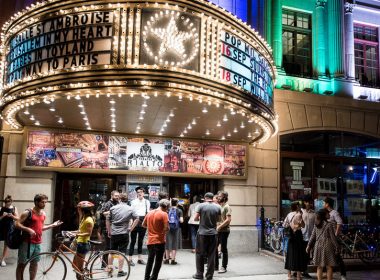
On Sept. 22, the last evening of the third annual Festival de films féministes de Montréal (FFFM), a crowd filled the sidewalk outside the small second-floor venue shared by Association des réalisateurs et réalisatrices du Québec (ARRQ). Patrons waited anxiously for the evening screening to begin. Word was that the evening was sold out, and the wait list was already long. In pairs and solo, hopeful viewers buzzed with anticipation as they waited for the door to be opened.

FFFM was founded in 2016 to provide a platform for feminist films and filmmakers of all kinds. Emphasizing cultural diversity, the festival prioritizes intersectionality and seeks to represent multiple feminist perspectives. Yet the festival, though obviously embraced by the public and a unique boon to participating filmmakers, is donation-based and volunteer-driven. These volunteers take on huge responsibilities. Magenta Baribeau, a founder and organizer of the festival that does the jobs of three people at once in hopes that the festival will return bigger than ever in 2020.

Narratives that are often marginalized are included within the wide range of films and types of feminism. Though all feminist, some films focused on queer perspectives; a genre night included horror submissions. The feminist messages, however, allowed many to connect with the films in a deeply personal way. 

The Sunday evening screening featured a number of shorts themed around the interaction of racial identity and feminism.

The Tigresse Masque dir. Gowri Neelavar (India) 

Based on a poem, this lyrical short is set at a Hindu festival which takes place in the state of Karnakata. Young men in dramatic costume perform as tigers, a religiously significant animal in India that was hunted by British colonizers. Playing on the religious context and youthful nostalgia, //The Tigress Masque// presents this childhood fairytale as larger-than-life, but dreamed of by  a little girl watching in the crowd. When she dons the mask, it’s a rebellion against both the patriarchy holding her back and the history of colonization restricting her country.

Brother, Move On dir. Antshi von Moos (India, Switzerland)

Moos’ documentary looks at the life of a female taxi driver in New Delhi. By casting her sister as her main interviewee, Moos presents the audience with an intimate and complex portrait of a remarkable woman. Her livelihood depends on her assuming a culturally masculine role every time she gets behind the wheel of her taxi.

Me Time dir. Eléonore Coyette (USA)

A crowd favourite, this American comedic soliloquy’s protagonist has a conversation with multiple versions of herself about masturbation. Written by and starring Eléonore Coyette, a Black woman, the film is unapologetic, self-reflective and true to life. The conversations featured in the short speak to the many voices informing every woman’s idea of how she should act. But it is also about embracing every one of them, and thereby coming to an empowering conclusion.

Skies Are Not Just Blue dir. Lysandre Cosse-Tremblay (Haiti)

Third-year UQÀM student Lysandre Cosse-Tremblay submitted this short documentary. It introduces us to four queer Muslims: Yara, a Toronto-based artist and activist; brothers Monib and Tariq, who make Youtube videos together; and the anonymous A., who, filmed only from the back, describes the challenges to and subsequent rejection of his faith when he first arrived in Montreal. In an interview after the screening, Lysandre described coming to their subjects with a camera in hand but no preconceptions, refusing to put words in people’s mouths.

On the final night of the festival, Baribeau was a tornado of efficiency, selling tickets, conferring with volunteers to keep the screening on track, dashing into the hall to find–always successfully–one more seat for the last eager stragglers in. Then, as the lights dimmed for the last time on the 2019 edition of FFFM, she welcomed viewers to the space in English and French and thanked the community for showing its support.

Festival de films féministes de Montréal 2019 ran from Sept. 18-22. 

Art, Arts & Entertainment

Art POP installation offers a creative oasis

Viewers would be forgiven upon entering Art POP’s main exhibition, Tout ce qui arrive, arrive dans les verbes, for thinking that they had come to the wrong room. A set of lockers that line the left wall and a ‘douches/showers’ sign are among the first things to notice in the venue. This exhibition, which ran from Sept. 25 to 29 at Studio Rialto, is part of the visual-arts strand of POP Montreal International Music Festival. 

Aside from the unique infrastructure of the space, which was originally a dance studio, the cloths that dominate the west side of the installation are the most eye-catching part of the exhibit. These cloths, like many pieces in the room, evoke natural forms: One appears to display the figure of a pig, the other a face shrouded by butterflies and leaves. Neither work displays the artist’s name, which is true of many pieces in the room. 

The event description reads: “We want to construct an art viewing context that makes viewers feel as though they are entering an othered space. Within this, we chose work that humanizes, mystifies […] and divulges and/or withholds elements of these physical spaces.” 

The dearth of information and the surprising difficulty of pairing the exhibit’s map with its physical layout spark curiosity as new pieces are discovered and the exhibit is slowly revealed. Behind one curtain is a changing room; although part of the building’s design, this feature of the studio is incorporated subtly into the exhibit, with no clear additions beyond a creaking blue light and a thin layer of condensation present on the floor. Stepping into it feels like walking into a room where you don’t belong. 

The event description also reads: “Studio Rialto [is] a former dance studio with its own history of bodies in movement, queerness, and temporality.” This history is apparent in the space’s decor, with antique and found items cluttering the space with little-to-no context provided. Their history as objects may be understood from shared, broader cultural knowledge, but their origins are unknown. Many⁠ installations—most of which are strung from the ceiling—appear to have been collected on distant beaches, and include seashells and metal rings.

This natural motif does not clash with the industrial quality of the space itself, but rather heightens it. The presence of seashells, leaves, and other natural objects within the confines of a worn and lived-in industrial space links their histories as objects “of nature” with the studio’s history of being occupied by living bodies. This connection suggests the shared temporality of natural environments and urban constructions. Both capture, contain, and carry their histories within them. This theme is addressed by bio-artist Jacqueline Beaumont’s for luca. Her display features bioplastic breasts hung in glass cases, one containing a lobster. 

This odd combination of materials feels strangely natural in the context of the large hall. The crustacean and the plastic are as real as the walls of the studio or the seashells. But  it is still unclear how the lobster ended up there, or why. In the same way, the space allows the art to speak for itself, without over-contextualizing or providing rich details of the Studio’s history. But as the exhibition appears and disappears, the space of Studio Rialto itself will persist. 

Tout ce qui arrive, arrive dans les verbes ran from Sept. 25–29, at Studio Rialto (5723 Park Avenue) and featured works from Zoe Koke, Sara Maston, Robert Anthony O’halleran, Tommy Ting, Jamie Ross, flora fauna, Julia Autumn, Jacqui Beaumont, Aloë Vrzal, Lucas Regazzi, Sarah Mihara Creagen, Mara Korkola, and XX Files Radio.

Arts & Entertainment, Music

Weyes Blood gives a Titanic performance at the Rialto

On Sept. 27, a fantastic night at the Rialto Theatre began with a series of sounds more akin to jet engines than music, but very quickly evolved into a formidable series of performances. Natalie Laura Mering, better known by her moniker Weyes Blood, performed some of her finest work to date and amazed the audience that came to see her. 

Markus Floats, one of two openers for the main act, began his set seated in front of a MacBook and proceeded to set the tone in the strangest way possible: By playing a cacophony of shrill, dull, and at times excruciating sounds providing an unusual contrast to the smooth crooning voices of the next two performers. 

Floats’ act was immediately followed by Helena Deland, a brilliant up-and-coming Quebec City native, steadily making waves in the music industry. Deland is featured on JPEGMAFIA’s chaotic new album All My Heroes Are Cornballs, providing short but striking finale to the song “Free the Frail.” Her performance of “Body Language” and “Baby” proved her musical prowess. Deland’s smooth vocals and fervent guitar make her the indie artist to watch in Montreal at the moment. 

Weyes Blood started off with “A Lot’s Gonna Change,” the introductory song on her latest album  Titanic Rising. Despite the openers’ engaging performances, Weyes Blood made it clear that she was the star of the night. The song is one of the highlights of the album, and was certainly one of the evening’s more memorable moments.  The track immediately demonstrated that her vocals are even more arresting live, with one of her more musically complicated songs. While a dreamy, 1970s pop influence was at the forefront of “A Lot’s Gonna Change,” “Movies” was infused with booming, modern electronic beats, shaking the Rialto. This is contrasted with the melancholic, borderline country sound of “Picture Me Better,” a song Weyes Blood dedicated to a dear friend of hers who took her own life during the production of Titanic Rising.

In between a wonderfully upbeat performance of “Everyday” and a suitably more sorrowful one of “Something to Believe,” she posed a question to the audience: Was the moon landing faked? Surprisingly, only about five hands went up, indicating their belief. Weyes Blood proceeded to explain that when she asked the same question, almost everyone in her Vancouver audience had their hands up. She also joked that the Rialto itself was likely haunted, an observation that seems plausible given the venue’s  maudlin, neo-baroque architecture. 

While the four other band members wore t-shirts and jeans they could likely be seen wearing on any given day, Weyes Blood herself donned a crisp white suit, embroidered with her name on the back. The other band members’ attire may have drawn attention away from them, but their abilities compelled you to watch them just as intently as Weyes Blood herself. The essence of Titanic Rising was not only captured, but the band’s performance stood on its own merit. The drummer, in particular, appeared to be having the time of his life. 

Both Weyes Blood and Helena Deland are two of the most gifted and inventive voices in the indie scene right now, and having them perform back to back seems too good to be true. The concert was a spectacular experience, a celebration of musical styles nearly half a century old that were made wonderfully new again.

Science & Technology

Open Future Essay Competition winner covers climate change and law

McGill law student Larissa Parker recently won the highly competitive Open Future Essay Competition. In her winning essay published in The Economist, she wrote about extending legal rights to future generations to fight climate change. Parker addressed one of the most disheartening realities of climate change: Though we are already facing the effects, future generations will have to deal with more frequent droughts, stronger storms, rising sea levels, and species extinctions if temperatures continue to rise.

Parker, who was invited to attend the United Nations (UN) Youth Summit in New York City this past week, has been a long-time campaigner for climate justice. She believes that climate litigation offers a host of opportunities to fight climate change, especially if rights are extended to future generations. Currently, there are multiple cases against governments and corporations over the effects of climate change. However, the current production of carbon dioxide will cause much more harm to future generations than to current ones; at the moment, no mechanism exists to protect these future generations. 

“There are so many aspects of climate change that hit at ways to sue governments and corporations for breaches of duty of care, but they hit temporal boundaries when extended to future generations,” Parker said in an interview with The McGill Tribune.

Parker argues that current generations should have the power to sue on behalf of future generations. Just as we currently suffer from past emissions, future generations will continue to be affected by today’s emissions. As Frédéric Fabry, a professor in the Faculty of Atmospheric and Oceanic Sciences at McGill, explained, carbon dioxide and other greenhouse gases linger in the atmosphere for many years.

“The gradual accumulation of carbon dioxide in the atmosphere is a slow process,” Fabry said to the Tribune. “It takes several generations to remove it from the atmosphere. If you burn fossil fuels, the carbon dioxide stays in the atmosphere for 100 to 200 years.” 

To put this in perspective, the carbon dioxide that we are emitting now will still be around in 2150.

Parker argues that since we already know about this delay, we have a duty to protect future generations from these emissions.

“Future people are going to unquestionably experience climate change in the worst ways, especially marginalized populations,” Parker said. “These are the first people to be hit by climate change. In the future, it will still be marginalized groups who are first to be disadvantaged by climate change. In 50 years, when the [full] effects are being felt, it will be too late to sue. It’s time to get the preventative ball rolling.”

Parker also addressed how decisions from climate litigation cases can play out for future generations. 

“We constantly see innovative ways [that] judges award remedies, such as putting money in environment programs, trusts for future generations [and] injunctions to stop activities,” Parker said. 

In her essay, Parker articulates the sentiments of ‘the-not-in-my-lifetime’ phenomenon that have continued to grow with rising youth activism over the past few years. 

“There are difficulties with suing on behalf of future generations,” Parker said. “Causation, for example, will be a big one […] but we owe it to them to at least include them in our legal arguments.”

To protect those who are not yet able to protect themselves, the rights of future generations must be considered. As Parker explains, overlooking their rights ignores the behaviour of greenhouse gases, and the delayed and amplified effect of today’s actions on future populations.

Hockey, Sports

NHL Season Preview 2019-2020

With the Toronto Maple Leafs and Ottawa Senators set to kick off the 2019 NHL season on Oct. 2, The McGill Tribune previewed both conferences to predict the Stanley Cup winner.

Eastern Conference

Generally considered the tougher of the two conferences, the Eastern Conference features the Tampa Bay Lightning who are likely to be the best team in the league again this year given their roster loaded with talented and quick players. The Maple Leafs and Bruins will both be strong contenders too, with the former relying on skill and the latter on experienced veterans. Meanwhile, the Penguins and Capitals may not be the favourites they were a few years ago; however, stars Sidney Crosby and Alex Ovechkin could still carry their respective teams into the playoffs.

The Panthers, Devils, Canadiens, Hurricanes, and Islanders will also likely be in the playoff hunt. Florida hired Stanley Cup-winning coach Joel Quenneville from the Chicago Blackhawks, while New Jersey made significant additions this offseason, acquiring P.K. Subban and drafting Jack Hughes, which should give them a competitive edge. Montreal plays an aggressive and pace-pushing game, which could be enough to make the playoffs if goaltender Carey Price can return to his pre-injury form and lead the team. Carolina has promising young talent throughout their roster and plays an efficient form of hockey. Finally, the New York Islanders, who relied on phenomenal goaltending last year, will need more of the same for a chance at a postseason berth.

At the bottom of the field, the Rangers, Flyers, Red Wings, and Senators will all be going through a transition phase that will make it difficult for them to keep up with the rest of the conference. 

Playoff prediction: Tampa Bay Lightning, Toronto Maple Leafs, Boston Bruins, Washington Capitals, Pittsburgh Penguins, Florida Panthers, New Jersey Devils and Montreal Canadiens.

Western Conference

While the Western Conference may not be as competitive as it once was, there are still a few teams boasting promising lineups. The Flames, Golden Knights, and Sharks will stand out. Calgary is an exciting team filled with quick, skilled, and young forwards; a formidable defence and exciting style of play will make them the team to beat. Las Vegas has two powerful forward lines alongside Stanley Cup-winning goalie Marc-Andre Fleury, which should make them dominant once again this year. San Jose is an experienced team with a balance of younger scorers, solid veterans, and talent in every position.

The Predators, Blues, Avalanche, Jets, and Stars will likely make up the next tier. While Nashville may have traded away P.K Subban over the summer, they signed Matt Duchene, a great overall centre. They also still have a strong defensive core to make an impact. St. Louis is the reigning Stanley Cup champion and will enjoy a strong returning group of core players. Colorado boasts three of the best forwards in the NHL, while Winnipeg has a strong and talented forward group. However, Winnipeg’s defence might be in serious trouble if Dustin Byfuglien, who is pondering retirement, leaves. Dallas has talent up front and a great goalie. That said, being one of the oldest teams in the NHL may affect whether this team can keep up with younger, faster teams.

The Oilers, Canucks, and Blackhawks may have superstars in Connor McDavid, Elias Petterrson, and Patrick Kane respectively, but they lack enough depth to put them in the playoff discussion. The Coyotes and Wild are two middling teams lacking direction, and the modern NHL has gotten too fast for the slow Anaheim Ducks and Los Angeles Kings.

Playoff prediction

Calgary Flames, Vegas Golden Knights, San Jose Sharks, Nashville Predators, St. Louis Blues, Colorado Avalanche, Winnipeg Jets and Dallas Stars.

Stanley Cup prediction 

While Tampa was ousted in the first four games of the playoffs last year, they simply have too much talent to be denied again. Prepare for a Tampa-Vegas final, with Tampa ultimately hoisting the Cup.

Commentary, Opinion

There is no such thing as ‘girls get in for free’

Content warning: Mentions acts of sexual violence

McGill is a school where students love to enjoy themselves and for many students this includes frequenting the nightclubs which pepper Boulevard Saint-Laurent and other Montreal streets. Going out to Saint-Laurent can be a fun experience for all kinds of Montrealers, yet men often complain about not being let into clubs, being charged more cover, or having to deal with rude bouncers. These narratives assume that women have it easier when it comes to clubbing. While it may be true that many women spend less money and wait less time, they end up paying in  more sinister ways through the objectification and commodification of their bodies.

Through objectification, a woman’s body becomes separated from her person and she becomes a physical object of men’s desire. There is always an intense pressure for women to look a certain way and for a night out, the expectation is to be sexy. Meanwhile, it is perfectly acceptable for men to wear normal and comfortable clothes which don’t expose their bodies, since men are often valued for more than just that. For many women, revealing clothes are empowering, however, at the end of the day skin tight or exposing clothes can still unintentionally serve the male gaze. In fact, the men report being less empathetic to women in revealing clothes, meaning that especially in nightclubs, this toxic attitude of slut-shaming and sexism on the part of men leads to sexual violence. 

For many women, being groped or grabbed is an inescapable part of going out. Some men will see clubs as the place to act out this vicious behavior, even when they know that it is wrong. For them, the drunker a woman is, the easier a target she becomes and the less likely he is to be punished for his actions. In a study of 1, 000 incidents recorded at nightclubs, over 25 per cent involved unwanted sexual behavior, 90 per cent were men harassing women and only in 10 out of the 258 cases recorded did a bouncer intervene. This demonstrates just how little clubs actually care about their female clientele. For many women, being harassed is just the price to pay for clubbing; there seems to be nothing that can be done about it.

For nightclubs, the oppressive cycle of objectification and violation of women’s bodies becomes a business model. Female guests aren’t so much customers as they are an attraction for men. Women at clubs are valued because they can be sexualized, and having more women at clubs means more bodies for men to lust over, seize, and attempt to take home. Sex sells, and men often do end up spending a lot more money on a night out. If clubs can get ‘hot girls’ inside they can charge desperate and disrespectful men more money for cover or even bottle service. Women at clubs aren’t treated as human beings; they are products, something a club can advertise to encourage men to spend more time, and most importantly, more money.

While it may seem like girls have it easy when it comes to getting preferential treatment at nightclubs, the unsettling reality becomes clear very quickly. Women are seen as, treated, and sold as sexual objects, something that nightclubs acknowledge and continue to take advantage of. Men may be shelling out more money but it is women who truly shoulder the higher cost of clubbing. McGill students don’t need to stop going out, but they do need to combat this toxic culture by respecting each others boundaries, reporting aggressive behaviour, and most importantly, supporting victims of sexual violence.

McGill, News

AUS votes to strike in support of climate march

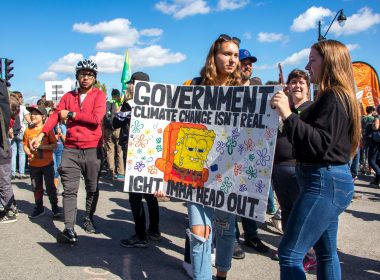
On Sept. 25, approximately 900 members of the Arts Undergraduate Society (AUS) voted to strike in support of the Sept. 27 climate march, exceeding the 500 minimum needed to reach quorum.

In response, Climate Justice Action McGill (C-JAM), a group which promotes social and environmental justice, sent a petition to the AUS encouraging them to call a general assembly (GA). McGill’s Macdonald campus, the Faculty of Law, Faculty of Nursing, Faculty of Environment, and Medical Students Association have all decided to support the march by striking. 

Before the AUS can officially strike, eight per cent of Arts students must vote “yes” in an online referendum that will remain open for 24 hours following the GA. 

Lead organizer for Climate Justice Action McGill (C-JAM) Ayo Ogunremi, who moved the motion, referenced the 2012 student strikes in which student protests effectively blocked the Quebec government from raising tuition fees. He said that students could effect similar change through a prolonged strike. 

“It is with no lack of urgency that we are convened here this evening to strike from classes on Friday, September 27,” Ogunremi said. “Today, we confront a threat to all human existence, the likes and scale of which have never been seen before. We face not only a climate crisis but a climate apartheid, in which economic, racial, ethnic, and gender divides have stratified access to the means of survival to favour those who have always wielded power and against those who have always organized to fight it.”

An amendment to the initial motion included the addition of soft picket lines on Sept. 27, which C-JAM said ideally would include one student standing in front of the door to every Arts class to make students aware of the strike.

While the AUS does not have the official capacity to cancel classes, organizers hope to send a strong message to McGill’s administration.

In addition to the one-day strike, C-JAM put forward three demands for McGill to comply with in the event of a ‘yes’ vote. These included that McGill divests from fossil fuels; that McGill acknowledges the harm that fossil fuel extraction causes, particularly to marginalized communities, and that McGill’s administration actively pressures the provincial and federal governments to implement the United Nations Declaration on the Rights of Indigenous Peoples. 

Christina Lau, a lead organizer with C-JAM, was not surprised at the high turnout.

“In the last week, we’ve seen a lot of mobilization and a lot of support from almost all of the faculties,” Lau said. “A lot of people are coming out and supporting this movement.”

Students’ Society of McGill University Vice-President External Adam Gwiazda-Amsel agreed, and was encouraged by the high participation and discussion surrounding the motion.

“Folks didn’t have to struggle for quorum. I think this shows people are really concerned about the state of the environment and want to do what they can to help,” Gwiazda-Amsel wrote in an email to The McGill Tribune. “The discussion was quite informed and nuanced, both in terms of understanding what it means to go on strike, and what it means to engage in climate justice. The point is to give power to the people in an accessible way, and I think that was really well done.”

McGill is currently the only university in Quebec that has not declared a climate emergency.

McGill, News

McGill Faculty of Law votes to strike for climate change march

On Sept. 24, 92 per cent of McGill law students voted to strike on Sept. 27 to support the global march for climate justice. Held by the McGill Law Students Association (LSA), the general assembly saw a turnout of 63.6 per cent of all eligible members. Larissa Parker, L2 Law and a leader of the student movement to call for a strike, was shocked at the resounding outcome.

“When we saw the result of the vote, we were absolutely floored,” Parker said. “We never imagined that we would have such a resounding victory.”

Though the Faculty of Law is not bound to follow the decisions made by the LSA, Dean of Law Robert Leckey said that, in light of the high turnout, classes could not continue as usual. 

“As we learned last week, McGill University has decided not to cancel classes on Friday 27 September,” Leckey wrote in an email to Law students. “It asked teaching staff to accommodate students who wished to accommodate students who wished to participate in the march. All our instructors who teach on Friday were preparing to do so. The immense majority [who voted to strike] indicates that classes could not proceed as usual.”

Gab van Walsum, L2 Law and Parker’s colleague, expressed appreciation towards the Dean’s actions. 

“We are very grateful that the Dean decided to respect our vote. We know that it [must not] have been an easy decision given that McGill decided to keep the university open and no other dean has cancelled classes yet,” Walsum said. “But I guess we didn’t leave him much choice with such a resounding ‘yes’ vote.”

The LSA represents all students in McGill’s Faculty of Law. According to the LSA constitution, a referendum is required for students to hold a strike. Parker that the overwhelming success was the product of both student and faculty support.

“Things couldn’t have gone better,” Parker said. “From the very start, we had so much support from our fellow students. We were a team of over 30 students who ran the campaign, [….]  We have to highlight the crucial support of some of our profs.”

Following Senate’s Sept. 18 decision not to cancel classes in support of the strike, numerous student associations, including the Arts Undergraduate Society, have decided to hold votes to strike. Many other Montreal schools, including Concordia University, Université de Montréal, and Dawson College, have already cancelled classes.

Features

A moving target

Heading down Stanley for a second time, you are peering out of the window from the driver’s seat of your 2003 Honda Civic. Class starts in five minutes, and yet it remains elusive: The parking spot. The source of these parking troubles could be the endless Montreal construction or the heaps of plowed snow. However, Kevin Manaugh, a professor in the Department of Geography and the McGill School of Environment, insists that this lack of space is intentional: McGill has, over the past decade, purposefully reduced parking spaces on campus.


Read the latest issue

Read the latest issue