Latest News

Student Life

In de clerb, we all fam: Clubbing culture at McGill

Content warning: Sexual violence

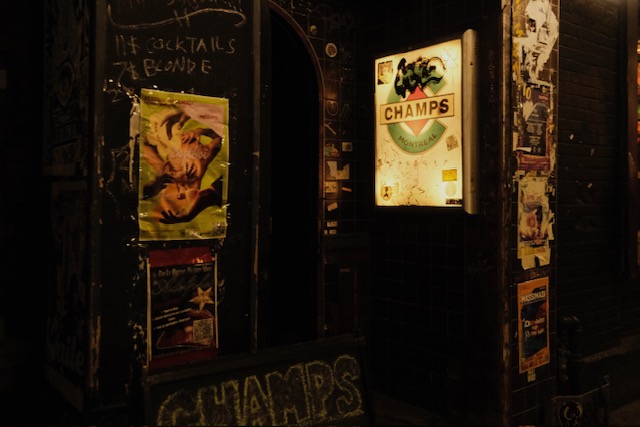
You’re 18, sitting in your dorm on your first Friday night in Montreal. Syllabus week was daunting, and you’ve met what feels like a million people. Your minifridge is stocked with your first legal Société des alcools du Québec (SAQ) purchases. What do you do? Head to Café Campus with new friends.

Clubbing culture at McGill is strong. The unofficial McGill slogan, Work Hard, Play Hard, rings true for many who enjoy drinking, dancing, and late nights out. But what does clubbing really feel like for those immersed in the culture?

Despite its crowded nature, clubbing can be an incredibly personal experience. A night out can be tailored to match your every preference. The genre of music, type of people, and style of dress vary greatly among the city’s nightlife institutions, allowing eager students to search for their “Goldilocks” option—whatever feels just right. Whether you treat the club as an arena to meet new people, or as a space to release stress with your best friends, it can act as an exodus of the week’s burdens.

In an interview with The Tribune, Sahar Jafferbhoy, U3 Arts, expressed that clubbing fervour is most prominent among first-year students.

“I think it’s the newfound freedom. You’re 18, you don’t really go [out] before [starting university], and you’re meeting all these new people. You’re wanting to do all these new experiences with these new people you’re meeting.”  

For some, especially women and other visible minorities, safety concerns cannot be ignored when planning or partaking in a night out at the clubs. According to Statistics Canada, one in three women experienced unwanted sexual behaviour in public in 2018. Furthermore, the sexual expectations that hook-up culture places on women, combined with intoxication from substance use, can pose serious safety concerns for women on a night out.

Susanna Nowak, U2 Education, explained to The Tribune, “People know what is [appropriate], and some people just don’t care to follow social etiquette anymore. It becomes really awkward when you’re telling people multiple times, ‘Hey. What are you doing? That’s not okay.’”

Jafferbhoy explained further that she always carries a rape alarm when she goes to clubs. “I would never go anywhere in the club on my own. Even to the bathroom, I’d go with the other girls.”

Some women feel safer when they go out with guy friends, since they feel that their presence offers some protection against unfamiliar men. Noemie Bisaillon, U2 Education, expressed that experience: “[I feel safer] If there are a few guys in the group, just ’cause you kind of feel like men are more likely to listen to other men.”

While some students go to the club looking for romantic partners, this isn’t everyone’s prerogative. To make clubbing safer and more enjoyable for everyone, we must recognize the necessity of clear and enthusiastic consent. After all, we should never assume the intentions or desires of anyone, especially strangers.

Deniz Tarman, U1 Engineering says, “I think [clubbing] is pretty fantastic. With all the problems it has, I think [Montreal] is a great clubbing city. I think issues regarding safety and violence are a general humanity issue, and dare I say a general man issue.”

Despite the risks, the clubs are full and many women still find the activity fun and enjoyable. “I love the vibes. I love the environment, the atmosphere. Everyone’s always in a good mood. I love a wee boogie, I love a wee dance. I love going with my friends,” adds Jafferbhoy.


McGill, News

Students face delays in accessing student loans and grants during B.C. public worker strike

On Sept. 2, the British Columbia General Employees’ Union (BCGEU), one of the province’s largest public sector unions, went on strike until Oct. 26. The strike affected most provincial ministries in B.C., including the Ministry of Post-Secondary Education and Future Skills, which administers student financial aid programs through StudentAid BC

The BCGEU went on strike when negotiations with the B.C. government for higher wages in future contracts reached an impasse. Until it was resolved, the strike left some B.C. students who rely on provincial student assistance unable to access their student loans and bursaries. According to StudentAid BC’s website, delays in student aid disbursements occurred until the labour dispute was resolved, and access to its online systems remained unavailable during the ongoing labour action.

Most students who rely on StudentAid BC have received their funding for the fall semester, but the few who have not have been greatly affected by the delays. Students who rely on assistance via BCGEU have expressed that the potential for continued delays during labour disputes may cause them more difficulty, especially with upcoming winter semester payment deadlines.

In a written statement to The Tribune, a McGill student who experienced delays to their B.C. student loans during strike negotiations, who wished to remain anonymous, described how McGill can support students under related financial strain.

“I hope that McGill will be understanding of the difficult situation the strike puts students in, and I hope they will take into consideration that most students who use [StudentAid BC loans] can not seek outside financial support,” they wrote.

In a written statement to The Tribune, McGill’s Scholarships and Student Aid Office encouraged B.C. students who have experienced financial hardship due to delays in government aid to contact the office for assistance.

“We offer one-on-one appointments with Financial Aid Counsellors who can assess individual circumstances and, where appropriate, provide institutional aid in the form of an emergency interest-free McGill loan to help bridge the gap while students [from British Columbia] await their funding,” the Office wrote. “Additionally, students who have requested a fee deferral due to delayed government aid have until the end of November to pay their tuition and fees. If a longer deferral is needed, our office can assist with arranging an extension.”

On behalf of the Arts Undergraduate Society (AUS), Pearce-Tai Thomasson, the Society’s Vice President of Communications, clarified how the AUS has been aiming to help students affected by the ongoing delays.

“The AUS […] deeply sympathizes with the affected students and are open to sitting down with students struggling with this issue,” he expressed in a written statement to The Tribune. “While our scope remains limited to our constituents, we can provide students with options and help them navigate potential escalation to [the Students’ Society of McGill University] or the Deans within the Arts Faculty Admin. Students concerned can reach out to us using the Arts Public Directory.”

The AUS also provided a list of resources for students seeking ways to reduce their living costs, in the face of the burden brought on by the B.C. government’s failure to successfully negotiate to end its public sector strikes. The list includes resources for affordable transportation, on-campus food options, and mental health services.

Another student who wished to remain anonymous expressed frustration with the lack of public communication from the McGill Scholarships and Student Aid Office about the BCGEU strike’s effect on B.C. student aid disbursements. 

“[McGill] hasn’t been super transparent. [….] They could have sent an email to all of the [affected] students telling them they were addressing this,” they said, in an interview with The Tribune. “[McGill] has a delay on payments that you can apply for through the financial aid application […] and there’s [also] emergency funds, […] which are [resources] that the school definitely could advertise [more].”

Students from B.C. who have been impacted by student aid delays can reach McGill’s Scholarships and Student Aid Office by phone at 514-398-6013 or by email at [email protected].

Student Life

Haunted happenings at McGill 

On certain nights, when the odd moon glows pale and crooked over campus, McGill is an impossibly-held breath of swallowed light. In a certain Burnside basement lie the remnants of something remarkably gruesome: The dark undertow of a winding tunnel that seems too narrow, a labyrinthine corridor folding in on itself, a lung collapsing under its own weight. 

It is the hall with eyes, a series of miraculous misgivings—something seven feet tall which stalks on its hind legs and does not wish to be seen. Footsteps trail no fewer than five steps behind you; it is faster, smarter, hungrier than you—a violent warning that if you can hear it, it has already heard you. Counting down from 10 like a game of hide and seek, it is a church bell chiming, marking its own hour of death. Drawn tight like a curtain, the route promises passage to Otto Maass. How tragically human that we are so often proven poor liars—prone to promises we cannot keep, prone to keeping things that aren’t ours. Time remembers a naive freshman who wandered down this passage to nowhere.

Some student encounters blend mundanity with the uncanny. In an interview with The Tribune, Cedric Phillips, U3 Science, reported a bizarre incident in the Islamic Studies Library which defies explanation; over the course of an hour, three books tumbled from the shelves without warning. 

“No one was even near the shelves. It was sort of a sanity check for me,” he said. “Whatever it is either really hates me or really hates undergrads.” 

Ominous flickering lights have been reported in other corners of campus. 

Linc Ketchate, U3 Engineering, recounted eerie lights in the Trottier basement and Arts building in an interview with //The Tribune//. “As soon as it gets dark out, there’s something creepy happening in there, and it’s not just BdA.” 

Ketchate suggests that these experiences may be shaped by the collective anxieties that define student life, highlighting the constant stress to perform, particularly during midterm season and amid external pressures such as the STM strike, which make familiar spaces feel hostile and almost otherworldly.

With many students coming from abroad or leaving home for the first time, university life can be a profoundly isolating experience. For Layla Issa, U2 Arts, this loneliness became especially tangible during reading week. While her friends returned home to see their families, she stayed behind, studying late into the night on the second floor of McLennan Library. It was there, she recalled in an interview with The Tribune, lights blinked out—leaving students literally and figuratively in the dark. 

“When the lights went out and everyone looked up at the same time it was like this weird moment of camaraderie,” she says. 

Jasmine Ma, U3 Arts, showcased her psychology background in an interview with The Tribune about McGill’s haunted nature. “As the dark is coming in and the days get shorter, it’s unsurprising that the brain can play tricks on us in this kind of collective psychosis.” 

In an interview with The Tribune, Nesrine Yala, U1 Arts, reflected on the bonds that shared fright forges in a cultural context. 

“Ghost stories often bring people together. Even though they’re about something negative or scary, fear, injustice, they create a sense of community.”

For Issa, the experience became less about fear and more about empathy. 

“Some things can’t always be explained, I’m not sure if I believe in the paranormal but I believe in energies. That’s where empathy comes out. It’s through these lived experiences that McGill shares a common heart.” 

It is unclear whether McGill’s ghosts are real or imagined—if the shadow slipping through Burnside’s tunnels is born of memory, or the anxiety of midterm all-nighters. But what remains is undeniable: The strange pulse of something unspoken, which breathes new light into the university’s collective imagination. 

Behind the Bench, Football, Sports

Kyren Lacy: A life lost, a dream stolen

Content warning: Suicide

On April 26, 2025, Cydney Theard spoke at the memorial service for her boyfriend and Louisiana State University (LSU) Football star player Kyren Lacy, who passed away on April 12. Theard delivered powerful words about who her partner was, the hopes they shared, and how a narrative pushed by the internet led to him taking his own life. 

“We dreamed in simple colours. A draft day suit, our first apartment, his jersey hanging by the door. He was right there ready to step into the [National Football League (NFL)] and start the life he’d earned,” Theard shared.

In January 2025, Lacy was accused of negligent homicide and felony hit and run in Louisiana. Police claim that Lacy made a passing maneuver which led to an oncoming car swerving to avoid him and colliding into another vehicle. Lacy insisted that he had no involvement with the crash and was merely in the area.

Even after his passing, Lacy’s lawyers have worked to clear his name. In October 2025, Lacy’s lawyers released surveillance footage of the incident, showing that he was over 80 yards behind the crash when it happened. They also released bodycam footage of a sheriff pressuring a witness into changing their statement to place the blame on Lacy. 

Louisiana State Police claim that it was Lacy’s reckless driving which caused two other cars, including a Kia Cadenza operated by a woman whose identity has not been made public, to collide head-on. Lacy passed a vehicle on a stretch of single-lane highway by using the oncoming lane, a typical maneuver on rural highways—except Lacy did it in a no-passing zone. Lacy’s attorneys have never disputed this fact, but have pointed out that he merged back into his correct lane with 361 feet separating him and the closest oncoming vehicle, meaning he merged while respecting more than three times the required passing distance. Evidence thus shows that Lacy was back in his lane well prior to the colliding vehicles making any maneuvers leading up to the crash. 

The district attorney (DA) also raised concerns about the way police have relied on video and audio footage that is not synced properly, making it appear that Lacy was much closer to the crash than he actually was. The DA’s report states that the Kia Cadenza was “following too close, which caused her to take evasive action to avoid hitting the back” of one of the cars in the crash. Furthermore, the DA’s findings were consistent with the account from a driver of a truck involved in the accident that the driver of the Kia Cadenza “caused that wreckage.”

Yet the media treated Lacy’s accusations as guilty until proven innocent—the opposite of how justice ought to work. Collegiate athletes are often treated like circus performers in this way, with the public forgetting that they are young people too. 

Lacy did have emotional outbursts on the football field, including one that a Barstool Sports employee used to paint him as guilty when his charges were first announced. LSU coach Brian Kelly had previously described Lacy as “high-strung” and someone who struggled with his emotional control, but followed up by saying, “That young man, I love him because he’s working on that every day.” Countless other young men of Lacy’s age have also struggled with emotional regulation, but few have had their emotional outbursts used to defame them. 

Regardless of whether Lacy caused the crash, he should still be alive today. Theard spoke at his memorial service about the way people demonized him online. “They called him a monster. [….] Offline, he carried that weight so the rest of us wouldn’t.” Lacy ultimately took his own life while carrying the weight of being painted as a murderer by hundreds of thousands of strangers around the world. 

The greatest tragedy of all is that Lacy was not mourned properly because the world was busy vilifying him as someone he was not. It is a cautionary tale of how the public’s words deeply affect young athletes. It is important to talk about what happened to Lacy, but the more important story should be who Kyren Lacy really was. 

As Theard said, “Kyren Lacy was kindness in motion. Remember him that way and let the truth at last find its light.”

Commentary, Opinion

Francois Legault’s climate policy is an unforced error

Anxious about his plummeting approval rating, Quebec Premier François Legault is shrinking away from one of his strongest positions: Fighting climate change. Earlier this month, Legault’s government announced it will end funding for the Climate Action Barometer (CAB), an annual survey that allows Quebecers to voice their opinions about their municipal, provincial, and federal governments’ environmental policies. 

Curtailing this communication channel removes agency from a populace that has been clamouring for climate action. Meanwhile, Legault has hinted at more potential rollbacks—such as cutting the gasoline tax—at a time when climate action policies need to be front and centre.

Annual average surface temperatures are rapidly rising, and the frequency of extreme weather events is increasing. Tropical storm Debby was a brutal reminder of this for Quebecers. In 2024, the freak inland tropical storm killed an elderly man and became the costliest weather event in the province’s history

By ending the democratic outlet that the CAB provided, Legault alienates his constituents. Most CAB respondents support climate action; in response, he chooses to throw the survey out. This is not just a poor policy choice—Legault is silencing a mechanism that allows citizens to hold their government accountable.

However, it does not have to be this way. Working with Quebecers to implement climate action is a ripe opportunity for Legault to regain some of the public faith he has lost, and it is imperative in the context of rampant global warming.

One of the shining stars of the Legault government has been its energy in fighting climate change. Thanks to his government’s investments, Quebecers around the province—from pilots-in-training in Gatineau to CEGEP teachers in Montreal—have tested commuting on electric bicycles through Equiterre’s Velovolt Program

Last year, the Fonds d’action québécois pour le développement durable (FAQDD) provided $1.5 million CAD to support thousands of farmers in a collaborative project called Agriclimat, which helps farmers adapt to climate change and modify their farming techniques to lower carbon emissions. 

This progress has sparked international acclaim, notably for Quebec’s hydroelectric power system and research on circular economies of reuse.

If battling climate change has been such a bright spot for Legault, then why is he retreating from it?

The answer is affordability. He wants to recoup his losses in favourability with Quebec residents who are frustrated by his spending mistakes, like the $1.1 billion CAD spent on the well-over-budget SAAQclic project, and the $500 million CAD spent on the never-built Northvolt factory. In response, Legault is attempting to make a big deal of cutting the CAB, which costs one five-thousandth the cost of that nonexistent Northvolt factory. This is a mistake—for Legault and for the environment whose preservation he is choosing to neglect. 

Counter to Legault’s rhetoric about affordability, cuts in environmental programs, such as the CAB, do not rest on sound economic logic. 

Taking public transportation costs half as much as driving, and biking costs only one-seventh the cost of driving. Quebecers’ electricity bills are the cheapest in the nation—and it is not close. Environmentally-friendly options are often cheaper for individuals than high-emission ones, so building up eco-friendly options would make life more affordable for everyday people.

The strong support for climate action shown in the CAB study results should—and still could—be great news for François Legault. His government has a track record of delivering on community-focused environmental projects, so he should capitalize on this opportunity to further Quebecers’ climate priorities.

Quebec has worked hard to integrate clean energy and multimodal transportation, making many everyday necessities more affordable for residents while fighting for our planet.
Legault must not turn his back on his own progress. Defunding the CAB is detrimental to his party, his constituents, and the democratic process in which they participate, not to mention the environment as a whole, which is deteriorating and in need of swift action. Legault should play to his strengths and continue to set the pace for clean energy, sustainability, and public engagement in climate action.

Art, Arts & Entertainment, Music

Breaking ground at new creative collective’s defiant art-expo and rave

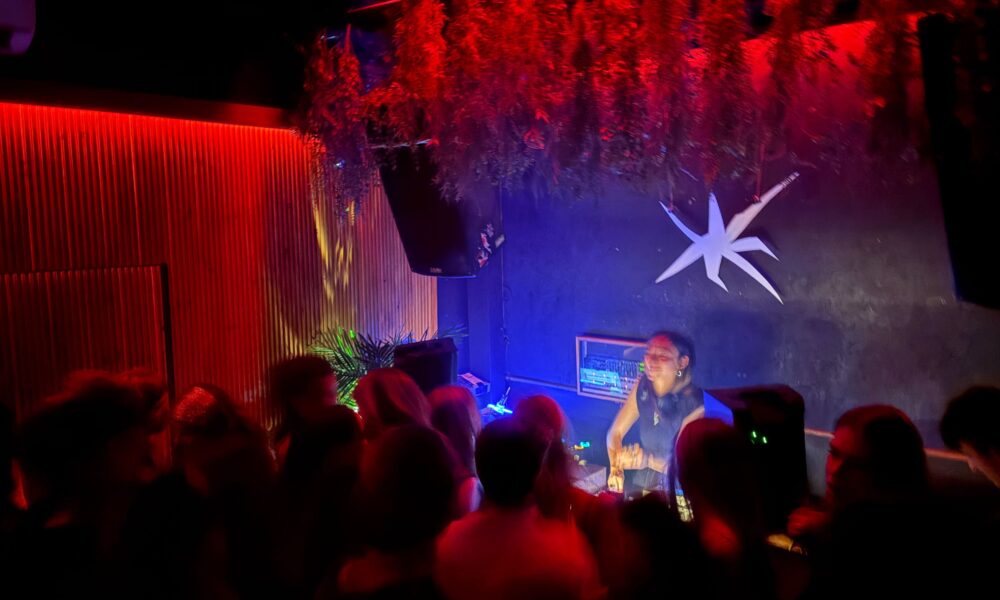
I was whisked into Concrete Breaks’ Communal Art-Expo and Rave on Oct. 23 by heavy bass thrumming under my feet and a crush of people bottlenecking behind me. Once through the doors, bright projections of cityscapes flashed to my right while a diverse array of prints and poetry lined the walls to my left. To the far end of the st. Laurent bar Barbossa, the density of event-goers increased until they formed a dancing mass, all crowded in front of one of the rave’s string of DJs. 

Concrete Breaks is an offshoot of Nina Rossing, Matt Pindera, and Luke Pindera’s initial creative endeavour Pacific Breaks, “a grass-roots electronic music collective” in Vancouver, which similarly hosted a rave. According to their mission statement, Pacific Breaks aimed to “reinvigorate Vancouver’s rave scene with innovative, open-air events and cutting-edge sounds.”

Concrete Breaks wields much loftier goals, evident from its name, which strays from a specific place and instead describes a geographically universal breaking from stasis. In an interview with The Tribune, co-organizer Nina Rossing described the globality of this event, noting artists from Denmark to Toronto. The cosmopolitan nature of the expo aligns with one of its cardinal themes: Connection. 

Another facet of the art-expo rave’s broader scope lies in its name, the event being an amalgam of many art forms, breaking beyond just sound. Concrete Breaks sent out a call for ‘All Medium/All Voices,’ the only directive being that pieces tackle the themes of dystopia, resistance and connection. This expansive breadth of forms came together at Barbossa to produce a mode of art that was completely novel. 

The DJ’s beat shook the floor of the bar, causing the videos on the walls to fizzle at the edges while red rave lights cast prints on the wall in new shades. Each piece of art did not merely exist alone in the space, but instead all multiplied to form one new piece of which we were all a part. 

Rossing reflected on what she and her team hoped to achieve through the event’s vast array of media. 

“I think it’s just creating humanity. […] The beauty of being human and the beauty of art and of hope, and the power that it holds,” she said.

The night’s goal of humanity was achieved tenfold, with tables sprawled with pens and sticky notes for attendees to place their art alongside the selected artists, a gallery space loud not from music but from conversation, and a dancefloor bouncing beneath jigging bodies.  

Concrete Breaks undertakes a return to humanity, especially imperative in our current zeitgeist. As society moves towards extremist radicalization, forging simple connections feels unreachable—people become friends with artificial intelligence or strangers on subreddits. 

Rossing emphasized the importance of resisting such a world of alienation.

“We need to connect more, and with that, we become super powerful, and we can turn bad things into good things,” Rossing said. 

Fellow organizer Luke Pindera similarly commented on the importance of the Concrete Breaks’ ideology in this moment. He told The Tribune in an interview that they “want to represent something positive amidst this […] world of chaos.”

Rossing, both Pinderas, the artists, and the attendees came together last Thursday to do just that: Create positivity and good. Everyone gathered, interacted, danced, and left feeling fuller than when they entered. 

The defiant art exposition, alight with inspiration and connection, presents a fresh perspective on the importance of coming together and pushing towards resistance. As proclaimed by Pindera, Concrete Breaks goes beyond just a collective; he described it to The Tribune in terms of a way of life. In this fissured world, perhaps we should take up their mantle: Look down and see how we may break the concrete upon which we tread. 

McGill, Montreal, News

SLASA, CLASHSA, and LLC host ‘Building Bridges: Insights from Hispanic and Latin American Diplomats’ panel

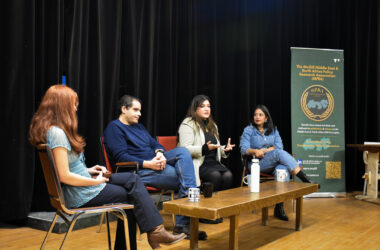
On Oct. 24, McGill’s Spanish and Latin American Students’ Association (SLASA) and McGill’s Caribbean and Latin American Studies and Hispanic Studies Association (CLASHSA) collaborated with McGill’s Department of Languages, Literatures, and Cultures to host the ‘Building Bridges: Insights from Hispanic and Latin American Diplomats’ panel, in honour of Latin American Heritage Month. The event provided McGill students, staff, and community members with dialogue on the field of diplomacy, and on ways to embrace Hispanic and Latin American culture in Montreal through organizations like SLASA and CLASHSA. 

In an interview with The Tribune, Sophia Newman Jimenez, U3 Arts and Vice President of Diversity, Equity, and Inclusion at SLASA explained why Latin American cultural groups and heritage months are important to diasporic students at McGill. 

“SLASA provides a place of friendship, family, and home,” she said. “When you’re with people of the same ethnic background as you, you are able to share the same food, interests, and worldview. For Hispanic Heritage Month, it is really important to celebrate [Latinx people] because we’re a really unique group of people who have a unique way of looking at the world.”

SLASA holds a variety of different events throughout each academic year, including reggaeton parties and Spanish-language-learning social gatherings. This fall, in an effort to expand its offerings, the club hosted Oct. 24’s diplomatic panel. The panel was moderated by Víctor Muñiz-Fraticelli, associate professor in McGill’s Faculty of Law, and featured Victor Manuel Treviño Escudero, Montreal’s Consul General of Mexico, Mauricio Baquero Pardo, Montreal’s Consul General of Colombia, Gerardo Ezequiel Bompadre, Montreal’s Consul General of Argentina, and Carlos Ruiz Gonzalez, Deputy Ambassador of Spain in Ottawa. 

Throughout the panel, the main points of discussion included what the daily life of a diplomat and their duties look like. The panel participants also described how their experience in Canada differs from their postings in other places, and the most challenging aspects of their profession, like working to build what Treviño described as “bridges of understanding” with host countries. 

Bompadre of Argentina spoke about the continuities and changes of the job.

“It is important to find opportunities for your country and your people and to make your country known [where you are posted],” Bompadre said. “Diplomacy has changed quite a lot, our ancestors of this field had it differently, and now it is less autonomous.” 

Specifically, Bompadre noted emergent technological networks as one of the primary changes of the job. In the digital world, diplomats now have more opportunities to receive advice from their nation’s capital on foreign policy decisions. 

All four diplomats explained the initiatives they have in place for students, including networks of exchange for undergraduates.

“We found that there is a greater interest for students studying here to come to Spain and study for a year,” Gonzalez said. “The [Spanish] embassy tries to ease the path for them to get in touch with the local people here in order to empower those kinds of agreements.” 

The diplomats also explained how they seek to empower all members of the Hispanic community in their respective posts, including students. 

“As a member of the foreign service of my country, it is important to empower students after they finish university to join this career and open doors to provide different kinds of advice,” Treviño stated. 

Newmann emphasized how students can learn new perspectives on international diplomacy through participating in events like these. 

“It is important to look at what diplomacy looks like outside of [just] North America or Europe,” Newmann said. “Diplomacy means something different in the context of Latin America, and I think this event provides students with the ability to see those differences, and how that plays out in international relations.”

Commentary, Opinion

Canada must criminalize coerced sterilization and confront its propagation of colonial violence

In 2005, Montreal practitioners performed a nonconsensual hysterectomy on Quebec Senator Amina Gerba, resulting in irreversible infertility. Gerba would not learn she had undergone this procedure—a clear violation of her medical rights and autonomy—until over a decade later, when, during an unrelated procedure, her gynecologist discovered she lacked a uterus. This phenomenon, known as coerced or forced sterilization, constitutes an international human rights violation and has been perpetrated against women—particularly of marginalized backgrounds—throughout Canada since the 1800s. 

Despite centuries of evidence of nonconsensual hysterectomies, Canada has failed to criminalize this violating, dangerous practice. The persistence of forced sterilization testifies to how systemic anti-Blackness and colonial violence continue to shape Canadian healthcare systems, propagating the denial of Black and Indigenous women’s reproductive autonomy. 

Senator Gerba shared her story when testifying in support of Bill S-228, an act to amend the Criminal Code that would criminalize coerced sterilization in Canada. An equivalent bill—Bill S-250—was introduced to and passed by the Senate in 2024. However, the proroguing of Parliament in advance of the 2025 Federal Election forced the termination of the bill before it reached House debate. 

Bill S-228 brings forced sterilization to the forefront of the legislative agenda, opening a window for overdue systemic change: Affording //legal// reproductive rights to women across Canada. In her testimony, Senator Gerba noted the intersectional nature of prejudices against Black and Indigenous women in the Canadian healthcare system, particularly in regard to gynecological interventions. In healthcare settings, medical students and practitioners alike frequently dismiss the pain of Black women patients due to the harmful and racist misconception that Black women have a higher pain tolerance. Such misinformation amounts to an undeniable truth: North American healthcare institutions are failing Black women. 

Indigenous women have also been the historic and current targets of this procedure. In the 1970s, Canadian practitioners facilitated approximately 1,200 cases of coerced sterilization of Indigenous women as part of a broader eugenic, colonial effort to eliminate Indigenous persons. By systematically sterilizing Indigenous women without their consent, these practitioners—acting on behalf of the colonial state—sought not only to control individual bodies but to exterminate future generations of Indigenous peoples. This practice amounts to one of the five acts encompassed within legal definitions of genocide: The deliberate imposition of measures intended to prevent births within a group. 

The UN Committee Against Torture issued a statement in 2018 calling on Canada to end this abhorrent practice. Yet Bill S-228 remains under debate, and organizations like Amnesty International Canada continue to observe extensive evidence that the practice persists today. 

In Quebec, 35 Atikamekw women have brought forward a class action lawsuit against the Centre intégré de santé et de services sociaux de Lanaudière (CISSS) for forced sterilization, citing at least 22 cases of the procedure between 1980 and 2019. Some of these women were misinformed, told sterilization was reversible. Others were falsely told that the health of their future children could be at risk should they fail to undergo the procedure. Still more were told the procedure was unavoidable in the maintenance of their long-term health. 

An estimated 20 other women are pending approval to join the class action lawsuit; the youngest survivor was merely 17 years old at the time of her nonconsensual gynecological intervention. Clearly, Canada has subjected the reproductive rights of women—disproportionately Black and Indigenous womento systemic disregard through its ongoing failure to implement policy prohibiting this medical practice.

In a report published by the Canadian Standing Senate Committee on Human Rights in 2022, representatives offered clear steps that the federal government must take to achieve the end of this abhorrent and violent practice. Foremost among these recommendations were three key obligations: To criminalize forced and coerced sterilization; to implement measures heightening standards of informed consent and cultural competency in medical training; to collect data on sterilization to inform future policy and reconciliation efforts. 

As Bill S-228 now awaits approval by the House of Commons, lawmakers, healthcare institutions, and the general public must call for the swift passage of this bill and for effective, comprehensive implementation. Evidence of forced sterilization is extensive and undeniable; its consequences for future generations of Black and Indigenous women are grave. Canada’s government must wait no longer to enshrine humane reproductive healthcare standards in the legislature.

Montreal, News

Culture Shock 2025: QPIRG hosts workshop exploring Milton-Parc’s hostile urbanism

On Oct. 23, the Quebec Public Interest Research Group (QPIRG) McGill hosted the “Walking as method: Exploring hostile design in Milton-Parc” workshop as part of its annual Culture Shock event series. This exploration was led by Cara Chellew, PhD candidate in McGill’s School of Urban Planning, as well as Jonathan Lebire, co-founder of coaching organization Agence Dragonfly.

The event kickstarted at QPIRG’s office on av. du Parc, with a group of around 15 people making their way to the street’s intersection with rue Prince-Arthur Ouest. Chellew pointed out bright white light bulbs placed above benches at the intersection. 

“Across the street, there’s another light, and you’ll see […] it’s actually blinking,” she observed. “For the longest time, I thought it was malfunctioning. [….] [But] it’s blinking very steadily. It’s been happening for a couple months now. [….] These interventions are meant to really target certain behaviours like trying to sit too long or sleep in public.”

Chellew continued to explain why these acts of hostile urbanism—architectural attempts to restrict certain social groups from enjoying public spaces—are meant to be kept subtle and unnoticeable. 

“Often when [hostile urbanism is] really noticeable, […] there’s outrage, rightfully so, and then sometimes, things get removed,” she said. “[Hostile urbanism] is meant to target these kinds of behaviours, but also not be very noticeable to everyday people.”

The group then ventured inside Les Galéries du Parc, where Lebire highlighted the neighbourhood’s lack of third places.

“You want to cry, you want to yell, […] something bad happened in your life, you don’t want to be seen crying. You’re going to transit to your house as soon as you can. But normally there should be what you call ‘third spaces,’ […] to kind of temper having a bad day at the job,” Lebire said. “There should be a way to use this architecture to make sure people have places to take a minute.”

Chellew then added that spaces where people cluster and socialize are crucial to a neighbourhood’s quality of living. She then talked about the intersection of av. du Parc and rue Milton, where an abandoned lot has been heavily restricted to keep Milton-Parc’s unhoused population out, effectively depriving them of third places.

“We’re purposely not going down [av. du Parc] because I want to give our friends a little bit of privacy,” she said. “There’s this lot that folks used to hang out [at]. [….] I call it ‘ground zero’ because it’s really the most heavily fortified spot in the neighbourhood. It just shows every little space here […] is restricted from people accessing [it].”

Chellew and Lebire continued the tour, pointing out benches that were designed to be uncomfortable, with unnecessary armrests meant to keep sleepers away. Such benches could be found at intersections of rue Sherbrooke and rue Jeanne-Mance, and rue Sherbrooke and rue St.-Urbain.

The tour ended at Jardins du Monde et des Premières Nations at the corner of rue St.-Urbain and rue Milton, as Chellew encouraged McGill students to look out for signs of hostile urban planning.

“There are certain things that you can kind of look out for. When you’re checking out a space, are there places to sit? Does the space feel comfortable? Does it feel uncomfortable for some reason? Why is it uncomfortable? Is it too bright or too loud?” she emphasized.

In an interview with The Tribune, Joseph Liang, the Students’ Society of McGill University (SSMU) Popular Education Events Coordinator, explained that this year’s Culture Shock aims to examine the McGill and Montreal community’s relations to the land through various anti-oppressive perspectives.

“For example [.…] with the Migrant Justice Panel [Culture Shock event], we look at land in terms of […] border regimes that are imposed on land,” they said. “I think [this land theme] is particularly relevant in the context that we’re living in. The settler-colonial occupation that we see happening in Palestine, that is fundamentally an issue of land, an issue of occupation of land. Here in Quebec, the PL 97 was a law that granted a lot of [Indigenous] land in northern Quebec to forestry companies. [….] I think land is sort of at the center of a lot of struggles that we are seeing right now.”

Arts & Entertainment, Film and TV

A spooky sitcom season

Do you fundamentally refuse to be scared out of your skin for so-called ‘entertainment’ this Halloween season? Have you seen The Nightmare Before Christmas one too many times? Yes and yes again? That’s what I thought. But don’t worry; the Halloween season has more to offer than inspiration for your very own sleep-paralysis demon and overdone, over-hyped, over-Halloweened content. It’s the end of October, and I am pleased to welcome you to the season of spiders, skeletons, and sitcoms.

Brooklyn Nine-Nine

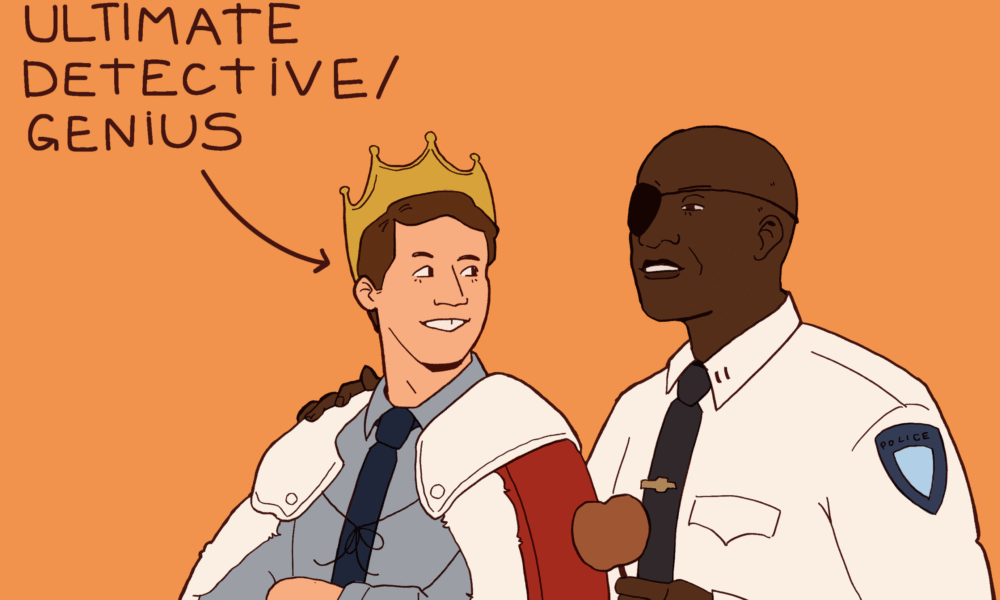
These Halloween episodes are famous, and for good reason. With a ‘Halloween Heist’ in every season, the squad competes to be in possession of a selected object by midnight, with the winner being crowned ‘an amazing detective/genius.’ These episodes contain some of the most elaborately ridiculous heist plans of all time—from stuffing pigeons into air vents and filling the precinct with characters from The Handmaid’s Tale to hiring previously-arrested criminals as co-conspirators—and the most intense rivalries. Watch a Brooklyn Nine-Nine Halloween Heist episode for Charles Boyle’s (Joe Lo Truglio) terrible and forever un-guessable costumes, outrageous thievery, and to watch friendships be temporarily put aside in the name of glory.

The Office
Season 2, episode 5 of The Office brings the reality of a scary Halloween into the workplace. Michael faces the terrifying task of having to fire someone while everyone else prepares for a Halloween party. Michael Scott (Steve Carell) acts as the Halloween Scrooge, and the real scare comes from the decision he must make. This episode reminds us that navigating adulthood is actually the spookiest part of any season.

Friends

Friends is a staple sitcom for a reason, and its Halloween episode is no exception. Rachel Green (Jennifer Aniston) may or may not start writing children’s cheques after she runs out of candy, Phoebe Buffay (Lisa Kudrow) may or may not end an engagement, and the costumes—well, I guarantee they’re worse than yours. I don’t want to spoil too much for those of you who are planning a Friends marathon this sitcom season, so all I’ll say is: Pink. Fluffy. Bunny. Oh, and potato. If you want to be able to treat Halloween as a more-or-less regular day, this is the show for you. It’s lighthearted and fun—the only spooky part is the notion of marrying someone you’ve known for two weeks—making it a great choice for those who are ready for Halloween to be over already.

Superstore

Superstore is a lesser-known sitcom, or so I’ve been led to believe. But whether you’ve heard of it or not, its Halloween episode is worth a watch. Everyone shows up in costume, except for the company’s resident rule-follower, Dina Fox (Lauren Ash). Dina gets, as you might expect, peer-pressured into dressing up. But she changes into a particularly revealing cop costume. Cue the chaos. Suddenly, everyone’s workplace archnemesis is alluring? If you ever reminisce over middle-school friendship dynamics—or just revel in watching middle-school-esque situations play out—then I promise you will be entertained. Her outfit, combined with rumours that someone may or may not have a crush on someone else, makes the perfect storm for those of you who love to revel in the knowledge that you left high school behind years ago.
If you enjoy any singular aspect of the horror movie experience, you and I are clearly two entirely separate types of people. But you’d best believe that if I’m watching anything on Halloween, it’ll be a sitcom. I’ll laugh and sigh and be unspeakably grateful that Monica Geller (Courteney Cox) won’t ever buy me a Halloween costume.

Read the latest issue

Read the latest issue