Latest News

News, The Tribune Explains

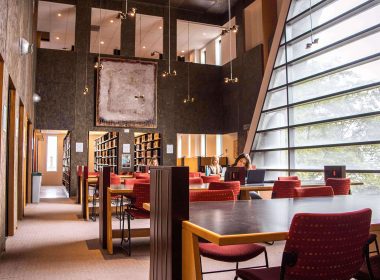
Tribune Explains: Campus Construction

To better understand seemingly never-ending construction on campus, The McGill Tribune delved into McGill’s various ongoing projects.

What structures and buildings will be affected?

There are a handful of projects that will take place within the next few years. Some of the more prominent projects include the Students’ Society of McGill University (SSMU) Building (to be finished December 2019), the Leacock Terrace (December 2020), the reconstruction of the main road (Winter 2020), and the Macdonald-Stewart Building (late 2021), which also houses the Schulich Library. Other projects that may also affect the day-to-day routines of staff and students include renovations on the Stewart Biology Building, Macdonald Engineering Building, Macdonald-Harrington Building, Education Building, the Bronfman Building and the Lyman Duff Medical Building.

Why are there so many projects taking place?

McGill is home to some of the oldest buildings in Montreal, and many of them are in need of major upgrades. For instance, the Schulich library will undergo significant and essential structural repairs and major internal upgrades, which includes the stabilization of the stone structure and the installation of a new HVAC system. Campus-dwellers may also notice an increase in projects taking place due to a recent increase in funding from the provincial and federal governments. This has allowed McGill to increase its projects budget from $80 million to $130 million per year.

Are there updates on the SSMU Building’s status?

Fabrice Labeau, Deputy Provost (Student Life and Learning), confirmed in a recent institution-wide email that the building is estimated to be finished by December 2019 (originally August 2019). As many student clubs and services were previously housed in the University Centre, SSMU officials, such as SSMU VP Student Life Billy Kawasaki, are working to schedule spaces for the new academic year.

“During the fall semester, we will continue to work together with McGill to find space for student groups elsewhere on campus,” Kawasaki said. “ We [will] offer support and insurance to student groups holding off-campus events […and] will continue to collaborate closely with McGill in order to accommodate bookings as much as we can.”

What’s happening with campus libraries, and where can I study?

The Schulich library will be closed for renovations for the next two years. When the work is completed, the library will include more spaces for studying and working, improved accessibility, restored exterior masonry, a new HVAC system, and an expanded number of washrooms. In addition to these features, McGill is working to ensure there are available study spaces for students on campus during this closure. Vincent Campbell Allaire, communications associate from the McGill Media Relations Office, is working to move 700 desks from Schulich library to McLennan-Redpath.

 “Over the months of July and August, the Library has been relocating the Schulich student study desks (approximately 700 seats) to the McLennan-Redpath Complex,” Campbell Allaire said. “The bulk of the desks will be located in a new study area on the second floor of the Redpath Library Building and on the second floor of McLennan.”

What new opportunities should students be looking out for this fall?

In addition to the new desks, the McLennan-Redpath complex will now be open 24 hours a day for the entire academic year. Furthermore, the Schulich Collection, which comprises 160,000 books, has been moved to the Redpath library basement. The Schulich reserve collection has also been moved to the main floor of McLennan in the Humanities and Social Sciences Library Self-Serve Reserves Room for quick retrieval.

Soccer, Sports

What the summer offseason looks like for McGill student athletes

For most McGill students, summer is a much needed break from school, stress, and Montreal construction. For some varsity athletes, however, the summer offseason does not mean that they can enjoy their family and home. The McGill Tribune sat down with three McGill student athletes to discuss their summer experiences and whether they were able to take some well-deserved rest during this time. 

Though the fall sports season does not start until the end of August, McGill athlete practice and train all summer long. Santiago Sandoval, a third-year goalkeeper for the men’s soccer team from Bogota, Colombia explained that players are expected to train and play all summer so that they are in shape and ready to go when preseason camps begin in August.

“I practice two or three times a week with my club team, plus a game on the weekend,” Sandoval said. “I also go train by myself a couple of times [per week].” 

The Martlets basketball team had a more intense summer preparation: They had to attend a rigorous five-week mini-camp. 

“We had three practices a day: A team one, an individual shooting one, and a fitness session,” second-year point guard Delphine Robitaille said. 

This offseason training is crucial for student athletes given how quickly their exhausting competitive seasons get. 

“Our first tournament is [in] the third week of September,” Julie Tian, a third-year badminton player, said. “It comes really fast.” 

Even if the Martlets basketball team’s regular season doesn’t start until October, players are expected to maintain peak fitness year-round, which can make it difficult to enjoy the city or to travel during the summer. However, having time off from classes and studying allows athletes to let off some steam. 

“During the school year, the stress is more intense because we need to keep up good grades and balance school and sports at the same time,” Sandoval said. 

According to Tian, athletes are always thinking about staying fit, but the summer gives athletes the chance to be inventive and mix other sports into their routine. Tian likes to go rock climbing and tries to spare time for volleyball while Montreal is not frozen over. 

“Occasionally, I will play other sports with friends,” Santiago said. “But only for fun and not in an organized league.”

Being a varsity athlete adds greatly to the workload that the students face. Preseason camps can make it difficult to keep up with a summer course, and deferring an exam to the end of August, which is often the busiest time of the year for fall sports, is rarely an option.  

“I’m probably going to have to take an extra semester to get my grades up,” Tian said. 

Each athlete agreed that, although time-consuming, their varsity experiences will benefit them in the end. Robitaille, a transfer from the University of Central Florida, believes these experiences promotes hard work and an organized schedule.

“I know people that graduated in medicine and played sports for five years at McGill,” Robitaille said. “There’s always a way to get where you want to be.” 

Being a student athlete, even with its drawbacks, forces players to be on top of their responsibilities. But, it also forces them to make a choice about what they prioritize over the summer months. 


Martlet holding a gavel illustration
McGill, News

Governance 101: An introduction to McGill’s governing bodies

STUDENTS’ SOCIETY OF MCGILL UNIVERSITY (SSMU)

What it does:

SSMU is responsible for supervising undergraduate clubs and extracurricular activities, managing and ensuring the sustainability of long-term operations such as Gerts’, advocating for student interests in the McGill Senate, and assisting in planning social events such as Frosh. SSMU is led by seven student executives who are elected at the end of every academic year. Legislative Council, which is composed of SSMU executives who sit with 30 other councillors who represent faculties and extracurricular clubs, determines policy directions. Any councillor can propose a motion, which Council then votes on and may become legislation. Additionally, several of the 30 councillors deliberate McGill policies at Senate meetings. Seven students, predominantly from the Faculty of Law, make up the Judicial Board, which ensures that SSMU adheres to its constitution. Undergraduate students can directly influence SSMU by attending its General Assemblies and voting in online referenda, both of which are held once every semester. 

Recent Events:

SSMU is currently entangled in an ongoing battle for a Fall Reading Week, which Deputy Provost (Student Life and Learning) Fabrice Labeau said might be possible as soon as Fall 2020. At the 2018 Fall Referendum, members of SSMU approved funding for the Gendered and Sexual Violence Policy (GSVP), which provides resources for sexual violence response training for SSMU executives and half the members of all SSMU clubs. SSMU remains without a home, although the University Centre is set to re-open in December 2019 after construction for asbestos removal, a new HVAC system, and additional restrooms is completed. 

POSTGRADUATE STUDENTS’ SOCIETY (PGSS)

What it does: 

PGSS representatives are elected by graduate students and postdoctorate fellows, and meet once a month to discuss and vote on new policies. To fulfill its mandate, which includes improving the quality of life for postgraduates by providing accessible social events, the PGSS executives plan events such as workshops and cocktail parties, many of which take place in their headquarters at Thomson House. Additionally, the society liaises with other governing bodies at McGill and beyond.

Recent Events:

To amplify PGSS’s voice on the provincial stage, former External Affairs Officer Hocine Slimani advocated for joining the Quebec Student Union (QSU), which advocates for student interests at the provincial level. PGSS members debated the merits of joining the QSU at an October 2018 meeting, and amended a motion to pose a referendum question on the subject to allow an unaffiliated external body to study the student federation.

BOARD OF GOVERNORS (BoG)

What it does:

The McGill BoG acts as the final authority over all of the university’s academic and financial affairs. Two student representatives sit on the 25-person board, with the rest of the seats belonging to other stakeholders. Composed of nine standing committees, including the Finance Committee and the Committee to Advise on Matters of Social Responsibility(CAMSR), the BoG is responsible for the maintenance of daily activities at McGill. They are scheduled to hold five regular meetings over the upcoming academic year. Meetings include a closed portion followed by a public session open to all members of the university. 

Recent Events: 

In April 2019, Board Members Darin Barney and Derek Nystrom resigned over their anticipation that the BoG will decide against divesting from fossil fuels. Despite the McGill Senate’s voting overwhelmingly in favour of divestment, the BoG has yet to make a final decision, but will release a report in Dec. 2019. The Board also shut down a proposal to make BoG committee meetings more accessible to members who are not a part of specific committees at an April meeting, but will consider the question of student representation on subcommittees in the coming months. 

MCGILL SENATE

What it does:

The Senate is mandated to govern academic policies such as the development of curricula and requirements for degrees and diplomas. It also takes on a broader role at McGill by managing the university’s libraries and administering Student Services. The Senate is comprised of nine standing committees, which include the Senate Steering Committee and the Committee on Libraries. The Senate meets on a monthly basis, during which standing committees deliver reports and senators vote on policies and nominations.

Recent Events:

After McGill missed the Jan. 1 provincial deadline for an updated sexual violence policy, the Senate approved a revised Policy Against Sexual Violence at its March meeting. While the revised policy includes improvements such as a centralized reporting procedure and new online sexual violence awareness and prevention training, the policy does not place an outright ban on professor-student relationships, a decision that remains a source of controversy.

Montreal, News

Quebec to ban marijuana products that ‘appeal to minors’

In a statement released July 24, the Québec government proposed banning the sale of sweet cannabis edibles that ‘appeal to minors,’ including ice cream, brownies, and candy. The move is a response to one of the federal government’s main campaign promises, which involves the legalization of edibles and other topical products that is set to come into effect Oct. 17.  

The statement criticized federal cannabis regulations for failing to minimize the risks to public health, especially to minors.

“Quebec is taking the necessary steps to reduce the consumption of cannabis that appeals to young people,” the statement reads. “The aim is to minimise the risk of accidental intoxication and health risks associated with products containing high concentrations of tetrahydrocannabinol (THC).”

The bill represents a pattern of the Québec government attempting to weaken restrictions on cannabis use as the federal government loosens them. In Dec. 2018, the provincial government brought forward a bill that proposed raising the legal age for recreational cannabis consumption to 21, though the bill was abandoned in May 2019. The government also proposed  a ban on smoking cannabis in public places, but determined that this regulation would be too difficult to enforce. 

The new provincial regulations would only target edibles that appeal to minors. The sale of cannabis-infused butters and oils will remain legal, but will need to follow a series of new guidelines: A package of solid edibles will not be allowed to contain more than ten mg of THC, while liquid cannabis edibles will be limited to five mg of THC per package, five mg less than the federal limit. Cannabis skin, hair, and nail creams will also be banned.

Moreover, the same set of regulations will also restrict additives that could alter the smell or flavour of cannabis products. This means that edibles such as cannabis-infused hot sauce and other similar products may not be permitted for sale in Quebec. 

While the federal government’s new laws have been met with excitement by many, researchers have discovered concerning implications regarding the new legislation. Adolescent cannabis use has been linked to an increased risk of depression and suicidal behaviour in young adulthood, according to a team of scientists at the Research Institute of the McGill University Health Centre (RI-MUHC) and McGill, who work in collaboration with the University of Oxford and Rutgers University-Camden.

“This meta-analysis shows that cannabis consumption in adolescence is associated with [an] increased risk of developing major depression in young adulthood and suicidality, especially suicidal ideation,” the study reads. “The effect size is modest, but considering that 20.9 per cent of adolescents in the United States report monthly use of cannabis and 7 per cent of US high school seniors are daily or near daily users, the consequences of cannabis use during adolescence are magnified in young adulthood.”

Gabriel Aboutboul, a U4 Psychology student at McGill and a member of Canadian Students for Sensible Drug Policy, is skeptical of  Quebec’s proposed ban.

“Banning cannabis sweets will likely lead them into the black market, which is a diversion from a priority set by the Cannabis Council of Canada,” Aboutboul said. “[If edibles are packaged in a] bland and opaque container, children will be less enticed.”

In the first quarter of 2019, Statistics Canada’s National Cannabis Survey found that cannabis use had spiked, with 18 per cent of Canadians reporting cannabis use within the last three months. While the jump can mostly be attributed to increased consumption among men and adults aged 35–63, the number of new users has also increased, particularly among those over 45 years old.

However, Aboutboul still thinks that updates to the regulations will be necessary as time goes on and more data is collected.

“As cities and countries around the globe shift cannabis to a legal status there will be more data to investigate [which will allow] the most informed decision regarding the safety of minors from cannabis sweets,” Aboutboul said.

Arts & Entertainment, Music

In conversation with Kid Smoko

Starting a band is easythe difficult part is standing out. That’s a main concern for Kid Smoko, a New Jersey band who closed out the final Friday of McGill’s Open Air Pub (OAP). With irresistible songs and energy to spare, Kid Smoko forces audiences to pay attention. And much like their enigmatic name, their sound is hard to pin down. 

“We’re post-genre,” said Michael Burke, one of the band’s two vocalists and a founding member. “I just wanted to make a Soundcloud band […] Like Lil Uzi [Vert] vocals over indie beats.” 

Listening to their music is very much the rollercoaster that this description suggests. Since their 2018 album Not Your Son up until their newest single, “Tommy Boy,” out next week, Kid Smoko has been displaying their versatility at every turn. Jumping from song to song, listeners will be able to identify a wide variety of musical styles, ranging from hip hop and indie pop to punk and various forms of electronic music, often all within the same track.  

“That’s just what we like,” says guitarist Sam Berkley. Each member— including Declan Martins (guitar), Matt Salort (vocals), and Michael Ferranti (producer/engineer and the only McGill student of the group)—lists some of their diverse inspirations: Vampire Weekend, The Strokes, Gorillaz, Joji, Playboi Carti, Brockhampton, and Odd Future.

“Beyond just the music, [this mix of influences] represents who we are as people: Just different guys with different interests,” Burke said. “Our music is a direct reflection of who we are, and we believe people can connect to that […] Listening to us is like you’re becoming our friend.” 

As a project, Kid Smoko feels like a long-running inside joke that fans slowly start to understand the more they listen. Their lack of self-seriousness and their contagious energy create a space for listeners to be comfortable and let loose. The band describes their live performances as an emotional outlet and opportunity to go crazy, a participatory experience. 

But it’s not all fun and games. In the end, Kid Smoko simply makes fantastic songs. They mix their variety of aesthetics with catchy pop melodies, grand guitar solos, and sticky, stand-out production, all of which contribute to their unique charm. And, as the group’s sound grows and evolves, so do the members themselves, as they begin to interrogate the music they make and listen to.

Despite Kid Smoko’s breezy persona, the musicians are always cognizant of the wider implications of the music they create, rising to every challenge as a means of self-expression. 

“We’re doing this for ourselves. I want this to be my livelihood,” Michael Ferranti said.


Kid Smoko can be found on all streaming services  

McGill, News

McGill revamps student health care with $14 million investment

A $14 million investment to revamp McGill’s student health care is taking shape with the creation of the Rossy Student Wellness Hub, which integrates medical care with counselling and psychiatric services.

The majority of the funds will be used to hire two dozen additional staff, including general practitioners, case managers, and counsellors, as well as 14 local wellness advisors—trained clinicians located in residences or faculties intended to serve as points of first contact for students.

Not included in the budget, however, is the addition of psychiatrists. The number of full-time psychiatrists at McGill has decreased from seven to five in the past year due to retirements, maternity leave, and other reasons beyond the university’s control, according to Executive Director of Student Services Martine Gauthier. 

“We do not actually hire psychiatrists,” Gauthier said in an interview with The McGillTribune. “Psychiatrists are paid through the healthcare system, and they are not on salary with [McGill].”

The student health services space has two new kiosks that are now stationed at the third floor of the Brown Building, allowing students to check-in for a planned appointment or schedule future ones. 

While extensive physical changes have been made, Rick Hink, the director of communications for Student Services, was quick to stress that they represented only 10 per cent of the project’s budget.

The new changes to the Student Wellness Hub come at a time when universities are seeing a marked increase in students seeking mental health care, according to Gauthier, over 6,000 McGill students have accessed mental health services in the past year alone. This uptick has forced universities to confront important questions regarding their role in providing students with healthcare.

“The reality is that our services are short-term care, and if a student chooses long-term care or weekly access, then we will help them to connect to an external resource that can facilitate that type of care,” Gauthier said. “But we ourselves don’t have the capacity.”

Through the streamlining of services, administrators at the Student Wellness Hub hope to reorient their efforts toward early intervention and prevention. 

“If we can get to students at that early point—where I am dealing with something now—without waiting for weeks or months to be able to deal with it, then we can intervene,” Gauthier said.

Since early July, the Student Wellness Hub has undergone a transitional phase before beginning full operation in the Fall. According to Student Wellness Hub director Vera Romano, the summer months saw numerous technical issues with the kiosks and TV monitors.

“We had to set up a process that was agile,” Romano said. “That is, we couldn’t set up these new things and then meet once a month or create [these] heavy bureaucratic escalation processes […] so many students have already experienced [the technical issues].”

Administrators of the Hub say that the changes are made in acknowledgement of students’ criticism and dissatisfaction with the difficulty of accessing student health services.

“In the past, […] you try to move things quickly, and so you make decisions, and […] figure out the student experience later,” Gauthier said. “This is something we really take seriously: […] The student experience, and listening to student feedback and being responsive to that student feedback.”

Despite expressing concern that McGill hadn’t re-established its eating disorders program since which was discontinued in 2018, Billy Kawasaki, the Students’ Society of McGIll University’s vice president Student Life, agrees with the direction student services is taking. 

“We think it’s a pretty good step in making mental health [care] and health [care] in general more accessible to students,” Kawasaki said. “Also, they are pursuing resilience-building initiatives, which minimizes the need for later intervention, which is better than the reactive model they had before.”

Science & Technology

Science podcasts to start the semester

Whether you’re folding laundry or walking to campus, podcasts are a great way to pass the time and learn some obscure information to impress your friends. They can also be a wonderful way for science and non-science students alike to engage in a subject that they would like to explore. Although there are plenty of excellent podcast series to discover, The McGill Tribune has rounded up seven of the most exciting ones, from astronomy to psychology. Happy listening!

Science Weekly

Science Weekly is a weekly podcast from The Guardian hosted by science journalists Ian Sample, Hannah Devlin, and Nicola Davis. It covers a wide range of scientific topics, from climate change to space exploration. Episodes are often related to current events, giving a more in-depth look at the science behind news headlines. A polished podcast with excellent production value, Science Weekly is perfect for those interested in a variety of fields.

Living Planet

Produced by German media site Deutsche Welle, Living Planet investigates the toll that global climate change is taking on the environment from the perspective of both humans and natural ecosystems. Episodes feature multiple stories from around the world revolving around a central theme, such as how different communities deal with waste or the psychology of climate inaction. Hosts Irene Quaile and Sam Baker interview a diverse range of people, focusing on those working on or directly impacted by the issues at hand. 

Gastropod

What is the origin of the bagel? What’s actually happening when our stomach rumbles? Science journalists Cynthia Graber and Nicola Twilley host Gastropod, a fun yet informative podcast that explores the surprising science and history behind food. Chefs and scientists appear on the show to delve into the multiple dimensions behind various culinary subjects. Be sure not to listen on an empty stomach though.

Ologies

Ologies is an essential podcast for anyone interested in niche science fields. Science communicator Alie Ward explores different ‘ologies’ from mycology (the study of fungi) to graphology (the study of handwriting), and everything in between. Through interviews with researchers and personal anecdotes, Ward’s narration style and interview skills keep this series engaging, funny, and digestible. You’re guaranteed to discover an ology that you never knew existed.  

Hidden Brain

NPR‘s Hidden Brain examines topics in psychology and neurobiology through compelling stories and discussions with academic researchers. NPR science correspondent Shankar Vedantam discusses everything from how we hear our own voices differently from others to more serious matters like how your postal code affects your future. Have you ever wondered if women named Virginia are more likely to move to Virginia? Hidden Brain has you covered. 

Clockwise

Covering four technology topics during a 30-minute podcast, Clockwise delves into subjects such as augmented reality, cryptocurrency, credit card habits, and electric scooters. Engaging hosts Dan Moren and Mikah Sargent interview two guests each week in a relaxed, down-to-earth conversation. Covering a range of topics within the tech industry, the podcast has the power to charm the even most technologically opposed person.

13 Minutes to the Moon

13 Minutes to the Moon is an excellent BBC mini-series hosted by Dr. Kevin Fong, an expert in space medicine. In honour of the 50th anniversary of the Apollo 11 moon landing, the podcast takes listeners on the riveting journey that sent the first man to the moon. The series just wrapped up in July, so you don’t have to wait around for the finale. Scored by Hans Zimmer, Clockwise is a must-listen for anyone who appreciates a well-produced podcast.

selfie
Off the Board, Opinion

Loving myself and my selfies

Some may call this narcissistic or self-absorbed, but I’m constantly taking selfies: In class, at work, at home, in the kitchen, and before I go to sleep. For me, this process is not self-destructive, but therapeutic: It is a physical and digital manifestation of my confidence, self-esteem, and respect for myself and the body I was born into. As an artist of colour learning to find my voice, selfies are a medium in which I claim space, learn to appreciate myself, and, ultimately, create art. 

In a world where representations of people of colour are often lacking or distorted, selfies become a form of self-expression and self-fashioning that people of colour can fully control. While many Arab men are stereotyped as aggressive, barbaric, toxically straight and masculine, and lacking aesthetic sensibility, my selfies show otherwise: As an Arab man, I can be vulnerable, soft, queer, artistic, and creative. My selfies show me as human. Problematic depictions of people of colour in news or movies, often presented by white people, permeate the media landscape. Selfies are one’s only chance to represent themselves as they want to be represented, no matter how raw or filtered that may be. Selfies by marginalized bodies address misrepresentation and question who is allowed to be visible. 

As coined by Joel Waldfogel, the rise of selfies comes at a time of a digital renaissance in which a current digital revolution is upending traditional creative industries and accessible self-publishing is challenging the gatekeepers of culture. While large art and culture institutions control mainstream images of marginalized people, digital spaces such as Instagram, Tumblr, and Twitter give everyday consumers the tools to dismantle those mainstream images. Selfies combat society’s categorization of nonwhite features as unattractive by reclaiming racist beauty standards: In societies and institutions that celebrate a singular definition of eurocentric beauty, selfie art by people of colour becomes a powerful act of resistance and political protest against these ruling cultural institutions. 

These selfies of resistance on social media also address the importance of self-representation and online collective spaces, especially for those who are not able to march down the street in protest or those who are too young to explore social justice and collective healing in their non-digital lives. 

Posting on social media does have its limits—Instagram has been found to unfairly censor posts by plus-size women, claiming that the content is “sexually suggestive”. Twitter is 1.5 times more likely to flag tweets written by African American people as “offensive” compared to other tweets. While tools like Instagram and Twitter are free and widely accessible, it is important to acknowledge that these companies still control limits to one’s self-expression. 

Finstas (fake Instagrams) exist as a place of refuge and digital diary for users to express themselves, their art, and their feelings safely; users can choose to invite people into their virtual space and build genuine connection. For those who don’t feel comfortable expressing their ‘true’ selves to all their followers, finstas provide a therapeutic space to create trusted support networks and feel part of a wider community. For creatives of colour, Instagram finstas become a haven of support where users can post raw content about their experiences to trusted friends and also experiment with their artistic styles without any potential backlash. 

My phone is my tool for creating, exploring my artistic style and sharing it with the world, and my 37 finsta followers. With the ability to publish content without the approval of large cultural conglomerates, I’m able to feel validated as an artist (and human). As superficial as it may sound, I learned to love sharing pictures of myself, bushy unibrow, dark eyes, large nose, and all. 

Science & Technology

Discarding waste in McGill labs

During the relocation of Macdonald Campus in 1978, lab manager in the Department of Food Science and Agricultural Chemistry Ebrahim Noroozi was tasked with the transfer of thousands of chemicals. That year, the campus was moved from its old buildings in the John Abbott College complex to its current location. Not all of the chemicals made it to the new buildings, however, as many were long expired.

“There were chemicals from before World War I, from 1905,” Noroozi said in an interview with The McGill Tribune. “You’d go to every corner, and there were a lot of chemicals, a lot of hazards, a lot of pesticides.”

This undertaking at Macdonald Campus was one of many experiences that contributed to Noroozi’s interest in occupational health and safety. He went on to dedicate his career to promoting safe practices, both through his position as the lab supervisor for the Department of Food Science and Agricultural Chemistry and through educating others in workshops and lectures.  

The progression of Noroozi’s career has coincided with an increased interest in safety, both in industrial and academic settings. Today, hazardous chemicals are no longer left forgotten for years in the far reaches of Macdonald Campus buildings. 

Noroozi explained that the Waste Management Program, which operates under the Environmental Health and Safety unit at McGill, collects regular chemical waste bi-weekly. This type of waste is made up of corrosive chemicals and solvents, such as hydrochloric acid and sodium hydroxide, that are collected in 25-litre plastic disposal jugs. At collection time, physical hazards are also gathered, as well as radioactive waste, including solid waste such as latex gloves and glass pipettes that have handled liquid radioactive waste. Biohazardous waste, which contains infectious or potentially infectious material including human tissue, animal waste, and microbiological waste, is collected as well.

However, some chemicals cannot be collected in these jugs. In the case of a cracked bottle, expired chemical, or solid substance, hazardous waste is stored in the lab until it is packed up for an annual collection. Should the substance be explosive or otherwise require immediate removal, labs can call on the waste management team. 

“If it’s urgent, even for a bottle, they may come to pick it up,” Noroozi said. “Or if it’s a large amount which occupies a lab.” 

Noroozi has always associated safety with sustainability in his labs. Over the years, he has encouraged researchers to share chemicals between their labs and scale down certain experiments to prevent the use of excess chemicals. He has also developed chemical recovery systems.

“In some labs, students […] do an extraction and distillation [a boiling process that separates substances from a liquid], and I can reuse the same substance and redistill it later on for another group because they’re not going to drink it or test it,” Noroozi said.

While Noroozi’s efforts to bring safe and sustainable initiatives into his workplace stands out as an impressive example to other scientists, he stresses that the work and dedication of others is essential. He can provide information and management strategies, but everyone must play their part to contribute to a safe working environment. 

“I am not a policeman,” Noroozi said. “Safety is a shared responsibility. So that is what we promote […], not acting like the police. Encourage, so people see the benefit of it and try to do it.”

Art, Arts & Entertainment

‘El Perdido’ documents our forgotten landscape

The archetype of the wandering artist is a familiar one, emphasizing that the freedom of the road, and the directionless travel that follows is a catharsis that allows an artist to create as freely as possible. For Patrick Beaulieu, the very act of losing yourself on the road is a means to an end, and the documentation of “lost places”—the neglected and decaying areas one finds during a journey—is the art itself. Beaulieu set out in a camper van, “El Perdido” [The Lost], in 2017 and travelled across the United States in search of “The Forgotten Road,” which he described as an ambiguous destination discovered only in the process of searching for it. Running until Oct. 26 at Art Mûr, El Perdido showcases Beaulieu’s photos and videos of his travels, which explain how he set out to lose himself.  

To achieve a state of disorientation, which Beaulieu described as a feeling of isolation brought on by the unfamiliar landscape, he often explored undocumented areas of rural decay. His imagery of grey skies and ruined housing allude forgotten places as being lifeless. For Beaulieu, though, the path to losing oneself in the abandoned margins of a map always involved engaging with other people throughout his travels.

“I started in a small town in Oklahoma called Lost City. From [there], the trajectory was generated, influenced, by all the information, the directions, the orientations that the people gave to me. It was kind of a chain reaction from one person to another to try to find these non-existent places,” Beaulieu said. “Specifically in this project, the encounters and relations were essential, because the idea was to try to find a destination that doesn’t exist.” 

Along with his interactions, the exhibition displays other tools that Beaulieu imagined as being helpful in losing oneself. On one wall, Beaulieu has two ‘70s-era road maps unfolded and framed. In the creases of the maps, routes end or become misaligned with the adjacent sections, and these segmented images become what Beaulieu refers to as “road map collages,” now rendered useless when considering their original purpose.

In another corner of the exhibition, Beaulieu displays a series of confusing signage and dilapidated billboards that he found during his travels. Here, arrows pointing to nowhere, illegible road signs, and inverted detours create the ignored landscapes that led him to his “Forgotten Road.” Being lost meant embracing the disordered and illogical routes that led to the “modern-day ruins” of rural life, areas often abandoned and erased in an increasingly urban world.

Though Beaulieu often used his environment as a means of becoming lost, he also noted how he could turn to his collaborator Alexis Pernet, who navigated and recorded their travels as diary entries, as a source of disorentiation. He referred to himself and Pernet as “co-perdidos” and explained how he asked Pernet, his navigator, to intentionally misguide the pair while on the road. One video, in which Beaulieu repeatedly stops, starts, and switches directions in the middle of an intersection conveys this process of broken navigation.

Throughout all his efforts at becoming lost, Beaulieu noted that though he’d had no expectations before beginning the project. He’d now arrived at a more personal definition of what being lost meant. Calling the project a ‘long term and monumental performative state,’ Beaulieu likened himself to a tourist whose self-inflicted sense of being adrift had led him to a forgotten world, itself a figurative space that reflected the lost people it attracted.

“As much as possible, I was trying to be lost,” Beaulieu said. “When you are trying to lose yourself, you find a lost people and you find lost places.”


Read the latest issue

Read the latest issue