

Latest News

Commentary, Opinion

Campus Conversations: Memory

Are these the good old days? 

Julie Raout, Staff Writer

“I wish there was a way to know you’re in the good old days before you’ve actually left them.” 

The Office’s Andy Bernard nudges us with a gentle reminder that happiness often goes unnoticed until it has slipped away. 

Haven’t we all reopened a keepsake box, smiled in remembrance of childhood memories, and wished we had spent more time existing in their softness as the moment had taken place? 

Amid the tumult of university life, we often make the same mistake. We overlook the threads of joy that keep our lives from unravelling into a cluster of deadlines and crises. We get caught up in eight-page essays, Perusall assignments, and MyCourses notifications. Schoolwork also gets tangled up in other gusts of life’s hurricane—finding time for hobbies, contending with bureaucracy, and dealing with The Big Personal Thing we seldom talk about. 

Yet, one day, just like any other, our time at McGill will be over. As I brace myself for my last year as a McGill student, Andy Bernard’s words echo in my mind. I know that by graduation, I will be leaving the good old days. It’s a weird feeling, knowing that I will fondly look back on a time in which I am still living. 

Knowing sneaks up on you. It lurks in the comfortable silence of a late-night conversation. It rests in the small pleasure of a sweet treat bought as an ephemeral escape from the readings sitting dauntingly on a McLennan desk. It blends with the warm chaos of laughter around a dinner table and manifests in the quiet realization that these are the people you will miss when you move away. It even lies in reaping the consequences of your academic irresponsibility, knowing you won’t regret—not even one bit—having spent time with friends instead of studying. 

Today, I stress about final exams, finding an internship, and having time to make dinner. But I know that I’ll look back at this whirlwind of assignments, bad decisions, messy conversations, and all the times I have smiled in between, and think: “I was happy back then.” 

Sometimes, happiness is not a feeling noticed in the moment; it’s the joy you don’t consciously feel because you’re too caught up in living it. Maybe all we can do, then, is welcome the premature nostalgia, take a second to breathe it in, and, when we have let it settle in our chests, dive right back into the moment we can’t let unfold without us. Don’t let the good old days pass by and drift into memory like the pretty candle you never wanted to ruin, or the childhood stickers you never used out of fear of running out. 

A requiem for my old self—Do growing pains ever end?

Defne Feyzioglu, Opinion Editor

Change isn’t always welcomed with celebration. Sometimes it comes with mourning. Sometimes it feels like losing someone you once knew so well—the body you lived within. And usually, it is the old you who gets left behind. 

It is not easy to bid farewell, regardless of when or to whom. Leaving behind pieces of yourself isn’t always a clean break, it often resurfaces—like it did for me one afternoon in early winter, as I found an old diary buried deep in one of my ‘everything drawers’. That day, as the sun was setting way too early, I realized for the first time that those scribbles belonged to my former self—not to the person I had become. 

That’s the strange part about moving: You don’t just change—you become someone in a new place, and in the process, you lose parts of yourself that once felt absolutely vital. You learn what kind of person makes sense in your new environment. You translate your humour, enhance your softness, dilute your anger, and retell your story until the version of you that first arrived is not the version that stays. Yet while relocation is growth, it is also erosion. And no one really teaches you how to mourn what gets worn away. 

That evening, I came to terms with the fact that the girl I used to be was gone because, somewhere along the way, I had stopped being her. I had moved countries, survived Montreal’s harsh winters with my dangerously low iron levels, met people I would have never encountered, connected with new cultures, set aside my native language in the process, and refound my identity. If immigration teaches you anything, it’s that ‘becoming yourself’ is not a clean, triumphant arc. You gain a life that fits the place you now call home, but you leave behind a version of you that you can never really return to. 

If we are souls—and not in the Cartesian way, but in the way often described in a romanticized coming-of-age novel—then the body I once carried, though it is still mine, now belongs to a completely new person. I recognize what I have lived through, but I no longer feel like the person who has lived it. 

While I have wished to grow, to learn and explore, I am not sure if I have ever wished to be erased. One hopes to change and accepts the moments that have been foregone in the process, but celebration, reinvention, and growth must leave room for the grief that comes with them. It seems strange to think that I was gone once, and I will be gone again and again and again—then remade. I wonder if it will hurt as much each time, if the pain of change and growth will ever ease. 

Yet, I now welcome this fear and the pain I carried; the bittersweet ache of nostalgia I once felt for the person I used to be has quietly become subsumed by sympathy. And maybe that is where life’s strange mercy is hidden: We never quite stop grieving, but instead learn to hold the people we once were gently as we grow beyond them. It is a lovely day to be reborn, after all. 

The responsibility of memory

Asher Kui, News Editor

As you leave campus through the Roddick Gates, drifting out into the bustling traffic on rue Sherbrooke, the city unfolds into an endless stream of cars—each carrying a license plate that reads Je me souviens.

The motto of Quebec, Je me souviens—or I remember in English—was first coined by Eugène-Étienne Taché in 1883, and was inscribed beneath the province’s coat of arms on the Quebec Parliament façade. It was not officially adopted as the provincial motto until 1939, and only began appearing on license plates in 1978.

Taché never explained what Je me souviens truly meant, leaving it open for interpretation today through the context in which it was created. The same year the motto was added to Quebec’s coat of arms, former Prime Minister John A. MacDonald authorized the creation of the residential school system, placing Je me souviens within a broader pattern of systemic oppression and violence against Indigenous Peoples in Canada. The Indian Act had come into power just seven years earlier, in 1876. 

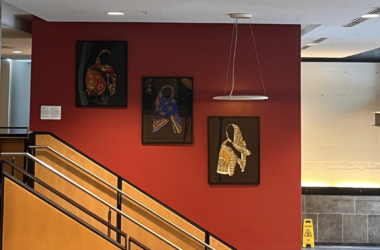
Taché’s slogan was added to the Parliament’s façade alongside bronze statues, each commemorating important figures in Canadian history. Out of 26 statues that were supposed to create a pantheon of Canada’s founding narrative, only two featured references to Indigenous life—the Nigog Fisherman and A Halt in the Forest. Such diminished representation—along with the overemphasis of the ‘noble savage’ image of Indigenous Peoples in Canada—reflects a broader colonial framework of commemoration, in which Taché’s work reproduces a narrative that continuously marginalizes Indigenous voices and experiences.

In such light, Je me souviens is not merely a celebration of our heritage; it implores us to reconsider what we remember and what we ought to remember. The memories we reproduce are not neutral—just as Taché curated his own version of history through the Parliament’s design, collective memory is moulded by our perceptions, our values, and our prejudices. What is preserved as heritage worthy of celebration, what is relegated and marginalized, and what is deliberately suppressed are choices—choices that have decided how we understand the past. To remember, then, is not simply to recall what happened, but to critically engage with existing narratives.

Memory thus becomes a responsibility. Je me souviens is more than a catchphrase found in souvenir shops, or a slogan carved in stone. It is an omnipresent reminder that memory holds immense power. If memory can be used as a tool of silencing and distortion, it also has the capacity to drive meaningful change. Our responsibility is to ensure that memory preserves truth, rather than just echoing the past—so that it can be used to reconcile, inspire, and build a future we are willing to stand behind.


Science & Technology

A blast from the past: Revisiting some of our favourite SciTech pieces

A look at Artificial IntelligenceMalika Logossou, Managing Editor

A few months ago, I wrote a piece on Artificial Intelligence (AI) tools, examining whether they reduce cognitive skills and how this extends to students and adults. Drawing from Nandini Asavari Bharadwaj’s expertise, a PhD candidate in McGill’s Department of Educational & Counselling Psychology, she explained that the effect of AI on our critical thinking skills depends on how we use it—but it can also serve as a powerful instrument to assist learning

Since Alan Turing’s 1950 proposition of the ‘Imitation Game’ to test machine intelligence, to Arthur Samuel’s checkers-playing program, AI has evolved considerably. Most recently, a humanoid robot gave a speech alongside the U.S. First Lady at the Fostering the Future Together Global Coalition Summit. Though AI is not new, it has become increasingly present in our everyday lives.

“AI has been around since the 1950s [….] Currently, we are seeing significant interest and development in generative AI, particularly large language models and related conversational interfaces such as chatbots,” wrote Bharadwaj in an email to The Tribune.

The trajectory of AI highlights its dual nature: It can enhance our thinking, but overreliance risks dulling our critical reasoning. Its growth also has environmental implications and social costs, and affects how we view and understand art and friendships. As we look back on why these tools were initially created, it’s important to remember that struggle, reasoning, human contact, and creation are central to human learning. 

Reviewing perceptions of public transport– Sarah McDonald, Science & Technology Editor

When I first joined SciTech as a staff writer, the third article I wrote examined public perceptions of public transportation developments. Reflecting on recent Réseau express métropolitain (REM) station openings, I reached back out to Lancelot Rodrigue, a member of the Researchers at Transportation Research at McGill (TRAM), to see how the team’s research has progressed since November 2024.

“The research project which we were talking about [in 2024] was […] part of our bigger project on the REM, so this project has been ongoing. I think now we just collected the wave six or seven […] of the survey,” Rodrigue explained. 

TRAM’s projects have included comparing reception from the Pie-IX BRT and the REM—finding that the BRT has been far less controversial than the REM—and analyzing the difference between projected and actual demographic use of the REM stations in a recent article.

Recent work has validated public concerns that Rodrigue described to me back in 2024.

“There are elements that we discussed about two years ago, which were issues with the references in terms of governance and planning, [such as], it might have gone too fast, and people weren’t feeling certain about it. We did have some confirmation that these were kind of valid fears in terms of issues that the REM has been having during the winter.”

With their research still ongoing, TRAM continues to evaluate both the impacts and perceptions of public transport developments such as the REM. 

Additional details on The James Webb Space Telescope – Leanne Cherry, Science & Technology Editor

One of the first pieces I wrote as a SciTech editor came after attending a Physical Society Colloquium on the James Webb Space Telescope. While every component of Webb is a feat of engineering, one particularly incredible aspect which I wasn’t able to mention in my original article is the telescope’s sunshield.

Webb captures images of our universe by detecting and interpreting the low-energy infrared light emitted from astronomical objects. The telescope itself must be kept at exceptionally low temperatures to accomplish this—a process which is largely mediated by the sunshield. The shield is larger than a tennis court, and is composed of five layers of Kapton—a tough and sturdy plastic—each layer thinner than a human hair. Acting as a wall between Webb’s lenses and the sun, the shield reduces the temperature by nearly 300 degrees Celsius from one side to the other.

Perhaps most impressively, the engineers figured out how to fold this massive structure into something that would not only fit inside a rocket but could be unfurled upon reaching its orbit without tearing. This required around 150 different mechanisms working in perfect harmony, and 7000 flight parts.

McGill, News

COFAM rallies outside the Arts building demanding counteroffer from McGill

On April 2, around 60 professors gathered outside the McCall MacBain Arts Building in a rally organized by the Confederation of Faculty Associations of McGill (COFAM). Following a few speeches delivered by faculty representatives, the group walked to the James Administration Building while chanting “Le mépris, ça suffit !” and “Quoi ? Une contre-offre ! Quand ? Maintenant !

COFAM consists of five associations: the Association of McGill Academic Staff of the School of Continuing Studies (AMASCS/AMPEEP), the Association of McGill Professors of Education (AMPE), the Association of McGill Professors of the Faculty of Arts (AMPFA), the Association of McGill Professors of Law (AMPL/AMPD), and the Association of McGill Library Academic Staff (AMLAS). Amid ongoing negotiations with McGill to improve faculty working conditions, the rally marked COFAM’s launch of the “Full Counter-Offer Now!” campaign.

In an interview with The Tribune, Edward Dunsworth, associate professor in the Department of History and Classical Studies and organizer with AMPFA, explained that professors have gathered at the rally to denounce McGill’s stalling tactics in bargaining.

“The university has been around [for] 200 years,” Dunsworth said. “[Professors] have never been unionized until the last few years, compared to the rest of Quebec, where [at almost] every other university [professors] are unionized [….] More and more faculties are continuing to unionize, so McGill needs to adapt to that new reality and bargain seriously, and get things moving at the bargaining table.”

Dunsworth continued to mention that COFAM had delivered their list of demands in July 2025. Up until the rally, COFAM still has not received an adequate or complete response from McGill.

“One thing that’s been really challenging is that McGill has responded piece by piece to certain articles,” Dunsworth noted. “It’s really difficult to bargain like that. We need a full response to be able to properly negotiate and possibly make advances in one area and make compromises in another. It’s impossible to do that without a full picture of what the counteroffer is.”

Barry Eidlin, associate professor in the Department of Sociology and second vice president at AMPFA, delivered a speech to the crowd highlighting why a counteroffer is important for achieving COFAM’s non-monetary demands.

“We believe in this university, and we want to be able to teach our students with adequate support,” Eidlin said. “We have a message to the administration today. Come to the table, negotiate. You might not like something in the offer, that’s fine. That’s why you make a counteroffer. That’s how bargaining works. Rest assured that this is not a problem that the McGill administration can simply ignore, because we’re not going away.”

COFAM’s non-monetary demands call for better transparency and fairness for faculty, with little to no financial impact on the university. Such demands include a tenure-track pathway for ranked Contract Academic Staff (CAS), improved retirement options, and more transparent regulations in tenure, appointments, renewals, and promotions. In a speech to the audience, Kyle Kubler, a CAS faculty lecturer at the McGill Writing Centre and the AMPFA’s treasurer, highlighted some of COFAM’s other non-monetary demands—including enshrining academic freedom into the framework of labour relations.

“We’ve seen over the past couple years the way that our academic freedom has been challenged in various situations. We want to take academic freedom, put it into our collective agreement, and make it stronger than it currently is,” Kubler said. “[We also want] unique recognition for our Black and Indigenous colleagues, to identify ways that we can also recognize the service and the research that they do for their academic profiles, as well as making sure that the histories of racism and colonialism are […] recognized within our country.” 

Dunsworth highlighted that bargaining must happen more efficiently in the interests of both the university and its faculty.

“We have made some progress in bargaining, but we need to move things along quickly,” Dunsworth said. “That’s the best for the university, for us to reach a deal, carry on doing the teaching and research and service that we care a lot about and want to continue to do.”

Research Briefs, Science & Technology

Alzheimer’s explained: Addressing medical advances and common misconceptions

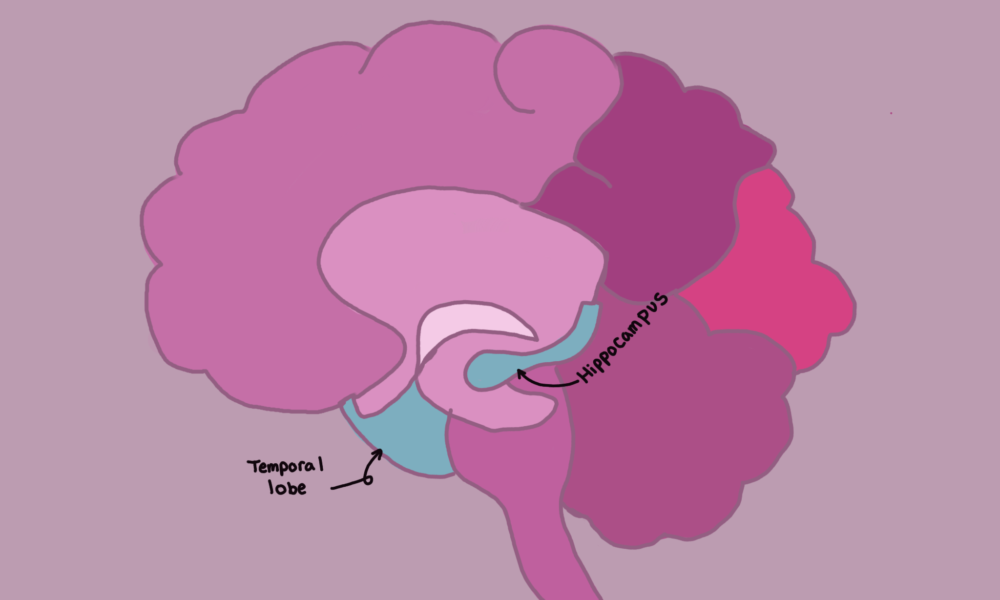
Alzheimer’s disease (AD) is a progressive neurodegenerative disease that affects memory, thinking, and eventually grows severe enough to interfere with daily life. AD is the most common cause of dementia, an umbrella term that encompasses many different symptoms of cognitive decline.

While AD is still categorized as an incurable disease, researchers continue to look for treatments to improve the lives of patients and their families. With promising developments emerging in the field, could AD research be entering a new era? Experts such as Dr. Serge Gauthier, a professor of McGill’s Department of Neurology and Neurosurgery and Department of Psychiatry, suggest that it may be.

As director of the Alzheimer’s Disease and Related Disorders Research Unit at the Douglas Research Centre, Gauthier’s research aims to expand treatment options and advance earlier intervention for patients. Like many clinicians, Gauthier’s interest in pursuing AD research stemmed from a surprising encounter in the clinic.

“I met a 30-year-old woman with AD who came into our clinic,” Gauthier said in an interview with //The Tribune//. “It was a chance encounter, to meet someone so young with the disease, and it completely shocked me.”

There is a common misconception that AD can only develop in older adults, but Gauthier explained why this is not the case.

“Now, it’s well known that you can have three specific inherited [AD] genes, which can make symptoms emerge around age 30 to 40,” Gauthier said. “Over the years, we have developed a special network to treat people as young as 20 from those families.”

Gauthier then highlighted some of the biggest changes in AD research over the course of his career.

“The biggest change has been the definition of AD, which is now based on the presence of specific proteins in the brain, amyloid and tau. Strokes also play a big role, and there are other protein changes that come into play,” Gauthier said. “So AD is more complex [than previously thought], and we now may be able to say what kind of AD it is, what protein is most important for [a given patient’s AD], and [how to tailor] treatments to the patient’s [unique form of AD].”

AD is commonly thought to be just a normal part of aging, but Gauthier clarified the nuances here.

“Over age 70, everybody has slight short-term memory [decline], but as long as it does not interfere significantly with your daily life, it’s considered normal,” Gauthier said. “If you have hesitations for words or remembering appointments and it’s [affecting] your daily routine, you should see a clinician to see if it’s caused by medications, lack of thyroid hormone, poor sleep, or AD.”

Next, Gauthier explained the grey zone of AD—the ambiguous, early stage of the disease where mild symptoms begin to develop. At this stage, biomarkers such as amyloid accumulations can be seen on a PET scan.

“There is this grey zone that may last three to five years, where we see mild cognitive impairments, which are mostly memory-related. This zone is of interest because if it is caused by AD, we do have medications that could prolong this more benign stage and delay dementia.”

Vascular factors, such as diabetes, may also contribute to the development of AD, where damage to blood vessels may disrupt blood flow to the brain, resulting in damaged tissue.

Gauthier also discussed how socioeconomic factors play a role in the development of AD, where certain populations are at higher risk. He highlights the fourteen modifiable risk factors for dementia to be used as a helpful tool for the prevention of AD.

“Those less educated, with high blood pressure, and living in relative social isolation [are at highest risk],” Gauthier said. “It’s rarely one factor that you should pay attention to and more of a combination.”

Gauthier points to the Dementia Education Program as a helpful resource for the patients’ loved ones who are undeniably impacted by AD’s effects.

“The dementia education program is focused on caregiver needs and resources […] helping educate people and give them a place where they can talk about what they’re living through.”As the population of older adults continues to rise, so does the urgency of addressing AD and its wide-reaching effects on patients, caregivers, and healthcare systems. With over 40 years of experience, Gauthier remains optimistic about the direction AD research is heading. With blood tests, clinical trials, and FDA-approved medications on the way, the field is moving toward earlier diagnosis and more individualized treatment options.

Commentary, Opinion

The pattern behind Hassan’s denial of entry

Rima Hassan, a French-Palestinian Member of European Parliament (MEP), was denied entry into Canada days before she was scheduled to attend conferences in Montreal on the suppression of Palestinian advocacy and the rise of the far right. Canada’s Office of Immigration, Refugees, and Citizenship (IRCC) did not provide a specific reason for refusing Hassan’s entry, merely blaming the situation on Canadian legal requirements. According to the IRCC, Hassan had failed to announce a previous visa refusal or denial of entry as well as an alleged criminal offence, arrest, indictment, or conviction. 

Hassan has since described the IRCC’s decision as an “attempt at censorship” and an “obstacle to parliamentary action and freedom of expression.” Québec solidaire member Andrés Fontecilla seconded her declaration, calling upon the government to explain itself. Contrastingly, Jewish advocacy groups such as B’nai Brith and the Centre for Israel and Jewish Affairs (CIJA) have supported the denial of her entry, claiming that speech that “justifies terrorism, glorifies violence, and denies Jewish history” ought to be limited. 

There has been a rise in censorship in Canada, particularly through the mainstream media’s warping of news and content related to Palestine. Often, Canadian mainstream media manipulates language to minimize or misrepresent the genocide, excluding Palestinian voices. The lack of credibility awarded to journalists on the ground in Gaza, as scholar Adel Iskandar explains, perpetuates a colonial dynamic where “the native cannot speak for themselves.” This selectiveness silences Palestinian perspectives to distort the public’s worldview. Taken together, Hassan’s exclusion and the media’s framing of Gaza reflect this imbalance, where those affected by a conflict are not given the right to speak for themselves. 

Hassan being denied entry is not the first time Canadian institutions have limited public discourse on Palestine. In Sept. 2025, the IRCC banned Liam Óg Ó hAnnaidh, a member of the Irish hip-hop band Kneecap, better known by his stage name ‘Mo Chara,’ from entering Canada based on unproven allegations of terrorist activity. Similarly to Hassan, the band was quieted with opaque justifications before even being given the chance to speak. 

These constraints on speech also extend to universities. In 2024, McGill instituted a 10-day injunction against Students for Palestine’s Honour and Resistance (SPHR), banning the group from protesting on campus. Since then, McGill has threatened to terminate its agreements with other student groups, such as Quebec Public Interest Research Group (QPIRG) at McGill and the Students’ Society of McGill University (SSMU), for refusing to sever ties with SPHR. This form of censorship is a consistent pattern, with the administration interfering in a democratic vote of the Law Students’ Association (LSA) to boycott Israel last week. Universities play a crucial role in shaping the beliefs of the next generation; excluding important perspectives on global conflicts inhibits students from thoroughly grasping them. Not only do they have the right to hear all points of view, but obstructing them maintains colonial power dynamics where dissenting voices are intentionally suppressed

Such gatekeeping and political obstruction hinder collective understanding of global issues, with consequences at a broader level. Not including all of the historical perspectives involved in an issue distorts publicly understood narratives, which most affects those whose stories are already underrepresented. It maintains power imbalances where the freedom of expression of those already oppressed is perpetually hindered. 

Some may argue that Hassan’s denial of entry occurred due to administrative reasons, not political motives. However, regardless of the IRCC’s intentions when restricting Hassan’s entry, the refusal’s effects remain the same: Rima Hassan cannot tell her story.

The cornerstone of a democratic society is free expression. Failure to do so puts the public’s right to know at risk and continues to perpetuate a system that maintains the censoring of some while uplifting others. 

Arts & Entertainment, Film and TV

“Project Hail Mary” reads the sign of the times

Warning: This piece contains spoilers.

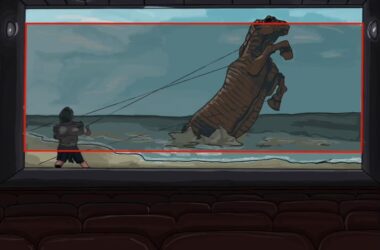
Amaze! Amaze! Amaze!” sums up my experience watching the biggest debut of the year: Project Hail Mary. Adapted from Andy Weir’s 2021 book and directed by the duo who brought us 21 Jump Street and The Lego Movie, Phil Lord and Christopher Miller, Project Hail Mary shows us thateverything is awesome when you give Ryan Gosling glasses and cast him as a molecular biologist-turned high-school teacher-turned astronaut, who wakes up in space with no memories of how he got in a space ship.

The premise is straightforward: The sun and stars in the galaxy’s solar system are dying because of an alien microorganism called astrophage—literally “star-eater” in Greek. These organisms threaten to drastically drop the Earth’s temperature and trigger global extinction within decades. Dr. Ryland Grace (Gosling) awakes as the sole surviving traveller on a spaceship, light-years away from Earth, with retrograde amnesia, and must carry out a mission to understand why the star Tau Ceti remains the only one undimmed. He soon learns, however, that he has been sent on this mission knowing he will never be able to come back.

Gosling is both swoon-worthy and endearing as Dr. Grace, who develops a close bond with the extraterrestrial Rocky (James Ortiz), whom he meets in space and a team of puppeteers nicknamed “the Rocky-teers”. The supporting cast includes Sandra Hüller as Eva Stratt, the morally grey character leading the international task force against the astrophage crisis. The movie explores themes of memory, friendship, duty, and bravery, with the protagonist sacrificing himself for humanity. 

Coming from the Catholic Hail Mary prayer, the expression describes a last-ditch effort to rectify a hopeless situation. The film encapsulates this desperation. The spiritual themes of the story are not lost, but what is most striking is the optimism with which it approaches its difficult subject matter. Grace’s tale is supported by an enticing soundtrack by Daniel Pemberton and beautiful cinematography, with wide shots of space that lean into warmer tones and away from common representations of space in cold and desaturated colours. 

The era that we currently live in has felt dominated by confusion, consumerism, the rapid growth of technology, and war. The movie industry is no exception, favouring big-budget blockbusters over original scripts. It feels like genuine passion projects are slowly replaced by extended trailers, with big explosions, empty declarations, and characters that lack depth. Project Hail Mary stands out with the love and care imbued into its soul, exemplified by Gosling and Ortiz’s acting. Instead of having Gosling work alone while talking to a tennis ball that stands for Rocky—as is customary for computer-generated imagery—the directors chose to work with practical effects and to have Rocky’s puppet built by the renowned special effects artist Neal Scanlan. This made Grace and Rocky’s relationship seem genuine and multi-layered, as the actors were developing a deep friendship over months.

Furthermore, with the recent launch of Artemis II, which holds four astronauts—including Canadian Jeremy Hansen, who will venture around the moon for 10 days—the importance of scientific discoveries in space exploration cannot be forgotten. Project Hail Mary calls for much-needed optimism about the good faith of humanity after this year has shown us how unsettling it is to be human in the 21st century. Watching Grace save humanity in space reminds us why scientific discovery and missions like Artemis II are important: they help us gain knowledge, foster international cooperation, and inspire next generations of scientists. If there is one thing that I encourage you to do, it is to go watch Project Hail Mary in theatres to experience the magic firsthand. If you need, be like Rocky and borrow “Ryan Gosling money” to go see Project Hail Mary; you might even catch a rendition of Harry Styles’s Sign of the Times or fall in love with an adorable alien proudly stating, “Grace Rocky save stars.”

Arts & Entertainment, Film and TV

In defence of Cinderella

Now and then, I fall into deep conversation with my friends about Disney princesses: Who’s our favourite or least favourite? Who should we dress up as for Halloween? These characters were integral to my childhood. Though I grew up rewatching Princess Jasmine’s adventures long after Aladdin, going to the theatre when Frozen 2 was released, and having my mom collect the Rapunzel Animator’s Collection dolls, Cinderella remains closest to my heart.

As a child, what initially drew me to her was the gentleness of her story. Assuredly, I wouldn’t want an evil stepmother and stepsisters, but Lady Tremaine’s cruelty was far more bearable to watch compared to Ursula stealing Ariel’s voice, or Dr. Facilier’s scary “Friends on the Other Side. Watching Cinderella felt comforting and joyful rather than frightening.

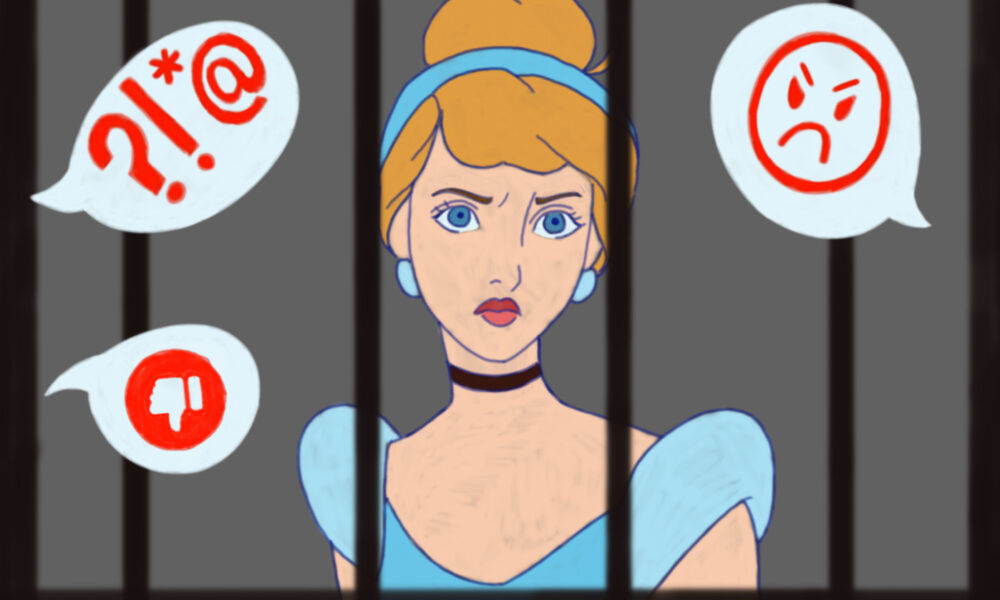
As an adult, whenever I admit that Cinderella is my favourite, I am met with people’s side eyes: ‘Other princesses teach better lessons,’ ‘She doesn’t have a personality,’ ‘There are just more interesting stories to watch.’ On Medium, Lipika Sahu criticizes Cinderella’s obedience, depicting her as spineless. A New York Times article once described Cinderella as a “symbol of the patriarchal oppression of all women.” While I don’t discredit these takes, it is unfair to dismiss the merit of Cinderella’s story entirely.

When I rewatched the 1950 film to recall her tale, I was reminded of its beautiful animation: hand-drawn and vivid Technicolour. The animals’ minute details, delicate movements, and elegant backgrounds comprise this dedicated piece of art. Visually, Cinderella is iconic.

Before becoming a princess, Cinderella endures dreadful hardships. She loses both her parents at a young age, leaving her at the mercy of an uncaring stepmother. Every day, Cinderella rises early to feed her stepmother’s cat, Lucifer, cook everyone’s breakfast, and fulfill her assigned chores. Everyone, even Lucifer, tries to make her life harder. The most upsetting scene is when she excitedly goes downstairs wearing her late mother’s dress, ready to go to the royal ball, only for her stepsisters to shred it apart.

The claim that Cinderella is frustratingly obedient or unable to defend herself blatantly ignores the abuse she sustained at the hands of her stepfamily. Her abusers were her only family; she had nowhere else to go. Forced labour and insults were her entire environment, and she adapted to it. It’s easy for one in a different position to claim that she could’ve always left, but the truth is more difficult. Exiting an abusive situation is one of the hardest things to do, and this argument virtually victim-blames Cinderella.

Others argue that her story is patriarchally boring. Prince saves maiden, the end. While Cinderella does end up with Prince Charming, it’s worth remembering that she didn’t go to the ball to meet a man. She simply wanted to have fun and take a much-deserved break from her never-ending duties. She didn’t even realize she was dancing with the prince—marriage to him was a bonus to her freedom.

All things considered, there’s nothing directly negative to learn from Cinderella’s character. She’s kind, a hard worker, and never gave up on her dreams. People place higher expectations  on Cinderella because she is seen as a paradigm of the ideal fictional woman. The lesson isn’t to be blindly obedient; it’s to be resilient. Don’t give up on your dreams; kindness and persistence will be rewarded. Cinderella teaches us a simple but significant lesson. 

I find beauty in her tale; a simple story is sometimes just as powerful as a complex one. Cinderella and the other princesses’ legacies remain after 50 years. While we shouldn’t base our entire lives on princesses, there’s no harm in enjoying a film about finding happiness in a difficult life.

Out on the Town, Student Life

 The Tribune’s guide to post-finals fun

“WHOO!” yells a student on Lower Field. The cheery sounds of OAP ring out across campus, marking the end of another dark period of finals. Students crane their tired heads up, still pleasantly surprised by the return of a bright spring sun. But doubts still linger about final grades and aching hands remain smudged with lead (after your Apple pencil finally gave out, of course). What can you do to forget all of those troubles? The Tribune has compiled the ultimate post-finals celebration and unwind guide. 

Catch up on some reality TV

What better way to forget about your own life than to catch up on the lives of others? Reality TV can transport you to an alternative realm, which you will greatly value post-finals. Begin with the incomparable Love Island, and catch up on season 7 before season 8 drops this June. Was Huda really that bad? Is Amaya Papaya cancelled? These are the hard-hitting questions that should have been in the long answer section on your exam bluebook. End your binge with Love is Blind and find out if couples will survive after seeing each other in person for the first time (spoiler alert: love probably isn’t blind). 

Create a summer bucket list

Make sure you get to it all this summer with the ULTIMATE SUMMER BUCKET LIST (must be in all caps to ensure ultimate summer fun). Grab a poster board, fun colours, glitter, and get to work compiling a list of all the fun activities you want to do this summer! If you’re having trouble thinking of ideas, consider going to a drive-in movie theatre, making a time capsule with your besties, or painting some shirts with bleach to create a custom design. 

Have a picnic

Take advantage of Montreal’s green spaces and the (hopefully) good weather. Pick up a bottle of wine from the SAQ and a cute blanket you won’t mind getting dirty. To have even more fun, plan a theme like Y2K or Mad Hatter and play dress-up. Try the different parks Montreal has to offer such as Parc La Fontaine, Parc du Mont-Royal, Parc Jeanne-Mance and Parc Jean-Drapeau, and see which one is your preferred spot for all your frisbee-throwing, charcuterie-board-eating fun!

Make slime

Throwback! Many have forgotten the art of slime-making and its unique de-stressing properties. All you need is some glue and borax, Tide, or contact lens solution. Mix half a cup of glue with one tablespoon of activator and knead until the slime is to your liking. For texture, try adding shaving cream or beads! And go crazy (PSA: avoid the floor slime trend for a much easier cleanup).

Go window shopping

Broke from the copious amounts of energy drinks you bought during finals? Hit up Rue St. Catherine’s and try just staring at all the clothes you could buy. It will serve as a lesson in self-control, but also a way to heighten your fashion sense. Learn to curate a wardrobe with fewer clothes, but more style. Keep an eye out for some timeless pieces, and avoid fast fashion.

Host a Euphoria Night

If you had to skip out on Euphoria‘s season three premiere because of finals, be sure to go all out after exams! Have your friends put on their best glittery, bold, coloured eye makeup. Set some mood lighting, perhaps some silver decor, and turn up the Labrinth. Try to avoid the Nate Jacobs of the world, and find out if Jules is still riding that damn bike. 

Curate playlists for loved ones

Although physical mixtapes have been lost to time, Spotify (or Apple Music if you’re too stubborn to admit that Spotify is superior) is around instead. Think of your favourite people and have everyone curate a special playlist for each of them. Music can be a window into someone’s soul and a way to truly get to know them. Design a cover for the playlist and have a listening party! 

Commentary, Opinion

Forgetting sexual assault survivors implicitly forgives their aggressors

In March 2026, former teacher and Bloc Québécois (Bloc) member of Parliament Pascal-Pierre Paillé was arrested and charged with sexual offences involving two minors, the allegations dating back to 2006 and as recently as August 2024. Paillé, who represented the riding of Louis-Hébert for the Bloc from 2008 to 2011, was released from custody under court-ordered conditions, including a ban on entering parks, playgrounds, and daycare centres, as well as a prohibition on holding any position of authority over individuals under the age of 18. 

Cases like Paillé’s no longer shock the public in the way they once did. Instead, they dissolve into a continuous stream of allegations involving high-profile figures where each new case resembles the last. Cases like Jeffrey Epstein’s and the Canadian national hockey team sexual assault scandal are paraded online and eventually fade—but do not disappear entirely from public memory. Instead, what remains is a kind of acceptance—an assumption that elites are capable of perpetrating such violence and are rarely met with real accountability. Over time, that assumption doesn’t only become a belief, but an expectation

Overexposure to sexual violence and abuses of power have made stories like Paillé’s disturbingly familiar. While individual cases may fade from immediate public attention, their accumulation quietly reshapes what we come to accept as normal in public life. But familiarity is not the same as understanding, and forgetting is not inevitable. One must make the active choice not only to remember survivors but also to place the blame squarely on the perpetrators and continue fighting for justice until it is achieved. This collective memory and persistence offer a counterweight to desensitization. Without that mobilization, memory becomes a passive archive of repeated harm, dulling public response, weakening accountability, and enabling thenormalization of sexual violence. 

Social media is a principal enabler of the desensitization of sexual violence. Following the partial release of the Epstein files by the Trump administration, the collections of emails, text exchanges, court documents, and heavily redacted records linked to late financier Jeffrey Epstein offer a fragmented but disturbing glimpse into a network of abuse sustained by wealth and power. Their release demonstrates a troubling paradox: An overabundance of information can obscure rather than clarify the truth. When millions of documents are made public, the sheer volume of material overwhelms the average reader, making it impossible to extract meaning, and even more so, hold aggressors accountable.

At the same time, social media platforms transform these events into consumable content. As allegations circulate, they are reframed through memes, satire, and viral posts, reducing serious crimes to moments of entertainment. In the case of Epstein, a scandal that has swept the world, the proliferation of online jokes and edited content has shifted attention away from victims and toward the spectacle of those allegedly involved, trivializing the severity of sexual violence and reshaping how it is perceived. 

More concerning is the role of algorithmic systems in reinforcing this process. Social media platforms are designed to maximize engagement, often by promoting increasingly provocative or emotionally charged content. Repeated exposure to violent or disturbing material—whether actively sought or passively recommended—has been shown to blunt emotional responses, reduce empathy, and normalize harsh or dehumanizing interpretations of others. Over time, this creates a feedback loop in which users not only consume more extreme content, but also become less affected by it. In an environment that prizes reactions over interactions, sexual violence and severe abuses of power become unfortunate but nonetheless ordinary occurrences. 


Collective memory, then, is an essential form of resistance against this desensitization. The Epstein case made it clear: These abuses were not isolated but sustained by complex webs of power that run deep through the world’s elite, relying on silence, corruption, and the public’s short attention span to persist. Without an active effort to preserve and organize memory into action, serious crimes risk becoming just another reel on Instagram—scrolled past, shared, laughed at, and buried under the next trending post. To remember, in this context, is not enough. Memory must be mobilized, or we risk forgetting—and in doing so, forcing survivors to forgive.

Student Life

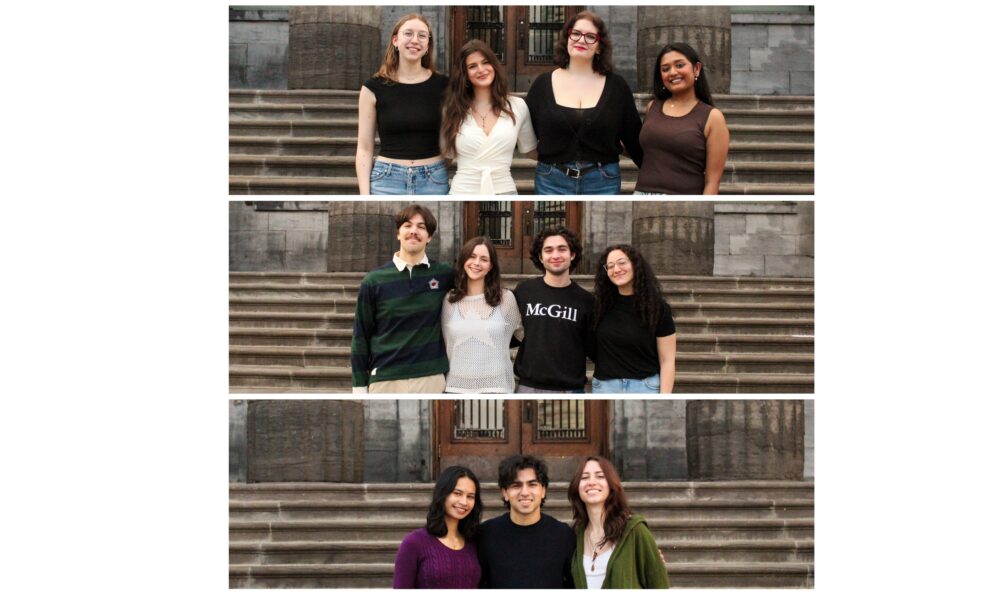
Farewell to The Tribune: Last words from our graduating editors

Mia Helfrich Creative Director:

I can’t remember what pulled me into The Tribune. I showed up to an Arts and Entertainment pitch meeting before classes began in my first year at McGill. My memories of university simply start here. After writing articles for a few months, I became curious about layout design, and started contributing to the illustration section. Next thing I know, I’m accepting positions as Design Editor, then Creative Director. I am endlessly grateful to be a member of our tight-knit community of creatives, and for the mentorship I received in my graphic design, drawing, photography, and writing. For me, university begins and ends with The Tribune—it would not be the same without it.

Nell Pollak, Managing Editor:

Would you believe me if I told you that I started at The Tribune as a spy? Well, maybe not an adversarial spy, but a mole—sent by a Communications professor I was researching for, tasked with writing for each McGill student paper to map their editorial structures. The Tribune was my first target. I walked into the board room having no clue what to expect, but found myself inexplicably drawn to the art of an op-ed—the slow alchemy of a broad opinion hardening into a sharp argument, the rabbit holes of research, the thesaurus searches to find the word I didn’t even know I was looking for. By the end of that first piece, my original undercover mission had slipped from my consciousness entirely. That next month, I applied to be an Opinion Editor; the following year, Managing Editor. I arrived to observe, and I leave having been intrinsically altered by the incredible community I found.

Malika Logossou, Managing Editor:

I first discovered The Tribune when a friend shared a News article with me in my first year. Later, after the incoming Editor-in-Chief encouraged me to get involved, I formally encountered it. I joined, scared of the outcome or of not liking it. But what I originally signed up for as a simple extracurricular activity became such an important part of my years at McGill. As a commuter, finding a community on campus isn’t always easy, but I found a sense of belonging through the strong connections I built at this paper. I am so privileged to have read and edited such outstanding pieces, and I will miss this deeply rewarding experience. I cannot wait to see what The Tribune does next year, knowing it’s in competent hands.

Defne Feyzioglu, Opinion Editor:

As I walked down McTavish Street after our last editorial board meeting, I kept thinking about how strange it is to find yourself in a place you least expect. I started my McGill journey with nothing but a lot of confusion and a sharp sense of unbelonging. In a new city across the ocean, and knowing so little about myself, I just tried: Picked up new hobbies, went to gatherings, considered changing faculties, partied at Café Campus (though, in retrospect, not the greatest site of self-discovery), and drifted. But somehow, it was at The Tribune’s pitch meeting that something clicked. Somewhere in that room, I discovered my love for journalism and grew into my voice. I now leave The Tribune with more gratitude than one final paragraph could ever contain.

Gregor McCall, Student-Life Editor:

When I joined The Tribune earlier this year, I was, in all honesty, scared to death. My experience in student journalism was next to nothing—only a single piece in Science and Technology two years before I applied to be an editor. What I found was unlike anything another campus organization could have offered me. The Tribune gave me a chance to pursue truly important stories on campus. With the help of my brilliant Managing Editor, Nell Pollak, and amazing Co-Editor, Tamiyana Roemer, we gave Student Life both a more serious tone, following campus protests and activism, and also brought back some much-needed whimsy with a number of hilarious satirical pieces. I’ve loved every article I had the privilege to write, and I will cherish every minute I got to spend with our incomparable Editorial Board.

Ethan Kahn, Sports Editor:

Whenever someone wraps up a major chapter in their life, the goal for many is to finish that time without any regrets. Unfortunately, I have one regret about my four years at McGill: I waited until my third year to join The Tribune.  I can say without a shadow of a doubt that being a part of The Tribune for the past two years has been the most rewarding experience I could have imagined. I’ve had the privilege of working with so many incredible, driven, and caring writers and editors. A massive thank you to my Managing Editors, Mairin Burke and Kaitlyn Schramm, and my co-editor Clara Smyrski for making me feel so welcomed, and of course to all of the fabulous writers who worked tirelessly throughout the year. I’m immensely proud of the work we have done, and I am so excited to see how the paper evolves in the future.

Jenna Durante, Features Editor:

Last year, I came into the Trib as a SciTech Editor and had the privilege of switching over to Features this year. Anxious about starting the new role, I was eager to see all that we would accomplish in the Features section. What a joy it has been to be part of such a brilliant team of editors and designers for the past two years. I am beyond grateful to have worked one-on-one with the editors to help develop their investigative articles every week—I learned so much from everyone. I cannot thank them enough for their time, care, and dedication to making this section come to life, and for sharing the stories that are so close to their hearts.

Leanne Cherry, SciTech Editor:

I attended my first-ever SciTech pitch meeting towards the end of my first year, with the hope of finally trying out scientific writing. However, at the time, the thought of doing an interview scared me so badly that I didn’t go through with the article. It took me until the beginning of my third year to finally return to those pitch meetings. Looking back now, I can confidently say that becoming a contributor and an editor for The Tribune was the best choice I’ve made at McGill, not merely because it showed me that I was capable of science writing, but because I have truly found some of the kindest and smartest people I have ever known. I cannot overstate my gratitude for this newspaper and the people who make its existence possible.

Armen Erzingatzian, Photo Editor:

My regrettably short journey at The Tribune started because all I really wanted to do was take perfect, pretty little pictures. My year at the paper turned out to be by far the most influential of my five years at McGill. Covering protests and other events as a photographer and the occasional interviewer-writer made me feel like I had a finger on the pulse of my hometown. It helped me understand the issues that affect my community and think critically about them. Through assignments and team meetings, I built incredibly meaningful relationships with the brightest, kindest and most driven people around. They made me a stronger, more responsible, and more empathetic person, and taught me more than I dared to imagine. Thank you, Trib. I’ll miss you.

Rupneet Shahriar, Web Editor:

I hadn’t planned to join The Tribune in my final year at McGill. For most of my time, I believed journalism and I were meant to run parallel, and I was content watching from the sidelines. That changed when a friend mentioned they were looking for someone with coding skills. I stepped in hesitantly, unsure if I had the voice or confidence to belong. But I soon found myself surrounded by people who are incredibly thoughtful, fearless, and deeply passionate about what they do. Their commitment helped me to trust my ideas and express them more freely. In doing so, I rediscovered my love for storytelling. I’m incredibly grateful to The Tribune for that, and it’s bittersweet that my journey here was so short. Nonetheless, I’m excited for what comes next!

Serena Elsammak, Video Editor:

Throughout my entire undergraduate experience at McGill, I always looked up to The Tribune; its value for honest, independent, and against-the-mainstream journalism resonated deeply with me. In a time where dominant news narratives have demonized people from my community and my family members back home in Lebanon, I have been especially grateful for The Tribune’s humanizing and justice-oriented work. For a long time, I flirted with the idea of applying for a role at The Tribune, but every time I wanted to apply, something else came up that wouldn’t let me go all-in. Finally, this last semester, the application for Multimedia Video Editor went up, and I was immediately drawn in. Using editing software creatively and simply documenting have always been passions of mine. The Tribune allowed me to re-explore this creative side of myself, and for that, and much more, I am extremely grateful. 

Anna Seger, Photo Editor:

I joined The Tribune in the fall of my second year. The splendour of Montreal’s autumn is always a source of inspiration for me, albeit a fleeting one, fading slightly as the leaves drop from their branches and a bitter chill fills the air. These past two years, though, the brilliant minds I’ve met through The Tribune have been a steady source of inspiration, not only because of their ambition and intelligence but also because of their kindness and sincerity. I am constantly moved by your creative spirits, your thoughtful contributions, and our truly countless meaningful discussions. I cannot wait to see the wonderful things you all go on to do.

Read the latest issue

Read the latest issue