Latest News

All Things Academic, Student Life

Don’t squirm, it’s time for midterms

With reading week behind us, preparing for midterms is almost as unappealing as completing them. For some, building healthy and fruitful study habits feels like an impossible feat. If you’ve been spending more time researching optimal study tips than reviewing your actual class content, fret no longer. The Tribune has composed a midterm survival guide.

Ditch the library and try a cafe

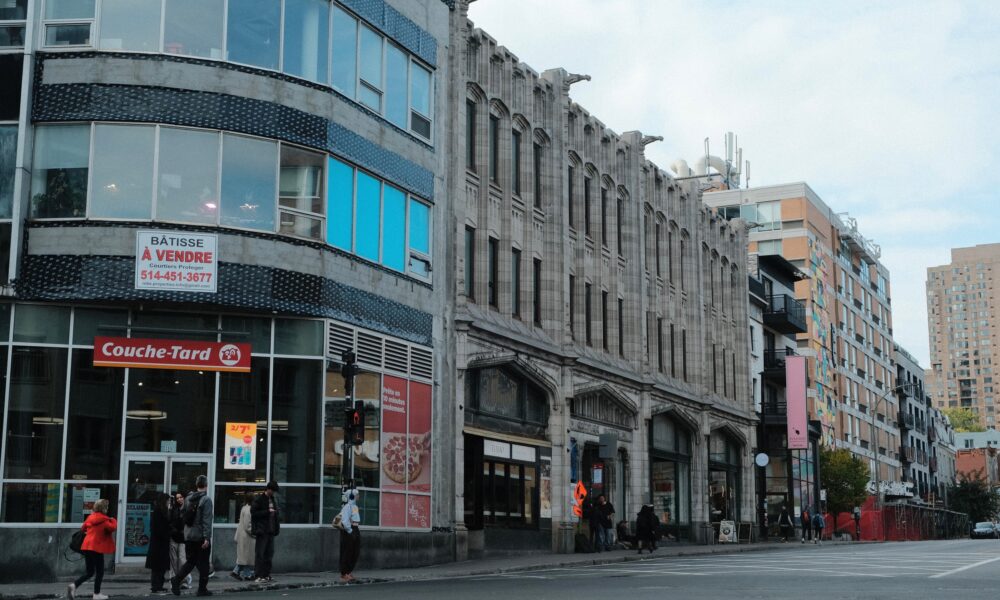
Montreal is home to a fantastic cafe culture; use your mountain of deadlines as an excuse to try out some of Montreal’s vibrant options. Bring a fellow struggling classmate, treat yourself to a delicious drink, and savour the last whispers of terrace season as you study. If you are avoiding libraries, but still craving a close to campus late-night study session, check out the Second Cup on St. Laurent. Located at the intersection of rue St. Laurent and avenue du Parc, Second Cup is open until 10:00 p.m. on weekdays, and 12:00 a.m. on Friday and Saturday. 

Trying new places, bringing friends, and exploring Montreal are all benefits to cafe studying, which make midterm-cramming less isolating and repetitive.

If a library is what you prefer…

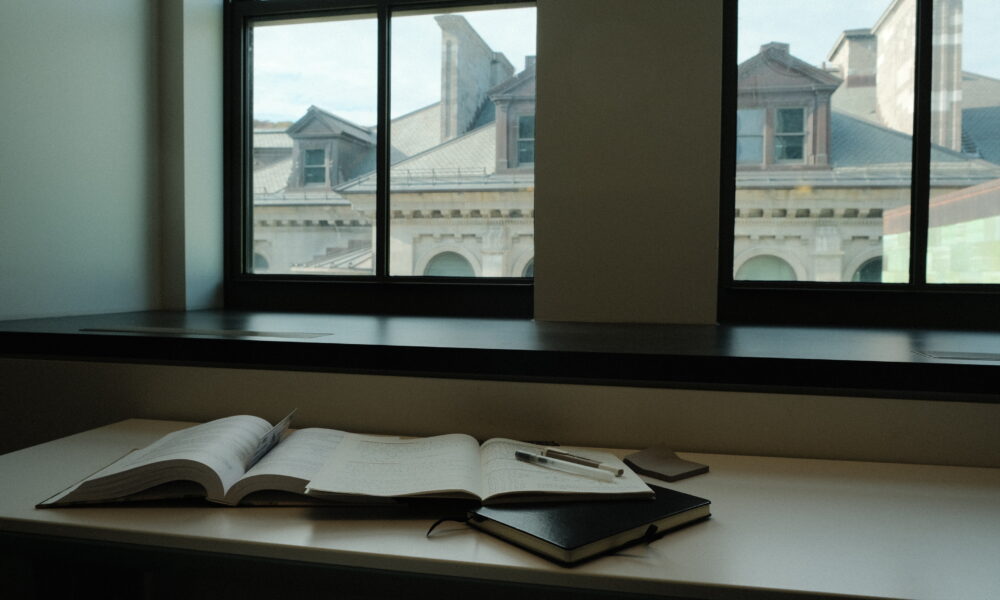
If the ensured silence, outlets, and privacy of a library are the features that facilitate your productivity, broaden your horizons away from the packed Schulich and McLennan by exploring the many other beautiful libraries McGill and Montreal have to offer.  

Located only three metro stops from the McGill station, the National Archives of Montreal is open to the public from 9:00 a.m. to 5:00 p.m. Monday through Friday. Its beautiful interior with warm lighting, high ceilings, and intricate architecture makes it a must-try for study sessions.

Even closer is Concordia University’s Webster Library, a mere fifteen minute walk from Roddick Gates. This library is open to the public 24 hours a day, seven days a week, only requiring a Concordia student ID between 11:00 p.m. and 7:00 a.m.. It is a great option for students looking to escape campus for a few hours while remaining in a student environment.

If you prefer to squeeze library-time in between classes, stay on campus and check out the Nahum Gelber Law Library, Birks Reading Room, the Islamic Studies Library, or the Marvin Duchow Music Library. These are excellent choices if you seem to know one too many familiar faces at Schulich or McLennan, or simply can’t find a seat during peak midterm season.

Remember, revising is not an all or nothing game

Don’t let perfection become the enemy. Be kind to yourself if you don’t achieve everything you want to, and take mindful breaks instead of doomscrolling. It can be easy to call 15 minutes of Instagram Reels your study break, but try to use those 15 minutes to go for a walk outside instead. Get your blood pumping, ingest some fresh air, and fully disengage from your work so you can start again feeling refreshed.

Set yourself up for success

A full course load is overwhelming, and it can be tempting to sit down and attempt to conquer everything at once. Although stress can be a strong motivator, it can also generate unproductive, scattered studying. Instead, make a study plan in advance, setting smaller goals for each day. Creating a weekly plan with each day’s tasks outlined allows you to get everything done in small digestible doses, while avoiding a stress-induced rut of procrastination.

Taking good care of your mental and physical health during midterms is incredibly important. Before any to-do list or cafe adventure can happen, you must fuel your body with real food, lots of water, and quality sleep. These pillars should be the backbone of every study session. As appealing as coffee, energy drinks, and vending machine snacks are, let them be treats—not foundations—of long study sessions.

Commentary, Opinion

More housing for the unhoused

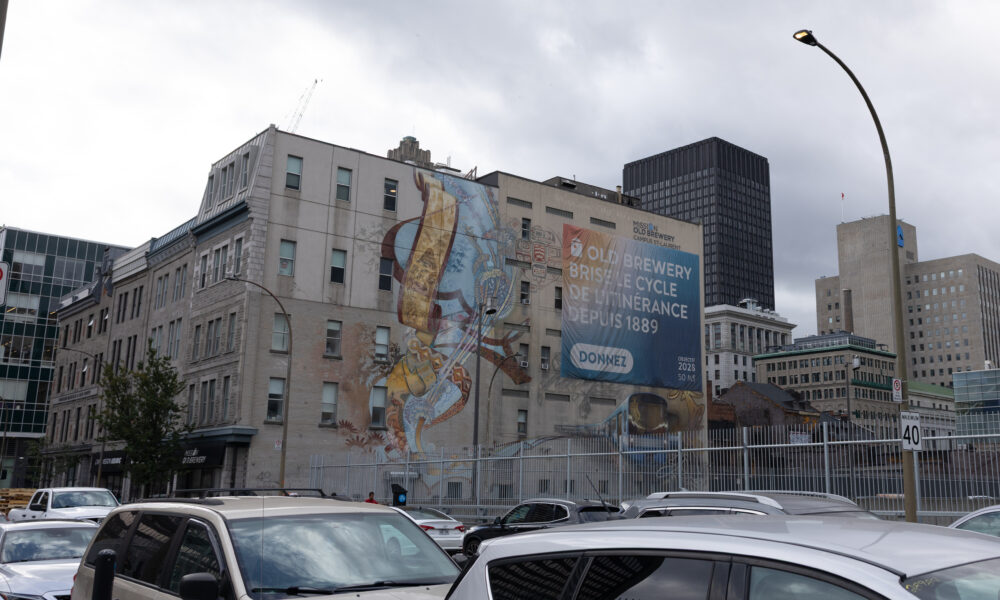
Montreal’s new $2 million CAD housing fund demonstrates an increased political resolve to aid the city’s unhoused population. The fund is dedicated to the expansion of housing non-profits; Plante’s government aims to double the number of housing units available for unhoused individuals. The city is dividing the funding among four non-profit organizations dedicated to developing below-market housing: Old Brewery Mission, Gérer son Quartier, Interloge Centre-Sud and Corporation Mainbourg. This initiative is expected to add roughly 6,300 units, offered below market rates, over the next decade. Old Brewery Mission, in particular, will receive $400,000 CAD to help finance 237 new apartments by 2028. 

This announcement comes in the wake of an intensifying capacity crisis among homeless shelters in Montreal, forcing some shelters to turn individuals away and others to offer overflow visitors nothing but chairs to sleep in. Quebec’s health department reports that ‘visible’ homelessness increased by 33 per cent in Montreal and 44 per cent in Quebec between 2018 and 2022. In recent years, encampments have also become increasingly common in Montreal, but the city often targets and dismantles these temporary settlements, forcing unhoused individuals to constantly relocate. 

However, this funding initiative comes against a backdrop of troubling policy decisions that reveal Montreal’s contradictory approach to its unhoused population. The STM’s closure of the Atwater metro entrance last winter—a crucial warming space—exemplifies the city’s pattern of displacement over care. Such hostile policies, from metro closures to the dismantling of encampments, prioritize pushing vulnerable people out of sight rather than addressing root causes. The $2 million housing fund represents a step in the right direction, but it cannot exist in isolation from these exclusionary practices. The city must reconcile its commitment to creating housing units with its simultaneous deployment of hostile architecture and exclusionary policies that treat unhoused people as problems to be removed rather than community members deserving of dignity and protection.

Long-term units like the ones Old Mission Brewery is constructing provide unhoused individuals more stability, dignity and long-term support. For instance, last year, Old Mission Brewery began turning open dormitories with bunk beds into small private rooms offering more privacy and dignity for unhoused individuals. These more welcoming spaces, known as ‘chambrettes’ allow unhoused individuals to sleep in a quieter environment, providing more privacy and safety. 

Investing in stable, affordable housing for the unhoused population also reduces the costs of homelessness in the long run. For instance, in Montreal, the health, social, and judicial services for unhoused people with mental illnesses costs more than $55,000 CAD per person per year. The benefits of this municipal investment in addressing the housing crisis are mutually reinforcing. 

After Plante unveiled this fund, the upcoming November election has brought housing policy to the forefront of political debate. Luc Rabouin, the Projet Montréal candidate running to succeed Plante in the November election, expressed his plan to increase the funding envelope to $5 million CAD next year if he is elected. Meanwhile, Ensemble Montréal‘s Soraya Martinez Ferrada has promised to develop at least 2,000 transitional and permanent housing units with psychosocial support during her first term and create a $10-million CAD matching fund to encourage private and philanthropic contributions toward homelessness initiatives. Transition Montréal’s Craig Sauvé opposes dismantling encampments and proposes increasing property taxes on wealthy homeowners to fund homelessness initiatives. Futur Montréal‘s Jean-François Kacou put forth a policy to partner with the city’s hotel industry to offer monthly packages for citizens experiencing temporary involuntary homelessness..

The diversity of approaches among candidates raises critical questions about Montreal’s future relationship with its unhoused population. Will the next administration prioritize housing-first solutions that foreground humanity and empathy towards its vulnerable residents, or will it continue the pattern of dismissal and displacement? As voters head to the polls, they must consider which vision aligns with the kind of city Montreal aspires to be—one that treats housing as a human right, or one that continues to criminalize poverty. The choice facing voters, and their prospective candidates is not merely about housing policy—it’s about what kind of community we want to build together.

Off the Board, Opinion

I promise I’m not a first-year

Last week someone’s jaw dropped when they learned that I’m in third year. Suddenly they wanted to know everything about me: What I’m studying, where I’m from, and if I’m sure I’ve been at McGill for two full years already. 

What I find startling is that whenever people are floored by what year I’m in, their disbelief is founded in the same faulty logic: That I am too full of life to be anything but a froshie.

I admit I have more energy than most; the secret to this youthful facade isn’t an inordinate amount of caffeine, but rather an inordinate amount of love.

I made it a rule a number of years ago to fall in love every day. Not ‘lawfully-wedded-wife’ love; something smaller, but no less real. Some days it’s a perfect pair of brown suede boots I spot on campus. Other days, a stranger who holds the door. Today, the perfectly ripe plum I had as a snack and the way my friends piled into the DESA office to spend time with me during my office hours. 

Even if I achieve nothing else in any given 24 hours, every day I find something to love.

I’ve been told that I use the word ‘love’ too liberally. I fundamentally disagree. There is so much love to have, to share, and to hold that I can’t come up with a single reason to hoard it in the crevices of my heart. 

So yes. I love loudly and I love too much. I let love spill through the cracks in my soul because I love the way it tastes on my breath. I love entirely and wholly and endlessly and daily and I do not care if it is disconcerting. I am a kid and the world is my candy store. Sue me.

I love waiting in slow-moving lines with my friends, just to buy overpriced coffee to drink together while we commiserate. I love bathroom graffiti and reading the messages that have been painted over and re-written with endless dedication and resilience. I love experiencing world-shattering heartbreak, because when love ends, heartbreak is the proof it was there to begin with—I feel so lucky to have gotten to experience something so profound, even if, in hindsight, it was never meant to last.

This love keeps me grounded, and it takes many forms: Appreciating the ordinary, romanticizing the mundane, and, most importantly, pulling glimmering silver linings out of seas of grey. Sparkles are often the only difference between the gorgeous and the grotesque, so to think of them as childish seems silly: I firmly believe that no matter how old you are, sparkles can help. There is always a glittering silver lining to be found, even if you have to paint it on yourself.

I won’t pretend love is a catch-all solution. My insistence on retaining a love for the utterly unremarkable doesn’t grant me immunity from the realities of university life. Just because I love love doesn’t mean I’m always just-peachy; my friends have wiped my tears and eaten pints of ice cream straight from the carton with me.

However, there is something to be said about letting the world excite you; about treating so-called ‘frivolous’ love as something adult rather than something naive. If love is what makes life beautiful, why on earth should we ever stop looking for it? 

Love doesn’t happen all on its own, but that’s what makes it worth it. Sifting through the unremarkable and finding something beautiful is a beautiful act in and of itself; love is formed and found where you look for it.

So I collect it.

I pick love like berries and spread it on my toast every morning; I use it to sweeten my tea; I wear it as perfume. It fills my days with life and lore, and, apparently, disguises me as a first-year. 

While I do wish people could guess my age a little more accurately, there is, as always, something to love in this misconception: It proves that whatever life is lost between first year and third year can—with enough looking and enough love—always be found.

Features

Decolonizing the Canadian museum

A reassessment of the curatorial practices for Indigenous art

In the soft hours of a pristine morn, mountainous clouds greet the crags of Lake Superior’s rocky coast. A stark-white reflection of a young sun floats atop the smooth water currents in the tranquil scene. Reposeful rock mounds puncture the wet surface, basking in the forenoon heat, still and untouched amongst their barren landscape. Dim shadows of obscured light rest in the background of blue and pearl-white paint. Canadian painter, Lawren S. Harris, captures the serene convergence of land and sea in his 1920s work, //Morning, Lake Superior//.

The peaceful scene hangs in the Claire and Marc Bourgie Pavilion, the gallery of Quebec and Canadian art at the Musée des beaux-arts de Montréal. Contrasting its quiet blues with the sharp green landscapes or harsh, icy mountains of its neighbouring images, //Morning, Lake Superior// draws museum-goers in with its poetic essence. Traversing the first-floor gallery of early Canadian modernism, one can find Harris’s piece beside other works from its artistic school of origin, the Group of Seven

In the 1910s, the Group of Seven began as an unofficial social group for artistic discussion before being halted by several members’ participation in the First World War. The school of artists reformed after the war and achieved its real celebrity status in the 1920s when they began exhibiting their landscape paintings across the nation. 

With sweeping strokes of bold paint, exaggerations of colour and shape, and expressive depiction of the country’s boundless regions, this inventive, modernist visual style was hailed as a uniquely Canadian artistic language. The paintings reimagine the landscapes in romanticized abundance—an elegy to their idyllic fruitfulness and poetic possibility. 

These seven artists—Franklin Carmichael, Lawren Harris, A. Y. Jackson, Frank Johnston, Arthur Lismer, J. E. H. MacDonald, and Frederick Varley—are forever cemented as ubiquitous figures in the cultural lexicon of Canadian art.

But in glancing back at these triumphant images, a thrum of cultural absence pounds against the paint-packed canvas. The Indigenous groups who populated and developed these lands are painted out of Canada’s narrative history. 

Decades after the formation of the Canadian Confederation, the Group of Seven sought to create a distinctly Canadian style, a physical representation of the country’s burgeoning settler-colonial identity and an assertion of their cultural sovereignty. In expansive portraits of the landscape’s balance of dynamism and repose, this school of artists found this recognizable mode of depiction as an assertion of Canadian nationalism in paint.

However, these romantic, visual odes to the lands upon which the settlers stand, steal, and proclaim independence uphold the ‘Pristine Myth,’ an outdated perception of pre-settlement territories as an untouched wilderness, undeveloped and technologically primitive. The visual lexicon of Canadian landscape art erased Indigenous histories—their dense populations and spiritual connections to the land—while also justifying settler-colonial presence and developments. Indigeneity was painted over in these nationalist landscapes, left to buzz in the periphery of a visual ‘Canadianism.’

This is not to say that the Group of Seven’s artwork intentionally sought to erase the evidence of Indigenous existence, but their impact is clear. Their works were symptomatic of a cultural mythmaking—a fabrication of colonial presence within the land’s storied past. Though breathtaking, they exist as products of didactic Canadianism that set out to establish ideals of their growing confederation. 

With an awareness of harmful language present in the Group of Seven’s landscapes, sinister qualities appear atop the canvas. 

Lake Superior, also known as ᐊᓂᐦᔑᓈᐯ ᑭᒋᑲᒥ //Anishinaabe Gichigami//, or ‘Anishinaabe’s Great Sea’ in Anishinaabemowin, has had an Indigenous presence for over 9,500 years. //Morning, Lake Superior//, though aesthetically stunning and contextually historic, silences the voice of Indigeneity into mere hushes across the canvas. In depicting the landscape as totally barren, the image takes new form, morphing into a scene of colonial violence and a representation of the cultural idealism of systemic erasure. These paintings are simply another mode of colonial, institutionalized control—a visual oppression of Indigenous existence. In denying Indigenous presence, these images continue cultural genocide. It is a visual ignorance of the physical harm inflicted on Indigenous groups in land dispossession. The hum of colonial cruelty only lies dormant until woken by a critical lens.

Distortions of the Historical Narrative

What does it mean to be visually Canadian in the wake of colonial violence and systemic erasure? How does one grapple with the inherent violence of Canada’s art archive? 

The visual language of erasure has been a stain on Canadian artwork since the beginning of settler-colonial art production and acquisition. In depicting absence, settler-colonial Canadians preserved the belief that the land was theirs for the taking. Writing Indigenous Peoples out of their history and altering the truth of settler-Indigenous relations became a strategy for dominion and control.

Canadian history maintains that colonial encounters with Indigenous Peoples were peaceful—a diplomatic bestowal of land granted as a gift to a nation of new immigrants. This epistemically violent belief revises the history of the 19th and 20th-century Numbered Treaties: Indigenous Peoples actively took part in the legislation for land cohabitation, and were then misinformed about the signed legal documents, which agreed to their dispossession of the land and subsequent physical displacement. The institutional learning spaces of museums—houses of history—have continuously perpetuated this myth of gifted land and legislative subordination, remaining ignorant of any depiction of violence in the settler-colonial strive for land possession.

Reilley Bishop-Stall, assistant professor of Canadian Art and Visual Culture at McGill, who specializes in the art production of Indigenous and settler histories, spoke with //The Tribune// about this culture of representation.

“Indigenous Peoples were dispossessed of the land, liberty, and territorial rights,” Bishop-Stall said. “The extensive collections of Indigenous cultural materials in museums across the globe cannot be detached from the history of salvage anthropology and the belief that Indigenous Peoples were destined to ‘disappear.’”

This distortion of representation was a strategic process of elimination and a propagation of Indigenous disappearance for the justification of settler-colonial land development.

The Harmful Archive

Historically, the acquisition of Indigenous art was often intertwined with the violent narratives of this systemic displacement. Artworks were often looted and stolen in the process of land dispossession. Not only does the existence of these pieces in museums preserve harsh narratives, but these art objects were, for a time, the only trace of Indigenous presence in the Canadian museum. 

The distinction of these works as ‘artifacts’ rather than ‘artworks’ harkens back to the Canadian institution’s control of the Indigenous historical narrative and the concept of ethnography, a scientific method for outlining the cultural and social customs of peoples. This classification and the lack of contemporary artworks by Indigenous Peoples instill in the Canadian public a perception of Indigenous existence as something historical—an artifact itself.

“We were always portrayed as people of the past, relics of the past,” Celina Yellowbird, the Curatorial Assistant of Indigenous Cultures at the McCord Stewart Museum, said in an interview with //The Tribune//. “Everything was setting us up as if […] we’re no longer existing today.”

Indigenous histories in the Canadian museum were recorded by violent colonialists, resulting in homogenizations, misrepresentations, and systemic erasure of artistic provenance. The lack of provenance—the recorded origin of an art object—led to a flagrant grouping of all Indigenous art together, instead of classifying each work as a creation of the distinct cultural, spiritual, and artistic practices within each tribe. This results in an ethnographic othering of Indigenous Peoples—a process of both exoticization and an enabling of systemic inequalities in the museum space. Looking at the Canadian museum feels utterly disconcerting in the context of its colonial past.

Amending Misrepresentation in the Museum

Contemporary curatorial practice and institutional self-criticism have led to progress in the decolonization of museum spaces.

In 2015, the Truth and Reconciliation Commission (TRC) of Canada published its final report, outlining 94 Calls to Action for the Canadian government to amend its colonial and contemporary wrongdoing through reconciliation and protection of Indigenous Peoples. The 67th Call to Action directly addresses these institutional misrepresentations, stating, “We call upon the federal government to provide funding to the Canadian Museums Association to undertake, in collaboration with Aboriginal peoples, a national review of museum policies.”

Now, the practice of Indigenous art curation has taken steps towards creating a dialogue between the museums and the Indigenous tribes represented in their archives. 

In conversation with //The Tribune//, Jonathan Lainey, the Curator of Indigenous cultures at the McCord Stewart Museum, said, “The major change is that now Indigenous Peoples have more room. We give them more space to actually tell their own story, their realities, their voices.”

The McCord Stewart Museum’s permanent Indigenous art exhibition, //Indigenous Voices of Today: Knowledge, Trauma, Resilience//, was curated in conversation with the tribes from which the displayed artworks originate. The exhibition’s accompanying video piece features interviews with Indigenous spokespeople of Quebec, platforming their experiences alongside their artworks.

Amplifying the archival voice of those systematically censored throughout history, the display of Indigenous objects by Indigenous curators and tribes reformulates their presence in the Canadian museum. 

“The museum’s voice is really not visible. All of the texts [on the museum walls] are written in the ‘we’ form,” Lainey said, describing the permanent exhibition. “So it’s us. This is what ‘we’ are. This is what ‘we’ went through. It’s the voices of Indigenous people.”

That does not mean all museum reconciliation work is complete. The sheer existence of art objects in the museum is a symptom of colonialism that still requires addressing. 

Repatriation is another important method for institutional decolonization. The question of object ownership looms over museum institutions today; though in many instances, due to the altered or unrecorded provenance of Indigenous objects through regional generalizations—such as ‘North’ or the ‘Plains’—repatriation is a highly complicated process of return. By breaking down the walls of the museums and inviting Indigenous groups into the archive collection, work can be done to identify and address these gaps in information.

A North American Problem

The weaknesses and disparities of the archive are not solely a Canadian issue. Having been raised in northern California, I have witnessed firsthand similar archival disparities present in American museums. Western hegemony over the objects in the museum archive has preserved a distorted account of Native histories. Just as Canadian museums are working to dismantle colonial history, American institutions have worked to uncover modes for proper representations of Native art histories.

Rosie Clayburn Katri, a Tribal Historic Preservation Officer in California, works directly with federal institutions and groups to further rectify the systematically silenced past of Native peoples. She highlighted the importance of respectful methods for exhibiting Native art in museum spaces.

“It’s consent. [….] You have to have the full consent of the community and to be working with actual First Nations governments,” Clayburn Katri said.

Providing platforms and creating agential positions for Indigenous and Native people to interact and reassert their presence in the foundationally colonial space is absolutely necessary. Indigenous histories must be told, this time, in the original voice of the land. Allowing access to these archives for interaction is fundamental to healing the reverberations of colonialism. 

It is the role of the museum to dehistoricize the language of Indigeneity, to provide space for exhibiting contemporaneous Indigenous art practices alongside historical pieces. 

“Reclaiming our identity and asserting ourselves in the museum is also getting hands-on access to these items, and being able to look at them and relearn our way of life,” Clayburn Katri said.

As a public, it is our duty to critique a history preserved by those in power. We have to change the way we look at art and the methods for display. We cannot take down settler-colonial art pieces; we should instead reframe and recontextualize them. 

In every museum we walk through, we must apply a critical lens to the practices of displaying artworks. We can still look at the work of the Group of Seven as an important contribution to modernist painting styles. However, we cannot ignore its colonial undertones and textual language of erasure. History belongs to everyone, but it has long been told by those in power. It is everyone’s job to identify and dismantle the systems that perpetuate distortions of Indigenous existence.


McGill, News

BREAKING: McGill faculty pass historic resolution supporting academic and cultural boycott of Israel

On Oct. 10, 2025, the McGill Association of University Teachers (MAUT), which represents full-time professors and librarians, passed the Resolution to Endorse the Academic and Cultural Boycott of Israel—marking the first official collective action for Palestine taken by McGill faculty to date.

The motion, introduced by ten professors across multiple faculties, asserts that Israel’s actions in Gaza constitute genocide under the UN Genocide Convention, and that its system of governance over Palestinians amounts to apartheid. The motion cites reports from international organizations, including Amnesty International and Human Rights Watch, to argue that, by maintaining ties to Israeli universities that are deeply intertwined with the state’s military and political infrastructure, McGill is complicit in settler-colonial violence. 

The resolution subsequently calls on McGill to recognize its role in perpetuating genocide, to divest from companies complicit in Israel’s occupation, and to sever academic partnerships with Israeli institutions. It also draws parallels between its current demands and MAUT’s prior discussions about divesting from Russian companies after Russia’s invasion of Ukraine, and McGill’s divestment from South Africa during apartheid. 

McGill’s Media Relations Office declined to comment on the resolution’s content or passing. 

In an interview with The Tribune, Daniel Schwartz, associate professor in the Languages, Literatures, and Cultures department at McGill, noted that some faculty were concerned that the motion could infringe on academic freedom. He explained that the boycott proposed by MAUT does not target individual Israeli academics, and argued that critics’ appeals to academic freedom are misguided given the conditions faced by Palestinian scholars.

“We’re not trying to boycott or silence any of our Israeli colleagues. [….] This is really about institutional relationships,” Schwartz said. “The idea of invoking values like academic freedom and discussion is […] a little bit in bad faith, because you can’t have a real dialogue with somebody who is buried under rubble and doesn’t have any universities.”

The vote needed to meet a quorum of 100 professors to be binding, with a simple majority in favour allowing the motion to pass. Of the 150 members who registered for the SGM, 114 attended. Professors noted that some faculty members walked out of the meeting in an apparent attempt to reduce attendance and break quorum. However, the meeting maintained quorum throughout, and the resolution ultimately passed with 104 in favour, eight opposed, and two abstaining.

In an interview with The Tribune, Alia Al-Saji, professor of the Department of Philosophy, described her surprise at the motion’s passing, noting that the nature of this SGM is unprecedented.  

“I’ve been at McGill for 23 years, and I’ve been in MAUT for 23 years, and I did not even expect us to be able to have a meeting on this,” she said. “So just having the meeting was kind of incredible.”

The resolution includes a two-year sunset clause, meaning it will require renewal through a future vote. In an interview with The Tribune, Rula Abisaab, professor of the Institute of Islamic Studies and one of the presenters of the resolution, reflected on her initial reaction to the motion’s passing, while emphasizing that continued oversight from MAUT will be necessary to ensure McGill works toward meeting the outlined calls to action.

“We [are] euphoric, we are very, very, happy, but I think now the work starts,” Abisaab said. “We feel the responsibility of actually […] making sure that it is observed in the […] different faculties. [….] So we have to be diligent. We have to be aware.”

Al-Saji highlighted the resolution’s broader significance for academic freedom at McGill and beyond, noting that Israeli academic institutions have demonstrated a pattern of censoring criticism of Israel among their students and faculty, and preventing Palestinians from accessing an education equivalent to Israelis’. As of May 2025, the UN reported that Israel’s assault on Gaza destroyed all universities, killing at least 5,479 students and over 190 university staff. 

Specifically, Al-Saji mentioned Nadera Shalhoub-Kevorkian, who was suspended from Hebrew University and arrested by Israeli police for criticizing Zionism on a podcast. 

“There isn’t academic freedom for Palestinian students in Israeli universities, there isn’t academic freedom for actually, anyone who wants to criticize the genocide,” she emphasized. ”We’ve seen academics be suspended for speaking out against Zionism. It’s our duty, if we actually do believe in academic freedom deeply, to have this voice.”

Earlier this month, over 500 McGill students voted to hold a one-day strike on Oct. 7, calling on the university to divest from companies supplying Israel with weapons, and to drop disciplinary cases against pro-Palestinian activists. Mayada Elsabbagh, professor in the Department of Neurology and Neurosurgery, reflected on the significance of recent student activism at McGill and shared what she hopes students will take away from this motion. 

“I know a lot of students in the activist movement who’ve been incredibly brave, not just in the last two years, but for many, many years, [and] have been disappointed, skeptical, frustrated with the position of faculty members,” Alsabbagh said. “I hope that, in some small symbolic way, today’s vote reassures the students of what we all know, [which is] that students always stand on the right side of history.”

Off the Board, Opinion

Protests are disruptive because they need to be

On Sept. 29, I had barely joined the cheers celebrating the passing of the Motion to Strike for Divestment from Genocide through the Students’ Society of McGill University (SSMU) General Assembly when SSMU Chair’s harsh voice cut through the crowd: “Decorum, decorum!”

The call for order echoed a contradiction at the heart of McGill and SSMU’s Sept. 4 joint statement, announcing the reinstatement of the two groups’ Memorandum of Agreement (MoA), which McGill attempted to terminate following a three-day strike for Palestine the previous spring. They proclaimed a “commitment to uphold students’ rights to freedom of expression and peaceful assembly,” before issuing an “unequivocal condemnation” of any protest involving disruption of “teaching, learning, research, and other core academic activities.” 

The insistence upon ‘decorum’ wasn’t just about noise; it was a command that each expression of collective power—or even shared exultation—remain palatable to those who hold authority over us. Therein lies McGill and SSMU’s shared message: Activism is tolerable, but only if it’s placid, convenient, and ignoreable. It is duplicitous to champion free expression and decry disruption in the same breath. One does not exist without the other, at McGill or anywhere else.

The university’s rhetoric—whether in statements, legal filings, or codes of conduct that further criminalize student activism—imposes an infantile vision of what protest is meant to accomplish. Effective protest has never been about making people comfortable or ensuring that business continues as usual. And no permitted protest or political plea will satisfy McGill when the quintessence of our demands lay bare the complicity behind the ‘core academic activities’ our university aims to shield from scrutiny.

Our calls to action strike at the very core of McGill’s moral authority. Severing research partnerships with Tel Aviv University—an institution that developed the Dahiya doctrine justifying disproportionate military force against civilians. This includes ending the Sports Adams Science Institute’s partnership, financed largely by self-declared ‘Israel ambassadorSylvan Adams, who has openly encouraged more murders of Palestinians and called for McGill to expel students opposing genocide. Terminating study abroad programs at Hebrew University—a centre for weapons research and military technology development that normalizes illegal occupation. Divesting from weapons manufacturers like Lockheed Martin and Thales—investments McGill capitalizes upon with our student tuitions through fund managers. These demands expose the university’s willing entanglement with violence. The truth is that no form of protest will make the administration comfortable with that reckoning, no matter how prettily it is packaged, orderly it is arranged, or quietly it is laid out.

This is the confine of moderation that McGill wishes us to incarcerate ourselves within, implying that some imaginary middle ground exists where we can politely and quietly ask McGill to extract itself from complicity in genocide, and they’ll simply agree. Moderation serves to prolong inaction. What compels change is a visionary, unyielding alternative.

While administrators would like to convince our community that disruptive protests only serve unproductively to polarize, McGill’s own history contradicts this. In 1985, student activists forged a pathway for McGill to become the first Canadian university to fully divest from apartheid South Africa, after years of sustained and contentious protest. Today, McGill proudly references this pioneering moment, while effacing the charges and criminalization students endured in forcing this change—celebrating the result while erasing the resistance. 

Lost in McGill’s condemnation of protests is the democratic deficit that necessitates disruptive action in the first place. Students passed divestment policies through the SSMU in 2022, 2023, and 2025 with over 70 per cent majorities—each blocked by the administration. They organized hunger strikes and alternative campus tours. They established a 75-day encampment; McGill responded with aggressive dismantlement. Following a three-day student strike last spring, McGill sought out court injunctions banning protests within five metres of buildings that criminalized “excessive noise.” When activism is suppressed, disruption becomes an increasingly necessary tool for democratic participation, stripping away what institutional routine normally obscures. 

The sanitized version of campus life McGill seeks to maintain—where learning occurs in pristine isolation from the moral urgencies of our time—represents a bleak imagination of education’s transformative potential. Disruption is not an unfortunate side effect of protest that can be remedied by joint statements that celebrate expression while condemning its exercise; it is itself the mechanism through which change is wrested from power. And perhaps that’s the education McGill fears most: Its students discovering that power yields not to polite reason but to unflagging pressure, that institutions change not when persuaded but when the status quo becomes untenable. Disruptive action is necessary to shift reality when order is causing inordinate harm; maybe the most vital lesson we can learn on campus is that we have the capacity to rupture it.

Student Life

United we stand

We live in unprecedented times. As we continue our education in the university system, it is impossible not to notice the rising tide of ethnonationalism, fascism, colonialism, xenophobia, white supremacy, radical misogyny, and anti-2SLGBTQIA+ ideologies. For the past two years, we have witnessed Israel’s relentless genocide and ethnic cleansing of Palestinians in Gaza, a campaign intensified by the IDF’s recent ground invasion of Gaza City, and the detaining of activists aboard the Global Sumud Flotilla. At the same time, the ideologies of right-wing extremists have entered the mainstream, seizing control of online political content and attracting thousands to rallies in cities and university campuses across Canada and the United States. This comes at a time when social media makes us witnesses to these atrocities in real time, while simultaneously amplifying the ideologies driving them. Moreover, institutions meant to serve as forums for free speech and dialogue intensify their suppression of protest and outcry, as demonstrated by  McGill’s recent court filings to subdue on-campus demonstrations. True, hateful sentiments, extremist ideology, and genocide are not new in the annals of history, but never has the world been as it is now. Never before have we been caught in the intersection of these forces. 

In the face of rampant oppression, we must ask ourselves what we ought to do. Who are ‘we’ and what, precisely, can we do? As tuition-paying undergraduate students, we are all members of the Students’ Society of McGill University (SSMU), our student union, as well as our faculty-specific student societies. These associations represent our interests to the McGill administration, both at the undergraduate and wider-university level. Students, then, are a collective. As a collective, we have the power to shape and influence on-campus culture, decisions, and activities. But only if we share a commitment to change. —

Kit Carlton, U3 Arts, emphasized that compassion is key in acts of protest.

“Solidarity, to me, is about standing with your fellow man—people, who, even if you don’t have the same experiences, showing empathy for [them] and standing for them when maybe they can’t stand up for themselves.” 

In April 2025, hundreds of students passed a motion for SSMU to enact a student strike in protest of McGill’s investment in companies complicit in Israel’s genocide of Palestinians in Gaza, leading to a historic three-day demonstration which drew conflict between students and the university administration. This culminated in McGill’s attempt to terminate its Memorandum of Agreement with SSMU, as well as criticisms of both parties involved. Such a drastic measure from the administration exemplifies our power as a collective. When we act together in solidarity, we have an undeniable impact. 

Acting as a unified body is especially imperative to help protect our fellow students who are most vulnerable right now. Students on campus have faced violence and intimidation from increased security presence for their activism. 

“​​My friend [was] tear-gassed protesting for Gaza last October 7th,” said a student protester who wished to remain anonymous. 

Another student, who preferred to remain anonymous, added, “A lot of Indigenous students, Palestinian students, and Arab students don’t feel safe on campus right now. They don’t feel like campus represents their interests or their lives, even, and they feel threatened by the policies that are being enacted by McGill, so it’s important to stand in solidarity with them, especially.”

The forces we are up against are great, but together, we are not small. When we bear witness to hate, oppression, and systematic cruelty to any vulnerable group, we must act together. We must take every opportunity we can to make our voices heard, to cry out that these are transgressions against human rights that we will never tolerate. Not now, not later, not ever. This is the meaning of solidarity. It does not matter how hard bad-faith actors try to tear us down. When we are united in good faith, we shine brighter than the darkest forces and stand taller than the highest mountains.

Hockey, Know Your Athlete, Sports

Made in Mashteuiatsh: Mikisiw Awashish brings hockey home

The National Day for Truth and Reconciliation on Sept. 30 is a day of profound grief as the country remembers the violence the Canadian government and churches inflicted on Indigenous children in the residential school systems they ran. But it is also a day that celebrates Indigenous heritage. This celebratory aspect is exactly what Redbirds Hockey forward Mikisiw Awashish, a member of the Innu community in Mashteuiatsh, Quebec, wanted to emphasize and share with his teammates. 

Awashish had the idea to plan a match, called the Legacy Game, to commemorate reconciliation and his heritage through hockey. The Redbirds played the contest in Mashteuiatsh, some 450 kilometres north of Montreal, against the Université du Québec à Trois-Rivières (UQTR) Patriotes. The game was an exciting reunion for the two sides, who met in the Ontario University Athletics East quarter-finals last February. While the Redbirds fell to UQTR 5-2 in the Legacy Game, the match was tied going into the third period, making it a suspenseful and exciting watch for those in attendance. 

In an interview with The Tribune, Awashish spoke about the spark behind his vision for the Legacy Game. 

“[I first had the idea] three years ago. It was exactly on September 30th,” he explained. “I thought at the time [this day] was missing something.”

Awashish was inspired by Redbirds hockey legend Francis Verreault-Paul, who is also from Mashteuiatsh. Verrault-Paul, who was inducted into the McGill Athletics Hall of Fame in 2023, deepens the connection between McGill’s Legacy Game and the Mashteuiatsh community, as the match foregrounds the accomplishments of another local legend with ties to the university.

Hockey has always been an integral part of Awashish’s life. He spoke to how the game plays a central role in Indigenous communities like Mashteuiatsh. 

“In my hometown, especially in northern Quebec [and] in Indigenous communities outside of Montreal, hockey is the main sport,” he said.“My dad played hockey, all my friends played hockey, […] we had Indigenous tournaments that we [went] to, and the rink was [always] packed.” 

While the Redbirds travelled to Mashteuiatsh to play the Legacy Game, they also went to experience Indigenous culture and meet with Awashish’s local community. The team participated in collaborative learning experiences organized by Awashish, from hosting a youth hockey event to sharing a meal that included beaver, geese, and moose—a first-time experience for many of Awashish’s teammates. 

“It was very well welcomed by them, which was humbling, [and] they have my trust now because I opened my culture to them and they enjoyed it,” he reflected. 

The visit was packed with memorable events, but one moment stood out as the most meaningful to Awashish: On the morning of game day, both UQTR and McGill players met survivors of Canada’s residential school system. 

“There was a ceremony,” Awashish explained. “Three survivors of residential schools were there. [….] They [recited] passages in the Innu language, and we were all there gathering behind them in support. One of them was really saddened by [the] memories. [….] Even though [my teammates] could not understand what [the speakers] were saying, they could feel it. To be able to share that with them was special.” 

Ahead of a long year of hockey and travel, the time the Redbirds spent in Mashteuiatsh provided moments of gratitude and reflection that went far beyond the rink. Awashish shared not only his culture with his teammates, but also a life-changing experience that brought the team even closer. 

“They will use that experience […] for the rest of their life. [This] was also the goal of the trip,” Awashish reflected. 

With the Legacy Game being the Redbirds’ final pre-season match, the regular hockey season now begins at McGill. The Redbirds will play their home opener on Oct. 8 against crosstown rivals, the Concordia University Stingers, at McConnell Arena

Science & Technology

Global health diplomacy in Palestine: Overlooked and underutilized

To describe Palestine’s current healthcare system as anything less than devastated would be a mischaracterization. According to United Nations (UN) experts, the Israel Defense Forces (IDF) are systematically targeting and destroying hospitals, Israel is blocking external aid and resources, and famine is taking the country by storm. In such a crisis, effective global health diplomacy (GHD)—when countries work together to shape health policy and ultimately improve health outcomes—is absolutely crucial if there is any hope of rebuilding what has been lost. 

In a recent paper published in BMJ Global Health, Mohammed Alkhaldi, a researcher affiliated with McGill University with extensive experience in global public health policy, shed light on GHD—or lack thereof—in Palestine. In their commentary, Alkhaldi and his collaborator, Dr. Maidah—an international practitioner of public health and a GHD and security advocate—outline how standard approaches to GHD must be adapted to fit chronic humanitarian crises like Palestine’s. They also explain why GHD has, so far, failed Palestinians.

“GHD has failed because it has no teeth,” Maidah wrote to The Tribune. “Ceasefire talks get vetoed, humanitarian corridors are too short-lived, and accountability mechanisms don’t exist. In the meantime, the toll is generational [with] children growing up with amputations, untreated cancer patients dying in silence, [and] entire communities carrying trauma. The healthcare workforce is exhausted and leaving when they can. The long-term impact? A broken system that will take decades to rebuild, even if peace were to arrive tomorrow.”

Maidah and Alkhaldi note six different dimensions of GHD which need to be adapted to appropriately suit the needs of Palestinians. 

The first is a constructive negotiation process, which should prioritize reaching a ceasefire deal and creating safe zones rather than playing political chess. Second, for effective governance structures to thrive, Palestinian leadership must be prioritized rather than sidelined by donors. Third, coalitions should aim to create South-South solidarity; countries like Egypt and Pakistan have similarly had to overcome sanctions and blockades, and are thus well-versed in building resilience during trying times. Fourth, Palestine must be permitted to engage in partnerships that foster agency amongst its citizens, as opposed to treating Palestinians as mere recipients of charity. Fifth, healthcare responses must take a holistic approach. It is not enough to simply ship medical supplies; the system must be rebuilt as a whole. And finally, GHD must be implemented as a means for peace and safety. Without these adjustments, GHD will continue to be incapable of making a tangible difference to Palestine’s overall healthcare system. 

Maidah further exposed the devastating consequences of letting political agendas take precedence over human lives.

“We’ve seen GHD work elsewhere, such as days of tranquillity in Sudan for vaccination, corridors in Syria for medical aid,” Maidah wrote. “In Gaza, hospitals are bombed while the world debates semantics. The difference is that here, occupation and blockade are not temporary backdrops; they’re the chronic condition. Diplomacy isn’t just failing to deliver but it’s complicit in allowing international law to be ignored. That’s what makes Palestine so painfully unique.”

Maidah reiterated the importance of global collaboration that prioritizes Palestinian leadership and agency.  

“[The World Health Organization] WHO and UN bodies are important, yes, but they can’t be the only voices,” Maidah wrote. “Regional actors and Global South countries need to step up and not just [send] aid, but [push] for political accountability. And above all, Palestinian health professionals must lead. The ultimate goal is not another round of short-term supplies. It is guaranteeing safe, sustained healthcare access. In plain words the patients should be able to walk into a hospital and know it will still be standing tomorrow.”

GHD must prevail in Palestine, for failing to act undermines the legitimacy of the entire framework.

“Palestine is the litmus test of global health diplomacy,” Maidah wrote. “If GHD can’t protect hospitals in Gaza, then the concept itself risks becoming meaningless. We need to stop treating Palestinian health as charity and start treating it as justice. Health is not neutral in this context, it’s political, and unless GHD confronts that, it will continue to fail the very people it was meant to protect.”

Editorial, Opinion

McGill, your students condemn genocide—so must you.

Today, Oct. 7, 2025, McGill students are striking in support of Palestinian liberation. On Sept. 29, the Students Society of McGill University (SSMU) held a Special Strike General Assembly (GA), in which Students for Palestine’s Honour and Resistance (SPHR) presented a motion calling for a strike for divestment. Students exceeded the Special Strike GA’s required quorum of 500 students, and the motion passed in nearly unanimous favour. The motion was ratified on Oct. 6 by an online student vote, with a record 9190 (36.3 per cent) voter turnout: 67.5 per cent in favour, and 32.5 per cent opposing. 

The motion calls on McGill to divest from companies involved in manufacturing weapons used in Israel’s ongoing genocide in Gaza, such as Lockheed Martin and Airbus, and cease research and financial partnerships with these organizations. Students are also demanding amnesty for peaceful pro-Palestine protesters who have been targeted by McGill’s disciplinary systems. This collective action represents something far more significant than just missing one day of class: it is a clear refusal to accept McGill’s institutional complicity in Israel’s genocide in Gaza. 

Canada’s recognition of Palestine as a state, alongside acknowledgments from 157 of the 193 UN member states—representing 81 per cent of the international community— has marked an unprecedented shift in international pressure to hold the Israeli state accountable for its incessant violence against Palestinians. The United Nations has only now begun to explicitly define Israel’s actions in Gaza as a genocide. This recognition, while significant, is long overdue. That it took this long for global institutions to apply the correct terminology does not mean the genocide only began when it was named; it reflects a decades-long failure to respond to Palestinian suffering. However, legal and symbolic recognitions have yet to yield meaningful consequences. International institutions, including the UN, have time and time again proven largely ineffective in halting Israel’s ongoing violence, the mass killing of civilians, the use of starvation as a weapon, the bombing of hospitals and schools, sexual violence, and the deliberate targeting of children. This failure is mirrored by McGill’s continued investment in corporations complicit in these atrocities, despite urgent calls from its student body to divest.

McGill has not only failed to acknowledge its own complicity in the genocide, but has actively and unjustly suppressed student activism calling for full divestment. Following last October’s protest, the university filed an injunction specifically targeting SPHR. It also imposed ID card scanning requirements during pro-Palestinian mobilizations in April, and again Oct. 7, 2024, intensifying surveillance of student organizers. In recent months, McGill has heightened police presence and threatened students with disciplinary action for participating in peaceful demonstrations. These tactics, which are codified further through McGill’s revised Memorandum of Agreement (MoA) with SSMU, conflate all forms of pro-Palestinian activism with violence, vilifying student protestors and undermining student freedoms of expression and assembly in the process.

The timing of the strike is not coincidental. Oct. 7 marks two years since the Hamas-led attack on Israel, a tragic event that Netanyahu and his cabinet have since weaponized to justify their ongoing genocide in Gaza. Oct. 7 also marks one year since McGill shut down its campus in anticipation of pro-Palestinian protests, citing ‘security concerns.’ Today’s strike represents more than defiance of McGill’s genocidal investment profile; it reclaims a date the university has since used to frame pro-Palestinian advocacy as dangerous, and declares that the Oct. 7 attacks cannot serve as a justification for Israel’s abhorrent and incommensurable brutality toward Palestinians. 

This strike’s power lies not in disruption for its own sake, but in its ability to reframe the classroom as a space for accountability. By walking out, students challenge the assumption that education is neutral. The strike is a signal to the administration that students will not remain passive when their university invests in mass violence. 


Today, Oct. 7, the student body must take the opportunity the strike presents for action—not merely by skipping class, but by participating in protests, having difficult conversations, and staying vigilant, knowing that meaningful solidarity demands discomfort. To faculty, the responsibility is twofold: accommodate students who strike, and stay informed on both student politics and McGill’s financial ties in aiding genocide. And to the McGill administration, the demands are clear: End retaliatory measures against protestors. Divest from weapons manufacturers. Cut ties with the Israeli state. Let this be the last time students must strike for Palestine.

Read the latest issue

Read the latest issue